

 Review Article
New Educational Ideas in Times of War, Disease, Hunger, Capitalism, and Global Climate Change by the European Refugee J. A. Comenius
Received Date: June 13, 2026; Published Date: July 02, 2026
Abstract
The question of whether it is possible to learn from history is a question not only of historical science but also of educational science. No matter how many answers have been given to this question, there is no doubt that it is impossible to learn from history if one does not know history. In this respect, this text poses the question of whether historically comparable situations and pedagogical reactions to them can be identified in view of the challenge of global warming and its consequences. This would be a prerequisite for the possibility of learning something from these historical reactions to current challenges. Even if man-made global warming since industrialization is unprecedented, there have also been dramatic climate changes in more recent history that have had similar consequences to those predicted for current global warming. In contrast to the current warming of two degrees at best, however, the historical example is a cooling of approximately two degrees, the so-called “Little Ice Age”, which was accompanied by many disasters and sociopolitical innovations, including significant educational concepts such as that of Jan Amos Comenius.
The starting point of this contribution is the astonishment that, in a world marked by war, disease, destruction, and the beginning of capitalism, Comenius developed and built on the idea of a humane world. I want to ask, what are the sources for his contrafact ideals of a humane world?
In the first part, the article points out different elements that characterized the area around the 16th and 17th centuries, and I would like to add a new perspective, climate change in the so-called “little ice age”. I hope that this new point works like a “missing link” and is capable to explain the connection between war, disease, hunger, and capitalism slightly better.
The second part is a closer view of the work and life of Jan Komenský (Comenius) in the context of his time. In particular, it is interesting for this study what kind of new theory and praxis of pedagogy he founded in these horrible times.
The third part discusses the question of what could be the meaning of that for the development of education in the beginning of the 21st century.
Introduction
“The 16th century seems to mark the great break in Western European life. From this time on, instead of the concern for the soul, another theme comes to the fore, conquering one area after another - politics, economy, faith, and knowledge - and reshaping it according to the new style. Not the concern for the soul, the concern to be, but the concern to have, the concern for the external world and its mastery, becomes dominant” [1].
The second Defenestration of Prague in 1618 was in the first meaning only a regional act of bohemian Aristocrats against the attempt to curtail their rights through the emperor in Vienna. In the following developed a war that involved all the countries from Spain to Sweden and Denmark, from the Netherlands to Hungary, and from the British Islands to Italy. This war, with changing local hotspots and ups and downs, with different phases of war and changing coalitions and different Justifications and Rationales, was so large that it was impossible to finish it with the Peace of Prague in 1635. Only the highly artificial negotiations in Münster and Osnabrück with all the involved parties solved most of the problems and finally came to a continuous peace.
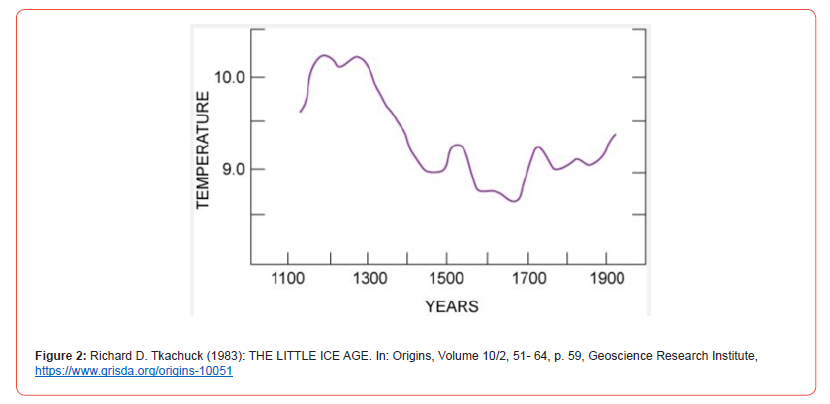
In the meantime, the Center of Europe was devasted, impoverished, depopulated by direct violence from soldiers, by turning from farmers to soldiers, and in subsequent hunger and disease as well as demoralization. Grimmelshausen’s “Simplicissimus” gives us an idea of this “inversion of all values”, as Nietzsche called this. The German term “verheert” pointed out this mixture of disasters. It all takes place in a time of a general global climate crisis, the small ice age. During this time, the average temperature decreased by up to 2 degrees and 4 degrees compared with that during the middle-aged warm period. In a situation such as this, we might think, mankind would have to do better things than fighting wars over 30 years.
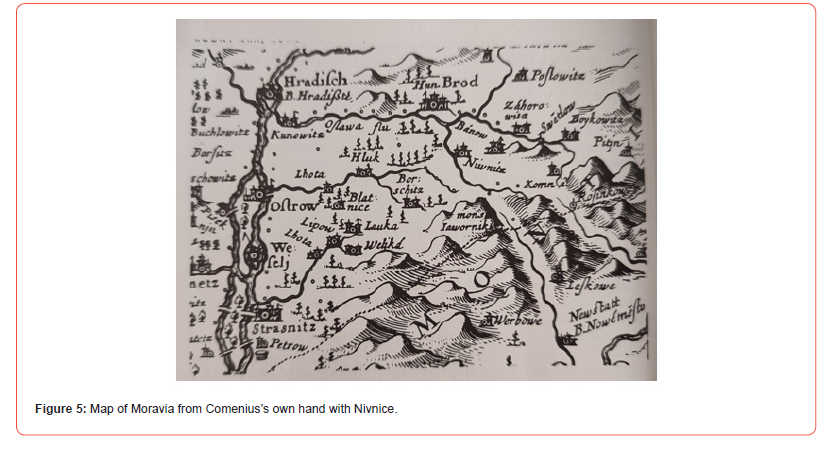
Jan Komenský (hereafter, Engl: John Amos Comenius; Czech: Jan Amos Komenský; Polish: Jan Amos Komeński; German: Johann Amos Comenius; Latinized: Ioannes Amos Comenius; (*1592 Nivnice, Mähren; † 1670 in Amsterdam) experienced not only the entire 30-year war, but he was also directly concerned in many ways. He was a member of the parish of the Unity of Czech Brethren and was also affected by restrictions by the emperor against the bohemian ranks against the majesty letter by Rudolph II, especially after the battle at the white mountain. The spring between the defenestration and the white-mountain battle was rather short. In the following Comenius, the headmaster of the Gymnasium of the Unity of Brethren and Priest was a refugee in different places in Bohemia and later in Poland. His wife and children died at the plague. All the time, he developed his famous philosophy called “pansophia”, with the fundamental idea of bringing together all the knowledge of the time and putting it in a consistent philosophical building. One important part of this idealistic building was the area we call education [2] and what Comenius worked out in didactic and pampedia as part of his pansophy. However, he worked not only theoretically. He was active as a school reformer and developer of a new kind of textbook that promoted the ‘iconic turn’. In a time of war, diseases, hunger, death, and poverty and full of refugees and belief conflicts, he developed a view of the world and access to the cosmos founded on the idea of equal rights of all men indifferent to men and women, rich or poor, nations and, at least, religious beliefs. It was the creation of a contrafact project in all those topics in the diametral contrary world. However, this was not only an idea in an ivory tower. Comenius also put it into effect wherever he was. He found allies and friends; he was heard not only in intellectual European circles, and his influence on European development can barely be underestimated.
In the following, it cannot be given a completely new look into the work and life of Comenius. In this regard, the article discusses the established research on this pedagogue, theologian, philosopher, and political adviser [3,4]. There is a large body of literature about Comenius over the centuries, but esp. in recent years, even if not everything has been explored yet [5]. Most of the biographies, also the autobiographical pieces by Comenius himself, are rare with biographical information, even in his letters. It seems that Comenius is focused on his work [6,7]. Most of the knowledge about the life of Comenius is reconstructed from his texts because his texts have often been related to his current situation in life. Insofar, most of the biographical works about Comenius try not only to bring his work in chronological order but also to relate it to the data of the current historical situation.
A long period in the life of Comenius was overshadowed by the so-called 30-year war. However, before and after the beginning of this long-term war, the times for Comenius were not peaceful. The time was marked by war, disease and hunger. Comenius was a European refugee most of his life. He lost his whole family more than once. Some literature shows the connection of this astonishing relationship between the constant disaster of the outer world and the invention of an organic cosmos of harmonic world wisdom [6,8,9]. The 30-year war is known as a terrible time for nearly all of Europe, and up to the first world war in the 20th century was a symbol of the horror of war [10-12].
There are various well-known theories that place the beginning of capitalism at the end of the 16th century and beginning of the 17th century for different reasons. This chapter will also discuss the connections among climate change, the war and epidemic situation and the beginning of capitalism.
War, disease, hunger, and climate change in the Little Ice Age
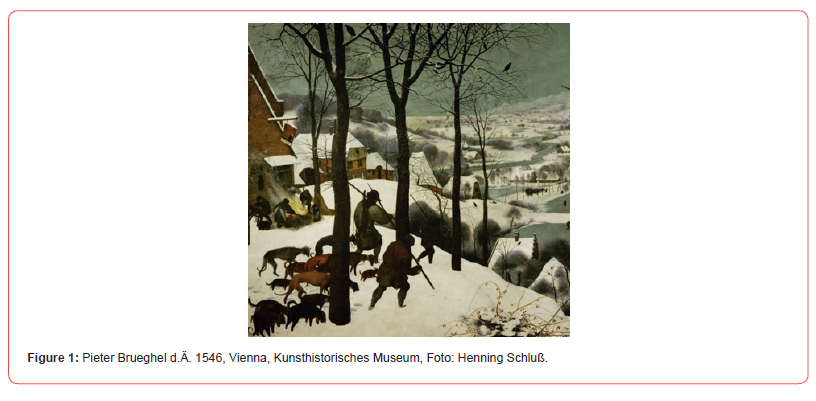
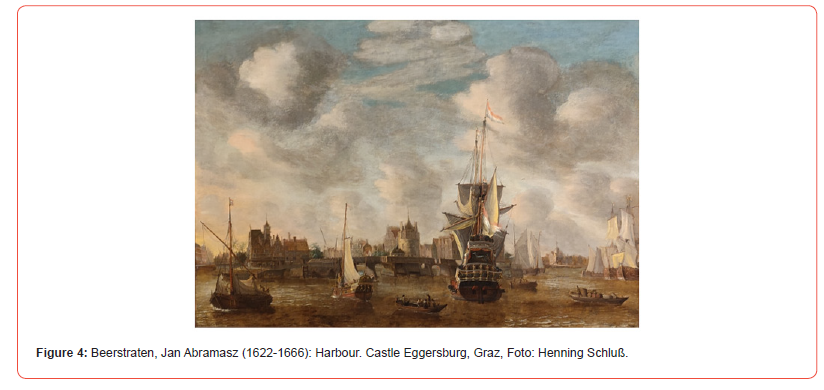
The most famous paintings of the so-called “Little Ice Age” are Dutch Winter Paintings. They hang in the world’s great museums and convey the impression of a playful and happy winter idyll.
Between 950 and 1250 AD, there was a distinct temperature increase in Europe. The climate was so pleasant at that time that the northern wine-growing frontier in Europe at that time was practically on the southern Baltic coast. The Vikings settled in Greenland. After 1400 AD, the climate began to cool again. From 1550 to 1850, extremely cold winters and wet summers occurred [13]. The periods from 1570 to 1630 were particularly cold. Bad harvests threaten the population and cause waves of emigration, for example, to America. The thermometer at that time was one to one and a half degrees less than average.
In middle-aged warm times, the towns in Europe were capable of providing their own food supply to the surrounding villages; however, the cities grew up, hunger was rare, and then, only one year or two lived. This situation changed dramatically with the beginning of the little ice time (Bloom, 38ff.).
The Dutch monk Wouter Jacobszoon, who fled from the Protestants to Amsterdam, wrote in his diary in 1572: “It was very bitterly cold weather at that time. Everything froze and became stiff. It hailed, it snowed, and it blew very harshly, and it lasted from All Souls’ Day (Nov. 2nd) until now (in March). The gracious sir, we understand from this, wants to show us by this how much we have gone astray. However, the people did not change and behaved as if they were their enemies. (Wouter Jacobszoon: Dagboek van broeder Wouter Jacobszoon (Gualtherus Jacobi Masius) prior von Stein: Amsterdam 1572-1578 en Montfoort 1578- 1579 (uitgave by I.H. van Eeghen), Groningen, 1959/1960 p. 4; quoted from Bloom 2018, p. 32).
In this small diary sentence, we see two overlapping problems. The religious conflicts at this time never truly ended since the reformation in the first quarter of the 16th century and the cold weather. On the one hand, towns need a large amount of food and wine; on the other hand, living in areas that can deliver these goods is increasingly dangerous.
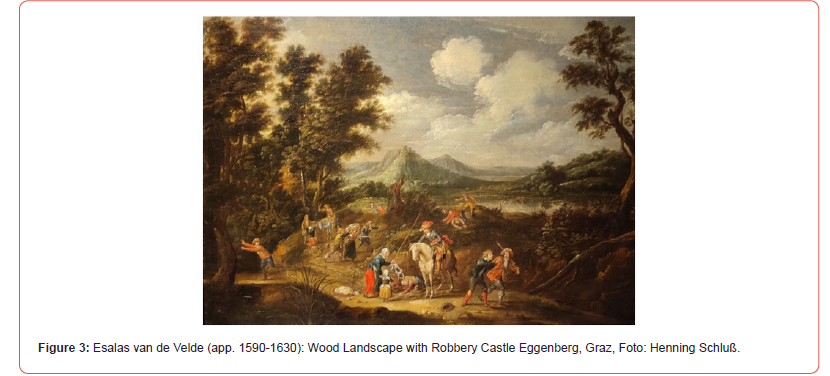
Gangs of robbers came over the villages and murdered and plundered. After such a robbery, the storage was empty, and even for the surviving victims, it was nearly impossible to stay in the village. Insofar as often they flow to towns. With their walls and weapons, the cities promised a much higher grade of security, and there were markets where it was possible to buy food. Insofar as we could assume that the rural exodus was connected with the growth of the cities, this was not the case because the poor people from the land often escaped serfs (bondswoman and man) and had neither money nor connections in the towns; thus, they were the first victims of hunger and diseases such as plague and cholera (Bloom, 39ff.).
Wouter Jacobszoon described these connections in a very pictorial way. He was a privileged refugee in the Catholic town of Amsterdam, but he could not leave the walls of the city. “The snow stayed into April “as if it were still winter,” and when he finally ventured out of town in July to visit a priest friend in Harlem, he hardly recognized his country. “On the way, I saw the terrible destruction that has occurred during this Troubled Time. I saw very few houses between Haarlem and Amsterdam that were not burned. All the churches, as we saw along the way, were either totally burned or badly damaged or destroyed. The land in many places is desolate and without animals. I also saw... a naked man lying in the middle of the road..., withered and caked from the heat, so that a decent man was terrified to look at him. In addition, it was strange that no one could be found to take this corpse away or cover it with earth, so it just lay there and was left to the wild animals” (ibid. p. 33/280).
However, not only in the Netherlands, the connections among climate change, war, disease, and hunger were visible but also in all the other parts of central Europe.
In London, the river Thames were frozen for a long time, and the richer people have a fun fair on ice. However, the ships did not reach the town, and insofar, the supply situation was hard. (Bloom, 41). In France, there were cold and long winters together with religious conflicts between Huguenots and Catholics. The rivers, even in the Provence and the harbour from Marseille, were frozen in the 1590s. In spring 1590, the protestant King Henry wanted to conquer the capital, Paris. But because he has not had enough canons, he decided to starve out the town. His army burned down all the windmills in the area and blocked the roads from entering the town. The situation after a hard winter was catastrophic. The people ate cats and dogs after all the horses were eaten. Many murdered themselves in the seine or died on the streets. The idea came up to make flour from the bones of the death. At the end of the siege in August, 45,000 people died (ibid p. 41f.).
Another example of this connection is the rich city of Vienna. Wine was an everyday food because the water in middle age was often dirty, even in large cities. Vienna was normally a wine exporter. Most of the citizens cultivate in their wine gardens, but on average, the citizens cultivate 150 l of wine per head and year. With the onset of cold, many vines froze, and those that survived left the wine unripe and had to be harvested prematurely, which made it usable only as vinegar (ibid, p.50f). Due to the lack of wine, the population was forced to drink dirty water, which promoted the spread of disease.
Capitalism
However, after all, the towns were in a better situation than the rural landscape, and this has to do with the possibility of trade. In middle age, trade needed the right to trade at markets and fairs, and this was possible only in towns. However, it also needs money. Money is a very old invention, more than 5000 years old [14], but for most people, it was unnecessary to have any money. If they needed something they did not produce by themselves, they swapped it with the Nabors, especially in the countryside. Max Weber (1892/1984) and Georg Simmel [15] showed at the beginning of the 20th century, in their great social studies, that money was not unknown but was unusual and useless in the countryside.
Even in the beginning of the 20th century, money was a help for trade and exchange in cities. However, if the people in the countryside cannot produce their food and what they need for subsistence, because of the cold weather, the hail and frost, and the murder and plundering of the armies and robber gangs, they hat to flee to the towns. In cities, trade and money are common but are mostly used for luxury goods such as spices, salt, books, and seldom fabrics. Even in the cities, the citizens were in most parts of their lives self-sufficient. They had their chicken, pigs, a little garden, or a field outside of the walls. But during it was cold more and longer, the growth phase was at least two weeks shorter than usual, it did not provide enough food for subsistence, and insofar as trading became increasingly important. Trading now means not only luxury goods, as in the Middle Ages but also everyday groceries over long distances, and harbours and a large fleet are advantageous [16].
All the common theories about the upcoming of capitalism were situated between the 16th and the 17th centuries. Max Weber explains capitalism with the secularization of the protestant spirit for caring for the soul after death. This caring for the soul increasingly vanished and saving money as a self-value took place [17].
Jan Patočka formulated this connection with the pointing last sentence: “Not the concern for the soul, the concern to be, but the concern to have, the concern for the external world and its mastery, becomes dominant” [1]. This connection was necessary because life was much more in threat than it was in the decades before.
Karl Marx explained the beginning of capitalism with his reconstruction of the primary accumulation. It was a very violent act, especially in England and Scotland, and has to do with land robbery, private ground, wool production, manufacturing, and the beginning of industrialization [18]. In nearly the same way, but without violence and instead the tail of common welfare, Adam Smith stated that rationalization and industrialization are necessary for the better good of the nation [19]. It is interesting that all this ‘common welfare’ relates to the pauperization of a great part of the inhabitants, but common welfare was measured with the total money and not with a just distribution. The last theory I would like to mention is the latest theory by Giorgio Agamben [20]. This finding is interesting because the other theories from Smith, Marx, and Weber are related to protestant countries. Agamben explains the roots of capitalism with the decision of ancient Church fathers to explain the relationship between the three godly persons not with a political relationship as a model but instead with an economic connection. With the common model of the “salvation economy” [20], it was easy to apply this model to explain the relationships in society. This concept by Agamben also works for Catholic and even Orthodox countries and can be explained by capitalism even in these countries.
It seems not necessary to decide which theory – be it Marx, Smith, Weber or Agamben – is right or wrong. All these Theories go together well; may be with a specific focus in different areas, the analysis of Engels and Marx more in England and Scottland and Weber more for the Netherlands. However, they will be better if we add the perspective of climate change in the Little Ice Age [21]. It was shown how necessary trade and money were at this time because the subsistence of whole areas in Europe was no longer possible. Trade and money are two of the basic ingredients of capitalism. Others include pauperization, industrialization, rationalization, and the measurement of the world.
If we bring these elements together, it would be understandable why the upcoming winter pictures in the Netherlands look like funny scenes. The long-term poor and small Netherlands, often victim of the sea, were among the greatest beneficiaries of the beginning of capitalism. They did a lot of things right. They had modern ports. They dried their land with a highly modern drainage system that could also be used as an efficient transport system. They had a large amount of energy with the windmills in the flat country to produce not only flour but also to power the pumps for the drainage system. In addition, they had a modern governmental structure, much participation, and a strong military system that could resist the Spanish imperium for more than 80 years [22].
The other endless rich country in the 17th century was Spain. The Spanish armada dominated the seas, and the Silver Stream from the colonies in America financed the 80-year war against the Netherlands and later also the relative of the Spanish King, the Roman Emperor in Vienna and so the 30-year war [23]. In contrast to the Netherlands or the other upcoming sea power – England – in Spain the capitalistic system not so strong. With the end of dominance over the sea, the end of the Silver Stream also ended the glorious time of Spain.
J. A. Comenius: new ideas of a holistic philosophy and praxis in circumstances of insecurity
Comenius is known worldwide at least as a “visionary reformer of schools” [24] or as the Discoverer of the pedagogical mentality [25]. However, that was not something he was born with. Jan Komenský grew up in this time of religious and political conflict during the Little Ice Age. He was born on March 28, 1592, as son of Anna and Martin Komenský, well-known citizens of Nivice in Moravia. The family was a member of the Unity of Czech Brethren (Unitas fratrum Bohemorum). He lost his parents and two sisters at the ages of 10 and 11 because of the plague.
He seldom visited school at this age but learned early to work in different handicrafts. His legal guardian sent him after a little heritage in 1608 to the high school of the Unity of Brethren to Prerov. He did not enjoy his school education with all the stupid scholastic learning [6].
This hard and stupid school education and the experience of the early loss of his family led to his desire for peaceful life opportunities and a humane school education.
“I, too, am one of many thousands, a poor human child whose lovely springtime of life and blossoming youth have been spoiled by scholastic nonsense. Oh, how often the pain has made me exclaim: ‘If only Jupiter would bring me back the past years.’ However, these are vain wishes. The day that passed did not return. None of us who have passed our years grow young again and learn to begin life anew and to understand ourselves with better equipment for it: there is no way out. Only one thing remains, and one thing is possible, that we give the help we can to our descendants. If we have shown the errors into which our teachers have plunged us, we must now show how these errors can be avoided. (Comenius, magna didactica 1985, p. 65f., quoted from Dieterich 1999, p. 19f.)”
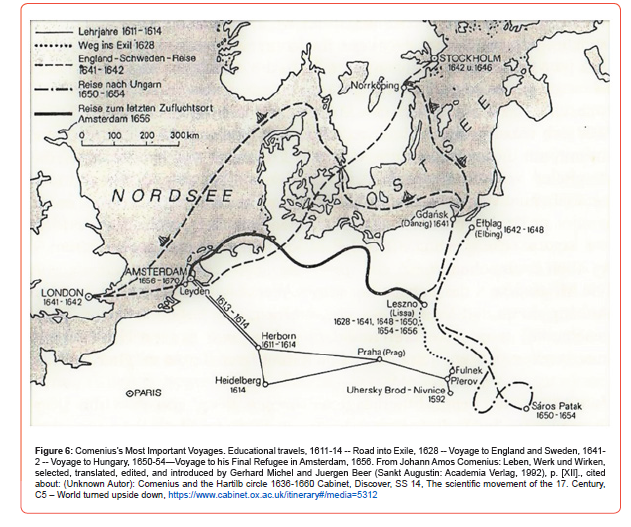
After three years at school, he moved on to the University of Herborn and studied the Calvinistic version of protestant theology there, as usual for members of the Bohemian Brethren. After an educational journey, which guided him up to Amsterdam in 1613, he inscribed in Heidelberg 1613 and studied theology there. During this time, he developed the first draft of his program of a peaceful and cosmologic, harmonic world system. He wanted to write a Theatrum as a conclusion of theology and knowledge about the world, and he planned to write a Dictionary from the Bohemian language. However, the money was out, and the Unity of Brethren wanted him back in Bohemia, so he went back to Prague by foot the whole way. In the same way, some years later, Friedrich, Duke of the Pfalz, the so-called Winter King, will ride, one of the reasons for the 30-year war.
In 1614, the brethren sent him back to Prerov, the same school; he left some years before, but now he was a teacher and headmaster.
The new challenge of the year 1618 for Comenius was to be a priest and teacher in Fulnek. The parish was mainly Germanspeaking, and there were many differences between the different congregations, the citizens, and the aristocrats. Comenius was the ideal mediator between the various parties. In his “Letters to Heaven”, in this time, he clearly named the alarming situation of the poor.
After the lost battle at the white mountain in 1620, the ministers of the Unity of Czech Brethren were arrested. Comenius must hide himself in the woods around. His wife was waiting for the birth of his second child in the town. Comenius was hosted by an aristocrat at Castle Brandeis, Fulnek was burned, and his wife and both sons subsequently died. At this time, he wrote several consolation texts. Important is “Centrum securitatis”, with its famous description of the situation of the world: “The whole world is a dangerous wheel, that has nothing but unsteadiness and restlessness in it. He who does not remain in his God, as in the center, is tossed to and fro until he is destroyed by it” [25].
He also wrote in this time the famous “Labyrinth of the World” [26]. Pavel Kohut categorized this book as follows: “However, there is a work in which all of Comenius’ thoughts and feelings, his futile hopes and tears, his patriotism and Europeanism, his entire human essence have been melted down and turned into crystal that has already survived 350 winters” [27].
Salvation can only be to turn away from the self and turn to God. In a way, it seems to be the most hidden book in the educational work of Comenius [28].
He married for the second time in 1624, and the couple had two daughters. The political signs changed, the protestant union became stronger, and England and Denmark joined the alliance. Comenius made many journeys during this time, up to Berlin and the Hague in the Netherlands in 1626.
However, the emperor put a new constitution in power, the aristocrats lost most of their influence, and counterreformation won. Comenius collected the tales of his fellows and called the book “The History of the Persecution of the Bohemian Congregation” [6]. In addition, he tried to find a new homeland for his parish and found it in 1628 in the Polish Lissa. Lissa grows with the many exiles. Comenius found a job as an assistant teacher, and after eight years, he was the rector of this school. However, this time in exile with a poor job, he was very productive as a scholar and wrote his most influential works, such as “Information about the Motherschool” and the “Bohemian didactic” (later translated in Latin known as magna didactica). In the headline, he promises: This is the art, to teach all people everything, not with respect to gender, race, class, or learning troubles. School, learning, and living should be nonviolent.
“No one should be forced to swear by the teacher’s words, but the things themselves should bind his insight; and no more faith should be given to the teacher than he has factually demonstrated how far he should be believed” [29].
This didactic seems focused on a specific pedagogical problem [30, but in fact, Comenius conceived this as a part of his planned Pansophia, the holistic view of all areas of science.
In 1630, the Swedish King Gustav Adolf joined the war. Wallenstein was too powerful for the dukes and lost his Generalate. Comenius writings in this time breathe the sound of hope for renewed life.
But in 1632, Wallenstein returned to power and expelled protestants from Prague again. In this political and personal disaster, Comenius developed ideas from the “pansophia christiana” [6], which provides a framework for his entire oeuvre. Pansophy is a kind of synopsis of all knowing, which is astonishing. In the time, when the world seemed to be split apart, Comenius developed a kind of mind that tried to put all the knowing in and out of the world together and built a framework for all the thinking. This holistic concept has been stimulating until recently [31]. At this time, pedagogy/didactics seemed to have been planned as an integral part of the pansophy [32]. It was only later that Comenius developed it separately as the “Pampedia” as a separate part of pansophical writings. At the same time, Comenius was elected a senior (a kind of bishop) of his brethren congregation. Not all members of the parish, especially the strong believers, agreed with the pansophic ideas of Comenius.
At the beginning of the fourth decade of the 17th century, the British parliament prepared a great educational reform, and scholars and friends called Comenius as adviser. Therefore, he sailed to London in 1641. However, the civil war in England ended all these plans. Comenius leaves London for Amsterdam in 1642 and meets with friends and scholars where esp. with Rene Descartes. The Swedish Queen and the prime minister Oxenstierna made him an offer for educational reform in Sweden, so he travelled to Stockholm in 1642 and from there to Elbing, which was also Swedish at this time. His family also moves to Elbing [6]. Two more children were born. Comenius works mostly theoretically in pedagogy, but his most attention should have been pansophy [33]. At the end of his time in Elbing, he widened his perspective again and wrote the concept for his general work about the “improvement of human affairs”. The pansophic should be only one part of this holistic work [6].
In 1648, Comenius returned with his family to Lissa. After his return, his wife dies, and he was left alone with the two little Children. The 30-year war ended in Münster and Osnabrück, but for the Czech Brethren, the situation was worse than before. Bohemia and Moravia were in the hands of the emperor again, and the hope for help from Sweden or other former allies was over. Comenius was elected as bishop of the Bohemian parish, but the time for his Unity of Czech Brethren was also bad. The congregation was scattered throughout Europe. He married a third time and followed an invitation to Hungary to the castle Sárostapak in 1649. He reformed his school education and worked as a headmaster but had enough time for his theoretical work in pedagogy, philosophy, and theology. He developed his school education as play forward and connected in this way his old idea from the beginning of his educational theory and praxis to a concept in which experience, play and learning go together well [34]. In particular, in his most famous textbook— the better picture book—the orbis pictus starts its triumphal procession here [6]. This textbook was not only a revolution on behalf of the school medium but also a European schoolbook that not only imitated one country or language but also focused on global civilization [35]. He also faced and solved the problem of the plurality of languages [36]. The old idea of teaching and learning by theatre comes to life here. From this perspective, Comenius anticipated parts of the so-called “Reformpädagogik” centuries before [37]. However, not for long, the Duke of Transylvania dies; his ideas of a new school without drills and pain seem strange to most teachers.
Comenius returned a last time to Lissa in 1655. He lived comfortably, and his hope was the new Swedish King and his war against Poland. However, the Swedish lost the war, and the Catholic Polish plundered and burned Lissa. He and his family could escape one more time, but they had to leave all the belongings, all his manuscripts, and his library burned in the flames.
He decided to fly to London over Hamburg. From Hamburg, we have one of the first witnesses of the pampedia as a separate book in the pansophic opus [32]. Comenius did not arrive in London because he became sick and came to Amsterdam one more time to his friend Laurentius de Geer. It is astonishing that the old man recovered and worked all day as hard as always. The time is marked by another war, the see war between the Netherlands and England. Comenius wrote texts for peace, not only for this war but also to end all the wars. One of the last famous texts in this last phase of the life of Comenius is the “Unum Necessarium”. He tried to explain why it is so difficult to have a lucky life. His solution is the concentration on the only thing necessary, the concentration on one’s own life in harmony with God and the world, and he tries to explain this in the fields of scholarship, politics, and pedagogy.
One of his last books, unpublished in his lifetime, was the Pampedia. It was only rediscovered in 1939 by the Ukrainian philologist Dmitrij Tschižewskij in the archives of the Francke Foundations’ library as a handwritten copy [32]. This work begins with the famous title of the first chapter, “Pampaedia quid et cur desiderabilis 1-10, OMNES homines excoli, et OMNIBUS excoli, et OMNIO excoli, quo Sensu optetur 11-15” [38], which means what we understand by the term Pampedia and why one should strive for Pampedia 1-10. Why do we wish that all people are fundamentally led to perfection through the whole, 11-15. Last part is commonly known in the short form: OMNES – OMNIA – OMNIO. This Pampedia incorporates much of Comenius’s other pedagogical writings, but here, it is further developed into a holistic concept, which in turn is integrated into the pansophical oeuvre. This pansophic work includes Panegersia, Panaugia, Pansophia (as the center), Pampedia, Panglottia, Panorthosia and Panuthesia (Schaller 1960, p. 498). The Pampedia aims to explain Comenius with the following: “Pampedia es totius Humanae Gentis Cultura Universalis. Graecis enim παιδεία Institutionem et Disciplinam, qua Homines erudiuntur, πᾶν autem Universalitatem sonat. Hoc igitur quaeritur, ut πάντες, πάντα, παντός (Omnes, Omia, Omniò) dodeantur.” [38].
Comenius ties in with the humanist tradition when he goes back to the roots and explicitly uses Greek terminology alongside Latin—as the European scholarly language of the time—to make it unmistakably clear what he wanted to say. Unlike the humanists, however, he was not interested in reconstructing the ancient position as accurately as possible and reformulating this source. He is much more interested in using precise Greek terminology to say something New. Even if Hannah Arendt sees the enthusiasm for the New in cultural history only emerging with Rousseau [39], in Comenius, there is something different than the traditional restoration concept of the recovered buried good old of the Renaissance or the Reformation. He is concerned with a humanity that corresponds to the divine will. With the exception of paradisiacal conditions, this completely desired state has not yet been achieved in human history. Amid death, devastation, expulsion, and devastation in Europe, Comenius is working out a new concept of a harmonious and comprehensive overall design that remains within the world, cannot overcome human limitations, and ultimately death in a holistic context of meaning to which everyone is introduced pedagogically. Even if there have been various theoretical and practical endeavours to extend the claim to education to broad sections of the population since the Reformation at the latest [40], this unrestricted extension of the claim to education to all people in a comprehensive manner, both in terms of the subject matter and the manner of teaching, is unprecedented.
Followings about the pedagogy in times of climate change and unsecured in the 21st century
What significance can this life story of Comenius from the early modern period now have for the situation of the beginning at the 21st century [41]? In the first part, it was shown that climate change during the Little Ice Age was accompanied by plagues, diseases, war, and insecurity. The invention of capitalism promised, in some way, a solution to various problems. In this time of extreme insecurity, J.A. Comenius developed a pedagogy embedded in a holistic worldview [42] that seems diametrically opposed to the world falling apart in its particular interests. Therefore, he advocated for humanity [43,44], for peace in times of war [45], and specifically for girls’ education [46] or for the idea of lifelong learning [47,48]. He is called the real explorer of childhood [49]. From some perspectives, he is named the founder of the modern School, as we know it until now [50,51], but in his idea of school was an inclusive approach we struggle today with [52]. In all its untimeliness, it seems very current [53].
The fact that Comenius himself, for all his love of peace, repeatedly took sides with his religious convictions and against the Catholics is one of the irresolvable contradictions in his positions.
Nevertheless, it remains astonishing that in a time when insecurity is the order of the day, when the world is breaking apart and splitting into many small parts, the Comenian claim is made to unite this drifting-apart world and to reconcile heaven, earth, and each individual with one another and to develop and promote them in the best possible way.
The solution to problems connected with climate change in the Little Ice Age seems closely related to the invention and development of capitalism. However, capitalism, with its industrialization and rationalization, with money as a value for itself, is basically fossil fuel fired. Insofar as a solution to the problems of climate crises in the 17th century, this is currently the reason for climate crises.
Insofar as our climate crisis is man-made. Nevertheless, the consequences are the same; extremely increasing insecurity seems to threaten any educational intervention when neither the future we educate for nor the future of those we educate and teach is certain. There is an obvious danger that in such a situation, we will focus mainly on particular solutions. A pedagogy that renounces all claims to universality with human rights that end at the Mediterranean or Poland’s eastern border at the latest. The fate of Comenius, a victim of war, epidemics, climate change, and expulsion over his entire lifetime, can show that this particularization is not without alternatives.
However, that perhaps not despite, as Diether Fauth writes, but precisely because of these experiences of flight, epidemics, and displacement in war and climate change, the need arises for a reconciliatory concept in which pedagogy is only one part of a necessary overall view of improving things for humanity and the world, in which we look at what is truly necessary and recognize other things to which we attach our hearts as superfluous and harmful [54-62].
Funding and/or Conflicts of interests/Competing interests
There are no competing interests and no funding for the project. The reflections on the text have emerged in the context of long-term discussions with colleagues on the various aspects of the text, historians, natural scientists, philosophers and educational scientists, and in the context of courses on the various subject areas.
References
- Patočka Jan (1975/2010) Europa und das Europäische Erbe bis zum Ende des 19. Jahrhunderts. In: (Ders.: Ketzerische Essays zur Philosophie der Geschichte. Frankfurt am Main: Suhrkamp.
- Schluß Henning (2023) Pädagogik. In: Huber, Matthias, Döll, Marion (Ed.) Bildungswissenschaft in Begriffen, Theorien und Diskursen. Springer VS, Wiesbaden pp. 401-409.
- Chocholová Svatova, Pánková Markěta, Steiner Martin (2009) Jan Amos Komenský: odkaz kultuře vzdělávání = Johannes Amos Comenius: The legacy to the culture of education. Praha: Academia Scientiarum Bohemoslovaca.
- Zemek Petr, Beneš Jiří, Motel Beate (Ed.) (2009) Studien zu Comenius und zur Comeniusrezeption in Deutschland. Festschrift für Werner Korthaase zum 70. Geburtstag, Uhersky Brod, Muzeum.
- Lischewski Andreas (2016) Blinde Flecken der Comeniologie. Perspektiven für eine zukünftige Forschung. In: Goris/Meyer/Urbánek (Ed.) (2016): 239-260.
- Dieterich Veit-Jakobus (1999) Johann Amos Comenius. Mit Selbstzeugnissen und Bilddokumenten. Reinbeck bei Hamburg: rororo.
- Comenius Johann Amos, Arnhardt Gerhard (Hrsg.) (2014) Jan Amos Comenius. Über sich und die Erneuerung von Wissenschaft, Erziehung und christlicher Lebensordnung. Augsburg: Brigg.
- Schaller Klaus (2004) Johann Amos Comenius – ein pädagogisches Porträt. Weinheim/Basel: Beltz, UTB.
- Fauth Dieter (2009) Comenius – im Labyrinth seiner Welt. Zell am Main/Würzburg: Religion & Kultur Verlag.
- Burkhardt Johannes (1992) Der Dreißigjährige Krieg. Suhrkamp, Frankfurt am Main.
- Wilson Peter H (Ed.) (2010) The Thirty Years War: A Sourcebook. Palgrave, Basingstoke.
- Münkler Herfried, Der Dreissigjährige Krieg. Europäische Katastrophe, Deutsches Trauma 1618-1648. Hamburg: Rowohlt.
- Parker Geoffrey (2013) Global Crisis: War, Climate Change and Catastrophe in the Seventeenth Century. New Haven, Conn.: Yale University Press.
- Graeber David (2011) Depts. The first 5.000 years. New York: Melville House.
- Simmel Georg (1903/1995) Georg Simmel: Die Großstädte und das Geistesleben. In: Georg Simmel: Gesamtausgabe. Herausgegeben von Otthein Rammstedt. Band 7: Aufsätze und Abhandlungen. 1901-1908. Band I. Herausgegeben von Rüdiger Kramme, Angela Rammstedt und Otthein Rammstedt. Suhrkamp, Frankfurt am Main pp. 116–131.
- White Sam (2017) A Cold Welcome: The Little Ice Age and Europe's Encounter with North America. Cambridge, Mass.: Harvard University Press.
- Weber Max (1920) Die protestantische Ethik und der "Geist“des Kapitalismus. In: Weber, M.: Gesammelte Aufsätze zur Religionssoziologie I), 8. Ed., Mohr, Tübingen 1988, pp. 1–206.
- Marx Karl (1867/1968) Das Kapital. 24. Kap: Die sogenannte ursprüngliche Akkumulation. In: Karl Marx - Friedrich Engels - Werke, Band 23, "Das Kapital", Bd. I, Siebenter Abschnitt, Dietz Verlag, Berlin/DDR pp. 741 – 791.
- Smith Adam (1776) An Inquiry into the Nature and Causes of the Wealth of Nations. Printed for W. Strahn; and T. Cadell, in the Strand.
- Agamben Giorgio (2002) Homo Sacer. Die souveräne Macht und das nackte Leben. Übersetzt von Hubert Thüring. Suhrkamp, Frankfurt Main.
- Waldinger Maria (2022) The Economic Effects of Long-Term Climate Change: Evidence from the Little Ice Age. Journal of Political Economy.
- Israel Jonathan (1989) Dutch Primacy in World Trade, 1585–1740. Clarendon Press.
- Glete Jan (2002) War and the State in Early Modern Europe. Spain, the Dutch Republic and Sweden as Fiscal-Military States, 1500–1660. Routledge.
- Smith David (2017) John Amos Comenius. A visionary reformer of schools. Series: Giants in the history of education. Camp Hill, PA: Classical Academic Press.
- Comenius Johann Amos (1620/1964) Centrum securitatis. Nach der deutschen Ausgabe von A. Macher aus dem Jahre 1737. Eingeleitet und herausgegeben von Klaus Schaller. Quelle & Meyer, Heidelberg 1964.
- Comenius Johann Amos (1970) Das Labyrinth der Welt und Das Paradies des Herzens. Luzern, C.J.Bucher.
- Kohout Pavel (1970) Vorwort. In: Comenius, Johann Amos: Das Labyrinth der Welt und Das Paradies des Herzens. Luzern, C.J.Bucher pp. 5-15.
- Hábl Jan (2016) Partly allegorically, partly disclosed. The problem of the allegorical method as a didactic tool in Comenius' "Labyrinth". In: Goris/Meyer/Urbánek pp. 335-348.
- Comenius Johan Amos (1973) Magna Didaktika in: Ders: Selected Works. Edited by Tschižewskij, Dmitrij and Schaller, Klaus. Vol. 3, Hildesheim, New-York.
- Norlin Björn (2020) Comenius, Moral and Pious Education, and the Why, When and How of School Discipline. In: History of Education, 49(3): 287-312.
- Lee Gyeong-Geon, Hong Hun-Gi (2021) John Amos Comenius as the prophet of modern ideas in science education in the light of Pansophia. In: History of education 50(1): 1-26.
- Tschižewskij Dmitrij (1960) Die Handschrift der "Pampedia“und ihr Schicksal. In: Comenius, Johann Amos: Pampedia. Ed. by Tschižewskij Dmitrij, Schaller Klaus. Quellen & Meyer, Heidelberg pp. 490-497.
- Comenius Johann Amos, Reber Joseph (Ed.) (2016) Des Johann Amos Comenius Lebensregeln (Regulae vitae). Mit einem einleitenden Berichte über des Comenius Aufenthalt und Tätigkeit in Elbing vom Jahre 1642-1648. [Norderstedt]: Hansebooks.
- Bednár Milos (2020) Jan Amos Komenský a fenomén i symbol hry. In: Ceská kinantropologie 24(1/2): 15-29.
- Menck Peter (2019) Die paneuropäischen Schulbücher des Johann Amos Comenius. In: Augschöll Blasbichler, Annemarie (Hrsg.); Matthes, Eva (Hrsg.); Schütze, Sylvia (Hrsg.): Europa und Bildungsmedien. Bad Heilbrunn: Verlag Julius Klinkhardt pp. 219-232.
- Fritsch Andreas (2016) Comenius und das Problem der Vielfalt der Sprachen. In: Goris/Meyer/Urbánek (Ed.) pp. 311-321.
- Matthes Eva, Schütze Sylvia (2018) Reformpädagogik vor der Reformpädagogik.In: Barz, Heiner (Hrsg.): Handbuch Bildungsreform und Reformpädagogik. Wiesbaden: Springer VS pp. 31-41.
- Comenius Johann Amos (1960) Pampedia. Ed. by Tschižewskij Dmitrij/Schaller, Klaus. Quellen & Meyer, Heidelberg.
- Arendt Hannah (1958/2000) Die Krise in der Erziehung. In: Zwischen Vergangenheit und Zukunft. Übungen im politischen Denken I. Texte 1954–1964. Ed. by Ursula Ludz, Piper, München.
- Schluß Henning (2019) Von der Bildungskatastrophe zur Reformation: Die Neubegründung der Schule in der Reformation. In: Oberndorfer, Bernd/Matthes, Eva (Hrsg.): Reformation heute - Bd. V: Menschenbilder und Lebenswirklichkeiten. Evangelische Verlagsanstalt, Leipzig pp. 45-63.
- Pelcová Nadezda (2016) Das Vermächtnis von Comenius a die heutige Zeit. In: Goris/Meyer/Urbánek (Ed.) pp. 261-269.
- Kučera Zdeněk (1992) Comenius – Theologe der Universalität. In: Großmann/Scheilke pp. 135-141.
- Schaller Klaus (1992) Erziehung zur Menschlichkeit – Komenskys kritischer Beitrag zu Gegenwartsproblemen der Erziehung. In Großmann/Scheilke pp. 17-30.
- Brumlik Micha (2016) Menschenwürde, kosmopolitische Bildung und comenianische Gewißheit. In: Ragutt, Frank; Kaiser, Franz (Ed.): Menschlichkeit der Bildung. Heydorns Bildungsphilosophie im Spannungsfeld von Subjekt, Arbeit und Beruf. Paderborn: Ferdinand Schöningh pp. 45-57.
- Vriens Leonardus J (2016) Peace education in the 21st century. - Can Comenius make a difference? In: Goris/Meyer pp. 409-421.
- Reents Christine (1992) Comenius` Impulse zur Mädchenbildung? Oder: Die Gleichheit von Mann und Frau als Ausdruck der Gottebenbildlichkeit. In: In Großmann/Scheilke pp. 49-69.
- Sitarska Barbara (2009) Johan Amos Comenius als Vorkämpfer der Idee der lebenslangen Bildung. In: W. Korthaase – badacz J. A. Komeńskiego (W. Korthaase – der Forscher von J. A. Comenius), STUDIA COMENIANA SEDLCENSIA, Bd. II, hrsg. B Sitarska, R Mnich, M Richter. Siedlce: Wyd. Akademii Podlaskiej pp. 271–280.
- Meyer Meinert A (2011) Das ganze Leben als Schule. Zur Bedeutung der "Pampaedia" für die heutige Allgemeine Didaktik und die Schulpädagogik. In: Comenius-Jahrbuch 18: 68-87.
- Rass Eva (2014) Die Entdeckung der Kindheit als grundlegende psychische Entwicklungsphase am Beispiel von Jan Amos Comenius' Mutterschul. In: (Rass, Eva (Ed.): Comenius: seiner Zeit weit voraus...! Die Entdeckung der Kindheit als grundlegende Entwicklungsphase; [Bindung - Identität - Liebe]. Wien; Frankfurt am Main; Bern: Lang pp. 11-56.
- Cserko, Miriam (2015): Zur Bedeutung Comenius' (1592 - 1670) für das gegenwärtige Bildungssystem. Saarbrücken: AV Akademikerverl.
- Hamilton David (2015) The beginning of schooling - as we know it? In: Journal of curriculum studies 47(5): 577-593.
- Hericks Uwe (2013) "Allen alles dem Ganzen gemäß". Die Idee einer Schule für alle bei Johann Amos Comenius. In: Rohrmann, Eckhard (Ed.): Aus der Geschichte lernen, Zukunft zu gestalten. Inklusive Bildung und Erziehung in Vergangenheit, Gegenwart und Zukunft. Marburg: Tectum-Verl pp. 15-30.
- Dörpinghaus Andreas (2010) Johann Amos Comenius: Unzeitgemäß und aktuell. Oder: Vom Nutzen der Bildung. In: Comenius-Jahrbuch, 16/17 (2008/2009), S. 24-35.
- Behringer Wolfgang (2011) Kulturgeschichte des Klimas – Von der Eiszeit bis zur globalen Erwärmung. München: dtv.
- Blom Philipp (2018) Die Welt aus den Angeln.- Eine Geschichte der kleinen Eiszeit von 1570 bis 1700. 5. Ed. 2022, München: dtv.
- Geißler Heinrich (1960) Über die Stellung der Pampedia im pansophischen Gesamtwerk des Comenius. In: Comenius pp. 498-511.
- Glas Norbert (1976) Amos Comenius – Philosoph und Pädagoge des Arabismus. J.Ch. Mellinger-Verlag, Stuttgart.
- Goris Wouter, Meyer Meinert A, Urbánek Vladimir (Ed.) (2016) Gewalt sei ferne den Dingen! Contemporary Perspectives on the Works of John Amos Comenius. Wiesbaden: Springer.
- Großmann Klaus, Scheilke Christoph Th. (Ed.) (1992) Jan Amos Comenius 1592 – 1992 – Theologische und pädagogische Deutungen. Gütersloh: Gerd Mohn.
- Lukaš Mirko, Munjiza Emerik (2014) Education System of John Amos Comenius and Its Implications in Modern Didactics. In: Život i škola v60 31: 32-44.
- Pánková Markéta (2022) John Amos Comenius at a Gance – Small Encyclopedia of the Czech Genius of the Centuries. National Pedagogical Museum and Library. Praha.
- Weber Max (1892/1984) Die Lage der Landarbeiter im ostelbischen Deutschland. In: Horst Baier, M. Rainer Lepsius, Wolfgang J. Mommsen, Wolfgang Schluchter, Johannes Winckelmann (Ed.): Max Weber Gesamtausgabe. Abteilung I: Schriften und Reden. Half-Volume, JCB Mohr (Paul Siebeck) Tübingen 3(1).
-

This work is licensed under a Creative Commons Attribution-NonCommercial 4.0 International License.