


 Review Article
Bridging the Macroscopic-Microscopic Gap: How 3D Printing and Smartphone Sensing Technologies Reshape Chemistry Experiment Teaching
Received Date:May 24, 2026; Published Date:June 04, 2026
Abstract
This paper reviews the research advancements in applying 3D printing and smartphone sensing technologies to chemistry education, aiming to bridge the cognitive gaps between macroscopic observations, symbolic representations, and quantitative data. Studies demonstrate that 3D printing enables the production of cost-effective laboratory equipment and molecular models, while smartphone sensors (for light, sound, and environmental monitoring) facilitate efficient data acquisition and processing. The integration of these technologies has yielded a “disruptive innovation” -style digital experimental approach. Grounded in the Four-Dimensional Representation Theory and Embodied Cognitive Theory, this method enhances students’ data interpretation and scientific research capabilities, achieving results comparable to commercial instruments in controlled experiments. However, current challenges include material durability limitations, sensor calibration issues, insufficient teacher TPACK (Technology-Pedagogy- Content-Knowledge), and equity concerns in education. Future research should focus on extended studies, AI-powered monitoring systems, and the development of blended learning environments.
Keywords: Chemical education; 3D printing; Smartphone sensing; Quadruple characterization; System review; Digital experiment
Introduction
The Global Cognitive Dilemma in Chemical Education
Chemistry is the science that explores macroscopic phenomena, microscopic essence, and symbolism. The tripartite representation suggested by Johnstone in 1982 can be used to describe the attributes of chemistry learning [1] correctly. Besides seeing macroscopic phenomena like color change, precipitation, or gas evolution, students should comprehend microscopic processes with atoms and molecules and learn how to use chemical formulas and other symbols. All three of these levels of comprehension are difficult to navigate between and it is a widespread challenge among students across the world. Conventional lab instruction has been traditionally focused on observation as opposed to measurement, and this hinders the ability of students to participate in the full cycle of scientific investigation, i.e., data gathering, data analysis, and conclusion-making. This form of teaching makes chemistry a mere memory subject and goes against the empirical quality of science.
The rise of low-cost digital laboratory technologies
In the last ten years, along with the maker movement in education, 3D printing has slowly spread beyond the sphere of engineering technology into secondary school chemistry labs, changing conventional laboratory activities. These tools are not used by students only anymore but can create their own experimental equipment, including molecular models, cuvette holders and spectrophotometer housing. As Pernaa and Wiedmer have summarized, 3D printing has been widely applied in chemistry education where “do-it-yourself instruments” have ceased to be an ad-hoc solution and become a popular trend [3]. Moreover, model sharing platforms based on open-source models such as Thingiverse and Printables allow teachers to create experimental setups which can be downloaded, printed and optimized around the globe, making it much easier to distribute high-quality teaching materials.
At the same time, popular smartphones are turning into pocket laboratories [2]. There are significantly more smartphones around the world than there are professional research devices. They incorporate multiple sensors in the form of cameras, microphones, barometers, and accelerometers. Using apps such as Phyphox, they allow various types of experiments to be performed, including colorimetric analysis, sound detection and checking on gas laws. 3D printing has been identified as a solution to the low-cost production of hardware and the smartphone is being used by many in solving the issue of easy data collecting and storing. The use of both these technologies would make it completely possible to have each student own a digital laboratory.
Research Questions and Review Framework
Even though the use of 3D printing and smartphones in chemistry education has been extensively researched in recent years, the results are still disjointed: some of the studies focus on cognitive advantages of 3D-printed molecular models, whereas other works assess quantitative precision of mobile phone colorimetric techniques, and yet others provide particular experimental teaching scenarios. Nonetheless, most of them have not synthesized hardware (3D printers), software (mobile phone sensors applications), and instructional design theories with a view to developing a unified analysis. Such a disunity prevents researchers to get a picture of the field holistically as well as prevent teachers to make informed choices.
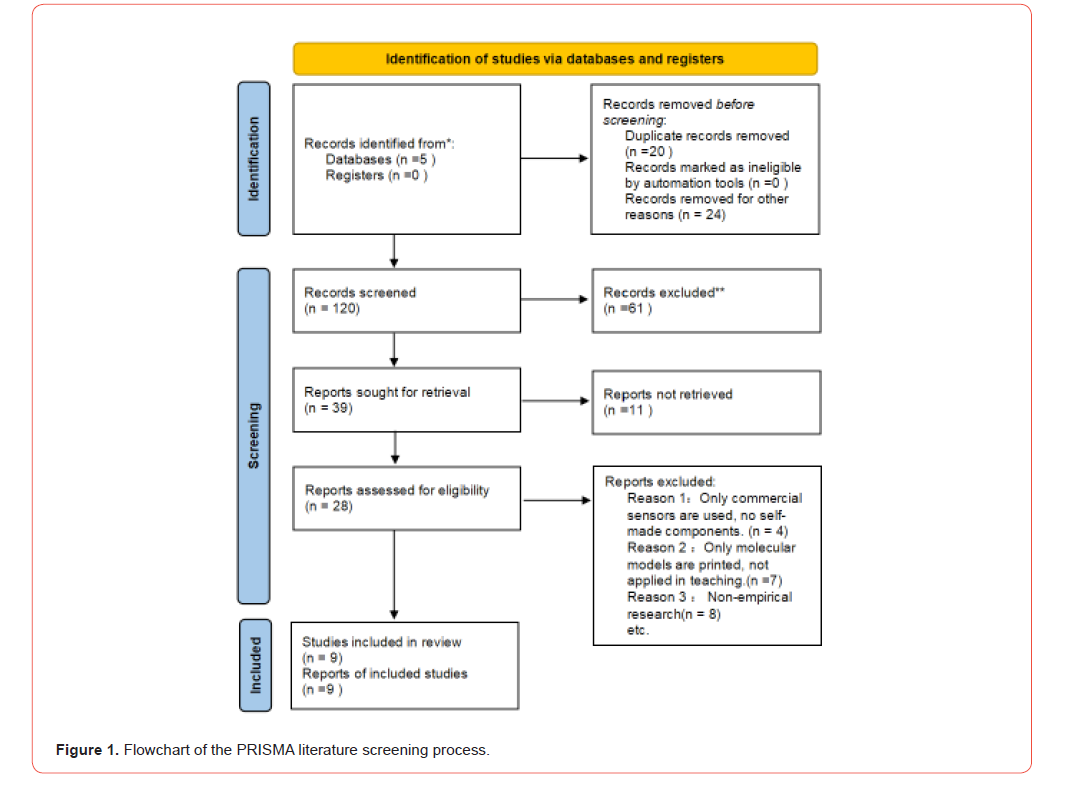
The paper intends to fill the mentioned gaps in research through the given question based on an analysis of the relevant literature: In what ways can the combination of 3D printing and smartphone sensing technologies within the context of instructional design bridge the differences between macroscopic, microscopic, symbolic, and quantitative features of chemical learning? In order to answer this question, the paper will examine three main areas: the technology integration strategies (the way hardware and software is integrated), the strategy of technology deployment (the way such technologies are used in the classroom teaching), and the essential conditions that must be met to be able to effectively use them. Moreover, we analyze the shortcomings of the existing research findings and do not exaggerate the functions of technology. The process of choosing literature in this review follows the PRISMA 2020 recommendations, which are presented in (Figure 1).
Theoretical Foundation: From Triple Representation to Quadruple Representation
Theoretical Extension of the Quadruple Representation Model
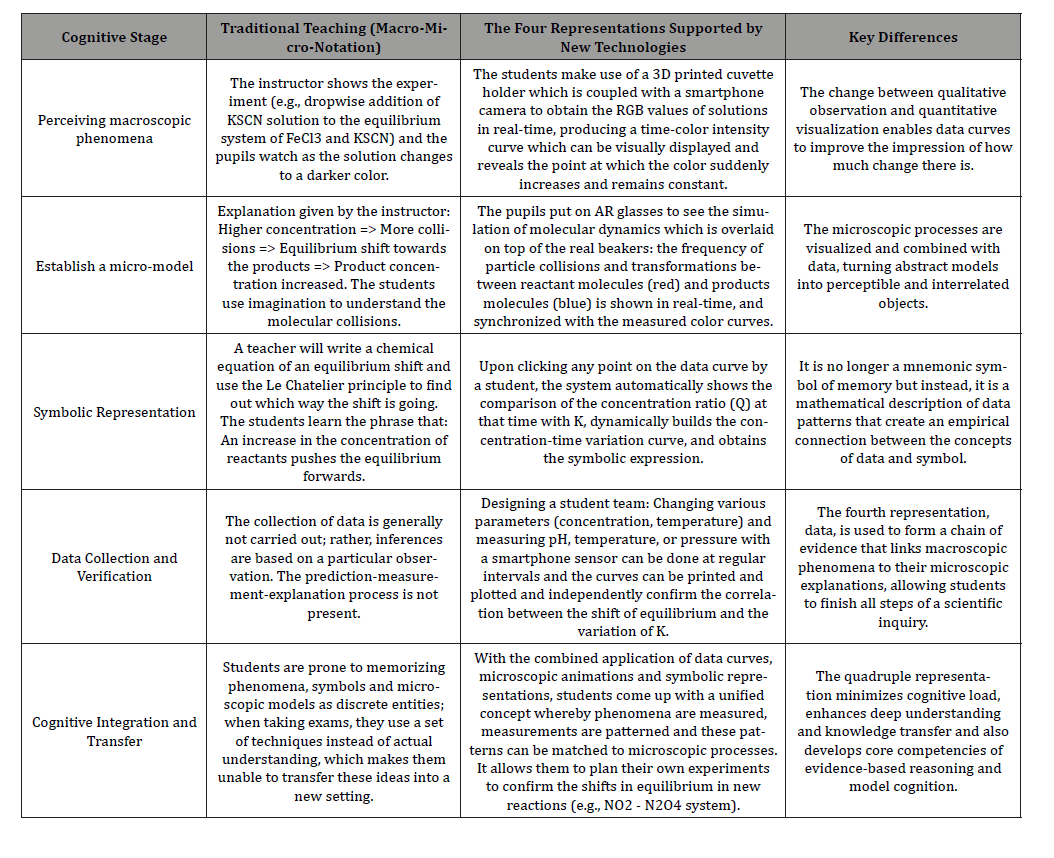
With the growing application of digital sensing technology in the classroom, the classical Johnstone triangle has been found to be insufficient in modern research because it does not have the essential element of the said triangle as the important element, which is the data. To address this, Gilbert, Treagust and coworkers suggested moving towards a quadruple representation as opposed to triple representation [4]. Data representation acts as a mediator between macroscopic events and the microscopic explanations allowing investigation and mathematical modelling of causal interactions among them. This change raises the level of macroscopic observation beyond simple description and turns microscopic explanations into hypotheses which can be tested and validated. Chemical education then moves away to the traditional method of teaching of, observe phenomena write equations think about particles to measure data analyze variables create models. Data representation is the backbone that allows old representations and gives students real-life proof to back up the scientific accuracy and validity of the knowledge they create.
Table 1:
Embodied Cognition and the Tool-Mediation Theory
The theory of embodied cognition states that cognition is caused by the interaction between a human body and its surrounding environment. When students perform sensor-based experiments with smartphones, the sequence of operating instruments, observing changes in data, and monitoring the real-time graphical change allows them to make abstract ideas like reaction rate and equilibrium constant into concrete, measurable processes and thus achieve embodied cognition.
The tool-mediation theory suggests that the very experimental apparatus itself is part of the cognition. With the independent drawing of calibration curves by the students, the adjustment of sensors and the analysis of the experimental results, the operational methods behind these tools slowly enter into the minds of the student and make the shift between using the instruments and thinking with data. It is exactly this that makes DIY experiments more significant than just the manipulation of commercial instruments: in the case of the first, the instruments are a part of the thoughts; in the second, the meaning behind the data is frequently ignored. The two viewpoints underscore the core change in the experimental teaching during the digital sensing age.
Technology Integration: Synergistic Application of 3D Printing and Smartphone Sensing
The Dual Application Value of 3D Printing
At present, 3D printing is mainly used in chemistry classes to produce visual models and manufacture analytical devices. Visualization-wise, 3D printing allows molecular architectures and crystal arrangements to be converted into physical objects. The review article by Pernaa and Wiedmer states that it is the most common use but the majority of the available studies have not gone beyond the possibility of technical feasibility without assessing changes in conceptual understanding of students [2]. The educational significance of 3D printing is great in terms of developing instruments. Many reports indicate that inexpensive DIY spectrophotometers (under $100) are sufficient in performing titration experiments, and there is no significant statistical difference between such devices and expensive professional-grade spectrophotometers [3]. It has challenged the idea that expensive equipment is necessary to conduct successful experiments and serves as an excellent resource guide to schools having inadequate funds to undertake experimental teaching.
On a more fundamental basis, the openness and repeatability of 3D printing are significantly more valuable than its affordability. Teachers may upload their designs to open-source sites such as Thingiverse where they are made freely downloadable, editable and sharable to everyone across the world. It is an example of something that is called knowledge sharing whereby technical and financial obstacles of proprietary commercial apparatus are removed allowing quality educational materials to be freely shared throughout the world. Collaboration and sharing using open-source principles are much more significant in solving the problem of educational resource inequality than traditional teaching aids.
Three Types of Educational Applications for Smartphone Sensing Technology
Based on chemistry education, mobile phones have three kinds of sensors which are optical, acoustic and environmental. Optical sensing in optical sensing, using smartphone cameras as colorimeters is an often-used method. Programs such as ChemEye, which are built on the Lambert-Beer law, use video images to produce calibration curves that help students in working out the concentration of solutions [5]. It allows the concept to be used both in the laboratory of the secondary education institutions and at universities, making it affordable and feasible, reducing the cost and access barriers, and allowing teaching the university-level concepts at the secondary education level.
The mobile phone microphone is used as an acoustic sensor to detect sounds. Chemical reactions Bubble generation can be used to determine the kinetic parameters of the reactions by measuring the frequency and speed of bubble formation [6]. Such approach transforms the non-visual sound into quantitative chemical information which enhances the experimental material and helps the students to comprehend the relationships between various sensory modalities in a more profound way.
The sensors that are utilized in environmental sensing include the barometer found in smartphones. Scientists have applied the barometer sensor on Phyphox to determine the gas molar volume in a sealed vacuum chamber, enabling home-based experiments. Also, the sensor can be used by the students to observe the change in pressure due to the decrease in volume of the gas involved in the process of the reaction between CO2 and NaOH [7], which converts the perceived events into measurable data and sheds more light on what happens when gas absorption causes a drop in pressure in the system.
The inherent limitations of a single technology application
The limitations of both technologies are critical when they are applied separately and contribute negatively to teaching effectiveness: Environmental factors and calibration drift problems. Mobile phones cameras are vulnerable to natural light interference and sensors have data drift because of temperature and voltage changes; lack of standardized calibration leads to inadequate quantization precision. Second, hardware-compatibility issues. Mobile phone sensors are not designed to be used on a daily basis but are intended to be used as specialized physical interfaces of scientific experiments, and the extraction of raw information is done through complex data processing that involves significant hidden charges. Third, issues with consumables and service life: Traditional PLA printing materials do not resist acids, alkalis and organic solvents very well, which can lead to deformation and destruction, and thus represent possible safety threats; 3D-printed parts are brittle and printer heads are vulnerable to chemical substances that may cause corrosion.
Teaching Integration: Practical Cases, Competency Development, and Effectiveness Comparison
Teaching case illustrating the concept of understanding
All the cases discussed in the literature have a similar perspective of reducing complicated technologies to useful student tools in order to allow students to comprehend the scientific concepts using practice. To cite one example with spectrophotometry, conventional instruction tends to be such that students use commercial devices, and they learn what they are using but do not understand why it works. The literature describes a low-cost, multifunctional DIY spectrophotometer at less than $100, with a Python program to convert chromatograms into tables of intensity against wavelength [8]. On this occasion, students acquire results comparable to those obtained by commercial equipment as well as undergo the whole process ranging between collecting data and interpreting results- an important stage of guiding students to understand the methodological aspects of scientific investigation.
It is based on the same concept as the Gas Law experiment. Students have the opportunity to observe real-time variations in pressure inside a closed container by using the pressure sensor of the Phyphox mobile app and convert the hypothetical P-V-T connection in the ideal gas equation into real and measurable numbers. The students acquire more than just a sound knowledge of the Gas Law when their measurements are exactly equal to the predicted ones; they also learn the first taste of the fact that mathematics mirrors the order of nature.
Foster data literacy and scientific inquiry skills
The foundation of scientific research is on the basis of evidence-based reasoning and the calibration curve can be used as a microcosm of science methodology teaching. Many articles have reported cases where pupils have plotted calibration curves with free apps and smartphone cameras, such as by measuring color differences between various tea concentrations to learn about dilution procedures, standardization of data, and hypothesis testing. The low-cost and diverse method makes the teaching of science extend to outside the lab and shows how scientific investigation is not an exclusive activity performed by scientists in white coats but it can be applied in any normal situation.
In terms of metacognition, manual plotting of calibration curves generates inquisitiveness among the learners: What is the reason behind some points being out of the straight line? Is it because of incorrect dilution or the inability of the instrument by nature? Thinking about such mistakes and limitations develops a healthy scientific mind. The given method ensures that students do not accept measurement outcomes as ultimate truth but see them as estimations on certain conditions. This kind of critical thinking is much more important to develop scientifically literate citizens compared to simple knowledge acquisition.
The teaching equivalence between DIY experiments and commercial instruments
Comparative experiments are an important tool that can be used to assess the educational worth of low-cost DIY solutions. In case a DIY solution is much less effective than commercial products, the fact that it costs less cannot be justified anymore, and vice versa, when it is comparable to or better than commercial alternatives, it can be called a disruptive innovation. One comparison of the performance of homemade photometers and commercially available spectrophotometers used in titration experiments showed that there was no statistically significant difference between them (p=0.844). Nevertheless, one should be cautious: the given DIY photometer has been carefully calibrated and does not necessarily apply to any other DIY project; it focuses on the analytical accuracy and not on other more profound goals like conceptual understanding or inquiry skills, and due to its short term and cross-sectional design, it is unable to show the long-term effectiveness.
There are currently too few well-designed studies with enough longitudinal time available to conduct comparative analyses. The majority of the studies adopt single-group pre-test/post-test design (no control groups), small sample size (no sufficient statistical power) or just provide descriptive data on students satisfaction - data that are vulnerable to social desirability bias. Therefore, though we admit the efficiency of the DIY strategy, it should be noted that the available evidence is still restricted. One of the major challenges in the future research is the development of stronger study designs to confirm the effectiveness of the DIY approach.
Course Design and Teacher Professional Development
Alignment with domestic and international curriculum standards
Teaching technologies should be incorporated into the curriculum standards and evaluation models so that they can become a popular phenomenon. At present, the use of digital laboratories is increasingly becoming a worldwide phenomenon. As an example, in the U.S. Next Generation Science Standards (NGSS) the “Science and Engineering Practices” are placed at the top, and such items as “Using Mathematics and Computational Thinking” and “Obtaining, Evaluating and Communicating Information” offer official backing. An NGSS-focused lesson on climate change sees learners creating their own pH sensors to measure water bodies, thus connecting chemical knowledge and environmental preservation.
China High School Chemistry Curriculum Standards are also actively being reformed, and they particularly encourage the implementation of portable technology sensors like temperature, pressure or pH sensors. Though not yet official but still in the form of recommendations, digital experiments have slowly transformed into being the bonus items rather than the required elements Currently, the pace of technological change is significantly higher than that of policy changes; however, this might be difficult to manage by teachers in their teaching practices, but it can also provide them with more freedom to innovate, which is a promising option to continue the process of experimental teaching reform.
The Teacher Knowledge Gap within the TPACK Framework
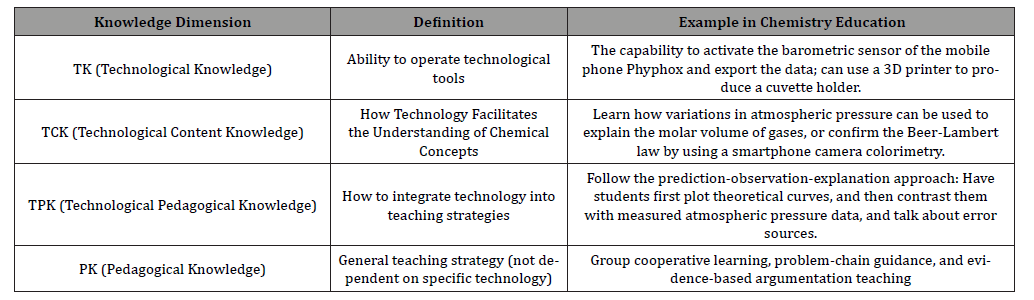
Introducing 3D printer technology and mobile device sensing applications in the classroom is a new challenge to teachers and the Technological Pedagogical Content Knowledge framework by Mishra and Koehler may be used to mitigate these challenges [9]. The model focuses on three aspects such as technology, pedagogy, and content knowledge. More specific advice on how to teach chemistry will be offered by the framework Technological Content Knowledge (TCK) and Technological Pedagogical Knowledge (TPK).
TCK means that teachers can know that certain technologies can be used to explain a particular chemical concept. As an example, teachers should not only be not only be capable of using a smartphone barometer (TK), but should also be familiar with the fact that barometric data can be used to explain the molar volume of gases (e.g., to verify the ideal gas state equation) or that a pressure drop can be used to describe the gas absorption mechanism of the reaction between CO 2 and NaOH. TPK is defined as how to plan teaching lessons based on the technology to find patterns by themselves or decrease the cognitive load by providing demonstrations of the teacher and subsequent analysis of the information across the whole class. In order to make the specific applications of these four knowledge dimensions in chemistry education clear, they have been summarized in (Table 1).
Table 2:Breakdown of knowledge dimensions in the TPACK framework for chemistry education.
Nevertheless, the chemistry teachers have serious weaknesses in both the TCK and TPK aspects at present. The study conducted by Pernaa and Wiedmer is a meta-analysis that most of the studies only look into the technology of 3D printing itself, without looking at how teachers incorporate 3D-printed models in teaching particular chemical ideas such as chiral molecules or crystal structures, which is an area of TCK [3]. Furthermore, lack of TPK in teachers tends to be evident in the form of the so-called lively experiments without improved conceptual knowledge: learners gather information, but they do not establish a link between the gathered data and equations of the reaction or movement of particles. Teacher training is currently largely provided in short workshop formats or through online self-study courses, which are unable to assist teachers in progressing beyond technical implementation to deep integration with instructional design.
Real-world Challenges, Equity Dilemmas, and the Future Research Agenda
Technical safety and stability issues
Even in technical optimism, it can not be ignored that DIY experimental approaches present practical difficulties. The first is the possible chemical instability of 3D printing materials: the most frequently used PLA material has a weak acid, alkali, and organic solvent resistance, which can cause the material to soften, deform, or fail at all in experiments, resulting in problems such as solution leakage, and there are no comparative studies evaluating the chemical stability of various materials. The second is calibration drift and physical durability of smartphone sensors: lack of official calibration procedures result in systematic errors; they can get contaminated or damaged during experiments making teachers reluctant to use their personal devices whereas campusissued phones do not guarantee consistent performance. These considerations are very significant in hampering the universal application of such experimental techniques.
The Digital Divide and the Paradox of Educational Equity
Cheap do-it-yourself schemes may be theoretically associated with the idea of educational equality, but they are also facing major threats. Though the cost of hardware is minimized, hidden costs such as design abilities of teachers, support provided by schools, and prior knowledge of students might not reduce and may possibly rise. Schools that are well-resourced have the opportunity to enhance technologies such as 3D-printed spectrophotometers whereas teachers in the under-resourced schools are busy with their day-to-day teaching tasks and do not have time to engage in such innovative ventures. A strategy that considers only the monetary costs and ignores capacity and institutional costs will eventually worsen the situation of educational inequality.
The less obvious dissimilarity occurs in families. There are huge disparities in the quality of mobile phones possessed by students, with massive disparities between premium devices and budgetfriendly entry-level models in terms of camera functionality and memory size, all of which affect the experience and results of the experiment. It is a fundamental question whether we should aim at everyone having the same high performance devices or to accept the fact that students work meaningfully under their conditions. The first is an impractical goal and the second may lead to the so called fairness becoming a form of covert stratified education. This shows that fairness cannot be seen as a secondary issue that can be considered once technical measures have been put in place but that it should be incorporated into the design and assessment processes.
The three major research directions for the future
Based on the above analysis, this paper proposes three priority directions for future research.
1. One long-term longitudinal tracking study: Perform longitudinal quasi-experimental research that will take at least one semester and use a pre-post test design to determine how students have changed their Four Representations conversions, inquiry attitudes, and self-efficacy. Incorporating both classroom observations and interviews, the current study is able to remove the novelty effect in the short term, observe the differential impact of technology on students with low academic performance, and offer causal reasons why lowcost digital interventions should be encouraged in poorly performing schools.
2. Intelligent Endpoint Detection and Anomaly Monitoring System Based on Computer Vision: To overcome the problem of correct color transition point identification in chemical titration experiments, this system uses a lightweight computer vision algorithm. It uses the camera of smartphones to take realtime images that are automatically computing the RGB color changing rate of the indicator to show visual waveform signals that the endpoint position is present. At the same time, the system identifies sharp turbidity increases as the precipitation forms, producing time-turbidity graphs that help the students analyze the reaction rates. It also has a touch-screen interface, it alleviates the cognitive load of novice teachers allowing them to pay attention to directing the discussion between students on curve anomalies.
3. Creation of a Hybrid Virtual-Physical Inquiry Lab: A light computer vision code has been created to solve the problem of determining the correct color transition points in chemical titration experiments. The system uses the cameras of smartphones to take real-time pictures, and automatically measures the rate of RGB color change of the indicator, showing visual waveform indicators of endpoint confidence; it also records abrupt changes in turbidity with the formation of precipitates, producing a time-turbidity plot to help students evaluate the rates of reactions. The system contains internal warnings on abnormal titration (very fast titration) that reduces the cognitive load on inexperienced teachers and allows them to pay attention to directing student discussion on curve abnormalities.
Conclusion
The combination of 3D printing and smartphone sensing technologies in chemistry teaching is creating an extremely promising disruptive innovation. 3D printing enables teachers and students to be producers, encouraging them to think critically, by opening up the black box; smartphone sensing facilitates access to data visualization, bringing research into the day-to-day life. It fits in very well with the fourth representation in chemistry, i.e., using data as a piece of evidence that links the macroscopic, microscopic, and symbolic worlds, and it also contributes greatly to increased verifiability and operability of the logic of the discipline.
Such a low-cost, highly scalable digital solution can provide a deep insight to the education policy makers. Firstly, the need to reconsider the one size fits all mobile phone policy in the laboratories needs to be discussed, where the educational potential of smartphones as micro-sensing devices is used to its fullest extent. Secondly, the misconception that when the cost is low it means that it is easy to access must be eliminated by establishing a comprehensive resource and teacher support system i.e. developing regional 3D printing sharing platforms and incorporating digital experiments in the list of mandatory teacher training modules. Besides, such technology may contribute to educational equality by allowing the under-resourced institutions to address the access obstacles to the state-of-the-art facilities. Finally, technology ought to be used to benefit the process of teaching; teachers themselves ought to become instructional designers who can develop more effective skills to promote a radical change in the way chemistry laboratories are taught (verification-based to inquiry-based approaches).
Funding
College Student Innovation and Entrepreneurship Program Training Program (project grant number: 202614278084; QuantChem Lab: A Chemical Quantitative Exploration and Data Analysis Platform Based on 3D Printing Technology and Mobile Phone Sensors); Open Competition / Bidding Mechanism for Key R&D Project in Guangdong University of Education (2024JBGS005); Teaching Achievement Cultivation Project in Guangdong University of Education (PX-107241186); Guangdong Provincial Undergraduate University Teaching Quality and Teaching Reform Engineering Construction Project (SJJG-57231142); School-Level Teaching Quality and Teaching Reform Engineering Project in Guangdong University of Education (2025jxgg22); Digital Excellent Course Construction Project in Guangdong University of Education (Online-Offline Blended Course, Key Project) (PX 117251568).
References
- Johnstone AH (2000) Teaching of Chemistry-Logical or psychological? Chemistry Education Research and Practice 1(1): 9-15.
- Stampfer C, Heinke H, Staacks S (2020) A lab in the pocket. Nature Reviews Materials 5(3).
- J Pernaa, S Wiedmer (2019) A systematic review of 3D printing in chemistry education-analysis of past research and educational usage based on the technological pedagogical content knowledge framework. Chemistry Teacher International 2(2).
- Johnstone AH (2009) Multiple Representations in Chemical Education. International Journal of Science Education 31(16): 2271-2273.
- Jennifer García Ramos, Roberto Silva de Souza Júnior, Borges E M (2025) The Evolution of Chemical Education with the help of Digital Images: Literature Review of Laboratory-based Systems. ACS Omega 10(30): 32651-32672.
- Lee I, Hwang I, Mukhopadhyay R D, Kimoon K (2022) Audible Sound Controlled Blue Bottle Experiment. Journal of Chemical Education 99(3): 1539-1544.
- Jiang Qian, Fan Min (2024) Reaction between carbon dioxide and sodium hydroxide solution studied with help of the Phyphox app. Secondary School Chemistry Teaching Reference (24): 55-57.
- Delmonache G, Gogoi P, Ge X, Xingyu W, Rachel S, Ziyun W et.al (2025) The Multi-Purpose DIY Spectrophotometer as an Educational Tool in Analytical Chemistry. Journal of Chemical Education 102(2): 852–856.
- Mishra P, Koehler MJ (2006) Technological Pedagogical Content Knowledge: A Framework of Knowledge of Teachers. Teachers College Record 108: 1017-1054.
-

This work is licensed under a Creative Commons Attribution-NonCommercial 4.0 International License.