



 Research Article
Between Culture and Traditions: Housing as Vernacular Heritage in the Yucatán Peninsula
Received Date:August 26, 2026; Published Date:September 11, 2026
Abstract
This article focuses on recent information regarding traditional transmissions of constructive knowledge of the Mayans, specifically regarding edification of their houses by using raw materials taken from their own surrounding environment. In such structures, the walls and floor are built with adobes conformed by local red earth and native grass. Walls are commonly reinforced with unidirectional wooden rods while roofs are assembled with vines and huano palms, all materials found in the Mayan area of the Yucatan Peninsula. Earth architecture has been common in many towns around the world, since it is the most accessible and abundant material. Unfortunately, this knowledge has been lost through new generations due to discrimination and exclusion, the result of internal colonialism, which has classified this earthen architecture as an indicator of poverty. However, there are still men and women descendants of this tradition who can reactivate the transmission of constructive knowledge to future generations.
Keywords: Constructive techniques; Mayan traditions; Adobe, Traditional architecture.
Introduction
The Mayan House in the South of the Yucatán State
Architecture serves as a powerful reflection of the culture, values, and history of society. Housing, in particular, is one of the most intimate and insightful aspects of this, as it reveals how people lived, organized their lives, and interacted with their environment (Ley-Paredes et al. [1]). The way homes are designed and constructed often mirrors economic conditions, social structures, climate, and even spiritual beliefs of a particular era or place (Sánchez-Suárez [2]; Maha [3]; Pasha and Adnan [4]). Exploring housing construction over time, allows to evaluate how humans have adapted their buildings to different climates and geographies developing ingenious solutions to common problems such as ventilation, heating and insulation (Rodríguez-Viqueira and Fuentes-Freixanet [5]). These adaptations not only improve quality of life but also reveal a deep understanding of natural environments and an ability to integrate harmoniously with them. Housing, as an integral part of architecture, is a crucial reflection of the cultural and technological evolution of societies (Morgan and Leventhal [6]). By analyzing homes from different eras and regions, it is possible to gain a clear view of how humans have interacted with their environment and progressed in their ability to create livable and functional spaces (Sangiorgi [7]). Traditional Mayan architecture is characterized by using local materials and techniques that have survived time by passing down from generation to generation. In the region of the peninsular Mayans, this is reflected in the constructions based on limestone, wood and palm, abundant materials in the area. Construction techniques, such as masonry structures and palm roofs, are not only sustainable, but are also perfectly adapted to the tropical climate of the Yucatan Peninsula, providing freshness and natural ventilation to the homes (Wauchope [8]). These architectural practices are not only maintained for their efficiency and sustainability, but also for their deep cultural value (MacNeill [9]). Additionally, traditional Mayan constructions, such as “hut” style houses, not only offer functionality, but also preserve a connection to the community’s identity and history. These homes, with their characteristic round shapes and high palm roofs, represent a living legacy of pre-Hispanic architecture adapted to modern times.
The monumental buildings of the Mayans, such as temples, palaces, and pyramids, made of calcareous stone and other durable materials, have stood the test of time and are impressive examples of their architectural skill and social organization. These structures, located in the heart of the Mayan cities, served not only as religious and administrative centers, but also as symbols of power and knowledge. However, the daily life of the majority of the Mayan population took place in more modest buildings, made of natural and local materials, such as wood, cane and palm. These homes, designed to be practical and adapted to the environment, were not built to last millennia like stone monuments. Consequently, most of these structures have disappeared over time, leaving few visible traces (Scott et al. [10]). A clear example of the aforementioned trend is the various archaeological works focused on housin.g structures and similarities that are found around the world (Formolly and Saraei [11]). Paradoxically, these studies have provided a wealth of information about the settlement patterns and social dynamics of Mayan communities. However, these housing areas have suffered the most destruction over time. In many cases, they have been used as farming areas, which has led to the devastation of archaeological remains in order to prepare the land for planting. This practice has resulted in the irreparable loss of valuable historical and cultural data, underscoring the need for greater protection and specialized study of these habitation sites. Archaeological evidence from Mayan housing units offers a fascinating window into the past, revealing the morphology of the house, its relationship with other structures and the use of perishable materials such as wood and palm. Despite being relics of ancient times, these constructions continue to be a housing option for many inhabitants of the municipalities of the Yucatan Peninsula today.
Traditional and Historical Context of Mayan House
The persistence of these structures, however, is not due so much to an attachment to the benefits of vernacular architecture, but rather to the socioeconomic realities that these communities face (Gómez-Martínez et al. [12]). In a context where resources may be limited and modern housing options may be inaccessible to many; these traditional buildings continue to be a practical and affordable alternative. The arrangement of Mayan dwellings in relation to their natural surroundings reflects a deep understanding of the environment and an ability to harmoniously integrate with it. Traditional structures are usually oriented to take advantage of the shade of surrounding trees and catch cool breezes, thus creating a cool and comfortable environment in a tropical climate. It is evident that the aesthetics of Mayan houses not only meet the functionality and comfort requirements for rural living but also reflect a deep connection to the natural environment and an appreciation for beauty in its simplest form. Such predisposition has prevailed in other cultures around the world (Cao et al. [13]). This aesthetic, rooted in the culture and history of the region, has undoubtedly influenced the design of large pre-Hispanic buildings, transmitting an architectural legacy that endures to this day. Over time, Mayan homes have been harmoniously integrated into the various types of urban layouts, adapting to the changing needs of society. Its walls, covered in lime, not only offer protection against mud and the elements, but also provide a characteristic luminosity that highlights its beauty. These whitewashed walls extend into the well-arranged walls, whose diagonal break not only adds visual interest, but is also a cordial invitation to enter the house.
Structural and Social Arrangement of Mayan House
The Mayans were indeed highly efficient in utilizing their local environment. They demonstrated a deep understanding of the resources available to them and made strategic use of materials that were abundant in their surroundings. This included wood, limestone, and other natural elements that were readily accessible in the regions they inhabited. Mayan housing construction was deeply influenced by the cosmic knowledge and rituals of Mayan society (Sosa [14]; Lucero and Gonzales-Cruz [15]). The Mayans, known for their advanced understanding of astronomy, cosmology, and their intricate religious practices, built their homes in ways that reflected their spiritual beliefs and the natural world. Some key aspects of Mayan housing construction linked to cosmic knowledge that are followed even to our days are:
I.Orientation and Alignment: Mayan homes were often constructed with specific orientations based on astronomical and cosmological principles. The Mayans had a sophisticated understanding of celestial movements, such as the sun’s trajectory, the cycles of the moon, and the movements of Venus. Homes might be aligned with specific cardinal directions, or in accordance with the movement of celestial bodies, to create harmony with the cosmos. This alignment was not just practical but symbolic, reinforcing the connection between the physical world and the cosmic order.
II. Centrality of the Hearth: The hearth, or the central fire, was a crucial element in Mayan homes. It was not only functional but also had a spiritual significance. The hearth often symbolized the center of the universe, mirroring the concept of the “axis mundi”, the world tree or the axis of the cosmos. The hearth represented the connection between the heavens, the earth, and the underworld, and it played an integral role in Mayan rituals and daily life.
III. Sacred Materials: The materials used in the construction of Mayan homes were also symbolic. For instance, thatch roofing was commonly used, but some homes, especially those belonging to higher-ranking individuals, were constructed with stone. In some cases, the materials could reflect an individual’s social or spiritual status, indicating a higher connection to the divine or to certain cosmic forces.
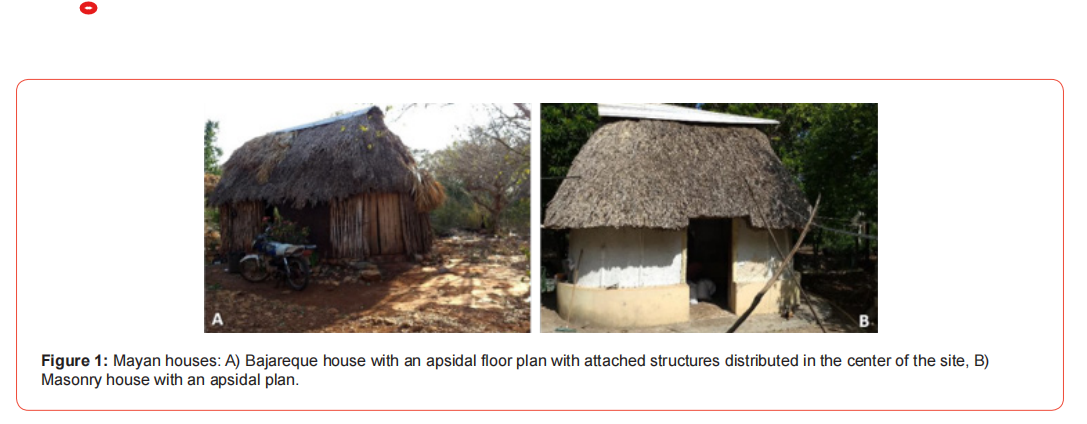
The construction process begins with the choice of the place within the lot where the home will be built. Materials must be prepared and collected according to the projected dimensions of the house. Subsequently, the necessary excavations are carried out to cement the pillars, which will support the structure. This stage is fundamental, since it delimits the area and defines the shape of the house, which can be rectangular or apsidal. Precision in this phase is crucial to ensure the stability and durability of the construction. The Mayan house as a clear example of traditional architecture of homes in Mayan villages, is an ecological construction, since the materials that make it up are obtained from the natural surrounding environment (jungle and mounts). From here, both the wood that will sustain the structure of the house and the vines or ropes are obtained to make all the necessary moorings during construction. In addition, huano leaves are cut and used to conform the roof, which protects the inside from the sun and rain (Pulido-Silva and Caballero-Nieto [16]). Around the house, grass fibers and soil are collected and applied as reinforcement to provide strength and consistency to the adobe used in the walls. Despite some studies (Wilk [17]) stating that “the size of the house is not a reflection of the household´s wealth, status of power”, truth is that, nowadays, in modern Mayan areas in Yucatan, materials quality, size, type of housing, etc., are making an economic and social difference. This type of construction, depending on the materials recollected, represents the economic status of the families, which varies from those houses that do not incorporate stones around them to those that are made up entirely of masonry material, with the exception of the roof, which is built with vegetative materials. However, although buildings that are almost entirely structured of masonry, are often associated with poor or lower-class families. This is one of the reasons why many of these homes have been abandoned. In addition, families have begun to decide for constructions with different kinds of materials, such as cementitious block houses. Another factor that has contributed to their abandonment is the constant maintenance they require due to the natural materials that compose them, which need to be renewed in shorter periods of time (that is why they are called ‘living houses’) compared to traditional concrete houses (Figure 1).
At the Plan Chack II village located in Akil, Yucatán, it is possible to assess the abandonment of the Mayan houses. According to an interview with locals, the families were leaving this housing practice because the government pointed them out as a place for poor families, which bothered them, and finally left their homes to go live in other places promoting migration to big cities. However, it is also observed that some buildings still receive maintenance, but are only used by the land owners when they go for a walk through their properties.
Traditional (Empirical) Construction of Mayan House
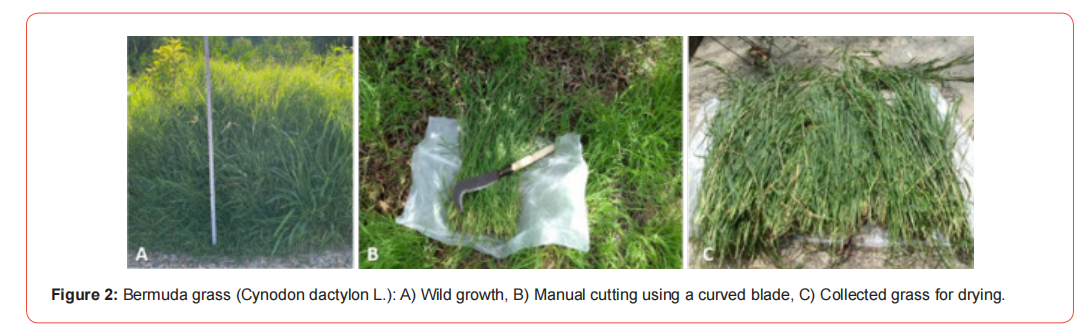
Bermuda grass (Cynodon dactylon L.), locally known as KanSuuk (in Mayan language) is the most important fiber for the Mayan inhabitants, since they consider it a necessary plant in the construction of their houses due to the benefits it provides in the production of mud. This type of grass, when mixed with Kankab (red earth), forms a moldable and strong mixture that can later be applied to the basements of houses as a kind of cement that forms a solid wall although it does not provide of an integral component in the structure of the house (Pollock [18]). On the other hand, the grass fibers present an adequate physical interaction with the earth, allowing the obtaining of material with these properties and the ability to be used in the constructions of the Mayan settlers. These grass fibers are collected when the rainy season begins, this term being beneficial for its growth and when it is found in abundan measures around one meter in height, as this is when the residents consider that the plant has already matured and present the necessary resistance to be used in the mud mixture as reinforcement (Figure 2). This is cut and placed in small rolls weighing between 5 kilos for easy handling.ce on the edges of the streets and flat lands without large trees, since this grass needs a lot of sunlight to grow. The cutting of these natural fibers is carried out during the new moon, which is when the stem retains a smaller amount of sap inside, so that the fibers take longer to decompose. As it does not have sugars inside, it does not attract insects, microorganisms and fungi that would cause the decomposition of the fibers. The optimal size for collecting grass is when it measures around one meter in height, as this is when the residents consider that the plant has already matured and present the necessary resistance to be used in the mud mixture as reinforcement (Figure 2). This is cut and placed in small rolls weighing between 5 kilos for easy handling.
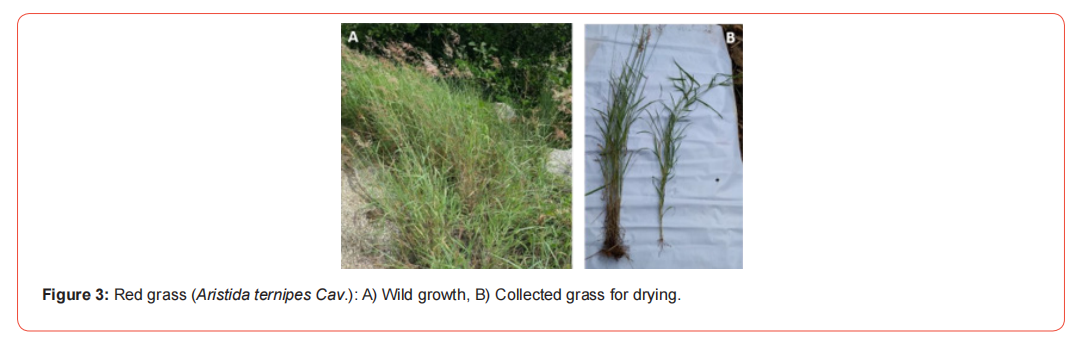
After cutting, the grass is ready to be used immediately in the production of adobe, but the Mayan residents recommend spreading the grass rolls in a clean place where they receive sunlight and letting them dry for a week to eliminate moisture and prevent the appearance of fungi in the fibers. Once the fibers are dried, they are cut to the size required to make the mud. The fibers are placed on a wooden log and cut with a machete to an approximate measurement of 10 cm, or ‘half a quarter’ as the Mayans say. This is the optimal measure that they have used in their constructions, a knowledge passed from generation to generation and that they consider it mixes best with the right amount of earth, allowing them to obtain a mixture that facilitates working correctly. Red grass (Aristida ternipes Cav.) or Chaak-Suuk is another variety that has been applied as a natural fiber for reinforcing mud in Mayan houses (Figure 3). According to the residents, this variety of grass was the one most used; they even call it ‘house grass’. However, the usage of herbicides on the land has caused it to disappear, obstructing the task of finding large quantities to be considered in Mayan homes building. This variety is only found in the rainy season, since it is a plant that sprouts through seeds and requires abundant water, unlike the Kan-Suuk, which is found all year round as a creeping plant. Only in the rainy season it grows upwards, allowing several cuts to be made without the plant dying, as it will grow again. Red grass, as it develops through seeds, only allows one cut; afterwards, the plant dies. This type of grass has a variation in the diameter of its stem compared to the Kan-Suuk variety, since its stem is almost twice as wide. A red grass single plant is made up of fibers between 20 and 25 cm long. The flowers indicate that the plant has matured for cutting, and these pinkish-red flowers contain the seeds. Unlike the other variety, this one reproduces asexually through stolons, which are weak, horizontally growing stems that always start from the main stem and that many plants produce. They always grow very close to the ground, or below it, giving rise to a new grass plant in each stolon.
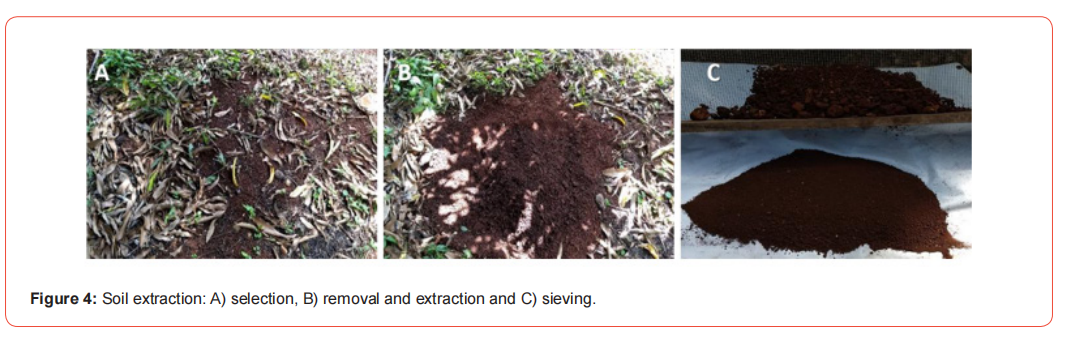
Concerning the adobe mud, Mayan residents state that their adobe constructions techniques have been passed down from generation to generation and the way of preparing it has not changed much, since what their parents taught them is the correct way to make the adobe mixture for covering the walls of their homes. It should be noted that, among Mayan traditions before building a new Mayan house, people request permission from nature and the Mayan gods so that the construction is carried out properly and no accidents occur. In order to elaborate the desirable adobe mud, special places where the earth looks redder is sought, since, according to residents, the reddest earth is the correct one and contains the appropriate clays that provide the adequate properties for the application of adobe. Once the place has been selected, a superficial layer of approximately 5 cm is removed, since this layer of earth contains a large amount of silt or decomposing vegetative matter (organic material and other non-soil substances), which is unfavorable for making adobes (Peraza-Gongora et al. [19]). After having eliminated that layer of soil, the next process is to remove the remaining soil with picks and shovels. The soil is collected and passed through a 1 cm sieve and then through another 3 mm sieve, with the purpose of eliminating any stones and roots it may contain (Figure 4).
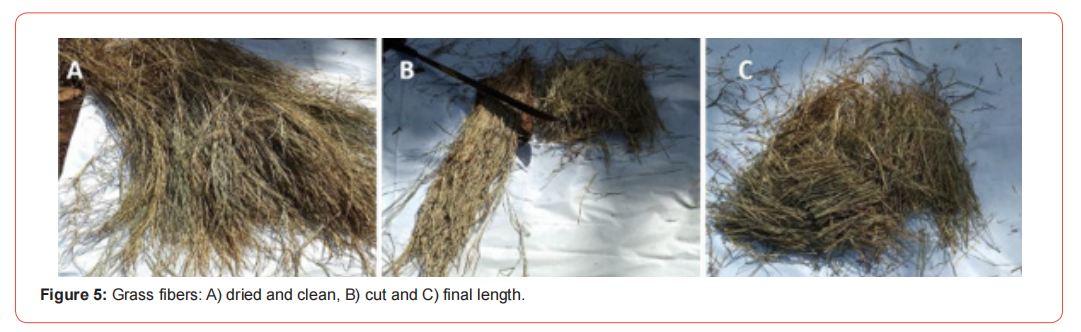
In order to prepare the earthen reinforced system, the chosen dried grass fibers are cleaned, removing any other types of grass that may have been mixed with the fibers when they were cut. After cleaning, the fibers are placed on a tarp or cloth and cut on a wooden surface with a machete to a length of 10 cm (Figure 5).
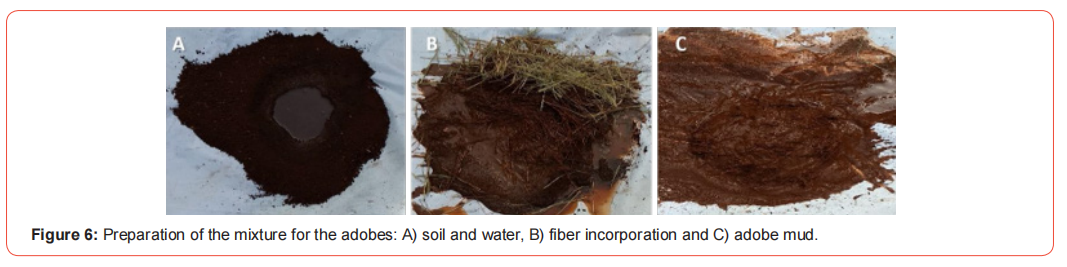
Three samples, SP020, SP023 and SP022, are dark pieces of glass tFollowing the empirical adobe processing to elaborate adobe, firstly, the earth that was previously sifted and considered optimal for the adobe is placed on a clean surface; then, water is added to the soil until it is completely wet. At that point, the grass fibers are added, incorporating them into the soil and ensuring that they are correctly distributed throughout the mixture. The fibers are added gradually in small portions, observing how the preparation of the adobe requires it while the earthen system is being kneaded by using the feet. It should be noted that, as in many empirical techniques, the efficiency of this process depends on the experience of the individual to obtain good material for adobe. This preparation procedure takes between one and two hours, since the longer the mixture is stepped on with the feet, the better the fibers adhere to the soil (Figure 6). The aim is for the mixture to have a moldable consistency for easy application in construction, and the prevalence of an earthen system with greater durability to be applied for the structure of the walls of homes.
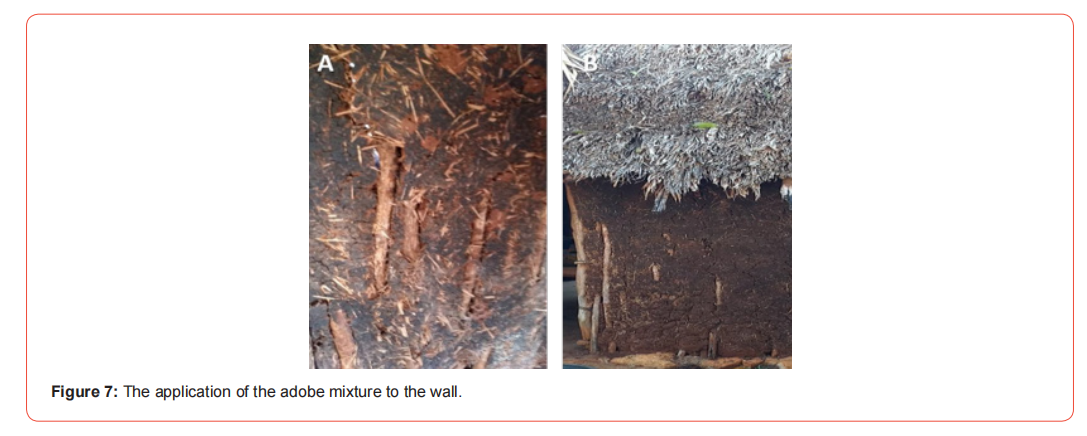
Finally, when the earthen mixture is ready, it is directly applied on the walls of the Mayan house, taking a considerable amount by hand and applying it to the basements of the house, forming a 2 to 2.5 cm thick coating on the walls (Figure 7). The adobe mud covers an internal structure of unidirectional wooden rods that will serve as reinforcement to conform de walls. This coating is carried out both on the internal and external part of the house, seeking to provide greater comfort and protection against the weather and the animals that are in the surroundings.
In order to stabilize the structure, the Mayans used a vine, plant of the bignoniaceae family called Anicab (Arrabidaea floribunda), as a rope, with which they tied all the structural parts of the wood that needed to be joined, since they did not use wires or nails (Figure 8). This vine is of great importance as mooring material in their constructions. Also known as a climbing plant, its main mission is to “tangle itself” and climb different surfaces, be they posts, walls or pergolas. This plant grows on large trees, adhering to its trunk and seeking the crown of the tree, which is where it develops its leaves and fruits.
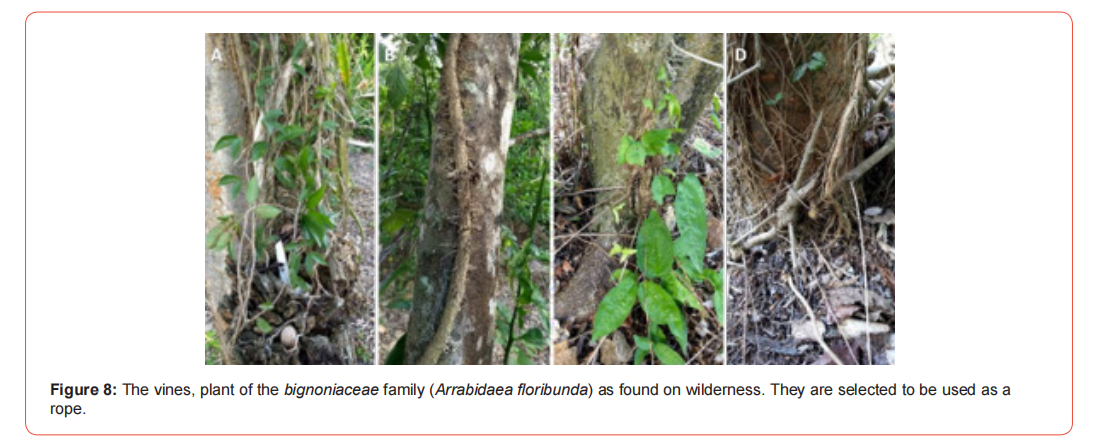
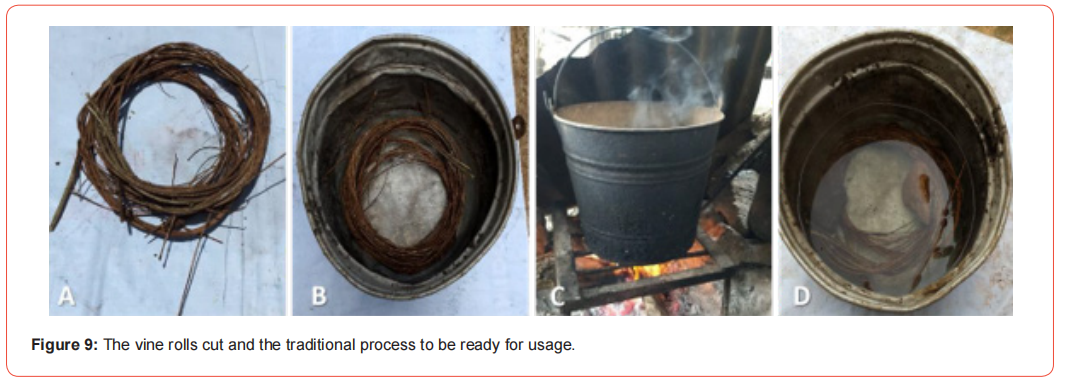
This vine is collected by the Mayans in the adjacent mounts. They travel through the jungle looking for these plants; when they find them, they cut the roots of the plant and pull them out completely, since they can measure 4 to 6 meters long. Once collected, the vines are gathered in batches of six to later be rolled up so they can be transported to the place where they will be prepared for use. Before being used, these vines must receive a treatment that will give them the necessary flexibility to be applied as ropes in the union of the wood that needs to be tied. The treatment is as follows: the vine rolls are placed in a metal container, water is heated to the boiling point and, when the water reaches this point, it is added to the container with the vine rolls. Heavy material is added to keep the vines submerged. These will remain in the container until the water reaches room temperature or has cooled completely. At the end of this treatment, the vines are removed and left to dry in the shade, ready to be used as mooring rope (Figure 9).
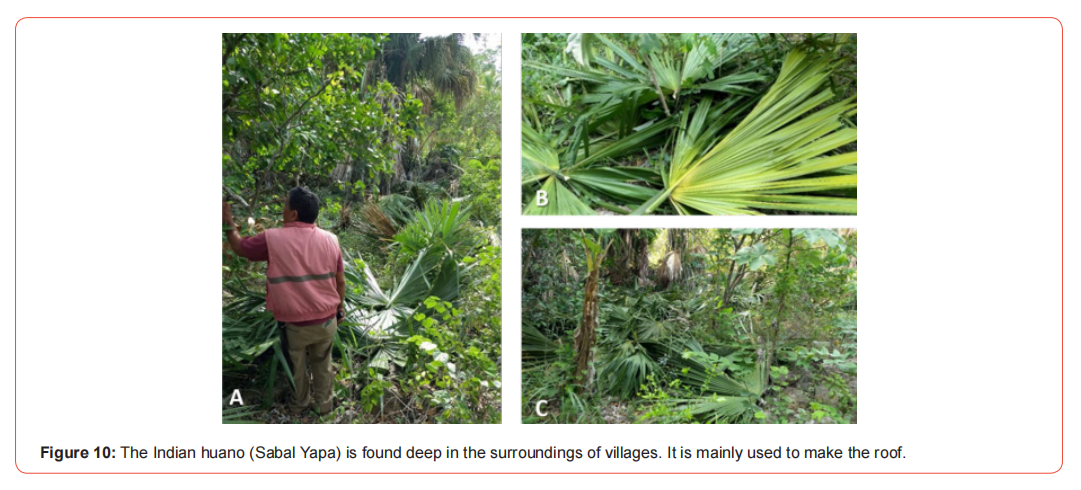
Huano plant known in Yucatan peninsula as Julok xa’an (Sabal Yapa) is of great value, its leaves are used to make the roofs of Mayan houses because they are conformed of a large number of fibers that prevent them of deterioration by being exposed to the environmental elements for long periods of time and confers resistance (Caballero et al. [20]). According to the Mayan builders, huano roof takes between 20 and 25 years to present advanced weakening problems, which is of great importance, since it is not necessary to renew the huano palms constantly. The shape of the gable roofs, due to their height, makes the work difficult to carry out with frequency. Among the varieties of huano two mainly are used in homes: the domestic huano (Sabal Mexicana) and the indian huano (Sabal Yapa). The first one is found in greater quantities in the fields and is a plant that produces larger and more flexible leaves, ideal for the construction of roofs. The second one, which is mostly only found in forests and is very difficult to find today, produces smaller leaves that are a little harder to handle. However, this type of huano is much more resistant to the environmental elements, so Mayan settlers look for it to use on the top of roofs, where the climate affects it more (Caballero-Nieto et al., [21]).
After cutting the huano leaves, they are arranged individually in a large area. They are left in the sun for two to three days to dry and remove moisture from the leaves and then placed in rolls of 20 to 30 leaves each. Harvesting is carried out at dawn, since the night sky softens the leaves and allows them to be handled easily. This morning dew provides the exact amount of moisture that allows the leaves to bend without causing rot in the palm. In addition to the weather conditions that dry and moisten the huano leaves, it is important to carry out the work on a full moon. It is said that this is related to the water that still remains in the leaves and to insects, which do not affect the palm during a full moon. The seasoning procedure takes a little bit more time if there was more internal moisture content but eventually produced more durable structural materials; Wauchope found the same custom in the 1930s (Wauchope 1938). The truth is that, if it is not done this way, the palm will rot irreparably, especially at the upper point that joins both sides of the pyramidal roof. This upper part is called Pak jo’ol or easel. Depending on the size of the house, from 3,000 to 6,000 huano leaves will be used for larger houses (Figure 10)..
The Yucatan Mayans Today
The present-day Mayans in the Yucatan Peninsula are a vibrant and diverse indigenous group that continues to practice their traditions and customs, while adapting to modern life. They are known for their Mayan language, their rich craftsmanship, and their strong connection to the land and family. Although many have adopted new technologies and professions, Mayan culture remains an integral part of their identity. The Peninsular Mayans primarily inhabit the Mexican states of Yucatán, Campeche and Quintana Roo, as well as parts of Belize; Mayan language, or Maayat’aan, is spoken by the majority of the Mayans on the peninsula (Rodríguez-Balam [22]). The family continues to be a fundamental pillar in Mayan society, with strong ties between generations creating solid bonds between members. They celebrate both family events and community festivities, such as patron saint festivities, which are important for strengthening community ties as a dynamic community preserving their cultural heritage while adapting to the challenges and opportunities of the modern world. Even today certain celebrations are based on ancestral rituals to honor the gods related to the sacred natural elements (fire, water, earth and air), rituals are performed before and after the harvest season. The relationship between nature and society in the Mayan area is intrinsic and deep, rooted in a worldview that considers nature as an integral part of human and sacred existence. The contemporary Mayans and their ancestors have developed a deep knowledge of the natural environment and a close relationship with it, manifested in their daily life, rituals and artistic expressions.
For the Mayans, nature is not separate from the human; both are part of the same living system, where Mother Earth (Qanan Ulew) is central. The territory they inhabit is seen as humanized and sacred, and the human being is considered part of the cosmos (Llanes-Salazar [23]). The Mayans integrate nature into their cosmology, where the earth, sky and living beings are interconnected. The Mayans have extensive acquaintance about plants, animals and natural cycles, which they use for agriculture, medicine and other activities; such knowledge is enriched by its mythology where underworld beings take care of nature, life and death.
Like many societies, Mayans have been adapting to some recent customs that threaten their ancient way of living. They no longer dress in traditional clothing and have incorporated technology and all the modernity for their housing, including new construction techniques and materials. Although many Mayans have adopted new technologies and lifestyles, Mayan culture remains an important part of their identity, with a mix of tradition and modernity (PINKUS, Manuel et al., [24]). Of course, the family continues to be the central axis of their lives, maintaining ties and closeness when choosing a house or building.
So far, the Mayan ethnicity of Yucatan seeks the officialization of language and education intercultural, and acceptance by the authorities in order to prevail over their traditions and culture. They struggle with modernity to maintain an ancestral generational knowledge that every day is in constant menace by the continuous changes in the world they try to fit in..
Conclusion
Ethnoantropological research regarding the technical traditions involved in earth construction systems applied in modern Mayan houses provides an actualized understanding of the cultural contexts in which earth construction takes place is crucial. This includes rituals, social structures, and the transmission of knowledge across generations. Through direct interviews with local inhabitants, it is examined how modern communities select and prepare natural surrounding materials such as huano palm, soil, and grass by observing local geological and environmental conditions and seasonal changes that affect material properties. Undoubtedly, housing serves as a reflection of the people who build and live in it, and as such, it reveals much about their socio-economic status, beliefs, and desires. This perspective allows a house to be viewed not merely as shelter, but as a site where cultural change and continuity can be observed. The evolving design, function, and layout of homes can reveal broader transformations in society, whether through architectural trends, technological advances, or changes in family structures and social norms. Therefore, the house is both a product and a contributor to cultural change. It holds layers of meaning, reflecting how individuals and communities adapt to, negotiate, or resist cultural shifts through their domestic spaces. Finally, it is clear that researchers look at how communities adapt traditional techniques to modern needs, incorporating new materials or technologies while maintaining cultural identity; often linking contemporary practices with archaeological findings. By comparing modern structures with ancient ruins, researchers can make inferences about past building practices.
Acknowledgements
The authors are grateful to Secretaría de Ciencia, Humanidades, Tecnología e Innovación (SECIHTI) for the financial support through project grant CBF-2025-G-726 and Scholarship No. 442661 awarded to Dr. Jhonny Martin Peraza Gongora, which contributed significantly to the success of this research project.
Conflict of Interest
The author(s) does/do not have any type of conflict of interest to declare.
References
- Aarne (1964) Antti, and Stith Thompson, The Types of the Folktale: A Classification and Bibliography. Folklore Fellows Communications, No. 184 (Helsinki: 1964).
- Abdul-Hakim, (1996) A Shawqi. Al-Amīrah Dhāt al-Himmah (Cairo: Al-hay'a Al-Misria Al-Aama lilkitab).
- Anonymous (n.d.). Al-‘Amîr Hamzah al-Bahlawân known as Hmazah of the Arabs. (Arabic). 4 vols, (Cairo: n.d.; (Cairo: Maktabt al Gomhûriyyah, n. d..).
- Anonymous, (n.d.) Qissat ez-Zîr Sâlim, Abû Lailah al Muhalahal al kabî (Cairo: Maktabt al-Gumhriyya, n.d.).
- Anonymous (n.d.). Sirat al-malik Saif, 4 vols. (Cairo: n. d. Gomhouriyyah ).
- Awad (197 ??), Louis, ez-Zîr?? In Arabic (Cairo: 197 ??). [Irretrievable records].
- Burton (1894/1983), Richard F., ed., tr., Arabian Nights: The Book of the Thousand Nights and a Night (London, 1894/1983).
- Garry, Jane. See El-Shamy 2005.
- Caskel (1930), Werner. “Aijyâm al-`Arab; Studien zur altarabischen Epic.” In: Islamica. III. Fsc. 5. 1930. Suppl.
- Gohary, M, Hasan El-Shamy, eds. trs. (1972). Qâmûs mustalahât al-’ethnolojyâ wa al-folklore (Tr. of A. Hultkranz’s General Ethnological Concepts). (Cairo: El-Marifff, 1972).
- Haddad (2018) Abed Fahed, Farah Bsieso, Samer al Masri.
- Hamilton (1981) Terrick, Antar: a Bedoueen Romance; (1981, First published 1819. Antar and ‘Abla: a bedouin: a bedouin romance). (Delmar, N.Y.: Scholars' Facsimiles & Reprints, 1981).
- Heath (1984) Peter. “A Critical Review of Modern Scholarship on `Sīrat ʿAntar ibn Shaddad" and the Popular Sīra’”. In: Journal of Arabic Literature, (Leiden: Brill), 15: 19-44.
- Hultkranz (1960) Ako. General ethnological Concepds. (Rosekilde and Bagger, Copehagen, 1960)
- Ibrahim/Salim (1966) Nabīlah. Dirash muqaranah (A comparative study), 5th (Cairo: al-Maktabah al-’Akadîmiyyad).
- Ibrahim (1968) Nabī Sīrat al-Amīrah Dhāt al-Himmah : dirāsah muqārinah / taʼlīf Nabīlah Ibrāhīm.Published ،(1968] Cairo: : Dār al-Kātib al-ʻArabī, [1968].
- Lane (1973), Edward William, An Account of the Manners and Customs of the Modern Egyptians (New York, 1973).
- Le Gassick (1991) Trevor, ed., “The Traditional Structure of Sentiments in Mahfouz's Trilogy: A Behavioristic Text Analysis.” Reprinted in: Critical Perspectives on Naguib Mahfouz, Trevor Le Gassick, ed. (Washington, DC: Three Continents Press), pp. 51-70.
- Littmann (1950) Enno, Ahmed il-Bedawi, ein Lied auf den Ägyptischen Nationalheiligen." In: Akademie der Wissenschaft und der Literatur: Geistes und Sozialwissenschaftlichen Klasse, Mainz (Wiesbaden: 1950, no. 3), pp. 50-123; also issued as an independent book, pp. 1-73; see pp. 61-62 and "Anmerkungen," nos. 6 and 8, pp. 122-123.
- Lyons (1955) Malcolm Cameron. The Arabian epic: heroic and oral story-telling. 3 vols. (Cambridge: Cambridge University Press 1955).
- Oliverius (1955) Jarslav. “Aufzeichunges uber den Basuu Krieg in der Kunstliteratur und deren Witeren twicklung in arabibischen Volksbuch über Zir Salim”. In: archiv orientani. 1985. [based on a copy by A. S. al-Habaal].
- Oliverius (1975) Jarslav. “The Epic and Geniologicl Cyclization in Arabic Folk Book about Zîr Sâlim” IN; Acta Univertatis Carolinae-Philologica 5 (Prgue University: )1975.
- Oliverius (1971) Jarslav. “Theme und Motiveim arabische Volkbuch von Zir Sâ” In: Archiv orietalini 31: 129-145.
- Patai, Raphael (1969) Golden River to Golden Road: Society Culture and Change in the Middle East. (Philadelphia: 1969).
- Sālem, Nabilah. See, Ibrahim, Nabilah.
- Shamy (1976) Hasan, “The Traditional Structure of Sentiments in Mahfouz's Trilogy: A Behavioristic Text Analysis.” In: Al-CArabiyya: Journal of the American Association of Teachers of Arabic, 9: 53-74.
- Shamy Hasan (1976) The Story of El-Sayyid Amad El-Badawî with Fatma Bint Berry, An Egyptian Folk Epic, part II, text and explanatory notes.” In: Folklore Forum, 11(3-4): 140-63.
- Shamy Hasan (1976) The Story of El-Sayyid Amad El-Badawî with Fatma Bint Berry,” part I, “An Introduction.” In: Folklore Forum, (Indiana University), 10(1):1-13.
- Shamy Hasan (1979) Brother and Sister. Type 872*: A Cognitive Behavioristic Text Analysis of a Middle Eastern Oikotype. Part I.1 of the “Brother-Sister Syndrome in Arab Culture”. (Folklore Monograph Series, Vol. 8, Folklore Publications Group, Bloomington, Indiana).
- Shamy Hasan (1981) The brother-Sister Syndrome. In: International Journal of Sociology of the Family, Special Issue, The Family in the Middle East, Mark C Kennedy, ed., 11(2): 313-323.
- Shamy Hasan (1995) Folk Traditions of the Arab World: A Guide to Motif Classification, 2 vols. (Bloomington, Indiana University Press, 1995).
- Shamy Hasan (1999) Hasan, Tales Arab Women Tell: And the Behavioral Patterns they Portray. Collected, translated, edited, and interpreted by Hasan M. El-Shamy. (Bloomington: Indiana University Press, 1999)
- Shamy Hasan (2004) Hasan, Types of the Folktale in the Arab World: A Demographically Oriented Tale-Type Index. (Bloomington: Indiana University Press, September 2004).
- Shamy Hasan (2005) Hasan, “Sister and Brother (Motif, P253)”, pp. 349-61. In: Archetypes and Motifs in Folklore and Literature: A Handbook, Jane Garry and Hasan El-Shamy, eds. (M.E. Sharpe, 2005).
- Shamy (2007) Hasan M, “Factors involved in Typological and Genre Studies”. In: Les Hommes et les recités: Théories et pratiques. Edited by A. Chrï Paris: L’Harmattan, pp. 315-361.
- Shamy (2009): Religion among the Folk in Egypt. (Praeger: Connecticut, London: 2009).
- Shamy Hasan (2007) Siblings in Alf laylah wa-laylah”. In: Ulrich Marzolph, Guest ed. The Arabian Nights: Past and Present. In: Marvels & Tales: Journal of Fairy-Tale Studies. Special Issue, Wayne University Press, Vol. 18: 2.
- Shamy Hasan (2013) Beyond Oedipus: The Brother-Sister Syndrome as Depicted by Tale-Type 872*: A cognitive Behavioristic, demographically oriented, Text Analysis of An Arab Oikotype. (The Trickster Press, Bloomington: 2013).
- Shamy Hasan (2016) Motific Constituents of Arab-Islamic Folk Traditions: A Cognitive Systemic Approach. 2 vols (Indiana University).
- Shamy Hasan (2017/2016), Folklore of the Arab World”. Humanities: 2018, 7(3): 67.
- Simpson (1972) William Kelly, ed., The Literature of Ancient Egypt. (New Haven: Yale University Press, 1972).
- Taymûr (2000) Ahmad, Al-Amthâl al- Câmmiyyah (Vernacular Proverbs). (Cairo: Al-Shurûq, 2000)
- Tayyib (1970) Al-Tayyib Mohammad, Al turâth al-shaCbi li qabeelat al-Humrân [Folk traditions of the Humrân tribe]. Mimeographed. (University of Khartoum, 1970).
- Thompson (1964), See Aarne, above.
- Tompson, (1955-58), Stith, Motif-Index of Folk Literature. (Blomington: Indiana University Press 1955-58).
- Von
- LEY-PAREDES,Victor José., CERVANTES-UC, José , PEREZ-PACHECO, Emilio., RÍOS-SOBERANIS, Carlos Rolando., WAKAYAMA, Shushi (2018) Physicochemical and mechanical study of Mayan archeological stony constructive materials. Journal of Applied Research and Technology 16:287-298.
- SÁNCHEZ-SUÁREZ, Aurelio (2006) La casa maya contemporánea. Usos, costumbres y configuración espacial. Península, 1(2): 81-105.
- SALMAN, Maha (2018) Sustainability and Vernacular Architecture: Rethinking What Identity Is. In: Urban and Architectural Heritage Conservation within Sustainability, Edited by Kabila Hmood. Intech Open.
- PASHA, Yasira Naeem; ADNAN, Shahla (2019) Architectural education as interface between culture and built environment. Journal of Art, Architecture and Built Environment 2(2): 35-52.
- RODRÍGUEZ-VIQUEIRA, Manuel., FUENTES-FREIXANET, Victor (2006) Traditional Mayan architecture according to latitude and altitude, PLEA2006 - The 23rdConference on Passive and Low Energy Architecture, Geneva, Switzerland, pp. 6-8.
- MORGAN,Kasey , LEVENTHAL, Richard M (2020) Maya of the Past, Present, and Future: Heritage, Anthropological Archaeology, and the Study of the Caste War of Yucatan. Heritage 3: 511-527.
- SANGIORGI, Franco (2008) The vernacular rural heritage: from the past to the future. Futuropa 1: 4-5.
- WAUCHOPE, Robert (1938) Modern Maya Houses: A Study of Their Archaeological Significance. Carnegie Institution of Washington. Washington D.C.
- MACNEILL, Timothy (2020) The Maya Idea of Culturally Sustainable Development. In: Indigenous Cultures and Sustainable Development in Latin America. Edited by Timothy MacNeill. Palgrave Macmillan, Switzerland, pp. 145–173.
- HUTSON,Scott , STANTON, Travis W., MAGNONI, Aline., TERRY, Richard., CRANER, Jason (2007) Beyond the buildings: Formation processes of ancient Maya houselots and methods for the study of non-architectural space. Journal of Anthropological Archaeology 26: 442-473.
- FORMOLLY, Aimal., SARAEI, Mohammad Hossain (2024) Socio-cultural transformations inmodernity and household patterns: a study on local traditions housing and the impact and evolution of vernacular architecture in Yazd, Iran. City, Territory and Architecture 11(15):1-17.
- GÓMEZ-MARTÍNEZ Vidal, MA Geng, PELLEGRINI Paola, COSTA Miguel Reimao (2022) Vernacular Architecture and Cultural Identity in Shrinking Rural Settlements. ACE Architecture, City and Environment 17(50): 11389.
- CAO Hui, TAMÁS Anna María, SZTRANYÁK Gergely, ZHANG, Erqing (2022) Regenerationand sustainable development of vernacular Pollack Periodica 17(2): 151-156.
- SOSA, John R (1989) Cosmological, Symbolic and Cultural Complexity among the Contemporary Maya of Yucatan. In: World Archaeoastronomy: Selected Papers from the 2nd Oxford International Conference on Archaeoastronomy, Merida, Yucatan, Mexico, Cambridge [Cambridgeshire]: Cambridge University Press 13(17): 130-42.
- LUCERO,Lisa , GONZALEZ-CRUZ, Jesann (2020) Reconceptualizing Urbanism: Insights from Maya Cosmology. Frontier Sustainably Cities 2(1): 1-15.
- PULIDO-SILVA, María Teresa., CABALLERO-NIETO, Javier (2011) Chapter: La Palma de Guano en la Península de Yucatán”. In: Riqueza Biologica del Estado de Quintana Roo: un Analisis para su Conservacion, First Edition, Publisher: ECOSUR, Gobiernodel estado de Quintana Roo, la Comisión Nacional para el Conocimiento y Uso de la Biodiversidad (CONABIO), el Programa de Pequeñas Donaciones (PPD) y el Corredor Biológico Mesoamericano (CBM). Quintana Roo, Mexico, 157-160.
- WILK, Richard (1983) Little House in the Jungle: The Causes of Variation in House Size among Modern Kekchi Maya. Journal of Anthropological Archaeology 2: 99-116.
- POLLOCK, H.E.D (1936) Round Structures of Aboriginal Middle America. Publication No 471., W.F. Roberts Company, INC, Standard Engraving Co., Carnegie Institution of Washington, Washington D.C.
- PERAZA-GONGORA, Jhonny Martin., RIOS-SOBERANIS, Carlos Rolando., DANEELS VERRIEST,, RODRIGUEZ-LAVIADA, José (2022) Geomechanical Characterization of Experimental Mud Bricks from La Joya Archaeological Site: Effect of the Addition of Additives on Their Mechanical Properties. International Journal of Architectural Heritage 17(9): 1525-1541.
- CABALLERO,, PULIDO, María Teresa., MARTINEZ-BALLESTE, Andrea (2004) El uso de la palma de guano (Sabal yapa) en la industria turística de Quintana Roo, México. In: M. Alexiades and P. Shanley (Eds.). Productos forestales, medios de subsistencia y Conservación. Estudios de caso sobre sistemas de manejo de productos forestales no maderables. América Latina. CIFOR-CGIAR 3: 365-385.
- CABALLERO-NIETO, Javier., MARTINEZ,, GAMMA, Valeria (2001) El uso y manejo tradicional de la palma de guano en el área maya de Yucatán. Biodiversitas: boletín bimestral de la Comisión Nacional para el Conocimiento y Uso de la Biodiversidad 6(39): 2-6.
- RODRÍGUEZ-BALAM, Enrique (2013)Choles, mayas y mestizos en el sur de Yucatán. Península VIII (2):65-85
- LLANES-SALAZAR,Rodrigo (2018) Mayan Ethnicity in Yucatán: Balances and New Routes of Research. Estudios de Cultura Maya LI: 257-282.
- PINKUS,, PACHECO-CASTRO, Jorge., LUGO-PÉREZ, José Antonio (2011) Las poblaciones rurales de Mérida y sus relaciones interétnicas con esta ciudad Capital de la entidad yucateca de México. Revista: Pueblos y Fronteras Digital 6(12): 236-267.
-

This work is licensed under a Creative Commons Attribution-NonCommercial 4.0 International License.




