

Managing Editor: Luna Scarlett
Contact us at:



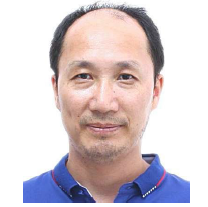
I research some new efficient clustering algorithms based on near neighbor or synchronization model. The main works are: clustering algorithm based on near neighbor influence, a fast version of the original synchronization clustering algorithm, an effective synchronization clustering algorithm based on a linear version of Vicsek model, a shrinking synchronization clustering algorithm based on a linear weighted Vicsek model, and an effective ensemble of clustering machines based on shrinking synchronization clustering.
Computer Science; Cyber Security; Human Computer
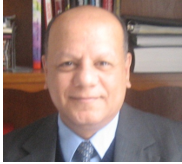
Dr. Mohamed Morsy is an Associate Professor of the Cyber Security Engineering Department at the College of Engineering and Computing, George Mason University, Fairfax, VA. He received his Doctor of Science degree (D.Sc.) in Electrical Engineering and Communications from George Washington University, Washington DC. Before joining the Department of Cyber Security Engineering at George Mason University as an adjunct faculty in 2022 then as full-time Associate Professor in 2023, Dr. Morsy served at various locations as senior system engineer and senior research scientist. He served as part-time faculty in electrical engineering and applied science at George Washington University (2002-2004), then as Department Chair of Electronics & Communications at ITT (2004-2016). From 2009 to 2023 he served as an adjunct Professor with the Department of Computer Information Systems, Fairfax University of America. He also served as a member of the ITT National Electronics Curriculum Committee (2005-2016).
Cyber Security; Logic Design; Digital Systems; Cloud Computing; Computer Networks
Yuan Piang, awarded by Xuchang University 2013.09 2013.09 Outstanding Teacher, awarded by Xuchang University, China 2012.12 2012.12 Reward of Excellent Teaching Achievements, awarded by Xuchang University 2011.10 2010-2011 Reward of Nandu (南都奖学金), awarded by Beijing University of Posts and Telecommunications, China 2011.09 Second Class Scholarship, awarded by Beijing University of Posts and Telecommunications, China 2010.09 Outstanding Graduate, awarded by Beijing University of Posts and Telecommunications, China 2010.06 Outstanding Membership of the Cleader, awarded by Center of Information Security, Beijing Univerisity of Posts and Telecommunications, China 2009.09 Third Class Scholarship, awarded by Beijing University of Posts and Telecommunications, China 2008.07 Reward of Xuchang Science & Technology Progress (Second Class), awarded by XCS&TB 2007.12 Second Class Scholarship of Teaching Competition, awarded by Xuchang University, China 2007.09 Outstanding Teacher, awarded by Xuchang University, China 2006.12 Reward of Excellent Teaching Achievements, awarded by Xuchang University
Machine Learning; AI Security and Application Risk; Privacy-Preserving Machine Learning; Malware and Traffic Identification with Behavior Analysis

Zhang Tianle, was born in 1977 in Shandong province, China. Tianle Zhang was born in Zibo, Shandong, China, in 1977. He received the Ph.D. degree from the Institute of Computing Technology, Chinese Academy of Sciences. He is currently an associate professor with Key Laboratory of Trustworthy Distributed Computing and Service, Ministry of Education, Beijing University of Posts and Telecommunications. His research interests include the Internet of Things, smart grid, network routing and modeling. He hosted in many research projects and programs such as the National Natural Science Foundation of China. He has published over 30 papers in major international journals and premier conferences. He is one of the authors of several national standards and drafts adopted by ISO/IEC JTC1/SC7 as ISO20000. He was a visiting scholar of the University of Hon Kong and UCLA. He was selected as a Chinese academic delegate of the first China-America Frontiers of Engineering (CAFOE) program. He was the member of the “16th Doctor service group” launched by Organization Department of the CPC Central Committee and selected as the excellent member by Qinghai Organization Department. He developed independently the BLE RF point to multipoint ranging and sensing chip system has been tested by the National Radio Monitoring Center and included in the deployment of the "Science and Technology Winter Olympics" system for the 2022 Beijing Winter Olympics.
Embedded System; Embedded C++; Java; Python
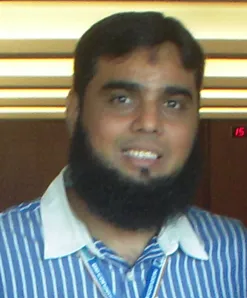
Dr. Muhammad Arshad, dynamic and motivated professional with a proven record of generating and building relationships, managing projects from concept to completion, designing educational strategies, and coaching individuals to succeed with a huge socio-economic impact on society. Skilled in building cross-functional teams, demonstrating exceptional communication skills, and making critical decisions during challenges. An adaptable and transformational leader with the ability to work independently, create effective presentations, and develop opportunities that further establish organizational goals.
Cyber Security; Internet of Things; Artificial Intelligence; Cloud Computing; Networking; Next-Generation Communication Networks; Mobile Wireless Sensor Networks
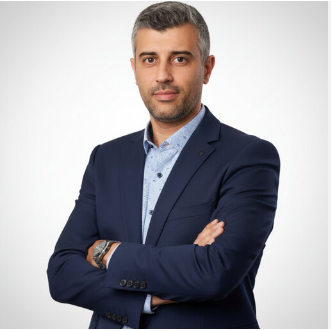
Dr. Lazrek Hammad, is a Ph.D. candidate in Computer Science and Telecommunications, my research lies at the intersection of energy efficiency, next-generation networks (5G/6G), and artificial intelligence. I develop AI models to optimize power management in embedded systems and communication infrastructures, with a focus on battery modeling and lifespan extension. My work also incorporates a cybersecurity dimension, aiming to secure these connected systems against emerging threats.
Computer Science; Next-Generation Networks; Embedded Systems
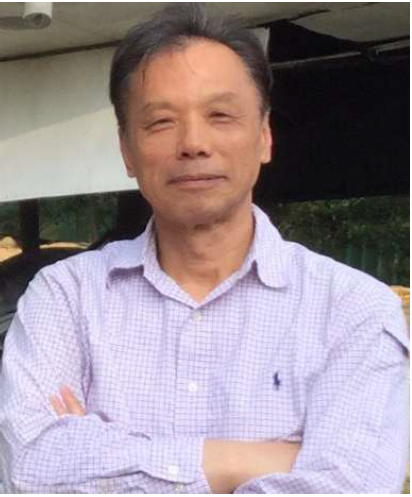
Dr. Ching-Chuan Huang is Professor Emeritus in Civil Engineering at National Cheng Kung University, Taiwan. With a Ph.D. from the University of Tokyo and postdoctoral training at the University of Delaware, he has dedicated his career to advancing geotechnical engineering, particularly in slope stability and reinforced ground systems. His pioneering research integrates hydrological and geotechnical principles to address rainfall-induced slope failures and debris flows. Notably, he proposed a Gaussian-distribution based hyetograph and a novel theory of debris flow initiation following Typhoon Morakot. Dr. Huang developed the Force-equilibrium-based Finite Displacement Method (FFDM), a breakthrough in displacement-based slope analysis, now central to the SLOPE-ffdm 2.0 software. His work is widely recognized, earning him a place among the world’s top 2% scientists by scientific impact. He continues to contribute to the field through innovative modeling, interdisciplinary collaboration, and the development of transparent, audit-ready engineering tools.
Testing; Geotechnics; Reinforced Ground and Slope Systems
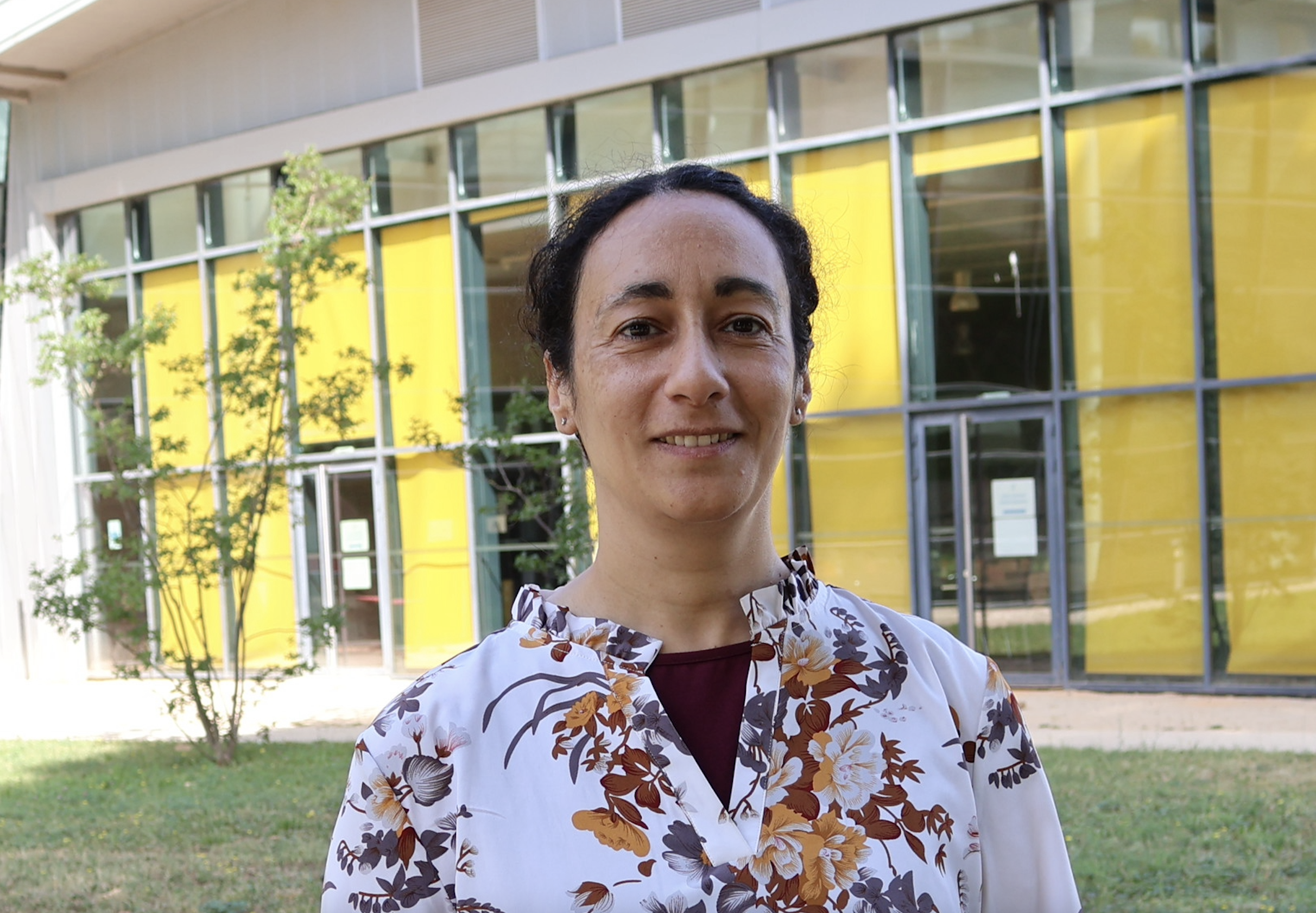
Nadia El Mrabet teach algorithmic, software implementation, cryptography. I am teaching manager of the ISMIN third year of engineering school, I am teaching manager of the specialized mastere program Designer of Secure Devices for IoT.
Post-Quantum Cryptography; Cryptography; Pairing-Based Cryptography; Algebraic Varieties; Finite Fields and Their Representations; Elliptic & Hyperelliptic Curves; Cryptography; Efficient Arithmetic; Algebraic Complexity„ Representation Systems; Cryptanalyze

Wei-Chuan Lin graduated from the Department of Computer Science at Tamkang University in 1984 and obtained my Master’s degree in Computer Science and Information Engineering from Tamkang University in 1986. Pursuing further academic achievement, I earned my Ph.D. in Computer Science and Information Engineering from Tamkang University in 1997. From 1986 to 1990, I worked at the Chung-Shan Institute of Science and Technology, where I was engaged in the development of embedded computing systems for defense applications. This experience provided me with a solid foundation in system design and advanced computing technologies. Between 1990 and 1993, I joined the Institute for Information Industry (III), where I participated in several technology projects, focusing on Linux-related software development. This period further enhanced my programming skills and broadened my experience in open-source technologies.
Cyber Security; Information Technology; Cloud and Embedded System; Cloud Computing

Cybersecurity; Network Management; Computer Networking; Computer Hardware and Peripherals Repairing; Multimedia Information System; Security and Privacy
I am an Associate Professor of Computer Science at Leeds Trinity University, with over a decade of research experience specialising in smart systems powered by big data analytics and deep learning. My expertise spans cybersecurity for IoT and edge devices, with applications in intelligent manufacturing, digital health, and smart city development. My current research focuses on digital twin technology, big data analytics, and deep learning for intelligent systems. Additionally, I explore lightweight embedded machine learning for edge computing, deep learning-driven human-robot collaboration, and the integration of Generative AI in higher education.
Cybersecurity; Big Data Analytics; Edge Computing; AI; Deep Learning Enabled Smart Systems; Human-Robot Collaboration; Blockchain
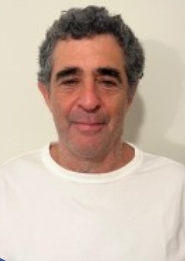
Natan Katz with over 20 years of experience in AI, I’ve led and contributed to hands-on projects across cybersecurity, capital markets, and healthcare, among others. As a co-founder and technology leader, I’ve consistently served as a bridge between developers, business units, and executives, translating complex ideas into practical impact. I hold 13 patents and have spoken at key industry events. My strength lies in developing state-of-the-art solutions, making them accessible to decision-makers, and bringing them to life.
Cloud Compuuting; Machine Learning; Statistical analysis; Python; Crew AI; Blockchain
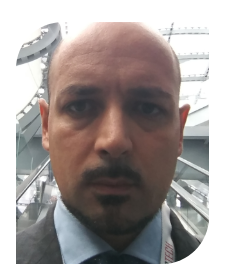
Antonello Calabrò is a researcher at CNR-ISTI.He graduated in Computer Science Engineering. His research focuses on designing and developing Smart Monitoring Infrastructure, responsive and adaptable Complex Event Processing, and cybersecurity assessment. His research activities have been applied to several application domains, such as Smart Environments, SoSs, IoT, Vehicular Networks, Emerging technologies, and UAVs. He participated in different roles for CNR-ISTI to several national and international EU projects and actively participated in more than 15 national and international projects.
Cybersecurity; Cobots and IoT; Monitoring; Drone Technologies
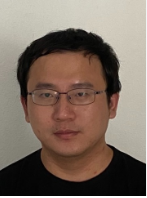
I am an assistant professor of mathematics and a faculty member of the Scientific Computing and Imaging (SCI) Institute.
AI for Science; Scientific Computing and Imaging; Computer Science; Recurrent Neural Nets; Graph Neural Nets; Data Privacy; Stochastic Optimization
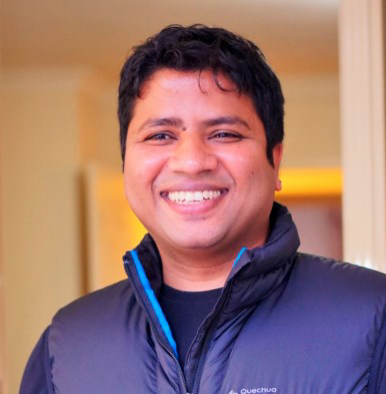
Dr Mukesh Prasad is a Senior Lecturer at the School of Computer Science in the Faculty of Engineering and IT at UTS and a subject matter expert for Artificial Intelligence and Machine Learning at Institute of Applied Technology (IAT), NSW, Australia. He has made substantial contributions to the fields of machine learning, artificial intelligence, data analytics and Natural Language Processing. He is working also in the evolving and increasingly important field of computer vision and internet of things, which promise to pave the way for the evolution of new applications and services in the areas of healthcare, biomedical, agriculture, smart cities, education, marketing and finance. His research has appeared in numerous prestigious journals, including IEEE/ACM Transactions, and at conferences, and he has published more than 200 research articles. He started his academic career as a lecturer with UTS in 2017 and became a core member of the University’s world-leading Australian Artificial Intelligence Institute (AAII), which has a vision to develop theoretical foundations and advanced technologies for AI and to drive progress in related areas. His research is backed by industry experience, specifically in Taiwan, where he was the principal engineer (2016-17) at the Taiwan Semiconductor Manufacturing Company (TSMC). He received an M.S. degree from the School of Computer and Systems Sciences at the Jawaharlal Nehru University in New Delhi, India (2009), and a PhD from the Department of Computer Science at the National Chiao Tung University in Taiwan (2015).
Artificial Intelligence; Machine Learning; Data Analytics; Computer Vision; Natural Language Processing
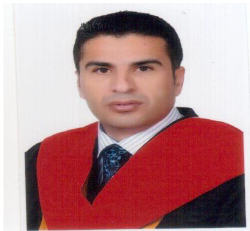
Dr.Yousef Daradkeh, Doctor of Engineering Sciences in Computer Engineering and Information Technology (Computer Systems Engineering and Computer Software Engineering), is a full Professor of Computer Engineering and Information Technology at the Department of Computer Engineering and Information, College of Engineering, Prince Sattam bin Abdulaziz University, KSA. He is a Senior Scientific Researcher and author; he is the Assistant Dean for Administrative Affairs. Dr. Daradkeh is a dynamic academician having more than 17 years of experience specializing in teaching and scientific research development. He has also shown his great acumen in administration and has taught a wide spectrum of Computer Science, Computer Engineering and Networks, Computer Software Engineering Courses to Undergraduate and graduate students in different capacities. Dr. Daradkeh is a well-known and respected scientist internationally. He received his B.Sc. degree in Computer Engineering at the Department of Computer Science and Systems Engineering from the Technical University of Moldova- specialty in Computer`s, Information Systems and Networks, and his M.Sc. degree in Software Engineering from the (Belarusian National Technical University-specialty s in Software of Information Technology. His Ph.D. degree is in Computer Engineering and Information Technology from the Belarusian State University of Informatics and Radio electronics, National Academy of Sciences of Belarus in two specializations: System Analysis, Control and Processing of Information; “Mathematical and Software of Computers, Complexes and Computer Networks. He has been working as a Post-Doctoral Research Fellow in Specialty Systems, Networks and Devices of Telecommunications at the Department of Electrical and Software Engineering, Schulich School of Engineering, University of Calgary. He has also worked for the Department of Computer Information Systems at the faculty of Systems and Information Technology, The University of Jordan. Dr. Yousef has worked in the Department of Information Technology at the Al-Balq`a Applied University, in addition to the Computer and Information Centre at the Jordan University of Science and Technology.
Information Technology; Computer Engineering; System Analysis; Control and Processing of Information; Complexes and Computer Networks

Ramesh Kumar Ayyasamy (Senior Member, IEEE) earned his Ph.D. in Information Technology from Monash University, Australia, in 2013. He has over 23 years of teaching and research experience in Computer Science and Information Systems. He has held various academic and research roles at multiple institutions throughout his career. He is an Associate Professor in the Faculty of Information and Communication Technology at Universiti Tunku Abdul Rahman (UTAR), Malaysia. Dr. Rameshs research expertise lies in AI-driven text analytics, focusing on sentiment analysis, deep learning for healthcare imaging, and semantic image segmentation. His work bridges theoretical foundations and practical applications, contributing to natural language processing, computer vision, smart city development, and health informatics. In addition to his research activities, he plays an active role in the academic community as a reviewer for leading journals and conferences. He serves on the editorial boards of several scholarly journals, including Discover Artificial Intelligence, Journal of Engineering and Applied Science, and International Journal of Innovative Engineering, Science and Technology.
Artificial Intelligence; Text Retrieval; Text Classification; Medical Health Informatics; Trust Management; Fuzzy Clustering; Fuzzy Logic and Knowledge Representation
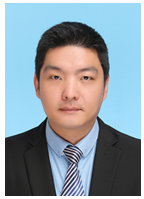
I am an associate Editor for IEEE Systems Journal(SCI index); Physical Communication(SCI index); PeerJ Computer Science(SCI index); International Journal on Artificial Intelligence Tools(SCI index); Journal of Artificial Intelligence and Soft Computing Research(SCI index); IEICE Transactions on Communications(SCI index); IET Wireless Sensor Systems(EI index); IET Networks(EI index); Journal of Cyber Security Technology and member of the Editorial Board for International Journal of Information and Communication Technology(EI index), International Journal on Artificial Intelligence Tools(SCI index), Progress in Human Computer Interaction, Journal of Modern Mechanical Engineering and Technology, Journal of Cyber Security Technology, Acta Scientific Computer Sciences, Digital Technologies Research and Applications, International Journal of Signal Processing, Image Processing and Pattern Recognition (IJSIP). In addition, I also am Bentham Science Ambassador and reviewer of reviewer of IEEE Journal on Selected Area in Communications(SCI journal); IEEE Transactions on Parallel and Distributed Systems (SCI journal); IEEE/ACM Transactions on Networking(SCI journal); IEEE Transactions on Neural Networks and Learning Systems(SCI journal); IEEE Transactions on Network and Service Management (SCI journal); IEEE ACCESS (SCI journal); Computer Networks(SCI journal); IEEE Transactions on Network Science and Engineering(SCI journal); IEEE Transactions on Industrial Informatics(SCI journal);IEEE Internet of Things Journal(SCI journal); IEEE Systems Journal; Artificial Intelligence Review(SCI journal); Journal of Internet Technology (SCI journal); Computers & Electrical Engineering (SCI journal); KSII Transactions on Internet and Information Systems (SCI journal). I has published more than 115 papers in related academic journals and conferences (about 35 papers by first author or correspondence author, and about 40 papers by top SCI journals and top international conferences) , and granted 9 patents for invention. I was awarded the Third Prize of Henan Science and Technology Progress Award (2018) and the academic technology leader of Henan Education Department (2019). I am currently the leader of the innovative network and Information Security Science and technology team of Henan Province, the leader of the provincial key discipline of computer application technology of Henan Province, a senior member of CCF (China Computer Federation), and a supervisor of the masters degree students of the Hubei University of Technology and the Wuhan Textile University.
Cyber Security Technology; Computer Science; Soft Computing Research; Human Computer Interaction; Cloud Computing
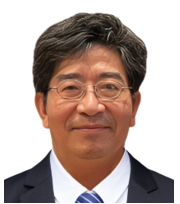
Computer Networking, Wireless Communication; Information Security; Computational Intelligence; Embedded Systems; Medical Informatics; Artificial Intelligence; Pedagogical Innovation
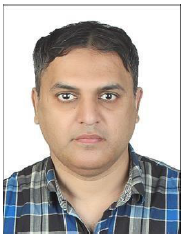
Dr. Faisal Nabi is a classified Scientist in the field of Information & Computer Security. He had his initial schooling, college & University degree from Pakistan. He went to UK for higher education in Oct 2001 and joined University of Luton, (Great Britain) M.Sc by Research in Electronic Commerce. Then he was selected for PhD study in Network Security Student at Colorado State University, USA. He completed one semester in CSU and then moved to university of southern Queensland (UniSQ), Australia to complete his PhD in cybersecurity in 2021. He also received his research award by UniSQ in Publication award competition 2021. He has also PhD from Canada that is honorary award in 2011 .He is specialized in e-commerce/information security. Interest Area of Research: Cryptography, Steganography, Virtual Invisible Secure Disk design, Secure Architecture, Web Security. Started research R&D as an assistant Researcher with Professor: Carsten Maple 23 Nov 2003 to 2005, Institute of Applied Research for Applicable Computing, University of Luton. In April 2004, he was appointed as Researcher at Deveraux & Deloitte Research Centre, UK. Faisal’s research work has been published in International Journals of IEEE/MCB level. Faisal has also received Research Award in the “First Cyber Security Conference 29 Sept 2004 ” at Sheraton Hotel, held in Karachi in conjunction with NR3C National Response of Cyber Crime.
Cyber Security; Component-based software; Technological framework methodologies; Network & Data Security; Cryptography; Web Penetration
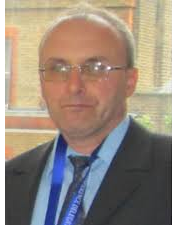
Dariusz Jacek Jakobczak was born in Koszalin, Poland, on December 30, 1965. He graduated in mathematics (numerical methods and programming) from the University of Gdansk, Poland in 1990. He received the Ph.D. degree in 2007 in computer science from the Polish-Japanese Institute of Information Technology, Warsaw, Poland. From 1991 to 1994 he was a civilian programmer in the High Military School in Koszalin. He was a teacher of mathematics and computer science in the Private Economic School in Koszalin from 1995 to 1999. Since March 1998 he has worked in the Department of Electronics and Computer Science, Koszalin University of Technology, Poland and since October 2007 he has been an Assistant Professor in the Chair of Computer Science and Management in this department. His research interests connect mathematics with computer science and include computer vision, artificial intelligence, shape representation, curve interpolation, contour reconstruction and geometric modeling, numerical methods, probabilistic methods, game theory, operational research and discrete mathematics.
Artificial intelligence; shape representation; curve interpolation; contour reconstruction; geometric modeling
 a Creative Commons Attribution 4.0 International License. Based on a work at www.irispublishers.com.
Best viewed in
a Creative Commons Attribution 4.0 International License. Based on a work at www.irispublishers.com.
Best viewed in

 | Above IE 9.0 version | Privacy Policy