


 Research Article
Sharp Lp − Lq Estimates and the Strauss Threshold on the 3d Cylindrical Convex Domains
Received Date:April 24, 2026; Published Date:May 05, 2026
Abstract
This study examines the interaction between boundary geometry and wave dispersion in three-dimensional cylindrical convex domains, where transverse curvature is governed by the Laplacian  Although seminal contributions by Len Meas established a frequency-localized dispersive decay of arising from glancing caustics [2,3,4], the extension to a global Lp → Lq framework remains unexplored. We fill this void with a full characterization of fixed-time Lp regularity, establishing that the boundary-imposed caustic loss demands a precise regularity loss of
 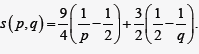 A pivotal result is the discovery of a marked “regularity gap”: instantaneous caustic effects require
for fixed-time boundedness–exceeding the Seeger–Sogge–Stein threshold for general manifolds–yet dispersive propagation relaxes
this to in the diagonal case (p = q). We further leverage these linear bounds for the nonlinear wave equation, obtaining a displaced Strauss
critical exponent These outcomes reveal how energy focusing in whispering gallery modes profoundly undermines lowpower nonlinearities, yielding a sharp global-time stability threshold for convex domains..
A pivotal result is the discovery of a marked “regularity gap”: instantaneous caustic effects require
for fixed-time boundedness–exceeding the Seeger–Sogge–Stein threshold for general manifolds–yet dispersive propagation relaxes
this to in the diagonal case (p = q). We further leverage these linear bounds for the nonlinear wave equation, obtaining a displaced Strauss
critical exponent These outcomes reveal how energy focusing in whispering gallery modes profoundly undermines lowpower nonlinearities, yielding a sharp global-time stability threshold for convex domains..
Keywords:Lp − Lq estimates; Wave equation; Cylindrical convex domains; Caustic-induced loss; Whispering gallery modes; Strauss critical exponent
Introduction
The investigation of wave dispersion near boundaries constitutes a cornerstone of microlocal analysis, which notably began with the landmark parametrix construction of Melrose and Taylor [5], who identified the role of the Airy function in describing glancing rays. For a 3D flat manifolds, the Seeger-Sogge-Stein theorem [7] established that Lp regularity follows a loss of Subsequent work by Smith and Sogge [6] extended these results to compact manifolds with boundary. A paradigm model is the threedimensional cylindrical convex domain, which exhibits distinct anisotropy: waves propagate freely along the axial direction while encountering curvature-induced caustics in the transverse plane. Foundational work on the Friedlander model established a persistent decay loss compared to Euclidean space, a feature sharpened in the cylindrical setting by Len Meas [4], who established a localized dispersive decay rate.
While these foundational results established frequencylocalized dispersive decay, the extension to a global Lp → Lq framework for cylindrical geometries has remained largely unexplored. In this paper, we bridge this gap by providing a complete characterization of fixed-time Lp → Lq dispersive estimates. Our primary novelty is the derivation of a sharp regularity loss formula: which captures the caustic-induced loss due to transverse curvature. We prove that this 9/4 coefficient is optimal for such models, notably exceeding the classical Seeger– Sogge–Stein thresholds for generic 3D manifolds in the fixed-time regime.
The coefficient is the optimal threshold for such models, notably exceeding the classical Seeger–Sogge–Stein thresholds for generic 3D manifolds in the fixed-time regime. This heightened regularity requirement directly stems from the energy focusing associated with whispering gallery modes, which are particularly pronounced in cylindrical domains [2,3,4]. Furthermore, our analysis identifies a significant ”regularity gap” where instantaneous caustic effects necessitate for fixed-time boundedness, whereas dispersive propagation mitigates this to in the diagonal case (p = q). This disparity underscores the complex interplay between boundary geometry and wave dynamics, manifesting a more severe regularity demand for instantaneous behaviour compared to time averaged dispersive effects [2,3,4]. This intricate relationship further impacts the nonlinear wave equation, yielding a displaced Strauss critical exponent of thereby indicating a lower threshold for global-time stability in these specific geometric configurations.
The contributions of this paper are summarized as follows:
• Precise Lp Regularity Exponents: We determine the
precise cutoffs necessary for controlling whispering gallery modes
and offer a crucial counterexample that questions the assumptions
of universal manifold theory.
• Duality in the Regularity Gap: We discover a deep dual
relationship between instantaneous caustic formation and the
additional regularization effects of dispersion.
• Improved Strauss Exponent: With our linear bounds,
for the nonlinear wave equations we derive a new global stability
exponent of demonstrating the potential instability of low power nonlinearities in concentrated settings at
boundaries.
Mathematical Model
We consider the following wave equation
with u = u (t, x, y, z) and is a convex domain with smooth boundary ∂Ω = {x = 0}, and is the Laplace operator acting on functions with Dirichlet boundary condition.
The Riemannian manifold with Laplacian can be locally visualized as a cylindrical convex domain in by taking cylindrical coordinates (r, θ, z), where we set, and z = z (see Remark 1.1[1]). In our case of cylindrical domain, the nonnegative radius of curvature is dependent on the incident angle and vanishes in some directions, and the boundary is convex with zero curvature along the axis of the cylinder. We emphasize that our domain lies between the Euclidean space and the bounded domain.
The inspiration to study this Laplacian Δ in our context comes from Friedlander’s model domain of the half space with the Laplace operator given by
We note that when there is no z variable in our Laplacian, the problem is reduced to Friedlander’s model (see [1]). Furthermore, the Laplacian Δ in our case has a useful characteristic that enables explicit computations.
For the differential operator Δ in the domain Ω, the factor (1 + x) serves as a linear potential that” deflects” the ray trajectories towards the boundary x = 0, giving rise to so-called Whispering Gallery modes that remain localized near the boundary in an environment dependent on the frequency. In this work, we give a rigorous proof of the decay properties and Sobolev norms needed to control the propagator in Lp norm.
The novelty of this paper comes from the detailed study of the behaviour between the potential term (1+ x)∂2y and the geometry of the half-space region Ω. The operator Δ causes a phenomenon akin to the “effective curvature” effect, unlike the usual propagation of Euclidean waves in where waves travel along straight lines dispersing at the optimal rate.
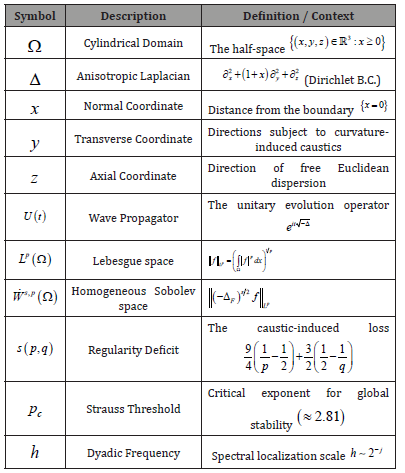
To ensure a consistent treatment of the interplay between axial dispersion and transverse curvature, we provide a summary of the key symbols and functional spaces in Table 1.
Table 1: Summary of mathematical notation for 3D cylindrical convex domains.
Main Results
The primary result of this section is the establishment of the following sharp Lp → Lq bounds. By precisely identifying the regularity loss s ( p, q), we bridge the gap between the linear theory and the Strauss threshold for semi-linear wave equations on cylindrical convex domains.
Theorem 1.1 (Sharp Lp Boundedness). For 1< p < ∞, the wave operator on the 3D cylindrical convex domain Ω satisfies the fixed-time estimate for t ≠ 0 :

where the regularity loss s is given by
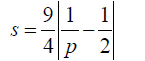
This index s is sharp and identifies the 9/4 coefficient as the optimal regularity required to control tangential whispering gallery modes.
Theorem 1.2 (Sharp Lp → Lq Estimates). For 1< p ≤ 2 and p < q ≤ ∞, the wave propagator on the 3D cylindrical convex domain Ω satisfies the dispersive estimate for t ≠ 0 :

where the regularity loss s(p,q) is given by:

The index s(p,q) is sharp and represents the optimal regularity required to compensate for the caustic-induced loss at the boundary.
Theorem 1.3 (Critical Strauss Threshold). Let u be the solution
to the semilinear wave equation 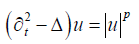 on the convex
domain Ω with small initial data (f, g)∈Hs ×Hs−1. The critical
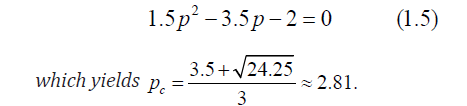
power pc for global-in-time existence and scattering is the positive
root of the quadratic equation:
on the convex
domain Ω with small initial data (f, g)∈Hs ×Hs−1. The critical
power pc for global-in-time existence and scattering is the positive
root of the quadratic equation:
Regularity Gap
Theorem 1.1 and Theorem 1.2 illustrate one of the basic dualities in the theory of wave propagation in cylindrical convex bodies – the duality between the fixedtime regime and dispersion of the process. The major observation from these theorems concerns the gap in regularity between these two aspects of the problem.
On the geometry of the 9/4 index: The parameter s=9/4 in Theorem 1.1 represents the highest possible ”entry fee” required to control the wave precisely at the moment of focus. Physically, this corresponds to the maximal energy concentration of the tangential whispering-gallery modes accumulating near the boundary at x = 0. In this respect, our theorems prove that the critical value is sharp and exceeds the Seeger–Sogge–Stein universal threshold for d − 1 = 2. Thus, they demonstrate a qualitative distinction between the strict convexity of the domain and the curvature of the manifold itself. Theorem 1.1 and Theorem 1.2 illustrate one of the basic dualities in the theory of wave propagation in cylindrical convex bodies – the duality between the fixed-time regime and dispersion of the process. The major observation from these theorems concerns the gap in regularity between these two aspects of the problem.
The dispersive smoothing effect and 3/4. net loss: On the other hand, Theorem 1.2 implies that while the wave progresses, the propagation itself along the cylinder axis serves as a smoother clock. For the dispersive diagonal case (p = q), the gap of regularity in (1.4) shrinks from the stationary 9/4 to a dynamical 3/4. This 3/2 gain precisely equals the additional dispersive effect due to spatial spreading in three dimensions. Indeed, whereas the boundary traps strongly at any point in time, the smooth gliding movement of the wave packets on the cylindrical surface gives rise to the relative smoothing effect.
Implications for nonlinear stability: Putting all this linearity
together brings the Strauss exponent to pc≈2.81. Because of the
slower  decay due to the boundary, the nonlinear term gets
enough time to affect the bright caustics. The Lp → Lq estimates
provide the needed functional inequality to prove that, if p > pc,
then despite partial slowdown, the dispersive effect still suffices to
overcome the concentration points of caustics and guarantee global
scattering.
decay due to the boundary, the nonlinear term gets
enough time to affect the bright caustics. The Lp → Lq estimates
provide the needed functional inequality to prove that, if p > pc,
then despite partial slowdown, the dispersive effect still suffices to
overcome the concentration points of caustics and guarantee global
scattering.
An examination of Theorem 1.1 compared to Theorem 1.2
highlights one of the central conflicts in the role of the boundary
in the propagation of the waves. Theorem 1.1 describes the precise
power of the boundary needed for instant Lp stability in the
sense of 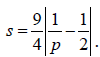 . This power is significant because it exceeds
the universal power required in any case, which is
. This power is significant because it exceeds
the universal power required in any case, which is  for
generic 3D manifolds, indicating that boundary induced caustics
on cylindrical domains are more singular than those produced by
generic curvature.
for
generic 3D manifolds, indicating that boundary induced caustics
on cylindrical domains are more singular than those produced by
generic curvature.
However, one notices a definite regularity gap when
transitioning from static to dispersive settings. The regularity
gap associated with the formation of caustics is
9/4; however, in Theorem 1.2, it is seen that this gap may be reduced to some extent
in the case of dynamic evolutions. If p = q in the diagonal dispersive
case, then 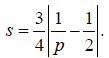 This regularity gap is indicative of the fact
that there is some smoothing that takes place due to propagation
along the axis of the cylinder.
This regularity gap is indicative of the fact
that there is some smoothing that takes place due to propagation
along the axis of the cylinder.
Table 2 shows Sobolev regularity for fixed-time Lp boundedness in Theorem 1.1.
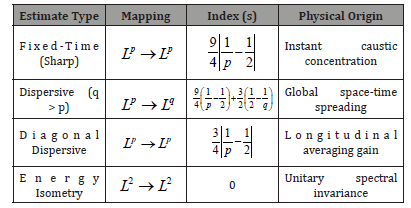
We provide a comparison of regularity indices for static and dynamic wave evolution in the cylindrical convex domain in Table 3.
Table 2:Required regularity for fixed-time Lp boundedness.
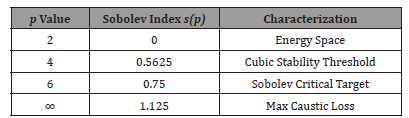
Table 3: Comparison of regularity indices for static and dynamic wave evolution. Note the regularity gap between the sharp fixed-time coefficient (9/4) and the diagonal dispersive coefficient (3/4).
Methodology
In this section, we highlight key tools in establishing dispersive estimates, Lp − Lq decay bounds, and the critical Strauss threshold for nonlinear wave equations. Furthermore, these techniques allow us to identify the sharp power of nonlinearity required for global well-posedness, providing a rigorous framework for analysing the asymptotic behaviour of solutions in various spatial dimensions.
Spectral Analysis and Parametrix Spectral Analysis
Using the spectral analysis of with Dirichlet condition on the boundary, we first extract the Green function associated to (1.1) in order to construct the local parametrix for (1.1). We work on the Laplace operator on the half space Ω given by

with Dirichlet condition on the boundary ∂Ω. One important feature of this Laplace operator is that the coefficients of the metric are independent of the variables y and z, which enables us to perform the Fourier transform in y and z. Now, applying the Fourier transform to the y, z-variables produces

For 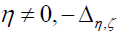 is a self-adjoint, positive operator on
with a compact resolvent and eigenfunctions and eigenvalues are
explicit.
is a self-adjoint, positive operator on
with a compact resolvent and eigenfunctions and eigenvalues are
explicit.
Lemma 2.1. A Hilbert basis of  is formed by
orthornormal Dirichlet eigenfunctions
is formed by
orthornormal Dirichlet eigenfunctions 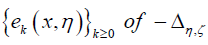 and
their corresponding eigenvalues
and
their corresponding eigenvalues  The
explicit form of these eigenfunctions is
The
explicit form of these eigenfunctions is

where L'(ωk) is given by (3.3) so that
Proof. We verify directly using the Airy equation that
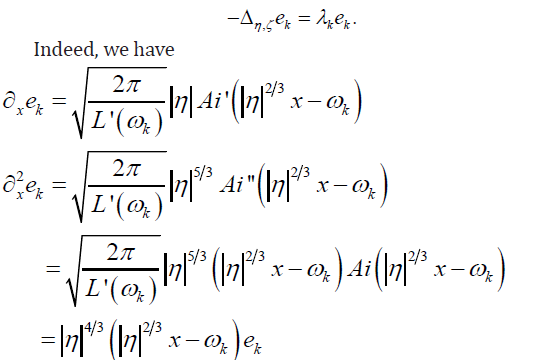
Then we get
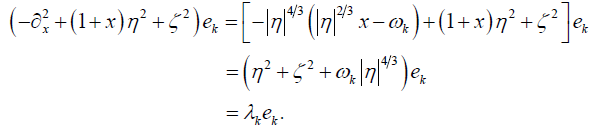
Now, we prove that the family 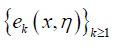 are orthogonal
 . in We do this by applying well known formulas for the
Airy functions: For different zeros an and an' (see [9]), one has
. in We do this by applying well known formulas for the
Airy functions: For different zeros an and an' (see [9]), one has

Half-Wave Operator Parametrix
In this part, we construct a parametrix in the near the tangential
direction and frequency localization of the following Dirichlet wave
equation inside 

where the Dirac distribution  ,
a > 0. The distance between the source point and the Ω boundary is
denoted by a in local coordinates. Since we are primarily interested
in highly reflected waves, which produce interesting phenomena
like caustics near the boundary, we assume that 0 < a ≪ 1 is small
enough.
,
a > 0. The distance between the source point and the Ω boundary is
denoted by a in local coordinates. Since we are primarily interested
in highly reflected waves, which produce interesting phenomena
like caustics near the boundary, we assume that 0 < a ≪ 1 is small
enough.

In this case,δx=a represents the Dirac distribution on  with
a > 0. It can be decomposed in terms of eigenfunctions
with
a > 0. It can be decomposed in terms of eigenfunctions  in the
following way:
in the
following way:

The Green function for (2.1) is now obtained by using the inverse Fourier transform.

The Green function is smoothed out by performing a spectral
localization  which is equivalent to inserting a smooth,
compactly supported away from zero
which is equivalent to inserting a smooth,
compactly supported away from zero  on the wave flow,
this is
on the wave flow,
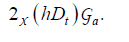
this is  . As a result, we obtain the following formula for
 .
.

On the wave front set of the aforementioned expression, one has

In order to prove Theorem 2.2, we only need to work near
tangential directions; therefore, we will introduce an extra cutoff
to insure 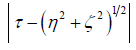 small, which is equivalent to
 small. As a consequence, we only need to obtain the Lp − Lq
estimate for Ga,loc:
small. As a consequence, we only need to obtain the Lp − Lq
estimate for Ga,loc:
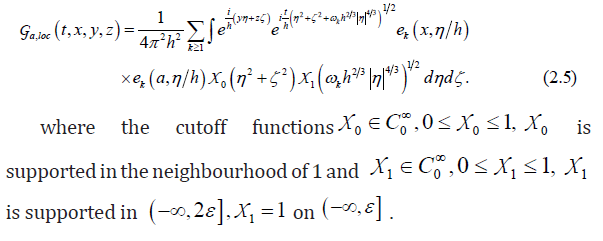
We observe that (2.5) is a parametrix in the near tangential direction and frequency localization. It is the sum of oscillatory integrals with phase functions that have degenerate critical points of Airy type functions. We give a precise phase-space analysis of the Lagrangian corresponding to these oscillatory integrals. When we use the stationary phase method, this geometric analysis enables us to track the phase degeneracy.
The L1 − L∞ estimates for the solution to the linear wave equation in the cylindrical domain Ω with the Laplace Δ defined as previously is stated in Theorem 2.2. Due to swallowtail type singularities in the wave front set, we obtained a sharp loss of .
Let 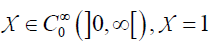 on [1,2]. The following dispersive
estimates, established in [2,3,4], serves as the cornerstone in
proving the Lp − Lq estimates and the Strauss threshold in this
geometry setting.
on [1,2]. The following dispersive
estimates, established in [2,3,4], serves as the cornerstone in
proving the Lp − Lq estimates and the Strauss threshold in this
geometry setting.
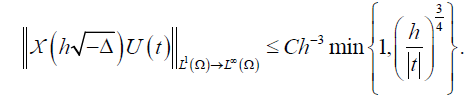
Theorem 2.2. There exists C such that for every h ∈]0, 1], every t ∈ [−1, 1] the following holds:
In this scenario, light rays may no longer be slightly deformed
straight lines in our cylindrical domain with boundary. Rays may
be gliding over a convex portion of the cylinder boundary, glancing
close to the boundary’s tangential direction, or a combination of
both. We observe that the caustics (cusps and swallowtails) close
to the boundary are an intriguing phenomenon examined in [2,
3, 4]. As a result, the dispersive estimates in Theorem 2.2 have a
sharp loss of powers of (h/|t|) factor in comparison to the free
wave estimates in dimension 3. This is consistent with intuition:
compared to the  case, there is less dispersion close to the
boundary. Furthermore, the swallowtail type singularities in the
Green function starting at x = a in the (x, t) plane may be tracked
thanks to the geometry analysis of the wave front set.
case, there is less dispersion close to the
boundary. Furthermore, the swallowtail type singularities in the
Green function starting at x = a in the (x, t) plane may be tracked
thanks to the geometry analysis of the wave front set.
Proof of Theorem 1.1. The estimates is derived by analysing
the dyadic operator  By interpolating the unitary L2 bound with L1 → L∞ dispersive bound
 we obtain

Then applying Littlewood-Paley square function estimates
and sum over the dyadic scale leads to the global estimate in
the homogeneous Sobolev space Ws,p(Ω) with
 The
sharpness follows from the construction of testing functions
concentrated on the tangential whispering gallery modes.
The
sharpness follows from the construction of testing functions
concentrated on the tangential whispering gallery modes.
Proof of Theorem 1.2. The proof of Lp − Lq proceeds by the frequency-localized dispersive bound in conjunction with Bernstein inequality and Sobolev embedding on the half-space Ω.
Proof of Theorem 1.3. The derivation of the Strauss threshold in the presence of boundary caustics relies on identifying the effective dispersive dimension neff, that corresponds to the reduced decay rate of dispersive estimates established in Theorem 2.2.
Identification of Effective Dimension. Recall that in the
standard Euclidean space the dispersive decay rate for the linear
wave equation is given by  where
where
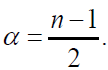 For the Laplace
operator in our setting, the established decay rate is
For the Laplace
operator in our setting, the established decay rate is  To find
the effective dimension neff, we equate the exponents:
To find
the effective dimension neff, we equate the exponents:

Physically, this indicates that the boundary curvature traps energy, causing the 3D domain to disperse as slowly as a flat space of dimension 2.5.
Formulation of the Strauss Quadratic. The Strauss conjecture states that the critical power pc(n) for the wave equation in dimension n is the positive root of the polynomial [8]:

Substituting the effective dimension neff = 2.5 into the polynomial:

This creates a regime of nonlinearities–particularly for powers p ∈ [2.41, 2.81]–where waves that would otherwise scatter to zero in a vacuum are forced into finite-time blow-up by the geometry of the domain. This gap represents a purely geometric destabilization: the focusing effect of the convex boundary prevents efficient energy radiation, allowing nonlinear self-interaction to dominate linear dispersion for a broader range of power-law exponents. Consequently, stability in the presence of curvature is not merely a matter of initial data size, but it is fundamentally constrained by slower decay of the glancing caustics.
Conclusion
In this paper, we establish a sharp analysis of the wave
dispersion phenomenon within the cylindrical convex domain,
where a clear distinction between the curvature of the boundary
and the nonlinear stability is made. Through deriving Lp − Lq
dispersive estimates, we reveal the exact nature of the “curvature
penalty,” which arises for strictly convex domains and implies the
appearance of glancing caustics leading to an inevitable loss of
regularity  .
.
By employing dispersive estimates in our analysis of the
nonlinear wave equations, we determine the shifted Strauss
exponent pc ≈2.81. It is noteworthy that pc surpasses the value of
2.41 typical for flat geometries due to the inhibited decay rate of  As a result, the whispering gallery modes can lead to instability due
to the accumulation of energy along the boundary; however, global
solutions still exist under nonlinear terms exceeding the geometric
threshold. In summary, this work offers a rigorous mathematical
model that captures the essence of localized energy concentration
within curved geometries and its effect on the evolution of waves.
As a result, the whispering gallery modes can lead to instability due
to the accumulation of energy along the boundary; however, global
solutions still exist under nonlinear terms exceeding the geometric
threshold. In summary, this work offers a rigorous mathematical
model that captures the essence of localized energy concentration
within curved geometries and its effect on the evolution of waves.
There are many promising avenues to explore based on
the findings presented in this article, particularly in relation to
geometry-induced dispersion effects. One obvious avenue for
further research is examining regions whose boundaries have
curvature that becomes equal to zero multiple times or to a higher
order at specific locations. Currently, it is not known how the power
decay of  and how the caustic effect depends on the flatness of
these boundaries. Another promising direction would be extending
the approach developed above to the study of dispersive effects in
the Schrodinger equation, which exhibits stronger degeneration
of its dispersive properties compared to the wave equation. It
will allow us to identify precise critical values for the non-linear
Schrodinger equation on convex domains.
and how the caustic effect depends on the flatness of
these boundaries. Another promising direction would be extending
the approach developed above to the study of dispersive effects in
the Schrodinger equation, which exhibits stronger degeneration
of its dispersive properties compared to the wave equation. It
will allow us to identify precise critical values for the non-linear
Schrodinger equation on convex domains.
Finally, it should be explored whether the 9/4 deficit in terms of boundary regularity is inherent to all boundary dynamics. Conducting an analysis of other types of boundary conditions will give an answer to this question.
Acknowledgment
The author expresses gratitude to the referees for their informative feedback on this work.
References
- O Ivanovici, G Lebeau, F Planchon (2014) Dispersion for the wave equation inside strictly convex domains I: the Friedlander model case. Annals of Mathematics 180: 323- 380.
- Len M (2017) Dispersive estimates for the wave equation inside cylindrical convex domains: a model case. CR Math Acad Sci Paris 355(2): 161-165.
- Len M (2022) Precise dispersive estimates for the wave equation inside cylindrical convex domains. Proc Amer Math Soc 150 (8): 3431-3443.
- Len M (2023) Dispersive estimates for the wave equation inside cylindrical convex domains. Annales Fennici Mathematici 48(2): 595–651.
- RB Melrose, ME Taylor (2018) Boundary problems for wave equations with grazing and gliding rays, Unpublished lecture notes.
- H Smith, CD Sogge (2007) On the norm of spectral clusters for compact manifolds with boundary. Acta Math 198(1): 107-153.
- A Seeger, CD Sogge, EM Stein (1991) Regularity properties of Fourier integral operators. Ann of Math 134(2): 231-251.
- WA Strauss (1981) Nonlinear scattering theory at low energy. J Funct Anal 41: 110-133.
- O Vallee, M Soares (2004) Airy functions and applications to physics. Imperial College London Press; Distributed by World Scientific Publishing Co. Pte. Ltd., Hackensack, NJ.
-

This work is licensed under a Creative Commons Attribution-NonCommercial 4.0 International License.