




 Opinion Article
The Impact of Autism Spectrum Disorder: Effects on Society and General Education System
Received Date:September 22, 2023; Published Date:October 06, 2023
Abstract
This paper focuses on meeting the requirements of Special Needs students and its impact on the Educational System. Since its monitoring and management in 1980, the social cost of autism care has been estimated to be $7 trillion US dollars from 1990 to 2029 [1]. In addition to the monetary impact on society, there is also the non-economic cost to parents, teachers, and employers seeking workers. The problem of accurate detection has weighed on society for decades compounded by the inaccuracy of the prevalence of detection and the needless suffering of those being misdiagnosed. There exists a need for more accurate detection and diagnosis in addition to required screening at the early stages of childhood. Although there is a myriad of reasons identified as possible causes of ASD, it should be noted that there is no indication of autism and its relation to vaccines or ultrasounds. Part of the research also revealed it there appears to be a higher number of cases among Blacks and males in the studies. This paper aims to identify the need for more autism awareness as well as better assistance for those affected. We have to view the ramifications of those diagnosed and left with low expectations of progress and those placed in general education classes when not ready, positioned to fail just to meet a politically motivated statistical quota. More research and better testing tools will be the prudent path to take to determine more accurate numbers with the end goal of finding a way to cure or prevent this neurodivergent disorder.
Introduction
Autism is defined into five major categories Asperger syndrome, Rett syndrome or disorder, Childhood Disintegrative Disorder, Pervasive Developmental Delay, and Others [2], Autism or Autistic Spectrum Disorder (ASD) was redefined in 1980 in the third edition of the Diagnostic Statistical Manual of Mental Disorders (DSM), but no formal test was introduced to address the existence of ASD [3]. Before the official recognition of ASD, studies in the neuroscience fields were conducted by Blueler (1911) who believed it was a childhood version of schizophrenia. Studies were followed by Sukhareva (1926), Despart (1938), Kanner (1942), and Asperger (1944). Special Needs students are a global responsibility that has more recently been given more awareness as the understanding of the affliction becomes more evident. Although the problem exists in similar stages, some countries far exceed the average rate per child. According to the Centers for Disease Control (2021), the rate of autism cases in the United States rose from 1 in 150 children in 2000 to 1 in 44 children in 2018. There have been numerous attempts to incorporate autistic users in software development, recognizing the future access of this additional workforce [4].
Background of the Problem
Detection of autism disorder has been researchers’ main concern for many years. The initial thought was that the syndrome would manifest itself by age 2. Now it appears that some are not detected until age 8. It also appears that the majority of children with autism are male children. The focused school of thought agreed that earlier detection of Autism Spectrum Disorder (ASD) is the best option for management and treatment. As of the writing of this article, there still is no known cure currently. It has also been noted that there is no relationship between ultrasound testing in prenatal care and was related to the rise in autism cases. According to Christiansen, Et Al (2023), there is no conclusive evidence of increased ultrasound testing and a rise in ASD cases. The primary causes of ASD and its detection continue to be an elusive undertaking although there is more understanding of the intricacies of the studies.
Problem
The problem with the advancement of knowledge in this field is the lack of accurate databases among many cultures and countries. Society still has issues with the full acceptance of people who are different and not adaptive to what we consider the social norm. The advent nature of the parental relationship with the “perfect” child has resulted in cases of denial. Many go through the phases of denial and do not want to acknowledge there is a problem with the child. Some do not seek help or guidance from professionals until the child has become impossible to handle on their own. At this point, precious years of management and treatment have been lost resulting in the child being further behind in development that could have been prevented.
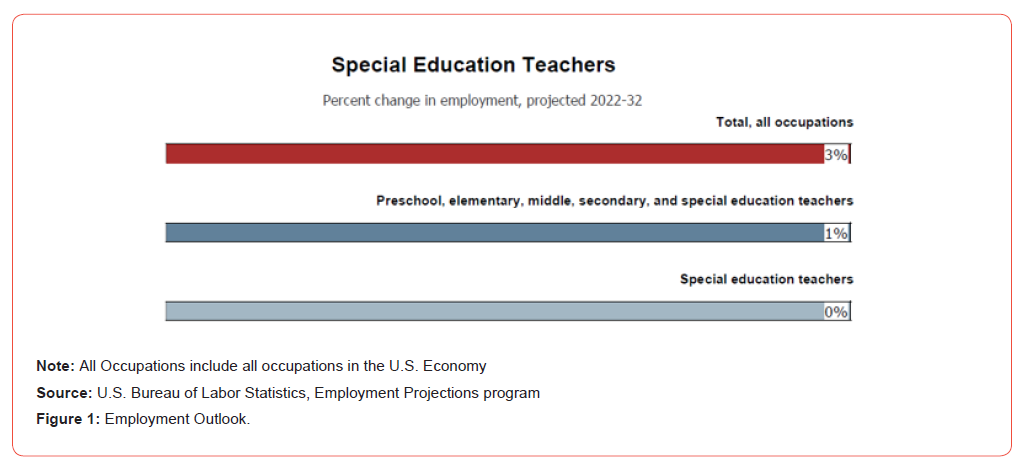
The impact on the educational system is many parents do not see their child as having special needs and rely on the teacher to remedy the situation. The problem with this solution is that many teachers may not be trained or prepared to handle such a task. According to the Bureau of Labor Statistics (2023), there is little to no change in the employment outlook of special education teachers from 2022-2032, although the prediction for ASD cases has risen significantly. The pay difference between special education teachers and regular subject teachers is also relatively the same, although the nature of the work is far more intensive (See Figure 1).
Autism Detection
Although to date there is no known reason for the onset of autism, it is believed that there are several factors that increase the risk of developing the syndrome. Some of the accepted risk factors include premature birth, low birth weight, genetics, air pollution, and other factors. The detection is usually tied to behavioral tendencies such as inattentiveness to objects, failure to make eye contact, late crawling, lack of social skills, late talking, and others. It is recommended that there is a screening between the ages of 18 and 24 months, however, this procedure is not normally complied with by pediatricians, and it is usually not accepted as a mandatory requirement [3]. One other hindrance to accurate treatment or management of ASD is the lack of accurate testing and the high rate of misdiagnosis in children.
Autism is described or characterized by the impairment of social interaction and communication norms coupled with restrictive, repetitive, and stereotyped interests and behaviors (RRIB) [5].
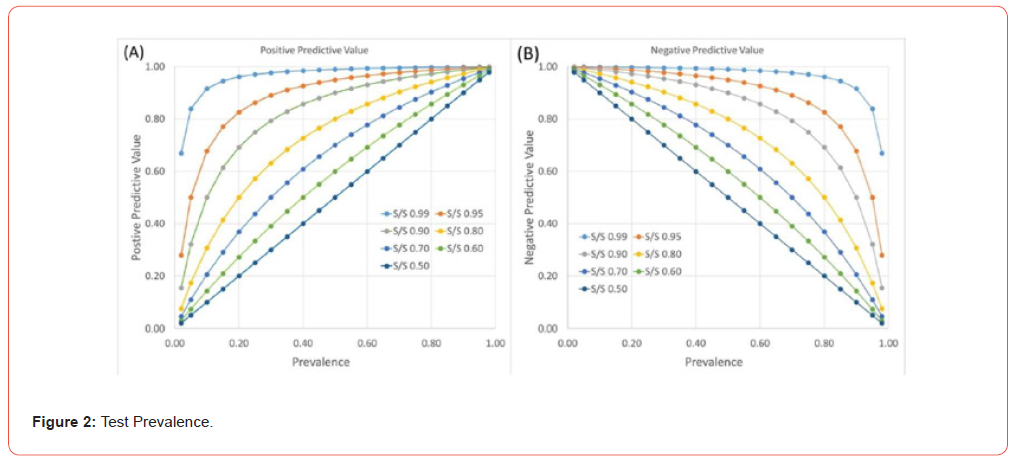
The two tests that are considered the best in the series are the Autism Diagnostic Observation Schedule (ADOS) and the Autism Diagnostic Interview-Revised. Of course, these types of tests are subject to the answers provided by the parents or responsible investigator. Although other tests have also been developed, the problem of complete and honest data still exists. The participants in the surveys may give inaccurate answers due to a lack of understanding of the question or through stigmatism of admittance. The current tests can also result in a high degree of false positives resulting in misdiagnosis of the subject (see Figure 2).
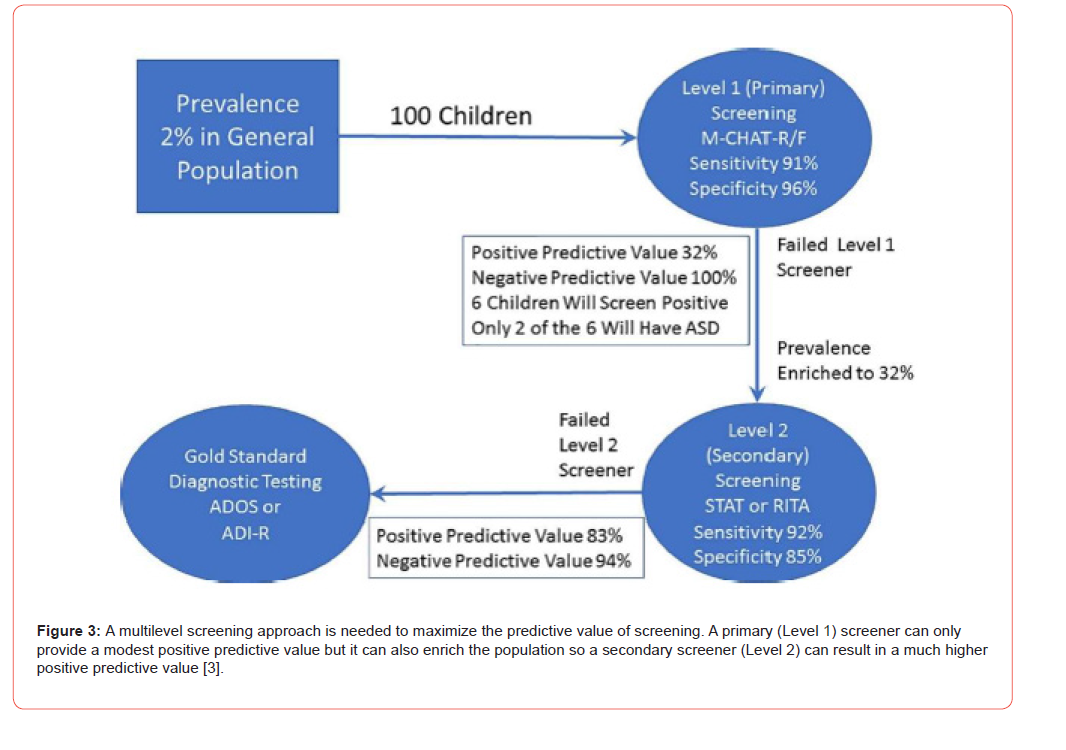
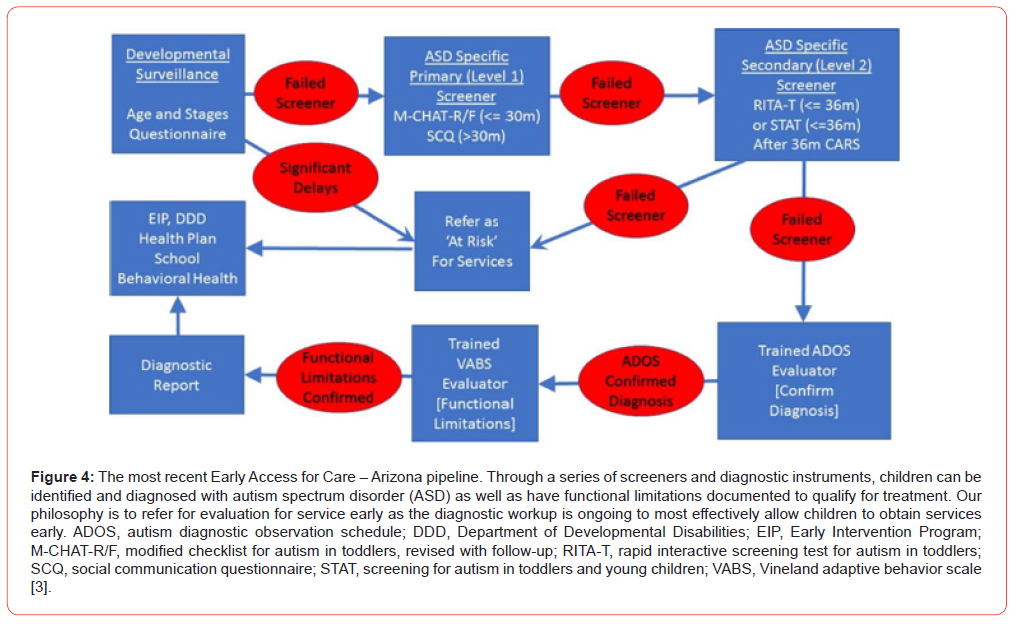
Relationship between real-world medical test performance as indexed by positive and negative predictive values given the sensitivity and specificity (S/S) of the test and prevalence of disease in the target population. For a disease with a low prevalence in the population, even a test with a high sensitivity and specificity (S/S), say 99% (light blue curve) will have a modest positive predictive value (McCarty & Frye, 2020) [Figure 3,4].
Impact on Society
Society plays a role in the acceptance of individuals who differ based on what is considered the norm. Culture as defined by values, beliefs, rituals, and other factors determines what is considered a disability as opposed to an affliction [6]. Cultural beliefs are passed from generation to generation unless there is an inherent change in that belief. When there are discriminatory practices, it is used as exclusionary tactics to render the person with a “disability” unfit for the purposes intended. Therefore, when we look at the cultural use of disability it implies an inability to perform a task. The impact of cultural influence on ASD needs to be further explored. There is a gap in the research as well and the importance of the cultural aspect missing from academic studies (Ennis-Cole et al., 2013b). The impact on society is a lack of interaction between autistic and nonautistic people as illustrated by. Different government institutions have issued policies in the form of incentives for those employers who choose to employ workers who have been diagnosed with ASD [7]. This has resulted in many organizations that have been developed to aid in the placement of individuals with ASD [8]. Rutter, et al (1967) viewed the outcome of ASD employment as dim and not a promising future. This has since changed to a more positive outcome as a result of the recognition by employers of the benefits of ASD employees, some of these benefits include attention to detail, the ability to master repetitive tasks, and the tolerance to adhere to repetitive tasks by the Repetitive and Restrictive Behavior and Interest Diagnostics (RRBI). However, there is currently no definitive research providing an advantage or disadvantage to ASD employees [9]. The problem is some of the employers are not fully providing opportunities either because of non-development or reluctance of trust in the process unless there is a government or political incentive. According to Drever, et al. (2020), adults with ASD tend to be more efficient, as well as more focused on the task assigned. Some research studies show that 37% of people with ASD have been employed for 12 months or more and have successfully found employment shortly after exiting high school [10]. Environmental factors act as both barriers and facilitators [11], this can be attributed to the understanding of functional strong or weak positions on the spectrum. Part of determining the qualifications of employment is determining the functional level of the individual. A study of over 134 research projects revealed only 36 that addressed the functional issue of independence for ASD individuals [11].
Impact on Education
The impact on education is a “double-edged” sword. For those diagnosed with ASD, they are usually isolated from the general education system in self-contained classrooms. In some cases, it is a positive environment with the potential to hone the specialized skills needed to properly develop into a functionally productive member of society. But often the low expectations presented to selfcontained classes result in a lack of attention to proper training to develop useful skills.
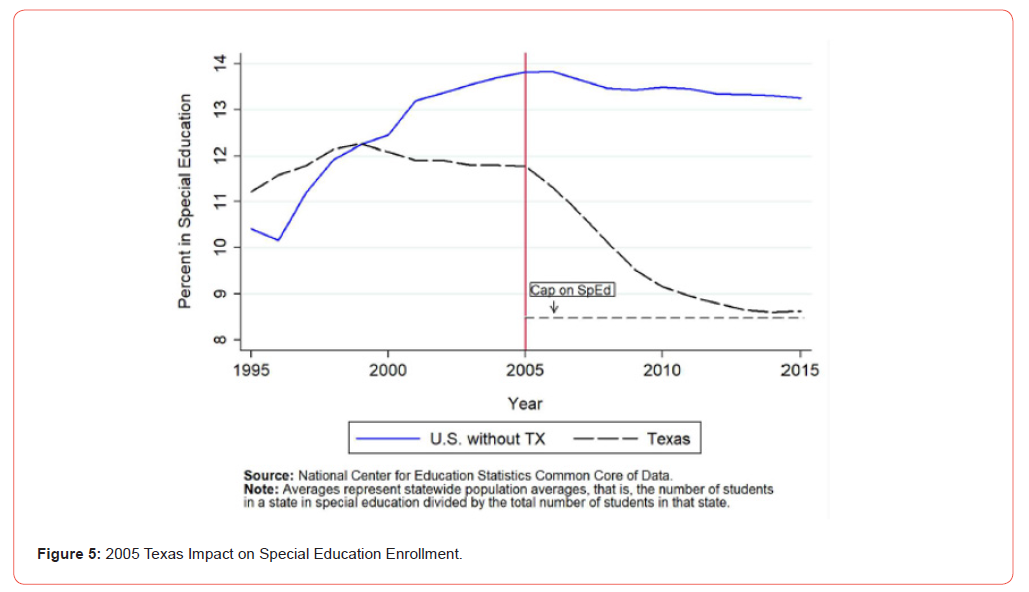
In 2005, a school district in Texas imposed a policy to reduce Special Education enrollment to no more than 8.5% to remain compliant. Over the subsequent 10-year period, there were approximately 225,000 fewer students enrolled in Special Education programs (see Fig, 4 below). This policy has since been modified (Figure 5).
There is often a misdiagnosis of children by observation of nontypical behavior in the classroom. This often leads to stereotypy of the child as being not in the normal range of behavior of other children in the same group. The stereotype of children with autism is that their functionality is impaired to the point of reduced reinforcement in some cases. [12] posit that restrictive, repetitive, and stereotypy are the three core identifiers of observation that can sometimes lead to misdiagnosis since it is based on the operant behavior of children in the appropriate age group and similar environmental settings.
Conclusion
In conclusion, there is value in the proper utilization of detection, measurement, and employment of people with Autism Spectrum Disorder (ASD). Much more research needs to be done to detect and measure the presence and severity of the affliction. Early detection of measurement of serotonin levels in the brain is another way of detecting a possible outcome. There needs to be a cessation of grouping all ASD as one. The nomenclature of the spectrum by definition indicates a wide range of behavioral patterns and abilities.
Future Research
More research needs to be done to determine the environmental factors that cause or increase the risk of ASD, such as why more in males, and why more in Blacks. More research on ideal employment of ASD employees to benefit the company as well as provide longterm employment through better understanding and fit. More complete databases by country need to be developed to include variables such as gender, age, and economic and environmental demographics. Key information would be to determine if the dramatic rise in cases is due to better reporting, or as a result of environmental changes. Mandatory pre-natal testing would be a good way to measure instances of detection as opposed to reliance on parental reporting.
Acknowledgment
None.
Conflict of Interest
No conflict of interest
References
- Cakir J, Frye RE, Walker SJ (2020) The lifetime social cost of autism: 1990–2029. Research in Autism Spectrum Disorders 72: 101502.
- Ennis-Cole D, Durodoye BA, Harris HL (2013a) The Impact of Culture on Autism Diagnosis and Treatment: Considerations for Counselors and Other Professionals. The Family Journal 21(3): 279–287.
- McCarty P, Frye RE (2020) Early Detection and Diagnosis of Autism Spectrum Disorder: Why Is It So Difficult? Seminars in Pediatric Neurology 35: 100831.
- Adams L, Simonoff E, Tierney K, Hollocks MJ, Brewster A, et al. (2022) Developing a user-informed intervention study of a virtual reality therapy for social anxiety in autistic adolescents. Design for Health 6(1): 114–133.
- Parmeggiani A, Corinaldesi A, Posar A (2019) Early features of autism spectrum disorder: A cross-sectional study. Italian Journal of Pediatrics 45(1): 144.
- Helms JE, Cook DA (1999) Using race and culture in counseling and psychotherapy: Theory and process. (pp. ix, 374). Allyn & Bacon.
- Roux AM, Shattuck PT, Cooper BP, Anderson KA, Wagner M, et al. (2013) Postsecondary Employment Experiences Among Young Adults with an Autism Spectrum Disorder. Journal of the American Academy of Child & Adolescent Psychiatry 52(9): 931–939.
- Cox BE, Edelstein J, Brogdon B, Roy A (2021) Navigating Challenges to Facilitate Success for College Students with Autism. The Journal of Higher Education 92(2): 252–278.
- Bury SM, Hedley D, Uljarević M, Gal E (2020) The autism advantage at work: A critical and systematic review of current evidence. Research in Developmental Disabilities 105: 103750.
- Fong CJ, Taylor J, Berdyyeva A, McClelland AM, Murphy KM, et al. (2021) Interventions for improving employment outcomes for persons with autism spectrum disorders: A systematic review update. Campbell Systematic Reviews 17(3): e1185.
- Scott M, Milbourn B, Falkmer M, Black M, Bӧlte S, et al. (2019) Factors impacting employment for people with autism spectrum disorder: A scoping review. Autism 23(4): 869–901.
- Cunningham AB, Schreibman L (2008) Stereotypy in autism: The importance of function. Research in Autism Spectrum Disorders 2(3): 469–479.
-

This work is licensed under a Creative Commons Attribution-NonCommercial 4.0 International License.




