

 Review Article
Challenges and Developments in the Educational Sector during Pandemics
Received Date:December 23, 2025; Published Date:January 09, 2026
Abstract
The present paper discusses the vast reformations that the educational sector faces during pandemics, bringing with it very many different challenges to cope up with. The authors of the present paper have attempted to reveal the benefits and challenges of distant learning. The benefits and challenges of pandemics have been thoroughly discussed and elucidated. The paper also highlights the vast possibilities and risks of the application of AI in teaching-learning experiences. The authors are firmly convinced that we have to walk in line with the development of science, but also stress out the high importance of ethical, legal, unbiased, and just practices.
Keywords: Education; Educational sector; Distance learning; Pandemics; Covid-19
Introduction
Contextualized in the prolonged periods of teaching and learning challenges due to the COVID-19 pandemic (referred to henceforth as pandemic for brevity) in many educational systems worldwide, there occurred drastic revolutionary changes. Because of the isolation and infection protection norms, there was a drastic need to turn to supplementary assisting tools and techniques to be able to overcome the challenges and to normally continue the educational processes. Therefore, the need to come up with abrupt creative solutions and to rethink the educational sector worldwide, most of the educational institutions went fully or partly digitalized.
Formerly, the mankind had faced various pandemics that affected largely the way we thought, worked, and acted such as the plague, cholera, tuberculosis, etc. just to name a few. It goes without saying that these kinds of wide spread health challenges have a huge impact on the human activities and the affected population no longer performs as they formerly used to. Such was the case with COVID-19 as well. Here, the already living digital platform as Zoom and MS Teams came to assist the educators in being able to smoothly and quickly change their mode of teaching and continue the teaching-learning processes through distant learning practices. Surely, such drastic changes could not be committed immediately and effortlessly, but worldwide the teaching-learning process went digitalized and even became much more exciting for the learners, where they could indulge upon the delivered classes in an innovative manner that was in line with their preferences, since it had become the task of the educators not only to deliver theoretical content, but also to diversify their classes with the help of various games, quizzes, polls, and drills.
Thus, we can state that the pandemic did not go unseen either, just on the contrary, it left a vivid mark on the way teaching and learning processes are conducted nowadays. The digital tools, such as Zoom, MS Teams and Adobe Connect, became an important part-and-parcel in the lives of both students and learners, teachers and educators. This also gave the ultimate chance to students and educators across the Globe to connect to their classes and enjoy the blessings of digitalization and globalization in their distance learning experiences, while sharing knowledge and co-creating the educational experiences.
Distance learning is actually considered to be a good opportunity for teachers, students, and families. Zhu & Liu [1] developed actions such as introduced online learning platforms, as Blackboard, Zoom, TronClass, Classin, and Wechat group platforms, and conducted online training, while also collecting information about all courses. As Tadesse & Muluye [2] state, online teaching and learning are not just a new mode of delivery for developed countries and some developing countries. However, according to research shifting from face-to-face classes to online learning is challenging for teachers, students, families, and the countries government due to lack of finance, skill, ICT infrastructure, internet access, and educational resources [3]. Furthermore, computers and other IT equipment, at home are difficult for some parents, children, and students, especially in developing countries [4]. Additionally, some courses are difficult or nearly impossible to teach and learn through online learning methods such as sport, nursing, laboratories, music, engineering, medicine, and art courses.
Moreover, the shift from face-to-face classes to online classes has had a serious impact on the assessments and evaluation processes. Thus, depending on the course nature and the assessment type applying assessments and evaluation online can sometimes be a challenging task for the educators, since if the cameras of the students are turned off, the educator cannot be fully sure if the student is actively participating in class or not. For this very reason, it is highly recommendable to ask the students to keep their cameras on during the whole duration of the class and from to time to time ask them follow-up questions to see if they are actively present or simply daydreaming. This brings with it assessment challenges so that the teachers/educators/professors are enforced to change their assessment types to fit the online mode if the class is conducted fully remotely. Also, according to Basilaia and Kvavadze [3], it is sometimes difficult to monitor the student how they are taking courses online and difficult to ensure that students are not cheating during online exams.
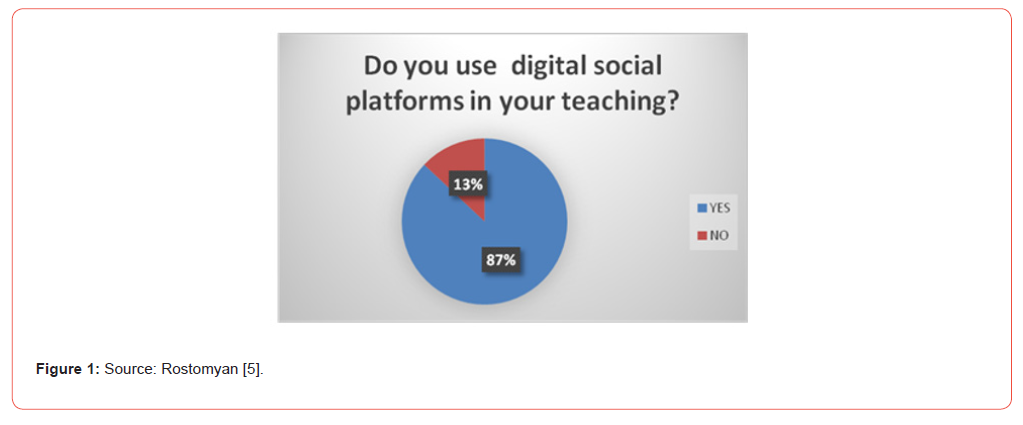
Yet, irrespective from all the challenges and risks that distance learning brought with it, according to Rostomyan’s research [5], the majority of educators have been involved in e-teaching practices.
Furthermore, with the vast advancement of artificial intelligence, nowadays AI has also become a good companion for both learners and teachers. Currently, just within a couple of minutes AI generates answers to the questions of both the learners and the educators, which gives to opportunity to consume knowledge in a much more time-efficient manner. But the question arises to which extent do AI practices remain within the ethical norms and is the AI-generated content fully trustworthy. This brings us to the ultimate assumption that with AI, it is highly advisable to do cooperation and not fully rely on AI responses.
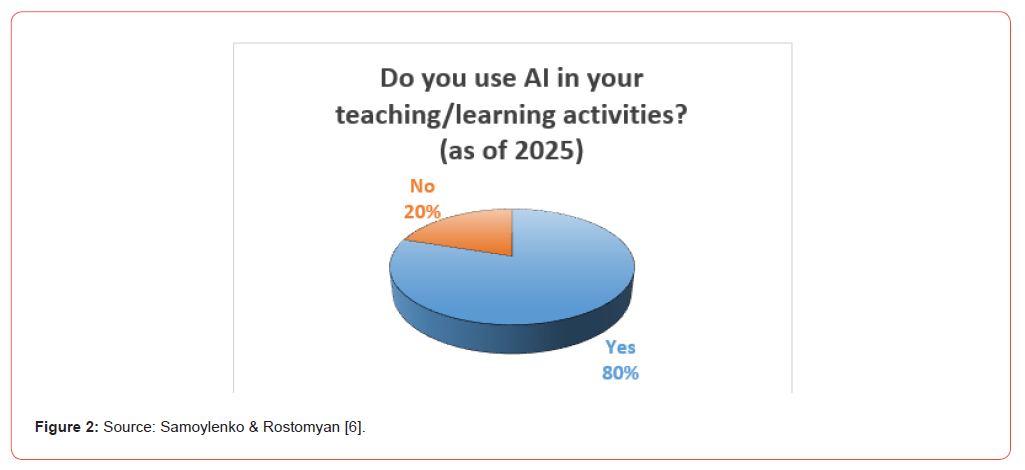
In their research, Samoylenko & Rostomyan [6] state that today more and more students cling to AI practices in their learning processes.
Samoylenko & Rostomyan [6] state that, as a matter of fact, though AI can truly personalize learning experiences, provide instant feedback, and streamline administrative tasks, be compassionate and respond to students’ emotional concerns and needs, it can also raise concerns about over-reliance, potential for academic dishonesty, and data privacy. Moreover, it raises also assessment challenges for the educators in the way that the educators without the right tools can find it difficult to detect an AI-generated content. For this, many educational institutions have integrated artificial intelligence tools in their similarity checking platforms that the educators can use to establish, enhance, stimulate, and promote academic integrity and decency. Furthermore, AI-assistant for educators as well can be very supportive in generating compelling content for the learners. Yet, here too only a successful and efficient teacher-AI co-creation should be acceptable.
Another important factor to take into consideration here is that distance learning, though highly enjoyable, especially for introverts, can bring with it psychological difficulties [4], especially from the perspectives of psycho-social relations. For this very reason, it is highly advisable for educators to care of the mental fitness of their students and to catch up with their awaiting and expectations. Actually, in face-to-face teaching, the educators can truly feel the student’s vibe, look them straight in the eyes, provide and receive emotionally much more attuned feedback and just enjoy the beauty of teacher-student productive face-to-face interactions, which can truly enhance the joy of teaching-learning processes. Yet, on the other hand, distance learning in its turn too can also be beneficial in its both forms (synchronized and asynchronous) when from across the Globe, from anywhere, people can have access to quality education and receive personalized, professional, and detailed feedback from their educators. Also, the educators can use various tools as Mentimeter, Quizzez and Quizlet are to create a joyfully digitalized happy teaching-learning atmosphere.
In his “The World after Coronavirus” (Financial Times, March 2020), Yuval Noah Harari stresses that not only pandemic is a medical crisis, but it is also a historical turning point. It is equally applicable for different sectors of economies, since the newly emerging technologies bring changes to the world. The decisions societies take in a short time will shape politics, economies, education, and culture for many years. What will it mean for people’s life goals and strategies? According to the author, there are two big choices for humanity, and we have to choose between two rather dangerous options:
1) Totalitarian surveillance vs. citizen empowerment. Countries worldwide can fight the virus with surveillance (tracking people’s movements, body temperature, contacts), but these risks creating permanent digital dictatorships. The alternative is to empower citizens with transparent information and trust so that people voluntarily cooperate, rather than being forced. Here the role of trust and information should not be underestimated for the development in education in any country, including the access to the sources of information, since trust, as well as healthy and mindful communication of information are the driving forces for any community/society/ country [7].
2) Nationalist isolation vs. global solidarity. Each country can try to deal with the virus alone, closing borders and accumulating medical supplies, or we can respond through international cooperation: sharing data, coordinating travel rules, and helping other countries with weaker health systems. Furthermore, Harari stresses that pandemics require a global solidarity for to manage both the disease and the economic shock, societies must protect trust in science, education, public institutions and the media, and keep information flowing freely, otherwise fear and conspiracy will do more damage than the virus itself. Therefore, in this connection, we observe the huge and vast impact of pandemics on the educational sector as well.
We strongly agree with the author and firmly believe that emergency tools (like new surveillance apps, emergency laws, restrictions on movement) are easy to introduce and hard to roll back, since as the author warns, citizens should watch carefully which measures are truly temporary and demand clear clauses, because any temporary measures can become permanent. In the same way, in case we are able to well integrate the newly emerging technologies to our classrooms, we can eventually boost participation of the students and create an inspiring teachinglearning environment.
The article of Harari [8], thus, ends on a cautious hope: humanity has the technology and knowledge to handle COVID without sacrificing freedom, if we choose cooperation, science and solidarity over fear and blame. The “world after coronavirus” could be more authoritarian and divided, or more cooperative, fair and resilient, depending on our choices now.
We can come to the ultimate assumption that we have to concentrate on continuing research on online regulations, AI restrictions and standards of how technology may shape education. The experiments are not the same as the real world is, and finding common grounds in interdisciplinary research and communication with the owners of AI technologies may bring a breakthrough in the development of the educational sector as a global industry, not just of one country`s sector of economy. Moreover, it has been proved by the budgets of many world’s countries that the investment in health will make impact on education, so we have to be concerned about the future generations. Furthermore, wherever there is AI, there is the danger of inequity, and any innovation may lead to disruptions, so the educators should prioritize spreading the knowledge about self-education, mostly equipping the young generation with adaptive skills to adjust their life strategies, make evaluation, investigate further and deeper the delivered content, think critically, and produce impact. Therefore, all kinds of frameworks and educational systems applied for this very purpose have to be data driven and shaped into certain digital system, showing clarity, transparency and imagination striving towards finding right working structures that will secure a brighter future.
Modern Technological Ways Education Can Prosper During Pandemics
As given stated above, pandemics such as COVID-19 have revealed the vulnerability of traditional, face-to-face education systems. However, they have also accelerated innovation and highlighted how technology can sustain and even enhance learning during global crises. The following are key modern technological approaches that can help education prosper during pandemics:
Online Learning Platforms and Learning Management Systems (LMS)
Digital platforms such as Google Classroom, Moodle, Canvas, and Microsoft Teams for Education enable teachers to deliver lessons, assign tasks, and provide feedback remotely. These systems thus support the following:
• Video lectures and interactive sessions.
• Automated grading and progress tracking.
• Centralized access to educational materials.
Virtual Classrooms and Video Conferencing Tools
Platforms like Zoom, MS Teams and Google Meet allow realtime, interactive learning experiences. Through features such as screen sharing, breakout rooms, and polls, teachers can simulate classroom engagement and maintain social interaction, even while students are physically apart.
Artificial Intelligence (AI) and Personalized Learning
AI-powered tools can tailor learning to individual student
needs. Vivid examples can include but not limited to:
• AI tutors and chatbots that provide instant help and feedback.
• Predictive analytics that identify students at risk of falling
behind.
Virtual Reality (VR) and Augmented Reality (AR)
Immersive technologies make remote learning more engaging
by creating realistic simulations and visualizations. For example:
• VR can recreate science labs or historical sites for exploration.
• AR apps overlay digital information on real-world
environments, enhancing subjects like biology or geography.
Cloud Computing and Digital Resource Sharing
Cloud-based storage solutions (e.g., Google Drive, Dropbox, OneDrive) allow easy access to learning resources from anywhere. Educators can collaborate, share lesson plans, and distribute multimedia materials instantly.
Mobile Learning and Educational Apps
As a matter of fact, in regions with limited computer access, mobile learning ensures inclusivity. Educational apps such as Khan Academy, Duolingo, and Coursera make learning flexible and accessible via smartphones, which are more widely available than laptops. Furthermore, there are also various language learning apps that can help students master a foreign language as Seedlang without leaving their home country.
Open Educational Resources (OER)
Free, openly licensed materials such as e-books, lecture videos, and online courses help institutions overcome financial barriers and ensure continuity of education even during disruptions and foster asynchronous teaching and learning processes.
Data Analytics for Decision-Making
Education data systems can track attendance, engagement, and learning outcomes. Governments and institutions can use analytics to design policies, allocate resources, and identify gaps in access or performance.
Community-Based and Low-Bandwidth Solutions
In low-connectivity regions, solutions like radio/TV lessons, offline content via USB drives, and SMS-based learning can ensure that students continue learning despite infrastructure challenges.
In a nutshell, all the aforementioned points come to suggest that during the pandemic the educational sector faced great challenges and came up with various solutions enhancing new developments which are still very beneficial for successful teaching-learning processes.
Summary
To sum up with, it is highly important to highlight that the pandemic had brought with it such vivid changes that the whole world is still experiencing on it today, including the educational sector. We cannot do but walk with the flow and accommodate to the developments in science not to be left behind. Yet, it is also highly crucial to point out to the obvious for us fact that all this should be done respectfully, diligently, carefully, legally, ethically, and justly being responsible educators while bringing up the next generation of future leaders. Therefore, in case both the educators and learners approach the vastly advancing science responsibly, we will surely thrive in blossoming societies.
Acknowledgment
None.
Conflict of Interest
No conflict of interest.
References
- Zhu XD, Liu J (2020) Education in and after Covid-19: Immediate Responses and Long-Term Visions. Postdigital Science and Education pp.1-5.
- Tadesse S, W Muluye (2020) The Impact of COVID-19 Pandemic on Education System in Developing Countries: A Review. Open Journal of Social Sciences 8(10).
- Basilaia G, Kvavadze D (2020) Transition to Online Education in Schools during a SARS-CoV-2 Coronavirus (COVID-19) Pandemic in Georgia. Pedagogical Research 5: em0060.
- Sahu P (2020) Closure of Universities Due to Coronavirus Disease 2019 (COVID-19): Impact on Education and Mental Health of Students and Academic Staff. Cureus 12: e7541.
- Rostomyan Anna (2021) The Impact of Coronavirus on Digital Communication. Journal of Global Issues and Solutions.
- Samoylenko S, A Rostomyan (2025) Contemporary trends as drivers of modern education. Proceedings of the 2nd International scientific conference "Trends and Prospects for the Development of Science and Education", Research Europe, Oxford.
- Rostomyan Anna (2024) Levers of Heightening Trust and Certainty in Communication: The Relevance of Communication in Building Trust’. In “Building Trust, Effective Communication, and Transparency between Police and Community Members, USA: IGI Publications.
- Harari YN (2020) The world after coronavirus. Financial Times.
-

This work is licensed under a Creative Commons Attribution-NonCommercial 4.0 International License.