



 Research Article
Universal Constants and Modified Gravitational Equations of Celestial Objects
Received Date: January 06, 2026; Published Date: January 19, 2026
Abstract
We present new equations of celestial objects (new equation of gravitational force, constant connecting area, acceleration and mass of any celestial object and another constant connecting number of stars and circumference of any galaxy) with new concepts and results identical with known determined calculations. Celestial objects are specific masses with specific diameters at specific distances with two motions with specific velocities and bound together by gravitational force. The main equations of celestial objects are controlled by these physical parameters (mass, diameter, distance, force, velocity). The distribution of celestial objects in the universe is uniform in terms of their masses and areas. Calculations confirmed that the mass, area and acceleration of all objects of the solar system and many stars give constant value. This result leads to conclude that all celestial objects have the same constant confirming that the content of the universe is homogeneous and isotropic. The new equation of gravitational force can be determined by three main physical parameters (mass, distance, velocity). The new equations of calculating masses, distances, rotational and orbital velocities of celestial objects can be deduced from the new equation of gravitational force with results identical with known determined values.
Keywords:Mass; area; acceleration; constant; stars; galaxies; gravity
Introduction
According to the cosmological principle and all models that use the Friedman-Lamaitre-Robertson-Walker metric (FLRW), including the current version of the Lambda Cold Dark Matter (ΛCDM) model, the distribution of matter in the universe is homogeneous and isotropic [1,2]. This means that the universe is the same in all locations and all directions respectively. The universe consists of mass and energy in the form of objects and systems (Planets, Stars, galaxies). The force of gravity is a fundamental interaction that causes mutual attraction between all objects with mass and energy and determines the motion of planets, stars and galaxies. Therefore, any object with mass exerts a gravitational force on all other objects with mass [3]. According to Newton’s law of universal gravitation, the attractive force between two masses is directly proportional to the product of their masses and inversely proportional to the square of the distance along their centre of masses [4-9].
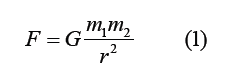
Newton suggests the existence of gravitational constant G but its value is determined by Henry Cavendish in 1798 and subsequent works [10-12] to be 6.674×10⁻¹¹ m3 kg−1 s−2 . Gravitational acceleration is the acceleration of an object in free fall within a vacuum represents constant gain in velocity caused by the force of gravitational attraction and the centrifugal force from the rotation of the celestial object. Gravitational acceleration is represented by symbol g and its unit is m/s2. Gravitational acceleration is a vector quantity. This means it has both magnitude and direction. Galaxies consist of stars, planets and vast clouds of gas and dust bound together by gravitational force. Large galaxies contain trillions of stars with diameters more than million light years, while small galaxies contain a few thousand stars with diameters of a few hundred light years. Galaxies have different shapes spiral, elliptical and irregular galaxies.
Physical Foundations
The homogeneity and isotropy of the universe indicate that all its contents and systems from smallest (nuclei & atoms & molecules) to the largest (stars & galaxies) are balanced in terms of their masses and areas with certain constant [13]. The Physical relations and laws can be expressed in terms of the main physical parameters responsible for their origin. The physical parameters (mass & area & acceleration) for (moons & planets & stars) give the same value which represent constant for all celestial bodies. The gravitational force between celestial bodies is essential for maintaining them in their orbits. Creation of gravitational force between any two celestial bodies leads to two motions for both of them (rotational motion & orbital motion). Gravitational force depends on three main physical parameters (mass of celestial objects & distance between them & rotational and orbital velocity). Specific distances between celestial objects (planets, stars) with particular distribution producing large specific systems (galaxies) with specific constant of all galaxies.
Mathematical Foundations
Constant of Celestial Objects (Moons, Planets, Stars)
As a result of the homogeneity and isotropy of the universe, the area of any celestial object and its acceleration is proportional to its mass.
a × g ∝ m (2)
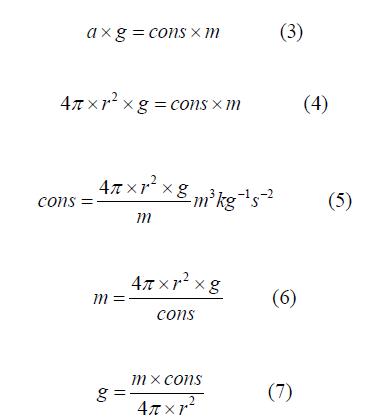
where:
a is the area of any celestial object
m is the mass of any celestial object
cons is the constant value for any celestial object
r is the radius of any celestial object
g is the acceleration of any celestial object
Confirming Constant of Celestial Objects ((Moons, Planets, Stars)
By using equation (5), the calculations confirmed that there is constant value for celestial objects (Moons, Planets, Stars) relating their area, acceleration and mass as indicated in Table 1.
Table 1 shows that all bodies of the solar system and another 22 stars have the same constant value (8.5×10⁻¹⁰ m3 kg−1 s−2 ). This leads to conclude that all celestial objects have the same constant value relating the area, acceleration and mass of any celestial object.
Acceleration of Celestial Objects
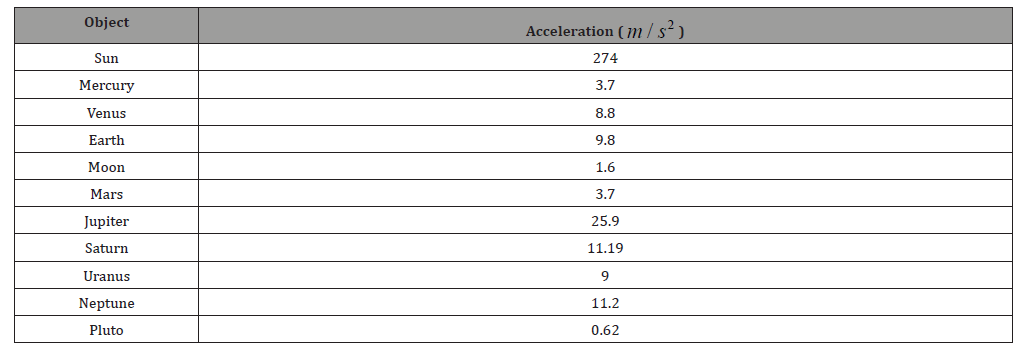
Calculations confirmed that the gravitational acceleration of the solar system objects is identical with known determined values as indicated in Table 2 by using equation (7).
Table 1: lists the constant of 22 stars, planets and moons of the solar system.
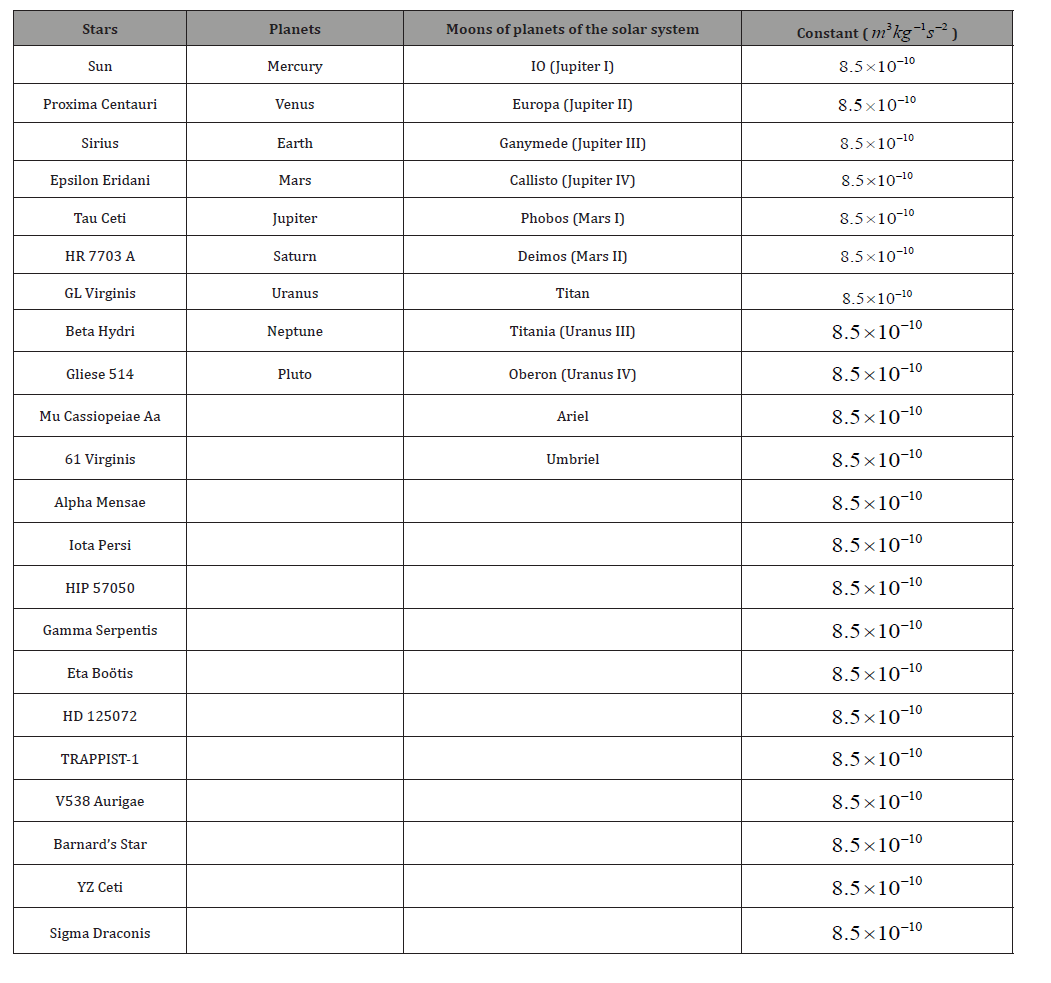
Table 2: lists the values of gravitational acceleration of the objects of solar system.
Constant of Galaxies
Approximating galaxies to spherical shapes and as a result of the homogeneity and isotropy of the universe, the square root of the number of stars of any galaxy is proportional to its circumference.
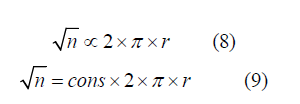
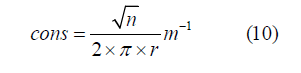
where n is the number of stars of any galaxy
cons is the constant value for any galaxy
r is the radius of any galaxy
Confirming Constant of Galaxies
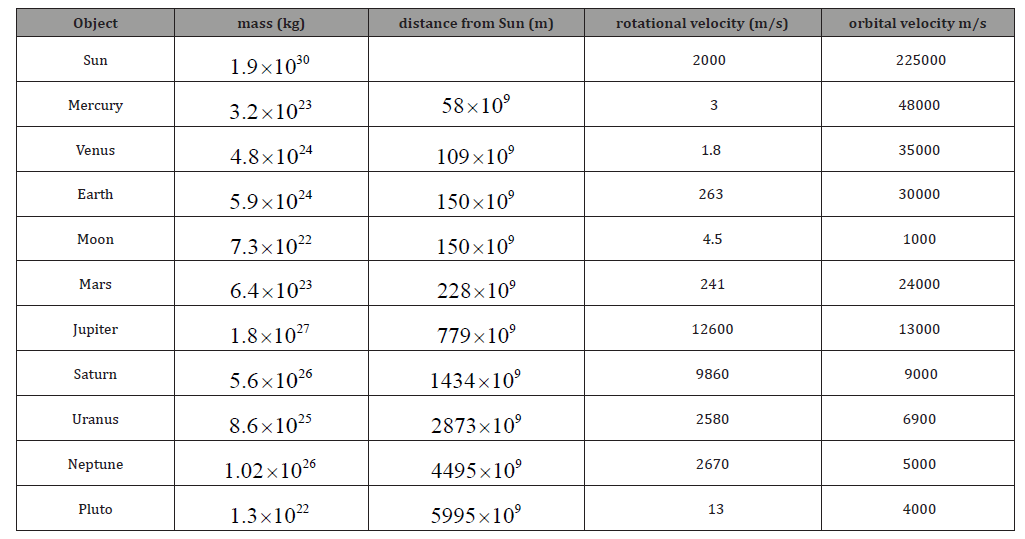
By using equation (10), the calculations confirmed that there is constant value (1.7×10⁻¹⁶ m−1 ) for many galaxies relating their number of stars and circumference as indicated in Table 3. This leads to conclude that all galaxies have the same constant value.
Gravitational Force of Celestial Objects
Any two celestial bodies or systems at specific distances leads to the creation of gravitational force between them with two motions for both of them (rotational motion & orbital motion). Gravitational force depends on three main physical parameters (mass of celestial objects & distance between them & rotational and orbital velocity). The new equation of gravitational force between two celestial objects or two galaxies with masses and at specific distance d with specific rotational velocities ( vr1 + vr2 ) and specific orbital velocities ( vo1 + vo2 ) can be determined by the following equations [14,15].
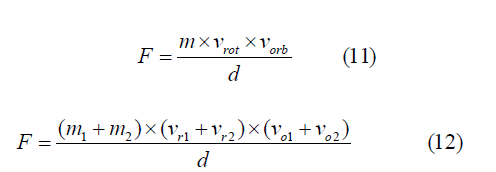
where:
m is the sum of two masses of celestial objects or galaxies
m1 + m2
vrot is the sum of two rotational velocities vr1 + vr2
vorb is the sum of two orbital velocities vo1 + vo2
m1 is the mass of the first celestial object or first galaxy
m2 is the mass of the second celestial object or second galaxy
vr1 is the rotational velocity of the first celestial object or first
galaxy
vr2 is the rotational velocity of the second celestial object or
second galaxy
vo1 is the orbital velocity of the first celestial object or first
galaxy
vo2 is the orbital velocity of the second celestial object or
second galaxy
d is the distance between two celestial objects or two galaxies
Mass, Distance, Rotational and Orbital Velocity of Celestial Objects
The mass, distance, rotational and orbital velocities of any two celestial objects can be determined by the following equations as deduced from equation (12).
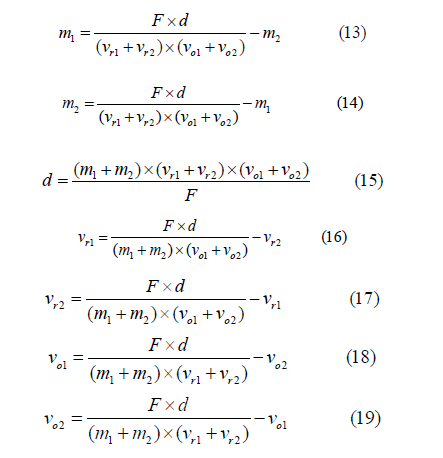
Calculations confirmed that the value of mass, distance, rotational velocity and orbital velocity of any object of the solar system by using equations (13-19) is identical with known determined values as indicated in Table 4.
Table 3: lists the physical parameters of 12 galaxies and their constant.
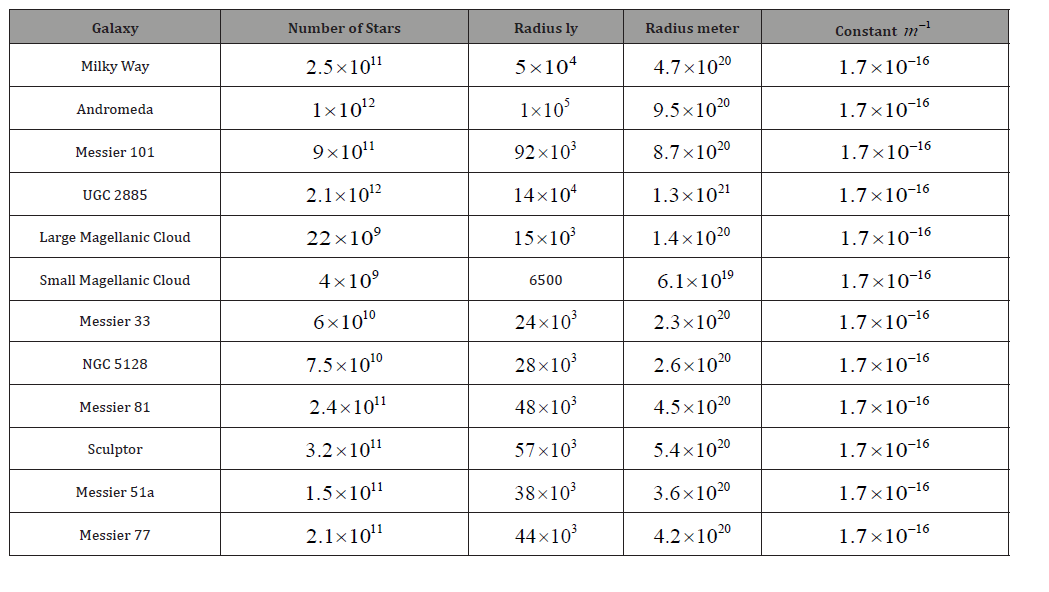
Table 4: lists the values of mass, rotational and orbital velocity of the objects of the solar system.
Results and Discussions
The universe consists of two main physical parameters energy and mass. Constant of energy for all electromagnetic radiation from gamma rays to radio waves connecting energy and frequency of all photons is confirmed by the measurements of Planck which is known as Planck’s constant [16,17]. For mass, the distribution of celestial objects in the universe is uniform in terms of their masses and areas. Calculations for all objects of the solar system and twenty – two stars confirmed that the mass, area and gravitational acceleration give constant value (8.5×10⁻¹⁰ m3 kg−1 s−2 ). As a result of the homogeneity and isotropy of the universe, the distribution of galaxies in the universe is uniform for the number of stars of any galaxy and its circumference. By using equation (10), the calculations for twelve galaxies confirmed that the square root of the number of stars of any galaxy is proportional to its circumference with constant value (1.7×10⁻¹⁶ m−1 ).The gravitational acceleration of celestial object as free fall to the surface of the object depends on its mass and varies from object to another. Gravitational acceleration is the constant gain in velocity caused by the force of gravitational attraction and the centrifugal force from the rotation of the body. By using equation (7) we found that the gravitational accelerations of all objects of the solar system are identical with known calculated values as indicated in Table 2. According to the above values and results the gravitational acceleration of celestial object depends on the mass of the object, constant value of any celestial object ( 8.5×10⁻¹⁰ m3 kg−1 s−2 ) and its area.
Particular celestial objects as specific masses at specific distance leading to the formation of gravitational force which in turn leads to their two motions with specific rotational and orbital velocities. Gravitational force between the (Sun & Earth), (Earth & Moon) and (Earth & Venus) by using equation (12) are to be (F = 8.7×1027 kg.m.s−2 ), (F = 2.85×10²³ kg.m.s−2 ) and (F =8.03×10²¹ kg.m.s−2 ) respectively. According to the above values the gravitational force between celestial objects depends on the masses of two objects, two rotational velocities, two orbital velocities and the distance between them. Gravitational force between Earth and Moon is greater than the gravitational force between Earth and Venus because the distance between Earth and Moon is much smaller than the distance between Earth and Venus. Calculated value of mass, distance, rotational velocity and orbital velocity of any object of the solar system by using equations (13- 19) is identical with known determined values.
Conclusion
As a result of the homogeneity and isotropy of the universe, the mass, area and acceleration of any celestial object (moon, planet, star) give constant value. The number of stars of any galaxy and its circumference gives another constant value. Constant of stars is greater than the constant of galaxies. Gravitational acceleration of celestial object depends on its mass, its area and constant value. Gravitational force between any two celestial objects is produced at specific distance and leads to both rotational and orbital velocity of celestial objects and expressed in terms of the physical parameters responsible for its formation (their masses, distance between them in addition to rotational and orbital velocities). New equations of calculating masses, distances, rotational and orbital velocities of celestial objects can be deduced from the latest form of gravitational force. Calculations confirmed that the results of new equations for all objects of the solar system are identical with all known determined calculations.
Conflicts of Interest
The author declares no conflict of interest.
Acknowledgment
The author would like to express his sincere appreciation and deepest gratitude to anonymous reviewers and all the staff of the Iris Journal of Astronomy and Satellite Communications whose insightful comments, contribution and support have greatly enhanced the quality, accuracy and publication of this research.
References
- Abdalla E, Abellan GF, Aboubrahim A, Agnello A, Akarsu O, et al. (2022) Cosmology intertwined: A review of the particle physics, astrophysics, and cosmology associated with the cosmological tensions and anomalies. JHEA 34: 49-211.
- Migkas K, Schellenberger G, Reiprich TH, Pacaud F, Ramos-Ceja ME, et al. (2020) Probing cosmic isotropy with a new X-ray galaxy cluster sample through the LX−T scaling relation. A&A 636, A15.
- Chandrasekhar S (2003) Newton's Principia for the common reader. Oxford: Oxford University Press.
- Hofmann -Wellenhof B, Moritz H (2006) Physical Geodesy. Springer ISBN: 9783211335444.
- Long DR (1976) Experimental examination of the gravitational inverse square law. Nature 260(5550): 417-418.
- Bagley CH, Luther GG (1997) Preliminary Results of a Determination of the Newtonian Constant of Gravitation: A Test of the Kuroda Hypothesis. Physical Review Letters 78(16): 3047-3050.
- Iorio L (2007) A model-independent test of the spatial variations of the Newtonian gravitational constant in some extrasolar planetary systems. MNRAS 376(4): 1727-1730.
- Persic M, Salucci P, Stel F (1996) The universal rotation curve of spiral galaxies — I. The dark matter connection. MNRAS 281(1): 27-47.
- Disney MJ, Romano JD, Garcia - Appadoo DA, West AA, Dalcanton JJ, et al. (2008) Galaxies appear simpler than expected. Nature 455(7216): 1082-1084.
- Clotfelter BE (1987) The Cavendish Experiment as Cavendish Knew It. American Journal of Physics 55(3): 210-213.
- Brush SG, Holton GJ, Evans J (2001) Physics, the human adventure: from Copernicus to Einstein and beyond. New Brunswick, NJ: Rutgers University Press PP. 137.
- Falconer I (1999) Henry Cavendish: the man and the measurement. Measurement Science and Technology 10(6): 470-477.
- Sanad MR (2024) Constant of Atoms and New Equation of Electromagnetic Force. Proceedings of the Romanian Academy-series A 25(4): 301-306.
- Sanad MR (2024) Physical Meaning of Planck’s Constant. Proceedings of the Romanian Academy-series A 25(2): 115-118.
- Sanad MR (2025) Equation of Constructing the Universe. Explorations in Astronomy & Astrophysics 1(1): 1-4.
- Planck M (1901) On the Law of Distribution of Energy in the Normal Spectrum. Annalen der Physik 4(3): 553-556.
- Sanad MR (2024) Universe Center and Dark Matter. Open Access Journal of Astronomy 2(2).
-

This work is licensed under a Creative Commons Attribution-NonCommercial 4.0 International License.




