

 Research Article
Generative Artificial Intelligence as Image Creation Support in STEAM Projects for Initial Teacher Training
Received Date:June 24, 2026; Published Date:September 17, 2026
Abstract
This article presents a teaching innovation experience developed within the Bachelor’s Degree in Primary Education at the University of Zaragoza as part of a transdisciplinary project involving the fields of Arts Education and Science Education. The experience incorporates Generative Artificial Intelligence image-generation tools as support resources during the initial stages of ideation and design of STEAM-based proposals. The article describes the activities carried out, students’ interactions with digital tools, and several representative examples of the outcomes obtained. Based on an analysis of student portfolios, different forms of GAI use are identified, including its role as a source of visual inspiration, conceptual support, and assistance in decision-making processes. The experience highlights the potential of these tools to enrich collaborative work processes and create new opportunities for critical reflection on the integration of Artificial Intelligence in teacher education.
Introduction
The rapid expansion of Generative Artificial Intelligence (hereafter GAI) has become one of the most significant technological developments in contemporary education (Mendiola & Degante [1]). Tools capable of generating text, images, audio, and other multimedia content are increasingly present in educational and social contexts, opening new possibilities for teaching and learning processes (López-Meneses, Fernández-Márquez, Piris, & Cisneros [2]). These technologies are transforming the ways in which information is accessed, content is produced, and knowledge is constructed, creating opportunities as well as important ethical, pedagogical, and social challenges (Gil-Ruiz & Domínguez-Lloria, 2024; Molinet-Medina [3]).
In this context, initial teacher education cannot remain detached from the transformations brought about by artificial intelligence (Numa-Sanjuán, Díaz-Guecha & Peñaloza-Tarazona [4]). Future teachers will carry out their professional practice in educational environments where these tools will be increasingly integrated into students’ everyday lives. Consequently, it is essential to promote learning experiences that enable prospective teachers to understand the possibilities, limitations, and risks associated with these technologies, while developing competencies related to their critical, ethical, and pedagogical use (Gil-Ruiz & Domínguez- Lloria [3]; Molinet-Medina [5]).
The integration of GAI into education should be understood not only as a technological issue but also as an opportunity to reflect on emerging forms of digital and media literacy (Ramón-Verdú, Villalba-Gómez & Castejón-Ibáñez [6]). Preparing future teachers to use these tools responsibly is essential, particularly in relation to phenomena such as misinformation, synthetic content, and socalled deepfakes, whose growing presence in digital environments poses significant educational and social challenges (Murillo- Ligorred & Ramos-VallecillO [7]).
This paper describes a teaching innovation experience developed within the Bachelor’s Degree in Primary Education at the University of Zaragoza as part of a transdisciplinary project involving the areas of Arts Education and Science Education.
The project, entitled Art/Science in Teacher Education, is grounded in STEAM approaches focused on fostering the integration of knowledge, methodologies, and ways of thinking from different disciplines (Yakman [8] Liao, [9]). Through the exploration of concepts such as light, color, and sound, students develop educational proposals inspired by contemporary art references and oriented towards real school contexts (Ramos-Vallecillo et al., [10]).Transdisciplinary approaches have gained increasing relevance in recent years due to their capacity to address complex problems from complementary perspectives and to promote more integrated and contextualized forms of learning (Nicolescu [11]; Sanz & De la Torre [12]). In the educational field, these approaches have found particularly meaningful expression in STEAM models, where the arts contribute to enriching processes of research, design, and creation associated with science and technology (Liao [9]; Yakman & Lee [13]). The STEAM framework promotes the integration of disciplines that have traditionally been spaced, encouraging a holistic understanding of knowledge. From a transdisciplinary perspective, there is a need to create educational experiences that connect art, science, and technology, enabling students to develop creative, critical, and collaborative competencies (Eger [14]; Ramos-Vallecillo et al., [15]).
In recent editions of the Art/Science in Teacher Education project, Generative Artificial Intelligence has been incorporated as a complementary resource during the initial stages of ideation. Specifically, students were invited to interact with text- and imagegeneration tools in order to explore visual references, make preliminary proposals, and expand opportunities for reflection and discussion within their working groups. The intention was not to replace students’ creative processes but rather to provide additional resources that could support the exploration of alternatives, idea development, and decision-making during the early stages of the project (Ramos-Vallecillo, Murillo-Ligorred & Lozano-Blasco [16]).
The incorporation of these tools also responded to a challenge identified in previous editions of the project. The teaching team had observed that many groups experienced difficulties during the initial stages of conceptualization and idea representation, particularly when required to transform abstract concepts into visual or material proposals. For this reason, AI-generated images were used as visual stimuli to start conversations, explore design possibilities, and facilitate the subsequent development of student prototypes created by students.
From this perspective, the purpose of this study is not to determine causal relationships between AI-generated images and the final products developed by students, but rather to describe an educational experience involving the integration of GAI within a STEAM project for initial teacher training. Furthermore, the study seeks to analyse the different ways in which students employed these tools during ideation and design processes, while reflecting on their possibilities and limitations as educational resources within this specific context.
Objectives of the Experience
The aim of this experience was to explore the potential of
Generative Artificial Intelligence (GAI) in the development of
STEAM projects within initial teacher training. To achieve this goal,
the following objectives were established:
i. To analyse and reinterpret contemporary artistic references,
using them as a foundation for the creation of original
proposals.
ii. To explore the use of Generative Artificial Intelligence tools as
support in processes of ideation, experimentation, and visual
development.
iii. To foster creativity, critical thinking, and ethical reflection
by promoting an active and informed attitude towards AIgenerated
outputs.
iv. To encourage collaborative work and communication,
supporting the collective construction of knowledge and the
justification of both processes and outcomes.
v. To design and present artistic prototypes that integrate
technological resources and visual languages within STEAMbased
proposals.
Context of the Experience
The experience was carried out at the Faculty of Education of the University of Zaragoza within the interdisciplinary project Art/ Science in Teacher Education, a teaching innovation initiative that has been implemented since the 2016–2017 academic year. The project brings together the areas of Art Education and Science Education with the aim of promoting integrated and interdisciplinary learning experiences in initial Primary Education teacher training. It is grounded in STEAM approaches that encourage the integration of artistic, scientific, and technological knowledge through problemsolving, product creation, and reflection on complex phenomena from complementary perspectives.
The proposal involved 180 second-year students enrolled in the Bachelor’s Degree in Primary Education during the first semester of the academic year. Participants were distributed across three teaching groups and had an average age of approximately 20 years. The experience was coordinated between the courses Visual Education and Science Education, taking advantage of the complementarity of their contents, methodologies, and educational objectives of both subjects.
The project is structured around a transdisciplinary conception of teaching that seeks to overcome fragmented approaches to knowledge (Murillo-Ligorred & Ramos-Vallecillo [15]). Within this framework, contemporary artworks serve as catalysts for the exploration of scientific phenomena and for the design of educational proposals aimed at authentic Primary Education contexts. The goal is not merely the acquisition of discipline-specific knowledge, but rather the promotion of knowledge integration, collaborative work, and the construction of meaningful learning through creative and experimental experiences.
In the edition examined in this study, projects were organized around three common thematic axes: light, color, and sound. These elements enabled connections between the scientific content addressed in the Science Education course and the expressive and communicative possibilities of contemporary art. Based on a selection of artistic works, each student group researched the assigned references, analyzed their aesthetic and conceptual characteristics, and developed original educational proposals inspired by those references.
The experience was structured into five successive phases: investigation of the reference artwork; exploration of concepts related to light, color, or sound; idea generation; prototype design and development; and public presentation of results. These phases are described in detail in Section 4. During the initial stages of ideation, Generative Artificial Intelligence tools were incorporated as complementary resources to support and expand the visual and conceptual exploration of proposals. These tools were presented to students as instruments that could assist creative and reflective processes, integrated into a broader educational experience focused on interdisciplinary learning and the critical preparation of future teachers.
The incorporation of Generative Artificial Intelligence responded to a need identified by the teaching team in previous editions of the Art/Science in Teacher Education project. In many cases, students reported difficulties when initiating processes of conceptualization and visual representation, particularly during the early design stages. As we well know, the beginning of any projectregardless of its nature-constitues such a challenge, because it requires the conception of a foundational idea capable of guiding subsequent development. Defining this initial concept is a critical moment in the process: targeting, materials, and level of precision depend largely on decisions made at this stage.
For this reason, the potential of GAI tools was explored as an initial stimulus to facilitate alternatives, peer discussion, and the progressive construction of contextualized educational proposals. From this perspective, GAI was conceived as a complementary resource within the learning process, intended to support the exploration of possibilities and the development of professional teaching competencies in emerging educational contexts.
It is important to note that the experience described here does not constitute an isolated intervention but rather forms part of a wellestablished line of teaching innovation developed at the University of Zaragoza since the 2016–2017 academic year. Throughout this period, the Art/Science in Teacher Education project has undergone successive revisions, evaluations, and academic publications that have progressively refined its pedagogical and methodological foundations. The project has explored the integration of the arts, sciences, and technology from transdisciplinary perspectives aimed at initial teacher education, demonstrating the potential of such approaches to foster meaningful learning, creativity, collaborative work, and connections between disciplines that have traditionally been treated separately.
In this regard, the incorporation of Generative Artificial Intelligence tools should be understood as a natural evolution within an already consolidated pedagogical trajectory rather than as the central element of the project. The initiative continues to be grounded in the educational principles of the STEAM approach and in the dynamic interaction between art, science, and education (Ramos-Vallecillo et al., [17]; Ramos-Vallecillo & Murillo-Ligorred [18]).
Design of the Experience
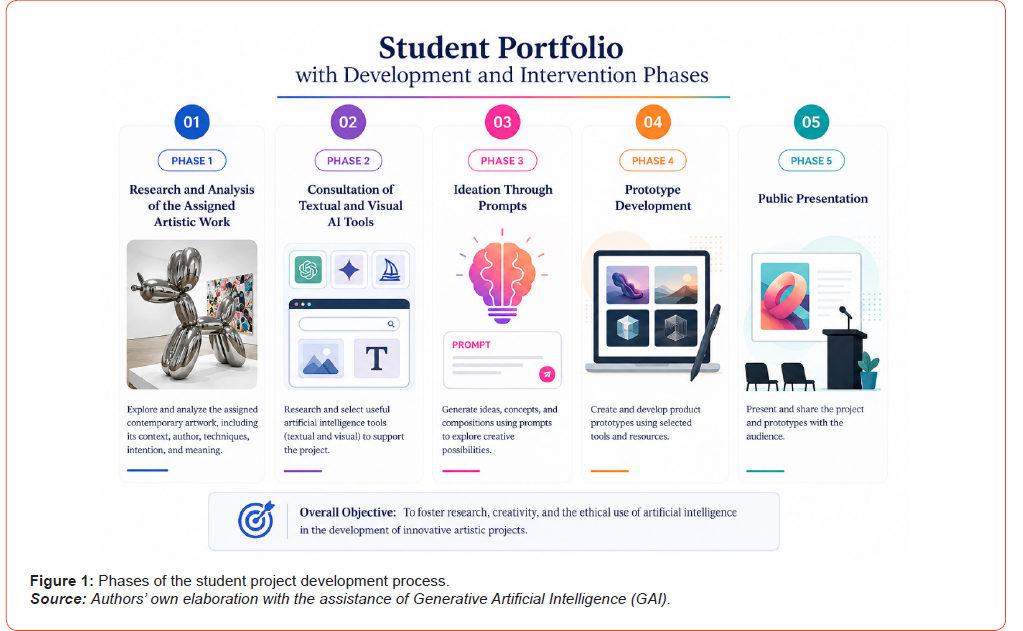
The educational proposal is organized into five sequential phases that integrate artistic analysis, the use of Generative Artificial Intelligence, and creative production, following a progression from research to final presentation (see Figure 1).
Phase 1. Investigation of the Assigned Artwork
In this initial phase, students conduct an in-depth analysis of a reference artwork drawn from the history of contemporary art. Aspects such as historical context, materials, conceptual foundations, artistic intentions, and formal elements (light, color, sound, composition, etc.) are examined. This investigation serves as the conceptual starting point, establishing the basis upon which the subsequent creative project is developed.
Phase 2. Exploration of Text- and Image-Based GAI Tools
Students explore various Generative Artificial Intelligence tools for both text and image generation, including conversational assistants and visual generation systems. During this phase, they become familiar with the operation, possibilities, and limitations of these technologies, understanding their role as support resources in creative processes. A critical attitude towards generated outputs is encouraged, with GAI being considered as a collaborative partner in ideation. The GAI assistant used in this experience was Microsoft Copilot, an AI-powered productivity tool developed by Microsoft in collaboration with OpenAI.
Phase 3. Prompt-Based Ideation
Building on the investigated artwork, students an experimental process through the creation of prompts. These prompts are used to generate images, texts, and ideas that reinterpret and reformulate the original reference. At this stage, a direct relationship is established between the reference artwork and the outputs generated by GAI, fostering creative divergence, the exploration of alternatives, and conceptual decision-making.
Phase 4. Prototype Development
During this phase, students materialize their ideas into an artistic prototype, such as installations, devices, audiovisual pieces, or video art projects. A clear connection is established between the reference artwork, the AI-generated outputs, and the final outcome. Depending on the category addressed, prototypes integrate elements such as light, sound, or color, showing a process of transformation from the digital domain to tangible, material, and experiential forms.
Phase 5. Public Presentation of Outcomes
Eventually, projects are presented in a public exhibition setting where students share both the final product and the process followed. Presentations include explanations of the reference artwork, the prompts applied, the GAI-generated images, and the development of the prototype. Critical reflection, dialogue, and collective evaluation of the projects is promoted, thus consolidating learning outcomes and artistic experience.
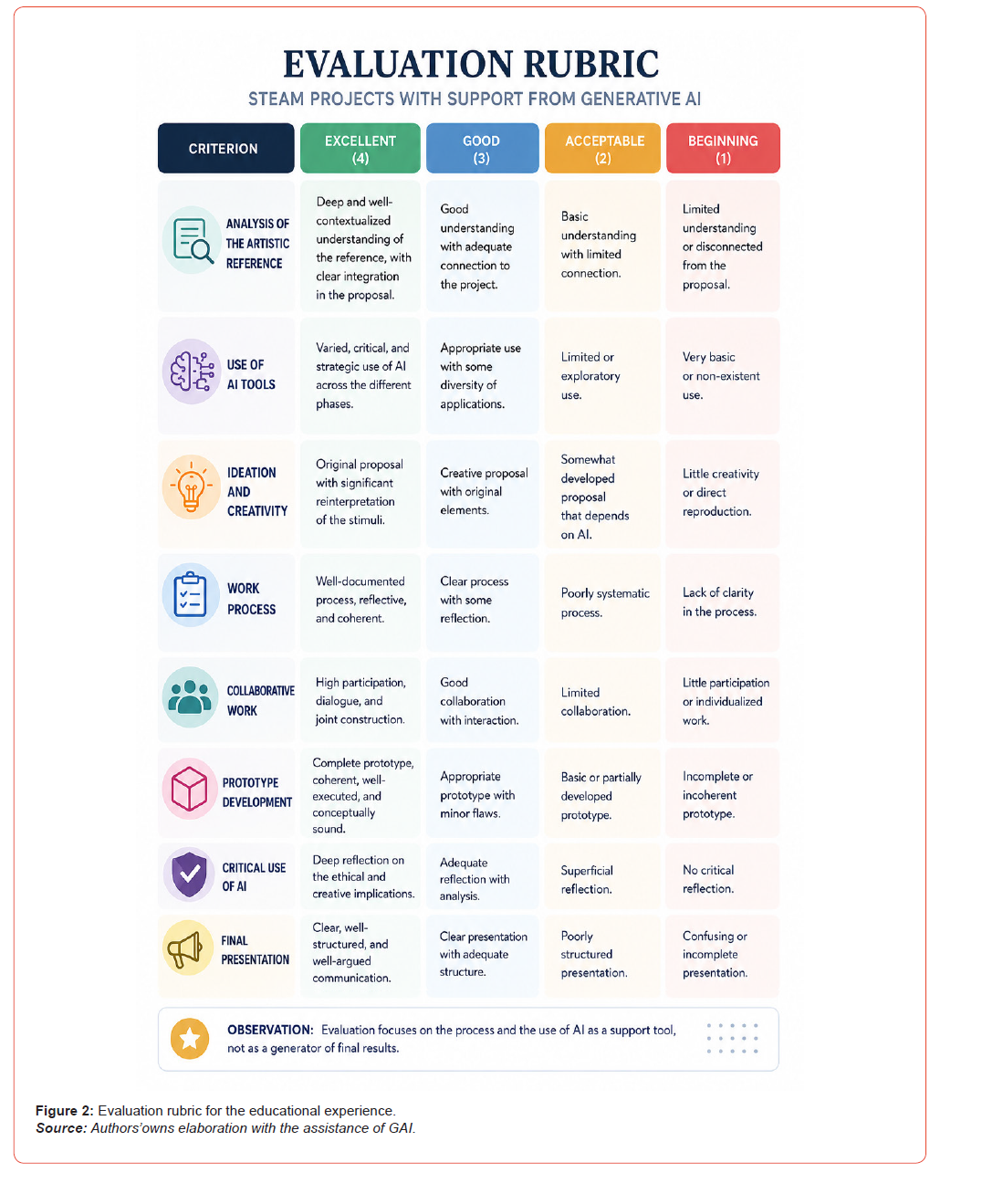
Evaluation focused on both the process and the use of GAI as a support tool rather than as a generator of final outputs, emphasizing students’ ability to reinterpret information, engage in critical reflection, and develop their own proposals (see Figure 2).
Examples of AI Use
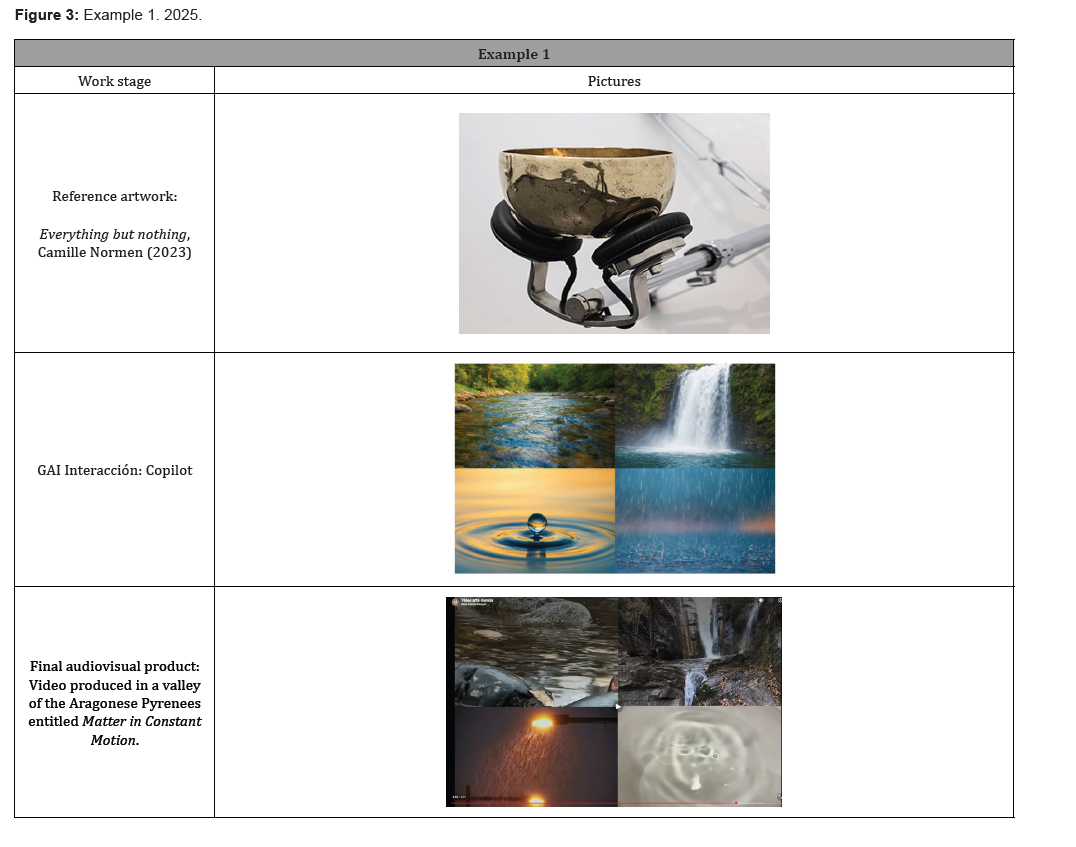
The following section presents four selected cases that serve as illustrative examples of how Generative Artificial Intelligence (GAI) was employed within the creative processes developed by students. In every case, GAI was integrated as a support tool at different stages of the project, particularly during ideation and visual experimentation. It is important to emphasize that no direct causal relationship is established between the reference artwork and the final outcome; rather, the focus is on describing how AI worked as a mediating element throughout the creative process..
In this case, the work of Camille Normand was used as starting point for exploring the movement of water from an audiovisual perspective. The use of GAI tools enabled the generation of images and visual sequences based on prompts related to the concepts of fluidity, dynamism, and transformation. These images were subsequently reinterpreted and served as a basis for the production of a video art piece, in which GAI functioned as a resource for both formal and conceptual exploration.
Source: Authors’ own elaboration
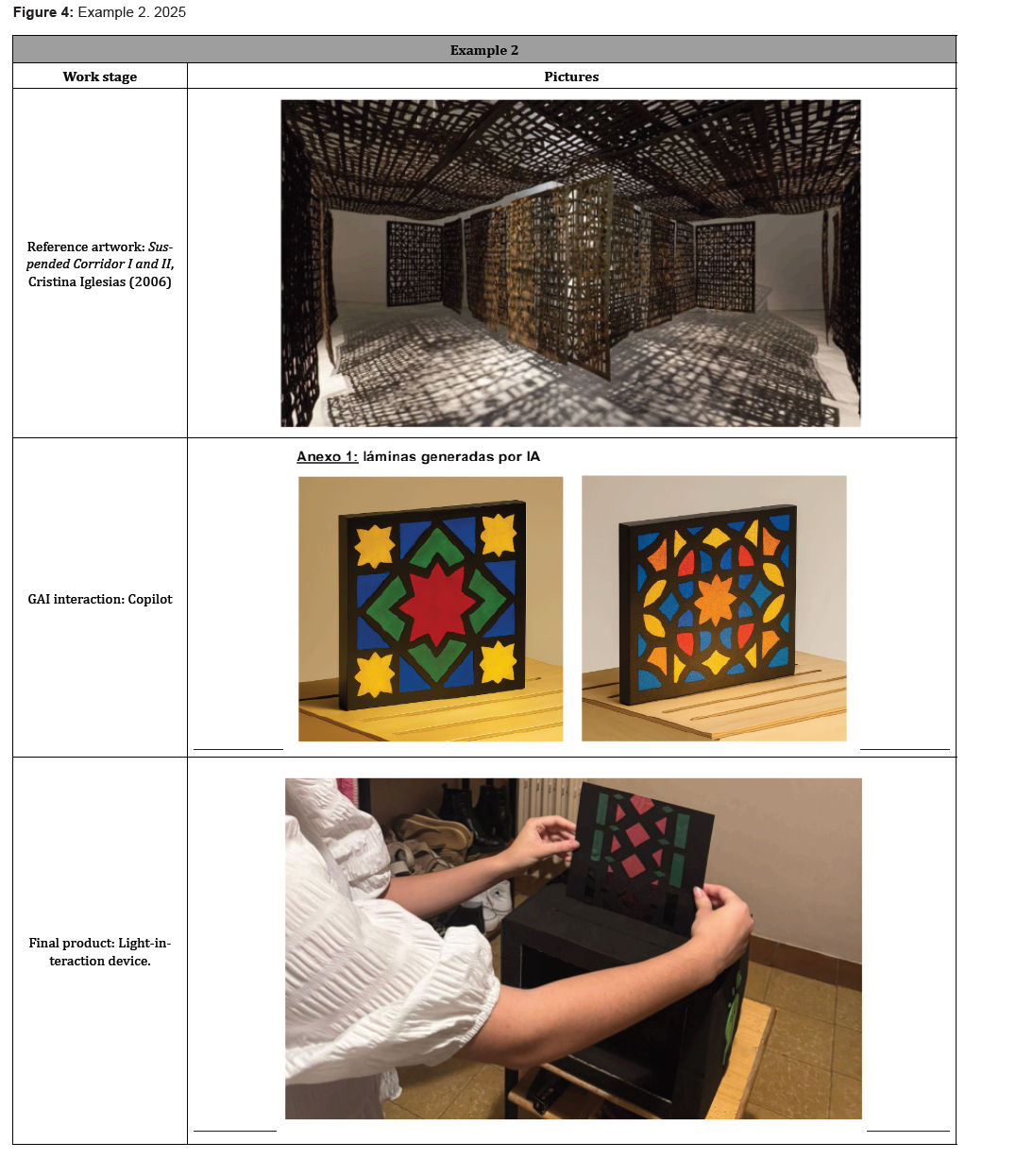
Cristina Iglesias → Artwork Inspired by Wrought Iron Braid, Cables and Shadow (see Figure 4)
The artistic reference provided by Cristina Iglesias guided the development of a device centered on light and spatial structure. Through the use of GAI, students generated variable patterns inspired by light filtration and simple geometric forms. These proposals served as the basis for the construction of a physical device, in which GAI facilitated preliminary experimentation and supported design-related decision-making.
Source: Authors’ own elaboration.
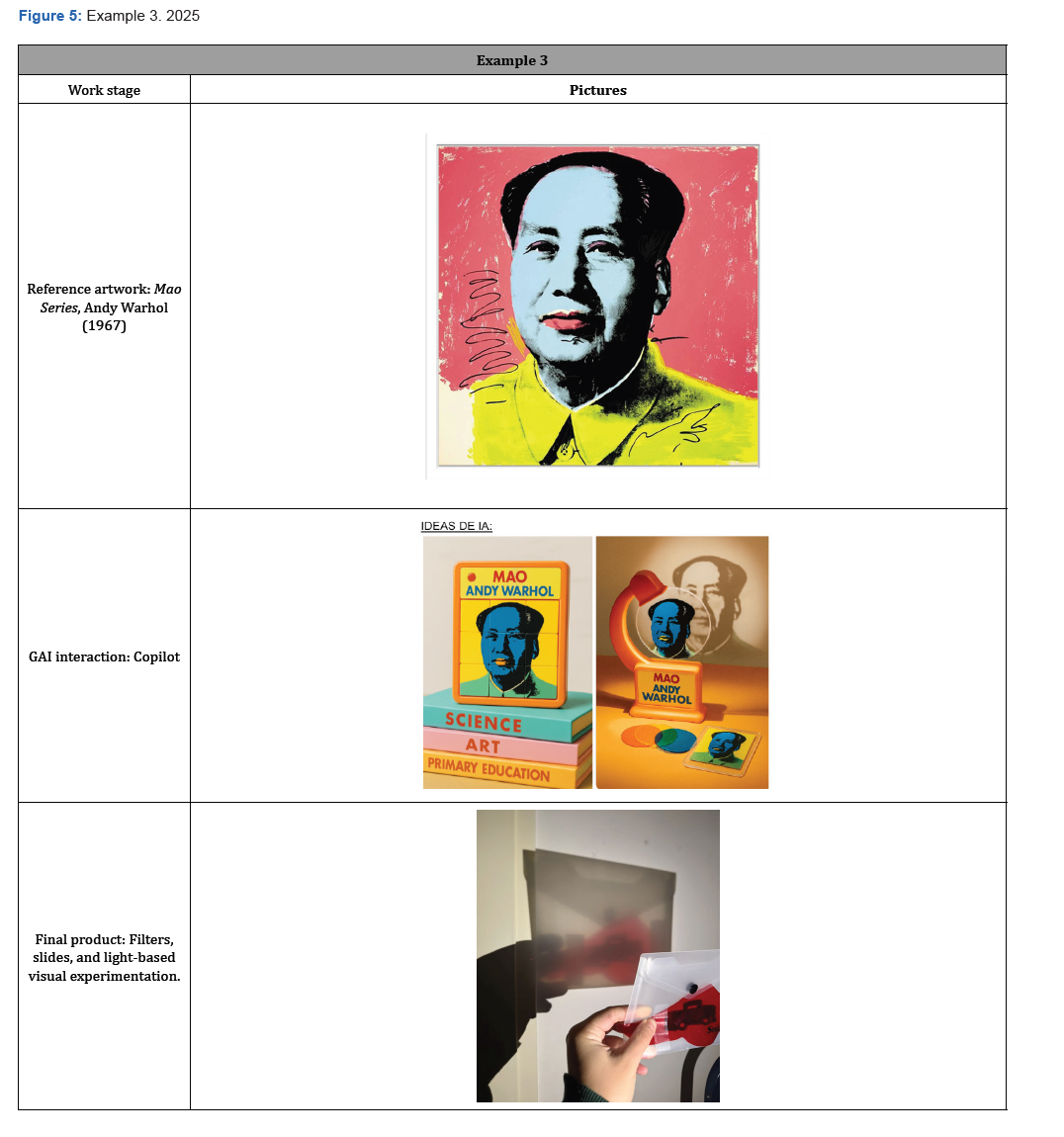
Andy Warhol → Experimentation with Light, Filters, and Color (see Figure 5)
Drawing on the visual universe of Andy Warhol, students explored color, repetition, and lighting effects. GAI was used to generate images featuring chromatic variations, filters, and repetitive compositions, enabling the rapid exploration of multiple alternatives. These exploratory outputs contributed to the development of a proposal focused on visual manipulation, with GAI working as a tool for experimentation and the generation of aesthetic possibilities.
Source: Authors’ own elaboration.
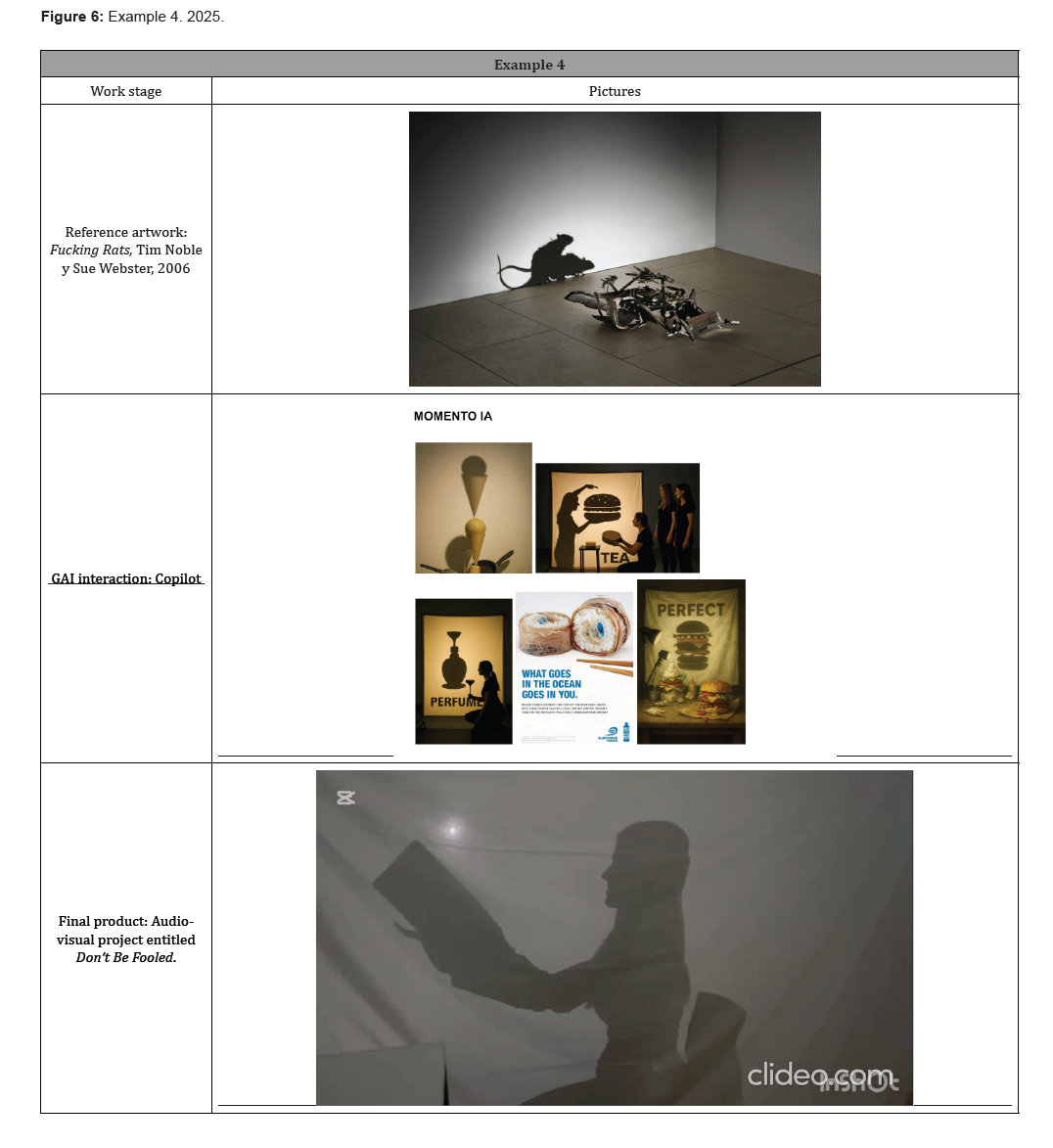
Tim Noble and Sue Webster → Audiovisual Project on Critical Thinking and Advertising (see Figure 6)
Inspired by the provocative work of Tim Noble and Sue Webster, this case focused on fostering critical reflection on imagery and advertising. Through the use of specific prompts, GAI generated visual compositions that played with appearance, illusion, and perceptual deception. These images were subsequently incorporated into an audiovisual project addressing critical thinking in relation to advertising messages. In this process, GAI acted as a generator of suggestive visual content that were later reinterpreted through a critical perspective.
Source: Authors’ own elaboration.
Taken together, these cases illustrate how Generative Artificial Intelligence can be incorporated as an active tool within the creative process, supporting exploration, idea generation, and the materialization of artistic proposals without directly determining the final outcomes.
Findings and Reflections
Following the implementation of the experience described above, several observations were identified regarding the use of GAI within students’ creative processes. As previously noted, these observations do not make causal relationships but rather to describe dynamics and behaviors identified during the implementation of the project.
First, GAI appeared to facilitate the initial raise of ideas, functioning as a creative activation resource during the early stages of the project. Its use enabled students to overcome initial uncertainty and provided a coherent and accessible starting point from which to begin their work.
Different forms of appropriation of GAI outputs were also observed. Some groups tended to use the proposals generated by GAI relatively directly into their developments, making only minor modifications. In contrast, other groups chose to reinterpret these outputs, using them as references or stimuli for the development of original and more defined ideas.
Furthermore, GAI facilitated discussion and the exchange of ideas within work teams. The d images and texts generated worked as mediating artifacts that supported dialogue, decision-making, and the collaborative construction of projects.
Finally, GAI provided with rapid access to a wide range of visual references, thereby expanding the range of formal and conceptual possibilities available to students. This immediate access to multiple alternatives enriched processes of exploration and experimentation. Overall, these observations highlight the role of GAI as a support tool within the creative process, particularly in relation to ideation, exploration, and group interaction.
Implications for Teacher Education
The integration of Generative Artificial Intelligence into arts-based educational experiences raises several important implications for teacher education, particularly within the current context of digital transformation.
First, GAI literacy is becoming increasingly necessary so that teachers can understand the basic functioning of these tools, as well as their possibilities and limitations. Such training should not be limited to technical skills but should also address the impact of GAI on teaching and learning processes and on the construction of knowledge itself.
Second, it is essential to encourage a critical approach to the use of generative technologies. Teachers must be able to guide students in the interpretation of GAI outputs, fostering reflective attitudes that prevent the uncritical acceptance of generated images and texts.
The experience also highlights the potential of AI as a resource for visual ideation. Its capacity to generate multiple proposals in a short period of time makes it a valuable tool for stimulating creativity during the initial stages of artistic processes. Consequently, teacher education programs should incorporate strategies that integrate GAI as a support for the exploration and development of ideas.
Finally, ethical reflection regarding AI-generated imagery must be also taken into consideration. Issues such as authorship, originality, the use of references, and the biases embedded within generative systems should form part of educational debate. Teachers play a crucial role in mediating these issues promoting a responsible, conscious, and context-sensitive uses of these technologies.
Taken together, these implications point to the need for teacher education programs that combine technical competencies, critical thinking, and ethical awareness regarding the use of GAI in educational and artistic contexts.
Conclusion
The experience presented in this study demonstrates that Generative Artificial Intelligence tools can be meaningfully integrated into STEAM projects aimed at initial teacher education, particularly as support resources during ideation and visual exploration phases. Their incorporation does not replace students’ creative processes; rather, it functions as a mediating element that expands opportunities for experimentation and facilitates access to multiple references within reduced time frames.
From a pedagogical perspective, these tools appear to act as catalysts for discussion, inspiration, and decision-making within student teams, fostering collaborative dynamics and shared reflection processes. Their use also diversifies approaches to artistic creation by integrating digital languages into dialogue with references drawn from Art History. However, the findings also highlight the importance of using GAI in a critical and pedagogical way that avoids unreflective dependence on generated outputs and encourages students to reinterpret, transform, and develop their own proposals.
In this regard, the results suggest the value of continuing to explore these possibilities through more systematic research designs and larger samples, allowing for a deeper examination of the educational impact of GAI in teacher education. Such work opens a promising line of inquiry halfway between art, technology, and education, with high potential for future development in teaching and learning contexts. The findings are consistent with previous research highlighting the potential of GAI as a tool for supporting creativity, particularly in its role as a catalyst for idea generation and as a resource for visual exploration. Nevertheless, the study also underscores the need to promote critical uses of these technologies that avoid overreliance on generated outputs. The distinction observed between direct adoption and reinterpretation or re-elaboration of GAI content suggests different levels of creative competence development, raising significant challenges and opportunities for contemporary teacher education.
Declaration of Interest
None
Acknowledgement
None
References
- Mendiola M S, Degante E C (2023) La inteligencia artificial generativa y la educación universitaria:¿ Salió el genio de la lámpara? Perfiles educativos 45: 70-86.
- López-Meneses E, Fernández-Márquez E, Piris N P, Cisneros J T (2024) Reflexiones del uso de Chatbots con inteligencia artificial generativa (IAG) en la enseñanza superior. En E. Ordóñez Olmedo, & E. López Meneses, Formación innovadora en la educación contemporánea, Dykinson, pp. 11-22.
- Gil-Ruiz P, Domínguez-Lloria S (2024) La inteligencia artificial generativa de imágenes como colaboradora para la creatividad: Un estudio de caso grupal. Arte, individuo y sociedad 37(2): 339-351.
- Numa-Sanjuán N, Diaz-Guecha L Y, Peñaloza Tarazona M E (2014) Importancia de la Inteligencia Artificial en la educación del siglo XXI. AiBi Revista de Investigación, Administración e Ingeniería 12(2): 49-62.
- Molinet-Medina, X (2023) Inteligencia ARTificial y Educación Artística. Arte, Individuo y Sociedad 35(4): 1513-1514.
- Ramón Verdú A, Villalba-Gómez J, Castejón-Ibáñez M (2025) Análisis de la integración de la Inteligencia Artificial generativa en el proceso de creación de narrativas textuales y visuales. Un estudio de caso. Arte, Individuo y Sociedad 37(3).
- Murillo-Ligorred V, Ramos-Vallecillo, N (2025) La categorización de los deepfakes mediante una investigación cualitativa para la formación de maestros: de la crítica a la creatividad en la inteligencia artificial. Communiars. Revista De Imagen, Arte y Educación Crítica y Social, 14(8): 45-61.
- Yakman G (2008) STEAM Education: An overview of creating a model of integrative education. Tesis Virginia Polytechnic and State Univ, pp. 1-28.
- Liao, C (2016) From Interdisciplinary to Transdisciplinary: An Arts-Integrated Approach to STEAM Education. Art Education (69): 44-49.
- Ramos Vallecillo N, Murillo Ligorred V, Serón Torrecilla F J, de Echave Sanz A M (2023) Tangencias arte y ciencia para la formación de maestros: experiencias interdisciplinares en el grado de primaria. ulso. Revista De educación (46): 105-126.
- Nicolescu B (1997) The transdisciplinary Evolution of the University Condition for Sustainable Development. Bulletin Interactif du Centre International de Recherches et Études transdisciplinaires 12: 73–81.
- Sanz G, De la Torre S (2006) Declaración de Barcelona: Transdisciplinariedad y Educación. En S. De la Torre, Transdisciplinariedad y Ecoformación: una nueva mirada sobre la educación, pp 15-25.
- Yakman G, Lee H (2012) Exploring the exemplary STEAM education in the U.S. as a practical educational framework for Korea. Journal of the Korean Association for Science Education 32(6): 1072-1086.
- Eger, J (2015) The Congressional STEAM Caucus may turn STEM to STEAM in the reauthorization of ESEA.
- Murillo Ligorred, V, Ramos Vallecillo, N (2023) Transdisciplinariedad entre arte, ciencia y tecnología: superación de fronteras en las propuestas didáctico-expositivas de Karin Ohlenschläger en su etapa como directora de LABoral Gijón. Artnodes (32): 1-11.
- Ramos Vallecillo N, Murillo Ligorred V, Lozano-Blasco R (2026) AI-Mediated Generative Art in Primary Education: Emotional Expression, Creativity and the Limits of Visual Reflection. Applied Sciences 16(12): 5751.
- Ramos Vallecillo N, Fuentes Cid S, Enfedaque Sancho M, Murillo Ligorred V (2023) Fronteras arte-ciencia para la formación de maestros: de las propiedades materiales de los objetos a la generación de conocimiento. En Investigación e innovación educativa en contextos diferenciados. Dykinson, pp. 521-533.
- Ramos-Vallecillo N, Murillo Ligorred, V (2024) Transdisciplinariedad didáctica a través de videomapping: arte, ciencia y tecnología en la formación de maestros de primaria. En J. L. Maro, Buenas prácticas en la docencia universitaria con apoyo de TIC. Experiencias en. Zaragoza: Prensas de la Universidad de Zaragoza.
-

This work is licensed under a Creative Commons Attribution-NonCommercial 4.0 International License.