



 Research Article
Drinking Water Contamination and Experiences of Households in Coastal Areas of Akwa Ibom State, Nigeria
Received Date: August 13, 2026; Published Date: August 27, 2026
Abstract
Access to safe drinking water remains a critical public health challenge in coastal regions, particularly in developing countries where environmental degradation and weak infrastructure intersect. This study investigates drinking water contamination and the lived experiences of households in coastal areas of Akwa Ibom State, Nigeria. The study was conducted across selected coastal Local Government Areas, namely Mbo, Ibeno, Esit Eket, Eastern Obolo, and Ini, using a mixed-method approach that combined laboratory water quality analysis with household surveys and interviews. A total of 314 questionnaires were administered alongside physico-chemical, microbial, and heavy metal analyses of borehole water samples collected during wet and dry seasons. Parameters assessed were compared with World Health Organization (WHO) standards for drinking water quality. Findings revealed widespread deterioration in water quality across the study area, with elevated levels of turbidity, iron, manganese, salinity indicators, and microbial contamination (total and faecal coliforms) exceeding permissible limits. Seasonal variations showed increased contamination during the wet season due to runoff and dilution effects, while dry season conditions intensified salinity and chemical concentration. Household data further revealed severe water access challenges, including reliance on contaminated sources, unpleasant taste and odour, long distances to water points, and high financial costs associated with obtaining potable water. A significant proportion of respondents reported consuming untreated water, heightening exposure to waterborne diseases. The study also identified spatial disparities, with coastal island communities experiencing more severe salinity intrusion and contamination compared to upland areas. The study concludes that despite proximity to abundant water resources, coastal communities in Akwa Ibom State experience severe drinking water insecurity driven by environmental pollution, saltwater intrusion, and inadequate infrastructure. It recommends improved water treatment systems, strengthened environmental regulation, and community-based water safety interventions to mitigate health risks and enhance sustainable access to safe drinking water.
Keywords: Drinking water contamination; coastal communities; household water access; microbial pollution; physico-chemical parameters; heavy metals; Akwa Ibom State; Nigeria
Introduction
Access to clean and safe drinking water is an emerging global challenge with untold burden along world’s coastline. Drinking water, also known as potable water, is water that is safe for human consumption and can be used without any short-term or long-term risk to health. It must be free from harmful microorganisms (like bacteria, viruses, and parasites), toxic chemicals (such as heavy metals, pesticides, and industrial pollutants), and radioactive substances. Beyond being free from contaminants, safe drinking water should also be clear, colorless, odorless, and tasteless, making it aesthetically acceptable for consumption [1,2]. On the other hand, water contamination entails the introduction of undesirable substances into water bodies, rendering them unfit for their intended uses, particularly human consumption. Contaminants can be microbial, organic chemicals like pesticides, herbicides, industrial solvents (example, PCBs, benzene), petroleum products, and pharmaceuticals and inorganic chemical and inorganic chemicals such as heavy metals (lead, mercury, arsenic), nitrates from agricultural fertilizers, and fluoride, likewise physical contaminants like silt, clay and visible particles.
Water although being ubiquitous in nature, is at the same time scarce in many regions. According to Murei, et al (2023) [3], the total water space compare to land is 1,385,984,610 km3, with seawater consisting 96.54% of its total space, freshwater consisting 2.53%, saltwater outside of seawater consisting 0.93% and others consisting 3.46%. United Nations Educational, Scientific and Cultural Organisation (UNESCO) (2019) [4] and Water Aid (2022) opined that groundwater is the most preferred drinking water source with about 400 million persons depending on it in Africa, 310 million people in Europe, about 9 million people in Mexico City and a total of about 95% water sources drawn from groundwater to feed Bolivia, Colombia, Costa Rica, Chile, and Peru. UNESCO (2022) [5] and UNICEF (2024) [6] indicated that nearly 50% of the global urban population is supplied from groundwater sources. Over, 100 million people in Latin America and the Caribbean rely on groundwater for their drinking water and 34.5million people in Brazil alone, 200 million people in North America and 143 million people in USA alone, about over 30% of Australia’s population as well as 75% of water users in Asia.
aOut of this statistic, globally, about 1.8 billion people use a drinking-water source that is contaminated with faeces, and 400 million people in Sub-Saharan Africa lack access to clean drinking water (WHO/UNICEF, 2023). Asia also faces significant challenges, particularly in South Asia and Southeast Asia. WHO (2017) [1] reported that around 630 million people in India and Southeast Asia were using water from faeces-contaminated sources. A recent analysis predicted that 1.2 billion people living across India, Afghanistan, Bangladesh, Bhutan, Iran, the Maldives, Nepal, Pakistan, and Sri Lanka (South Asia) were not using safe managed drinking water (UNICEF, 2024) [6]. It was estimated that between 68% and 84% of water sources in parts of Asia are contaminated, and around 500 million people in the Asia and Pacific region lack access to a basic drinking water today (Asian Development Bank, 2024). Europe generally has high access to safely managed drinking water, contamination remains an issue, particularly concerning emerging contaminants and localized problems. It is estimated that 12.5 million Europeans are living in communities with unsafe drinking water, particularly chemical contaminants (European Environmental Bureau, 2020; European Commission, 2014, European Environment Agency, 2021). This highlighted a significant chemical contamination issue.
As at today, North America (primarily the United States and Canada) had a higher rate of access to improved water sources, but aging infrastructure, industrial pollution, microplastics and other emerging contaminants pose significant challenges. It was estimated that approximately 165 million Americans were exposed to chemical contaminant in drinking water sources. Lead contamination, often from aging pipes, as well as nitrates and pesticides remain a concern in many older cities (Environmental Protection Agency, 2020) [7]. Latin America and the Caribbean still faced significant challenges in ensuring universal access to safely managed drinking water, with high rates of contamination, particularly in rural and marginalized areas. Approximately 36 million people in Latin America live without clean drinking water daily. Particularly, in Guatemala, 90% of water sources are reported to be polluted while 68% of El Salvador’s water users drink water from contaminated sources (Inter-American Development Bank, 2021; UNICEF, 2024). Similarly, in the region of Australia, sufficient effort has been made to maintain a very high standards for urban drinking water quality, but challenges exist in remote indigenous communities. Many remote indigenous communities face severe challenges with water quality, due to microbial contamination, and issues with naturally occurring contaminants or aging infrastructure. To worsen the scenario, chemical contaminants have been detected in drinking water for up to 1.8 million Australians (National Health and Medical Research Council (2024); Queensland Urban Utilities, 2020). The aforementioned statistics reflect the regional disparity in the intensity of drinking water related issues.
Surprisingly, consumption of drinking water has much effect on pregnant women, elderly persons and children. UNICEF (2024) [6] agreed that about 70% of water at the point of consumption in Nigeria is contaminated and that children are the most vulnerable. As a result, about 117,000 children die in Nigeria each year due to water-related illness- the highest number far ahead other affected countries namely Republic of Congo, Ethiopia, Somalia, Yemen, Afghanistan and Sudan. In the same vein, Nigeria is among the 10 countries that is heavily hit by basic ‘’drinking water scarcity’’ for under five children and mothers besides Benin, Burkina Faso, Cameroon, Chad, Côte d’Ivoire, Guinea, Mali, Niger, Nigeria and Somalia (United Nations Children’s Fund, 2023) [8]. Though ‘’Drinking water scarcity’’ is more conspicuous in the coast, the highest burden of water contamination is reported in conflictprone areas with mothers and under-five children becoming the most vulnerable (UNICEF/WHO, 2017, 2020, 2022) [9-11]. A report from Life Savers Foundation, an NGO tackling water related issues in Nigeria, revealed that about 80% of modern illness is traced to drinking of contaminated water over time. In coastal communities of Akwa Ibom State, access to clean and safe water remains a persistent struggle shaped by both natural and humaninduced factors. Saltwater intrusion from rising sea levels and tidal activities often contaminates shallow wells and boreholes, making the water brackish and unsafe for drinking (Jimmy, 2025) [12]. In addition, frequent oil spills and waste discharge pollute rivers and creeks—the primary water sources for many residents— exposing them to waterborne diseases and long-term health risks. As a result, inhabitants are often forced to rely on distant or costly alternative sources, increasing their daily burden and deepening cycles of poverty and vulnerability. This study becomes very relevant aimed at addressing drinking water contamination and ugly experiences faced by inhabitants in coastal areas of Akwa Ibom State, Nigeria. The following objectives were outlined, namely; to analyse the variations in water physio-chemical parameters from sampled boreholes in the study area, to examine the variations in Microbial load in sampled boreholes in the study area, to assess the daily experiences of coastal inhabitants in relation to access to drinking water sources in Akwa Ibom State and recommend possible approaches capable of improving water quality and public health outcome in the study area.
Literature Review
Water quality changes (Physico-chemical parameters) in coastal water sources
Water contamination is broadly categorized into microbial and physicochemical forms, as noted by Adeiza et al. (2018). Sokpuwu (2017), in a study conducted between June and August 2015 in Ebubu, Eleme (Rivers State), assessed groundwater from ten boreholes using standard laboratory techniques. Parameters analyzed included pH, electrical conductivity, total dissolved solids, hardness, BOD, COD, major ions, heavy metals (Cd, Pb, Ni, Co), and polyaromatic hydrocarbons. Results showed most physicochemical parameters (except Mg and Ca) were within World Health Organization limits, though cadmium recorded the highest mean concentration (0.361 ± 0.381 mg/L). Nwankwoala and Udom (2011) evaluated groundwater hydrogeochemistry in Port Harcourt using 18 wells, identifying dominant ionic compositions (Ca > Mg > K ≥ HCO₃ > Cl > SO₄ > NO₃) and hydrochemical facies (Ca- Mg-HCO₃ and Ca-Mg-SO₄). Ion exchange and silicate weathering were key influences, with minimal marine intrusion. Similarly, Okoye et al. (2010) [13] found groundwater in Calabar to be acidic with low trace metal concentrations and dominant Ca-Mg-Cl-SO₄ facies. Ukpong et al. (2017) reported that most physicochemical parameters in Mkpat Enin were within permissible standards, though bacteriological analysis revealed E. coli contamination in some locations.
In Aba, Alichi et al. (2010) observed acidic groundwater with elevated TDS near dumpsites and sulphate near industrial zones, attributing variations to urbanization. Studies in Abeokuta and Kano (Ufoegbune et al., 2009; Adamu et al., 2013) reported elevated metals such as Zn, Fe, and Pb, alongside geological influences on water chemistry. Dan-Hassan et al. (2010) identified Ca-HCO₃ and Na-HCO₃ facies in Abuja groundwater, while Anudu et al. (2010) reported hardness and elevated Fe, Cu, and Pb in Bauchi. Tse and Adamu (2012) found slightly acidic groundwater in Makurdi with high coliform levels. Aiyegbusi et al. (2010) in Osun State reported multiple hydrochemical facies and elevated heavy metals exceeding WHO limits, alongside coliform contamination linked to poor sanitation. Adediji and Ajibade (2005) found most cations within limits in Ede, whereas Jegede and Alade (2010) [14] reported elevated Pb, Fe, and Cd in Ijebu-Ijesa. Ocheri and Odoma (2013) and Ocheri and Ode (2012) identified high coliform and nitrate levels in Lokoja and Benue, attributing contamination to shallow wells and poor construction practices. Mahfuzur et al. (2022) [15] reported arsenic and salinity issues in Bangladesh, discouraging shallow groundwater use. Globally, inorganic contaminants such as F⁻, SO₄²⁻, Cl⁻, Ca²⁺, and Mg²⁺ occur naturally but are intensified by human activities (He and Wu, 2019; Adimalla and Wu, 2019). Toxic metals including Zn, Pb, Hg, Cr, Cd, Se, and as pose serious health risks (Li et al., 2019a; Hashim et al., 2011) [16]. For instance, hexavalent chromium increases cancer risk (He and Li, 2020), while arsenic—classified as a Group 1 carcinogen—disrupts cellular processes (Abbas et al., 2018). Arsenic contamination affects over 230 million people globally (Shaji et al., 2021). Organic contaminants, including hydrocarbons and pharmaceuticals, are also widespread and may persist in groundwater, bioaccumulating in food chains (Rebelo and Caldas, 2016; Lapworth et al., 2015; Gwenzi and Chaukura, 2018; Schulze et al., 2019) [17,18]. Microbial contamination remains a major concern, with over 400 bacterial species and numerous viruses identified in faecal matter (Shen and Gao, 1995; Annaduzzaman et al., 2018). Contaminated water is linked to diseases such as cholera and typhoid, with global cholera cases rising significantly (UNICEF, 2023; WHO, 2011) [19,20]. Adeiza et al. (2018) and Chukwu-Okeah et al. (2020) reported high microbial loads, including E. coli, Salmonella, and Staphylococcus aureus, exceeding WHO limits in Kano and Rivers State, posing serious health risks.
Microbial Load in coastal water sources
Microbial loads tend to accumulate in coastal water sources due to the convergence of natural processes and human activities. Coastal zones often receive untreated or poorly treated sewage, agricultural runoff, and waste discharges from upstream areas, introducing high concentrations of faecal bacteria such as E. coli and other pathogens (WHO, 2017; UNEP, 2016) [1,21]. Low-lying topography and tidal fluctuations further promote the mixing and retention of contaminants, while flooding and storm surges can wash latrine waste and surface pollutants into wells and surface waters (Howard et al., 2003). In addition, warm temperatures typical of tropical coastal regions enhance microbial growth and survival, increasing contamination levels (Jamieson et al., 2004). Poor sanitation infrastructure and shallow, unprotected wells commonly found in coastal communities also facilitate the infiltration of pathogens into groundwater systems. Empirically, Idibie et al. (2018) used standard microbiological techniques and found bacterial counts exceeding WHO limits across sampled sources. Similarly, Smruti and Sanjeeda (2011) identified widespread contamination in Indore, with pathogens such as E. coli, Klebsiella, and Salmonella, partly due to distribution system failures. Onyango et al. (2018) in Kenya reported high microbial contamination in surface and groundwater, emphasizing the need for disinfection.
Further studies across global coastal nations consistently reveal high microbial loads in drinking water sources, largely driven by sanitation deficits, population pressure, and environmental exposure. In Bangladesh, Islam et al. (2021) [22] and Rahman et al. (2018) [23] reported widespread E. coli contamination in coastal groundwater linked to salinity intrusion and inadequate sanitation systems. In India, Reddy et al. (2019) [24] found elevated coliform levels in the coastal districts of Andhra Pradesh due to untreated sewage discharge and monsoonal flooding. In Pakistan, Hasan et al. (2020) observed severe faecal contamination in coastal Karachi water sources, attributing it to industrial effluents and failing sewage networks. In Sri Lanka’s coastal belt, Ameer (2017) similarly linked waterborne disease outbreaks to poor drainage systems, high population density, and unsafe wells. In Indonesia, Sari et al. (2022) reported high microbial contamination in coastal Java groundwater due to domestic waste infiltration and tidal mixing. In Vietnam’s Mekong Delta, Nguyen et al. (2020) identified persistent coliform contamination in household wells, driven by agricultural runoff and floodwater intrusion. In the Philippines, Cruz et al. (2019) found that coastal aquifers were heavily contaminated by septic leakage and storm surges.
Across Africa, Onyango et al. (2018) in Kenya documented high microbial loads in coastal water sources exceeding World Health Organization standards, while Sefie et al. (2021) [25] in Tanzania reported similar contamination linked to poor sanitation and agricultural activity. In Mozambique, Nhantumbo et al. (2020) found coastal groundwater heavily polluted with faecal bacteria following cyclonic flooding. In West Africa, Bashir et al. (2023) in Nigeria reported unsafe bacterial loads in borehole water, while Ologhadie and Ideriah (2022) recorded microbial contamination exceeding safe limits in Rivers State, correlating with increased cases of typhoid and diarrhoea. In Ghana, Obiri-Danso et al. (2019) found coastal wells contaminated due to open defecation and waste disposal practices. In Latin America, Torres et al. (2018) in Brazil’s coastal Recife region reported high coliform levels linked to untreated sewage discharge into estuaries. In Mexico, López et al. (2020) [26] found microbial contamination in Gulf Coast groundwater associated with urban runoff and inadequate sanitation.
In North America, U.S. coastal studies by Francy et al. (2013) documented bacterial contamination in Florida’s coastal aquifers driven by septic tank leakage and stormwater intrusion. In the Caribbean, St. Rose et al. (2019) reported similar contamination in coastal Jamaica due to poor wastewater treatment infrastructure. In Europe, coastal Spain studies by Sánchez et al. (2018) and Italy’s Adriatic coast research by Rossi et al. (2021) revealed microbial contamination linked to agricultural runoff and tourism-driven wastewater pressure. In the Middle East, Al-Khatib et al. (2020) in coastal Palestine reported high faecal coliform levels due to overloaded sewage systems and seawater intrusion. In Australia, Maher et al. (2017) documented microbial contamination in northern coastal aquifers caused by storm surges and septic leakage. In Pacific Island nations such as Fiji, Sharma et al. (2021) reported severe faecal contamination in groundwater due to limited sanitation infrastructure and rising sea levels. Across more than twenty coastal nations—including Bangladesh, India, Pakistan, Sri Lanka, Indonesia, Vietnam, Philippines, Kenya, Tanzania, Mozambique, Nigeria, Ghana, Brazil, Mexico, USA, Jamaica, Spain, Italy, Palestine, Australia, and Fiji—studies consistently show that microbial contamination of water sources is driven by sanitation failure, environmental flooding, and anthropogenic waste inputs, all of which exceed safe limits established by the World Health Organization. The evidence underscores the urgent need for regular monitoring, improved sanitation, effective treatment systems, and stronger policy interventions to ensure safe and sustainable water supplies (Eni and Ekong, 2021; Popoola et al., 2020).
Households Daily struggle towards access to drinking water
Evidence from global coastal communitie shows that households in coastal regions often rely on unsafe or unreliable water sources due to salinity intrusion, pollution, and inadequate infrastructure. For instance, studies in coastal Bangladesh reveal that freshwater scarcity is driven by saltwater intrusion and contamination of both surface and groundwater, forcing households to depend on rainwater or distant sources that are not consistently available year-round (Islam et al., 2023) [27]. In West Africa, studies along the Nigerian coastline (e.g., Lagos and the Niger Delta) show that saltwater intrusion into aquifers—driven by over-extraction and sea-level rise—has rendered many boreholes brackish, forcing households to depend on unsafe alternatives (Ayolabi et al., 2013; Oloyede et al., 2022). Similar conditions are reported in coastal Ghana, Senegal, and Benin, where saline contamination and poor sanitation limit potable water access (WHO, 2011) [20]. In Akwa Ibom, these dynamics are reflected in households’ daily struggles: long-distance water collection, seasonal scarcity, and dependence on polluted creeks and shallow wells.
Globally, coastal Bangladesh provides one of the most extensively studied examples. Multiple case studies (Khulna, Satkhira, Dacope, and the southwest delta) show that salinity intrusion, arsenic contamination, and drought collectively restrict access to safe drinking water, forcing communities to rely on rainwater harvesting or saline sources (Abedin et al., 2014; Islam et al., 2023) [27]. Coastal residents often report chronic health issues such as hypertension and kidney disease linked to saline water consumption, while freshwater scarcity persists year-round. Comparable challenges are observed in India’s Sundarbans, Sri Lanka’s Ampara District, and Pakistan’s Indus Delta, where seawater intrusion and poor water infrastructure shape everyday hardship. In Southeast Asia and the Pacific, case studies from Vietnam’s Mekong Delta, Indonesia’s Jakarta coast, and small island states such as Vanuatu reveal widespread contamination of groundwater due to sea-level rise and storm surges. In Vanuatu, for instance, wells have become saline and unsafe, compelling households to rely on inconsistent rainwater supplies and exposing them to microbial contamination and diarrhoeal diseases. Similarly, studies in the Philippines and Thailand highlight how coastal flooding disrupts freshwater systems, increasing reliance on unsafe sources.
In the Americas, coastal communities in Florida (USA), Mexico’s Gulf Coast, and Brazil’s Recife region face similar pressures from saltwater intrusion and urban pollution. Research in the Florida Everglades shows that rising salinity alters groundwater systems and reduces freshwater availability for human use (Perri & Molini, 2022) [28]. In Haiti and parts of Central America, inadequate infrastructure exacerbates contamination, forcing reliance on untreated surface water. European countries are not exempted. For instance, Mediterranean coastal zones in Spain and Italy report aquifer salinization due to over-extraction and tourism pressure, while in Africa beyond Nigeria, countries such as Kenya, Tanzania, and Mozambique document high microbial contamination in coastal water sources linked to sanitation deficits and population density. This information is an indicative that households struggle on access to drinking water compound other several challenges associated with the choice of residing close to the coast.
Materials and Methods
Study Area
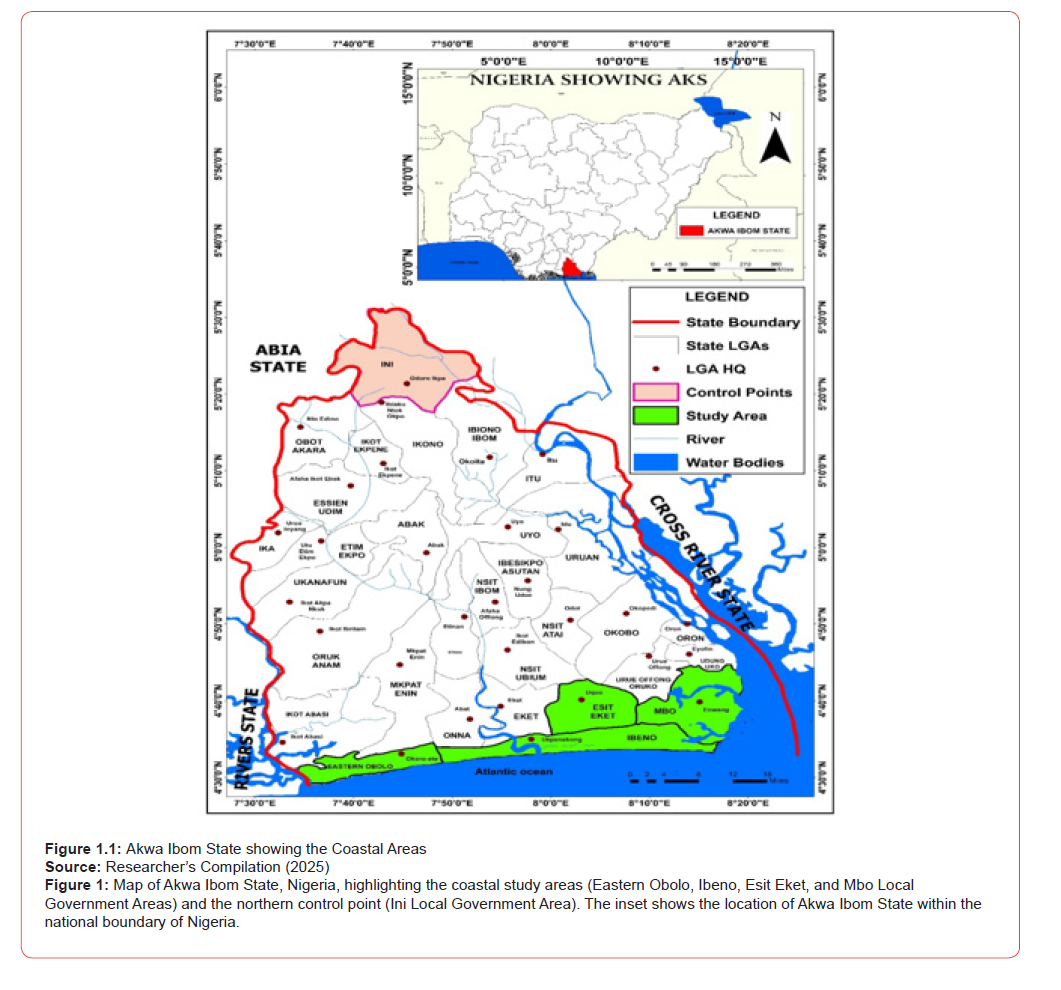
The study was carried out within the coastal part of Akwa Ibom State. The coastal area under consideration in this study included Esit Eket, Ini, Ibeno, Mbo and Eastern Obolo Local Government Areas. They are strategically located on the southernmost part of Akwa Ibom State, within longitude 7ᴼ 501 and 7ᴼ 511 East and latitude 5ᴼ411 and 5ᴼ421 North (see Figure 1.1). They are bounded on the North by several Local Government Areas, Oruk Anam, Mkpat Enin, Onna, Eket, and Urue Offong Oruko. On the West, it is bounded by Ogoni Local Government Area of Rivers State and on the South and East by the Bight of Bonny the Atlantic Ocean (Abraham et al, 2022, 2025, Ekpeyong et al, 2025; Jimmy et al, 2025, 2026) [12,29- 32]. The study area used to be dotted with rural fishing settlement before the discovery of crude oil in the area which stimulated economic activities (see Figure 1).
Methods
This study employed a mixed-method research design to investigate drinking water contamination and the lived experiences of households in coastal communities of Akwa Ibom State. The methodology combined experimental (laboratory-based) procedures with survey, descriptive, and analytical approaches to provide both scientific and socio-environmental insights into water quality and its impacts on residents. Water samples were taken from five (5) local government areas namely Mbo, Ibeno, Esit Eket, Eastern Obolo and Ini. Two communities were selected in four local government areas, in addition to a singular community taken as a control site (Mbiabet in Ini LGA). Two water samples were taken for dry and wet season in the various communities, making a total of 18 samples. The condition for the selection of the four local government areas was particularly due to intensive socio-economic activities namely petroleum production and industrial fishing were purposively selected (Eastern, Ibeno, Mbo and Esit Eket) in addition to the control point situated outside the coast, being an agrarian settlement. Purposive sampling was considered useful in the study because only coastal settlements that have direct access to Atlantic Ocean as well as those with intense socio-economic activities particularly fishing, wetland farming and oil and gas exploitation. At each Local government, two communities were sampled followed by reconnaissance studies to familiarize with the people and the environment. The settlement was segmented into three distinct categories based on geographic location and there were termed; the coastal island, Atlantic shore settlements and upland settlement.
To avoid contamination, water samples were gathered using sterilized water bottles. Before samples are taken, the boreholes were allowed to flow for roughly three minutes to provide stable conditions. To reduce oxygen contamination and the release of dissolved gases, the sterilized containers were promptly sealed after the sample water were completely filled. Two sets of one-liter pre-labelled bottles was used for sampling; for the analysis of heavy metals and ionic compounds. After being collected, water samples were stabilized for the purpose of determining the cations by adding a small amount of diluted hydrochloric acid. Water sample collected was used in-situ using portable digital metres to measure and record in-situ physical and chemical characteristics (pH, and conductivity) that are sensitive to changes in the environment, hence preserving the integrity of the water samples. The second sets of the pre-labelled bottles were carefully corked and preserved in iced cool box and transported to State-funded Water Laboratory (managed by the Ministry of Science and Technology) at Obio Imo Street, Uyo for analysis and the time of collection was taken. In addition, microbial test was collected in sterile McCartney bottle. Subsequently, the results were compared with WHO permissible limit.
Physicochemical parameters analyzed included: pH, temperature (°C), turbidity, total dissolved solids (TDS), total suspended solids (TSS), electrical conductivity (μS/cm), total hardness, alkalinity, and acidity. Major ions and nutrients assessed were: chloride (Cl⁻), nitrate (NO₃⁻), bicarbonate (HCO₃⁻), sulphate (SO₄²⁻), sodium (Na⁺), and calcium (Ca²⁺). Trace and heavy metals investigated included: iron (Fe), cobalt (Co), copper (Cu²⁺), cadmium (Cd), lead (Pb), chromium (Cr⁶⁺), mercury (Hg), and arsenic (As). Microbial parameters examined were: total coliform and faecal coliform counts, determined using standard microbiological techniques to evaluate bacteriological safety. The sample size for the study was 314 as estimated using Bill Godden (2004) formula for finite population.
Results and Findings
From Table 1, the data indicates that a considerable portion of the population believes the availability of piped water or community boreholes has worsened (40.1%) over the past five years.
Table 1: Change in Water Availability over the Past Five Years.
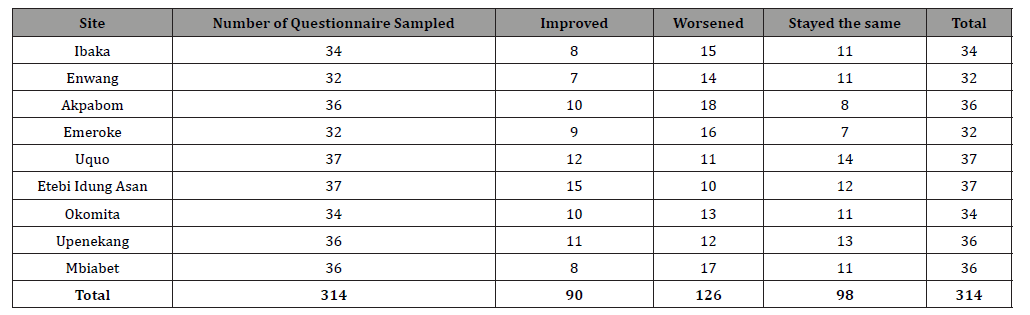
Source: Field Data (2025).
Table 2: Change in Water Availability over the Past Five Years.
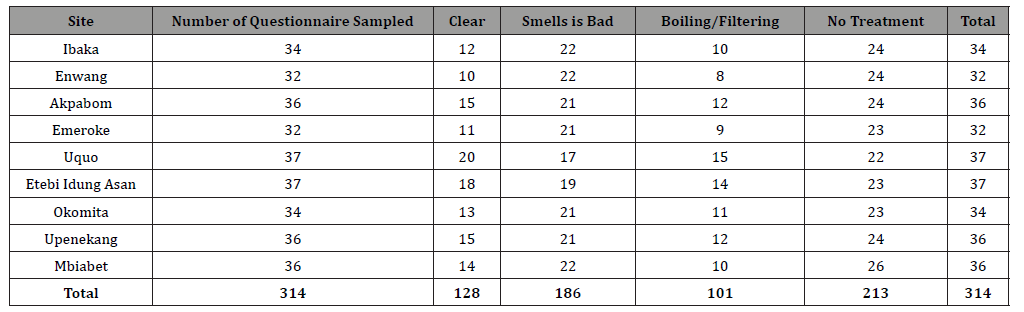
Source: Field Data (2025).
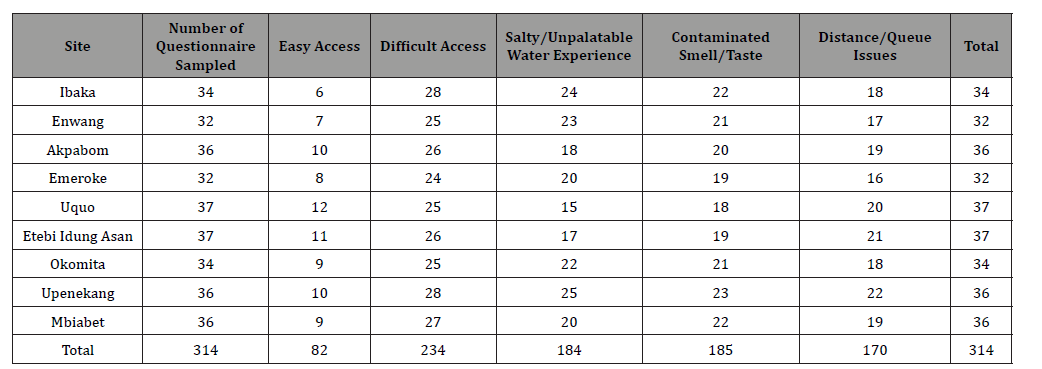
Table 2 shows a stark perception of poor water quality, with 59.2% of respondents describing their water as murky, having a bad smell, or a poor taste. This perception aligns with the low rate of water treatment, as only 32.2% of households reported boiling or filtering their water. The majority (67.8%) consume water with no form of treatment, which is a major concern. The data points to a direct correlation between perceived water quality and the lack of proper treatment, which significantly increases the risk of waterborne diseases. This suggests that public health policies and awareness campaigns on water safety are either not reaching these communities effectively or are not being adopted. The high number of respondents who do not treat their water underscores the need for proactive government interventions, such as providing household water filters or improving water sanitation infrastructure. As shown in Table 3, the data reveals a dominant pattern of difficult water access across all coastal communities, with 234 respondents reporting difficulty compared to only 82 experiencing easy access. Salty, unpalatable water (184 responses) and contaminated taste/ odour (185 responses) further highlight severe deterioration in water quality. Distance and queue-related stress (170 responses) indicate infrastructural inadequacy and limited reliable water points. Overall, the data reflects daily household struggles in accessing safe drinking water despite proximity to water sources, reinforcing the paradox of water-rich but water-insecure coastal settlements in Akwa Ibom State.
Table 3: Household Experiences in Access to Drinking Water Sources.
Source: Field Data (2025).
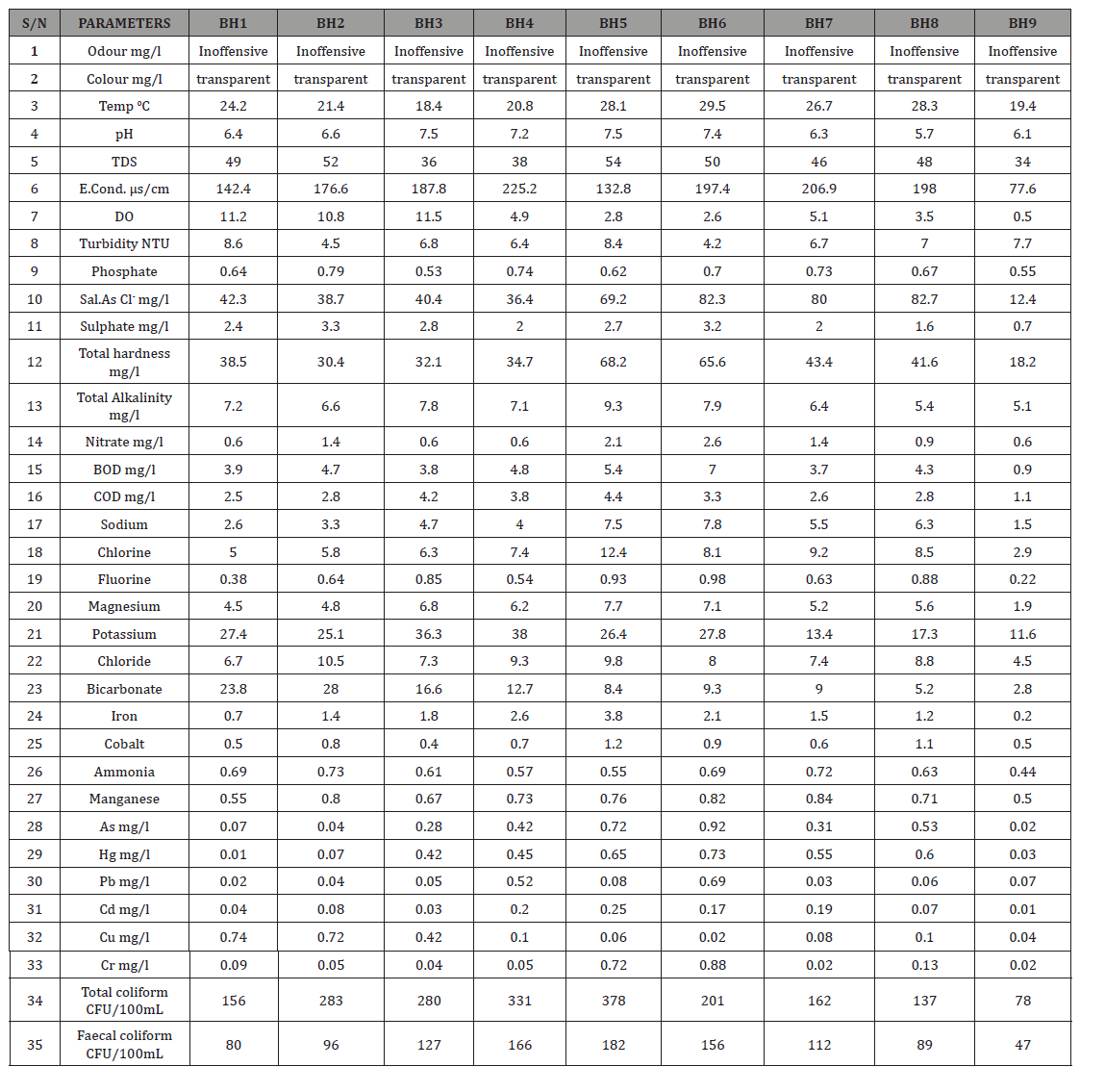
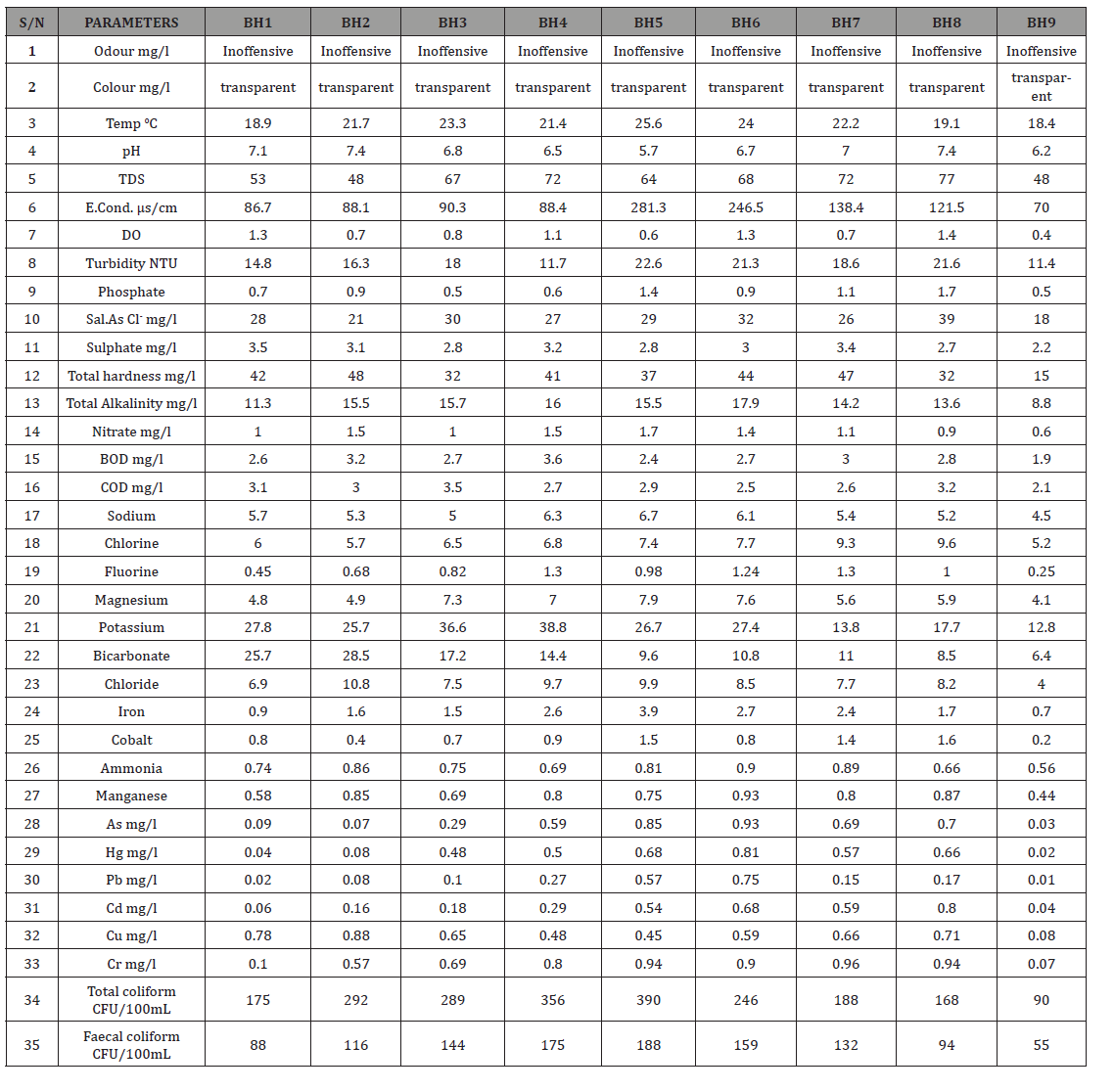
To objectively evaluate the physical, chemical, and microbiological parameters of the regional drinking water supply, laboratory assessments were conducted across nine selected boreholes (BH1 to BH9). The empirical water quality indices obtained during the dry season are detailed in Table 4, while the corresponding comparative parameters for the wet season are structured in Table 5. A total of 35 physicochemical, chemical, and microbial parameters were assessed and compared with World Health Organization and Nigerian Standard for Drinking Water Quality (NSDWQ, 2007) guidelines to determine seasonal and spatial variations in groundwater quality. Physical parameters showed temperature variation from 18.4°C–25.6°C (wet) and 18.4°C–29.5°C (dry), within acceptable tropical ranges but potentially enhancing microbial activity. pH ranged from 5.7–7.5, with acidic values (5.7) falling below WHO (6.5–8.5) limits, indicating corrosive conditions and metal mobilization risk. Turbidity was high in both seasons (wet: 11.4–22.6 NTU; dry: 4.2–8.6 NTU), exceeding WHO standards (<5 NTU) and indicating contamination from surface runoff. TDS (34–77 mg/L) and conductivity (70–281 μS/cm) remained within permissible limits but reflected seasonal dilution and concentration effects. Dissolved oxygen was critically low (0.4–11.5 mg/L), indicating organic pollution and anaerobic conditions, consistent with Nwidu et al. (2021) in Niger Delta waters. Major ions such as nitrate (0.6–2.6 mg/L), sulphate (0.7–3.3 mg/L), and fluoride (0.22–1.30 mg/L) remained within safe limits, though phosphate (0.5–1.7 mg/L) indicated anthropogenic inputs from agriculture and sewage, supporting findings by Chukwu-Okeah et al. (2020) and Liu et al. (2017) [33]. Sodium, chloride, and salinity indicators showed low but spatially significant saltwater intrusion, consistent with coastal aquifer studies in Oman and the Mediterranean region (Al Barwani & Helmi, 2006; Zohud et al., 2023) [34].
Table 4: Laboratory Analysis of Water Sample – Dry Season.
Source: Field Data (2025).
Table 5: Laboratory Analysis of Water Sample – Wet Season.
Source: Field Data (2025).
Hardness (15–68 mg/L), alkalinity, magnesium, potassium, and bicarbonate remained within safe limits, though seasonal variation reflected geological influence. Iron (0.2–3.9 mg/L) and manganese (0.44–0.93 mg/L) consistently exceeded WHO limits, indicating serious geogenic and anthropogenic contamination risks, as supported by Ghosh et al. (2020) and WHO (2004). Cobalt (0.2–1.6 mg/L), ammonia (0.44–0.90 mg/L), and arsenic-like compounds also exceeded safety thresholds in several sites, indicating toxic exposure risks. Microbial results were most alarming. Total coliform (78–390 MPN/100 mL) and faecal coliform (47–188 MPN/100 mL) far exceeded WHO standards (0/100 mL), confirming severe faecal contamination from human waste, agricultural runoff, and animal sources (Orjiekwe et al., 2006). Similar contamination patterns have been reported in Ho Chi Minh City, Bandung, and other global aquifers. Seasonally, wet season conditions showed higher turbidity, TDS, and microbial loads due to runoff, while dry season showed concentration effects, especially for salinity, iron, manganese, and arsenic-like compounds. Spatially, coastal islands and Atlantic shoreline boreholes were most affected, with several abandoned due to salt intrusion and chemical pollution, mirroring global cases such as the Mekong Delta, Nile Delta, and Southeast Florida aquifers (Taha et al., 2022; Prinos et al., 2014).
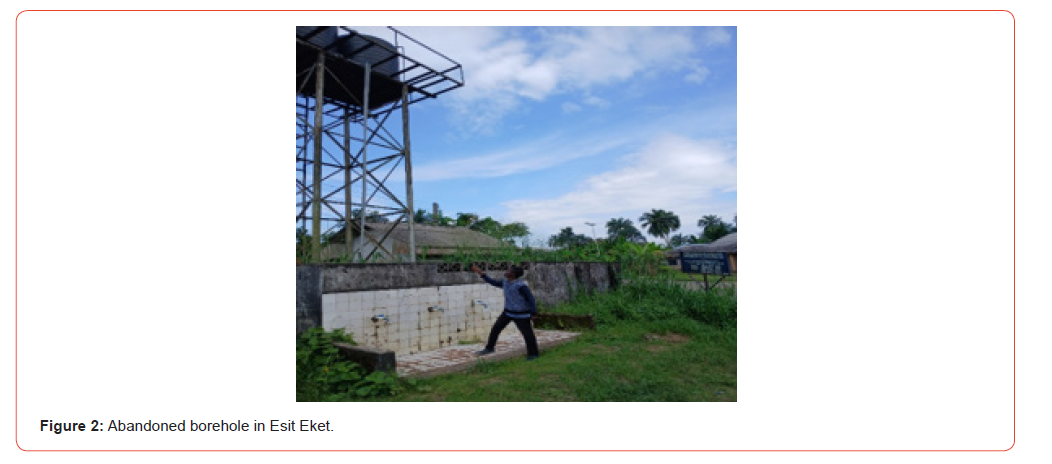
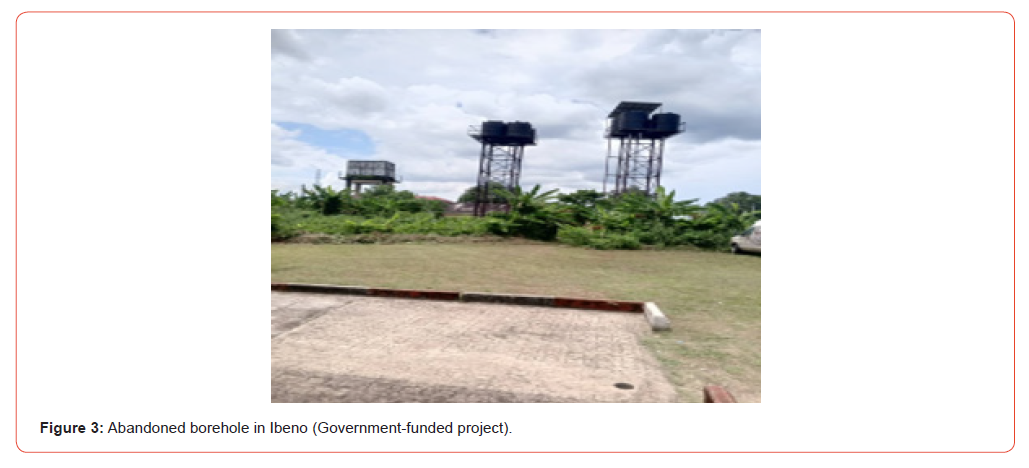
Overall, the findings indicate that groundwater in coastal Akwa Ibom is significantly influenced by saline intrusion, organic pollution, and microbial contamination, posing serious public health risks and rendering several sources unsafe for drinking. Meanwhile, at Emeroke and Akpabom, the problem seemed to be compounded, the combination of chemical spill from oil and gas operation as well as salt from the Atlantic ocean affected drinking water, thus making it unfit for consumption. Mbiabet being agrarian community had little effect of water contamination from socio-economic pressure. Low population of the settlement and out-migration of indigenes suppresses the effect of anthropogenic activities on groundwater. Access to drinking water poses a significant barrier to well-being and household income. While conducting interview (hidden identity) and quoting directly from the interviewee ‘’ More than half of our earning goes into sourcing for drinking water. It’s hard to have a better savings here, we have tried our best and yet to have a permanent solution’’ (see Figures 2 and 3). In the 8 communities visited, a total of 41 abandoned boreholes were completely abandoned owing to contamination of coastal aquifers in addition to many other boreholes labelled ‘risky’’ by the inhabitants. This widespread infrastructural breakdown is visually evident across several local government areas. For instance, Figure 2 highlights an abandoned borehole facility in Esit Eket, while Figure 3 shows a similarly defunct, government-funded borehole project in Ibeno. These abandoned water schemes underscore the broader trend of institutional neglect and poor maintenance culture, forcing residents to rely heavily on unprotected, contaminated alternative sources despite initial public capital investments.
The interviewee at Ibaka stressed that the cost of water per container is N100 and N50 per sachet and crossing into the islands, water is charged N100 for both containers and sachet. Each day water is brought from neighbouring communities via canoe and is sold in those affected settlements. Meanwhile interviews with indigenes of Emeroke and Akpabom in Eastern Obolo was appalling. The cost of water was high (N100 per container and sachets respectively). Water was sold at N50 in Upenekang (per container) and N100 at Okomita (coastal island). In Esit Eket specifically Uquo and Etebi Idung Asan, the cost of water was charged between N50 and N100 depending on the period of steady power supply. At Mbiabet, a low-income community, water was given free in most compounds and this lighten the burden on people with low-income earnings. In the aspect of chloride and sodium concentrations, high concentration was noticed especially in the dry season (chloride 4.5-9.8 mg/L, sodium 1.1-7.8 mg/L), and this is a strong indicator of saline intrusion. This phenomenon is a primary concern for island aquifers, where freshwater lenses float on denser saltwater (Swaid and Eltariki, 2025).
Over-abstraction of groundwater, coupled with rising sea levels, can pull saltwater into the boreholes (Prinos et al, 2014). The high concentration can be due to the proximity of the wells to the tidal channel and the poor muddy sediments present in the aquifer system can further infers saline incursion,” directly points to this vulnerability. Boreholes situated in coastal island equally face microbial contamination due to inadequate sanitation systems. The study’s exceedingly high Total Coliform (wet: 90- 390; dry: 78-378 MPN/100mL) and Faecal Coliform (wet: 55-188; dry: 47-187 MPN/100mL) counts are highly likely to be prevalent here. This implies significant contamination from human waste and the consistent presence of fecal contamination highlights a severe public health risk. Moreover, high turbidity, particularly in the wet season (11.4-22.6 NTU), implies that heavy rainfall on these relatively small landmasses leads to significant runoff and sediment mobilization, impacting borehole water quality. The results strongly suggest that coastal island communities face a dual threat: saline intrusion compromising freshwater availability and severe microbial contamination impacting health. Sustainable water management in these areas must prioritize controlled abstraction rates, robust sanitation infrastructure, and potentially advanced treatment options for both salinity and pathogens.
On the other hand, boreholes along the Atlantic shore are situated at the critical interface where terrestrial human activities meet marine influences. This zone is typically characterized by a mix of residential, commercial, and potentially some industrial or oil/gas activities. The presence of trace metals specifically (Iron & Manganese) attest to this fact. Both Iron (wet: 0.7-3.9 mg/L; dry: 0.2-3.8 mg/L) and Manganese (wet: 0.44-0.93 mg/L; dry: 0.5-0.84 mg/L) consistently exceed WHO guidelines in the Atlantic shore boreholes, similar to other zones. The text specifically attributes elevated iron to “accumulation of domestic wastes rich in Fe at the banks of the water and runoff from the underlying soil rich in Fe oxide.” This is highly relevant to shorelines where domestic waste disposal might be less regulated and runoff directly impacts coastal aquifers. Organic Pollution (BOD & COD) was another serious concern. The elevated BOD (wet: 1.9-3.6 mg/L; dry: 0.9-7.0 mg/L) and COD (wet: 2.1-3.1 mg/L; dry: 1.1-4.4 mg/L) are indicative of significant organic loads. Along the Atlantic shore, this could stem from untreated sewage discharge, industrial effluents, or general urban runoff, all common sources in coastal developments. The dry season’s higher BOD/COD reinforces this, as less dilution occurs.
Beside this, hydrocarbon-related contamination as well as other human activities increases the concentrations of Nitrates, Flourine, Sulphates and Phosphates in areas along the Atlantic shore, given the prevalence of oil and gas operations in Akwa Ibom State. The increased COD in the study area is directly linked to “pollution due to oil and gas production. Oil and gas operation associated with gas flaring and effluent waste discharge gives rise to atmospheric contaminants which include the oxides of Nitrogen, Carbon and Sulphur (NO2, CO2, CO, SO2).” This strongly implies that boreholes along the shore are directly or indirectly impacted by these industrial activities. Like coastal islands, the Atlantic shore experiences high microbial loads due to human settlements and potentially inadequate waste management, contributing to the overall high coliform counts observed across the study sites. Implication, the Atlantic shore faces a complex array of contaminants, notably from heavy metals and significant organic pollution, with a strong suggestion of hydrocarbon-related impacts. This zone requires integrated pollution control measures targeting both domestic and industrial discharges, alongside rigorous monitoring for persistent organic pollutants and specific contaminants from oil and gas activities. The upland boreholes, being furthest from direct marine influence, are more likely to reflect contamination from agricultural practices, diffused rural pollution, and the natural geological composition of the interior.
Pesticide presence indicated by phosphate levels (wet: 0.5–1.7 mg/L; dry: 0.53–0.79 mg/L) reflects agricultural runoff. Nitrate remained low (wet: 0.6–1.7 mg/L; dry: 0.6–2.6 mg/L) but is linked to fertilizers and sewage, with potential risk of methemoglobinemia (WHO, 2008) [35-39]. Wet-season turbidity (11.4–22.6 NTU) increases erosion-driven sediment load. Iron and manganese consistently exceeded WHO limits due to rock weathering and waste inputs. Across zones, upland areas show strong agricultural and microbial contamination, while coastal zones experience salinity intrusion and industrial pollution, and Atlantic shorelines show hydrocarbon and urban runoff impacts. Heavy metals (As, Hg, Pb, Cd, Cr) generally increase in the wet season due to runoff mobilization, consistent with studies in India and Asia (Shaji et al., 2021; Li et al., 2019a) [16,40]. Lead, cadmium, and chromium frequently exceed WHO limits, posing neurological, renal, and carcinogenic risks. Copper and nitrate remain within limits but fluctuate seasonally. Microbial contamination is widespread across all zones, confirming systemic sanitation failure. These patterns highlight severe public health risks and the need for seasonal monitoring and zone-specific water management strategies.
Conclusion and Recommendations
This study demonstrates that drinking water in coastal communities of Akwa Ibom State is significantly compromised by a combination of physicochemical, microbial, and heavy metal contamination, coupled with severe household access constraints. Although groundwater remains the primary source of domestic water supply, laboratory analyses reveal persistent deviations from WHO and NSDWQ standards, particularly in turbidity, iron, manganese, salinity indicators, and microbial loads such as total and faecal coliforms. These exceedances confirm that many boreholes are unsafe for direct consumption without adequate treatment. Seasonal variations further intensify the problem, with wet season conditions promoting contaminant mobilization through runoff, erosion, and aquifer recharge, while dry season conditions concentrate pollutants due to reduced dilution. Across coastal islands, Atlantic shores, and upland zones, distinct contamination patterns were observed, reflecting the influence of geology, land use activities, and proximity to marine environments. However, microbial contamination remains a consistent and widespread threat across all ecological zones. Beyond water quality, household experiences reveal a critical dimension of water insecurity. Despite living in water-abundant environments, many residents face difficulty accessing potable water due to salinity, poor taste, contamination, long distances, queues, and unreliable supply systems. The high reliance on untreated water further exposes communities to waterborne diseases, reinforcing a cycle of environmental health vulnerability and socioeconomic stress.
Based on the findings of the study, the following recommendations are made to ensure sustainable water safety management in coastal Akwa Ibom State.
a. Immediate and widespread implementation of water
treatment interventions is paramount. This necessitates the
establishment of strategic community-based water treatment
facilities, focusing on disinfection methods for microbial
pathogens and appropriate technologies for trace metal
removal and desalination.
b. Elevation of contaminants in wet season calls for proactive
planning such as alternative water supply. In addition,
due to high salinity and salt water intrusion in wet season,
database of coastal settlements affected by salt water intrusion
and chemical spills should be created for planning and
intervention.
c. Elevated heavy metals as observed in wet season require
adequate monitoring, regulations and adjustment in socioeconomic
activities. Given this, public awareness campaigns on
water safety, with emphasis on the importance of household
water treatment, sustainable waste disposal be intensified in
coastal islands and Atlantic shore, while sustainable wetland
farming be encouraged. Measures like water channelisation via
pipes from safer aquifers can be helpful but not sustainable due
to frequent social crisis in the coastal terrain.
Declaration of Funding
No funding was offered to this work
Ethical Declaration
a. Ethical clearance was granted by Akwa Ibom State
Ministry of Health Research ethics committee before the study
commenced.
b. Participation was completely voluntary. Prior to data
collection, written or thumb printed informed consent was
obtained from all household heads after the study’s purpose
and risks were explained in English or their local dialect.
Participants retained the right to withdraw at any time.
c. To ensure anonymity, no personally identifiable
information was collected. Households were assigned unique
alphanumeric codes, and all data was securely stored and
accessible only to the research team.
d. Community entry protocols were followed, and
permission was obtained from traditional leaders in the coastal
areas of Akwa Ibom State.
References
- (2017) WHO. Guidelines for drinking-water quality (4th ed.). World Health Organization.
- Abraham CM, Etetor HJ, Jimmy UJ, Etuk EB, Umoh ME, et al. (2025) Analysis of Groundwater Quality in Uyo Capital City: A Comparative Study of Commercial and Private Boreholes. J. Humanities Soc Sci 10(3) 1-11.
- Murei J, Okafor N, Smith L (2023) Global water distribution and scarcity trends. Hydrology and Earth System Sciences 27(2): 1–15.
- (2019) United Nations Educational, Scientific and Cultural Organization. World water development report. UNESCO.
- (2022) United Nations Educational, Scientific and Cultural Organization. Groundwater and global water supply report. UNESCO.
- (2024) UNICEF. Global water and sanitation report. UNICEF Publications.
- (2020) U.S. Environmental Protection Agency. Drinking water contaminants. EPA Publications.
- (2023) United Nations Children’s Fund. Nigeria water and sanitation crisis report. UNICEF Nigeria.
- (2017) UNICEF/WHO. Progress on drinking water, sanitation and hygiene. WHO/UNICEF JMP Report.
- (2020) UNICEF/WHO. Water safety and sanitation update report. WHO/UNICEF JMP.
- (2022) UNICEF/WHO. Global water safety monitoring report. WHO/UNICEF JMP.
- Jimmy UJ (2025) Contemporary Issues in Transboundary Water Management in Africa and the Middle East: Can There Be Sustainable Options to Address Power Imbalances? Advance in Sustainability 5(2): 76-85.
- Okoye AC, Ajao EA, Olowoyo O (2010) Groundwater quality in Calabar, Nigeria. Environmental Monitoring Journal 12(3): 77–88.
- Jegede OT, Alade OA (2010) Heavy metal contamination in groundwater of Ijebu-Ijesa, Nigeria. Journal of Applied Sciences 10(3): 45–52.
- Mahfuzur R, Islam MS, Rahman M (2022) Arsenic contamination in Bangladesh groundwater. Environmental Research 204: 1–11.
- Li P, Wu J, Qian H (2019a) Heavy metal contamination in groundwater. Science of the Total Environment 669: 1–10.
- Lapworth DJ, Baran N, Stuart ME (2015) Emerging organic contaminants in groundwater. Environmental Pollution 193: 2–13.
- Schulze A, Bester K, Ternes T (2019) Pharmaceutical contaminants in groundwater. Water Research 158: 1–12.
- (2023) UNICEF. Drinking water contamination and child health. UNICEF Report.
- (2011) WHO. Cholera global burden report. World Health Organization.
- (2016) UNEP. Global water quality assessment report. United Nations Environment Programme.
- Islam MS, Rahman MM, Saha GC (2021) Coastal groundwater contamination in Bangladesh. Environmental Monitoring and Assessment 193(8): 1–16.
- Rahman MM, Islam MS, Hossain M (2018) E. coli contamination in Bangladesh coastal water. Water Research 144: 1–9.
- Reddy AB, Kumar P, Rao S (2019) Coastal water pollution in India. Environmental Science and Pollution Research 26: 1–12.
- Sefie R, Mnyone L, Kivuyo S (2021) Coastal water contamination in Tanzania. African Journal of Environmental Science 15(2): 1–9.
- López RA, García M, Torres J (2020) Coastal groundwater contamination in Mexico. Water Resources Management 34(6): 1–14.
- Islam MS, Rahman MM, Kabir MH (2023) Salinity intrusion and household water insecurity in Bangladesh. Journal of Hydrology 618: 1–12.
- Perri S, Molini A (2022) Salinity intrusion in Florida Everglades. Hydrological Sciences Journal 67(4): 1–10.
- Abraham CM, Amba EP, Eyoh EE, Ibanga IJ, Ebong MS, et al. (2022) Assessment of Ecological Degradation and associated implications in Southern Akwa Ibom State. Why Actions need to be taken. Journal of Ecology and Nature Vol 5(2).
- Abraham CM, Ansa I, Jimmy UJ, Uyouko EE, Inyang JI (2025) Analysis of Hydrocarbon and Heavy Metal Load in Fishes and Waters in Coastal Islands. Hill Publishing, USA.
- Ekpeyong R, Abraham CM, Davies I, Jimmy UJ, Otong EP (2025) Implications of Onshore/Offshore Gas flaring on surface water quality in the lower Kwa Iboe River Basin, Akwa Ibom State. Hill Publishing, USA.
- Jimmy UJ, Nwajei MC, Ubam RE, Jjimmy IJ (2026) Access to WASH in Nigeria: A Comparative Analysis of Water, Sanitation, and Hygiene in Riverine and Non-Riverine Communities of Akwa Ibom State. QScience Connect, Qatar 2026(1): 1-15.
- Liu J, Xu M, Zhang H (2017) Nutrient pollution in groundwater systems. Environmental Science and Technology 51(12): 1–9.
- Zohud A, Al Mamun A, Rahman S (2023) Coastal aquifer salinity intrusion studies. Environmental Earth Sciences 82: 1–12.
- (2008) WHO. Nitrate and nitrite in drinking water. World Health Organization.
- Maher D, Santos I, Tait D (2017) Coastal groundwater contamination in Australia. Marine Pollution Bulletin 115(1): 1–9.
- Orjiekwe CL, Eze CO, Okonkwo J (2006) Microbial contamination of water sources in Nigeria. African Journal of Microbiology Research 2(5): 1–8.
- Prinos ST, Irwin GA, Dixon JF (2014) Saltwater intrusion in coastal aquifers. US Geological Survey Report.
- (2004) WHO. Guidelines for drinking-water quality. World Health Organization.
- (2023) WHO/UNICEF. Joint monitoring programme for water supply and sanitation report. World Health Organization.
-

This work is licensed under a Creative Commons Attribution-NonCommercial 4.0 International License.


 a Creative Commons Attribution 4.0 International License. Based on a work at www.irispublishers.com.
Best viewed in

 | Above IE 9.0 version | Privacy Policy