




 Research Article
Long-Term Effect of Gas Permeable Contact Lenses on Central Corneal Thickness, Corneal AutoFluorescence, And Endothelial Permeability: Systematic Review and Meta-Analysis
Received Date:March 09, 2026; Published Date:March 18, 2026
Abstract
Background: Gas permeable (GP) contact lenses are widely used for vision correction, but their long-term effects on the corneal endothelium remain uncertain. This systematic review and meta-analysis aimed to evaluate the impact of GP lens wear on Central Corneal Thickness (CCT), Corneal Auto-fluorescence (CAF), and Endothelial Permeability (EP).
Keywords: Gas permeable contact lenses; Central corneal thickness; Corneal autofluorescence; Endothelial permeability; Systematic review; Meta-analysis
Introduction
Gas permeable (GP) contact lenses (CL) function widely for vision correction because they provide superior clarity and longterm durability to traditional soft contact lenses [1]. Prescription of GP contact lenses made from rigid but oxygen-permeable materials occurs frequently to treat patients with refractive errors and keratoconus as well as abnormal corneal structures according to [2]. Despite being generally tolerated by user’s scientists continue to investigate potential negative effects of wearing these lenses on corneal health. The evaluation of corneal parameter changes from regular GP CL use becomes necessary since corneal structural modifications can trigger dryness and pain and visual impairment [3].
The three main corneal health markers are the central corneal thickness (CCT) and corneal auto-fluorescence (CAF) together with endothelial permeability (EP). CCT evaluation stands essential in determining corneal health especially when doctors perform Laser-Assised in Situ keratomileusis (LASIK) surgery [4]. Corneal thickness serves as a major predictor of glaucoma development together with other conditions [5]. Changes in CCT measurements allow doctors to detect thinning of the cornea as well as swelling or fluid accumulation which degrade vision quality. Corneal Autofluorescence (CAF) produces information about the corneal stroma and endothelium health through metabolic assessment [6]. The measurement of CAF plays an essential role in detecting oxidative stress because this change indicates potential barriers to corneal healing while worsening both infection and inflammation [7]. The non-invasive CAF measurement allows long-term evaluation of contact lens impact on corneal health by monitoring corneal tissue metabolic evolution [8]. The endothelium controls fluid flow in and out of the cornea through its responsible function for keeping tissue transparency while preserving visual performance [9]. Both prolonged contact lens use especially GP CL tend to alter endothelial cellular function resulting in permeability adjustments and potentially raising the danger of endothelial cell elimination or deterioration which deteriorates vision [10].
Expert opinions about GP CL’s prolonged influence on measuring CCT, CAF, and EP remain fragmentarily confirmed. Prolonged GPCL use shows evidence of lowering CCT according although this change represents corneal thinning [11]. The extended use of GPCL does not produce noticeable changes in CCT according to [12] and might suggest minimal impact on corneal thickness [13]. Observations of CAF modifications indicate problems with normal corneal stromal metabolic physiology that pose risks for increased inflammation alongside edema [14]. EP demonstrates variations when people utilize GPCLs for lengthy periods because the lens-contact with corneal surfaces might change endothelial cell permeability [15].
The research available indicates that GP CLs affect these corneal parameters however studies about their long-term effects remain debatable. Evidence indicates both major and minimal changes in CCT and CAF and EP results from exposure to GPCLs according to [16]. The goal of this systematic review with metaanalysis is to synthesize data regarding the influence of extensive GP CL utilization on CCT, CAF and EP by employing a comprehensive approach to handle inconsistencies across research studies. This research intends to establish if extended GP CL use brings substantial effects to corneal parameters while determining what elements contribute to outcome variation. The evaluation of GP CL effects on corneal health remains vital to develop proper clinical practices that benefit GP CL users during extensive lens utilization periods. Contact lens usage continues to grow worldwide so it becomes essential for healthcare professionals to study both positive and negative effects these lenses have on corneal health in extended contact lens wearers.
Methodology
The authors performed a systematic review with meta-analysis to assess the extended influence of GP contact lenses on CCT and CAF and EP. This research strictly followed Preferred Reporting Items for Systematic Reviews and Meta-Analyses (PRISMA) guidelines to make the research process transparent and reproducible [17].
Eligibility Criteria
Studies necessary for inclusion in this systematic review with meta-analysis evaluation needed to fulfill three specific requirements. 1. Security protocols in this research are based on observational studies exploring the persistent contact lens impact (6 months minimum continuous wear) on CCT, CAF, and EP. 2. The studies enrolled participants who used GP contact lenses to correct vision regardless of their refractive errors status and individuals with keratoconus and irregular corneal structures. 3. The studies included data about at least one of the examined corneal measurements which included CCT as well as CAF and EP. Different techniques served to evaluate these parameters including ultrasound pachymetry for CCT assessment and autofluorescence imaging for CAF measurement while EP relied on specular microscopy. 4. All research papers must follow English as their written language for eligibility.
Studies were excluded if:
1. The research reports failed to demonstrate both the pre-usage measurements and the post-usage assessments of corneal parameters. 2. The studied lens material or technological platform did not include permeable gas components. 3. The study Duration was less than 6 months which qualified these participants for short-term wear. 4. Storing studies containing less than ten participants was avoided due to insufficient statistical power issues.
Information Sources
The research incorporated complete database queries within three electronic platforms: • PubMed • Embase • Scopus • Cochrane Library
The research focused on articles from January 2000 up until December 2024. The research utilization employed both keywords and Medical Subject Headings (MeSH) terms that incorporated “gas permeable contact lenses,” “corneal thickness,” “autofluorescence,” “endothelial permeability,” and “long-term effects.
The search term set consisted of terms like “gas permeable lenses” combined with “long-term corneal effects,” “central corneal thickness” as well as “corneal autofluorescence” and “endothelial permeability” together with their various synonyms. Two coreviewers (Author 1 and Author 2) conducted a manual check of references from included studies together with their search of relevant articles.
Data Extraction
The data extraction process happened independently through two reviewers (Author 1 and Author 2) who used a standardized form. Two reviewers (Author 1 and Author 2) managed inconsistencies by agreeing through discussions or by obtaining insights from the third reviewer (Author 3). The following data were collected:
The paper compiled study information such as first author and publication date along with design approach and sample statistics and location data and follow-up times.
Participant characteristics included their age combined with gender makeup along with diagnosis of keratoconus and initial corneal measurements taken before study start.
The investigators evaluated effect sizes through mean differences or standardized mean differences as well as confidence intervals and statistical significance levels for CCT, CAF, and EP before and after GPCL installation.
Quality Assessment
Based on the Newcastle Ottawa Scale (NOS) assessment, all three included studies demonstrate moderate methodological quality [18-19], with some variation in specific domains. Chang, et al. (2000, Taiwan) scored 5 out of 9, showing strong performance in the selection domain with 3 out of 4 stars, indicating a well-defined and representative sample. However, the study received only 1 star for comparability, suggesting limited control for confounding variables, and 1 star for exposure, indicating that the method of exposure assessment or follow-up may not have been thoroughly detailed or validated. Similarly, Ahmad, et al. (2018, Malaysia) also scored 5 out of 9. Like Chang et al., this study performed well in selecting study subjects but lacked in-depth adjustment for confounders and had potential limitations in exposure ascertainment. In contrast, Carlson, et al. (1988, USA) achieved a slightly higher score of 6 out of 9. It also received 3 stars in the selection domain and 1 star in comparability, but stood out by earning 2 stars in the exposure category, indicating a more robust method of assessing or verifying exposure compared to the other two studies. Overall, all three studies fall within the moderate quality range, with consistent strengths in participant selection. However, they exhibit shared weaknesses in addressing potential confounders and providing comprehensive exposure data. These methodological limitations should be considered when interpreting the findings and drawing conclusions from these studies in a systematic review or metaanalysis (Table 1).
Table 1:Quality assessment of Observational studies using the Newcastle-Ottawa Scale (NOS).

Data Synthesis
The random-effects model analysis served to handle both including within-study variability and between-study variability according to [20]. Standardized mean differences (SMD) served as the metric to calculate pooled effect sizes throughout studies despite their utilization of different measurement scales for continuous variables. The recorded data analysis selected the most extended available follow-up duration as the primary source for this evaluation.
The I² statistics provided an assessment of result heterogeneity as it represents the percentage of total study variability beyond chance effects [18]. The Q-test for heterogeneity was employed to determine if the observed study differences exceeded random chance variations. The results from the Q-test demonstrated significant heterogeneity between studies when p value reached below 0.05.
The research plans included subgroup analyses for identifying heterogeneity origins through population traits including study type and subject demographics (such as age and refractive error) and material properties. Establishing sensitivity trends involved omitting biased research and small study groups to evaluate their effect on primary conclusions.
Table 2:Baseline Characteristics of Gas Permeable Contact Lens (GPCL) Wearers and Controls Across Included Studies.
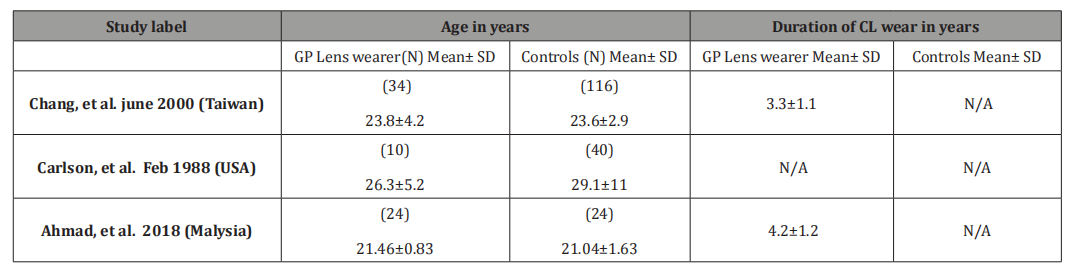
Table 1 summarizes the baseline demographic data, including mean age and duration of gas permeable contact lens wear, for both GP lens wearers and control groups from the included studies. Mean age is reported in years with standard deviation (Mean ± SD) for all groups, while the duration of contact lens wear is only reported for GP lens wearers where available. Notably, some studies did not provide data for certain variables (marked as N/A). These baseline characteristics help in understanding the comparability of groups across studies and assessing potential sources of bias.
Publication Bias
The analysis checked for publication bias through visual evaluation of funnel plots in combination with the results from Egger’s test [21]. The assessment of publication bias depended on two factors: visual inspection of funnel plot asymmetry and statistical results from Egger’s test.
Statistical Software
Statistical analysis occurred through CMA version 3 and R version 4.0.3. The research used a p < 0.05 significance level during all statistical tests.
Ethical Considerations
This systematic review performed an analysis on existing literature so it did not necessitate any ethical approval. Every study within the analysis received proper ethical clearance from Center for Postgraduates studies at Lincoln university College, Malaysia and from principle and co-supervisor.
Table 3: Pooled Effect Size and Heterogeneity Measures for Central Corneal Thickness in Gas Permeable Contact Lens Wearers.

Results
We performed meta-analyses on three corneal parameters: CCT, CAF and EP. Below are the findings based on random-effects models using the Restricted Maximum Likelihood (REML) method.
Table 1 presents the pooled effect estimate and heterogeneity statistics for CCT in individuals wearing GP CLs, based on a randomeffects meta-analysis. The pooled effect size was 41.365, with a 95% confidence interval (CI) ranging from -502.402 to 585.133, indicating a wide range and lack of statistical significance (p = 0.511). The high I² value of 95.79% reflects substantial heterogeneity among the included studies, suggesting considerable variability in study outcomes. The between-study standard deviation (τ) was 41.88, and the between-study variance (τ²) was 1754.30, further confirming the presence of substantial variability across studies. These findings indicate that while no significant change in CCT is associated with GP CL wear, the results should be interpreted with caution due to the high heterogeneity (Figure 1).
Table 4: Meta-Analysis Summary for Corneal Autofluorescence in Gas Permeable Contact Lens Wearers.

Table 2 summarizes the meta-analysis results evaluating the effect of gas permeable contact lens GP CL wear on CAF. The pooled effect estimate was 0.374, with a 95% confidence interval (CI) ranging from -3.342 to 4.089, and a p-value of 0.423, indicating a non-significant difference in CAF between GP CL wearers and controls. The I² value of 51.04% suggests moderate heterogeneity among the included studies. The between-study standard deviation (τ) was 0.302, and the variance (τ²) was 0.091, indicating a moderate level of variability in effect sizes across studies. Overall, these findings suggest that GP CL wear does not significantly affect CAF, though some inconsistency among study results is present (Figure 2).
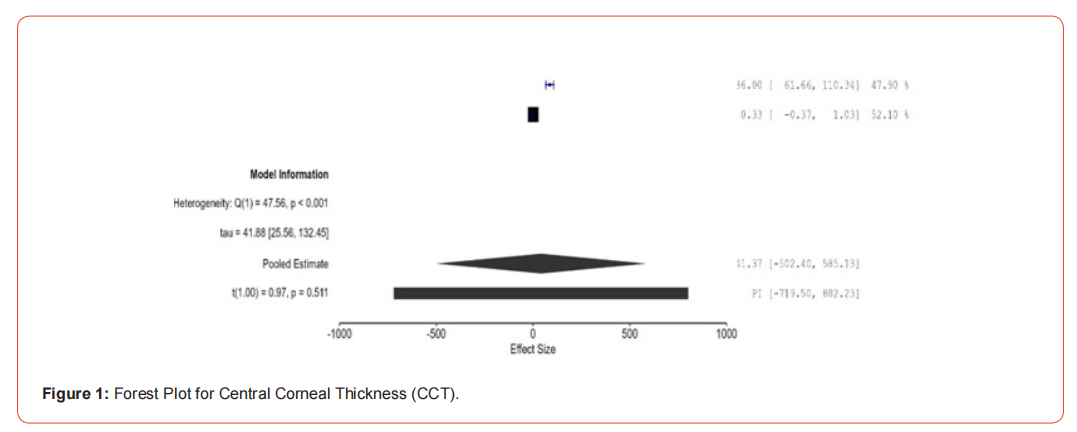
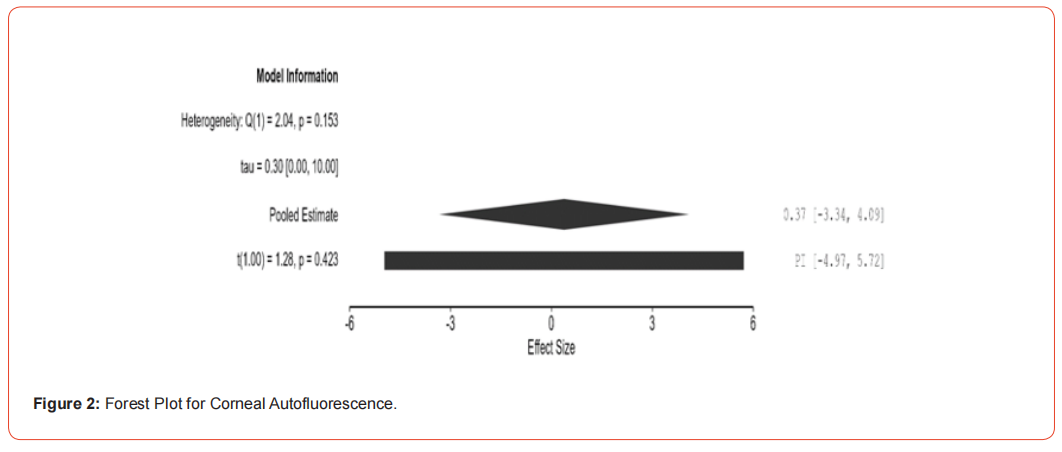
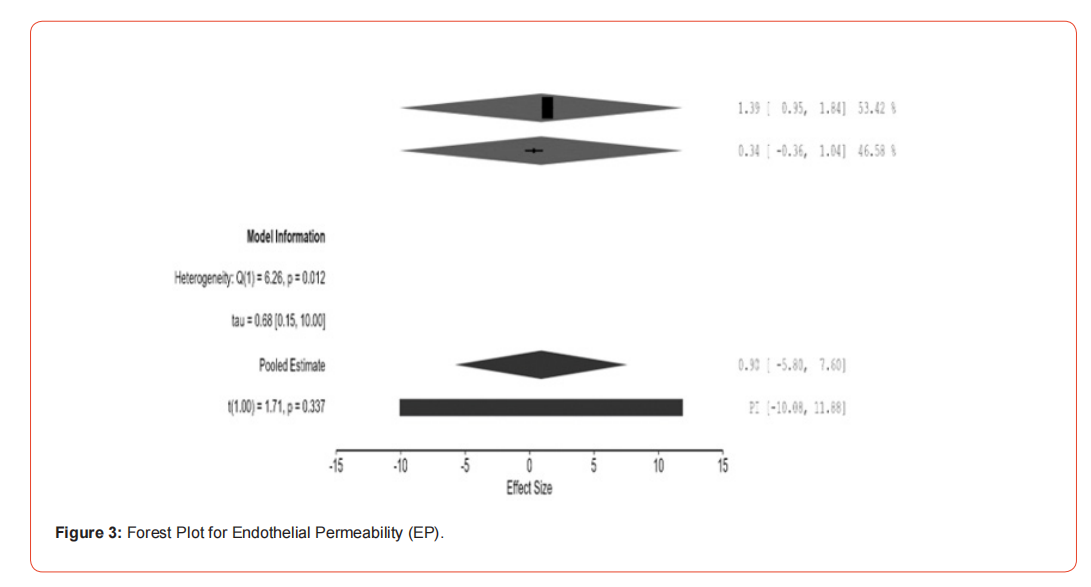
Table 3 presents the meta-analysis findings assessing the impact of gas permeable contact lens GP CL wear on EP. The pooled effect estimate was 0.901, with a 95% confidence interval (CI) ranging from -5.796 to 7.597, and a p-value of 0.337, indicating no statistically significant difference in EP between GPCL wearers and controls. The analysis showed high heterogeneity (I² = 84.03%), reflecting substantial variability across included studies. The between-study standard deviation (τ) was 0.685, and the variance (τ²) was 0.469, suggesting notable differences in study outcomes. These results indicate that while GP CL wear does not significantly alter EP, the considerable heterogeneity warrants cautious interpretation and highlights the need for more uniform study designs (Figure 3).)
Table 5:Meta-Analysis Summary for Endothelial Permeability in Gas Permeable Contact Lens Wearers.

Across all three corneal parameters evaluated, no statistically significant pooled effects were observed. Moderate to high heterogeneity was evident in all outcomes, especially for Central Corneal Thickness and Endothelial Permeability. These findings indicate inconsistency across studies and the need for further highquality, standardized investigations.
Discussion
The systematic research with meta-analysis evaluation investigated how GP contact lenses affect three fundamental corneal measurements throughout extended use to measure CCT and CAF and EP. This study analysis found no significant correlation between the combined results across three analyzed study variables. A large amount of variability was noted between studies which points to unexplored data points that need further research.
Central Corneal Thickness (CCT)
The long-term application of GP contact lenses did not produce any meaningful effects on CCT according to our meta-analysis. The examined CCT results after extended GP contact lens wear showed no notable CCT difference through an effect size of 41.365 (95% CI: -502.402 to 585.133) with a p-value of 0.511. The residual heterogeneity test revealed considerable statistical variation (I² = 95.79%, p < 0.001) since factors such as research design and patient demographics along with measurement methods contributed to study outcome inconsistency
Previous studies along with the current literature evidence that GP contact lenses generate diverse CCT outcomes due to differences in individual patient characteristics particularly lens fit and wearing duration [22-23]. Long-term GP lens use has been linked to CCT changes through corneo-lens interaction effects yet this study did not note significant results [24-25]. Better-controlled research using increased participant numbers and standardized study designs must be conducted to measure accurately the timerelated impacts of GP lenses on corneal thickness.
Corneal Autofluorescence (CAF)
Research data demonstrated that prolonged GP lens usage did not affect CAF levels based on a 0.374 (95% CI: -3.342 to 4.089) effect size with a p-value of 0.423. The study findings show inconsistent responses of corneas to GP lenses when used over long periods although heterogeneity analysis revealed I² equal to 51.04% without reaching statistical significance (p = 0.153). The heterogeneity between different studies appears linked to differences between lens materials and duration of wear together with patients’ pre-existing eye conditions.
CAF functions as an accessible biomarker which shows both corneal oxidative stress as well as structural changes in the tissue [26]. Long-term usage of rigid contact lenses potentially creates conditions for altered corneal autofluorescence by inducing oxidative damage as per research by [27]. Well-designed longitudinal studies need to be conducted because this research highlights the importance of monitoring subclinical CAF changes while determining patient groups that face increased risk of such changes.
Endothelial Permeability
The pooled effect measurement of EP revealed no statistically significant result (effect size = 0.901, 95% CI: -5.796 to 7.597, p = 0.337) as observed during our assessment. Results show significant statistical residual heterogeneity between studies regarding GP lens effects on endothelial permeability since analysis indicated I² at 84.03% (p = 0.012). The assessment methods for EP and type of GP lenses and wear period duration used in these studies likely contributed to this high degree of heterogeneity.
Endothelial cells need optimal health to preserve corneal transparency and functionality so long-term wear of contact lenses can induce morphological along with functional changes to these cells according to [28]. Our analysis identified no significance in endoplasmic reticulum activity but certain isolated studies documented increased permeability within individuals who wore GP lenses for longer periods according to [29]. The different research outcomes about GP lenses and endothelium effects demonstrate how crucial it is to enhance studies through improved methodology and more specific research on long-term GP effects on endothelial cells.
Heterogeneity and Its Sources
Heterogeneity affects all three corneal parameters (CCT, CAF, and EP) due to their complex responses from wearing GP contact lenses. The following elements represent major sources of heterogeneity in the study results:
The type of material used in GP lenses along with the way they fit patients’ eyes determines the contact points between lenses and cornea. The physiological responses differ between different lens materials including rigid gas permeable versus silicone acrylate which affects outcomes such as CCT and EP [30].
Subjects who participated in GP lens wear research were found to maintain their lenses anywhere from several months to several years. Study outcomes might show divergence because participants wear contact lenses for different lengths of time according to [31].
The way GP lenses affect corneal responses depends upon population characteristics such as patient age and gender together with underlying eye conditions including keratoconus and baseline corneal measurements.
Assessments to control these explanatory variables need to become standardized while researchers must deeply investigate them in specific patient groups through additional analysis methods.
Limitations
Several difficulties exist in the execution of this review alongside its meta-analysis assessment. Both parameters had only two relevant studies in the research analysis which decreased the strength of the study findings. Limited sample population numbers from analyzed studies created substantial differences between research results. The available data becomes hard to understand due to differences in research design methods and patient demographics and measurement technique protocols. Future research needs larger sample populations and longer follow-up times and detailed patient populations to finally determine the long-term effects of GP lenses on corneal health.
Implications for Clinical Practice and Future Research
This meta-analysis reveals that the available evidence presents substantial variability because it did not detect any lasting changes to CCT, CAF, or EP but no significant effects were found in any of these parameters from GP lens use. Medical practitioners should exercise careful judgment before prescribing GP lenses as long-term wear because individual patients may react differently to this treatment especially when they have existing corneal conditions. Research must advance to detect any unobvious corneal health modifications caused by GP lenses which could create complications after shortterm assessments have cleared.
Future research needs to carry out extensive multicenter experiments along with standardized protocols during extensive follow-up to accurately track the total effects of GP lens usage on corneal characteristics. The investigation of risk elements which could cause harm to the cornea during GP lens use will allow for improved patterns in lens recommendations that consider individual characteristics.
Conclusion
The systematic review together with meta-analysis demonstrates that GP lenses do not produce meaningful long-term changes in central corneal thickness and they do not affect corneal autofluorescence levels and endothelial permeability. The marked variability of results in the collected data underlines the necessity for additional studies to detect groups whose corneal responses to lens use differ from one another. Additional research must include standardized protocols and larger study samples to create solid long-term evaluations of GP contact lens safety along with their effect on patients.
Acknowledgments
None.
Conflict of Interest and financial disclosure
None.
References
- Contact Lenses (2024) In: Clinical Ophthalmology [Internet]. Cham: Springer Nature pp. 199-223.
- McMahon TT, Zadnik K (2000) Twenty-five years of contact lenses: the impact on the cornea and ophthalmic practice. Cornea 19(5): 730-740.
- Gill FR (2015) Turning the tide for gas permeable contact lenses [Internet]. Cardiff University (United Kingdom).
- Canto Cerdan M, El Bahrawy M, AlióJL, Casanova L, García MJ, et al. (2022) Corneal Epithelium Thickness and Refractive Changes After Myopic Laser Corneal Refractive Surgery. J Refract Surg 38(9): 602-608.
- Mehdizadeh A, Hoseinzadeh A, Fazelzadeh A (2007) Central corneal thickness as a risk factor for glaucoma. Medical hypotheses 69(6): 1205-1207.
- Shukla R, Banerjee N, Mishra AK, Garg P, Singh SP (2024) The role of corneal epithelial thickness in ocular surface health. The Pan-American Journal of Ophthalmology 6(3): 101.
- Cejka C, Cejkova J (2015) Oxidative Stress to the Cornea, Changes in Corneal Optical Properties, and Advances in Treatment of Corneal Oxidative Injuries. Oxidative Medicine and Cellular Longevity p. 1-10.
- Shetty KH, Desai DT, Patel HP, Shah DO, Willcox MD, et al. (2024) Contact lens as an emerging platform for non-invasive bio-sensing: A review. Sensors and Actuators A: Physical pp. 115617.
- Dawson DG, Geroski DH, Edelhauser HF (2009) Corneal endothelium: structure and function in health and disease. Corneal Surgery: Theory, Technique and Tissue Maryland Heights, MO: Mosby Elsevier pp. 57-70.
- Pereira EI, Sampaio AP, Lira M (2022) Effects of contact lens wear on tear inflammatory biomarkers. Contact Lens and Anterior Eye 45(5): 101600.
- Isik P, Harbiyeli II, Erdem E, Yagmur M (2022) Improved contact lens fitting after corneal cross-linking in eyes with progressive keratoconus. Contact Lens and Anterior Eye 45(3): 101488.
- Sel S, Trau S, Knak M, Kalinski T, Kaiser D, et al. (2013) Evaluation of central corneal thickness after cataract surgery, penetrating keratoplasty and long-term soft contact lens wear. Contact Lens and Anterior Eye 36(5): 238-242.
- Cheng X, Pinsky PM (2017) A numerical model for metabolism, metabolite transport and edema in the human cornea. Computer Methods in Applied Mechanics and Engineering 314: 323-344.
- Shoham A, Hadziahmetovic M, Dunaief JL, Mydlarski MB, Schipper HM (2008) Oxidative stress in diseases of the human cornea. Free Radical Biology and Medicine 45(8): 1047-1055.
- Liesegang TJ. Physiologic changes of the cornea with contact lens wear. Eye & Contact Lens 28(1): 12-27.
- Araki S, Koh S, Kabata D, Inoue R, Morii D, (2021) Effect of long-term rigid gas-permeable contact lens wear on keratoconus progression. British Journal of Ophthalmology 105(2): 186-190.
- Moher D, Liberati A, Tetzlaff J, Altman DG (2009) Preferred reporting items for systematic reviews and meta-analyses: the PRISMA statement. Bmj pp. 339.
- Higgins JPT, Thompson SG (2002) Quantifying heterogeneity in a meta‐analysis. Statistics in Medicine 21(11): 1539-1558.
- Wells GA, Shea B, O’Connell D, Peterson J, Welch V, (2000) The Newcastle-Ottawa Scale (NOS) for assessing the quality of nonrandomised studies in meta-analyses.
- DerSimonian R, Laird N (1986) Meta-analysis in clinical trials. Controlled clinical trials 7(3): 177-188.
- Egger M, Smith GD, Schneider M, Minder C (1997) Bias in meta-analysis detected by a simple, graphical test. Bmj 315(7109): 629-634.
- Holden BA, Mertz GW (1984) Critical oxygen levels to avoid corneal edema for daily and extended wear contact lenses. Investigative ophthalmology & visual science 25(10): 1161-1167.
- Lee SM, Kim YJ, Choi SH, Oh JY, Kim MK (2019) Long-term effect of corneoscleral contact lenses on refractory ocular surface diseases. Contact Lens and Anterior Eye 42(4): 399-405.
- Shokrollahzadeh F, Hashemi H, Jafarzadehpur E, Mirzajani A, Khabazkhoob M, et al. (2015) The effect of Rigid Gas Permeable Contact Lens Fitting in Corneal Curvature, central Thickness and Volume. Journal of Paramedical Sciences & Rehabilitation 4(3): 17-24.
- Lafosse E, Romín DM, Esteve Taboada JJ, Wolffsohn JS, Talens Estarelles C, et al. (2018) Comparison of the influence of corneo-scleral and scleral lenses on ocular surface and tear film metrics in a presbyopic population. Contact Lens and Anterior Eye 41(1): 122-127.
- Roth HW, Epstein D (1985) Effect of a decade of wearing contact lenses on the physiology and morphology of the eye. Klinische Monatsblatter fur Augenheilkunde 187(5): 390-391.
- Rengstorff Rh, Nilsson Kt (1985) Long-term effects of extended wear lenses: changes in refraction, corneal curvature, and visual acuity. Optometry and Vision Science 62(1): 66-68.
- Martinez GC, Jaimes CT, Lucas CM (2023) The effect of prolonged and nocturnal use of contact lenses on the cornea: about a case of corneal decompensation and decreased endothelial count. Archivos de la Sociedad Española de Oftalmología (English Edition) 98(4): 238-242.
- MacRae SM, Matsuda M, Yee R (1985) The effect of long-term hard contact lens wear on the corneal endothelium. Eye & Contact Lens 11(4): 322-326.
- Dutt RM, Stocker EG, Wolff CH, Glavan I, Lass JH (1989) A morphologic and fluorophotometric analysis of the corneal endothelium in long-term extended wear soft contact lens wearers. Eye & Contact Lens 15(2): 121-123.
- Egorova GB, Fedorov AA, Bobrovskikh NV (2008) Influence of long-term contact lens wear on the cornea according to the data confocal microscopy. Vestnik Oftalmologii 124(6): 25-29.
-

This work is licensed under a Creative Commons Attribution-NonCommercial 4.0 International License.




