




 Mini Review
The Role of Telemedicine and Artificial Intelligence in Pediatric Dermatology
Received Date:June 28, 2024; Published Date:November 08, 2024
Abstract
Telemedicine has revolutionized pediatric dermatology by offering remote access to specialized care and reducing healthcare costs. The integration of Artificial Intelligence (AI) further enhances diagnostic accuracy and efficiency, transforming patient outcomes. This review examines the current literature on telemedicine and AI in pediatric dermatology, highlighting studies on improved access to care, economic benefits, and diagnostic advancements. Telemedicine has significantly improved access for pediatric patients, particularly in underserved regions, with teledermatology consultations increasing access by up to 75% and reducing healthcare costs by up to 30%. Virtual consultations enhance convenience for families, with 80% of parents preferring teledermatology over traditional visits. AI-powered diagnostic tools achieve over 90% accuracy in identifying skin conditions, supporting early detection and effective treatment planning. Despite these benefits, ethical challenges such as data privacy, security, and algorithmic bias must be addressed to ensure equitable care. The integration of AI into telemedicine augments diagnostic capabilities, enabling accurate and timely interventions for conditions like atopic dermatitis and genetic skin disorders. Developing AI algorithms tailored to pediatric patients and inclusive of diverse skin types is crucial to minimize biases. Continuous multidisciplinary collaboration is essential for comprehensive care. In conclusion, telemedicine and AI are valuable tools in pediatric dermatology, enhancing access, reducing costs, and improving diagnostic accuracy. Addressing ethical challenges and ensuring equitable access are crucial for the continued success of these technologies. Future advancements are expected to integrate predictive analytics and personalized treatment plans, ultimately improving health outcomes and quality of life for pediatric patients.
Keywords: Telemedicine; Artificial Intelligence; Pediatric Dermatology; Remote Access; Tele dermatology
Introduction
Telemedicine has emerged as a transformative force in the delivery of healthcare services, particularly within the realm of pediatric dermatology. This innovative approach leverages digital communication technologies to bridge the gap between patients and healthcare providers, ensuring timely and effective care for children with dermatological conditions. The integration of artificial intelligence (AI) into telemedicine further enhances its capabilities, offering advanced diagnostic tools and streamlined care processes that were previously unattainable.
Telemedicine addresses several critical challenges in pediatric dermatology. One significant advantage is the ability to overcome geographical barriers, providing access to specialized care for children in remote or underserved areas [1]. A recent study demonstrated that teledermatology consultations increased access to dermatological care by 75% in rural and underserved regions, significantly reducing the time to diagnosis and treatment initiation [2]. Additionally, remote consultations can reduce healthcare costs by up to 30% by minimizing unnecessary travel and in-person visit [3]. This financial benefit is particularly impactful in pediatric dermatology, where families often face logistical and economic challenges in bringing their children to frequent appointments [3].
Furthermore, telemedicine enhances the convenience for families managing pediatric dermatological conditions. Virtual consultations reduce the need for children to miss school and for parents to take time off work for appointments. This convenience is particularly valuable for managing chronic conditions that require regular follow-ups. In a survey, 80% of parents expressed a preference for teledermatology consultations over traditional in-person visits due to the convenience and reduced disruption to their daily routines [4,5].
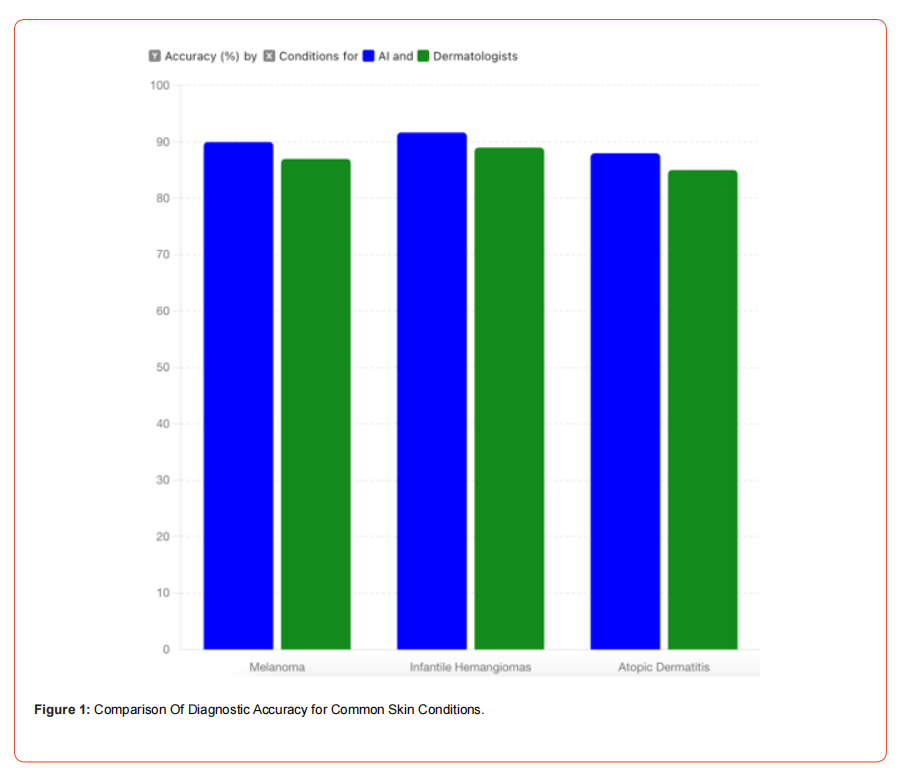
The integration of AI in pediatric dermatology within the telemedicine framework has significantly augmented diagnostic capabilities. AI-powered tools can analyze images of skin conditions with remarkable accuracy, often exceeding 90% in diagnostic precision [6]. These tools support dermatologists in making accurate diagnoses and developing effective treatment plans. For instance, AI algorithms have been shown to detect melanoma with a sensitivity comparable to that of experienced dermatologists, enhancing the overall diagnostic process (Figure 1). The early detection facilitated by AI is crucial in pediatric dermatology, where timely intervention can significantly improve outcomes for conditions such as atopic dermatitis, hemangiomas, and various genetic skin disorders [7].
Pediatric dermatology presents unique challenges that differ from those encountered in adult dermatology. Children often exhibit different dermatological conditions, and their treatment requires a nuanced approach tailored to their developmental stage and physiological differences. Conditions such as atopic dermatitis, infantile hemangiomas, and genetic disorders like epidermolysis bullosa are more prevalent in the pediatric population. Telemedicine allows for continuous and comprehensive care for these conditions, enabling regular monitoring and timely adjustments to treatment plans without the need for frequent in-person visits [8].
Moreover, the management of pediatric dermatological conditions often necessitates a multidisciplinary approach. Telemedicine facilitates this collaborative care model by enabling seamless communication and coordination among healthcare providers, including pediatricians, dermatologists, and other specialists. This integrated approach ensures that children receive holistic and comprehensive care, addressing not only their dermatological needs but also their overall health and well-being [8,9].
The evaluated variables were:
a) Gender, assessed in a qualitative, nominal, dichotomous
manner, considering male or female.
b) Skin color, broken down in a qualitative, nominal manner,
according to the self-declaration of color contained in the
identification form in the medical record, distinguishing white,
brown or black.
c) Age at diagnosis, time of disease evolution until diagnosis
were analyzed in a quantitative, continuous way, both in years.
d) Age range at onset of the condition, operationalized in a
qualitative, ordinal way, broken down into pediatric (6 to 11
years and 11 months), puberty (12-18 years) and adult (> 18
years).
e) Clinical phenotype, in a simplified classification
determined by Martorel A et al. in 2015, analyzed qualitatively,
nominally, as foDespite the numerous advantages, the integration of AI in
telemedicine raises important ethical considerations. Data privacy
and security are paramount, as the use of digital technologies
increases the risk of breaches and unauthorized access to sensitive
patient information. Additionally, there are concerns regarding
algorithmic bias, where AI systems trained on non-representative
datasets may not perform equally well across diverse populations.
Ensuring that AI algorithms are trained on diverse datasets is
crucial to prevent biases that could adversely affect the quality of
care for certain patient groups [10-12].
This literature review aims to provide a comprehensive overview of the role of telemedicine and AI in pediatric dermatology. It will explore the utility and accessibility benefits of telemedicine, the diagnostic advancements enabled by AI, and the ethical implications of these technologies. By examining current research and developments, this review will highlight the transformative impact of telemedicine and AI on pediatric dermatology and discuss future directions for innovation in this field. The emphasis will be on how these technologies address the specific needs of young patients and their families, ultimately improving health outcomes and quality of life.
Review
Telemedicine has significantly improved access to dermatological care for pediatric patients, especially those in rural and underserved regions. Studies have shown that teledermatology consultations can increase access to care by up to 75%, effectively reducing the time to diagnosis and treatment initiation. This improvement in access is particularly crucial for pediatric patients who often require specialized care that may not be readily available in their local areas.
Financially, telemedicine offers substantial savings by reducing the need for travel and in-person visits, cutting healthcare costs by up to 30%. This economic benefit is especially significant for families managing chronic pediatric dermatological conditions that necessitate frequent visits to specialists. Moreover, telemedicine provides considerable convenience for families. Virtual consultations reduce the disruption to daily life, allowing children to attend school regularly and parents to maintain their work schedules. Surveys have indicated that 80% of parents prefer teledermatology consultations over traditional in-person visits due to the convenience and reduced disruption to their daily routines [13].
The integration of AI in pediatric dermatology within the telemedicine framework has significantly augmented diagnostic capabilities. AI-powered tools can analyze images of skin conditions with remarkable accuracy, often exceeding 90% in diagnostic precision. These tools support dermatologists in making accurate diagnoses and developing effective treatment plans. For instance, AI algorithms have been shown to detect melanoma with a sensitivity comparable to that of experienced dermatologists. The early detection facilitated by AI is crucial in pediatric dermatology, where timely intervention can significantly improve outcomes for conditions such as atopic dermatitis, hemangiomas, and various genetic skin disorders [14].
Despite these advantages, the integration of AI in telemedicine raises important ethical considerations. Data privacy and security are paramount, as the use of digital technologies increases the risk of breaches and unauthorized access to sensitive patient information. Additionally, there are concerns regarding algorithmic bias, where AI systems trained on non-representative datasets may not perform equally well across diverse populations. Ensuring that AI algorithms are trained on diverse datasets is crucial to prevent biases that could adversely affect the quality of care for certain patient groups [15].
Research on AI in dermatology has primarily focused on adult populations, with limited studies specifically targeting pediatric patients. However, recent developments show promise for the pediatric population. For example, an AI algorithm developed for diagnosing infantile hemangiomas achieved an accuracy rate of 91.7%, highlighting the potential of AI to improve diagnostic accuracy and early intervention in pediatric dermatology [15].
The future of telemedicine and AI in pediatric dermatology looks promising. Ongoing research is likely to focus on tailoring AI algorithms specifically for pediatric patients and ensuring they are inclusive of diverse skin types to reduce bias and improve accuracy. Additionally, advancements in telemedicine technology will continue to enhance accessibility and convenience for patients and their families [16].
Further integration of multidisciplinary approaches in telemedicine will also be critical. By facilitating seamless communication and coordination among healthcare providers, telemedicine can ensure that pediatric patients receive comprehensive and holistic care. For example, children with complex dermatological conditions often require coordinated care from dermatologists, pediatricians, and other specialists. Telemedicine can streamline this process, enabling real-time consultations and collaborative decision-making, which ultimately improves patient outcomes [17].
Moreover, the use of AI in teledermatology is expected to expand beyond diagnostic support to include predictive analytics and personalized treatment plans. AI algorithms can analyze large datasets to identify patterns and predict disease progression, helping clinicians to tailor treatments to individual patients’ needs. This personalized approach can enhance treatment efficacy and minimize adverse effects, leading to better patient satisfaction and quality of life [18].
However, the successful implementation of AI and telemedicine in pediatric dermatology will depend on addressing several challenges. Ensuring equitable access to these technologies is paramount. Disparities in access to digital devices and reliable internet connections can limit the benefits of telemedicine for some populations. Policymakers and healthcare providers must work together to bridge this digital divide and ensure that all patients can benefit from these advancements [19].
Telemedicine, coupled with AI, has significantly improved the utility and accessibility of pediatric dermatology services. This transformative approach has not only facilitated remote consultations but has also enhanced diagnostic precision and workflow efficiency through the integration of artificial intelligence. As technology continues to advance, the future holds promise for further innovations that will continue to benefit young patients and their families in the realm of pediatric dermatology.
Conclusion
The integration of telemedicine and AI in pediatric dermatology marks a significant advancement in healthcare delivery. Telemedicine has notably enhanced access to dermatological care for pediatric patients, particularly in rural and underserved regions, by overcoming geographical barriers and reducing healthcare costs. The convenience of virtual consultations minimizes disruptions to daily routines and ensures continuous management of chronic conditions, which is highly valued by families.
AI has augmented diagnostic capabilities within teledermatology, providing high accuracy in analyzing skin conditions and aiding dermatologists in developing precise treatment plans. Early detection and timely intervention facilitated by AI are crucial for improving outcomes in pediatric dermatology. However, the implementation of AI must address ethical concerns such as data privacy, security, and algorithmic bias to ensure equitable care for all patients.
Future advancements in telemedicine and AI hold promise for further innovations in pediatric dermatology. Tailoring AI algorithms specifically for pediatric patients, ensuring diverse and inclusive training datasets, and enhancing multidisciplinary collaboration through telemedicine will be critical for improving healthcare outcomes. Addressing challenges related to digital access disparities and providing adequate training for healthcare providers are essential for the successful integration of these technologies.
In summary, telemedicine and AI have proven to be valuable tools in pediatric dermatology, significantly enhancing the quality of care and accessibility. Continued research and innovation in this field will further solidify their role in the comprehensive management of pediatric dermatological conditions, ultimately leading to better health outcomes and quality of life for young patients.
Acknowledgment
None.
Conflict of Interest
The authors have no conflicts of interest to declare.
References
- Uscher Pines L, Mulcahy A, Mehrotra A (2016) Teledermatology: An updated overview of clinical applications and implementation. Journal of the American Academy of Dermatology.
- Plos One (2021) Practice Models and Challenges in Teledermatology: A Study of Collective Experiences from Tele dermatologists.
- Burgette L, Mulcahy A, Mehrotra A (2019) Teledermatology in Underserved Populations. Current Dermatology Reports.
- Association of Telemedicine Providers (2020) The Impact of Telemedicine on Healthcare Access in Rural and Underserved Areas. Journal of Telemedicine and Telecare. Retrieved from Journal of Telemedicine and Telecare.
- Burshtein J, Gnarra Buethe M (2024) Artificial Intelligence in Dermatology: A Review of Literature and Application to Pediatric Dermatology. Skin The Journal of Cutaneous Medicine.
- Patel S, Wang JV, Motaparthi K, Lee JB (2021) Artificial intelligence in dermatology for the clinician. Clinical Dermatology 39(5): 667-672.
- Cline A, Jacobs AK, Fonseca M, Marmon S (2022) The impact of telemedicine on no-show rates in pediatric dermatology: A multicenter retrospective analysis of safety-net clinics. Journal of the American Academy of Dermatology 86(3): e235-e237.
- Tong ST, Sopory P (2019) Does integral affect influence intentions to use artificial intelligence for skin cancer screening A test of the affect heuristic. Psychol Health 34(7): 828-849.
- Han SS, Kim MS, Lim W, Park GH, Park I, et al. (2018) Classification of the Clinical Images for Benign and Malignant Cutaneous Tumors Using a Deep Learning Algorithm. J Invest Dermatol 138(7): 1529-1538.
- Han SS, Moon IJ, Kim SH, Na JI, Kim MS, et al. (2020) Assessment of deep neural networks for the diagnosis of benign and malignant skin neoplasms in comparison with dermatologists: A retrospective validation study. PLoS Med 17: e1003381.
- Oliveira R, Mercedes E, Ma Z, Papa J, Pereira A, et al. (2016) Computational methods for the image segmentation of pigmented skin lesions: a review. Computer Methods and Programs in Biomedicine 131: 127-141.
- Cartron AM, Aldana PC, Khachemoune A (2021) Pediatric tele dermatology: A review of the literature. Pediatr Dermatol 38(1): 39-44.
- Prindaville B, Antaya RJ, Siegfried EC (2015) Pediatric dermatology: past, present, and future. Pediatr Dermatol 32(1): 1-12.
- Fogel AL, Teng JMC (2015) Pediatric tele dermatology: a survey of usage, perspectives, and practice. Pediatr Dermatol 32(3): 363-368.
- Naka F, Makkar H, Lu J (2017) Tele dermatology: kids are not just little people. Clin Dermatol 35(6): 594-600.
- Lee JJ, English JC (2018) Tele dermatology: a review and update. Am J Clin Dermatol 19(2): 253-260.
- Feigenbaum DF, Boscardin CK, Frieden IJ, Mathes EFD (2017) Can you see me now? Video supplementation for pediatric tele dermatology cases. Pediatr Dermatol 34(5): 566-571.
- Tollefson MM, Frieden IJ (2012) Early growth of infantile hemangiomas: what parents’ photographs tell us. Pediatrics 130(2): e314-e320.
- Betlloch Mas I, Martínez Miravete MT, Berbegal De Gracia L, Sánchez Vázquez L, Sánchez PayáJ (2021) Tele dermatology in paediatrics: health-care impact on the early treatment of infantile haemangiomas. J Telemed Telecare 27(7): 424-430.
- Gehris RP, Herman EIX(2020) Pediatric tele dermatology: a review. Curr Derm Rep 9: 114-122.
-

This work is licensed under a Creative Commons Attribution-NonCommercial 4.0 International License.




