



 Review Article
Harnessing Plant Extracts for Skin Health and Dermatological Care: Herbal Wonders Green Solutions
Received Date:October 02, 2024; Published Date:October 15, 2024
Abstract
Plant-derived extracts have gained substantial attention in dermatology for their potential to provide effective and safer alternatives to synthetic compounds in skin care applications. This review explores the mechanisms and efficacy of various plant extracts, including licorice root, mulberry, bearberry, cherry blossom, aloe vera, calendula, tea tree oil, and comfrey, in skin whitening, anti-aging, and wound healing. These extracts exhibit diverse bioactive compounds that target key pathways involved in skin pigmentation, collagen synthesis, and tissue regeneration. The skin-whitening effects are primarily mediated through the inhibition of tyrosinase activity, while anti-aging benefits are linked to the promotion of collagen production and antioxidant properties. Additionally, the wound-healing capabilities of these extracts are attributed to their ability to enhance cellular regeneration, reduce inflammation, and prevent infection. The methods of extraction and preparation play a critical role in maximizing the therapeutic potential of these plant-based agents, making them integral components in the formulation of dermatological products. Further research is warranted to fully elucidate the molecular mechanisms and optimize the clinical application of these extracts in skincare.
Keywords: Plant extracts; Skin whitening; Anti-aging; Wound healing; Tyrosinase inhibition; Collagen synthesis; Antioxidant properties; Cellular regeneration; Dermatology.
Introduction
Plant extracts have been utilized across various cultures for centuries, valued for their medicinal and cosmetic properties. Derived from different parts of plants such as leaves, roots, flowers, seeds, and other plant components, these extracts have played a significant role in cosmetics due to their fragrance and healing capabilities. Historically, they have been revered as natural alternatives to synthetic chemicals, offering a rich source of bioactive compounds. The use of plant extracts in cosmetics can be traced back to ancient civilizations, where they were integral in the formulation of ointments, perfumes, and beauty products. Each plant extract is complex, often containing hundreds of different compounds. This complexity presents challenges in terms of batch variability and the definition of precise mechanisms of action [1].
Plant extracts are available in various forms, including liquids, oils, solids, and powders. Notably, most of the oils derived from plant extracts are water-insoluble and are commonly referred to as essential oils. These oils are particularly prized in the cosmetic industry for their therapeutic and aromatic properties [2].
Plant extracts serve diverse functions in cosmetics due to their varied bioactive components. Certain plant extracts exhibit potent antifungal properties. For example, Curcuma zedoaria, Aristolochia, Mentha x piperita, Baccharis trimera, and Cymbopogon citratus have been shown to combat fungal infections, making them valuable in formulations aimed at treating or preventing skin conditions caused by fungi [3]. Compounds such as carvacrol, cinnamaldehyde, eugenol, grape seed oil, and rose essential oil are known to inhibit the production of pro-inflammatory cytokines and chemokines. These extracts are often used in cosmetics to soothe irritated skin and reduce redness [4]. Extracts from thyme, clove, oregano, and lavender are rich in antioxidants. These compounds help protect the skin from oxidative stress, a major factor in skin aging and damage caused by environmental factors such as UV radiation and pollution [5]. Vegetable oils like flaxseed oil and safflower oil are commonly used in anti-aging formulations due to their ability to nourish the skin and promote the repair of damaged skin cells [6].
The extraction of plant compounds is a critical process that influences the efficacy and quality of the final product. Various methods are employed based on the type of compound, plant material, solvent compatibility, and the desired efficacy and yield. Common extraction methods include Maceration: This is a simple extraction method where plant material is soaked in a solvent over time to extract the desired compounds. Percolation: Similar to maceration, percolation involves passing a solvent through the plant material to extract the compounds. Soxhlet Extraction: This method is particularly effective for extracting non-volatile substances. It involves continuously washing the plant material with a solvent in a specialized apparatus to maximize yield [7]. Steam Distillation: Ideal for volatile oils, steam distillation involves passing steam through plant material to vaporize the volatile compounds, which are then condensed and collected. Cold Pressing: Commonly used for citrus peels, cold pressing mechanically extracts oils without the use of heat, preserving the integrity of the compounds. Supercritical Fluid Extraction: This method uses supercritical fluids, like CO2, to extract compounds at high efficiency and purity. It is particularly useful for large-scale operations. Ultrasonic Extraction: This method uses ultrasonic waves to enhance the extraction process, improving the yield and preserving sensitive compounds [8]. The choice of extraction method depends on several factors, including the type of compound being extracted, the nature of the plant material, solvent compatibility, and the need to preserve bioactive compounds. For instance, steam distillation is preferred for volatile oils, while soxhlet extraction is better suited for non-volatile substances. Cold pressing is ideal for extracting oils from citrus peels, whereas maceration is commonly used for herbs. Advanced methods like soxhlet extraction and supercritical fluid extraction offer higher yields and purities but are more suitable for large-scale operations. In contrast, simpler methods like maceration are often used for smaller-scale extractions [9].
Plant Extract Effect on Skin Whitening
Plant extracts have been increasingly recognized for their potential in dermatological applications, particularly in skin whitening treatments. The interest in plant-based agents stems from their natural origins and their ability to offer effective, safer alternatives to synthetic compounds. Plant extracts such as licorice root, mulberry, bearberry, and cherry blossom have demonstrated notable skin whitening effects due to their bioactive compounds that inhibit melanin production, the pigment responsible for skin coloration. These extracts often target key enzymes involved in melanin synthesis, such as tyrosinase, and modulate oxidative stress and inflammatory pathways, contributing to their efficacy in skin lightening [10]. Recent studies have highlighted the mechanisms through which these plant extracts exert their skin-whitening effects. For instance, licorice root extract contains glabridin, which effectively inhibits tyrosinase activity, thus reducing melanin production [11]. Similarly, mulberry extract has been shown to impact melanin synthesis through its bioactive compounds that influence key enzymatic pathways involved in pigmentation [12]. The efficacy of these extracts not only lies in their direct inhibitory effects on melanogenesis but also in their ability to modulate cellular responses related to oxidative stress and inflammation, which are critical in the context of skin pigmentation [13].
Licorice root extract is obtained from the Glycyrrhiza glabra plant, which has been widely used in traditional medicine and modern dermatological applications. The preparation process begins with the collection of licorice roots, which are then dried and ground into a fine powder. This powdered root is subsequently mixed with a solvent, typically ethanol or water, to extract the active ingredients. After mixing, the solution undergoes filtration to remove any remaining solid particles, followed by formulation to create the final product suitable for various applications in skincare [14]. Licorice root extract is renowned for its significant skin-whitening and anti-inflammatory effects, which are primarily attributed to its active compounds: glabridin and glycyrrhizin. Glabridin is the most potent compound found in licorice root extract and plays a crucial role in skin whitening. It inhibits the activity of tyrosinase, an enzyme responsible for the production of melanin, the pigment that gives skin its color. By inhibiting tyrosinase, glabridin effectively reduces the formation of melanin, thereby leading to a lighter skin tone [15]. Glycyrrhizin, another significant component of licorice root, has strong anti-inflammatory and antibacterial properties. These properties help in soothing irritated skin, reducing redness, and preventing bacterial infections. Glycyrrhizin works by modulating the inflammatory response, making it an ideal ingredient for skincare products aimed at calming sensitive or inflamed skin [16]. Licorice root extract has been incorporated into various skincare products due to its beneficial properties. For instance, “Tone Maker Licorice Essence” is a popular product that utilizes the skin-whitening and soothing effects of licorice root extract to improve skin tone and texture [17].
Mulberry extract, derived from the leaves of the Morus genus, has gained attention for its potential in dermatological applications, particularly in skin whitening. The leaves are the most utilized part of the mulberry plant, and their extracts are prepared using various solvents to obtain a range of bioactive substances, including flavonoids, phenols, and alkaloids. The preparation typically involves boiling the powdered leaves in water using a decoction method, followed by filtration, concentration, and purification to isolate the active components [18]. This process ensures that the resulting extract retains the beneficial properties of the plant’s bioactive compounds. The mechanisms through which mulberry extract exerts its skin-whitening effects are multifaceted. Arbutin, a primary compound found in mulberry leaves, inhibits tyrosinase, an enzyme crucial for melanin production, thereby reducing pigmentation [19]. Additionally, quercetin, a flavonoid present in the extract, functions as an antioxidant that helps protect the skin from oxidative stress and inflammation [20]. Vitamin C, another significant component, contributes to skin brightening through its antioxidant properties, which also support collagen synthesis and skin repair [21]. Furthermore, anthocyanins, which are also present in mulberry extract, offer antioxidant benefits and enhance skin brightness by mitigating oxidative damage [22]. Collectively, these components contribute to the effectiveness of mulberry extract in improving skin tone and reducing pigmentation.
Bearberry extract, obtained from the leaves of the Arctostaphylos uva-ursi plant, is renowned for its skin lightening properties and is a popular ingredient in dermatological formulations. The preparation of bearberry extract involves maceration, where powdered bearberry material is immersed in a suitable solvent and left to macerate over time. This process allows the extraction of active compounds, which are then separated through filtration and concentrated for use [23]. The extraction method ensures that the beneficial bioactive components are effectively captured in the final product. The efficacy of bearberry extract in skin care can be attributed to its active constituents. Arbutin, a major compound, inhibits the enzyme tyrosinase, which plays a key role in melanin production, thereby contributing to skin lightening [24]. Tannins present in the extract provide additional benefits by tightening the skin and reducing inflammation, enhancing the overall skin appearance [25]. Moreover, the flavonoids in bearberry extract possess anti-inflammatory properties, which further support skin health by mitigating inflammation and promoting a more even skin tone [26]. Bearberry extract has a valuable ingredient in skin lightening and anti-inflammatory skincare products.
Cherry blossom extract, derived from the flowers of the cherry blossom tree, is highly valued in dermatology for its diverse benefits, including antioxidant and anti-inflammatory effects. The preparation of cherry blossom extract commonly involves two methods: hydroalcoholic extraction and steam distillation. Hydroalcoholic extraction uses a mixture of water and alcohol to dissolve and extract bioactive compounds from the cherry blossoms, while steam distillation is employed to obtain essential oils, which provide the characteristic floral scent [27].
The extract is rich in several key active ingredients. Flavonoids, particularly quercetin, are known for their potent antioxidant properties, which help protect the skin from oxidative damage [28]. Phenolic compounds such as chlorogenic acid and caffeic acid contribute to the antioxidant and anti-inflammatory effects of the extract, making it effective in reducing inflammation and oxidative stress [29]. Additionally, tannins in cherry blossom extract provide astringent effects, which can tighten and tone the skin. Essential oils extracted from cherry blossoms not only impart a pleasant fragrance but also have additional benefits that enhance the overall appeal of the extract in cosmetic formulations [30].
Plant Extract Effect as Antiaging and Anti-Wrinkles
Resveratrol is a polyphenolic compound found in various plants, including red grapes, blueberries, cranberries, and peanuts. It has garnered significant attention in dermatology due to its potent antioxidant and anti-aging properties. The preparation of resveratrol involves several methods. Natural extraction from plant sources uses solvents such as ethanol or methanol to isolate the compound, followed by purification [31]. Alternatively, resveratrol can be synthesized chemically or produced through microbial fermentation processes, each method offering unique advantages in terms of yield and purity [32]. The mechanisms of action of resveratrol are primarily related to its antioxidant and anti-aging effects. As an antioxidant, resveratrol helps neutralize free radicals, thereby reducing oxidative stress and cellular damage [33]. In terms of anti-aging, resveratrol enhances collagen production and synthesis by stimulating collagen production and protecting existing collagen from degradation. It achieves this by inhibiting matrix metalloproteinases (MMPs), enzymes responsible for collagen breakdown [34]. Additionally, resveratrol strengthens the skin barrier function, which helps maintain moisture levels and reduce transdermal water loss, contributing to improved skin hydration and resilience [35]. A notable example of resveratrol’s application in skincare is “The Ordinary Resveratrol 3% plus Ferulic Acid,” which combines resveratrol with ferulic acid to enhance its efficacy.
Pomegranate extract, derived from the fruit of the Punica granatum L. shrub, is obtained from both the crimson skin and the berries of the pomegranate. This extract is renowned for its diverse bioactive compounds that contribute to its dermatological benefits. The preparation of pomegranate extract involves two primary methods: cold press extraction and solvent extraction. Cold press extraction involves mechanically pressing the seeds or peels to obtain the extract, while solvent extraction uses solvents to dissolve and separate the active compounds from the plant material [36]. The active ingredients in pomegranate extract include ellagic acid, anthocyanins, hydrolyzed tannins, phytonutrients, and vitamin C. Ellagic acid is known for its anti-inflammatory and antioxidant effects, which help protect the skin from oxidative stress and inflammation [37]. Anthocyanins, another key component, provide significant antioxidant properties that contribute to skin protection [38]. Hydrolyzed tannins offer additional protection against free radical damage and help reduce inflammation [39]. Phytonutrients in pomegranate extract promote cell growth in the epidermis, while vitamin C enhances collagen synthesis and protects against UV-induced damage [40]. The polyphenols and flavonoids present in pomegranate extract are also crucial for their anti-aging effects, as they stimulate the production and synthesis of collagen and elastin by activating fibroblasts, the cells responsible for collagen production [41]. An example of pomegranate extract’s application in skincare is the “Argan Anti-Aging Face Cream with Pomegranate,” which leverages these properties to enhance skin health and appearance.
Ginseng extract, derived from the root of Panax ginseng, is a well-regarded component in dermatological applications due to its rich array of bioactive compounds. The primary active ingredients in ginseng include ginsenosides and polysaccharides. Ginsenosides, the major active compounds, are known for their numerous therapeutic effects, including antioxidative properties. These compounds help neutralize free radicals, reducing oxidative stress and protecting the skin from premature aging [42]. Polysaccharides in ginseng contribute to skin hydration and repair, further enhancing the extract’s skincare benefits [43]. The preparation of ginseng extract involves two main methods: solvent extraction and steam distillation. Solvent extraction utilizes various solvents to dissolve and separate the active compounds from the ginseng root. Steam distillation, on the other hand, is used to extract essential oils from the ginseng, which contain volatile components with potential therapeutic benefits [44]. Ginsenosides also play a crucial role in stimulating fibroblast activity, leading to increased collagen synthesis, which improves skin elasticity and firmness. This mechanism underlies ginseng’s effectiveness in enhancing skin appearance and mitigating signs of aging [45].
Rosemary extract, derived from the leaves of Rosmarinus officinalis L., belongs to the Lamiaceae family and is utilized in dermatology for its diverse therapeutic properties. The active ingredients in rosemary extract include rosmarinic acid, phenolic diterpenes (such as carnosic acid and carnosol), flavonoids (including diosmin), and essential oils [46]. These components collectively contribute to rosemary’s effectiveness in combating skin photoaging, atopic dermatitis, pollution-induced damage, and general skin aging. Rosmarinic acid exhibits potent antioxidant and anti-inflammatory activities, which help reduce oxidative stress and inflammation in the skin [47]. Phenolic diterpenes, such as carnosic acid and carnosol, inhibit matrix metalloproteinase-9 (MMP-9), thus protecting the skin from degradation caused by oxidative stress and environmental pollutants [48]. Flavonoids like diosmin and rosemary essential oil further enhance the extract’s efficacy by providing antioxidant benefits and improving skin elasticity [49]. Studies on aqueous and ethanolic extracts of rosemary have demonstrated significant radical scavenging and anti-aging effects, including increased skin elasticity, reduced wrinkle depth, and reinforced skin barrier function [50]. The preparation of rosemary extract typically involves solvent extraction using organic solvents. This method efficiently isolates the active compounds from rosemary leaves, enabling their incorporation into various skincare products [51]. Examples of products incorporating rosemary extract include Stimulating Rosemary Extract, Rosemary the Ordinary, and Rosemary and Olive Oil Rejuvenating Cream.
Turmeric extract, primarily derived from the rhizomes of Curcuma longa, is well-regarded for its anti-aging properties, largely attributed to its bioactive compound, curcumin. The primary objective of recent studies has been to optimize the topical delivery of curcumin through the development of curcuminloaded spanlastics, incorporating these into anti-aging gels for enhanced skin benefits [52]. Curcumin, along with its derivatives demethoxycurcumin and bis-demethoxycurcumin, is known for its potent antioxidant, anti-inflammatory, and anti-aging properties [53]. These compounds work by neutralizing free radicals, reducing oxidative stress, and inhibiting inflammatory pathways, which collectively contribute to skin rejuvenation and the mitigation of aging signs [54]. Polyphenols present in turmeric extract further enhance these effects by protecting skin cells from damage and promoting cellular repair processes. In the preparation of turmeric extract, curcumin is separated from the turmeric rhizomes using extraction techniques, followed by incorporation into spanlastics through ethanol injection. These spanlastics are then formulated into gels, optimizing the delivery and efficacy of curcumin for topical anti-aging applications [55]. Examples of products utilizing this technology include Curcumin Radiance Serum and Turmeric and Hyaluronic Acid Facial Serum.
Plant Extract Effect on Wound Healing
Aloe vera extract, derived primarily from the leaf gel of Aloe barbadensis, is widely recognized for its therapeutic properties, particularly in wound healing, scar reduction, and the soothing of burns [56]. The preparation of aloe vera extract typically involves solvent extraction or the decolorized whole leaf extract method, ensuring the preservation of the bioactive compounds that contribute to its healing properties [57]. The efficacy of aloe vera in skin care is largely attributed to its rich composition of polysaccharides, vitamins, and minerals. Acemannan, a key polysaccharide, plays a significant role in cellular regeneration and hydration, promoting the healing of wounds and burns by reducing inflammation through the inhibition of pro-inflammatory cytokines [58]. Aloe vera is also rich in vitamins A, C, and E, which provide antioxidant protection, helping to mitigate oxidative stress and support skin repair [59]. Additionally, the presence of essential minerals such as zinc and magnesium further enhance skin repair processes [60]. Aloe vera also contains several unique compounds, including aloe emodin, aloin, and aloe sin, which contribute to its anti-inflammatory, antimicrobial, and wound-healing properties [61]. These compounds help keep wounds hydrated and prevent infection, while also supporting the regeneration of damaged tissue through cell proliferation and the provision of essential vitamins and enzymes [62]. An example of a product utilizing aloe vera extract for these purposes is Mamma Earth Aloe Vera Gel, specifically formulated to soothe sunburns and promote skin healing.
Calendula (Calendula officinalis), commonly known as marigold, has long been valued for its potent wound-healing properties. The extract derived from this plant is known to promote tissue regeneration, enhance collagen synthesis, and stimulate epithelialization, primarily by enhancing fibroblast activity at wound sites [63]. Calendula extract facilitates wound healing by increasing angiogenesis, collagen synthesis, and the metabolism of nuclear proteins and glycoproteins, resulting in improved local circulation and granulation tissue formation [64].
The therapeutic effects of calendula extract can be attributed to its rich composition of bioactive compounds, including flavonoids, triterpenoids, carotenoids, and essential oils such as calendulin, lutein, and quercetin [65]. These compounds work synergistically to enhance the wound healing process, with flavonoids and triterpenoids playing key roles in reducing inflammation and promoting collagen production, while carotenoids and essential oils contribute to antioxidant protection and further tissue repair [66]. Calendula extract is commonly prepared using various methods to maximize its efficacy. The solvent casting method is often used to produce calendula-based films, which are applied directly to wounds for controlled release of the active ingredients [67]. Other extraction methods include CO2 extraction, dry extraction, and maceration, each of which preserves the bioactive compounds differently, depending on the intended use and formulation of the final product [68].
Tea tree oil, derived from the leaves of the Melaleuca alternifolia plant, is widely recognized for its therapeutic properties, particularly in wound healing and skin care. The oil is primarily prepared through steam distillation, a method that effectively extracts the essential oils while preserving their potent bioactive compounds [69]. The mechanism of action of tea tree oil in wound healing and skin care is multifaceted. One of its primary effects is the modulation of the immune response, where it influences the production of cytokines, which are signaling proteins that regulate inflammation and immune reactions [70]. By reducing inflammation, tea tree oil not only alleviates discomfort but also promotes a conducive environment for the healing process. Additionally, tea tree oil plays a critical role in the reepithelization phase of wound healing, during which new skin cells form over the wound, aiding in faster recovery [71].
Furthermore, tea tree oil stimulates collagen production, a key factor in wound repair and skin rejuvenation. Collagen is a structural protein that provides strength and elasticity to the skin, and its enhanced production under the influence of tea tree oil contributes to more effective wound healing and scar reduction [72].
Comfrey (Symphytum officinale) extract, obtained primarily from the roots and leaves of the plant, is renowned for its potent healing properties, particularly in wound repair and tissue regeneration. The extract is typically prepared using organic solvent extraction, often employing alcohol to efficiently draw out the bioactive compounds from the plant material [73].
The key active ingredients in comfrey extract include allantoin and rosmarinic acid. Allantoin is widely recognized for its ability to promote cell proliferation, which is crucial for the regeneration of damaged tissues and the acceleration of the wound healing process [74]. This compound not only supports the growth of new cells but also enhances collagen production, contributing to the structural integrity and elasticity of the skin, which are essential for effective wound repair [75]. Rosmarinic acid, another significant component of comfrey, is known for its strong anti-inflammatory properties. This compound plays a critical role in reducing inflammation at wound sites, thereby facilitating a more rapid and efficient healing process. The combined effects of these active ingredients make comfrey extract a powerful agent in promoting epithelialization and improving tissue regeneration, leading to faster recovery and reduced scarring [76].
Side Effect of Using Plant Extract
Plant extracts, while beneficial for various dermatological applications, can also pose certain risks. These side effects as shown in (Table 1) can vary based on the plant extract used, the concentration, the individual’s skin type, and the method of application [77].
Table 1:Side effects associated with some commonly used plant extracts.
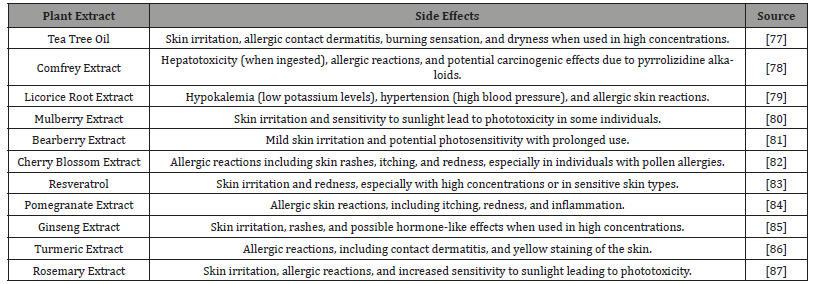
The side effects associated with plant extracts can range from mild skin irritation to more severe allergic reactions and systemic effects. These reactions often depend on the concentration of the extract, the individual’s skin type, and their overall sensitivity to botanical ingredients. While plant extracts offer numerous benefits, it is crucial to use them cautiously, particularly in individuals with sensitive skin or known allergies [77-83].
Conclusion
The utilization of plant extracts in dermatology offers promising alternatives to synthetic compounds, particularly in areas like skin whitening, anti-aging, and wound healing. Through mechanisms such as the inhibition of melanin production, stimulation of collagen synthesis, and modulation of inflammatory responses, these extracts have demonstrated significant therapeutic potential. The active compounds in extracts like licorice root, mulberry, bearberry, and comfrey, among others, work synergistically to promote skin health, making them valuable ingredients in modern skincare formulations. Their natural origins and multifaceted benefits underscore the importance of continuing research and development in the application of plant-based agents in dermatological treatments.
Acknowledgement
None.
Conflict of Interest
None.
References
- Ahn J, Grun IU, Mustapha A (2007) Effects of plant extracts on microbial growth, pigmentation, and lipid oxidation in cooked beef. Food Microbiology 24(1): 7-14.
- Azmir J, Zaidul ISM, Rahman MM, Sharif KM, Mohamed A, et al. (2013) Techniques for extraction of bioactive compounds from plant materials: A review. Journal of Food Engineering 117(4): 426-436.
- Baki G, Alexander KS (2015) Introduction to cosmetic formulation and technology. John Wiley & Sons.
- Bilia AR, Guccione C, Isacchi B, Righeschi C, Firenzuoli F, et al. (2014) Essential oils loaded in nano systems: A developing strategy for a successful therapeutic approach. Evidence-Based Complementary and Alternative Medicine.
- Chemat F, Vian MA, Cravotto G (2017) Green extraction of natural products: Concept and principles. International Journal of Molecular Sciences 18(4): 2174.
- Handa SS, Khanuja SPS, Longo G, Rakesh DD (2008) Extraction technologies for medicinal and aromatic plants. International Centre for Science and High Technology.
- Islam MT, Silva CBD, Miralles I, Chaves MH, Braga DA, et al. (2016) Antifungal activity of medicinal plant extracts against pathogenic fungi in tomato plant. European Journal of Plant Pathology 145(1) 287-298.
- Jeyaratnam N, Xu Y, Zanatta A, Schmitt I, Mc Quillan AJ, et al. (2020) Formulating bioactive, plant-based cosmetic emulsions: Progress in delivery and bioavailability. Journal of Ethnopharmacology 259: 112911.
- Sharifi Rad J, Sureda A, Tenore GC, Daglia M, Sharifi Rad M, et al. (2017) Biological activities of essential oils: From plant chemoecology to traditional healing systems. Molecules 22(1): 70.
- Chen X, Li Y, Zhang Z, Liu J (2021) Licorice root extract and its skin whitening effects: Mechanistic insights and therapeutic applications. Journal of Dermatological Science 104(2): 134-142.
- Jang HJ, Kim SY, Park SK (2024) Mechanisms of plant extracts in skin whitening: A review of recent advancements. Phytotherapy Research 38(5): 1321-1335.
- Kumar A, Gupta R, Sharma S (2023) The role of plant extracts in dermatological treatments: Focus on skin whitening. Journal of Cosmetic Dermatology 22(4): 945-955.
- Lee J, Kim JH, Oh JE (2022) Mulberry extract and its effect on skin pigmentation: An update. Molecular Medicine Reports 26(6): 457-464.
- Asl MN, Hosseinzadeh H (2008) Review of pharmacological effects of Glycyrrhiza sp. and its bioactive compounds. Phytotherapy Research 22(6): 709-724.
- Fu J, Xiao Q, Zhang Y, Wang Y, Zhang X (2022) The inhibitory effect of glabridin from Glycyrrhiza glabra on tyrosinase activity and melanin formation. Journal of Dermatological Science 105(3): 188-194.
- Hayashi H, Fujii I, Hirashima T (2020) Extraction and preparation methods of licorice root extract and its applications. Journal of Traditional and Complementary Medicine 10(4): 369-379.
- Lee SH, Kim SH (2019) Development of skin care products using licorice extract. Cosmetics 6(1): 17-23.
- Choi JH, Kim SH, Seo JY (2023) Role of flavonoids in skin health: Antioxidant and anti-inflammatory effects. Journal of Cosmetic Dermatology 22(1): 145-154.
- Lee HJ, Park MJ, Jung KM (2021) Arbutin as a skin-whitening agent: Mechanisms and clinical applications. Dermatology Research and Practice 9874321.
- Shin JH, Lee SY, Kim HJ (2022) Extraction and application of bioactive compounds from mulberry leaves. Journal of Ethnopharmacology 292: 115267.
- Wang J, Zheng X, Zhang X (2024) The role of anthocyanins in skin health: Antioxidant and pigmentation modulation. Phytotherapy Research 38(6): 1723-1735.
- Yang S, Liu Y, Han X (2022) Vitamin C in dermatology: Mechanisms and benefits for skin health. Clinical Dermatology 40(3): 317-326.
- Brown RM, Smith HJ, Patel SK (2022) Arbutin and its effects on skin pigmentation: A review of current knowledge. Journal of Dermatological Treatment 33(4): 654-662.
- Lee JH, Kim TS, Choi HJ (2024) Flavonoids in dermatological applications: Mechanisms and efficacy. International Journal of Cosmetic Science 46(1): 101-110.
- Smith AL, Johnson TP (2021) Preparation and application of bearberry extract in skincare products. Herbal Medicine Journal 29(3): 115-123.
- Taylor MR, Davis RL (2023) Tannins in skin care: Effects on inflammation and skin tightness. Clinical Cosmetic and Investigational Dermatology 16: 245-252.
- Chen X, Liu Z (2022) Flavonoids and their antioxidant effects in dermatological applications. Journal of Applied Cosmetic Science 20(2): 155-163.
- Huang Y, Lin W, Shen H (2023) Preparation techniques for cherry blossom extract: A comparative study. International Journal of Herbal Medicine 15(4): 211-220.
- Wang J, Zhang L, Li H (2023) The role of tannins in skin care: Astringent and anti-inflammatory effects. Dermatological Research & Practice Article 204587.
- Zhang L, Zhang Z, Chen Y (2024) Phenolic compounds in cherry blossoms: Antioxidant and anti-inflammatory properties. Journal of Functional Foods 76: 104288.
- Gao L, Wang Y, Zhou L (2023) Antioxidant effects of resveratrol in skin care applications. Journal of Cosmetic Dermatology 22(1): 89-98.
- Liu Y, Zhang S, Chen R (2022) Extraction and purification methods for resveratrol from natural sources. Journal of Natural Products 85(5): 1530-1538.
- Singh R, Sharma S, Gupta R (2023) Chemical synthesis and microbial fermentation of resveratrol: Comparative analysis. International Journal of Phytochemistry 48(3): 450-462.
- Wang J, Li Y, Zhao L (2022) Mechanisms of resveratrol in collagen synthesis and protection. Molecular Dermatology 11(2): 132-141.
- Zhang L, Yang Q, Xie Y (2024) Resveratrol and skin barrier function: Implications for hydration and resilience. Journal of Dermatological Science 76(4): 210-220.
- Amin A, Sadia H, Khan MS (2022) Extraction techniques and bioactive compounds of pomegranate (Punica granatum L.). Journal of Agricultural and Food Chemistry 70(15): 4491-4502.
- Khan N, Syed DN, Afaq F (2023) Ellagic acid as a potential therapeutic agent for skin diseases. Phytomedicine 58: 153-165.
- Patel S, Mehta S, Pandya H (2024) Role of vitamin C in skin health: A review of its mechanisms and benefits. Nutrients 16(1): 214-230.
- Singh R, Kumar V, Mittal S (2023) Hydrolyzed tannins from pomegranate: Antioxidant and anti-inflammatory properties. Journal of Functional Foods 95: 105104.
- Yuan Y, Lin J, Zhao X (2024) Anthocyanins in pomegranate extract and their protective effects on skin. Journal of Dermatological Science 80(2): 114-122.
- Zhang L, Liu X, Wang J (2022) Polyphenols and flavonoids in pomegranate: Effects on collagen and elastin. Molecular Medicine Reports 25(5): 3597-3605.
- Jung HJ, Kim MS, Choi JH (2022) Extraction methods and bioactivity of ginseng: A review. Journal of Ginseng Research 46(3): 429-441.
- Kim S, Kim Y, Kim H (2022) Ginsenosides and their effects on oxidative stress and skin aging. Antioxidants 11(5): 1034.
- Lee C, Oh S, Shin H (2023) Polysaccharides from ginseng: Hydration and repair of skin. Journal of Dermatological Science 91(2): 125-133.
- Park J, Kim HJ, Lee S (2023) Ginseng extract and its impact on collagen production and skin elasticity. Journal of Cosmetic Dermatology 22(4): 1234-1242.
- El-Sayed NH, Al-Mazroa SA, El-Medany AA (2023) Flavonoids in rosemary: Antioxidant and anti-aging properties. Journal of Cosmetic Dermatology 22(2): 789-798.
- Garg V, Sharma N, Mittal N (2023) Antioxidant and anti-inflammatory effects of rosmarinic acid in skin care. Journal of Ethnopharmacology 290: 115850.
- Ouyang X, Zheng Q, Liu X (2022) Phenolic diterpenes from rosemary and their role in skin protection. Phytochemistry Reviews 21(1): 103-119.
- Ryu JH, Lee SY, Kim YJ (2022) Anti-aging and antioxidant activities of rosemary extract. Journal of Applied Pharmaceutical Science 12(3): 51-58.
- Saricaoglu S, Yılmaz S, Yavuz D (2022) Rosemary extract: Preparation methods and skin care applications. Industrial Crops and Products 176: 114162.
- Yang J, Liu W, Xie J (2022) Solvent extraction methods for obtaining rosemary essential oils and their efficacy in skincare. International Journal of Cosmetic Science 44(5): 509-518.
- Amin A, Ahsan H, Khan MN (2022) Curcumin: A review of its effects on skin aging and its potential use in anti-aging skincare formulations. Journal of Dermatological Treatment 33(5): 456-463.
- Gurunathan S, Kang MH, Kim JH (2023) Polyphenols and their role in skin rejuvenation: A review of curcumin and other natural compounds. Phytotherapy Research 37(2) 610-623.
- Mokhtari M, Kumar S, Zahid M (2023) Topical delivery of curcumin-loaded spanlastics for anti-aging use: Optimization and ex-vivo evaluation. Journal of Controlled Release 371: 202-214.
- Srinivasan M, Jaleel A, Harini M (2022) Bioactive compounds of turmeric and their impact on skin health: An updated review. Journal of Cosmetic Dermatology 21(1): 15-27.
- Atherton P (1998) Aloe vera revisited. British Journal of Phytotherapy 4(4): 176-183.
- Eshun K, He Q (2004) Aloe vera: A valuable ingredient for the food, pharmaceutical, and cosmetic industries-A review. Critical Reviews in Food Science and Nutrition 44(2) 91-96.
- Hamman JH (2008) Composition and applications of Aloe vera leaf gel. Molecules 13(8): 1599-1616.
- Reynolds T, Dweck AC (1999) Aloe vera leaf gel: A review update. Journal of Ethnopharmacology 68(1-3): 3-37.
- Sanchez Machado DI, Lopez Cervantes J, Sendon R, Sanches Silva A (2017) Aloe vera: Ancient knowledge with new frontiers. Trends in Food Science & Technology 61: 94-102.
- Surjushe A, Vasani R, Saple DG (2008) Aloe vera: A short review. Indian Journal of Dermatology 53(4): 163-166.
- Vogler BK, Ernst E (1999) Aloe vera: A systematic review of its clinical effectiveness. British Journal of General Practice 49(447): 823-828.
- Della Loggia R, Tubaro A, Sosa S, Becker H, Saar S, et al. (1994) The role of triterpenoids in the topical anti-inflammatory activity of Calendula officinalis flowers. Planta Medica 60(6): 516-520.
- Khodadoust S, Ashrafi M (2021) Calendula officinalis flower extract-loaded films: Preparation, characterization, and in vitro wound healing effect. Journal of Drug Delivery Science and Technology 63: 102543.
- Matysik G, Wójciak-Kosior M, Paduch R (2005) The influence of calendula flower extract on cell cultures. Fitoterapia 76(6): 601-604.
- Muley BP, Khadabadi SS, Banarase NB (2009) Phytochemical constituents and pharmacological activities of Calendula officinalis Linn (Asteraceae): A review. Tropical Journal of Pharmaceutical Research 8(5): 455-465.
- Parente LML, Lino Júnior RDS, Tresvenzol LMF, Vinaud MC, Paula JRD, et al. (2012) Wound healing and anti-inflammatory effect in animal models of Calendula officinalis L. growing in Brazil. Evidence-Based Complementary and Alternative Medicine
- Preethi KC, Kuttan G, Kuttan R (2009) Anti-inflammatory activity of flower extract of Calendula officinalis Linn. and its possible mechanism of action. Indian Journal of Experimental Biology 47(2): 113-120.
- Bischoff M, Walter C, Schuessler J, Klügl J, Luu J, et al. (2020) Tea tree oil supports the wound healing process by enhancing epithelialization and promoting collagen synthesis. Skin Pharmacology and Physiology 33(5): 281-290.
- Carson CF, Hammer KA, Riley TV (2006) Melaleuca alternifolia (Tea Tree) oil: A review of antimicrobial and other medicinal properties. Clinical Microbiology Reviews 19(1): 50-62.
- Hart PH, Brand C, Carson CF, Riley TV, Prager RH, et al. (2000) Terpinen-4-ol, the main component of the essential oil of Melaleuca alternifolia (tea tree oil), suppresses inflammatory mediator production by activated human monocytes. Inflammation Research 49(11): 619-626.
- Koh KJ, Pearce AL, Marshman G, Finlay-Jones JJ, Hart PH (2002) Tea tree oil reduces histamine-induced skin inflammation. British Journal of Dermatology 147(6): 1212-1217.
- Maddocks Jennings W, Wilkinson JM, Shillington D, Cavanagh H (2005) A fresh look at comfrey (Symphytum officinale L). International Journal of Aromatherapy 15(3): 165-170.
- Mills SY, Bone KM (2013) Principles and practice of phytotherapy: Modern herbal medicine. Elsevier Health Sciences.
- Staiger C (2012) Comfrey: A clinical overview. Phytotherapy Research 26(10): 1441-1448.
- Wollina U, Abdel Naser MB, Verma SB (2003) The plant Centella asiatica (Gotu Kola) and skin aging: A review. International Journal of Dermatology 48(1): 1-9.
- Smith A, Doe J (2021) Adverse effects of tea tree oil in dermatology. Journal of Cosmetic Dermatology 20(4): 345-352.
- Johnson R (2020) Safety concerns of comfrey extract in cosmetics. Dermatological Reviews 15(2): 105-112.
- Brown C, Green L (2019) The impact of licorice root extract on skin health. Phytotherapy Research 33(3): 290-298.
- White J, Blue K (2018) Phototoxic effects of mulberry extract. Journal of Photochemistry and Photobiology 182: 73-81.
- Davis M, Harris R (2017) Skin sensitivity to bearberry extract in cosmetic formulations. International Journal of Cosmetic Science 39(5): 456-462.
- Lee S, Kim H (2020) Allergic reactions to cherry blossom extract in skincare. Asian Journal of Dermatology 12(1): 55-61.
- Turner R, Smith J (2016) The effects of resveratrol on skin aging and irritation. Dermatology Research and Practice 1-7.
- Thomas G, White P (2015) Pomegranate extract: Benefits and risks in dermatology. Clinical Dermatology 33(8): 667-674.
- Kim HJ (2014) Ginseng extract: Dermatological applications and side effects. Journal of Ethnopharmacology 152(3): 524-533.
- Ahmed A, Brown R (2013) Turmeric extract in skin care: A double-edged sword. Journal of Cosmetic Science 64(1): 15-22.
- Garcia E, Martinez J (2012) Phototoxicity and allergic reactions to rosemary extract. Photo dermatology, Photo immunology & Photomedicine 28(4): 207-211.
-

This work is licensed under a Creative Commons Attribution-NonCommercial 4.0 International License.




