




 Research Article
Soft Robots: Hope for the Future Space Exploration
Received Date: November 05, 2025; Published Date: November 21, 2025
Abstract
Space exploration is a very fascinating and demanding area of research but very difficult to perform scientific experiments due to the unpredictable and unstructured nature of space. Therefore, robots are the alternative for humans but the present available rigid soft robots are not capable to perform all the tasks in space. Consequently, the researchers are trying to develop special types of robots called soft robots. Soft robots are made of special materials and have flexibility, adaptability, deformability, and energy-absorbing properties, and, in some cases, can be rapidly restored and replaced inexpensively. Therefore, soft robots are our future hope in space research but these are not fully developed. In view of these facts, efforts are made to highlight all the technologies required to fabricate smart soft robots in this article so that scientists may improve the present soft robots. This article describes the updated information on the soft robots comprising design, sensors, actuators, and materials required for their fabrication. The efforts are made to highlight the challenges, prospects, and market of soft robots. Certainly, this article will be useful to the researchers working in this area.
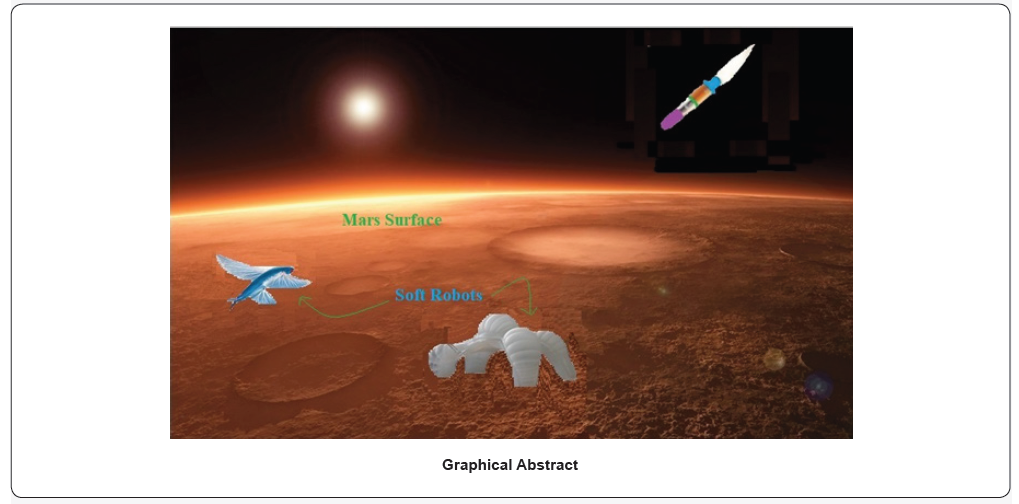
Keywords:Soft robots; Space exploration; Fabrication; Future perspective; challenges; Market
Introduction
Space exploration is one of the most important research areas since the existence of mankind. The human being is always curious about space. There are many benefits of space exploration, which include the development of communication, air travel and transport, asteroid impact avoidance from near-Earth objects (NEO), national security, knowledge of the expansion of the universe, and support in the verification of several scientific theories such as black holes. Besides, it is important to find out the possibility of life on other planets and exoplanets. The presence of precious minerals and other products (raw materials) for human beings may be our future assets. Moreover, the life of our earth is decreasing as solar energy is going down continuously. For this, we need to study the sun from higher proximity and resolution, which is only possible by a set of robotic devices. We must explore alternative sources of energy or find an abundance of fuel in the regions of the universe and bring them to our planet. Scientists are very much interested to study dark matter and dark energy, which might also be a solution to endless human energy requirements. Briefly, the space is a dream of everyone starting from young to old ages. Under such a situation, space research is essential for the existence of life on earth. Of course, this is an essential research area but very difficult to perform the studies because all the research is supposed to be carried out in space i.e. away from the earth. The difficulties that arise are due to the unpredictable and unstructured nature of space; especially the vacuum, zero gravity, extreme temperatures, pressure (on planets), etc. All of this makes it impossible for humans to perform the required research for a long time. The prolonged stay of the astronauts in space results in loss of muscle mass and bone density, as well as accelerated wear and tear on the circulation system [1]. Interestingly, these tasks may be performed by robots, but we need special types of robots, which are comparable to human dexterity. The conventional rigid robots cannot fulfil these requirements because of their low dexterity, rigidity, and lack of adaptability. However, some special types of robots called soft robots are in their development stages for such sorts of tasks for space research.
Basically, the soft robots are made of compliant materials, in place of rigid ones. These are also lightweight and versatile in function. Unlike rigid-bodied robots made from ceramics, metals, and hard plastics. The compliance of soft robots can increase the protection during working with human contact. Soft robots have high flexibility, deformability, energy-absorbing properties, and, in some cases, can be rapidly restored and replaced inexpensively. Like living beings, some soft robots can intensely increase their dexterity i.e., motion to squeeze under hindrances. The researchers used animal models to manufacture the soft robots but the preparation of these sorts of robots is not fully developed as they need very high-power output and refined controls by using closed-loop sensor feedback. Soft robots’ high deformability, flexibility, and energy absorption, which make them very suitable for space exploration. The major problems are non-cooperative targets, space environment, safety issues, and bulky actuation setups, which comprise pumps, hydraulics, etc. For instance, pneumatic air muscles require air compressors, which inflate/ deflate the synthetic muscles. Robots with soft bodies have incredible potential. The flexibility of the soft robots allows them to squash into various shapes and sizes of bodies, which may be useful in some cataclysmic relief situations. Soft robots are also safer for human communications and for placement inside a human body. Therefore, soft robotics will play a progressively significant role in the future in space research owing to the above-mentioned features [2-4].
In spite of the predicted versatility of the soft robots, there are many problems to make the robots capable to work in space. These are due to environmental microgravity and harsh conditions. Extreme environments in space, such as severely low or high temperatures, restrict the choice of soft materials when building a soft robot for these purposes. Hydrogels and organogels used for some soft robotic fabrication might melt or get brittle (undergo glass transition) [5]. Besides, most of the goals are non-cooperative and it is impossible to recognize the characteristics, shape, location, robotic interaction safety, and trajectory estimation. The working vibration in robots is another problem; however, it is low in soft robots. Therefore, it is important to consider vibration suppression and structural flexibility in space exploration [6-8]. The important acquiescence and adaptableness of soft robotics seem to produce significantly low vibrations when associated with the old machines [6]. It is important to mention that these features may reduce sudden impact risk in cluttered surroundings applications. Besides, they can be applied with good efficiency in any direction or under low gravity conditions [9] because of redundant degrees of freedom (DoF). Robotic exploration is necessary to enable more space exploration by setting the context, providing critical information, and reducing the risk to humans. Based on the present knowledge of rigid and soft robots, I think that hybrid formation and management of soft robots for future space research are essential. During my study and experience, I realized that soft robots are the potential tools to carry out new experiments in space for the advancement of our current knowledge in cosmology and aerospace. I decided to review the applications of soft robots and write an article so that the researchers may get benefit from my article.
Types of soft robots
The basic design of the soft robots is inspired by animal models [10]. They are soft in appearance and structures and, hence, look like invertebrates. Soft robots are categorized as robotic arms, earthworm-liked robots, soft grippers, multi-limb robots, caterpillar-liked robots, and many more. The soft robots have a soft body with sensors and actuators. They need soft and flexible materials to fabricate with embodied sensors and actuators. 3D printing is an ideal mode of fabrication. The very first soft robot was developed in 2011 by Harvard professor George Whitesides. Later, in 2016, Harvard scientists used liquid silicone rubber for the development of Octobot, the world’s first soft autonomous robot. Inspired by octopuses, these soft robots can spin and overcome obstacles that might be impossible for sharp, tough metal robots like those depicted in the Terminator or Star Wars. Since then, the number and types of soft robots have increased dramatically. Although they may be several years away from their actual commercial viability, they still represent an exciting technology with great potential. Some important types of soft robots are discussed below.
Soft robotic arm
The soft robot arms are bio-inspired with principles and constituents of soft and rigid robots. The bioinspired robotic arms have rigid and soft arrangements in such a fashion that they resemble the human arm in terms of haptic feedback, through sensors; anthropomorphic motions, through actuators; and degrees of freedom, by incorporating soft material and joint selection. The soft robotic arm robot is an arm type, combines elements of rigid and soft robotics. Currently, most soft robot arms designs may be categorized into three groups based on their actuation types [11] viz. extrinsic, intrinsic, and hybrid actuation. Jiang et al. [12] described the structure, control, and uses of multi-segment soft robot arms. Many structural designs were presented by calculating buckling issues. As per the authors, the honeycomb pneumatic network was a novel structure. Furthermore, the authors claimed that the soft arm could significantly simplify the planning, perception, and control of communication tasks via compliance. The authors also stressed that this is a primary advantage over the rigid arm.
Soft gripper
The soft grippers have soft cylindrical actuators and detachable suckers and work on the principle of air chamber inflation situated in cylindrical chambers; leading to the ability to hold objects. Both the soft cylindrical actuators and the detachable suckers grab objects using a vacuum. Soft robot’s fingers have air chambers i.e. side air chambers for twisting and one chamber for grasping the objects. This is the combination of these air chambers, which are responsible for rotating the payload. The gripper reinforces the principles of soft robots by building molds with everyday materials and troubleshooting a pneumatic system. Generally, robot grippers are used to tackle the complex tasks in the automation system (cranes, stackers, Pallet Shuttle, conveyors, etc.). It is important to mention that robot grippers should be soft in nature in order to adapt to the diverse shapes of the payloads and deal with delicate objects vigilantly. Soft robots have an enormous range of capabilities, from picking objects on an assembly line to softly picking a rock sample from a different planet.
Earthworm-like robot
Robots based on the shape and working style of earthworms are important from the space exploration point of view. Earthworm-like robots have received great attention due to their prominent locomotion abilities in various environments. The superior locomotive ability of the earthworm-like robots originated from the specially designed structure and the elaborated control strategies. These sorts of robots have good potential in space exploration because they may be used to carry out experiments and repair damaged machines in space. The special type of motion called peristalsis of these robots made them ideally work in an unstructured and chaotic environment. Fang et al. [13] developed an earthworm-like robot by incorporating actuation with origami ball structures into the earthworm-like robot ‘body’, and the earthworm’s locomotion mechanism was mimicked to develop a gait generator as the robot’s centralized controller. Similarly, Zhang et al. [14] used 3D printing for making earthworms like soft robots. The authors exploited Yoshimura-origami structure 3D deformability by enhancing the locomotion capability from 2D to 3D.
Caterpillar-like robots
A novel tiny, soft robot with caterpillar-like legs; capable of carrying heavy loads and adaptable to adverse environments; is gaining attention in robotic science. The caterpillar-like robots have a special type of motion called wave locomotion, which makes them good candidates for space research. The body outline of an inchworm and its Omega movement may be used to fabricate a soft space robot. These robots may also cantilever their body through a gap and climb on objects. An inchworm may rise on a vertical object, crawl on a narrow stick, and travel via small cracks. Inspired by this, Koh et al. [15] fabricated a robot and named it Omegabot. Kim et al. [10] presented a review article on soft robotics. The authors discuss the structure and functions of caterpillar-like robots. The authors also stressed tissue engineering to create hybrid systems.
Multi-limb robots
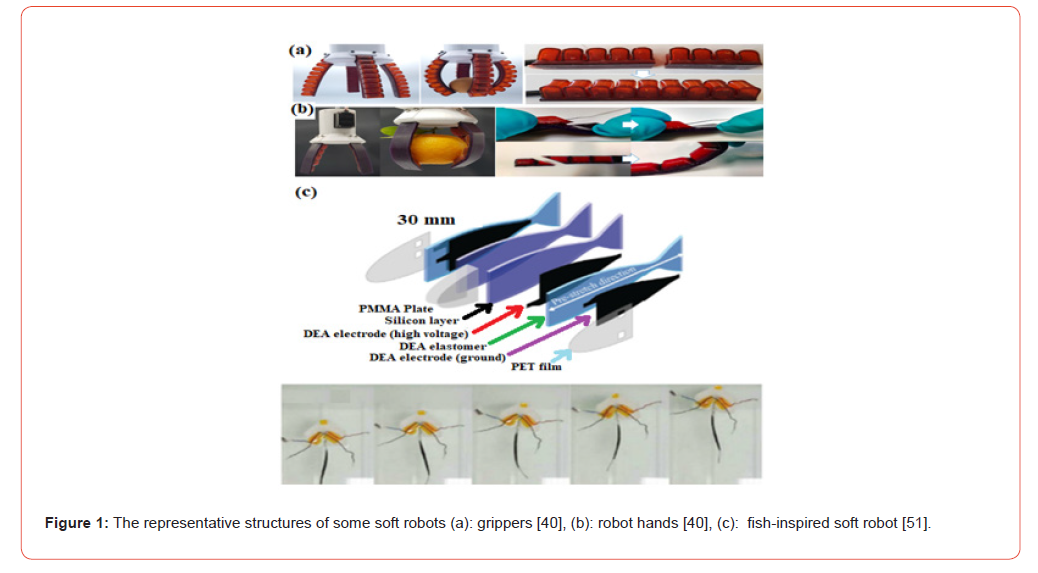
Multi-limb robots may also be important machines in space research exploration because most wheel-based robots are not successful on uneven surfaces of the planets. Contrarily to rigid robots, multi-limb robots can walk and go from one place to another to perform scientific experiments. Based on these facts and inspired by starfish and turtles’ movements, a group of scientists led by Professor George Whitesides from Harvard University, USA developed soft robots with pneumatic nets [16-19]. Otake et al. [20] used electroactive polymers and gel to fabricate a starfish-type soft robot. The main features are the bent of the body and turnover with respect to electrical stimulation. Pei et al. [21] developed electro-elastomer roll actuators and utilized the actuators to produce a six-leg robot. The authors named it as MERbot. The capability of movement of this robot may be exploited in space research. Shi et al. [22] prepared a robot with eleven soft limbs with the capability of walking. The limbs are made of electro-elastomer (an ionic polymer-metal composite). The shape memory alloy actuators are utilized to change the attitude of the robotic motion. This configuration allowed the robot to perform many movements including grasping, walking, and swimming. Godage et al. [23] also fabricated a robot with four inflated limbs. The robot is expected to perform well in an unstructured environment due to its good locomotion performance. The representative structures of these sorts of robots are given in the following Figure1.
Space applications of soft robots
Basically, our space research intention is to use space for human welfare in the future. Therefore, the different fields of science and engineering demand experiments to be conducted in space; especially the ones that require the absence of gravity and air; related to astrophysics, biology, physiology, fluid physics and combustion, material sciences, and chemistry. Robots are very useful machines to conduct these types of work in space. Soft robots have the capabilities to deform, bend and move in the unstructured and unpredictable environment of space. They can perform any type of function in varied situations. Additionally, their soft bodies are the assets to absorb energy during collision or touch with objects. Some rigid robots are being used in space applications, especially at International Space Station (Canadarm2). A humanoid robot at the International Space Station has performed important tasks that a man cannot do [24]. Another robot, called Astrobee, is a new free-flying robotic system on International Space Station to assist astronauts to reduce the time they spend on routine duties, enabling them to focus more on human-intensive tasks [25]. Hence, there is a lot of scope for robots in space applications and recent years have seen a rise in such robots going to space.
Robotic arms of soft nature may be used to perform various functions required in space exploration. Some space projects like ETS-VII and SSRMS are using long robotic arms for space exploration. Mehling et al. [26] in NASA fabricated a cable-driven arm of soft robots, named Tendril. This 10 mm thin and 100 cm long soft robot is similar to a natural plant tendril. It is designed for minimally invasive inspections like extending deep into cracks and under thermal blankets to inspect areas that remain inaccessible by traditional methods. This property may strengthen and broaden the robotic arms’ abilities for space research.
Mars is a fascinating planet and might be the future hope of human beings. NASA used different robotic machines in the exploration of Mars. The names of the five rovers are Sojourner, Spirit, Opportunity, Curiosity, and Perseverance. These robots performed the functions of recording temperature, pressure, and photographs. These also tested the surface and environment for the surviving microbes or other forms of life. The basic problem of these robots is wheel-based movement, which is an obstacle due to the rugged Martian terrain. Therefore, Mars exploration may be accelerated by earthworm or caterpillar types of soft robotic devices. The lidar may be the next technology of NASA on Mars and this can be performed well by soft robotics. Mizui et al. [27] fabricated an autonomous robotic fish for International Space Station dust cleaning. The robot is carrying out autonomous flight control and navigation in the Japanese Experiment Module (KIBO). The robotic fish is equipped with elastic oscillation fins for propulsion in ISS modules, which are realized to contain high controllability. This robot may help astronauts by detecting and vacuuming dust particles onboard ISS. In this way, this robot may reduce the workload of astronauts along with the establishment of autonomous flight control and navigation in zero gravity.
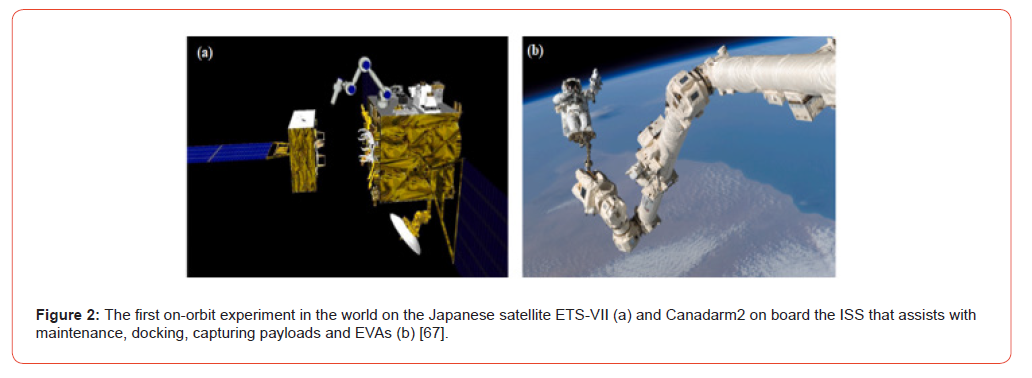
On-orbit servicing is one of the most crucial utility tasks that is routinely carried out to boost space exploration. The space environment is unpredictable and, generally, is not supportive of equipment reliability and functionality. The primary on-orbit servicing functions include repairing, refueling, transporting, rescuing, and satellites system upgrading. Briefly, on-orbit servicing is an important duty to keep the spacecraft and satellites in the best condition to explore new horizons of our space [28-31]. The capabilities and specifications of soft robotic devices make them a perfect match for on-orbit servicing, requiring less and less human involvement in the upcoming years. The first on-orbit experiment on the Japanese satellite ETS-VII and Canadarm2, on board the ISS - assists with maintenance, docking, capturingpayloads and Extravehicular activities (EVAs) - are shown in Figure 2.
Fabrication of soft robots
Soft robot fabrication is a new, enthusiastic, and growing field but has many challenges. It needs the combination of various aspects such as simulation, smart materials, fabrication, remote control, and performance in the space. The development of design capabilities to work in an unstructured environment is very difficult. However, the use of 3D fabrication technology has facilitated the customization of their tasks. Also, 4-D printing may be an extra advantage in fabricating the desired robots. 4D printing is a technique where the fourth dimension refers to the timedependent response of the 3D printed system to variable stimuli, such as heat, electricity, magnetism, and pneumatic pressure [32]. The 4D printing technology is being extensively studied in the field of soft robotics due to its potential to create dynamical systems and actuators with complex inner structures, which are essential for soft robotic locomotion.
The researchers used animal models to manufacture the soft robots but the preparation of these sorts of robots is not fully developed, as they need high power output and refined panels using sensory feedback. Basically, the soft robot’s fabrication for space exploration depends on certain requirements such as versatility in size-changing, independent of temperature and gravity. The soft robot prototypes rest on an inexpensive and ample material to function under varied conditions. Simulating the movement of such robots is a difficult task. Actuation prediction of soft robots using a linear analytical prediction model often fails. However, numerical simulations integrated with nonlinear material principles enhance accuracy. The fact is that for such processes it is necessary to apply the methods of continuum mechanics. Therefore, soft robots are sometimes called continuum robots. Recall continuum mechanics – section mechanics, physics of continuous media, and physics of condensed matter, devoted to the motion of gaseous, liquid, and deformable solids, as well as force interactions in such bodies.
Sometimes, soft coating on rigid robots serves some benefits similar to soft robots but increases the cost, weight, and reduction in motion precision. They are made from a very soft material, including nanomaterials. This makes them look more like human body parts, including muscles. Recently, a new approach to hybrid configuration is considered worthwhile. It is achieved by combining three key components, viz. skin, muscle, and bone. The hybrid structures are developed to attain stiffness variability by combining the key features of an inchworm and a snake. The combination of stiffness and flexibility may be the main feature of soft robots. It is also possible to create hybrid soft-hard robots that have an internal rigid frame and external soft elements. Soft elements can have many functions i.e. both acting mechanisms similar to animal muscles and cushioning material to ensure safety in a collision with humans. Among all these, it is important to mention that a combination of sensors, power storage, computational unit, and actuators is very important to be encased for moving soft robotic devices.
NASA researchers are using silicon-based batoid-inspired autonomous swimming robots for research [33]. The task is achieved by the flow work explaining the robot’s geometry, and optimization of topology. These are required to fabricate the necessary structure with the needed features. The optimized design was changed into a code; interpreted by 3D printers leading to robot fabrication. The researchers are in search of liquid metals, which stretch like the terminator. The key purpose is to achieve joining, shaping, mobility, and levelling. If robots are fabricated of durable materials may have long lives along with working efficiency in an unstructured environment. Most present prototypes are objectively small-scale and modest. Some important aspects of soft robots are discussed in the following sub-sections.
Soft robotic materials
Space exploration is time-consuming and costly and, consequently, the weight, size and volume of the robots are of great concern, due to payload lift limitations. Therefore, robots of inexpensive materials, low in weight, and small in size are preferred. Besides, folding and stretchable robots are other assets in space research, which come into play based on their multiple DoFs. Due to these reasons, material selection is very crucial in the fabrication of soft robots. Polymers are considered the best materials because of their temperature and gravity independence, stretchability, and low molecular weight. Besides, these materials disperse forces on impact which reduces the danger of injury or sudden impacts. Moreover, nanomaterials may be useful in robot fabrication; in addition to other types of soft materials.
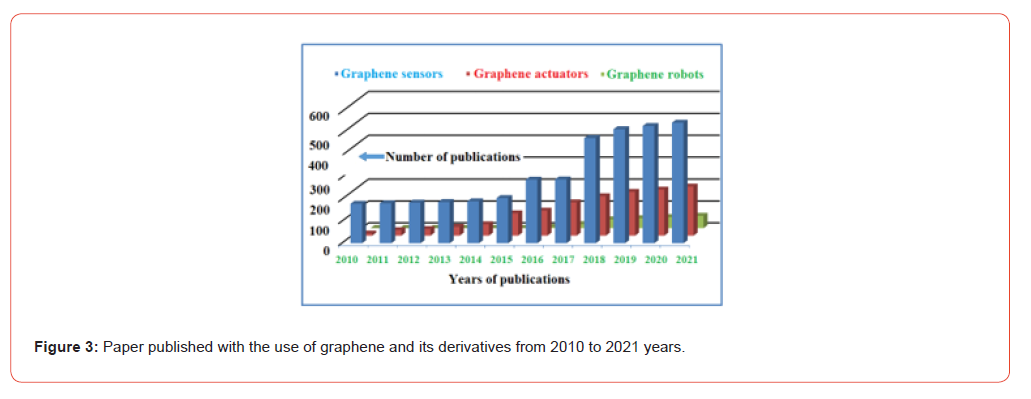
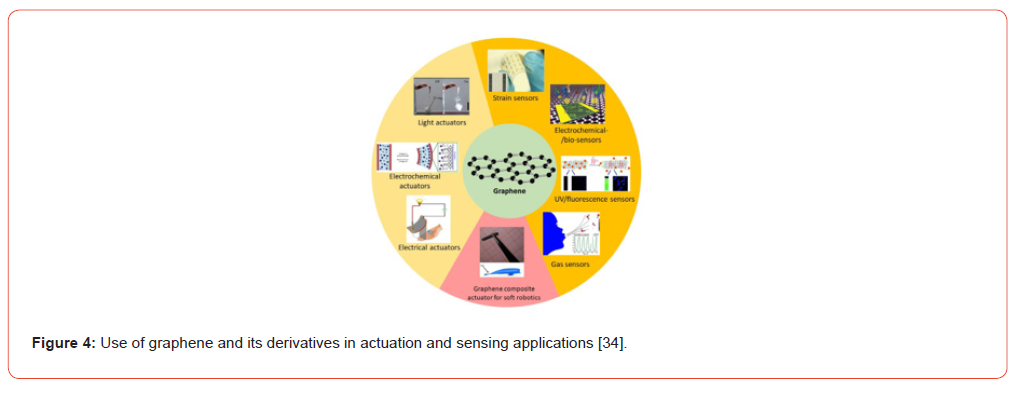
Graphene and its derivatives have been used in making sensors and actuators for soft robotics. These materials improved the selectivity and sensitivity of the devices because of their unique features. There is some research on graphene-based materials development and their uses in soft robots. The exclusive inherent thermal, electrical, and mechanical features of graphene and its derivatives are making them great materials to accept challenges in the fabrication of soft robots. The purpose is to improve and extend applications for developing multi-functional actuators and sensors. These materials are quite common, as indicated, and, consequently, an increasing number of publications are seen every year (Figure 3).
Jin et al. [34] discussed the design, engineering, and mechanisms of different graphene-based actuators and sensors in soft robotics. Also, these authors described the various approaches for improving graphene-based actuators and sensor performances in soft robots. In this discussion, they mentioned the work of Yan and co-workers [35], who fabricated a high-strain reduced graphene oxide (rGO)/ nanocellulose sensor which has high stretchability. This ultrastretchable rGO/nanocellulose sensor allowed sensing in all directions. It showed high sensitivity with a gauge factor of 7.1 at 100% strain. Five similar high-strain sensors were attached to a glove prototype to quantify the strains during finger movements. Applications like this can be extensively applied in human hand exoskeletons for musculoskeletal rehab and other purposes. Finally, the challenges, prospects, and potential of soft robots exploiting the qualities of graphene-based actuators and sensors have been discussed. A diagram of graphene and its derivatives for use in actuation and sensing applications is shown in Figure 4.
The second most important material for future soft robots may be hydrogels due to their excellent properties of high transparency, stretchability, biocompatibility, and ion conductivity. Besides, these materials are of superb capacity for soft robotics because of their exceptional receptiveness to stimuli. Lee et al. [36] discussed the applications of hydrogels in soft robotics. The authors described the excellent properties of hydrogel for soft robots. The main emphasis was on the working style of applications. This included a detailed description, fabrication, and mechanism of thermally, chemically, optically, electrically, magnetically, and hydraulically responsive hydrogel actuators. Finally, the authors suggested future perspectives of hydrogels in the fabrication of soft robots. The skin-like electronics are also important materials and gaining importance in soft robots. This is because of their wearable sensing properties.
Hydrogels have been studied for skin-like electronic purposes because of their excellent properties of wetness, softness, ionic sensing capability, and biocompatibility. These properties make Hydrogel a potential candidate for liaison between soft robots and humans. It is important to mention that the development of skinlike hydrogels is in its nascent stages. There are many challenges ahead such as low ambient stability, limited functionality, poor surface adhesion, and comparatively high-power consumption. Ying and Liu [37] reported the current development of skin-like hydrogel devices to talk about these challenges in soft robotics. The main discussion is on the existing strategies to enhance the conductivity, toughness, and current methods to influence hydrogel robots with innovative qualities of adhesion, anti-freezing, and anti-dehydration. The authors discussed state-of-the-art skin-like hydrogel instruments for utilities including soft robotics, wearable electronics, and energy harvesting.
The next significant future material is silicon and its derivatives due to their persistence at high temperature and pressure, metallic luster, semiconductor behavior with high melting and boiling points, and density. NASA researchers are using silicon-based material having air bladders internally [38]. They are trying to make soft actuators for controlling robotic motion. These chambers compress and expand, depending on the air amount pumped through them, controlling the robotic motion. The robots relax and flex depending on air quantities in the chambers. This sort of development is important for leveling, shaping, joining, and mobility of soft robots. It is also significant to mention that air and fluid-driven robots may be more useful due to their higher collapsing features; leading to small size.
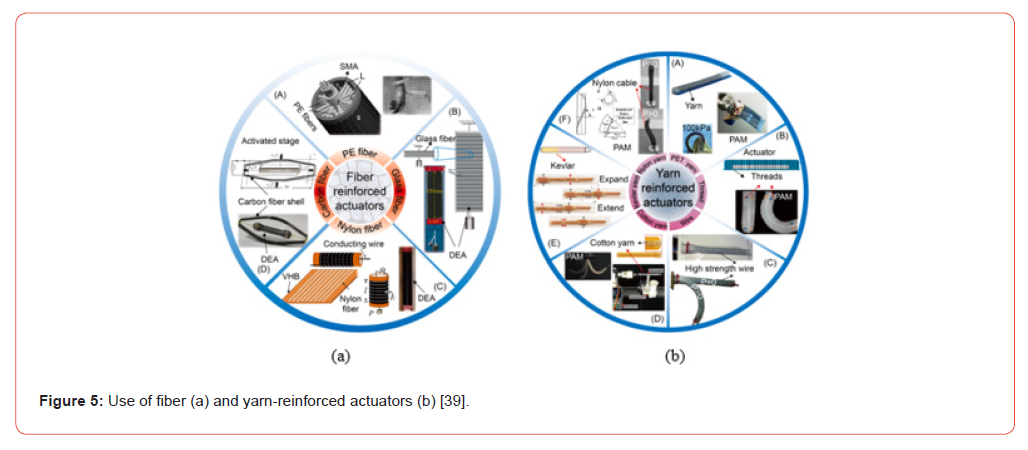
The different types of textiles are also being developed and studied for the fabrication of soft robots. Various textiles have been used to make sensors and actuators for soft robots. The use of textiles enhanced the efficiency of the robotic parts. Fu et al. [39] described the status of textiles used in robot fabrication along with future trends. The authors discussed a perception of the present state-of-the-art in fabric technology for soft robotic fabrication. The authors also described the essential actuation mechanisms in soft robots. The yarn and fiber anchored actuators are shown in the following Figures 5a and b.
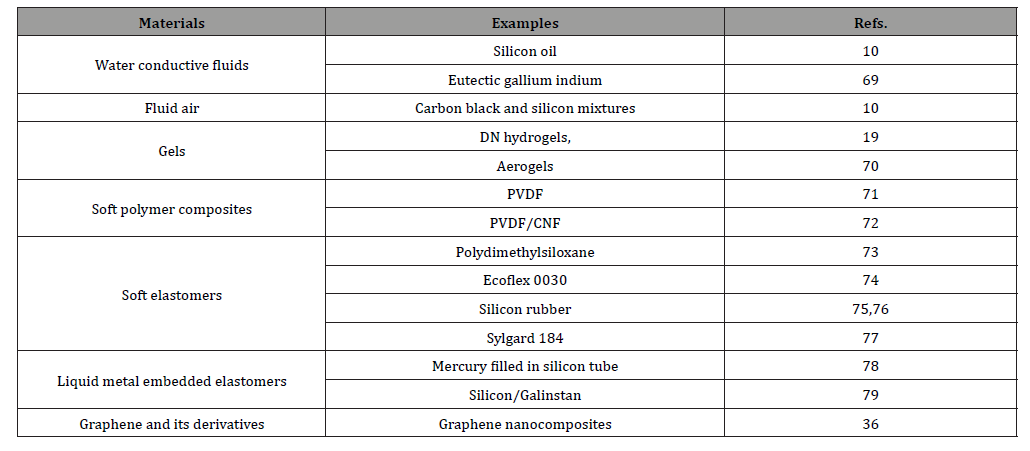
Another very interesting material is the group of self-healing polymers – the assets in soft robotic science for space exploration. This is due to their remarkable properties of automatic healing and repair in a highly unfavourable space environment. Besides, these polymers act as shock absorbers and protect soft robots from mechanical jerks. Therefore, self-healing polymers are future important materials for realizing the dream of scientists of ideal soft robots. Terryn et al. [40] reported the role of these polymers in soft robot development. The authors discussed the various types of self-healing polymers and compared them with other materials. Furthermore, this article describes the limitations and driving forces to spur the multidisciplinary mixture of self-healing polymers and soft robot research. Some other materials used in soft robots are summarized in Table 1.
Table 1: Important materials used in the fabrication of the soft robots.
As such, there is no large literature on nanoparticles in the fabrication of soft robots but they have a good future in this area. It is because of their specific properties; especially the small size, active sites, and high surface area. The magnetic nanoparticles may be used to fabricate soft robots easily for remote-controlled actuation by changing the magnetic field gradient. As per Joyee and Pan [41], dry magnetic nanoparticles (10 nm diameter) from Ferrotec (NH, USA) were utilized as the magnetic filler for functional robot parts printing. Kang et al. [42] fabricated actuators based on silicon and polyacrylonitrile nanofiber. This thermo-pneumatic soft actuator is made of multi-layered ethanol-infused nanofiber mesh. The proposed soft robotic system is designed in such a way that it can operate without additional electricity or a pneumatic system. Thus, making it a very promising design for space applications; where high-power requirements are avoided.
Sensors and actuators
Sensors and actuators are among the most critical elements of soft robots. The design, fabrication, mechanisms, working life, etc. of the sensors and actuators are important to discuss. Again, the materials used to fabricate them go on top priority along with fabrication methods, as they define the reliability and life of these systems. Actuation is the change of energy into a powered-driven task, and, of course, it is the most integral part of a soft robot. The actuators are responsible for the movements, which are required to be designed to fulfil certain requirements, based on the mission profile. Different types of actuators have been used in the last years in soft robots. Some of the most important actuators are cable-driven, flexible fluidic, shape-memory materials, magnetoelectro- rheological materials, electroactive polymer, etc. Gariya and Kumar [43] described the development of soft robotic materials for actuators. The authors discussed the uses of gels, fluids, soft polymers, soft elastomers, and liquid metal-embedded elastomers.
Regarding the sensors, the materials required are supposed to be highly stimuli-responsive. The planning of highly sensitive materials for 2D to 3D shapes is of great importance in soft robots. Kim et al. [44] reported the stimuli-responsive properties of the different materials. The authors discussed the structures, material types, and fabrication methods. The authors described seven broad classes of stimuli-responsive 2D materials to 3D actuator stabilities. These classes are metal nanomaterials, carbon nanomaterials, liquid crystal polymers and elastomers, shape memory polymers, hydrogels, bio-hybrids, and azobenzenes. The processing methods, mechanisms, and applications are also discussed. It was also discussed that the shapes can be controlled by strategies and using optimum materials. The key factors in the design consideration are expansion, contraction, twisting, torsion, and bending. These can be achieved by photothermal, photochemical, electrothermal, electrochemical, electrical, biological, etc. processes. Also, Liquid crystalline elastomers (LCEs) are another set of materials that provide an alternative to piezoelectrics. LCEs have higher shape variation when compared to inorganic piezo materials for lower forces. LCEs also provide an alternative to gels, which work on the principle of swelling and deswelling, as they do not require solvent transportation in and out of the material [45]. Some of the LCEs, such as a ferroelectric liquid crystalline elastomer, can also be converted into a soft actuator or sensor due to their polar structure, which reacts to the change in temperature and electric fields.
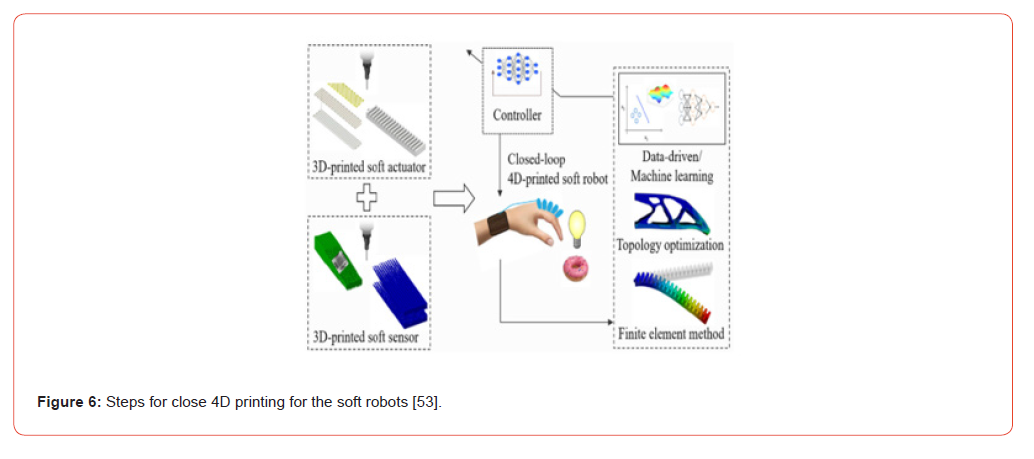
Magnetic responsive materials are another set of candidate materials that can actuate soft robots and, in this category, magneto-/electro responsive polymers (MERPs) are considered the choice because of their multifunctional and predictable dynamic nature. These are highly responsive by triggering them either by magnetic or electrical fields. These properties made them ideal materials in the research of soft robots, especially for multiple required shapes. Yarali et al. [46] discussed the current advancement in MERPs; especially their manufacturing by using 3D and 4D printing approaches. They also mention an innovative way of modifying polylactic acid (PLA) filament into a MERP and use in the Fused Deposition Modelling (FDM) 3D printing technique. To achieve this, they dissolved the filament in dichloromethyl solvent at room temperature. Then magnetite nanoparticles are added to make a composite responsive to the magnetic field. This composite can then be fed into the extruder of the FDM 3D printer to 3D print MERP structures for soft robotics. The authors also emphasize the future applications of MERPs in soft robot fabrication. Figure 6 describes some important actuation systems.
Like actuators, sensors are also significant in soft robots to assess the surroundings within which the robot is operating and allow the robot to adjust its actions in response to the data gathered. However, their design and fabrication are challenging jobs due to the different design parameters needed in soft robots for space exploration. The conventional rigid sensors work efficiently in rigid robots in which degrees of freedom are certain. In contrast, the sensors embodied in the soft robots need special features such as very high flexibility because of infinite degrees of freedom in soft robots, to work smoothly. The most significant materials under research and usage for soft robotic sensor fabrication are biological materials, carbon-based materials, hydrogels, liquid crystalline polymers, dielectric elastomers, ionic polymer-metal composite, etc. The sensors detect the variation in many physicochemical properties such as temperature, heat, moisture, light, sound, radiations, chemicals, tactile, change in pH, etc., which act as stimuli feedback for the soft robot to perform a certain action. The goal is to transcend to fully interconnected structural and sensing modules, similar to the biological bodies, which is unrealistic with contemporary rigid sensors.
Ilami et al. [47] discussed the materials used for manufacturing sensors. This article is dedicated especially to the advances in biologically inspired soft sensors and actuators with development in the period from 2017 to 2020. Shih et al. [48] developed sensors, which have the capabilities to be co-fabricated with soft robot bodies by means of commercially available 3D printers, without supplementary modification. They used Stratasys Objet350 Connex3 3D printer, which is capable of mixing conductive and dielectric materials and printing with various photopolymers. They also used black resin, containing carbon particles, which provide a measurable conductivity for sensors. Further, they used this fabrication technique to print a soft gripper with embedded sensors by incorporating them directly into the gripper (Figure 7). The sensors based on triboelectric nanogenerators are attaining respectable status in soft robotics fabrication. Jin et al. [49] reported a smart soft robot gripper by means of triboelectric nanogenerator sensors. These are used to catch the constant tactile information and motion for soft grippers. The tactile sensors have special features of perceiving the contact position and external stimuli area via a special distributed electrodes system.
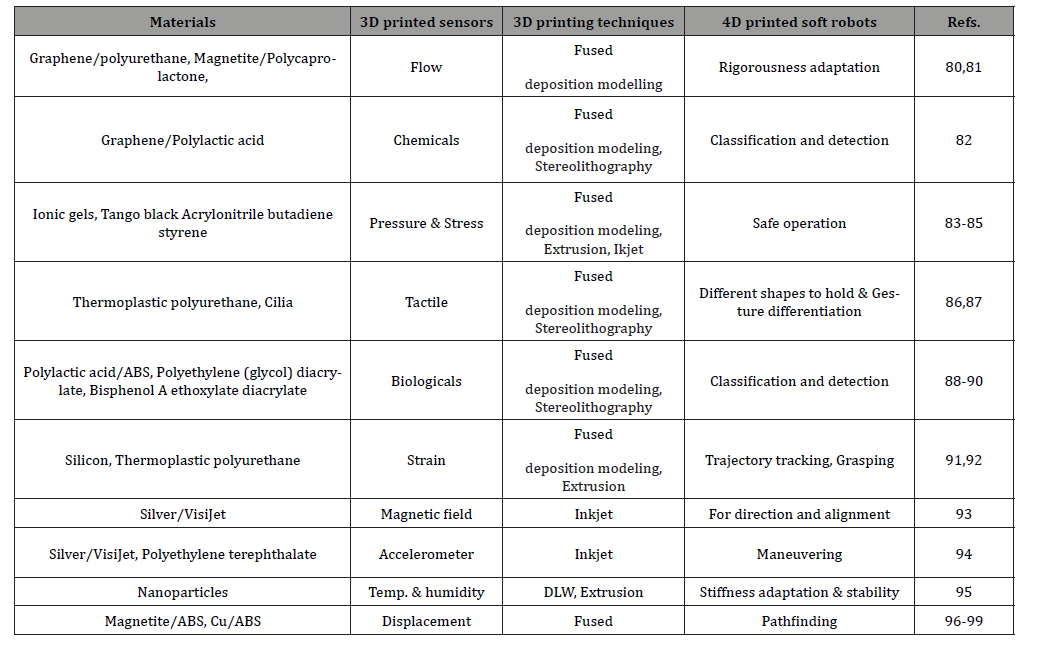
The nonstop elongation detection through consecutive tooth contact is possible due to the gear-based sensor with a stretchable strip. The different objects are identified by a soft gripper using triboelectric sensory information. Artificial Intelligence (AI) based support vector machine (SVM), a supervised learning model, has been used for the categorization of objects using the variation in triboelectric output signals. The authors demonstrated digital twin applications, showing object identification and duplicate robotic manipulation in an unmanned warehouse, which can carry out programmed sorting and real-time monitoring in a no-camera setting. The same sort of digital twin technology can be applied for an autonomous retrofitting/ repair manipulator aboard space stations. Some important 3D printed sensors in 4D printed soft robots are given in Table 2.
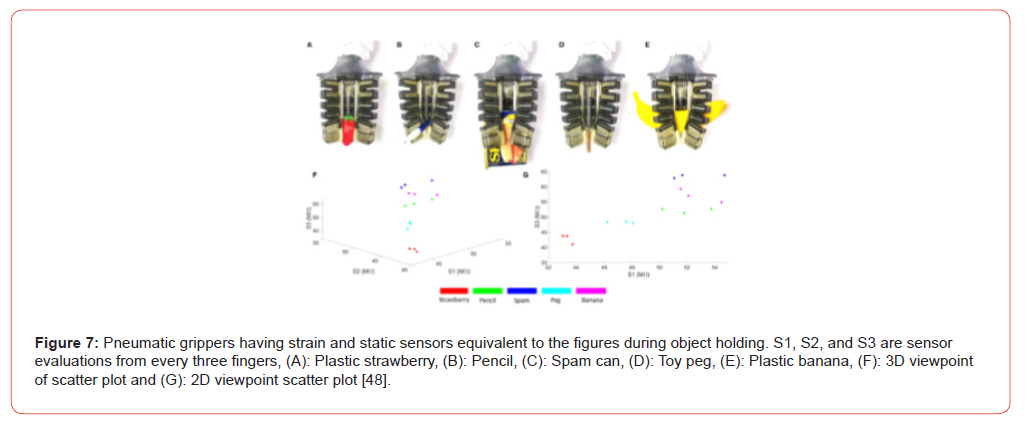
Table 2: Some important 3D printed sensors in 4D printed soft robots.
Fabrication techniques
As discussed above, the design of soft robots is based on some invertebrates and therefore, the researchers are trying to fabricate soft robots based on animal anatomy to achieve animal-like creeping and locomotion on uneven and unstructured terrains. For this purpose, soft materials are required and much is discussed above. For this type of task, we need an automatic soft manufacturing process, which can fabricate adapted soft robots proficiently along with the sensors and the required actuators in one go. We have advanced in manufacturing processes including 3D and 4D printing but adapted soft robot fabrication is still a challenging task. In 3D and 4D printing, a combination of different materials is used and, nowadays, these are considered the best methods for soft robot fabrication. Khomami and Najafi [50] discussed the strategies of wearable robots with lower limbs that do not have any rigid joints or structures. They emphasized robots having actuators of electrically driven cables. Lower limb jointless robots were divided into three main categories viz. end-effector based, exoskeleton based, and exosuits based robots. The authors reported that these types of robots may be useful in space exploration.
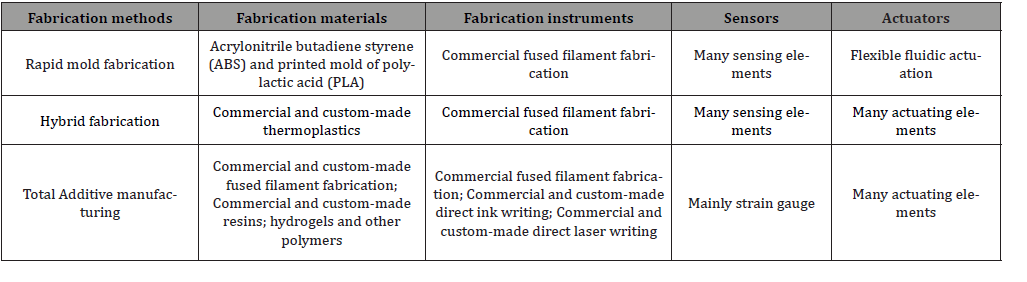
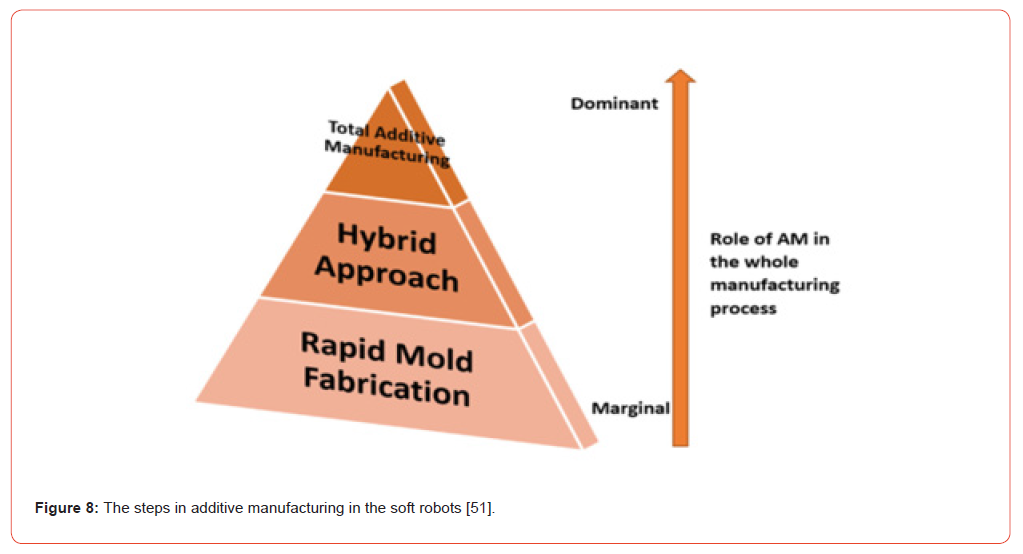
Stano and Percoco [51] described additive manufacturing (AM; 3D printing) methods for soft robotics fabrication. The possibilities of complex geometries (well suited for soft robot fabrication) in robotics were highlighted. This article also discusses the most commonly used soft robot actuation systems, categories of 3D technologies, and recent developments in the area of soft robotics manufacturing. The authors’ categorized AM technologies in three ways for the fabrication of soft robots i.e., rapid mold, total additive, and hybrid. In the rapid mold fabrication approach, AM technologies play a marginal role compared to the other fabrication techniques. In the hybrid approach, one of the various AM techniques is used to produce components of the soft robot, which actively involves AM technology as well as other manufacturing technologies simultaneously. Finally, Total Additive Manufacturing is the approach that most comprehensively utilizes AM’s capabilities. Fig. 8 shows the three approaches as a function of the role of AM technologies in the whole soft robot manufacturing process.
Below Figure 9 shows a scheme of the AM process including vat polymerization material extrusion and material jetting.
Brief information on additive manufacturing is given in Table 3.
Table 3: The most important additive manufacturing aspects.
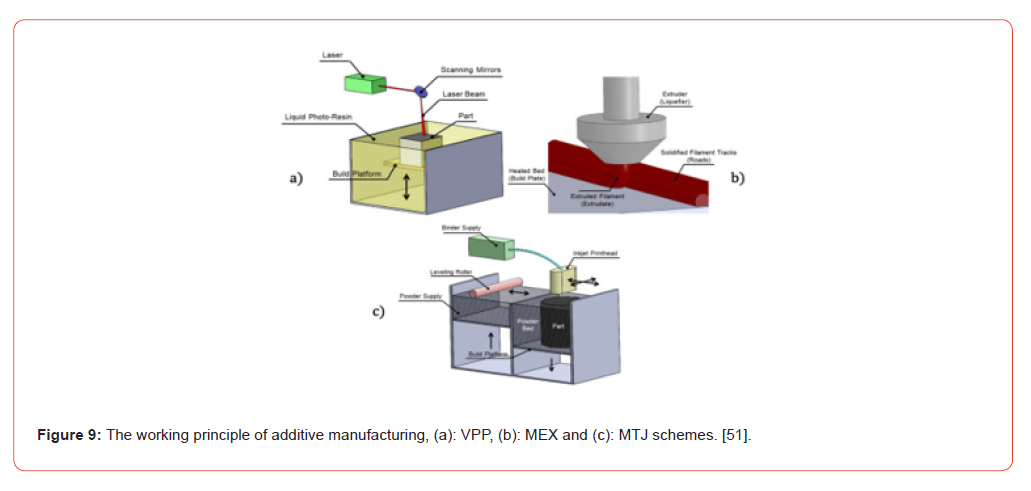
It is observed that there are some problems in the simulation, training, and 3D printing of soft robots; which primarily arise due to the enormous degrees of freedom that soft robots are required to have [52]. However, 4D printing may solve the problem of structural components, actuators, and sensor fabrication to a good extent. The standalone closed loop 4D printed soft robots are very important in space research, which may be fabricated easily by 4D printing techniques and trained through different machine learning algorithms [53]. 4D printing is a useful method to obtain future soft robots capable to work in an unstructured environment of space [54,55]. It is important to mention here that multi-material, embedded 3D (EMB3D) printing smoothly incorporates different conductive and fluidic features to construct somatosensitive actuators (SSA) that have great grouping, sorting, and grasping tasks capabilities [56]. They can perform several movements like crawling, climbing, and rolling, etc [57], which are essential locomotion profiles for different missions and experiment specifications to be performed on nearby planets. The piezoelectric nanogenerator (PENG) and triboelectric nanogenerator (TENG) have recently been developed for exploiting mechanical energy for self-powered robotic systems. The ability to operate while consuming minimal power is critical for developing pragmatic autonomous soft robots, that can operate for prolonged periods without any external power supply in the emptiness of space. The use of an article written by Pan et al. [58] may be useful for future planning. The authors stressed the need for the development of triboelectric- and piezoelectric-based soft actuators and effectors.
Power Sources
As it is very important to develop materials that comply with the infinite DoF of soft robots by bending and twisting, while maintaining their function, it is also very important to develop similar types of power sources that are capable to bend inside the soft robot body. Designing a stretchable and portable power source is a big challenge for soft robots. Li et al. [59] develop a thin and flexible lithium-ion battery for flexible electronics made from graphene foam (GF). The graphene foam that they fabricated is made up of 3D interlinked graphene, which is grown by the chemical vapor deposition process. They used hybrid materials i.e., lithium ferrophosphate (LFP)/ GF as cathode and lithium titanate (LTO)/ GF as an anode. It is very important to note that these anode and cathode materials are merged with the graphene foam using the hydrothermal deposition technique. Battery made by the combination of LTO/GF and LFP/GF, generated an effective voltage of 1.9 V, with 143 mAh/g of discharge capacity. They claimed that the battery showed good elasticity, high capacity, and longevity even when bent to a 5 mm radius. Moreover, they also emphasized the lightweight property of the graphene foam, which makes them very suitable to be embedded in soft robots.
In another study, a novel structure with individual overlapping sections, like snake scales, has been fabricated and tested for shapealtering batteries for soft robots [60]. The edges of the sections work in the same way as the scales in snakeskin, allowing stable deformations without damage. The idea here is the fabricate solid structures but in such a way that they allow decent flexibility to the body of the soft robot for locomotion. They consist of hexagonal unit cells encapsulating the energy devices and electrical interconnections between cells. The scale framework was made of aluminium and metal foils that were cut into the ideal shapes with a cutting plotter.
Based on the simulation’s studies, the shape-morphing battery withstands its specifications under mechanical deformation of 90% stretching, with a 10 mm bending radius. They also claimed that their battery is designed for 36,000 charging-discharging cycles. Again, these specifications are befitting the requirements of soft robots. To make this technology more potent, flexible solar panels can be installed on top of each flexible battery so that energy can be acquired as well as stored for actuation in soft robots. Moreover, flexible triboelectric nanogenerators, as discussed above, can also be applied to these structures either in combination with solar panels or separately.
Future perspective
For any scientific and space organization, one of the most important requirements is a successful space mission and soft robots may take part in this success up to a great extent. It is well known that space is an unpredictable and unstructured environment and, really, it is difficult to perform experiments by astronauts for a prolonged period. Therefore, there is a pressing need to develop soft assistive, self-powered, and autonomous robots in the future. Consequently, the future of soft robots in space exploration is quite bright. These soft robots made of special materials, as discussed above, may play crucial roles in the exploration of various unknown mysteries of the Moon, Mars, Venus, Titan, and Enceladus. The reparable robots may play a great role in space research programs. Besides, a swarm of soft robots may be useful in space exploration for synergy between the systems, and if one robot fails another will take over the task because redundancy is essential in the field of aerospace. For such types of fabrication, there is a great need to advance the 3D and 4D printing technologies. Chen et al. [61] discussed the space habitat designs for long-term space explorations.
The space habitat designs are suggested with advancements in the capability of humans to work in space for a long time. The authors mentioned modular assembly, torus structure, and bola structure as some of the possible designs for a space habitat. These habitats will require efficient radiation protection, artificial gravity, sustainable food, commercial values, and a growth strategy. Besides, habitat sub-systems, life support systems, and economic aspects were also discussed. Now, it is very important to note here that such a complicated habitat would require a very high level of construction and maintenance strategy. Astronauts performing space walks tethering all the time would be inefficient and, at times, risky due to solar flares and space debris. Hence, autonomous soft robots would be the most favorable option. It is believed that soft robots may be highly useful and popular in the coming years to carry out the required experiments in space as well. It is also important to mention that hybrid robots (Rigid and soft robot combinations) may be useful, but it will depend on the types of tasks they will perform. The introduction of soft robots in the experimentation would reduce human errors, increase the potency of the research laboratory, collect samples from asteroids and planets, and would autonomously decide the next steps be taken in the process, which will improve as the machine learning algorithms are becoming more vigorous over the time.
Future challenges
For any scientific and space organization, one of the most important requirements is a successful space mission and soft robots may take part in this success up to a great extent. It is well known that space is an unpredictable and unstructured environment and, really, it is difficult to perform experiments by astronauts for a prolonged period. Therefore, there is a pressing need to develop soft assistive, self-powered, and autonomous robots in the future. Consequently, the future of soft robots in space exploration is quite bright. These soft robots made of special materials, as discussed above, may play crucial roles in the exploration of various unknown mysteries of the Moon, Mars, Venus, Titan, and Enceladus. The reparable robots may play a great role in space research programs. Besides, a swarm of soft robots may be useful in space exploration for synergy between the systems, and if one robot fails another will take over the task because redundancy is essential in the field of aerospace. For such types of fabrication, there is a great need to advance the 3D and 4D printing technologies. Chen et al. [61] discussed the space habitat designs for long-term space explorations.
The space habitat designs are suggested with advancements in the capability of humans to work in space for a long time. The authors mentioned modular assembly, torus structure, and bola structure as some of the possible designs for a space habitat. These habitats will require efficient radiation protection, artificial gravity, sustainable food, commercial values, and a growth strategy. Besides, habitat sub-systems, life support systems, and economic aspects were also discussed. Now, it is very important to note here that such a complicated habitat would require a very high level of construction and maintenance strategy. Astronauts performing space walks tethering all the time would be inefficient and, at times, risky due to solar flares and space debris. Hence, autonomous soft robots would be the most favorable option. It is believed that soft robots may be highly useful and popular in the coming years to carry out the required experiments in space as well. It is also important to mention that hybrid robots (Rigid and soft robot combinations) may be useful, but it will depend on the types of tasks they will perform. The introduction of soft robots in the experimentation would reduce human errors, increase the potency of the research laboratory, collect samples from asteroids and planets, and would autonomously decide the next steps be taken in the process, which will improve as the machine learning algorithms are becoming more vigorous over the time.
Future challenges
Verily, soft robots are highly useful to carry out experiments in space but there are many challenges. The main problems are effective design, fabrication, working efficiency, autonomy, precise actuation, and continuous power generation. The design of the soft robots is very critical because of abrupt variance in various environmental conditions, such as radiation intensities, temperature, pressure change (on the planets), etc. on the body of the soft robot. Besides, the contact of robots with an unknown object is a serious and challenging problem, especially if they have chemically driven actuators. Space stations are designed to maximize space usage, which makes the modules very crowded with instruments. Soft robots would not only need to carry out their assigned tasks in this environment but also find the most efficient path to the goal. This also opens a vast field of object detection and avoidance to be implemented in the control of soft robots. Therefore, a careful design of soft robots is required. For this, more simulations are needed to train the soft robots to function with liaison to 3D and 4D printing techniques. In the design of the soft robots, sensors and actuators are required to be fabricated at the micro and nanoscale and embodied in the soft robot, which is a demanding job.
This task of the fabrication of the micro and nano-level sensors and actuators is extremely difficult, but shape memory alloys can fulfill this task easily due to their remarkable features [62]. Besides, the sensors and actuators are required to be soft, inexpensive, higher longevity, which is again very challenging. Since space missions are costly and rare, the design and functionality of the soft robotic systems must be the finest. A malfunctioning robot can jeopardize the success of the entire mission and space research. The supportive sensors and actuators may be fabricated by using dielectric elastomeric actuators made of soft materials. Lipson [63] discussed opportunities and challenges in the simulation, design, and fabrication of soft robots. The new opportunities and some potential avenues to tackle the challenges are discussed. The opportunities discussed are design, simulation, natural systems mimicry, safety, and human compatibility. On the other hand, the challenges included design, lack of computational power for modelling and predicting results, and soft actuation methods. The authors described the big challenge to explore perfect sensors, actuators, power supply, and control systems. It was stated that the traditional motors are not small while small motors provide low torque, which is a big challenge.
Despite some success in the fabrication of soft robots, the fabrication methodology is not fully developed due to certain reasons. The materials available are not fully capable to bear the unpredictable and harsh environment of the space. For this, special types of materials are required which can stretch and bend with sustainability in the varied environment. Scientists are working hard in this direction and probably graphene and its derivatives may also be useful materials in the future for this purpose. Besides, macroporous gels, electroactive polymers, and other phasetransition materials are supposed to be more effective but have some challenges with motor compatibility. The carbon-based titanium polymers may be utilized with synthetic polymers to fabricate ultra-thin artificial muscles for soft robots. Furthermore, silicone rubber may be used as the soft robot’s body owing to its low young’s modulus with high strain. Just as the reduction in the O-ring elasticity on the Challenger shuttle leads to its destruction, the same concepts are followed when elastic materials are applied to the outer surface of the soft robots. Hence, it is very essential to predict the behavior of all the structural elastic materials of the soft robots at various temperatures before launching them off into space.
It is well known that the present space exploration regulatory system from earth is not efficient, and it requires more advancements [64-66] for future research programs. Most of the present technology cannot control a high degree of freedom activities in unstructured environments. The remote control of the robots is the key parameter to optimize and, for this, advanced software and modeling are required to develop. The concept of morphological computation (embodiment) of artificial intelligence may be exploited to control soft robots. Automated designs and advanced algorithms may be used to improve the autonomy of the robots [67]. These are some basic challenges we are facing. Nevertheless, we should be ready to advance more in the field when we shall launch new space research programs, as it is difficult to evaluate and analyze all the problems and challenges in advance due to the unknown and unpredictable nature of the unstructured space environment.
Future market
Soft robots are machines working for human beings’ welfare and, naturally, their demand will increase in the future. Soft robots are gaining attention due to the escalating necessity for automation. An increase in their demand would increase the soft robotics market. As per News provided by Report linker, the soft robotics market may grow up to a robust Compound annual growth rate (CAGR) of 37% (capacity bass) from 2019 to 2024 [68]. In the near future, various government space agencies and some private organizations are supposed to launch satellites into space for various purposes. For example, DARPA is trying to create a team of mechanic robots to retrofit and repair satellites in case of damage. Consequently, the chances of the growth of the market of soft robots are high. Scientists are trying to explore life on other planets and searching for highly costly minerals and materials (raw materials). Such initiatives can also proponent the higher cost of soft robots due to higher profit margins. Under such situations, the role of soft robots is highly crucial, which will augment the demand and the market for soft robots. The technology is much studied and researched, but the practical applications are still upscaling and not fully developed for commercial purposes. However, some players have already started to manufacture soft robots. The most important are Ekso Bionics Holdings Inc., USA, Empire Robotics, Inc., USA, Soft Robotics, Inc., USA, Intelligent Soft Robotics Market include Cyberdyne Inc., Japan, FANUC Corporation, Japan, F & P Personal Robotics (Switzerland), GLI Technology Ltd., China, and Franka Emika GmbH, Germany.
Besides space research, the demand for soft robots is also increasing in other arenas. The most notable sectors include automation in manufacturing industries, defense, food & beverage, healthcare, logistics, houseware, etc. Supermarkets such as Amazon, Walmart, Costco, etc. will be huge consumers of the soft robots in their warehouses. The demand in the food and medicine industries is increasing for reproducible slots production and operational efficiency. Besides, the use of soft robots in defense, healthcare, and chemicals is of significant use. During the write-up of this article, it was realized that the demand for soft robots will increase in every sector of life; leading to an augment in their market. As discussed above, the manufacturing of soft robots is not fully developed. Moreover, the available soft robots are costly but in the future; and during the course of advancement; more and more smart soft robots will be available at low prices. This will revolutionize the soft robots with high demand and market. Briefly, the future is quite bright for soft robots from the research and business point of view.
Conclusion
Space research is very interesting and demanding from the future perspective but very difficult to carry out due to the unstructured and unpredictable space environment. For these reasons, robots are being used but the rigid robots are not capable to fulfill all the requirements and, consequently, the soft robots are being fabricated and used for the purpose. Basically, the soft robots are fabricated based on the invertebrates’ working mechanisms. Some soft robots have been fabricated by using advanced smart materials. The sensor and actuators are the backbones of the soft robots, which have been embodied and fabricated in-together as one system. The fabrication of soft robots is not fully developed, especially for the application of space research due to the lack of proper materials, simulation methods, and fabrication technologies. There are many challenges to fabricating perfect soft robots for space research, but scientists are trying to sort out all of these.
It is well known that research is at a slow pace; especially in space. Advancement in the 3D and 4D printing technology with more robust and elastic smart self-sensing materials would elevate the chances of success of soft robotics in space. The first soft robots to space will collect a plethora of invaluable data, that can be used effectively to train our future soft robots through machine learning for better and higher autonomy and efficiency. It is anticipated that the future of soft robots is quite bright in space research along with their use in other sectors. Certainly, one day we will have soft robots, equivalent to human beings, for carrying out all the experiments and tasks in space, on the surface of asteroids, and other planets for the welfare of humanity as a whole. Also, the soft robots will be highly useful to explore the present lives on the extremely remote planets of this universe. Briefly, soft robots will be highly useful machines for all of us.
Acknowledgement
Not applicable.
Funding
Not applicable.
Conflicts of interest/Competing interests
There is competing interest as I am the single author of this manuscript.
Code or data availability
All data are given in the manuscript.
Highlights
• Highlight all the technologies required to fabricate smart
soft robots.
• Updated information on the soft robots.
• Design, sensors, actuators, and materials for soft robots.
• Challenges, prospects, and market of soft robots.
• Certainly, this article will be useful to the researchers
working in this area.
References
- Blaber E, Helder M, Burns BP (2010) Bioastronautics: the influence of microgravity on astronaut health, Astrobiol 10: 463-473.
- Bar-Cohen Y, Leary S, Yavrouian A, Oguro K, Tadokoro S, et al. (1999) Challenges to the transition of IPMC artificial muscle actuators to practical application. In: Proceedings of Materials Research Society (MRS) Symposium, Boston, pp.31295.
- Bar-Cohen Y, Xue T, Shahinpoor M, Simpson J (1998) Flexible, low-mass robotic arm actuated by electroactive polymers and operated equivalently to human arm and hand. In: Proceedings of the 3rd Conference and Exposition/Demonstration on Robotics for Challenging Environments, Albuquerque, pp. 15-21.
- Tadokoro S, Fukuhara M, Bar-Cohen Y, Oguro K, Toshi T, et al. (2000) CAE approach in application of Nafion-Pt composite (ICPF) actuators: analysis for surface wipers of NASA MUSES-CN nanorovers. In: Proceedings of SPIE’s 7th Annual International Symposium on Smart Structures and Materials, Newport Beach, pp. 262-272.
- Victoria C (2021) Soft Robots in Space, Advanced Science News.
- Sabatini M, Gasbarri P, Monti R, Monti R, Palmerini GB (2012) Vibration control of a flexible space manipulator during on orbit operations, Acta. Astronaut 73: 109-121.
- Abiko S, Yoshida K (2005) An adaptive control of a space manipulator for vibration suppression. In: Proceedings of IEEE/RSJ International Conference on Intelligent Robots and Systems, Edmonton, pp. 2167-2172.
- Ma O, Wang J (2007) Model order reduction for impact-contact dynamics simulations of flexible manipulators, Robotica 25: 397-407.
- Van Griethuijsen LI, Trimmer BA (2009) Kinematics of horizontal and vertical caterpillar crawling, J. Exp. Biol 212: 1455-1462.
- Kim S, Laschi C, Trimmer B (2013) Soft robotics: a bioinspired evolution in robotics, Trends in Biotechnol 31: 287-294.
- Robinson G, Davies JBC (1999) Continuum robots-a state of the art. In: Proceedings of 1999 IEEE International Conference on Robotics and Automation (ICRA), Detroit 4: 2849-2854.
- Jiang H, Wang Z, Jin Y, Chen X, Li P, et al. (2016) Design, Control, and Applications of a Soft Robotic Arm, Prepared using sagej.cls vol. 1(10).
- Fang H, Zhang Y, Wang KW (2017) Origami-based earthworm-like locomotion robots, Bioinspir. Biomim 12: 065003.
- Zhang Q, Fang H, Xu J (2021) Yoshimura-origami based earthworm-like robot with 3-dimensional locomotion capability, Front. Robot. AI 8: 738214.
- Koh JS, Cho KJ (2013) Omega-shaped inchworm-inspired crawling robot with large-index-and-pitch (LIP) SMA spring actuators, IEEE Asme Trans Mechatron 18: 419-429.
- Ilievski F, Mazzeo AD, Shepherd RF, Chen X, Whitesides GM, et al. (2011) Soft robotics for chemists, Angew. Chemie 123: 1930-1935.
- Shepherd RF, Ilievski F, Choi W, Morin SA, Stokes AA, et al. (2011) Multigait soft robot, Natl. Acad. Sci 108: 20400-20403.
- Morin SA, Shepherd RF, Kwok S W, Stokes AA, Nemiroski A, et al. (2012) Camouflage and display for soft machines. Sci 337: 828-832.
- Shepherd RF, Stokes AA, Freake J, Barber J, Snyder PW, et al. (2013) Using explosions to power a soft robot. Angew. Chem. Int. (Edn) 52: 2892-2896.
- Otake M, Kagami Y, Kuniyoshi Y, Inaba M, Onoue H (2003) Inverse dynamics of gel robots made of electro-active polymer gel. In: Proceedings of IEEE International Conference on Robotics and Automation (ICRA), Taipei 2: 2299-2304.
- Pei Q, Rosenthal M, Stanford S, Prahlad H, Pelrine R (2004) Multiple-degrees-of-freedom electro elastomer roll actuators. Smart Mater Struct 13: N86.
- Shi L, Guo S, Li M, Mao S, Xiao N, et al. (2012) A novel soft biomimetic microrobot with two motion attitudes, Sensors 12: 16732-16758.
- Godage IS, Nanayakkara T, Caldwell DG (2012) Locomotion with continuum limbs. In: Proceedings of IEEE/RSJ International Conference on Intelligent Robots and Systems, Vilamoura pp. 293-298.
- (2022) Robonaut2. NASA, robonaut.jsc.nasa.gov/R2.
- (2022) NASA. What Is Astrobee? NASA, www.nasa.gov/astrobee.
- Mehling JS, Diftler MA, Chu M, Valvo M (2006) A minimally invasive tendril robot for in-space inspection. in: proceedings of international conference on biomedical robotics and biomechatronics (BioRob), Pisa pp. 690-695.
- Mizui M, Yamamoto I, Oka T (2013) Launch of robotic fish to the space: Development of autonomous cleaning robot in the international space station, 9th ifac conference on control applications in marine systems, The international federation of automatic control, Osaka, Japan pp. 17-20.
- Long A, Richards M, Hastings DE (2007) On-orbit servicing: a new value proposition for satellite design and operation, J. Spacecraft Rock 44 (4): 964-976.
- Larouche BP, Zhu GZH (2013) Investigation of impedance controller for autonomous on-orbit servicing robot, Can Aeronaut Space J 59:15-24.
- Flores-Abad A, Ma O, Pham K, Ulrich S (2014) A review of space robotics technologies for on-orbit servicing, Prog. Aerosp. Sci 68: 1-26.
- Jing Z, Qiao L, Pan H, Yang Y, Chen W (2017) An overview of the configuration and manipulation of soft robotics for on-orbit servicing, Sci. China Inf. Sci 60: 050201-0502016.
- Zolfagharian A, Durran L, Gharaie S, Rolfe B, Kaynak A, et al. (2021) 4D printing soft robots guided by machine learning and finite element models, Sens. & Actuats., A: Physic 328: 112774.
- https://www.indiatimes.com/technology/news/how-nasas-miniature-swimming-robots-will-probe-distant-worlds-for-alien-life-573918.html
- Jin X, Feng C, Ponnamma D, Yi Z, Parameswaranpillai J, et al. (2020) Review on exploration of graphene in the design and engineering of smart sensors, actuators and soft robotics, Chem. Eng. J. Adv 4: 100034.
- Yan C, Wang J, Kang W, Cui M, Wang X, et al. (2014) Highly stretchable piezoresistive graphene–nanocellulose nanopaper for strain sensors, Adv. Mate 26: 2022-2027.
- Lee Y, Song WJ, Sun JY (2020) Hydrogel soft robotics, Mater. Today, Phys. 15: 100258.
- https://www.nasa.gov/feature/langley/beyond-the-metal-investigating-soft-robots-at-nasa-langley
- Ying B, Liu X (2021) Skin-like hydrogel devices for wearable sensing, soft robotics and beyond, iScience 24: 103174.
- Fu C, Xia Z, Hurren C, Nilghaz A, Wang X (2022) Textiles in soft robots: Current progress and future trends, Biosens. & Bioelectron 196: 113690.
- Terryn S, Langenbach J, Roels E, Brancart J, Bakkali-Hassani C, et al. (2021) A review on self-healing ploymers for soft robotics, Mater. Today 47: 187-205.
- Joyee EB, Pan Y (2020) Additive manufacturing of multi-material soft robot for on-demand drug delivery applications, J. Manfact. Process 56: 1178-1184.
- Kang DJ, An S, Yarin Anand S (2019) Programmable soft robotics based on nano-textured thermo-responsive actuators, Nanoscale 11: 2065-2070.
- Gariya N, Kumar P (2021) A review on soft materials utilized for the manufacturing of soft robots, Mater. Today: Proceed 46: 11177-11181.
- Kim H, Ahn S, Mackie DM, Kwon J, Kim SH, et al. (2020) Shape morphing smart 3D actuator materials for micro soft robot. Today 41: 243-269.
- Ohm C, Brehmer M, Zentel R (2010) Liquid crystalline elastomers as actuators and sensors. Adv, Mater 22: 3366-87.
- Yarali E, Baniasadi M, Zolfagharian A, Chavoshi M, Arefi F, et al. (2022) Magneto-electro-responsive polymers toward manufacturing, characterization, and biomedical/soft robotic applications, Appl. Maters Today 26: 101306.
- Ilami M, Bagheri H, Ahmed R, Skowronek EO, Marvi H (2020) Materials, actuators, and sensors for soft bioinspired robots, Adv. Mater pp. 2003139.
- Shih B, Christianson C, Gillespie K, Jason L, Huo MZ, et al. (2019) Design considerations for 3d printed, soft, multimaterial resistive sensors for soft robotics, Front. Robotic & AI 6: 30.
- Jin T, Sun Z, Li L, Zhang Q, Zhu M, et al. (2020) Triboelectric nanogenerator sensors for soft robotics aiming at digital twin applications, Nature Commun 11: 5381.
- Khomami AM, Najafi F (2021) A survey on soft lower limb cable-driven wearable robots without rigid, Robot. & Autono. Sys 144: 103846.
- Stano G, Percoco G (2021) Additive manufacturing aimed to soft robots’ fabrication: A review, Extreme Mech. Lett 42: 101079.
- Bhagat S, Banerjee H, Tse ZTH, Ren H (2019) Deep reinforcement learning for soft, flexible robots: brief review with impending challenges, J Robotics 8(4): 93.
- Zolfagharian A, Kaynak A, Kouzani A (2020) Closed-loop 4D-printed soft robots, Mater. & Design 188: 108411.
- Tibbits S (2014) 4D printing: multi-material shape change, J. Architect. Design 84: 116-121.
- F Momeni, Sabzpoushan S, Valizadeh R, Morad MR, Liu X, et al. (2019) Plant leaf-mimetic smart wind turbine blades by 4D printing, Renew Energy 130: 329-351.
- Truby RL, Wehner M, Grosskopf AK, Vogt DM, Uzel SGM (2018) Soft somatosensitive actuators via embedded 3D printing, J. Adv. Mater 30: 1706383.
- Bishop-Moser J, Kota S (2015) Design and modeling of generalized fiber-reinforced pneumatic soft actuators, J. IEEE Transac. Robotics 31: 536-545.
- Li N, Chen Z, Ren W, Li F, Cheng HM (2012) Flexible graphene-based lithium-ion batteries with ultrafast charge and discharge rates, Proceedings of the National Academy of Sciences 109: 17360-17365.
- Kim MH, Nam S, Oh M, Lee HJ, Jang B (2022) Bioinspired, shape-morphing scale battery for untethered soft robots, Soft Robotics 9: 486-496.
- Pan M, Yuan C, Liang X, Zou J, Zhang Y (2020) Triboelectric and piezoelectric nanogenerators for future soft robots and machines, iScience 23: 101682.
- Chen M, Goyal R, Majji M, Skelton RE (2021) Review of space habitat designs for long term space explorations, Prog. in Aerosp. Sci 122: 100692.
- Basheer AA (2020) Advances in the smart materials applications in the aerospace industries, Aircraft Eng. & Aeros. Technol 92: 1027-1035.
- Lipson H (2014) challenges and opportunities for design, simulation, and fabrication of soft robots, Soft Robotics 1: 21-27.
- Wang C, Zheng M, Wang Z, Tomizuka M (2016) Robust two-degree-of-freedom iterative learning control for flexibility compensation of industrial robot manipulators. In: Proceedings of IEEE International Conference on Robotics and Automation, Stockholm, pp. 2381-2386.
- Chen W, Tomizuka M (2014) Direct joint space state estimation in robots with multiple elastic joints, IEEE Asme. Trans. Mechatron 19: 697-706.
- Chen WJ, Tomizuka M (2014) Dual-stage iterative learning control for mimo mismatched system with application to robots with joint elasticity. IEEE Trans. Contr. Syst. Tech 22: 1350-1361.
- Moghaddam BM, Chhabra R (2021) On the guidance, navigation and control of in-orbit space robotic missions: A survey and prospective vision, Acta. Astronautica 184: 70-100.
- (2020) News provided by Reportlinker.
- Laschi C, Mazzolai B, Mattoli V, Cianchetti M, Dario P (2009) Design of a biomimetic robotic octopus’s arm, Bioinspir. Biomimet 4: 015006.
- Onal CD, Rus D (2013) Autonomous undulatory serpentine locomotion utilizing body dynamics of a fluidic soft robot, Bioinspir. Biomimet 8: 026003.
- Liu F, Hashim NA, Liu Y, Abed MM, Li K (2011) Progress in the production and modification of PVDF membranes, J. Membr. Sci 375: 1-27.
- Sun LL, Li B, Zhang ZG, Zhong WH (2010) Achieving very high fraction of b-crystal PVDF and PVDF/CNF composites and their effect on AC conductivity and microstructure through a stretching process, Europ. Polym. J 46: 2112-2119.
- Paek J, Cho I, Kim J (2015) Microrobotic tentacles with spiral bendingcapability based on shape-engineered elastomeric microtubes, Sci. Rep 5: 2045-2322.
- Tian M, Xiao Y, Wang X, Chen J, Zhao W (2016) Design and experimental research of pneumatic soft humanoid robot hand, Springer.
- Lee D, Koh J, Kim J, Kim S, Cho K (2013) Deformable wheel robot based on soft material, Int. J. Precis. Eng. Manuf 14: 1439-1445.
- Ainla A, Verma MS, Yang D, Whitesides GM (2017) Soft, rotating pneumatic actuator, Soft Robot 4: 297-304.
- Johnston ID, McCluskey DK, Tan CKL, Tracey MC (2014) Mechanical characterization of bulk Sylgard 184 for microfluidics and microengineering, J. Micromech. Microeng 24: 035017.
- Wissman J, Lu T, Majidi C (2013) Soft-matter electronics with stencil lithography. In Sensors, IEEE, pp. 1-4.
- Markvicka EJ, Bartlett MD, Huang X, Majidi C (2018) An autonomously electrically self-healing liquid metal-elastomer composite for robust soft-matter robotics and electronics, Nature Mater 17: 618-624.
- Gul JZ, Su KY, Choi KH (2018) Fully 3D printed multi-material soft bio-inspired whisker sensor for underwater-induced vortex detection, J. Soft Robotics 5: 122-132.
- Leigh S, Purssell CP, Billson DR, Hutchins DA (2014) Using a magnetite/thermoplastic composite in 3D printing of direct replacements for commercially available flow sensors, J. Smart Mater. Struc 23: 095039.
- Gaál G, da Silva1 TA, Gaál V, Hensel RC, Amaral LR, et al. (2018) 3D printed e-tongue, J Frontiers Chemistry 6: 151.
- Ota T, Saito A, Tase T, Sato K, Tanaka M, et al. (2019) 3D Printing of Tough Gels Having Tunable Elastic Modulus from the Same Pre‐Gel Solution, Macromolecular Chemistry and Physics 220: 1800498.
- Laszczak P, Jiang L, Moser D, Zahedi S (2015) Development and validation of a 3D-printed interfacial stress sensor for prosthetic applications, J. Med. Eng. Phys 37: 132-137.
- Lin YK, Hsieh TS, Tsai L, Wang SH, Chiang CC (2016) Using three-dimensional printing technology to produce a novel optical fiber bragg grating pressure sensor, J. Sens. Mater. & Corros. 28: 389-394.
- Ou J, Dublon G, Cheng CY, Heibeck F, Willis K, et al. (2016) Cilllia: 3D printed micro-pillar structures for surface texture, actuation and sensing, Proceedings of the 2016 CHI Conference on Human Factors in Computing Systems, ACM.
- S Mousavi, Howard D, WuS, Wang C (2018) An Ultrasensitive 3D Printed Tactile Sensor for Soft Robotics, Conference: IEEE International Conference on Robotics and Automation (ICRA).
- E Michelini, Calabretta MM, Cevenini L, Lopreside A, Southworth T, et al. (2019) Smartphone-based multicolor bioluminescent 3D spheroid biosensors for monitoring inflammatory activity, J. Biosens. Bioelectron 123: 269-277.
- Stassi S, Fantino E, Calmo R, Chiappone A, Gillono M, et al. (2017) Polymeric 3D printed functional microcantilevers for biosensing applications, J ACS Applied Materials Interfaces 9: 19193-19201.
- Raman R, Cvetkovic C, Bashir R (2017) A modular approach to the design, fabrication, and characterization of muscle-powered biological machines, J. Nature Protocols 12: 519.
- A Frutiger, Muth JT, Vogt DM, Mengüç Y, Campo A (2015) Capacitive soft strain sensors via multicore–shell fiber printing, J.Adv. Mater 27: 2440-2446.
- Lorang DJ, Tanaka D, Spadaccini CM, Rose KA, Cherepy N (2011) Photocurable liquid core–fugitive shell printing of optical waveguides, J. Adv. Mater 23: 5055-5058.
- Wu SY, Yang C, Hsu W, Lin L (2015) RF wireless LC tank sensors fabricated by 3D additive manufacturing, 2015 Transducers-2015 18th International Conference on Solid-State Sensors, Actuators and Microsystems (TRANSDUCERS), IEEE.
- Rivadeneyra A, Fernández-Salmerón J, Agudo-Acemel M, López-Villanueva JA, Capitán-Vallvey L, et al. (2015) Improved manufacturing process for printed cantilevers by using water removable sacrificial substrate, J. Sens. Actuators A: Phys 235: 171-181.
- Wickberg A, Mueller JB, Mange YJ, Fischer J, Nann T, et al. (2015) Three-dimensional micro-printing of temperature sensors based on up-conversion luminescence, J. Appl. Phys. Lett 106: 133103.
- Van Tiem J, Groenesteijn J, Sanders RJP, Krijnen G (2015) 3D printed bio-inspired angular acceleration sensor, Sensors, 2015 IEEE.
- Li B, Meng L, Wang H, Li J, Liu C (2018) Rapid prototyping eddy current sensors using 3D printing, J. Rapid Prototyp. J 24: 106-113
- Jeranče N, Bednar N, Stojanović G (2013) An ink-jet printed eddy current position sensor, J. Sensors 13: 5205-5219.
- Wallin T, Pikul J, Shepherd R (2018) 3D printing of soft robotic systems, Nature Rev.Mater 3: 84-100.
-

This work is licensed under a Creative Commons Attribution-NonCommercial 4.0 International License.




