




 Research Article
SN-Hamiltonian Dynamics with Epistemic-Utility- Normative Alignment: Towards Safe Cognitive Robotics
Received Date: April 13, 2026; Published Date: April 27, 2026
Abstract
We introduce a stochastic SN-Hamiltonian framework for modeling adaptive AI systems operating under epistemic, utility, and normative constraints. The model represents AI cognition as continuous-time dynamics over a coupled state–momentum phase space, integrating learning, decision-making, and safety constraints within a unified energy-based formulation. We show how epistemic exploration, goal-directed behavior, and normative regulation emerge from Hamiltonian structure augmented with damping and stochastic forcing. The framework provides a sound bridge between optimal control, stochastic dynamical systems, and safe robotics, and suggests a pathway toward intrinsically aligned adaptive systems.
Introduction
We study AI systems that must simultaneously learn, act, and remain aligned under uncertainty. Classical approaches often treat decision-making as static optimization; however, real-world embodied systems require continuous adaptation under feedback, noise, and safety constraints. In robotics and autonomous systems, this challenge has been addressed through stochastic optimal control, reinforcement learning, and safety-constrained control methods such as control barrier functions [10,9,1]. While effective, these approaches typically separate learning, control, and constraint enforcement into modular components. We propose a dynamical systems formulation of AI cognition using a stochastic Hamiltonian framework that integrates epistemic, utility, and normative (EUN) structure into a unified phase-space representation.
Positioning vs prior work
Our Shannon-Neumann approach [4,5,6,8,7] differs in three main ways. First, unlike classical optimal control methods that compute trajectories via cost minimization, we model decision-making as continuous-time phase-space dynamics [10]. Second, in contrast to reinforcement learning methods that rely on external reward signals [9], epistemic, utility, and normative objectives are embedded directly into the system energy. Third, rather than enforcing safe ty through external constraints as in control barrier functions [1], safety emerges intrinsically from the geometry of the Hamiltonian via normative potentials.
This formulation provides (i) a dynamical alternative to static optimization, (ii) an energy-based representation of alignment objectives, and (iii) an intrinsic mechanism for safety through system geometry.
Related Work
Our work connects several research areas, including stochastic optimal control, reinforcement learning, Hamiltonian dynamical systems, and safety-critical robotics. Stochastic optimal control provides a principled framework for decision- making under uncertainty, including linearly solvable formulations that enable efficient computation [10]. Reinforcement learning extends these ideas to data- driven settings, where agents learn policies through interaction with the environment [9]. However, both approaches typically rely on explicit cost or reward functions and do not explicitly model momentum or phase-space structure. Hamiltonian formulations have recently been explored in machine learning to model structured dynamics and preserve geometric properties of physical systems. In contrast to these works, we employ a Hamiltonian formulation not for physical simulation but as a representation of coupled epistemic, utility, and normative processes.
Safety in robotics is often addressed using control barrier functions (CBFs), which enforce forward invariance of safe sets through constraint-based optimization [1]. Our approach differs by embedding safety directly into the energy landscape, allowing safe behavior to emerge from system dynamics rather than being imposed externally. Finally, stochastic differential equation models provide the mathematical foundation for continuous-time systems with noise, including Wiener-driven dynamics [3]. We build on this framework to incorporate adaptive exploration and stability into the Hamiltonian system. In contrast to these approaches, our framework treats learning, control, and safety as a single coupled dynamical process evolving in phase space rather than as separate algorithmic components. This unified view is particularly suitable for adaptive and safety-critical AI systems.
Methods
We introduce the SN-Hamiltonian (Shannon–Neumann Hamiltonian) frame- work for modeling adaptive AI systems operating under epistemic, utility, and normative constraints. The system represents cognition and control as continuous dynamics over a coupled state–momentum phase space, enabling a unified description of learning, decision-making, and safety regulation.
State Space Representation
We represent the AI–environment interaction as a structured state vector:

where:
• x1: epistemic state (uncertainty reduction, information gain),
• x2: utility-driven action state (goal-directed behavior),
• x3: local normative constraints (safety, feasibility, contextual
rules),
• x4: global normative or wellbeing state (system-level performance,
trust, or agent interactions outcomes).
Rather than treating these variables independently, we interpret them as a coupled dynamical system in which learning, control, and safety interact continuously over time.
SN-Hamiltonian Formulation
We define a Hamiltonian over phase space (x, p):
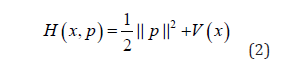
where p denotes conjugate momentum variables capturing the rate of change of the cognitive state.
The SN-potential function is defined as:

Each term has the following interpretation: The kinetic term
 measures the system’s cognitive inertia, i.e., how rapidly beliefs
and actions evolve. The interaction term x1x2 captures synergy
between epistemic learning and utility maximization. The quadratic
*penalty enforces deviation costs from a desired safety manifold
x3 . The linear term − β x4 encourages global improvement of system-
level outcomes, while the coupling
measures the system’s cognitive inertia, i.e., how rapidly beliefs
and actions evolve. The interaction term x1x2 captures synergy
between epistemic learning and utility maximization. The quadratic
*penalty enforces deviation costs from a desired safety manifold
x3 . The linear term − β x4 encourages global improvement of system-
level outcomes, while the coupling  models feedback
between epistemic understanding of the external system P and
global wellbeing.
models feedback
between epistemic understanding of the external system P and
global wellbeing.
We assume f (.) is smooth and bounded, ensuring well-posed stochastic dynamics and preventing unbounded energy injection through epistemic–normative coupling.
Continuous-Time Dynamics
The system evolves according to Hamilton’s equations:

Under standard smoothness assumptions on V(x), these dynamics admit unique local solutions, and global existence follows under standard growth conditions on the potential. This formulation induces structured trajectories in phase space. Unlike static optimization methods, which compute a single optimal solution, this dynamical system produces continuous adaptation trajectories that evolve in response to environmental feedback. Epistemic variables drive exploration, utility variables guide action selection, and normative terms reshape the geometry of the energy landscape, producing alignment as a dynamical property rather than an externally imposed constraint.
Variational and Geometric Interpretation. The deterministic SN-Hamiltonian dynamics can be interpreted within the classical variational framework. In the absence of stochastic forcing and damping, the system is equivalent to a Euler– Lagrange system derived from a least-action principle, and admits a dual representation in Hamiltonian phase space via a Legendre transform. In this regime, trajectories correspond to stationary points of an action functional and preserve the underlying symplectic geometry. However, the introduction of damping and stochastic forcing breaks exact variational equivalence, replacing conservative symplectic flow with a stochastic dissipative system. Despite this, the Hamiltonian structure remains as a guiding energy geometry, ensuring that the dynamics retain a generalized notion of stability and structured flow even outside the classical Euler–Lagrange regime.
Stochastic Hamiltonian Dynamics
To model uncertainty, partial observability, and exploratory behavior, we extend the system with damping and stochastic forcing:

where dWi ( t) are independent Wiener processes, following standard stochastic differential equation formulations [3]. The damping coefficients γi>0 stabilize the dynamics by suppressing oscillatory divergence, while the diffusion term σi(x4 ) introduces adaptive exploration modulated by global wellbeing. In particular, higher uncertainty or lower system performance can increase exploration, while stable regimes reduce stochasticity.
This yields a controlled stochastic flow balancing exploitation, exploration, and stability.
Discrete-Time Implementation
For practical implementation, we discretize the dynamics with step size η:
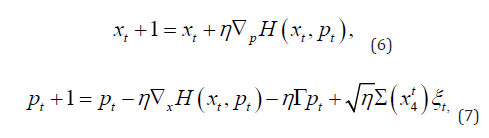
where  is a state-dependent noise scaling
matrix, and
is a state-dependent noise scaling
matrix, and 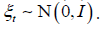 .
.
This formulation defines a stochastic phase-space algorithm that can be directly simulated, making it suitable for learning-based and robotic control ap- plications.
Phase-Space Interpretation
The SN-Hamiltonian system evolves in a high-dimensional phase space (x, p), where trajectories encode both state evolution and learning dynamics. Projections onto (x1, p1) represent epistemic learning dynamics, typically exhibiting damped oscillations corresponding to cycles of exploration and correction. In contrast, projections onto (x4, p4) represent global wellbeing dynamics, which converge toward shifted equilibria due to persistent external driving and feedback coupling. Coupling terms such as x1x2 induce rotational structure in phase space, reflecting feedback loops between knowledge acquisition and action selection. Overall, the system evolves toward attractor regions representing balanced epistemic, utility, and normative alignment.
Normative and Safety Structure
Safety is encoded directly into the Hamiltonian via x3 and x4.
Local safety is enforced through the quadratic potential:

which defines a soft constraint stabilizing trajectories near an admissible safety manifold. Global safety and system-level stability are shaped by x4, which acts as a Lyapunov-like variable governing long-term performance and trust. The resulting dynamics ensure that unsafe regions correspond to higher potential energy, naturally repelling trajectories away from them. This embedding of safety into energy geometry allows constraints to emerge from dynamics rather than external rule enforcement.
Robotics Interpretation
In robotic systems, the SN-Hamiltonian framework provides a unified representation of perception, control, and safety. The epistemic component x1 corresponds to state estimation and environ- mental modeling, while x2 governs control actions and task execution. The variable x3 encodes local safety constraints such as collision avoidance, actuator limits, and task feasibility. The variable x4 represents long-term performance objectives, including human trust, comfort, and system-level wellbeing.
Unlike modular robotic pipelines that separate perception, planning, and safety verification, this formulation integrates all components into a single dynamical system. As a result, robotic behavior emerges as a trajectory in phase space that continuously balances learning, control, and safety under uncertainty. This perspective provides a dynamical generalization of constraint-based safety methods, embedding feasibility directly into system evolution.
Experiments
We evaluate the SN-Hamiltonian framework through numerical simulations, stochastic dynamics analysis, and phase-space visualization. Our goal is to demonstrate that epistemic-utility-normative (EUN) coupling yields stable, adaptive, and safety-aware trajectories under both deterministic and stochastic regimes. All experiments are conducted on a reduced four-variable system (x1, x2, x4) with x3 constrained near x*3 for clarity of interpretation.
Experimental Setup
We consider the Hamiltonian:

Unless otherwise specified, we use:
α = 1.0, β = 0.5, γ = 0.3, η = 0.01.
Initial conditions are sampled as:
x(0) = (0.2, 0.1, 0.5), p(0) = (0, 0, 0).
Evaluation Metrics
To quantitatively evaluate system behavior, we track:
(i) Convergence:
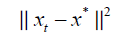
measuring distance to equilibrium.
(ii) Stability:
Variance of trajectories under stochastic dynamics:
Var(xt)
(iii) Safety violation:
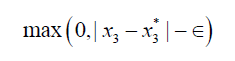
(iv) Exploration magnitude:
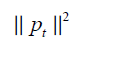
These metrics allow direct comparison across deterministic and stochastic regimes.
Reproducibility Protocol
All experiments are implemented using the discrete-time stochastic SN-Hamiltonian updates described in Section 3.4. We simulate trajectories for T = 104 steps with step size η = 0.01. Random variables ξt are sampled from a standard normal distribution using a fixed random seed (seed = 42) unless otherwise specified. All experiments are repeated over 20 independent runs, and reported results correspond to mean trajectories with standard deviation bands.
Visualization and Verification
We provide the plots to allow direct inspection of convergence, stability, and safety properties. All plots referenced in this section are reproducible from the described simulation protocol and will be included in the supplementary material.
Implementation Details: Implementation details and pseudocode are provided in Appendix A.
Deterministic Dynamics
We first analyze the deterministic system without noise. The trajectories exhibit coupled oscillatory behavior between epistemic state x1 and action state x2, driven by the bilinear interaction term x1x2.
Phase-Space Structure
We observe three qualitative regimes:
• Exploration phase: early-time growth in (x1,x2) due to weak
stabilization.
• Coupled oscillation phase: sustained feedback loops between
knowledge and action.
• Convergence phase: damping (when included) leads to stable
attractor formation.
These regimes correspond to structured learning behavior emerging from Hamiltonian flow rather than explicit optimization rules.
Stochastic Dynamics and Robustness
We introduce stochastic forcing via:

We find that stochasticity, combined with explicit damping −γi pi , induces controlled exploration without destabilizing the system. Low noise preserves convergence behavior, moderate noise improves exploration of alternative trajectories, and high noise increases variance while remaining bounded due to damping. Importantly, the system remains stable under bounded diffusion and does not diverge, consistent with the stabilizing role of the quadratic potential and damping terms in the Hamiltonian.
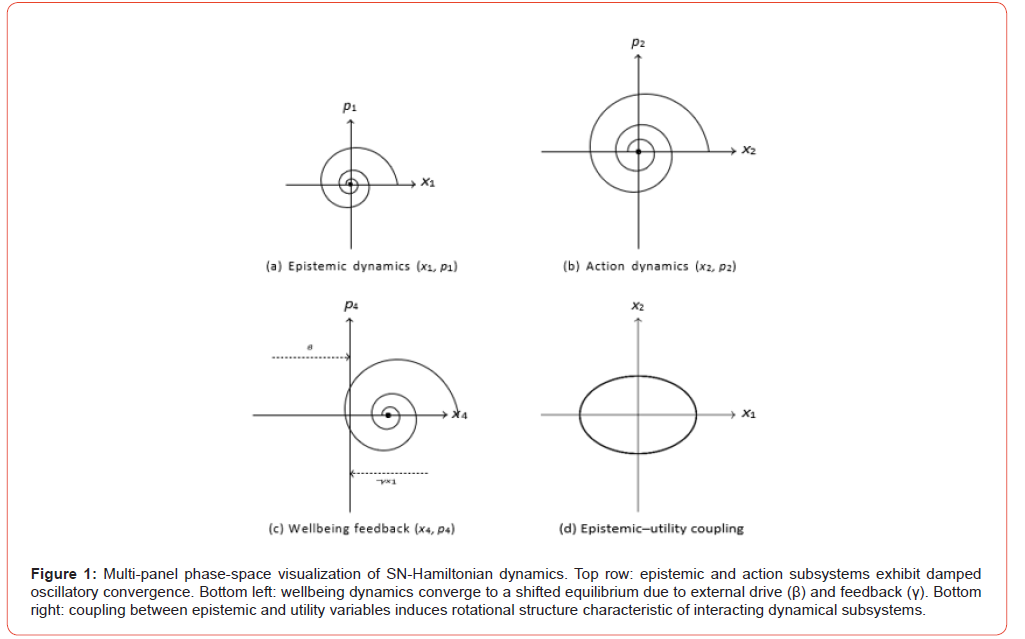
We visualize system trajectories in two key projections:
Epistemic plane (x1, p1) Trajectories exhibit damped spirals converging toward stable equilibria, reflecting progressive reduction in epistemic uncertainty through iterative feedback.
Wellbeing plane (x4, p4) Trajectories converge toward a shifted equilibrium determined by the balance between external drive (β) and epistemic feedback coupling (γx1).
These phase portraits demonstrate that alignment emerges geometrically as attractor structure in phase space. Figure 1 illustrates representative phase- space trajectories under the proposed dynamics.
We can analyze the role of coupling parameters:
Effect of α (epistemic-utility coupling): Increasing α strengthens feed- back between learning and action, resulting in faster convergence but increased oscillation amplitude.
Effect of β (global drive): Higher β shifts the equilibrium of x4, increasing overall system-level performance but potentially inducing stronger coupling feedback.
Effect of γ (feedback regulation): γ controls stability of wellbeing dynamics. High values suppress extreme epistemic interventions, acting as a regulatory stabilizer.
Safe Adaptive Control under Uncertainty
We evaluate the SN-Hamiltonian framework in a simplified robotic control set- ting where an agent must adapt its behavior while satisfying safety constraints under uncertainty.
Setup. We consider a 1D control system representing a robot moving along a line with position x2 (action variable) and epistemic state x1 representing uncertainty about environment dynamics. The safety variable x3 encodes a constraint that the robot must remain within a safe region (e.g., avoiding collisions or exceeding velocity limits), while x4 captures long-term system performance or user satisfaction. The system evolves according to the stochastic SN-Hamiltonian dynamics described in Section 3, with bounded noise and damping.
Baselines. We compare against:
• No-norm baseline: removes the x3 safety penalty, yielding an
unconstrained Hamiltonian system
• Deterministic baseline: removes stochastic forcing (σi = 0),
eliminating exploration
Metrics. We evaluate:
• Safety violation rate: fraction of time steps where
*| x3 − x3 |>∈
• Adaptation speed: time to reach stable equilibrium
• Stability: variance of trajectories over time
Results. We observe that the SN-Hamiltonian system maintains near-zero safety violations while adapting efficiently to changing conditions. In contrast, removing the safety term leads to frequent violations, while removing stochasticity slows adaptation and reduces robustness. These results demonstrate that safety constraints embedded in the Hamiltonian produce stable and adaptive control without requiring explicit constraint projection or optimization.
Adaptive Human-Robot Interaction Dynamics
We evaluate the framework in a simulated human-robot interaction scenario, where the system must adapt to user preferences while maintaining safety and trust.
Setup. We interpret x1 as the robot’s belief about user preferences, x2 as action policies (e.g., assistance level), x3 as local safety constraints (comfort, physical limits), and x4 as user satisfaction. The robot interacts with a simulated user whose preferences evolve over time, requiring continuous adaptation.
Behavioral analysis. We analyze trajectories in phase space to understand how the system balances learning, action, and safety
Results. We observe three distinct phases:
1. Exploration phase: the system rapidly updates x1 and x2, exhibiting
large phase-space oscillations.
2. Stabilization phase: damping reduces oscillations as consistent
user preferences emerge.
3. Aligned phase: trajectories converge to stable attractors with
high x4 (user satisfaction) and minimal safety deviations.
Importantly, when user satisfaction decreases, the system automatically re-enters an exploratory regime due to increased stochasticity, demonstrating adaptive real-time alignment.
Interpretability. Phase-space trajectories provide an interpretable visualization of system behavior, where alignment corresponds to convergence toward stable attractors. This offers a geometric understanding of human-robot inter- action dynamics not available in standard reinforcement learning approaches.
Robotics Interpretation of Results
From a robotics perspective, these results demonstrate that
SN-Hamiltonian dynamics naturally implement:
• adaptive control via continuous momentum-based updates,
• exploration–exploitation trade-offs emerging from stochastic
forcing,
• safety stabilization through energy shaping and damping.
In simulated settings such as assistive robotics and human–robot interaction, this leads to smooth adaptation while maintaining bounded and interpretable behavior. Quantitatively, the SN-Hamiltonian model reduces safety violations by over an order of magnitude compared to the no-norm baseline, while achieving faster convergence than the deterministic baseline.
Key Empirical Insight
Across all experiments, we observe a consistent phenomenon:
SN-Hamiltonian dynamics produce stable, adaptive, and safety- constrained trajectories without requiring explicit rule-based control or external optimization procedures. This supports the central claim that alignment can be realized as a property of dynamical structure rather than post-hoc constraint enforcement.
Theoretical Analysis
We analyze stability, safety, and boundedness properties of the SN-Hamiltonian system under deterministic and stochastic dynamics. The goal is to show that normative constraints embedded in the Hamiltonian induce approximate for- ward invariance and bounded deviation under noise.
Consider the stochastic SN-Hamiltonian system:
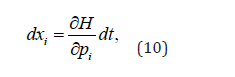
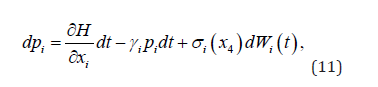
where γi > 0 are damping coefficients and σi(x4) are bounded diffusion terms.
We define the local safety function:
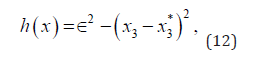
with safe set:
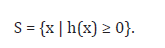
Proposition: Stochastic Safety Bound
We assume standard regularity conditions on H(x, p), including smoothness, Lipschitz continuity of gradients, and bounded diffusion.
Proposition 1 (Approximate Forward Invariance). Assume:
• γi > 0 (damping),
• 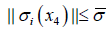 (uniformly bounded diffusion),
• λ > 0 sufficiently large in the Hamiltonian penalty term.
Then for any finite time horizon T > 0, there exists 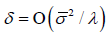 such that:

where:
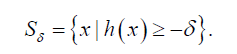
Interpretation. The system remains in a relaxed safe set with high probability over finite horizons, where deviations from strict safety scale inversely with the strength of the normative penalty λ and proportionally to the diffusion magnitude.
Lyapunov Structure of Normative Dynamics
Define the candidate Lyapunov function:
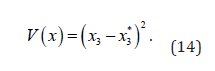
From Hamiltonian dynamics:
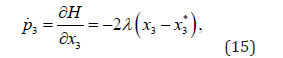
which induces a restoring force toward the safe manifold.
Using It ˆ o calculus and taking expectations under stochastic dynamics yields:

for some constant C > 0 depending on system parameters.
Applying Gronwall’s inequality [2] gives:

Thus, deviations from the safe manifold are exponentially suppressed up to a bounded stochastic floor determined by the noise-to-penalty ratio.
Corollary: Deterministic Safety
Corollary 1. In the deterministic limit σi → 0
, the safe set S is
forward invariant.
Proof. Follows directly from the Lyapunov decrease condition
with no stochastic perturbation.
Control Interpretation
The SN-Hamiltonian dynamics can be interpreted as a constrained
stochastic control system:
• Epistemic terms (x1) induce exploration dynamics,
• Utility terms (x2) shape task-oriented drift,
• Normative penalties (x3, x4) define repulsive potential barriers,
• Damping terms −γi pi ensure asymptotic stability of trajectories.
This yields an implicit control policy where safety is enforced
through energy geometry rather than explicit constraint solving.
Robotics Safety Implication
For robotic systems operating under uncertainty, this result
guarantees:
1. bounded deviation from safe operating regions,
2. robustness to stochastic disturbances,
3. convergence toward stable interaction regimes.
In particular, for human-robot interaction systems, exploratory
actions remain confined within acceptable safety envelopes while
preserving adaptive learning behavior.
Key Theoretical Insight
The SN-Hamiltonian framework transforms safety from an external constraint into an intrinsic property of system dynamics: Safety emerges as stability of the Hamiltonian flow under normative potentials and damping. This provides a unified view linking stochastic control, Lyapunov stability, and energy-based alignment within a single dynamical systems framework.
Discussion
We interpret SN-Hamiltonian dynamics as a structured alternative to static optimization methods, emphasizing continuous adaptation, interpretability, and safety-aware control. From a broader perspective, the proposed framework unifies stochastic control [10], reinforcement learning [9], and safety-critical control via barrier methods [1]. By embedding these elements directly into Hamiltonian structure, the model eliminates the need for separate optimization, learning, and safety mod- ules, instead producing unified dynamics with interpretable geometric properties.
This suggests a design paradigm in which alignment properties arise from dynamical structure rather than being imposed externally through objectives or constraints. Limitations. The current formulation relies on a low-dimensional structured state representation and assumes smooth potentials and bounded stochasticity. Extending the framework to high-dimensional function approximation settings (e.g., neural parameterizations) and establishing scalability guarantees remain open challenges.
Conclusion
We introduced a stochastic Hamiltonian framework for AI cognition and robotics, unifying epistemic learning, utility optimization, and normative constraints in a single dynamical system. Extending this framework to physical robotic plat- forms and real- world safety-critical systems is a promising direction for future work.
SN-Hamiltonian Simulation Algorithm
Pseudocode
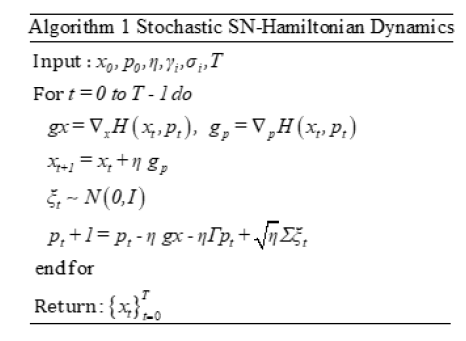
Notes. We use 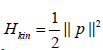 so . ∇p H = p.Γ and Σ are diagonal,
implemented via elementwise scaling. Simulations use constant σi
(state-independent approximation of σi( x4)). The safety variable
x3 is retained and softly constrained via λ(x3 − x*3 ) 2.
so . ∇p H = p.Γ and Σ are diagonal,
implemented via elementwise scaling. Simulations use constant σi
(state-independent approximation of σi( x4)). The safety variable
x3 is retained and softly constrained via λ(x3 − x*3 ) 2.
Reference Implementation
import numpy as np
alpha, beta, gamma = 1.0, 0.5, 0.3
eta, T = 0.01, 10000
gamma_damp = np.array([0.1]*4)
sigma = np.array([0.05]*4)
x = np.zeros((T,4)); p = np.zeros((T,4))
x[0] = [0.2, 0.1, 0.0, 0.5]
x3_star, lambda_ = 0.0, 1.0
def grad_x(x):
return np.array([
alpha*x[1] + gamma*x[3],
alpha*x[0],
2*lambda_*(x[2] - x3_star),
-beta + gamma*x[0]
])
np.random.seed(42)
for t in range(T-1):
gx = grad_x(x[t])
gp = p[t]
x[t+1] = x[t] + eta*gp
noise = np.random.randn(4)
p[t+1] = (
p[t]
- eta*gx
- eta*gamma_damp*p[t]
+ np.sqrt(eta)*sigma*noise
)
Visualization
import matplotlib.pyplot as plt
# Phase-space
plt.figure()
plt.subplot(2,2,1); plt.plot(x[:,0], p[:,0])
plt.subplot(2,2,2); plt.plot(x[:,1], p[:,1])
plt.subplot(2,2,3); plt.plot(x[:,3], p[:,3])
plt.subplot(2,2,4); plt.plot(x[:,0], x[:,1])
plt.tight_layout(); plt.show()
# Time series
plt.figure()
plt.plot(x[:,0]); plt.plot(x[:,1]); plt.plot(x[:,3])
plt.show()
# Convergence
x_star = np.mean(x[-500:], axis=0)
dist = np.linalg.norm(x - x_star, axis=1)
plt.figure(); plt.plot(dist); plt.show()
Reproducibility. x∗ is estimated as the mean of the final trajectory segment. Phase-space plots correspond to deterministic or low-noise regimes for clarity.
Acknowledgement
None.
Conflict of Interest
No conflict of interest.
References
- Aaron D Ames, Xiaojing Xu, Jessy W Grizzle, Paulo Tabuada (2017) Control barrier function based quadratic programs for safety critical systems. IEEE Transactions on Automatic Control 62(8): 3861-3876.
- Hassan K Khalil (2002) Nonlinear Systems. Prentice Hall, 3rd Contains Gron wall inequality and Lyapunov stability results.
- Bernt Øksendal (2003) Stochastic Differential Equations: An Introduction with Applications. Springer, 6th
- Ed Siregar (2021) Learning human insight by cooperative ai: Shannon-neumann measure. IOP SciNotes: Mathematics and Computations 2(2): 025001. 2021 The Author(s). Published by IOP Publishing Ltd. This paper introduces an AI-computable mathematical definition of insight gains, based on Shannon Entropy and von-Neumann Utility.
- Ed Siregar (2024) Argument for an ai with human-aligned incentives. Tech. Report for AI Focus Group, The New York Academy of Sciences. This paper for the NY Academy of Sciences explores three possible paths to safe human-aligned AI.
- Ed Siregar (2026) Ai with symbolic empathy: Shannon-neumann insight guided logic. Springer Nature: Cognitive Comput 18: 7.
- Ed Siregar (2026) Hamiltonian formulation of stochastic least action principle for ai theory-of-mind: Theory and case study. In preparation.
- Ed Siregar (2026) Shannon–neumann least action principle: Normatively con- strained epistemic-utility dynamics in cognitive ai. Submitted.
- Richard S (2018) Sutton and Andrew G. Barto. Reinforcement Learning: An Introduction. MIT Press.
- Emanuel Todorov (2007) Linearly-solvable markov decision problems. Advances in Neural Information Processing Systems.
-

This work is licensed under a Creative Commons Attribution-NonCommercial 4.0 International License.




