



 Research Article
AI-Powered Humanoid Robot for Upper Body Movements Mimicry
Received Date: January 15, 2025; Published Date: February 19, 2025
Abstract
Exercising in gyms is very important; however, if performed alone, individuals may feel lonely and discontinue their activities. Therefore, the AIPowered Humanoid Robot system introduces a game-changing approach for analysing physical upper body movements and benefiting the physicaltherapy industry. Existing solutions in this domain are often characterized by high costs and difficulty of implementation, making them inaccessible to many establishments. To address this, the system is designed to be a low-cost, compact, and user-friendly humanoid robot. Utilizing an affordable camera and Artificial Intelligence (AI), the system captures human posture, processes the data in real-time, and enables the robot to accurately mimic these movements. This capability not only visualizes human motions and postures but also detects incorrect movements or postures. The system has significant potential for applications in various fields, such as physical therapy, where it can identify improper postures and assist in rehabilitation and posture analysis, and gym training, where it can detect incorrect exercises while mimicking the user’s training. Visualization and AI play key roles in helping users recognize faulty movements by allowing them to see what is wrong with their movement or posture. The system has been tested for approximately three hours by several users, achieving a very good accuracy and a fast response time.
Keywords:AI-Powered; Humanoid; Accuracy; Posture; Movements; Training; Physical-therapy
Introduction
Detecting a patient’s posture is a major goal for a Physical Therapist to be able to detect any abnormality. The Physical Therapist performs postural analysis or postural assessment to determine proper anatomical alignment or posture to identify any abnormalities. A proper posture ensures an even balance of the body and prevents a specific set of core muscle from getting overworked [1]. The concept of leveraging innovative technologies to detect false pos ture or movements in the gym is not novel. Numerous studies have explored novel approaches to detect false gym movements and bad postures. For instance, in 2024, Pawar et al. proposed a machine learning approach to accurate gym exercise form using Media Pipe [2]. In addition, in 2023, Kotte et al. introduced a real-time posture correction in gym exercises using computer vision for performance analysis, error classification and feedback [3]. Furthermore, in 2020, Erickson et al. proposed Assistive Gym, an open- source physics simulation framework modelling multiple daily living tasks for assistive robots, enhancing research through reinforcement learning and improved human-robot assistance [4].
In addition, in 2022, Miller et al. developed an automated system for robotic rehabilitation gyms that dynamically assigns patients to different robots, enhancing multi-patient supervision and optimizing rehabilitation outcomes [5]. Finally, in 2020, Lucchi et al. proposed robo-gym, an open-source toolkit that unifies simulation and real-world environments for deep reinforcement learning in robotics, enabling seamless transfer and distributed training [6]. To sum up, each of these endeavours has contributed valuable insights into the integration of technology within the gym and physical- therapy industry. Therefore, drawing inspiration from those previous works and leveraging advancements in robotics and artificial intelligence, the proposed system aims to offer a comprehensive solution that enhances visualization and movement detection while delivering a user friendly and visual experience.
In response, the AI-Powered Humanoid Robot seeks to address these challenges by introducing a revolutionary system that streamlines the movement and posture detection process and enhances the overall person experience. The visualization of movements and posture, while being processed by artificial intelligence, is a significant approach to help the user know and see what is incorrect with his movements or posture. At its core, the proposed system aims to develop a stationary humanoid robot equipped with servo motors, a processing unit, and a laptop. Patients or trainers interact with the system just by starting the laptop’s webcam and powering up the robot, enabling seamless use of the system. By automating the process, the system aims to minimize the user’s effort to start it up, ensuring accuracy in movements and optimizing power consumption.
In pursuit of cost-effectiveness and performance, the proposed system explores various design considerations, including material selection and construction techniques. While stainless steel was initially considered for its durability, the system ultimately opted for plastic 3D printed parts to balance performance requirements with cost considerations. Additionally, plastic 3D printed parts are much lighter than stainless steel parts, so the choice of actuators will also play a crucial part in the cost of the system.
Moreover, the main contributions of this work can be resumed
as follows:
- Integration of AI into the humanoid robot to detect movements
and act accordingly;
- Implementation of a low-cost electrically-safe system that
can assist humans in their daily lives;
- Development of a tool that helps persons to maintain a
correct ergonomic posture and physical therapists to assist patients
while doing daily exercises.
To sum up, this paper will delve into the various aspects of the AI-Powered Humanoid Robot system, including its design, development, and implementation. Therefore, Section 2 will provide an overview of the system in addition to the block diagram, while Section 3 will detail the components used in this system, including hardware and software considerations. Section 4 will detail the general movements and the 3D model of the human body and some calculations for the angles. Final Section 5 will conclude the work and propose some future directions for enhancement.
Concept Description
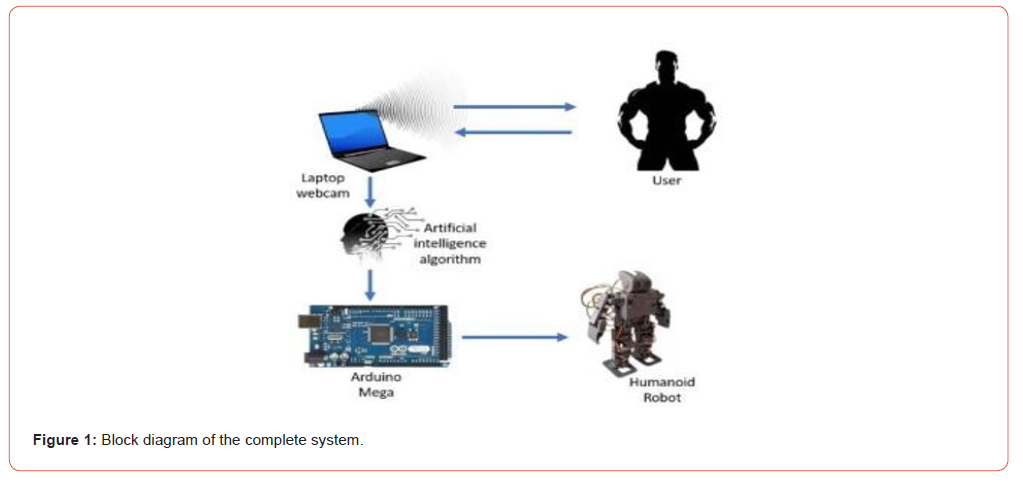
Controlling the humanoid robot based on Artificial Intelligence (AI) feedback is a cutting-edge approach that provides an accurate mimicking of the user’s movements. Therefore, this technique has been used in this project to mimic the person movement while delivering some vocal alarms and music that will change according to the speed of movement of the person performing physical activities. Moreover, this AI-powered system will monitor the posture of the user and helps the physical therapist when the patient exercises the daily activities alone, Moreover, the concept for the proposed humanoid robot system, as illustrated in Figure 1, delineates a streamlined and efficient workflow that begins with the detection of a human presence. When a person approaches the setup, the PCconnected webcam continuously monitors the environment and detects the presence of a human body using advanced image recognition techniques. Once a human is identified, the integrated AI algorithm is activated to precisely identify and track the positions of each body part, such as the head, arms, legs, and torso. This detailed skeletal mapping allows the system to understand the user’s specific movements and postures in real-time.
The AI algorithm processes the captured data and generates comprehensive feedback, which includes both positional coordinates and movement trajectories. This feedback is then transmitted to the central processing unit of the system. Subsequently, the humanoid robot receives the processed data from the AI algorithm and begins to replicate the user’s movements and postures with high accuracy. This mimicking process involves coordinated motor actions and adjustments to ensure that the robot’s movements are synchronized with those of the user. Additionally, the feedback loop is further enhanced by sending continuous updates from the AI algorithm to an embedded processing unit. This processing unit acts as the command centre, interpreting the AI-generated instructions and issuing precise commands to the robot’s actuators and motors. This ensures that the humanoid robot performs the desired movements or maintains the correct posture seamlessly and responsively.
Furthermore, the system incorporates error-checking mechanisms to monitor the accuracy of the robot’s actions, allowing for real-time adjustments and improvements. This dynamic interaction between the webcam, AI algorithm, microprocessor, and the humanoid robot ensures a cohesive and adaptive system capable of providing reliable and intuitive assistance. Overall, the proposed system not only facilitates accurate movement replication but also enhances user interaction by providing immediate and responsive feedback, thereby improving the overall effectiveness and user experience of the humanoid robot. To sum up, Figure 1 displays the block diagram of the proposed AI-Powered Humanoid Robot system.
System Components
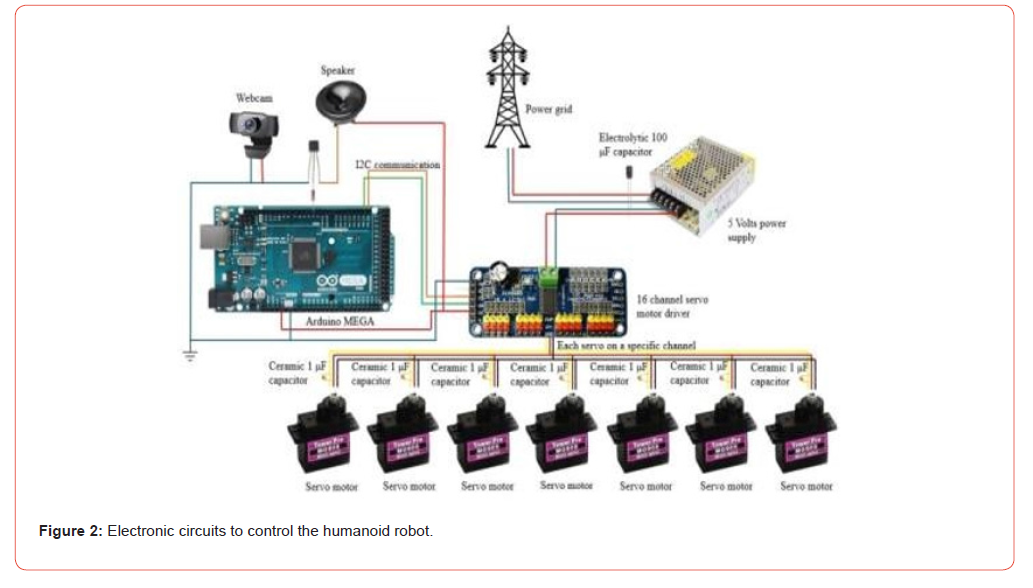
This section details the key components of the proposed humanoid robot system, specifically focusing on the processing unit, actuators, and communication system. These components were meticulously selected to ensure the system remains low-cost, reliable, and accurate, thereby enhancing overall performance and accessibility. At the core of the system lies the Arduino Mega microcontroller, chosen as the primary processing unit. The Arduino Mega offers several advantages that make it ideal for this application [7]. It utilizes the I2C communication protocol, which facilitates efficient and reliable communication between the microcontroller and other peripheral devices such as sensors and servo controllers. This protocol supports multiple devices on the same bus, simplifying the wiring and allowing for scalable system expansion. Additionally, the Arduino Mega is equipped with numerous Pulse Width Modulation (PWM) ports that are essential for controlling servo motors with precise analog signals.
PWM enables smooth and accurate adjustments of motor positions, contributing to the robot’s fluid and coordinated movements. The availability of predefined libraries further accelerates development by providing ready- to-use functions for various tasks, including motor control, sensor integration, and communication protocols. This ease of implementation reduces the complexity of programming and troubleshooting, making the system more accessible to developers. The choice of the Arduino Mega was also influenced by the platform’s simplicity, the ample number of usable General-Purpose Input/Output (GPIO) pins, and its cost-effectiveness, ensuring that the overall system remains affordable without compromising functionality [8].
For the precise movement of the robot’s joints, seven MG90S servo motors have been selected due to their robustness and ability to withstand substantial loads [9]. These servo motors are particularly well-suited for this application as they can handle the weight of the various parts that need to be moved, ensuring reliable performance over extended periods. The MG90S servos are known for their durability and high torque, which are critical for maintaining smooth and accurate joint movements. To manage these servos efficiently, a 16-channel PCA9685 PWM/servo controller has been integrated into the system [10]. This controller communicates with the Arduino Mega using the I2C protocol, allowing for synchronized and coordinated control of all seven servo motors. The PCA9685 offloads the PWM signal generation from the Arduino, ensuring stable and consistent motor control even when multiple servos are operating simultaneously. This setup not only enhances the precision of the robot’s movements but also simplifies the overall system architecture by reducing the processing burden on the microcontroller.
The physical structure of the humanoid robot is based on the Mini Plan v5.0 design, which has been extracted and 3D printed. This design choice offers several significant advantages over other models, such as the Poppy Humanoid [11]. Unlike the Poppy Humanoid, which stands at 83 centimetres tall and utilizes specialized MX-28AT servo motors that are both expensive and bulky, the MiniPlan v5.0 provides a more compact and cost-effective alternative. The smaller size of the MiniPlan v5.0 makes the robot suitable for a variety of environments, including small clinics and home settings, where space may be limited. Additionally, the use of 3D printing for the robot’s components allows for easy customization and modifications, enabling tailored adaptations to meet specific user needs or application requirements. This flexibility supports iterative design improvements and scalability, making the system adaptable to future advancements and diverse use cases.
A reliable and robust power supply is essential for the consistent operation of the humanoid robot. The system utilizes a S-40-5 5 Volts power supply, which accepts a 220 Volts AC input and delivers a stable 5 Volts output with a current capacity of up to 8 Amperes. This power supply was selected to handle the high current demands of the servo motors, ensuring that they operate smoothly and without interruptions. The industrial-grade robustness of the S-40-5 ensures durability and longevity, reducing the risk of powerrelated failures and enhancing the overall reliability of the system. Additionally, the power supply includes built-in protections against overcurrent and short circuits, providing an extra layer of safety for both the robot and the user. This robust power solution is crucial for maintaining precise motor control and preventing performance issues during intensive tasks, thereby ensuring the robot’s dependable operation.
To facilitate effective user interaction and feedback, the system incorporates both visual and auditory elements. Display messages are presented on the laptop screen, providing users with real-time information about the robot’s operations, status updates, and any detected issues. This visual feedback aids users in understanding the robot’s actions and progress, enhancing their ability to interact with the system intuitively. In addition to visual cues, text-tospeech algorithms are employed to deliver audible feedback to the user. This auditory feedback ensures that users receive timely and clear instructions or notifications, which is particularly beneficial for individuals who may rely more on auditory cues. The combination of visual and auditory feedback mechanisms enhances the overall user experience, making the system more accessible and user-friendly.
The AI component of the system leverages a pretrained model designed to detect and analyze human movements and postures. This AI model processes data captured by the webcam to accurately identify specific movements and postures, enabling the robot to mimic these actions with high precision. The ability to analyze and replicate human movements is essential for applications in physical- therapy and gym training, where accurate movement replication is necessary for effective assistance and training. The AI algorithm operates in real-time, ensuring that the robot’s responses are immediate and synchronized with the user’s actions. This real-time processing capability enhances the system’s responsiveness and effectiveness, providing users with timely and accurate assistance. Furthermore, while the current implementation utilizes a pretrained model, there is potential for future development to incorporate machine learning techniques that allow the AI to adapt to individual user preferences and improve its performance over time based on feedback and usage patterns.
Ensuring the safety of users is paramount in the system’s design. Several safety mechanisms have been implemented to provide immediate intervention in emergency scenarios. An emergency stop button is prominently placed, allowing users or supervisors to instantly halt all robot operations if unexpected behaviour or hazards are detected. This quick intervention capability is essential for preventing accidents and ensuring user safety. Additionally, a fuse is installed at the exit of the DC power supply to protect the system from electrical overloads and short circuits. In the event of an electrical fault, the fuse will disconnect the power, preventing damage to the components and reducing the risk of fire or injury. The system also incorporates continuous monitoring and error-checking protocols to detect and address any anomalies in real-time. These mechanisms ensure that the robot operates within specified parameters and can autonomously correct or shut down if necessary. Moreover, the robot’s design includes mechanical limits and barriers to prevent excessive movement ranges that could cause injury or damage. These safeguards work in conjunction with the electronic safety features to provide comprehensive protection, ensuring that the system operates safely and reliably under specified conditions.
Arm Motion Mapping
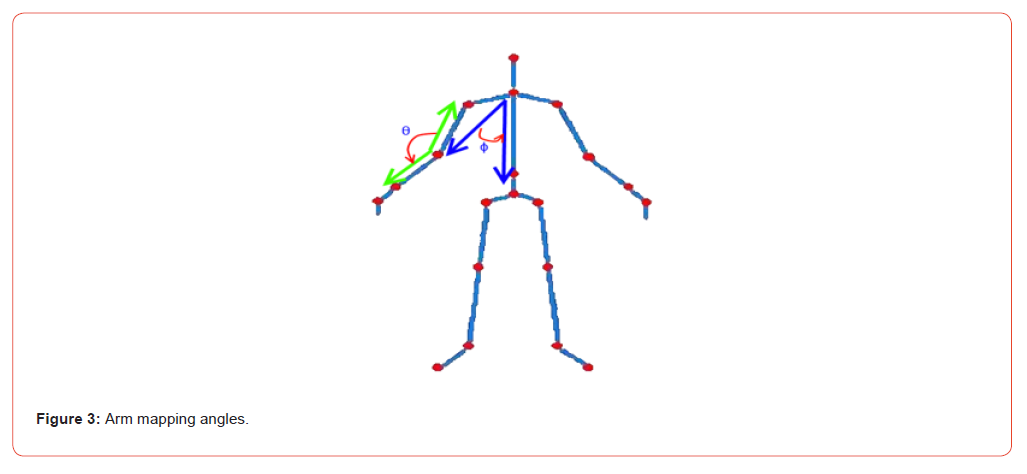
To accurately map the arm motions of a human to the humanoid robot, the system constructs upper body link vectors using the skeleton points identified in the human skeleton model, as illustrated in Figure 3. In this context, a link is defined as a rigid connection between two skeleton points, such as the shoulder to the elbow or the elbow to the wrist. By establishing these links, the human upper body can be effectively simplified into a geometrical structure composed of these interconnected vectors. This simplification allows for a more manageable representation of complex human movements by breaking them down into fundamental geometric components.
Human motions are thus represented by the dynamic movements of this geometrical structure, where each movement corresponds to changes in the lengths and angles of the link vectors. Specifically, a joint angle is extracted by calculating the angle between two adjacent vectors, such as the angle formed at the elbow between the upper arm and the forearm. These joint angles are critical as they define the precise orientation and position of each limb segment, enabling the system to replicate human movements accurately. For effective mapping, it is essential that the joint angles derived from the human model align with the joint structure of the robot. This means that the angles must be calculated in a manner that corresponds directly to the robot’s own joints, ensuring that each human movement is mirrored accurately by the robot’s actuators. To achieve this, the system considers the specific mechanical and anatomical configurations of the robot’s joints, as referenced in [12]. This alignment ensures that the robot can perform movements that are both natural and biomechanically feasible, closely mimicking the human counterpart.
Furthermore, the mapping process involves scaling and adjusting the joint angles to accommodate any differences in limb lengths and joint ranges between the human and the robot. This step is crucial for maintaining the fidelity of the motion replication, as it ensures that the robot’s movements are proportionate and smooth. Advanced algorithms may also be employed to interpolate and smooth the joint angles, reducing any potential discrepancies caused by sensor noise or tracking inaccuracies in the human skeleton model. In addition to arm motions, this mapping technique can be extended to other parts of the upper body, such as the torso and neck, allowing for comprehensive motion replication. By leveraging this geometrical approach, the system can create a robust framework for translating complex human movements into precise robotic actions, enhancing the robot’s ability to assist in tasks that require coordinated and natural motion patterns. Overall, this method provides a foundational mechanism for achieving seamless human-robot interaction, facilitating applications in areas such as physical-therapy, rehabilitation, and interactive training environments.
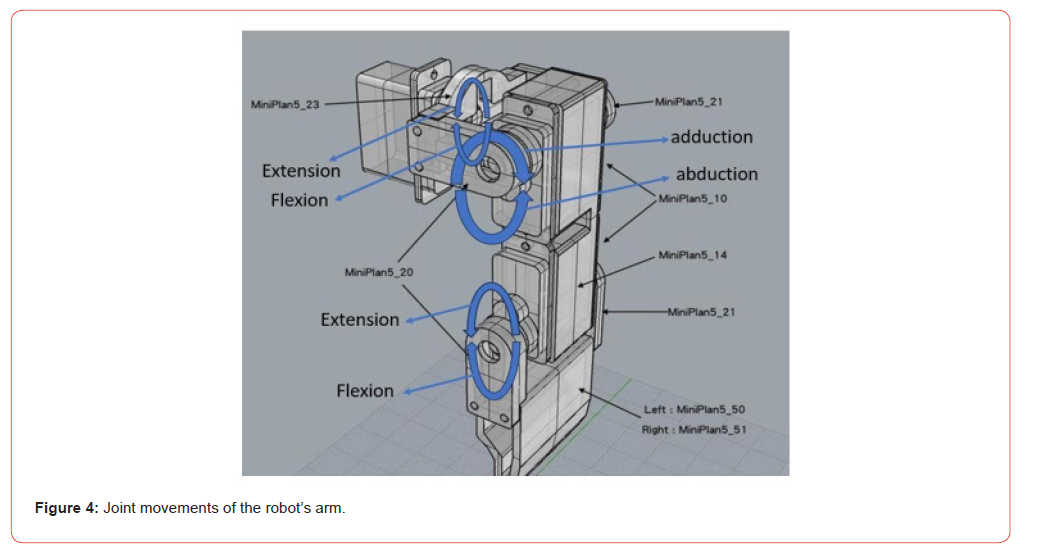
The robotic arm of the humanoid system is designed with two primary joints: the shoulder joint and the elbow joint. The shoulder joint is equipped with two Degrees of Freedom (DoF), while the elbow joint possesses one degree of freedom. This configuration ensures that the number of degrees of freedom corresponds directly to the number of servo motors utilized, facilitating precise and coordinated movements. As depicted in Figure 4, the robot’s arm is illustrated with clear indicators of each degree of freedom. The shoulder joint’s two degrees of freedom enable it to perform a range of complex motions essential for mimicking human arm movements. The first degree of freedom at the shoulder allows for Flexion and Extension, which involve moving the shoulder forward and backward through a rotational motion. This movement is analogous to raising and lowering the arm in activities such as lifting objects or reaching overhead. The second degree of freedom enables Abduction and Adduction, which involve moving the shoulder away from or toward the body’s midline. Abduction moves the arm laterally away from the torso, similar to performing a lateral arm raise, while adduction brings the arm back toward the body, akin to lowering the arm after a lateral raise.
The elbow joint, with its single degree of freedom, is responsible solely for Flexion and Extension. This movement allows the forearm to bend and straighten, replicating the natural motion of the human elbow during activities such as lifting, pushing, or pulling. The limited degree of freedom at the elbow simplifies the control mechanism while still providing the necessary range of motion for functional tasks. The integration of these degrees of freedom with the corresponding servo motors ensures that each joint operates smoothly and accurately. The two servo motors at the shoulder joint manage the Flexion/Extension and Abduction/Adduction movements, respectively, while the single servo motor at the elbow joint controls the Flexion/Extension motion. This setup not only mirrors the anatomical structure of a human arm but also allows for versatile and adaptive movements required in various applications, such as physical-therapy assistance and interactive training.
Furthermore, the precise control of these joints is crucial for the robot to replicate human arm movements accurately. By coordinating the servo motors to manage each degree of freedom, the system can perform intricate tasks with high fidelity. For instance, during a physical-therapy session, the robot can assist a patient by guiding their arm through prescribed movements, ensuring both safety and effectiveness. In a gym training scenario, the robot can monitor and correct the user’s form by comparing the user’s movements with the programmed motions, providing real- time feedback to enhance exercise performance. Overall, the thoughtful design of the arm’s joint structure, with its carefully allocated degrees of freedom and corresponding servo motors, plays a pivotal role in the humanoid robot’s ability to perform a wide array of motions. This design not only enhances the robot’s functionality but also ensures that it can seamlessly integrate into various environments, providing reliable and precise assistance to users.
System Methodology
In this section, two algorithms will be presented: the code of the Arduino Mega using Arduino IDE and the one of the camera processing using Visual Studio Code IDE. The primary objective of the Arduino Mega is to manage the inputs received from the camera’s processing unit and translate these inputs into outputs that control the servo motors, thereby enabling the robot to replicate precise human movements. Serving as the central processing hub, the Arduino Mega orchestrates the coordination between various hardware components to achieve smooth and accurate motion replication.
Communication between the Arduino Mega and the servo controller is established through the I2C (Inter- Integrated Circuit) protocol. I2C is selected for its efficiency and simplicity in facilitating communication between multiple devices using just two wires: SDA (Serial Data Line) and SCL (Serial Clock Line). This protocol allows the Arduino Mega to send precise PWM (Pulse Width Modulation) signals to the servo motors, controlling their angles and movements with high accuracy. Additionally, communication between the Arduino Mega and the laptop’s webcam is handled via Serial communication with a baud rate of 9600. This baud rate ensures reliable data transmission with minimal latency, which is crucial for real-time movement replication.
Upon initialization, the microcontroller first sets up the I2C communication to ensure a legitimate and stable connection capable of transmitting data properly. This involves configuring the I2C settings and verifying the connection with the servo controller. Once the I2C communication is successfully established, the Arduino Mega begins processing the incoming data. The code running on the Arduino Mega is designed to interpret the positional data received from the camera’s processing unit, determining the optimal positioning and angles required for each movement. This involves calculating the necessary PWM signals that will drive the servo motors to replicate the detected human movements accurately.
The algorithm continuously monitors the incoming data stream, making real-time adjustments to the servo motors to ensure that the robot’s movements remain synchronized with those of the user. This real-time processing capability is vital for maintaining the fluidity and precision of the robot’s actions, particularly in applications such as physical-therapy and interactive training where accuracy is paramount. On the other hand, the AI algorithm responsible for camera processing is developed within the Visual Studio Code IDE and primarily built using Python. Python is chosen for its extensive support in the AI and machine learning communities, offering a plethora of open-source models and libraries that facilitate efficient development and implementation. Moreover, Python’s versatility allows for the integration of various text-to-speech libraries, which are essential for providing the user with both visual and audible feedback, thereby enhancing communication and overall user comfort..
The process begins with the detection of a human body in front of the laptop’s webcam. Utilizing advanced computer vision techniques and pretrained models, the Python code identifies and tracks the positions of each arm and other relevant body parts. Once a body is detected, the algorithm initiates the processing of positional data, analyzing the movements and postures of the user in real-time. This involves extracting key joint angles and movement vectors that represent the user’s actions. After successfully detecting and processing the body’s movements, the algorithm transmits the relevant data to the Arduino Mega via Serial communication. This data transfer is crucial as it provides the microcontroller with the necessary information to replicate the user’s movements through the servo motors. The synchronization between the camera processing and the Arduino Mega ensures that the robot responds promptly and accurately to the user’s actions.
Simultaneously, the Python algorithm monitors the user’s movements for any abnormalities or incorrect postures. Leveraging machine learning techniques, the algorithm can identify deviations from expected movement patterns, which may indicate improper form or potential errors. If an abnormality or incorrect movement is detected, the system provides immediate feedback to the user. This feedback is twofold: a visual alert is displayed on the laptop’s screen, highlighting the specific error encountered, and an audible message is generated using text-to-speech algorithms to inform the user about the nature of the mistake. This dual feedback mechanism ensures that users receive comprehensive guidance, facilitating corrective actions and enhancing the effectiveness of the training or rehabilitation session.
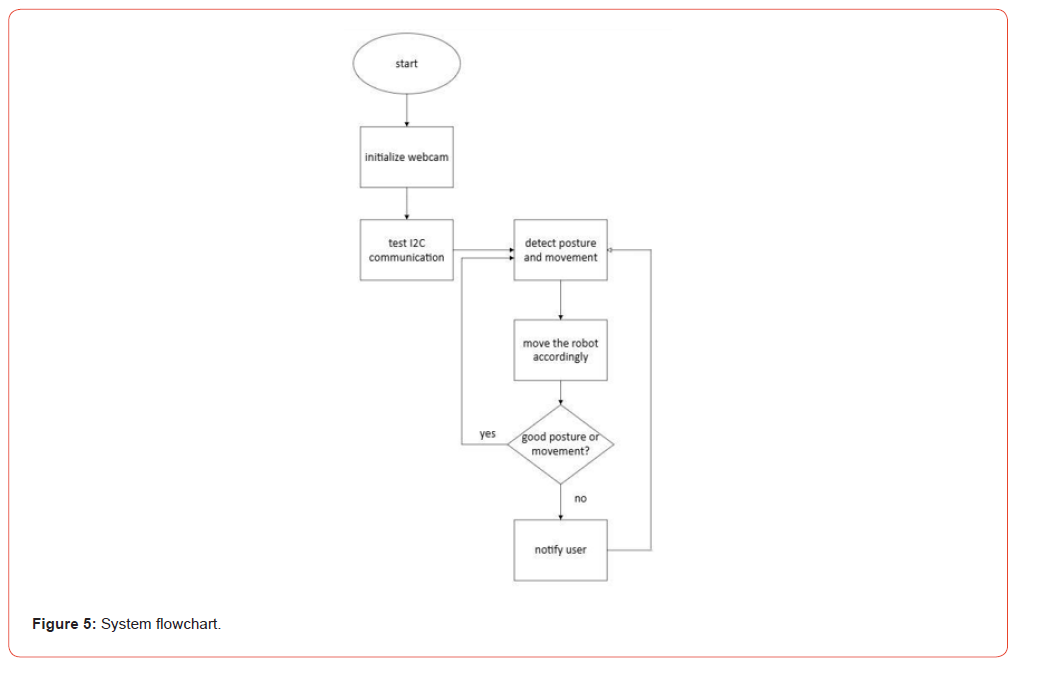
The entire workflow, encompassing detection, processing, data transmission, and feedback mechanisms, is comprehensively illustrated in Figure 5, which serves as a detailed flowchart. This figure outlines each step of the process, highlighting the interaction between the Arduino Mega and the camera processing algorithm, and showcasing how data flows seamlessly from detection to action and feedback. By integrating these two algorithms, the system achieves a high level of precision and responsiveness, making it a robust solution for applications requiring accurate human- robot interaction.
Testing and validation
In this section, the testing and validation part is critical to ensure the system performs as intended and meets the design specifications. The testing involved verifying the accuracy and responsiveness of posture detection, movement replication, and data processing. The system has been tested by several users performing different upper-body movements and very good accuracy results were encountered. As for the response time of the robot, it was below a second. The tests were designed to evaluate the system under various conditions, such as different lighting environments, diverse posture and movements, and varying distances from the webcam. User trials were also an essential part of the validation process. Feedback was collected from participants, including physical therapists and gym trainers, to ensure the usability and effectiveness of the system in practical scenarios. This iterative testing process helped refine the system, addressing any inconsistencies and optimizing its performance.
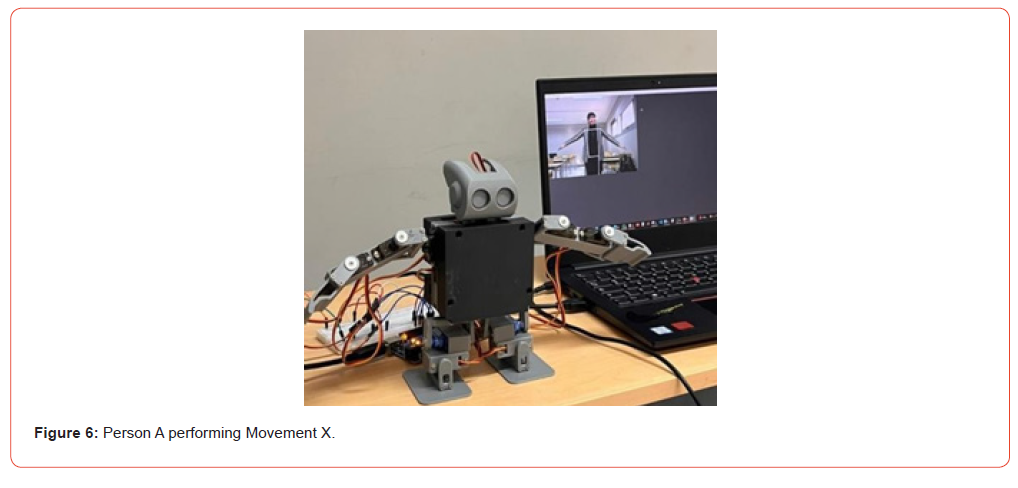
In addition, in order to validate the system and its behaviour among various users, three individuals were selected to evaluate the performance and accuracy of the system under different scenarios. Person A performs Movement X, which consisted of a gym exercise called lateral raises. This exercise targets the deltoid muscles of the shoulder and it involves lifting the arms laterally while maintaining a slight bend in the elbows. As shown in Figure 6, the system effectively detected the movements of Person A while simultaneously moving the robot accordingly.
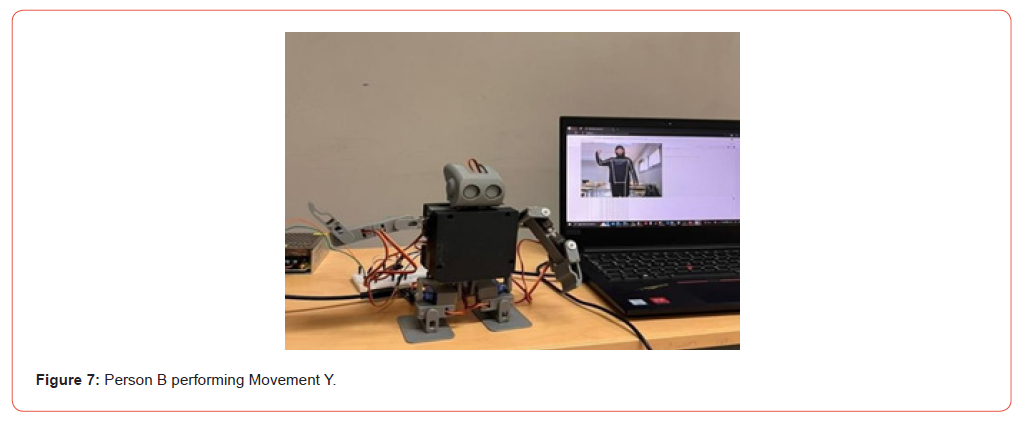
Furthermore, Person B executes Movement Y, focusing on performing a bicep curl while keeping the arm parallel to the ground. This movement consists mainly of the elbow flexion and extension to isolate the bicep muscle. The system once again demonstrated its effectiveness by accurately detecting the movement and ensuring the robot responded accordingly, showcasing its ability to adapt to different motion patterns and execute precise behaviour based on real- time input, as illustrated in Figure 7.
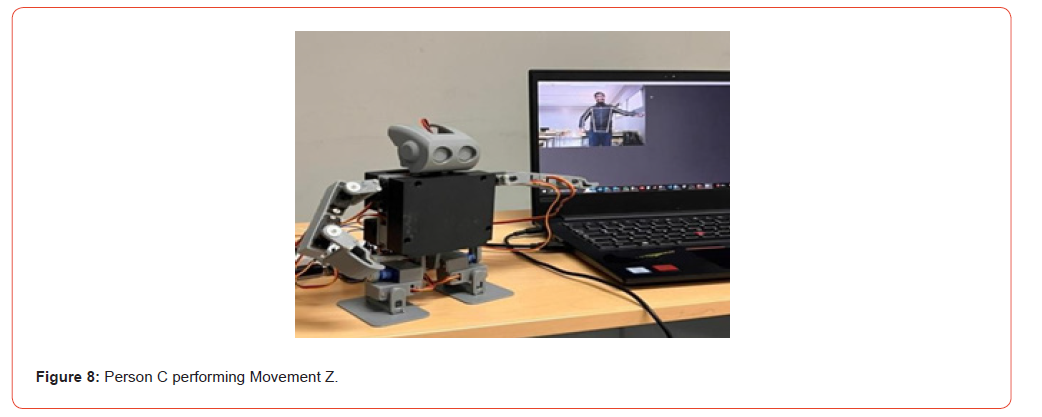
To finalize the validation, Person C engages in Movement Z, which consisted of a left arm shoulder abduction parallel to the ground, and a right arm elbow flexion while applying a small abduction of the right shoulder. As shown in Figure 8, the system successfully detected this complex movement pattern and ensured the
robot performed the corresponding actions accurately. This further validated the system’s capability to handle simultaneous multi-joint movements and respond appropriately in real time.
For the power consumption, the main power consumption of the system was from the servo motors that draw an average of 500 mA per motor under load. To calculate the total current draw at maximum load, it is defined as follows:
𝑡𝑜𝑡𝑎𝑙 𝑐𝑢𝑟𝑟𝑒𝑛𝑡 = 500 𝑚𝐴 × 7 𝑚𝑜𝑡𝑜𝑟𝑠 = 3,5 𝐴 (1)
As for the total power consumption, it is computed as follows:
𝑝𝑜𝑤𝑒𝑟 𝑐𝑜𝑛𝑠𝑢𝑚𝑝𝑡𝑖𝑜𝑛 = 5 𝑉 × 3,5 𝐴 = 17,5 𝑊 (2)
It is important to note that power consumption of the microcontroller, the webcam, the communication system, and the sensors.
To calculate the system’s efficiency, we have first to calculate the system’s energy output from the servo motors using the following formula:
𝑀𝑒𝑐ℎ𝑎𝑛𝑖𝑐𝑎𝑙 𝑝𝑜𝑤𝑒𝑟 = 𝜏 × 𝜔 0.184 × 10.9 = 2 W (3)
where 𝜏 represents the torque of the servo motor under load (expressed in Nm) and 𝜔 denotes angular velocity (expressed in rad/sec).
Note that the efficiency is not at its best, but this is because of the nature of the motors, knowing that all the electrical motors have a relatively low efficiency.
Electrical safety measures
Ensuring electrical safety is paramount when designing and implementing an AI-Powered Humanoid Robot System. Given the involvement of hardware components such as actuators, power supplies, and processing units, the system was designed to comply with established electrical safety standards to mitigate potential risks [13]. Our system prioritizes security against overvoltage and overcurrent, in addition to incorporating an emergency stop button and a fuse at the exit of the DC power supply. Moreover, all wiring connections were thoroughly insulated to prevent short circuits or accidental contact with live wires. Components were selected based on their compliance with relevant safety certifications, such as CE or UL marks, ensuring they met international safety standards.
In addition to these protective measures, the system employs continuous monitoring and diagnostic tools to detect and respond to electrical anomalies in real-time. Voltage and current sensors are strategically placed throughout the system to provide constant feedback on electrical parameters. This data is analyzed by the microcontroller, which can automatically shut down or adjust components if abnormal readings are detected, thereby preventing potential damage or hazards. Furthermore, the integration of surge protectors helps safeguard sensitive electronics from unexpected power spikes, enhancing the overall resilience of the system against electrical disturbances.
Regular maintenance and safety audits are integral to sustaining the system’s electrical integrity. Scheduled inspections ensure that all connections remain secured and that insulation remains intact, minimizing the risk of wear and tear leading to electrical failures. During these audits, components are tested for compliance with safety standards, and any signs of degradation are addressed promptly. Additionally, comprehensive documentation and user training programs are established to educate operators on proper handling and emergency procedures. This proactive approach not only extends the lifespan of the system but also reinforces a culture of safety and reliability, ensuring that the humanoid robot operates securely in various environments.
Moreover, the system incorporates redundant safety mechanisms to provide multiple layers of protection. In the event that one safety feature fails, others are in place to prevent accidents and ensure continuous safe operation. For example, alongside the emergency stop button, software- based safety protocols are implemented to monitor system performance and intervene if abnormal behaviour is detected. These redundancies are crucial for maintaining operational safety, especially in environments where the robot interacts closely with humans. By adhering to these stringent safety protocols and continuously enhancing our safety measures, the AI-Powered Humanoid Robot System not only protects users but also ensures the longevity and reliability of the robot itself. The combination of robust hardware selection, real-time monitoring, regular maintenance, and comprehensive safety training creates a secure and dependable system capable of performing complex tasks while minimizing risks. This commitment to electrical safety underscores the system’s design philosophy, prioritizing both user safety and operational excellence.
Conclusion and future works
In conclusion, this system represents a significant step in the field of movement analysis and posture monitoring, offering a seamless and efficient solution for both customers and businesses. By combining cutting-edge technology with meticulous design, we’ve created a system that not only mimics human motion, but also detects any wrong movement.
The process from conceptualization to the realization of the AI-Powered Humanoid Robot has been both challenging and rewarding. To focus on the proposed system, we not only celebrate the success of the current prototype but also recognize the potential for further enhancements and adaptations in response to evolving industry demands. This system stands as evidence of the collective innovation, resilience, and commitment to crafting solutions that redefine possibilities in movement and posture analysis for the health industry.
Future improvements for our AI-Powered Humanoid Robot lie first in the development of a whole-body motion mimicking, not only upper body. By upgrading our system into doing many more movements, we will obtain even more accurate and precise data about both posture and movements.
Future developments could integrate IoT technologies to enable remote monitoring, enhancing control and efficiency. Adopting embedded solutions such as Raspberry Pi and integrated cameras instead of laptops, along with wireless communication instead of serial connections, would improve portability and reduce complexity.
Optimizing motor control and increasing the robot’s degrees of freedom would enhance its ability to mimic human postures and movements with greater accuracy. Although adding degrees of freedom makes the system more complex, it results in more realistic and user-friendly visualizations. Expanding tests to include different types of robots could provide broader applicability and robustness. Additionally, implementing safety features in accordance with medical standards is crucial, given the system’s direct impact on human health.
Customization and personalization remain promising areas for future research. Allowing users to tailor system designs and feedback mechanisms can boost engagement and satisfaction, making the robot a versatile tool adaptable to various environments.
Acknowledgement
None.
Conflict of Interest
No conflict of interest.
References
- G Antoun, R Abi Zeid Daou, S Pelayo (2024) Preventing back pain in schools: a dual epidemiological and ergonomic approach, in European Conference on Cognitive Ergonomics, Paris, France.
- S Bagal, I Pawar, N Purnapatre (2024) A Machine Learning Approach to Accurate Gym Exercise Form Detection Using MediaPipe, Journal for Research in Applied Science and Engineering Technology 12(8): 1117-1120.
- H Kotte, M Kravcik, N Duong-Trung (2023) Real-Time Posture Correction in Gym Exercises: A Computer Vision- Based Approach for Performance Analysis, Error Classification and Feedback, pp. 64-70.
- Z Erickson, V Gangaram, A Kapusta, C Liu, C Kemp (2020) Assistive gym: A physics simulation framework for assistive robotics, in IEEE International Conference on Robotics and Automation (ICRA), Paris.
- B Miller, B Adhikari, C Jiang, V Novak (2022) Automated patient-robot assignment for a robotic rehabilitation gym: a simplified simulation model. Journal of Neuro Engineering and Rehabilitation 19(1): 126.
- M Lucchi, F Zindler, S Mühlbacher-Karrer, H Pichler (2020) Robo-gym-an open-source toolkit for distributed deep reinforcement learning on real and simulated robots, in IEEE/RSJ International Conference on Intelligent Robots and Systems (IROS), Las Vegas, Nevada.
- M Zinati, J Nohra, F Farah, R Abi Zeid Daou (2025) GreenFit: Renewable Energy and Interactive Entertainment, in International Conference on Control, Automation, and Instrumentation, Beirut.
- H Khairam, Y Choong, N Ismadi, W Othman, A Wahab, S Alhady (2021) Design and development of a low-cost pole climbing robot using Arduino Mega, Journal of Physics: Conference Series 1969(1): 012008.
- S Langde, N Gyanchandani, S Bawankar (2023) 6 Degree of Freedom Based Arm Robotic System with 3D Printing, Computer Vision and Robotics: Proceedings of CVR 2022, pp. 181-189.
- E Muntean, M Leba (2024) Advancing Humanoid Robotics: Leg Control and Locomotion, in IEEE International Conference on Automation, Quality and Testing, Robotics (AQTR), Cluj-Napoca, Romania.
- S Forestier, Y Mollard, D Caselli, P Oudeyer (2016) Autonomous exploration, active learning and human guidance with open-source Poppy humanoid robot platform and Explauto library. in the Thirtieth Annual Conference on Neural Information Processing Systems (NIPS 2016), Barcelona.
- Z Zhang, Y Niu, L Kong, S Lin, H Wang (2019) A Real- Time Upper-Body Robot Imitation System," International Journal of Robotics and Control 2(1): 49-59.
- A Hayek, S Telawi, J Klos, J Borcsok, R Abi Zeid Daou, N. Halabi (2019) Smart Wearable System for Safety-related Medical IoT Application: Case of epileptic patient working in an industry, Health and Technology (Springer Nature) 10: 363-372.
-

This work is licensed under a Creative Commons Attribution-NonCommercial 4.0 International License.




