

 Research Article
The Social Dimensions of Sneezing: from Reflex to Repercussion. Insights from an Instagram-Based Observational Study
1 National and Kapodistrian University of Athens, Medical School, Greece
2 Department of Mathematics and Applied Mathematics, University of Crete, Heraklion, Greece
3 Panteion University of Social and Political Science, International, European and Area studies, Greece
Received Date: July 31, 2025; Published Date: August 12, 2025
Abstract
Background: Sneezing, a universal physiological reflex, has historically been associated with benign or even auspicious meanings. However, its
social perception has transformed drastically, especially during infectious disease outbreaks such as the COVID-19 pandemic. This study explores
the societal perception of sneezing.
Material and Methods: To examine sneezing as a biopsychosocial phenomenon, we launched an Instagram account, entitled “sneezegr”, to raise
awareness and assess public perception of it. Participants answered four structured questions via Instagram stories, each scored on a 5-point Likert
scale. Descriptive statistics were computed.
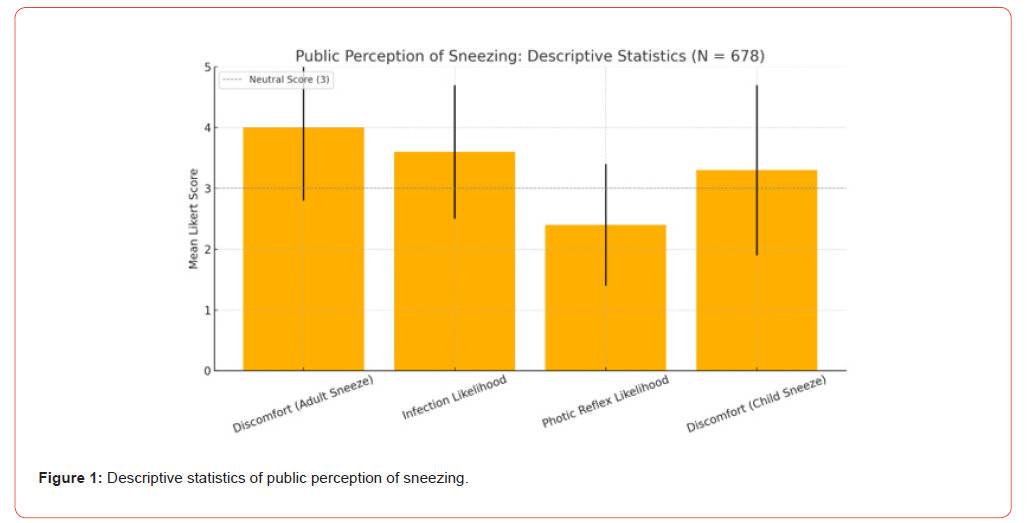
Results: Out of 1,341 followers, 678 (50.5%) completed a survey exploring public perceptions of sneezing in shared spaces. Respondents
associated adult sneezing primarily with infection (Mean = 3.6) and expressed notable discomfort (Mean = 4.0), whereas sneezing by children was
met with less discomfort (Mean = 3.3). The photic sneeze reflex was rated low in likelihood (Mean = 2.4), highlighting a gap in public awareness.
Overall, the findings suggest public perception of sneezing is influenced by context and age, pointing to a need for greater education on non-infectious
sneeze triggers.
Conclusion: This study underscores the importance of public health education about non-infectious etiologies of sneezing and demonstrates
the potential of social media platforms as innovative research and communication tools.
Introduction
Sneezing is an archetypal human reflex—instinctive, involuntary, and universal. Medically, sneezing is a protective response of the upper respiratory tract designed to expel irritants from the nasal cavity. Despite its biological purpose, its social interpretation has varied significantly across time and place.
Historically, sneezing was often seen as a good omen. In ancient Greece, a sneeze during conversation was considered a divine endorsement. The phrase “God bless you,” still uttered reflexively after a sneeze in many cultures, originated during times of plague, when sneezing signaled possible infection [1]. Today, particularly in the wake of COVID-19, sneezing has taken on a new role: a potential sign of contagion, generating fear, discomfort, and social division [2].
This paper seeks to unpack sneezing not only as a physiological act but also as a socially constructed behavior that reflects and influences cultural norms, public health messaging, and interpersonal dynamics. Our study aims to evaluate public perception of sneezing in shared environments and assess awareness of ACHOO syndrome using a novel social media–based approach [3]. Additionally, we explore whether the age of individual sneezing influences how annoying the sneeze is perceived to be.
Materials and Methods
The need to overcome geographic-related restrictions and the limitations on in-person research led to the adoption of a digital strategy for collecting our data. An Instagram profile (@sneezegr) was created to share educational content and engage users in a voluntary survey. Firstly, we aimed to educate our followers through infographics, videos, and interactive stories explaining the pathophysiology and epidemiology of sneezing. After this fundamental stage, four survey questions were distributed via Instagram Stories using built-in poll features. The questions shared through Instagram Stories were:
1. How uncomfortable would you feel if an adult sneezed
near you?
2. How likely is it that this person has an upper respiratory
infection?
3. How likely is it that this person has a photic sneeze reflex?
4. How uncomfortable would you feel if a child (< 14 years
old) sneezed near you?
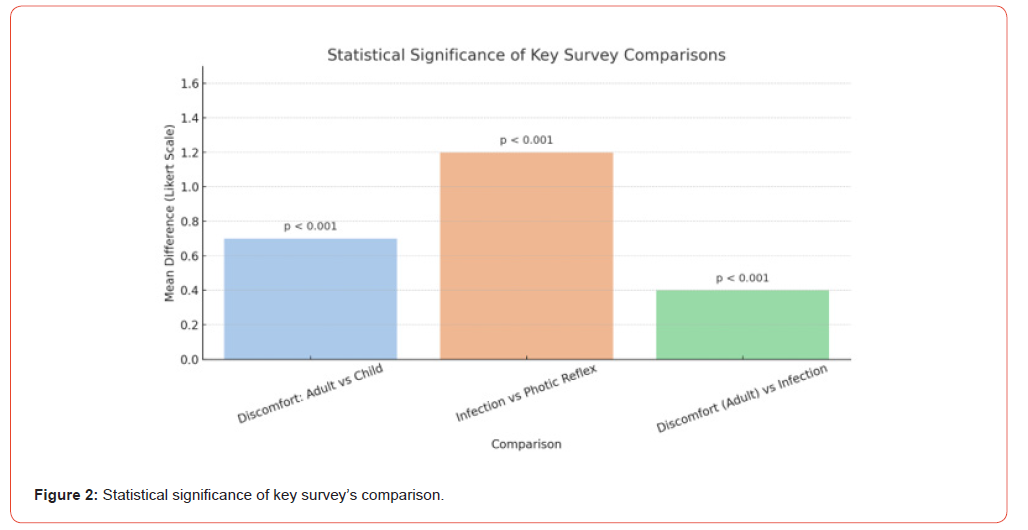
Responses were collected using a 5-point Likert scale (1 = not at all, 5 = extremely). No personal or demographic data were gathered, ensuring participant anonymity and exempting the study from formal ethics review. The data was analyzed using basic descriptive statistics, including mean, median, and standard deviation. Paired-sample t-tests were used to assess statistically significant differences between discomfort levels and perceived causes of sneezing. Statistical significance was set at p < .05.
Historical references, medical, anthropological, and sociological studies are synthesized to provide a multidisciplinary perspective.
Results
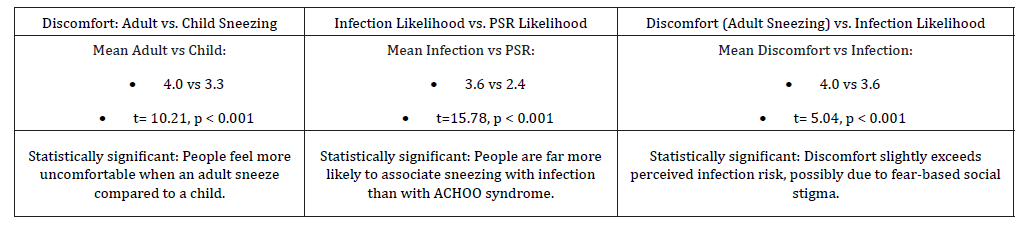
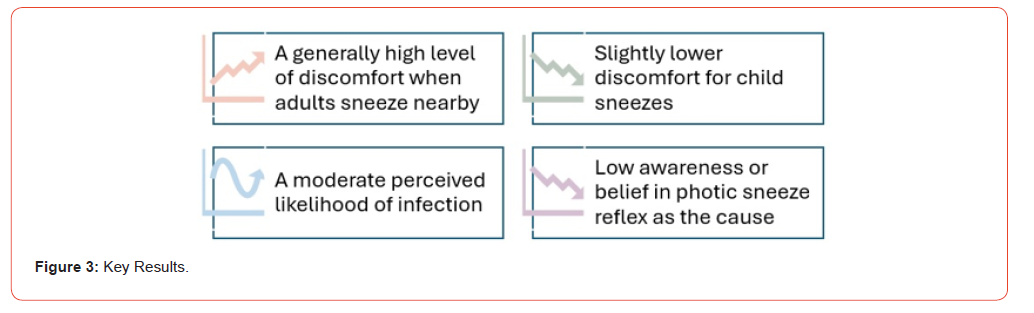
Of 1341 followers, 678 completed the survey (50.5% participation rate). Visualizations (Figure 1, Table 1) show that discomfort was highest when adults sneezed nearby, while photic sneeze reflex was perceived as the least likely cause. A neutral Likert score (3.0) is included for reference to illustrate perceptual leanings. To assess statistical significance, we conducted paired sample t-tests on key question pairs. These comparisons (visualized in Figure 2, Table 2) confirm statistically significant differences in public perception. Most notably, the low likelihood attributed to photic sneeze reflex indicates a potential gap in public awareness. The results reveal a clear pattern in public perception regarding sneezing in shared environments. Participants reported higher discomfort when an adult sneezed nearby (Mean = 4.0), with the median response at 4, indicating general unease. The perceived likelihood that an adult had an upper respiratory infection was also relatively high (Mean = 3.6), suggesting that infectious disease remains the primary association with sneezing. In contrast, the photic sneeze reflex (ACHOO syndrome) was less frequently considered as a possible cause (Mean = 2.4), indicating low public awareness or recognition of this benign condition. Interestingly, when a child sneezed, the level of discomfort decreased (Mean = 3.3), reflecting a potential bias or greater tolerance based on the age of the sneezer. These findings (Figure 3) underscore the importance of public education on non-infectious causes of sneezing and suggest that perception may be influenced by both context and age.
Table 1:Descriptive Statistics per question (N = 678).

Table 2:Statistical significance of key survey’s comparison
Discussion
This study explored public perceptions of sneezing in shared environments during a time of heightened health sensitivity, with a special focus on awareness of photic sneeze reflex (ACHOO syndrome). Findings suggest that sneezing, particularly by adults, evokes significant discomfort and is predominantly associated with infectious causes rather than benign physiological triggers like light-induced reflexes (Figure key results). The discomfort reported toward adult sneezers was significantly higher than toward children, aligning with previous research indicating that perceived threat plays a role in risk assessment [4]. This age-based discrepancy may reflect subconscious biases, wherein children are viewed as less likely disease vectors, or simply as more socially “forgivable.” Consequently, this study illustrates that sneezing, regardless of its etiology, is socially stigmatized during pandemics.
Physiology of Sneezing
The sneeze reflex is a complex neural response with variable etiologies including infection, allergy, light exposure, and mechanical stimuli. It begins with stimulation of the nasal mucosa—by dust, pollen, cold air, or pathogens—activating afferent signals through the trigeminal nerve to the sneeze center in the medulla oblongata [1]. A coordinated motor response then follows eyes close reflexively, abdominal muscles contract, and air is forcibly expelled at speeds up to 100mph [5]. This results in a characteristic blast of droplets, capable of carrying microorganisms several meters. While sneezing is often benign, its association with respiratory pathogens (e.g., influenza, rhinovirus, SARS-CoV-2) highlights it epidemiological significance. It becomes not just a symptom but a mechanism for disease transmission—amplifying its societal visibility by releasing around 40,000 droplets while a cough expels around 3,000 drops [6].
Sneezing and Public Perception
Before the pandemic, sneezing was often treated as a minor social inconvenience, a moment for politeness (“Bless you”) or occasional annoyance. Workplace etiquette dictated the use of tissues or elbows, and chronic sneezers were rarely questioned about their health. Common conditions like seasonal allergic rhinitis which affects up to 30% of people worldwide [7], were common knowledge, fostering general tolerance. In some East Asian cultures, mask-wearing was normalized even pre-pandemic, reducing the social visibility of sneezing. In contrast, many Western societies were less prepared for the shift in perception. This highlights how cultural norms influence the social meaning of involuntary acts, shaping both public behavior and emotional response.
Pandemic Shift: Sneezing as a Social Signal
Socially, sneezing has shifted from a neutral or positive expression to one viewed with suspicion and even fear, especially during viral outbreaks. This has led to behavioral changes, social stigmatization, and emotional consequences for individuals perceived as vectors of disease. With the onset of COVID-19, sneezing became a symbolic and visible marker of potential threat [8]. Digital platforms became battlegrounds of sneeze interpretation. Videos of public sneezes—especially in enclosed spaces—went viral. Public shaming and commentary followed, reinforcing a culture of surveillance and judgment. A single sneeze could:
• Trigger suspicion or fear in public spaces.
• Lead to social avoidance or ostracism.
• Prompt verbal confrontations, accusations, or even
removal from public transport or businesses.
In this climate, sneezing behaviors were increasingly selfregulated. People suppressed sneezes, avoided triggers, or justified their symptoms preemptively (“It’s just allergies”). This points to the emergence of sneezing stigma, a new psychosocial phenomenon wherein individuals are judged not by symptoms’ origins, but their perceived public health implications. As a result, people with chronic sneezing conditions, such as allergic rhinitis, ACHOO syndrome, or non-infectious rhinitis, reported higher levels of anxiety in social interactions [9]. Sneezing became a liability in public speaking, travel, and service work. Some individuals reported self-isolation to avoid public scrutiny. For others, this trend was the cause which drove behavioral change, including:
• Enhanced use of face coverings even outside of mask
mandates.
• Reliance on medications (antihistamines, decongestants)
not for symptom relief, but for social acceptability.
• Adoption of unconventional methods to suppress or
conceal sneezes.
ACHOO Sneezing
Sneezing, a semi-autonomous reflex, has historically symbolized vitality and good fortune [10]. Common causes of sneezing include allergens, infections, and environmental irritants; however, a lesser-known trigger is the photic sneeze reflex—a genetically influenced phenomenon caused by sudden exposure to bright light [11]. ACHOO syndrome, though benign, can resemble symptomatic respiratory conditions, complicating public interpretation during health crises like the COVID-19 pandemic and leading to unnecessary concern or stigma [3]. Importantly, the photic sneeze reflex was rated as the least likely explanation for sneezing. This low score highlights a lack of public knowledge about ACHOO syndrome, which despite being harmless, can mimic symptoms of contagious illness, leading to an unnecessary cause of anxiety and misunderstanding especially during public health crises such as the COVID-19 pandemic. Interestingly, despite interactive educational content, few respondents associated sneezing with ACHOO syndrome, suggesting either ineffective dissemination or limited biological plausibility in public understanding. Scientific literature places the prevalence of photic sneezing between 18% and 35% of the general population. This reflex is inherited in an autosomal dominant pattern [12] and shows a racial and gender bias, being more common in Caucasians and females. Despite being recognized since antiquity, including references by Aristotle, the syndrome remains under-researched. However, photic sneezers are likely to experience a sneezing reflex following the ocular injection of local anesthetic while under sedation, leading to the suggestion for general anesthesia in ophthalmic surgery. Reflex sneezing has also been implicated in traffic accidents and barotraumarelated injuries when forcibly suppressed. Six main categories of trauma have been associated with suppressed sneezing, including cerebrospinal leaks, orbital hematomas, pneumothorax, and vocal cord hemorrhages [13]. Although speculative, some researchers propose that PSR may have an evolutionary advantage. In ancestral environments, bright sunlight could signal open-air exposure, making nasal clearing beneficial for respiration or olfaction—both crucial survival mechanisms. In newborns, particularly those who are obligated nasal breathers [14], sneezing serves as a primitive yet essential airway-clearing reflex. Individuals with PSS are more likely to suffer from migraine and psychological distress than those without PSS [15]. A similar pattern is observed in other sensorineural conditions, such as tinnitus, where individuals with the condition report a higher prevalence of headaches compared to those without it [16].
Sneezing awareness
Sneezing is no longer just a reflex but a social act. The pandemic has reframed it within a matrix of fear, judgment, and behavioral adaptation. Understanding sneezing’s cultural interpretations and addressing public perceptions, especially through health communication, is essential in minimizing stigma and ensuring balanced health responses during pandemics. Increasing awareness of non-infectious sneeze reflexes, particularly among healthcare professionals and educators, could help reduce stigma [17] and improve understanding of reflexive physiological responses. Public health messaging, while essential, sometimes lacks nuance in distinguishing infectious from non-infectious symptoms, leading to overgeneralization. There is a pressing need to integrate health communication with sociological sensitivity [18]. Campaigns should:
• Educate the public on non-infectious causes of sneezing.
• Emphasize symptom clusters rather than isolated
behaviors.
• Promote empathy and reduce knee-jerk stigma toward
individuals exhibiting common reflexes.
Furthermore, healthcare professionals must be aware of social repercussions faced by patients with benign sneezing and address these concerns with understanding and clinical validation.
Limitations and Future Directions
This study had several limitations. First, responses were collected via a voluntary social media survey, which may introduce self-selection bias and limit generalizability. Additionally, no demographic data were collected, preventing subgroup analyses by age, gender, or geographic location. Future research should incorporate a more diverse and demographically balanced sample and may explore longitudinal effects of health crises on public perception.
Conclusion
Sneezing occupies an unusual intersection between biology and society. Its transformation from a harmless reflex to a symbol of contagion mirrors the broader shifts in how we perceive health, safety, and social behavior in the post-pandemic era. Moving forward, we must embrace a more informed, compassionate view of sneezing—one that respects its evolutionary purpose while acknowledging the complex web of meanings it now carries. Rare sneezing syndromes such as ACHOO, while clinically benign, may provoke social panic during viral outbreaks due to symptom overlap. Social media presents a viable, scalable method for public education and preliminary research in real-world settings, offering a promising medium for disseminating information in an accessible and engaging format. Our findings underscore the need for public health messaging to distinguish between infectious and noninfectious causes of sneezing.
Acknowledgement
During the preparation of this manuscript/study, the authors used ChatGTP for the purposes of language and grammatical enhancement of the manuscript. The authors have reviewed and edited the output and take full responsibility for the content of this publication.
Conflict of Interest
The authors declare no conflicts of interest.
Data Availability Statement
Data could be available after communication with the corresponding author.
Informed Consent Statement
A digitally signed consent was obtained from all subjects involved in the study.
The study was carried out following the tenets principles of the Declaration of Helsinki and the Good Clinical Practice guidelines of the International Council for Harmonization.
References
- Songu M, Cingi C (2009) Sneeze reflex: facts and fiction. Ther Adv Respir Dis 3: 131-141.
- El Hassan M, Assoum H, Bukharin N (2022) A review on the transmission of COVID-19 based on cough/sneeze/breath flows. Eur Phys J Plus 137.
- ACHOO or Covid-19? What an Instagram-based Study can Reveal.
- Betsch C, Wieler LH, Habersaat K (2020) Monitoring behavioural insights related to COVID-19. Lancet 395: 1255-1256.
- Li F, Jiang H, Shen X (2021) Sneezing reflex is mediated by a peptidergic pathway from nose to brainstem. Cell 184: 3762-3773.e10.
- Dhand R, Li J (2020) Coughs and Sneezes: Their Role in Transmission of Respiratory Viral Infections, Including SARS-CoV-2. Am J Respir Crit Care Med 202: 651-659.
- Vlastos IM, Kalentakis Z, Doulaptsi M (2023) Multimorbidities in Allergic Rhinitis-Current Evidence from Epidemiological Studies, Treatment Trials, and Molecular Data. Curr Allergy Asthma Rep 23: 133-140.
- Mali SS, Silva R, Gong Z (2024) SARS-CoV-2 papain-like protease activates nociceptors to drive sneeze and pain. bioRxiv.
- Bouayed J (2022) Sorry, I am sneezing and coughing but I do not have COVID-19. Brain Behav Immun 101: 57-58.
- Do the Sick Ever Sneeze?
- Shetty PA, Bhat S, Jain V, et al (2023) Implication of photic sneeze reflex in ophthalmology. Indian J Ophthalmol 71: 2629.
- Trinkl J, Bickerstaff L, Munkwitz S, Spitschan M (2025) Stimulus conditions eliciting sneezing in response to bright light. Exp Brain Res 243.
- Setzen S, Platt M (2019) The Dangers of Sneezing: A Review of Injuries. Am J Rhinol Allergy 33: 331-337.
- Kalentakis Z, Stamataki S, Chalkiadakis V, Papapetropoulos N (2021) Features and Strategies in the Management of Choanal Atresia: A 6-Year Retrospective Analysis. J Craniofac Surg 32: E535-E539.
- Sasayama D, Asano S, Nogawa S (2019) Possible association between photic sneeze syndrome and migraine and psychological distress. Neuropsychopharmacol Rep 39: 217-222.
- Kalentakis Z, Feretzakis G, Baxevani G (2024) The Efficacy of a Food Supplement in the Treatment of Tinnitus with Comorbid Headache: A Statistical and Machine Learning Analysis with a Literature Review. Audiol Neurootol.
- Lewis N, Eggleston B, Chandler RK (2024) Stigma and efficacy beliefs regarding opioid use disorder treatment and naloxone in communities participating in the HEALing Communities Study intervention. PLoS One 19.
- Postill G, Hussain-Shamsy N, Dephoure S (2025) Evaluation of a Canadian social media platform for communicating perinatal health information during a pandemic. PLOS digital health 4: e0000802.
-

This work is licensed under a Creative Commons Attribution-NonCommercial 4.0 International License.