

 Review Article
Recurrent Acute Pharyngotonsillitis in Children Prior to the Tonsillectomy Decision. A Pediatrician’s Perspective
Pediatrician. Senior consulting Group on Genetics, Vaccines and Pediatric Infections (GENVIP). Infectious Diseases and Vaccines Unit (UNIV). University Clinical Hospital. Santiago de Compostela, Spain, Spanish Society of Pediatric Infectology
Received Date: November 10, 2026; Published Date: November 18, 2026
Abstract
Frequent episodes of pharyngotonsillitis in both children and young adults constitute a condition that prompts medical consultations and inevitably causes significant morbidity in patients, including frequent or unnecessary antibiotic use. Recurrences are multifactorial in origin, depending on interactions between the patient’s own factors (genetic) and environmental factors such as the microbiota or biofilm formation. In medical practice, not all episodes are evaluated with the same criteria and objectives when the physician or care setting differs, because structured planning and documentation are required. An important factor in the final decision-making or treatment alternatives is determining the number of truly bacterial pharyngotonsillitis episodes occurring and how they were treated. In each new episode, clinical diagnosis is not difficult after throat examination, but an accurate or confirmatory diagnosis is, which carries the risk of prescribing an antibiotic without other resources or approaches. In a scenario of recurrences, Streptococcus pyogenes remains the main responsible agent to identify, although less frequently other bacteria may also be involved and must be taken into account.
This review discusses the factors related to recurrences in order to address them properly and be able to decide on available treatment options before resorting to tonsillectomy.
Keywords: Pharyngotonsillitis; Recurrent infection; Streptococcal carrier state; Etiology of pharyngotonsillitis; Bacterial biofilms; Management of recurrent tonsillitis; Polybacterial mucosal vaccines
Abbreviations: GABHS: group A beta-hemolytic streptococcus; APT: acute pharyngotonsillitis; RAPT: recurrent acute pharyngotonsillitis; RADT: rapid antigen detection test; NAAT: nucleic acid amplification test; PCR: polymerase chain reaction; SpeA: streptococcal pyrogenic exotoxin A; ENT: ear, nose, and throat; NAC: N-acetylcysteine; PMVs: polybacterial mucosal vaccines
Introduction
The occurrence of episodes of acute infection of the palatine tonsils, presumed to be bacterial in origin, at different and repeated intervals, with asymptomatic periods or scarce symptoms. Given these premises, it is important to confirm that patients are experi encing another episode of acute pharyngotonsillitis (APT) caused primarily by Streptococcus pyogenes, or group A beta-hemolytic streptococcus (GABHS), the principal pathogen susceptible to specific antibiotic treatment [1, 2].
The prevalence of recurrent acute pharyngotonsillitis (RAPT) varies by geographic areas and is difficult to determine because of incomplete case counts and unreliable diagnostic criteria. According to some estimates, approximately one in 10 patients with streptococcal APT will experience recurrence [3].
When a new episode occurs, sound decision-making requires, even if it may seem obvious, understanding and interpreting what is happening, beginning with the case definition and considering which episodes are bacterial and which are not. Given the role of GABHS in bacterial APT, it is reasonable to confirm that this microorganism causes the episode. However, in the context of recurrences, other bacteria may also be responsible, though less commonly, particularly in older children and adolescents presenting with APT [4, 5]. If a new episode is caused by one of these bacteria and is not identified because it is overlooked due to its lesser prominence, and is not treated appropriately, this may lead to an undesirable outcome.
Classically, and this remains the case when considering the indication for tonsillectomy, RPT has been defined, particularly in children > 5 years of age, as: More than 7 well-documented and treated episodes of pharyngotonsillitis in 1 year, or > 5 such episodes per year for the previous two years, or > 3 per year for the previous three years, and, in addition, no underlying predisposing conditions such as immunodeficiencies, airway malformations, or immotile cilia syndrome [3, 6]. When evaluating recurrences, not all episodes are necessarily assessed using the same criteria and objectives or by the same specialists, and, logically, patients are seen for episodes of APT that are not yet numerous or well defined enough to warrant consideration of tonsillectomy.
In many cases, it is not usually feasible to distinguish clinically between episodes of sore throat and APT; therefore, this distinction is not relevant to management. Excessive reliance on clinical presentation alone may lead to inappropriate antibiotic prescribing. Currently, for diagnosing an episode of GABHS APT, including in cases of recurrence, the Centor, McIsaac, and FeverPAIN clinical scoring systems are necessary and helpful in determining the likelihood that a patient has an infection caused by this microorganism [3, 7]. This involves documenting compatible findings, particularly fever (> 38.3°C), tender cervical lymphadenopathy (> 2 cm), tonsillar erythema and exudate, and the absence of signs and symptoms of catarrhal illness typical of viral APT. The clinical presentation of APT may overlap with that of other infections not caused by GABHS or with inflammatory and systemic disorders affecting the oropharynx and upper respiratory tract. In patients whose scores on these clinical scales indicate the possibility of streptococcal infection, confirmation requires identification of GABHS using a rapid antigen detection test (RADT), and, in selected cases, a throat swab culture and serologic tests. The presence of fever is associated with substantially higher positivity rates on RADTs and cultures than other types of symptoms, indicating that fever and odynophagia have reliable predictive value for test results and may be important clinical indicators of streptococcal infection [8].
In daily practice, high-performance RADTs show greater sensitivity and specificity in appropriately selected patients. In addition, the availability and use of molecular nucleic acid amplification tests (NAATs), including polymerase chain reaction (PCR), offer greater sensitivity and similarly high specificity to RADTs (> 95%), and may even outperform culture because of their speed (1–2 hours), making them the reference method for the definitive diagnosis of GABHS infection. Despite these advantages, whether molecular tests will replace RADTs, and even culture, at the point of care will depend on local epidemiology, clinical needs, and available resources, as these methods are complex and expensive. Furthermore, NAATs would not provide information on antimicrobial resistance patterns [1, 8, 9].
Among patients 5–15 years of age, exposure to GABHS is so common that not all those who experience an episode of pharyngotonsillitis will have recurrences frequent enough to require tonsillectomy or consideration of other treatments.
Why are some people prone to recurrences and others not?. It is appropriate to consider other factors and alternatives to tonsillectomy, especially when the criteria for this procedure are not fully met, resources are unavailable, or parents choose medical management.
Implication of streptococcal carrier state in recurrences
A clinical dilemma is clarifying when patients recur with closely spaced APT episodes and positive RADT or throat cultures for GABHS. Many may be carriers of the organism who are experiencing viral infections; therefore, repeated positive RADTs are not conclusive, and antibiotics are not indicated for these episodes [10]. When evaluating these patients, clinicians should determine whether the patient failed to complete treatment for previous episodes of streptococcal pharyngitis and whether the prescribed antibiotic was taken at the appropriate dose and duration.
The prevalence of GABHS carriage varies by age and geographic areas. An estimate from a meta-analysis of 29 prospective studies found a prevalence of 12% among healthy children, and reaching 4% in children under five years of age [11]. Another reference reports that 7–37% of adequately treated, asymptomatic children will continue to carry in their throats the specific emm serotype of GABHS that caused the APT; this does not indicate true treatment failure [12]. During peak streptococcal season and school outbreaks of pharyngitis, throat cultures from healthy, asymptomatic children show a GABHS carrier rate of up to 25%. Colonization may persist for > 6 months, during which time episodes of viral APT may occur, but the risks of complications and streptococcal transmission are low [10]. In addition, it represents a genuine and plausible threat of streptococcal overdiagnosis and unnecessarily prescribing antibiotics. Discerning this dilemma is not easy and requires careful assessment of the clinical situation, including adherence to the treatment regimen and the time to response [13]. With adequately treated GABHS APT, improvement is very likely within the first 24 hours, whereas improvement in viral pharyngitis in a GABHS carrier generally occurs after 2–3 days [10, 14].
In children with RAPT, the presence and prevalence of GABHS in the tonsillar crypts are known to be very similar to those in children who underwent tonsillectomy for adenotonsillar hypertrophy [15]. A study of children with an indication for tonsillectomy due to adenotonsillar hypertrophy and/or RAPT found that 18.1% were GABHS carriers, identified by RADT. The study emphasized that the presence of the bacteria was not responsible for the recurrences and that its prevalence was also similar among children with RAPT and those with tonsillar hypertrophy. This finding underscores the importance of suspecting carrier status in children with short asymptomatic intervals between recurrent episodes of streptococcal pharyngotonsillitis [16].
Another aspect of the disease course to consider is that children who have been appropriately treated for streptococcal APT may have a false-positive RADT within the following four weeks if tested to assess bacterial carriage—test of cure is not indicated in asymptomatic patients—or if they have another episode of APT during that period. Such positivity is rarely observed in children who have not received treatment so recently, unless they are carriers. These false-positive RADTs have been attributed to the presence of undegraded antigenic proteins that persist even in the absence of viable GABHS in the pharynx. A tempting scenario for prescribing an unnecessary antibiotic again (even a broad-spectrum agent), with all the attendant consequences, and could also result in increased parental anxiety, greater school absente eism, and additional episodes contributing to unnecessary tonsillectomies. Therefore, for children treated for streptococcal APT within the previous 28 days, a throat culture or NAAT is preferable; GABHS RADTs should be reserved for cases in which the patient has not received such recent treatment for streptococcal pharyngitis [17].
Recurrent pharyngotonsillitis with defective responses to GABHS
Various reasons have been proposed, without firm consistency, and advocating for a multifactorial cause. These are contributions that cannot be demonstrated in routine clinical practice, but that may explain the tendency to relapse in patients who are candidates for antibiotic treatment, which usually provides temporary relief until the next episode.
- Changes in the tonsillar microbiota, due to reduced microbial diversity and dysbiosis, promote recurrent infections and impaired local immune defense. In a study comparing the adaptive responses of the tonsils in children with RAPT with those in cases of non-recurrent APT, the former had, among other findings, smaller germinal centers and lower levels of antibacterial antibodies against a key GABHS virulence factor, streptococcal pyrogenic exotoxin A (SpeA). In addition, follicular helper T cells may have been cytotoxic to antibody-producing B cells. These findings raise questions about SpeA exotoxin as a potential target for a vaccine intended for use in RAPT [18].
- A predisposition to recurrence has been attributed to genetic control of each patient’s innate immune system. Specifically, certain genes encode antimicrobial peptides normally present in the oropharyngeal area that are key to activating the immune response against certain pathogens. For example, production of human beta- defensin 1 (hBD-1) is under some degree of genetic control. It has been reported that a functional polymorphism in the DEFB1 gene results in reduced production of this necessary hBD-1 peptide and, together with other factors involved in the genetic control of the innate immune system, could confer greater susceptibility to infections in the area where the tonsils are located and, consequently, contribute to the development of recurrent infections [19].
Recurrent pharyngotonsillitis caused by bacteria other than GABHS
Fusobacterium necrophorum and Mycoplasma pneumoniae have been reported as causative agents, particularly in adolescents and young adults and with a propensity for recurrence. These pathogens are underdiagnosed or receive less consideration because they play a smaller role in APT, and their complications—especially those caused by M. pneumoniae—are generally rare. However, a different approach is needed in cases of RAPT to identify the cause, since identifying these pathogens requires specific antibiotic treatment [20-23].
Streptococcus dysgalactiae subsp. equisimilis has a clinical expression of APT similar to that caused by GABHS, indicating that its presence is clinically significant and not a mere colonizer. Throat colonization rates range from 2% to 20%, with a higher incidence also observed in older children and adolescents, and it has been associated with cases of RAPT [4, 24].
Recurrent pharyngotonsillitis due to the presence of bacterial biofilms
In the warm and moist crypts of the tonsils, communities of microorganisms embedded in a hydrated matrix of extracellular polymeric substances can develop, capable of perpetuating and exacerbating certain infections. These are biofilms that represent a reservoir or sanctuary of infection where the involved bacteria possess distinctive characteristics—due to their adaptive capacity and genetic changes—that differ from those of planktonic bacteria of the same classes and species. The dense composition of the biofilm, formed by polysaccharides, proteins, and extracellular DNA, hinders the diffusion of commonly used antimicrobial agents and reduces their efficacy, conferring a high level of resistance or tolerance [25]. They can survive even in the presence of high concentrations of bactericidal antimicrobials, despite exhibiting very high in vitro susceptibility under planktonic conditions.
The persistence of biofilm-associated infections in the ENT (ear, nose, and throat) area is closely related to the distinctive anatomical features of these sites, which create ideal protective niches for microbial colonization. Very few studies have investigated the presence of biofilms in the tonsils [26]. There are reports indicating that their presence is significantly more common in cases of RAPT in both pediatric and adult populations, suggesting a key role in relapses [27-30]. GABHS biofilms have been detected in the reticulated crypts and in the core center of tonsils examined following tonsillectomies [31, 32]. Furthermore, the greater the infected tonsillar surface area (hypertrophy), the greater the risk of bacterial adhesion and the formation of these reservoirs [33, 34]. In addition to having been demonstrated in excised tonsils, they are also known to be involved in the development of acute-to-chronic infections, including cystic fibrosis, periodontitis, dental caries, infective endocarditis, chronic otitis media and rhinosinusitis, prostatitis, chronic osteomyelitis, atopic dermatitis, onychomycosis, infectious kidney stones, chronic wounds, and even in devices such as pacemakers, implants, and catheters [35]. In RAPT associated with biofilms, the spectrum of pathogens involved in recurrences varies in relative proportions; in addition to GABHS, alpha-hemolytic Streptococcus, Haemophilus influenzae, Staphylococcus aureus, Enterococcus spp., Klebsiella pneumoniae, Moraxella catarrhalis, and Corynebacterium spp. have been reported [36]. According to one study conducted in adults with RAPT, the role of GABHS in its pathogenesis may have has likely been overestimated or has decreased in recent years, also noting that Gram-negative microorganisms were less prevalent [37].
Approach and management of RAPT episodes
It seems necessary to follow a directed reflection and procedure algorithm for optimal, evidence-based treatment in patients affected by this condition, and structured documentation of the episodes is justified to help clarify the possible cause and potential treatment [3] (Table). The clinical diagnosis of APT may appear straightforward, which can lead to antibiotics being prescribed without delay. However, an important aspect of decision-making during an episode is understand what is happening, starting with the number of probable or confirmed bacterial episodes of APT that the patient has presented in the previous year or years and how their origin was determined and treated.
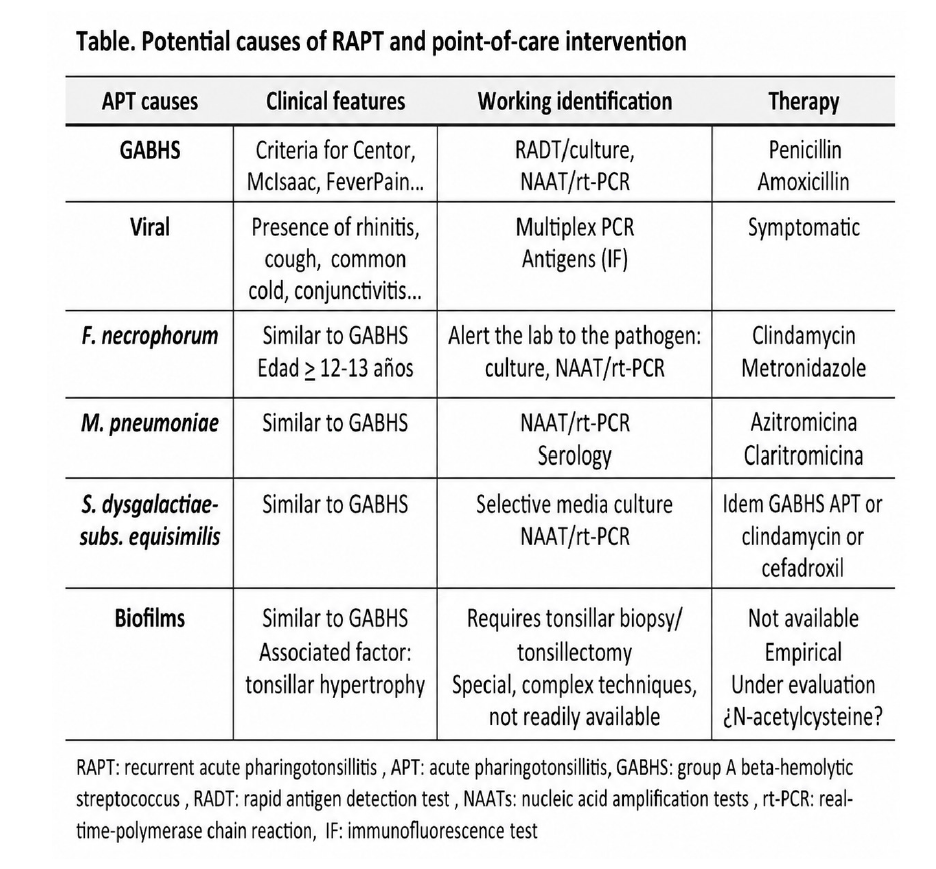
1. If the presenting illness has findings and meets clinical scoring criteria for GABHS pharyngotonsillitis according to the clinical scoring systems used (Centor, McIsaac, etc.), with a positive RADT result or, if available, a positive NAAT result, specific antibiotic treatment is indicated [2, 7]. A single course of an appropriate antibiotic has a significant impact on the composition of the tonsillar microbiota, but the effect of antimicrobials in each episode is not always sustained or long-lasting, nor effective in preventing recurrences. Amoxicillin-clavulanate, which is a frequent therapeutic trend and attraction in RAPT, is not recommended as a first-line treatment in these cases, even though there is evidence that the combination is superior to penicillin for eradicating both streptococci and non-streptococci. This is relevant because GABHS is involved in only a minority of complicated recurrent cases, and it is also unclear which bacterial pathogens are associated with most episodes [38, 39]. If frequent recurrences are due to GABHS, clindamycin treatment has been recommended [2].
Once clinical resolution of the episode has been achieved, and given the history of relapses, the RADT should be repeated after more than four weeks to determine whether GABHS persists and manage accordingly. If the test is positive and the patient is asymptomatic, carrier status should be confirmed by a positive throat culture. In this setting, and although antibiotics are not always indicated, it is justified in these cases if there is a recent history of invasive GABHS disease among close household contacts, multiple episodes (a “ping-pong” effect) of documented streptococcal APT within the family despite propriately administered treatment, or if tonsillectomy is being considered because of recurrences [10]. A history of rheumatic fever no longer constitutes an indication for treatment due to its scarcity or lack of relevance in our setting. The antibiotic of choice for eradicating GAS carrier status differs from the conventional beta-lactam used; options include cefadroxil, cefuroxime, or clindamycin, unless one wishes to resort to intramuscular benzathine penicillin G plus rifampin. Some studies have indicated that cephalosporins may be more effective due to their good intracellular penetration and beta-lactamase stability – other colonizing bacteria, e.g. S. aureus, produce these enzymes, which could inactivate penicillin – in achieving bacteriological cure and preventing ongoing recurrences of streptococcal ATP [2]. Penicillin failure in the treatment of recurrent GABHS infection is even more common than penicillin failure in cases of isolated ATP [40].
2. If the clinical presentation of the episode includes prodromal and/or symptoms and findings consistent with a viral infection (a fairly common cause of APT), RADTs are not necessary. Treatment is purely symptomatic; unnecessary antibiotics should be avoided, and gradual improvement is expected over the next few days. Where resources are available, multiplex PCR rapid tests on nasopharyngeal samples can be useful for detecting likely viruses and certain bacteria, depending on the season and the patient’s age, such as respiratory syncytial virus, influenza, parainfluenza, human metapneumovirus, SARS-CoV-2, adenovirus, enterovirus, and M. pneumoniae [41]. Cases of viral pharyngotonsillitis are not counted in the true definition of RAPT. Regarding adenovirus infection specifically, it is known that following a primary infection in the tonsils, these establish a high-latency viral reservoir. In addition, bacterial metabolites from the usual tonsillar microbiota, which is always dynamic, are capable of promoting viral reactivation from the latent state, thereby contributing to recurrences in pediatric patients [42]. This is an interesting aspect to consider and investigate when an episode of APT recurs, particularly if it coincides with a state of GABHS carriage and the infection with this virus is confined to the throat, without other typical findings.
3. The typical clinical presentation of APT due to GABHS may overlap with that of other bacteria, such as Fusobacterium necrophorum, Mycoplasma pneumoniae, and Streptococcus dysgalactiae subsp. equisimilis, which are capable of causing recurrences, as previously mentioned. Its search and identification are crucial for establishing appropriate antibiotic treatment, ensuring recovery, and preventing these potential relapses. Difficulty arises if these infections also occur or coincide with a GABHS carrier state, which must also be clarified.
Possibility of pharyngotonsillitis due to F. necrophorum.
It shows a particular predilection for patients older than 12–13 years. Routine pharyngeal cultures do not identify this bacterium because it is an anaerobe that requires special culture media and incubation conditions, as well as more than 2 days [21, 43]. The laboratory should be alerted to search for it in all patients older than 12 years with non-streptococcal APT (20). The microorganism can be detected more rapidly by means of NAATs with real-time PCR (RT-PCR) if available in clinical settings; Its identification is comparable to that obtained by culture and is very beneficial for detecting low concentrations of F. necrophorum in patients with RAPT during asymptomatic periods [20, 43]. Considering that F. necrophorum has been implicated in APT, RAPT, and peritonsillar abscesses in that age group, its isolation from the tonsillar surface — by performing an appropriate swab of both tonsils — is of great interest to ensure appropriate antibiotic treatment [44]. To help distinguish it from other causes of APT, a scoring system with certain predictive value has been proposed. Specifically: age between 13 and 30 years (the strongest predictor), symptoms duration ≤ 3 days, absence of viral symptoms, tonsillar inflammation/exudate, and a C-reactive protein level ≥ 50 mg/L [45]. An aspect to consider that may be orienting is the contribution of a study on the bacterial flora of excised tonsils from children with RAPT previously treated with amoxicillin- clavulanate. It was observed, among other findings, that the flora was dominated by F. necrophorum (and Treponema) compared to the control group not treated with that antibiotic (38). When F. necrophorum is confirmed by culture or NAAT during an episode of APT with a negative RADT for GABHS, treatment should be initiated with metronidazole or clindamycin for ten days to prevent other potential suppurative complications [22].
Possibility of pharyngotonsillitis due to M. pneumoniae.
Its identification by NAAT/real-time PCR of nasopharyngeal samples is a rapid (1-2 hours), sensitive, and highly specific test (88.8%-98.5%) that grants a more relevant role to the microorganism [46]. However, it must be taken into account that the mere presence of M. pneumoniae in the upper respiratory tract does not necessarily imply that it is responsible for the process. It can be isolated in the general population as asymptomatic colonization or due to long-lasting persistence after a previous acute infection. Serology is not of much help for rapid diagnosis and is only useful in the retrospective interpretation of IgM and IgG rises. IgM titers begin to increase 7-9 days after the onset of infection. In general, no individual diagnostic test, nor in combination, is capable of differentiating between a carrier state and infection within a clinically relevant timeframe to decide on immediate treatment [47]. Taking into account the clinical suspicion and the self-limiting tendency of these infections, there is no agreement on the usefulness or not of antibiotic treatment [48]. However, in a clinical context of RAPT as a reason for medical visits, it seems reasonable, in a new episode with a positive PCR test (high specificity), in patients without recent history of M. pneumoniae infection, and to resolve this risk and clinical course, to consider and establish empirical antibiotic treatment with a macrolide, azithromycin or clarithromycin, and subsequently evaluate the clinical evolution.
3.3 Possibility of pharyngotonsillitis due to Streptococcus dysgalactiae subsp. equisimilis.
A member of the normal microbiota, it occasionally causes disease. It is necessary to perform a throat swab culture on selective media since the RADT is not useful as it only detects GABHS antigens. With the greater use in routine practice of more sensitive NAAT/PCR to detect its DNA, it has contributed to a supposed increase in its incidence. Once identified, treatment does not differ from that indicated for APT due to GABHS [2, 7]. Macrolide resistance has been reported depending on geographical areas. Of note is that despite excellent in vitro susceptibility to penicillin, some clinical failure has been reported in cases of APT attributed to the microorganism’s ability to invade epithelial cells [24], and perhaps facilitate recurrences?. An option in this eventuality would be to treat the episode in the scenario of RAPT with clindamycin or cefadroxil due to their greater intracellular penetration [40].
Suspicion that recurrent pharyngotonsillitis is due to the formation of bacterial biofilms.
As previously mentioned, the adaptive capacity of microorganisms and genetic changes within the biofilm lead to a multifactorial resistance to all known antibiotics, which varies from one microorganism to another. As they evolve, biofilms degrade spontaneously over time due to nutrient depletion and the accumulation of toxic elements. This results in the dispersion and propagation of planktonic bacteria, potentially causing new infections or forming new biofilms once again [28]. In cases of RAPT, as in other locations, they are very difficult to identify and practically impossible in daily medical practice, generating concern and interest, especially for focusing an appropriate treatment of the episodes. Their microbiological diagnosis and susceptibility testing in these infections are complex and, to date, represent a challenge that clinicians and microbiologists must address as a team, since there is still no global consensus or standardized protocols. To better understand these cases of RAPT and in decision-making, the limited utility of planktonic cultures should be acknowledged, and an effort should be made to discern associated biofilms [34]. The episode of APT may originate from bacteria within the tonsillar crypts or parenchyma, rather than surface bacteria. Therefore, deeper samples (from the crypts) of the tonsils would be considered more appropriate for diagnostic testing than tonsillar surface swabs [49]. There are various methodologies for biofilm detection, but in biopsies or excised tonsils (techniques that are invasive at that point), they are basically visualization methods; among them, advanced fluorescence microscopic examinations, scanning electron microscopy, and confocal laser scanning microscopy are preferable, as well as spectrophotometry (the simpler and more cost-effective method) [33]. These tests are costly, time-consuming, and require trained personnel, which make them impractical or unavailable for point-of-care clinical management due to their reliance on invasive techniques [28]. Standard antibiotic treatment for APT caused by GABHS is insufficient to eradicate this microorganism from biofilms, which accounts for recurrences, and should be reconsidered instead of resorting to expanding antibiotic therapy toward beta-lactamase-producing pathogens. Empirical proposals with different antimicrobials make no sense without being able to demonstrate the hypothetical bacteria involved in the episodes, while also assuming the established resistance of the reservoirs. Numerous strategies to inhibit biofilm formation or eradicate already organized biofilms of respiratory pathogens are being actively investigated [28, 50], although most are focused on S. aureus, S. epidermidis, and P. aeruginosa biofilms, and these do not cause a clinical process of APT. Some in vitro study alternatives—through drug repositioning combined with the selected antibiotic—would be a promising approach for the management of these both tonsillar and otitis media recurrences. Specifically, the combination of the antimicrobial with non-steroidal anti-inflammatory drugs—ibuprofen or diclofenac—may favor biofilm disruption, reduce bacterial load, and minimize recurrence [25]. However, their efficacy in the treatment of these biofilm-associated APT remains unclear, as most of the evidence proposing it comes from in vitro studies and animal models, and still lacks large-scale clinical trials in humans. It has also been reported that preparations of N-acetylcysteine (NAC) or acetylsalicylic acid are active against biofilms in vitro in studies of excised tonsils. It is noteworthy that NAC is an antioxidant agent that decreases bacterial diversity and the production of extracellular polysaccharide matrix, while promoting the disruption of mature biofilms, reducing adhesion, and also detaching cells adhered to the tonsil surface [51]. Accepting these contributions and given the established evidence of RAPT, in a new episode of APT of unknown origin associated with tonsillar hypertrophy (a predisposing factor for reservoirs), a trial treatment proposal targeting potential responsible biofilms — which are not detectable by available rapid methods — could consist of a NAC regimen administered concurrently with the selected antibiotic.
The reality is that there is no treatment to eliminate biofilms from unexcised tonsils. The chosen hypothetical alternative, when available, will depend on the microorganisms responsible for the pharyngotonsillitis and should be applied while the biofilm is immature or in its early stages, as only a reduction would be achieved. Given the difficulties in characterization and the unavailability of treatments, many patients with new episodes of APT of undocumented origin related to potential biofilms will inevitably receive antibiotics, which usually provide temporary relief, but then the APT reappears. The solution? Inexorably, these patients with RAPT will be candidates for surgery if they meet the criteria for tonsillectomy and there are no contraindications.
Use of polybacterial mucosal vaccines in recurrent pharyngotonsillitis
Also known as trained immunity-based vaccines. It has been proposed that in patients affected by upper respiratory tract bacterial colonization—considered responsible for episodes of RAPT— preventive treatment could be based on activating the efficacy of the mucosa-dependent immune system to inactivate these pathogens [52- 54]. As mentioned, changes occurring in the tonsillar microbiota and a lower antibody response against the streptococcal SpeA protein would support proposing and developing a type of vaccine that prepares the immune system in advance to stimulate a defensive response and prevent subsequent episodes of streptococcal APT [18]. In the context of RAPT, the administration of immunomodulatory agents—specifically polybacterial mucosal vaccines (PMVs) – available either as commercial polyvalent bacterial lysates or as autovaccines (also termed therapeutic vaccines) represents a suitable alternative to frequent antibiotic therapy or could also reduce the requirement for tonsillectomy. Standardized bacterial lysates and their components are derived from the lysis of various Gram-positive and Gram-negative bacterial strains implicated in respiratory tract pathogens. Conversely, autovaccines are patient-specific preparations formulated from nasopharyngeal samples containing the individual’s distinct microbial flora, which are cultured, inactivated, and processed on a case-by-case basis. The two types of PMVs differ in composition, preparation method, dosage, route of administration, and age of use in pediatric patients. These preparations have no connection with traditional preventive vaccines, whose design, composition, mechanism of action, indications, and controls are entirely different.
PMVs are specifically directed at those tissues where the bacteria involved initiate and/or spread infections. At these ports of entry, induce a purely preventive innate and adaptive immune response. Specifically, they stimulate immunological memory through antibodies (IgA, IgG, and IgM) and a defensive cellular response through activation of helper T cells and macrophages, enabling the patient’s immune system to effectively recognize and neutralize future exposures to the bacteria in question that tend to cause episodes of APT [52, 53].
PMVs can be administered via various routes, such as sublingually— the route apparently most commonly utilized due to its more robust clinical and immune response—as well as orally or by injection. Autovaccines, in particular, are known to stimulate the immune system more consistently, and one study also indicates greater efficacy in reducing bacterial counts in patients colonized with S. pyogenes and Streptococcus pneumoniae, although the latter does not cause recurrent pharyngitis. Notable differences have also been reported in the outcomes achieved in patients treated with both preparations regarding the eradication of nasopharyngeal colonization by probable pathogens [52, 53].
With these defensive premises, its use to achieve a satisfactory response in the prevention of acute exacerbations or episodes in the ENT area gained a certain prominence a few years ago among its specialists [54] when the existence of recurrent processes raises inconclusive therapeutic decisions or even tonsillectomy. Their use has been justified by several reports indicating that these therapies reduce the incidence of upper respiratory tract infections, such as RAPT [55]. And taking into account furthermore the 2019 communication from the European Medicines Agency authorizing bacterial lysate preparations specifically for such an indication. However, this review qualified that the data were limited regarding some evidence on their efficacy in preventing recurrent respiratory tract infections [56]. Despite the favorable results reported in some studies— in which control groups were lacking to distinguish the placebo effect—they are still rarely recommended for pediatric ENT infections, and physicians in general do not all agree, at least with regard to some of these bacterial lysate preparations [57, 58]. A meta-analysis of 38 studies comparing different immunomodulators (administered by any route) with placebo to prevent acute respiratory tract infections showed an average 40% reduction in the incidence of these infections among susceptible individuals (<18 years of age). However, the medical conditions analyzed in those results, besides APT, were the common cold, bronchitis, influenza, rhinosinusitis, and otitis media, which are not comparable etiologically or in their clinical course. Overall, the evidence was found to be of low quality and heterogeneous, as most studies deviated significantly from the methodological and reporting quality standards required, with possible publication bias. Only a relatively small number met the required standards [59]. In another retrospective real-world study, the characteristics of pediatric patients included those labeled as having tonsillitis, pharyngotonsillitis, or pharyngitis indiscriminately, without distinguishing among these diagnoses, and without reporting the causative microorganisms [60].
To date, the use of bacterial lysates and autovaccines has received little attention from research. A search conducted over the last twelve years in the most widely used databases (Pubmed, Trip Medical Database, Embase, and Google Scholar) has been somewhat unfruitful, and except for a 2018 study [61], there are no further references or clinical practice guideline proposals, evidence summaries, or updates mentioning the indication and justification of PMVss in patients (children or adults) to prevent new episodes of recurrent ENT infections [62]. Furthermore, specifically regarding lysates, there is a great variety of preparation methodologies, and standardized protocols are lacking to prevent differences in extract performance among different laboratories and to favor reproducibility, all with the aim of obtaining comparable results in clinical trials [63].
Some autovaccines designed for the RAPT subgroup cultured strains of GABHS, S. pneumoniae, H. influenzae, and M. catarrhalis separately, which were inactivated and lysed after purification [58], with the aim of preventing recurrences, but they would only be effective for GABHS since the other three bacteria are not known to be responsible for episodes of APT, as they may simply be colonizers. It is also questioned whether autovaccines, specifically commercially available lysates, are formulated with some microorganisms capable of causing episodes of recurrent pharyngotonsillitis, such as F. necrophorum and M. pneumoniae in older children, as previously mentioned.
Conclusion
Episodes of RAPTs can entail substantial morbidity, coupled with frequent or unnecessary antibiotic use — assuming furthermore that many episodes are of viral origin — as well as a healthcare and psychosocial burden. In many children, there is a natural reduction in the frequency of their tonsil-related episodes as they grow older and their immune systems mature. If obstructive sleep apnea is not associated, a reasonable approach is a period of observation with detailed documentation and assessment of each episode, and appropriate antibiotic therapy if indicated, before reaching the definitive threshold for surgery [64]. A structured approach and documentation of the episodes are required, with an important factor being the number of truly bacterial pharyngotonsillitis that the patient presented in the previous year or years, and how they were identified and treated. Furthermore, seeking to establish which related factors condition these recurrences, such as clearly defining the GABHS carrier state, recognizing other uncommon bacteria, or the presence of hypothetical biofilms, which, given the difficulties in their identification and treatment, are the target of numerous research studies trying to resolve them. It is therefore assessed whether the benefits of the proposed therapies were achieved or not, including the preventive use of PVMs by some specialists. Regarding these vaccines, which still lack a unanimous indication, a potential advantage intended to reduce recurrences is considering a heterologous protection described in some of them (MV130); curiously, the bacteria contained possess numerous cross-reactive epitopes with common respiratory viruses capable of causing pharyngotonsillitis [60]. A full comprehension and evidence of the expected effects of these vaccines and their new formulations are still required, both against their specific pathogens and against other non-specific heterologous pathogens, such as viruses. If, despite these considerations, the episodes continue and the frequency threshold and an impact on quality of life are reached, tonsillectomy is discussed as a personalized measure. In cases of RAPTs if surgery is indicated, the recommended standard is a bilateral tonsillectomy; the contribution of other proposed techniques such as partial or intracapsular tonsillectomy, both in children and adults, is neither clear nor proven [3] and would likely not be very effective if the episodes of APT are related to biofilms. The surgical proposal requires shared decision-making, carefully weighing the significant benefits of a lower frequency of infections and a better quality of life against the inherent risks of the procedure and postoperative pain. It is rarely indicated in cases of streptococcal APT [2].
Acknowledgement
To Prof. F. Martinón-Torres, Head of the Pediatrics Department and Leader of the GENVIP Research Group at the Hospital Clínico Universitario de Santiago (Spain), for his support and for welcoming me as a Senior Consultant to the GENVIP team.
Conflicts of Interest
No conflicts of interest.
References
- Eguiguren L, Sato AI, Neemann KA (2026) Acute pharyngitis diagnosis and management. Pediatr Rev 47 (5): 294-296.
- Pichichero ME (2026) Treatment and prevention of streptococcal pharyngitis in adults and children. In: UpToDate 2026. Sexton DJ, Edwards MS (eds).
- Guntinas-Lichius O, Geissler K, Mäkitie AA, Ronen O, Bradley PJ, et al. (2023) Treatment of recurrent acute tonsillitis—a systematic review and clinical practice recommendations. Front Surg 10: 1221932.
- Nygren D, Wasserstrom L, Holm K, Torisson G (2023) Associations between findings of Fusobacterium necrophorum or β-hemolytic streptococci and complications in pharyngotonsillitis—a registry-based study in southern Sweden. Clin Infect Dis 76: e1428-e1435.
- Pelucchi C, Grigoryan L, Galeone C, Esposito S, Huovinen P, et al. (2012) Guideline for the management of acute sore throat. Clin Microbiol Infect 18 (Suppl 1): 1-28.
- Paradise JL, Bluestone CD, Colborn DK, Bernard BS, Rockette HE, et al. (2022) Tonsillectomy and adenotonsillectomy for recurrent throat infection in moderately affected children. Pediatrics 110(1): 7-15.
- Piñeiro R, Álvez F, Baquero Artigao F, Cruz M, de la Flor J, et al. (2020) Diagnosis and treatment of acute tonsillopharyngitis. Consensus document update. An Pediatr 93(3): 206.e1-206.e8
- Ates B, Olt MC, Kacar A, Yeni N, Guzeloglu E, et al. (2026) Comparative evaluation of strep A throat swab culture. Results using the RapidFor™ Strep A Rapid Test Kit. Children 13(4): 454.
- Dubois C, Smeesters P, Refes Y, Levy C, Bidet P, et al. (2021) Diagnostic accuracy of rapid nucleic acid tests for group A streptococcal pharyngitis: systematic review and meta-analysis. Clin Microbiol Infect 27 (12): 1736-1745.
- American Academy of Pediatrics (2024) Group A streptococcal infections. In: Kimberlin DW, Banerjee R, Barnett ED, et al. eds. Red Book 2024-2027 Report of the Committee on Infectious Diseases. (33ª ed). Pg 785-798.
- Shaikh N, Leonard E, Martin JM (2010) Prevalence of streptococcal pharyngitis and streptococcal carriage in children: a meta-analysis. Pediatrics 126: e557-e564.
- Shulman ST, Bisno AL, Clegg HW (2012) Clinical practice guideline for the diagnosis and management of group A streptococcal pharyngitis: 2012 Update by the Infectious Diseases Society of America. Clin Infect Dis 55(10): e86-e102.
- Sauve L, Forrester AM, Top KA (2021) Group A Streptococcal pharyngitis: A practical guide to diagnosis and treatment. Paediatr Child Health 26(5): 319-320.
- National Institute for Health and Care Excellence (NICE) (2018) Sore throat (acute): Antimicrobial prescribing. Nice Guideline /NG84/ published 26 January 2018.
- Roberts AL, Connolly KL, Kirse DJ, Evans AK, Poehlinget KA, et al. (2012) Detection of group A Streptococcus in tonsils from pediatric patients reveals high rate of asymptomatic streptococcal carriage. BMC Pediatr 12: 3.
- Pontin IP, Sanchez DC, Di Franciso R (2016) Asymptomatic Group A Streptococcus carriage in children with recurrent tonsillitis and tonsillar hypertrophy. Int J Pediatr Otorhinolaryngol 86: 57-59.
- Barakat AJ, Evans C, Gill M, Nelson D (2019) Rapid strep testing in children with recently treated streptococcal pharyngitis. Pediatr Investig 3 (1): 27-30.
- Dan JM, Havenar Daughton C, Kendric K, Kaushik K, Rosales SL, et al. (2019) Recurrent group A Streptococcus tonsillitis is an immunosusceptibility disease involving antibody deficiency and aberrant TFH Sci Transl Med 11 (478).
- Zupin L, Polesello V, Grasso DL, Crovella S, Segat L (2016) DEFB1 polymorphisms and susceptibility to recurrent tonsillitis in italian children. Int J Pediatr Otorhinolaryngol 83 (4): 12-15.
- Jensen A, Hansen T, Bank S, Kristensen LH, Prag J (2014) Fusobacterium necrophorum tonsillitis: an important cause of tonsillitis in adolescents and young adults. Clin Microbiol Infect 21 (3): 266.e1-266.e3
- Centor RM, Atkinson TP, Ratliff AE, Xiao L, Crabb D, et al. (2015) The Clinical presentation of Fusobacterium-positive and Streptococcal-positive pharyngitis in a University Health Clinic. A Cross-sectional Study. Ann Intern Med 162 (4): 241-247.
- Fourage M, Bourguignat Ch, Fermond B, Delobel P (2013) A recurrent tonsilltis. Lancet 381: 266.
- Esposito S, Marchisio, Capaccio P, M Bellasio, F Corti, et al. (2008) Role of atypical bacteria in children undergoing tonsillectomy because of severely recurrent acute tonsillopharyngitis. Eur J Clin Microbiol Infect Dis 27: 1233-1237.
- Xie O, Davies MR, Tong SYC (2024) Streptococcus dysgalactiae subsp. equisimilis infection and its intersection with Streptococcus pyogenes. Clin Microbiol Rev 37(3): e0017523.
- Empitu MA, Kadariswantiningsih IN, Shakri NM (2025) Pharmacological strategies for targeting biofilms in otorhinolaryngologic infections and overcoming antimicrobial resistance (review). Biomed Rep 22 (6): 95.
- Denton O, Wan Y, Beattie L, Jack T, McGoldrick P, et al. (2024) Understanding the role of biofilms in acute recurrent tonsillitis through 3D bioprinting of a novel Gelatin-PEGDA Hydrogel. Bioengineering 11(3): 202.
- Abu Bakar M, McKimm J, Haque SZ, Majumder MAA, Haque M (2018) Chronic tonsillitis and biofilms: a brief overview of treatment modalities. J Inflamm Res 11: 329-337.
- Kania RE, Lamers GE, Vonk MJ, Marcel JV, Tran Ba Huy P, et al. (2007) Demonstration of bacterial cells and glycocalyx in biofilms on human tonsils. Arch Otolaryngol Head Neck Surg 133(2): 115-121.
- Principi N, Esposito S (2024) Biofilm production and its implications in pediatrics. Microorganisms 12(8): 1522.
- Woo JH, Kim ST, Kang IG, Lee JH, Cha HE, et al. (2012) Comparison of tonsillar biofilms between patients with recurrent tonsillitis and a control group. Acta Otolaryngol 132 (10): 1115-1120.
- Fiedler T, Köller T, Kreikemeyer (2015) Streptococcus pyogenes biofilms—formation, biology, and clinical relevance. Front Cell Infect Microbiol 5: 128731.
- Roberts AL, Connolly KL, Kirse DJ, Evans AK, Poehling KA, et al. (2012) Detection of group A Streptococcus in tonsils from pediatric patients reveals high rate of asymptomatic streptococcal carriage. BMC Pediatr 12: 3.
- Marks LR, Mashburn Warren L, Federle MJ, Hakansson AP (2014) Streptococcus pyogenes biofilm growth in vitro and in vivo and its role in colonization, virulence, and genetic exchange. J Infect Dis 210 (1): 25-34.
- Nazzari E, Torretta S, Pignataro L, Marchisio P, Esposito S (2015) Role of biofilm in children with recurrent upper respiratory tract infections. Eur J Clin Microbiol Infect Dis 34 (3): 421-429.
- Gondil VS, Subhadra B (2023) Biofilms and their role on diseases. BMC Microbiol 23 (1): 203.
- Woo JH, Kim ST, Kang IG, Lee JH, Chaet HE, et al. (2012) Comparison of tonsillar biofilms between patients with recurrent tonsillitis and a control group. Acta Otolaryngol 132 (10): 1115-1120.
- Klagisa R, Racenis K, Broks R, Balode AO, Kise L, et al. (2022) Analysis of microorganism colonization, biofilm production, and antibacterial susceptibility in recurrent tonsillitis and peritonsillar abscess patients. Int J Mol Sci 23(18): 10273.
- Johnston J, Wagner Mackenzie B, Biswas K, Waldvogel Thurlow S, Clark S T, et al. (2023) The Effect of amoxicillin with clavulanate on the microbiota of tonsillar tissue in disease: a randomized control trial. Microbiol Spectr 10 (6): e0123922.
- Munck H, Jørgensen AW, Klug TE (2018) Antibiotics for recurrent acute pharyngo-tonsillitis: systematic review. Eur J Clin Microbiol Infect Dis 3 (7): 1221-1230.
- Brook I (2017) Treatment challenges of Group A Beta-hemolytic Streptococcal pharyngo-tonsillitis. Int Arch Otorhinolaryngol 21(3): 286-296.
- Mattila S, Paalanne N, Honkila M, Pokka T, Tapiainen T (2022) Effect of point-of-care testing for respiratory pathogens on antibiotic use in children: a randomized clinical trial. JAMA Netw Open 5(6): e2216162.
- Wang L, Xu D, Huang Q, Yang G, ZhangM, et al. (2021) Characterization of tonsil microbiota and their effect on adenovirus reactivation in in tonsillectomy samples. Microbiol Spectr 9(2): e01246.
- Van TT, Cox LM, Cox ME, Dien Bard J (2017) Prevalence of Fusobacterium necrophorum in children presenting with pharyngitis. J Clin Microbiol 55(4): 1147-1153.
- Ehlers Klug T, Henriksen JJ, Fuursted K, Ovesen T (2011) Similar recovery rates of Fusobacterium necrophorum from recurrently infected and non-infected tonsils. Dan Med Bul 58 (7): A4295.
- Pagels P, Torisson G, Wasserstrom L, Hedin K, Holm K, et al. (2024) Symptoms predictive of Fusobacterium necrophorum pharyngotonsillitis – an observational study of cases presenting to hospitals in Southern Sweden. Eur J Clin Microbiol Infect Dis 43(6): 1099-1107.
- Saraya T (2027) Mycoplasma pneumoniae infection: Basics. J Gen Fam Med 18(3): 118-125.
- Meyer Sauteur PM, Unger WWJ, Van Rossum AM, Berger C (2018) The art and science of diagnosing Mycoplasma pneumoniae infection. Pediatr Infect Dis J 37 (11): 1192-1195.
- Goycochea Valdivia WA, Ares Alvarez J, Conejo Fernández AJ, Jimenez JImenez AB, Mate Cano I, et al. (2024) Position statement of the Spanish Society of Paediatric Infectious diseases on the diagnosis and treatment of Mycoplasma pneumoniae infection. An Pediatr 101(1): 46-57.
- Klagisa R, Racenis K, Broks R, Balode AO, Kise L, et al. (2022) Analysis of microorganism colonization, biofilm production, and antibacterial susceptibility in recurrent tonsillitis and peritonsillar abscess patients. Int J Mol Sci 23(18): 10273.
- Schulze A, Mitterer F, Pombo JP, Schild S (2021) Biofilms by bacterial human pathogens: Clinical relevance - development, composition and regulation - therapeutical strategies. Microb Cell 8(2): 28-56.
- Bulut F, Meric F, Yorgancilar E, Nergiz Y, Akkus Met, et al. (2014) Effects of N-acetyl-cysteine and acetylsalicylic acid on the tonsil bacterial biofilm tissues by light and electron microscopy. Eur Rev Med Pharmacol Sci 18 (23): 3720-3725.
- Tejera Alhambra M, Palomares O, Perez de Diego R, Diaz Lezcano I, Sanchez Ramon S (2016) New biological insights in the immunomodulatory effects of mucosal polybacterial vaccines in clinical practice. Curr Pharm Des 22(41): 6283-6293.
- Zagólski O, Stręk P, Kasprowicz A, Białecka A (2015) Effectiveness of polyvalent bacterial lysate and autovaccines against upper respiratory tract bacterial colonization by potential pathogens: A randomized study. Med Sci Monit 21: 2997-3002.
- Juiz P, San Román E, Patiño B (2017) Immunotherapy in childhood. In: Pediatric Otolaryngology Update 1st ed, spanish edition (A, Faraldo A, San Román E, Eds). Official Report of the Galician Society of Otorhinolaryngology and Head and Neck Pathology 2017. Pg 39-42.
- Bitar MA, Saade R (2013) The role of OM-85 BV (Broncho-Vaxom) in preventing recurrent acute tonsillitis in children. Int J Pediatr Otorhinolaryngol 77 (5): 670-673.
- Committee for Medicinal Products for Human Use (CHMP) (2019) Bacterial lysate medicines for respiratory conditions to be used only for prevention of recurrent infections. Amsterdam, The Netherlands: European Medicines Agency; 2019 28 June. Contract No.: EMA/351772/2019
- Esposito S, Cassano M, Cutrera R, Menzella F, Varricchioet A, et al. (2022) Expert consensus on the role of OM-85 in the management of recurrent respiratory infections: A Delphi study. Hum Vaccin Immunother 18(6): e2106720.
- Rebolledo L, Rodríguez Vigil C, Carmen L, Llorente E, Guallar M (2023) Bacterial immunotherapy is highly effective in reducing recurrent upper respiratory tract infections in children: a prospective observational study. Eur Arch Otorhinolaryngol 280 (10): 4519-4530
- Berber A, Del Río Navarro B, Reyes Noriega N (2022) Immunostimulants for preventing respiratory tract infection in children: A systematic review and meta-analysis. World Allergy Organ J 15(9): 100684.
- Montalbán Hernández K, Cogollo García A, Girón de Velasco Sada P, Caballero R, Casanovas M, et al. (2024) MV130 in the prevention of recurrent respiratory tract infections: a retrospective real-world study in children and adults. Vaccines:12 (2): 172
- Zielnik-Jurkiewicz B, Jurkiewicz D (2018) Bacterial lysates in the prevention of respiratory tract infections. Otolaryngol Pol 72(5): 1-8
- Question Bank Preevid (2024) Bacterial autovaccine for the prevention of otorhinolaryngological infections in children. Virtual library Murciasalud.
- Suárez N, Ferrara F, Rial A, Dee V and Chabalgoity JA (2020) Bacterial lysates as immunotherapies for respiratory infections: methods of preparation. Front Bioeng Biotechnol 8: 545.
- Wald ER. Tonsillectomy and adenodectomy in children: Overview of indications and contraindications. In: UpToDate 2025. Edwards MS, Isaacson G (Eds).
-

This work is licensed under a Creative Commons Attribution-NonCommercial 4.0 International License.