

 Research Article
Diagnostic Accuracy of Shear Wave Elastography in Differentiating Benign from Malignant Thyroid Nodules
1 Junior Resident, Department of Radiodiagnosis, All India Institute of Medical Sciences, Rishikesh, 249203, Uttarakhand, India
2 Additional Professor, Department of Radiodiagnosis, All India Institute of Medical Sciences, Rishikesh, 249203, Uttarakhand, India
3 Professor, Department of Pathology, All India Institute of Medical Sciences, Rishikesh, 249203, Uttarakhand, India
4 Additional Professor, Department of Radiodiagnosis, All India Institute of Medical Sciences, Rishikesh, 249203, Uttarakhand, India
Received Date: September 19, 2025; Published Date: October 27, 2025
Abstract
Background: Thyroid nodules are incidentally discovered during ultrasound, and have been reported to be present in up to 50% of autopsy
cases. Thyroid Imaging Reporting and Data System (TIRADS) classification system helps to differentiate benign from malignant thyroid nodules,
based on ultrasound and colour doppler features. However, elastography has yet not been included in ACR TIRADS categorization. Among the
different types of elastographic techniques, shear wave elastography (SWE) is quantitative and repeatable, and not operator dependent. Malignant
thyroid nodules have high shear wave velocity, whereas benign thyroid nodules have low shear wave velocity. Our study is first prospective study
from Himalayan belt of North India, wherein we have tried to access the diagnostic accuracy of SWE in differentiating benign from malignant thyroid
nodules.
Aims and Objectives: To determine the diagnostic accuracy of SWE in differentiating benign from malignant thyroid nodules.
Material and Method: This was a prospective, diagnostic validation study in which we recruited 129 patients, over period of 18 months.
Inclusion criteria:
a. All patients who were referred for ultrasound evaluation of palpable or clinically suspicious thyroid nodule,
b. Age more than 18 years,
c. Those who gave written informed consent.
If there were multiple nodules in thyroid gland, then the most suspicious nodule on conventional ultrasound was chosen for SWE.
Observation and Result: Total 129 patients were enrolled in this study. 107 patients (82.94%) were females and 22 patients were male
(17.05%). Thyroid nodules varied in size from 15 mm to 33 mm, with mean size of nodule being 24.59 + 14.55. 54 patients (41,86%) had colloid
goiter, 25 patients (19.37%) had adenomatous goiter, 18 patients (13.95%) had papillary carcinoma, 9 patients (6.97%) had lymphocytic thyroiditis,
6 patients (4.65%) had follicular carcinoma, 6 patients (4.65%) had reactive lymphoid hyperplasia, 4 patients (3.10%) had granulomatous
inflammation, 3 patients (2.32%) had autoimmune thyroiditis and 2 patients (1.55%) had medullary carcinoma. TIRADS + SWE had best sensitivity,
specificity, positive predictive value, negative predictive value and diagnostic accuracy; in comparison to ACR TIRADS impression, and Emean (kPa)
with cut of 25.05.
Conclusion: SWE examination of the thyroid nodule can be easily integrated into conventional ultrasound examination, as this procedure is
completely painless, and requires only few extra minutes, with no separate patient preparation. The main role of SWE is to indicate which nodule
should be followed up without FNAC/Biopsy or surgery; because of its high negative predictive value (NPV). ACR TIRADS risk scoring system is an
effective clinical evaluation tool, and the combination of SWE and ACR TIRADS scoring system improves the sensitivity, specificity, positive predictive
value, negative predictive value, and diagnostic accuracy; in differentiating benign from malignant thyroid nodules.
Keywords: Shear wave; Elastography; Nodule
Introduction
Thyroid gland is the largest endocrine gland (weighing about 25gm) in human body; and also the first endocrine gland to appear in the fetus. Thyroid gland is the only endocrine gland that is accessible to direct physical inspection, due to its superficial location. Because thyroid gland is a common organ for benign and malignant disorders, early detection is critical for better patient management and survival.
Thyroid nodules are tiny lesions that form within the thyroid gland. These nodules are relatively common in general public. In up to 50% of autopsy cases, thyroid nodules are discovered by chance. [1] The majority of nodules are benign, but in between 3% and 7% of patients, these thyroid nodules are found to be cancerous. A hard nodule in thyroid gland is associated with increased risk of cancer, and palpation is a practical diagnostic approach for thyroid examination. However, this approach has flaws, as it varies depending on the clinicial experience of the physician. Small nodules and those nodules which are deep-seated within the thyroid gland, as well as those within a multinodular goiter, are difficult to palpate. However, small nodules and deep-seated nodules can be detected with high resolution ultrasonography, although distinguishing between benign and malignant nodules can be difficult on gray scale imaging and colour doppler. Many risk stratification systems [2] have been implemented in clinical practice, notably Thyroid Imaging Reporting and Data System (TIRADS). [3] TIRADS classification system helps to differentiate benign from malignant thyroid nodules, based on ultrasound and colour doppler features. However, all published TIRADS classification system have a low specificity, and don’t incorporate Shear Wave Elastography (SWE) in thyroid nodule assessment.
The unique non-invasive, ultrasound elastography has recently developed as a complimentary imaging technique; to already well established conventional ultrasound (gray scale imaging and colour Doppler). [4-11] Shear wave elastography helps in increasing diagnostic specificity, and is based on measuring tissue stiffness. The structural qualities of the tissue matrix determine its stiffness. Pathological alterations, such as tumors and inflammation, cause alterations in the composition of the thyroid tissue, thereby increasing the stiffness of the lesion. Among the different types of elastographic techniques, shear wave elastography (SWE) is quantitative and repeatable, and not dependent on the operator. SWE uses high intensity pulse waves emitted by the ultrasound transducer to generate shear waves within the surrounding tissues, then employs pulse echo ultrasound to follow the propagation of the shear waves, and thereby helps in estimation of the propagation speed. Malignant thyroid nodules have high shear wave velocity, whereas benign thyroid nodules have low shear wave velocity. Our study is first study from Himalayan belt of north India, wherein we have tried to access the diagnostic accuracy of SWE in differentiating benign from malignant thyroid nodules.
Aims and Objectives
To determine the diagnostic accuracy of SWE in differentiating benign from malignant thyroid nodules.
Material and Method
Patient demographics:
This was a prospective, diagnostic validation study done over period of 18 months, in which we recruited 129 patients, who had palpable or clinically suspicious thyroid nodule. All patients underwent conventional greyscale ultrasound, followed by SWE.
Inclusion criteria were as follows:
d) All patients who were referred for ultrasound evaluation of
palpable or clinically suspicious thyroid nodule,
e) Age more than 18 years,
f) Those who gave written informed consent.
If there were multiple nodules in thyroid gland, then the most
suspicious nodule on conventional ultrasound was choosen for
SWE.
Exclusion criteria were as follows:
a) Patient with ongoing treatment for thyroid malignancy,
b) Patient with past history of treatment for thyroid
malignancy,
c) Patient with indeterminate & inconclusive results on
FNAC,
d) Patient who didn’t gave written informed consent.
Technique:
Thyroid scan were done using Esoate MYLAB 9 EXP ultrasound machine, with linear probe for each target nodule. First conventional grayscale and colour Doppler thyroid nodule evaluation was done, followed by SWE evaluation. After the conventional ultrasound examination, transverse and longitudinal SWE images were obtained for the thyroid nodule. If there were multiple thyroid nodules, then the most suspicious nodule on conventional ultrasound was taken for SWE evaluation. The minimum size of the nodule, which was considered worth assessment for malignant potential, was 1cm in this study.
The same operator performed the SWE examination using the same ultrasound machine, with High Frequency linear probe in the supine position, and with neck in slightly extended position. The linear transducer was kept perpendicular to the skin, with minimal compression, and with copious amount of gel on skin, for assessment of thyroid nodule. The Quality (Q) factor was assessed, and elasticity values were taken only when the Q value was high. During the acquisition of SWE images, quantitative elasticity values were estimated, with the use of circular region of interest (ROI) for all thyroid nodules. The ROI placement was done as follows: (1) Large circular ROI was placed to cover as much thyroid nodule as possible,
(2) internal or peripheral calcifications were deliberately
avoided during SWE assessment,
(3) cystic areas were avoided during SWE assessment, and
(4) no surrounding normal thyroid tissues was included in the
ROI. Then, mean elasticity (E_mean), the standard deviation
of elasticity (E_SD), and the maximum elasticity (E_max) of
thyroid nodule was measured.
FNAC was done from palpable or clinically suspicious thyroid nodule, and assessed using The Bethesda System for Reporting Thyroid Cytopathology (TBSRTC), after fulfilling the adequacy criteria. [12] Final diagnosis in all cases diagnosed as Follicular neoplasm on FNAC, was based on histopathological diagnosis after surgical resection.
Observation and Result
Total 129 patients were enrolled in this study, with maximum patients in age group of 31-40 years, followed by 18-30 years and 41-50 years Figure 1. 107 patients (82.94%) were females and 22 patients were male (17.05%) Figure 2. Thyroid nodules varied in size from 15 mm to 33 mm, with mean size of nodule being 24.59 + 14.55. 80 patients (62.01%) had thyroid nodules with size less than 25 mm, and 49 patients (37.98%) had thyroid nodules with size more than 25 mm. On Colour Doppler assessment, 76 patients (58.91%) showed absent Doppler signal, and 25 patients (19.37%) showed internal Doppler vascularity in thyroid nodule. Right lobe of thyroid was involved in 77 patients (59.68%), left lobe of thyroid was involved in 49 patients (37.98%), and isthmus was involved in 3 patients (2.32%). TIRADS score was 2 in 38 patients (29.45%), 3 in 45 patients (34.88%), 4 in 30 patients (23.25%), and 5 in 16 patients (3.87%). According to TIRADS scoring system, 83 patients (64.34%) had benign thyroid nodules, and 46 patients (35.65%) had malignant thyroid nodule.
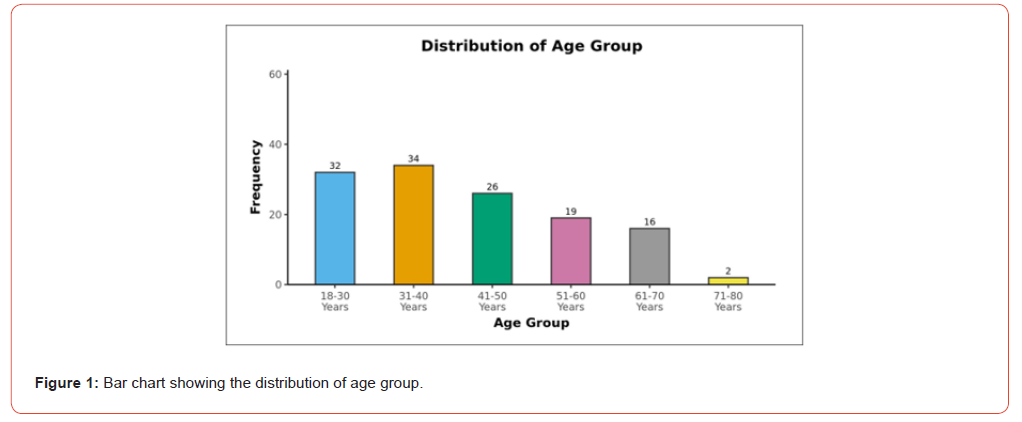
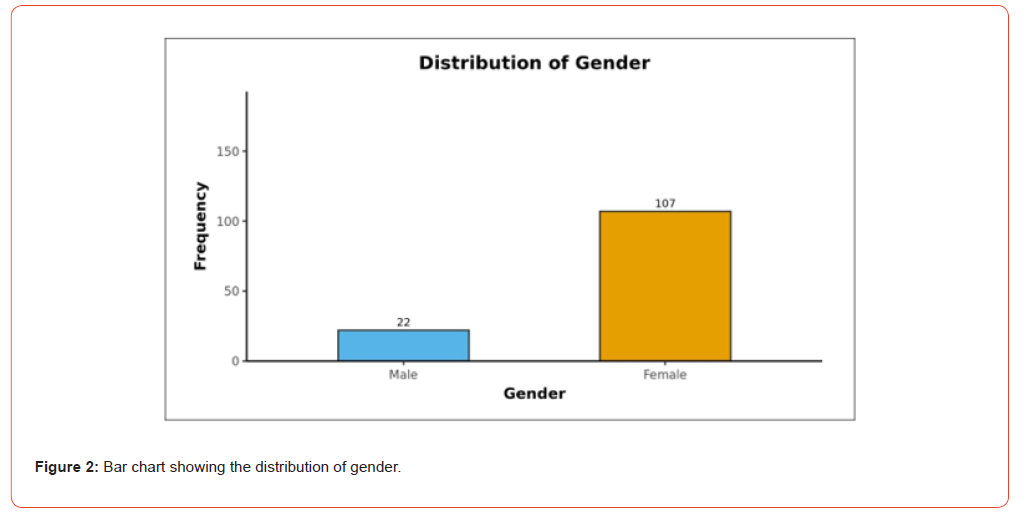
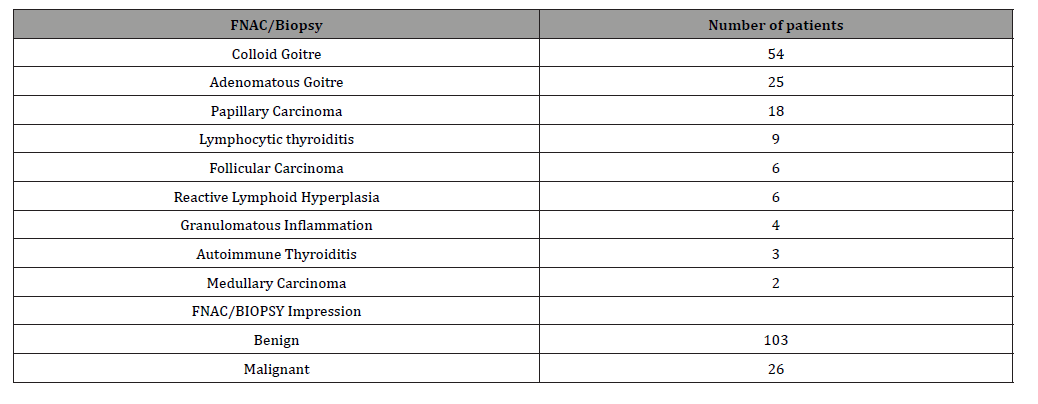
Table 1, Figures 3 and 4 show FNAC result for thyroid nodule. 54 patients (41,86%) had colloid goiter, 25 patients (19.37%) had adenomatous goiter, 18 patients (13.95%) had papillary carcinoma, 9 patients (6.97%) had lymphocytic thyroiditis, 6 patients (4.65%) had follicular carcinoma, 6 patients (4.65%) had reactive lymphoid hyperplasia, 4 patients (3.10%) had granulomatous inflammation, 3 patients (2.32%) had autoimmune thyroiditis and 2 patients (1.55%) had medullary carcinoma. That means, thyroid nodules were benign in 103 patients (79.84%), and malignant in 26 patients (20.15%).
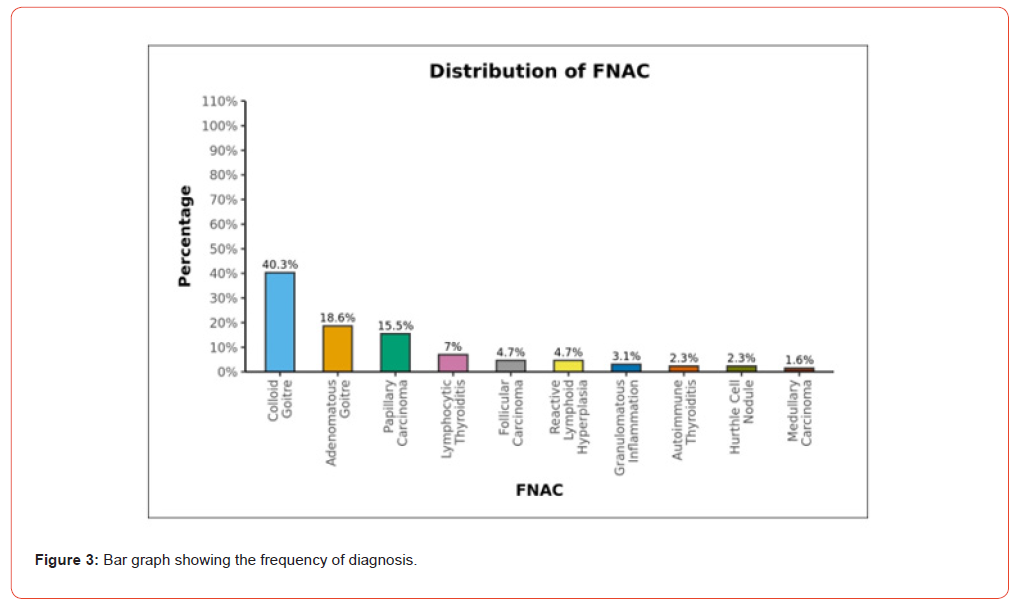
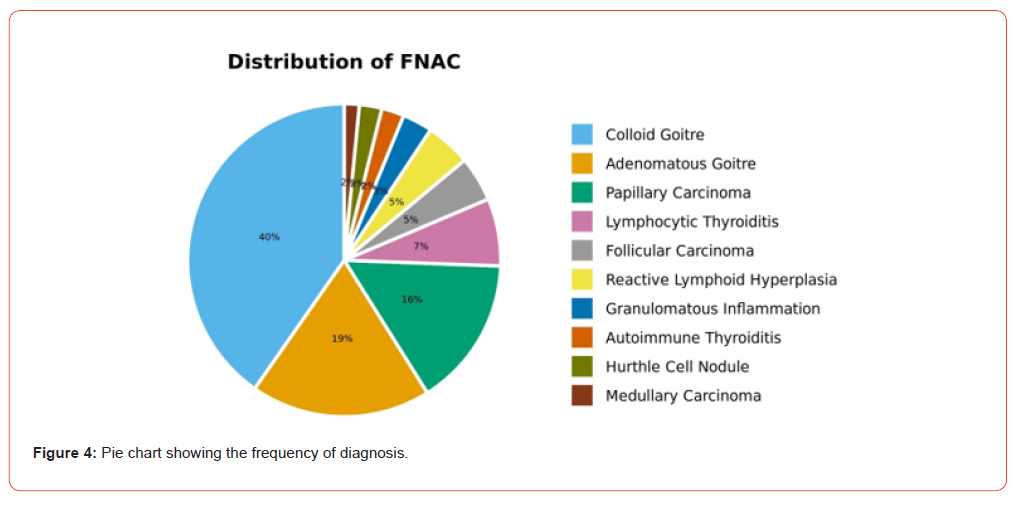
Table 1:Table showing FNAC/Biopsy result for thyroid nodules.
Diagnostic performance of SWE:
Figure 5 shows diagnostic performance of Emean (Kpa) in predicting benign versus malignant thyroid nodules. With cut of 25.05, sensitivity was 88%, specificity was 85%, and area under ROC curve = 0.894. Figure 6 shows diagnostic performance of Emax (Kpa) in predicting benign versus malignant thyroid nodules. With cut of 46.17, sensitivity was 81%, specificity was 85%, and area under ROC curve = 0.854. Figure 7 shows diagnostic performance of TIRADS + Emean (Kpa) + Emax (Kpa) + Esd (Kpa) in predicting benign versus malignant thyroid nodules. With cut of 0.23, sensitivity was 92%, specificity was 93%, and area under ROC curve = 0.979. Figure 8 and table 2 shows comparison of diagnostic performance of various predictors in differentiating benign versus malignant thyroid nodules. TIRADS + SWE had best sensitivity, specificity, positive predictive value, negative predictive value and diagnostic accuracy; in comparison to TIRADS impression, and Emean (Kpa) with cut of 25.05.
Figure 9 and 10 show representative case of benign and malignant thyroid nodule.
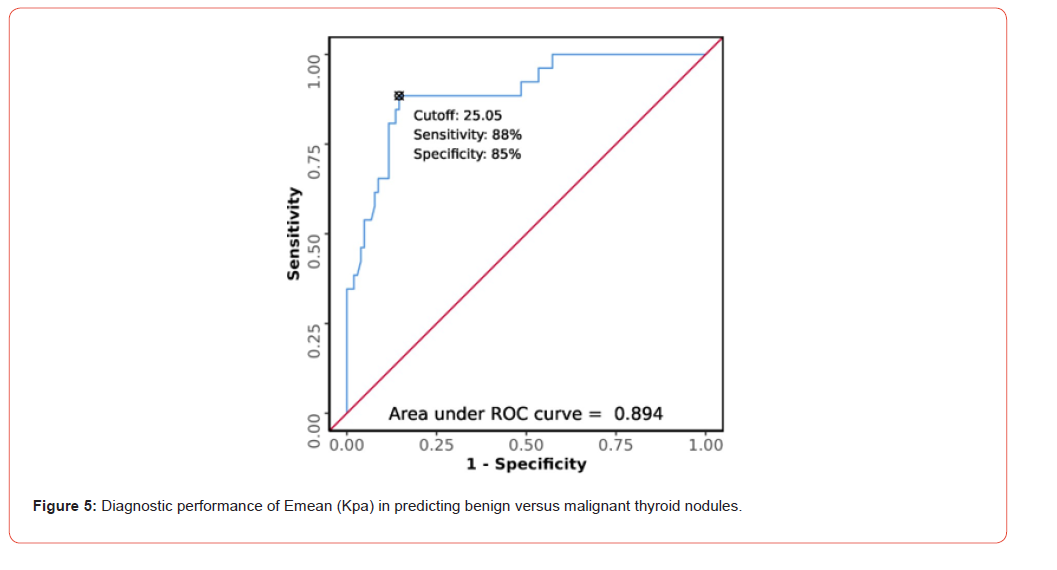
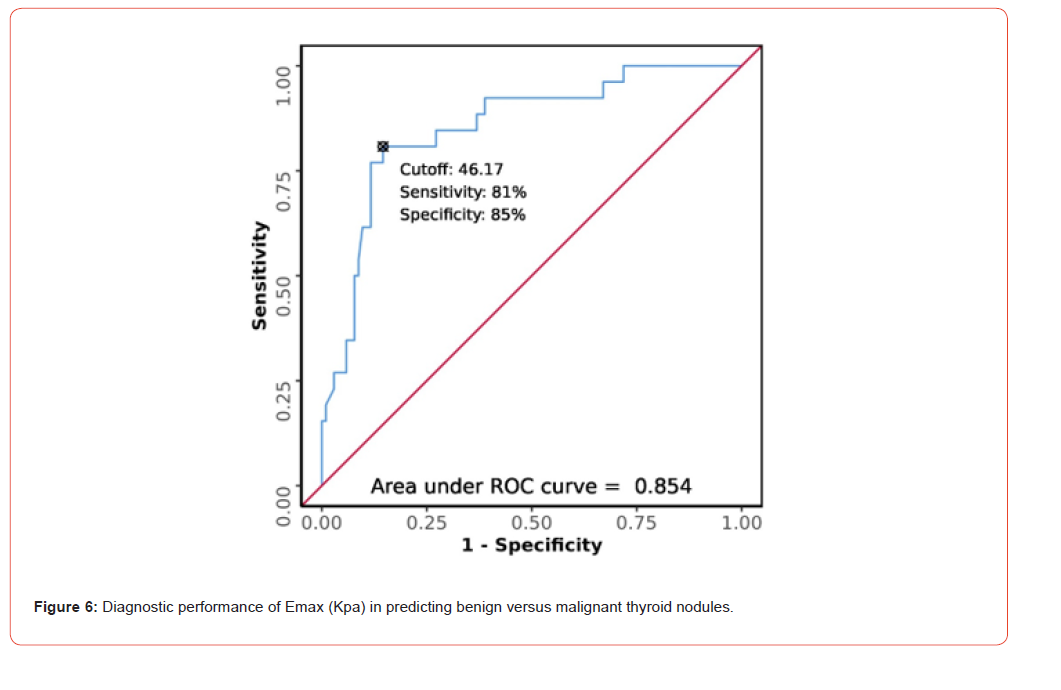
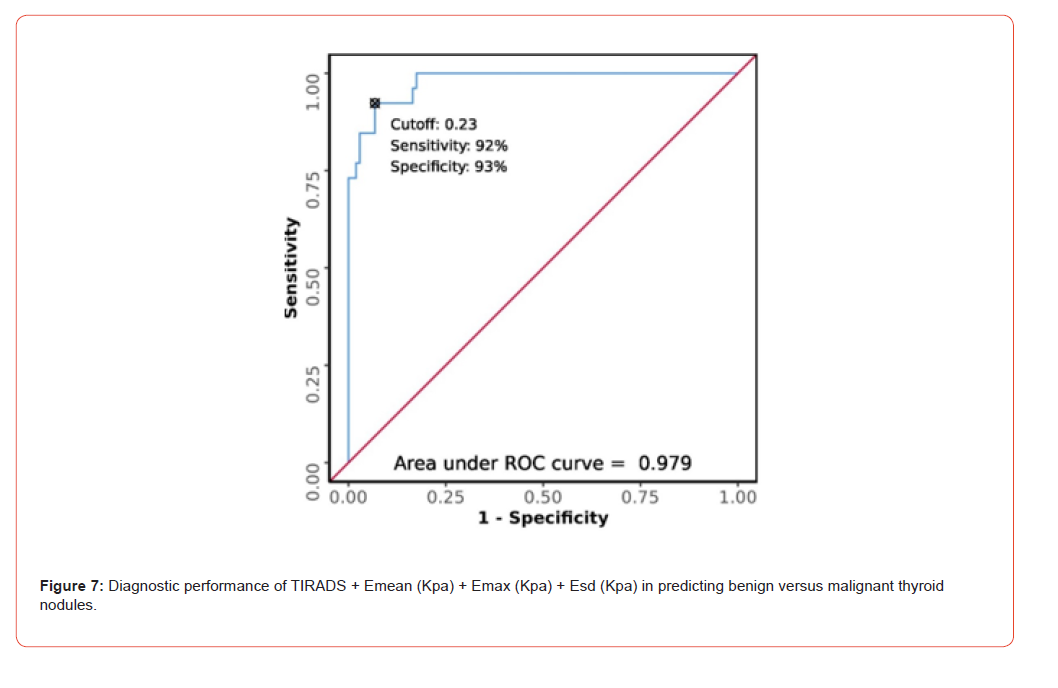

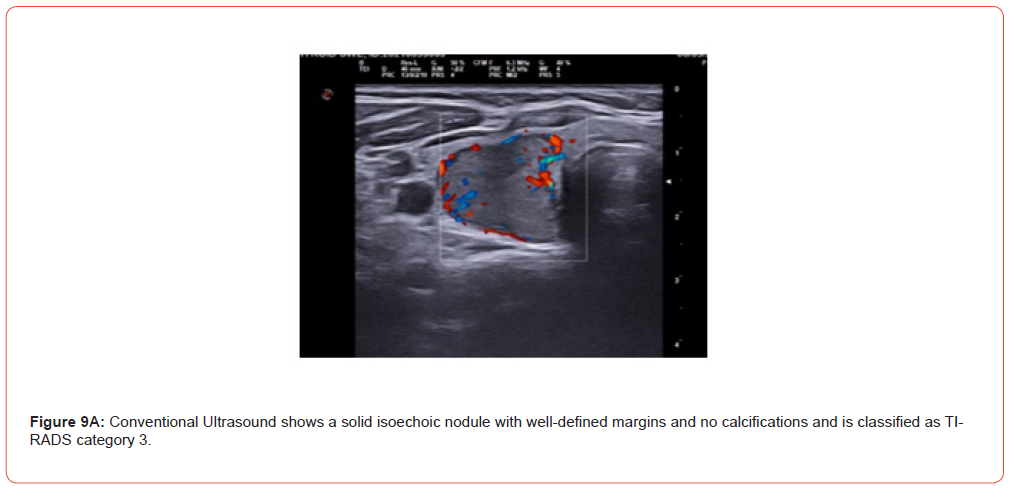
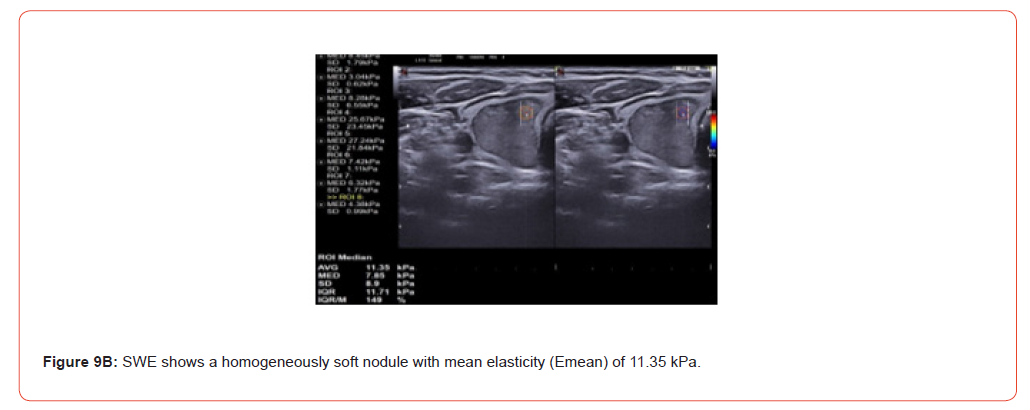
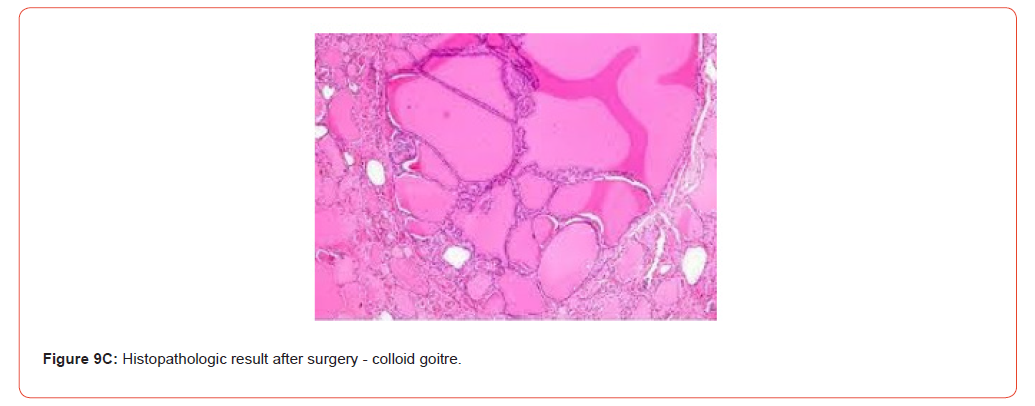
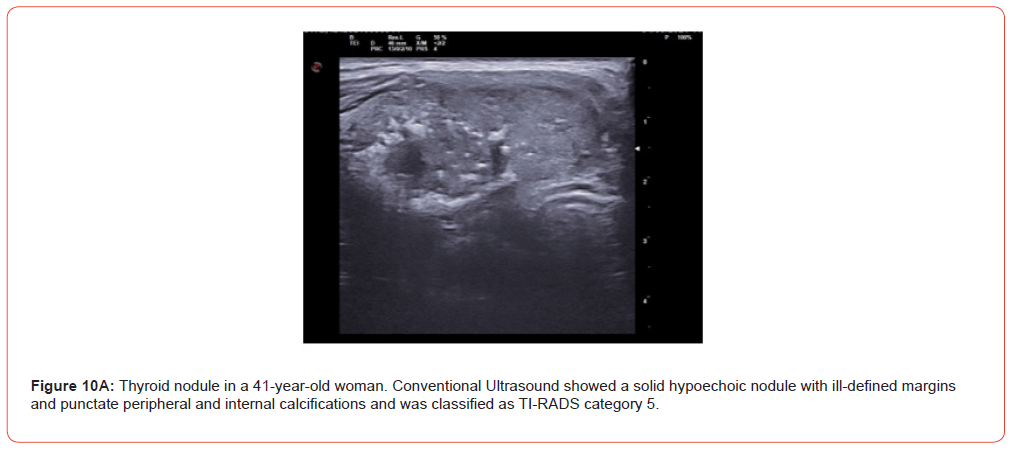
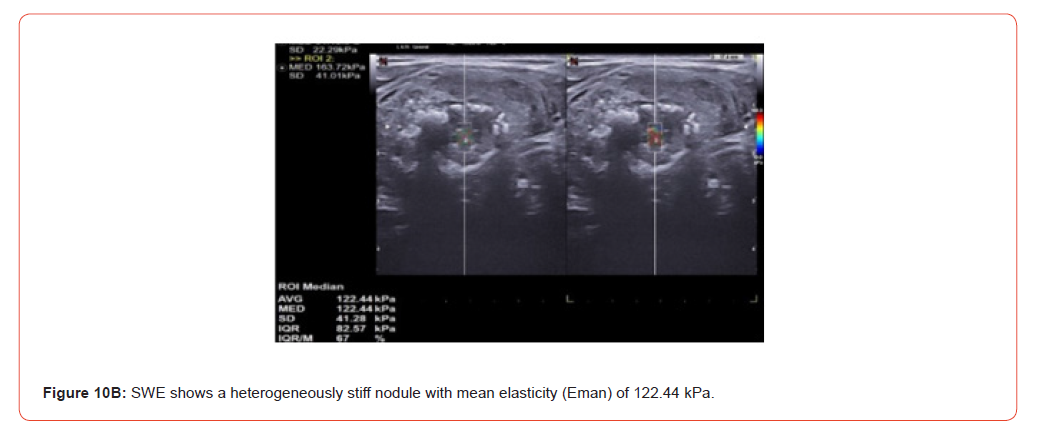
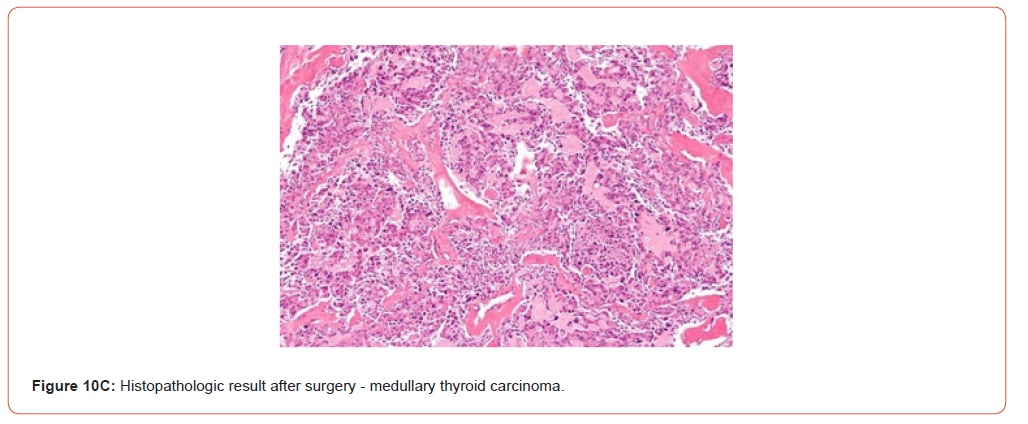
Table 2:Table showing FNAC/Biopsy result for thyroid nodules.

Discussion
Thyroid nodules are common in general population, with high resolution sonography picking up thyroid nodules is as high as 68 percent of cases [13]. B mode sonography was once the standard of care for distinguishing between benign and malignant thyroid nodules. Solid nodules with ill-defined margins, hypoechoic nodules, microcalcifications, nodules taller than wide, or with extra-nodular extension, and intranodular vascularity are sonographic signs that increase the chance of thyroid nodule to be malignant. However, no one criterion, or even a combination of these factors, is sensitive or specific enough to predict, whether a thyroid nodule is benign or malignant. Hence, invasive procedure such as FNAC is currently the primary diagnostic approach for evaluation of thyroid nodule.
FNAC has been found to be a simple, invasive, and cost-effective procedure, for differentiating benign from malignant thyroid nodules; with sensitivity ranging from 54% to 90%, and specificity ranging from 60% to 96%. However, sampling issues with small thyroid nodule, and nodules deep within the thyroid gland, limit the applicability and diagnostic accuracy of FNAC.
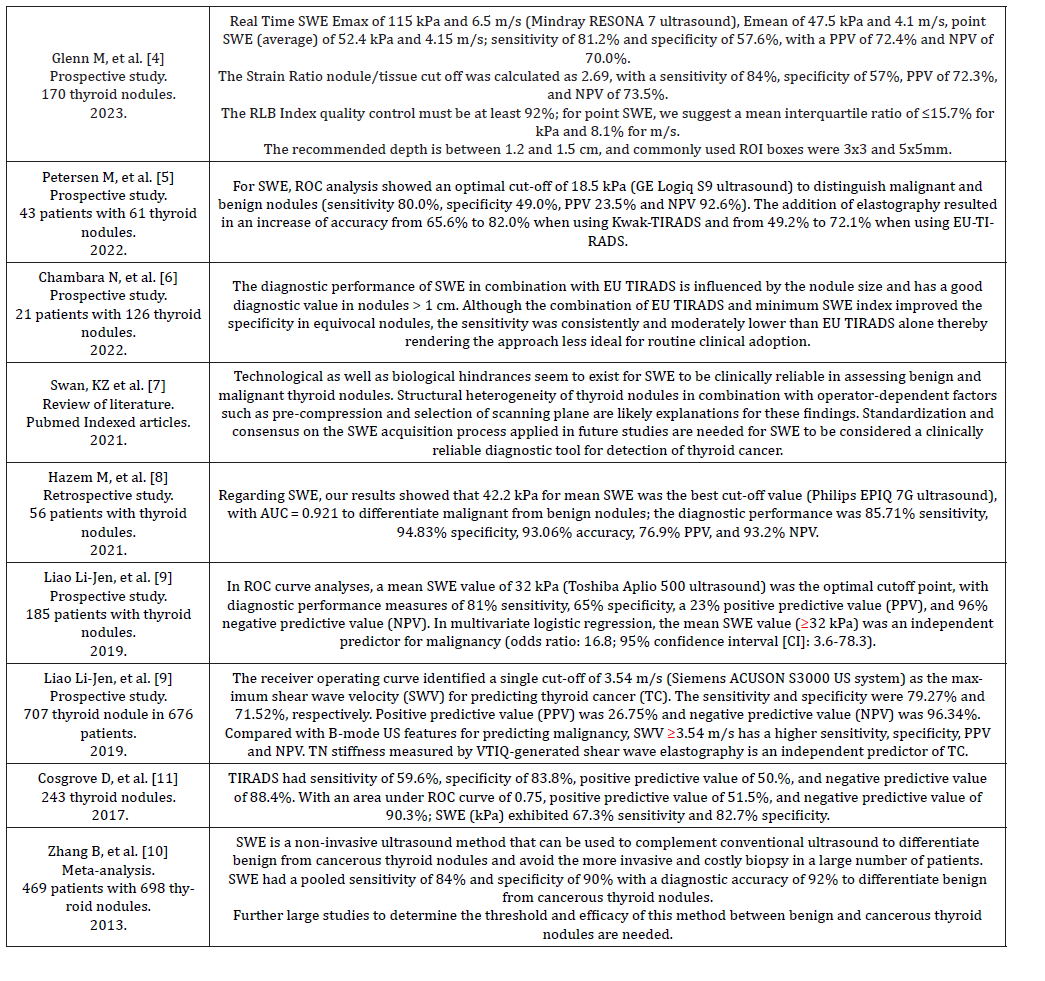
Only a few research studies have looked at TIRADS diagnostic performance, when used in combination with SWE Different ultrasound machines have different cut off value for mean SWE for differentiating benign from malignant thyroid nodule Table 3. We should know our ultrasound machine cut off value and this should be based on our study population.
There are some pre-requisites for doing SWE of thyroid nodule.
a) Thyroid ultrasound should be performed using a highresolution
ultrasound scanner, equipped with a 12 to 15 MHz
linear probe.
b) During B-mode USG, most suspicious thyroid nodule
should be identified, and a region of interest for elastography
should be identified.
c) The linear transducer should be kept perpendicular to
skin, with minimal compression, and with copious amount of
gel on skin, for assessment of thyroid nodule.
d) The Quality (Q) factor should be assessed, and elasticity
values should be taken only when the Q value is high.
e) During acquisition of SWE image, quantitative elasticity
value should be acquired using circular region of interest (ROI)
for thyroid nodule.
f) Large circular ROI should be placed to cover as much
thyroid nodule as possible.
g) Internal or peripheral calcification/cystic area should be
deliberately avoided during SWE assessment.
h) No surrounding normal thyroid tissues should be included
in ROI.
i) Mean elasticity (E_mean), standard deviation of elasticity
(E_SD), and maximum elasticity (E_max) of thyroid nodule
should be measured.
The diagnostic performance of SWE alone, and along with conventional ultrasound (using TIRADS scoring system) was investigated in our study; with cytopathology correlation. Diagnosis of Follicular Carcinoma was made on histopathology, after surgery. According to our findings, combining TIRADS and SWE increases the overall diagnostic accuracy in differentiating thyroid nodules, with intermediate or high TIRADS score. The mean elasticity value and overall quantitative SWE values in malignant thyroid nodules were much greater than in benign thyroid nodules in our investigation, and this was consistent with previously published studies.
For discriminating malignant and benign thyroid nodules, SWE had a sensitivity of 84% and specificity of 88%. According to area under ROC curve, SWE has a diagnostic accuracy of 0.89. When TIRADS and SWE were combined in our investigation, the combined AUC was 0.97, within the 95 percent confidence range, with a P value of 0.001 (statistically significant).
SWE was found to be an essential complementary investigation, to the existing TIRADS, for predicting malignanct thyroid nodules. It may bring a new dimension to thyroid nodule sonography, with the added benefit of being a highly reproducible, operator independent approach, that can detect large nodules as well as those with dimensions of a few millimeters, even in multinodular goiter.
SWE examination of the thyroid nodule can be easily integrated into conventional ultrasound examination, as this procedure is completely painless, and requires only few extra minutes, with no separate patient preparation. SWE has the potential to distinguish benign from malignant thyroid nodules; offering non-invasive complementary information, to already existing conventional ultrasound examination. The main role of SWE is to indicate which nodule should be followed up without FNAC or surgery, because of its high negative predictive value (NPV).
Table 3:Review of Literature.
Conclusion
The TIRADS risk scoring system is an effective clinical evaluation tool, and the combination of SWE and TIRADS scoring system improves the sensitivity, specificity, positive predictive value, negative predictive value, and diagnostic accuracy, in differentiating benign from malignant thyroid nodules.
Limitations and Future Directions
None.
Ethical Approval
All procedures performed in the study involving human participants were in accordance with the Ethical Standards of the Institutional and /or National Research Committee, and with the 1964 Helsinki Declaration and its later amendments, or comparable Ethical Standards.
Informed Consent
Informed consent was obtained from all the individual participants included in this study.
Financial Support and Sponsorship
None.
Conflict of Interest
None declared.
References
- Sebag F, Vaillant-Lombard J, Berbis J, Griset V (2010) Shear wave elastography: a new ultrasound imaging mode for the differential diagnosis of benign and malignant thyroid nodules. J Clin Endocrin Metabol 95(12): 5281-5288.
- Horvath E, Majlis S, Rossi R, Franco C (2009) An ultrasonogram reporting system for thyroid nodules stratifying cancer risk for clinical management. J Clin Endocrin Metabol 94(5): 1748-1751.
- Kwak JY, Han KH, Yoon JH, Moon HJ (2011) Thyroid imaging reporting and data system for US features of nodules: a step in establishing better stratification of cancer risk. Radiology 260(3): 892-899.
- Glenn M, Alejandro M, Michael U, Julio O (2023) Elastography of the thyroid nodule, cut-off points between benign and malignant lesions for strain, 2D shear wave real time and point shear wave: a correlation with pathology, ACR TIRADS and Alpha Score. Front. Endocrinol 14: 1182557.
- Petersen M, Schenke SA, Firla J, Croner RS (2022) Shear Wave Elastography and Thyroid Imaging Reporting and Data System (TIRADS) for the Risk Stratification of Thyroid Nodules-Results of a Prospective Study. Diagnostics (Basel) 12(1): 109.
- Chambara N, Lo X, Chow TCM, Lai CMS (2022) Combined Shear Wave Elastography and EU TIRADS in Differentiating Malignant and Benign Thyroid Nodules. Cancers 14(22): 5521.
- Swan KZ, Nielsen VE, Bonnema SJ (2021) Evaluation of thyroid nodules by shear wave elastography: a review of current knowledge. J Endocrinol Invest 44: 2043-2056.
- Hazem M, Zakaria OM, Daoud MYI, Al Jabr IK (2021) Accuracy of shear wave elastography in characterization of thyroid nodules in children and adolescents. Insights Imag 12(1): 128.
- Liao Li-Jen, Chen Huan-Wen, Hsu Wan-Lun, Chen Yung-Sheng (2019) Comparison of Strain Elastography, Shear Wave Elastography, and Conventional Ultrasound in Diagnosing Thyroid Nodules. Journal of Medical Ultrasound 27(1): 26-32.
- Zhang B, Ma X, Wu N, Liu L (2013) Shear wave elastography for differentiation of benign and malignant thyroid nodules: a meta-analysis. J Ultrasound Med 32: 2163-2169.
- Cosgrove D, Barr R, Bojunga J, Cantisani V (2017) WFUMB guidelines and recommendations on the clinical use of ultrasound elastography: part 4. Thyroid. Ultrasound in Medicine & Biology 43(1): 4-26.
- Syed ZA, Zubair WB, Cochand-Priollet B, Schmitt FC (2023) The 2023 Bethesda System for Reporting Thyroid Cytopathology. Thyroid 33(9): 1039-1044.
-

This work is licensed under a Creative Commons Attribution-NonCommercial 4.0 International License.