

 Research Article
Scientific Landscape of Osteoporosis in the Maxillofacial Region: A Bibliometric Analysis
Department of Oral and Maxillofacial Surgery, Faculty of Dentistry, Karadeniz Technical University Trabzon, Turkey
Received Date:September 26, 2025; Published Date:October 22, 2025
Abstract
Objectives: This study aimed to map the scientific landscape of osteoporosis research in the maxillofacial region. Using a bibliometric approach,
the study sought to identify major themes, leading contributors, and evolving research priorities, thereby providing a reference framework for
clinicians and researchers.
Methods: A comprehensive search was conducted in Scopus, Web of Science, and PubMed databases, covering the years 2000 to 2025. Eligible
publications were analyzed according to citation counts, publication trends, contributing authors, organizations, countries, and journals. Bibliometric
and network analyses, including co-authorship, co-citation, bibliographic coupling, and keyword co-occurrence, were performed using VOSviewer
software to visualize research networks and thematic clusters.
Results: The analysis identified 8050 publications with steady growth in output. The United States, China, and Japan were the most productive
countries, while leading institutions and authors formed distinct collaboration clusters. Frequent keywords such as bisphosphonates, osteonecrosis,
dental implants, osseointegration, and bone mineral density underscored the dual focus on pharmacological safety and implant-related challenges.
Denosumab appeared as a newer focus, while periodontitis reflected systemic–oral health links. Abstract terms such as cell, mouse, and rat highlighted
experimental models, whereas patient, risk, and woman reflected clinical and demographic relevance.
Conclusion: This bibliometric mapping demonstrates that maxillofacial osteoporosis research is shaped by pharmacological concerns, implantrelated
challenges, and translational innovations. The findings emphasize the clinical importance of risk assessment in implant planning, MRONJ
prevention, and periodontal care, while identifying opportunities for future research in regenerative therapies and digital technologies.
Keywords:Maxillofacial region; Data visualization; Dental implants; Oral health; Osteoporosis
Introduction
Osteoporosis is a systemic skeletal disorder characterized by low bone mass and microarchitectural deterioration of bone tissue, leading to increased bone fragility and fracture risk, especially in the elderly population [1]. While it predominantly affects load-bearing bones such as the spine, hip, and femur, growing evidence suggests that osteoporosis also impacts the craniofacial skeleton, including the maxilla and mandible [2, 3]. This involvement holds clinical relevance in dentistry, where bone quality is critical for procedures such as dental implant placement, periodontal therapy, and oral reconstructive surgery.
In the context of craniofacial health, osteoporosis may compromise alveolar bone integrity, reduce mandibular bone mineral density (BMD), and predispose individuals to tooth loss, delayed osseointegration, and peri-implant complications [4, 5]. As the population ages and the demand for dental rehabilitation increases, understanding the interplay between systemic bone metabolism and oral bone health becomes increasingly vital. Additionally, osteoporosis-related changes in trabecular architecture can impair the success of oral surgical interventions and influence prosthetic outcomes [6].
Bone mineral density assessment methods, particularly dual- energy X-ray absorptiometry (DXA), have been widely used to evaluate osteoporosis in axial skeleton sites; however, their application in the craniofacial region remains less standardized [7]. Recent advances in imaging technologies such as cone-beam computed tomography (CBCT) have enabled more precise evaluation of maxillofacial bone quality, further linking systemic osteoporosis with dental diagnostic practices [8].
Despite its clinical significance, the research landscape on osteoporosis in relation to craniofacial and dental health remains fragmented and heterogeneous. There is a growing body of literature addressing the associations between systemic bone loss and oral manifestations; however, this knowledge is dispersed across various disciplines, including endocrinology, maxillofacial surgery, periodontology, and geriatric dentistry [9]. As such, a comprehensive mapping of this interdisciplinary field is needed to identify key contributors, research trends, and emerging topics.
Bibliometric analysis has proven to be a robust and objective method for evaluating scientific output, visualizing intellectual structures, and identifying research frontiers in each domain [10]. By leveraging visualization tools such as VOSviewer, bibliometric studies allow researchers to uncover co-authorship networks, citation patterns, keyword co-occurrence clusters, and geographical research distributions. These methods are particularly useful for tracking the evolution of interdisciplinary topics like osteoporosis and oral health, where research is distributed across diverse journals and academic domains [11].
Given the increasing integration of systemic and oral health paradigms, this study aims to conduct a bibliometric analysis of literature related to osteoporosis and the craniofacial skeleton. Focusing on themes such as bone density assessment, oral complications of osteoporosis, and novel therapeutic approaches, the goal is to visualize the structure, dynamics, and collaboration patterns within this evolving research area. Understanding these bibliometric patterns may inform future interdisciplinary collaborations, guide clinical research priorities, and ultimately improve patient care at the intersection of skeletal and oral health.
Material and Methods
Data Sources and Search Strategy
This bibliometric analysis was conducted to evaluate global research trends and collaboration patterns at the intersection of osteoporosis and oral health. Three major databases were selected as data sources due to their comprehensive indexing of biomedical literature: Scopus, Web of Science Core Collection (WoSCC), and PubMed. These platforms were chosen to ensure broad and representative coverage across both medical and dental disciplines.
A systematic search was conducted on August 1, 2025, using the following query string: “(osteoporosis OR osteopenia) AND (dentistry OR ‘oral health’ OR ‘dental implant’ OR ‘dental implants’ OR periodontics OR ‘jawbone’ OR ‘alveolar bone’ OR ‘maxillofacial’ OR ‘oral surgery’)”.
This search strategy was designed to capture publications focusing on the skeletal implications of osteoporosis in the craniofacial region and its effects on various dental disciplines, including implantology, periodontology, oral and maxillofacial surgery, and prosthodontics.
The search was limited to peer-reviewed articles published between January 1, 2000, and July 1, 2025, and restricted to publications in the English language. Duplicate records across databases were removed manually. All bibliometric records, including titles, authors, abstracts, keywords, source journals, publication years, citation counts, and references, were exported in CSV and RIS formats for further analysis.
Publications that did not align with the study’s thematic focus or lacked the necessary scientific rigor were excluded from the analysis. This included conference abstracts, editorials, letters to the editor, and case reports, as these formats typically lack full methodological detail and standardized peer review. Additionally, articles that did not specifically explore the relationship between systemic bone health and craniofacial or dental conditions were removed. Duplicate records identified across databases, as well as entries missing essential bibliometric metadata (e.g., author names, titles, citation data), were also excluded to maintain data integrity (Figure 1).
Bibliometric and Visualization Analysis
Following data curation, bibliometric indicators were analyzed using VOSviewer (version 1.6.20) to create visual representations of the scientific landscape. A comprehensive set of analyses was conducted to explore the structural and thematic characteristics of the literature. Specifically, co-authorship analyses were carried out at the levels of authors, organizations, and countries to identify collaborative networks and key contributors. Keyword co-occurrence analysis was performed to detect frequently addressed topics and emerging themes within the field.
Citation analyses were undertaken to assess the scholarly impact of individual documents, authors, organizations, countries, and sources. In addition, bibliographic coupling was analyzed at the levels of documents, authors, organizations, countries, and journals, offering insights into shared intellectual backgrounds and research linkages. Finally, co-citation analyses focused on cited references, cited authors, and cited sources, revealing foundational works and conceptual relationships within the field.

Appropriate thresholds (e.g., minimum number of publications or citations) were applied to refine visual clarity. Network, overlay, and density maps were used to illustrate the temporal and structural dynamics of the research area, providing a macroscopic view of the knowledge landscape at the intersection of osteoporosis and craniofacial research.
Result
The temporal analysis of publications revealed a progressive increase in scholarly output related to osteoporosis and oral health between 2000 and 2025. As illustrated in Figure 2, the annual number of publications remained relatively low during the early 2000s but exhibited a notable upward trend from 2010 onwards. This surge in publication activity may be attributed to the growing clinical recognition of osteoporosis as a systemic factor influencing dental implant success, bone regeneration, and maxillofacial surgical outcomes.
In particular, the steady rise after 2015 corresponds with an increased emphasis on interdisciplinary research involving oral surgery, periodontology, prosthodontics, and systemic bone metabolism. The peak in recent years reflects both heightened research interest and improved diagnostic and therapeutic strategies addressing the oral manifestations of osteoporosis. This trend supports the notion that osteoporosis is increasingly being investigated not only as a skeletal condition but also as a critical determinant of craniofacial health and function.
Author Collaboration and Citation Network Analyses
The co-authorship analysis of authors revealed that Taguchi Akira had the highest number of publications (n=21), followed by Campisi Giuseppina and Wactawski-Wende Jean, each with 13 publications. In terms of citation impact, Ruggiero Salvatore L. was the most cited author (7330 citations), followed by Dodson Thomas B. (3825 citations) and Marx Robert E. (3056 citations). Other prolific contributors included Genco Robert J., Okamoto Roberta, and Otto Sven, each demonstrating notable scholarly output and collaboration within the field. This distribution indicates a concentration of research activity among a limited group of influential authors, reflecting their central role in advancing the intersection of osteoporosis/ osteopenia and oral health research (Table 1).
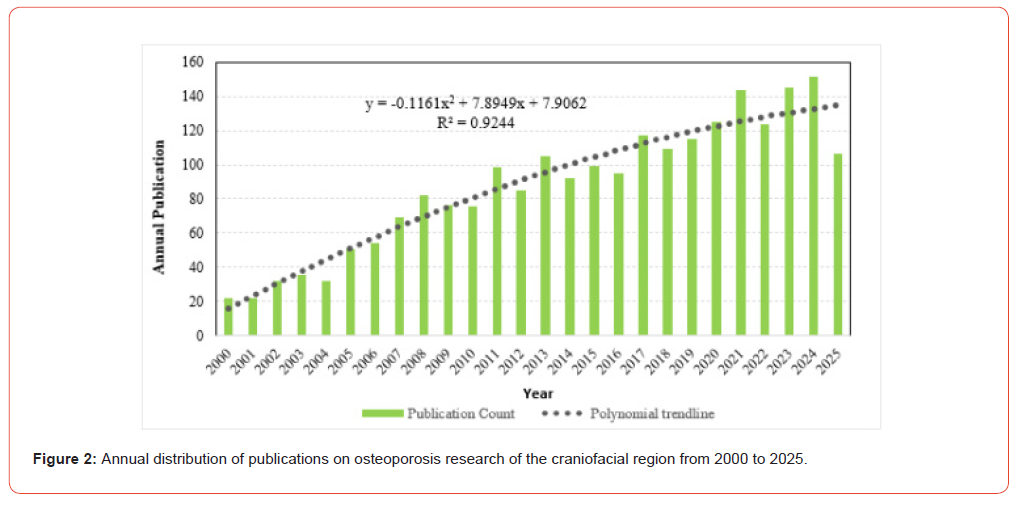
Table 1:Authors with the Highest Number of Publications and Citations.

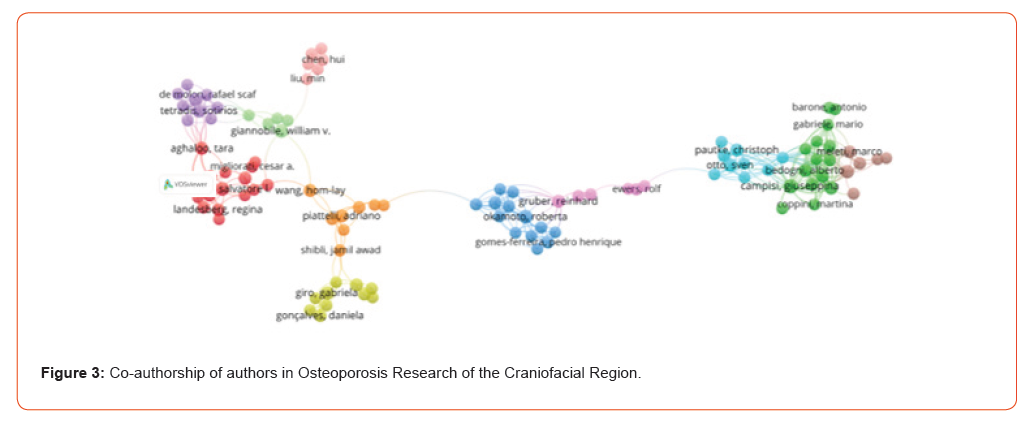
The co-authorship network visualization demonstrated several distinct clusters of collaboration among authors working on osteoporosis/ osteopenia-related research in dentistry. Notably, a large red cluster was centered around Ruggiero Salvatore L., Landesberg Regina, and Aghaloo Tara, indicating strong collaborative ties in the field of oral surgery and maxillofacial bone health. The green cluster, comprising Campisi Giuseppina, Bedogni Alberto, and Barone Antonio, highlighted another core group with significant interconnections, particularly in clinical research on jawbone conditions. Other prominent clusters included Adriano Piattelli and Hom-Lay Wang (orange cluster) with strong links to biomaterial and implant-related studies, as well as Roberta Okamoto and Reinhard Gruber (blue cluster), focusing on experimental and translational research. The clear separation yet occasional linking between clusters suggests that while research groups are often regionally or thematically concentrated, there are key authors who act as bridges facilitating international and interdisciplinary collaboration (Figure 3).
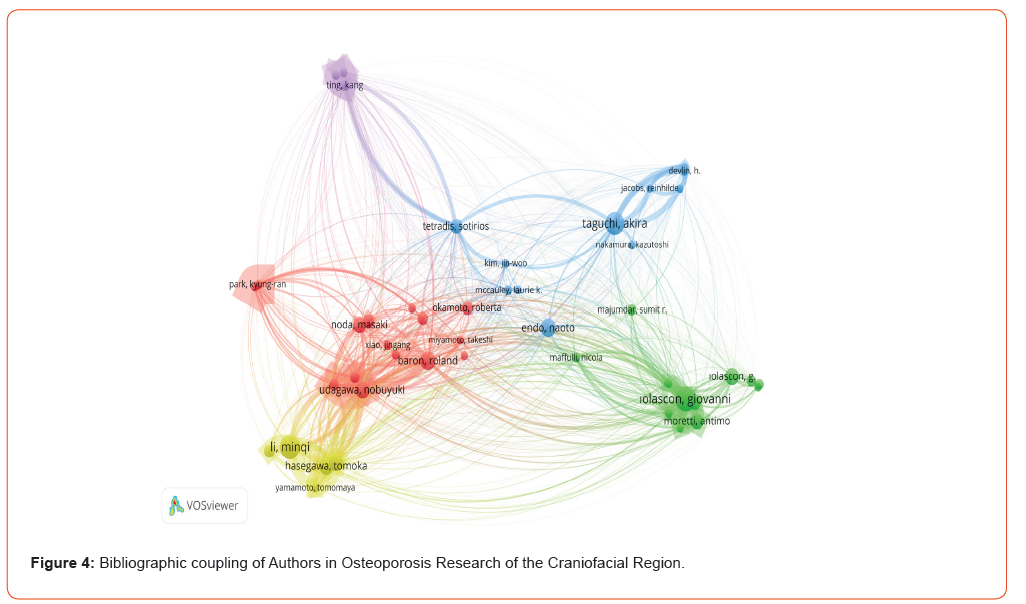
The bibliographic coupling analysis of authors identified several prominent clusters, each representing researchers who share similar reference patterns in their publications. The largest red cluster centered around Baron Roland, Udagawa Nobuyuki, and Noda Masaki, reflecting a strong thematic alignment in mechanistic and experimental studies on bone metabolism. The green cluster, led by Iolascon Giovanni and Moretti Antimo, indicated a clinical and epidemiological research focus, particularly on osteoporosis-related oral health issues. The blue cluster, including Taguchi Akira, Jacobs Reinhilde, and Devlin H., demonstrated significant coupling in diagnostic imaging and epidemiological approaches. Smaller but well-defined clusters included the yellow group around Li Minqi and Hasegawa Tomoka, focusing on molecular and cellular mechanisms, and the purple group led by Ting Kang, representing specialized but connected research domains. The dense inter-cluster links suggest a high degree of interdisciplinary overlap, indicating that authors often draw on a common set of foundational studies despite working in distinct subfields (Figure 4).
The citation analysis of authors indicated that Albulescu D.M. ranked first with 66 publications, followed by Iolascon Giovanni (58 publications) and Li Minqi (56 publications). Taguchi Akira also emerged as a prominent contributor with 53 publications, frequently cited by Noda Masaki (1313 citations). In terms of citation impact, Baron Roland was the most cited author (4671 citations), reflecting his substantial influence in the field. Other highly cited authors included Udagawa Nobuyuki (1955 citations) and Tetradis Sotirios (1339 citations). This pattern suggests a core group of researchers with both high productivity and significant citation impact, indicating their central role in shaping the research landscape on osteoporosis/osteopenia in dentistry and related maxillofacial disciplines (Table 2).
Table 2:Authors with the Highest Number of Publications and Citations.

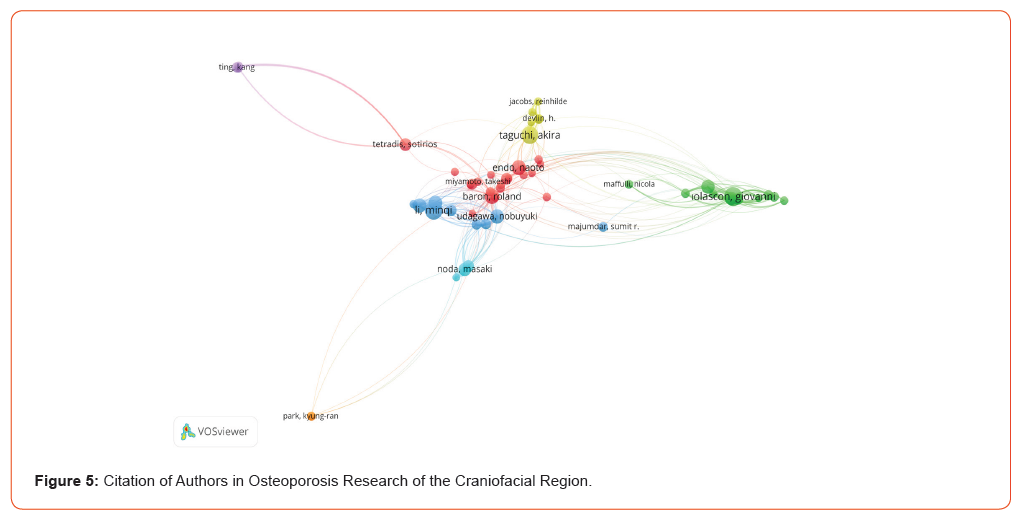
The author citation network visualization revealed distinct clusters representing groups of researchers with closely linked citation patterns. The largest red cluster was centered around Endo Naoto, Baron Roland, and Taguchi Akira, indicating their pivotal influence and frequent co-citation in osteoporosis/osteopenia and oral health research. A prominent green cluster was formed around Iolascon Giovanni, highlighting strong citation connections within clinical and epidemiological studies. The blue cluster, including Li Minqi, Udagawa Nobuyuki, and Noda Masaki, demonstrated a strong focus on experimental and mechanistic research aspects. Smaller clusters, such as those led by Tetradis Sotirios and Jacobs Reinhilde, indicated specialized but interconnected research niches. The interlinking between clusters suggests cross-disciplinary influence, with certain authors serving as bridges facilitating the integration of basic science, clinical, and translational research in the field (Figure 5).
The co-citation analysis of cited authors revealed that Ruggiero Salvatore L. was the most frequently co-cited author (1310 citations), followed closely by Marx Robert E. (1117 citations) and Taguchi Akira (959 citations). Other influential figures included Kanis J.A. (757 citations), Khosla S. (592 citations), and Klemetti E. (577 citations), indicating their significant impact on the research base linking osteoporosis/osteopenia with oral health and implant- related studies. The presence of authors such as Black D.M., Kribbs P.J., Horner K., Takayanagi H., Parfitt A.M., and White S.C. underscores the interdisciplinary nature of the field, bridging clinical dentistry, bone biology, and radiological diagnostics. These findings suggest that the literature in this area builds upon a relatively small but highly influential core group of researchers whose work forms the foundation for subsequent investigations (Table 3).
Table 3:Top 10 Cited Authors of Osteoporosis Research in the Craniofacial Region Based on Total Link Strength in Co-citation Analysis.

The co-citation network visualization of cited authors revealed three major clusters representing distinct but interconnected research domains. The blue cluster, dominated by Ruggiero S.L., Allen M.R., and Otto S., primarily reflects clinical and surgical perspectives on medication-related osteonecrosis of the jaw and implant-related complications. The green cluster, centered on Taguchi A., Klemetti E., and Kribbs P.J., is largely associated with diagnostic imaging, radiographic assessment, and bone quality evaluation in dentistry. The yellow cluster, led by Kanis J.A., Black D.M., and Khosla S., reflects foundational research in osteoporosis epidemiology, fracture risk assessment, and bone metabolism. A red cluster, including Parfitt A.M., Takayanagi H., and Baron R., emphasizes basic bone biology and cellular mechanisms. The dense interconnections among these clusters highlight the interdisciplinary nature of the field, showing how clinical dentistry, radiology, epidemiology, and basic science converge in osteoporosis- and osteopenia-related oral health research (Figure 6).

Organizational Collaboration and Citation Network Analyses
The organizational co-authorship analysis identified the Department of Periodontics and Oral Medicine, School of Dentistry, University of Michigan as having the highest number of publications (n=7) and the greatest citation impact (535 citations), indicating a leading role in research on osteoporosis/osteopenia in dentistry. The Department of Periodontics and Community Dentistry, College of Dentistry, King Saud University also produced seven publications, receiving 418 citations. Other notable contributors included the State Key Laboratory of Oral Diseases (5 documents, 128 citations) and the Department of Pathology and Laboratory Medicine, David Geffen School (4 documents, 329 citations). Institutions such as the Division of Diagnostic and Surgical Sciences at UCLA and the Department of Health Sciences at Kristianstad University demonstrated high citation counts relative to their output, reflecting strong research influence despite fewer publications. This distribution highlights both high-output research highly impactful contributions to the field (Table 4).
Table 4:Top Organizations by Total Link Strength in Co-authorship Network of Osteoporosis Research in the Craniofacial Region.

The organizational co-authorship network visualization revealed a relatively small but interconnected structure, with five primary nodes representing collaborating departments. The Center for Transdisciplinary Research served as a central hub, linking the Department of Public Health with both the Department of Restorative Dentistry and the Department of Prosthetic Dentistry. Additionally, the Department of Public Health maintained strong connections with the Conservative Dental Sciences Department, suggesting collaboration between clinical and preventive dentistry research. The close proximity of these nodes and the balanced distribution of links indicate cross-disciplinary partnerships, particularly between restorative/prosthetic dental specialties and public health-oriented institutions, which may facilitate integrated approaches to osteoporosis- and osteopenia-related oral health research (Figure 7).

The citation analysis of organizations showed that Tokyo Medical and Dental University led both in publication output (282 documents) and citation impact (10,497 citations), highlighting its central role in osteoporosis/osteopenia-related dental research. Other high-output institutions included the University of São Paulo (200 publications), Niigata University (181), and Matsumoto Dental University (137), while top citation counts were also recorded by Harvard University (14,577 citations), the University of Michigan (6,379), and the University of Tokyo (6,088). Notably, some institutions, such as Harvard University and the University of Rochester, demonstrated disproportionately high citation counts relative to their publication volume, indicating the high impact and visibility of their research outputs. This pattern reflects a combination of prolific research hubs and specialized institutions whose contributions have significantly influenced the field (Table 5).
Table 5:Top Organizations by Citation Count in Osteoporosis Research of the Craniofacial Region.

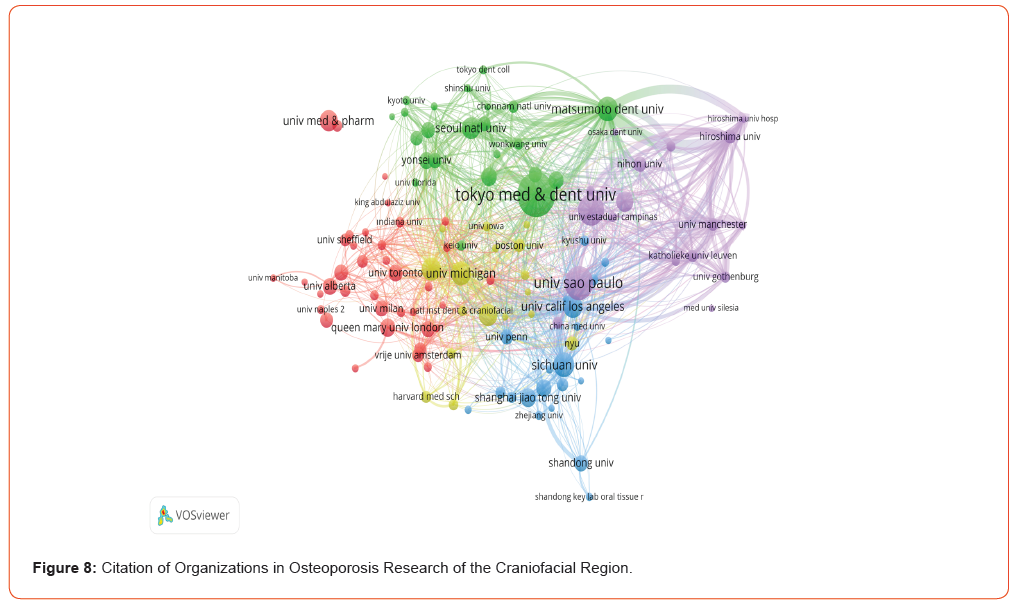
The organizational co-authorship network visualization revealed several major clusters of collaboration across institutions worldwide. The largest green cluster was centered around Tokyo Medical and Dental University, which exhibited extensive connections with Matsumoto Dental University, Seoul National University, and multiple Japanese institutions, reflecting strong regional and national research networks. The purple cluster included the University of Manchester, the University of Gothenburg, and Nihon University, highlighting collaborations across Europe and Asia. The red cluster, featuring Queen Mary University of London, the University of Alberta, and the University of Sheffield, represented a core group of institutions from Europe and North America with close interlinkages. The yellow cluster, including the University of Michigan and Harvard Medical School, demonstrated high-impact collaborations within North America, while the blue cluster, with Sichuan University, Shandong University, and Shanghai Jiao Tong University, reflected a concentration of Chinese institutions actively engaging in international partnerships. The dense interconnections among clusters indicate that research on osteoporosis/osteopenia in dentistry benefits from a globally integrated network of institutions, promoting both regional expertise and cross-continental collaboration (Figure 8).
The bibliographic coupling analysis of organizations revealed a densely interconnected global research network, with Tokyo Medical and Dental University emerging as a central node, strongly linked to other high-output institutions such as Sichuan University, Shandong University, and Matsumoto Dental University. The red cluster, led by Queen Mary University of London, the University of Alberta, and the University of Milan, represented significant European and North American partnerships. The yellow cluster, including Harvard University, the University of Michigan, and the University of California system, reflected influential North American collaborations with extensive citation overlap. The purple cluster, featuring the University of São Paulo, Katholieke Universiteit Leuven, and the University of Manchester, highlighted strong European–South American ties. The blue cluster, composed primarily of East Asian universities such as Shandong University and Showa University, indicated high thematic alignment within the region. Notably, the University of Medicine and Pharmacy appeared as an isolated light blue cluster with minimal bibliographic coupling, suggesting more independent research outputs. This structure demonstrates that while global research on osteoporosis and osteopenia in dentistry is highly collaborative, regional hubs maintain distinct thematic focuses (Figure 9).

Source Collaboration and Citation Network Analyses
The citation analysis of sources revealed that Osteoporosis International was the most productive journal with 619 publications, while the Journal of Bone and Mineral Research held the highest citation count (13,928), underscoring its central influence in the field. Other leading sources included Bone (241 publications, 9,769 citations) and Journal of Bone and Mineral Research (236 publications, 7,328 citations), reflecting their dual role as both prolific and highly cited outlets. Specialty journals such as the Journal of Bone and Mineral Metabolism, Journal of Periodontology, and International Journal of Molecular Sciences contributed substantial volumes of literature, with notable citation impacts ranging from 2,617 to 6,596 citations. The presence of clinically oriented titles, such as the Journal of Oral and Maxillofacial Surgery and Clinical Oral Implant Research, among the top-cited sources highlights the translational relevance of this research domain, bridging osteoporosis/ osteopenia studies with practical applications in oral health and maxillofacial surgery (Table 6).
Table 6:Sources with the Highest Number of Publications and Citations.

The co-citation network of sources revealed that Osteoporosis International occupied the most central position, forming strong citation linkages with both general bone research journals and dental/oral health-specific publications. Closely connected were Journal of Bone and Mineral Research and Bone, which together with Current Osteoporosis Reports formed a core red cluster representing foundational literature on bone metabolism, osteoporosis, and systemic skeletal health. Dental and oral health journals such as the Journal of Oral and Maxillofacial Surgery, Journal of Periodontology, and Clinical Oral Implants Research were positioned in distinct clusters but maintained dense citation connections to the central osteoporosis-focused journals, reflecting the integration of skeletal health concepts into oral and maxillofacial research. The network structure highlights a multidisciplinary citation landscape, where high-impact bone research journals serve as a shared knowledge base for both medical and dental specialties addressing osteoporosis and osteopenia (Figure 10).

Country Collaboration and Citation Analyses
The citation analysis of countries indicated that the USA led by a substantial margin, with 1,922 publications and 100,302 citations, reflecting both high productivity and strong research impact. Japan ranked second in both output (1,558 publications) and citations (44,618), followed by China with 978 publications and 29,187 citations. England, despite ranking sixth in output (505 publications), achieved the third-highest citation count (27,920), highlighting its high citation-per-publication ratio and influence in the field. Other notable contributors included Canada (394 publications, 17,851 citations), Italy (508 publications, 16,099 citations), and Australia (258 publications, 16,514 citations). Germany, South Korea, Switzerland, and Brazil also showed significant citation impact relative to their output. These results underscore the dominance of established research hubs, particularly in North America, Europe, and East Asia, while also highlighting the growing contributions of emerging economies in osteoporosis- and osteopenia-related oral health research (Table 7).
Table 7:Sources with the Highest Number of Publications and Citations.

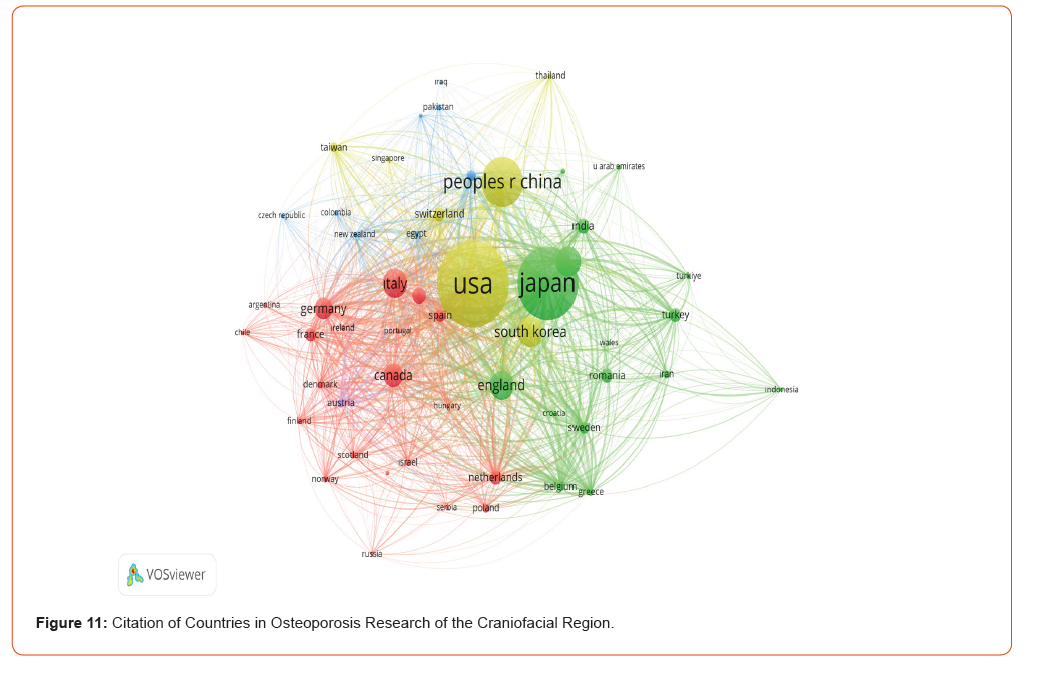
The bibliographic coupling network of countries showed that the USA occupied the most dominant position, with extensive connections to nearly all major research nations, indicating a broad thematic overlap in osteoporosis/osteopenia-related oral health studies. Japan and China also formed major hubs, each demonstrating strong bilateral links with the USA and significant intra-Asian collaborations, particularly with South Korea and India. European countries clustered into two main groups: one centered around Italy, Germany, France, and Spain, and another around England, the Netherlands, and Switzerland, reflecting regional research themes and shared citation bases. Canada maintained strong ties to both the USA and European partners, while emerging contributors such as Türkiye, Romania, and Indonesia connected primarily through collaborations with Asian hubs. The dense interlinking between clusters highlights a globally integrated citation network, with the USA, Japan, and China serving as the primary anchors facilitating cross-regional knowledge exchange (Figure 11).
The co-authorship network of countries revealed that the United States occupied a central and dominant position, with strong collaborative ties to both Asian countries (notably China, Japan, and South Korea) and European partners. China and Japan were the most prominent Asian collaborators, linking extensively with the USA and also maintaining regional research partnerships. Brazil formed a distinct blue cluster, reflecting active collaboration with North American and European institutions, while Italy and Germany emerged as key nodes in the red cluster, characterized by dense intra-European cooperation. The United Kingdom acted as an important bridge between European and North American networks, with strong links to Canada, Switzerland, and the Netherlands. Smaller but notable clusters included India and Saudi Arabia, which maintained visible connections to both the USA and other Asian partners. The overall structure demonstrates a globally interconnected research community, with the USA serving as the principal hub facilitating cross-continental collaboration in osteoporosis/osteopenia- related oral health research (Figure 12).

The bibliographic coupling analysis of countries revealed the USA as the most dominant node, indicating its extensive overlap in cited references with numerous countries across all continents. Japan and China emerged as the second and third largest nodes, respectively, demonstrating strong thematic alignment with the USA and substantial inter-Asian collaborations, particularly with South Korea, India, and Malaysia. European nations formed multiple interconnected clusters: a blue cluster led by Germany, the Netherlands, and Switzerland, and a red cluster anchored by England, France, and Australia, reflecting regional collaboration patterns and shared research foundations. Brazil, Turkey, and Romania appeared as key connectors within the green cluster, linking European and Asian research networks. The dense interlinkages and the presence of multiple cross-regional ties suggest that osteoporosis- and osteopenia- related oral health research is characterized by a globally integrated citation landscape, where the USA, Japan, and China serve as pivotal hubs in knowledge dissemination and thematic convergence (Figure 13).
Co-occurrence Analysis of Author Keywords and Abstract Terms
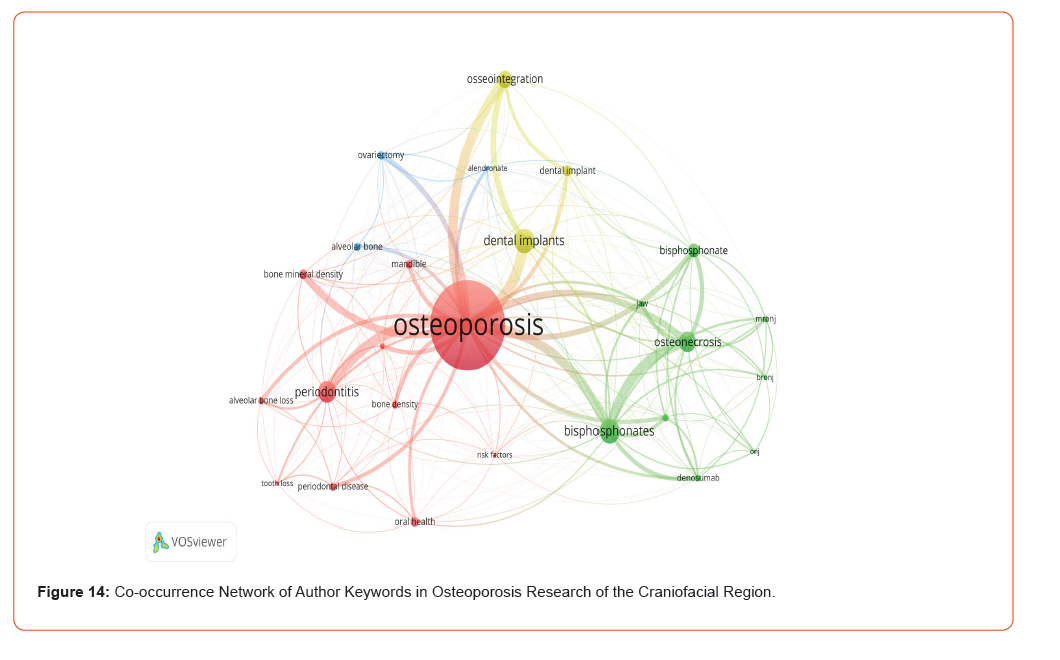
The co-occurrence analysis of author keywords and frequently occurring abstract terms highlights the primary research focuses within osteoporosis studies of the craniofacial region. Among author keywords, osteoporosis was the most prevalent (n = 657), followed by bisphosphonates (n = 179), dental implants (n = 179), osteonecrosis (n = 151), and osseointegration (n = 126). Other notable keywords included periodontitis (n = 158), bisphosphonate (n = 103), denosumab (n = 53), osteonecrosis of the jaw (n = 57), and bone mineral density (n = 71). In the abstract fields, the most frequently used terms were patient (n = 8,769), year (n = 2,739), BMD (n = 2,587), cell (n = 2,390), and mouse (n = 2,363). Additional high-frequency terms included risk (n = 2,202), expression (n = 2,027), rat (n = 1,982), woman (n = 1,729), and activity (n = 1,617). These findings indicate that the literature is primarily centered on patient-related outcomes, bone biology, pharmacological interventions, and experimental models, reflecting both clinical and translational research priorities in the field (Table 8).
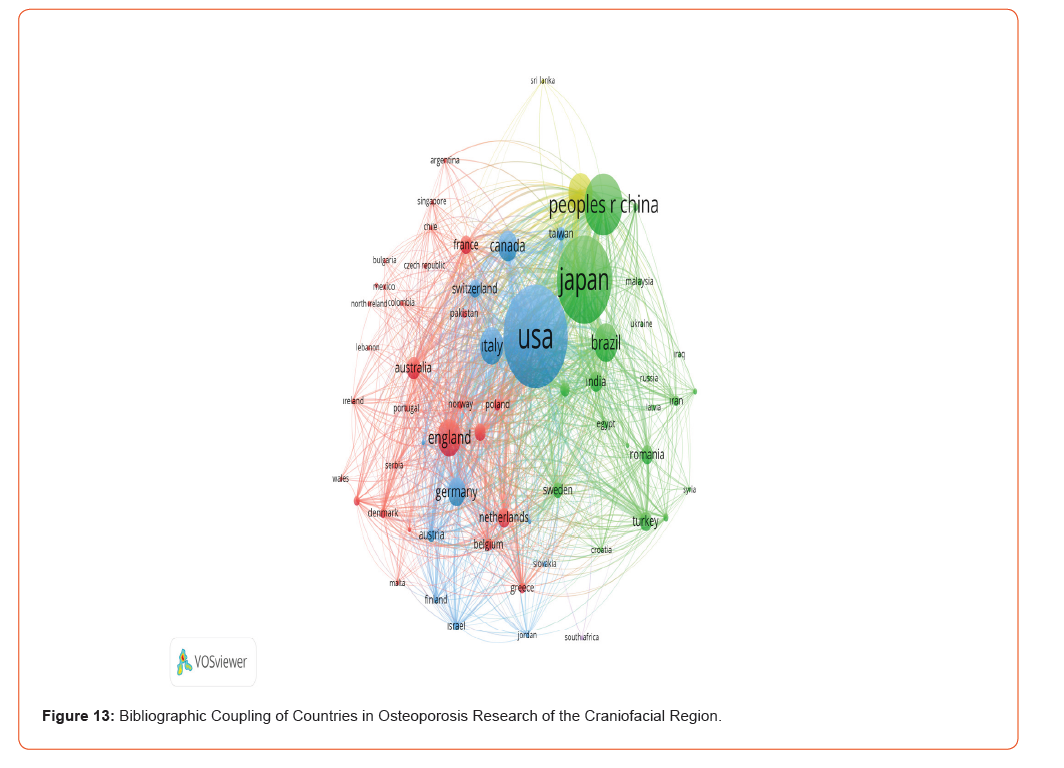
Table 8:Co-occurrence analysis of author keywords and frequently occurring terms in abstract fields.

The keyword co-occurrence network visualization identified osteoporosis as the most central and frequently linked term, forming strong connections with both clinical and research-related concepts. Dental implants and osseointegration were closely associated, representing the implantology-focused branch of the network, while bisphosphonates and osteonecrosis clustered together, indicating research on pharmacological management and medication-related complications such as MRONJ/BRONJ. Periodontitis and bone mineral density appeared in a separate but interconnected red cluster, reflecting the relationship between systemic bone health and periodontal disease. The network’s structure demonstrates a multidisciplinary integration, where systemic skeletal conditions are directly linked to oral health interventions, surgical outcomes, and drug-related risk management, highlighting the interplay between medicine, dentistry, and biomaterials science in osteoporosis-related research (Figure 14).
The combined co-occurrence network of author keywords and abstract terms revealed three major thematic clusters. The red cluster, dominated by terms such as cell, activity, mouse, osteogenesis, and bone regeneration, represents laboratory-based and experimental research, focusing on cellular biology, tissue engineering, and animal models. The green cluster, centered around patient, osteonecrosis, bisphosphonate, and association, reflects clinical and pharmacological studies, particularly on medication-related complications and patient outcomes. The blue cluster, with key terms such as BMD (bone mineral density), year, woman, and index, emphasizes epidemiological research, diagnostic metrics, and population- based studies, often highlighting osteoporosis prevalence in postmenopausal women. The network demonstrates a clear linkage between basic science and clinical research, with the yellow subcluster (e.g., osseointegration, rat, animal, implant stability) bridging preclinical implant studies and patient-centered investigations, underscoring the translational nature of osteoporosis- and implant-related oral health research (Figure 15).

Discussion
Bibliometric analysis has become an increasingly valuable tool for evaluating scientific production and identifying knowledge structures within specific disciplines. Bibliometrics provides a quantitative and objective approach to assess, collaboration networks, and thematic trends over time. By mapping citation patterns, co-authorship, and keyword co-occurrence, such analyses allow researchers to recognize established domains, emerging frontiers, and potential gaps in the literature. This bibliometric mapping delineates the intellectual and collaborative structure of research on osteoporosis in the maxillofacial region over the past quarter-century. Output rose steadily after 2010 with particularly rapid growth from 2015 onward, driven by the clinical recognition that systemic skeletal fragility influences oral rehabilitation, maxillofacial surgery, and periodontal health.
The United States maintained leadership across productivity and influence metrics in our dataset, with Japan and China also occupying prominent positions. Notably, England ranked only sixth by volume but third by total citations, indicating a comparatively high citation-per-publication impact from this country’s contributions. At the institutional level, Tokyo Medical and Dental University emerged as both a high-output and highly cited hub, with additional influence concentrated in North American centers such as Harvard University and the University of Michigan patterns that mirror the global, multi-hub topology reported in related dental bibliometrics [12-14].
The intellectual backbone of this literature is reflected in highly co-cited clinical and mechanistic authorities. A clear divergence emerged between productivity and impact. Akira Taguchi ranked first by number of publications but only tenth by citations, whereas Salvatore Ruggiero placed sixth in output yet was the most‐cited author overall. This pattern suggests that scholarly influence is not strictly volume-dependent and may hinge on the type of contributions. The most cited publication in this field is Robert Marx’s “Pamidronate (Aredia) and zoledronate (Zometa) induced avascular necrosis of the jaws: A growing epidemic” [1] while Ruggiero and colleagues’ guidelines on medication-related osteonecrosis of the jaw (MRONJ) are among the most cited publications. And among these studies are fundamental endocrinology and bone biology studies that define contemporary diagnostic and treatment frameworks for postmenopausal osteoporosis [1, 15].
Within the pharmacotherapy domain, the frequent co-occurrence of bisphosphonates, denosumab, and osteonecrosis in our network maps is congruent with the distinct mechanisms and safety considerations of antiresorptives outlined by Baron et al. and subsequent comparative reviews [16, 17]. On the translational side, the prominence of dental implants, osseointegration, and bone mineral density corresponds to evidence linking systemic BMD, local bone quality, and implant outcomes, and to decades of implant-surface engineering aimed at accelerating stable osseointegration [6, 7, 18, 19]. The appearance of periodontitis among frequent keywords reiterates the biologic interface between systemic bone turnover and alveolar bone loss previously synthesized by Wactawski-Wende and others [2, 3, 5].
Source-level signals further support this structure: osteoporosis- focused journals (e.g., Osteoporosis International; Journal of Bone and Mineral Research) constitute the central co-citation core, while oral and maxillofacial outlets (e.g., Journal of Oral and Maxillofacial Surgery; Clinical Oral Implant Research) form tightly linked clinical satellites—an interdisciplinary pattern echoed in other dental science-mapping studies and method papers [10-14, 20].
The dense basic-science cluster visible in our abstract-term overlay (e.g., cell, expression, mouse/rat) underscores a sustained bench-to-bedside pipeline in bone regeneration and biomaterials research, consistent with contemporary overviews of regenerative strategies and their translation to implant dentistry [19, 21]. Taken together, these comparative signals indicate that the maxillofacial osteoporosis literature has matured into a connected, methodologically diverse domain in which pharmacovigilance (MRONJ), implant biomechanics and surfaces, diagnostic imaging/BMD assessment, and periodontal–systemic links co-evolve and inform clinical decision-making.
The thematic structure of this study reflects foundational concepts in skeletal medicine and oral biology. Diagnostic and risk-stratification work in systemic osteoporosis (e.g., criteria and case finding) provides the epidemiologic backbone that also informs oral decision-making [1]. Associations between mandibular/ alveolar bone and axial skeleton BMD have been described for decades [2, 8], and periodontal-osteoporosis links have plausible inflammatory and remodeling mechanisms [3, 5]. Panoramic indices and opportunistic imaging strategies have been used to flag high-risk women for densitometry referral [4], while CBCT-based assessments now enable site-specific jawbone evaluation complementary to DXA [7].
On the rehabilitative side, our implant-focused clusters align with evidence that systemic bone status and local bone quality jointly modulate implant survival and stability [6, 18]. Surface modification science and bioactive topographies, frequently cited in our network, remain central to accelerating and securing osseointegration in compromised bone [19]. Pharmacology-oriented clusters (bisphosphonates, denosumab) are consistent with the literature on antiresorptive mechanisms and clinical trade-offs [16, 17]; their prominence also reflects the enduring impact of MRONJ on maxillofacial practice and policy [22, 23]. Finally, the presence of regenerative/ biomaterials terms is concordant with broader trends in bone regeneration and tissue engineering, which our mapping suggests are increasingly translated to oral contexts [21]. Methodologically, the acceleration we observed parallels other dental bibliometric fields (e.g., 3D printing, malocclusion research), indicating shared technology-driven inflection points across specialties [20, 24, 25].
Three practice-relevant messages emerge. First, risk assessment should integrate systemic metrics (e.g., BMD/FRAX surrogates) with jaw-specific imaging to inform implant planning and surgical timing, particularly in postmenopausal women and medically complex patients [1, 6, 7, 15, 18]. Second, antiresorptive stewardship remains critical: case selection, drug history, and procedural modifications are necessary to mitigate MRONJ risk while preserving anti-fracture benefits [16, 17, 22, 23]. Third, translational avenues, surface engineering, scaffolded regeneration, and digital workflows, offer pragmatic pathways to enhance stability and healing in low-density bone [19, 21, 24].
Bibliometrics provides a macroscopic, objective view of a field’s
structure and evolution [10, 11] but does not replace study-level
critical appraisal. Several caveats apply.
(i) Database and language bias: although we queried multiple indexes,
English-language predominance can inflate Anglophone
visibility and underrepresent regional scholarship.
(ii) Citation bias and age effect: older, guideline-like, or consensus
articles accrue citations preferentially, potentially amplifying
their centrality independent of current evidence quality [25].
(iii) Keyword/metadata dependency: co-occurrence and coupling
rely on author keywords and indexed terms; under-standardization
in dental/maxillofacial terminology may fragment true
thematic proximity [10, 11].
(iv) Software thresholds: VOSviewer parameters (minimum
counts, normalization choices) influence network topology;
alternative settings could modestly shift cluster boundaries.
These constraints are intrinsic to science-mapping and should
frame interpretation.
Results of this study highlight three priority tracks. Precision risk models that fuse systemic osteoporosis metrics, jawbone imaging features, and medication exposure could better forecast implant stability and MRONJ risk at the patient level [1, 6, 7, 18, 23]. Mechanism- bridging translational studies should connect molecular regulators of remodeling (RANKL-pathway modulation, angiogenesis) to clinical endpoints in maxillofacial sites [16, 17, 21]. Standards and reporting, including harmonized keywords, medication exposure definitions, and imaging-derived bone quality markers, would improve cross-study comparability and strengthen downstream syntheses [10, 11, 25]. As digital manufacturing matures, integration of patient-specific planning, printed guides/scaffolds, and surface-engineered implants is a tractable, high-impact research frontier [19, 24].
Conclusion
This bibliometric and visualization-based analysis provides the
first comprehensive mapping of the global research landscape on
osteoporosis in the craniofacial region over the past 25 years. The
findings reveal a steadily growing body of literature characterized
by three dominant thematic domains:
(1) clinical and pharmacological research focusing on antiresorptive
therapy and medication-related osteonecrosis of the
jaw;
(2) implantology and surgical outcomes in osteoporotic bone;
and
(3) basic science and preclinical investigations into bone biology,
regenerative strategies, and biomaterial innovations. Collaboration
networks demonstrate a globally interconnected but
regionally clustered structure, with the USA, Japan, and China
emerging as central research hubs supported by highly productive
institutions.
The study highlights the interdisciplinary nature of craniofacial osteoporosis research, integrating dentistry, oral surgery, bone biology, and systemic skeletal health. Nevertheless, several gaps remain, including limited randomized controlled trials specifically addressing osteoporosis-related challenges in oral rehabilitation and insufficient translation of laboratory findings into clinical protocols.
Future Directions
The findings reveal that craniofacial osteoporosis research is
inherently interdisciplinary, integrating dentistry, oral surgery,
pharmacology, molecular biology, and biomedical engineering. Future
directions are likely to focus on:
(1) personalized medicine integrating BMD, genetic profiles,
and systemic health in dental treatment planning;
(2) AI-driven imaging and predictive modeling of bone quality;
(3) regenerative approaches, including stem cell-based bone
engineering and growth factor delivery; and (4) long-term pharmacovigilance
to monitor adverse outcomes such as MRONJ.
Addressing these areas will require collaboration across basic
science, clinical disciplines, and public health frameworks.
By mapping these research foci through bibliometric analysis, this study not only quantifies thematic emphases but also highlights gaps such as the need for high-quality randomized trials in craniofacial osteoporosis providing a roadmap for targeted future research.
Acknowledgement
None.
Conflict of Interest
No Conflict of Interest
References
- Kanis JA, Melton LJ, Christiansen C, Johnston CC, et al. (1999) The diagnosis of osteoporosis. Journal of Bone and Mineral Research 9: 1137-1141.
- Kribbs PJ, Chesnut CH, Ott SM, Kilcoyne RF (1989) Relationships between mandibular and skeletal bone in an osteoporotic population. J Prosthet Dent 62: 703-707.
- Wactawski Wende J (2001) Periodontal diseases and osteoporosis: association and mechanisms. Ann Periodontol 6: 197-208.
- Taguchi A, Tsuda M, Ohtsuka M, Kodama I, Sanada M, et al. (2006) Use of dental panoramic radiographs in identifying younger postmenopausal women with osteoporosis. Osteoporos Int 17: 387-394.
- Dervis E (2005) Oral implications of osteoporosis. Oral Surgery, Oral Medicine, Oral Pathology, Oral Radiology and Endodontology 100: 349-356.
- Holahan CM, Wiens JL, Weaver A, Assad D, Koka S (2011) Relationship between Systemic Bone Mineral Density and Local Bone Quality as Effectors of Dental Implant Survival. Clin Implant Dent Relat Res 13: 29-33.
- Güngör E, Yildirim D, Çevik R (2016) Evaluation of osteoporosis in jaw bones using cone beam CT and dual-energy X-ray absorptiometry. J Oral Sci 58: 185-194.
- Jonasson Grethe (2005) Mandibular alveolar bone mass, structure and thickness in relation to skeletal bone density in dentate women.
- Rai R (2008) The Influence of Systemic Medicationson Osseointegration of Dental Implants-A Review. International Journal Dental and Medical Sciences Research 2: 146-154.
- Donthu N, Kumar S, Mukherjee D, Pandey N, Lim WM (2021) How to conduct a bibliometric analysis: An overview and guidelines. Journal of Business Research 133: 285-296.
- Aria M, Cuccurullo C (2017) bibliometrix: An R-tool for comprehensive science mapping analysis. Journal of Informetrics 11: 959-975.
- Grillo R, Brozoski MA, Samieirad S, Al-Moraissi EA, Cavalcante RCL, et al. (2023) Global network mapping research findings on orthognathic surgery and temporomandibular disorder. J Stomatol Oral Maxillofac Surg 124.
- Carvalho FSR, De Oliveira Barbosa DI, Torquato IF, Britto De Souza AM, Dalcico R, et al. (2022) The Use of Surgical Splints in Orthognathic Surgery: A Bibliometric Study. Indian J Plast Surg 55: 26-30.
- Grillo R (2021) Orthognathic Surgery: A Bibliometric Analysis of the Top 100 Cited Articles. J Oral Maxillofac Surg 79: 2339-2249.
- Cheung AM, Papaioannou A, Morin S (2016) Osteoporosis Canada Scientific Advisory Council. Postmenopausal Osteoporosis. N Engl J Med 374: 2096.
- Baron R, Ferrari S, Russell RGG (2011) Denosumab and bisphosphonates: Different mechanisms of action and effects. Bone. 48: 677-692.
- Anastasilakis AD, Polyzos SA, Makras P (2018) Denosumab vs bisphosphonates for the treatment of postmenopausal osteoporosis. Eur J Endocrinol 179: R31-45.
- Seeman E, Delmas PD (2006) Bone Quality — The Material and Structural Basis of Bone Strength and Fragility.
N Engl J Med 354: 2250-2261. - Le Guéhennec L, Soueidan A, Layrolle P, Amouriq Y (2007) Surface treatments of titanium dental implants for rapid osseointegration. Dent Mater 23: 844-854.
- Hu S, Zhong J, Li Y, Liu Z, Gao X, et al. (2024) Mapping the evolving trend of research on Class III malocclusion: a bibliometric analysis. Clin Oral Investig 28.
- Giannoudis P V, Calori GM, Begue T, Schmidmaier G (2013) Bone regeneration strategies: Current trends but what the future holds? Injury 44: 1-2.
- Marx RE (2003) Pamidronate (Aredia) and zoledronate (Zometa) induced avascular necrosis of the jaws: A growing epidemic. J Oral Maxillofac Surg 61: 1115-1117.
- Ruggiero SL, Dodson TB, Fantasia J, Goodday R, Aghaloo T, et al. (2014) American association of oral and maxillofacial surgeons position paper on medication-related osteonecrosis of the jaw - 2014 update. J Oral Maxillofac Surg 72: 1938-1956.
- Chen G, Zhang J, He J, Li Y, Li C, et al. (2024) The application of 3D printing in dentistry: A bibliometric analysis from 2012 to 2023. J Prosthet Dent.
- Alkhutari AS, Al-Moraissi EA, Galvão EL, Christidis N, Falci SGM (2022) Top 100 cited systematic reviews and meta-analyses in the major journals of oral and maxillofacial surgery: a bibliometric analysis. Oral Maxillofac Surg 26: 343-356.
-

This work is licensed under a Creative Commons Attribution-NonCommercial 4.0 International License.