

 Case Report
Repeat, Non-Extraction, Interdisciplinary Functional-Orthodontic Treatment of Anterior Sceletal and Dental Open Bite in A 15.5-Year-Old Patient with a Full Permanent Dentition and Functional Disorders Related to Mouth Breathing
1 DDS, Second Level University Master in Advanced Clinical Orthodontic, PhD Student, Department of Odonto-Stomatology, University of Barcelona, Barcelona, Spain
2 PhD, Faculty of Health Sciences, Wrocław Medical University, Wrocław, Poland Specialization in Clinical Speech and Language Therapy and Neurogenic Communication Disorders
3 Emeritus Professor, Department of Odonto-Stomatology, University of Barcelona, Barcelona, Spain
Received Date:April 25, 2025; Published Date:May 16, 2025
Abstract
Abstract: Anterior open bite is one of the most challenging malocclusions to treat, often characterized by a multifactorial etiology. Functional
disturbances such as mouth breathing, low tongue posture, and reduced muscle tone are among the leading causes. Relapse following orthodontic
treatment is common, particularly when functional factors are not adequately addressed.
Case Report: This article presents the case of a patient with a dolichocephalic facial growth pattern and recurrent anterior open bite following
previous orthodontic treatment. MFS-based diagnostics revealed significant dysfunctions in the respiratory pathway, swallowing, and tongue
posture.
A two-phase treatment plan was implemented: the first stage consisted of one year of functional rehabilitation using stimulators (nasal,
obturator, and open bite), during which lingual buttons were bonded at the first appointment immediately after the initial consultation; the second
stage involved 17 months of fixed orthodontic treatment with individualized torque adjustment based on Durán’s concept. Due to the presence of
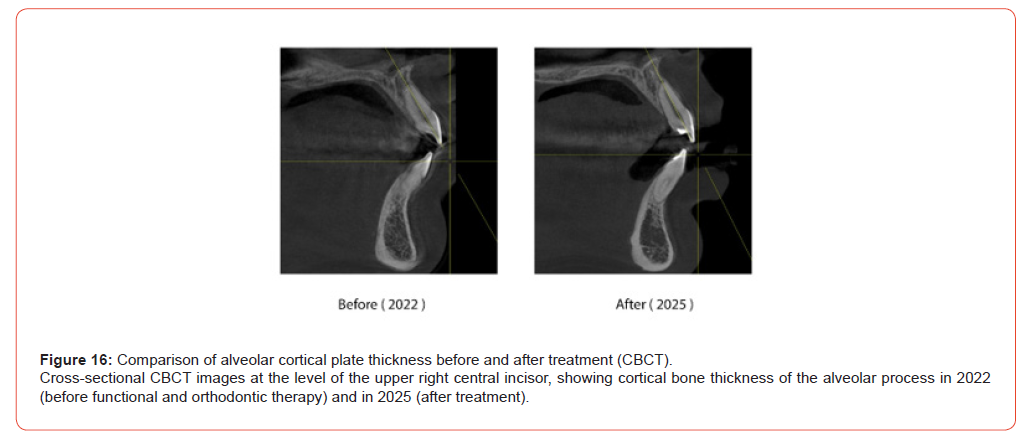
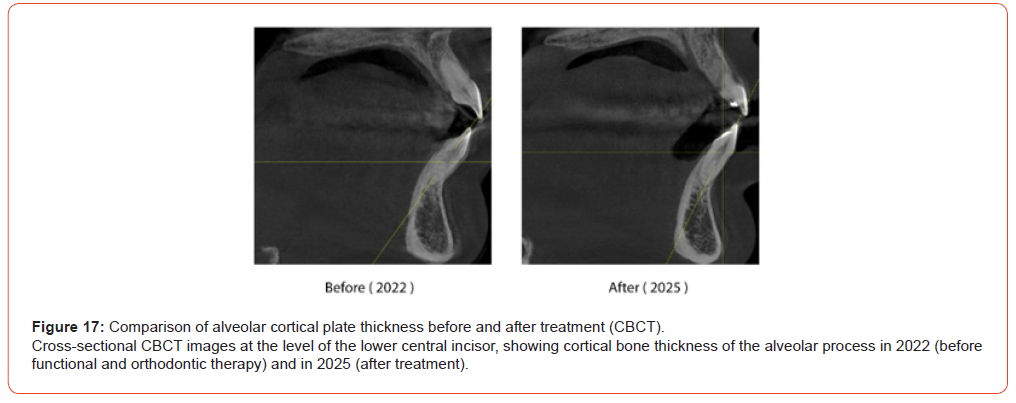
an exceptionally thin alveolar cortical bone plate, the treatment plan was carefully adapted to minimize mechanical stress, ensure controlled tooth
movement, maintain periodontal health through proper hygiene, and to implement functional control of tongue posture and pressure, minimizing
the risk of adverse effects on the alveolar bone. The patient was under the continuous care of both a physiotherapist and a speech therapist
(neurologopedist), as part of an integrated functional therapy protocol addressing posture, breathing, and orofacial muscle activity. The treatment
resulted in complete closure of the open bite and a stable vertical overbite.
Conclusion: This case highlights the importance of an interdisciplinary therapeutic approach in which functional re-education—based on
neuromuscular stimulation—was a key factor for achieving successful and stable orthodontic outcomes. The stimulation therapy, targeting muscles
and proprioceptors innervated by cranial nerves (V, VII, IX, X, XI), which supply the craniofacial region and contribute to head and neck positioning,
allowed for the restoration of neuromuscular balance and postural stabilization. The entire treatment was guided by the Durán MFS (Multifunctional
System) concept, including the individualization of torque, which enabled a physiologic positioning of the tooth roots.
Keywords:Anterior open bite; Mouth breathing; Neuromuscular re-education; Myofunctional therapy; Craniofacial growth; MFS metod; Speechlanguage pathology; Interdisciplinary treatment; Orofacial dysfunction; Skeletal malocclusion; Functional orthodontics; Nasal stimulation; MFS obturator, MFS open bite stimulator, Tongue posture; Neuroplasticity
Introduction
Anterior open bite is one of the most challenging malocclusions to treat, often presenting with a complex etiology involving functional, skeletal, or mixed factors. Mouth breathing, abnormal swallowing patterns, low tongue posture, and decreased muscle tone are key contributors to disturbed craniofacial growth patterns. As early as infancy, dysfunctions in breathing, swallowing, postural tone, and head and tongue positioning may emerge, all of which contribute to the development of open bite and a dolichocephalic facial growth pattern.
Orofacial functions—such as breathing, sucking, and swallowing—begin to form during the prenatal period, with their neural centers located in the brainstem, specifically the medulla oblongata and the pons. Postnatally, through receptor stimulation and muscular activity, these functions become integrated with higher levels of the nervous system, including the somatosensory cortex. The cortical representation map, known as Penfield’s homunculus, includes significant areas associated with the mouth, nose, tongue, and face—whose size and functional capacity are closely linked to the degree of daily sensory and motor stimulation. As shown in neurophysiological studies, the lack of active use of a particular organ may result in a weakening of its cortical representation, or even its takeover by adjacent sensory fields.
In the context of dominant mouth breathing, it can be hypothesized that a similar mechanism might apply to cortical areas responsible for nasal breathing. Such cortical reorganization— resulting from principles of neuroplasticity—could explain the persistence of dysfunctional patterns even after anatomical conditions have improved. Although there is currently no direct evidence confirming the effectiveness of sensory stimulation (e.g., nasal stimulators) in restoring cortical representation of nasal airflow, this concept finds logical support in current knowledge of somatotopic reorganization and brain plasticity.
According to studies by Tomaszewska et al. and Kukwa et al., children who have undergone adenoidectomy or tonsillectomy often do not spontaneously return to physiological nasal breathing. Habitual mouth breathing, previously induced by anatomical obstructions, may become imprinted as a dominant respiratory pattern within the central nervous system and require targeted reeducation.
The Craniofacial Growth Pattern and Case Description
The craniofacial growth pattern is also influenced by the activity of the masticatory muscles innervated by the trigeminal nerve (cranial nerve V), which is responsible for facial motor function, proprioception, and the muscle tone of the lower facial third. Impairment of this function often leads to vertical craniofacial growth and the exacerbation of anterior open bite. In children with dominant unilateral muscle activity—caused, for example, by frequent infections, lymph node hypertrophy, or asymmetry of sternocleidomastoid muscle tension—adaptive changes are often observed in the shoulder girdle and head posture.
In Durán’s Multifunction System (MFS) concept, based on functional diagnostics and re-education of neuromuscular patterns, a central focus is placed on restoring neuromuscular balance through therapy with stimulators activating cranial nerves (V, VII, IX, X, XI). This stimulation aims to rebuild proper patterns of breathing, swallowing, and tongue positioning. Depending on the patient’s developmental stage—whether at the first growth spurt, in the intermediate phase, or post-growth—as well as the severity of the malocclusion, a decision is made whether to implement functional re-education alone or in combination with mechanical orthodontic treatment.
Case Description
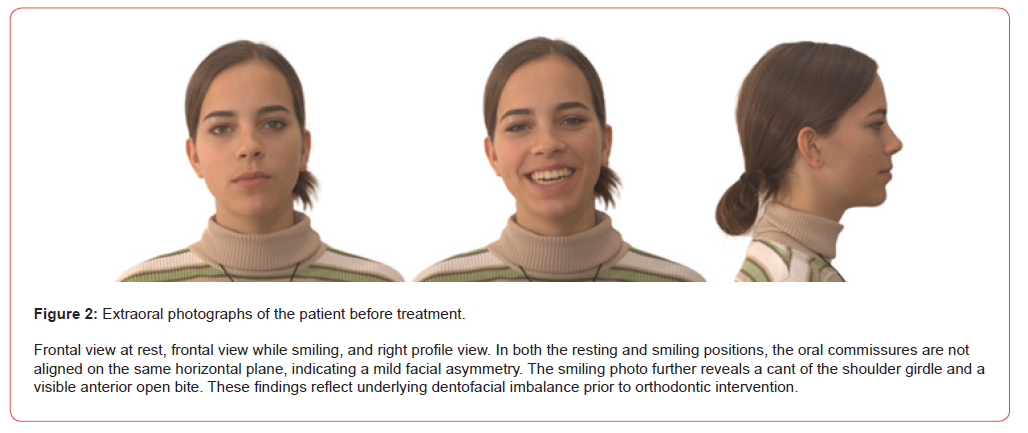
The patient presented for an orthodontic consultation in October 2022, referred by a speech ther-apist (neurologopedist). She arrived with a Myobrace® silicone trainer, which she had been using for an extended period as prescribed by her previous orthodontist (Figure 1). Clinical examination revealed mouth breathing; medical history indicated prior orthodontic treatment, including the use of a Damon system fixed appliance. Visually, she exhibited lip incompetence, an elongated facial structure, dark circles under the eyes, and postural defects—specifically shoulder protrac-tion and a hyperextended head position (Figure 2). There was no available documentation regarding the extent or duration of the previous orthodontic treatment, nor of any functional therapy under-taken.

Functional Diagnosis and Initial Evaluation
The initial step of treatment was a functional diagnosis based on the MFS protocol, following the system’s syllabus, which uses a scoring scale (0-5) to assess the severity of functional disturbances. The evaluation included the following elements:
• appearance of the nasal openings,
• collapse of the nasal wings during breathing,
• lip competence,
• presence of snoring and apneas,
• tongue mobility,
• swallowing pattern,
• chewing function,
• presence of adenoidal hypertrophy,
• facial appearance,
• head posture, shoulder girdle alignment, and overall body
posture.
In the analyzed case, the following findings were recorded:
• breathing: 3 (in the test with closed lips, the patient
was able to breathe through the nose; nostrils type 1 without
collapse),
• swallowing: 4,
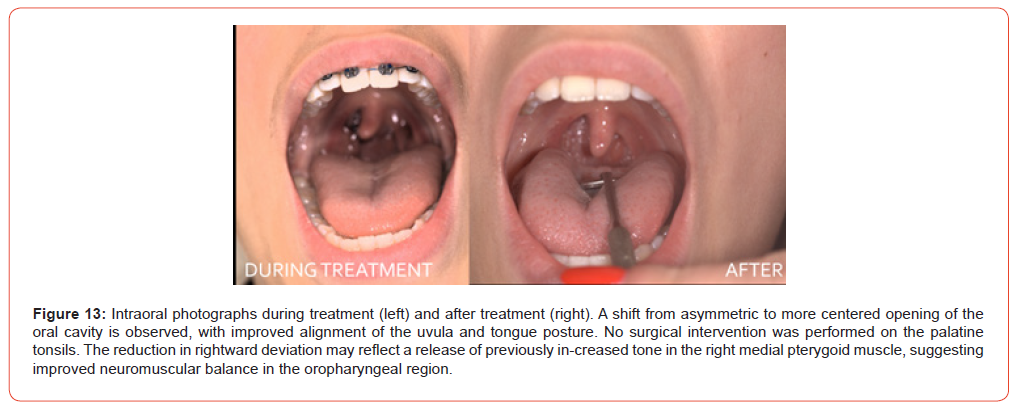
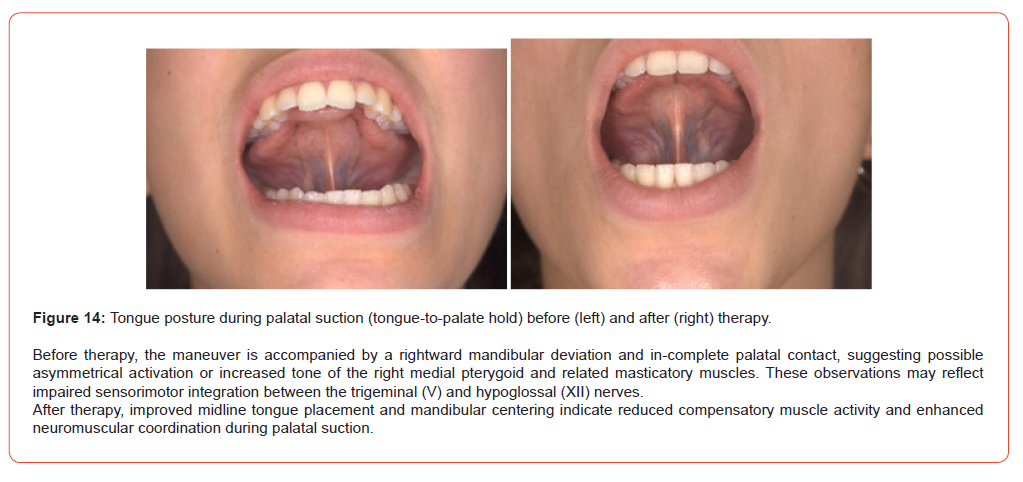
• tongue mobility: 0/2 (tongue and uvula deviating to the
right),
• preferred chewing side: right
• growth pattern: dolichocephalic (Figure 4),
• pharyngeal tonsil (adenoid): 1,
• palatine tonsils: 1,
• hyperextended head posture (Figure 4),
• tight right-sided sternocleidomastoid muscle (SCM) and
shoulder girdle asymmetry (Figure 2),
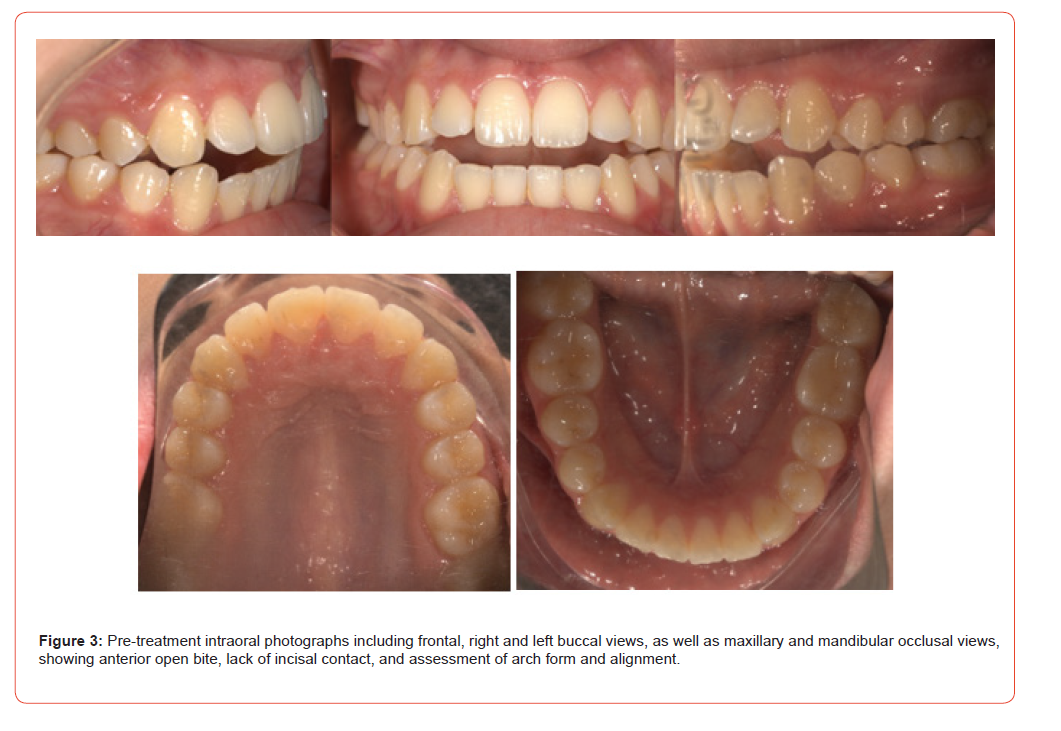
• anterior open bite: 3 mm in the anterior segment (Figure
3).
Speech-Language Pathology Diagnosis and Therapy
The patient was referred for speech-language pathology (neurologopedic) assessment by her mother in 2011 at the age of 5 years due to articulation disorders.
Medical history: the child was born from an uncomplicated pregnancy, supplemented with vitamins and folic acid, and delivered through a non-medicated physiological birth at 38 weeks of gestation, achieving a high Apgar score. She was breastfed until 6 months of age, with episodes of choking and regurgitation up to 3 months of age. No anatomical anomalies of the oral cavity were recorded. From birth, the patient predominantly presented an oral breathing pattern, which predisposed her to colic (aerophagia), and she experienced frequent upper respiratory infections during childhood. At the age of 4, she received ineffective speech therapy in kindergarten.
During diagnostic evaluation conducted at 5 years and 3 months of age, the following findings were observed: articulation disorders of the dyslalia type, including interdental and distorted production of sibilant and alveolar sounds, as well as substitutions within sibilant categories, anterior open bite, atypical swallowing pattern with interposition of the tongue tip, resting tongue posture: dental interposition, declared oral breathing dysfunction, low resting mandibular posture, lip posture: lack of linear lip seal, enlarged palatine tonsils, reduced soft palate mobility, and asymmetric positioning of the uvula, anterior open bite, shortened lingual frenulum.
Therapy priorities were established as follows: intensive myotherapy to correct the breathing pattern (including resting oral area positions) and articulation therapy.
During one year of therapy, correct articulation of previously misarticulated sounds was achieved; however, despite recommendations, full physiological functionality of the speech organs was not attained. A frenulotomy was performed in 2021.
Reassessment conducted in 2022 revealed:
• addental resting tongue posture,
• lack of competence of the orbicularis oris muscle and
persistent oral breathing,
• symptoms of hyperventilation with a control pause of 6
seconds,
• abnormal head position relative to the shoulder girdle
(hyperlordosis),
• atypical swallowing with tongue thrusting against the
lower incisors,
• dominant chewing on the right side,
• increased mobility of the right cheek muscles and right
modiolus,
• limited soft palate mobility and asymmetrical positioning
of the uvula.
The main goals of therapy were: correction of the breathing pattern, swallowing, and resting posture of the tongue, lips, and mandible; lengthening the control pause; achieving symmetrical bilateral function of the masticatory muscles; and activation of the soft palate muscles. Based on the above findings, an MFS neuromuscular oral stimulator known as the open bite (OB) type was introduced as part of the functional therapy. At that stage, the patient was also referred for an orthodontic consultation.
Orthodontic Evaluation and Treatment Process Description
During the first visit, radiographs, photographic documentation, and digital dental scans were performed.

Treatment Plan
The therapy was planned based on functional diagnosis and aimed at eliminating the etiological factors contributing to the relapse of malocclusion. Particular attention was given to lip incompetence, which implied disturbances in oral and nasopharyngeal pressure, abnormal tongue posture, dysfunction of the masticatory and suprahyoid muscles, and alterations in head posture.
The treatment objectives included:
• elimination of mouth breathing,
• restoration of lip competence,
• improvement of intraoral and nasopharyngeal pressure
conditions,
• re-education of tongue and mandibular posture,
• final correction of the occlusion
Stages of Treatment
First Stage: Functional Re-Education
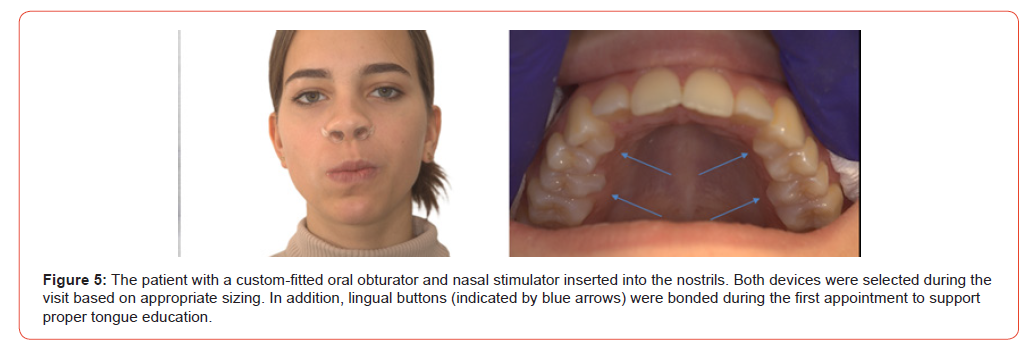
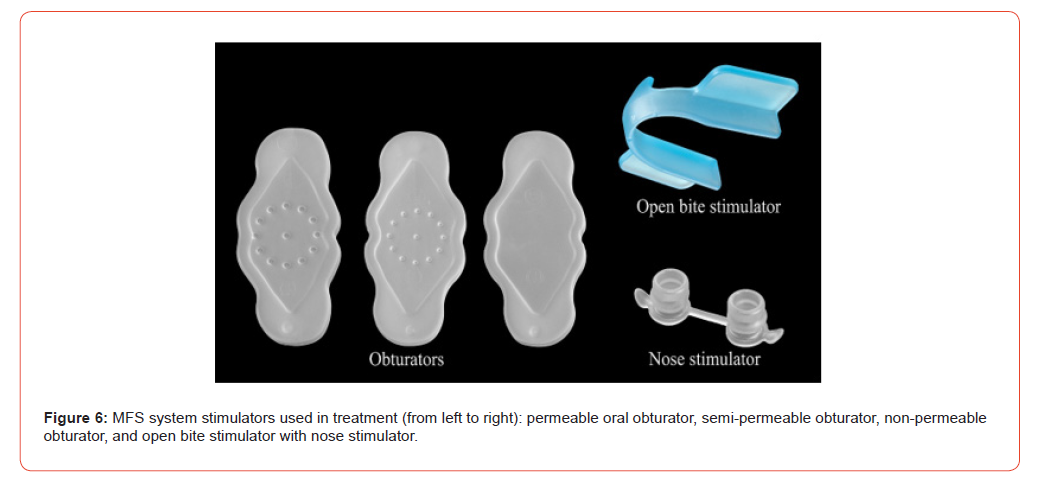
The treatment was divided into two stages, with the first stage focusing on functional re-education. At the initial visit, therapy with lingual buttons and stimulators was initiated (Figure 5), including a perforable obturator (PO) and a nasal stimulator (NS), in accordance with Durán’s hierarchy. The nasal stimulator was intended to stimulate proprioception and to reestablish the function of the nose as the preferred airway route, despite the absence of anatomical obstructions to airflow. Additionally, tongue buttons were used to stimulate the lateral-dorsal surfaces of the tongue, attached to the lingual surfaces of the canines and subsequently the first premolars. The use of an open bite stimulator (OB), previously prescribed by the speech therapist, was also recommended to use.
Fixed orthodontic treatment was not yet introduced at this stage; its initiation was contingent upon achieving functional improvement.
Indication to use MFS stimulators:
The patient was asked to use a nasal stimulator (NS) and a PO (perforable obturator) during nighttime. According to the MFS protocol, PO was subsequently replaced in phases:
– first by SPO (semi-perforable obturator), –then by IO (imperforable oral obturator) in the later stages of therapy (Figure 6).
For daytime use, OB (open bite stimulator) was recommended together with the nasal stimulator during sedentary activities for approximately four hours a day.
Regular follow-up was advised to monitor effectiveness.
After one year of therapy, orofacial functions significantly improved: the patient breathed through the nose, maintained lip closure, and held the tongue in a more stable intraoral position. These improvements were further confirmed by dental and skeletal occlusion conditions.
Dentally: reduction of the anterior open bite gap and an increase in vertical overbite (Figure 7).
Skeletally: significant improvement in craniofacial growth direction (Figure 8):
• The Ricketts’ growth axis angle increased from 87° to
90.5°, indicating a favorable shift from a vertical growth pattern
toward a more balanced, horizontal facial development.
• The lower facial height (LFH) decreased from 73mm to
70.5mm, reflecting better vertical growth control and improved
muscular balance.
• The distance from the anterior nasal spine (ANS) to
the incisal edge of the maxillary central incisor remained
unchanged, suggesting that the observed improvements were
skeletal in nature rather than a result of incisor extrusion,
indicating posterior teeth intrusion instead.
The results confirmed the effectiveness of MFS functional therapy in modifying unfavorable craniofacial growth patterns and improving facial harmony in this patient. Additionally, the cervical spine appears more aligned and extended with reduced forward head posture, indicating enhanced cranio-cervical postural control. However, the patient remained unstable in the upper limb girdle, which was additionally confirmed by a postural test of the limbs.


Second Phase: Orthodontic Treatment
At the beginning of the second phase, fixed orthodontic appliances were placed. Bracket selection was individualized based on cephalometric analysis, in accordance with Durán’s concept (Durán, 2015). For this patient, measurements taken from a lateral skull radio-graph were used to calculate the optimal torque values, which indicated a need to reduce incisor proclination. Therefore, within the available prescription range for upper incisors (torque values from +25° to 0°), a torque of 0° was selected. For the premolars, -5° torque was calculated and applied. This approach is consistent with Ricketts’ principle of aligning the long axis of the incisors parallel to the facial axis. In the upper arch, a sequence of CuNiTi archwires ranging from 0.013” to 0.018” × 0.025” was used. In the lower arch, only round wires were applied due to the presence of a thin cortical bone plate. Specifically, CuNiTi wires in sizes 0.013”, 0.014”, and 0.016” were used; the 0.016” wire was maintained for the final 12 months of treatment, on which the therapy was completed. According to the treatment plan, the lower third molars (wisdom teeth) were extracted before completing the orthodontic treatment.
Despite the initiation of fixed appliance therapy, the use of myofunctional stimulators was continued; however, the protocol was modified. The OB (open bite stimulator) was now recommended only for nighttime use, while the IO (impermeable oral stimulator) was introduced for use during sedentary daytime activities. The use of IO during these activities served a critical function: it helped prevent passive opening of the oral cavity. Following saliva swallowing, IO created significant negative pressure in the oral cavity, which contributed to the maintenance of proper tongue posture by stabilizing its position against the palate. The patient reported full adherence to the prescribed regimen.
Additionally, medium-force elastics (4.5 oz, “Panda” elastics from American Orthodontics) were prescribed for daytime use approximately seven months before the end of treatment, starting from the moment the patient had a 0.018” × 0.025” CuNiTi archwire placed in the upper arch. Three months before completion, nighttime use of these elastics in combination with OB was also recommended, to support vertical control and occlusal stabilization.
Duration of treatment:
• Functional therapy (stimulators): approximately 12 months • Orthodontic treatment (fixed appliances): approximately 17 months
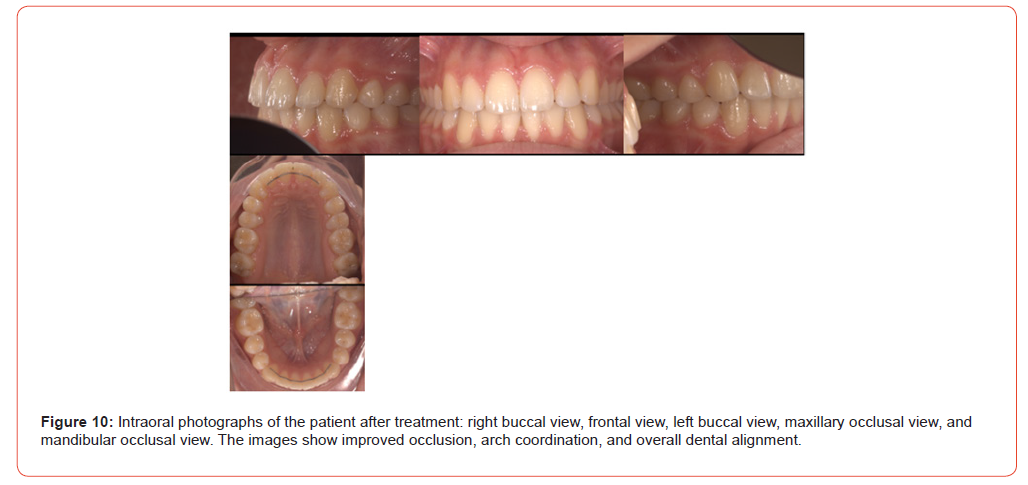
The final outcome was the complete closure of the anterior open bite and the establishment of a stable vertical overbite of approximately 3mm (Figure 10).
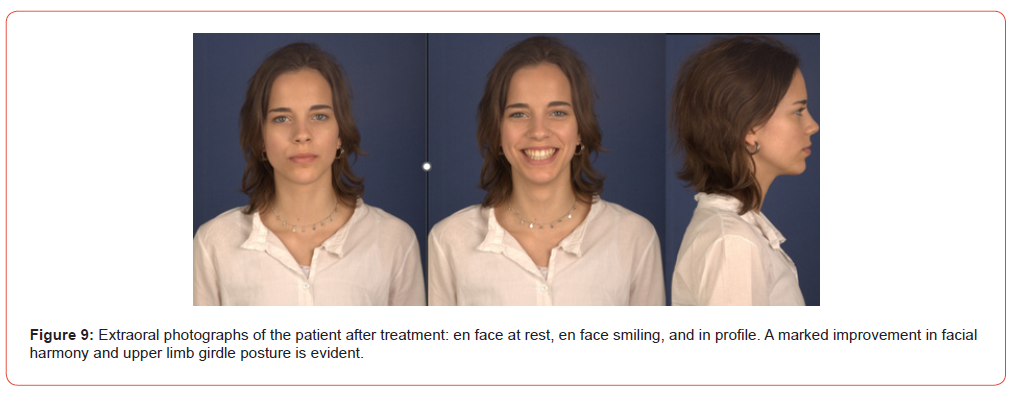
The patient reported a marked improvement in overall well-being and satisfaction with her appearance following the completion of treatment. She expressed increased self-confidence, greater ease in social interactions, and a renewed willingness to smile openly—reflected in her improved facial aesthetics and smile line. Additionally, she reported enhanced concentration and academic performance, likely due to improved breathing function and postural balance. Notably, she also experienced a significant improvement in articulation, which had previously been impaired by the anterior open bite. After treatment, she reported greater ease of speech, improved clarity, and enhanced fluency. Extraoral photographs taken after treatment (Figure 9) demonstrate significant improvement in facial harmony, soft tissue support, and upper limb girdle posture.
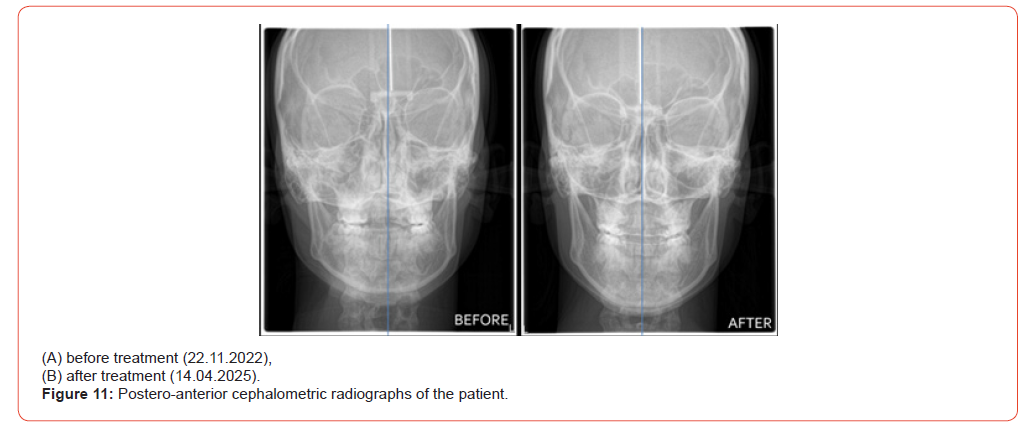
Post-treatment images demonstrate improved transverse alignment of the mandible, enhanced symmetry of the mandibular ramus contours, and a more leveled mandibular plane. Additionally, the head appears more vertically oriented over the cervical spine, indicating a tendency toward improved cranio-cervical alignment (Figure 11). These changes may reflect a more balanced functional relationship between the musculature on both sides of the craniofacial and cervical regions.


instructed to be worn at night to support long-term occlusal and functional stability.
The use of myofunctional stimulators was no longer required at this stage. However, the patient was advised to continue physiotherapeutic care and to attend a final follow-up consultation with a neurospeech therapist. Routine check-ups were recommended every six months to monitor post-treatment stability and address any functional relapse early.
Summary of Treatment Outcomes
1. Despite several years of speech-language and
neurologopedic therapy targeting breathing function,
swallowing, and articulation, no lasting improvement in the
breathing pattern or the resting posture of the tongue and lips
was achieved.
2. In contrast, comprehensive therapy using the MFS
system—consistently applied over the course of a year and
involving both daytime and nighttime use—resulted in a
marked improvement in breathing pattern and orofacial
muscle function. This underscores the critical role of treatment
intensity, duration, and consistency in achieving functional
changes.
These final outcomes confirm the effectiveness of functional therapy with MFS stimulators not only in neuromuscular reeducation but also in promoting favorable skeletal development (Figure 8).
Treatment success was achieved without the need for additional extractions, aside from the removal of the lower third molars, which was performed only at the end of therapy. Notably, the most substantial skeletal changes occurred prior to these extractions, supporting the conclusion that vertical control and improvement in growth direction were attributable to functional therapy, rather than mechanical effects from dental arch unloading.
Importantly, it demonstrates that even beyond active growth phases, significant improvements—and even correction of skeletal discrepancies—are possible when therapy is based on individualized functional strategies rooted in orthodontic, physiotherapeutic, and neuromyofunctional (speech-language) integration. Such an approach, consistent with MFS philosophy, may be key to long-term therapeutic success.
The completed treatment resulted in stable, multidimensional improvement in both functional and structural aspects of the craniofacial complex.
Occlusally, complete closure of the anterior open bite and a stable vertical overbite were achieved.
From a skeletal perspective, correction of craniofacial growth direction was observed: the Ricketts’ facial growth axis angle reached the target value of 90°, indicating full normalization of the growth pattern. The lower facial height (LFH) was reduced to 70 mm, confirming effective vertical growth control (Figure 12).
Comparative CBCT imaging performed before and after treatment showed that the thickness and height of the alveolar bone plate remained comparable to baseline conditions, suggesting that occlusal changes were achieved without negatively impacting periodontal bone structures (Figures 16, 17).
The obtained results confirm the effectiveness of combining functional re-education with fixed orthodontic treatment based on individualized torque following Durán’s concept, leading to improvements not only in occlusal conditions but also in craniofacial harmony and growth direction.
Discussion
The presented case confirms the effectiveness of treatment conducted in accordance with the MFS concept, combining functional and mechanical approaches, in a patient with recurrent anterior open bite. Available information indicates that previous orthodontic treatment included the use of the Damon system and a Myobrace® silicone appliance. Due to the lack of complete documentation, a detailed assessment of the scope of the earlier therapy is not possible; however, it appears that functional factors may not have been sufficiently addressed at that time.
The patient sought treatment at our facility after completing previous orthodontic therapy, during the post-third growth spurt phase. According to the patient’s history, a frenectomy had also been performed during previous interventions. The therapy described here was individually planned, taking into account her specific needs and growth phase.
Research has demonstrated that long-term mouth breathing leads to decreased activity of the masticatory muscles, particularly affecting their tonic function and bite force, resulting in muscular imbalance and potentially influencing mandibular growth direction (Yamaguchi et al., 2008; Gomes et al., 2009).
Although this phenomenon is well described in the literature, it raises the question of whether the decrease in masticatory muscle tone alone can fully explain the complexity of the consequences associated with mouth breathing.
Since every organ has a corresponding cortical representation in the brain, if an organ ceases to be used according to its physiological function, its cortical representation may weaken or even be overtaken by adjacent sensory areas (see Penfield’s motor homunculus).
Therefore, it would be appropriate to pose the question (or hypothesis) whether a persistent pattern of mouth breathing may lead not only to changes in muscle function but also to deeper alterations in proprioceptive integration and somatotopic reorganization within the central nervous system.
Why are some patients—despite the absence of obstructive barriers—unable to breathe through the nose without feelings of fear or discomfort?
Clinical experience shows that some patients even react with panic when attempting nasal breathing during examination, as reflected by an extremely low control pause (the free breathholding time)—as observed in the patient described.
Is it possible that their nervous system not only “forgot” how to breathe through the nose but also underwent functional reorganization of sensory and motor cortical maps, making it more difficult to return to a physiological breathing pattern?
Studies by Kukwa, Tomaszewska, and others show that children do not spontaneously return to nasal breathing after the removal of obstructive factors.
This provides further evidence that anatomical correction alone is insufficient to restore normal function—targeted re-education focused on perception, proprioception, and cortical stimulation is necessary.
This suggests that both the perceptual and sensorimotor components should be considered when planning therapy.
Neuromuscular stimulation activating cranial nerves (V, VII, IX, X, XI) enabled the re-education of movement and sensory patterns rooted in the central nervous system (CNS).
Thanks to the patient’s excellent cooperation—consistently following recommendations and actively participating in the therapeutic process—the intended outcomes were successfully achieved.
The MFS method is based on repetitive sensory receptor stimulation, which, when transmitted repeatedly, generates afferent input to the CNS, supporting the reorganization of functional patterns.
The MFS philosophy allowed for a comprehensive analysis of the malocclusion’s etiology and individualized therapy planning based on the patient’s current needs.
This case serves as an example of successful anterior open bite treatment using functional methods supported by stimulation therapy and highlights the therapeutic potential of neuroplasticity in re-educating breathing and postural patterns [1-33].
Conclusion
1. A precise pre-planning protocol prior to the
commencement of orthodontic treatment of open bite cases is
fundamental in assuring a higher success rate of treatment.
2. Functional therapies that include the respiratory, buccal
and neural systems of the orofacial region warrants a more
secure outcome of treatment plans. On the other hand, taking
into consideration a strict interdisciplinary collaboration
between the orthodontist, speech therapist, and physiotherapist
is obligatory.
3. A higher rate of favorable outcomes are observed when
open bite cases are treated with MFS philosophy of Dr. Duran.
4. The final results confirm the effectiveness of functional
therapy utilizing MFS stimulators, not only in neuromuscular
education or re-education but also in favorably influencing
skeletal growth patterns.
5. The MFS philosophy confirms the effectiveness of
working on orofacial functions in achieving and maintaining
stable occlusion and proper body posture. This case exemplifies
accurate diagnosis, comprehensive treatment planning, and
successful interdisciplinary collaboration.
6. Untreated orofacial dysfunctions rarely remain static—
they tend to evolve into other forms of functional or structural
disorders over time. This progression is often driven by
compensatory mechanisms within the neuromuscular and
skeletal systems, which, although initially adaptive, may lead
to secondary dysfunctions or relapse if the primary functional
cause is not properly addressed. In particular, uncorrected
swallowing patterns and resting tongue posture dysfunctions
may further contribute to the development of additional
pathological conditions.
7. The breathing pattern and tongue resting posture are
key regulators of craniofacial muscle tone and overall postural
balance
8. Cranial nerve stimulation plays a significant role in the
education or re-education of orofacial functions, as well as in
the stabilization of therapeutic outcomes.
9. Sensory-motor stimulation may support cortical map
reorganization, which could contribute to the long-term
effectiveness of myofunctional therapy.
10. Functional assessment should be considered a standard
component of treatment planning, particularly in patients with
a history of relapse and signs of orofacial dysfunction.
The presented case demonstrates that even after the completion of the growth phase, significant improvement—and even correction of skeletal discrepancies—is possible when treatment is based on an individually tailored functional approach that integrates neurological, orthodontic, and physiological knowledge. Such an approach, consistent with the MFS philosophy, may be the key to achieving long-term therapeutic success.
Acknowledgement
We thank the patient for her excellent cooperation and for granting permission to share her image for scientific purposes.
Conflict of Interest
No Conflict of Interest.
References
- Caputi S, Tecco S, Tete S (2007) Electromyographic activity of masticatory, neck and trunk muscles of subjects with different mandibular divergence. Angle Orthod 77: 260-265.
- Carrasco A, Durán JVA, Echarri P (2008) Effects of labial stimulators on the level of labial incompe-tence and length of the upper lip. Dentum 8: 108-111.
- Ciok E, Fester A, Sobieska E (2015) Long face syndrome – etiology and diagnosis based on the literature. J Dent 591-609.
- Duran AJ, Merino Arends M, Echarri P (2009) A new treatment proposal for patients with oral breathing syndrome. Clinical Orthodontics 12 (2): 73-79.
- Duran AJ (2004) MFS Biomechanics in the Treatment of Skeletal Open Bites. Clinical orthodontics 7(2): 62-73.
- Duran AJ (2004) MFS biomechanics in the treatment of non-skeletal open bites. Clinical orthodontics 7 (1): 36-43.
- Duran AJ (2007) Brackets: individualization versus standardization. Ortod Clin 10(4):196-197.
- Duran AJ (2010) Stimuli Therapy in Orthodontics. Riparian 53: 54-56, 79-91.
- Durán AJ Dudas (2015) Reasoning and proposals in orthodontics under the MFS philosophy. Madrid: Newsletter Odontológica S.L 49-62, 107-115.
- Durán von Arx, J Ośko M (2024) Orthodontic treatment according to the MFS philosophy: A causal approach to craniofacial growth and development problems, functional stimulation. Katowice: Elamed Media Group 187-193.
- Flor H (2003) Cortical reorganisation and chronic pain: implications for rehabilitation. J Rehabil Med 35(8): 66-72.
- Flores Blancas AP, Carruitero MJ, Flores Mir C (2017) Comparison of airway dimensions in skeletal Class I malocclusion subjects with different vertical facial patterns. Dent Press J Orthod 21(6): 74-81.
- Harvold EP (1968) The role of function on the etiology and treatment of malocclusion. Am J Orthod 61: 38-44.
- Harvold EP, Tomer BS, Vargervik K (1981) Primate experiments on oral respiration. Am J Orthod 79: 359-372.
- Hunt N, Shah R, Sinanan A (2006) Muscling in on malocclusions. J Orthod 33: 187-197.
- Hutchinson EF, Kieser JA, Kramer B (2014) Morphometric growth relationships of the immature human mandible and tongue. Eur J Oral Sci 122: 181-189.
- Ingervall B, Thilander B (1974) Relation between facial morphology and activity of masticatory muscles. J Oral Rehabil 1: 131-147.
- Kukwa W, Guilleminault C, Tomaszewska M, Kukwa A, Krzeski A, et al. (2018) Prevalence of upper respiratory tract infections in habitually snoring and mouth breathing children. Int J Pediatr Otorhinolaryngol 107: 37-41.
- McNamara JA (1981) Influence of respiratory pattern on craniofacial growth. Angle Orthod 51(4): 269-300.
- Merzenich MM (1984) Somatosensory cortical map changes following digit amputation in adult monkeys. J Comp Neurol 224: 591-605.
- Moss ML (1997) The functional matrix hypothesis revisited. 1. The role of mechanotransduction. Am J Orthod Dentofacial Orthop 112(1): 8-11.
- Ośko M, Durán J (2022) Use of MFS functional regulators in the treatment of an 8-year-old patient with backward mandibular growth rotation. Ortodoncja w Praktyce 2: 24-38.
- Ödman A, Hunt N, Matloub Moawad H (2013) Molecular changes in detrained and retrained adult jaw muscle. Eur J Orthod 35(5): 659-663.
- Pascual Leone A (2005) The plastic human brain cortex. Annu Rev Neurosci 28: 377-401.
- Ramachandran VS, Hirstein W (1998) The perception of phantom limbs. The D. O. Hebb lecture. Brain 121: 1603-1630.
- Rządzka M (2024) Primitive neonatal reflexes in newborns and babies: diagnosis and stimulation. Kraków: Oficyna Wydawnicza Impuls.
- Ricketts R, Bench R, Gugino C, Hilgers J, Schulhof RJ (1979) Bioprogressive therapy book. Denver: Rocky Mountain Orthodontics.
- Rubert A, Durán J, Peres-Tomas R (2002) Immunohistochemical identification of growth factors Beta1 (TGF-Beta1) in the maxillary of rats during postnatal growth and after unilateral section of masseter muscle. Faculty of Orthodontics, University of Barcelona.
- Skorek EM, Rządzka M (2011) Prevention and therapy of respiratory dysfunctions in children. Zielona Góra: University of Zielona Góra Scientific Publishing House.
- Tomaszewska M (2023) Clinical observations [unpublished doctoral dissertation data]. Medical University of Warsaw.
- Yamada T, Tanne K, Miyamoto K (1997) Influences of nasal respiratory obstruction on craniofacial growth in young Macaca fuscata monkeys. Am J Orthod Dentofacial Orthop 111(1): 38-42.
-

This work is licensed under a Creative Commons Attribution-NonCommercial 4.0 International License.