


 Research Article
Finite Element Analysis in Dentistry: Current Status, Research Hotspots, and Future Directions: A Systematic Bibliometric Review of the Literature (2000-2025)
Department of Oral and Maxillofacial Surgery, Faculty of Dentistry, Karadeniz Technical University Trabzon, Turkey
Received Date:November 04, 2025; Published Date:November 19, 2025
Abstract
Purpose: Finite Element Analysis (FEA) has become a key computational approach in dental biomechanics, yet the global research landscape,
methodological evolution, and thematic structure of FEA-based dental studies have not been systematically mapped. This bibliometric review aims
to characterize publication trends, influential contributors, collaboration patterns, and thematic research clusters in dental FEA from 2000 to 2025,
while assessing methodological reporting in relation to emerging RIFEM standards.
Materials and Methods: A bibliographic and bibliometric analysis was conducted using the Web of Science Core Collection, Scopus, and
PubMed databases. English-language articles and reviews published between 2000 and 2025 and explicitly applying FEA to dental or craniofacial
structures were included. After duplicate removal and screening, 16,175 records were analyzed. VOSviewer (v1.6.20) was used to construct citation,
co-authorship, institutional, journal, and keyword co-occurrence networks. Citation counts were normalized per year, and fractional counting was
applied to reduce multi-authorship bias. Trends were interpreted in relation to specialty-specific applications and methodological characteristics
reported in the included studies.
Results: The annual scientific output demonstrated a marked increase after 2014, peaking in 2024, mirroring the rise in annual citation counts.
China led in publication volume (n = 4,172), whereas the United States showed the highest citation impact (72,741 citations). Shanghai Jiao Tong
University, Sichuan University, and Chongqing University were the most productive institutions. The most influential journals were Journal of the
Mechanical Behavior of Biomedical Materials, Journal of Biomechanics, and Dental Materials. Keyword mapping revealed three dominant research
domains: implant biomechanics and load transfer, prosthetic and restorative material optimization, and computational analysis of orthodontic
and surgical interventions. Methodological reporting showed frequent omission of convergence testing, validation strategies, and uncertainty
quantification.
Conclusion: Dental FEA research has expanded rapidly over the past 25 years, driven largely by implant and prosthetic biomechanics. However,
heterogeneity in modeling strategies and incomplete methodological reporting remain barriers to clinical translation. Standardization aligned with
RIFEM criteria, increased experimental validation, and the integration of patient-specific and machine-learning-based simulations represent key
future priorities.
Keywords:Finite element analysis, Dentistry, Biomechanics, Bibliometrics, VOSviewer
Introduction
Finite Element Analysis (FEA) has become an indispensable computational tool in dental biomechanics, allowing for a detailed understanding of stress, strain, and displacement within the complex tooth–bone–prosthesis system under physiological and experimental loading conditions. Since its first dental applications in the 1970s, FEA has evolved from simplified twodimensionalmodels to sophisticated, patient-specific, threedimensional simulations that integrate advanced imaging, CAD/ CAM technology, and realistic material behavior. The method’s versatility has enabled its widespread use across implantology, restorative dentistry, orthodontics, and oral surgery to predict the mechanical performance of biomaterials, prosthetic components, and biological tissues under various clinical scenarios [1- 3]. Recent advances in computational power, segmentation algorithms, and mesh optimization have further enhanced the accuracy and reliability of dental FEA, supporting its transition from an exploratory modeling tool to a clinically relevant research instrument [4].
Although FEA provides substantial advantages for dental research, it also presents notable methodological and interpretative challenges. Its primary strengths lie in its ability to non-invasively quantify internal stress–strain distributions, simulate clinically relevant conditions, and test virtual prototypes before fabrication or clinical application—significantly reducing experimental cost, time, and ethical constraints [2, 5]. By integrating CBCT and micro- CT imaging data with CAD modeling, FEA enables patient-specific simulations that improve prosthesis design, implant positioning, and treatment planning precision. However, the reliability of results depends strongly on model geometry fidelity, mesh density, and the accuracy of material properties assigned to heterogeneous dental tissues. Oversimplifications such as linear isotropy or static loading may fail to capture viscoelastic, anisotropic, and timedependent tissue behavior [3, 4]. Furthermore, insufficient mesh convergence testing, unrealistic boundary conditions, and the absence of experimental validation can reduce the predictive value of models. Therefore, FEA is best interpreted as a comparative and hypothesis-generating method rather than a substitute for in vitro or in vivo validation [1, 2].
The applications of FEA now span nearly every branch of dentistry. In Oral and Maxillofacial Surgery, it has been applied to evaluate stress distribution following osteotomies, implant placement, bone grafting, and fracture fixation, offering biomechanical insights into hardware fatigue and postoperative stability [6, 7]. In Oral and Maxillofacial Radiology, CBCT and micro-CT-based models enable highly accurate geometric reconstruction and material mapping, enhancing model precision [8]. In Endodontics, FEA has been used to assess the stress behavior of root canal–treated teeth, post–core systems, and new bioceramic sealers [5, 9]. Orthodontics benefits from FEA through the simulation of tooth movement under different appliance systems, such as clear aligners and mini-implants, and in evaluating periodontal ligament response to variable force magnitudes [10, 11]. In Pediatric Dentistry, finite element models are used to explore biomechanical effects of restorative materials in primary teeth and craniofacial growth responses to orthodontic interventions [12]. Periodontology relies on FEA to study occlusal loading effects on alveolar bone loss, implant–bone interface mechanics, and peri-implant tissue stability [13]. In Prosthodontics and Restorative Dentistry, FEA facilitates the evaluation of stress concentrations within crowns, bridges, composites, and ceramics under masticatory loads, helping optimize design parameters and material choices for long-term performance [2, 14]. Collectively, these applications illustrate the multidisciplinary reach of FEA and its growing role as a bridge between digital modeling and clinical decision-making.
To enhance methodological transparency and reproducibility, the Reporting of In-Silico studies using Finite Element analysis in Medicine (RIFEM) guidelines were recently introduced, outlining seven essential domains: geometry acquisition, meshing strategy, material modeling, boundary/loading conditions, convergence, verification and validation, and uncertainty assessment [1, 3]. Despite increased awareness, adherence to these standards remains inconsistent across dental studies. Reviews have highlighted frequent omissions in reporting convergence testing and validation procedures, which can hinder reproducibility and comparison among studies [2, 4]. Therefore, harmonization of FEA methodologies and transparent reporting are critical steps toward ensuring that computational findings can meaningfully inform clinical practice.
Despite its methodological evolution, the research landscape of FEA in dentistry remains fragmented, with variations in modeling strategies, software platforms, and tissue parameterization across subdisciplines. Recent bibliometric analyses have shown a rapid increase in publications after 2010, with clear thematic clusters centered on implant design, restorative materials, and orthodontic biomechanics [2, 6]. However, the lack of cross-validation, standardized parameters, and unified frameworks continues to challenge clinical translation. A comprehensive bibliometric and bibliographic mapping is therefore warranted to characterize the evolution, collaboration networks, and thematic trends of FEA research in dentistry, and to identify emerging frontiers such as patient-specific modeling, machine learning integration, and dynamic simulation approaches [1, 4].
Building on previous reviews, the present bibliometric and bibliographic analysis aims to map the evolution of FEA applications in dentistry from 2000 to 2025, quantify influential contributions, and identify thematic clusters across dental disciplines. It further seeks to evaluate methodological rigor in relation to RIFEM criteria and highlight underexplored areas that could benefit from standardized modeling, validation, and clinical correlation. Through visualization and network mapping, this study provides a consolidated overview of the scientific landscape of finite element research in dentistry.
Material and Methods
This bibliographic and bibliometric study was designed to map the development, methodological characteristics, and research trends of finite element analysis (FEA) in dentistry between 2000 and 2025. The study followed the Preferred Reporting Items for Systematic Reviews and Meta-Analyses (PRISMA) framework adapted for bibliometric research. Because the analysis relied exclusively on previously published and publicly accessible data, institutional ethical approval was not required.
Data collection was carried out using three major multidisciplinary databases, Web of Science Core Collection (WoSCC), Scopus, and PubMed, selected to ensure broad and historically consistent coverage of dental, biomechanical, and engineering-related publications. The search was performed on October 28, 2025, and restricted to English-language records published between 2000 and 2025. All retrieved data were exported in TXT, CSV, and RIS formats with full metadata and cited references for compatibility with VOSviewer.
The search strategy was constructed to balance sensitivity and specificity, using Boolean operators and truncation to capture all variations of finite element terminology. The primary query was: TS = ((“finite element” OR “finite-element” OR FEA) AND (dent* OR “oral” OR “maxillofacial” OR tooth OR teeth OR implant* OR orthodont* OR endodont* OR periodont* OR prosthodont* OR restorative OR “temporomandibular” OR TMJ))
Equivalent field settings (TITLE-ABS-KEY in Scopus, MeSH + Title/Abstract in PubMed) ensured cross-database consistency. Eligible publications were defined as original research articles or review papers explicitly applying finite element modelling to dental or craniofacial structures, biological tissues, implant systems, or restorative and prosthetic materials. Studies lacking true FEA methodology, non-English records, conference abstracts, proceedings, editorials, letters, book chapters, and studies outside the dental field were excluded. Duplicate entries across databases were identified and removed by DOI matching and fuzzy title comparison. A total of 16,175 publications met the inclusion criteria after full screening, as illustrated in the PRISMA flow diagram (Figure 1).
The search was limited to peer-reviewed articles published between January 1, 2000, and July 1, 2025, and restricted to publications in the English language. Duplicate records across databases were removed manually. All bibliometric records, including titles, authors, abstracts, keywords, source journals, publication years, citation counts, and references, were exported in CSV and RIS formats for further analysis.
Publications that did not align with the study’s thematic focus or lacked the necessary scientific rigor were excluded from the analysis. This included conference abstracts, editorials, letters to the editor, and case reports, as these formats typically lack full methodological detail and standardized peer review. Additionally, articles that did not specifically explore the relationship between systemic bone health and craniofacial or dental conditions were removed. Duplicate records identified across databases, as well as entries missing essential bibliometric metadata (e.g., author names, titles, citation data), were also excluded to maintain data integrity (Figure 1).

For each included publication, bibliographic, scientific, and methodological variables were extracted, including authorship, publication year, journal, country, institutional affiliation, article type, and citation count.
Bibliometric analyses were conducted using VOSviewer (version 1.6.20). Network visualizations were generated to evaluate citation performance, research collaboration, and thematic development over time. Co-authorship analyses were performed at the levels of authors, institutions, and countries, while keyword co-occurrence mapping was used to identify research clusters and their temporal evolution. A fractional counting method was applied to reduce inflation bias in multi-authored publications, and citation counts were normalized by publication year to account for differences in citation exposure. Thresholds for node inclusion were iteratively adjusted to ensure clarity and interpretability of the visual networks.
The primary outcomes of this study included annual publication and citation trends, identification of the most influential researchers, institutions, journals, and countries, characterization of thematic clusters derived from keyword co-occurrence networks, and mapping of methodological features of FEA studies relative to established reporting standards within the RIFEM framework. All search files, datasets, and VOSviewer network outputs will be made publicly available as supplementary material to ensure transparency and reproducibility.
Result
A total of 16,175 publications related to finite element analysis (FEA) in dentistry were included in the final dataset after screening and removal of duplicate and ineligible records (Figure 1). The annual scientific output showed a steady and accelerating upward trend between 2000 and 2025, with a marked rise after 2014 and a peak in 2024, paralleling the sharp increase in annual citation counts (Figure 2). This growth pattern reflects both the expanding adoption of computational modeling in dental research and the increasing relevance of biomechanical simulation in clinical decision-making.

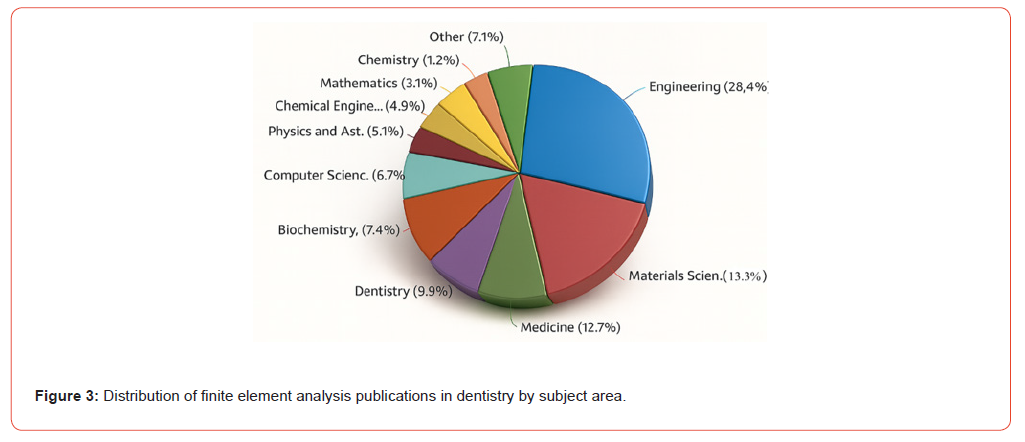
The disciplinary distribution of the included studies demonstrates that FEA research in dentistry remains strongly interdisciplinary, with the highest proportion of publications indexed under Engineering (28.4%), followed by Materials Science (13.3%), Medicine (12.7%), and Dentistry (9.9%) (Figure 3). This indicates that although the clinical application is dental, much of the methodological development is embedded in engineeringbased scientific environments.
Table 1:Most productive authors and countries in finite element analysis research in dentistry.

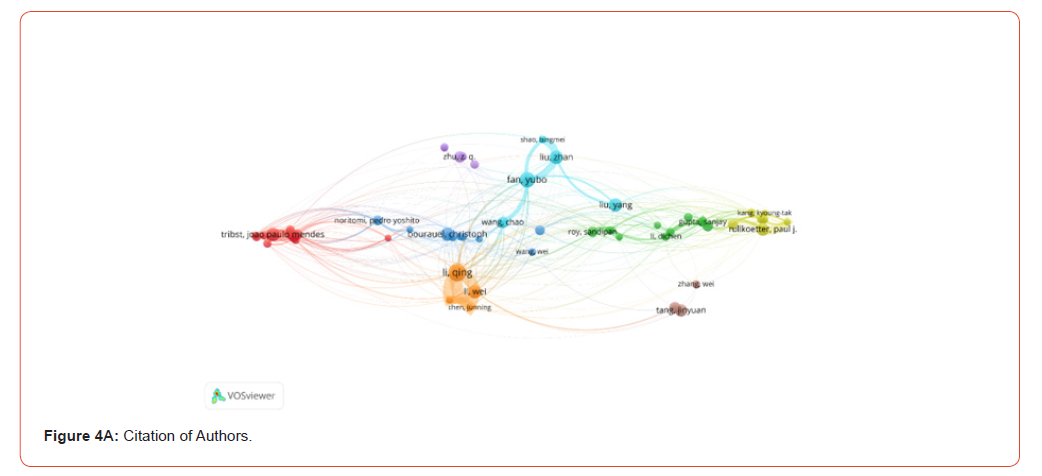
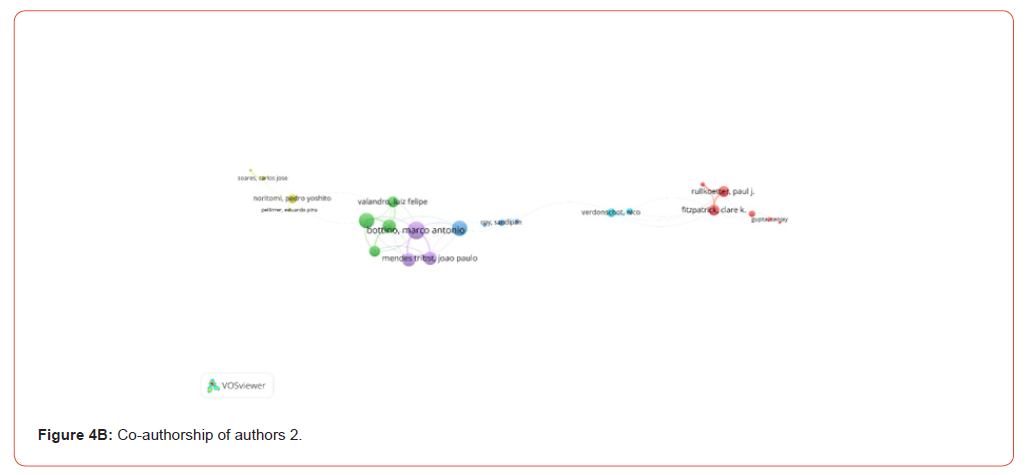
As shown in Table 1, Qing Li leads the author productivity ranking with 67 documents and 1,711 citations, followed closely by Yubo Fan and Wei Li. Despite similar publication volumes among the top authors, citation density varies, indicating distinct research visibility. Authors such as Paul J. Rullkoetter and Jinyuan Tang demonstrate higher citation-to-publication ratios, highlighting stronger scientific impact within smaller output. The citation network Figure 4A reveals a highly clustered structure in which a small number of influential authors, including Qing Li, Yubo Fan, and Joao Paulo Mendes Tribst, occupy central positions with strong cross-cluster link strength, indicating their role as key intellectual anchors in the field. In contrast, the co-authorship network Figure 4B displays a more fragmented pattern, with several smaller collaborative groups rather than a single dominant consortium, suggesting that research in FEA-based dentistry remains largely distributed across independent teams rather than concentrated within a unified global authorship network.
Table 1 further reveals that China dominates in publication volume (4,172 documents), while the United States maintains the highest citation impact (72,741 citations). European countries, Germany, England, and Italy, form secondary clusters characterized by consistent productivity and collaborative engagement. The data indicate a shift toward wider global participation in FEAbased dental research while preserving the citation leadership of established Western institutions. The citation network Figure 5A shows that China, the United States, and Germany form the most influential citation hubs, with China occupying the largest node size, indicating its dominant position in total citation strength within FEA-related dental research. In contrast, the co-authorship network Figure 5B highlights the United States as the central collaborative actor, functioning as a bridge between Asian and European research clusters, whereas China, despite its high citation volume, exhibits a more regionally concentrated collaboration structure. The network patterns suggest that global intellectual influence is led by China, while international research connectivity is primarily driven by the United States.

Table 2:Most productive organizations and sources in finite element analysis research in dentistry.

The bibliographic coupling analysis of authors identified several prominent clusters, each representing researchers who share similar reference patterns in their publications. The largest red cluster centered around Baron Roland, Udagawa Nobuyuki, and Noda Masaki, reflecting a strong thematic alignment in mechanistic and experimental studies on bone metabolism. The green cluster, led by Iolascon Giovanni and Moretti Antimo, indicated a clinical and epidemiological research focus, particularly on osteoporosis-related oral health issues. The blue cluster, including Taguchi Akira, Jacobs Reinhilde, and Devlin H., demonstrated significant coupling in diagnostic imaging and epidemiological approaches. Smaller but well-defined clusters included the yellow group around Li Minqi and Hasegawa Tomoka, focusing on molecular and cellular mechanisms, and the purple group led by Ting Kang, representing specialized but connected research domains. The dense inter-cluster links suggest a high degree of interdisciplinary overlap, indicating that authors often draw on a common set of foundational studies despite working in distinct subfields (Figure 4).
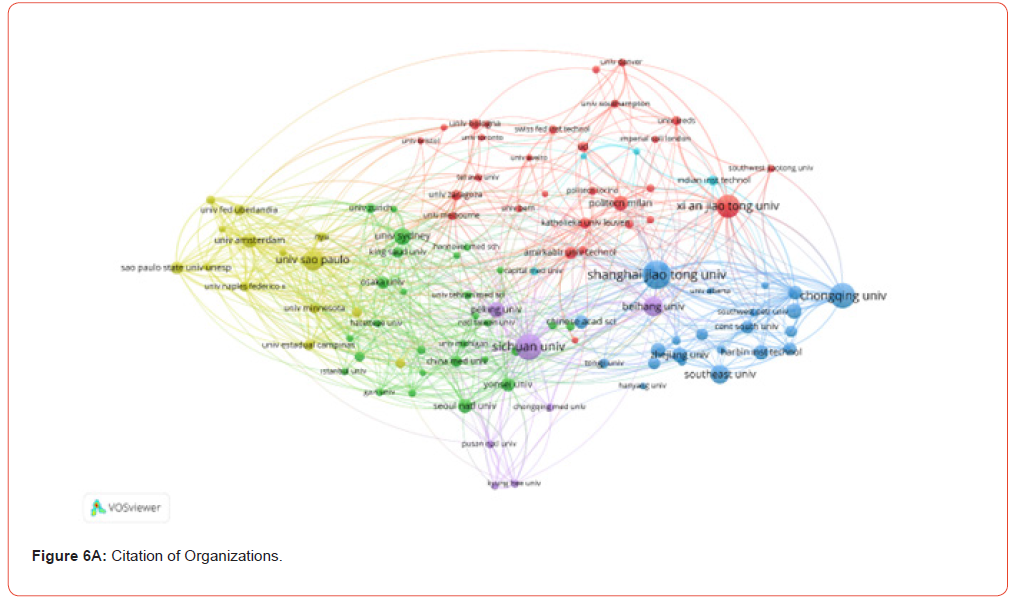
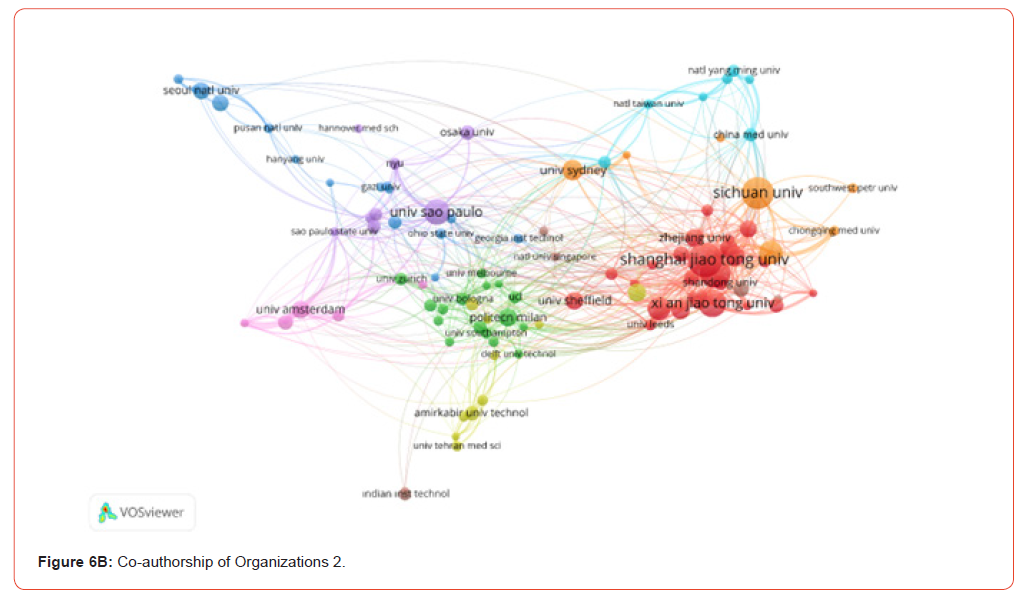
As shown in Table 2, Shanghai Jiao Tong University leads institutional output with 209 publications, followed by Sichuan University (195) and Chongqing University (185), all of which are based in China and collectively shape the core research clusters in FEA-based dental biomechanics. Although publication volumes are similar across the top institutions, citation density varies, with Chongqing University exhibiting a higher citation-to-document ratio than several institutions with comparable output, indicating greater research visibility. The list also shows the presence of non- Chinese institutions such as the University of São Paulo and the University of Sydney, confirming the expanding global participation in computational dentistry research. As illustrated in Figure 6A, Shanghai Jiao Tong University, Sichuan University, and Chongqing University constitute the major citation hubs, reflecting their leading contribution and impact within FEA-based dental research. In contrast, Figure 6B shows a more dispersed co-authorship structure in which international collaboration is stronger among institutions based in the United States and Europe, indicating a wider global research network despite China’s citation dominance.
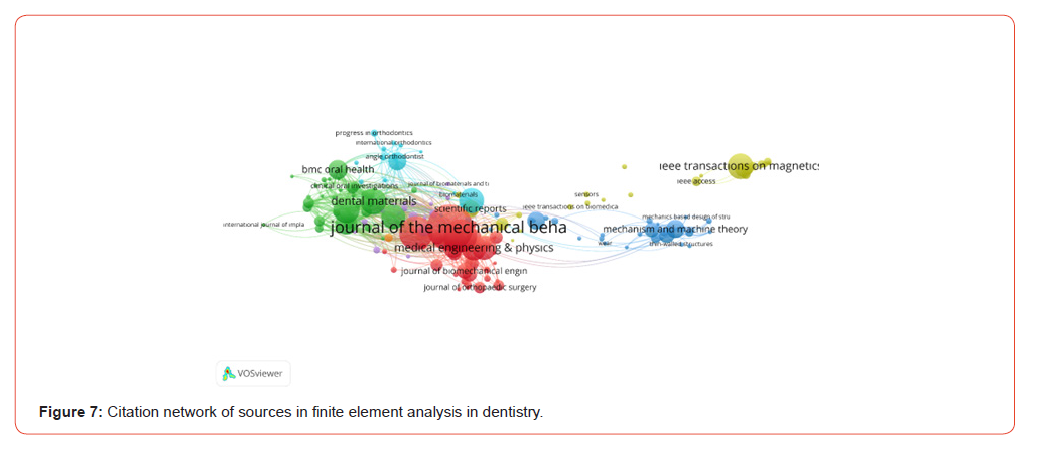
Biomedical Materials ranks first with 456 publications and 8,654 citations, followed by Computer Methods in Biomechanics and Biomedical Engineering (312 publications) and Journal of Biomechanics, which, despite having fewer documents (303), shows the highest citation impact (12,835), as presented in Table 2. The dominance of engineering-oriented and biomechanics-focused journals over purely dental journals indicates that the FEA literature in dentistry remains strongly interdisciplinary, bridging materials science, mechanical engineering, and oral rehabilitation. As shown in Figure 7, Journal of the Mechanical Behavior of Biomedical Materials represents the central and most highly cited source within the citation network, followed by Journal of Biomechanics, Dental Materials, and Medical Engineering & Physics. The network also indicates that high-impact journals in FEA-based dental research are predominantly engineering- and biomechanics-oriented rather than dentistry-specific, reflecting the methodological origin of the field.
Table 3:Most frequently occurring author keywords in finite element analysis research in dentistry.

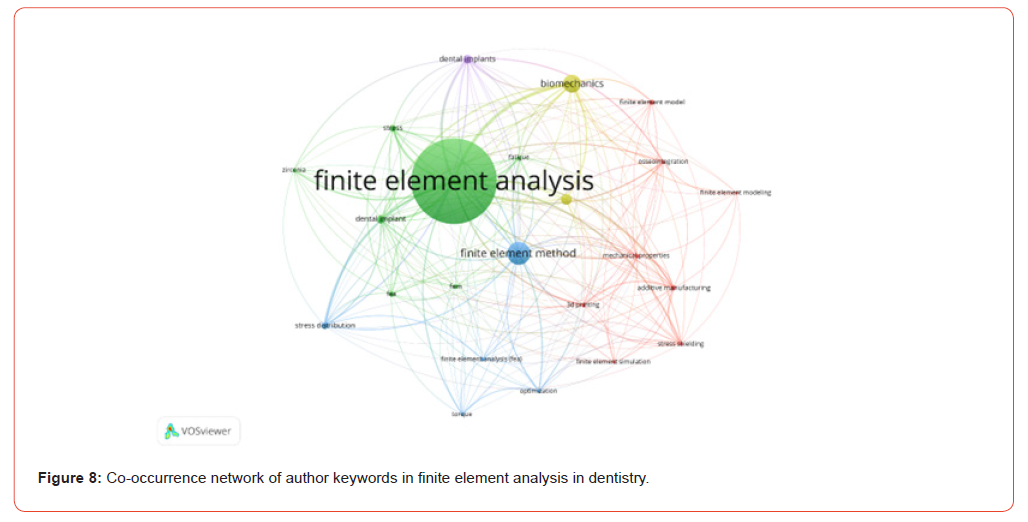
Keyword co-occurrence mapping demonstrated that “finite element analysis,” “finite element method,” and “biomechanics” were the dominant terms, followed by application-specific concepts such as “dental implants,” “stress distribution,” and “osseointegration,” indicating that implant biomechanics remains the primary thematic core of FEA-related dental research (Table 3, Figure 8). Cluster patterns further revealed three major research domains: implant load transfer and failure prediction, material optimization and prosthesis design, and computational validation of surgical or restorative protocols.
Discussion
The present bibliometric analysis demonstrates a substantial and accelerating rise in the use of finite element analysis (FEA) in dentistry over the past two decades, mirroring the broader digital transformation of dental research and clinical workflows. The sharp growth in publication volume after 2014 corresponds with the mainstream integration of CBCT-based modeling, CAD/ CAM systems, and high-performance computing, which collectively lowered the technical barriers to generating anatomically realistic simulations [1, 2, 6]. This upward trajectory is consistent with previous narrative reviews reporting that FEA has transitioned from an exploratory laboratory tool into a widely adopted method for pre-clinical evaluation of implants, prostheses, and biomaterials [2, 4]. The increasing citation activity further suggests that FEA-based evidence is gaining visibility not only within dental specialties but also in engineering and biomechanics journals, reinforcing its role as a methodological bridge between clinical and computational sciences. Unlike earlier bibliometric snapshots limited to implantology or prosthodontics, the present findings reveal a multidisciplinary expansion of FEA across orthodontics, endodontics, maxillofacial surgery, pediatric dentistry, and periodontology, confirming its consolidation as a core research instrument in dental biomechanics [11-13].
The disciplinary profile of the retrieved publications shows that the majority of FEA studies in dentistry are indexed under Engineering and Materials Science rather than dental-specific categories, indicating that the methodological development of FEA remains anchored in mechanical and computational sciences rather than in clinically driven research environments. This finding aligns with prior reports noting that many dental FEA models originate from engineering departments or cross-disciplinary laboratories rather than dental hospitals or clinical research units [1, 4, 14]. Although this techno-centric foundation has accelerated advances in model sophistication—such as improved mesh refinement, nonlinear material assignment, and dynamic loading—it has also contributed to a persistent translational gap, as many studies prioritize numerical precision over clinical relevance and validation [2, 3, 5]. The concentration of FEA studies on implants, prostheses, and restorative materials further reinforces this pattern, as these topics lend themselves to controlled geometric modeling and mechanical simulation, whereas applications involving soft tissues, bone remodeling, or temporomandibular joint function remain comparatively underrepresented due to higher biological complexity [6, 7, 9]. Taken together, the thematic distribution of the literature suggests that FEA in dentistry has matured in technical depth but continues to evolve unevenly across disciplines, with clinically integrated and patient-specific modeling emerging as the next phase of development.
The authorship and country-level patterns observed in this study reveal an asymmetric but evolving research ecosystem in which China leads in publication volume, whereas the United States retains dominance in citation impact. This duality has also been reported in recent bibliometric studies in dental biomaterials and implant research, where China functions as the primary producer of simulation-based evidence, while Western countries continue to shape citation visibility and methodological benchmarks [2, 6, 10].
The fragmented co-authorship structure among individual researchers suggests that FEA in dentistry remains a highoutput but low-integration field, characterized by multiple parallel research clusters rather than a single cohesive scientific community. Such fragmentation may partly explain the variability in modeling protocols, validation strategies, and material property assignments documented across the literature [3, 4, 14]. At the institutional level, the concentration of high-output centers in East Asia contrasts with the more globally distributed collaboration networks observed among universities in the United States, Brazil, Germany, and England, indicating that research influence is no longer geographically restricted, even if authorship density remains regionally clustered. This divergence between citation leadership and collaboration centrality underscores the need for more crosscontinental research consortia, particularly for the development of shared FEA standards, multi-center model validation studies, and harmonized reporting guidelines.
Despite its rapid expansion and increasing citation influence, the methodological rigor of dental FEA studies remains inconsistent, particularly in relation to meshing strategies, material modeling, and validation procedures. Multiple reviews have shown that a substantial proportion of published FEA studies do not report mesh convergence testing, assume linear elastic and isotropic material properties for highly heterogeneous dental tissues, or rely on static loading conditions that do not reflect real masticatory dynamics [3-5]. The lack of standardization in these parameters limits both reproducibility and clinical translatability, as small variations in mesh density, boundary constraints, or modulus assignment can significantly alter stress distribution outcomes. The recent introduction of the RIFEM (Reporting of In-Silico studies using Finite Element analysis in Medicine) framework was intended to address these issues, yet adherence remains partial, with validation and uncertainty quantification being the least reported domains in dental literature [1, 8]. The present bibliometric findings reinforce this methodological fragmentation: although publication volume and disciplinary diversity have increased, the field lacks a unified reporting culture, resulting in a large evidence base that is influential in size but uneven in reliability. For FEA to function as a clinically meaningful decision-support tool rather than an isolated simulation technique, stronger integration between numerical modeling and experimental or clinical validation is required.
The trajectory of FEA in dentistry indicates a transition toward more clinically relevant, multimodal, and patient-specific modeling, supported by advances in imaging, automation, and artificial intelligence. Emerging approaches such as CBCT-driven anatomical reconstruction, voxel-based models, multiphysics simulation, and AI-assisted parameter optimization have already begun to address long-standing limitations related to geometric simplification and manual meshing, suggesting a shift from purely comparative simulations toward predictive and personalized biomechanical assessment [9, 13, 14]. However, the full clinical integration of FEA will depend on the development of standardized workflows that link computational outputs to measurable biological or clinical endpoints, such as implant survival, prosthesis failure, bone remodeling, or orthodontic tooth movement. Future research should therefore prioritize three directions:
(1) validation studies that pair FEA outcomes with in vitro, in
vivo, or long-term clinical data;
(2) multi-institutional collaboration to establish open,
interoperable databases of dental material properties and
loading conditions; and
(3) implementation of RIFEM-compliant reporting to
ensure reproducibility across software platforms, modeling
assumptions, and clinical indications. If these gaps are addressed,
FEA has the potential to evolve from a predominantly researchoriented
simulation tool into a standardized component
of digital treatment planning, prosthesis optimization, and
personalized implant biomechanics, ultimately strengthening
the evidence base for computational dentistry.
Author Contribution
H.A. conceived and designed the study, performed the literature search, collected and curated the data, and conducted bibliometric mapping and visualization using VOSviewer. H.A. drafted and revised the entire manuscript. All work was completed solely by the author, and the final manuscript was reviewed and approved by the author prior to submission
Funding
No funding was received for this study.
Conflict of Interest
The authors declare no conflicts of interest.
References
- Falcinelli C, Valente F, Vasta M, Traini T (2023) Finite element analysis in implant dentistry: State of the art and future directions. Dent Mater 39(6): 539-556.
- Uribe J, Hausselle J, Geringer J (2012) Finite element modelling of shock-induced damages on ceramic hip prostheses. ISRN Materials Science 2011: 1-14.
- Lang LA, Wang RF, Kang B, White SN (2001) Validation of finite element analysis in dental ceramics research. J Prosthet Dent 86(6): 650-654.
- Trivedi S (2014) Finite element analysis: A boon to dentistry. J Oral Biol Craniofac Res 4(3): 200.
- Reddy M, Sundram R, Eid Abdemagyd H (2019) Application of Finite Element Model in Implant Dentistry: A Systematic Review. J Pharm Bioallied Sci 11(Suppl 2): S85.
- Lisiak Myszke M, Marciniak D, Bieliński M, Sobczak H, Garbacewicz Ł, et al. (2020) Application of Finite Element Analysis in Oral and Maxillofacial Surgery—A Literature Review. Materials (Basel) 13(14): 3063.
- Daqiq O, van Minnen B, Spijkervet FKL, Wubs FW, Lunter G, et al. (2025) Finite element analysis of mandibular fracture fixation authenticated by 3D printed mandible mechanical testing. Sci Rep 2025 15(1): 1-15.
- Gao C, Yue C, Su K, Tiro M, Yang J, et al. (2025) Cone Beam Computed Tomography-Based Finite Element Analysis of Bone-Implant Constructs and Comparison with Experimental Measurements. J Biomech Eng 147(11).
- Shams A, Sakrana AA, Abo El-Farag SA, Elerian FA, Özcan M (2025) Biomechanical behavior of endodontically treated premolar teeth restored with novel endocrown system: 3D Finite Element and Weibull analyses. Journal of the Mechanical Behavior of Biomedical Materials 124: 104853.
- De Oliveira V, Arantes R, Corrêa B, Lunardi N, Jorge R, et al. (2015) Insertion angle of orthodontic mini-implants and their biomechanical performance: finite element analysis. Rev Odontol UNESP 44(5): 273-279.
- Rajgopal N, Rajgopal N (2021) Finite Element Analysis in Orthodontics.
- Bayoumi MA. The Finite Element Analysis and Its Application in Pediatric Dentistry. A Narrative Review. Alexandria Dental Journal. 48.
- Wang Z, Du S, Zhu H, Yi K, Tang Z, et al. (2024) A finite element analysis of periodontal ligament fluid mechanics response to occlusal loading based on hydro-mechanical coupling model. Arch Oral Biol 164.
- Abu Izze FO, Ramos GF, Borges ALS, Anami LC, Bottino MA (2018) Fatigue behavior of ultrafine tabletop ceramic restorations. Dent Mater 34(9): 1401-1409.
-

This work is licensed under a Creative Commons Attribution-NonCommercial 4.0 International License.