 Case Report
: Efficacy of PerioProtect Procedure on Periodontal Pathogens Over Time
1Pflugerville Modern Dentistry and Orthodontics, 1553 FM 685 #400, Pflugerville, TX 78660
2Marshall and Associates, 3003 Norris Dr. Houston, TX 77025
3Perio Protect, LLC. 9701 Green Park Industrial Drive St. Louis, MO 63123
Received Date:August 28, 2026; Published Date:September 09, 2026
Abstract
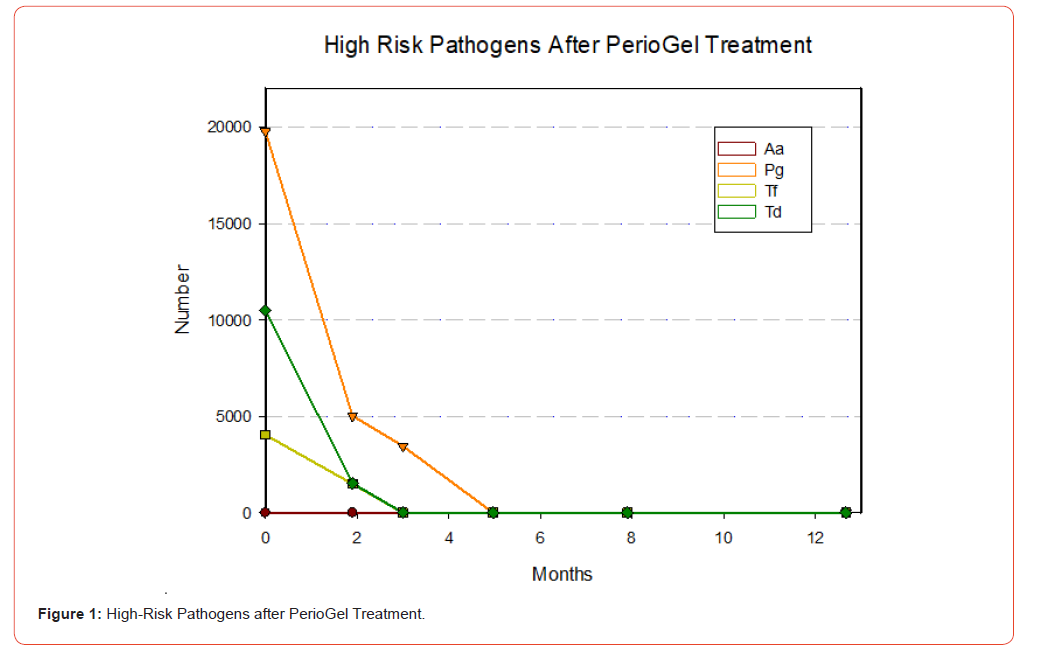
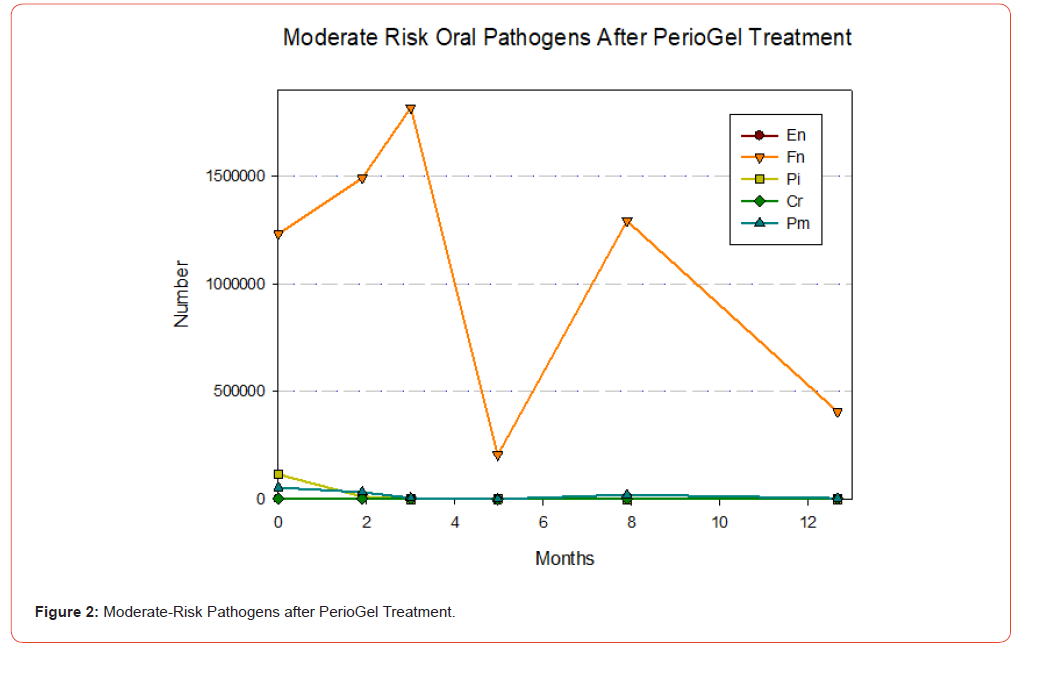
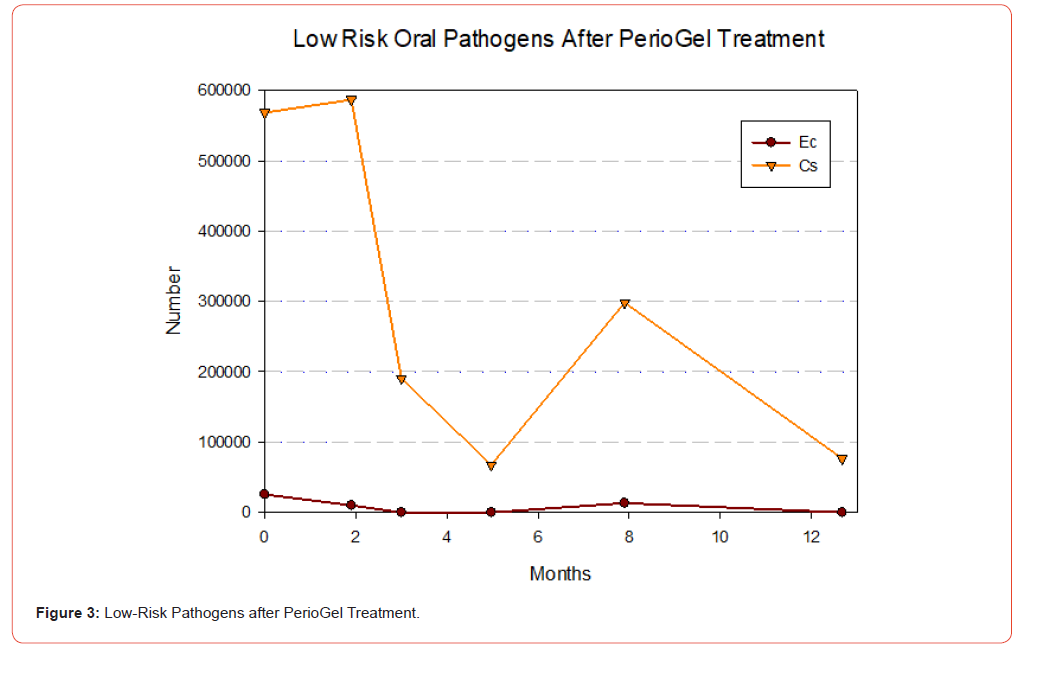
Hydrogen peroxide has a long history of use in dentistry, and the use of PerioGel, containing 1.7% hydrogen peroxide in a custom tray as homecare, has been effective in treating gingivitis and periodontitis. The objective of this study was to determine the effect of PerioGel treatment for 15 min once daily over time on periodontal pathogens associated with periodontal disease and with systemic disease. Pocket depth, bleeding on probing, and identification of oral pathogens were conducted over a 12-month period. Four gingival pockets of 6 mm depth were identified at baseline, and these were reduced to 4 mm by 11 months. In the same time period, bleeding points were reduced from 56 to 4 points. High risk periodontal pathogens were reduced to zero by 4 months of PerioGel treatment; moderate risk pathogens were reduced except for Fusobacterium nucleatum (Fn), which initially increased but decreased following removal of Listerine from routine oral care. Routine cleaning also helped reduce numbers of this pathogen. Low risk pathogens showed a similar trend for Cs. These results support previous clinical trials that demonstrated efficacy of PerioGel in treating gingivitis and periodontitis. In summary, use of PerioGel in custom trays was effective in reducing disease-causing oral pathogens, particularly when used as an adjunct to routine tooth cleaning.
Methods
The subject, a 70-year-old Caucasian male, was evaluated for pocket depths and bleeding points using a calibrated probe, and the previous examination visit was 9 months prior to this evaluation. A custom tray was fabricated, and the subject used PerioGel with the tray daily for 12 months for 15 min per day. Daily oral care consisted of twice daily brushing with a fluoride dentifrice. Routine oral exams and prophylaxis cleaning were performed at baseline (Day 0), and at months 9 and 12. Oral washes were collected during the study at baseline, 1, 3, 5, 8, and 12 months of daily treatment with PerioGel and submitted to OralDNA Labs, 7400 Flying Cloud Drive Eden Prairie, MN 55344 for quantitation of specific oral pathogens that were classified as high risk (Aggregatibacter actinomycetemcomitans, Aa, Porphyromonas gingivalis, Pg, Tannerella forsythia, Tf, and Treponema denticola, TD; moderate risk Eubacterium nodatum, En, Fusobacterium nucleatum/periodonticum, Fn, Prevotella intermedia, Pi, Campylobacter rectus, Cr, and Peptostreptococcus (Micromonas) micros, Pm; and low risk Eikenella corrodens, Ec, and Capnocytophaga species (gingavalis, ochracea, sputigena), Cs for periodontal disease. Listerine was used twice daily initially, but discontinued when levels of Fn were found to increase. This organism is resistant to the antimicrobial effects of Listerine’s essential oils [1].
Results
All periodontal pathogens were reduced following daily treatment with PerioGel (Figures 1-3). Of the high-risk pathogens, all were gone by 5 months, and remained below detection after 5 months. Of the moderate risk pathogens, Fn notably decreased once Listerine was removed from daily oral care after two months of twice daily use. Levels of Fn increased at 8 months, but were reduced after 12 months. Levels of Pi and Cr were below the limits of detection after 2 months. Levels of Pm were below the limit of detection at 4 months, and increased at 8 months, then decreased at 12 months. Of the low-risk pathogens, Ec was below the limit of detection at 3, 5, and 12 months; Cs increased slightly at 2 months, then decreased through 5 months; an increase was observed at 8 months, but it decreased at 12 months.
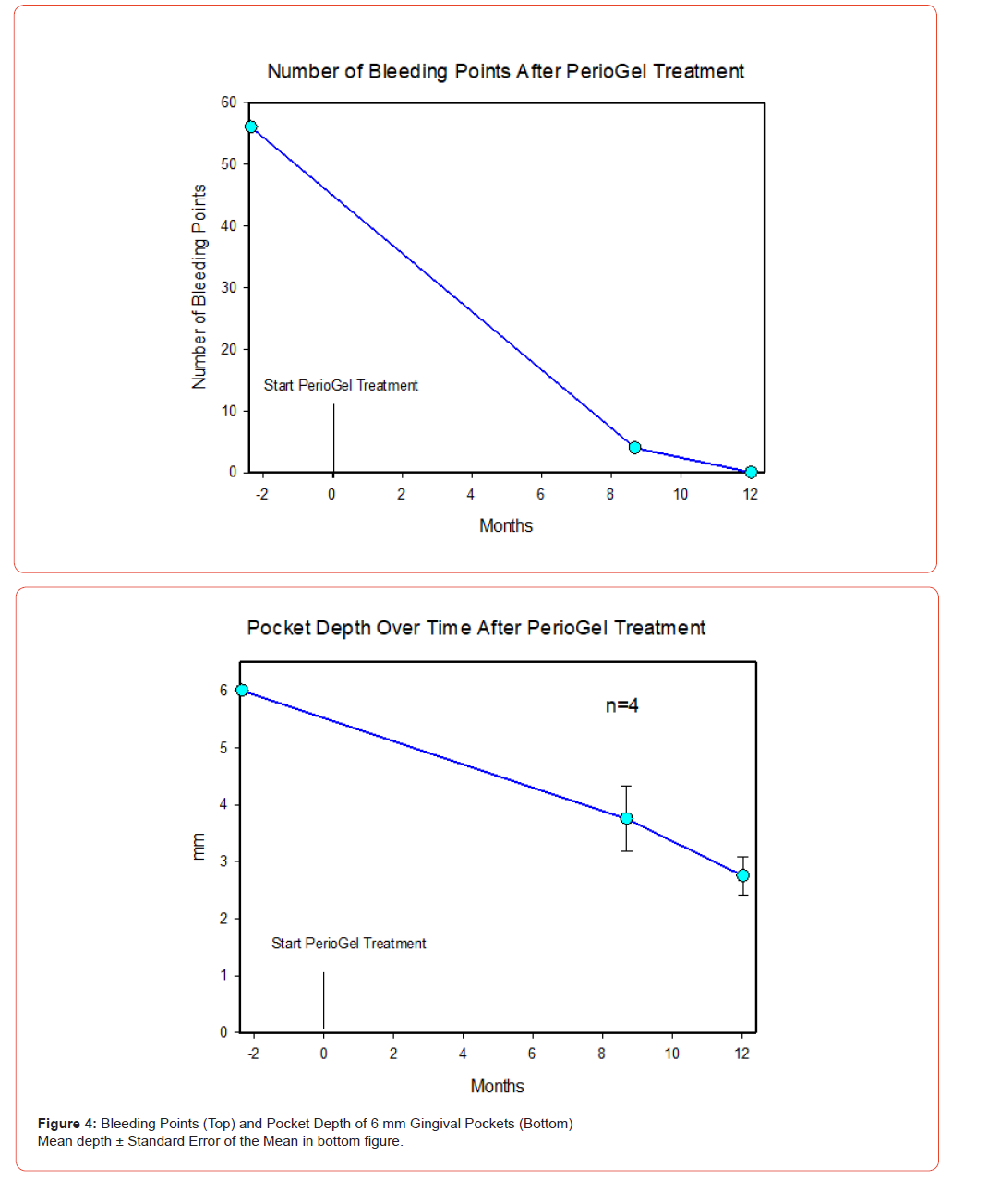
To correlate DNA analysis with pocket depth and bleeding on probing, the number of bleeding points observed approximately two months prior to PerioGel treatment decreased over time as seen in Figure 4, top. Similarly, the four gingival pockets identified at baseline decreased with PerioGel use (Figure 4, bottom). These results correlate well with the decrease in oral pathogens, as well as data from previous studies with PerioGel after scaling and root planing [3, 4].
Discussion
Results from this case report demonstrate the efficacy of Perio- Gel use with a custom tray delivery system in removing periodontal pathogens from the oral cavity. Pocket depths and bleeding points decreased over time. High-risk oral pathogens were below the limits of detection after 4 months. Moderate-risk pathogens decreased by 4 months, with a slight recovery of Pm after 8 months that persisted through 12 months. Of the low-risk pathogens, Ec was below the limit of detection at 3, 5, and 12 months; Cs generally decreased over time. These results demonstrate the efficacy of PerioGel, containing 1.7% hydrogen peroxide, in controlling oral pathogens isolated from saliva.
This study was designed to evaluate whether a custom tray can effectively deliver and maintain therapeutic concentrations of an oral debriding agent, 1.7% hydrogen peroxide, in subgingival areas, effectively overcoming limitations of traditional delivery methods. Results showed the gel could reach deep pockets (up to 9 mm) and maintain therapeutic levels over time [2]. Testing involved:
o Modeling: Diffusion models simulated gel penetration in
the presence of crevicular fluid flow.
o In vitro: Biofilm samples on glass carriers tested for debridement.
o In vivo: Paper point sampling and scanning electron microscopy
assessed microbial changes.
This case report provides additional support for the efficacy of PerioGel in treating gingivitis and periodontitis than was previously published theoretically [2], and practically [3, 4] when used with scaling and root planing by identifying the effect of PerioGel on specific oral pathogens. Use of a custom tray provides better delivery of hydrogen peroxide to the sulcus than oral rinses of 1.5% hydrogen peroxide [5].
The pathogenic potential of Fusobacterium nucleatum varies by subspecies, with some more strongly associated with disease processes than others [6]. This study did not look at subspecies of Fn to determine which were more affected by hydrogen peroxide treatment because of limitations of the DNA testing procedure. However, the screening can prove useful in patient compliance with good oral hygiene and validates the efficacy of treatment to facilitate the use of screening and acceptance by the patient of the treatment plan proposed by the dentist.
Overall, this study demonstrated the efficacy of oral delivery of 1.7% hydrogen peroxide in decreasing the number of disease-causing oral pathogens over time with once daily use in a custom tray. Previous studies have linked oral pathogens with systemic disease [7, 8], so this treatment with Perio Gel should be useful in reducing systemic diseases caused by oral pathogens [9].
Disclosures
Dr. Thu Do has no financial interest in the companies referenced in this article and received no compensation for writing the article. Dr. M. Kevin Sorrels has no financial interest in the companies referenced in this article and received no compensation for writing the article. Dr. Milton V. Marshall has no financial interest in the companies referenced in this article and received no compensation for writing the article. He has served as a paid and unpaid consultant to PerioProtect in the past. Dr. Tanya Dunlap is an employee of PerioProtect and as such, she receives compensation from the company.
References
- Laumen J G E, Van Dijck C, Manoharan-Basil S S, de Block T, Abdellati S, et al. (2024) The effect of daily usage of Listerine Cool Mint mouthwash on the oropharyngeal microbiome: a substudy of the PReGo trial. J Med Microbiol 73(6): 2024.
- Dunlap T, Keller D, Marshall M, Costerton J, Schaudinn C, et al. (2011) Subgingival Delivery of Oral Debriding Agents: A Proof of Concept. J Clin Dent 22(5): 149-158.
- Putt M, Proskin H (2013) Custom Tray Application of Peroxide Gel as an Adjunct to Scaling and Root Planing in the Treatment of Periodontitis: Results of a Randomized, Controlled Trial after 6 Months. J Clin Dent 24: 100-107.
- Putt M, Mallatt M, Messmann L, and Proskin H (2014) A 6-month clinical investigation of custom tray application of peroxide gel with or without doxycycline as adjuncts to scaling and root planning for treatment of periodontitis. Am J Dent 27: 273-284.
- Boyd RL (1989) Effects on gingivitis of daily rinsing with 1.5% H2O2. J Clin Periodontol 16: 557-562.
- Han YW (2015) Fusobacterium nucleatum: a commensal-turned pathogen. Curr Opin Microbiol 23:141-147.
- Costerton J, Keller D (2007) Oral periopathogens and systemic effects. Gen Dent May/June 210-21.
- Herrera D (2024) Periodontal diseases and cardiovascular diseases, diabetes, and respiratory diseases: Summary of the consensus report by the European Federation of Periodontology and WONCA Europe. Eur J of Genreal Practice. 30(1) 20320120.
- Dunlap T (2022) Oral Care in a Post-Antibiotic Age: Problems and Treatment Options. Online j Dentistry Oral Health. 5(5): 1-4.
-

This work is licensed under a Creative Commons Attribution-NonCommercial 4.0 International License.