


 Perspective
Unhealthy Meals in Hospitals: An Ethical Contradiction in Cardiac Care
Received Date: August 12, 2025; Published Date: August 20, 2025
Abstract
Hospitals, as cornerstones of healthcare, have a profound ethical obligation to embody and promote healthful practices. Paradoxically, many cardiac centers continue to serve meals rich in saturated fats, sugars, processed ingredients, and excessive sodium, undermining their core mission to heal and restore health. This article critically examines the ethical implications of offering unhealthy meals in healthcare facilities, focusing on the principles of beneficence, nonmaleficence, patient autonomy, and broader public health ethics. By providing unhealthy food options, hospitals not only risk exacerbating chronic conditions such as obesity, diabetes, hypertension, hyperlipidemia, and cardiovascular diseases but also contradict their responsibility to advocate for preventive and holistic health measures.
Despite economic constraints and patient preference considerations that drive the continued provision of unhealthy meals, healthcare institutions bear a critical ethical responsibility to align their dietary offerings with evidence-based nutritional guidelines. Highlighting a transformative example, Bethsaida Hospital, under the leadership of Prof. Dasaad Mulijono, has established itself as a pioneering institution by implementing a comprehensive, plant-based nutrition (PBN) program. The hospital has demonstrated outstanding clinical outcomes, significantly reversing chronic illnesses such as coronary artery disease (CAD), hypertension, type 2 diabetes mellitus (T2DM), obesity, and chronic kidney disease, alongside achieving exceptionally low restenosis rates post-interventional cardiology procedures. This article emphasizes the necessity for systemic reform in hospital meal services, advocating for rigorous nutritional policies, collaborative stakeholder engagement, and patient-centered nutritional education. Ultimately, addressing the ethical dilemma surrounding unhealthy hospital meals demands an integrated approach that aligns clinical practice with health promotion principles, reinforcing hospitals’ essential role in advancing public health.
Keywords: Hospital meals; ethical responsibility; plant-based nutrition; patient autonomy; public health ethics; cardiac centers; Bethsaida Hospital; Prof. Dasaad Mulijono
Introduction
Hospitals have long been recognized as essential institutions dedicated to promoting health, preventing disease, and rehabilitating patients. Historically, they have symbolized hope, healing, and wellness within their communities [1-4]. However, despite their pivotal role in advocating for health, many cardiac centers persistently provide dietary options that directly contradict established nutritional guidelines and exacerbate patient health conditions. Meals high in saturated fats, sugars, processed ingredients, and sodium are regularly served to patients, visitors, and even staff, raising significant ethical concerns about the healthcare sector’s commitment to its foundational values [5-8].
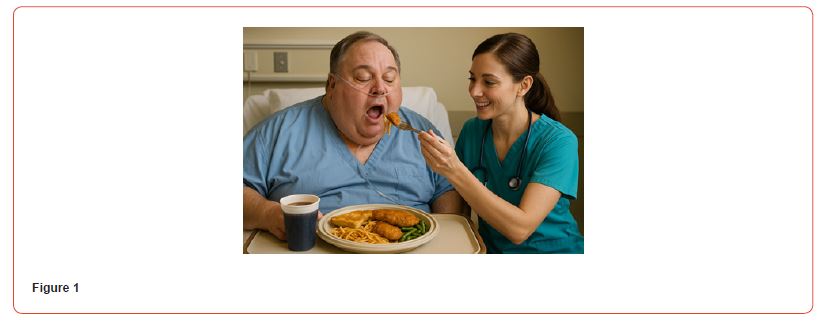
The ethical considerations associated with serving unhealthy meals in hospitals are profound, involving key principles such as beneficence - actively promoting the well-being of patients;nonmaleficence - avoiding actions that cause harm; patient autonomy - respecting individuals’ rights to make informed dietary choices; and broader public health ethics - ensuring communitywide health and wellness through exemplary practices. While patient preferences, cultural sensitivities, and economic realities influence food service decisions, hospitals hold an inherent moral duty to prioritize health and wellness through their dietary practices. Given the global increase in lifestyle-related chronic diseases, cardiac centers, in particular, have a heightened responsibility to exemplify dietary practices that mitigate health risks. This article examines these ethical challenges and offers insights into how hospitals, exemplified by Bethsaida Hospital’s pioneering initiatives, can address these ethical tensions to improve patient outcomes, community health, and moral integrity in healthcare practices (Figure 1).
Factors Contributing to the Provision of Unhealthy Meals in Hospitals
Hospitals routinely provide food services that often include items such as fried foods, sugary desserts, processed meats, and high-sodium dishes. These unhealthy dietary options contribute significantly to obesity, diabetes, cardiovascular diseases, and other chronic health issues, directly contradicting hospitals’ fundamental role in health promotion and disease prevention [9-12]. Ethically, hospitals must uphold principles of beneficence and nonmaleficence, actively promoting good health and avoiding harm to patients. Serving unhealthy meals starkly conflicts with these ethical principles, potentially confusing patients regarding appropriate dietary practices and undermining public trust [13- 17].
However, hospitals face several compelling reasons for continuing these practices. Patient autonomy requires healthcare providers to respect individual choices and cultural dietary preferences, even when these choices may not align with ideal nutritional standards. Hospitals frequently prioritize patient satisfaction, and familiar, comfort-oriented foods often enhance patients’ experiences, contributing positively to patient-reported satisfaction scores. Furthermore, economic factors significantly influence hospital meal planning decisions. Processed foods tend to have lower costs, require less preparation time, and offer longer shelf life compared to fresh, nutritious alternatives, making them economically attractive choices for resource-constrained healthcare facilities [18-22]. Addressing these challenges requires a careful balance between ethical duties, patient preferences, and financial realities, necessitating systemic changes and innovative solutions that encourage healthier eating habits without compromising patient satisfaction or economic sustainability.
Bethsaida Hospital: A Leading Role Model in PBN
Bethsaida Hospital, under the visionary leadership of Prof. Dasaad Mulijono, has emerged as the premier healthcare institution in Indonesia, renowned for its pioneering PBN program. The hospital has consistently demonstrated remarkable clinical outcomes, successfully reversing numerous chronic conditions, including CAD, hypertension, T2DM, obesity, and chronic kidney disease. Notably, patients with CAD treated at Bethsaida have achieved exceptionally low LDL cholesterol levels by integrating a carefully tailored plant-based dietary regimen alongside statin and ezetimibe therapy, effectively eliminating the need for costly PCSK9 inhibitor injections. Bethsaida Hospital also distinguishes itself nationally by maintaining the lowest rates of restenosis and target lesion revascularization following drug-coated balloon angioplasty procedures.
This success highlights the hospital’s comprehensive and holistic approach to cardiology care. During the challenging period of the COVID-19 pandemic, Bethsaida Hospital showcased extraordinary resilience and effectiveness, successfully preventing hospitalizationand significantly reducing mortality among thousands of elderly COVID-19 patients through its robust plant-based nutrition interventions. Having provided nutritious plant-based meals to cardiology patients for nearly seven years, Bethsaida Hospital has established itself as an iconic institution—the first in Indonesia dedicated to serving plant-based dietary programs within a clinical setting. The hospital continues to inspire healthcare providers nationwide and internationally, aspiring to be a global exemplar in promoting healthful lifestyles through evidence-based, plantcentric nutrition strategies.
Discussion
The ethical implications of hospitals serving unhealthy food extend far beyond immediate patient care, impacting broader public health and community perceptions. Hospitals hold a unique position in society as influential health role models, and serving unhealthy meals significantly undermines their credibility and the effectiveness of public health messaging. Such contradictory practices potentially exacerbate chronic public health issues by normalizing unhealthy dietary habits among patients, staff, and visitors. To effectively address these ethical concerns, systemic changes are essential. Hospitals should develop and enforce rigorous nutritional policies aligned with current evidence-based dietary recommendations. Collaboration among key stakeholders - including dietitians, ethicists, administrators, healthcare professionals, policymakers, and patient advocacy groups - is crucial for developing comprehensive and balanced strategies. Such collaborative efforts ensure the integration of diverse perspectives and the development of policies that realistically address nutritional goals, economic constraints, patient preferences, and cultural factors [23-32].
Implementing innovative solutions can help hospitals fulfil their ethical responsibilities without compromising patient autonomy or economic sustainability. Strategies such as personalized nutritional counselling, introducing plant-based and nutrient-rich meals, leveraging local and sustainable produce, and adopting technologydriven dietary interventions can significantly enhance patient health outcomes and satisfaction. Educational programs that inform patients about nutritional choices and their health impacts can also play a significant role in encouraging healthier eating habits. Ultimately, the move toward healthier hospital meals represents a commitment to ethical healthcare delivery, reinforcing hospitals’ essential role in promoting preventive care and public health.
Conclusion
Serving unhealthy meals in cardiac centers and hospitals represents a profound ethical contradiction to the fundamental principles of beneficence and nonmaleficence inherent in healthcare delivery. Hospitals have a critical responsibility to model and promote healthful dietary practices that actively contribute to patient recovery and community wellness. A shift towards healthier nutritional standards requires systematic, multidisciplinary collaboration, clearly defined institutional policies, innovative nutritional programs, and patient-centered education. Ultimately, by aligning dietary services with ethical obligations and evidencebased nutritional guidelines, hospitals can substantially enhance public health outcomes and fulfil their pivotal role as leaders in health promotion and preventive care [33-42].
Author Contributions
D.M.; Conceptualization, writing, review, and editing.
Funding
This research received no external funding.
Institutional Review Board Statement
Not applicable.
Informed Consent Statement
Not applicable.
Data Availability Statement
Data are contained within the article.
Conflict of Interest
The authors declare no conflict of interest.
References
- Henderson J, Goldacre MJ, Griffith M (1990) Hospital care for the elderly in the final year of life: a population based study. BMJ 301(6742): 17-19.
- Lichtenberg FR (2013) The impact of therapeutic procedure innovation on hospital patient longevity: evidence from Western Australia, 2000-2007. Soc Sci Med 77: 50-59.
- Gianfredi V, Nucci D, Pennisi F, Maggi S, Veronese N, et al. (2025) Aging, longevity, and healthy aging: the public health approach. Aging Clin Exp Res 37(1): 125.
- Hughes-García M, Ojeda-Salazar DA, Rivera-Cavazos A, Garza-Silva A, Cepeda-Medina AB, et al. (2024) The impact of an integrative healthcare system on longevity in a nonagenarian population in Northern Mexico: an observational study. Arch Public Health 82(1): 150.
- Richardson S, McSweeney L, Spence S (2022) Availability of Healthy Food and Beverages in Hospital Outlets and Interventions in the UK and USA to Improve the Hospital Food Environment: A Systematic Narrative Literature Review. Nutrients 14(8): 1566.
- Cranney L, Thomas M, Shepherd L, Cobcroft M, O'Connell T, et al. (2021) Towards healthier food choices for hospital staff and visitors: impacts of a healthy food and drink policy implemented at scale in Australia. Public Health Nutr 24(17): 5877-5884.
- Rosin M, Ni Mhurchu C, Mackay S (2024) Implementing healthy food policies in health sector settings: New Zealand stakeholder perspectives. BMC Nutr 10(1): 119.
- McSweeney L, Buczkowska M, Denning L, Elcock M, Spence S (2025) Healthcare staff perceptions of the hospital food environment: a narrative systematic review. Public Health Nutr 28(1): e66.
- Mozaffarian D (2016) Dietary and Policy Priorities for Cardiovascular Disease, Diabetes, and Obesity: A Comprehensive Review. Circulation 133(2): 187-225.
- Kavle JA, Mehanna S, Saleh G, Fouad MA, Ramzy M, et al. (2015) Exploring why junk foods are 'essential' foods and how culturally tailored recommendations improved feeding in Egyptian children. Matern Child Nutr 11(3): 346-370.
- Sahud HB, Binns HJ, Meadow WL, Tanz RR (2006) Marketing fast food: impact of fast food restaurants in children's hospitals. Pediatrics 118(6): 2290-2297.
- Harmayani E, Anal AK, Wichienchot S, Bhat R, Gardjito M, et al. (2019) Healthy food traditions of Asia: exploratory case studies from Indonesia, Thailand, Malaysia, and Nepal. J Ethn Food 6(1).
- Olden PC, Clement DG (2000) The prevalence of hospital health promotion and disease prevention services: good news, bad news, and policy implications. Milbank Q 78(1): 115-46, iii-iv.
- Institute of Medicine (US), Stoto MA, Behrens R, Rosemont C, editors. (1990) Healthy People 2000: Citizens Chart the Course. Washington (DC): National Academies Press (US); 8. Health Promotion and Disease Prevention in the Health Care System.
- Caron RM, Noel K, Reed RN, Sibel J, Smith HJ (2023) Health Promotion, Health Protection, and Disease Prevention: Challenges and Opportunities in a Dynamic Landscape. AJPM Focus 3(1): 100167.
- Orlandi MA (1987) Promoting health and preventing disease in health care settings: an analysis of barriers. Prev Med 16(1): 119-130.
- Tveiten S (2021) Empowerment and Health Promotion in Hospitals. In: Haugan G, Eriksson M, editors. Health Promotion in Health Care - Vital Theories and Research [Internet]. Cham (CH): Springer.
- Moodie R, Bennett E, Kwong EJL, Santos TM, Pratiwi L, et al. (2021) Ultra-Processed Profits: The Political Economy of Countering the Global Spread of Ultra-Processed Foods - A Synthesis Review on the Market and Political Practices of Transnational Food Corporations and Strategic Public Health Responses. Int J Health Policy Manag 10(12): 968-982.
- Adams J, Hofman K, Moubarac JC, Thow AM (2020) Public health response to ultra-processed food and drinks. BMJ 369: m2391.
- Tharrey M, Drogué S, Privet L, Perignon M, Dubois C, et al. (2020) Industrially processed v. home-prepared dishes: what economic benefit for the consumer? Public Health Nutr 23(11): 1982-1990.
- Calcaterra V, Cena H, Rossi V, Santero S, Bianchi A, et al. (2023) Ultra-Processed Food, Reward System and Childhood Obesity. Children (Basel) 10(5): 804.
- Hess JM, Comeau ME, Scheett AJ, Bodensteiner A, Levine AS (2024) Using Less Processed Food to Mimic a Standard American Diet Does Not Improve Nutrient Value and May Result in a Shorter Shelf Life at a Higher Financial Cost. Curr Dev Nutr 8(11): 104471.
- Belardo D, Michos ED, Blankstein R, Blumenthal RS, Ferdinand KC, et al. (2022) Practical, Evidence-Based Approaches to Nutritional Modifications to Reduce Atherosclerotic Cardiovascular Disease: An American Society For Preventive Cardiology Clinical Practice Statement. Am J Prev Cardiol 10: 100323.
- Adams SH, Anthony JC, Carvajal R, Chae L, Khoo CSH, et al. (2020) Perspective: Guiding Principles for the Implementation of Personalized Nutrition Approaches That Benefit Health and Function. Adv Nutr 11(1): 25-34.
- Mozaffarian D, Angell SY, Lang T, Rivera JA (2018) Role of government policy in nutrition-barriers to and opportunities for healthier eating. BMJ 361: k2426.
- Kris-Etherton PM, Akabas SR, Bales CW, Bistrian B, Braun L, et al. (2014) The need to advance nutrition education in the training of health care professionals and recommended research to evaluate implementation and effectiveness. Am J Clin Nutr 99(5 Suppl): 1153S-1166S.
- Gorski MT, Roberto CA (2015) Public health policies to encourage healthy eating habits: recent perspectives. J Healthc Leadersh 7: 81-90.
- Thibault R, Abbasoglu O, Ioannou E, Meija L, Ottens-Oussoren K, et al. (2021) ESPEN guideline on hospital nutrition. Clin Nutr 40(12): 5684-5709.
- Agurs-Collins T, Alvidrez J, ElShourbagy Ferreira S, Evans M, Gibbs K, et al. (2024) Perspective: Nutrition Health Disparities Framework: A Model to Advance Health Equity. Adv Nutr 15(4): 100194.
- Culliford AE, Bradbury J, Medici EB (2023) Improving Communication of the UK Sustainable Healthy Dietary Guidelines the Eatwell Guide: A Rapid Review. Sustainability 15:
- Young M, Smith MA (2025) Standards and Evaluation of Healthcare Quality, Safety, and Person-Centered Care. In: StatPearls [Internet]. Treasure Island (FL): StatPearls Publishing.
- Rosin M, Mackay S, Gerritsen S, Te Morenga L, Terry G, et al. (2024) Barriers and facilitators to implementation of healthy food and drink policies in public sector workplaces: a systematic literature review. Nutr Rev 82(4): 503-535.
- Diab A, Dastmalchi LN, Gulati M, Michos ED (2023) A Heart-Healthy Diet for Cardiovascular Disease Prevention: Where Are We Now? Vasc Health Risk Manag 19: 237-253.
- Yu E, Malik VS, Hu FB (2018) Cardiovascular Disease Prevention by Diet Modification: JACC Health Promotion Series. J Am Coll Cardiol 72(8): 914-926.
- Asgary S, Rastqar A, Keshvari M (2018) Functional Food and Cardiovascular Disease Prevention and Treatment: A Review. J Am Coll Nutr 37(5): 429-455.
- Casas R, Castro-Barquero S, Estruch R, Sacanella E (2018) Nutrition and Cardiovascular Health. Int J Mol Sci 19(12): 3988.
- Pallazola VA, Davis DM, Whelton SP, Cardoso R, Latina JM, et al. (2019) A Clinician's Guide to Healthy Eating for Cardiovascular Disease Prevention. Mayo Clin Proc Innov Qual Outcomes 3(3): 251-267.
- Mente A, Dehghan M, Rangarajan S, O'Donnell M, Hu W, et al. (2023) Diet, cardiovascular disease, and mortality in 80 countries. Eur Heart J 44(28): 2560-2579.
- Vassiliou VS, Tsampasian V, Abreu A, Kurpas D, Cavarretta E, et al. (2023) Promotion of healthy nutrition in primary and secondary cardiovascular disease prevention: a clinical consensus statement from the European Association of Preventive Cardiology. Eur J Prev Cardiol 30(8): 696-706.
- Engelfriet P, Hoekstra J, Hoogenveen R, Büchner F, van Rossum C, et al. (2010) Food and vessels: the importance of a healthy diet to prevent cardiovascular disease. Eur J Cardiovasc Prev Rehabil 17(1): 50-55.
- Lanier JB, Bury DC, Richardson SW (2016) Diet and Physical Activity for Cardiovascular Disease Prevention. Am Fam Physician 93(11): 919-924.
- Hasler CM, Kundrat S, Wool D (2000) Functional foods and cardiovascular disease. Curr Atheroscler Rep 2(6): 467-475.
-

This work is licensed under a Creative Commons Attribution-NonCommercial 4.0 International License.