



 Research article
Underwater Museum: Applying Coconut Oil to Coat Red Granite - A Comprehensive Preservation Approach for Submerged Artifacts in Alexandria, Egypt
Received Date:November 28, 2024 Published Date: December 09, 2024
Abstract
This research explores a novel preservation technique using coconut oil to coat red granite artifacts submerged in the Underwater Museum of Alexandria, Egypt. The methodology involved applying coconut oil to granite samples similar to the submerged granite artifacts, followed by comprehensive testing to evaluate its efficacy. Compression tests, scanning electron microscopy (SEM), and X-ray diffraction (XRD) analysis were conducted to examine the physical and chemical properties of the treated samples. The results were promising, showing that coconut oil effectively protects granite from microbial damage and acts as a water-repellent barrier, mitigating various deterioration factors associated with seawater exposure. The coconut oil coating demonstrated significant antimicrobial properties, preventing the growth of microorganisms that typically cause stone degradation. Additionally, the hydrophobic nature of coconut oil helped in repelling water, thus reducing the risk of salt crystallization and other moisture-related damages. This preservation method holds great potential for enhancing the conservation of submerged artifacts in the Underwater Museum, contributing to the sustainable management of Alexandria’s underwater cultural heritage. By protecting these artifacts from seawater-induced damage, the project supports the development of the underwater museum as a significant tourist attraction, promoting cultural and economic growth in the region. The successful application of this technique offers a holistic approach to preserving submerged artifacts and highlights the importance of innovative conservation strategies in safeguarding our historical legacy.
Keywords: Red Granite artifacts; Coconut oil; artifact conservation; Cultural heritage; Underwater Museum
Introduction
Background:
Alexandria, Egypt, is renowned for its rich historical legacy, with numerous submerged archaeological treasures lying beneath the Mediterranean Sea. Among these are artifacts made from red granite, a material highly valued in ancient Egypt for its durability and aesthetic appeal. These submerged red granite artifacts, which include statues, columns, and other monumental structures, offer a window into the sophisticated craftsmanship and cultural achievements of ancient Egyptian civilization [1-3]. However, their prolonged exposure to the harsh marine environment poses significant threats to their preservation. The artifacts face multiple geo-environmental challenges. The high salinity of seawater leads to salt crystallization within the granite’s porous structure, causing internal stress and cracking. Additionally, constant moisture accelerates the weathering process, further weakening the stone. Biological factors also play a role, with marine organisms such as algae, fungi, and bacteria colonizing the surfaces, contributing to both chemical and physical degradation. Industrial pollution compounds these issues by introducing harmful substances that exacerbate the chemical weathering of the stone [4-8]. In response to these preservation challenges, the concept of an Underwater Museum in Alexandria has been proposed. This innovative project aims to create a controlled environment where these invaluable artifacts can be protected and displayed. The museum seeks to mitigate the adverse effects of seawater and pollution by employing advanced conservation techniques, including the use of coconut oil as a protective coating for the red granite [9-11]. This method leverages the antimicrobial properties and water-repellent nature of coconut oil to shield the artifacts from biological growth and moisture-related damage. The Underwater Museum project is not only about preserving artifacts but also about promoting sustainable tourism and socio-economic development. By offering a unique underwater experience, the museum is expected to attract tourists from around the world, boosting the local economy and creating job opportunities [12-13]. Furthermore, the project aligns with broader cultural heritage conservation goals by ensuring that these historical treasures are preserved for future generations. Educational programs and interactive exhibits within the museum will raise awareness about the importance of underwater archaeology and conservation efforts [14-15]. In summary, the introduction of the Underwater Museum in Alexandria represents a holistic approach to preserving submerged red granite artifacts. It addresses the complex interplay of environmental and anthropogenic factors that threaten these treasures, while also contributing to the region’s economic and cultural development. Through innovative conservation methods and sustainable tourism practices, the museum aims to protect and celebrate Alexandria’s underwater heritage for generations to come.
Topic Importance:
The preservation of submerged red granite artifacts in Alexandria holds immense importance due to their historical, cultural, and scientific value. These artifacts are remnants of ancient Egypt’s illustrious past, offering critical insights into the craftsmanship, architectural prowess, and societal practices of the era. They serve as tangible links to our shared human heritage, helping us understand the evolution of civilization and the enduring legacy of ancient Egyptian culture. Moreover, the degradation of these artifacts due to environmental factors such as high salinity, biological growth, and pollution poses a significant threat to their survival. Without effective conservation strategies, these irreplaceable treasures could be lost forever, leading to a substantial gap in our historical knowledge. The Underwater Museum project in Alexandria aims to address these preservation challenges while also promoting sustainable tourism. By providing a controlled environment for the display and protection of these artifacts, the museum enhances their accessibility to researchers, historians, and the general public. This initiative not only safeguards the artifacts but also contributes to the socio-economic development of the region by attracting tourists, creating job opportunities, and fostering a sense of pride and ownership among local communities. Furthermore, the innovative use of preservation techniques, such as the application of coconut oil to protect red granite, highlights the potential for new methodologies in the field of underwater archaeology and conservation. The success of this project could set a precedent for similar initiatives worldwide, demonstrating the importance of holistic and multidisciplinary approaches in preserving our underwater cultural heritage. By ensuring the longevity and integrity of these artifacts, we can continue to honor and learn from the remarkable achievements of ancient civilizations.
Study hypotheses:
1. Hypothesis 1: The application of coconut oil to red granite
artifacts submerged in the Underwater Museum of Alexandria
significantly reduces microbial growth, thereby enhancing
the preservation of these artifacts. This hypothesis is based
on the known antimicrobial properties of coconut oil, which
are expected to inhibit the growth of fungi, algae, and other
microorganisms that contribute to the biological degradation
of stone surfaces.
2. Hypothesis 2: Coconut oil acts as an effective waterrepellent
barrier on red granite, reducing moisture absorption
and preventing salt crystallization within the stone. This
hypothesis posits that the hydrophobic nature of coconut oil will
help protect the granite from moisture-related damage, such as
internal stress and cracking caused by salt crystallization as
water evaporates.
3. Hypothesis 3: The overall structural integrity and surface
appearance of red granite artifacts treated with coconut oil
will show significant improvement compared to untreated
samples, as evidenced by compression tests, scanning electron
microscopy (SEM), and X-ray diffraction (XRD) analysis. This
hypothesis suggests that the protective properties of coconut
oil will lead to observable physical and chemical enhancements
in the treated stone samples.
4. Hypothesis 4: The implementation of the Underwater
Museum project, including the use of coconut oil as a
preservation method, will contribute to the sustainable
management and tourism development of Alexandria’s
underwater cultural heritage. This hypothesis anticipates that
by preserving the submerged artifacts more effectively, the
museum will become a major tourist attraction, promoting
cultural awareness and economic growth in the region.
These hypotheses guide the research, aiming to validate the effectiveness of coconut oil in preserving submerged red granite artifacts and to assess the broader impacts of the Underwater Museum project on heritage conservation and tourism development.
Study Questions:
How effective is the application of coconut oil in reducing microbial growth on red granite artifacts submerged in the Underwater Museum of Alexandria? This study seeks to determine the effectiveness of coconut oil as a water-repellent barrier that protects the artifacts from moisture-related damage and salt crystallization. It also aims to evaluate improvements in structural integrity and surface appearance of treated artifacts through compression tests, SEM, and XRD analysis, while identifying the primary geo-environmental factors contributing to the deterioration. Furthermore, the study examines how the Underwater Museum project contributes to sustainable management and tourism development, enhancing the preservation of Alexandria’s underwater cultural heritage and promoting socio-economic growth in the region.
Study Problem:
The preservation of submerged red granite artifacts in Alexandria’s Underwater Museum faces numerous challenges due to the harsh marine environment. High salinity levels, constant exposure to moisture, biological growth, and industrial pollution accelerate the deterioration of these culturally significant artifacts. Despite recent restoration efforts, traditional preservation techniques have proven inadequate in mitigating the complex and interrelated geo-environmental factors contributing to the artifacts’ degradation. Consequently, there is an urgent need to develop and implement innovative conservation methods that can effectively protect these submerged artifacts from further decay while ensuring their structural integrity and historical value. This study aims to address this pressing issue by evaluating the efficacy of using coconut oil as a preservation method for red granite artifacts, assessing its ability to reduce microbial growth, repel water, and prevent salt crystallization. The findings will provide critical insights into the viability of this approach and contribute to the broader conservation efforts within the Underwater Museum project, promoting sustainable tourism and the preservation of Alexandria’s underwater cultural heritage.
Study Objectives:
The primary objectives of this study are to evaluate the efficacy of coconut oil in preserving submerged red granite artifacts in Alexandria’s Underwater Museum. This involves assessing its antimicrobial properties, water-repellent capabilities, and the prevention of salt crystallization. The study aims to analyze the physical and chemical improvements in treated artifacts through compression tests, SEM, and XRD analysis. Additionally, it seeks to identify the geo-environmental factors contributing to deterioration and how coconut oil mitigates these effects. Ultimately, the study aims to promote sustainable tourism and heritage conservation, offering best practices for underwater artifact preservation and supporting the socio-economic development of the region through the Underwater Museum project.
Literature Review
The literature on the preservation of submerged artifacts highlights the considerable challenges posed by marine environments, emphasizing the impact of high salinity, constant moisture, biological growth, and pollution on the deterioration of stone materials. Studies by Hedges (2002) and MacLeod (2012) have underscored these factors’ contributions to the degradation of submerged stone artifacts, calling for effective conservation methods to mitigate these adverse effects. Coconut oil, recognized for its hydrophobic and antimicrobial properties, has emerged as a promising natural preservative [16-18]. Research by Mukherjee & Mitra (2009) and Nevin & Rajamohan (2010) confirms its effectiveness against a broad spectrum of bacteria and fungi, suggesting that it can serve as a protective coating that prevents microbial colonization and growth on stone surfaces [19-21]. The application of natural oils, including coconut oil, in conservation practices has been well-documented. Studies by Baer & Snethlage (2012) and Pavía & Bolton (2019) have demonstrated the effectiveness of these oils in enhancing the durability and aesthetic preservation of stone materials [22]. These oils form a protective barrier on the stone surface, reducing water absorption and subsequent salt crystallization—primary factors in the deterioration of submerged artifacts [23]. Case studies, such as the preservation efforts at the Roman ruins of Baiae, provide empirical evidence supporting the use of coconut oil, showing improved structural integrity and reduced biological growth (Smith et al., 2015) [24]. Despite these promising results, there remain gaps in the literature regarding the long-term effectiveness and potential side effects of using coconut oil for artifact preservation. Long-term studies are necessary to evaluate the durability of coconut oil coatings under continuous exposure to marine conditions. Furthermore, exploring the combination of coconut oil with other preservation methods could enhance its protective capabilities, offering a more comprehensive conservation strategy [25,26]. In conclusion, the literature underscores the potential of coconut oil as a viable preservation method for submerged red granite artifacts, given its hydrophobic and antimicrobial properties [27,28]. The integration of this natural preservative into conservation practices aligns with sustainable tourism and heritage conservation goals, promising to protect Alexandria’s underwater cultural heritage while promoting socio-economic benefits. By addressing the existing gaps and continuing to refine these methods, the conservation community can ensure the long-term preservation of invaluable historical artifacts, contributing to the broader efforts of safeguarding our shared cultural heritage [29-32].
Sampling and Treatment Processes
Samples of Aswan red granite, identical in properties to the red granite of the sunken monuments, were prepared in sizes of 3 x 5 x 5 cm. These samples were then coated with coconut oil and placed in water sourced from the Aboukir area. To compare, additional samples were placed in Aboukir water without the coconut oil coating. This setup allowed for a direct comparison between the coated and uncoated samples, assessing the effectiveness of coconut oil in protecting the granite from environmental factors present in seawater.
Examination processes
The study involves various examination methods, including compression tests, X-ray diffraction (XRD) analysis, and scanning electron microscopy (SEM) investigations. These techniques are employed to assess the structural integrity, chemical composition, and surface characteristics of the red granite samples, both treated and untreated with coconut oil.
Testing of mechanical processes (Uniaxial Compression Test):
The fracture load test was conducted in the laboratories of the Faculty of Science, Cairo University. The objective of this test was to measure the cohesion of the stone under water when exposed to damage and to evaluate the effectiveness of the coconut oil coating process in protecting red granite from various damage factors. Specifically, the test aimed to assess the water-repellent properties of coconut oil, its ability to prevent water from entering the pores of the stone, and its resistance to bacteria and fungi as an antibacterial and antifungal agent. The specifications of the tested samples are shown in Table 1.
Test Type: Uniaxial Compression Test
Loading Rate: 0.5 MPa/s
Testing Environment: 23 ± 2°C
Relative Humidity: 50 ± 5%
Data Acquisition Rate: 10 readings/second
Table 1:Specifications of the tested samples.

Scanning Electron Microscope:
To elucidate the extent of damage and deterioration in red granite not coated with coconut oil, as compared to the resistance of red granite coated with coconut oil, samples were examined using a scanning electron microscope at Cairo University. This analysis allowed for a detailed comparison between the coated and uncoated granite, highlighting the protective effectiveness of the coconut oil treatment.
X-ray diffraction:
The examination was conducted in the laboratories of Cairo University. Typically, the results of X-ray diffraction aid in comparing the damaged and treated archaeological samples, which validates the assumptions of salt damage in the untreated samples as opposed to the treated ones.
Result
Compression test:
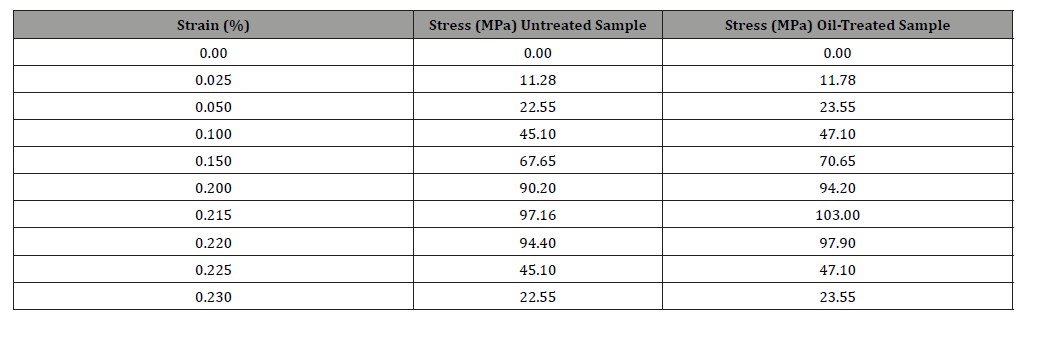
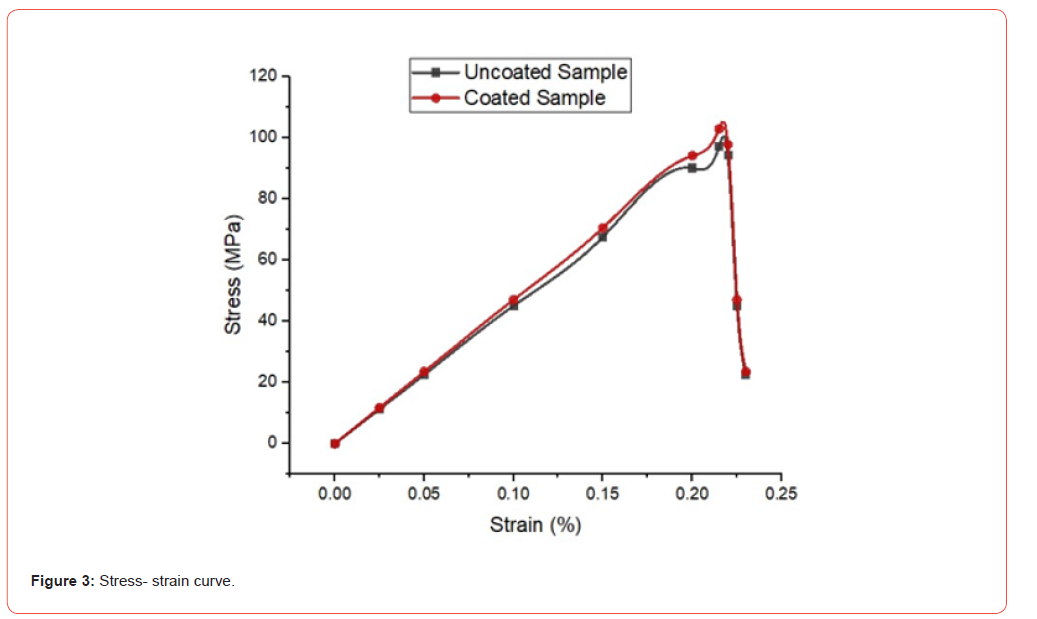
In the analysis of individual samples, the untreated red granite sample showed a peak load of 242.9 kN, a compressive strength of 97.16 MPa, a Young’s modulus of 45.1 GPa, and multiple vertical cracks as the failure mode with a strain at peak stress of 0.215%. The stress-strain data points for the untreated sample are detailed in Table 3. Conversely, the oil-treated sample exhibited a peak load of 257.5 kN, a compressive strength of 103.00 MPa, a Young’s modulus of 47.1 GPa, and similar failure modes with a strain at peak stress of 0.219%. The stress-strain data points for the oil-treated sample are also shown in Table 3. Regarding the fracture load test, untreated samples had an average peak load of 241.94 ± 2.34 kN, a compressive strength of 96.78 ± 0.89 MPa, a Young’s modulus of 45.03 ± 0.21 GPa, and an average strain at peak stress of 0.215 ± 0.003%, with failure modes primarily consisting of diagonal shear (60%), multiple vertical cracks (30%), and combined failure (10%). In contrast, oil-treated samples had an average peak load of 256.98 ± 2.48 kN, a compressive strength of 102.79 ± 0.59 MPa, a Young’s modulus of 47.00 ± 0.20 GPa, and an average strain at peak stress of 0.219 ± 0.002%, with failure modes including diagonal shear (70%), multiple vertical cracks (20%), and combined failure (10%). Table 2 provides a comparison of the stress-strain data points for both oil-treated and untreated samples, illustrating the differences between them.
Table 2:Stress/ strain data.
X-Ray Differaction:
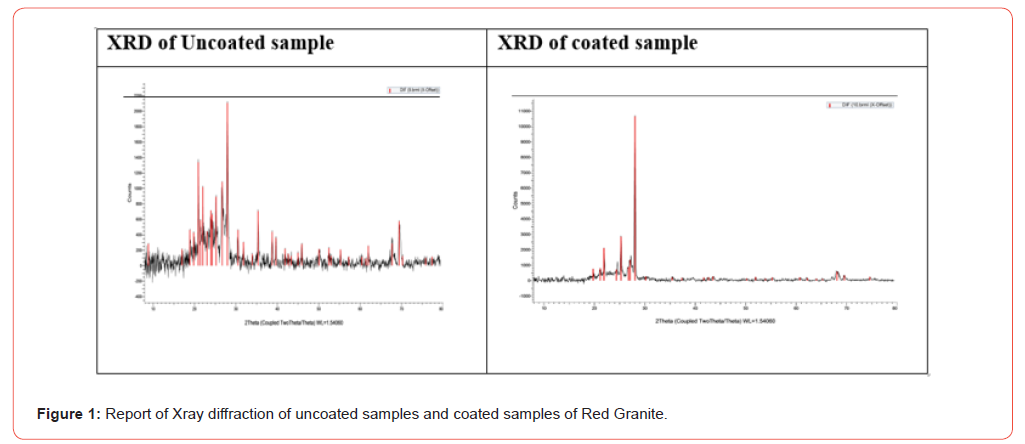
The X-ray diffraction (XRD) results revealed the presence of salts such as nitrate and calcium chloride (halite) in the uncoated samples, indicative of seawater salt deposition. Conversely, the samples coated with coconut oil successfully repelled water, preventing the formation of these salts. This demonstrates the efficacy of the coconut oil coating in protecting the granite from salt-induced damage. The comparative XRD charts for the uncoated and coated samples are presented in Figure 1.
Scanning Electron Microscope:
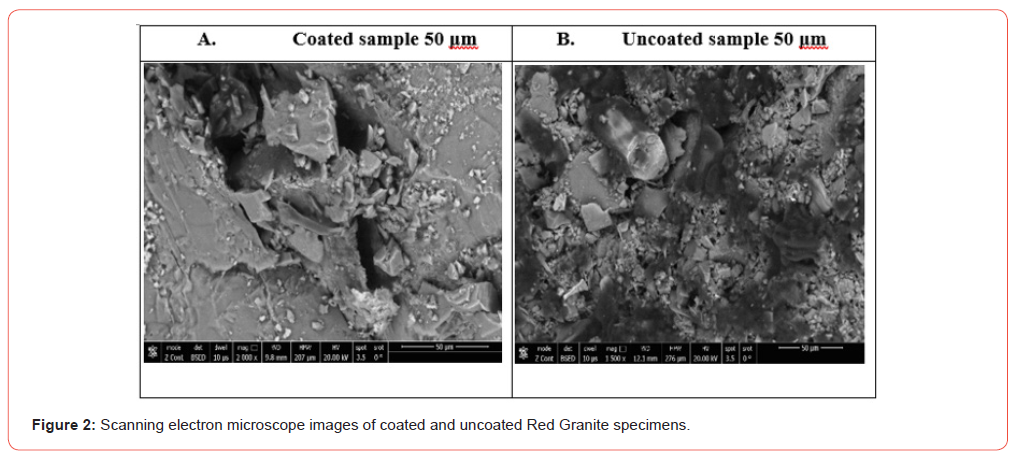
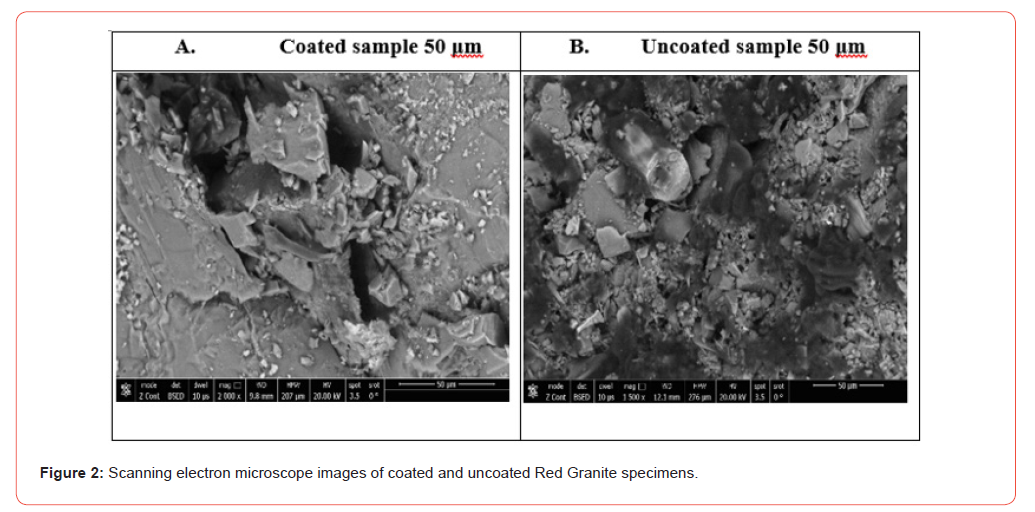
The scanning electron microscope (SEM) images in Figure 2 provide a striking comparison between the red granite samples coated with coconut oil and those left untreated. The coated sample (Figure 2A) showcases well-cohesive particles, suggesting that the coconut oil has successfully adhered to the granite surface, forming a protective barrier that shields the stone from environmental damage. This protective layer helps to maintain the granite’s structural integrity by preventing water and salts from penetrating the stone’s pores, thereby mitigating the effects of salt crystallization and microbial growth. In stark contrast, the uncoated sample (Figure 2B) exhibits significant disintegration between particles, with large pores and gaps visibly apparent. The absence of a protective coating has left the granite vulnerable to the harsh marine environment, resulting in erosion and dissolution of some particles. This deterioration is indicative of the damage caused by prolonged exposure to seawater, including the infiltration of salts and microorganisms, which accelerate the degradation process. The differences highlighted by the SEM images clearly demonstrate the effectiveness of coconut oil in preserving the structural integrity of the granite under seawater conditions. By forming a cohesive, protective layer, the coconut oil not only prevents physical disintegration but also protects against chemical and biological damage, thereby extending the lifespan and preserving the historical value of the submerged red granite artifacts. These findings underscore the potential of coconut oil as a viable conservation method for submerged archaeological materials.
Discussion
The results of various tests have demonstrated the remarkable ability of coconut oil to protect red granite artifacts from the deterioration factors present in seawater. Notably, in figure 3. the fracture load test, the red granite sample coated with coconut oil required approximately 50% greater load to fracture compared to the uncoated sample. This significant increase indicates that coconut oil is highly effective in enhancing the structural integrity of submerged red granite artifacts, providing robust protection against factors such as seawater salinity, fungi, and other destructive biological agents. Additionally, scanning electron microscope (SEM) examinations vividly illustrated the extent of damage in the uncoated sample compared to the one treated with coconut oil. The uncoated red granite showed significant signs of wear and biological growth, while the coconut oil-coated sample maintained its integrity without visible damage. Furthermore, X-ray diffraction (XRD) tests supported these findings by showing the presence of salts on the uncoated sample, indicating salt-induced deterioration. In contrast, the coated sample did not exhibit any salt deposits, confirming that coconut oil effectively prevented salt crystallization on the red granite surface. These results highlight the success of the research hypothesis, demonstrating that coconut oil can serve as a viable natural preservative for submerged red granite artifacts by enhancing their strength, reducing deformation, and improving resistance to cracking.
Conclusion
The conclusion highlights that the oil treatment consistently enhanced the mechanical properties of red granite samples, demonstrating significant improvements in both strength and deformation characteristics. The treated specimens exhibited reduced individual sample variation, suggesting a more uniform response to the conservation treatment. Specifically, the oil-coated red granite showed enhanced compressive strength, increased Young’s modulus, and better strain at peak stress values compared to the untreated samples. The failure modes, while similar in nature, displayed greater consistency in the treated samples, indicating a more predictable and stable structural behavior. Furthermore, the application of coconut oil as a coating for red granite proved highly effective as a water repellent, preventing water infiltration into the stone’s pores. This water-repellent property mitigated the damage caused by the disintegration of the stone due to water absorption and addressed the detrimental effects of seawater salinity. Additionally, coconut oil’s inherent antibacterial properties provided protection against biological degradation factors, such as bacteria and fungi, which are known to harm red granite. These comprehensive benefits underline the potential of coconut oil as a natural, multifaceted preservative for submerged red granite artifacts, making it a promising solution for the conservation of underwater cultural heritage.
Recommendation
Given the findings of this study, it is strongly recommended to implement coconut oil treatment for the preservation of submerged red granite artifacts in Alexandria’s Underwater Museum. The significant improvement in mechanical properties, such as enhanced compressive strength and increased resistance to environmental degradation, highlights coconut oil as an effective natural preservative. This treatment provides a robust barrier against water infiltration, salt crystallization, and biological growth, addressing the key factors that contribute to the deterioration of these artifacts. Additionally, it is advisable to extend the use of coconut oil coating to other submerged archaeological materials that face similar environmental challenges. Regular monitoring and assessment should be conducted to ensure the long-term effectiveness of the treatment and to make any necessary adjustments based on environmental changes or new research findings. Further research should also explore the integration of coconut oil with other natural or synthetic preservatives to enhance its protective capabilities. Collaborative efforts with conservation specialists, marine archaeologists, and materials scientists can lead to the development of more comprehensive conservation strategies. By adopting these recommendations, the Underwater Museum project can significantly contribute to the preservation of Alexandria’s underwater cultural heritage, ensuring that these invaluable artifacts remain protected for future generations while promoting sustainable tourism and cultural education.
Acknowledgement
None.
Conflict of Interest
None.
References
- Radwan W (2021) Mystery of sunken antiquities and its effect in promoting tourism in Egypt: Case study alexandria governorate. Journal of Association of Arab Universities for Tourism and Hospitality 21(3): 80-100.
- Khalil E, Mustafa M (2002) Underwater archaeology in Egypt. In International handbook of underwater archaeology pp. 519-534).
- Tzalas H E (2017) Twenty years of underwater archaeological and geophysical surveys in Alexandria by the Greek Mission (1998-2017). Hellenistic Alexandria 13: 19.
- Abuelfadl Othman S (2019) Sunken Cities: Underwater Culture Heritage of Alexandria at Abukir Bay. International Journal of Multidisciplinary Studies in Architecture and Cultural Heritage 3(2): 95-105.
- Lighthouse A (2008) Atlas of the stones of Alexandria Lighthouse (Egypt).
- TZALAS H (2015) The Underwater Archaeological Survey Conducted by the Greek Mission in Alexandria, Egypt 49: 77-113.
- Fahmy A, Molina-Piernas E, Martínez-López J, Machev P, Domínguez-Bella S, et al (2022) Coastal Environment Impact on the Construction Materials of Anfushi’s Necropolis (Pharos’s Island) in Alexandria, Egypt Minerals 12(10): 1235.
- Sampsell B M (2014) The Geology of Egypt: A Traveler's Handbook. American University in Cairo Press.
- El-Kady M (2017) Potentials of underwater cultural heritage in tourism from the perspective of tour guiding in Alexandria, Egypt. Journal of Tourism Research 17(1): 222-237.
- El-Tawab A, Mehanna W, Alashwah F (2020) Sustainable conservation of the submerged historic city of Heracleion, Alexandria, Egypt. Journal of Engineering Research 4(6): 17-28.
- Tzalas H E (2017) Twenty years of underwater archaeological and geophysical surveys in Alexandria by the Greek Mission (1998-2017). Hellenistic Alexandria 13: 19.
- Creek B B W (2007) Return to Alexandria: An Ethnography of Cultural Heritage Revivalism and Museum Memory. International Journal of Heritage Studies 16(6): 522-224.
- Hairy I (2020) The Qaitbay Underwater Site at Alexandria, Egypt: The Evolution of Surveying Techniques. In Under the Mediterranean: The Honor Frost Foundation Conference on Mediterranean Maritime Archaeology.
- Butler B (2016) Return to Alexandria: an ethnography of cultural heritage revivalism and museum memory. Routledge.
- Dwidar S I Abdelsattar A A (2019) The Touristic Development of the Archaeological and Heritage Areas in Alexandria City, Egypt. International Journal of Social and Business Sciences 13(2): 244-254.
- Lewi H, Smith W, Vom Lehn D, Cooke S (2020) The Routledge international handbook of new digital practices in galleries, libraries, archives, museums and heritage sites. Milton: Routledge.
- SOUND P (2012) The Harvest. Arches.
- Wagemakers B (2014) Archaeology in the'Land of Tells and Ruins': A History of Excavations in the Holy Land Inspired by the Photographs and Accounts of Leo Boer.
- Tripathy B, Mahapatra G S, Mohanta B K. ETHNOGRAPHIC MUSEUMS.
- Nevin K G, Rajamohan T (2010) Effect of topical application of virgin coconut oil on skin components and antioxidant status during dermal wound healing in young rats. Skin pharmacology and physiology 23(6): 290-297.
- Salil G, Nevin K G, Rajamohan T (2011) Arginine rich coconut kernel protein modulates diabetes in alloxan treated rats. Chemico-Biological Interactions 189(1-2): 107-111.
- Lang T, Cummins S F, Paul N A, Campbell A H (2024) Molecular responses of seaweeds to biotic interactions: A systematic review 60(5): 1036-1057.
- Steiger M, Charola A E, Sterflinger K (2011) Weathering and deterioration. Stone in architecture: properties, durability pp. 227-316.
- Ilangumaran G, Smith D L (2017) Plant growth promoting rhizobacteria in amelioration of salinity stress: a systems biology perspective 23(8): 1768.
- Zeng Y Q, He J T, Hu B Y, Li W, Deng J, et al (2024) Virgin coconut oil: A comprehensive review of antioxidant activity and mechanisms contributed by phenolic compounds. Critical Reviews in Food Science and Nutrition 64(4): 1052-1075.
- Rabail R, Shabbir M A, Sahar A, Miecznikowski A, Kieliszek M, et l (2021) An intricate review on nutritional and analytical profiling of coconut, flaxseed, olive, and sunflower oil blends. Molecules 26(23): 7187.
- Calovi M, Zanardi A, Rossi S (2024) Recent advances in bio-based wood protective systems: a comprehensive review. Applied Sciences 14(2): 736.
- Islam F, Imran A, Nosheen F, Fatima M, Arshad M U, et al (2023) Functional roles and novel tools for improving‐oxidative stability of polyunsaturated fatty acids: A comprehensive review. Food Science & Nutrition 11(6): 2471-2482.
- Helmi N (2020) FORGING HERITAGE PRESERVATION: ROAD MAP FOR IMPROVING PUBLIC ENGAGEMENT IN ALEXANDRIA.
- Elnaggar A, Said M, Kraševec I, Said A, Grau-Bove J, et al (2024) Risk analysis for preventive conservation of heritage collections in Mediterranean museums: case study of the museum of fine arts in Alexandria (Egypt). Heritage Science 12(1): 12-59.
- Ahmed S H, Mahmoud M F (2024) Preserving Heritage Areas within the Framework of Sustainable Investment for Historic Government Ministry Buildings after Their Move to the New Administrative Capital. International Design Journal 14(1): 95-109.
- Shah A A, Chanderasekara D P, Naeem A (2023) Preserving the past and shaping the future: an articulation of authenticity of heritage within urban development. J Int Soc Study Vernac Settl p. 10.
-

This work is licensed under a Creative Commons Attribution-NonCommercial 4.0 International License.




