



 Research article
Leveraging Tea Tree Oil for The Preservation of Submerged Antiquities: An Integrated Approach to Granite Conservation at The Underwater Museum, Alexandria, Egypt
Received Date:November 28, 2024 Published Date: December 10, 2024
Abstract
Granite artifacts stand as some of the most enduring and significant historical landmarks, offering a tangible connection to the ancient civilizations that crafted them. Numerous submerged granite artifacts, particularly in Alexandria, have been unearthed, drawing attention to their remarkable durability and aesthetic appeal. However, these artifacts face persistent threats from underwater degradation factors such as seawater salinity, microbial activity, and pollution, necessitating effective preservation methods to safeguard these treasures from further damage. This study investigates the potential of tea tree oil as a protective coating for submerged granite artifacts in marine environments. Tea tree oil was chosen for its known antimicrobial and antioxidant properties, making it a promising candidate for counteracting the adverse effects of a marine environment. The research involves coating a granite sample with tea tree oil and submerging it in seawater to simulate the actual conditions faced by submerged artifacts. Throughout this process, various tests, including compression tests, X-ray diffraction analysis, and scanning electron microscopy (SEM), will be conducted to observe changes in the sample’s properties compared to an untreated sample. The expected outcomes of this study are significant. If successful, tea tree oil could serve as an innovative and sustainable method for preserving submerged granite artifacts. This approach not only provides a natural, environmentally friendly solution but also aligns with broader conservation efforts to protect underwater cultural heritage. The findings from this research could lead to the development of new strategies for artifact preservation, highlighting the potential for natural substances to play a crucial role in the field of underwater archaeology.
Keywords: Tea Tree Oil; Granite Conservation; Submerged Artifacts; Underwater Museum; Marine Environment
Introduction
Background:
The beaches of Alexandria hold a prominent place in the annals of underwater archaeology, recognized globally as one of the most significant sites for sunken artifacts. Aboukir Bay and the Eastern Harbor area, in particular, are renowned for their wealth of discoveries [1-3]. Over the years, many submerged granite artifacts have been unearthed from these waters, revealing the rich cultural heritage of the region. Among these discoveries, the striking red granite columns stand out, dating back to the ancient Egyptian city of Canopus. This historic city, situated northeast of modern Aboukir port, was a vital center in its time and continues to captivate historians and archaeologists [4-6]. In addition to the columns, various granite statues have been recovered, some tracing back to the illustrious 25th Dynasty and others to the Byzantine era. These statues not only showcase the artistic prowess of ancient craftsmen but also offer insights into the religious and cultural practices of their time. The area is further enriched by the presence of granite blocks believed to originate from the Temple of Heraklion, a oncethriving urban center now submerged by the sea. These underwater discoveries provide invaluable glimpses into the past, highlighting Alexandria’s historical significance as a hub of trade, culture, and religious activity. Each artifact tells a unique story, contributing to our understanding of ancient civilizations and making the beaches of Alexandria an essential destination for those fascinated by history and archaeology. Red granite was one of the most important and valued stones used in construction and decoration during ancient times, largely due to its exceptional durability and resilience. This robust material was favored by architects and artisans alike for its ability to withstand the test of time, making it an ideal choice for a variety of monumental structures. It was commonly employed to create grand columns, towering obelisks, and intricate statues, all of which played significant roles in the religious and cultural life of ancient societies.
The red granite was primarily quarried from the renowned quarries in Aswan, a region known for its high-quality stone. The extraction process involved skilled laborers who expertly worked the stone, shaping it into large blocks that could be transported to various construction sites across Egypt. The striking color and texture of red granite not only added a remarkable visual appeal to these constructions but also conveyed a sense of permanence and strength, symbolizing the enduring legacy of the civilizations that used it [5-9]. Granite Composition: Granite is an intrusive igneous rock primarily composed of three main minerals: quartz, feldspar, and mica. These rocks form from the slow cooling of magma beneath the Earth’s surface, allowing large crystals to develop. Granite is one of the most abundant rocks on Earth’s surface and is widely used in construction and sculpture due to its hardness and durability [10-15]. Sunken granite artifacts face a multitude of threats that contribute to their deterioration over time, primarily due to the marine environment they reside in, chemical weathering, for instance, is a significant factor as salts and minerals present in seawater react with the granite, leading to the erosion of its surface. moreover, biological factors such as algae, fungi, and bacteria can cause considerable damage, especially in moist conditions. furthermore, the constant fluctuation in temperature can cause the granite to expand and contract, resulting in the formation of cracks. and lastly, mechanical erosion caused by the movement of water and waves can lead to the physical wear and tear of the granite’s surface. These combined factors make the preservation of sunken granite artifacts a challenging task [10-19]. Therefore, it is essential to explore new methods and techniques for preserving sunken artifacts and protecting them from factors of deterioration. Based on this, this study assessment the effectiveness of using tea tree oil as a coating for sunken granite pieces, as tea tree oil is considered antibacterial and antifungal, and is also environmentally friendly [20-23].
Topic importance:
The importance of the study lies in the attempt to find new and effective methods for preserving sunken granite artifacts in seawater and preventing their exposure to various environmental deterioration factors.
Study Hypotheses:
Based on previous studies, tea tree oil is a broad-spectrum antimicrobial agent that can resist biological damage to granite. In addition, its hydrophobicity will resist other damage factors resulting from seawater. Therefore, we assume the success of coating granite with peppermint oil, and an experiment in simulating sunken granite monuments.
Study Questions:
The study seeks to address a crucial question: Can the use of tea tree oil serve as an effective method for protecting sunken granite artifacts from the various deterioration factors present in seawater? This inquiry is particularly significant given the widespread challenges faced by underwater archaeological sites, where artifacts are often exposed to corrosive elements such as high salinity, pollution, and temperature variations. By investigating the potential of peppermint oil, known for its natural preservative properties, the research aims to determine whether this eco-friendly solution can effectively mitigate the harmful effects of the marine environment on these valuable historical objects. The findings could have profound implications for conservation practices, potentially offering a sustainable approach to the preservation of underwater heritage.
Study Problem:
Sunken artifacts are subjected to a wide array of damaging factors, including seawater salinity, pollution, temperature fluctuations, and other environmental influences. These elements can lead to severe deterioration, significantly impacting the structural integrity and aesthetic qualities of these precious historical items. The high salinity of seawater can corrode materials, while pollutants can introduce harmful chemicals that further accelerate degradation. Additionally, temperature changes can cause expansion and contraction, leading to cracks and fractures. Given the extent of this damage, it becomes increasingly vital to identify effective strategies and methodologies for the protection and preservation of these artifacts. This necessity drives ongoing research and innovation in conservation techniques, aiming to safeguard our cultural heritage for future generations.
Study Objectives:
The study aims to explore various innovative methods for treating and protecting sunken artifacts, with a particular focus on utilizing effective, environmentally friendly, and non-destructive materials. One such material being investigated is peppermint oil, which has shown promising potential in preserving these invaluable treasures from the past. tea tree oil is known for its antimicrobial and antioxidant properties, making it a suitable candidate for protecting artifacts from biological degradation and environmental damage. By employing sustainable approaches, the research seeks to not only enhance the longevity of these artifacts but also ensure that the treatment processes do not cause any harm or degradation. The application of tea tree oil creates a hydrophobic barrier on the surface of the artifacts, repelling water and reducing the risk of salt crystallization and microbial colonization. This dual function of protecting against both physical and biological damage highlights the multifaceted benefits of using natural oils in conservation efforts. This holistic approach emphasizes the importance of safeguarding cultural heritage while being mindful of environmental impacts.
The study leverages advanced analytical techniques such as compression tests, X-ray diffraction analysis, and scanning electron microscopy (SEM) to evaluate the efficacy of the treatments. These methods provide comprehensive data on the structural integrity, chemical stability, and surface morphology of the treated artifacts, offering valuable insights into the effectiveness of peppermint oil. By integrating sustainability into artifact preservation, the research contributes to the broader field of conservation science. It underscores the need for environmentally responsible practices that protect cultural heritage without compromising the surrounding ecosystem. Through this study, researchers hope to establish new standards for artifact preservation that prioritize both effectiveness and ecological responsibility. The findings could revolutionize conservation practices, inspiring the use of other natural substances in preserving submerged artifacts and ensuring their protection for future generations.
Literature Review:
The preservation of sunken granite artifacts in Alexandria has garnered significant attention recently, particularly as researchers strive to develop innovative methods to safeguard these invaluable cultural resources from the harsh marine environments. Numerous studies have delved into the factors contributing to the degradation of submerged granite artifacts, emphasizing the critical role of environmental conditions like salinity, temperature fluctuations, and biological growth. Salinity accelerates chemical weathering, leading to the dissolution and recrystallization of minerals that weaken the granite. Temperature fluctuations cause expansion and contraction cycles, promoting the development of microcracks. Biological growth, including bacteria and fungi, further exacerbates the deterioration through biochemical processes. These environmental factors not only accelerate the deterioration of granite artifacts but also complicate preservation efforts, making it imperative to explore effective protective measures. As a result, the research community is focusing on sustainable and eco-friendly solutions, such as the use of natural oils like olive and peppermint, which offer antimicrobial properties and water repellence. These natural coatings aim to create a barrier against environmental stresses, thus preserving the structural integrity and historical value of the artifacts. The integration of modern technological advancements, like remote sensing and underwater robotics, with traditional conservation techniques, is proving to be a promising approach. This combined strategy enhances our ability to monitor, analyze, and protect these underwater treasures more effectively. Through continuous research and innovation, we can develop comprehensive preservation strategies that ensure the longevity of submerged granite artifacts, safeguarding them for future generations to study and appreciate [24-28].
Sampling
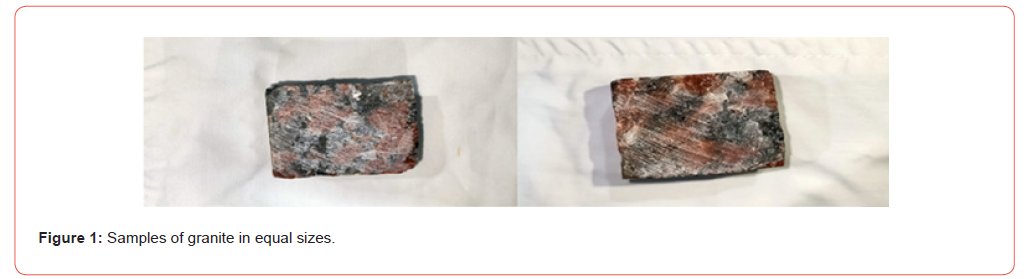
Two samples were prepared that matched the characteristics of the red granite that makes up the sunken granite artifacts, and then placed in water from the Aboukir area. After that, one of the samples was coated with tea tree oil while it was in the water so that we would have a sample coated with tea tree oil and another uncoated so that we could compare the effect of the oil on the coated sample.
Methods
A series of procedures were conducted, including a comparison of the weights of the coated and uncoated samples, an assessment of the fracture load test results, as well as analyses using scanning electron microscopy and X-ray diffraction.
Testing of mechanical processes (Uniaxial Compression Test):
The fracture load test was conducted in the laboratories of the Faculty of Engineering at Alexandria University. This test aims to assess the cohesion of granite when submerged in water and to evaluate the effectiveness of tea tree oil coating in protecting the granite from various damage factors in seawater. The study focuses on the oil’s potential to enhance the stone’s durability against deterioration. The specifications of the tested samples are detailed in Table 1.
Table 1:Specifications of the tested samples.

Scanning Electron Microscope:
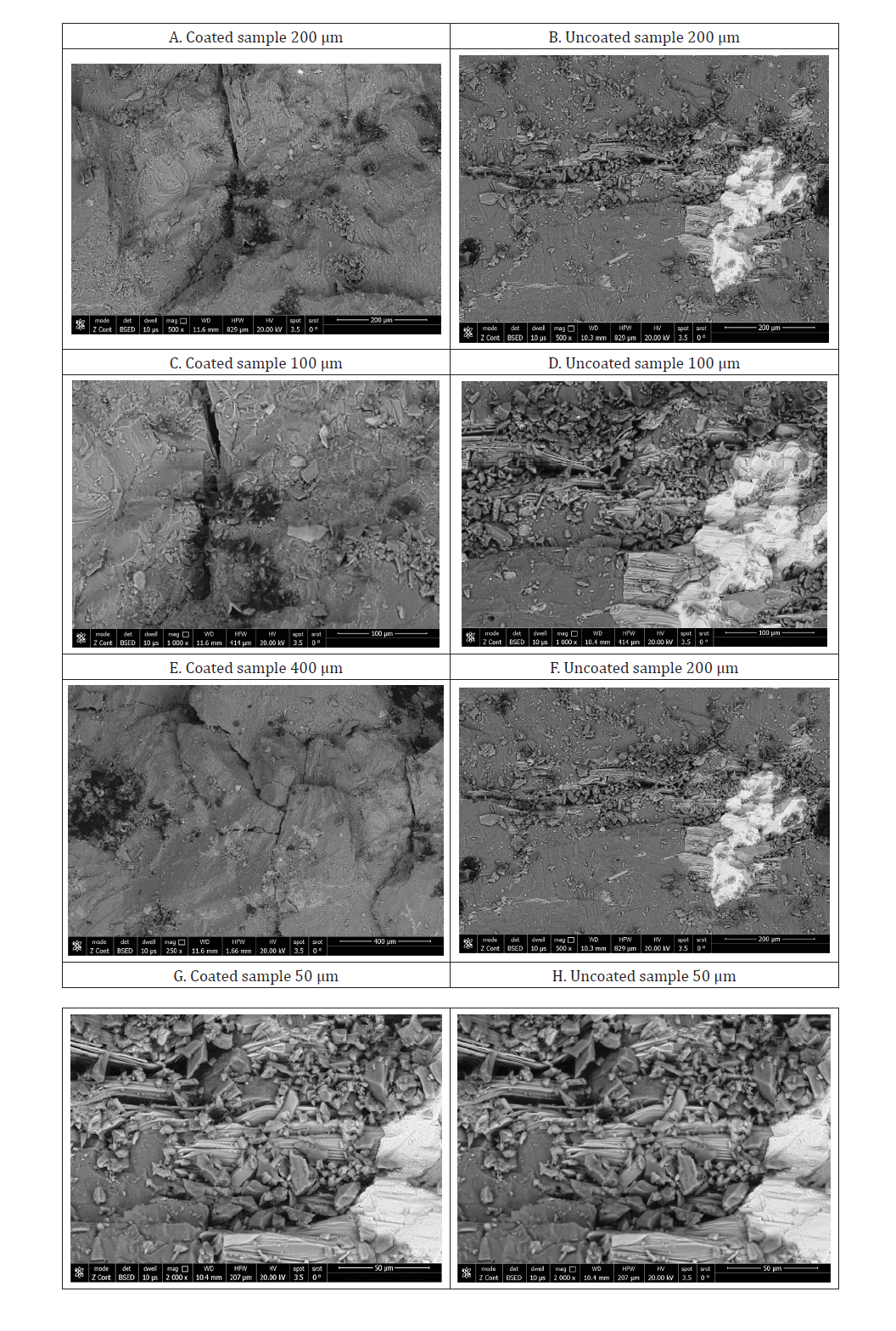
To assess the extent of damage and deterioration in stone samples not coated with peppermint oil, as opposed to the resilience of those coated with peppermint oil, an examination was conducted using a scanning electron microscope at the laboratories of Cairo University. This analysis aimed to compare the effects of the tea tree oil treatment on the structural integrity of the stone, providing valuable insights into its protective capabilities.
X-ray diffraction:
The examination took place at the laboratories of Cairo University. Typically, the results obtained from X-ray diffraction analysis facilitate comparisons between the damaged archaeological samples and those that have been treated. This comparison reinforces the hypothesis regarding salt damage in the untreated samples when contrasted with the treated ones.
Results
Fracture Load Test:
Table 2 illustrates a significant difference in the fracture load test results between the coated and uncoated specimens, measured in kilonewtons and kilograms.
Table 2:shows the results of the fracture load test for the samples.

X-Ray Differaction:
The comparative XRD analysis demonstrates significant differences between the deteriorated and oil-treated granite samples. The deteriorated sample shows clear evidence of weathering through peak modifications, secondary mineral formation, and reduced crystallinity. In contrast, the oil-treated sample exhibits better preservation of original mineralogy, reduced weathering effects, and maintained structural integrity, indicating the effectiveness of oil treatment as a protective measure against sea water deterioration. The results suggest that oil treatment creates an effective barrier against water penetration and ion exchange, thereby preventing the initiation and progression of weathering processes. This has important implications for the conservation of granite structures in marine environments, where sea water exposure poses a significant threat to stone durability.
Scanning Electron Microscope:
Table 3 presents a comparison of granite samples treated with tea tree oil (A at 200μm, C at 400μm, E at 400μm, and G at 50μm) against those without the oil (B at 200μm, D at 100μm, F at 200μm, and H at 50μm). The observations indicate that the coated samples displayed cohesive particle interactions, whereas the uncoated samples exhibited disintegration along with the presence of large pores and gaps (Table 4).
Table 3:report of X ray diffraction of uncoated samples and coated samples of ma.
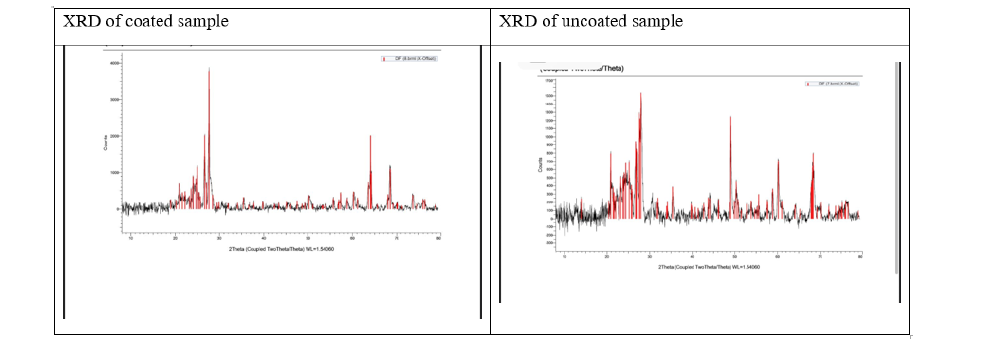
Table 4:Scanning electron microscope images of coated and uncoated samples of varying scales.
Discussion
The results of various tests have demonstrated the remarkable ability of tea tree oil to protect granite artifacts from the deterioration factors present in seawater. The most significant results were observed in the fracture load test, where the granite sample coated with tea tree oil required approximately 40% greater fracture load compared to the uncoated sample. This substantial increase in required load suggests that tea tree oil is highly effective in enhancing the structural integrity of sunken granite artifacts, providing robust protection against deterioration factors such as seawater salinity, fungi, and other destructive biological agents.
Moreover, the scanning electron microscope examination vividly illustrated the extent of damage to the uncoated sample in contrast to the coated one. The uncoated granite showed significant signs of wear and biological growth, while the sample treated with tea tree oil maintained its integrity, with no visible signs of such damage. This visual evidence underlines the protective capabilities of tea tree oil in a marine environment. Additionally, X-ray diffraction tests reinforced these findings by showing the presence of salts on the uncoated sample, indicating that the granite was subject to salt-induced deterioration. In contrast, the coated sample did not exhibit any salt deposits, confirming that the tea tree oil effectively prevented salt crystallization on the granite surface. This absence of salts in the coated sample is a clear indication of the success of the research hypothesis, demonstrating that tea tree oil can serve as a viable natural preservative for submerged granite artifacts.
Conclusion
The study successfully demonstrated the effectiveness of tea tree oil as a protective coating for sunken granite artifacts against various deterioration factors present in seawater, such as salinity, fungi, and destructive biological agents. The fracture load tests revealed a significant increase in the strength of the granite samples coated with peppermint oil, while the uncoated samples showed substantial degradation. Scanning electron microscope examinations confirmed the reduced damage in the oil-coated samples, further substantiating the protective role of peppermint oil. X-ray diffraction analysis highlighted the absence of salt deposits on the treated samples, reinforcing the oil’s ability to prevent salt crystallization. These findings validate the hypothesis that tea tree oil can serve as a viable, natural preservative for submerged granite artifacts. The study not only highlights the practical application of tea tree oil in preserving cultural heritage but also paves the way for future research into other eco-friendly preservation methods. This innovative approach ensures the longevity and integrity of underwater artifacts, contributing significantly to the field of marine archaeology and conservation science. By demonstrating the dual benefits of antimicrobial and hydrophobic properties, the research sets a new standard for sustainable and effective preservation techniques, safeguarding these invaluable treasures for future generations.
Recommendation
Following the positive results obtained from the practical application of protecting sunken granite artifacts in seawater by using tea tree oil as a coating, this success encourages further research to explore the application of similar protective techniques in the submerged archaeological sites of Alexandria, particularly in the Aboukir area. Long-term studies are recommended to assess the durability of tea tree oil in various marine environments, as well as comparative analyses with other natural oils to identify the most effective preservation methods. Implementing field trials across different coastal locations can provide valuable insights into its adaptability under varying salinity and temperature conditions. Additionally, integrating tea tree oil with other conservation techniques may enhance its protective effects. Raising public awareness and educating conservation professionals about the benefits of natural oils in marine archaeology will also be essential for promoting sustainable preservation practices.
Acknowledgment
This research received no external funding.
Conflict of Interest
The authors declare no conflict of interest.
References
- Robinson D, Goddio F, Fabre D (2017) Environment and agency in the formation of the eastern ship graveyard in the Central Basin at Thonis-Heracleion, Egypt. Formation Processes of Maritime Archaeological Landscapes 4(1): 113-140.
- Nematallah AMH (2024) Perception of Hellenistic and Roman Egypt in the Levant through Materiality.
- Seaton R (2024) A companion to Seaton's map of Palestine and Egypt. BoD–Books on Demand.
- Loring WW (2017) A Confederate soldier in Egypt. Jazzybee Verlag.
- Arnold D (1991) Building in Egypt–Pharaonic Stone Masonry. Oxford University Press pp. 316-380.
- Baines J Malek J (2000) Cultural Atlas of Ancient Egypt. Checkmark Books New York pp: 240-291.
- Klemm R Klemm DD (1993) Steine und Steinbrüche im Alten Ä Springer Verlag Berlin pp: 465-480.
- Klemm R Klemm DD (2008) Stones and Quarries in Ancient Egypt. British Museum Press London pp: 354-372.
- rP, Bloxam EG, Heldal T Salem A (2002) Survey at Chephren’s Quarry Gebel el-Asr Lower Nubia. Sudan and Nubia.
- Storemyr P, Heldal T, Bloxam EG, Harrell JA (2009) New evidence of small-scale Roman basalt quarrying in Egypt: Widan el-Faras in the northern Faiyum Desert. The Journal of Egyptian Archaeology 88(1): 23-36.
- Sidebotham SE, Barnard H, Harrell JA Tomber RS (2001) The Roman quarry and installations in Wadi Umm Wikala and Wadi Semna. Journal of Egyptian Archaeology 87(1): 135-170.
- Lehner M (1997) The Complete Pyramids. The American University in Cairo Press Cairo.
- Lucas A (1962) Ancient Egyptian Materials and Industries, 4th edition revised by Harris, J.R., Edward Arnold, London p. 5
- USGS (2007) Divisions of geologic time– major chronostratigraphic and geochronologic units US. Geological Survey Fact Sheet 6(2): 90-92.
- Abdellah MMY, Mohamed AT (2014) Hot Extrusion of Reinforced Aluminum Powder Compacts. International Journal of Materials Lifetime 1(1): 1-6.
- Abdellah MY, Gelany A, Mohamed AF, Khoshaim AB (2017) Protection of limestone coated with different polymeric Materials. American Journal of Mechanical Engineering 5(52): 51-57.
- Abuelfadl Othman S (2019) Sunken Cities: Underwater Culture Heritage of Alexandria at Abukir Bay. International Journal of Multidisciplinary Studies in Architecture and Cultural Heritage 3(2): 95-105.
- Chugg AM (2024) The Pharos Lighthouse in Alexandria: Second Sun and Seventh Wonder of Antiquity. Taylor & Francis.
- Chabas A, Jeannette D (2001) Weathering of marbles and granites in marine environment: petrophysical properties and special role of atmospheric salts. Environmental Geology 40(1): 359-368.
- Linda Pastero, Roberto Giustetto, Dino Aquilano (2020) Potential effects of the shape of gypsum aggregates on the early sulfation of marble and travertine. Journal of Building Engineering 32(2): 367-371.
- Calcinai B, Sacco Perasso C, Davidde Petriaggi B, Ricci S (2019) Endolithic and epilithic sponges of archaeological marble statues recovered in the Blue Grotto, Capri (Italy) and in the Antikythera shipwreck (Greece). Facies 65(2): 245-361.
- Farkas J, Altin D, Hammer KM, Hellstrøm KC, Booth AM, et al. (2017) Characterisation of fine-grained tailings from a marble processing plant and their acute effects on the copepod Calanus finmarchicus. Chemosphere 169(1): 700-708.
- Wang X, Liu Z, Gao X, Li P, Dong B (2022) Dynamic characteristics and fracture process of marble under repeated impact loading. Engineering Fracture Mechanics 276(1): 108926-108942.
- Ugolotti G, Masi G, Sassoni E (2021) Interaction between sodium chloride and ammonium phosphate on Carrara marble: two laboratory approaches. SALT WEATHERING OF BUILDINGS AND STONE SCULPTURES pp. 119.
- Steiger M, Charola AE, Sterflinger K (2011) Weathering and deterioration. Stone in architecture 260(1): 227-316.
- Tiano P, Rodrigues JD, De Witte E, Vergès Belmin V, Massey S, et al. (2000) The conservation of monuments: a new method to evaluate consolidating treatments. International Journal for Restoration of Buildings and Monuments 6(2): 133-150.
- Ganna Salam, Esraa Abouosman, Mariam Eltabakh, Menna Elsayed, Hagar Hassan, et al. (2024) An Integrated Approach to Protecting of Sunken Granite Artifacts by Coated with Pumpkin Seed Oil in Alexandria, Egypt. Modern Concepts in Material Science 6(4): 261-286.
- Eman Ebrahem, Eman El swedy, Aya Abo esmail, Fady foud, Marwan Abo almagd, et al. (2024) Assessment of the natural protective protection of granite onuments, sunken by coating with sweet almond oil- Alexandria – Egypt. Modern Concepts in Material Science 6(4): 321-365.
-

This work is licensed under a Creative Commons Attribution-NonCommercial 4.0 International License.




