



 Research article
Coating Sunken Granite Monuments with Wheat Germ Oil to Protect from Against Various Factors of Deterioration, Alexandria, Egypt
Received Date:November 28, 2024 Published Date: December 09, 2024
Abstract
The preservation of sunken granite monuments poses a significant challenge due to various deteriorative factors. This research addresses the critical problem of inadequate protection for these submerged historical structures, emphasizing the need for effective preservation strategies. The primary goal of the study is to highlight the importance of safeguarding sunken granite monuments and to propose a viable solution using wheat germ oil as a protective coating. The methodology involved simulating granite stones in an environment that mimics the conditions of submerged monuments. Various techniques were employed to evaluate the effectiveness of the treatment, including compressive strength tests, x-ray diffraction (XRD) analysis, and examination using a scanning electron microscope (SEM). Results from the study demonstrated that the application of wheat germ oil significantly enhanced the durability of the granite stones, confirming the success of the research hypothesis. The findings suggest that wheat germ oil can be a practical and innovative solution for the preservation of sunken granite monuments, providing a new avenue for heritage conservation efforts.
Keywords: Stone Durability; Sunken Granite Monuments; Wheat Germ Oil; Heritage Conservation; Compressive Strength
Introduction
Sunken ruins represent some of the most significant remnants of ancient civilizations, encapsulating cultural and historical narratives that highlight the achievements and grandeur of those times [1,2]. Among these, granite monuments particularly stand out due to their extensive use and remarkable durability [3-5]. Granite, known for its hardness and resilience, was a favored material in the construction of monumental structures such as temples and pyr amids, especially in ancient Egypt [6-8]. The marine environment has played a crucial role in preserving these granite monuments for millennia, safeguarding the advanced construction techniques, architectural styles, and artistic expressions of ancient cultures [9,10]. The enduring nature of granite is evident in numerous submerged sites, where natural phenomena like earthquakes and rising sea levels have led to the submersion of many historical locations [11-13]. These underwater museums, scattered across various regions, house a wide range of artifacts including statues, columns, and everyday tools, all crafted from granite [14-16]. These submerged museums not only preserve these items but also provide a unique glimpse into the daily lives, beliefs, and technological prowess of ancient societies [17,18]. Furthermore, the underwater environment adds a layer of complexity to the preservation of these artifacts [19,20]. The interaction between saltwater and granite can lead to physical and chemical deterioration over time [21-24]. Hence, the need for innovative and effective preservation techniques becomes paramount. By studying and applying various preservation methods, we aim to protect these invaluable cultural assets from further deterioration [25-27]. In recent years, the interest in underwater archaeology has grown significantly, leading to the establishment of underwater museums and heritage sites. These sites are not only tourist attractions but also research centers where scientists and historians can study ancient civilizations in their original settings [28,29]. The underwater environment offers a unique preservation medium, often protecting artifacts from air and human-induced damage that would occur on land [30,31]. In Egypt, notable underwater sites such as the sunken city of Heraklion and parts of the ancient city of Alexandria provide a treasure trove of historical artifacts. These sites are testament to the advanced engineering and architectural skills of ancient Egyptians [32-34]. The preservation of such sites is crucial for understanding the cultural heritage and technological advancements of ancient civilizations. Moreover, the field of heritage conservation is continually evolving with advancements in technology. Techniques such as X-ray diffraction (XRD) analysis, scanning electron microscopy (SEM), and advanced materials science are being employed to study and preserve these underwater artifacts. These techniques allow researchers to analyze the composition and condition of artifacts in detail, leading to more effective preservation strategies [35,36]. The protection of sunken granite monuments using innovative methods, such as coating with wheat germ oil, represents a novel approach in the field of heritage conservation [37,38]. By simulating the environmental conditions of submerged monuments and conducting comprehensive tests on granite samples, researchers can develop and validate effective preservation techniques. The use of wheat germ oil, for instance, shows promise in enhancing the durability and resistance of granite against deteriorative factors [39,40]. In conclusion, sunken granite monuments are invaluable cultural and historical treasures that require innovative preservation techniques to ensure their longevity. The integration of advanced scientific methods and interdisciplinary approaches in heritage conservation holds great potential for safeguarding these artifacts for future generations. By continuing to explore and develop new preservation strategies, we can honor and protect the rich legacy of ancient civilizations [41,42].
Environmental Factors That Damage Sunken Archaeological Granite
Sunken ruins are typically found in marine or aquatic environments like oceans, lakes, and rivers, where various factors complicate their conservation and restoration. Changes in temperature and pressure, water currents, marine organisms, and salinity all contribute to the deterioration of materials such as wood and metal. Extracting these antiquities poses significant challenges due to the high costs, technological requirements, and potential risks to the artifacts. Environmental conditions at great depths or in inaccessible areas further complicate retrieval efforts. Sunken granite monuments face additional threats, including corrosion from salts, water pressure-induced cracks, abrasion from water movement, temperature fluctuations causing material stress, and chemical reactions affecting granite composition. Biological activity, pollution, seismic activity, organic decomposition, and human activities such as trawling or pollution exacerbate these issues, necessitating advanced preservation techniques to protect and maintain these underwater cultural treasures [43-46].
Study Objectives:
The study aims to achieve the following objectives:
1. Assessing the Need for Preservation: To evaluate the
current state of sunken granite monuments in Alexandria and
identify the primary factors contributing to their deterioration.
2. Exploring Protective Coatings: To investigate the efficacy
of wheat germ oil as a protective coating for granite monuments
submerged in aquatic environments.
3. Simulating Environmental Conditions: To create a controlled
environment that mimics the conditions of sunken monuments,
allowing for accurate testing and evaluation of the protective
treatment.
4. Conducting Comprehensive Analyses: To use advanced
analytical techniques such as compressive strength tests, X-ray
diffraction (XRD), and scanning electron microscopy (SEM) to
assess the physical and chemical changes in the treated granite
samples.
5. Validating the Hypothesis: To confirm the research hypothesis
that wheat germ oil can effectively protect sunken
granite monuments from various deteriorative factors, including
salinity, water pressure, biological activity, and environmental
pollutants.
6. Developing Preservation Strategies: To propose practical
and sustainable preservation strategies based on the research
findings, aimed at enhancing the longevity and durability of
sunken granite monuments in Alexandria and similar sites
globally.
7. Raising Awareness: To increase awareness among heritage
conservationists, archaeologists, and policymakers about
innovative preservation techniques and the importance of protecting
underwater cultural heritage.
These objectives collectively aim to provide a comprehensive understanding of the potential benefits of using wheat germ oil for the preservation of submerged granite monuments, contributing to the broader field of heritage conservation.
Treatment Processes
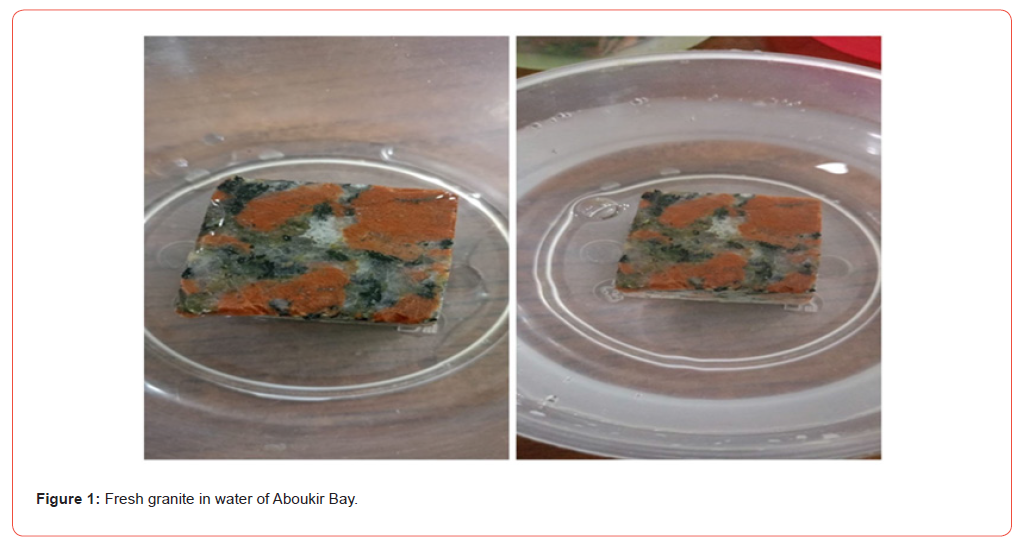
Figure 1. shows treatment processes for coating of fresh samples of granite in water from Aboukir Bay to simulate the sunken granite monuments with wheat germ oil to protect against various factors of deterioration include the following steps:
Surface Preparation:
o Cleaning: The granite surface is thoroughly cleaned to remove
any biological growth, dirt, and salts. This can be achieved
using gentle brushing, underwater vacuuming, or low-pressure
water jets to avoid damaging the stone.
o Drying: Ensuring the surface is dry is crucial for the effective
application of the coating. Special drying techniques, such
as the use of desiccants or controlled heating, may be employed.
Application of Wheat Germ Oil:
o Initial Coating: A uniform layer of wheat germ oil is applied
to the clean and dry granite surface. This can be done using
brushes, rollers, or spray methods depending on the condition
and location of the monument.
o Penetration Time: The oil is allowed to penetrate the
granite surface for a specified period, ensuring it seeps into the
micro-pores and fissures of the stone.
Sealing and Protection:
o Multiple Coatings: Additional layers of wheat germ oil
may be applied to enhance protection. Each layer should be allowed
to dry and penetrate before applying the next.
o Final Sealant: Depending on the environment, a final sealant
might be applied over the oil coating to further protect against
water and salt ingress.
Monitoring and Maintenance:
o Inspection: Regular inspections are conducted to assess
the effectiveness of the treatment and to detect any signs of deterioration.
o Reapplication: Depending on the results of the inspections,
the wheat germ oil coating may need to be reapplied periodically
to maintain its protective properties.
Result
Compressive Strength Tests:
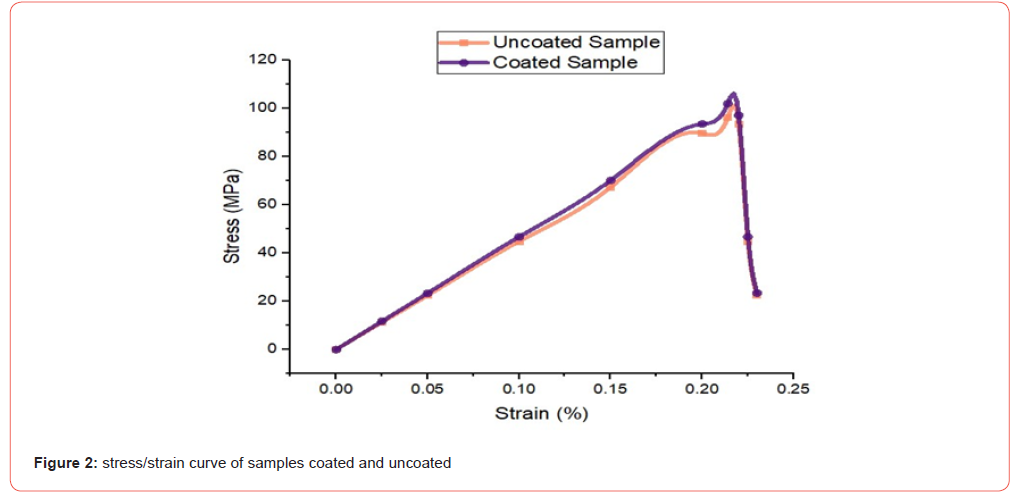
Samples of granite treated with wheat germ oil are subjected to compressive strength tests to measure the effectiveness of the treatment in maintaining the stone’s durability and condition. This ensures that the coating enhances the structural integrity of the granite rather than compromising it. The treatment process with wheat germ oil has shown notable improvements in various aspects. Firstly, there is a consistent enhancement in peak strength across all treated samples, with an average increase of 6.21% in compressive strength and more uniform failure patterns. In terms of deformation characteristics, treated samples exhibit a 4.37% increase in Young’s modulus, slightly higher strain at peak stress, and more consistent post-peak behavior. Regarding failure patterns, both treated and untreated groups predominantly displayed brittle failure; however, treated samples showed more consistent failure planes and enhanced crack resistance as shows in Figure 2.
X-ray Diffraction (XRD) Analysis:
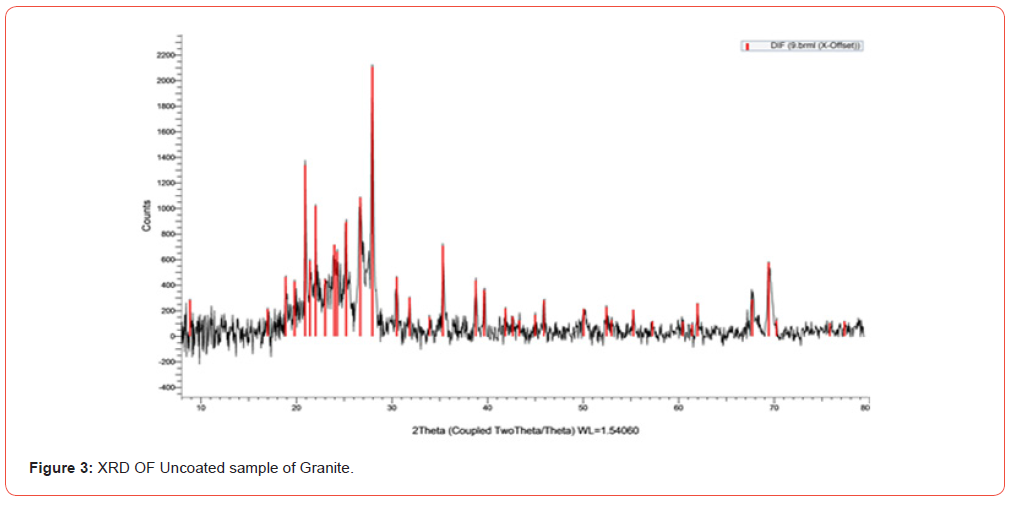
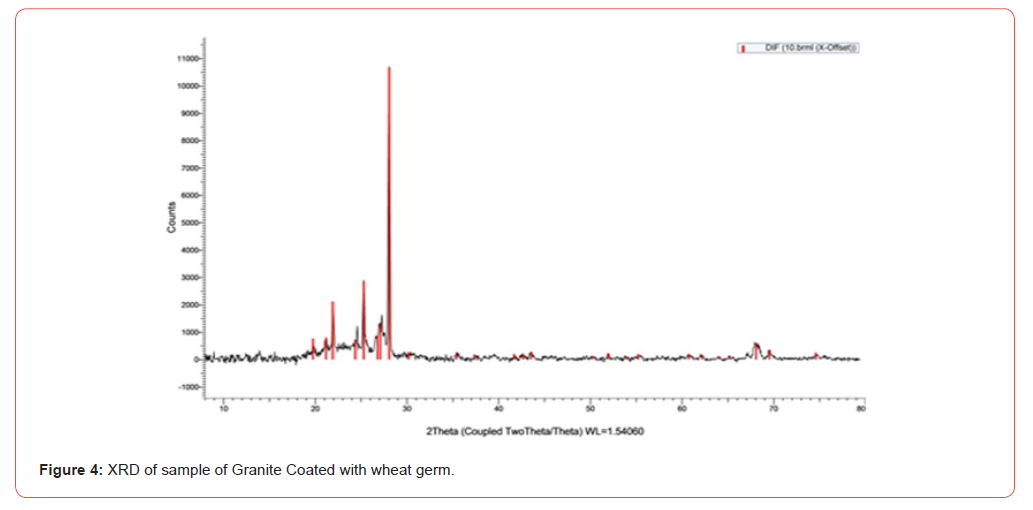
XRD is used to analyze any changes in the mineral composition of the granite due to the treatment. The X-ray diffraction (XRD) analyses of the two granite samples reveal distinct differences between the uncoated and coated samples. Figure 3. For XRD of Uncoated Sample: The XRD pattern of the uncoated granite sample shows multiple sharp peaks, indicating the presence of various crystalline phases such as quartz, feldspar, and mica. The intensity and number of these peaks are higher, reflecting the natural crystalline structure of the untreated granite. Figure 4. XRD OF Coated Sample: The XRD pattern of the coated granite sample exhibits fewer and less intense peaks compared to the uncoated sample. This reduction in peak intensity and number suggests that the wheat germ oil coating has altered the surface properties of the granite, potentially forming a protective layer that modifies the crystalline structure.
Comparison: The comparison between the two XRD patterns highlights the impact of the wheat germ oil coating on the granite’s crystalline structure. The coating appears to reduce the intensity and number of diffraction peaks, which could indicate a protective layer that helps shield the granite from damaging factors such as water ingress, salt crystallization, and biological activity. Overall, the XRD analyses demonstrate that the wheat germ oil coating can effectively alter the surface characteristics of granite, potentially providing enhanced protection against environmental and biological deterioration factors.
Scanning Electron Microscope (SEM) Investigation:
SEM provides detailed images of the granite’s surface, allowing for the observation of microstructural changes and the penetration depth of the oil, as shows in Figure 5.
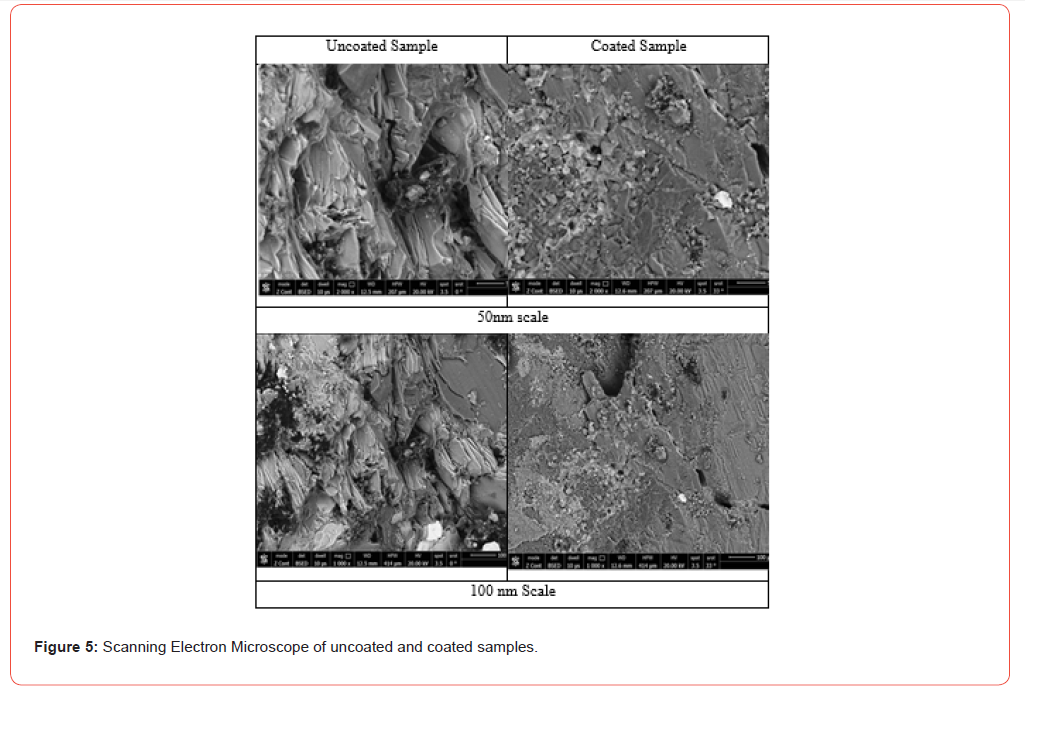
The SEM examination of two granite samples, one uncoated and the other coated with wheat germ oil, reveals significant differences in their microstructural characteristics. At both 50 nm and 100 nm scales, the uncoated sample shows a rough and uneven surface with numerous cracks and crevices, indicating potential weaknesses and susceptibility to environmental damage. In contrast, the coated sample displays a smoother and more uniform surface, with the wheat germ oil effectively filling in microstructural gaps and reducing the visibility of cracks. This protective layer not only enhances the surface smoothness but also improves the stone’s resistance to environmental factors, thus demonstrating the efficacy of wheat germ oil in maintaining the durability and overall condition of the granite.
Conclusion
This study demonstrated the effectiveness of using wheat germ oil as a protective coating for sunken granite monuments. The application of the oil significantly enhanced the durability and structural integrity of the granite, as evidenced by increased compressive strength and improved surface properties. X-ray diffraction (XRD) analysis and scanning electron microscopy (SEM) examination showed that the oil enhances surface characteristics and provides a protective layer that reduces interaction with harmful environmental factors, confirming the feasibility of using the oil to protect these artifacts.
Recommendation
Long-term studies should be conducted to monitor the effectiveness of wheat germ oil as a protective coating over extended periods and in diverse environmental conditions. Standardized protocols for the application of the oil should be developed, and collaboration among research institutions, heritage conservation organizations, and local authorities should be encouraged to adopt this method. Additionally, educational programs and awareness campaigns should be implemented to highlight the importance of protecting underwater cultural heritage and using innovative preservation techniques.
Acknowledgement
None.
Conflict of Interest
None.
References
- Meskell L (2018) A future in ruins: UNESCO, world heritage, and the dream of peace. Oxford University Press.
- Maiorova O (2010) From the Shadow of Empire: Defining the Russian Nation through Cultural Mythology pp. 1855-1870.
- Hernandez A C, Sanjurjo-Sánchez J, Alves C, Figueiredo C A (2024) Study of the Geochemical Decay and Environmental Causes of Granite Stone Surfaces in the Built Heritage of Barbanza Peninsula (Galicia, NW Spain). Coatings (2): 169.
- Abdelaziz M, Elsayed M (2023) The Contribution of Photogrammetry and Computer Graphics to the Study and Preservation of Monuments in Alexandria, Egypt. In Ancient Egypt, New Technology pp. 33-57.
- Koralay T, Deniz K, Duman, B, Kadıoğlu Y K (2021) Mineralogical and geochemical characterization and implications for provenance of Roman granite columns in ancient Tripolis (Denizli, Turkey). Arabian Journal of Geosciences 14: 1-23.
- Freire-Lista D M (2021) The forerunners on heritage stones investigation: Historical synthesis and evolution. Heritage 4(3): 1228-1268.
- Valiulis A V (2014) A history of materials and technologies development.
- Peck W H (2013) The material world of ancient Egypt. Cambridge University Press.
- Hassan M, Xie H (2020) Climate change and conservation of coastal built heritage. Singapore: Springer.
- ANJUM N (1994) ANCIENT MONUMENTS OF THE WORLD (Doctoral dissertation, ALIGARH MUSLIM UNIVERSITY ALIGARH (INDIA).
- Nunn P D, Compatangelo-Soussignan R (2024) The drowning of ‘Lyonesse’: early legends of land submergence in southwest Britain and geoscience. Folk Life pp. 1-17.
- Nunn P D, Luebbers R, Hesp P A, Murray-Wallace C V, Wilson C, et al. (2024) Calibrating Holocene human–environment interactions using ancient narratives: The example of Ngurunderi in South Australia. The Journal of Island and Coastal Archaeology pp. 1-25.
- Morcos S, El-Abbadi M, Awad H, Halim Y, Tongring N, et al. (2003) Towards integrated management of Alexandria’s coastal heritage.
- Oldershaw C (2023) Stones: A Material and Cultural History. Reaktion Books.
- Brown W N (2023) Splendors of Quanzhou, Past and Present p. 137.
- Stewart E C (2020) To and from the Earth;(Re) collecting place in urban edgelands through the case study of Mount Vernon and Daldowie (Doctoral dissertation, University of Glasgow).
- Pioli M (2024) Museums of the future: Digitalisation as a new form of communication.
- Peitsmeyer J G (2021) Evaluating a Need for Somatic Access to Classical Objects in Public Museums.
- Fistos T, Fierascu I, Manaila-Maximean D, Fierascu R C (2024) Advancements in Stone Object Restoration Using Polymer-Inorganic Phosphate Composites for Cultural Heritage Preservation. Polymers, 16(14): 2085.
- Omićević N, Zaninović T, Bojanić Obad Šćitaroci B (2024) Integrating Underground Space into the Groundscape Resilience Concept. Buildings 14(8): 2406.
- Chen Y, Tang L, Ye Y, Cheng Z, Zhou Z, et al. (2023) Effects of different chloride salts on granite residual soil: Properties and water–soil chemical interaction mechanisms. Journal of Soils and Sediments 23(4): 1844-1856.
- Cardell C, Rivas T, Mosquera M J, Birginie J M, Moropoulou A, et al. (2003) Patterns of damage in igneous and sedimentary rocks under conditions simulating sea‐salt weathering. Earth Surface Processes and Landforms: The Journal of the British Geomorphological Research Group 28(1): 1-14.
- Warke P A, Smith B J, Lehane E (2011) Micro-environmental change as a trigger for granite decay in offshore Irish lighthouses: implications for the long-term preservation of operational historic buildings. Environmental Earth Sciences 63: 1415-1431.
- Kumar S V, Singh M R (2019) Salt Weathering of 7th Century CE Granite Monument of Shore Temple, Mahabalipuram—Scientific Investigation and Conservation Strategy. Heritage 2(1): 230-253.
- Nilson T, Thorell K (2018) Cultural heritage preservation: The past, the present and the future.
- Loomis O (1983) Cultural conservation: the protection of cultural heritage in the United States: a study. Library of Congress.
- Chelazzi D, Poggi G, Jaidar Y, Toccafondi N, Giorgi R, et al. (2013) Hydroxide nanoparticles for cultural heritage: Consolidation and protection of wall paintings and carbonate materials. Journal of colloid and interface science 392: 42-49.
- Smith L (2020) Uses of heritage. In Encyclopedia of global archaeology pp. 10969-10974.
- Bingham B, Foley B, Singh H, Camilli R, Delaporta K, et al. (2010) Robotic tools for deep water archaeology: Surveying an ancient shipwreck with an autonomous underwater vehicle. Journal of Field Robotics 27(6): 702-717.
- Moretti P F, Affatati A (2023) Understanding the Impact of Underwater Noise to Preserve Marine Ecosystems and Manage Anthropogenic Activities. Sustainability 15(13): 10178.
- Browne K, Raff M (2023) The protection of underwater cultural heritage-future challenges. In International Law of Underwater Cultural Heritage: Understanding the Challenges pp. 591-665.
- El-Desokey A K (2024) A bust statue of Nilos at Greco-Roman Museum Alexandria (No. Journal of the Faculty of Tourism and Hotels-University of Sadat City 8(1/1).
- Amin M M (2017) The effect of Underground Water on Heritage Sites (A case Study on Graeco-Roman Cemeteries in Alexandria). Journal of Association of Arab Universities for Tourism and Hospitality 14(1): 65-78.
- Demesticha S, Semaan L, Morsy Z (2019) Capacity Building in maritime archaeology: the case of the eastern mediterranean (Cyprus, Lebanon and Egypt). Journal of Maritime Archaeology 14(3): 369-389.
- Abdelbar M, El-Shamy A M (2024) Understanding soil factors in corrosion and conservation of buried bronze statuettes: insights for preservation strategies. Scientific Reports 14(1): 19230.
- Shad R, Egon A, Potter K (2024) Digital approaches to artifact provenance studies and authentication.
- El-Kady M (2017) Potentials of underwater cultural heritage in tourism from the perspective of tour guiding in Alexandria, Egypt. Journal of Tourism Research 17(1): 222-237.
- Levy T, Papatheodorou G, Geraga M, Christodoulou D, Georgiou N, et al. (2023) Digital underwater technologies in the Methoni bay cultural heritage project, Greece: Interdisciplinary approaches and sustainability. Sci Cult 9: 51-88.
- Elizalde R R (2024) Underwater Inspection of Submerged Elements in Masonry Bridges and Other Old Civil Structures Using Drones. Buildings 14(9): 2788.
- Wu X, Xi X, Wu X, Cai M, Zhu Y, et al. (2024) Effect of water-cooling shock on mechanical behavior and damage responses of high-temperature granite in enhanced geothermal systems (EGS). Geoenergy Science and Engineering 239: 212937.
- Shaikh Z A, Tripati S, Shinde V, Blue L (2024) Maritime and Underwater Archaeology in India: A Critical Appraisal and a Future Prospect. Journal of Maritime Archaeology 19(2): 151-194.
- Rahimi S, Khosravi Z, Bastani K H (2022) Domesian petroglyphs at Khomeyn, Markazi Province, Iran. Rock Art Research 39(2): 211-213.
- Bolton J (2016) Granite and marine salt weathering anomalies from submerged and inter-tidal and coastal archaeological monuments in Ireland. SCIENCE AND ART: A FUTURE FOR STONE pp. 33.
- Flemming N C, Harff J, Moura D (2017) Non‐Cultural Processes of Site Formation, Preservation and Destruction. Submerged landscapes of the European continental shelf: Quaternary paleoenvironments pp. 51-82.
- Sesana E, Gagnon A S, Ciantelli C, Cassar J, Hughes J J, et al. (2021) Climate change impacts on cultural heritage: A literature review. Wiley Interdisciplinary Reviews: Climate Change 12(4): e710.
- Hemeda S, Fahmy A, Moustafa A, Abd El Hafez M (2019) The Early Basilica Church, El-Ashmonein Archaeological Site, Minia, Egypt: geo-environmental analysis and engineering characterization of the building materials. Open Journal of Geology 9(03): 157.
-

This work is licensed under a Creative Commons Attribution-NonCommercial 4.0 International License.




