



 Research article
Assessment of the natural protective protection of granite monuments sunken by coating with sweet almond oil- Alexandria – Egypt
Received Date:November 01, 2024 Published Date: November 21, 2024
Abstract
The durability of granite as a solid igneous rock, and the beauty and variety of colors and textures of its crystalline grains, make it an environmentally friendly and sustainable material widely used in construction and architecture across different civilizations. Pieces of red Aswan granite were found in sunken monuments in Alexandria. Due to its large size and the fear of the risks of the recovery process, the study suggests protecting sunken granite monuments from the damaging factors mentioned in various studies, such as biological damage caused by microbes that harm granite, and other physical and chemical damaging factors. The study assumes that granite should be coated with sweet almond oil due to its hydrophobic properties, which repel water and seawater salts from penetrating the pores of the stone and prevent seawater salt grains from crystallizing inside those pores. In addition, sweet almond oil is an antibiotic for microbes that harm granite, and almond oil is a natural, environmentally friendly substance that does not harm the natural marine environment. After simulating the coating process in an environment similar to that of the sunken monuments, the durability of the samples was tested through a fracture load test, which showed that the sample coated with sweet almond oil was more resistant than the uncoated samples, which was confirmed through comparisons by X-ray diffraction analysis and scanning electron microscopy. We conclude from this simulation the success of protecting the sunken granite monuments using natural techniques, and the study recommends conducting more such studies.
Keywords: Red granite; Olive oil; Conservation; Submerged artifacts; Underwater cultural heritage
Introduction
Granite is an igneous rock formed under high temperatures. Granite is formed mainly from three minerals - quartz, alkali aluminum silicate and orthoclase. These minerals make granite white, crimson or light grey. Granite also contains small amounts of dark brown, dark green or black minerals such as hornblende mica and biotite. The mineral grains in granite are so large that they can be easily distinguished from each other. Many of the atoms are 0.5 cm wide [1]. The minerals in granite are interlocked like pieces in a jigsaw puzzle. As a result, granite is a hard, durable rock and is useful for building. Most granite can withstand centuries of weathering and can be polished to a smooth finish, making it suitable for building columns, tombstones and monuments intended to last a long time. Granite was formed in the Paleozoic geological era, about 590 million years ago, and is the result of complex, time-consuming processes [2]. This process begins with the formation of magma deep within the Earth. Magma moves with increasing pressure and temperature at depth to the Earth’s surface and becomes saturated with rich, compacted minerals. As the magma approaches the surface, it is exposed to lower temperatures, cools and solidifies, and granite is formed [3]. Red Aswan granite was extensively used during the ancient Mari and Roman eras for its durability and aesthetic appeal. Sunken artifacts made from this granite, discovered in various underwater archaeological sites, underscore its historical significance. However, preserving these artifacts presents several challenges due to the harsh marine environment [4-7]. Granite artifacts are highly susceptible to biological damage caused by microorganisms such as bacteria and fungi. These organisms secrete organic acids as metabolic byproducts, which chemically interact with the minerals in the granite, leading to its gradual deterioration [8,9]. The acids can cause both physical disintegration and chemical alteration of the stone, weakening its structure over time. The biological colonization of the stone surfaces can also introduce additional stress factors that exacerbate physical degradation [10-12]. Sweet almond oil is an antimicrobial and hydrophobic substance that can protect granite from damage. Its antimicrobial properties help to inhibit the growth of bacteria and other microorganisms, which can prevent staining and degradation of the granite surface. Additionally, its hydrophobic nature means that it repels water, creating a protective barrier that helps to prevent water damage, such as staining and etching, which can occur when liquids are absorbed into the granite. This makes sweet almond oil an excellent natural option for maintaining and preserving the beauty and integrity of granite surfaces [13-17].
Topic Importance
Preserving artifacts in their natural environment, where they have adapted over thousands of years, is crucial to ensuring their continuity and value. Worldwide, underwater archaeological museums often display modern artifacts or shipwreck remains. However, this proposed project will be the first of its kind to house submerged artifacts in their original locations, providing visitors with a unique opportunity to explore ancient underwater history and promote the importance and protection of this unique heritage. Previous studies have confirmed that its phenolic compounds protect the coated surfaces from bacterial and fungal attacks, making it an ideal choice for preserving granite from biological damage. Sweet almond oil coating acts as a hydrophobic material and achieves superhydrophobic surface effects when specific conditions are met regarding surface energy and micro/nano-hierarchical structures. The long-term stability of the wettability properties strictly depends on the mechanical durability and chemical inertness of the hydrophobic materials against aqueous acids, alkaline solutions, salt solutions or organic solvents of superhydrophobic surfaces. Furthermore, in practical applications, most published work has focused on enhancing mechanical durability, antibacterial stability, resistance to biological contamination, long-term chemical stability, and adhesion strength. These properties are critical for many applications, such as steel used in marine construction and marine coatings, emphasizing their importance for coatings that maintain submerged surfaces..
Study Hypotheses
Sweet almond oil is an antimicrobial and hydrophobic substance that can protect granite from damage. Its antimicrobial properties help to inhibit the growth of bacteria and other microorganisms, which can prevent staining and degradation of the granite surface. Additionally, its hydrophobic nature means that it repels water, creating a protective barrier that helps to prevent water damage, such as staining and etching, which can occur when liquids are absorbed into the granite2. This makes sweet almond oil an excellent natural option for maintaining and preserving the beauty and integrity of granite surfaces. This research explores the possibility of establishing an underwater museum to display and protect submerged artifacts using modern technologies. By simulating the aquatic conditions on granite samples, the study aims to provide important insights into how to protect submerged artifacts from environmental factors that cause deterioration. This approach also contributes to the development of protection methods based on sweet almond oil, which acts as an effective barrier between granite and seawater, as it contains acids, salts and ammonia, due to its distinctive properties. We believe that sweet almond oil has antifungal and antibacterial properties that can protect submerged granite artifacts. In addition, we assume that sweet almond oil will not have any negative effects on the marine environment surrounding the granite statues coated with it. This may help maintain the integrity of the red granite structure by forming a protective barrier against deterioration
Study Questions
The study question regarding the potential of sweet almond oil to protect granite from the harmful effects of seawater and its salinity, while also considering its antibacterial and antifungal properties, can be expanded as follows: Research Question: “Can sweet almond oil effectively protect granite from the damaging effects of seawater and its salinity, and what are its antibacterial and antifungal impacts on the stone?” What are the specific chemical properties of sweet almond oil that might contribute to its protective effects on granite? How does seawater and its salinity affect granite over time, and what are the primary mechanisms of degradation? What are the known antibacterial and antifungal properties of sweet almond oil, and how might these properties interact with granite surfaces? Are there any existing studies or experiments that have explored the use of sweet almond oil or similar natural oils for stone preservation? What experimental methods can be employed to test the efficacy of sweet almond oil in protecting granite from seawater and its salinity, while also assessing its antibacterial and antifungal effects? What are the potential risks or drawbacks of using sweet almond oil on granite, and how can these be mitigated? By addressing these sub-questions, the research can comprehensively investigate the protective capabilities of sweet almond oil on granite, while also considering its broader implications for stone conservation.
Study Problem
The research problem is the difficulty of retrieving granite artifacts sunk in the sea, and therefore preferring to display them in an open underwater museum, which requires protecting granite artifacts sunk underwater with an integrated scientific technology to repel the harmful effects of water on granite and protect it from damage resulting from sea salinity, in addition to protecting it from biological factors, and that this technology does not harm the natural marine environment and aquatic life.
Study Objectives:
The study aims to develop an integrated scientific approach to address the problem of granite processing under aquatic environmental conditions, focusing on testing materials that provide effective protection against the effects of the salty environment, prevent corrosion and internal damage, and resist harmful bacteria and fungi.
Literature Review:
The preservation of underwater cultural heritage is of paramount importance due to its historical and scientific value. Red granite, widely used in ancient Egyptian architecture, presents unique conservation challenges when submerged. Natural techniques, such as coating with sweet almond oil, have shown promise due to sweet almond oil’s antibacterial and antifungal properties [18- 20]. Studies have shown that sweet almond oil effectively protects granite by repelling water and preventing biological colonization. This sustainable approach is in line with UNESCO’s focus on in situ conservation, ensuring that artifacts retain their historical context and integrity [21-23]. Granite artifacts, such as those from the submerged cities of Menouthis and Heracleion in Abu Qir Bay, exemplify the importance of natural conservation techniques. The discovery of these sites, with their remarkable finds such as the Temple of Isis and the colossal statues, underscores the archaeological and historical importance of underwater heritage [24-27]. The use of sweet almond oil as a protective coating has been supported by experimental studies, with compression tests, X-ray diffraction analysis, and scanning electron microscopy (SEM) proving its effectiveness in preserving the structural integrity of granite [28, 29].
Sampling
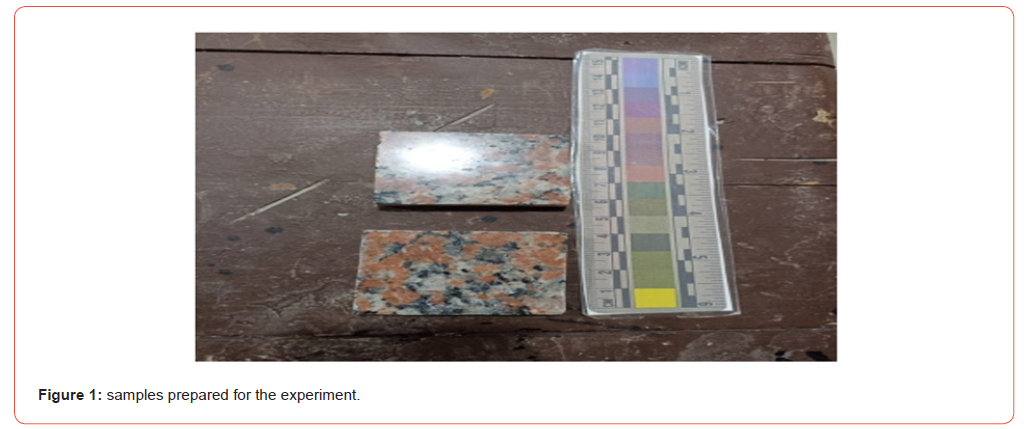
Fresh samples similar to red granite from the ruins of Alexandria were prepared in cubes for fracture load testing, followed by X-ray diffraction and scanning electron microscopy. Figure 1 shows the samples prepared for the experiment. Bring 2 granite stones, sample A coated with sweet almond oil, sample B uncoated with oil.
Examination processes
Achieving the research objectives of the success of the simulation process and the experiment of treating granite with sweet almond oil coating requires conducting strength and resistance tests to damage factors such as fracture load test, scanning electron microscope examination, and X-ray diffraction.
Uniaxial Compression Test:
The dyeing process of submerged red rough granite involves the use of mechanical tests to evaluate the resistance of the material to harsh conditions, especially those associated with marine environments such as corrosion and cracking. Two granite samples were selected for compression testing: sample A, which was treated with sweet almond oil, and sample B, which was not coated with sweet almond oil, in order to evaluate the effect of this treatment on the mechanical properties of the granite.
Xray diffraction analysis
The mineralogical composition was determined using a Bruker X-Ray Diffractometer System with Cu-Kα radiation (λ = 1.5406 Å) at 40 kv and 40 mas. Measurement parameters included a 2θ range of 19° to 78°, a step size of 0.02°, and a scan rate of 2°/min. Environmental conditions were room temperature (25°C ± 1°C) and relative humidity (55% ± 5%). Data processing involved peak. Identification and analysis with DIFFRAC.EVA software, background subtraction, peak fitting, d-spacing calculations using Bragg’s law, and relative intensity normalization to 100%.
Results
Uniaxial Compression Test:
looking at the first piece A, it is a piece of coarse-grained red granite measuring (7 × 7 ×1.4 cm). This piece was preserved with sweet almond oil, which contributed to an increase in its weight to (234.7 grams). The addition of sweet almond oil has enhanced its density and made it more resistant to external factors. Additionally, A1 exhibited a compressive strength of (1100.1 units), indicating that preserving it has granted it a greater capacity to withstand pressure and loads. On the other hand, the second piece B is also made of coarse-grained red granite, but it did not receive any treatment, measuring approximately (7 × 7× 1.4 cm).
The weight of this piece was lower, at (234.7 grams), which may suggest that the lack of preservation has affected its density. The compressive strength of piece B was (1100.1 units), which is significantly lower than that of the piece preserved with sweet almond oil. This means that the unpreserved piece is not only lighter in weight, but it is also less capable of withstanding pressure. Table 1. Illustrate result of fracture loading test:
Table 1:Specifications of the tested samples.

Scanning Electron Microscope:
Using a scanning electron microscope, the samples from the compressive strength test were examined. A clear difference in the extent of damage and breakdown was observed between the sample not coated with sweet almond oil and the sample that was coated. The uncoated sample showed significant deterioration, while the coated sample maintained its integrity. This finding supports the results of previous tests and highlights sweet almond oil’s ability to resist various damage factors. Previous studies confirmed that granite is vulnerable to damage caused by bacteria and fungi in the marine environment. The research demonstrated sweet almond oil’s dual role as an antibacterial and antifungal agent, effectively protecting the granite. Additionally, he hydrophobic nature of sweet almond oil repelled water, further safeguarding the granite from disintegration and destruction. The successful simulation of protecting granite underwater confirmed the research hypothesis. The effectiveness of sweet almond oil in preserving granite and protecting sunken antiquities was evident, achieving the study’s objective. Figure 2 shows images from the scanning electron microscope, clearly illustrating the differences between the coated and uncoated samples.
X-ray diffraction:
The examination took place at the laboratories of Cairo University. Typically, the results obtained from X-ray diffraction analysis facilitate comparisons between the damaged archaeological samples and those that have been treated. This comparison reinforces the hypothesis regarding salt damage in the untreated samples when contrasted with the treated ones. For Sea Water- Deteriorated Granite (Sample 3), primary peaks were observed at 28.511° (100% intensity), 27.953° (83.9%), 26.329° (46.9%), and 24.849° (44.3%). Secondary peaks included 59.238° (35.1%), 53.164° (28.5%), 25.901° (25.5%), and 64.736° (24.5%). Minor peaks ranged between 30-50° (3-15%) and 60-78° (3-13%).n contrast, the Oil-Treated Granite (Sample 4) showed primary peaks at 27.631° (100% intensity), 27.128° (39.1%), 24.984° (27.9%), and 68.146° (20.4%). Secondary peaks were at 28.752° (18.8%), 51.129° (14.8%), 55.784° (13.0%), and 28.298° (12.6%). Minor peaks appeared between 31-50° (below 5%) and 60-78° (1-10%).
Scanning Electron Microscope:
Figure3 presents a comparison of granite samples treated with peppermint oil (A at 200μm, C at 400μm, E at 500μm, and G at 50μm) against those without the oil (B at 200μm, D at 100μm, F at 200μm, and H at 50μm). The observations indicate that the coated samples displayed cohesive particle interactions, whereas the uncoated samples exhibited disintegration along with the presence of large pores and gaps.
Discussion
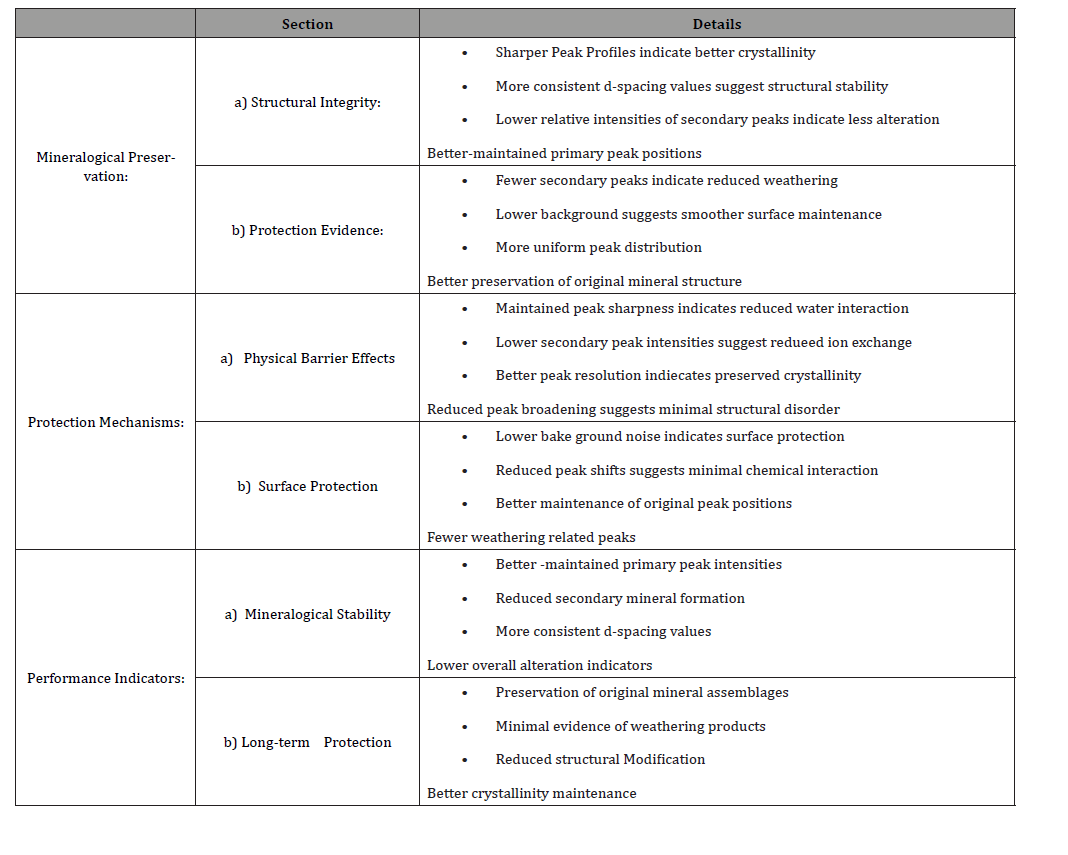
Building on the previous findings, the application of sweet almond oil as a protective coating for granite in a marine environment provides a multifaceted approach to preservation. The antibacterial and antifungal properties of sweet almond oil are particularly beneficial in preventing biological degradation, which can cause significant structural damage over time. The oil’s hydrophobic properties add an extra layer of protection by repelling water, thus mitigating the risk of salt-induced deterioration and other water-related damage. The fracture load tests reveal a marked improvement in the durability of olive oilcoated granite compared to uncoated samples, demonstrating the effectiveness of this preservation technique. The X-ray diffraction analysis further supports these findings by showing the improved structural integrity of the coated samples. The scanning electron microscope examinations offer detailed visual confirmation of the protective effects of sweet almond oil, illustrating the stark contrast between the well-preserved oil-coated granite and the deteriorated uncoated sample. These results underscore the potential for sweet almond oil and similar natural substances to be used in preserving not only granite but potentially other types of stone and materials exposed to harsh marine environments. By incorporating such natural and sustainable preservation methods, researchers and conservationists can enhance the longevity of submerged artifacts while minimizing. Environmental impact. This approach aligns with broader efforts in archaeology and heritage preservation to adopt more eco-friendly and sustainable practices. The tables highlight the negative impact of seawater on granite, causing mineral changes such as feldspar degradation and secondary mineral formation. These changes are driven by chemical processes (ion exchange and mineral dissolution) and physical degradation (structural disturbance and microfractures). The oil treatment effectively preserves the mineral structure of granite by acting as a physical barrier and surface protector, reducing water interaction, ion exchange and overall weathering. The summary demonstrates superior performance indicators (such as better-preserved peak intensity and reduced secondary mineral formation) and conservation impacts, emphasizing the effectiveness of the treatment and the need for ongoing monitoring and improved methods for long-term heritage conservation.
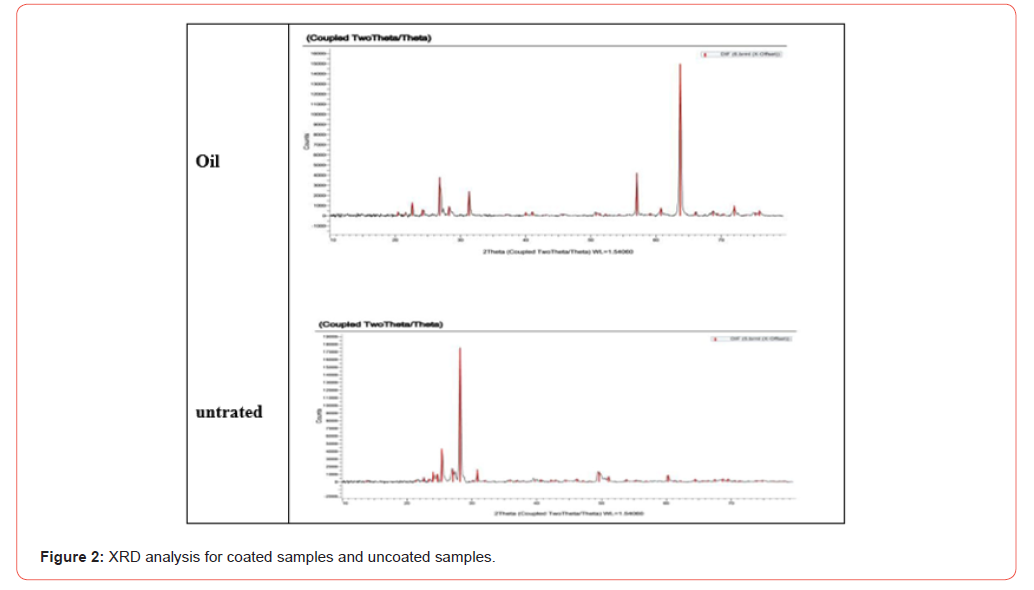
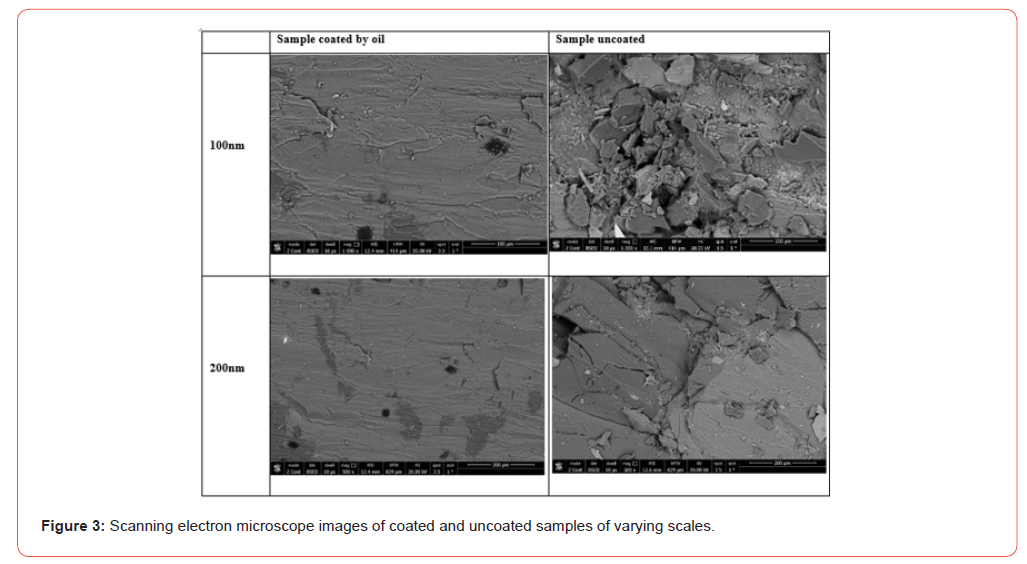
Table 2:
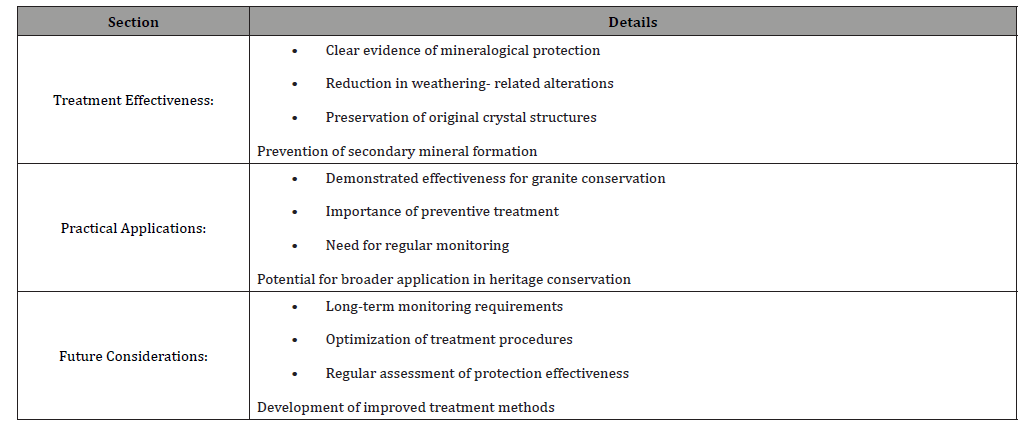
Table 3:
Recommendation
1. Relocation for Enhanced Protection: It is recommended
that submerged granite artifacts be relocated to locations
that provide better protection. These locations should be
carefully selected to ensure optimal environmental conditions
that minimize exposure to damaging factors such as salinity,
biological growth, and physical wear.
2. Consultation with Museum Specialists: Engage with
museum specialists and conservation experts to identify the
most appropriate methods for displaying and preserving
archaeological heritage extracted from marine environments.
Current display methods should be reviewed and revised
to ensure they do not harm the artifacts, provide adequate
protection, and effectively highlight their archaeological
importance.
3. Development of a Comprehensive Conservation Plan:
Develop a comprehensive plan that addresses the preservation
needs of granite artifacts. This plan should include strategies to
halt the internal decomposition of the artifacts and outline the
necessary restoration and treatment procedures to be carried
out. Regular monitoring and maintenance schedules should
be established to ensure the long-term preservation of the
artifacts.
4. Participation in International Conventions: Emphasize
the importance of Egypt’s participation in the UNESCO
Convention for the Protection of the Underwater Cultural
Heritage. Active participation in this convention will enable
Egypt to access international support, resources, and expertise
in the conservation of underwater cultural heritage. It will also
align national conservation efforts with globally recognized
standards and practices.
5. Implementation of Natural Protective Coatings: Evaluate
and implement natural protective coatings, such as sweet
almond oil or pumpkin seed oil, on granite artifacts to provide
an additional layer of protection against seawater salinity
and biological threats. Conduct further research to determine
the efficacy and long-term effects of these coatings on the
preservation of granite.
6. Public Awareness and Education: Promote public
awareness and education initiatives to highlight the significance
of submerged granite artifacts and the efforts being made to
preserve them. Engage the local community, stakeholders, and
the broader public in conservation activities to foster a sense of
shared responsibility for heritage preservation.
7. Collaborative Research and Training: Encourage
collaborative research and training programs with international
conservation institutions and universities. These programs
should focus on advancing conservation techniques, developing
new preservation materials, and training local conservators in
the latest methodologies.
Acknowledgement
None.
Conflict of Interest
None.
References
- Alnour I A, Wagiran H, Ibrahim N, Laili Z, Omar M, et al. (2012) Natural radioactivity measurements in the granite rock of quarry sites, Johor, Malaysia. Radiation Physics and Chemistry 81(12): 1842-1847.
- Fathy I N, Elfakharany M E, El-Sayed A A (2024) Recycling of Waste Granodiorite Powder as a Partial Cement Replacement Material in Ordinary Concrete. Advances in Materials Science 24(3): 56-88.
- Badawy W M, Silachyov I, Dmitriev A, Lennik S, Saleh G, et al. (2024) Nuclear and complementary analytical techniques for elemental analysis of granite rock samples. Journal of Radioanalytical and Nuclear Chemistry pp. 1-15.
- Radwan W (2021) Mystery of sunken antiquities and its effect in promoting tourism in Egypt: Case study alexandria governorate. Journal of Association of Arab Universities for Tourism and Hospitality 21(3): 80-100.
- El-Kady M (2017) Potentials of underwater cultural heritage in tourism from the perspective of tour guiding in Alexandria, Egypt. Journal of Tourism Research 17(1): 222-237.
- Lemke A (2025) Anthropological Archaeology Underwater. Elements in Anthropological Archaeology in the 21st Century.
- Gkionis P, Papatheodorou G, Geraga M, Fakiris E, Christodoulou D, et al. (2020) A marine geoarchaeological investigation for the cultural anthesis and the sustainable growth of Methoni, Greece. Journal of Cultural Heritage 42: 158-170.
- Panova E G, Vlasov D Y, Luodes H (2014) Evaluation of the durability of granite in architectural monuments. Geological Survey of Finland. Report of Investigation 214: 79.
- Negi A, Sarethy I P (2019) Microbial biodeterioration of cultural heritage: events, colonization, and analyses. Microbial ecology 78(4): 1014-1029.
- Cappitelli F, Cattò C, Villa F (2020) The control of cultural heritage microbial deterioration. Microorganisms 8(10): 1542.
- Silva N C, Madureira A R, Pintado M, Moreira P R (2022) Biocontamination and diversity of epilithic bacteria and fungi colonising outdoor stone and mortar sculptures. Applied Microbiology and Biotechnology 106(9-10): 3811-3828.
- Gadd G M, Fomina M, Pinzari F (2024) Fungal biodeterioration and preservation of cultural heritage, artwork, and historical artifacts: Extremophily and adaptation. Microbiology and Molecular Biology Reviews 88(1): e00200-22.
- Reale R, Medeghini L, Botticelli M (2024) Stealing from Phytotherapy—Heritage Conservation with Essential Oils: A Review, from Remedy to Sustainable Restoration Product. Sustainability 16(12): 5110.
- Sadgrove NJ (2022) Purely Australian Essential Oils Past and Present: Chemical Diversity, Authenticity, Bioactivity, and Commercial Value. Diversity 14(2): 124.
- Caporaso N, Boskou D (2021) Olive (Olea europaea). Oilseeds: Health Attributes and Food Applications pp. 211-252.
- Hettiarachchi D S (2014) Pharmaceutical evaluation of Western Australian sandalwood seed oil (Doctoral dissertation, Curtin University).
- Bates A, Draper K (2019) Burn: using fire to cool the earth. Chelsea Green Publishing.
- Papageorgiou M (2019) Stakes and challenges for underwater cultural heritage in the era of blue growth and the role of spatial planning: Implications and prospects in Greece. Heritage 2(2): 1060-1069.
- Pearson N, Thompson B S (2023) Saving two fish with one wreck: Maximizing synergies in marine biodiversity conservation and underwater cultural heritage protection. Marine Policy 152: 105613.
- Perez-Alvaro E (2019) Underwater Cultural Heritage: Ethical concepts and practical challenges. Routledge.
- Afrasiabifar A, Mehri Z, Hosseini N (2017) Efficacy of topical application of sweet almond oil on reducing uremic pruritus in hemodialysis patients: A randomized clinical trial study. Iranian Red Crescent Medical Journal 19(2): e34695.
- Mehri Z, Afrasiabifar A, Hosseini N (2018) Improved itchy quality of life following topical application of sweet almond oil in patients with uremic pruritus: A randomized, controlled trial. Jundishapur Journal of Chronic Disease Care 7(2).
- Blaak J, Staib P (2022) An updated review on efficacy and benefits of sweet almond, evening primrose and jojoba oils in skin care applications. International Journal of Cosmetic Science 44(1): 1-9.
- Abdellah M Y, Gelany A F, Mohamed A F, Khoshaim A B (2017) Protection of limestone coated with different polymeric materials. Am J Mech Eng 5: 51-57.
- Mohamed A F, Gelany A F, El-sadek M A, Mansour A M (2019) Mechanical Properties of Thebes Limestone Treated by Nano Filler Particles. American Journal of Mechanical Engineering 7(3): 138-145.
- Gelany A F, Falana J N, Shiba A S (2020) The Study of Application of Nano Fluid Synthases in the Treatment of Structural Disintegration and Architectural facades of Hatshepsut Limestone Temple in Deir El-Bahari.
- El-Desokey A K (2024) A bust statue of Nilos at Greco-Roman Museum Alexandria (No. Journal of the Faculty of Tourism and Hotels-University of Sadat City 8(1/1).
- Hall A, Simser B, Cai M (2024) Preconditioning blasting for a deep blind sink shaft excavation. In Deep Mining 2024: Proceedings of the 10th International Conference on Deep and High Stress Mining, Australian Centre for Geomechanics, Perth pp. 1221-1236.
- Asif A R, Sajid M, Ahmed W, Nawaz A (2024) Weathering effects on granitic rocks in North Pakistan: petrographic insights, strength classifications, and construction suitability. Environmental Earth Sciences 83(11): 351.
-

This work is licensed under a Creative Commons Attribution-NonCommercial 4.0 International License.




