


 Research Article
Happiness and Economic Growth in the Post–Cold War Decade
Received Date:May 14, 2026; Published Date:May 25, 2026
Abstract
This paper examines the effect of residents’ happiness on economic growth in the post–Cold War decade. We first document a positive correlation between happiness levels and economic growth across countries. We then use sex imbalance—which impedes normal matching in the marriage market and thereby reduces happiness—as an instrument for happiness. Our results indicate that happiness has a positive effect on economic growth, and this finding remains robust after accounting for a range of competing explanations. We further identify life expectancy and the investment ratio as two likely channels through which happiness affects economic growth.
The good life, as I conceive it, is a happy life. I do not mean that if you are good, you will be happy; I mean that if you are happy, you will be good.
—Bertrand Russell
Introduction
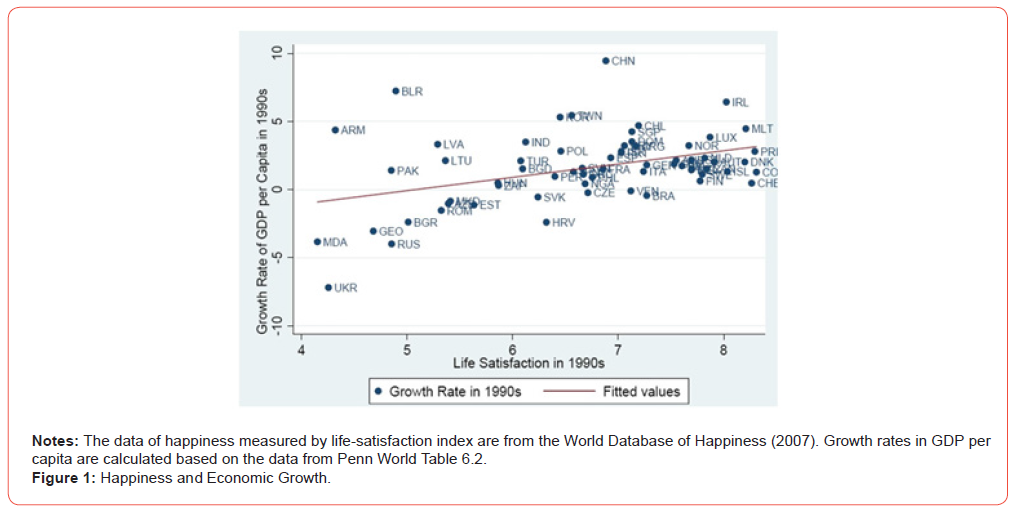
Happiness matters greatly for the life of an individual, as Russell observed1. Whether the happiness of a country’s residents affects its economic growth, however, remains an open question. Figure 1 displays a positive correlation between the happiness level of residents and the growth rate of gross domestic product (GDP) per capita across countries in the 1990s. For example, Denmark (DNK), with a happiness level of 8.20, experienced an annual growth rate of 2.02%, whereas Moldova (MDA), with a happiness level of 4.15, recorded an annual growth rate of -3.84%.
We focus on the post–Cold War decade because, relative to the Cold War era, this period was geopolitically more stable for many countries. This reduces confounding effects from major military conflicts and allows for a cleaner examination of the relationship between happiness and economic growth. Moreover, comparable cross-country data on happiness and economic growth became widely available during this period. For the first time, both happiness and growth could be systematically examined on a global scale.
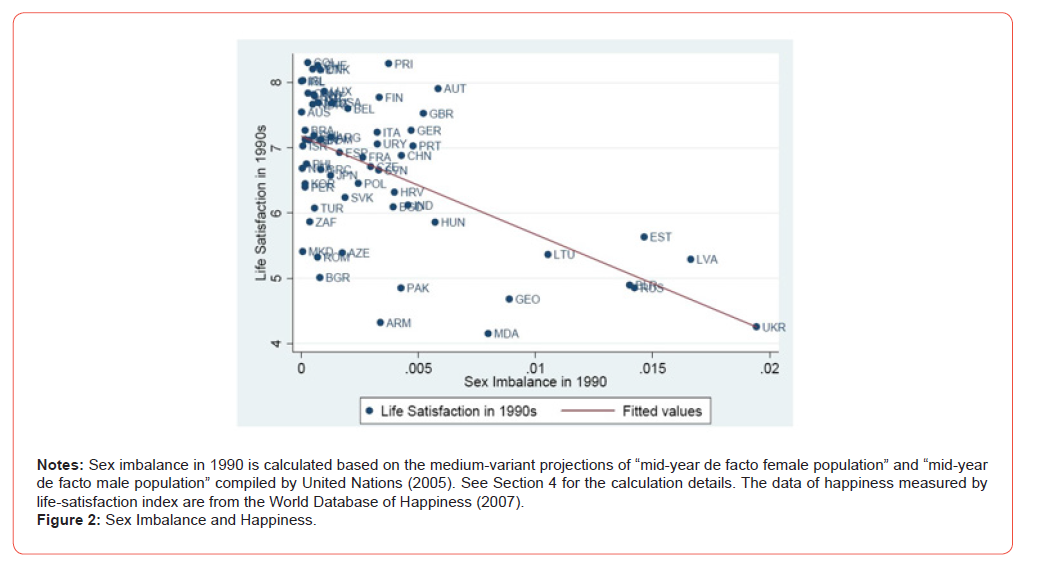
This correlation in Figure 1 may reflect factors that correlate with both economic growth and happiness, or the fact that economic growth itself fosters happiness. To isolate the effect of happiness on economic growth, we exploit the variation in sex imbalance as a source of variation in happiness. Sex ratios that deviate from the balanced level make mating more difficult and thereby depress the happiness2 of the population, because partnership - including marriage and cohabitation - and sexual activity are important sources of happiness [1]. Defining sex imbalance as (1−M/F )2 , where M and F denote the male and female populations, respectively, Figure 2 exhibits a strong negative correlation between sex imbalance and happiness across countries.
1 See Oswald, Proto, and Sgroi (2015) for econometric evidence.
2 For the effect of income on happiness, see, e.g., Di Tella, MacCulloch, and Oswald (2003), Easterlin (1974, 1995, 2001), Frey and Stutzer (2002a,
2003), Frijters, Haisken-DeNew, and Shields (2004), Gardner and Oswald (2007), Oswald (1997), and Stevenson and Wolfers (2008).
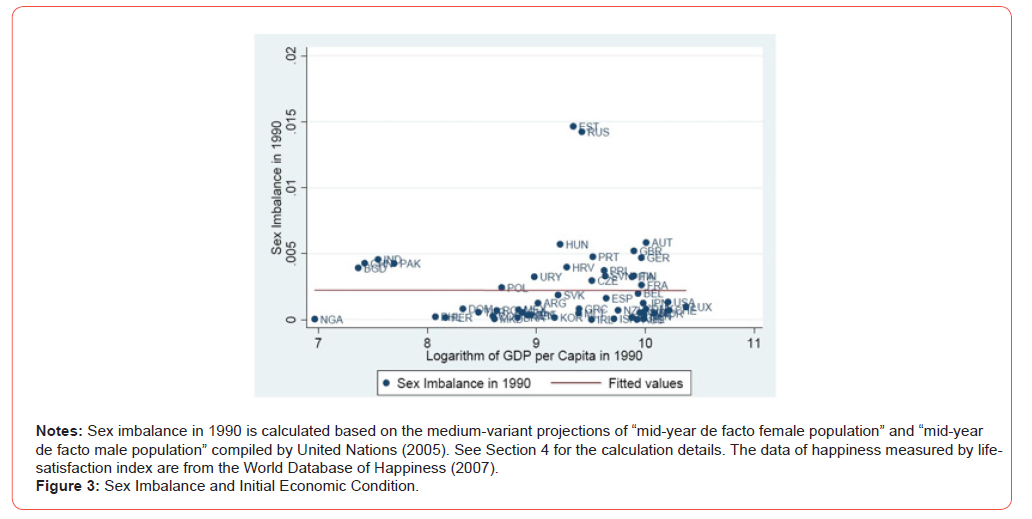
Instrumented by sex imbalance, happiness is found to have a positive effect on economic growth. The validity of sex imbalance as an instrumental variable depends on whether it correlates with economic growth through channels other than happiness. After accounting for alternative channels - including war, institutional quality, political instability, population structure, income inequality, and crime - we find that the estimated effect persists. In fact, GDP per capita, as a summary statistic of overall economic and political fundamentals, does not correlate with sex imbalance at all, as shown in Figure 3. Robustness checks further indicate that our findings are not driven by outliers, such as Asian countries, where genderspecific infanticide, abortion, and birth misreporting occur with non-trivial frequency, or transition countries, where alcoholism affects the two sexes differently [2].
We then investigate the channels through which happiness affects economic growth3. The first possible channel operates through consumption and investment. Whether to save for rainy days or save on rainy days depends on whether happiness raises or lowers the marginal benefit of consumption [3], and happier people have been documented to save more, other things held equal [4]. Second, happiness is associated with prolonged life expectancy [5,6]. Short life expectancy depresses investment in physical and human capital [7], whereas longevity raises population and may therefore lower income per capita [8]. Third, happiness fosters generosity [9] and encourages prosocial behaviors [10]; a happier society may therefore exhibit a higher level of trust - a form of social capital that has been shown to promote economic growth [11-14]. Employing the three-stage least squares (3SLS) approach of Tavares and Wacziarg [15], Wacziarg [16], and Lorentzen, McMillan, and Wacziarg [7], we identify investment and life expectancy as the two most likely channels.
The literature on happiness economics has focused on three topics4: (i) the relationship between happiness and utility [17-19]; (ii) the determinants of happiness [20-30]; and (iii) the effects of emotions on human behavior [9,31-33]. This paper belongs to the third category but differs from prior work by identifying the effect of happiness at the country level. Our goal is not to develop a new theory but to document previously unnoticed facts and to motivate investigation of the underlying mechanisms. The remainder of the paper is organized as follows. Section 2 describes our dataset and the measurement of happiness. Section 3 presents the main results. Section 4 examines possible channels through which happiness affects growth. Section 5 concludes.
Data
The data on cross-country happiness levels are drawn from the World Database of Happiness compiled by Ruut Veenhoven and his team. We use two measures of happiness: the life-satisfaction index and the happy-life index. Both are aggregated from crosscountry surveys in which residents are asked about their levels of subjective happiness. The survey question underlying the lifesatisfaction index is “All things considered, how satisfied are you with your life as a whole now?” Respondents rate their answer on a 1-10 numerical scale, with higher values indicating greater life satisfaction.
The survey question underlying the happy-life index is more complex, encompassing three wording patterns with three corresponding numerical scales. The first asks, “In general, how happy would you say you are?” with answers ranging from “very happy (3)” to “not happy (1).” The second asks, “Taking all things together, would you say you are,” with answers ranging from “very happy (4)” to “not at all happy (1).” The third asks, “How happy do you feel as you live now?” with answers ranging from “very happy (5)” to “very unhappy (1).” Veenhoven and his team apply a Thurstone transformation to these three sets of answers to obtain a 1-10 numerical scale5, with higher values indicating a happier life. Owing to the complexity of the happy-life index, we use the lifesatisfaction index as our primary measure.
3 The possibility of bidirectional causality between economic growth and happiness was first raised by Kenny (1999).
4 Di Tella and MacCulloch (2006) review the wide use of happiness data in economic research. For a discussion of policy implications, see Frank
(1997) and Layard (2006).
5 Detailed descriptions of the variables are available at https://worlddatabaseofhappiness.eur.nl/.
One might be concerned about the reliability of subjective measures of happiness. In fact, such measures are stable over time, because the factors that influence individual happiness - income, marital status, health, and education - change only slowly. Krueger and Schkade [34] document that subjective measures of mental well-being, including the life-satisfaction index, exhibit correlation over time sufficient to support research, and Lyubomirsky and Lepper [35] reach a similar conclusion. Self-reported happiness is also strongly correlated with happiness reported by friends and family members [36,37] and by clinical experts [38].
GDP per capita, population, the investment ratio, the share of government expenditure in GDP, and openness (measured as (imports + exports)/GDP) are drawn from the Penn World Table. Growth rates of GDP per capita and population are annual averages6. Education data, measured by average years of schooling, are drawn from the dataset “Educational Attainment of the Total Population Aged 25 and Over” compiled by Barro and Lee [39]. The data on trust (social capital) are also from the World Database of Happiness (2007). The trust index is constructed in the same manner as the happiness indices: respondents indicate whether they agree with the statement “most people can be trusted,” with “yes” coded as 3 and “no” coded as 1. This measure is widely used to study the effect of social capital on economic performance [11,13].
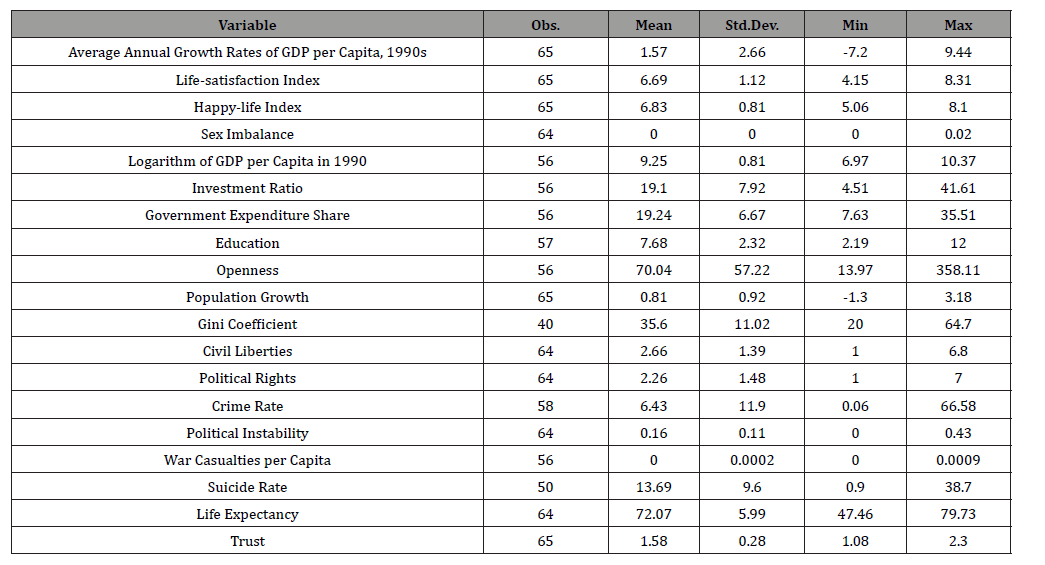
Crime rates, measured by total recorded intentional homicides, completed, per 100,000 in-habitants, are from the United Nations Surveys of Crime Trends and Operations of Criminal Justice Systems (1990–2000). The Gini coefficient, which measures income inequality, is drawn from the World Income Inequality Database. Measures of political rights and civil liberties are constructed from the ratings reported in Freedom in the World, with lower values indicating stronger political rights and civil liberties. Life expectancy at birth is from the World Bank’s World Development Indicators. Data on political instability, measured by the percentage of veto players who leave the government7, are from the Database of Political Institutions compiled by the World Bank. Data on war casualties per capita, averaged over the period 1980–1988, are from Barro and Lee [40]. Sex imbalance is computed from United Nations (2005) estimates and medium-variant projections of “mid-year de facto female population” and “mid-year de facto male population.” Table 1 reports descriptive statistics for the variables, and Appendix 2 lists the main variables by country.
Table 1:Descriptive Statistics.
6 Appendix 1 provides details on data sources and the construction of variables.
7 Veto players are defined as “the president and the largest party in the legislature for a presidential system” or “the prime minister and the parties in
the government coalition for a parliamentary system.” See Beck, Clarke, Groff, Keefer, and Walsh (2001) for details.
Empirical Results
OLS Results
We estimate the following regression:

where GRc is the growth rate of GDP per capita in country c, HAPPINESSc is the overall happiness level in country c, ln GDPPC90c is the logarithm of GDP per capita in country c in 1990, Xc is a vector of control variables, and εc is the error term. We use averages over the 1990s to maximize country coverage and minimize measurement error8.
Table 2 reports the OLS estimates. In column 1, happiness is measured by the life-satisfaction index, and its coefficient is positive and statistically significant. The coefficient on ln GDPPC90c is negative, consistent with the convergence hypothesis of growth theory, which holds that poorer countries grow more quickly on average. Column 2 adds common control variables used in growth regressions - the investment ratio, the government expenditure share, education, and openness - and the coefficient on happiness rises and remains significant. Columns 3 and 4 repeat the specifications of columns 1 and 2 using the happy-life index as the measure of happiness and yield similar results.
Table 2:Descriptive Statistics.
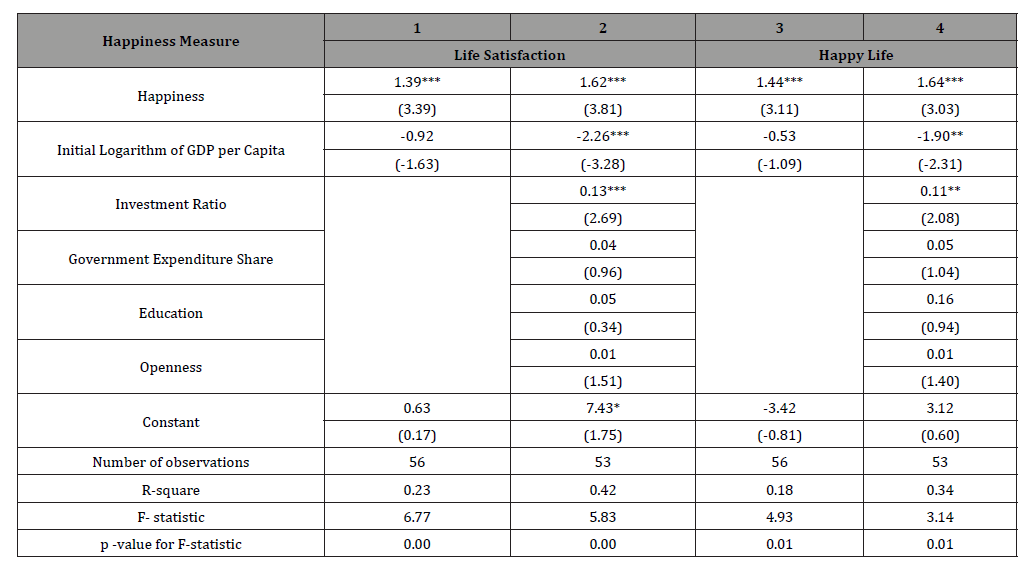
Note: t-values, adjusted for heteroskedasticity, are reported in parentheses. *, **, *** represent significance levels of 10%, 5%, and 1%, respectively.
8 Happiness is measured with error, and the within-group estimator can amplify measurement error (see Hauk and Wacziarg, 2009).
We then account for a number of variables that correlate with both economic growth and happiness. First, a country with a younger age structure may be happier, and age structure can affect productivity and the size of the labor force. Second, income inequality affects both economic growth [41-42] and happiness [23,43]. Third, the effect of institutions on economic performance is well established in the literature [15,44,45], and institutions are also associated with happiness [46]. Fourth, crime depresses investment and reduces quality of life. As shown in Table 3, the main findings from Table 2 hold after accounting for all of these factors.
2SLS Results
We then instrument happiness with sex imbalance, which prevents normal partnership formation and sexual activity from generating happiness. Happiness is strongly associated with marriage [47-49] and with sexual activity [1]; therefore, sex imbalance produces mating failures and reduces happiness in a given society. Sex imbalance is measured by (1−M/F )2 , where M and F denote the shares of male and female population, respectively. The 2SLS results are reported in Table 4. Sex imbalance has a negative effect on happiness, which in turn has a positive effect on economic growth. These findings are robust to the inclusion of the control variables described above (column 2) and to the use of an alternative measure of HAPPINESS (columns 3 and 4).
The validity of sex imbalance as an instrumental variable rests on two conditions: (i) sex imbalance must be strongly correlated with happiness, as shown earlier9; and (ii) sex imbalance must not correlate with economic growth through any channel other than happiness. Condition (ii) is not directly testable, so we conduct five robustness checks to address it indirectly10. The first check examines whether sex imbalance correlates with economic growth through known channels. In Table 5, the regression includes the crime rate, political instability, population growth, the Gini index, civil liberties, political rights, and war casualties per capita; the previous findings continue to hold.
The second check examines whether the results are driven by outliers. In some Asian countries, son preference leads parents to engage in infanticide, gender-specific abortion, and concealment of births [50], while in transition countries alcoholism is a severe social problem that may affect the two sexes differently [2]. In Table 6, we add dummy variables for Asian and transition countries. Again, the findings are unchanged.
Table 3:OLS Estimates, Robustness Check.
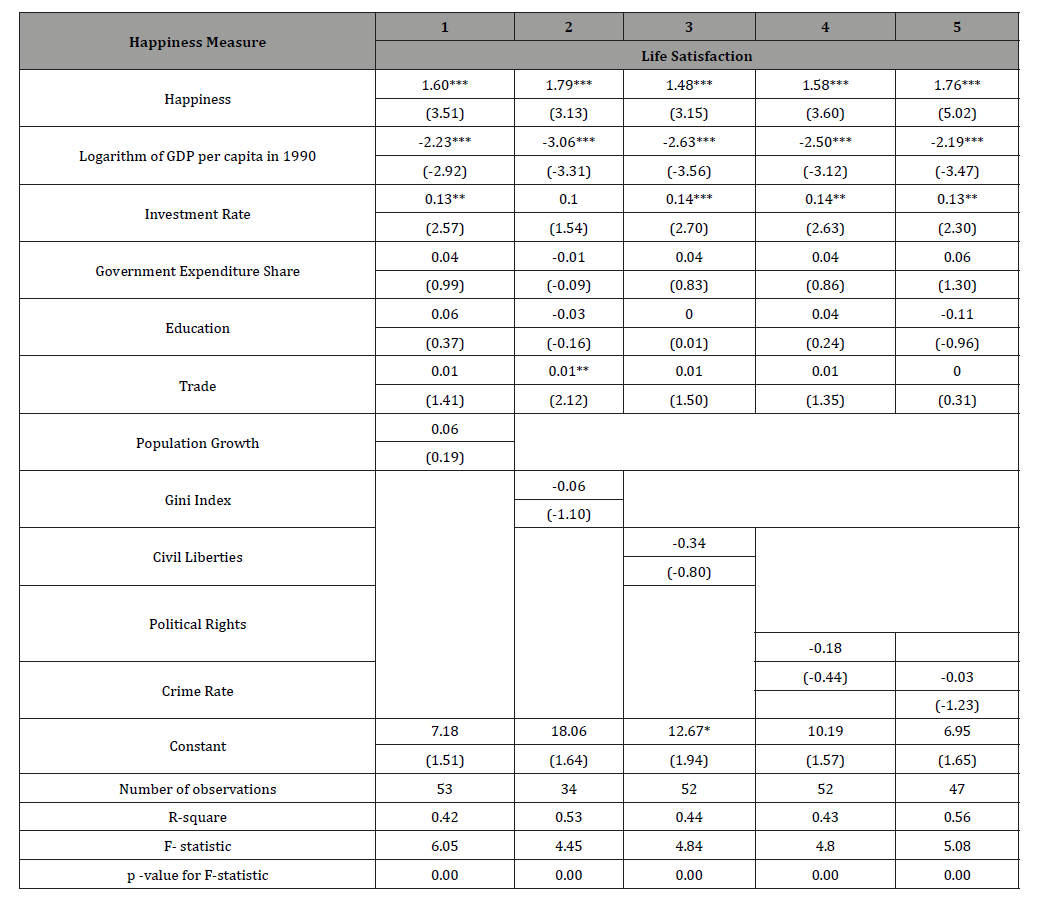
Note: t-values, adjusted for heteroskedasticity, are reported in parentheses. *, **, *** represent significance levels of 10%, 5%, and 1%, respectively.
Table 4:2SLS Results.
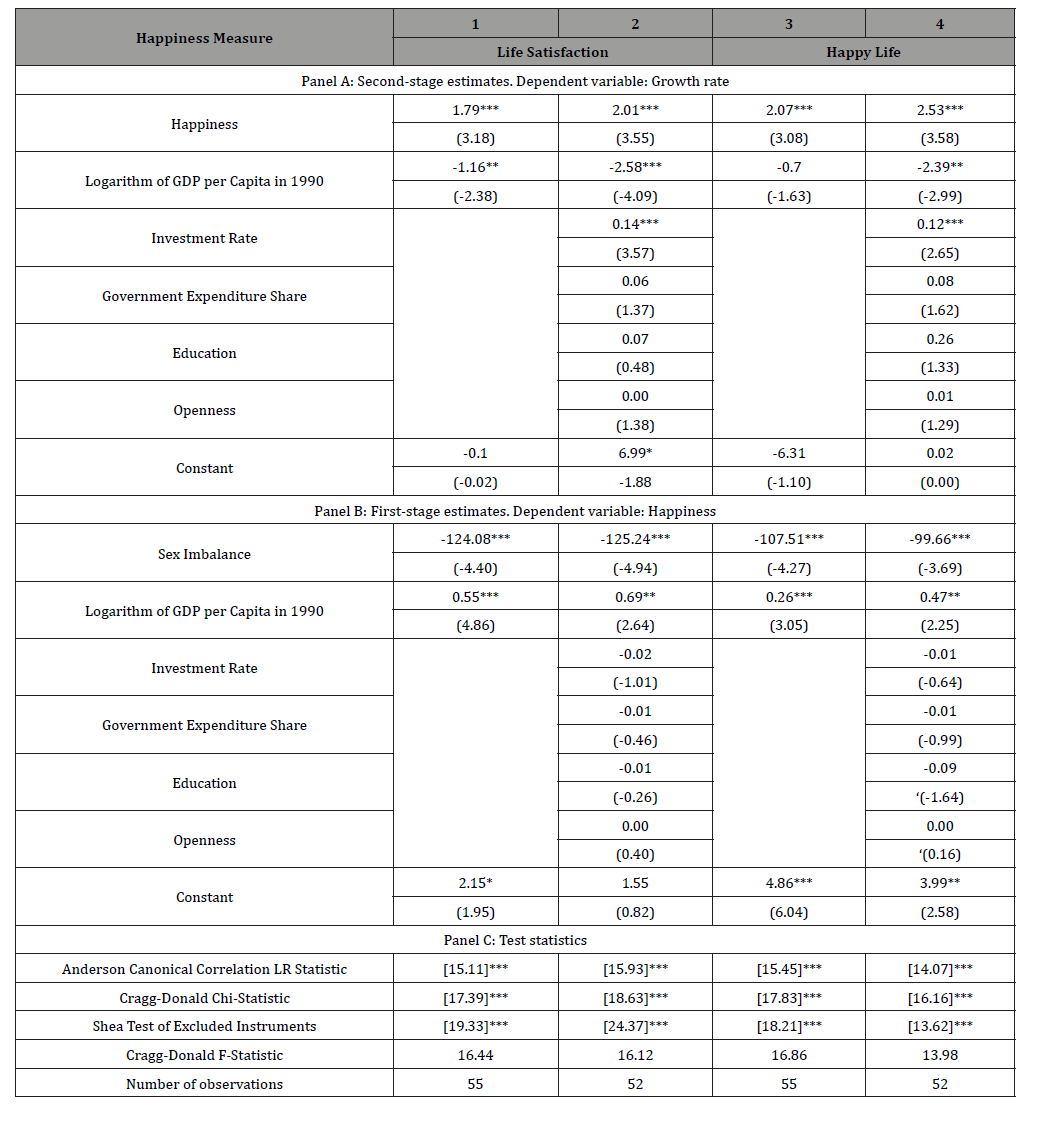
Note: t-values, adjusted for heteroskedasticity, are reported in parentheses. *, **, *** represent significance levels of 10%, 5%, and 1%, respectively
Table 5:2SLS Estimates, Robustness Check I.
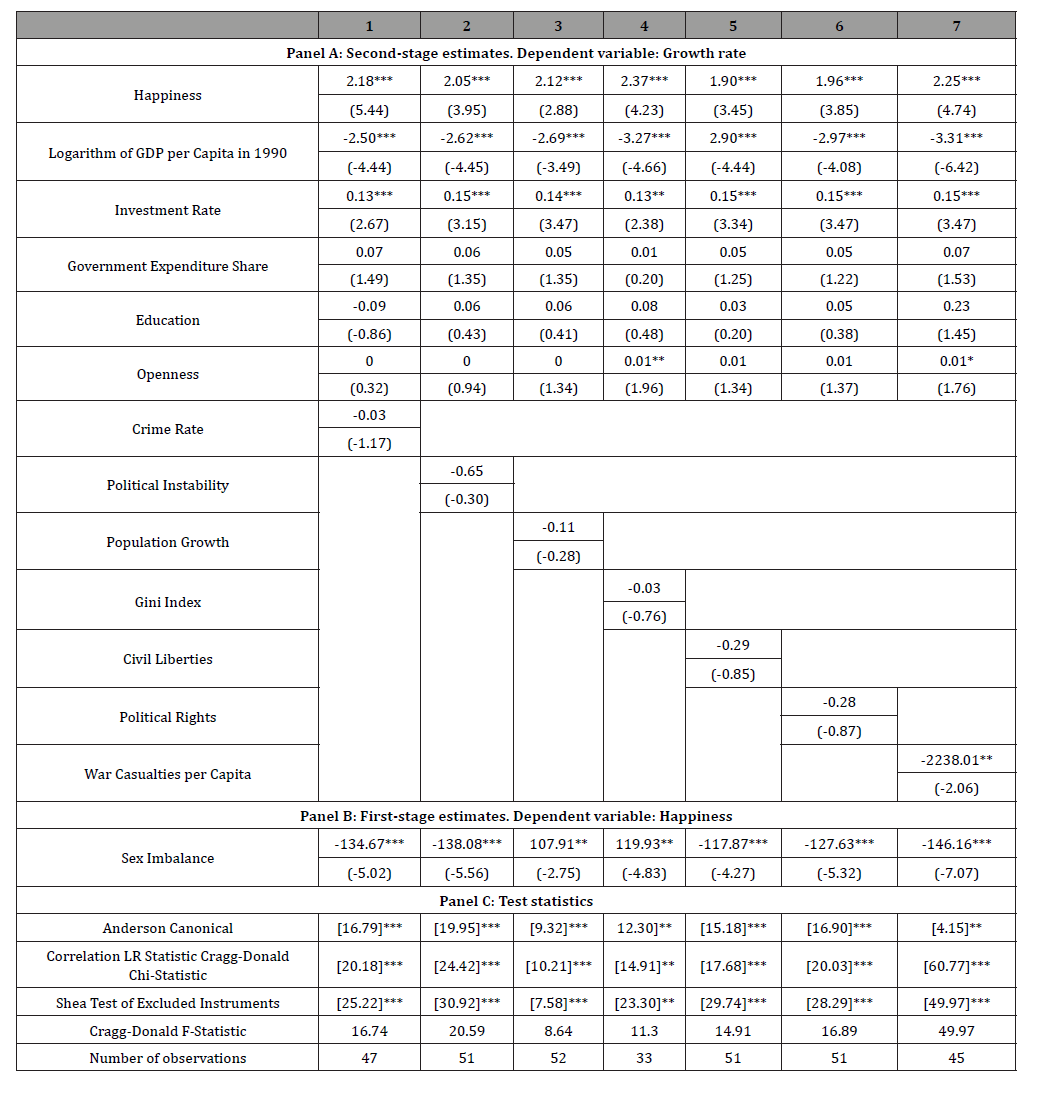
Note: Constant terms are not reported. t-values, adjusted for heteroskedasticity, are reported in parentheses. *, **, *** represent significance levels of 10%, 5%, and 1%, respectively.
Table 6:2SLS Estimates, Robustness Check II.
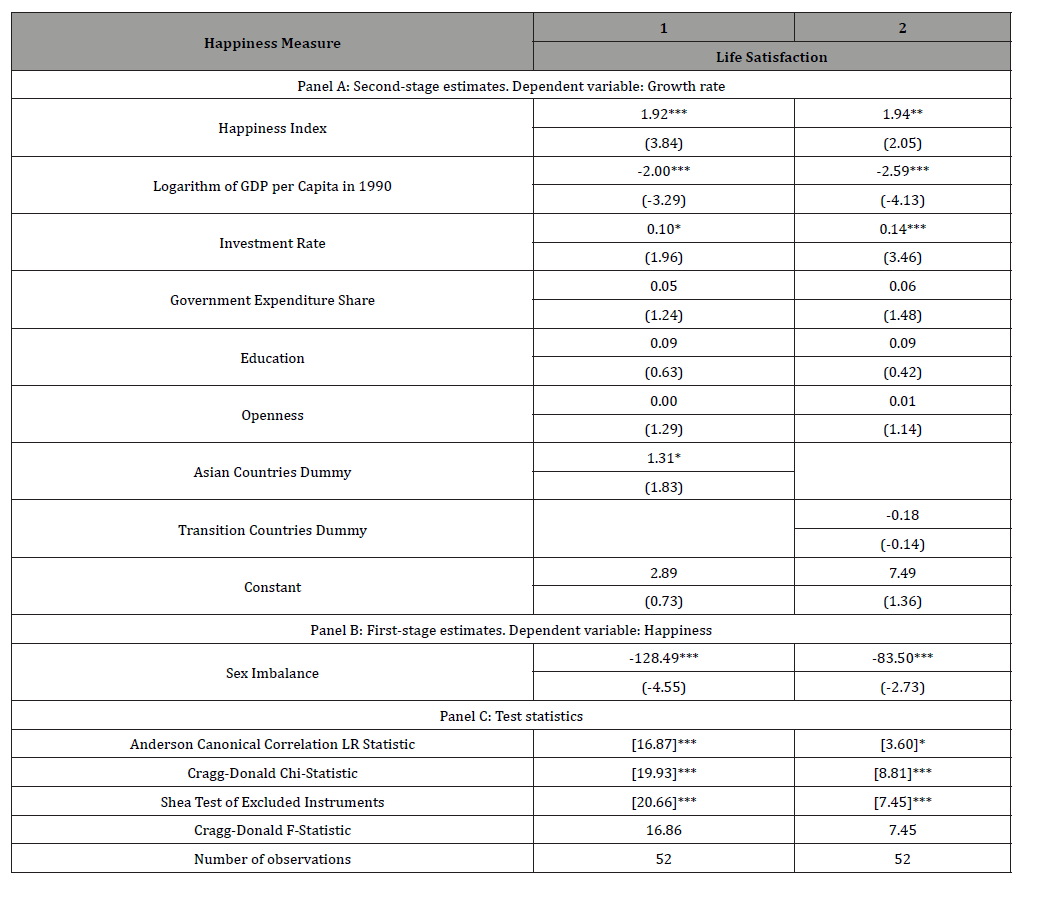
Note: t-values, adjusted for heteroskedasticity, are reported in parentheses. *, **, *** represent significance levels of 10%, 5%, and 1%, respectively. The first stage of 2SLS includes the same controls as the second stage, and their coefficients are not reported due to space limit (available upon request).
The third check is based on the premise that, if sex imbalance correlates with economic growth only through happiness, it should be uncorrelated with economic growth conditional on happiness. Column 1 of Table 7 shows that sex imbalance is negatively and significantly associated with economic growth; however, this correlation disappears once happiness is included in the regression (column 2). The coefficient on sex imbalance shrinks substantially in magnitude, from -222.51 to -54.21, and its t-statistic falls from -2.22 to -0.54. Columns 3-5 incorporate additional control variables and the alternative measure of happiness, leading to the same conclusion.
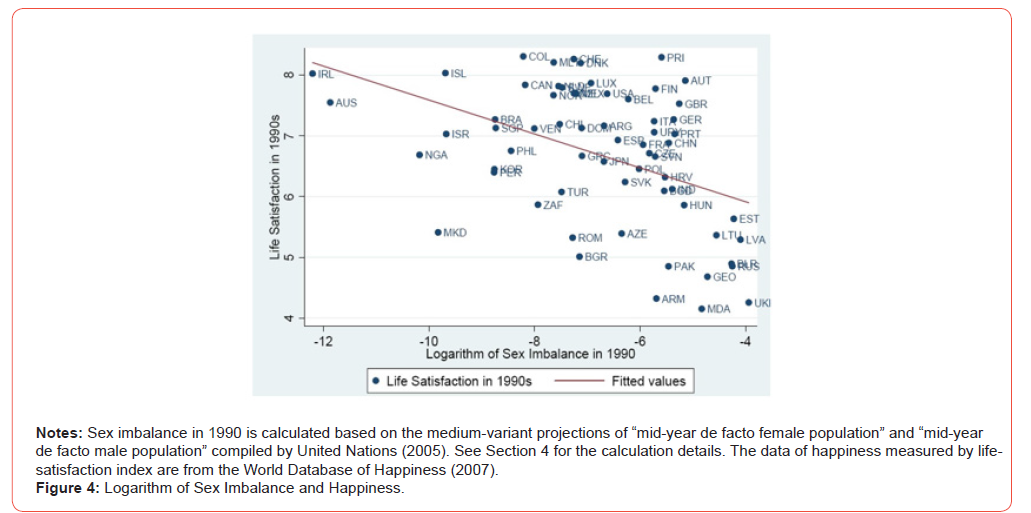
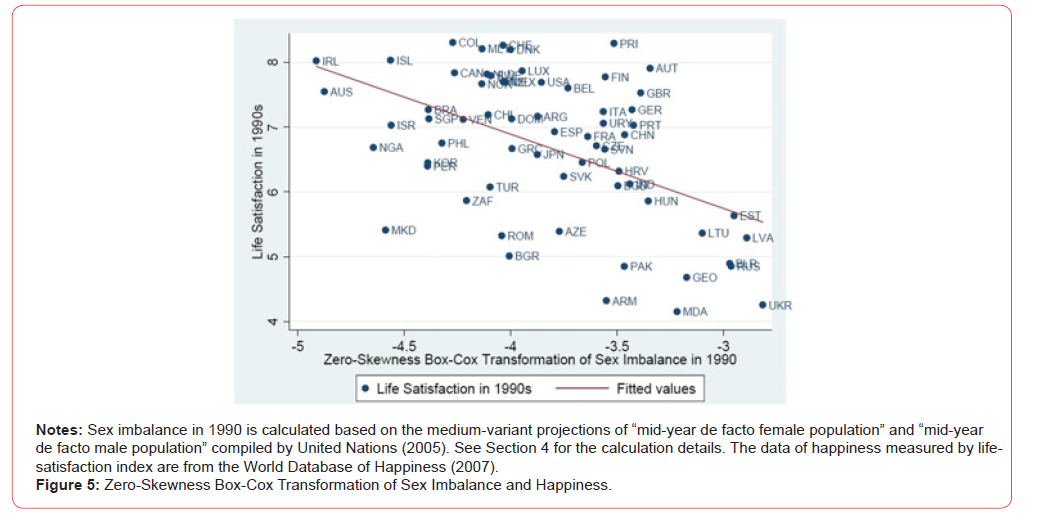
A possible concern with Figure 2 is that the data pattern is skewed to the right. To address possible bias arising from this skewness, we follow Nunn and Puga [51] in transforming the seximbalance measure using two methods. As the fourth check, Figure 4 plots the correlation between happiness and the logarithm of sex imbalance, and column 1 of Table 8 reports the corresponding 2SLS estimates. The previous results are robust to this transformation. The log-transformed sex imbalance in Figure 4 is now slightly left-skewed; we therefore also apply the zero-skewness Box– Cox power transformation in Figure 5, with the corresponding 2SLS estimates reported in column 2 of Table 8. The relationship between happiness and transformed sex imbalance is clearly not driven by outliers. The fifth check repeats the analysis using two sub-samples - Western- and Eastern-Hemisphere countries - with results reported in columns 3 and 4 of Table 8. These produce the same finding as before.
Table 7:2SLS Estimates, Robustness Check III.
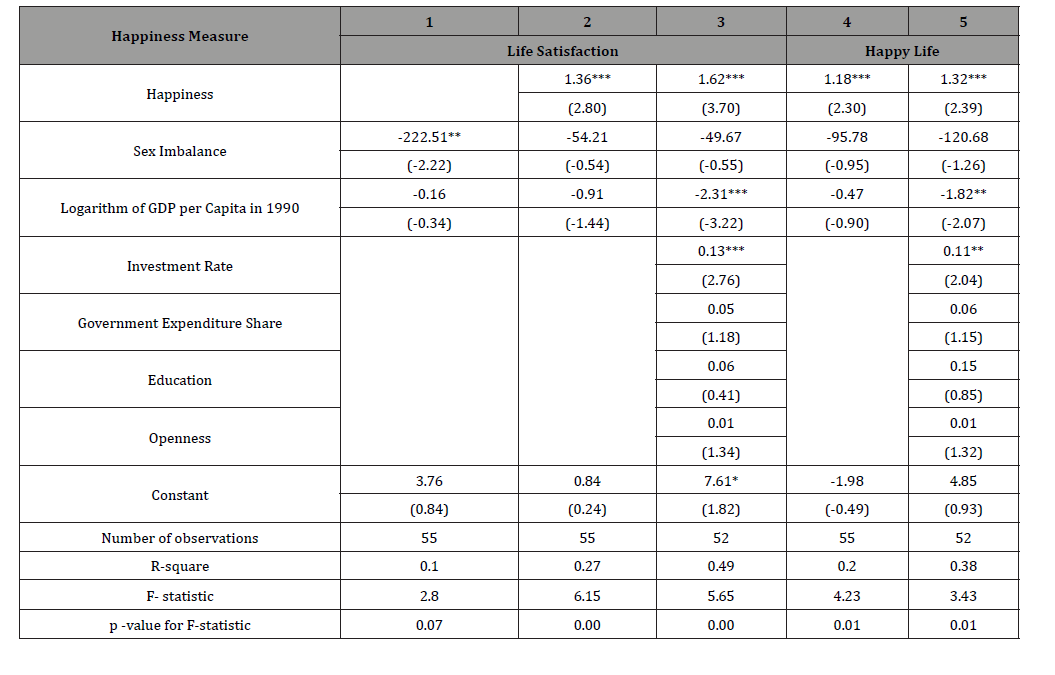
Note: t-values, adjusted for heteroskedasticity, are reported in parentheses. *, **, *** represent significance levels of 10%, 5%, and 1%, respectively
Table 8:2SLS Estimates, Robustness Checks IV and V.
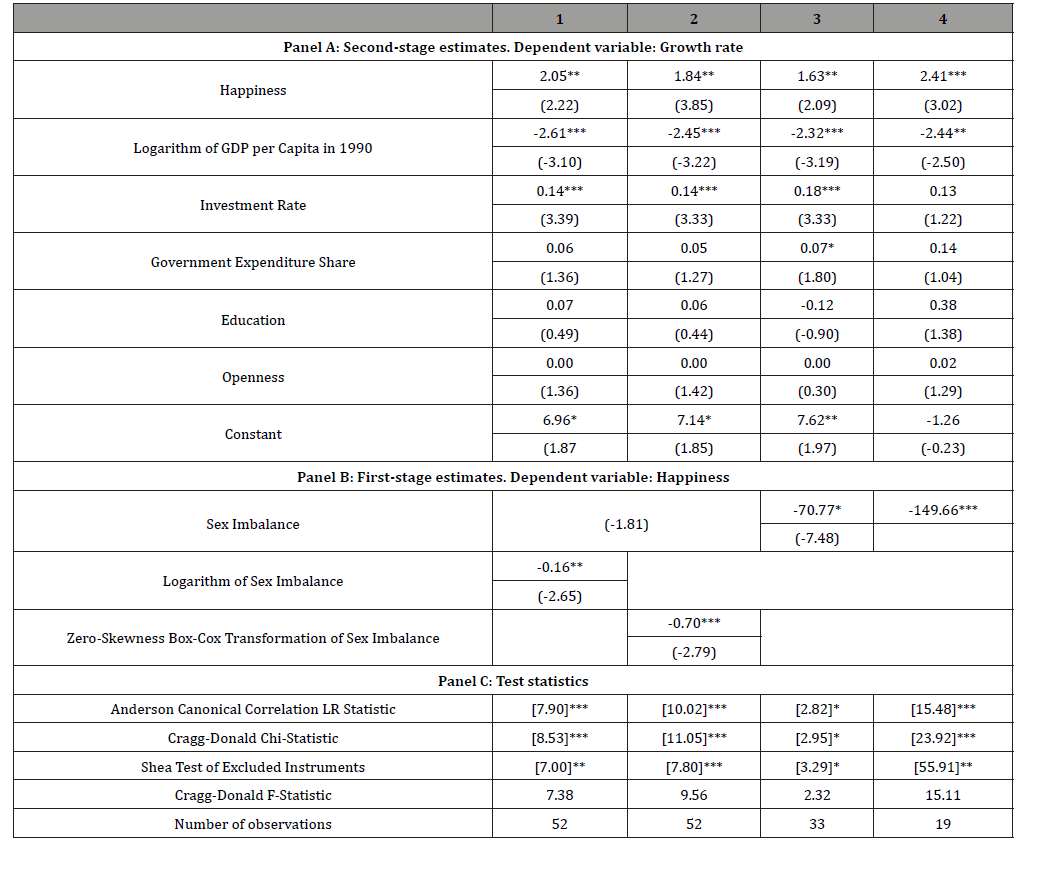
Note: t-values, adjusted for heteroskedasticity, are reported in parentheses. *, **, *** represent significance levels of 10%, 5%, and 1%, respectively. The first stage of 2SLS includes the same controls as the second stage, and their coefficients are not reported due to space limit (available upon request).
Channel Investigation
Jisc’s 2025 student perceptions work adds an important equity dimension. AI inequality is not only about access to tools. It is also about clarity, confidence, risk perception and the ability to use AI without weakening one’s learning. Jisc reports that some students avoid AI altogether because they fear that any use may be classed as cheating, lack clear guidance, do not know enough about AI, or feel they lack the skills to use it effectively for study. Others who initially relied heavily on AI for academic tasks reported diminishing returns, including lower-quality work and lower grades, prompting them to rethink their approach. These findings complicate the assumption that students are simply AI users or non-users. Students differ in their level of AI engagement, and each level carries distinct equity risks.
As discussed above, happiness may affect economic growth through investment, life expectancy, and trust (social capital). This section evaluates the relative importance of these channels. Following Tavares and Wacziarg [15-16], and Lorentzen [7], we use 3SLS estimation, which produces a single covariance matrix for all estimates and thereby facilitates inference on functions of parameters across equations. The results are reported in Table 9. As columns 2 and 3 show, happiness significantly raises both the investment ratio and life expectancy, but its effect on trust is insignificant (column 4). Column 1 shows that the investment ratio and life expectancy are positively associated with the growth rate12.
We combine the estimates in columns 2-4 with those in column 1 to compute the total effect of happiness on economic growth. Column 3 of Table 10 reports the relative importance of each channel, measured as the product of the coefficient on happiness in the channel equation (column 2 of Table 9)13 and the coefficient on the channel in the growth equation (column 1 of Table 9).ss The total effect through these channels is 1.83, slightly smaller than the total effect of happiness estimated earlier (2.01, in column 2 of Table 4), which suggests that additional, unidentified channels may also be at work.
Table 9:t-values are reported in parentheses. *, **, *** represent significance of 10%, 5%, and 1%, respectively.
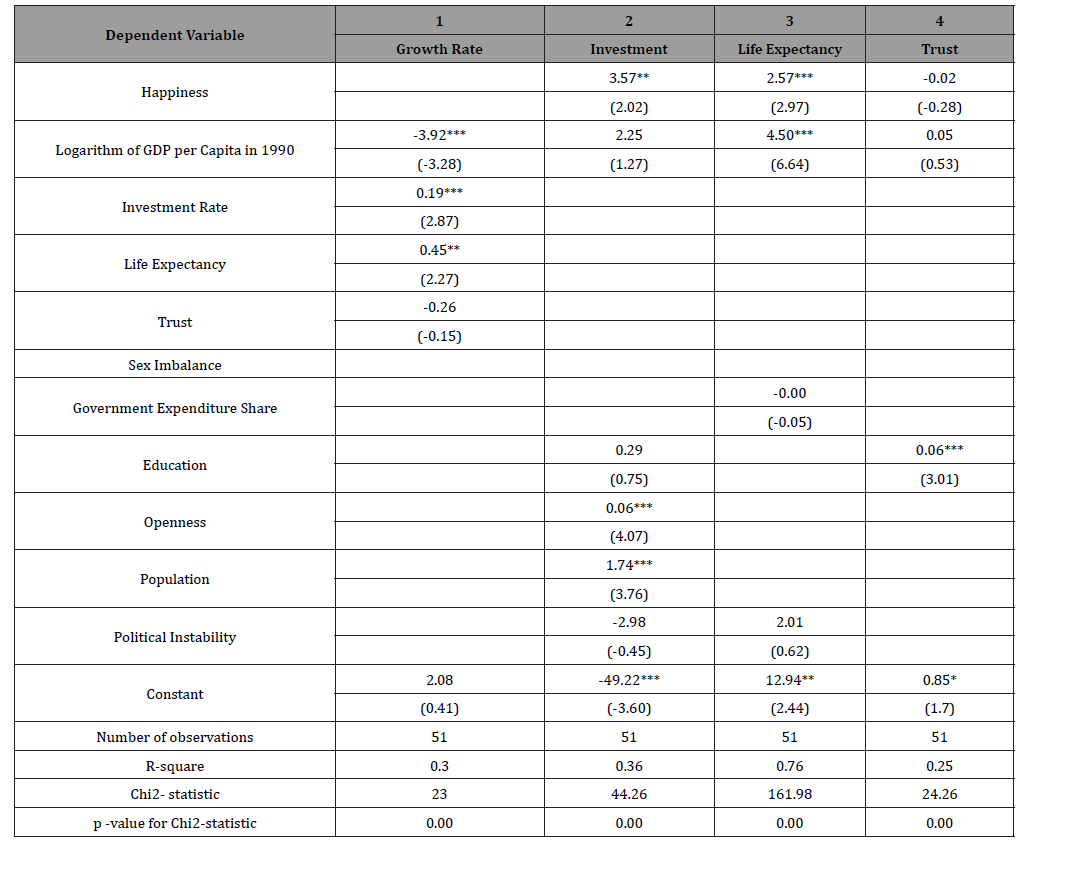
Note: t-values are reported in parentheses. *, **, *** represent significance of 10%, 5%, and 1%, respectively.
Table 10:Columns 1-2 are extracted from Table 9. Coefficients in column 3 are products of their counterparts in Columns 1-2. Standard errors in column 3 are calculated by computing linear approximations of the coefficient products.
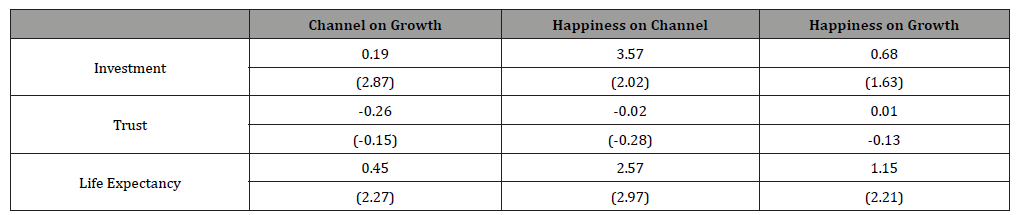
Note: Columns 1-2 are extracted from Table 9. Coefficients in column 3 are products of their counterparts in Columns 1-2. Standard errors in column 3 are calculated by computing linear approximations of the coefficient products.
11 An alternative approach is to exclude these countries. Doing so shrinks the sample size but yields the same findings. Details are available upon
request.
12 Lorentzen, McMillan, and Wacziarg (2008) find that early death discourages investment in human capital by reducing its return (p. 88).
13 Following Wacziarg (2001), t-statistics are obtained by “computing linear approximations of the products of the parameters around the estimated
parameter values and applying the usual formula for the variance of linear functions of random variables to this linear approximation.”
Conclusion
Happiness is an important determinant of individual behavior. To date, most work in happiness economics has been devoted to understanding the determinants of happiness and the effects of happiness on microeconomic behavior. This paper takes a different approach by studying the effect of happiness on economic growth. We first document a robust correlation between happiness and economic growth and then instrument happiness using sex imbalance, which impedes normal mating and thereby reduces happiness. The 2SLS results show that countries with happier residents grow faster, and the results are robust across a range of specifications. To understand the underlying mechanisms, we conduct a channel investigation and find that happiness encourages investment and extends life expectancy, both of which promote economic growth. These findings suggest that addressing the mental well-being of the population in low-income countries should complement efforts to address their economic difficulties.
Data Sources
The data on political rights and civil liberties - two measures of institutional quality - are avail-able at http://www.freedomhouse. org/uploads/fiw/FIWAllScores.xls. We use country averages over the 1990s. GDP per capita is from the Penn World Table, version 6.2. Average annual growth rates are computed using y = x(1 + r) n, where r is the annual growth rate, x and y are GDP per capita in the initial year (1989) and the final year (1999), respectively, and n = 10. The same source and method are used for the average annual growth rate of population. The investment share, government expenditure share, GDP per capita in 1990, and trade are also from the Penn World Table 6.2. Trade is measured as (imports + exports)/GDP. We use the natural logarithm of GDP per capita.
The happy-life index and the life-satisfaction index for the 1990s are drawn from the World Database of Happiness, provided by Ruut Veenhoven; both indices belong to the Happiness in Nations subset. The two measures are described in detail in the main text. Suicide rates and our trust measure are also drawn from this database.
Data on female and male population are from the United Nations Statistics Division, compiled in 2005 and available at http://unstats.un.org/pop/dVariables/DRetrieval.aspx.
Education is measured as “Educational Attainment of the Total Population Aged 25 and Over,” from “International Data on Educational Attainment: Updates and Implications” by Barro and Lee (2001); see http://www.economics.harvard.edu/faculty/ barro/data_sets_ barro for details.
Our measure of political instability is from the Database of Political Institutions, compiled by the World Bank in 2004. It is defined as the “percent of veto players who drop from the government in any given year.”
Life expectancy at birth (in years) is drawn from the World Bank’s World Development Indicators database, which is publicly available to subscribing institutions. We compute country averages over the 1990s.
Gini coefficients are from the World Income Inequality Database; we compute country averages over the 1990s. Crime rates are measured as “total recorded intentional homicide, completed,” per 100,000 inhabitants, and are drawn from the United Nations Surveys of Crime Trends and Operations of Criminal Justice Systems, available at http://www.unodc.org/unodc/en/data-andanalysis/ Seventh-United-Nations-Survey-on-Crime-Trends-andthe- Operations-of-Criminal-Justice-Systems.html. We compute country averages over the 1990s. War casualties per capita are from Barro and Lee (1994); see http://www.nber.org/pub/b arro. lee/readme.txt.
Main Variables across Countries
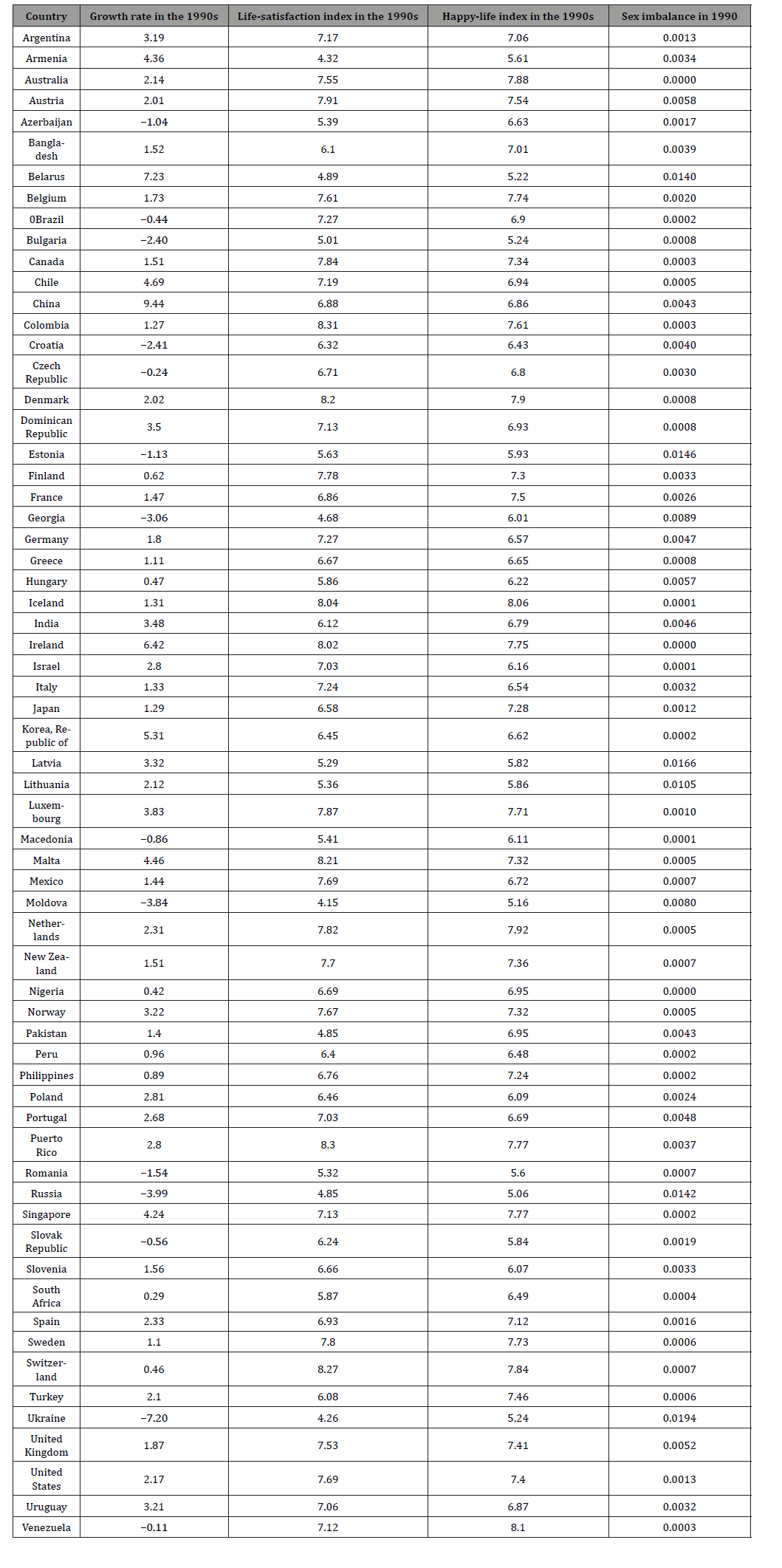
Note: Numbers in columns 2-4 are rounded to the nearest hundredth, and numbers in column 5 are rounded to the nearest ten-thousandth. More accurate data are available upon request.
References
- Blanchflower David G, Andrew J Oswald (2004) Money, Sex and Happiness: An Empirical Study. Scandinavian Journal of Economics106(3): 393-415.
- Harding Luke (2008) No Country for Old Men. The Guardian.
- Hermalin Benjamin, Alice Isen (2008) A Model of the Effect of Effect on Economic Decision Making. Quantitative Marketing and Economics 6(1): 17-40.
- Guven Cahit (2007) Reversing the Question: Does Happiness Affect Individual Economic Behavior? Evidence from Surveys from the Netherlands and Germany.
- Deeg Dorly JH, Robert J van Zonneveld (1989) Does Happiness Lengthen Life? In Ruut Veenhoven (ed.), How Harmful Is Happiness? Universitaire Pers Rotterdam, Netherlands.
- Veenhoven Ruut (2008) Healthy Happiness: Effects of Happiness on Physical Health and the Consequences for Preventive Health Care. Journal of Happiness Studies 9(3): 449-469.
- Lorentzen Peter, John McMillan, Romain Wacziarg (2008) Death and Development. Journal of Economic Growth 13(2): 81-124.
- Acemoglu Daron, Simon Johnson (2007) Disease and Development: The Effect of Life Ex-pectancy on Economic Growth. Journal of Political Economy 115(6): 925-985.
- Kirch Steiger Georg, Luca Rigotti, Aldo Rustichini (2006) Your Morals Might Be Your Moods. Journal of Economic Behavior & Organization 59(2): 155-172.
- Lyubomirsky Sonja, Laura King, Ed Diener (2005) The Benefits of Frequent Positive Affect: Does Happiness Lead to Success?. Psychological Bulletin 131(6): 803-855.
- Knack Stephen, Philip Keefer (1997) Does Social Capital Have an Economic Payoff? A Cross-Country Investigation. Quarterly Journal of Economics 112(4): 1251-1288.
- Hall Robert E, Charles I Jones (1999) Why Do Some Countries Produce So Much More Output per Worker than Others. Quarterly Journal of Economics 114(1): 83-116.
- Zak Paul J, Stephen Knack (2001) Trust and Growth. Economic Journal 111(470): 295-321.
- Helliwell John F (2003) How’s Life? Combining Individual and National Variables to Explain Subjective Well-Being. Economic Modelling 20(2): 331-360.
- Tavares Jose, Romain Wacziarg (2001) How Democracy Affects Growth. European Economic Review 45(8): 1341-1378.
- Wacziarg Romain (2001) Measuring the Dynamic Gains from Trade. World Bank Economic Review 15(3): 393-429.
- Frey Bruno S, Alois Stutzer (2002) What Can Economists Learn from Happiness Research? Journal of Economic Literature 40(2): 402-435.
- Frey Bruno S, Alois Stutzer (2003) Testing Theories of Happiness. Institute for Empirical Research in Economics.
- Kahneman Daniel (2003) Maps of Bounded Rationality: Psychology for Behavioral Economics. American Economic Review 93(5): 1449-1475.
- Alesina Alberto, Rafael Di Tella, Robert MacCulloch (2001) Inequality and Happiness: Are Europeans and Americans Different?. Journal of Public Economics 88(9-10): 2009-2042.
- Clark Andrew E, Andrew J Oswald (1994) Unhappiness and Unemployment. Economic Journal 104(424): 648-659.
- Di Tella Rafael, Robert J MacCulloch, Andrew J Oswald (2001) Preferences over Inflation and Unemployment: Evidence from Surveys of Happiness. American Economic Review 91(1): 335-341.
- Di Tella Rafael, Robert J MacCulloch, Andrew J Oswald (2003) The Macroeconomics of Happiness. Review of Economics and Statistics 85(4): 809-827.
- Easterlin Richard A (1974) Does Economic Growth Improve the Human Lot? Some Empirical Evidence. In P. A. David and M. W. Reder (Eds.,), Nations and Households in Economic Growth: Essays in Honor of Moses Abramovitz. New York and London: Academic Press.
- Easterlin Richard A (1995) Will Raising the Incomes of All Increase the Happiness of All?. Journal of Economic Behavior & Organization 27(1): 35-47.
- Easterlin Richard (2001) Income and Happiness: Towards a Unified Theory. Economic Journal 111(473): 465-484.
- Easterly William (1999) Life During Growth. Journal of Economic Growth 4(3): 239-276.
- Frijters Paul, John P Haisken-DeNew, Michael A Shields (2004) Money Does Matter! Evidence from Increasing Real Income and Life Satisfaction in East Germany Following Reunification. American Economic Review 94(3): 730-740.
- Gardner Jonathan, Andrew J Oswald (2007) Money and Mental Wellbeing: A Longitudinal Study of Medium-Sized Lottery Wins. Journal of Health Economics 26(1): 49-60.
- Oswald Andrew J (1997) Happiness and Economic Performance. Economic Journal 107(445): 1815-1831.
- Bosman Ronald, Frans van Winden (2002) Emotional Hazard in a Power-to-Take Experiment. Economic Journal 112(476): 147-169.
- Elster Jon (1998) Emotions and Economic Theory. Journal of Economic Literature 36(1): 47-74.
- Loewenstein George (2000) Emotions in Economic Theory and Economic Behavior. American Economic Review 90(2): 426-432.
- Krueger Alan B, David A Schkade (2008) The Reliability of Subjective Well-Being Measures. Journal of Public Economics 92(8-9): 1833-1845.
- Lyubomirsky Sonja, Heidi S Lepper (1999) A Measure of Subjective Happiness: Preliminary Reliability and Construct Validation. Social Indicators Research 46(2): 137-155.
- Sandvik Ed, Ed Diener, Larry Seidlitz (1993) Subjective Well-Being: The Convergence and Stability of Self-Report and Non-Self-Report Measures. Journal of Personality 61(3): 317-342.
- Costa Paul T, Robert R McCrae (1988) Personality in Adulthood: A Six-Year Longitudinal Study of Self-Reports and Spouse Ratings on the NEO Personality Inventory. Journal of Personality and Social Psychology 54(5): 853-863.
- Goldings Herbert Jeremy (1954) On the Avowal and Projection of Happiness. Journal of Personality 23(1): 30-47.
- Barro Robert J, Jong-Wha Lee (2001) Schooling Quality in a Cross-Section of Countries. Economica 68(272): 465-488.
- Barro Robert J, Jong-Wha Lee (1994) Data Set for a Panel of 138 Countries.
- Barro Robert J (2000) Inequality and Growth in a Panel of Countries. Journal of Economic Growth 5(1): 5-32.
- Voitchovsky Sarah (2005) Does the Profile of Income Inequality Matter for Economic Growth?. Journal of Economic Growth 10(3): 273-296.
- Morawetz David, Ety Atia, Gabi Bin-Nun, Lazaros Felous, Yuda Gariplerden, et al. (1977) Income Distribution and Self-Rated Happiness: Some Empirical Evidence. Economic Journal 87(347): 511-522.
- Acemoglu Daron, Simon Johnson, James Robinson (2001) The Colonial Origins of Comparative Development: An Empirical Investigation. American Economic Review 91(5): 1369-1401.
- Acemoglu Daron Simon Johnson, James Robinson (2002) Reversal of Fortune: Geography and Institutions in the Making of the Modern World Income Distribution. Quarterly Journal of Economics 117(4): 1231-1294.
- Frey Bruno S, Alois Stutzer (2002) Happiness and Economics. Princeton, NJ: Princeton University Press.
- Clark Andrew E, Andrew J Oswald (2002) A Simple Statistical Method for Measuring How Life Events Affect Happiness. International Journal of Epidemiology 31(6): 1139-1144.
- Kohler Hans-Peter, Jere R Behrman, Axel Skytthe (2005) Partner + Children = Happiness? The Effects of Partnerships and Fertility on Well-Being. Population and Development Review 31(3): 407-445.
- Stutzer Alois, Bruno S Frey (2006) Does Marriage Make People Happy, or Do Happy People Get Married?. Journal of Socio-Economics 35(2): 326-347.
- Hull Terence H (1990) Recent Trends in Sex Ratios at Birth in China. Population and Development Review 16(1): 63-83.
- Nunn Nathan, Diego Puga (2012) Ruggedness: The Blessing of Bad Geography in Africa. Review of Economics and Statistics 94(1): 20-36.
- Beck Thorsten, George Clarke, Alberto Groff, Philip Keefer, Patrick Walsh (2001) New Tools in Comparative Political Economy: The Database of Political Institutions. World Bank Economic Review 15(1): 165-176.
- Di Tella Rafael, Robert MacCulloch (2006) Some Uses of Happiness Data in Economics. Journal of Economic Perspectives 20(1): 25-46.
- Frank Robert H (1997) The Frame of Reference as a Public Good. Economic Journal 107(445): 1832-1847.
- Hauk William R, Romain Wacziarg (2009) A Monte Carlo Study of Growth. Journal of Economic Growth 14: 103-147.
- Hudson Valerie M, Andrea Den Boer (2002) A Surplus of Men, a Deficit of Peace: Security and Sex Ratios in Asia’s Largest States. International Security 26(4): 5-38.
- Kenny Charles (2011) Does Growth Cause Happiness, or Does Happiness Cause Growth?. Kyklos 52(1): 3-25.
- Layard Richard (2006) Happiness and Public Policy: A Challenge to the Profession. Economic Journal 116(510): C24-C33.
- Oswald Andrew J, Eugenio Proto, Daniel Sgroi (2015) Happiness and Productivity. Journal of Labor Economics 33(4): 789-822.
- Stevenson Betsey, Justin Wolfers (2008) Economic Growth and Happiness: Reassessing the Easterlin Paradox. Brookings Papers on Economic Activity pp: 1-87.
- Veenhoven Ruut (2024) World Database of Happiness. Encyclopaedia of Quality of Life and Well-Being Research pp: 7861-7865.
-

This work is licensed under a Creative Commons Attribution-NonCommercial 4.0 International License.