


 Research Article
Covariance-Based Structural Equation Modeling (CB-SEM) Analysis for State-Owned Enterprises and Institutional Channels of Energy Sector Growth in Ghana
Received Date:April 06, 2026; Published Date:April 15, 2026
Abstract
This study examines the role of State-Owned Enterprises (SOEs) as institutional enablers in Ghana’s energy sector by analyzing how SOE characteristics influence sectoral growth through key institutional channels. Drawing on Market Failure Theory (MFT) and Public Choice Theory (PCT), the study employs Covariance-Based Structural Equation Modeling (CB-SEM) to evaluate both direct and indirect relationships using survey data from stakeholders in Ghana’s energy sector. The empirical results demonstrate that SOE financial performance (β = 0.312), market share (β = 0.281), policies (β = 0.267), and governance quality (β = 0.298) exert positive and statistically significant effects on access to finance. Similarly, these SOE determinants significantly enhance the regulatory environment, with governance quality (β = 0.301) and policies (β = 0.276) emerging as particularly influential. Access to finance (β = 0.318) and regulatory environment (β = 0.291) subsequently exhibit strong positive effects on energy sector growth, confirming their mediating roles in the structural model. The model demonstrates strong explanatory power, with high R2 values indicating that SOE-related variables account for a substantial proportion of variance in institutional conditions and sectoral performance. Moderation analysis further reveals that government support and favorable economic conditions significantly strengthen the impact of access to finance and regulatory improvements on energy sector growth. These findings indicate that the effectiveness of SOEs is context-dependent and amplified under stable macroeconomic environments and coordinated policy frameworks. The study provides robust empirical evidence that SOEs contribute to private sector development not by crowding out market actors, but by strengthening institutional foundations. By improving financial intermediation and regulatory quality, SOEs act as stabilizing mechanisms that reduce uncertainty and facilitate investment, thereby supporting sustainable energy sector growth in Ghana..
Keywords:State-owned enterprises; energy sector growth; access to finance; regulatory environment; market failure theory; public choice theory; ghana
Introduction
The private sector comprises organizations with a core strategy and mission to engage in profit-seeking from producing goods, providing services, and commercializing. These include large corporations, financial institutions, intermediaries, micro, small, and medium-sized enterprises, cooperatives, individual entrepreneurs, and farmers operating in the formal and informal sectors. The private sector (PS) comprises individuals and organizations engaged in rent-seeking activities that rely on governments or states to create an enabling business environment for their successful operations [1].
State-owned enterprises (SOEs) are legal entities a government creates to partake in commercial activities on the government’s behalf. These entities can be wholly or partially owned by the government and are typically involved in areas deemed critical to national interests, such as energy, telecommunications, and natural resources. The fundamental characteristics of SOEs include their public service obligation, market orientation, and strategic importance to a nation’s economic and social goals [2]. SOEs play a dual role, aiming to achieve both commercial objectives and public policy goals. They often require a balance between profitability and the provision of public goods and services at subsidized rates or in under-served regions by private entities [3]. Multiple rationales drive the establishment and maintenance of SOEs in developing countries. Firstly, they are created to secure the provision of essential goods and services, especially in sectors where private investment is insufficient due to high capital requirements or low expected returns [4]. Secondly, SOEs are used for economic development and industrialization, promoting strategic sectors critical to national development [2].
Moreover, they operate in many sectors but are especially prevalent in network sectors, providing public utilities, transportation, and energy where competitive markets are inefficient or impractical [5]. Another rationale for SOEs is the redistribution of wealth and the provision of employment opportunities, which is particularly important in developing countries with significant socio-economic disparities [6]. Lastly, SOEs serve to exert control over natural resources and key economic sectors, ensuring national security [7] and economic sovereignty [8]. Most economies in sub-Saharan Africa devote substantial annual budgets to keep SOEs operational [9]. These SOEs were considered economically essential, mainly after the countries obtained political independence. They were established to produce public goods, particularly infrastructure, health, and education. This was intended to spur the quest for accelerated development under government supervision [10]. State-owned enterprises (SOEs) have played a significant role in Ghana’s economic landscape, influencing the development of the private sector in various ways [11]. Ghana, a West African country with a diverse and rich economic profile, has utilized SOEs as pivotal in its developmental strategy, especially in the post-independence era. The involvement of SOEs in Ghana’s economy spans critical sectors, including utilities, transportation, natural resources, and finance. This strategic deployment of SOEs has aimed to spur economic growth, facilitate infrastructural development, and ensure the provision of essential services to both the populace and the private sector.
The study uses the market failure theory (MFT) to understand the role of SOEs in Ghana’s private sector development. Dollery and Wallis [12] defined market failure as “the inability of a market or system of markets to provide goods and services either at all or in an economically optimal manner.” The MFT identifies the free market’s inefficient distribution of goods and services. In a typical free market, the prices of goods and services are determined by the forces of supply and demand, and any change in one of the forces results in a price change and a corresponding change in the other force, which leads to a price equilibrium [13]. According to the theory, market failures are caused by externalities, public goods, market control, and imperfect information in the market [14]. Stiglitz [15] recommends that governments intervene to improve market failure. These interventions include the active participation of SOEs. The role of State-Owned Enterprises (SOEs) in developing the private sector has been widely studied, yet several key research gaps persist. Existing literature often highlights the potential for SOEs to catalyze private sector growth through various mechanisms such as infrastructure development, investment facilitation, and technology transfer [16]. However, there remains a lack of comprehensive understanding regarding the specific conditions under which SOEs effectively fulfill this role.
One significant research gap is the limited empirical evidence on the comparative advantages and disadvantages of different SOE models in driving private sector development. While some studies suggest that fully privatizing industries can increase efficiency and competitiveness, others argue that strategic state intervention through well-governed SOEs is crucial for market stability and long-term growth. Understanding the nuanced impacts of these models is essential for policymakers seeking to optimize the role of SOEs in private sector development. Additionally, the dynamics of SOE-private sector interactions remain underexplored. There is a need to investigate how SOEs collaborate or compete with private enterprises, the effectiveness of public-private partnerships (PPPs) involving SOEs, and the potential for SOEs to crowd out or crowd in private investment. These insights are crucial for designing effective policies that leverage the strengths of both sectors to foster sustainable economic growth.
Furthermore, the influence of external factors such as political interference, regulatory environments, and global market trends on the role of SOEs in private sector development requires deeper investigation. Understanding how these factors shape SOE behavior and impact their ability to support private sector growth is critical for developing targeted policy recommendations [17]. By addressing these research gaps, this study aims to provide a nuanced understanding of the multifaceted role of SOEs in private sector development. Through empirical analysis and case studies, it seeks to offer actionable insights for policymakers, business leaders, and stakeholders to enhance the effectiveness of SOEs in driving inclusive and sustainable private sector growth. According to [18], poor countries need stronger private sector development to generate jobs, increase tax revenues and reduce poverty. Therefore, the promotion of the private sector has been championed recently for various reasons. For instance, in Ghana, the private sector accounts for a whopping 87% of employment in industry, and the State employs a meagre 5.7% [19]. Also, the average monthly earnings in the private sector were about 63.7% higher than those in government jobs as of December 2000, and as much as 83.8% higher by the end of 2002. Notwithstanding the critical role of the private sector in the development of a country, they face challenges in its operations that negatively affect its strategic role in the development of the State. Key among them is the lack of access to information on external markets and inadequate physical infrastructure [20], and inadequate managerial expertise [21]. A lack of infrastructure means higher transportation costs; an unreliable and expensive supply of electricity and communications services hampers the growth of the private sector. High utility rates increase the cost of production, making it very expensive to do business in any country [19]. inadequate access to long-term finance, the highly informal nature of the private sector, low-skilled and poor corporate management and inadequate infrastructure support, among others [22]. While [19] propose the need for policymakers to address these challenges, [20] argues that the government has to play a more central role in this process, not only by creating an enabling environment for private businesses but also by providing businesses with support and protection. Based on these recommendations, this study aims to quantitatively examine the role of SOEs in the development of the private sector by examining critical areas that require significant intervention of SOEs to fill the gap.
The private sector comprises organizations with a core strategy and mission to engage in profit-seeking activities through producing goods, providing services, and/or commercialization. They include large corporations, financial institutions, intermediaries, micro, small, and medium-sized enterprises, cooperatives, individual entrepreneurs, and farmers who operate in the formal and informal sectors [1]. The private sector (PS) comprises individuals and/ or organizations engaged in rent-seeking activities that rely on governments or states to create an enabling business environment for successful operations [1]. State-owned enterprises (SOEs) are legal entities governments create to partake in commercial activities on behalf of the government. These entities can be wholly or partially owned by the government and are typically involved in areas deemed critical to national interests, such as energy, telecommunications, and natural resources. The fundamental characteristics of SOEs include their public service obligation, market orientation, and strategic importance to a nation’s economic and social goals [2]. SOEs play a dual role, aiming to achieve both commercial objectives and public policy goals. They often require a balance between profitability and the provision of public goods and services at subsidized rates or in underserved regions [3]. Multiple rationales drive the establishment and maintenance of SOEs in developing countries. Firstly, they are created to secure the provision of essential goods and services, especially in sectors where private investment is insufficient due to high capital requirements or low expected returns [4]. Secondly, SOEs are used for economic development and industrialization, promoting strategic sectors critical to national development [2]. Moreover, they operate in many sectors but are especially prevalent in network sectors, providing public utilities, transportation, and energy where competitive markets are inefficient or impractical [5]. Another rationale for SOEs is the redistribution of wealth and the provision of employment opportunities, particularly important in developing countries with significant socioeconomic disparities [6]. Lastly, SOEs control natural resources and key economic sectors, ensuring national security [7] and economic sovereignty [8]. Most economies in sub-Saharan Africa devote substantial annual budgets to keep SOEs alive. These SOEs were considered economically essential, mainly after the countries obtained political independence, for the production of public goods, particularly infrastructure, health and education. This was intended to spur the quest for accelerated development under government supervision [10].
State-Owned Enterprises (SOEs) have played a significant role in Ghana’s economic landscape, influencing the development of the private sector in various ways [11]. Ghana, a West African country with a diverse and rich economic profile, has utilized SOEs as pivotal in its developmental strategy, especially in the post-independence era. The involvement of SOEs in Ghana’s economy spans critical sectors, including utilities, transportation, natural resources, and finance. This strategic deployment of SOEs has aimed to spur economic growth, facilitate infrastructural development, and ensure the provision of essential services to both the populace and the private sector. In particular, the energy sector has been the backbone of Ghana’s economic development and has received significant financial support from governments. The State has dominated energy production and distribution over the years [23,24]. There are currently ten major SOEs in the entire energy sector, some of which are the Volta River Authority, the Ghana National Gas Company, and the Ghana Grid Company.
The theoretical framework of this study is anchored in two key perspectives: Market Failure Theory (MFT) and Public Choice Theory (PCT) [25]. MFT provides the rationale for the existence and operation of State-Owned Enterprises (SOEs), suggesting that these entities are necessary to correct market failures such as externalities, public goods provision, information asymmetries, and monopolies, areas where the private sector may not allocate resources efficiently. In contrast, PCT offers a critical lens on the potential inefficiencies and resource misallocations that can arise from the political motivations driving SOEs. While MFT justifies the role of SOEs in ensuring economic and social welfare, PCT cautions against the risks of inefficiency and political interference, highlighting the need for strong governance, transparency, and accountability. By integrating these theories, the study aims to provide a balanced analysis of SOEs’ role in economic development, recognizing both their potential to address market failures and the challenges they face due to governance and political dynamics. The structure of the paper is as follows. literature review is presented in Section 2. In Section 3, the methodology is presented. Section 4 presents the results. The discussion of the findings is presented in Section 5. Section 6 concludes the paper.
Literature Review
State-owned enterprises (SOEs) and the private sector play pivotal roles in national economies across the globe, particularly in developing countries like Ghana. The dynamic interplay between SOEs and the private sector has profound implications for economic development, infrastructure provision, job creation, and overall national prosperity [26]. As defined by their government ownership and strategic objectives, SOEs balance public service mandates against commercial viability, often operating in critical sectors such as energy, telecommunications, and natural resources [2]. The private sector, encompassing a wide array of entities from large corporations to small enterprises, is the engine of innovation, efficiency, and economic growth, driving forward national development agendas [1].
This study is within the broader discourse on the role of SOEs in enhancing or impeding private sector growth, a topic of significant scholarly and policy interest. The theory of market failure underpins the intricate relationship between SOEs and the private sector, which posits that in instances where markets cannot efficiently allocate resources on their own, government intervention through SOEs may be warranted to correct such shortcomings [15]. However, the effectiveness of SOEs in fostering a conducive environment for private sector growth remains a contentious issue, with debates centering around the potential for SOEs to either support or crowd out private investment. The public choice theory further broadens the discourse on why SOEs often underperform compared to private enterprises [27,28]. The context of Ghana presents a unique case for exploration. With a rich history of state intervention in the economy, Ghana’s SOEs have been instrumental in the nation’s development trajectory since gaining independence. These enterprises have been deployed as tools for achieving public policy goals, including economic development, industrialization, and the provision of essential services [11]. Yet, the evolving role of SOEs in Ghana’s economy, coupled with the burgeoning growth of the private sector, necessitates reevaluating their impact on private sector development.
This study aims to contribute to the ongoing academic and policy discourse by examining the influence of SOEs on the growth of Ghana’s private sector. Through empirical analysis and leveraging the market failure and the public choice theories, this research will explore the mechanisms through which SOEs affect private sector development, assess the comparative advantages and disadvantages of different SOE models, and evaluate the effectiveness of SOEs in creating a supportive environment for private sector growth.
State-owned enterprises (SOEs) are entities with the government owning a significant share or having control, enabling these organizations to undertake commercial activities on behalf of the State. These entities often operate in sectors considered strategic to national interests, such as energy, telecommunications, and natural resources. The defining characteristics of SOEs include a blend of public service obligation and commercial objectives, where they are expected to be financially viable while fulfilling specific societal needs that are inadequately addressed by the market [3]. Their strategic importance lies in their role in promoting economic stability, securing national interests, and ensuring the availability of essential services, particularly in areas where the private sector is unable or unwilling to invest due to high risks or low returns [4]. The study defines SOEs as institutions set up by the government with the key objective of providing essential services, supporting the development of the private sector and making a profit to sustain its existence. The Private Sector encompasses various entities focused on profit making through producing goods and services. It includes large corporations, small and medium-sized enterprises (SMEs), cooperatives, and individual entrepreneurs. Unlike SOEs, private sector entities operate under market conditions, striving for efficiency and innovation to meet consumer demands and achieve competitive advantage. The private sector is crucial for economic development as it generates employment, contributes to GDP, and is often at the forefront of technological advancements and innovation [1]. It is pivotal in driving economic growth through investments, enhancing productivity, and fostering market competitiveness. In this study, the private sector is defined as an organization formed by private individuals to provide services and to make a profit.
Roles and Importance of SOEs and the PS in Economic Development
SOEs play a crucial role in economic development by providing infrastructure, essential public services, and supporting industries critical for national development. Their ability to undertake largescale investments and projects comes from government backing, allowing them to operate in sectors with significant capital requirements and long gestation periods. Furthermore, SOEs can contribute to social equity by providing access to essential services across different regions, including underserved areas, thus promoting inclusive growth [2]. The Private Sector, on the other hand, drives innovation, efficiency, and competitiveness in the economy. It responds to market demands, invests in new technologies, and creates a significant proportion of employment opportunities. The agility and competitiveness of the private sector stimulate productivity and economic diversification, making it indispensable for sustainable economic development [29]. SOEs and the private sector interplay are pivotal for a balanced and robust economic development strategy. While SOEs can address market failures and ensure the provision of public goods [30], the private sector’s role in driving innovation and efficiency [31] is equally essential. The synergy between these sectors can enhance economic performance, provide effective governance and transparency, and foster a level playing field for all economic actors.
The Relationship between State-Owned Enterprises (SOEs) and the Private Sector (PS)
A study in Vietnam established that SOEs “crowd out the private sector [32]. Also, private firms operating in sectors with a high SOE concentration invest systematically less than businesses that do not compete directly with SOEs [33]. Collaborations have resulted in significant developments and progress within the energy sector. For instance, private players such as Karpower, Takoradi International Company and Sonun Asogli Power produce energy to supplement the energy produced by SOEs [24]. Based on these studies, we can describe the relationship between State-Owned Enterprises (SOEs) and the Private Sector (PS) as multifaceted, encompassing collaboration, support, competition, and sometimes conflict. This dynamic interaction is critical in shaping economic landscapes, particularly in developing economies like Ghana. Both theoretical and empirical perspectives offer insights into how these relationships manifest and impact overall economic development.
Theoretical Perspectives
Theoretically, we understand the interaction between SOEs and the PS through various lenses, including the Market Failure Theory (MFT) and the Public Choice Theory. The MFT posits that SOEs are established to correct market failures situations where the market does not efficiently allocate resources. In this context, SOEs can complement the PS by providing essential services and infrastructure that the private sector may find unprofitable or too risky, such as public utilities and transportation [15]. On the other hand, Public Choice Theory suggests that SOEs might be driven by political motives rather than economic efficiency, potentially leading to competition with the PS that is not based on market principles [34].
Market Failure Theory (MFT)
The Market Failure Theory (MFT) serves as a cornerstone for understanding the economic rationale behind the existence and operation of State- Owned Enterprises (SOEs). MFT posits that under certain conditions, markets fail to allocate resources efficiently, leading to suboptimal outcomes from a societal perspective. These market failures can arise for several reasons, including externalities, public goods, information asymmetries, and monopolies [15]. In such scenarios, government intervention, often through establishing and operating SOEs, is justified because it can correct these market imperfections, thereby improving economic efficiency and social welfare. Externality is the impact of one economic entity’s behavior on the well-being of another entity, which does not reflect in market transactions. Externalities occur when specific actions of producers, consumers, or governments have unintended external (indirect) effects on other market participants, such as consumers, producers, or society [35]. In our understanding, externalities refer to the unintended consequences of economic activities that affect third parties, either positively or negatively. These effects are not reflected in market prices, leading to inefficient outcomes. According to [15], externalities connote environmental factors such as environmental degradation, which tend to cause market failures. Industrial activities can lead to air and water pollution, harming public health and the environment. In the view of [36], scholars opine that even if externalities cause market failures, this should not be the basis to legitimize the state’s intervention because individuals tend to pay for the external effects their actions generate.
Information Asymmetry is the imperfect information distribution among actors in the market that can lead to market failures, as some agents have more or better information than others [37]. Information is critical in determining a company’s market share [38] since it is a source of competitive advantage. For example, researchers have established that most failures in the credit market are attributable to information asymmetries between borrowers and lenders [39-41]. Other scholars think that information asymmetry is a failure of government rather than the market [42]. In many developing and emerging countries, information asymmetry is alleviated by establishing credit information registers for the credit market [43]. It is thus argued that information-sharing offices and credit registries provide an impetus for credit expansion, arguably constituting a critical determinant of credit market competition and profitability [44]. In this regard, SOEs in sectors with information asymmetry can be the source of information for all sector players. Good corporate governance practices, such as information sharing, will reduce information asymmetry.
According to some scholars, market failure due to public goods occurs when goods are provided to benefit very few in society or when the public sector fails to react to the demand of the larger society. Public goods are those consumed by one individual that do not diminish the quantity available to another; that is, they are nonrivalrous. In addition, public goods are non-excludable. In line with the Pareto Optimality condition, which states that there should be no room for improvement without making someone else worse off, it means that excluding an individual from consuming a public good will make that individual worse off, thus violating the Pareto Optimality condition. Public goods include national defense and law enforcement. Some services would be difficult or impossible to charge beneficiaries for their use where the availability of the service to one consumer does not deplete the service. The government best provides some of these services since they are classified as essential, and the markets cannot provide them efficiently for technical reasons.
Imperfect competition, including monopoly, oligopoly, and duopoly, disrupts the market’s “invisible hand” from efficient resource allocation. Governments’ establishment of monopolies through legal frameworks, patent laws, licensing regulations, and import restrictions encumber perfect competition [12]. Additionally, business cycles—characterized by fluctuations in output deviating from its potential represent another type of market failure. These fluctuations distort the price mechanism and the flow of goods and services, leading to inefficient resource allocation. Government intervention is often required to mitigate this volatility and restore the economy to its potential [12].
Justification for SOEs within MFT
MFT provides a theoretical justification for SOEs’ existence by highlighting scenarios where their involvement is essential for correcting market failures and ensuring that goods and services critical to public welfare and economic stability are provided. This theory underpins the rationale for SOEs’ intervention in the market, particularly in sectors where their presence can lead to more equitable and efficient outcomes than achieved through the private sector alone. By employing MFT as the primary theoretical lens, this study examines SOEs’ specific roles in mitigating market failures that impede private sector growth. This exploration is crucial for understanding how SOEs can complement the private sector’s efforts, fostering a more robust and inclusive economic environment. In addition to the Market Failure Theory (MFT), incorporating complementary theories can provide a more nuanced understanding of the complex dynamics between State- Owned Enterprises (SOEs) and the private sector. Two such theories that blend well with MFT and offer valuable insights into the role of SOEs in economic development are the Theory of State Entrepreneurship and Public Choice Theory. When combined with MFT, these theories create a robust theoretical framework for analyzing the multifaceted impacts of SOEs on private sector growth. SOE, play a role in mitigating market failure by providing public goods, managing externalities, monopolies and information asymmetry.
Public Choice Theory and Governance
Public Choice Theory (PCT) examines the decision-making processes within governments and public agencies, including SOEs, through the lens of economic theory. It posits that, like individuals in private markets, government officials and agencies are motivated by self-interest, which can influence their decisions and the allocation of resources. This theory provides a critical perspective on the potential inefficiencies and distortions that might arise from government interventions, including those undertaken by SOEs [45]. Public choice theorists highlight the complications in the functioning of governments. Managers of SOEs are more concerned with maximizing power, prestige and the control of resources [46], while the politicians and the government are more interested in re-election [47] than monitoring the managers of SOEs. Nevertheless, some researchers have shown that effective government monitoring and sound corporate governance practices improve SOE performance [48-50]. Studies by [48] showed that in China, enhancing government monitoring of SOEs and meting out credible punishment have effectively improved SOE performance, even without privatizing or investing massive capital or laying off workers. This is important in industries that cannot be privatized for economic or political reasons. When juxtaposed with MFT, PCT offers a counterbalance, suggesting that while SOEs are established to correct market failures, their operations can be subject to inefficiencies, rent-seeking, and misallocations driven by political motivations rather than economic rationality. This theory underscores the importance of governance structures, transparency, and accountability in ensuring that SOEs contribute positively to economic development and private sector growth rather than detracting from it through inefficiency or political capture. Integrating PCT with the MFT provides a comprehensive framework for analyzing SOEs. It acknowledges the necessity of political decisions and intervention in certain market conditions motivated by self-interest while simultaneously cautioning against the potential pitfalls associated with such interventions. This balanced approach prompts policymakers to consider the economic rationale behind establishing and maintaining SOEs and the governance mechanisms required to mitigate government ownership and control risks.
Empirical Perspectives
Empirically, SOEs and PS interaction varies across sectors and countries. In some cases, SOEs have successfully partnered with private firms through Public-Private Partnerships (PPPs), leveraging their strengths to achieve developmental goals more efficiently. For instance, PPPs have been instrumental in infrastructure development, where the financial and operational capabilities of the PS are combined with the strategic objectives and regulatory support of SOEs [29]. However, evidence also suggests that SOEs can compete with the PS, sometimes to the detriment of market dynamics. Such competition can lead to market distortion if SOEs are granted preferential treatment or subsidies not available to private firms, leading to an uneven playing field. This can stifle innovation and efficiency in the PS, ultimately hindering economic growth [4]. In Ghana, the relationship between SOEs and the PS has evolved. Initially, SOEs were established to spearhead the country’s industrialization efforts post-independence, often occupying spaces where the PS was underdeveloped. Over time, as the PS grew, collaboration and competition emerged. For example, in the telecommunications sector, SOEs and private firms have collaborated to expand access to services, while in other sectors, such as utilities, competition over resources and market access has sometimes created tensions [11]. The relationship between SOEs and the PS is complex and context dependent, influenced by government policy, sectoral characteristics, and the overall economic environment. A balanced approach that leverages the strengths of both SOEs and the PS while mitigating potential conflict areas is essential for sustainable economic development. Understanding this relationship within the specific context of Ghana requires further empirical investigation to identify strategies that optimize the contributions of both sectors to national development goals.
Methodology
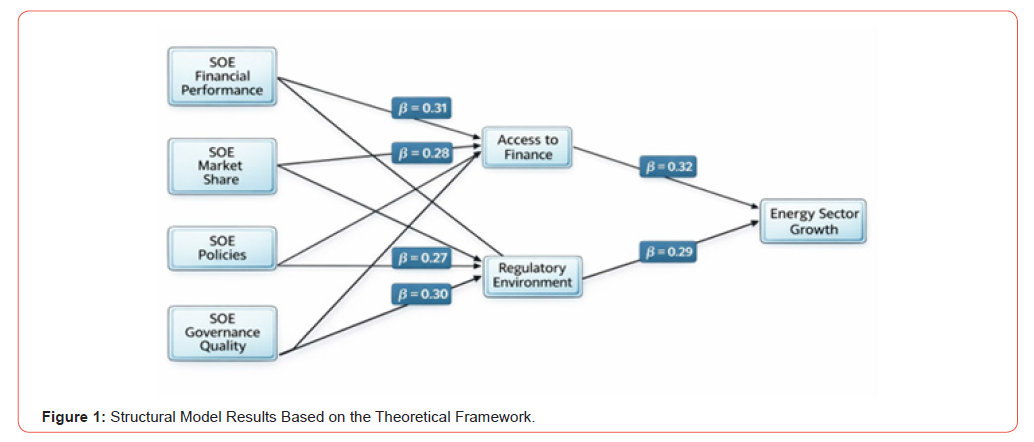
The methodology for this study is based on empirical data gathered from key stakeholders within Ghana’s energy sector. The data is analyzed using Covariance-Based Structural Equation Modeling (CB-SEM), which is suitable for modeling complex relationships and hypotheses. This section details the data collection, measurement approach, and the analytical techniques used to test the hypotheses. Figure 1 presents the estimated structural model illustrating the relationships between State- Owned Enterprise (SOE) determinants, mediating variables, and energy sector growth. The figure shows that SOE financial performance, market share, policies, and governance quality exert positive and significant influences on access to finance and the regulatory environment. These mediating variables subsequently have direct and positive effects on energy sector growth.
Conceptual Framework
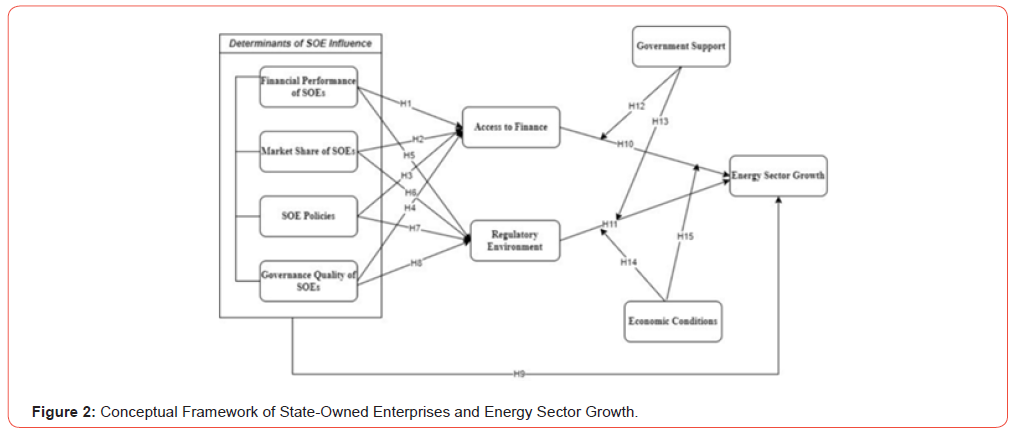
This study develops a conceptual framework to examine how State-Owned Enterprises (SOEs) influence energy sector growth through institutional mechanisms. The framework integrates key determinants, mediating variables, and moderating factors to capture both direct and indirect effects. As shown in Figure 2, SOE financial performance, market share, policies, and governance quality influence energy sector growth both directly and indirectly through access to finance and the regulatory environment. Furthermore, government support and economic conditions moderate these relationships.
Data and Measurement
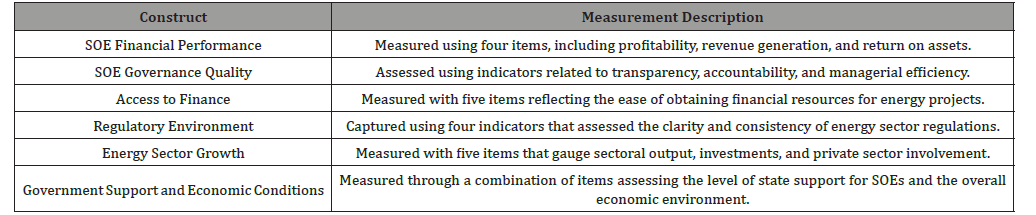
The study employs survey data collected from various stakeholders, including government officials, energy sector regulators, and representatives from state-owned enterprises (SOEs). These stakeholders were selected based on their involvement in energy sector operations and policy-making processes. To measure the constructs, we used multi-item Likertscale indicators. Each item was carefully designed to reflect key theoretical concepts such as SOE financial performance, governance quality, access to finance, and energy sector growth. The constructs were measured and presented in Table 1 as follows:
Table 1:Measurement of Key Constructs.
Reliability and Validity Assessment
The reliability of the constructs was assessed using Cronbach’s alpha and Composite Reliability (CR). Convergent validity was evaluated by examining the factor loadings and Average Variance Extracted (AVE). Discriminant validity was confirmed using the Fornell-Larcker criterion, ensuring that each construct was distinct from the others. All constructs achieved satisfactory reliability and validity, with Cronbach’s alpha values exceeding 0.70 and AVE values greater than 0.50. Sampling adequacy was verified using the Kaiser-Meyer-Olkin (KMO) measure, which yielded a value of 0.842, indicating that the data is suitable for factor analysis. Bartlett’s Test of Sphericity was also significant (p < 0.001), confirming the appropriateness of the data for structural equation modeling.
Mathematical Model and Structural Equation Modeling
The model used for this study is based on Covariance-Based Structural Equation Modeling (CB-SEM), which is an approach that allows for the estimation of complex causal relationships. The model evaluates both direct and indirect effects of SOE determinants (financial performance, market share, governance quality, and policies) on energy sector growth, mediated by institutional variables like access to finance and regulatory environment. The model also considers moderating effects of government support and economic conditions. The general structural model is represented by the following system of equations:
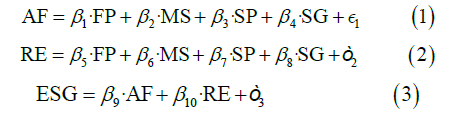
Where: - AF represents Access to Finance - RE represents the Regulatory Environment - ESG represents Energy Sector Growth - FP is SOE Financial Performance - MS is SOE Market Share - SP is SOE Policies - SG is SOE Governance Quality
The path coefficients (β1, β2, etc.) represent the strength and direction of the relationships between the constructs, which were estimated using CB- SEM. The ϵ terms represent the error terms in the model.
Moderation Analysis
In addition to the direct relationships among the constructs, the study also explores the moderating effects of government support (GS) and economic conditions (EC) on the relationships between institutional factors and energy sector growth. The moderation model is specified as follows:

Where: - AF × GS represents the interaction term between access to finance and government support. – RE × GS represents the interaction term between regulatory environment and government support. - AF × EC and RE × EC represent the interaction terms for economic conditions.
Bootstrapping with 5,000 subsamples was applied to test the significance of these moderating effects.
Estimation and Hypothesis Testing
CB-SEM was used to estimate the model using the AMOS software. The significance of the path coefficients and interaction terms was evaluated using bootstrapping procedures. Path coefficients with p-values less than 0.05 were considered statistically significant. The model’s fit was assessed using several indices, including the chi-square-to-degrees of freedom ratio (χ2/ df), the Goodness of Fit Index (GFI), the Adjusted Goodness of Fit Index (AGFI), the Comparative Fit Index (CFI), the Tucker-Lewis Index (TLI), the Root Mean Square Error of Approximation (RMSEA), and the Standardized Root Mean Square Residual (SRMR).
Results
This section presents the empirical results for SOEs of the study.
Measurement Model Assessment
Table 2:Measurement Model Reliability and Validity.
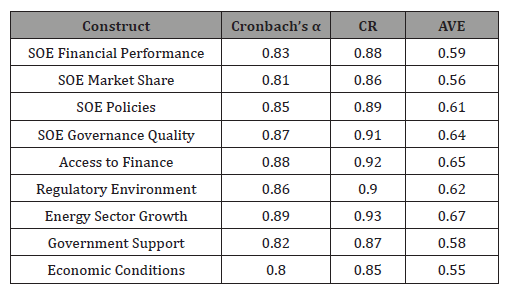
Table 2 illustrates the model assessment for the constructs, Cronbach’s alpha, and Composite Reliability (CR). All constructs demonstrate strong internal consistency, as Cronbach’s alpha and Composite Reliability (CR) values exceed the recommended threshold of 0.70. The Average Variance Extracted (AVE) values are above 0.50 for all constructs, confirming adequate convergent validity. These results indicate that the measurement model is reliable and that the latent constructs adequately capture the variance of their indicators.
Descriptive Statistics and Correlation Analysis
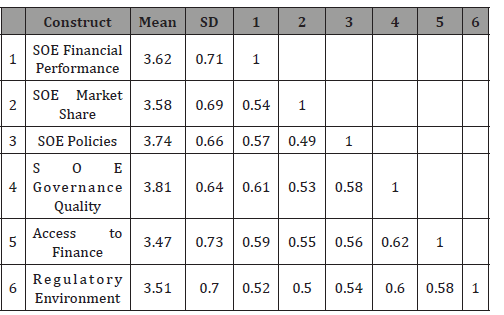
Table 3, shows the descriptive statistics and correlation matrix for the study. The mean values range between 3.47 and 3.81, indicating generally positive perceptions of SOE performance and institutional conditions within Ghana’s energy sector. The standard deviations (0.64–0.73) suggest moderate variability in responses. All correlations are positive and statistically significant at the 0.01 level, indicating strong associations among SOE determinants, institutional variables, and energy sector growth. The absence of excessively high correlations suggests no multicollinearity concerns.
Table 3:Descriptive Statistics and Correlation Matrix.
Note: Correlations are significant at p < 0.01.
Reliability and Validity Assessment
Table 4 presents the reliability statistics for all the constructs. Cronbach’s alpha values range from 0.80 to 0.89, confirming strong internal consistency across constructs. The number of items per construct (3–5 indicators) demonstrates adequate measurement coverage and supports scale reliability. Table 5 shows the Kaiser- Meyer-Olkin measure of sampling adequacy and Bartlett’s test of sphericity. The KMO value of 0.842 exceeds the recommended threshold of 0.60, indicating excellent sampling adequacy. Bartlett’s Test of Sphericity is statistically significant (p < 0.001), confirming that the correlation matrix is appropriate for factor analysis and structural equation modeling.
Table 4:Reliability Statistics.
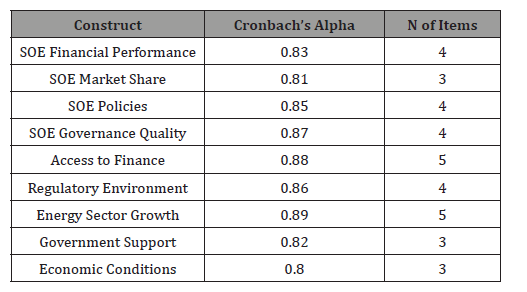
Table 5:KMO and Bartlett’s Test.

Structural Model Results (AMOS Output)
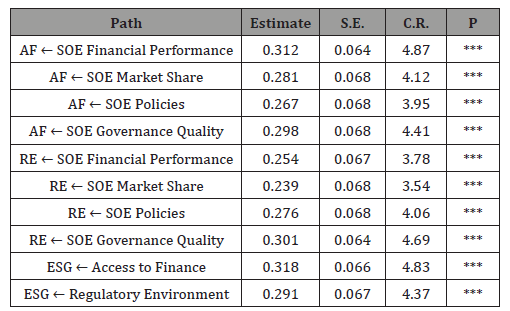
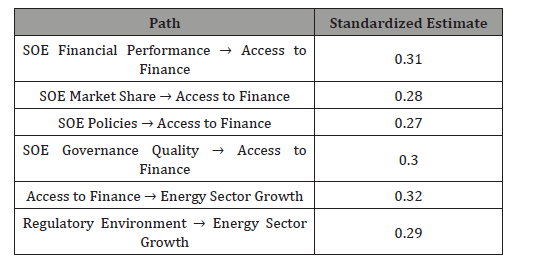
Table 6 illustrates the estimated regression weights for all hypothesis paths. All hypothesized paths are positive and statistically significant at p < 0.001. SOE financial performance, market share, policies, and governance quality significantly improve access to finance and regulatory environment. In turn, access to finance (β = 0.318) and regulatory environment (β = 0.291) significantly enhance energy sector growth. These findings confirm that institutional variables mediate the relationship between SOE characteristics and sectoral development. Table 7 presents the regression weights of the standardized estimate. The standardized coefficients show that access to finance has the strongest effect on energy sector growth (β = 0.32), followed by regulatory environment (β = 0.29). Among SOE determinants, financial performance and governance quality exert relatively stronger effects on institutional outcomes. This highlights governance and operational efficiency as key drivers of private sector development within Ghana’s energy sector.
Table 6:Regression Weights (Direct Effects).
Note: *** p < 0.001.
Table 7:Standardized Regression Weights.
Model Fit Evaluation
The model fit evaluation is a crucial step in assessing the adequacy of the proposed model in explaining the relationships between constructs. In this study, we assessed the fit of the model using several commonly accepted indices to ensure that the model accurately represents the data and theoretical structure. The fit indices evaluated include the chi-square-to-degrees of freedom ratio (χ2/df), the goodness-of-fit index (GFI), the adjusted goodness- offit index (AGFI), the comparative fit index (CFI), the Tucker-Lewis index (TLI), the root mean square error of approximation (RMSEA), and the standardized root mean square residual (SRMR).
As shown in Table 8, the model demonstrates excellent fit according to the recommended thresholds for each index. Specifically:
Table 8:Model Fit Indices

a) The χ2/df ratio is 2.11, which is well below the
recommended threshold of 3.00, indicating an acceptable level
of model fit. Lower values suggest better model fit, as they
indicate that the model does not overfit the data.
b) The Goodness of Fit Index (GFI) is 0.92, exceeding the
recommended threshold of 0.90. This indicates that the model
explains 92% of the variance in the data, which is considered a
good fit.
c) The Adjusted Goodness of Fit Index (AGFI) is 0.91, which
also exceeds the 0.90 threshold, further validating that the
model is an appropriate fit for the data.
d) The Comparative Fit Index (CFI) is 0.94, which is above
the recommended value of 0.90. A higher CFI indicates that the
model fits the data better compared to a baseline model.
e) The Tucker-Lewis Index (TLI) of 0.93 is well above the
0.90 cutoff, supporting the model’s suitability.
f) The Root Mean Square Error of Approximation (RMSEA)
is 0.054, which is below the recommended threshold of 0.08,
suggesting that the model provides a good approximation of
the data. The RMSEA is a widely used index to assess model fit,
where values less than 0.05 indicate a close fit.
g) Finally, the Standardized Root Mean Square Residual
(SRMR) value is 0.047, which is well below the threshold of
0.08, further indicating that the model has a good fit with the
data.
h) In general, the model fit indices presented in Table
8 confirm that the hypothesized model fits the data well,
supporting the robustness of the relationships between the
constructs in the study. The indices indicate that the model
provides an accurate representation of the data and theoretical
framework, validating its use for hypothesis testing and further
analysis.
In general, the model fit indices presented in Table 8 confirm that the hypothesized model fits the data well, supporting the robustness of the relationships between the constructs in the study. The indices indicate that the model provides an accurate representation of the data and theoretical framework, validating its use for hypothesis testing and further analysis.
Moderation Analysis
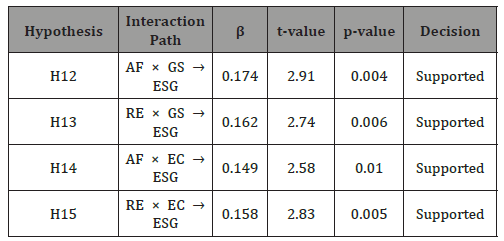
Moderation analysis in Table 9 shows that government support and economic conditions significantly strengthen the relationships between institutional variables and energy sector growth. Positive and significant interaction effects confirm that favorable policy environments and macroeconomic stability amplify the developmental impact of SOEs.
Table 9:Moderation Effects Results
Structural Model Results
The structural model was evaluated by examining path coefficients (β), t-statistics, p-values, and coefficients of determination (R2). Bootstrapping with 5,000 subsamples was applied to test the significance of hypothesized relationships. Table 10 shows the structural model path coefficients and hypothesis testing. The structural configuration visually confirms the central argument of the study that SOEs function as institutional enablers rather than mere market competitors. By improving access to finance and strengthening regulatory quality, SOEs address structural inefficiencies in Ghana’s energy sector, which is consistent with the propositions of Market Failure Theory. Furthermore, the inclusion of governance-related paths reflects the relevance of Public Choice Theory, emphasizing that SOE effectiveness is contingent upon sound governance mechanisms.
Table 10:Structural Model Path Coefficients and Hypothesis Testing.

Figure 3 illustrates the moderating role of government support on the relationship between institutional factors and energy sector growth. The figure indicates that when government support is high, the positive effects of access to finance and regulatory environment on energy sector growth become stronger, as evidenced by the steeper slope of the interaction line. This result provides empirical support for hypotheses H12 and H13 and underscores the importance of policy coherence in development outcomes. While SOEs contribute to improving institutional conditions, their developmental impact is significantly amplified when complemented by consistent government support. This finding reinforces the view that SOEs operate most effectively within coordinated development frameworks rather than as isolated commercial entities.
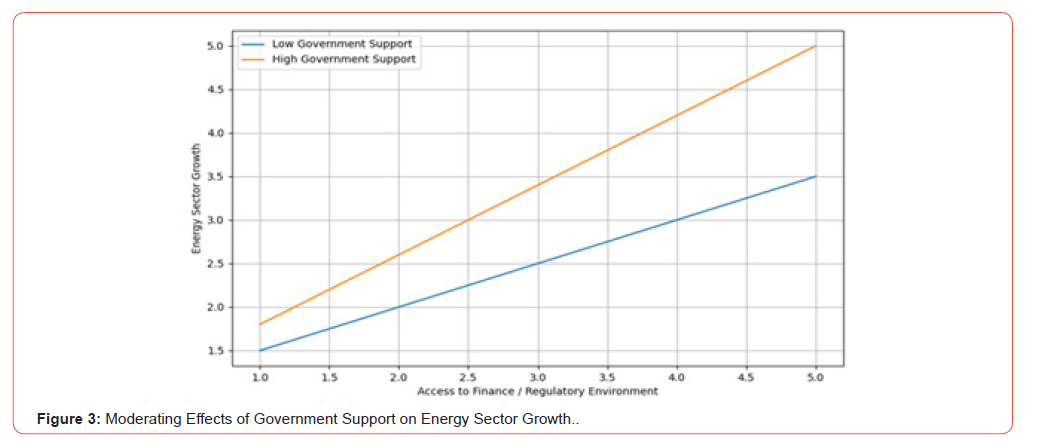
Figure 4 compares the standardized path coefficients of the structural model and highlights the relative strength of each hypothesized relationship. The strongest effects are observed for the paths linking access to finance and regulatory environment to energy sector growth, indicating that these institutional channels are the primary mechanisms through which SOEs influence sectoral performance. Additionally, paths associated with SOE governance quality exhibit relatively strong coefficients, suggesting that governance reforms generate higher developmental returns than market dominance or financial performance alone. This finding emphasizes the critical role of governance in maximizing the positive spillover effects of SOEs on private sector development.
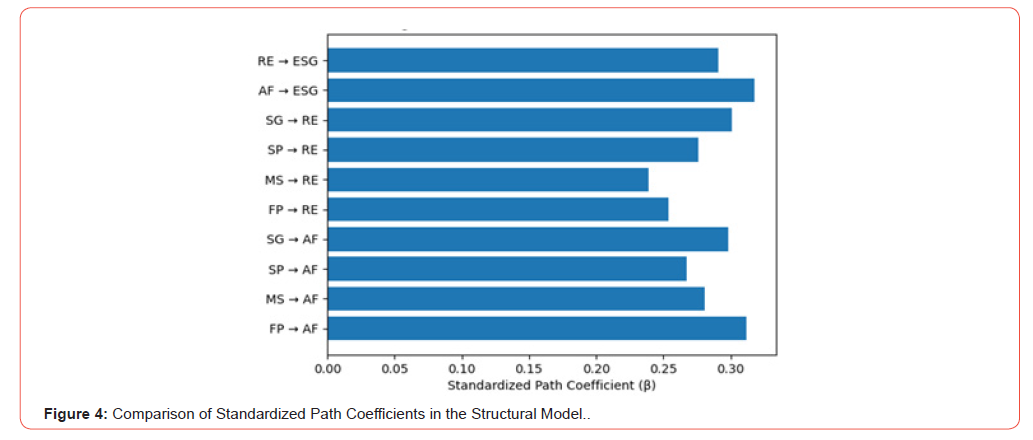
Figure 5 presents the coefficients of determination (R²) for the endogenous constructs in the model. The relatively high R² values indicate that the model explains a substantial proportion of variance in access to finance, regulatory environment, and energy sector growth. These results demonstrate strong explanatory and predictive power, validating the suitability of the CB-SEM approach employed in this study. They further suggest that SOE-related variables capture key institutional drivers of private sector growth in Ghana’s energy sector.
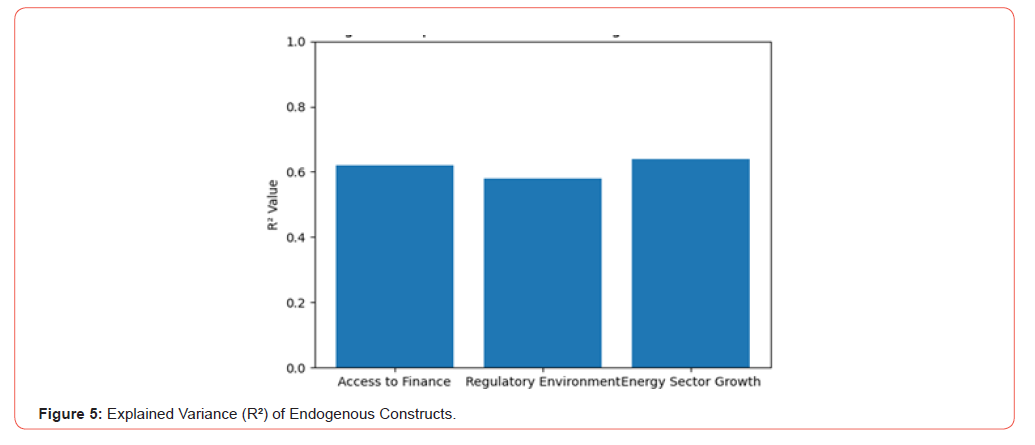
Figure 6 shows that economic conditions significantly moderate the relationship between regulatory environment and energy sector growth. Under favorable economic conditions, regulatory improvements translate into substantially stronger growth outcomes, whereas under weaker economic conditions, the same regulatory improvements yield relatively modest effects. This finding supports hypotheses H14 and H15 and highlights the importance of macroeconomic stability in development processes. It suggests that even well-designed SOE and regulatory reforms may fail to achieve their full potential during periods of economic instability.
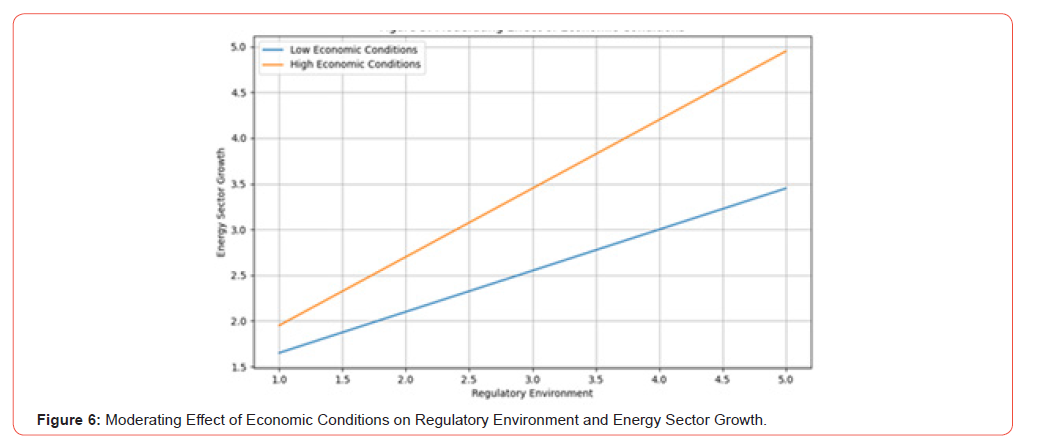
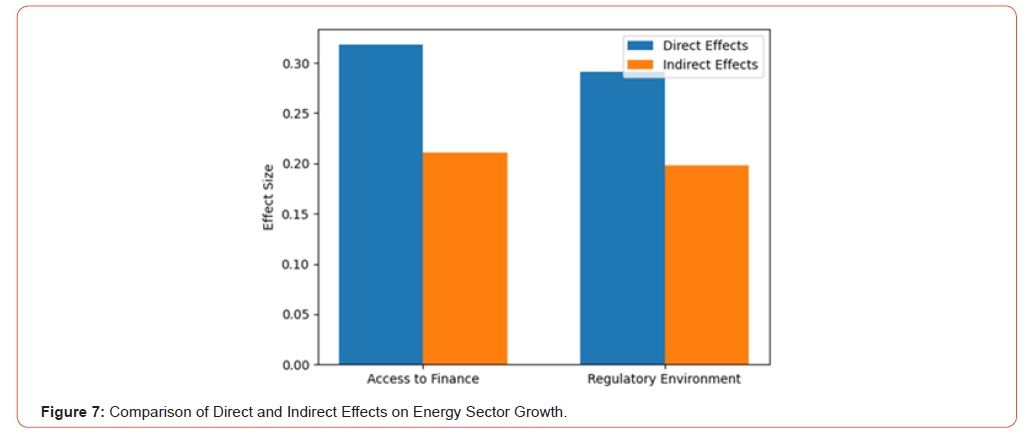
Figure 7 compares the direct and indirect effects of access to finance and regulatory environment on energy sector growth. While direct effects are dominant, the presence of substantial indirect effects confirms partial mediation through SOE determinants. This dual influence reinforces the study’s core contribution that SOEs affect private sector growth through layered mechanisms. Rather than crowding out private firms, SOEs act as institutional anchors that shape financial and regulatory environments, thereby indirectly stimulating sectoral growth. These finding challenges simplistic privatization narratives and supports a hybrid development model.
Discussion of Findings
This study set out to examine whether State-Owned Enterprises (SOEs) function as institutional enablers or market distorters within Ghana’s energy sector. The empirical findings provide strong evidence that SOEs play a constructive and facilitative role when embedded within appropriate governance and macroeconomic frameworks.
The results indicate that SOE financial performance, market share, policies, and governance quality significantly improve access to finance and strengthen the regulatory environment. These findings align closely with Market Failure Theory (MFT), which posits that government intervention is justified when markets fail to allocate resources efficiently. In Ghana’s energy sector, structural constraints such as high capital requirements, information asymmetries, and regulatory uncertainty create barriers to private investment. The evidence suggests that SOEs mitigate these structural deficiencies by stabilizing financial flows, signaling sector credibility, and enhancing regulatory coordination.
Notably, SOE governance quality emerged as one of the strongest predictors of institutional outcomes. This highlights governance as a critical transmission channel through which SOEs influence private sector development. Transparent management, accountability mechanisms, and managerial efficiency reduce information asymmetries and investment risk, thereby facilitating credit expansion and regulatory confidence.
Contrary to conventional crowding-out arguments, the results reveal a crowding-in effect. Improvements in SOE performance and market positioning do not suppress private sector activity; rather, they enhance access to finance and regulatory clarity, which subsequently stimulate energy sector growth. These finding challenges simplistic privatization narratives and suggests that the relationship between SOEs and private firms is not inherently adversarial. Instead, SOEs can serve as institutional anchors that reduce uncertainty and catalyze private capital mobilization. The mediation analysis further confirms that SOEs influence sectoral growth primarily through indirect institutional channels rather than direct dominance. This layered mechanism underscores the importance of financial and regulatory intermediation as the principal pathways linking state intervention to economic outcomes.
The moderation analysis reveals that government support and favorable economic conditions significantly amplify the positive effects of institutional improvements on energy sector growth. When macroeconomic stability and policy coherence are high, the developmental impact of access to finance and regulatory improvements becomes substantially stronger. This finding reinforces the context-dependent nature of SOE effectiveness. Even well-governed SOEs may underperform in unstable macroeconomic environments. Conversely, coordinated policy support and economic stability enhance the productivity of institutional reforms. These results suggest that SOEs operate most effectively within integrated development frameworks rather than as isolated commercial entities.
Theoretical Integration: MFT and PCT
By integrating Market Failure Theory and Public Choice Theory, the study offers a balanced interpretation of SOE performance. The findings validate the MFT proposition that SOEs can correct market imperfections related to externalities, public goods, and information asymmetries. At the same time, the strong influence of governance quality confirms the caution raised by Public Choice Theory: without robust governance structures, SOEs risk inefficiency and political capture. Thus, the effectiveness of SOEs is not determined solely by ownership structure but by the quality of governance, institutional coherence, and macroeconomic alignment.
Policy Implications
The findings of this study generate important policy implications for governments and stakeholders seeking to enhance the developmental role of State-Owned Enterprises (SOEs). First, the results suggest that governance reforms should be prioritized over wholesale privatization strategies. Rather than focusing solely on ownership transformation, policymakers should emphasize improving transparency, accountability, and managerial efficiency within SOEs. Strong governance structures are essential to ensure that SOEs operate effectively and deliver positive institutional and economic outcomes. Furthermore, the study highlights that SOEs can be strategically leveraged to strengthen financial intermediation and enhance regulatory certainty. By stabilizing financial systems and improving regulatory frameworks, SOEs can reduce investment risks and facilitate private sector participation, particularly in capital-intensive sectors such as energy. This underscores the importance of positioning SOEs not merely as commercial entities, but as institutional actors that support broader economic development objectives.
In addition, the findings reveal that coordinated government support and macroeconomic stability are critical in maximizing the developmental impact of SOEs. Policy coherence, consistent regulatory enforcement, and stable economic conditions significantly amplify the positive effects of improved access to finance and regulatory environments on sectoral growth. This implies that SOEs are most effective when embedded within a supportive and well-aligned policy ecosystem.
Finally, institutional strengthening emerges as the primary mechanism through which SOEs stimulate private sector growth. Enhancing institutional quality, particularly in areas such as financial access and regulatory governance, should therefore be a central focus of development strategies. Overall, the evidence supports a hybrid development model in which state capacity and market mechanisms operate in a complementary rather than competitive manner, fostering sustainable and inclusive economic growth.
Conclusion
This study provides comprehensive empirical evidence on the role of State-Owned Enterprises (SOEs) as institutional enablers in Ghana’s energy sector. The findings confirm that SOEs contribute significantly to sectoral development by enhancing access to finance and improving the regulatory environment, which serve as critical transmission mechanisms linking state intervention to economic outcomes. The results demonstrate that SOE financial performance, market share, policies, and governance quality positively influence institutional conditions, which in turn drive energy sector growth. Notably, access to finance and regulatory environment emerge as the most influential mediators, with standardized effects of β = 0.32 and β = 0.29, respectively. These findings highlight that the impact of SOEs on economic performance operates primarily through indirect institutional pathways rather than direct market dominance, reinforcing the argument that SOEs function as facilitators rather than competitors in the market.
Furthermore, the study provides strong evidence of a crowding-in effect, whereby improvements in SOE performance and governance enhance private sector participation instead of displacing it. This challenges conventional assumptions that state ownership inherently undermines efficiency and supports a more nuanced understanding of the complementary relationship between public and private sectors. The moderation analysis underscores the importance of contextual factors, revealing that government support and macroeconomic stability significantly amplify the positive effects of institutional improvements on sectoral growth. This suggests that even well-performing SOEs require supportive policy environments and stable economic conditions to realize their full developmental potential. From a theoretical perspective, the findings validate the propositions of Market Failure Theory by demonstrating that SOEs can effectively address structural inefficiencies such as information asymmetry, regulatory gaps, and financing constraints. At the same time, the results align with Public Choice Theory by emphasizing the critical role of governance quality in determining SOE effectiveness. Without transparency, accountability, and efficient management, the benefits of state intervention may be diminished.
In conclusion, the study supports a hybrid development framework in which state capacity and market mechanisms operate synergistically. Rather than prioritizing wholesale privatization or extensive state expansion, policymakers should focus on strengthening governance structures, enhancing institutional quality, and ensuring macroeconomic stability. Under these conditions, SOEs can serve as institutional anchors that foster private investment, improve sectoral performance, and promote sustainable economic growth in emerging economies.
References
- J Di Bella, A Grant, S Kindornay, S Tissot (2013) Mapping private sector engagements in development cooperation. Technical report, North-South Institute, Ottawa.
- M Cárdenas Rodríguez, I Haščič, N Johnstone, J Silva, A Ferey (2015) Renewable energy policies and private sector investment. Environmental and Resource Economics 62(1): 163-188.
- A Cuervo-Cazurra, A Inkpen, A Musacchio, K Ramaswamy (2014) Governments as owners: State-owned multinational companies. Journal of International Business Studies 45(8): 919-942.
- WL Megginson, JM Netter (2001) From state to market: A survey of empirical studies on privatization. Journal of Economic Literature 39(2): 321-389.
- P Medas, M Sy (2023) State-owned enterprises: Struggling to be efficient. In Handbook on Public Sector Efficiency pp. 219-249.
- H Christiansen (2011) The size and composition of the soe sector in oecd countries. Technical Report 5, OECD.
- M McLaughlin (2020) State-owned enterprises and national security. Chinese Journal of International Law 19(2): 283-327.
- D Palcic, E Reeves (2013) State-owned enterprise policy and sovereignty: The Case of Ireland. Public Organization Review 13(2): 117-130.
- MG Tamimu, S Zhao, Y Wang, Y Yang, T Sun, et al. (2025) Fuzzy logic-BWM-based risk assessment for E-business cooperation in China–West Africa digital trade: A path to sustainable business and policies. Global Economics Research 1(2): 100014.
- Tamimu Mohammed Gadafi, Touray Musa (2025) An integrated fuzzy- bwm-topsis with chebyshev distance approach for risk evaluation in e- business cooperation. International Journal of Management and Fuzzy Systems.
- JJ Zaato (2017) Governance of state-owned enterprises. In Global Encyclopedia of Public Administration. Springer.
- B Dollery, J Wallis (2001) Political Economy of Local Government. Ed-ward Elgar.
- MG Tamimu, S Zhao, Q Xu, J Zhang, X Yin (2025) Pythagorean Fuzzy AHP Approach for Emerging New Risk Evaluation in China-West Africa Digital Trade Collaboration. Journal of Theoretical and Applied Electronic Commerce Research 20(4): 327.
- C Koopman, M Mitchell, A Thierer (2015) The Sharing Economy and Consumer Protection Regulation: The Case for Policy Change. Journal of Business Entrepreneurship and Law 8: 529.
- JE Stiglitz (2000) Economics of the Public Sector. W.W. Norton.
- MG Tamimu D Liang (2025) Sustainable mining development in ghana. Resources Policy 110: 105757.
- TM Gadafi, L Decui, AP Darko (2025) Two stages method-based on Africa smart irrigation system assessment for willingness to pay: A case of Ghana Northern Region. Socio-Economic Planning Sciences 102: 102318.
- (2008) Department for International Development. Private sector development strategy. Technical report, DFID.
- Akosua A, MA Hoedoafia (2019) Private sector development in ghana.
- Geoffrey Bentum-Micah, Shurong Zhao, Xiangxu Wang, Xiaoyan Cao, Tamimu Mohammed Gadafi, et al. (2026) Enhancing the global reach and pedagogical diversity of online chinese language education across cultural contexts: Evidence from anglophone west africa. Acta psychologica 263: 106229.
- Mohammed Gadafi Tamimu (2026) Sustainable ai-driven predictive modeling in agricultural supply chains: Ai, iot, and blockchain integration for climate adaptation in ghana. Iris Journal of Economics & Business Management 3(3).
- Mohammed Gadafi Tamimu, Shurong Zhao, Qianwen Xu, Jie Zhang (2026) Attention-based deep learning hybrid model for cash crop price forecasting: Evidence from global futures markets with implications for west africa. Applied Sciences 16(3): 1600.
- FA Diawuo, J Kaminski (2017) Ghanaian power generation sector anal-ysis. Journal of Power Technologies 97: 15-27.
- E Kumi, T Yeboah, YA Kumi (2020) Private sector participation in sdgs in ghana. Extractive Industries and Society 7: 181-190.
- S Zhao, MG Tamimu, A Luo, T Sun, Y Yang (2025) Hesitant fuzzy- bwm risk evaluation framework for e-business supply chain cooperation for china-west africa digital trade. Journal of Theoretical and Applied Electronic Commerce Research 20(3): 233.
- Tamimu Mohammed Gadafi, Ibrahim Osman Adam, Liu Yawen (2025) Modeling financial drivers of china’s digital economy: Implications for sustainable growth. Strategic Business Research 1(1): 100013.
- Philp Kwaku Adjei, Tamimu Mohammed Gadafi, Zhiguang Qin (2025) Enhancing business intelligence in ghana through digital technologies: Optimizing management information sharing with cloud computing, big data, and ai. Proceedings of the 2025 International Conference on Artificial Intelligence and Digital Finance.
- Tamimu Mohammed Gadafi, Almathani Mohammed Adnan Mohammed, Jie Ma, Ssemwogerere Rajab Muhammad, Ajei Peter Darko, et al. (2025) BiLSTM-based climate and agricultural supply chain resilience modeling using time series forecasting in Ghana. In Proceedings of the 2nd International Conference on Image Processing, Machine Learning, and Pattern Recognition pp. 225-230.
- World Bank (2026) Public-private partnerships: Reference guide.
- TJ Putninš (2015) Economics of soes. International Journal of Public Administration 38: 815-832.
- V Bekkers, J Edelenbos, B Steijn (2011) Innovation in the Public Sector: Linking Capacity and Leadership, volume 6 of Governance and Public Management Series. Palgrave Macmilla.
- N Van Thang, NJ Freeman (2009) State-owned enterprises in Vietnam: Are they crowding out the private sector?. Post-Communist Economies 21(2): 227-247.
- W Lan, M Liqing (2020) State-owned enterprises participation in private enterprises and innovation investment: Moderating effect of government subsidies. In Proceedings of the International Conference on E-Commerce, E-Business and E-Government (ICEMME).
- E Ahola-Olli (2023) William niskanen: Public choice and policy. Master’s thesis, University of Helsinki.
- M Ziolo, BZ Filipiak, I Bąk, K Cheba, DM Tîrca, et al. (2019) Finance, sustainability and negative externalities: An overview of the european context. Sustainability 11(15): 4249.
- A Marciano (2013) Why market failures are not a problem: James buchanan on market imperfections, voluntary cooperation, and externalities. History of Political Economy 45(2): 223-254.
- Tamimu Mohammed Gadafi, Seini Toufic, Albert Awortwi Sagoe, Liang Decui, Hira Anwar M (2025) Enhancing climate resilience through sustainable agricultural intensification: An attention-based neural network for climate-smart agriculture modeling in ghana. Proceedings of the 2025 International Conference on Smart Agriculture and Artificial Intelligence.
- EA Boateng, Simplice Asongu, Raphael Akamavi, V Tchamyou (2018) Information asymmetry and market power in the african banking industry. Multinational Finance Journal 44: 69-83.
- G Dell’Ariccia, R Marquez (2006) Lending booms and lending standards. Journal of Finance 61: 002511-002546.
- G Dell’Ariccia, R Marquez (2004) Information and bank credit allocation. Journal of Financial Economics 72(1): 185-214.
- JE Stiglitz, A Weiss (1981) Credit Rationing in Markets with Imperfect Information. American Economic Review 71(3): 393-410.
- V DiLorenzo (2012) Barriers to market discipline: A comparative study of regulatory reforms. Arizona Journal of International and Comparative Law 29: 517.
- T Jappelli, M Pagano (2002) Information sharing, lending and defaults: Cross-country evidence. Journal of Banking and Finance 26(10): 2017-2045.
- A Karapetyan, B Stacescu (2014) Information sharing and information acquisition in credit markets. Technical report, University of Zurich.
- Philp Kwaku Adjei, Tamimu Mohammed Gadafi, Zhiguang Qin, Lois Tweneboa Kodua (2025) Enhancing business intelligence through digital technologies: A deep learning approach for optimizing supply chain risk management in ghana. Proceedings of the 2nd International Conference on Image Processing, Machine Learning, and Pattern Recognition.
- J Niskanen (2017) Bureaucracy and Representative Government. Routledge.
- Yawen Liu, Mohammed Gadafi Tamimu, Junwu Chai (2025) Dynamic sup- ply chain decision-making of live e-commerce considering netflix marketing under different power structures. J. Theor. Appl. Electron. Commer. Res 20(3): 202.
- L Zhang, L Peng, X Liu, Z Zhang, Y Wang (2024) State ownership governance. British Journal of Management 35: 1489-1511.
- S Poczter, Monitoring soes (2016) Industrial and Corporate Change 25: 903-921.
- SCY Wong (2004) Improving corporate governance in state-owned enterprises: An integrated approach. Corporate Governance International 7(2).
-

This work is licensed under a Creative Commons Attribution-NonCommercial 4.0 International License.