


 Research Article
What are the Sensory Processing Patterns in Children with Spastic Cerebral Palsy? A Preliminary Study
Department of Physical Therapy for Growth and Development Disorders in Children and Its Surgery, Cairo University, Egypt
Received Date: July 15, 2021; Published Date: August 11, 2021
Abstract
Background: Sensory related difficulties are traditionally reported as a common finding in children with cerebral palsy (CP), however the main
focus has always been concerning the motor aspect of the disorder. On the continuous journey to reach better intervention approaches it became
a must to have a better understanding to the sensory aspect of CP therefore it is necessary to gather more information and found solid knowledge
about it.
The purpose of the study is to analyze the sensory patterns processing (Quadrant scores) in children with spastic cerebral palsy (SCP) level I II
III on the Gross Motor Function Classification System (GMFCS) between 6 and 9 years of age without severe comorbidities beside cerebral palsy (i.e.,
diabetes, myopathy, neuropathy, uncontrolled epilepsy); non-autistic; were not exposed to burn injuries; neither deaf nor blind using Child Sensory
Profile 2 (CSP2). Twenty children of the inclusion criteria were recruited and caregivers filled the CSP2 questionnaires.
Results: All participating children showed sensory processing difficulties at least in one of quadrants. Most of the children showed atypical
sensory processing patterns in more than one quadrant. The majority of children behaved as bystanders to the sensory stimuli, followed by avoiders.
Children with Bilateral SCP showed more abnormality in all four quadrants compared to children with Unilateral SCP according to the results of
means of raw scores.
Conclusions: Children with SCP level I, II and III on GMFCS show sensory patterns processing abnormalities compared to normative data,
various sensory patterns may exist at the same time. Attending to these difficulties is assumed to improve the therapeutic intervention.
Keywords: Cerebral palsy; Sensory processing, Sensory profile 2; Sensory processing disorder; Assessment
Abbreviations: Cerebral Palsy (CP); Child Sensory Profile 2 (CSP-2); The Gross Motor Function Classification System (GMFCS); Spastic CP (SCP); Sensory Processing Disorder (SPD); The Sensory Profile 2 (SP2)
Introduction
Cerebral palsy is the most frequent childhood physical disability. It is a collection of conditions that impact a person’s movement, muscle tone, posture, and balance, according to the Centers for Disease Control and Prevention. Clinical findings are permanent and non-progressive, occurring in the antenatal, perinatal or early post- natal period; although they can change over time due to a lesion to the developing brain [1-3]. Multiple factors may affect participation of children and youth with physical disabilities and impact on their health and life satisfaction [4].
Sensory, perceptual, cognitive, communication, and behavior difficulties, as well as epilepsy and secondary musculoskeletal problems, are usually associated with motor abnormalities [5].
As a result, managing children with CP necessitates a multidisciplinary, comprehensive, and coordinated approach, with the child’s independence and participation in community activities as the primary objectives [6].
Clinicians divide CP into four types based on movement patterns: spastic, dyskinetic, ataxic, and mixed. Spasticity is the overmastering movement pattern in SCP. SCP is the most frequent kind of CP, accounting for up to 70% to 80% of all cases [6].
SCP can be bilateral or unilateral, according to the Surveillance of Cerebral Palsy in Europe (SCPE). Spastic bilateral CP occurs when limbs on both sides of the body are affected; Spastic unilateral CP occurs when limbs on one side of the body are involved [7].
Sensory processing is a neurobiological process in which brain systems register and modulate sensory input. Furthermore, sensory input from the environment or the body must be structured and integrated effectively internally as the many types of energy created by the same item or event can be handled as a single entity so that the individual can respond successfully and appropriately to the demands of the environment. This enables the individual to conduct daily functioning tasks and engage in meaningful occupations because it aids in the simplification of the world and leads to significant behavioral efficiency advantages [8,9]. Sensory processing emerges as a result of the relationship between neurological threshold and self-regulation, according to Dunn’s Sensory Processing Framework [10].
Sensory Processing Disorder (SPD) is defined by hypo- or hyper-sensitivity to sensory stimuli, which obstructs daily tasks significantly. It is a failure to sufficiently moderate the effect of incoming sensory stimuli, which begs the question of whether this population’s integration of inputs across sensory systems is operating properly [9].
Processing problems and sensory integration have been linked to the performance of activities of daily living (ADLs) such as sleeping, dressing, eating, playing, and participating in leisure and school-related activities, according to the research [11]. The idea that movement and sensation are linked is supported by current motor behavior theories [12].
Sensory processing disorder happens frequently in children with cerebral palsy. It might be related to white matter changes found in some of their image scans [13]. However, sensory-based disorders are not commonly thought of as a primary feature of CP. Therefore, it remains an understudied and under-addressed area [14]. 14 Further studies are recommended to evaluate sensory processing in children with CP. This exploration remains a vast and promising field of research to be pursued [15].
Advanced neuroimaging equipment are used in most of studies addressing sensory processing in children with CP, which are not commonly available in clinical settings. The use of clinical tools to test sensory processing in children with cerebral palsy are relatively uncommon [13].
Knowledge about a person’s patterns of sensory processing may contribute to the design of more effective interventions and the advancement of knowledge [16]. Therefore, clinical tools, including the Sensory Profile, used to assess sensory processing enables us to evaluate abilities and behaviors associated with SPD. They give a comprehensive assessment of how children interact with their environment and respond to various sensory inputs, identifying children’s outcome patterns and serving as a helpful guide for families dealing with SPD [13].
Therefore, according to the given information and putting in consideration the possibility of activity execution being affected by SPD, this study’s aim is to analyze sensory patterns processing (Quadrant scores) in children with SCP level I II III on GMFCS, using CSP-2.
Material and Method
Study design
A prospective cross-sectional study design has been performed. The study was approved by the Ethical Committee of Faculty of Physical Therapy, Cairo University under the code (P.T.REC/012/003055).
Participants and procedures
The study was conducted on twenty children with SCP recruited from various rehabilitation centers specialized in children care. In order to recruit the sample, rehabilitation institutions were contacted and informed about the study’s goal as well as the children who would be eligible to participate. Caregivers were invited to meetings to learn about the study’s purpose and how to complete the CSP-2 surveys. Those who consented to participate and met the inclusion criteria signed informed consent before participating in the study. Before, during, and after filling out the questionnaires, all questions from participating caregivers were answered, and the results were verbally communicated to caregivers, along with ideas for how to deal with children in the future. Between February and June 2021, candidates were recruited and assessed. The following were the SCP children’s inclusion criteria: SCP diagnosed children of both sexes between the ages of 6 and 9 years; GMFCS level I, II, or III; no significant comorbidities aside from CP (i.e., diabetes, myopathy, neuropathy, uncontrolled epilepsy); non-autistic; were not subjected to any type of burn injury; not deaf or blind.
Variables and data measurements
Sensory processing pattern scores (Quadrant scores) measured by CSP-2 is the main variable of this study. CSP-2 is part of Sensory profile 2 (SP2) family; which is the most recent version of the Sensory Profile (SP) developed by Winnie Dunn. SP is one of the norm referenced tests that are designed to specifically evaluate the effect of sensory processes on functional performance in daily life and, to assist therapists to design therapeutic goals when paired with additional evaluation and observation data [17].
The SP2 family is composed of different forms: The Infant SP2 (birth to six months), Toddler SP2 (seven to 35 months), Child SP2 (three to fifteen years old), and Short SP2 (three to fifteen years old); which are all standardized caregiver surveys as well as School companion SP2, which is a teacher questionnaire for students aged from three to 14 years old [18].
On a five-point scale, the caregiver fills out the SP2 questionnaire based on the frequency with which the child responds to various sensory events (1= almost always, 2= frequently, 3= half of the time, 4=occasionally, 5= almost never, or 0= does not apply). Does not apply should only be used in extreme circumstances, such as when the inquiry is irrelevant to the child or when the parent/caregiver has never witnessed the behavior. SP2 has the advantage of being simple to use and administer as well as interpret. Furthermore, the SP2 contains no double negatives, making it easier to read than the SP. The CSP-2 is an 86-item caregiver questionnaire that covers the ages of 3 to 14:11 years old [18].
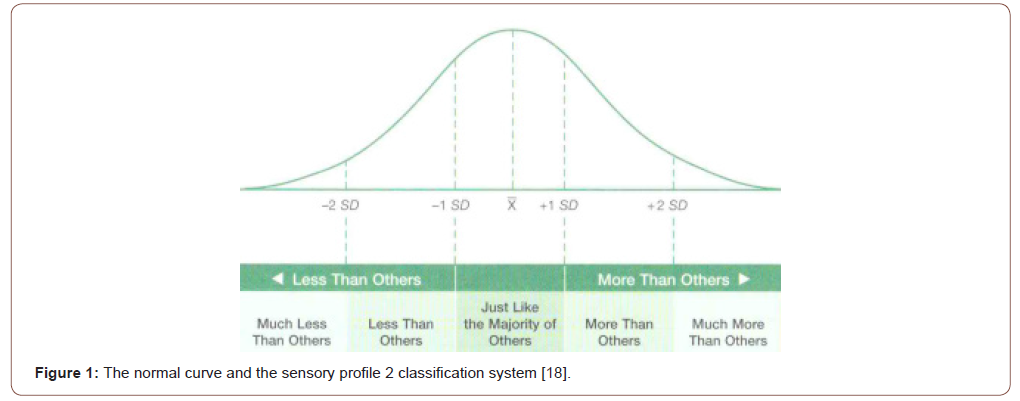
A Normal Curve and SP2 Classification System have been provided by Dunn, based on responses from a normative sample of children without disabilities. The raw score total for each quadrant can be categorized as “much less than others,” “less than others,” “just like the majority of others,” “more than others,” and “much more than others” based on a bell curve normed distribution [19].
The CSP-2 items are divided into three categories: sensory processing patterns (i.e. quadrants), sensory systems, and sensory processing-related behavior. Sensory processing pattern scores (Quadrant scores) subsets are: Seeking, Avoiding, Sensitivity and Registration [18].
Dunn proposed that there is an interaction between neuroscience and behavioral concepts, such that the neuroscience concepts can help us interpret young children’s behavior and performance. A figure (Figure 2) was formed describing her working proposal about this interaction [20]. Neurological thresholds indicate the amount of stimuli needed for the nervous system to notice or react to stimuli (the vertical axis), it ranges from quick to detect (low threshold) to slow to detect (high threshold), while the behavioral responses or self-regulation indicate the manner in which the young child reacts in relation to the thresholds (the horizontal axis). Children with passive strategies do not counteract the stimuli, while children with active self-regulation strategies plan a reaction to counteract it. When those lines intersect, they produce four patterns or quadrants of sensory modulation, which are the sensory processing patterns or Quadrants [18,21].
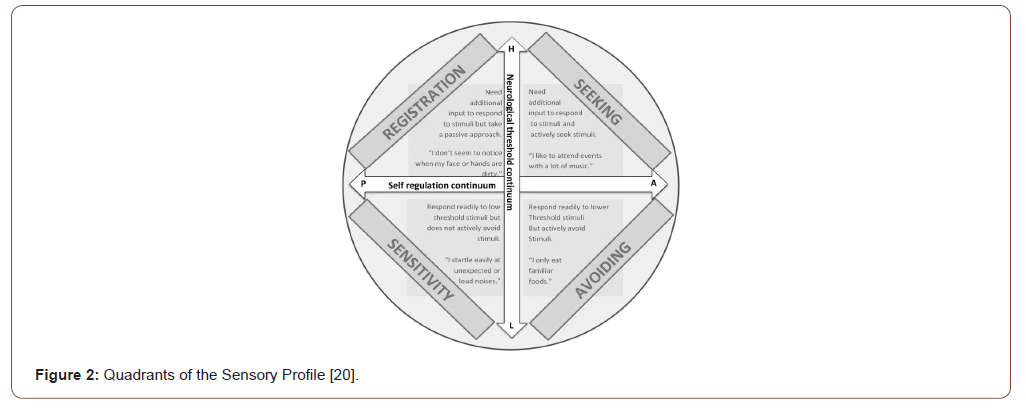
These Quadrants are explained by Dunn [18] as follows:
• Seeking: is when there is a high neurological threshold
and an active self-regulatory strategy. It happens to the extent
to which a child reaches out to sensory information. These
children are also called “seekers”.
• Avoiding: is when there is a low neurological threshold
and an active self-regulatory strategy. It happens to the extent
to which a child is bothered by sensory information. These
children are also known as “avoiders”.
• Sensitivity: is when there is a low neurological threshold
and a passive self-regulatory strategy. It happens to the extent
to which a child detects sensory information. Another term
used to describe these children is “sensor”.
• Registration: is when there is a high neurological
threshold and a passive self-regulatory strategy. It happens to
the extent to which a child misses sensory information. They
are also called “bystanders”.
Statistical methods
Calculating the means and standard deviation revealed descriptive findings. The findings were compared to the normative data from Dunn’s work in the SP2 user’s manual [18].
Results and Discussion
This study is aimed to analyze sensory patterns processing (Quadrant scores) in children with SCP level I II III on GMFCS, using CSP-2.
Sensory-based problems were discovered to be common in those children [22,23]. Previous studies suggested that SPD found in CP children may be due to both structural brain damage and defect in sensory experiences of which those children are exposed to [24].The research of sensory processing and integration in this population, on the other hand, is deemed novel and promising [15,24]. A person’s capacity to engage in daily activities can be harmed if their sensory processing abilities are disrupted. “Areas of worry emerge only when a person’s sensory processing pattern appears incompatible with his or her desired or necessary life activity choices,” according to Brown and Dunn. At this point, occupational therapy becomes concerned about sensory processing. Therefore, the Sensory Processing Disorder Foundation uses the SPD term to define a condition in which a person’s daily activities are limited by how he or she processes and responds to sensory information [25].
The study’s scope was restricted to focus on SCP, Because it is expected that children with higher gross motor abilities of GMFCS levels I, II, and III are exposed to more sensory experiences according to earlier research [26,8] suggestion, it has been selected to focus on children with higher gross motor abilities of GMFCS levels I, II, and III.
Our results were as follows:
The Sample’s characteristics (Demographic data)
This study included a total of 20 children, with an average age
of 7.2 (SD 1.056309365).
Males made up 80% of the participants (n=16), while females
made up 20% (n=4).
Participant classification
SCP was diagnosed as unilateral in 25% of the subjects and
bilateral in 75% of the others.
According to the GMFCS, 20% of participants were classified as
Level I, 45% as Level II, and 35% as Level III, as shown in Figure 3.
Table 1 shows the distribution of the SCP children according to
SCP subtypes, Gender and the GMFCS levels.
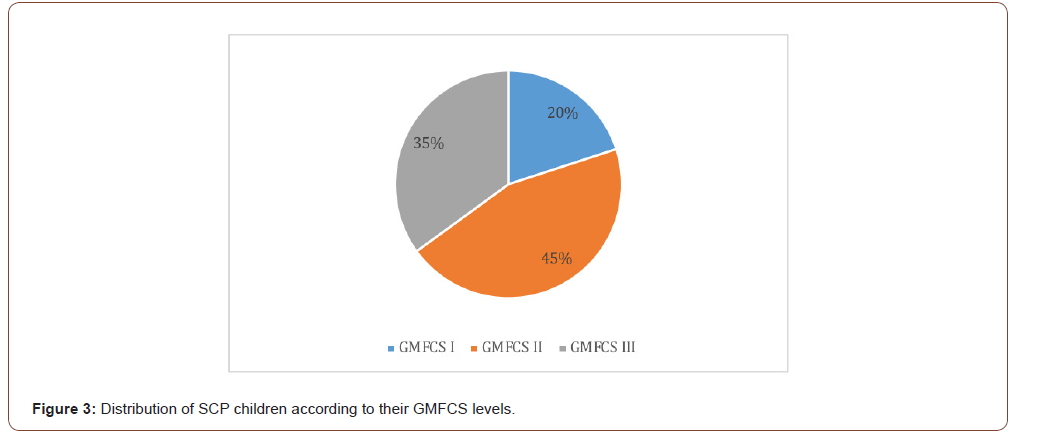
Table 1:The distribution of the SCP children according to SCP subtypes, Gender and the GMFCS.

Unilateral= Unilateral Spastic Cerebral Palsy, Bilateral= Bilateral Spastic Cerebral Palsy, I = Level I on Gross Motor Function Classification System, II
= Level II on Gross Motor Function Classification System, III = Level III on Gross Motor Function Classification System
Distribution of All SCP children according to sensory processing pattern scores (Quadrant scores)
Figure 4 shows the percentage distribution for the four sensory processing pattern scores. The highest percentage of participants scoring in the collective “More Group” was found in “Registration” section (90%), with “Much more” representing the majority by 70%; followed by “Avoiding” section (80%) with “More than” representing the majority by 45%. This matches the results of a previous research study [27] done on more types of CP by different percentages and another 8 performed on only Unilateral SCP.
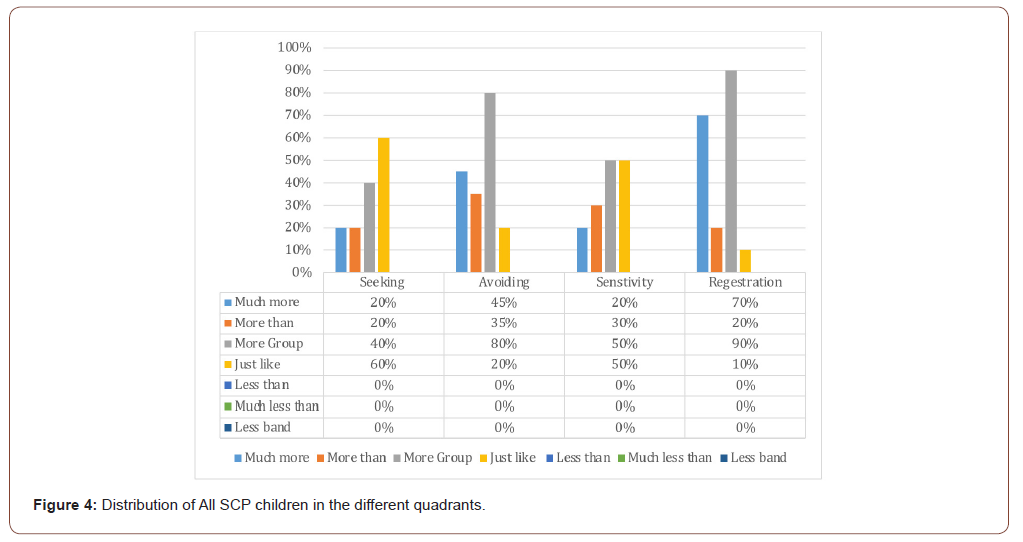
Participants were divided equally in the “Sensitivity” section between the “More groups” and “just like”; they mostly scored “Just Like” in “Seeking” section by 60%. No participants scored in any section as a “Less than” or “Much Less than”.
Literature stated that it is likely that young children have variability within their central nervous systems (CNS) on particular days (e.g., when more rested or tired) and within particular sensory systems e.g., the system that responds to touch [i.e., somatosensory] being more sensitive than the system that responds to movement [i.e., vestibular] [28,10] which has been confirmed by our results as follows: 20% of the participants faced sensory pattern processing abnormalities in only one section, while 55% of them faced sensory system difficulties in 2 to 3 sections, 35% faced difficulties in all four sections.
Neurological thresholds and self-regulatory strategies mainly found in children with SCP
In accordance to the relationship between neurological thresholds and self-regulatory strategies, each of the following four factors has two quadrants: active (seeking and avoiding quadrants), passive (sensitivity and registration quadrants), high (seeking and registration quadrants), and low (seeking and registration quadrants). Figure 5 illustrates these factors in children with SCP; which are formulated by the presence of the two quadrants each. In 25% of participants all four factors were present. The passive strategy was present more frequently by (45%) of participants, compared to active strategy which was preset by (35%). The high threshold occurs at (40%) and low threshold occurs at (45%).
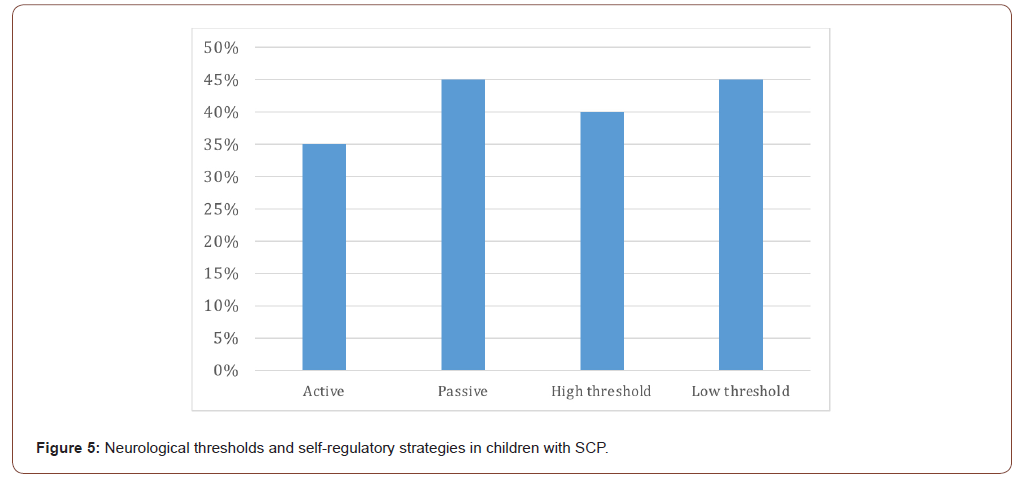
These results are very similar to the results of Louwrence’s study 27 especially at the percentages of active strategy and high threshold.
Sensory processing patterns Scores (Quadrant Scores) in both types of SCP
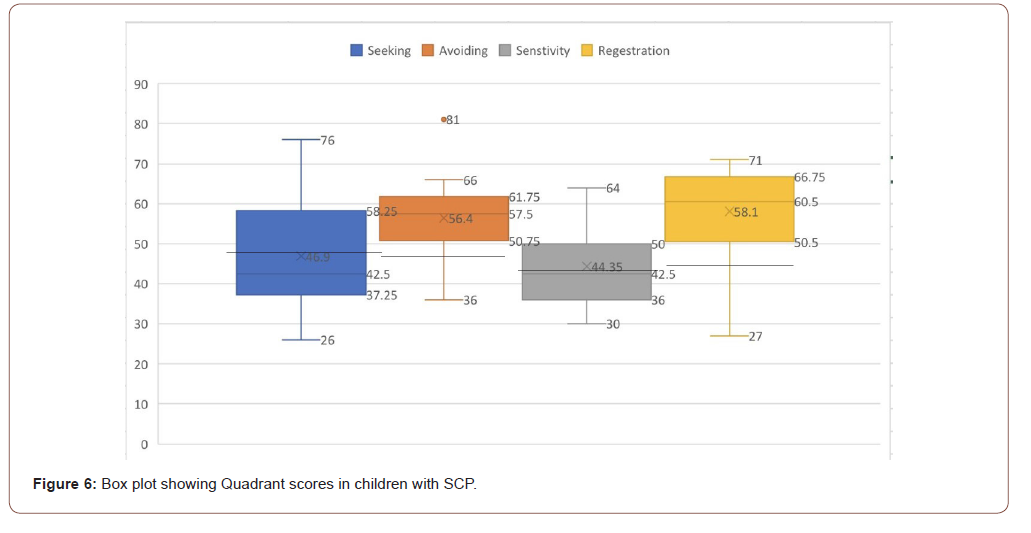
Figure 6 shows a box plot chart that was made using raw scores to form a visual representation of all data collected from all participants in all Quadrant scores, it shows that “Registration” has the longest tail while” Avoiding” had an outlier which make them of the most variable data for they have the highest range. Besides, “Registration” quadrant had the highest mean, followed by the “Avoiding” quadrant.
Means of Avoiding (56.4), Sensitivity (44.35) and Registration (58.1) are above the black line which refers to the line between “just like” and “more than” which means that they tend to fall out of the normal range. The furthest from the black line was “Registration” which means that more participants fell outside of the norm. While the mean of Seeking (46.9) lies below the black line which means it tends to be within the normal range.
Sensory processing pattern in each of the in both types of SCP (unilateral and bilateral)
Figure 7 shows the box plots of the seeking quadrant. Unilateral SCP has a longer box and the longer tail which means a more dispersed data. The mean of Unilateral SCP (43.2) which lies under the black line which means it tends to fall within the normal range and score as “just like”. While Bilateral SCP of the higher mean (48.133) lies just above the black line which still means that it tends to score in the “More Group”.
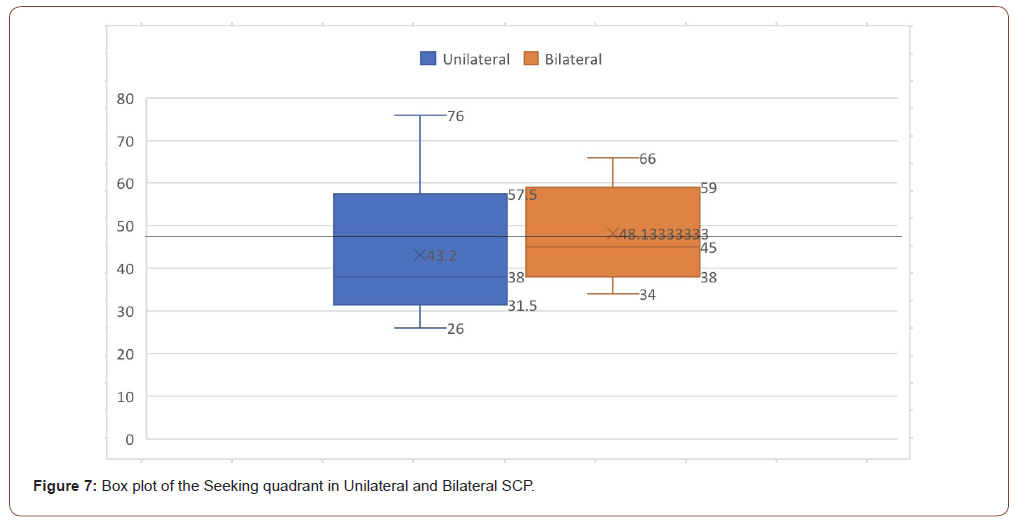
Figure 8 shows the box plots of the Avoiding quadrant. Bilateral SCP has a longer tail which means a more dispersed data. The mean of both Unilateral and Bilateral SCP are very similar being (55.6) and (56.66)respectively, they both lie above the black line which means that they tend to score in the “More Group”.
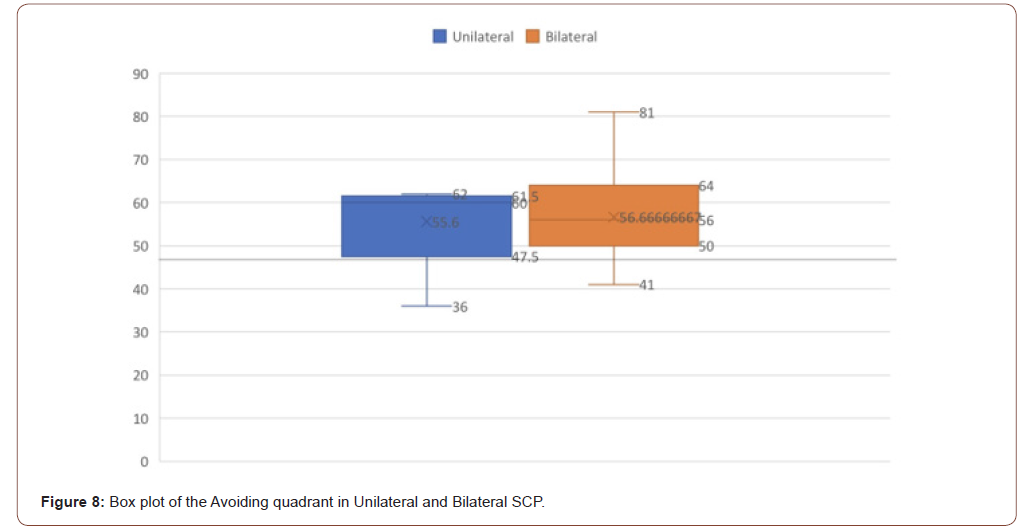
Figure 9 shows the box plots of the Sensitivity quadrant. Bilateral SCP has a longer tail which means a more dispersed data. The mean of Unilateral (42.6) lies below the black line, which means it tends to fall within the normal range and score as “just like”. While Bilateral SCP of the higher mean (44.933) lies just above the black line which still means that it tends to score in the “More Group”.
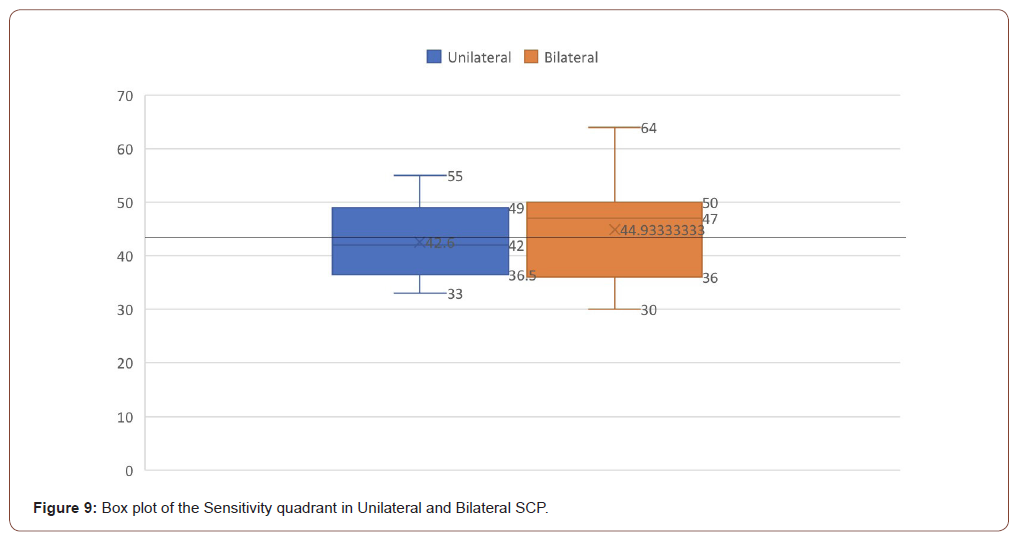
Figure 10 shows the box plots of the Registration quadrant. The mean of both Unilateral (47.4) and Bilateral (61.66) lie above the black line, which means it tends to fall out of the normal range and score in the “More group”. There is a significant difference between the two groups.
Table 2 represents a summary comparison between mean scores of unilateral and bilateral SCP. Unilateral happened to have lower means in all four quadrants, with the biggest difference in “registration” followed by “seeking”.
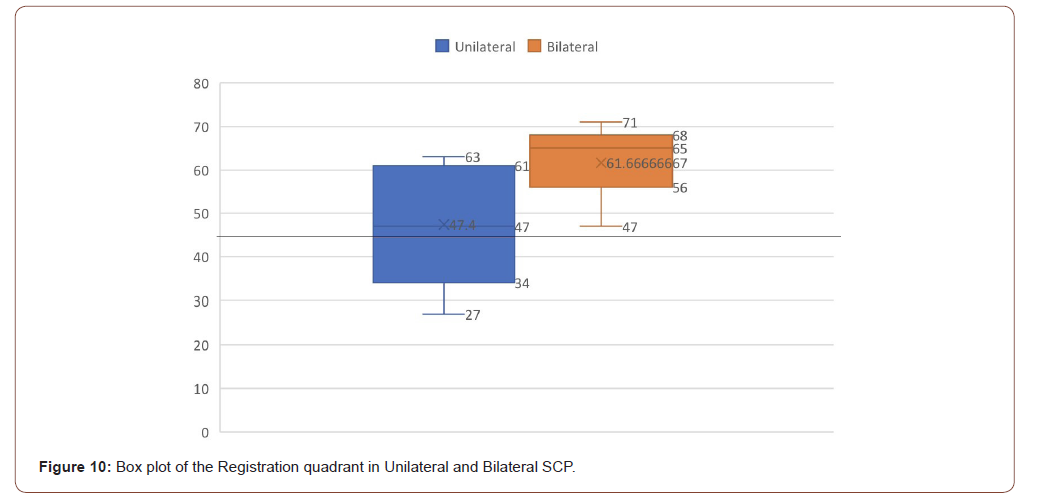
Table 2:Comparison between mean scores of Quadrants in Unilateral and Bilateral SCP.

Unilateral= Unilateral Spastic Cerebral Palsy, Bilateral= Bilateral Spastic Cerebral Palsy.
Figure 11 shows the distribution of the Quadrants in Unilateral SCP children. The majority scored as “Just Like” in the seeking quadrant by 80% followed by 60% in the sensitivity quadrant. While they scored in the collective “More Group” by 80% at avoiding quadrant followed by the registration quadrant by 60%.
Figure 12 shows the distribution of the Quadrants in Bilateral SCP children. All participants scored in the collective “More Group” in Registration quadrant. Followed by the “avoiding “quadrant by 80%, whereas the majority scored as “Just Like” in “seeking” quadrant by 53.33%.
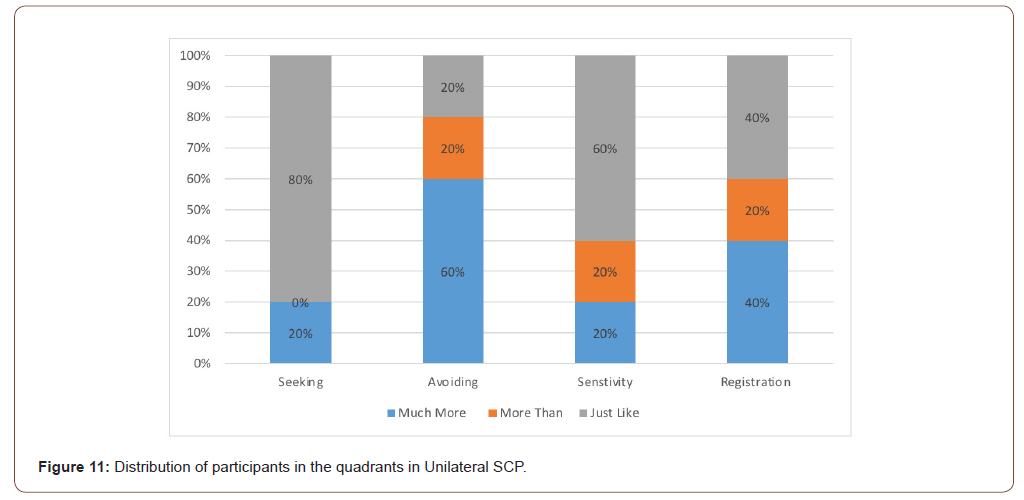
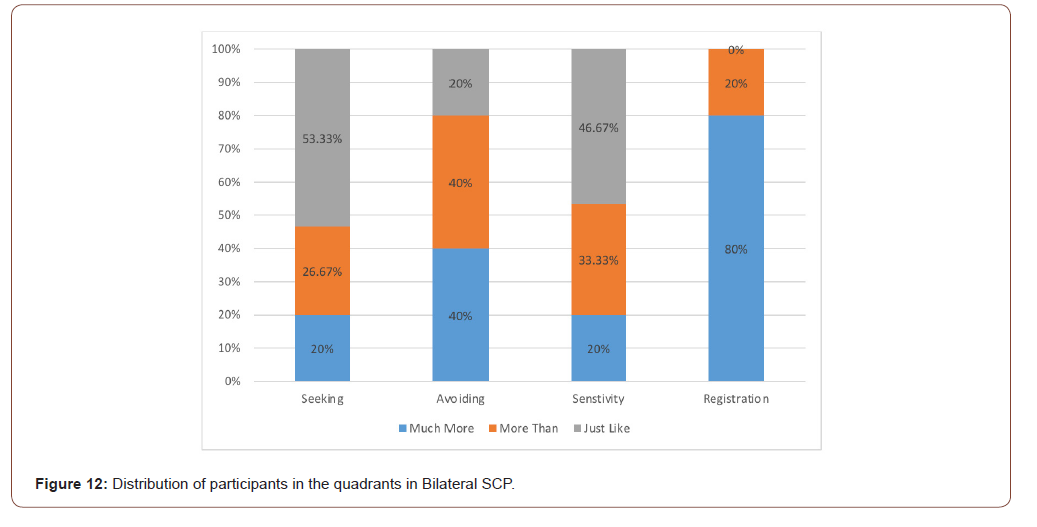
Comparing the distribution in the two groups of SCPs we notice that children with Unilateral SCP show less atypical sensory patterns. Which is different from the results by Louwrence [27] where the opposite occurred in the quadrants of “Seeking”, “Avoiding” and “Sensitivity”, this might be because of the small sample size of this study. It was also noticed that the Sensitivity Quadrant occurs in less than half of the Unilateral SCP participants while it occurs in more than the half of the Bilateral SCP participants
The current work was founded on the idea that when people have a clear understanding of the reasons behind difficult situations, they are better able to generalize the information to other situations and make better judgements and decisions, making life easier [16].
Conclusion
According to our findings, Children with SCP level I, II and III on GMFCS show sensory patterns processing abnormalities compared to normative data. They mainly showed registration patterns, which means they were bystanders and missed stimuli from their surroundings; reacted slowly to low stimuli. The second most pattern seen in SCP children was avoiding pattern, which means they are bothered by the least amount of stimuli and they actively trying to avoid them. Most of the children showed atypical sensory processing pattern in more than one quadrant. Children with Bilateral SCP showed more atypical patterns compared to children with Unilateral SCP in all four quadrants. Understanding this vital information enables us to gain a better understanding of their sensory experiences and processing patterns that may affect how they interact with their environment, allowing therapists and caregivers to actively participate in improving their treatment plans and learning more efficient ways to deal with them.
Acknowledgement
BM proposed the study, assisted with data gathering, analyzed and interpreted the results. She has made a significant contribution to the writing process. EG and AF contributed to the writing process by revising the data analysis. The work in this study was mainly supervised by AF. She was involved in the formulation of the research topic as well as the work’s design.
The authors would like to thank the rehabilitation institutes and caregivers who worked together to make this study feasible.
Conflict of Interest
The authors declare that they have no conflict of interest.
References
- Vitrikas K, Dalton H, Grant D (2020) Cerebral Palsy: An Overview. Am Fam Physician 101(4): 213-220.
- Bartels EM, Korbo L, Harrison AP (2020) Novel insights into cerebral palsy. J Muscle Res Cell Motil 41(2-3): 265-267.
- Van Eyk CL, Corbett MA, Gardner A, Van Bon BW, Broadbent JL, et al. (2018) Analysis of 182 cerebral palsy transcriptomes points to dysregulation of trophic signalling pathways and overlap with autism. Transl Psychiatry 8(1): 1-10.
- Shikako-Thomas K, Majnemer A, Law M, Lach L (2008) Determinants of participation in leisure activities in children and youth with cerebral palsy: Systematic review. Phys Occup Ther Pediatr 28(2): 155-169.
- Patel DR, Neelakantan M, Pandher K, Merrick J (2020) Cerebral palsy in children: A clinical overview. Transl Pediatr 9(1): S125-S135.
- Ozkan Y (2018) Child’s quality of life and mother’s burden in spastic cerebral palsy: a topographical classification perspective. J Int Med Res 46(8): 3131-3137.
- Surveillance of Cerebral Palsy in Europe (2000) Surveillance of cerebral palsy in Europe: A collaboration of cerebral palsy surveys and registers. Dev Med Child Neurol 42(12): 816-824.
- Jovellar-Isiegas P, Collados IR, Jaén-Carrillo D, Roche-Seruendo LE, García CC (2020) Sensory processing, functional performance and quality of life in unilateral cerebral palsy children: A cross-sectional study. Int J Environ Res Public Health 17(19): 1-13.
- Foxe JJ, Del Bene VA, Ross LA, Ridgway EM, Francisco AA, et al. (2020) Multisensory Audiovisual Processing in Children With a Sensory Processing Disorder (II): Speech Integration Under Noisy Environmental Conditions. Front Integr Neurosci 14: 39.
- Dean E, Dunn W, Little L (2016) Validity of the Sensory Profile 2: A Confirmatory Factor Analysis. Am J Occup Ther 70: 7011500075.
- Schaaf RC, Dumont RL, Arbesman M, May-Benson TA (2018) Efficacy of occupational therapy using ayres sensory integration®: A systematic review. Am J Occup Ther 72(1): 7201190010p1-7201190010p10.
- Prakash AJA, Vaishampayan A (2007) A preliminary study of the sensory processing abilities of children with Cerebral Palsy and typical children on the Sensory Profile. Indian J Occup Ther XXXIX(2): 27-34.
- Pavão SL, Lima CRG, Rocha NACF (2020) Association between sensory processing and activity performance in children with cerebral palsy levels I-II on the gross motor function classification system. Braz J Phys Ther 25(2): 194-202.
- Newell A, Cherry S, Fraser M (2020) Principles of Rehabilitation: Occupational and Physical Therapy. Orthopedic Care of Patients with Cerebral Palsy, pp. 221-250.
- Pavaõ SL, Silva FPDS, Savelsbergh GJP, Rocha NACF (2015) Use of sensory information during postural control in children with cerebral palsy: Systematic review. J Mot Behav 47(4): 291-301.
- Dunn W (2001) The sensations of everyday life: Empirical, theoretical, and pragmatic considerations. Am J Occup Ther 55(6): 608-620.
- Case-Smith J, O’Brien J (2015) Occupational Therapy for Children and Adolescents. 7th edn, Elsevier Inc.
- Dunn W (2014) Sensory Profile 2 User’s Manual. Bloomington: Pearson.
- Simpson K, Adams D, Alston-Knox C, Heussler HS, Keen D (2019) Exploring the Sensory Profiles of Children on the Autism Spectrum Using the Short Sensory Profile-2 (SSP-2). J Autism Dev Disord 49(5): 2069-2079.
- Demopoulos C, Francisco S, Arroyo M, et al. (2014) Individuals with agenesis of the corpus callosum show sensory processing differences as measured by the sensory profile Neuropsychology 29(5): 751-758.
- Delgado-Lobete L, Pértega-Díaz S, Santos-del-Riego S, Montes-Montes R (2020) Sensory processing patterns in developmental coordination disorder, attention deficit hyperactivity disorder and typical development. Res Dev Disabil 100: 103608.
- O’Shea TM (2008) Diagnosis, treatment, and prevention of cerebral palsy in near-term/term infants. Clin Obstet Gynecol 51(4): 816-828.
- Bumin G, Kayihan H (2001) Effectiveness of two different sensory-integration programmes for children with spastic diplegic cerebral palsy. Disabil Rehabil 23(9): 394-399.
- Pavão SL, Adriana N, Ferreira C (2017) Sensory processing disorders in children with cerebral palsy. Infant Behav Dev 46: 1-6.
- Metz AE, Boling D, Devore A, Holladay H, Liao JF, et al. (2019) Dunn’s model of sensory processing: An investigation of the axes of the four-quadrant model in healthy adults running head: Dunn’s model of sensory processing in healthy adults. Brain Sci 9(2): 35.
- Park MO (2017) The Relationship between Sensory Processing Abilities and Gross and Fine Motor Capabilities of Children with Cerebral Palsy. J Korean Soc Phys Med 12(2): 67-74.
- Louwrens S (2018) Sensory Modulation Patterns In Children With Cerebral Palsy : A Comaparative-Descriptive Study.
- Dunn W (1997) The impact of sensory processing abilities on the daily lives of young children and their families: A conceptual model. Infants Young Child 9(4): 23-35.
-

This work is licensed under a Creative Commons Attribution-NonCommercial 4.0 International License.