

 Case report
Rare manifestation: A case of Stevens-Johnson to Ibuprofen
1 Department of Pediatrics, Unidade Local de Saúde São João, Porto, Portugal
2 Pediatric Imunoalergology Department, Unidade local de Saúde São João, Porto, Portugal
Received Date: May 28, 2024; Published Date: June 04, 2024
Abstract
Non-steroid anti-inflammatory drugs (NSAIDs) are some of the most used drugs in children for their antipyretic, pain-relieving and antiinflammatory effects. In rare cases, these can have life threatening consequences, such as Stevens-Johnson syndrome (SJS), which is a severe cutaneous reaction mainly caused by medications.
Keywords: Ibuprofen; Steven-Johnson syndrome; Skin; Hypersensitivity
Case report
A 12-year-old, previously healthy, boy was referred for the
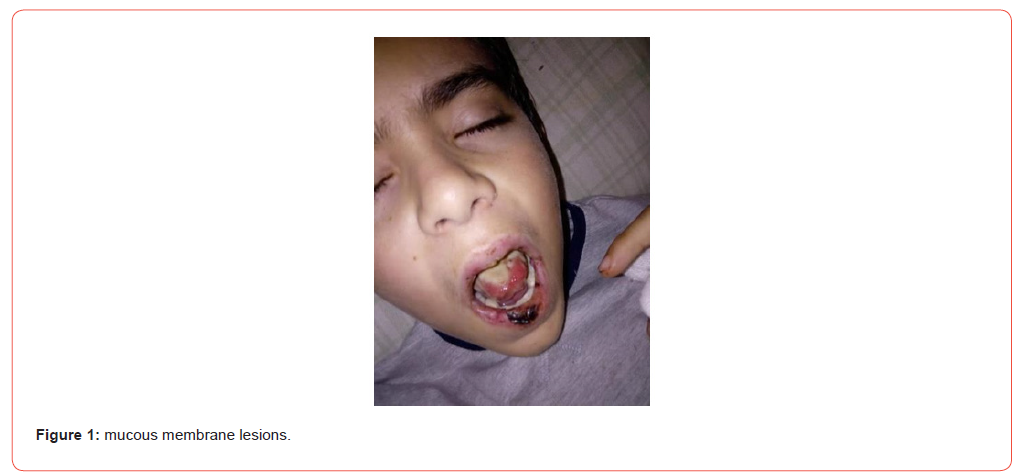
Allergy Clinic after 3 episodes of severe mucous membrane lesions
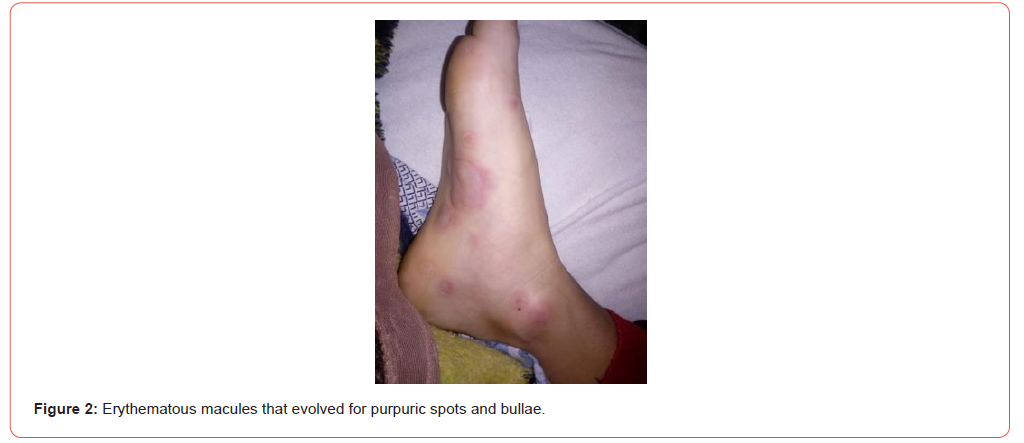
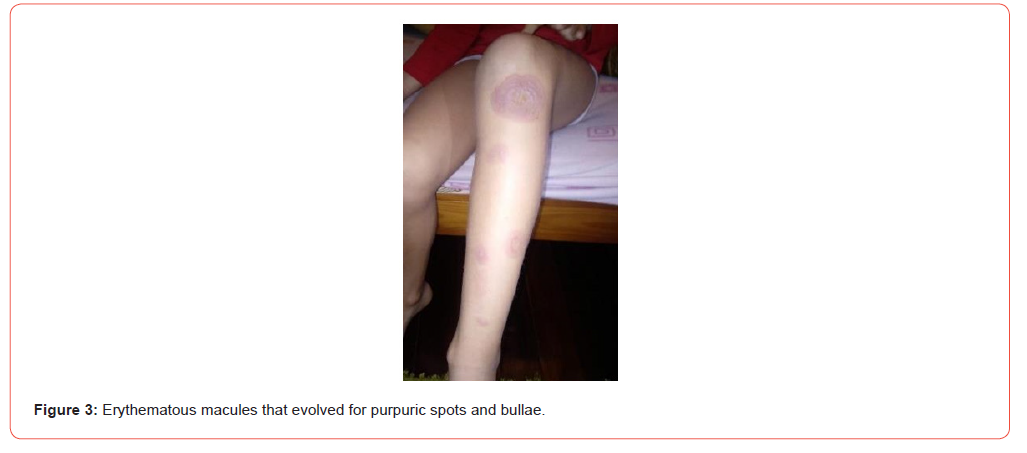
(Figure 1), and erythematous macules that evolved for purpuric
spots and bullae (Figures 2,3). In all episodes he had fever and
conjunctival hyperemia and had been given acetaminophen and
ibuprofen. He had been admitted to the Pediatrics Ward and had
had a multidisciplinary assessment to exclude autoimmune and
infectious causes. All the lesions had resolved after corticosteroid
therapy. After the hospital admissions, he was given acetaminophen
at home, with tolerance. Given the suspicion of an allergic reaction
to ibuprofen, a lymphocyte transformation test was performed for
this drug, which was positive [1]./p>
Discussion
SJS is an allergic reaction with severe skin and mucous involvement, characterized by extensive necrosis and detachment of the epidermis. Its exact pathogenesis is not fully understood but thought to be T cell-mediated, with NSAIDs being listed as high-risk drugs for SJS. The authors present this case to draw attention for the severity of some hypersensitivity reactions due to Ibuprofen, which though rare, can be potentially dangerous and life threatening [2,3].
Acknowledgement
None.
Conflict of Interest
None.
References
- Lee HY (2023) Stevens-Johnson syndrome and toxic epidermal necrolysis: Pathogenesis, clinical manifestations, and diagnosis.
- Ariza A, Mayorga C, Bogas G, Esther Barrionuevo, Maria J Torres, et al. (2020) Advances and novel developments in drug hypersensitivity diagnosis. Allergy 75(12): 3112-3123.
- Oakley A, Krishnamurthy K, Stevens-Johnson Syndrome (2024) StatPearls [Internet]. Treasure Island (FL).
-

This work is licensed under a Creative Commons Attribution-NonCommercial 4.0 International License.