

 Case Report
Odontoid Fracture with Atlantoaxial Dislocation: Successful Closed Reduction A Case Report and Literature Review
Received Date:May 14, 2026; Published Date:May 22, 2026
Abstract
Case: Odontoid fracture with atlantoaxial dislocation is a rare and dangerous condition that is generally regarded as difficult to reduce. This
report describes a case of a 75-year-old female patient with a type II odontoid fracture and posterolateral atlantoaxial dislocation. Successful closed
reduction was achieved within 4 hours using maximum 7.26 kg (16 lbs) of traction with muscle relaxants, followed by posterior C1-C2 fixation
without postoperative complications or neurological deficits.
Conclusion: This case highlights the closed reduction technique and details for odontoid fracture with atlantoaxial dislocation, and summarizes
the experience from previous successful closed reduction cases.
Keywords:Atlantoaxial dislocation; Odontoid fractures; Closed reduction
Introduction
Odontoid fractures with atlantoaxial dislocation represents an exceptionally rare clinical entity. A systematic PubMed search utilizing the terms “odontoid fracture with atlantoaxial dislocation” and “odontoid fracture with C1/2 dislocation” yielded 269 publications till May 2026. After applying inclusion criteria “acute traumatic presentations <4 weeks duration, adult patients, Englishlanguage publications”, 32 relevant cases were identified. Among these, only 9 cases documented successful closed reduction.
Odontoid fractures with atlantoaxial dislocation represent life-threatening injuries with significant morbidity and mortality. Zitouna reported a case presenting with tetraplegia that resulted in death from respiratory complications 5 days after surgery [1]. Clarke reported a case presenting with respiratory failure [2]. Surgery for irreducible atlantoaxial dislocation becomes much more challenging due to the common occurrence of bony and vascular anomalies [3]. Therefore, closed reduction followed by open fixation represents the safer management approach. However, literature suggests that most patients fail closed reduction [4]. This article summarizes all reported successful closed reduction cases and analyzes the methods and details of closed reduction techniques.
The patient was informed that information regarding her case would be submitted for publication, and she provided consent.
Case Presentation
A 75-year-old female with a medical history of scoliosis extending to the upper thoracic and cervical spine fell from a 1-meter-high ladder at home, sustaining a forehead impact with neck hyperextension injury. The patient complained of neck pain and torticollis after the injury, along with left upper limb numbness. Physical examination revealed stable vital signs, a Glasgow Coma Scale score of 15, right forehead abrasion, and no neurologic deficits.
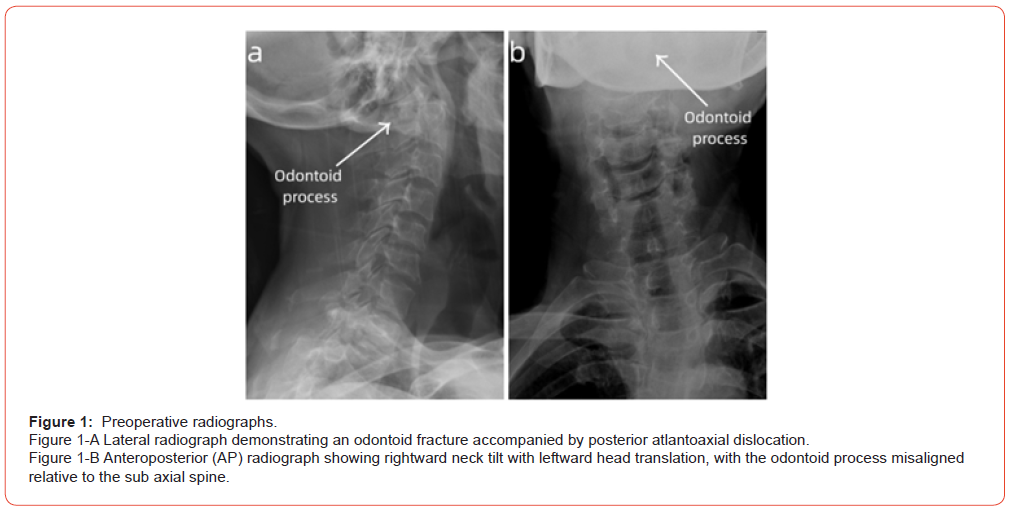
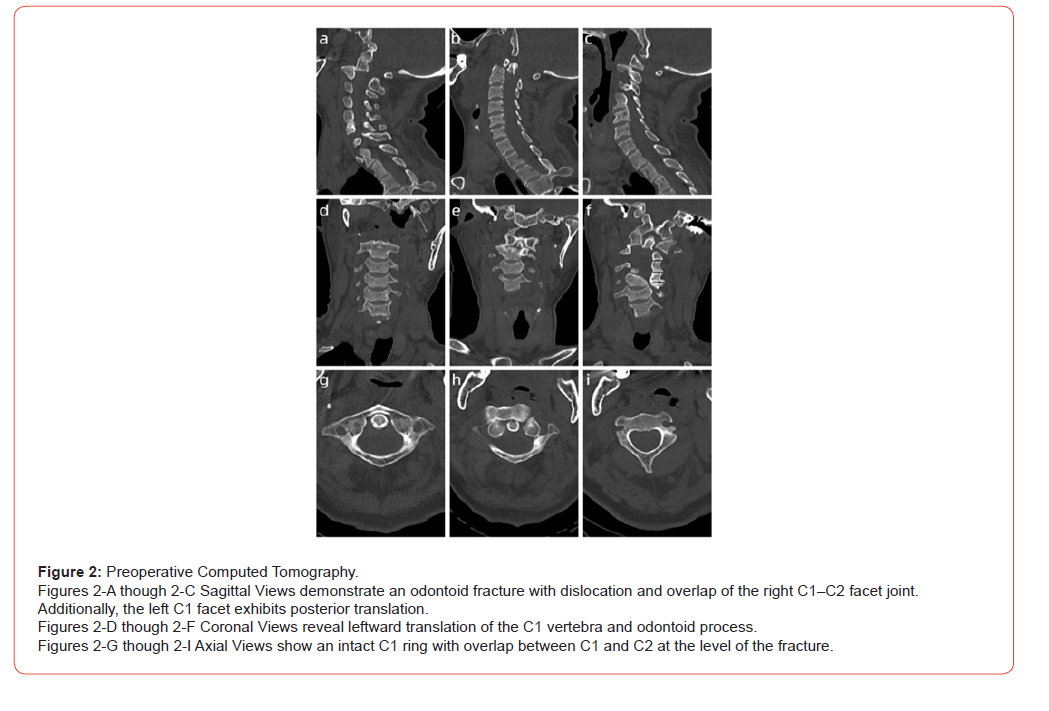
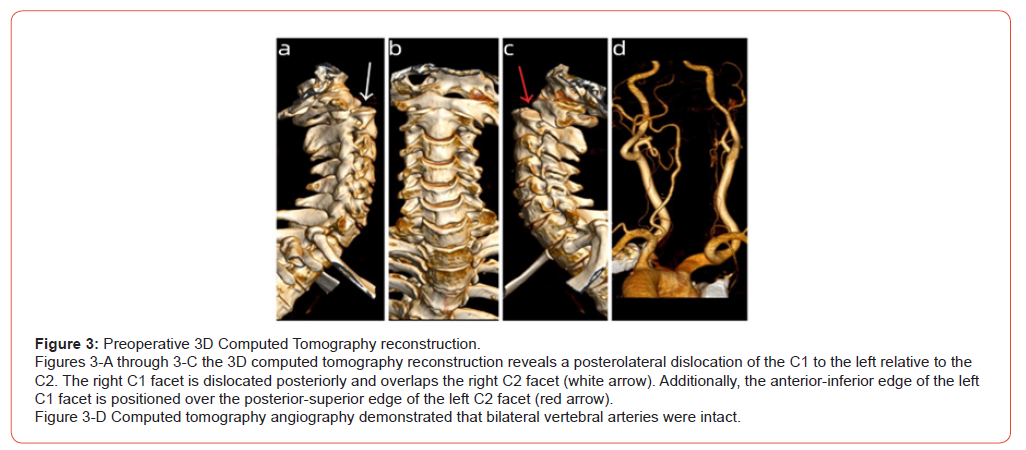
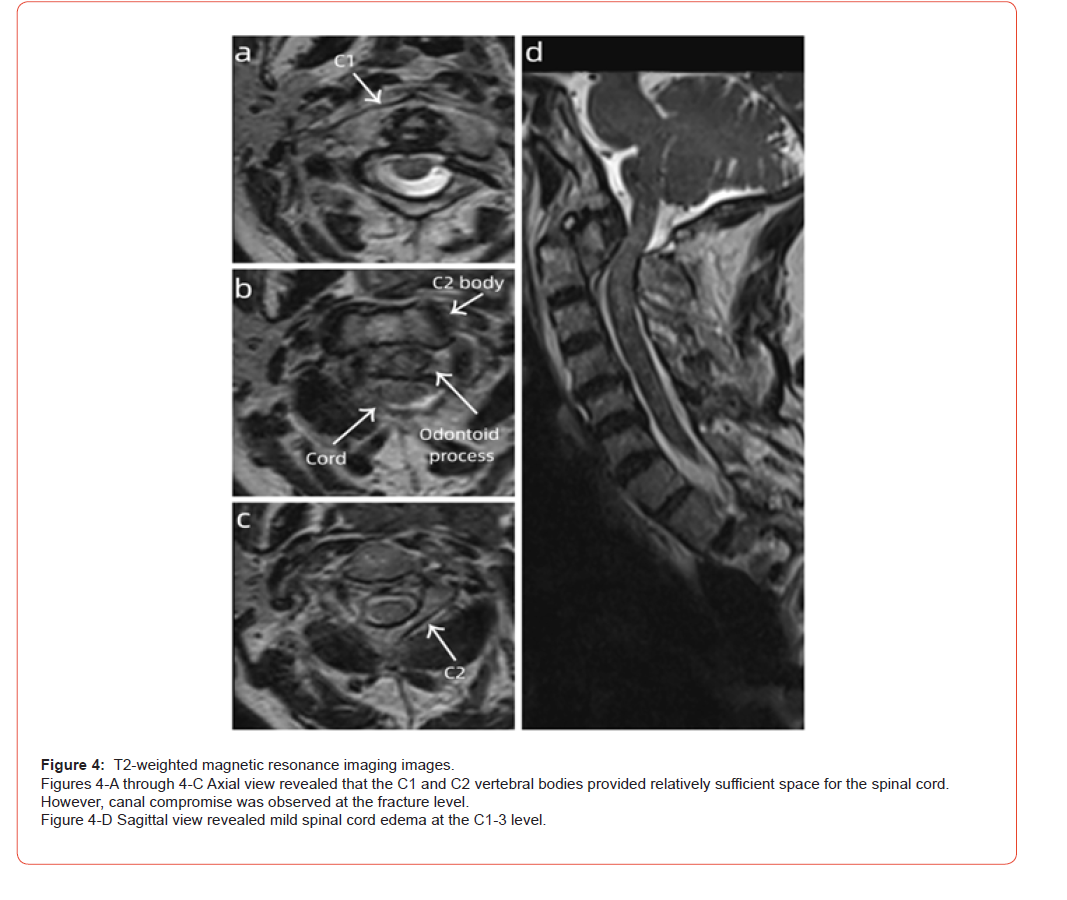
Upon arrival in the Accident and Emergency department, a rigid neck collar was immediately applied. Initial cervical spine radiography revealed an odontoid fracture with posterior atlantoaxial dislocation (Figure1). Subsequent computed tomography imaging confirmed a type II odontoid fracture with C1 posterolateral dislocation to the left side of C2 (Figure 2). Computed tomography angiography showed patent bilateral vertebral arteries (Figure 3). Magnetic resonance imaging, ready availability at our centre, demonstrated cord compression mainly at the odontoid fracture level with cord oedema from C1 to C3 levels, while maintaining relatively adequate space around the cord at C1 and C2 (Figure 4).
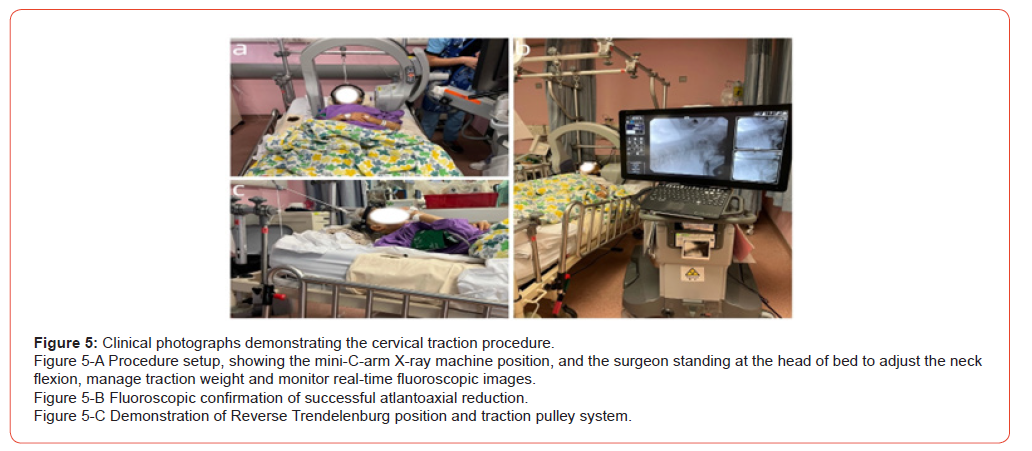
The patient received continuous vital sign monitoring and appropriate analgesia. A halo crown (DePuy Bremer Halo System) was applied using four fixation pins positioned at the lateral onethird of the supraorbital region and 1 cm superior to the pinna, each tightened to 3.63 kg (8 lbs). The patient was placed in 15-20 degrees reverse Trendelenburg positioning to facilitate counter-traction. Traction was initiated at 4.54 kg (10 lbs), with neck flexion angle titrated using a portable mini-C-arm X-ray machine (Orthoscan TAU 1515) (Figure 5). Traction weight was increased by 0.90 kg (2 lbs) every 15-20 minutes, with neurological assessment 2-3 minutes following each after weight increment. Serial radiographs were performed to evaluate for over-distraction. Intravenous diazepam was administered as a muscle relaxant, starting with 2 mg bolus and monitoring for sedative effects. If the patient remained conscious after 5 minutes, an additional 1mg was given, ultimately totalling 4 mg (0.1 mg/kg). Successful reduction was achieved 4 hours after initiating traction at a final traction weight of 7.26 kg (16 lbs), with the patient reporting a clicking sensation during reduction. A halo vest was then applied to maintain reduction.
Definitive stabilization operation was performed on postinjury day 5 via a posterior approach under general anesthesia with continuous intraoperative neuromonitoring (somatosensory evoked potentials and motor evoked potentials). C1 and C2 screws (Stryker OASYS Occipital-Cervical-Thoracic System) were inserted using navigation (Stryker NAV3i surgical navigation platform). Due to the small C1 posterior arch, C1 lateral mass screws were inserted using a notching technique [5]. The screws were connected with rods, followed by decortication of posterior C1 and C2 and application of artificial bone graft (i-Factor FLEX FR Cerapedics USA) between them.
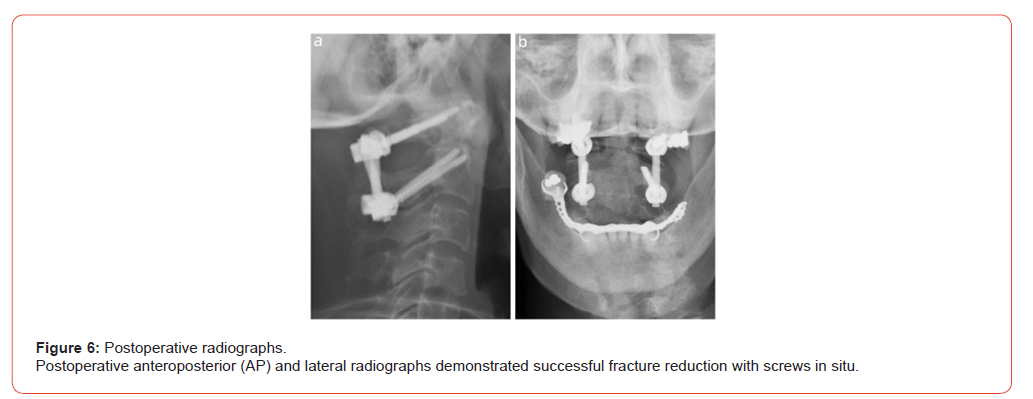
Postoperative radiographs showed complete reduction and proper implant position (Figure 6). A Sternal Occipital Mandibular Immobilizer was prescribed for 8 weeks of additional protection. The patient’s postoperative neurological status remained intact. The patient has been followed for 15 months to date; she remains asymptomatic and neurologically intact. Serial radiographs demonstrate that the implants are stable and remain in situ.
Discussion
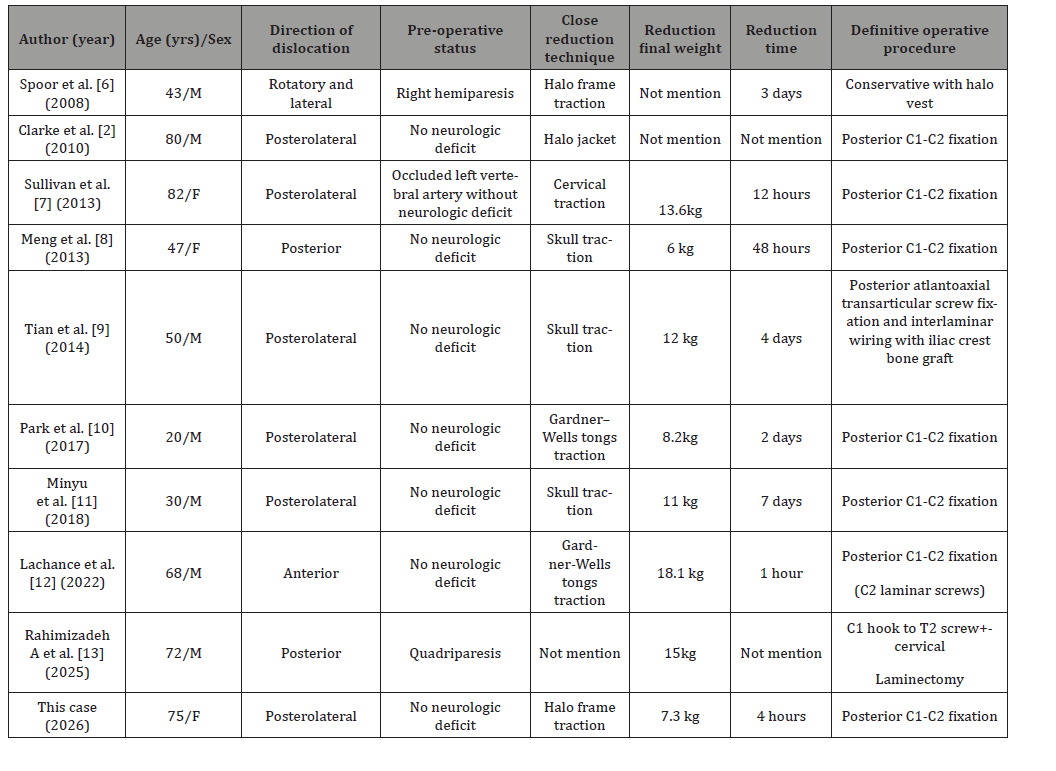
The literature review identified 8 reported cases of successful closed reduction (Table 1). The maximum weight for successful reduction ranged from 6 kg to 18.1 kg. One case was achieved reduction in 1 hour by the most aggressive weight in 18.1 kg, while other case required 12 hours to 7 days. None of the 9 reported cases mentioned using muscle relaxation or other medications. Only one case was treated conservatively with a halo vest as definitive management, while all others underwent operative treatment.
Table 1: Summary of Recent Literature of Successful Closed Reduction for Odontoid Fracture with Atlantoaxial Dislocation.
Two specific conditions must be ruled out before attempting closed reduction. Przybylski et al. demonstrated a critical contraindication in a case of type III odontoid fracture with longitudinal atlantoaxial dislocation where 5 lbs of skeletal traction resulted in marked neurological deterioration from unanticipated longitudinal instability [14]. They recommended avoiding skeletal traction when recognizing wide separation among fragments, which may indicate extensive ligament disruption. Another important consideration is vertebral artery occlusion, where early open reduction may be preferable since closed reduction typically requires more time and could potentially affect reperfusion of the vertebral artery. Although one reported case noted successful reperfusion of an occluded vertebral artery after a 12-hour closed reduction [7], expert opinion on the same case suggested that direct open reduction might be quicker and safer [15]. Furthermore, the integrity of the Circle of Willis and the presence of any vertebral artery occlusive symptoms are critical factors in deciding between closed and open reduction.
Regarding closed reduction techniques, no consensus exists about the details of traction protocol, particularly at the atlantoaxial level. Each step of the process proves crucial. For traction angle, the trajectory significantly affects reduction efficacy. Crutchfield et al. suggested aligning the traction direction with the facet articulation in sub axial levels [16]. For atlantoaxial cases, we aligned traction with the C1/2 facet overlapping plane using portable fluoroscopy and rolled bedsheet support to adjust the flexion angle. Concerning the reverse Trendelenburg position for counter-traction, Crutchfield et al. recommended not exceeding 20 degrees [16].
The most critical considerations involve the weight and duration of reduction. For atlantoaxial skeletal traction, Crutchfield et al. suggested a minimum weight of 5 lbs and maximum of 10-12 lbs [16], while Fielding and Hawkins recommended not exceeding 9.1 kg in adults [17]. Various protocols exist for weight escalation during traction. Some articles recommend increasing weight based on injury level, following Crutchfield’s proposal of 5 lbs minimum weight for C1 injuries up to 18 lbs minimum weight for C7 injuries [16]. Reindl et al. suggested starting with 5 kg plus 2.5 kg per level below C1, then adding 2.5 kg every 30 minutes until achieving reduction, up to a maximum of 50% estimated body weight for 1 hour [18]. Other protocols are not level-dependent; Grant et al. recommended increasing traction weight in 5-10 lbs increments every 5 minutes (up to 80% of body weight), reporting a 97.6% success rate in 82 patients [19]. Our summarized data show that most surgeons chose to use lighter weights for this procedure, even though heavier weights might work faster, as they preferred the slower but safety way.
For manual reduction assistance, we could adjust the traction direction or manual manoeuvre based on the dislocation direction. Opoku-Darko et al. described a technique for anterior dislocations involving cervical traction combined with oropharyngeal finger pressure against the dislocated lateral mass [20].
The use of muscle relaxants remains controversial. Some studies use them selectively for certain patients [19, 21], while others routinely administer diazepam [22]. While muscle relaxants may theoretically accelerate reduction time, their sedative effects could mask neurological changes. Intravenous diazepam has a rapid onset (1-3 minutes) and prolonged duration (>12 hours), with recommended skeletal muscle relaxant doses of 2-10 mg [23]. Given that most atlantoaxial traction reductions require hours or even days, the long duration of action may prove advantageous. Achieving muscle relaxation without excessive sedation is challenging due to individual variability. Starting with the lowest effective dose and carefully titrating under close medical supervision appears to be the safest approach. In our case, we began with 2 mg, adding 1 mg every 5 minutes (total 4 mg, 0.1 mg/ kg) while maintaining consciousness for neurological testing. The 4 hours reduction time was shorter than most previously reported cases at this relatively low traction weight.
In addition to closed reduction, we must be fully prepared with all types of surgical approaches, various open reduction techniques, appropriate fixation construct selection, and a comprehensive postoperative rehabilitation plan.
Discussion
Odontoid fracture with atlantoaxial dislocation is an extremely rare and critical condition requiring thorough understanding of each management step and contingency plans. Although typically difficult to reduce, successful reduction significantly decreases subsequent surgical complexity. This article summarizes the detailed reduction procedures from previous successful closed reduction cases. Most surgeons have applied relatively light weights for reduction, typically requiring longer reduction times. Muscle relaxants like diazepam may expedite reduction, but their sedative effects could mask neurological changes, suggesting that starting with low doses and careful titration is preferable. This review aims to provide a reference for clinicians encountering this challenging condition.
Acknowledgement of Author Contributions
Weng Io Ng: Conceptualization; Data curation; Formal analysis; Writing original draft; and Writing - review & editing. Hung On Cheng: Clinical supervision; Writing review & editing. Eleanor Wen: Data curation; Writing review & editing.
Conflict of Interest
The authors declare that they have no competing interests.
References
- Zitouna K, Riahi H, Lassoued NB, Selmene MA, Barsaoui M, et al. (2019) Traumatic Atlantoaxial Dislocation with an Odontoid Fracture: A Rare and Potentially Fatal Injury. Asian J Neurosurg. 14(4): 1249-1252.
- Clarke A, Hutton MJ, Chan D (2010) Respiratory failure due to a displaced fracture of the odontoid. J Bone Joint Surg Br 92 (7): 1023-1024.
- Deepak AN, Salunke P, Sahoo SK, Prasad PK, Khandelwal NK (2017) Revisiting the differences between irreducible and reducible atlantoaxial dislocation in the era of direct posterior approach and C1-2 joint manipulation. J Neurosurg Spine 26(3): 331-340.
- Iyer RD, Mengesha MG, Shetty AP, Rajasekaran S (2024) Odontoid Fracture with Locked Posterolateral Atlantoaxial Dislocation: A Case Report and Review of Literature. JBJS Case Connect 14(3).
- Lee MJ, Cassinelli E, Riew KD (2006) The feasibility of inserting atlas lateral mass screws via the posterior arch. Spine (Phila Pa 1976) 31(24): 2798-2801.
- Spoor AB, Diekerhof CH, Bonnet M, Oner FC (2008) Traumatic complex dislocation of the atlanto-axial joint with odontoid and C2 superior articular facet fracture. Spine (Phila Pa 1976) 33(19): E708-711.
- Sullivan MP, McCormick JD, Arlet V (2013) Vertebral artery injury and severely displaced odontoid fracture: the case for early reduction. Eur Spine J 22(10): 2149-2153.
- Meng H, Gao Y, Li M, Luo Z, Du J (2014) Posterior atlantoaxial dislocation complicating odontoid fracture without neurologic deficit: a case report and review of the literature. Skeletal Radiol 43(7): 1001-1006.
- Tian NF, Xu HZ, Wu YS, Chi YL (2014) Traumatic atlantoaxial dislocation with type II odontoid fracture. Spine J 14(6): 1067-1069.
- Park JB, Kang SS, Yeom JS (2017) Traumatic C1-2 posterolateral dislocation with dens fracture, injury of the transverse atlantal ligament, and unilateral facet fracture with subluxation of C6-7: A case report. Medicine (Baltimore) 96(48): e8913.
- Minyu Z, Shiyang W, Suraj C, Kelun H, Chaowei L, et al. (2018) Traumatic Posterolateral C1-C2 Dislocation Complicated with Locked Lateral Mass and Type II Odontoid Fracture-5-Year Follow-up. World Neurosurg 114: 330-334.
- Lachance AD, Gerstl JVE, Florman JE (2022) Atlantoaxial Spondyloptosis with Type II Odontoid Fractures: A Report of 2 Cases. JBJS Case Connect 12(4).
- Rahimizadeh A, Soufiani H, Amirzadeh M, Rahimizadeh S (2025) Case of posterior atlantoaxial dislocation with backward displacement of type II odontoid fracture. Surg Neurol Int 16: 546.
- Przybylski GJ, Welch WC (1996) Longitudinal atlantoaxial dislocation with type III odontoid fracture. Case report and review of the literature. J Neurosurg 84(4): 666-670.
- Kandziora F, Langheinrich A. (2013) Expert's comment concerning Grand Rounds case entitled "Vertebral artery injury and severely displaced odontoid fracture: the case for early reduction" (by M.P. Sullivan, J.D. McCormick, V. Arlet). Eur Spine J 22(10): 2154-2156.
- Crutchfield WG (1954) Skeletal Traction in Treatment of Injuries to the Cervical Spine. J Am Med Assoc 155(1): 29–32.
- Fielding JW, Hawkins RJ (1977) Atlantoaxial rotatory fixation (Fixed rotatory subluxation of the atlantoaxial joint). J Bone Joint Surg Am 59(1): 37-44.
- Reindl R, Ouellet J, Harvey EJ, Berry G, Arlet V (2006) Anterior Reduction for Cervical Spine Dislocation. Spine 31(6): 648–652.
- Grant GA, Mirza SK, Chapman JR, Winn HR, Newell DW, et al. (1999) Risk of early closed reduction in cervical spine subluxation injuries. J Neurosurg (1 Suppl): 13-8.
- Michael Opoku-Darko, Albert Isaacs, Stephan du Plessis (2018) Closed reduction of traumatic atlantoaxial rotatory subluxation with type II odontoid fracture. Interdisciplinary Neurosurgery 11: 19-23.
- Cotler JM, Herbison GJ, Nasuti JF, Ditunno JF Jr, An H, et al. (1993) Closed reduction of traumatic cervical spine dislocation using traction weights up to 140 pounds. Spine (Phila Pa 1976) 18(3): 386-390.
- Merom L, Soudry M, Rosenberg N (2015) Low Friction Traction for Cervical Spine Dislocation. Open Journal of Clinical Diagnostics 5: 117-120.
- Dhaliwal JS, Rosani A, Saadabadi A (2025) Diazepam [Updated 2023 Aug 28]. In: StatPearls. Treasure Island (FL): StatPearls Publishing.
-

This work is licensed under a Creative Commons Attribution-NonCommercial 4.0 International License.