



 Research Article
Understanding the Gaps: DASH Diet Awareness and Hypertension-Related Behaviours in Young Adults
Received Date: August 14, 2026 Published Date: August 29, 2026
Abstract
Introduction/Background
Hypertension represents a major modifiable risk factor for cardiovascular morbidity and mortality, with its prevalence increasingly observed among young adult populations worldwide. In the Indian context, epidemiological data indicate that 12.4% of males and 8.2% of females within the 18–39-year age group are affected by elevated blood pressure. The Dietary Approaches to Stop Hypertension (DASH) diet, an evidence-based nutritional intervention, promotes the intake of nutrient-rich foods while restricting dietary sodium, saturated fats, and added sugars. Despite its demonstrated efficacy in blood pressure regulation, both awareness and adherence to the DASH dietary regimen remain suboptimal among young adults. This study was undertaken to assess the levels of awareness, knowledge, and compliance with the DASH diet in this demographic, while also examining associated dietary behaviours and lifestyle determinants contributing to hypertension risk.
Methodology
A cross-sectional study was conducted among 263 participants aged 18–25 years, predominantly first-year undergraduate students. A structured and validated questionnaire assessed participants’ knowledge, dietary habits, and lifestyle factors. Data were analyzed using descriptive statistics and chi-square tests, with p-values <0.05 considered statistically significant. Literature searches utilized PubMed and Scopus databases with MESH terms like “DASH diet,” “hypertension,” and “dietary adherence.”
Results
Only 25.1% of participants were aware of the DASH diet, and 35.7% expressed willingness to follow it. Key findings included high consumption of sugar-sweetened beverages (51%) and fatty meals (50.6%) and an average salt intake exceeding recommended limits for 65% of participants. Awareness of the normal blood pressure range was high (93.2%), with 78.3% recognizing excessive salt intake as a hypertension risk factor. Gender differences revealed males were more physically active, while females were more aware of dietary risks related to salt and hypertension. Stress levels and headaches were more prevalent among females.
Conclusion
The study highlights limited awareness and suboptimal adherence to the DASH diet among young adults. Efforts to enhance awareness and adherence, especially through educational campaigns, are critical for hypertension prevention and management. Gender-specific interventions addressing dietary habits and lifestyle factors are recommended to promote better health outcomes.
Keywords:DASH diet, hypertension, young adults, dietary adherence, lifestyle factors, gender differences, sodium intake.
Introduction
Hypertension, a leading risk factor for cardiovascular diseases, has seen a rising prevalence among young adults globally. In India, studies indicate that 12.4% of men and 8.2% of women aged 18–39 years are hypertensive [1].
Eating patterns play a crucial role in modulating blood pressure (BP). High sodium consumption is a recognized contributor to the development of hypertension [2,3]. whereas dietary regimens abundant in fruits, vegetables, and low-fat dairy—such as the Dietary Approaches to Stop Hypertension (DASH) diet—have been proven effective in lowering BP levels [4]. The Dietary Approaches to Stop Hypertension (DASH) diet is a scientifically backed nutritional approach designed to prevent and manage hypertension. It emphasizes the consumption of nutrient-dense foods rich in potassium, calcium, magnesium, and fiber while reducing sodium, saturated fats, and added sugars. Developed in the 1990s by the National Heart, Lung, and Blood Institute (NHLBI), the DASH diet was shown to effectively lower blood pressure levels, even without weight loss interventions [5]. Despite the proven benefits of the DASH diet, awareness and adherence among young adults remain suboptimal. A study among university students found that only a minority adhered to the DASH dietary pattern, which was associated with lower BP and reduced visceral fat (3). Furthermore, eating behaviours, including the consumption of latenight snacks and preference for certain tastes, have been linked to elevated BP levels in college students [6].
In the Indian context, dietary patterns are diverse, with a significant portion of the population following vegetarian diets. However, the consumption of processed foods high in sodium is increasing, contributing to the hypertension burden [1]. Additionally, lifestyle factors such as physical inactivity and stress are prevalent among young adults, further exacerbating the risk of hypertension. [7,8] Given the escalating prevalence of hypertension and the critical role of diet in its management, it is imperative to assess the awareness and adherence to dietary patterns like the DASH diet among young adults. Understanding the knowledge gaps and barriers to adherence can inform targeted interventions aimed at promoting healthy eating behaviours and, consequently, reducing the risk of hypertension and related complications in this demographic. This study aims to evaluate the awareness, knowledge, and adherence to the DASH diet among young adults, alongside their dietary habits and lifestyle factors, to provide insights into potential strategies for hypertension prevention and management in this population.
Methodology
Study Design
A cross-sectional study was conducted to evaluate the awareness, knowledge, and adherence to the DASH diet among young adults aged 18-25 years.
Inclusion Criteria
● Participants aged 18-25 years.
● Individuals willing to provide informed consent.
● Both genders, irrespective of dietary habits.
Exclusion Criteria
● Participants with pre-existing diagnosed chronic diseases such as diabetes or hypertension.
● Individuals on specific dietary restrictions or regimens not related to DASH.
Number of Participants
The study included 263 participants, predominantly first-year undergraduate students, with a demographic distribution of 65% females and 35% males.
Data Collection Tools
Questionnaire Formation: A structured questionnaire was designed and validated based on:
• Awareness and knowledge of the DASH diet.
• Dietary patterns and habits (e.g., salt intake, caffeine consumption).
• Lifestyle factors (e.g., physical activity, stress levels).
• Sources of dietary information and willingness to follow the DASH diet.
• Anthropometric measures such as BMI.
Literature Search and Data Sources
● MESH Terms: Relevant medical subject headings included “DASH diet,” “hypertension,” “dietary adherence,” “young adults,” and “nutritional interventions.”
● Databases Used:
• PubMed: For peer-reviewed articles related to DASH and hypertension.
• Scopus: For cross-disciplinary studies on diet and lifestyle.
Statistical Analysis
● Chi-square tests for analyzing associations between gender and dietary habits.
● P-values less than 0.05 were considered statistically significant.
Ethical Considerations
The study received approval from the institutional ethics committee. Participants provided written informed consent before inclusion.
Results
Table 1: Demographic Distribution of Study Population
The study consisted of 263 participants, predominantly females (65.0%) compared to males (35.0%). The majority of participants (71.5%) were aged 18–20 years, followed by 27.4% in the 20–24 years range, with only 1.1% aged above 25 years. In terms of academic year distribution, an overwhelming 91.6% were firstyear students, while only 7.2% were third-year students, and the remaining were evenly distributed among second-year students, fourth-years, and interns (0.4% each). This demographic structure reflects a youthful and predominantly female population, with a large proportion at the beginning of their academic journey.
Table 1: Demographic distribution of study population


Table 2: Knowledge about the DASH Diet
Knowledge and awareness of the DASH diet were limited among participants. A small proportion (25.1%) had heard of the DASH diet, but 35.7% expressed willingness to follow it. Dietary habits revealed that 38.4% consumed caffeine often, while 51.0% consumed sugar-sweetened beverages frequently. The participants’ dietary patterns showed that 53.6% followed a vegetarian diet, while 39.9% opted for a mixed diet. In terms of fatty meals, 50.6% reported consuming them often, and 65.0% had an average daily salt intake of 5 grams, exceeding the recommended limits. Regarding dietary health awareness, 68.4% reported consuming a balanced diet, while 45.6% actively monitored their salt intake. Awareness of the normal blood pressure range was high, with 93.2% identifying it correctly. Furthermore, 78.3% recognized that excessive salt intake could lead to hypertension, while 66.2% associated it with heart diseases
Table 2:Knowledge about DASH diet
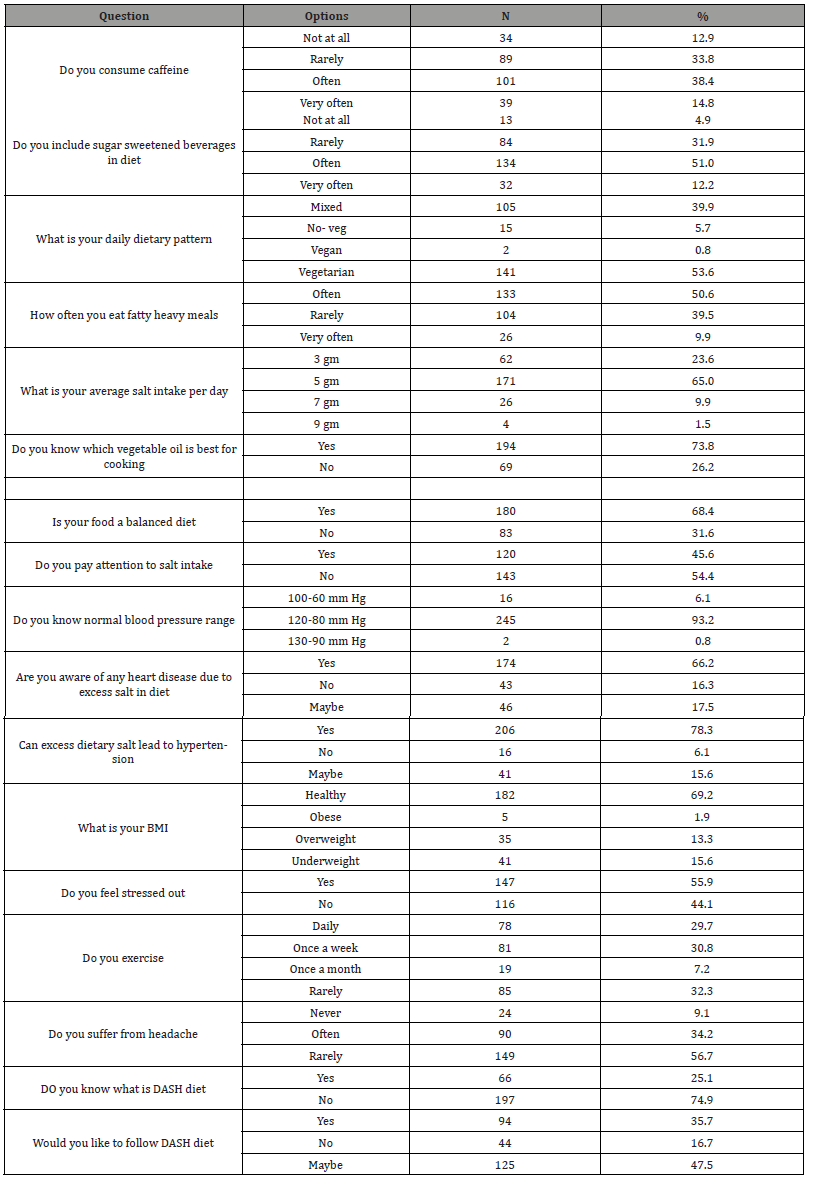
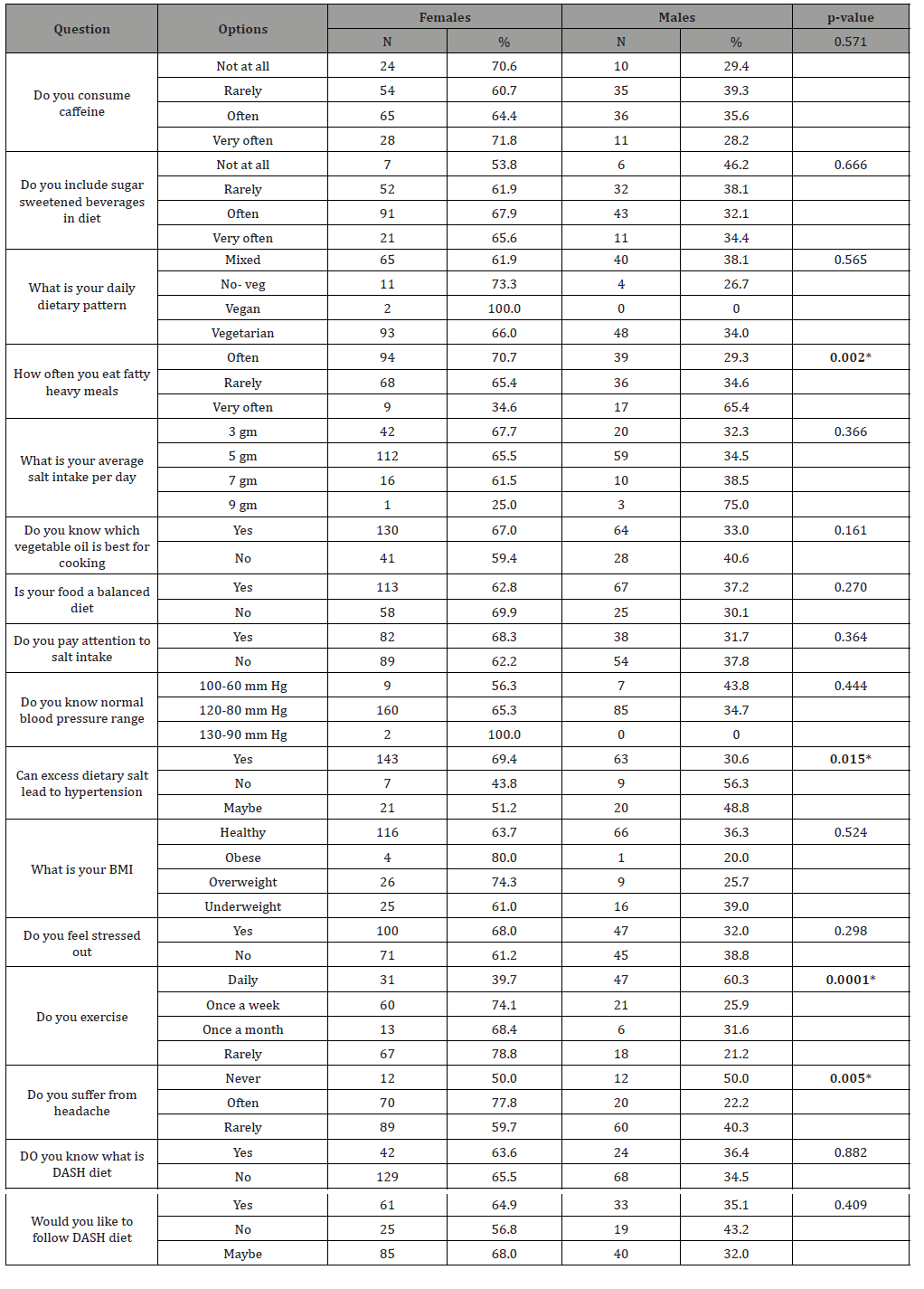
Table 3: Knowledge According to Gender
The analysis revealed significant gender differences in several parameters. Females were more likely to consume fatty meals less often, with only 34.6% consuming them very often compared to 65.4% of males (p=0.002). Regarding physical activity, males demonstrated higher exercise levels, with 60.3% exercising daily compared to 39.7% of females (p=0.0001). In contrast, females were more aware of the relationship between salt intake and hypertension (p=0.015) and the association between salt and heart diseases (p=0.037). However, both genders showed low awareness of the DASH diet, with no significant difference between them. Stress levels were slightly higher among females, but this difference was not statistically significant (p=0.298). Headaches were reported more frequently among females (77.8%) than males (22.2%), with a significant p-value of 0.005. These findings highlight gender-specific trends in dietary habits, physical activity, and health awareness.

Acknowledgment
Table 3: Knowledge according to gender
Discussion
This study, which primarily included young adults, mostly female participants at the early stages of their undergraduate education, demonstrated a limited level of knowledge and awareness regarding the DASH diet. However, a substantial number of respondents acknowledged the association between high salt intake and the risk of hypertension and heart failure. Previous research has indicated that sustained adherence to the DASH dietary pattern is linked to a decreased incidence of heart failure among middle-aged and older adults in Sweden [9]. Furthermore, following the DASH diet has been associated with a lower risk of developing heart failure in individuals under the age of 75, reinforcing its potential for primary prevention in younger populations [10]. Diet plays a crucial role in the primary prevention of cardiovascular diseases such as hypertension and ischemic heart conditions [11,12,13]. Research from Sweden demonstrated that adherence to the DASH diet was associated with a 37% lower occurrence of heart failure in women [14,15] and a 22% lower rate in men [16,17] when comparing individuals in the highest adherence group to those in the lowest. It is important to note, however, that these findings were based on a largely homogeneous White population. Additionally, studies following healthy individuals have found that daily intake of wholegrain breakfast cereals may reduce obesity risk by 30% [18]. Conversely, consuming eggs more than twice daily was linked to a 64% increase in heart failure risk [19] and a sodium intake of 100 mmol/day or more was tied to a 26% higher risk [20]. Interestingly, nut consumption showed no significant relationship with heart failure prevalence [21].
Therefore, assessing compliance with the DASH diet, recommended for both the prevention and management of hypertension, can be a beneficial approach in clinical settings. The DASH dietary model has demonstrated efficacy in reducing the risk of multiple conditions, including cardiovascular diseases [22,23,24,25,26]. Its principles are consistent with nutritional strategies widely endorsed for addressing other cardiovascular risk factors, such as elevated lipid levels [27] and type 2 diabetes mellitus [28] Additionally, this dietary approach aligns with guidelines aimed at cancer prevention [29] and is supportive in managing chronic conditions like osteoporosis [30,31].
Conclusion
The survey revealed that a significant proportion of respondents (78.3%) acknowledged the link between excessive sodium consumption and the development of hypertension, while 66.2% recognized its association with cardiovascular diseases. These findings underscore the critical need to promote adherence to evidence-based dietary patterns, such as the DASH diet, as a preventative strategy against hypertension within the general population. Moreover, the study highlights notable gender-specific variations in dietary behaviours, physical activity levels, and healthrelated awareness, emphasizing the necessity for tailored public health interventions.
References
- Manapurath RM, Anto RM, Pathak B, Malhotra S, Khanna P, et al. (2022) Diet and lifestyle risk factors associated with young adult hypertensives in India - Analysis of National Family Health Survey IV. J Family Med Prim Care 11(9): 5815-5825.
- Zhao D, Qi Y, Zheng Z, Wang Y, Zhang XY, et al. (2011) Dietary factors associated with hypertension. Nat Rev Cardiol 8(8):456-465.
- Moran A (2010) Future cardiovascular disease in China: Markov model and risk factor scenario projections from the Coronary Heart Disease Policy Model–China. Circ. Cardiovasc. Qual. Outcomes 3: 243-252.
- Navarro-Prado S, Schmidt-Rio Valle J, Montero-Alonso MA, Fernández-Aparicio Á, González-Jiménez E (2020) Stricter Adherence to Dietary Approaches to Stop Hypertension (DASH) and its Association with Lower Blood Pressure, Visceral Fat, and Waist Circumference in University Students. Nutrients (3): 740.
- Chen Y, Fang Z, Zhu L, He L, Liu H, et al. (2021) The association of eating behaviors with blood pressure levels in college students: a cross-sectional study. Ann Transl Med. 9(2): 155.
- Ibsen DB, Levitan EB, Åkesson A, Gigante B, Wolk A (2022) The DASH diet is associated with a lower risk of heart failure: a cohort study. European Journal of Preventive Cardiology 29(7):1114-1123.
- Cooper RS, Tayo B (2008) in Hypertension Primer: The Essentials of High Blood Pressure: Basic Science, Population Science, and Clinical Management 4th edn Ch. B74 (eds Izzo Jr, J. L., Sica, D. A. & Black, H. R.) 239–241.
- Altorf-van der Kuil W (2010) Dietary protein and blood pressure: a systematic review. PLoS ONE 5, e12102.
- Goyal P, Balkan L, Ringel JB, Hummel SL, Sterling MR, et al. (2021) The Dietary Approaches to Stop Hypertension (DASH) diet pattern and incident heart failure. Journal of cardiac failure 27(5): 512-521.
- Gupta R, Wood DA (2026) Primary prevention of ischaemic heart disease: populations, individuals, and health professionals. Lancet 394: 685–96
- Fung TT, Chiuve SE, McCullough ML, Rexrode KM, Logroscino G, et al. (2008) Adherence to a DASH-style diet and risk of coronary heart disease and stroke in women. Arch Intern Med 168:713–720.
- Yancy CW, Jessup M, Bozkurt B, Butler J, Casey DE Jr. et al. (2013) ACCF/AHA guideline for the management of heart failure: a report of the American College of Cardiology Foundation/American Heart Association Task Force on Practice Guidelines. J Am Coll Cardiol 62: e147–239.
- Levitan EB, Wolk A, Mittleman MA (2021) Consistency with the DASH diet and incidence of heart failure. Arch Intern Med 169: 851–857.
- Levitan EB, Wolk A, Mittleman MA (2009) Relation of consistency with the Dietary Approaches to Stop Hypertension diet and incidence of heart failure in men aged 45 to 79 years. Am J Cardiol 104:1416-1420.
- Filippou CD, Tsioufis CP, Thomopoulos CG, Mihas CC, Dimitriadis KS, et al. (2020) Dietary approaches to stop hypertension (DASH) diet and blood pressure reduction in adults with and without hypertension: a systematic review and meta-analysis of randomized controlled trials. Advances in nutrition. 11(5):1150-1160.
- Tan J, Wang C, Tomiyama AJ (2024) Dietary Approaches to Stop Hypertension (DASH) diet and mental well-being: a systematic review. Nutrition reviews. 82(1): 60-75.
- Djousse´ L, Gaziano JM. Breakfast cereals and risk of heart failure in the Physicians’ Health Study I. Arch Intern Med. 2007;167(19): 2080-2085.
- Djousse´ L, Gaziano JM (2008) Egg consumption and risk of heart failure in the Physicians’ Health Study. Circulation. 2008;117(4):512-516.
- He J, Ogden LG, Bazzano LA, Vupputuri S, Loria C, Whelton PK. Dietary sodium intake and incidence of congestive heart failure in overweight US men and women: first National Health and Nutrition Examination Survey Epidemiologic Follow-up Study. Arch Intern Med. 2002;162(14):1619-1624.
- Djousse´ L, Rudich T, Gaziano JM (2008) Nut consumption and risk of heart failure in the Physicians’ Health Study I. Am J Clin Nutr. 88(4): 930-933.
- (1993) National Cholesterol Education Program (US). Expert Panel on Detection, Treatment of High Blood Cholesterol in Adults. Second report of the expert panel on detection, evaluation, and treatment of high blood cholesterol in adults (adult treatment panel II). National Cholesterol Education Program, National Institute of Health, National Heart, Lung, and Blood Institute.
- Bonetti G, Herbst KL, Donato K, Dhuli K, Kiani AK, et al. (2022) Dietary supplements for obesity. Journal of preventive medicine and hygiene. 63(2 Suppl 3): E160.
- Jehan S, Zizi F, Pandi-Perumal SR, Wall S, Auguste E, (2017) Obstructive sleep apnea and obesity: implications for public health. Sleep medicine and disorders: international journal 1(4): 00019.
- Grundy SM (2004) Obesity metabolic syndrome, and cardiovascular disease. The Journal of Clinical Endocrinology & Metabolism 89(6): 2595-2600.
- Mandviwala T, Khalid U, Deswal A (2016) Obesity and cardiovascular disease: a risk factor or a risk marker?. Current atherosclerosis reports 18: 1-0.
- Van Gaal LF, Mertens IL, De Block CE (2006) Mechanisms linking obesity with cardiovascular disease. Nature 444(7121): 875-880.
- Franz MJ, Horton ES, Bantle JP, Beebe CA, Brunzell JD, et al. (1994) Nutrition principles for the management off diabetes and related complications. Diabetes care 17(5): 490-518.
- American Cancer Society 1996 Advisory Committee on Diet, Nutrition, and Cancer Prevention. Guidelines on diet, nutrition, and cancer prevention: reducing the risk of cancer with healthy food choices and physical activity. CA: A Cancer Journal for Clinicians 46(6): 325-341.
- New SA, Bolton-Smith C, Grubb DA, Reid DM (1831) Nutritional influences on bone mineral density: a cross-sectional study in premenopausal women. Am J Clin Nutr 1(9): 9.
- Marsh AG, Sanchez TV, Michelsen O, Chaffee FL, Fagal SM. Vegetarian lifestyle and bone mineral density. The American journal of clinical nutrition 48(3): 837-841.
- Zare P, Bideshki MV, Sohrabi Z, Behzadi M, Sartang MM (2025) Effect of Dietary Approaches to Stop Hypertension (DASH) diet on lipid profile in individuals with overweight/obesity: A GRADE-assessed systematic review and meta-analysis of clinical trials. Nutrition, Metabolism and Cardiovascular Diseases. 15:104057.
-

This work is licensed under a Creative Commons Attribution-NonCommercial 4.0 International License.




