


 Review Article
Environmental Determinants of Vitamin and Trace- Element Deficiencies: From Ecosystems and Food Systems to Clinical Medicine
Received Date:October 01, 2026; Published Date:October 14, 2026
Summary
Micronutrient deficiency has not disappeared with caloric abundance; it has changed shape, and much of that change is environmental in origin. In the most rigorous global biomarker-based estimate to date, 56% of preschool-aged children and 69% of non-pregnant women of reproductive age (372 million children and 1·2 billion women) had deficiency in at least one of three micronutrients assessed (iron, zinc, and vitamin A in children; iron, zinc, and folate in women), and about 45% of children in high-income countries were affected. Dietary-intake modelling suggests that, from food alone, more than 5 billion people do not consume enough iodine, vitamin E, or calcium. This review traces how ecosystems and food systems shape the epidemiology of deficiency in iodine, zinc, selenium, copper, vitamin D, folate, vitamin A, and vitamin B12 (cobalamin): ultra-processed food consumption, declining dairy and iodized-salt intake, soil trace-element depletion (selenium and, via rumen cobalt metabolism, vitamin B12) projected to worsen under climate change (66% of croplands losing selenium by 2080–2099), dietary transitions away from animal-source foods, and the rapid uptake of bariatric surgery and glucagon-like peptide-1 receptor agonists (GLP-1RAs). A dedicated section follows the ecological pathway of vitamin B12 from soil cobalt and rumen microbial synthesis to clinical deficiency, and reviews its dietary, medication-related, and age-related determinants. We summarize quantitative estimates, biomarker-based diagnostic approaches and their pitfalls, and the evidence for food fortification (neural-tube-defect prevalence 4.19 versus 9.66 per 10 000 with mandatory versus no folic-acid fortification) and targeted supplementation. Persistent gaps include the absence of a structured biochemical monitoring framework for GLP-1RA therapy, in which 22.4% of new users in one large claims-based cohort had a recorded nutritional deficiency within 12 months, and the reliance of vitamin B12 nutrition on a single, non-substitutable microbial-ecological pathway once animal-source foods are removed from the diet.
Keyword: Environmental Determinants; Vitamin; Trace-Element; Deficiencies; Ecosystem; Food System. Clinical Medicine.
Search Strategy and Selection Criteria
We searched PubMed/MEDLINE and the websites of the World Health Organization (WHO), the Iodine Global Network, and the International Osteoporosis Foundation for English-language reports published between January, 2010, and September, 2026, using combinations of the terms “micronutrient deficiency”, “trace element”, “hidden hunger”, “ultra-processed food”, “iodine”, “zinc”, “selenium”, “copper”, “vitamin D”, “folate”, “vitamin A”, “bariatric surgery”, and “GLP-1 receptor agonist”. We prioritized systematic reviews, pooled analyses, national and international surveys, guidelines, and position statements, supplemented by cohort, cross-sectional, and case studies illustrating specific points. This is a narrative review: sources were selected for relevance and were not identified by a systematic search protocol.
Every reference was checked against its PubMed, publisher, or institutional record (authors, journal, year, volume, pages, and DOI), and each numerical value quoted in the text was checked against the abstract or full text of the cited source. Where a figure derives from a modelling study, a survey, or a claims database, this is stated, because the metrics are not interchangeable.
Data for our own group of research on vitamin B12 (Care B12, at the University Hospital of Strasbourg, France) were added.
Key messages
• About 56% of preschool-aged children and 69% of
non-pregnant women of reproductive age worldwide have
deficiency in at least one of three micronutrients measured; the
estimate for children in high-income countries is about 45%.
• Deficiency is increasingly linked to how food is grown,
processed, and chosen — ultra-processed foods, soil selenium
loss, loss of iodine-rich dairy and iodized salt — rather than to
caloric scarcity alone.
• Where folic-acid fortification is mandatory, neural-tubedefect
prevalence is 4.19 per 10,000, compared with 9.66 where
there is none; comparable levers exist for iodine and selenium.
• GLP-1RA therapy is a new, high-volume source of
nutritional risk (22.4% recorded deficiency at 12 months in
one cohort), but, unlike bariatric surgery, has no structured
biochemical monitoring schedule and rests on observational
evidence.
• Biomarker interpretation depends on the threshold and
on inflammation: European vitamin D deficiency prevalence is
13% or 40.4% depending on the cut-off, and serum retinol falls
with raised C-reactive protein.
Introduction
The classical framing of malnutrition as a problem of the foodinsecure world has become obsolete. Micronutrient deficiency — vitamin and trace-element status insufficient to support normal physiological function — coexists with, and is often masked by, caloric sufficiency or even obesity. The most rigorous global estimate to date, a Bayesian pooled analysis of individual-level biomarker data from 24 nationally representative surveys done between 2003 and 2019, estimated that 56% (95% uncertainty interval [UI] 48– 64) of preschool-aged children and 69% (59–78) of non-pregnant women of reproductive age worldwide had deficiency in at least one of three micronutrients (iron, zinc, and vitamin A in children; iron, zinc, and folate in women), equivalent to 372 million children and 1.2 billion women.1 Three-quarters of affected children lived in south Asia (99 million), sub-Saharan Africa (98 million), or east Asia and the Pacific (85 million); yet prevalence in high-income countries was still 45% (UI 25–68) in children, at odds with the assumption that deficiency is confined to low-income settings.
Dietary-intake modelling points the same way for a wider set of nutrients. Using intake distributions from 31 countries applied to 185 countries, and excluding fortification and supplementation, an estimated 68% of the global population had inadequate iodine intake, 67% vitamin E, 66% calcium, 65% iron, 55% riboflavin, 54% folate, and 53% vitamin C; inadequate intakes were more frequent in women than in men for iodine, vitamin B12, iron, and selenium. These are model-based intake estimates, not deficiency prevalences, and cannot be equated with biochemical status.
This review focuses on the trace elements and vitamins whose status is most directly shaped by contemporary patterns of eating — how food is grown, processed, and chosen — rather than by frank food insecurity. Iron deficiency, covered extensively elsewhere by our group (CARE B12 Group of Research, Hôpitaux Universitaires de Strasbourg, France) and of vitamin B12/cobalamin metabolism, is referenced only where it illustrates a shared mechanism. Three features of the evidence base shape how the numbers below should be read. First, prevalence estimates rely on different metrics (biomarkers, modelled intakes, or food-supply data) that are not interchangeable. Second, biomarker thresholds differ between nutrients, laboratories, and professional bodies. Third, many exposure–outcome associations in nutritional epidemiology are cross-sectional or ecological. We flag these limitations where they apply.
Drivers Of Deficiency in Contemporary Nutrition
Four intersecting trends account for much of the recent change in micronutrient epidemiology. First, the dietary share of ultraprocessed food has risen across income settings, and the evidence, although consistent, is largely cross-sectional. In a nationally representative Brazilian survey (n=32,898; ultra-processed foods supplied 21.5% of energy), the content of 16 of 17 micronutrients was lower in the ultra-processed fraction of the diet than in the fraction composed of natural or minimally processed foods, with ten not reaching half of the content level; higher ultra-processed food consumption was inversely associated with the dietary content of vitamins B12, D, and E, niacin, pyridoxine, copper, iron, phosphorus, magnesium, selenium, and zinc. In Portuguese adults, all evaluated vitamins except riboflavin were significantly lower in the ultra-processed fraction, and adults in the highest quintile of ultra-processed energy share, compared with the lowest, had higher prevalence ratios of inadequate intake of vitamin B6 (1.51), vitamin C (1.32), folate (1.14), magnesium (1.21), zinc (1.33), and potassium (1.19); these associations were not observed in older adults.4 Both analyses relied on 24-h food recalls and cannot establish biochemical deficiency or causality.
Second, the trace-element content of staple crops is vulnerable at soil level. Global modelling of 33,241 soil measurements showed that soil selenium concentrations are dominated by climate– soil interactions; under a moderate climate-change scenario, concentrations are projected to fall in 66% of croplands by 2080– 2099 (mean decrease of almost 9% relative to 1980–1999), with the greatest losses in agricultural areas of Europe, India, China, southern South America, southern Africa, and the south-western USA, whereas increases were projected in parts of Australia, China, India, and Africa; up to one in seven people are estimated to have low dietary selenium intake today. The same mechanisms are expected to affect other trace elements with similar soil-retention behavior.
Third, dietary substitution has reduced intake of key iodine sources and fortification vehicles. A 2024 World Health Organisation (WHO) Regional Office for Europe/Iodine Global Network report describes persistent, and in some countries increasing, insufficient iodine intake in the European Region, attributed in part to declining dairy consumption among adolescents and adults and to the growing popularity of plant-based alternatives to milk, dairy, and fish, with pregnant women at greatest risk. An analysis of 47 milk-alternative drinks on the UK market found a median iodine concentration of 7.3 μg/kg in the 44 unfortified products — 1.7% of the value in winter conventional cows’ milk (438 μg/kg) — and only three of 47 products were iodine-fortified.8 Salt iodization, the main regional strategy, is itself eroded by dietary change: foods produced or cooked outside the home now supply 70–80% of salt in a western diet, yet only 9% of salt in processed foods in Germany and 34% in Switzerland was iodized, and in 24 countries with voluntary or no iodization commonly consumed foods are often made with non-iodized salt.
Fourth, the surgical and pharmacological management of obesity has expanded rapidly and now constitutes a distinct, highvolume driver of micronutrient risk. Metabolic and bariatric surgery requires structured, lifelong nutritional monitoring because of reduced intake, malabsorption, and altered gastrointestinal anatomy, with detailed schedules in US and UK guidelines.9,10 Glucagon-like peptide-1 receptor agonists (GLP-1Ras) reduce energy intake through appetite suppression and delayed gastric emptying. In the STEP 1 trial (1961 adults, 68 weeks), semaglutide 2.4 mg weekly produced a mean weight change of −14.9% versus −2.4% with placebo,11 and a 2025 joint advisory summarizes placebo-adjusted weight reductions of 5–18% across trials of GLP- 1-based therapies. Unlike bariatric surgery, GLP-1RA therapy has no equivalent biochemical monitoring framework, despite emerging evidence of micronutrient and protein inadequacy (see below).
Trace elements in the contemporary diet
Iodine. Iodine deficiency disorders were considered largely controlled in industrialized countries after salt-iodization programs, and the number of countries in the WHO European Region classified as iodine deficient fell from 23 in 2003 to two in 2023.6 Nevertheless, the 2024 WHO/Iodine Global Network appraisal concludes that mild deficiency persists throughout the Region and is re-emerging in some countries; pregnant women are the group at greatest risk because iodine is required for fetal brain development, and the report judges even mild deficiency to carry major population-health and economic consequences. The evidence summarized above — falling dairy intake, near-absent iodine in unfortified plant-based drinks, and low iodized-salt use in processed foods — identifies fortification of these vehicles as the main modifiable lever.
Zinc: Using national food-balance-sheet data, the global prevalence of inadequate zinc intake was estimated at 17.3%, ranging from about 7.5% in high-income regions to 30% in south Asia. These are intake-based model estimates rather than biochemical prevalences. Zinc is also clinically relevant because zinc overload — including from over-the-counter supplements and zinc-containing products — impairs copper absorption and is a recognized risk factor for acquired copper deficiency.15 In a review of 55 published cases of copper-deficiency myelopathy, the contribution of zinc remained unclear in patients with raised zinc levels but no primary zinc overload.
Selenium: Selenium status is unusually dependent on soil geochemistry and agricultural practice, making it the trace element most directly exposed to climate-driven decline (figure above). Selenium-poor soils in Europe include those of Germany, Denmark, Scotland, Finland, and parts of the Balkans. Finland shows that correction is feasible. Mean selenium intake there was about 0.025 mg/day in the 1970s; after selenate was added to all multi-nutrient fertilizers in 1984 (currently 15 mg selenium per kg), dietary intake rose from 0.04 mg/day per 10 MJ in 1985 to a plateau of 0.08 mg/ day per 10 MJ and mean plasma selenium rose from 0.89 to 1.40 μmol/L, a level considered optimal; Finland remains the only country with nationwide fertilizer supplementation.
Copper: Copper deficiency in current practice is largely acquired, associated with upper gastrointestinal surgery, zinc overload, and malabsorption.15 In a review of 55 published cases of copper-deficiency myelopathy, women outnumbered men 3.6:1, most patients presented in the fifth or sixth decade, cytopenias were present in 78%, spinal MRI was abnormal in 47%, and no etiology was identified in 20%; the syndrome closely mimics subacute combined degeneration from vitamin B12 deficiency, low serum copper and ceruloplasmin with low urinary copper (in contrast to Wilson’s disease) confirm the diagnosis, and copper repletion normalizes hematological abnormalities but neurological recovery is only partial After Roux-en-Y gastric bypass, a singlecenter study identified copper deficiency in 13 of 136 patients attending follow-up (9.6%), most with anemia, leukopenia, or neuromuscular abnormalities, and an incidence of 18.8% in a longitudinal subgroup of 16 patients.17 Case reports illustrate diagnostic pitfalls: a woman with gastric bypass 20 years earlier presented with sensory ataxia and ascending neuropathy that initially suggested demyelinating disease.
Vitamins in the contemporary diet
Vitamin D: The clearest illustration of how much a threshold changes an epidemiological picture comes from the largest pooled analysis to date. Cui et al. combined 308 population-based studies comprising 7,947,359 participants from 81 countries (registered PROSPERO CRD42021292586) and reported that 15.7% (95% credible interval [CrI] 13.7–17.8), 47.9% (44.9–50.9), and 76.6% (74.0–79.1) of participants had serum 25-hydroxyvitamin D (25OHD) below 30, 50, and 75 nmol/L respectively; prevalence was higher at high latitude, 1.7 times higher in winter–spring than summer–autumn, higher in the Eastern Mediterranean region and in lower-middle-income countries, and higher in women than men. The same population can therefore be described, accurately, as having a modest 16% prevalence of severe deficiency or a 77% prevalence of insufficiency depending entirely on which of these three thresholds is applied, and epidemiological reports should always state the threshold, assay, and population used rather than using “deficiency” as an unqualified label. Standardized European data illustrate the same principle at regional scale: among 55,844 individuals, 13% had serum 25OHD below 30 nmol/L (17.7% in October–March and 8.3% in April–November), but 40.4% were below 50 nmol/L, and the prevalence below 30 nmol/L was 3–71 times higher in dark-skinned ethnic subgroups than in white populations. The 2024 International Osteoporosis Foundation position paper attributes gaps in the worldwide documentation of deficiency to assay variability and non-standardized reporting, favors diet, lifestyle, fortification, or modest daily supplementation for population-level optimization, and finds insufficient justification for screening the general population, while severe deficiency with signs or symptoms warrants assessment and treatment. Obesity itself lowers circulating 25OHD through several plausible mechanisms — volumetric dilution into a larger adipose compartment, altered hepatic metabolism, and reduced outdoor activity in some patients — so a low concentration in a patient with obesity should not automatically be read as evidence of poor diet, and its clinical significance should be judged against the reason for testing rather than the statistical association with body size alone [21]
Folate (vitamin B9): The biological rationale for periconceptional folic acid rests on direct randomized evidence, not only on observational fortification data. In the Medical Research Council Vitamin Study, 1,817 women with a previous neural-tubedefect (NTD) pregnancy were randomized in a factorial design to folic acid, a mixture of seven other vitamins, both, or neither; among 1,195 completed pregnancies with known outcome, 27 NTDs occurred — six in the folic-acid groups and 21 in the nonfolic- acid groups, a 72% relative-risk reduction (relative risk 0.28, 95% CI 0.12–0.71), while the other-vitamins arm showed no significant effect (relative risk 0.80, 0.32–1.72). This trial established that folic acid itself, rather than general multivitamin supplementation, is the active preventive agent, and that the effect must be delivered before conception, since neural-tube closure occurs before most pregnancies are recognized clinically — the biological rationale for population fortification rather than reliance on individual post-conception supplementation. Folate illustrates that fortification, where implemented, remains among the most effective public-health tools for a vitamin deficiency. A systematic review covering 193 WHO member states found that, by July, 2023, 69 had mandatory folic-acid fortification (32% of the world population), 47 voluntary fortification (53%), and 77 none (15%); mean population plasma folate was 36, 21, and 17 nmol/L, respectively, and, among 75 countries with NTD data, mean NTD prevalence per 10,000 was 4.19 (95% CI 4.11–4.28), 7.61 (7.47– 7.75), and 9.66 (9.52–9.81).23 Fortification was therefore associated with 50–100% higher mean plasma folate and 25–50% lower NTD prevalence relative to none, and the authors estimate that many thousand NTD pregnancies could be prevented yearly if all countries adopted mandatory fortification; the design is ecological, and stroke-mortality trends were unaltered by fortification For population monitoring, WHO recommends a red-blood-cell folate concentration above 906 nmol/L (400 ng/mL) in women of reproductive age for NTD prevention.
Vitamin A: Vitamin A deficiency is conventionally regarded as a low- and middle-income-country problem, but a single-center UK service evaluation (2012–2016) shows that it also occurs in a highincome hospital population. Of 628 serum retinol assays, 82 patients had low (0.7–0.99 μmol/L) or deficient (<0.7 μmol/L) vitamin A; only 16 were symptomatic (15 deficient, predominantly with visual symptoms), and only one had deficiency attributable to poor intake, the others having chronic illnesses causing malabsorption. The incidence of low retinol rose significantly with raised C-reactive protein (CRP), so most patients tested were either replete or had values likely to reflect inflammation.
Vitamin B12 (cobalamin): Vitamin B12 is exceptional among the nutrients discussed in this review in that its presence in the food supply depends entirely on microbial synthesis rather than on any plant, animal, or fungal biosynthetic pathway of its own — a point developed in the dedicated chapter below. In dietaryintake modelling, inadequate vitamin B12 intake was, like iodine, iron, and selenium, more frequent in women than in men,2 and ultra-processed food consumption was inversely associated with the vitamin B12 content of the overall diet in both Brazilian and Portuguese national surveys. Because the environmental, dietary, medication-related, and age-related determinants of cobalamin status are numerous and clinically consequential, we address them separately below.
Environmental determinants of vitamin B12
Vitamin B12 (cobalamin) deserves separate treatment in a review on environmental determinants of micronutrient deficiency because it is the one nutrient among those discussed here whose presence in the human food supply is entirely dependent on a single ecological pathway: synthesis by bacteria and archaea. No plant, fungus, or animal can synthesize cobalamin de novo; every molecule of vitamin B12 in the human diet, whether from meat, dairy, eggs, or a manufactured supplement, ultimately derives from microbial production, either free-living or, in food-producing animals, within the gut. This section traces that pathway from soil to plate and reviews the principal environmental, dietary, iatrogenic, and age-related determinants of cobalamin deficiency.
From soil cobalt to the food chain: the ecological basis of dietary vitamin B12
In ruminants — cattle, sheep, goats, and other food-producing species — dietary cobalt is a required substrate for cobalamin synthesis by rumen microorganisms; the biologically active vitamin is then absorbed by the animal and accumulates in its tissues, milk, and eggs, becoming, in effect, the only source from which humans and other non-ruminant animals obtain the vitamin. Because this synthesis depends on adequate cobalt intake by the animal, cobaltpoor pastures translate directly into lower cobalamin availability along the food chain; current guidance for dairy cattle recommends dietary cobalt of about 0.20 mg/kg dry matter to support this microbial step, itself a downstream, second-order example of the soil-to-nutrient pathway already described above for selenium.5,26 The practical corollary is that vitamin B12, unlike most vitamins, cannot be obtained reliably from an unsupplemented plant-based diet: although certain algae and fermented plant foods contain corrinoid compounds that were once proposed as vegetarian sources, most edible cyanobacteria (including spirulina) and some algae predominantly contain pseudo-vitamin B12, a corrinoid analogue that is inactive in humans and may competitively interfere with the absorption or laboratory measurement of true cobalamin; among plant-derived foods surveyed, only dried purple laver (nori) was judged to contain substantial amounts of the biologically active vitamin, and even this conclusion has been disputed on methodological grounds.
Contemporary dietary change and vitamin B12 risk
The dietary shifts described earlier in this paper — declining consumption of dairy and other animal-source foods, and the growing adoption of plant-predominant, vegetarian, and vegan diets — bear directly on cobalamin status, because these diets remove the only reliable dietary source of the vitamin without a compensating fortified or supplemented alternative. A literature review restricted to studies using methylmalonic acid or holotranscobalamin II, considered more specific indicators of cobalamin status than serum vitamin B12 alone, found deficiency in 62% of pregnant vegetarian or vegan women, 25–86% of children, 21–41% of adolescents, and 11–90% of older adults following such diets, with higher rates in vegans than in lacto-ovo-vegetarians and in those who had followed the diet since birth.28 These findings do not extend to omnivorous diets, in which cobalamin deficiency has different, largely iatrogenic or age-related causes (below), but they do converge with the broader pattern noted earlier in this review: in global dietary-intake modelling, inadequate vitamin B12 intake, like iodine, iron, and selenium, was more common in women than in men,2 and, in national dietary surveys, a higher ultra-processed food share of the diet was inversely associated with the vitamin B12 content of the overall diet in both Brazil and Portugal.3,4 Because reliable plant-derived sources of active cobalamin are scarce, fortified foods or supplements are the only practical corrective for individuals following plant-predominant diets, a conclusion analogous to the fortification argument already made in this Seminar for iodine and folate.
Medication-induced and age-related determinants
Beyond diet, two iatrogenic pathways are increasingly relevant given population-level trends in prescribing. First, long-term acid suppression (e.g., proton-pump inhibitors [PPIs], histamine-2 receptor antagonists) impairs the release of cobalamin from dietary protein, a step that requires gastric acid. In a case-control study within the Kaiser Permanente Northern California population (25,956 patients with incident cobalamin deficiency and 184,199 without), use of a PPI for 2 years or more was associated with an odds ratio for cobalamin deficiency of 1.65 (95% CI 1.58–1.73), and use of a histamine-2 receptor antagonist for the same duration with an odds ratio of 1.25 (1.17–1.34), with a dose-response relationship for PPIs.29 Second, metformin, the most widely prescribed glucoselowering drug and increasingly co-prescribed with the GLP-1RAs discussed above, was associated with biochemical cobalamin deficiency in the Diabetes Prevention Program Outcomes Study: combined low and borderline-low vitamin B12 was more frequent with metformin than placebo at 5 years (19.1% versus 9.5%) and 13 years (20.3% versus 15.6%), and each additional year of metformin use increased the odds of deficiency by 13% (odds ratio 1.13, 95% CI 1.06–1.20). This mechanism is directly relevant to the GLP-1RA population discussed above, in whom concurrent metformin use may compound the nutritional risks of GLP-1RA therapy itself.
Ageing is a further, largely non-dietary determinant. Cobalamin deficiency occurs in more than 20% of elderly people, most often (in more than 60% of cases) because of food-cobalamin malabsorption syndrome — an age-related or medication-related inability to release cobalamin from its protein-bound dietary form, distinct from pernicious anemia, also called Biermer’s disease (15– 20% of cases in the same series) — with insufficient dietary intake and other malabsorptive causes accounting for the remainder. This mechanism overlaps with, and is aggravated by, the acidsuppressing and metformin-related pathways above, since both hypochlorhydria and metformin use are more prevalent in older adults.
Diagnostic and management implications
Table 1 summarizes these determinants. Taken together, they identify a small number of populations in whom cobalamin status warrants proactive assessment: people following vegetarian or, especially, vegan diets without reliable supplementation; older adults, particularly those with suggestive neurological, hematological, or cognitive features;31 and patients on longterm PPI, histamine-2 receptor antagonist, or metformin therapy, including the expanding population treated with GLP-1RAs, in whom metformin co-prescription is common. As with the other nutrients discussed in this review, fortification and supplementation are effective correctives once a population at risk has been identified, but neither soil cobalt content nor microbial synthesis in food-producing animals can be assumed to be adequate without a fortified or supplemented dietary source once animal-derived foods are reduced or removed.
Bariatric surgery: the established model of treatment-associated deficiency
Bariatric and metabolic surgery is the clearest clinical model of treatment-associated micronutrient deficiency because several mechanisms act simultaneously and their relative weight differs by procedure: reduced food intake and early satiety; reduced gastric acid and peptic digestion; exclusion of the duodenum and proximal jejunum from nutrient transit after Roux-en-Y gastric bypass; markedly reduced contact between nutrients and biliopancreatic secretions after biliopancreatic diversion with or without duodenal switch; and, for every procedure, imperfect long-term adherence to supplementation US and UK professional guidelines converge on structured preoperative assessment, procedure-specific supplementation, and lifelong biochemical monitoring covering thiamine, vitamin B12, folate, iron, vitamins A, D, E and K, calcium, copper, and zinc.
Table 1: Environmental, dietary, and iatrogenic determinants of vitamin B12 (cobalamin) deficiency
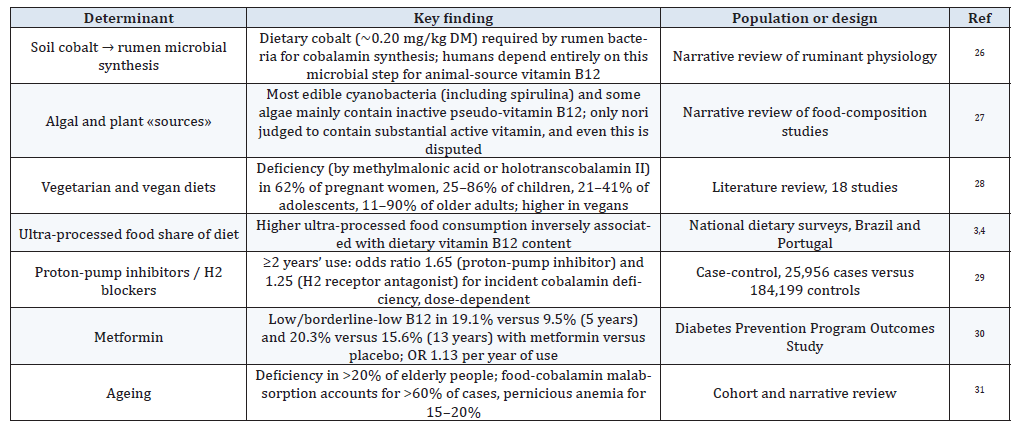
Abbreviation. DM=dry matter. OR=odds ratio.
An important and frequently overlooked point is that many of these abnormalities precede surgery rather than being created by it. In a single-institution cohort of 174 bariatric candidates (mean body mass index [BMI] 44.3 ± 7.1 kg/m²), 139 (79.9%) had at least one preoperative micronutrient disorder: vitamin D deficiency in 116 (66.7%), with a further 47 (27.0%) insufficient — together close to 90% of the cohort — folate deficiency in 76 (43.7%), and vitamin B12 deficiency in ten (5.7%).33 These findings come from one center using a limited biochemical panel and should not be generalized as a fixed population prevalence, but they establish that severe obesity is not synonymous with nutritional adequacy and that a postoperative abnormality should not be attributed reflexively to the operation without a preoperative baseline.
Deficiency also persists well beyond the immediate postoperative period despite active supplementation. In an Austrian cohort of 485 patients followed for three years (76.9% women; 42.7% sleeve gastrectomy, 43.7% Roux-en-Y gastric bypass, 13.9% banding), vitamin D deficiency fell only from 70.8% at year 1 to 57.4% at year 3, while folate deficiency was 29.7% and 15.3%, ferritin deficiency 21.6% and 32.5%, vitamin B12 deficiency 14.3% and 6.3%, vitamin A deficiency 13.2% and 12.8%, copper deficiency 10.4% and 11.9%, and selenium deficiency 11.1% at year 1; follow-up attrition (485 patients at year 1 to 80 at year 3) limits these estimates.34 A systematic review and meta-analysis of 82 longitudinal studies found that guideline-adherent supplementation was reported in at most 20% of studies, and that even among adherent cohorts vitamin A fell significantly after Roux-en-Y gastric bypass at 12–23 months, vitamin E after Roux-en-Y gastric bypass at 24 months or more, and ferritin after sleeve gastrectomy at 24 months or more — evidence that a prescribed supplement does not guarantee biological adequacy.35 Data extending to 5–17 years of followup (54 studies) show persistent pooled prevalences of vitamin D deficiency (35.8%), vitamin E deficiency (16.5%), vitamin A deficiency (13.4%), vitamin K deficiency (9.6%), and vitamin B12 deficiency (8.5%), with vitamin A and folate deficiency increasing with longer follow-up in subgroup analyses.36 A systematic review focused on anemia similarly found iron, vitamin B12, folate, and copper deficiency contributing to post-bariatric anemia, with substantial heterogeneity and generally low-quality evidence across the 17 studies reporting deficiency prevalence.
Trace-element deficiencies deserve specific attention because their presentations overlap and can be mistaken for one another or for more common diagnoses. Zinc deficiency after gastric bypass is reported across multiple studies with highly variable prevalence depending on definition and follow-up duration, and can persist despite routine postoperative multivitamin use.38 Copper deficiency, reviewed systematically by Kumar et al., occurs because copper is absorbed predominantly in the stomach and proximal small intestine — precisely the segments altered or bypassed by gastric bypass — and produces anemia, neutropenia, and a myeloneuropathy that can closely mimic subacute combined degeneration from vitamin B12 deficiency; diagnosis therefore requires deliberately distinguishing the two rather than assuming vitamin B12 deficiency in a post-bariatric patient with compatible neurological findings.15,39 Zinc and copper also interact directly: sustained high-dose zinc, whether from a bariatric multivitamin, an additional zinc supplement, or an over-the-counter “immune” product taken concurrently, can induce secondary copper deficiency through increased intestinal metallothionein, so a complete supplement reconciliation — not only the prescribed regimen — is required whenever copper deficiency is suspected.
GLP-1 receptor agonists: a distinct, newer nutritional phenotype
GLP-1 receptor agonists (GLP-1RAs) and dual incretin agonists such as tirzepatide reduce appetite, slow gastric emptying, and can produce substantial weight loss, but they do not create an anatomical bypass, do not exclude the duodenum or proximal jejunum from nutrient transit, and do not reproduce the malabsorptive physiology of Roux-en-Y gastric bypass or biliopancreatic diversion. Extrapolating the post-bariatric monitoring schedule wholesale to every GLP-1RA-treated patient is therefore not justified by the underlying mechanism, and the clinically relevant pathway is reduced intake and altered food selection rather than malabsorption.
In a large claims-based analysis of 461,382 adults newly prescribed a GLP-1RA (2017–2021; 80.5% with type 2 diabetes; 44.9% with obesity and 5.6% with overweight), a nutritional deficiency was diagnosed in 12.7% within 6 months and 22.4% within 12 months, vitamin D deficiency being the most frequent (7.5% and 13.6%).40 These figures reflect recorded diagnoses in a mostly diabetic population rather than systematic biochemical screening in the general GLP-1RA-treated population, and should not be extrapolated uncritically. A narrative review found consistent reductions in energy intake — 16–39% in a synthesis of dietaryintake studies and about 30% in a 14-week randomized trial (n=113) of liraglutide versus caloric restriction alone — frequent failure to reach protein intakes needed to preserve lean mass, and, in observational data, deficiencies most commonly of vitamin D, followed by thiamine (vitamin B1) and other B vitamins, with low intakes of iron, calcium, magnesium, and potassium; copper, selenium, and zinc intakes were generally sufficient in the one cross-sectional intake study available, so concern for these trace elements during GLP-1RA therapy is largely extrapolated from bariatric surgery rather than directly demonstrated.
A 2025 joint advisory from the American College of Lifestyle Medicine, the American Society for Nutrition, the Obesity Medicine Association, and The Obesity Society recommends baseline assessment of dietary habits, muscle strength, and body composition, ongoing attention to gastrointestinal tolerance and protein intake, and prevention of micronutrient deficiency during GLP-1RA treatment, together with resistance exercise to preserve muscle and bone mass, but stops short of a structured biochemical monitoring schedule comparable to that used after bariatric surgery.12,13 The most defensible current position is therefore that GLP-1RA therapy creates a plausible and increasingly documented nutritional-risk context — particularly in patients with persistent nausea or vomiting, very low intake, rapid or substantial weight loss, previous bariatric surgery, or pre-existing nutritional vulnerability — rather than an intrinsically malabsorptive state requiring universal comprehensive screening. Body-mass index itself is a poor guide to this risk: two patients with identical BMI, or identical percentage weight loss, can have very different nutritional trajectories depending on dietary diversity, protein intake, and the proportion of weight loss coming from lean versus fat mass, so the rate and composition of weight loss, gastrointestinal tolerance, and functional status are more informative than weight or BMI alone. Table 2 collates the principal quantitative estimates discussed in this review.
Table 2: Principal quantitative estimates on micronutrient status and its determinants
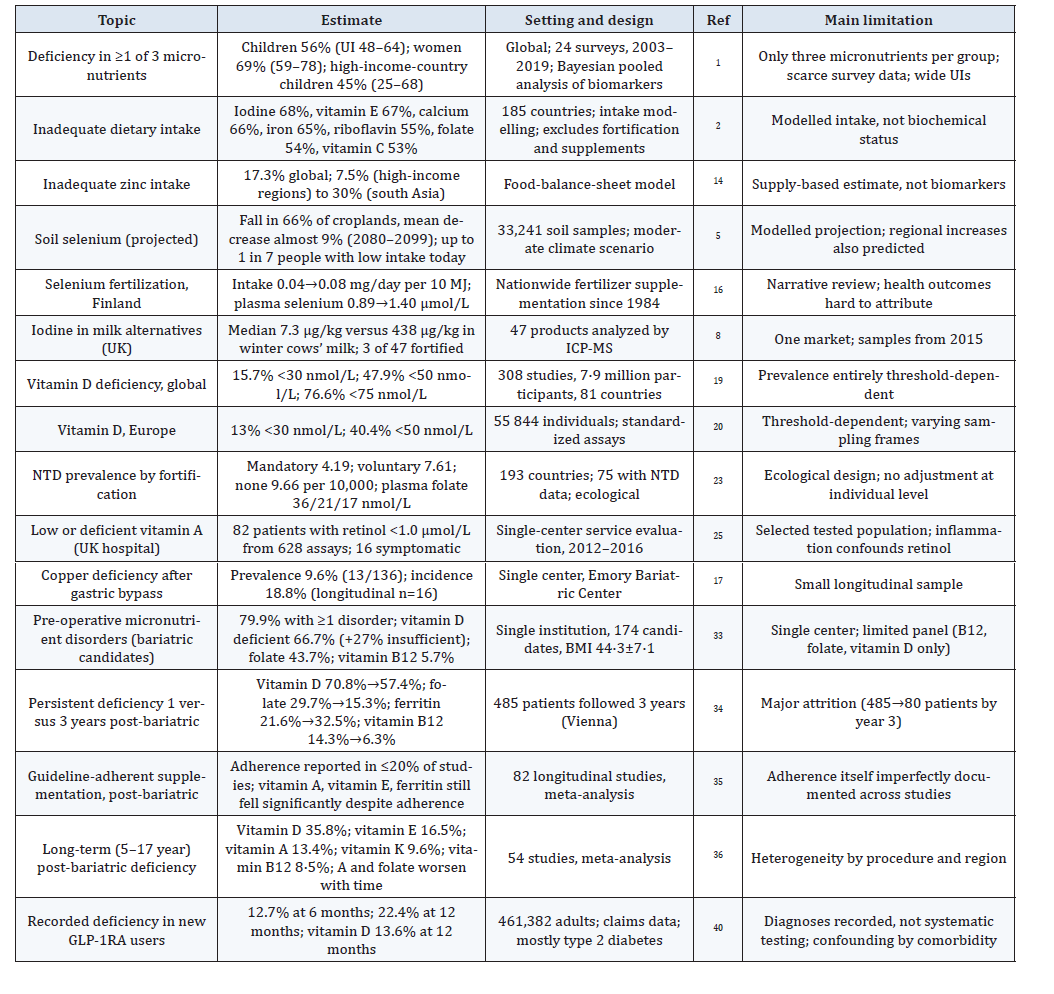
Abbreviation. UI=uncertainty interval. NTD=neural-tube defect. ICP-MS=inductively coupled plasma mass spectrometry. GLP-1RA=glucagon-like peptide-1 receptor agonist.
Diagnostic approach
Screening should be risk-stratified rather than universal. Groups warranting proactive biomarker assessment include patients before and after bariatric surgery; adults on GLP-1RA therapy with substantial weight loss or reduced intake, pending formal guideline development; women of reproductive age and pregnant women in settings of insufficient iodine or folate coverage; patients with unexplained myeloneuropathy or cytopenia; people following vegetarian or vegan diets, older adults, and patients on longterm acid suppression or metformin (vitamin B12; see dedicated chapter above); and patients with malabsorptive disease or restrictive, plant-exclusive, or heavily ultra-processed diets. Table 3 summarizes suggested approaches. For vitamin D, we do not advise routine screening of the general adult population, in line with the IOF position paper, but targeted assessment of symptomatic or high-risk individuals using an explicitly stated threshold.
Table 3: Risk groups, suggested testing, and interpretive pitfalls
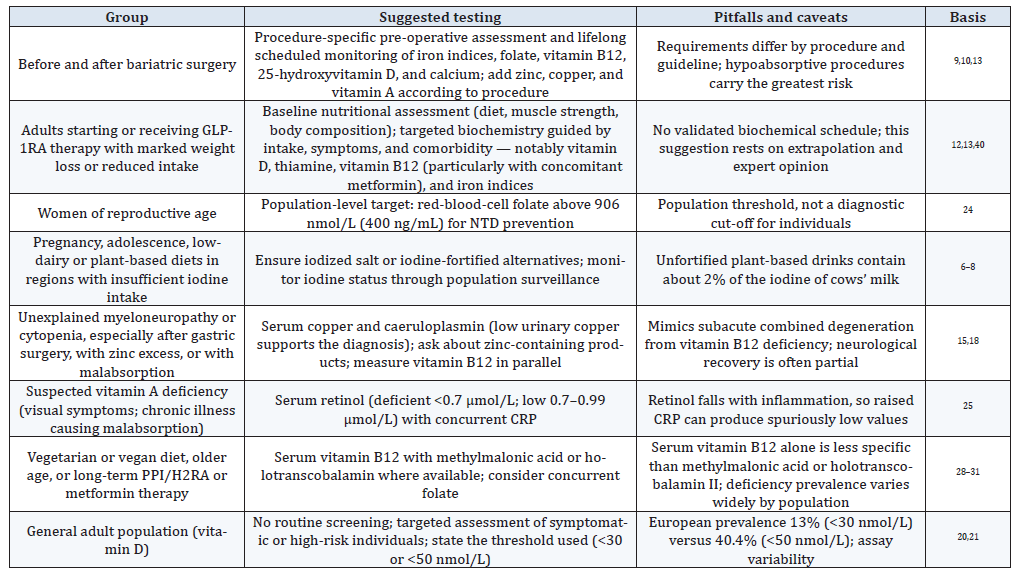
Abbreviation. GLP-1RA=glucagon-like peptide-1 receptor agonist. NTD=neural-tube defect. CRP=C-reactive protein.
Management: fortification and targeted supplementation
Population-level fortification remains the most cost-effective and best-evidenced intervention where implemented with adequate coverage, as the folate and NTD data illustrate (NTD prevalence 4·19 versus 9.66 per 10,000 with mandatory versus no fortification) For iodine, WHO/Europe and the Iodine Global Network call for mandatory use of iodized salt in processed foods, integration of salt-reduction and salt-iodization policies, and iodine fortification of plant-based alternatives to milk and dairy products. For selenium, agronomic biofortification, in place in Finland since 1984, offers a template that could be extended to selenium-poor regions identified by soil modelling. For vitamin D, the IOF position paper supports diet, lifestyle measures, fortification where practised, or modest daily supplementation, taking into account habitual calcium intake.
At the individual level, lifelong multivitamin and mineral supplementation with scheduled monitoring is standard after bariatric surgery; British Obesity and Metabolic Surgery Society and US guidance, as summarized in a recent review, recommend annual monitoring of vitamin B12 and vitamin D and routine multivitamin supplementation containing iron, selenium, zinc, copper, and thiamine. For GLP-1RA users, the authors of that review propose sleeve-gastrectomy protocols as a pragmatic starting point — baseline screening, early correction of low levels, routine supplementation, and periodic reassessment — while acknowledging that it remains unknown which nutrients warrant regular monitoring and whether surgical supplementation doses are appropriate for pharmacological therapy.13 Because zinc overload is a recognized risk factor for copper deficiency, we advise that any zinc supplementation, prescribed or self-initiated, be time-limited and accompanied by awareness of copper antagonism, particularly in patients with other risk factors such as gastric surgery.
A risk-stratified diagnostic framework
The growing availability of micronutrient assays has created a paradox: genuine deficiency remains under-recognized in high-risk patients, while broad, indiscriminate panels increasingly generate borderline abnormalities of uncertain significance in low-risk individuals. A useful sequence for deciding whether, and what, to test rests on four questions. First, is there a plausible mechanism — previous bariatric or gastrointestinal surgery, malabsorptive disease, severe dietary restriction, pregnancy, alcohol-related risk, or a medication such as a proton-pump inhibitor or metformin? Second, is there a clinical phenotype compatible with deficiency — unexplained anemia or cytopenia, myeloneuropathy, poor wound healing, or ocular or bone disease — while recognizing that many deficiencies remain silent until substantially advanced? Third, is the proposed biomarker sufficiently reliable in this patient, given that ferritin, copper, zinc, selenium, and retinol are all acutephase- sensitive and can be depressed or elevated by inflammation, albumin, hydration, and recent supplementation independent of true nutritional status? Fourth, will the result plausibly change management — initiation of treatment, further investigation, or discontinuation of a causative drug? A test that would not alter any of these should generally not be ordered. The strongest diagnostic inference arises when risk factor, phenotype, and biomarker are concordant; an isolated, mildly abnormal value in an asymptomatic, low-risk person should prompt contextual interpretation rather than reflexive high-dose replacement.
A related and increasingly common problem is polysupplementation. Patients frequently combine a multivitamin, additional single-nutrient supplements, fortified foods, and over-the-counter “immune” or sports-nutrition products, often without recognizing that several products supply the same nutrient. The clinically important examples described in this review — zinc-induced copper deficiency, high-dose folic acid masking the hematological signature of vitamin B12 deficiency while cobalamin-dependent neurological injury continues, and the narrow toxic margins of vitamin A and selenium — all illustrate that supplementation is an intervention requiring an indication, a dose, a duration, and, where relevant, monitoring, rather than a risk-free adjunct to diet.15,38,39 A structured medication-and-supplement reconciliation — product name, dose, frequency, duration, and indication for every vitamin, mineral, and fortified product, prescribed or self-selected — should therefore be considered part of the nutritional history whenever an unexplained deficiency, or an unexplained excess, is under investigation.
Controversies and research gaps
Several questions remain unresolved. First, the serum é(ohd threshold that should define deficiency and trigger intervention is not harmonized: the largest pooled analysis to date reports 15.7%, 47.9%, or 76.6% global prevalence depending on whether the threshold is 30, 50, or 75 nmol/L,19 European prevalence is 13% or 40.4% depending on the same choice and assay variability and non-standardized reporting further limit comparability Second, the scale and trajectory of GLP-1RA-associated depletion rests on short-term observational data, dietary-recall studies, and claims databases, with nutritional outcomes rarely prespecified in trials and fat and skeletal muscle mass rarely reported separately; the largest cohort is drawn mostly from people with type 2 diabetes and consensus advisories provide nutritional priorities but not a validated biochemical monitoring schedule Third, the global evidence base is itself thin: the 2022 pooled analysis assessed three micronutrients in two population groups, drew on surveys from 22 countries, and its authors regard the estimates as uncertain because of the scarcity of population-based data,1 while the intake model of Passarelli and colleagues estimates adequacy of intake, not status. Fourth, associations between ultra-processed food and micronutrient inadequacy are cross-sectional and rely on recalls and selenium projections are scenario-dependent, with regional increases as well as decreases.
Research priorities (authors’ proposals)
• Prespecify nutritional outcomes, including biochemical
micronutrient status and separate fat-mass and skeletalmuscle-
mass measures, in ongoing GLP-1 receptor agonist
(GLP-1RA) trials and cohorts.
• Prospective cohorts of GLP-1RA users with baseline
and scheduled biochemical measurements, to identify which
nutrients warrant regular monitoring and to test whether
adapted post-bariatric schedules and supplement doses are
appropriate.
• Harmonized 25-hydroxyvitamin D thresholds and
standardized assays, so that prevalence and treatmentthreshold
comparisons become meaningful.
• Population biomarker surveillance extended beyond iron,
zinc, folate, and vitamin A to trace elements such as selenium
and copper, and to men, older adults, and adolescents.1
• Evaluation of iodine fortification of plant-based dairy
alternatives and of iodized salt in processed foods.
Conclusion
Micronutrient deficiency in 2026 is less a residual problem of food scarcity than an emergent consequence of how, rather than how much, contemporary populations eat, and of how medicine now treats obesity. Ultra-processed food consumption, soil-level traceelement depletion under climate change, dietary substitution away from traditional fortification vehicles, a single non-substitutable microbial pathway for vitamin B12, and the rapid uptake of surgical and pharmacological obesity treatments together reshape the epidemiology of iodine, zinc, selenium, copper, vitamin D, folate, vitamin A, and vitamin B12 deficiency, including within highincome populations previously assumed to be protected: about 45% of children in high-income countries had at least one of three deficiencies measured, and close to 90% of one bariatric-surgery cohort had an abnormal vitamin D, folate, or B12 concentration before any operation had taken place.1,33 Bariatric surgery remains the best-characterized model of treatment-associated deficiency, with abnormalities that persist for up to 17 years despite active, guideline-directed supplementation; GLP-1RA therapy is a newer and mechanistically distinct risk context that should prompt nutritional vigilance without automatically inheriting the bariatric surveillance schedule.13,34–36 The most immediately actionable steps are to extend proven fortification strategies to new dietary patterns (mandatory folic-acid fortification is associated with a NTD prevalence of 4.19 versus 9.66 per 10,000), to test a structured, mechanism-appropriate nutritional monitoring framework for GLP-1RA therapy, to harmonize biomarker thresholds, to reconcile every patient’s total supplement exposure before attributing a laboratory abnormality to diet alone, and to close persistent gaps in population-level surveillance beyond the three or four micronutrients that dominate current evidence.
Contributors
EA conceived and supervised the review and, with XJ, J-ET, and NL-V, defined its scope and clinical framing. EA, XJ, J-ET, and NL-V reviewed the evidence, checked the clinical interpretation of the findings and the accuracy of the cited sources, and critically revised the manuscript. Initial drafting, literature retrieval, and support for reference and data verification were performed with a generative artificial intelligence tool under the authors’ direction (see below). All authors approved the final version and agree to be accountable for all aspects of the work.
Declaration of use of generative artificial intelligence
During the preparation of this work, the authors used Claude (Claude Sonnet 5, Anthropic; accessed September, 2026) to assist with literature searching and retrieval of source records, cross-checking of bibliographic details and numerical values against abstracts and full texts, drafting and restructuring of text, and language editing. The tool is not listed as an author and cannot take responsibility for the work. The authors reviewed and edited all AI-assisted content, verified references and quoted figures against the primary sources, and take full responsibility for the content of the publication.
Declaration of interests
The authors declare they no link of interest with the content of the present text.
References
- Stevens GA, Beal T, Mbuya MNN (2022) Global Micronutrient Deficiencies Research Group Micronutrient deficiencies among preschool-aged children and women of reproductive age worldwide: a pooled analysis of individual-level data from population-representative surveys. Lancet Glob Health 10: e1590-1599.
- Passarelli S, Free CM, Shepon A, Beal T, Batis C, Golden CD, et al. (2024) Global estimation of dietary micronutrient inadequacies: a modelling analysis. Lancet Glob Health 2024: published online Aug 29.
- Louzada MLC, Martins APB, Canella DS, et al. (2015) Impact of ultra-processed foods on micronutrient content in the Brazilian diet. Rev Saude Publica 49: 45.
- Antoniazzi L, de Miranda RC, Rauber F, et al. (2023) Ultra-processed food consumption deteriorates the profile of micronutrients consumed by Portuguese adults and elderly: the UPPER project. Eur J Nutr 62: 1131-1141.
- Jones GD, Droz B, Greve P, et al. (2017) Selenium deficiency risk predicted to increase under future climate change. Proc Natl Acad Sci U S A 114: 2848-2853.
- World Health Organization Regional Office for Europe, Iodine Global Network (2024) Prevention and control of iodine deficiency in the WHO European Region: adapting to changes in diet and lifestyle. Copenhagen: WHO Regional Office for Europe. ISBN 9789289061193.
- WHO Regional Office for Europe (2024) People in the WHO European Region at greater risk of iodine deficiency due to changing diets [media release]. Copenhagen, June 28, 2024. https://www.who.int/europe/news/item/28-06-2024-people-in-the-who-european-region-at-greater-risk-of-iodine-deficiency-due-to-changing-diets (accessed Sept 28, 2026).
- Bath SC, Hill S, Goenaga Infante H, Elghul S, Nezianya CJ, Rayman MP (2017) Iodine concentration of milk-alternative drinks available in the UK in comparison with cows' milk. Br J Nutr 118: 525-532.
- Mechanick JI, Apovian C, Brethauer S, et al. (2020) Clinical practice guidelines for the perioperative nutrition, metabolic, and nonsurgical support of patients undergoing bariatric procedures – 2019 update: cosponsored by American Association of Clinical Endocrinologists/American College of Endocrinology, The Obesity Society, American Society for Metabolic & Bariatric Surgery, Obesity Medicine Association, and American Society of Anesthesiologists. Surg Obes Relat Dis 16: 175-247.
- O'Kane M, Parretti HM, Pinkney J, et al. (2020) British Obesity and Metabolic Surgery Society guidelines on perioperative and postoperative biochemical monitoring and micronutrient replacement for patients undergoing bariatric surgery—2020 update. Obes Rev 21: e13087.
- Wilding JPH, Batterham RL, Calanna S, et al; STEP 1 Study Group (2021) Once-weekly semaglutide in adults with overweight or obesity. N Engl J Med 384: 989-1002.
- Mozaffarian D, Agarwal M, Aggarwal M, et al. (2025) Nutritional priorities to support GLP-1 therapy for obesity: a joint Advisory from the American College of Lifestyle Medicine, the American Society for Nutrition, the Obesity Medicine Association, and The Obesity Society. Am J Clin Nutr 122: 344-367.
- Sibal R, Balamurugan G, Langley J, Graham Y, Mahawar K (2025) Macronutrient, micronutrient supplementation and monitoring for patients on GLP-1 agonists: can we learn from metabolic and bariatric surgery? Nutrients 17: 3659.
- Wessells KR, Brown KH (2012) Estimating the global prevalence of zinc deficiency: results based on zinc availability in national food supplies and the prevalence of stunting. PLoS One 7: e50568.
- Jaiser SR, Winston GP (2010) Copper deficiency myelopathy. J Neurol 257: 869-881.
- Alfthan G, Eurola M, Ekholm P, et al. (2015) Effects of nationwide addition of selenium to fertilizers on foods, and animal and human health in Finland: from deficiency to optimal selenium status of the population. J Trace Elem Med Biol 31: 142-147.
- Gletsu-Miller N, Broderius M, Frediani JK, et al. (2012) Incidence and prevalence of copper deficiency following Roux-en-Y gastric bypass surgery. Int J Obes (Lond) 36: 328-335.
- Amin A, Khoury NC, Lacayo M, Kostanyan S (2022) Copper deficiency-induced neuropathy after bariatric surgery disguised as demyelinating disease: a case report. Cureus 14: e22705.
- Cui A, Zhang T, Xiao P, Fan Z, Wang H, Zhuang Y (2023) Global and regional prevalence of vitamin D deficiency in population-based studies from 2000 to 2022: a pooled analysis of 7.9 million participants. Front Nutr 10: 1070808.
- Cashman KD, Dowling KG, Škrabáková Z, et al. (2016) Vitamin D deficiency in Europe: pandemic? Am J Clin Nutr 103: 1033-1044.
- Harvey NC, Ward KA, Agnusdei D, et al; International Osteoporosis Foundation Vitamin D Working Group (2024) Optimisation of vitamin D status in global populations. Osteoporos Int 35: 1313-1322.
- MRC Vitamin Study Research Group (1991) Prevention of neural tube defects: results of the Medical Research Council Vitamin Study. Lancet 338: 131-137.
- Quinn M, Halsey J, Sherliker P, et al. (2024) Global heterogeneity in folic acid fortification policies and implications for prevention of neural tube defects and stroke: a systematic review. EClinicalMedicine 67: 102366.
- WHO (2015) Guideline: optimal serum and red blood cell folate concentrations in women of reproductive age for prevention of neural tube defects. Geneva: World Health Organization.
- Marley A, Smith SCL, Ahmed R, Nightingale P, Cooper SC (2021) Vitamin A deficiency: experience from a tertiary referral UK hospital; not just a low- and middle-income country issue. Public Health Nutr 24: 6466-6471.
- González-Montaña J-R, Escalera-Valente F, Alonso AJ, Lomillos JM, Robles R, Alonso ME (2020) Relationship between vitamin B12 and cobalt metabolism in domestic ruminant: an update. Animals (Basel) 10: 1855.
- Watanabe F, Yabuta Y, Bito T, Teng F (2014) Vitamin B12-containing plant food sources for vegetarians. Nutrients 6: 1861-1873.
- Pawlak R, Parrott SJ, Raj S, Cullum-Dugan D, Lucus D (2013) How prevalent is vitamin B12 deficiency among vegetarians? Nutr Rev 71: 110-117.
- Lam JR, Schneider JL, Zhao W, Corley DA (2013) Proton pump inhibitor and histamine 2 receptor antagonist use and vitamin B12 deficiency. JAMA 310: 2435-2442.
- Aroda VR, Edelstein SL, Goldberg RB, et al; Diabetes Prevention Program Research Group (2016) Long-term metformin use and vitamin B12 deficiency in the Diabetes Prevention Program Outcomes Study. J Clin Endocrinol Metab 101: 1754-1761.
- Andrès E, Loukili NH, Noel E, et al. (2004) Vitamin B12 (cobalamin) deficiency in elderly patients. CMAJ 171: 251-259.
- Parrott J, Frank L, Rabena R, Craggs-Dino L, Isom KA, Greiman L (2017) American Society for Metabolic and Bariatric Surgery integrated health nutritional guidelines for the surgical weight loss patient 2016 update: micronutrients. Surg Obes Relat Dis 13: 727-741.
- Berardi G, Vitiello A, Abu-Abeid A, Schiavone V, Franzese A, Velotti N, Musella M (2023) Micronutrient deficiencies in candidates of bariatric surgery: results from a single institution over a 1-year period. Obes Surg 33: 212-218.
- Krzizek EC, Brix JM, Stöckl A, Parzer V, Ludvik B (2021) Prevalence of micronutrient deficiency after bariatric surgery. Obes Facts 14: 197-204.
- Ha J, Kwon Y, Kwon JW, Kim D, Park SH, Hwang J, Lee CM, Park S (2021) Micronutrient status in bariatric surgery patients receiving postoperative supplementation per guidelines: insights from a systematic review and meta-analysis of longitudinal studies. Obes Rev 22: e13249.
- Chen L, Chen Y, Yu X, Liang S, Guan Y, Yang J, Guan B (2024) Long-term prevalence of vitamin deficiencies after bariatric surgery: a meta-analysis. Langenbecks Arch Surg 409: 226.
- Lewis CA, de Jersey S, Seymour M, Hopkins G, Hickman I, Osland E (2020) Iron, vitamin B12, folate and copper deficiency after bariatric surgery and the impact on anaemia: a systematic review. Obes Surg 30: 4542-4591.
- Mahawar KK, Bhasker AG, Bindal V, Graham Y, Dudeja U, Lakdawala M, Small PK (2017) Zinc deficiency after gastric bypass for morbid obesity: a systematic review. Obes Surg 27: 522-529.
- Kumar P, Hamza N, Madhok B, De Alwis N, Sharma M, Miras AD, Mahawar KK (2016) Copper deficiency after gastric bypass for morbid obesity: a systematic review. Obes Surg 26: 1335-1342.
- Butsch WS, Sulo S, Chang AT, et al. (2025) Nutritional deficiencies and muscle loss in adults with type 2 diabetes using GLP-1 receptor agonists: a retrospective observational study. Obes Pillars 15: 100186.
-

This work is licensed under a Creative Commons Attribution-NonCommercial 4.0 International License.