


 Research Article
Neuromuscular Electrical Stimulation for Older Adults with Osteoarthritis of the Knee and Comorbid Anxiety: Overview and Analysis
Received Date:May 01, 2024; Published Date:May 10, 2024
Abstract
Efforts to mitigate or prevent painful disabling knee joint osteoarthritis have been pursued for more than a century. This current overview briefly summarizes the applicability of muscle stimulation and its biological basis in the context of improving the clinical status of the older adult suffering from knee osteoarthritis and associated anxiety. Published data housed predominantly in PUBMED and GOOGLE SCHOLAR sites and pertaining to selected aspects of the literature of current interest were eligible for review, including pertinent controlled as well as exploratory clinical studies without any time-based restriction. As a whole, cumulative results reported as of April 30, 2024, continue to show modest to strong support on occasion for the beneficial application of muscle stimulation to the knee extensor muscles surrounding the osteoarthritic knee that may be employed in the home to enable daily functions. It is concluded that this line of research, which has a strong biological basis, and some proven clinical benefits can be expected to prove beneficial in some cases applied alone or in conjunction with exercise and even if surgery is forthcoming if the older adult is unable to exercise or is fearful to move.
Keywords:Anxiety; Electrical Muscle Stimulation; Intervention; Knee Extensor Muscles; Knee Joint; Older Adults; Osteoarthritis; Quadriceps Femoris; Rehabilitation; Treatment
Introduction
Osteoarthritis, the most prevalent musculoskeletal condition among older adult populations, commonly produces varying degrees of local pain in and around one or more joints, such as the knee. At the same time, the presence of progressively disabling and limiting unrelenting osteoarthritis pain, often increases the risk for the emergence of or exaggeration of concurrently associated chronic health conditions [1], such as obesity, osteoporosis, and heart disease, especially in the late stages of knee osteoarthritis [2]. In addition, mental health status as well as life quality may decline considerably [3,4]. However, regardless of phenotypic manifestations, its successful remediation or resolution is not readily accomplished, despite decades of research. Moreover, while extensively sought, intervening to alleviate osteoarthritis disability or retard its progression remains an extremely challenging undertaking at best, especially if the desire is to age ‘in place’ rather than the nursing home. Indeed, despite modest overall success rates in ameliorating pain and dysfunction, joint replacement surgeries, as well as selected pharmacologic interventions, which may be helpful, these are not universally indicated, or risk free, and may prove toxic or injurious in some cases. In addition, most currently recommended care approaches commonly fail to fully restore function or reduce pain sufficiently and consistently and may denote a failure to appreciate the considerable bone, muscle pathology and inflammatory correlates that may accompany the disease [5].
In this regard, cases with knee osteoarthritis, the most commonly affected joint may find it increasingly impossible to live independently in the community without experiencing some degree of functional improvement. In addition, not only is the joint pathology likely to be progressive, and prevent optimally active and independent self-care, but reactive or inherent anxiety denoting an exaggerated unrelenting emotional response to a real or perceived threat that is quite prevalent among adults in general may emerge, especially among older adults with a variety of medical disorders and underlying progressive bone structural pathology that may require special attention [6-8].
Indeed, while largely considered a biomechanical disorder that disrupts the ultra-structural features of the knee joint [6], mental health issues such as anxiety and fear may yet play a parallel role in its pain, disability, and knee osteoarthritis disease progression and cycle. That is, anxiety in its various forms may not only be present in a sizeable proportion of older adults with knee osteoarthritis, especially among those who exhibit advanced mobility and pain problems but may prevent active self-management that is vital for securing optimal wellbeing and the ability to function in general, and more specifically in the home [7,8]. This mini review focuses on the idea of ameliorating anxiety associated knee osteoarthritis and fostering functional independence through the support of neuromuscular stimulation of the knee extensor supporting muscles with or without exercise (Table 1).
Table 1:Potential strategies that may be applied independently or interactively for countering anxiety in the context of knee osteoarthritis care among older adults.
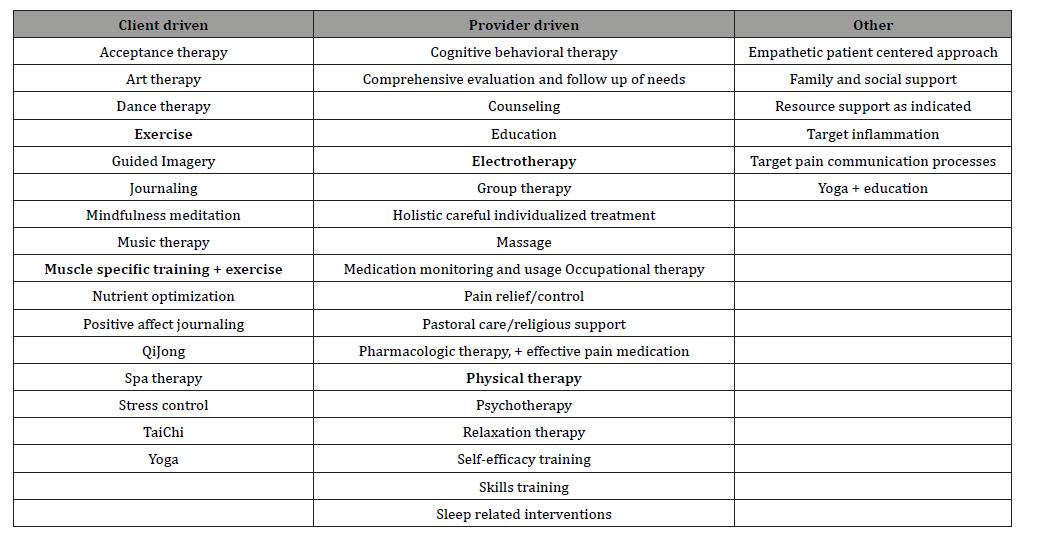
Adopted from references [7-12].
The reason for examining if it is possible to passively promote knee muscle extensor as well as overall function in older knee osteoarthritis cases is that the knee extensor muscles, which are often weakened [13], appear to contribute markedly to its progression and accompanying disability that cannot always be overcome by exercise alone, or performed safely due to the presence of one or more concurrent health conditions, bone fragility, and/or other overwhelming arthritic manifestations such as pain, joint as well as inflammation, muscle inhibition, and knee joint instability. In addition, there is strong evidence from biological observations that the application of electrical muscle stimulation may ameliorate multiple muscle-based correlates of painful knee osteoarthritis without joint movement and possible pain.
Accordingly, pertinent data from prior clinical and basic studies describing the use of electrical muscle stimulation for treating knee osteoarthritis along with current data pertaining to its known effects on muscle and joint were searched for and analyzed. This review is not entirely novel but appears timely in our view because the present burgeoning knee osteoarthritis epidemic is unlikely to be mitigated solely by current standard approaches and broad recommendations to exercise and lose weight if obese and does not always address muscle associated disease characteristics that impair function in a comprehensive manner. Exercise alone may also prove unsafe in some cases, for example if it induces or heightens joint inflammation, and possible knee extensor muscle inhibition, more pain, muscle weakness, decreased range of joint motion, joint instability, mal-alignment and stiffness that can severely inhibit their ability to function physically.
Specific features of knee osteoarthritis muscle pathology and overall dysfunction attributable in part to excess long term joint loading in the face of muscle dysfunction [14] include: a) a variably reduced knee extensor strength and endurance capacity, b) knee pain on weight bearing and/or occasionally at rest, c) knee stiffness on rising, d) decreased knee joint range of motion, e) ligament laxity of the affected knee, f) knee joint instability, f) joint swelling and inflammation g) and impairments with respect to rising from a chair, walking, stair climbing and descending [15-18].
In particular, the reduced strength and endurance capacity of the knee extensors found in persons with knee osteoarthritis, as well as muscle mass deficits, changes in muscle cross sectional area and thickness [13] can conceivably mediate one or more gait abnormalities which predispose the afflicted individual to possible falls or excess impact loading or both and further knee joint micro and macro structural damage. To this end, countering such impacts via muscle stimulation appears promising. For example, if the muscle deficit in knee osteoarthritis extends to either the type I or type II muscle fiber types and/or excessive muscle protein degradation or there is a measurable reduced ability of the muscle to contract rapidly as well as forcefully, muscle stimulation applied accordingly and insightfully can potentially be predicted to help overcome one or more of these deficits even after surgical joint replacement [19]. This is due to its ability to attenuate muscle mass losses, as well as foster muscle strength and its recovery [20,21] and can be observed for prolonged post stimulation periods when coupled with exercise [22,23] although more convincing evidence is advocated [24-27].
Rationale and Relevance
By 2030, the numbers of older adults in the United States and elsewhere will soar. However, not all will age successfully, even if they have no distinctive co-morbid health condition. On the other hand, this rapidly increasing number of older adults will probably have high rates of chronic diseases, such as osteoarthritis, which may be barriers to the achievement of a fully functional life, even if this is not evidenced by all sufferers or all older adults. However, without some more insightful approaches that can be applied universally or individually, at low cost, and with no side effects, the principle and vision of ‘successful aging’ for all is likely to fail. In this regard, muscle mechanical and metabolic factors that commonly interact with the static and/or dynamic features of a joint and that may be undermined in some way, can possibly be important to examine and mitigate or remediated in the context of osteoarthritis onset and progression.
Review Aims
1. To establish if there is evidence to support further
research to examine neuromuscular electrical stimulation to
mitigate osteoarthritis severity among the anxious older adult,
and if so, whether this approach can potentially help to reduce
some of the excess health burden that is being evidenced among
the aging adults in all parts of the globe, regardless of locality.
2. A parallel aim was to establish whether any anxiety
attributes in particular if diminished could be envisioned
through the application of one or more related electronically
delivered muscle building therapeutic approaches.
Methods
The present review sought English language publications detailing the controlled application of neuromuscular stimulation of the extensor muscles or quadriceps muscles a four-component and essential muscle surrounding the anterior aspect of the knee joint of older adults that greatly exacerbates the collective suffering of osteoarthritis damage of one or both knees. No unpublished trials were reported on, and those selected were located with the aid of key words including osteoarthritis, muscle stimulation, knee joint, and older adults and deemed topical or noteworthy even if they exhibited methodological shortcomings. Work reported on animal models was included if these explained those explanatory mechanisms believed to underlie the observed physiological effects of muscle stimulation in humans and pathology of muscle found in osteoarthritis of the knee. The clinical trials that emerged have largely been analyzed previously, with no definitive conclusions, thus data were limited to those published in 2019-2024 regardless of the mode of application, patient selection and assignment and pathological status. Outcomes measured had to be related in some way to the anticipated benefits of applying electrical muscle stimulation to the knee extensor muscles, such as function in daily life, including improved mental health status correlates and life satisfaction. Only the potential use of electrical stimulation of the knee extensor muscles using a small portable electrical current generating device was examined. Other forms of stimulation were excluded, for example TENS and pulsed electromagnetic stimulation approaches were not examined. The information was directed towards the older adult living in the community, and who if homebound and living alone was likely to suffer excess knee impaired function and muscle weakness, especially knee extensor muscle weakness, deemed partially responsible for emergent knee osteoarthritis disability and joint dysfunction [28].
Key Findings
A wealth of literature confirms knee osteoarthritis, an increasingly common joint disease, is highly disabling among populations of older adults in multiple respects no matter where they reside. With multiple emergent alterations in one or both knee joints, not only is pain a consistent feature of the disease, but mobility, even in its most basic form, is frequently compromised. In particular, muscles that extend the knee and provide stability may weaken and atrophy, impulsive loading may increase, muscles at the knee may become uncoordinated, walking may become limited and unstable, and fears of falling or evoking pain may inhibit efforts to strengthen the muscles and pursue an active life. Many too have one or more health conditions that limit exercise participation as well as deficits in the ability to contract the knee muscle extensors voluntarily that can foster muscle weakness [29,30].
The prevailing approaches to knee osteoarthritis care do however recommend the pursuit of exercise for multiple reasons. In this regard and to pursue this safely where indicated, and to overcome movement fears, a reasonably well-established grounding in support of the use of neuromuscular stimulation as a supportive intervention and beneficial adjunct to the management of knee osteoarthritis clearly prevails. Indeed, grounded in many years of basic and clinical research, its optimal application can be observed to have a beneficial impact on enlarging muscle fiber areas that foster muscle function, as well as having the potential to preserve or enhance muscle protein content and favorable enzymatic changes that will facilitate knee function and function as a whole in all likelihood if pursued diligently and insightfully. In addition, joint nutrition, sensory-motor function, joint protection, bone health, and joint fluid dynamics may improve thus fostering joint mobility, as well as impacting joint stability favorably.
As such, even if not studied to any degree, conceptually, if the older adult suffering from knee joint disease is enabled to function physically and more confidently in response to electrical muscle stimulation interventions, their anxiety about their disabling status may well decline, while their pain of both cognitive and peripheral origin may be relieved to a meaningful life affirming degree. Moreover, the ability of muscle stimulation interventions to increase or enhance muscle mass without movement can favor the generation of a fat free rather than fatty tissue-based muscle mass, even though clinical evidence is modest at best or has failed to provide sufficient evidence to definitively affect practice [22,26,27,31,32].
However, based on what we know about muscle pathology in knee osteoarthritis, the knee extensor muscles may not only become weakened [13], but may also tend to contract more slowly than desirable, and fatigue more readily than not. The knee extensors, which serve as prime knee joint stabilizers, may also be prevented from contracting efficiently even if weakness is not evident due to the accumulation of excess fluid in the affected joint consequent to intrinsic structural joint damage. Moreover, if unabated as time elapses, there may be considerable muscle fiber losses, muscle fiber structural damage, and the invasion of fat cells to replace muscle fibers. Other serious muscle deficits may ensue over time to further weaken the muscles such as poor muscle circulation, muscle spasm, muscle contractures, plus intrinsic joint and muscle nerve damage. As a result, desirable, timely, and effective joint protection mechanisms may become increasingly dysfunctional, thus predisposing the affected knee to further joint damage and declining function and possibly to poor exercise tolerance [33].
To avert or overcome one or more of these aforementioned problems, studies conducted since the 1990s have shown applications of electrical neuromuscular stimulation designed to activate one or more of the four knee extensor components to hold considerable promise for ameliorating some degree of knee osteoarthritis disability attributable to muscle dysfunction and related anxiety correlates in particular as follows below:
1. They may serve to initiate or augment muscle tissue
constituents and their physiological properties [34,35] and
quality [36] and potentially revert muscle tissue wasting [37].
2. They may foster notable muscle located capillary growth
increases adjacent to type II muscle fibers that control force
generating ability, plus enhanced muscle oxidation [38].
3. Muscle architecture and their contractile properties may
be enhanced, alongside muscle contractility [36,39].
4. Protective reflex responses, a greater ability to actively
extend the knee joint and more effectively coordinated muscle
activity with fewer activation failures may be demonstrated as
well [40,41].
5. Type II muscle fibers essential for protecting the joint
against sudden displacements or excessive forces may be
selectively activated [42, 43].
6. Applications may also help reduce the risk of further
or excess knee joint attrition attributable to deficient neural
responses and muscle mass losses [42-44].
7. Electrical muscle stimulation may also help preserve knee
extensor lean muscle mass, suppress atrophic signaling
pathways, enhance connective tissue and cellular remodeling
processes [45].
8. It may enhance muscle strength, thickness, maximal torque
capacity, angular knee extension velocity, sensory feedback,
and muscle activation patterns [16, 41].
Additional Observations
Observed benefits that extend over a period of at least 40 years imply neuromuscular stimulation applied to older osteoarthritis sufferers who cannot exercise readily, may independently, concurrently or cumulatively be advantageous for facilitating their functional performance capacity especially among those unable to produce maximal or sub-maximal knee extensor contractions volitionally [16]. The modality might do this by reducing pain and increasing the joint range of motion of the affected stimulated joint [46]. Similarly, subjects undergoing electrical stimulation training may experience enhanced degrees of muscle foster endurance as well as tension generating capacity [47,48] that may help in protecting the diseased joint from further injurious impacts, inflammatory responses, and displacements. Additionally, health status may improve along with a reduction in anxiety and distress in cases suffering from severe knee osteoarthritis. This mode of intervention may also be helpful in a similar way in the event surgery to replace the damaged joint is required [28,49]. In addition, improvements in surrounding joint structures may engender more confidence to and less fear in pursuing desired daily activities [36,50].
Neuromuscular electrical stimulation may hence be of particular value for i) eradicating or minimizing vicious spirals of immobility, ii) feelings of distress and anxiety, and fears of Citation: Ray Marks*. Neuromuscular Electrical Stimulation for Older Adults with Osteoarthritis of the Knee and Comorbid Anxiety: Overview and Analysis. Glob J Aging Geriatr Res. 3(2): 2024. GJAGR.MS.ID.000558. DOI: 10.33552/GJAGR.2024.03.000558 Global Journal of Aging & Geriatric Research Volume 3-Issue 2 Page 5 of 8 movement, and iii) restoring function. It may also be used effectively as an adjunct to walking exercises with the expectation of pain relief [51] and possible bone attrition [52] in those who have possible one or more exercise participation fears as well as health challenges [33]. Although disputed by some [39,53,54] mental health as well as life quality, along with walking improvements, chair rise time, muscle torque capacity, function, activities of daily living, and pain reduction may be experienced over time without exacerbating pain and should be examined more intently for its immense independent and/or adjunctive management potential [54,55]. In sum, as in the past, several contemporary research reports continue to demonstrate one or more physiological and/or clinical post-treatment improvements over and above the control condition, irrespective of electrical stimulation mode in cases of knee osteoarthritis and knee extensor muscle applications. That is, even if this is due to publication bias, most yield a positive result for groups receiving the intervention that is superior to that of a control group.
The benefits recorded have also emerged from lab studies and include but are not limited to: a) the attenuation of knee extensor muscle atrophy, b) the normalization of muscle protein turnover, c) increases in maximal force generating capacity, d) a reduction in knee extensor lag, e) decreased hospitalizations, f) functional improvements, pain reduction, improved life quality, reductions in obesity, and knee extensor recovery post-surgery [58,59]. Almost no studies examined if mental health factors such as anxiety declined if present at baseline, or whether anxious older adults would be duly helped if their fears were based on fears of falls or movement or both. Measures of anxiety before and after electrical stimulation may help to reduce this knowledge gap. Also, whether the ability to live independently is enhanced is also not truly known. Whether health status, including depression, frailty, and inflammatory markers are reduced or aided favorably following a bout of neuromuscular electrical stimulation to the knee extensors of older adults with knee osteoarthritis is also largely unknown.
As per Petterson et al. [56] knee extensor muscle strength deficits and impaired muscle activation common among individuals requiring total knee replacement show that poorly treated knee joint osteoarthritis especially among those who were unable to exercise may induce excess suffering not abated by surgery alone. Failure to address strength-related impairments at any stage arguably results in poor functional outcomes, which may accelerate the progression of osteoarthritis in other joints. To counter this, Durmas et al. [57] report several post intervention benefits of an electrical stimulation program including pain, disability, stiffness, function, and knee extensor strength. Powerful exercise enhancing properties when used adjunctively are also observed [60].
Limitations
This topical overview, while promising, is clearly limited in scope, and potentially compromised by the use of only two databases, the small numbers of salient studies, adequate sample sizes in reported studies and very limited subgroup analyses. Measurement reliability and validity, issues, and the use of limited outcome measures that do not necessarily capture the spectrum of electrical stimulation impacts, limited or confusing blinding, co-interventions that are not accounted for or obviate unique treatment effects, procedures that vary widely, limited statistical analyses and study durations are common basic attributes that preclude any definitive verification of and emergent universal recommendations of what is observed. Moreover, the diverse muscle stimulation parameters employed, plus modes of application, and divergent samples studied cannot reveal whether older adults who desire to live in the community might benefit from a series of knee muscle stimulation treatments if they are weak and feel too anxious or fearful to exercise.
As it is not possible to provide evidence based global recommendations in this regard, and in view of the favorable findings to date and increasing need to assist older adults to remain functional in the community if they desire, perhaps each case should be viewed independently by a well-versed clinician and directed accordingly. However, to provide a sound biological rationale for the application of electrical stimulation and its observed local benefits when applied to the knee extensors of the older adult who is reluctant to exercise more careful study is strongly indicated and could prove clinically relevant. As well, factors that might influence stimulation outcomes in the older adult with knee osteoarthritis and that may dictate what is observed or not observed and must be studied more intently.
In particular, in view of the magnitude of nerve and muscle damage anticipated in this patient group, the total daily treatment duration and intensity, including the duration of rest periods between contractions, plus the treatment period that would be required to achieve an optimal treatment outcome needs more study and may well be somewhat different from those employed to date-especially in those who are older and have one or more comorbidities. For example, do those with greater muscle damage or higher ages and greater pain and anxiety require more prolonged daily stimulation at low intensity levels and over extended rest periods between contractions to avert fatigue? Alternately, is there a need for joint protection education alongside electrical muscle stimulation among those who may experience reduced pain but may duly overuse their joint[s]?
Future Studies
To clearly establish a solid evidence base for the practice of applying electrodes to the skin to stimulate the anterior knee muscles of the osteoarthritis damaged knee of the older anxious adult and the degree to which suggested stimulation parameters are optimally efficacious [22] and which may yield multiple improvements warrants study. In addition, case studies and those using optimal randomization and blinding procedures should be implemented, and co-interventions standardized, controlled for, or avoided. Attention to rigorous standardization of any stimulation protocol, in addition to carefully construed outcome measurement procedures is especially advocated. New technologies applied to highlight structural and functional disease attributes might also improve the ability of future clinicians to optimally impact muscle mass and atrophy status, as well as joint status and function. It may also prove useful to study if some electrode adjustments or stimulation parameters should be considered to accommodate differences in thigh circumference and configuration, rather than applying uniform electrode dimensions for all. Additionally, the precise electrode materials and their placement sites, including why these were chosen, and the best method of avoiding skin irritations, and ease of application, should be based on more meticulous study and to allow for replication of the methods and to evaluate the internal and external validity of the data.
Also, selecting an adequately sized sample with stringent inclusion criteria and verification of the disease is paramount. In addition, intended outcome measures should be carefully chosen and be known to be valid prognostic indicators of osteoarthritis. The use of bone scans, plus muscle fiber, protein, enzyme and synovial fluid assays are highly recommended in this regard. Until then, despite years of endeavor it is impossible to determine how closely individuals who are anxious and in pain can improve their life quality and decrease their need for narcotics and surgery if they are exposed to carefully tailored programs of neuromuscular stimulation with or without exercise. Backed by a high volume of mechanistic and physiological data efforts to explore this possibility suggest however that this approach can have wide reaching and globally applicable cost-effective results.
Concluding Remarks
While the small number of controlled clinical studies detailing the application of neuromuscular stimulation for the treatment and improvement of functional ability in older persons diagnosed as having knee osteoarthritis demonstrate some degree of promise, their limitations preclude definitive conclusions that could affect global practices. There is, however, a reasonable theoretical basis grounded upon empirical evidence to support its continued study and very careful usage even at very advanced disease stages.
There is even a strong possibility that some of these favorable results underestimate the true potential this mode of intervention does exhibit for improving the structural status of an osteoarthritis knee joint as well as pain and mental health status. Indeed, although several authors took precautions to ensure stimulation durations were consistent, because so little is known about the parameters for maximizing the efficacy of this approach, such as stimulation intensities, durations and frequencies which mediate muscle force and rate of muscle force production, the functional improvements noted after its application even in some severely disabled knee cases are impressive. They may also appear limited because outcome analyses and study durations have been suboptimal.
In short, one can anticipate careful applications to those individuals with knee osteoarthritis who are too fearful to move, and/or cannot take medication without undue risk, or to allow those on potentially adverse or toxic medication regimens to reduce this usage. It may likewise benefit individuals requiring prolonged immobilization who may lose muscle bulk inadvertently, while normalizing or maintaining muscle content, and size, as well as its contractility as well as for those who incur too much discomfort exercising or are fearful of exercising. In conjunction with active strengthening and endurance exercises, they may be especially efficacious for those older persons for whom surgery is contraindicated. Finally, electrical stimulation as applied selectively to the individual knee extensor muscles might alleviate considerable disability and protect the joint from excess impact. While not well studied, its insightful application might be both protective from undue mechanical insults, while enhancing inherent motion dependent cartilage repair mechanisms. To this end, the author recommends more rigorously technology supported and evaluated studies and every effort to consider the promise embedded in the current evidence base and a uniform consensus of the degree to which the disease burden may be favorably reduced.
Acknowledgement
None.
Conflict of Interest
No Conflict of Interest.
References
- Amanda Williams, Steven J Kamper, John H Wiggers, Kate M O'Brien, Hopin Lee, et al. (2018) Musculoskeletal conditions may increase the risk of chronic disease: a systematic review and meta-analysis of cohort studies. BMC Med 16(1): 167.
- Jun Ma, Kai Zhang, Xilong Ma, Hao Wang, Chao Ma, et al. (2024) Clinical phenotypes of comorbidities in end-stage knee osteoarthritis: a cluster analysis. BMC Musculoskelet Disord 25(1): 299.
- Park HM, Kim HS, Lee YJ (2020) Knee osteoarthritis and its association with mental health and health‐related quality of life: a nationwide cross‐sectional study. Geriatrics & Gerontology International 20(4): 379-383.
- Yura Lee, Sook-Hyun Lee, Sung Min Lim, Seung Ho Baek, In-Hyuk Ha, et al. (2020) Mental health and quality of life of patients with osteoarthritis pain: the sixth Korea National Health and Nutrition Examination Survey (2013-2015). PLoS One 15(11): e0242077.
- Devin J Drummer, Jeremy S McAdam, Regina Seay, Inmaculada Aban, Kaleen M Lavin, et al. (1985) Perioperative assessment of muscle inflammation susceptibility in patients with end-stage osteoarthritis. J Appl Physiol 132(4): 984-994.
- Weijin Xing, Mubin Cai, Chuanzi Li, Zhongshi Nie, Wencai Tang, et al. (2021) Computed tomography image analysis of neuromuscular electrical stimulation in the treatment of knee osteoarthritis with different radiologic characteristics based on iterative reconstruction algorithm. World Neurosurg 149: 372-379.
- Marks R (2020) Anxiety and osteoarthritis disability: updated overview and commentary. The Open Orthopaedics J 14(1): 46-57.
- Kristen A Scopaz, Sara R Piva, Stephen Wisniewski, G Kelley Fitzgerald (2009) Relationships of fear, anxiety, and depression with physical function in patients with knee osteoarthritis. Archives of physical medicine and rehabilitation 90(11): 1866-1873.
- Laura A Talbot, Jean M Gaines, Shari M Ling, E Jeffrey Metter (2003) A home-based protocol of electrical muscle stimulation for quadriceps muscle strength in older adults with osteoarthritis of the knee. J Rheumatol 30(7): 1571-1578.
- Robert A Bruce-Brand, Raymond J Walls, Joshua C Ong, Barry S Emerson, John M O'Byrne, et al. (2012) Effects of home-based resistance training and neuromuscular electrical stimulation in knee osteoarthritis: a randomized controlled trial. BMC musculoskeletal disorders 13: 118.
- Lijuan Zhang, Ting Fu, Qiuxiang Zhang, Rulan Yin, Li Zhu, et al. (2018) Effects of psychological interventions for patients with osteoarthritis: a systematic review and meta-analysis. Psychology, Health & Medicine 23(1): 1-17.
- Park SH, Hwangbo G (2015) Effects of combined application of progressive resistance training Y, and Russian electrical stimulation on quadriceps femoris muscle strength in elderly women with knee osteoarthritis. J Physical Therapy Sci 27(3): 729-731.
- Lei Chen, Haojing Zhou, Yichen Gong, Yi Tang, Hai Su, et al. (2024) How do muscle function and quality affect the progression of KOA? a narrative review. Orthopaedic Surg 16(4): 802-810.
- Monika Horisberger, Rafael Fortuna, Victor Valderrabano, Walter Herzog (2013) Long-term repetitive mechanical loading of the knee joint by in vivo muscle stimulation accelerates cartilage degeneration and increases chondrocyte death in a rabbit model. Clin Biomech (Bristol, Avon) 28(5): 536-543.
- AM Imoto, MS Peccin, LE Pedro de Paiva Teixeira, KN Gomes da Silva, M Abrahão, et al. (2013) Is neuromuscular electrical stimulation effective for improving pain, function and activities of daily living of knee osteoarthritis patients? A randomized clinical trial. Sao Paulo Med J 131(2): 80-87.
- Azar Moezy, Soheila Masoudi, Ahmad Nazari, Arezoo Abasi (2024) A controlled randomized trial with a 12-week follow-up investigating the effects of medium-frequency neuromuscular electrical stimulation on pain, VMO thickness, and functionality in patients with knee osteoarthritis. BMC Musculoskeletal Disorders 25(1): 158.
- Oliver C Sax, Martin G Gesheff, Ashwin Mahajan, Nirav Patel, Taj-Jamal Andrews, et al. (2022) A novel mobile app-based neuromuscular electrical stimulation therapy for improvement of knee pain, stiffness, and function in knee osteoarthritis: a randomized trial. Arthroplast Today 15: 125-131.
- Morad Chughtai, Nicholas Piuzzi, George Yakubek, Anton Khlopas, Nipun Sodhi, et al. (2017) Use of an app-controlled neuromuscular electrical stimulation system for improved self-management of knee conditions and reduced costs. Surg Technol Int 31: 221-226.
- Sushmita Dutta, Ratnakar Ambade, Dhanashree Wankhade, Palak Agrawal (2024) Rehabilitation techniques before and after total knee arthroplasty for a better quality of life. Cureus 16(2): e54877.
- Alison K Klika, George Yakubek, Nicholas Piuzzi, Gary Calabrese, Wael K Barsoum, et al. (2022) Neuromuscular electrical stimulation use after total knee arthroplasty improves early return to function: a randomized trial. J Knee Surg 35(1): 104-111.
- Ethne L Nussbaum, Pamela Houghton, Joseph Anthony, Sandy Rennie, Barbara L Shay, et al. (2017) Neuromuscular electrical stimulation for treatment of muscle impairment: critical review and recommendations for clinical practice. Physiother Can 69(5): 1-76.
- Sarah Novak, Gabriela Guerron, Zhiwei Zou, Gavin Cheung, Jean-Philippe Berteau. (2020) New guidelines for electrical stimulation parameters in adult patients with knee osteoarthritis based on a systematic review of the current literature. Am J Phys Med Rehabil 99(8): 682-688.
- Laufer Y, Shtraker H, Elboim Gabyzon M (2014) The effects of exercise and neuromuscular electrical stimulation in subjects with knee osteoarthritis: a 3-month follow-up study. Clin Interv Aging 9: 1153-1161.
- Ricardo Maia Ferreira, Rui Tomé Torres, José Alberto Duarte, Rui Soles Gonçalves (2019) Non-pharmacological and non-surgical interventions for knee osteoarthritis: a systematic review and meta-analysis. Acta Reumatol Port 44(3): 173-217.
- Ebru Kaya Mutlu, Ersin Ercin, Arzu Razak Ozdıncler, Nadir Ones (2018) A comparison of two manual physical therapy approaches and electrotherapy modalities for patients with knee osteoarthritis: A randomized three arm clinical trial. Physiother Theory Pract 34(8): 600-612.
- de Oliveira Melo M, Aragão FA, Vaz MA (2013) Neuromuscular electrical stimulation for muscle strengthening in elderly with knee osteoarthritis - a systematic review. Complement Ther Clin Pract 19(1): 27-31.
- RM Palmieri-Smith, Abbey C Thomas, Carrie Karvonen-Gutierrez, Maryfran Sowers (2010) A clinical trial of neuromuscular electrical stimulation in improving quadriceps muscle strength and activation among women with mild and moderate osteoarthritis. Phys Ther 90(10): 1441-1452.
- K Avramidis, T Karachalios, K Popotonasios, D Sacorafas, AA Papathanasiades, et al. (2011) Does electric stimulation of the vastus medialis muscle influence rehabilitation after total knee replacement? Orthopedics 34(3): 175.
- AJ Kittelson, AC Thomas, BM Kluger, JE Stevens-Lapsley (2014) Corticospinal and intracortical excitability of the quadriceps in patients with knee osteoarthritis. Exp Brain Res 232(12): 3991-3999.
- Amber Collins, J Troy Blackburn, Chris Olcott, Bing Yu, Paul Weinhold (2011) The impact of stochastic resonance electrical stimulation and knee sleeve on impulsive loading and muscle co-contraction during gait in knee osteoarthritis. Clin Biomech (Bristol, Avon) 26(8): 853-868.
- Giggins O, Fullen B, Coughlan G (2012) Neuromuscular electrical stimulation in the treatment of knee osteoarthritis: a systematic review and meta-analysis. Clin Rehabil 26(10): 867-881.
- C Zeng, H Li, T Yang, Z-h Deng, Y Yang, et al. (2015) Electrical stimulation for pain relief in knee osteoarthritis: systematic review and network meta-analysis. Osteoarthritis Cartilage 23(2): 189-202.
- Kaitlin G Rabe, Hiroo Matsuse, Anthony Jackson, Neil A Segal (2018) Evaluation of the combined application of neuromuscular electrical stimulation and volitional contractions on thigh muscle strength, knee pain, and physical performance in women at risk for knee osteoarthritis: a randomized controlled trial. PMR 10(12): 1301-1310.
- Cabric M, Appell HJ, Resic A (1998) Fine structural changes in electrostimulated human skeletal muscle. Eur J Appl Physiol 57(1): 1-5.
- Jacobs-El J, Zhou MY, Russell B (1995) MRF4, Myf-5, and myogenin mRNAs in the adaptive responses of mature rat muscle. Am J Physiol 268(4 Pt 1): C1045-C1052.
- Ryota Akagi, Yusuke Miyokawa, Daigo Shiozaki, Yoshinari Yajima, Koki Yamada, et al. (2023) Eight-week neuromuscular electrical stimulation training produces muscle strength gains and hypertrophy, and partial muscle quality improvement in the knee extensors. J Sports Sci 41(24): 2209-2228.
- Wolfgang G, Franz K, Veronika FM, Tatjana PS, Michael Q, et al. (2010) Effects of neuromuscular electrical stimulation on muscle layer thickness of knee extensor muscles in intensive care unit patients: a pilot study. J Rehabil Med 42(6): 593-597.
- AX Bigard, F Lienhard, D Merino, B Serrurier, CY Guezennec (1993) Effects of surface electrostimulation on the structure and metabolic properties in monkey skeletal muscle. Med Sci Sports Exerc 25(3): 355-362.
- Devrimsel G, Metin Y, Serdaroglu Beyazal M (2019) Short-term effects of neuromuscular electrical stimulation and ultrasound therapies on muscle architecture and functional capacity in knee osteoarthritis: a randomized study. Clin Rehabil 33(3): 418-427.
- Lewek MD, Rudolph KS, Snyder-Mackler L (2004) Quadriceps femoris muscle weakness and activation failure in patients with symptomatic knee osteoarthritis. J Orthop Res 22(1): 110-115.
- Yuichi N, Kohei W, Shuhei K, Tetsuya T, Hiroaki K, et al. (2019) The effect of a portable electrical muscle stimulation device at home on muscle strength and activation patterns in locomotive syndrome patients: A randomized control trial. J Electromyogr Kinesiol. 45: 46-52.
- Victor A Cheuy, Michael R Dayton, Craig A Hogan, Jeremy Graber, Bradley M Anair, et al. (2023) Neuromuscular electrical stimulation preserves muscle strength early after total knee arthroplasty: effects on muscle fiber size. J Orthop Res 41(4): 787-792.
- Montes Molina R, Tabernero Galan A, Martin Garcia MS (1997) Spectral electromyographic changes during muscular strengthening training based on electrical stimulation. Electromyogr Clin Neurophysiol 37(5): 287-295.
- Johan Segers, Ilse Vanhorebeek, Daniel Langer, Noppawan Charususin, Weili Wei, et al. (2021) Early neuromuscular electrical stimulation reduces the loss of muscle mass in critically ill patients - A within subject randomized controlled trial. J Crit Care 62: 65-71.
- Anders K, Christopher KC, Kristoffer LN, Frederik US, Amanda HZ, et al. (2020) Neuromuscular electrical stimulation preserves leg lean mass in geriatric patients. Med Sci Sports Exerc 52(4): 773-784.
- Rachana Dabadghav, Amruta Potda, Vishakha Patil, Parag Sancheti, Ashok Shyam (2019) Additional effect of neuromuscular electrical stimulation on knee extension lag, pain and knee range of motion in immediate postsurgical phase (0-2 weeks) in primary total knee arthroplasty patient. Ann Transl Med 7(Suppl 7): S253.
- Ramirez KP, Jiwan NC, Mettler JA (2023) Effect of neuromuscular electrical stimulation training on control of involuntary muscular torque and stimulation intensity in older adults. Int J Exerc Sci 16(3): 482-496.
- Leah K Spring, Kathleen Petrell, Joaninha Depina, Jeffrey S Dover (2022) Use of neuromuscular electrical stimulation for abdominal and quadriceps muscle strengthening: a randomized controlled trial. Dermatol Surg 48(3): 334-338.
- Marco Aurélio Vaz, Bruno Manfredini Baroni, Jeam Marcel Geremia, Fábio Juner Lanferdini, Alexandre Mayer, et al. (2013) Neuromuscular electrical stimulation (NMES) reduces structural and functional losses of quadriceps muscle and improves health status in patients with knee osteoarthritis. J Orthop Res 31(4): 511-516.
- Johanna Flodin, Stefan M Reitzner, Eric B Emanuelsson, Carl Johan Sundberg, Paul Ackermann (2024) The effect of neuromuscular electrical stimulation on the human skeletal muscle transcriptome. Acta Physiol (Oxf) 240(5): e14129.
- Hiroo Matsuse, Neil A Segal, Kaitlin G Rabe, Naoto Shiba (2022) Effect of neuromuscular electrical stimulation during walking on pain sensitivity in women with obesity with knee pain: a randomized controlled trial. Arch Phys Med Rehabil 103(9): 1707-1714.
- Thomas J Abitante, Mary L Bouxsein, Kevin R Duda, Dava J Newman (2022) Potential of neuromuscular electrical stimulation as a bone loss countermeasure in microgravity. Aerosp Med Hum Perform 93(11): 774-782.
- Jeffery J Cherian, Mark J McElroy, Bhaveen H Kapadia, Anil Bhave, Michael A Mont (2015) Prospective case series of NMES for quadriceps weakness and decrease function in patients with osteoarthritis of the knee. J Long Term Eff Med Implants 25(4): 301-306.
- Gaines JME, Metter J, Talbot A (2004) The effect of neuromuscular electrical stimulation on arthritis knee pain in older adults with osteoarthritis of the knee. Appl Nursing Res 17(3): 201-206.
- Vinod Dasa, Nebojsa V Skrepnik, Dena Petersen, Ronald E Delanois (2022) A novel mobile app-based neuromuscular electrical stimulation therapy for the management of knee osteoarthritis: results from an extension study of a randomized, double-blind, sham-controlled, Multicenter Trial. J Am Acad Orthop Surg Glob Res Rev 6(9): e22.00115.
- Petterson S, Snyder-Mackler L (2006) The use of neuromuscular electrical stimulation to improve activation deficits in a patient with chronic quadriceps strength impairments following total knee arthroplasty. J Orthop Sports Phys Ther 36(9): 678-685.
- Durmuş D, Alayli G, Cantürk F (2007) Effects of quadriceps electrical stimulation program on clinical parameters in patients with knee osteoarthritis. Clin Rheumatol 26(5): 674-678.
- Nadhir Hammami, Hela Jdidi, Mehrzia Amani Khezami, Leila Ghidaoui, Amal Talbi, et al. (2022) Isokinetic strengthening and neuromuscular electrical stimulation protocol impact on physical performances, functional status and quality of life in knee osteoarthritis overweight/obese women. Knee 39: 106-115.
- Labanca L, Bonsanto F, Raffa D, Orlandi Magli A, Benedetti MG (2022) Does adding neuromuscular electrical stimulation to rehabilitation following total knee arthroplasty lead to a better quadriceps muscle strength recovery? A systematic review. Int J Rehabil Res 45(2): 118-125.
- Kus G, Yeldan I (2019) Strengthening the quadriceps femoris muscle versus other knee training programs for the treatment of knee osteoarthritis. Rheumatol Int 39(2): 203-218.
-

This work is licensed under a Creative Commons Attribution-NonCommercial 4.0 International License.