


 Research Article
Inflammatory Profile and Bioelectric Impedance Analysis According to Age Group in Elderly People with Chronic Kidney Disease
Received Date:June 17, 2024; Published Date:June 25, 2024
Abstract
Objective: To evaluate the inflammatory profile and, through bioelectrical impedance analysis, verify the presence of sarcopenia in elderly
people with chronic kidney disease.
Methods: Cross-sectional and analytical study with 58 patients allocated into 2 age groups, 36 (62.1%) aged between 60 and 69 years and
22 (37.9%) aged 70 or over, of both sexes, carriers of chronic kidney disease under conservative treatment, followed at the chronic kidney disease
outpatient clinic of the Hospital das Clínicas of the Federal University of Pernambuco, from April to October 2019. For analysis of inflammatory
markers (interferon gamma, tumor necrosis factor alpha and interleukins 2, 4, 6 and 10) and the phase angle provided by bioelectrical impedance,
SPSS 13.0 Software (Statistical Package for the Social Sciences) for Windows and Excel 365 were used.
Results: All inflammatory markers presented levels above the normal in both groups selected by chronological age, however IL-6 showed
statistical significance (p-value= 0.038), as it was higher in the older group. The phase angle was below normal in both groups and more pronounced
in the older group. This difference was statistically significant (p-value=0.040), pointing to the presence of sarcopenia.
Conclusion: Elderly people aged 70 years or over had higher levels of interleukin 6, and lower phase angle values when compared to the age
group between 60 and 69 years. The phase angle by bioelectrical impedance appears as a potential biomarker of sarcopenia.
Keywords:Aging; Inflammaging; Chronic Kidney Disease; Inflammatory Markers; Interleukins; Electrical Bioimpedance; Phase Angle
Introduction
Longevity, a recent achievement of humanity, challenges science because the biological basis of the senescence process is not completely understood. With aging, metabolic and physiological changes occur that can culminate in chronic diseases, such as chronic kidney disease (CKD). This morbidity is a highly prevalent condition, globally estimated at 14.3% in the general population [1] and, in Brazil, a recent study estimated a prevalence of 6. 7% of the disease in stages G3 to G5 in adults, three times as much in individuals aged 60 years or older [2]. Among the organs and systems of the human body that undergo changes with the physiological aging process, the immune system is one of the most affected [3]. These changes characterize immunosenescence. This phenomenon results in greater susceptibility of elderly people to infectious, degenerative, cardiovascular, autoimmune diseases and cancer, in addition to a 2- to 4- fold increase in plasma levels of proand anti-inflammatory cytokines [4].
Given the importance of understanding this process, Franceschi et al. called this inflammatory condition “Inflammaging” (inflammation”+“aging”). This term has become widely used to describe the inflammatory process of aging and is characterized by a chronic, subclinical, low-grade systemic pro-inflammatory state. During this process, the balance of cytokines in the body undergoes changes, probably due to the loss of homeostasis, which interferes with the metabolism of practically all body tissues and contributes to a greater predisposition to illness and worsening of chronic diseases such as hypertension and diabetes [4].
Thus, inflammation appears to be associated with increased morbidity and mortality in older people. This chronic, low-grade systemic pro-inflammatory state consists of elevated levels of proinflammatory cytokines, such as interleukin-1 (IL-1), interleukin-6 (IL6), and tumor necrosis factor alpha (TNF-α) and appears be involved in the pathogenesis of several age-related diseases. Another component widely used in clinical practice as a marker of inflammation is C-Reactive Protein (CRP), which is produced in response to IL-6 and is also a robust predictor of risk for cardiovascular diseases. The pro-inflammatory cytokines IL-6 and TNF-α are commonly studied, and there is consensus on increased concentrations in elderly people [5].
In this context, it is also worth highlighting the role of interleukins in patients with CKD, since in this pathology, which is significantly prevalent in the elderly population, there is an increased production of pro-inflammatory cytokines and oxidative stress, which are, at least partially, responsible for the increased morbidity and mortality in this segment. New insights into the pathogenic role of innate immunity and the pro-inflammatory cytokine profile, characterized, for example, by higher levels of IL-6 and TNF-α, explain some of the clinical and laboratory abnormalities observed in these patients [6].
It is important to highlight that frailty syndrome in the elderly provides vulnerability to pathologies and acute stressors, with a decline in lean body mass, muscle strength, resistance, balance and walking performance, low activity and weight loss accompanied by a high risk of disability, incidents of falls, hospitalization and mortality [7]. Phase Angle (PA) is one of the most established Bioelectrical Impedance (BIA) raw parameters for clinical prognosis because it is strongly associated with cellular health, specifically with changes in cell membrane integrity and altered fluid balance. AF expresses changes in tissue quantity and quality (cell membrane permeability and tissue hydration).
Evidence suggests that PA is associated with body muscle mass as well as handgrip strength. Therefore, it was suggested that this parameter could offer an indirect assessment of the functional status of individuals. It was shown that people with a higher level of physical activity have higher PA values when compared to individuals who have a lower level of activity, regardless of their health status [8]. Individuals with acute or chronic diseases tend to have lower PA values than healthy subjects, as factors such as infection, inflammation or specific mechanisms of each disease can harm cellular health [8]. An important number of studies have highlighted the prognostic role of PA in various health states and morbid conditions, such as cancer, Alzheimer’s disease, kidney disease, human immunodeficiency virus infection, chronic lung disease and sarcopenia, as well as in hospitalized patients in general. Lower PA values may indicate the presence or worsening of a disease, as well as death or degradation of the selective permeability of the cell membrane. Low FA values appear to be a prognostic factor that predicts mortality in patients with liver cirrhosis, chronic obstructive pulmonary disease, hemodialysis and cancer [8].
Materials and Methods
Cross-sectional and analytical study with elderly patients with chronic kidney disease undergoing conservative treatment, followed at the CKD outpatient clinic of the Hospital das Clínicas of the Federal University of Pernambuco, from April to October 2019. 58 elderly people aged 60 participated. years or more, of both sexes. The following inclusion criteria were considered: patients aged ≥ 60 years; regularly monitored at the CKD outpatient clinic for a period of more than 3 months; classified in CKD stages G3 to G5. Exclusion criteria were patients reporting hospitalization in the last 6 months or acute infection in the month prior to the study, having chronic liver disease, decompensated heart failure or acquired immunodeficiency syndrome, and being in a wheelchair and/or with limited mobility and/or amaurosis bilateral.
Elderly people treated at the CKD outpatient clinic at Hospital das Clínicas at UFPE were invited to participate in the research and sign the informed consent form (ICF). Data collection only started after the patient’s consent. CKD was defined according to the kidney disease: Improving Global Outcomes (KDIGO) criteria [9], and the estimated glomerular filtration rate (eGFR), using the Chronic Kidney Disease Epidemiology Collaboration CKD equation -EPI [10], was used to determine the stage of chronic kidney disease.
Demographic data (age, sex at birth, self-reported skin color) and etiologies of CKD (Systemic Arterial Hypertension, Diabetes Mellitus, Chronic Tubulo-Interstitial Nephritis, Chronic Glomerulonephritis, Autosomal Dominant Polycystic Kidney Disease) were collected from the patients’ records. the term “other causes” when there was no information on the probable etiology of CKD). The level of physical activity of elderly people was assessed through the application of the International Physical Activity Questionnaire (IPAQ), short version [11], with the participant classified as sedentary, irregularly active, active or very physically active. Body mass index (BMI) was calculated by dividing weight (in kilograms) by height (in meters) squared. This is the index recommended by the WHO to assess an individual’s nutritional status. Overweight was considered when BMI ≥ 27kg/m.
The Handgrip Strength Test was used to assess muscle strength, carried out with a dynamometer (Baseline®, NexGen Ergonomics, Inc., Quebec, Canada). This procedure was performed 3 times in a row, with an interval of 30 seconds between executions, and the highest value obtained in the 3 measurements was considered for analysis, with maximum force greater than 16 kg for women and 27 kg for men being normal [12]. To evaluate the muscular performance of elderly people, the 6-meter fast walk test was used. Walking speed was calculated in meters per second (m/s), dividing the distance of six meters covered by the time measured in seconds. Gait values ≤ 0.8m/s were considered altered (CRUZ-JENTOFT et al., 2010). Patients underwent venous blood collection to read plasma levels of pro- and anti- inflammatory cytokines: IL-2, IL-4, IL-6, IL-10, IFN-γ and TNF-α.
The patients’ history of comorbidities was calculated using the Charlson Index (CI) developed by Charlson et al., 1987, which also assesses the patient’s percentage risk of death within 10 years. The index was calculated based on available clinical information in the patient’s medical record used in the CKD outpatient clinic. Body composition was assessed using an Octopolar BIA device (seca mBCA 525; seca gmbh & co. kg, Hamburg, Germany) that uses the 4-body compartment model [13]. The Phase Angle (AF) is a parameter obtained from Bioelectrical Impedance Analysis (BIA), derived from the relationship between resistance (R) and reactance (Xc) measurements, related as a prognostic index and nutritional indicator.
Results
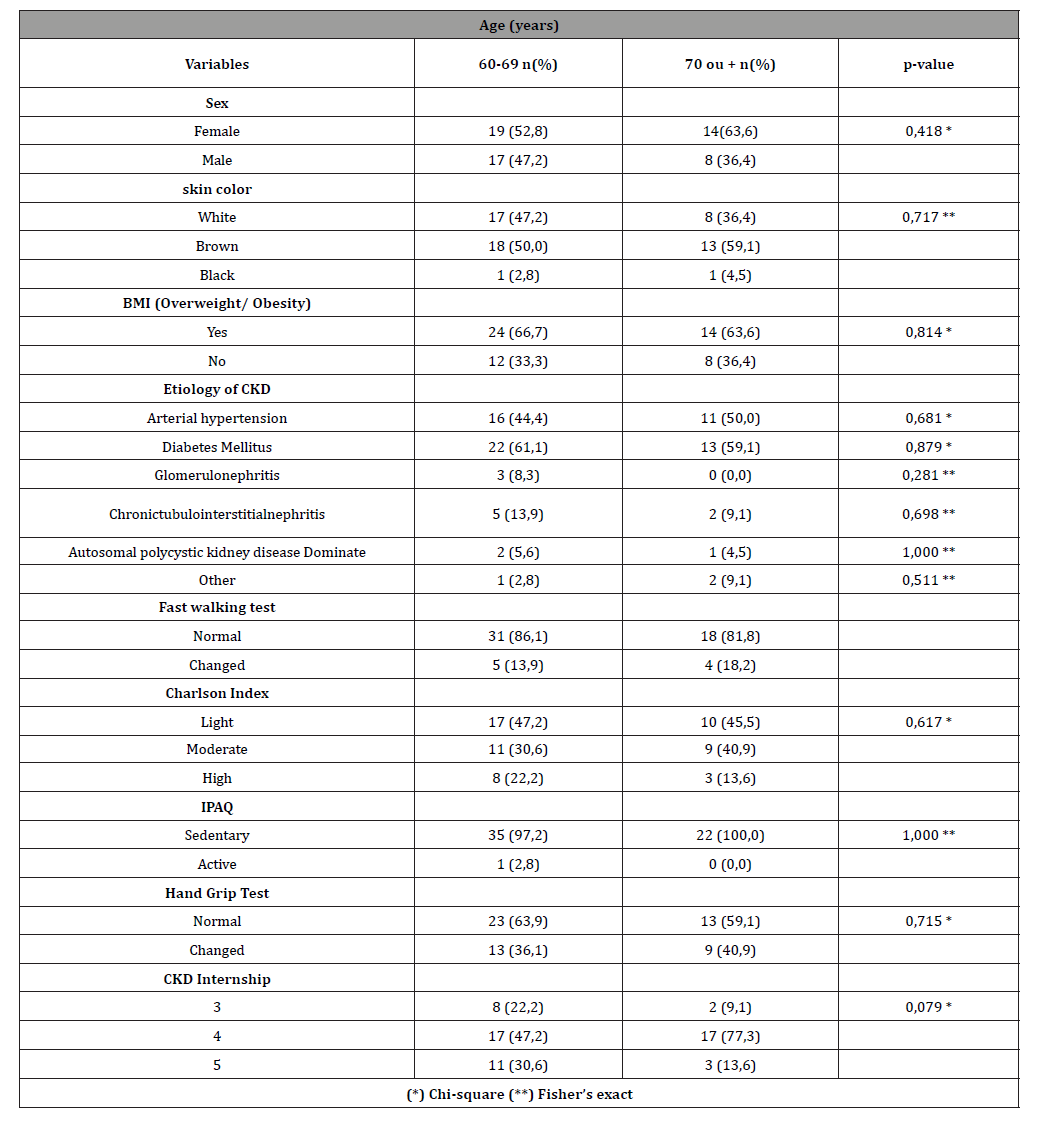
Fifty-eight elderly people of both sexes participated in the study, divided into 2 age groups, 36 (62.1%) aged between 60 and 69 years old and 22 (37.9%) aged 70 years or over. (Table 1) shows the characteristics of the study participants, according to age group, and the following characteristics: a) demographic: in both age groups, female gender, brown skin color, sedentary lifestyle and overweight/obesity predominated; b) the strength test (hand grip) and physical activity performance (fast walking test) were normal in both age groups; c) regarding clinical characteristics, the Charlson index was low in both age groups; most prevalent comorbidities related to the etiology of CKD were type 2 diabetes mellitus and systemic arterial hypertension; As for the stage of CKD, in both groups stage 4 prevailed, followed by 5 and, finally, 3. There was no statistical significance related to any of these variables.
Table 1:Characteristic of the patients with AED withdrawal (n=162).
Graph 1 shows the behavior of the Phase Angle in each of the groups. It is observed that this component is obtained through BIA and presented values below normal in both groups and more accentuated in the older group. This difference was statistically significant (p=0.040).
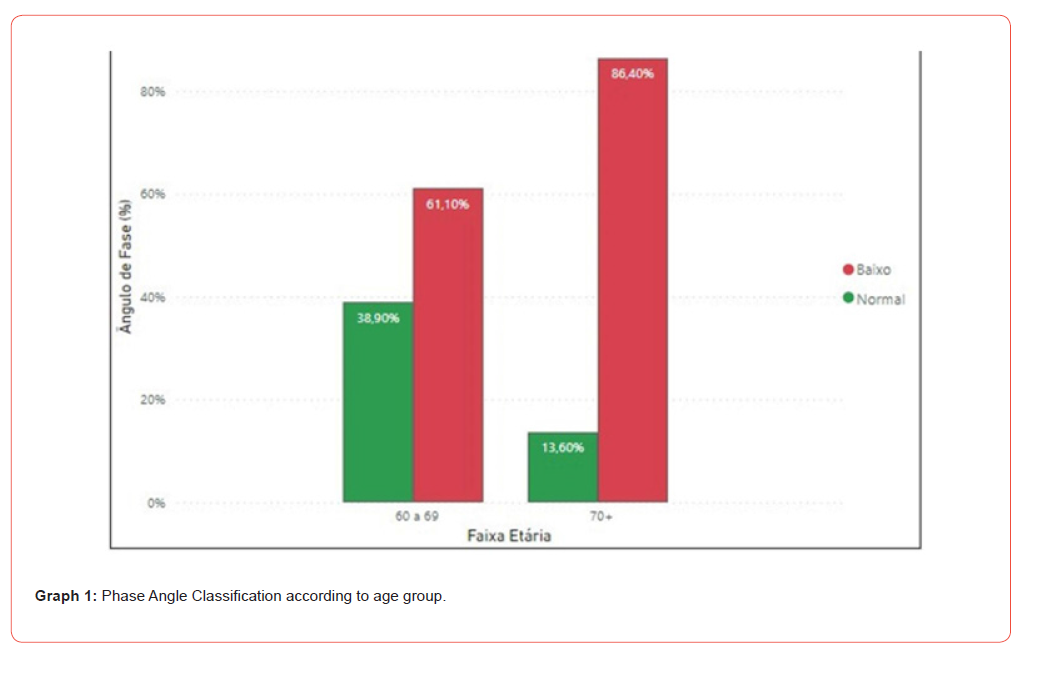
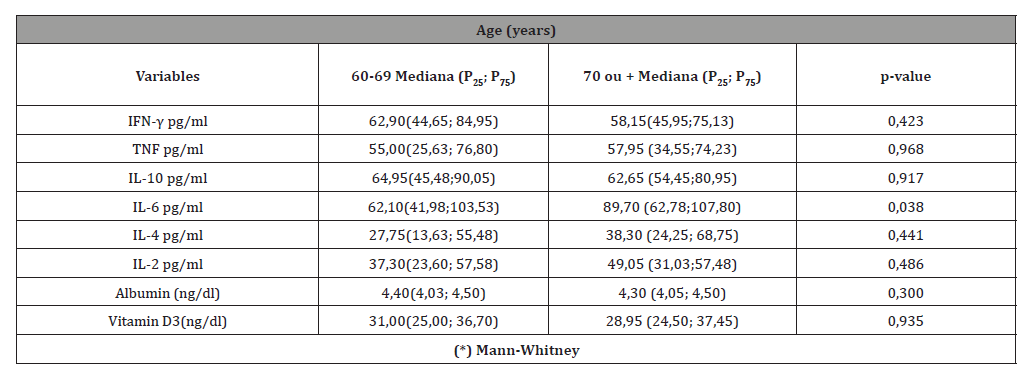
Table 2 shows the values of gamma interferon, tumor necrosis factor and interleukins (10, 6, 4 and 2). All presented levels above normal in both groups selected by chronological age, but IL-6 was statistically significant, as it was higher in the older group.
Table 2:Median cytokine values in each age group.
Discussion
The profile of patients in the present study presents epidemiological agreement with the current literature that addresses the subject of CKD, since females had a higher prevalence in the age groups studied. The majority of patients in this study (65.5%) have a high BMI, which is in line with the well- established association between overweight/obesity and CKD. It is important, in this context, to highlight that obesity is an independent risk factor for CKD. It is known that obesity induces pathophysiological changes that contribute to kidney damage. The accumulation of lipids in macrophages can alter the phenotype of these cells and favor the emergence of a pro- inflammatory environment responsible for the pathophysiological changes in the kidney associated with obesity.
Several pro-inflammatory cytokines produced by adipose tissue and inflammatory cells have been linked to obesityinduced kidney damage. Among these mediators, the plasminogen activation inhibitor-1 (PAI-1), the chemokine MCP-1 and resisting deserve mention. Circulating levels of these cytokines are increased in patients with metabolic syndrome and are related to insulin resistance, increased circulating lipoproteins, atherogenesis and thrombogenesis, effects that directly or indirectly affect renal structure and function. In this context, [14] showed that increased expression of PAI-1, induced in adipose tissue and glomerular cells of obese patients, is an independent risk factor for renal fibrosis by inhibiting local degradation of the extracellular matrix and recruiting inflammatory cells.
Another mechanism probably involved in triggering CKD in obese patients is the increased formation of reactive oxygen species. High cholesterol levels can stimulate the production of superoxide, which in turn contributes to kidney dysfunction seen in obese patients. Oxidative stress, inflammation and secondary endothelial dysfunction favor the onset and progression of CKD [15]. A sedentary lifestyle, in turn, was present in 98.3% of the study sample, which contributes to the high BMI already highlighted. Given this, it is valid to state that physical inactivity is strongly related to the incidence and severity of a vast number of chronic diseases, such as hypertension and DM, which were the most prevalent etiologies of the patients in this study. Physical exercise has been seen as an important ally, representing a fundamental adjunct in the treatment of these patients [16].
It is also important to highlight that DM leads to CKD through hyperglycemia itself, which causes an increase in growth factor, angiotensin II, endothelin, and advanced glycation end products, which contribute to the hyperfiltration effect. As a result, capillary pressure increases and, thus, there are changes in the glomerulus, including thickening of the basement membrane, expanded mesangium, increased extracellular matrix and eventual fibrosis. As the kidney develops these changes, albuminuria develops, which is a risk factor for cardiovascular disease [17]. Hypertensive changes in the kidneys occur through a slightly different mechanism, which consists of the loss of the usual autoregulation of the afferent arteriole leading to hyperfiltration and, in response, the afferent arteriole undergoes vascular changes. As hyperfiltration persists, there is more damage and worsening of hypertension, both at the systemic and glomerular levels, perpetuating the cycle of insult and injury, and glomerulosclerosis, atrophy and/or necrosis may occur [17].
The present study also corroborated the importance of interleukins in aging, with emphasis on IL-6, since its increase in the elderly population was statistically significant, with an increasing value with advancing age. It can be stated that this fact is a reflection of the “Inflammaging” process, which is characterized as an imbalance between pro- and anti- inflammatory mechanisms, due to an increasing increase in the inflammatory status. This process, which occurs with greater intensity as you age, is characterized by an increase in inflammatory cytokines and protein catabolism, contributing to the loss of muscle mass, in addition to a decrease in the quantity and quality of neurons that control the muscle and, thus, they generate a loss of muscle strength [18].
In addition to the aging process, the presence of CKD in the patients in this study, as a chronic disease, also contributes to an increase in inflammatory cytokines, a fact corroborated by several clinical studies that address inflammation in the pathophysiology of CKD. This chronic inflammatory state observed in CKD is associated with elevated serum levels of acute phase inflammatory proteins, such as C-reactive protein (CRP), and a variety of immunoinflammatory mediators, such as cytokines, components of the complement system, prostaglandins and leukotrienes. Thus, the measurement of circulating levels of CRP, immuno-inflammatory mediators, as well as the evaluation of polymorphisms in the genes that encode these immuno-inflammatory mediators have shown that patients with CKD present a pro- inflammatory phenotype that becomes more pronounced as in which kidney damage continues towards its terminal stage [15].
Specifically in renal tissue, cytokines induce local proliferation of tubular and interstitial cells, synthesis of extracellular matrix, procoagulant activity of the endothelium, formation of reactive oxygen species and increased expression of adhesion molecules and biologically active lipids [15]. IL-6, a pro-inflammatory cytokine produced by several cells including monocytes and renal mesangial cells, induces the differentiation of B lymphocytes into antibodyproducing cells and the production of acute phase proteins such as CRP and fibrinogen. Furthermore, this cytokine stimulates the proliferation of mesangial renal cells and plays a fundamental role in mesangial proliferative glomerulopathy [15].
The present study also highlighted the statistical value for PA in the population sample, as it showed statistical significance in reducing its value with greater intensity in the older age group. This measure has been gaining notoriety due to its easy handling and because it is a very objective method, in addition to representing a predictive index of the patient’s general health status, mainly muscle quality, being directly related to muscle strength, with greater value in athletes and lower in sarcopenic individuals [19]. PA values change according to gender and age. Men tend to have greater value, probably due to their body constitution, which reduces resistance and facilitates the passage of electrical current, which does not occur among women, who tend to create greater resistance and opposition to the flow generated by the BIA, due to their constitution. physiological body. PA values also tend to decrease with advancing age, a fact that is related to the physiological processes evidenced during aging, such as the reduction in muscle mass, changes in body composition, changes in the distribution of body water, as well as increased variability in cell size and reduction in cell capacitance [20].
The decrease in PA values with aging may suggest that PA is an indicator of function and general health, and not just an indicator of body composition or nutritional status [21]. In view of this, it is worth stating that the results of the present study are relevant, as it solidifies the incorporation of PA in the clinical-nutritional assessment protocol of elderly people and can be an early indicator of general health and monitoring of body composition disorders. An important number of studies have highlighted the prognostic role of PA in various health states and morbid conditions, such as cancer, Alzheimer’s disease, kidney disease, human immunodeficiency virus infection, chronic lung disease and sarcopenia, as well as in hospitalized patients in general. Lower PA values may indicate the presence or worsening of a disease, as well as death or degradation of the selective permeability of the cell membrane. Low FA values appear to be a prognostic factor that predicts mortality in patients with liver cirrhosis, chronic obstructive pulmonary disease, hemodialysis and cancer [8].
Conclusion
Elderly people aged 70 years or over had higher levels of interleukin 6, when compared to the age group between 60 and 69 years. There was no statistically significant difference between the age groups regarding the levels of other cytokines (IL-2, IL-4, IL-10, IFN-γ and TNF-α). The group aged 70 or over had a lower phase angle value in bioelectrical impedance, emerging as a potential biomarker of biological age, allowing the assessment of muscular strength and physical fitness, making it even possible to generate a prognostic indicator. In relation to other markers of strength and performance (grip strength, gait speed) the groups were similar.
Acknowledgement
None.
Conflict of Interest
No conflict of interest.
References
- Bogdan Ene-Iordache, Norberto Perico, Boris Bikbov, Sergio Carminati, Andrea Remuzzi, et al. (2016) Chronic kidney disease and cardiovascular risk in six regions of the world (ISN-KDDC): A cross-sectional study. The Lancet Global Health 4(5): e307-e319.
- Deborah CM, Ísis EM, Cimar AP, André WF, Lilian KA, et al. (2019) Assessment of renal function in the Brazilian adult population, according to laboratory criteria from the National Health Survey. Revista Brasileira de Epidemiologia 22(Suppl 02): E190010.SUPL.2.
- Audrey CT, Otávio N (2008) Immunosenescence: the relationship between leukocytes, cytokines and chronic diseases. Brazilian Journal of Geriatrics and Gerontology 11(2): 259-273.
- Ingridy Fátima Alves Rodrigues, Vicente Paulo Alves, Lucy de Oliveira Gomes, Daniele Sirineu Pereira, Otávio de Toledo Nóbrega, et al. (2021) Association between stressful events and inflammatory and anti-inflammatory cytokines in long-lived elderly people. Rev. Bras. Geriatr. Gerontol 24(2): e200350.
- JC Milan-Mattos, FF Anibal, NM Perseguini, V Minatel, P Rehder-Santos, et al. (2019) Effects of natural aging and gender on pro-inflammatory markers. Rev. Of Medical and Biological Research 52(9): e8392.
- Torres KCL, Pereira PA, Lima GSF, Souza BR, Miranda DM, et al. (2011) Geriatr Gerontol Aging 5: 163-169.
- LP Fried, CM Tangen, J Walston, AB Newman, C Hirsch, et al. (2001) Cardiovascular Health Study Collaborative Research Group. Frailty in older adults: evidence for a phenotype. J Gerontol A Biol Sci Med Sci 56(3): M146-M156.
- Mattiello R, Amaral MA, Mundstock E, Ziegelmann PK (2019) Reference values for the phase angle of the electrical bioimpedance: systematic review and meta-analysis involving more than 250,000 subjects. Clinical Nutrition 39(5): 1411-1417.
- Levin A (2013) Kidney disease: Improving global outcomes (KDIGO) CKD work group. KDIGO 2012 clinical practice guideline for the evaluation and management of chronic kidney disease 3(1).
- Andrew S Levey, Lesley A Stevens, Christopher H Schmid, Yaping Lucy Zhang, Alejandro F Castro, et al. (2009) A New Equation to Estimate Glomerular Filtration Rate. Ann Intern Med 150(9): 604-612.
- LEE PH, Macfarlane DJ, Lam TH, Stewart SM (2011) Validity of the International Physical Activity Questionnaire Short Form (IPAQ-SF): a systematic review. Int J Behav Nutr Phys Act 21(8): 115.
- Richard M Dodds, Holly E Syddall, Rachel Cooper, Michaela Benzeval, Ian J Deary, et al. (2014) Grip strength across the life course: Normative data from twelve British studies. Plos One 9(12): e113637.
- A Bosy-Westphal, B Schautz, W Later, J J Kehayias, D Gallagher, et al. (2013) What makes the BIA equation unique? Validity of eight-electrode multifrequency BIA to estimate body composition in a healthy adult population. Eur J Clin Nutr 67(Suppl 1): S14-S21.
- Allison A Eddy, Agnes B Fogo (2006) Plasminogen Activator Inhibitor-1 in Chronic Kidney Disease: Evidence and Mechanisms of Action. J. Am. Soc. Nephrol 17(11): 2999-3012.
- Vianna HR, Soares CMBMS, Tavares MS, Teixeira MM, Silva ACS (2011) Inflammation in chronic kidney disease: role of cytokines 33(3): 351-364.
- Bruno Gualano, Taís Tinucc (2011) Sedentary lifestyle, physical exercise and chronic diseases. Rev. bras. education. fis. sport 25: 37-43.
- Charles C, Ferris AH (2020) Chronic Kidney Disease Primary Care 47(4): 585-595.
- Alexandre TS, Scholes S, Santos JLF, DE Oliveira C (2019) Dynapenic abdominal obesity as a risk factor for worse trajectories of ADL disability among older adults: ELSA cohort Journals Of Gerontology Series A-Biological Sciences and Medical Sciences 74(7): 1112-1118.
- Olivia Di Vincenzo, Maurizio Marra, Anna Maria Sacco, Fabrizio Pasanisi, Luca Scalfi (2021) Bioelectrical impedance (BIA)-derived phase angle in adults with obesity: A systematic review. Clinical Nutrition 40(9): 5238-5248.
- Dantas E Silva TBD, Libonati RMF (2020) Phase angle and indicators of nutritional status in people living with HIV/AIDS with lipodystrophic syndrome secondary to antiretroviral therapy. Brazilian Journal of health Review, Curitiba 3(4): 10710-10727.
- Barbosa-Silva MC, Barros AJ, Wang J, Heymsfield SB, Pierson RN (2005) Bioelectrical impedance analysis: population reference values for phase angle by age and Am J Clin. Nutr 82(1): 49-52.
-

This work is licensed under a Creative Commons Attribution-NonCommercial 4.0 International License.