

 Research Article
Early Treatment Outcomes of SARS-Cov-2 with Ivermectin, Nitazoxanide and Acetylsalicylic Acid in 2 Nursing Homes During The COVID-19 Pandemic in Cali, Colombia
Received Date:April 06, 2024; Published Date:April 12, 2024
Abstract
Introduction: The high lethality of COVID-19 among older adults and especially in nursing homes led to the implementation of early treatment
for residents in 2 geriatric institutions in Cali, Colombia, where outbreaks of SARS-CoV-2 occurred at different times of the epidemic. Only one of the
475 residents, who was positive for the infection, died of a heart attack.
Objectives: To provide data regarding the early initiation of pharmacological treatment and interdisciplinary monitoring of patients who were
RT-PCR-positive or antigen-positive for SARS-CoV-2, as well as to their close contacts. Also, we look for less referrals to hospitals of high-level
complexity or to intensive care units, and to contribute to reducing mortality in older adults in nursing homes.
Methods: This is an evaluation of early pharmacological treatment administered to 475 older adults residing in 2 nursing homes, where
outbreaks of SARS-CoV-2 were identified by the authorities of each institution. SARS-CoV-2 RT-PCR or antigen tests were performed for all residents.
The Rockwood Clinical Frailty Scale (CFS) was taken into account, and the NEWS-2 National Early Warning Score was used to determine which cases
should be managed at the institution and which should be referred to a hospital with a higher level of complexity. Interdisciplinary follow-up was
carried out by the medical, nursing, psychology and social work staff at the institutions for 30 days. The pharmacological treatment administered
to all residents was ivermectin (600 mcg/kg) on days 1 and 7; nitazoxanide (500 mg), BD for 6 days; and acetylsalicylic acid (100 mg) interday, on
days 1, 3, 5, and 7.
Results: All 475 residents in 2 nursing homes in Cali, Colombia, were treated when the first positive cases were identified in each institution.
Ivermectin, nitazoxanide and acetylsalicylic acid were administered. At the end of the observation period, there were 87 confirmed SARS-CoV-2-
positive cases (18.3%); SARS-CoV-2 infection was more common in residents with a frailty scale greater than 5 and with comorbidities such as
hypertension, neurocognitive disorder (senile dementia), heart disease and hypothyroidism. Seventy-one residents (15%) remained inside the
nursing homes in isolation, and 13 (2.7%) were hospitalized in the respective internal ward. Two patients (0.4%) were referred to institutions with
a higher level of complexity of care, and none were referred to the intensive care unit (ICU). The most common side effects of the medications were
abdominal pain and diarrhoea. Only one patient who tested positive for SARS-CoV-2 (0.2%) died of a heart attack at 30 days of observation.
Significance: An alternative early therapeutic approach aimed at blocking the replication of the virus in phase 1 of the disease is documented
among older adults with comorbidities. Based on the literature, lethality is expected to fluctuate between 24% and 45% in nursing homes. However,
herein, the lethality was below 1.1%, indicating a beneficial effect of this approach for this population.
Keywords:SARS-Cov-2; COVID-19; Ivermectin, Nitazoxanide; Acetylsalicylic Acid; Nursing Home; Comorbidities; Frailty Scale
Introduction
Since the beginning of the COVID-19 pandemic caused by the SARS-CoV-2 virus in 2019, international reports showed a high lethality in adults over 60 years of age, being even higher when they reside in nursing homes (NHs). The World Health Organization (WHO) [1], from its European regional office, warned in April 2020 that 95% of deaths occurred in people over 60 years of age and, of these, 50% occurred in people over 80 years of age. Eight of every 10 deaths occurred among people with one or more comorbidities. The Centers for Disease Control of the United States (CDC) [2] estimated that compared to young adults aged 18 to 29 years, older adults between 75 and 84 years of age had an 8 times greater risk of hospitalization and 186 times greater risk of death. Previous studies in NHs in Massachusetts [3,4] showed high mortality among residents with greater frailty. In another study in the United Kingdom in 4 NHs, those infected with SARS-CoV-2 who died were predominantly men with a high prevalence of cardiovascular disease [3-7]. A similar situation occurred in Colombia, with a lethality of 81.8% among those over 60 years of age, whether or not they were institutionalized, a lethality that has remained constant [8].
NHs residents are people with a high degree of vulnerability due to their age, comorbidities and high degree of dependence and frailty, with cognitive and physical impairments with a high risk of acquiring SARS-CoV-2 infection [9,10]. In these NHs, communal areas are shared with little social distancing, an environment conducive to and with a high risk for dissemination, infection and complications [11,12]. COVID-19 cases were present in 2 NHs in Valle del Cauca: San Miguel Geriatric Nursing Home (HGASM, for its initials in Spanish) and the Nursing Home Foundation (FHG, for its initials in Spanish). The risk of infection occurring in these groups was very high, and the probability of referral to the ICU and of death was also high. The absence of a specific treatment to prevent the progression of the disease from phase 1 of viral replication to inflammatory phases 2 and 3 caused an initial feeling of impotence that translated into a challenge to find timely and effective therapies [13,14]. The medical group that led the treatment [16] in these NHs decided to initiate an early treatment to all contacts and caregivers of those patients positive to SARS-CoV-2/COVID-19 with ivermectin, nitazoxanide and acetylsalicylic acid (ASA). Similar studies [15] with other viruses, such as human immunodeficiency virus (HIV), demonstrated the importance of using multiple drugs at different times of the intracytoplasmic viral replication cycle. Both nitazoxanide and ivermectin are widely used drugs in older adults in NHs, have no significant adverse effects that advise against their widespread use, are very innocuous, and are approved by the US Food and Drug Administration (FDA) as research drugs due to their antiviral effect and viral cytotoxicity against SARS-CoV-1 (demonstrated since 2005) and against SARS-CoV-2/COVID-19 in assays with Vero E6 cells (ATCC-1586 in 2020). Therefore, they have been used in NHs around the world, and clinical studies have been initiated to clarify their efficacy against SARS-CoV-2 [17-19].
Nitazoxanide is an antiparasitic with broad spectrum antiviral activity and with good cardiac, renal and hepatic safety profiles. In vitro, a mechanism of action has been identified that tends to improve the immune response to COVID-19 through positive feedback to the production of interferon, blocking viral maturation by compromising the trafficking of the virus in different intracellular vacuoles, such as in phagosomes and the Golgi apparatus and, possibly, in the rough endoplasmic reticulum, in addition to probably compromising the insertion of the viral protein in the extracellular membrane before viral budding [20, 21]. There is no restriction for use in older adults.
The following mechanisms of action account for the antiviral actions of ivermectin in vitro:
• Ivermectin blocks the CD147 protein, co-receptor of ACE2, for
spicule cleavage and endocytosis of the virus.
• Ivermectin tends to dissociate the preformed nuclear importin
heterodimer IMP-alpha/beta1, which is responsible for the
transport of viral inhibitory proteins into the cell nucleus, allowing
normal intracellular mechanisms to limit viral growth
and secondarily increase the production of interferon.
• Ivermectin decreases the formation of erythrocyte aggregates
when interacting with platelets, thus preventing vascular micro
thrombosis, a phenomenon observed in pathology studies
of deceased patients with COVID-19. It has been administered
worldwide in more than 3,200 million doses in Africa, Latin
America and Asia, with very few serious adverse effects [21-
23].
• In addition, taking into account the findings of different studies
that show the phenomenon of massive thrombosis, both
in the microvasculature and in large vessels, the addition of
ASA as an antiplatelet agent tends to reduce and prevent this
complication. Furthermore, ivermectin intervenes in coagulation
factors II and VII, thereby improving the antiplatelet
action of ASA, enhancing the prevention of one of the main
complications, i.e. massive micro thrombosis, documented for
COVID-19 [24-26]. Notably, this drug has been widely used in
NHs and in groups of older adults, with known adverse effects.
The medical group that led the intervention considered the following
bonding criteria for the implementation process:
• Early initiation of medication in older adults with a positive
test for SARS-CoV-2 and their close contacts in the nursing
home where they reside, regardless of their SARS-CoV-2 status.
• Guaranteed interdisciplinary monitoring based on a consensual
model.
• Reduce referrals to higher complexity of care hospitals and intensive
care units.
• Contribute to reducing morbidity and mortality from COVID-19
among household residents.
Biosecurity actions (social distancing, hand washing and use of face masks) delayed the appearance of the outbreak for several months in both institutions. This article documents the number of referrals to the ICU and deaths among individuals with SARS-CoV-2 and their contacts in 2 NHs in Cali, Colombia, during a 30-day period.
Materials and Methods
An observational analysis was performed in 2 NHs in Cali, Colombia, with individuals with SARS-CoV-2 and their contacts for 30 days. Symptomatic residents were identified as having confirmed SARS-CoV-2 cases when RT-PCR or antigen tests were positive. Subsequently, all contacts and caregivers were identified, and diagnostic tests were performed. Taking into account that the opportunity to deliver the test results was on average 8 days, the medical group decided to initiate early therapeutic treatment for all individuals with suspected cases, their contacts and their caregivers. The following ethical and pharmacological criteria were taken into consideration as decisions for the implementation: a) for admission to the institution, the resident or their legal representative signed an authorization form for the medical staff to prescribe the required medication based on the disease status of each person; therefore, informed consent was not required because this study was not a clinical trial but a therapeutic approach; b) the study was conducted in accordance with the Declaration of Helsinki [27], paragraph 37, given the high vulnerability and risk of death of older adults, respecting the right of patients to receive the therapy that, based on the available scientific literature, would have the best possible efficacy and lowest risk of side effects, and c) ivermectin, nitazoxanide and acetylsalicylic acid are medications that are usually given to NHs residents, all are highly innocuous.
The medical group organized the therapeutic approach, based
on the following components:
• Training meetings or interdisciplinary studies on SARS-CoV-2/
COVID-19 for the entire team of caregivers, professionals and
assistants of the health team as well as operational and administrative
workers at the institutions – With their support, direct
communication and review of clinical history records and
daily census were maintained.
• Revision of the Rockwood CFS [10,28], with which older adults
are administered upon admission, allowing each resident to be
assigned, based on the guidelines of each institution, the corresponding
ward for their best safety and care - The CFS scale,
with a score that ranges 1 to 9, classifies those from 1 to 4 as
with total independence or limitations in their physical mobility,
and from 5 to 9 assess the deterioration of mobility begins
and progression towards total or almost terminal dependence.
Not necessarily every resident progresses through the scale 1
to 9; it depends on each individual and the care offered.
• Early identification of virus infection using RT-PCR or SARSCoV-
2 antigen tests applied to all residents, their contacts and
their caregivers – Patients with a positive result underwent
strict isolation, attended by trained healthcare professionals,
including the application of the National Early Warning Score
NEWS-2 [29].
• Early treatment was ordered for residents with a positive laboratory
and their close contacts, with the following schedule:
a) ivermectin 0.6% oral solution, 600 mcg/kg/dose on days 1
and 7; b) nitazoxanide tablets, 500 mg, once every 12 hours for
6 days; and c) acetylsalicylic acid tablets, 100 mg interday, days
1, 3, 5, and 7. It was guaranteed that the therapies previously
prescribed for those who had comorbidities would continue
under the supervision of the geriatricians at each institution;
• A first-level hospitalization ward was established for those
patients who required additional therapy, oxygen desaturation
(dexamethasone, 6 mg; change in acetylsalicylic acid for
low-molecular-weight heparin; addition of antimicrobials),
and treatment of adverse effects to the medication. Any change
in the daily clinical course was reviewed by the institutional interdisciplinary
team, with guidance from external specialists;
and
• Daily monitoring by institutional operational personnel was
continued for 30 days.
• Those with results positive test results were compared with
all residents in HGASM and FHG who underwent the diagnostic
test. The differences in outcome variables, ICU referral, and
death within 30 days of starting treatment were evaluated
with the Chi2 test to determine statistical significance.
Outcomes
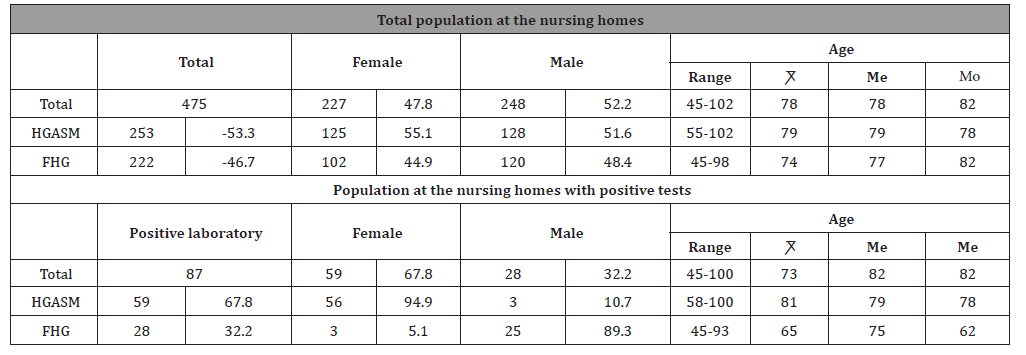
In the 2 institutions, there were 475 older adult residents: 253 at HGASM and 222 at FHG. Of these, 227 (47.8%) were women, and 248 (52.2%) were men, with an average and median age for both sexes of 78 years, mode 82 years and range from 45 to 102 years. Among the 475 tests performed, 87 (18.3%) were positive: 60 (69%) to SARS-CoV-2 RT-PCR and 27 (31%) antigens. Of these, 59 (67.8%) occurred at HGASM and 28 (32.2%) at FHG, with equal distribution by sex (p = 0.4511) (Table 1).
Table 1:General characteristics of the populations at the nursing homes.
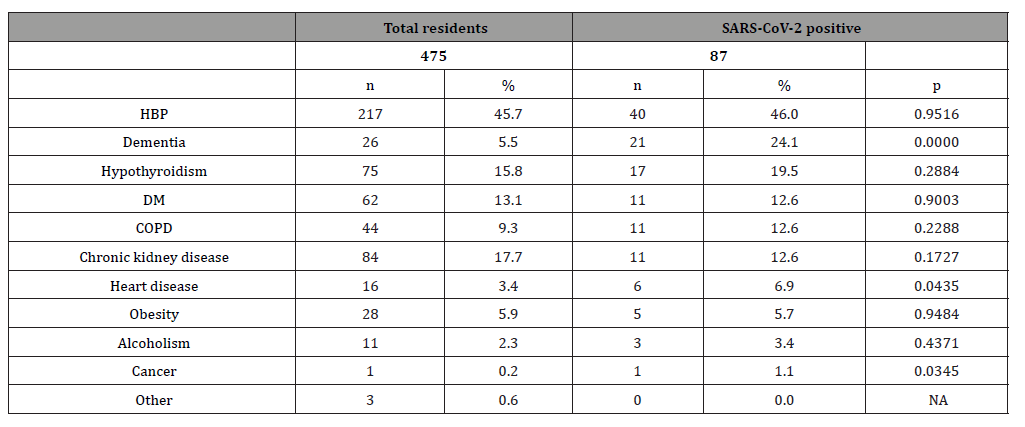
In the 30-day early intervention period, only one resident died, with a diagnosis of acute myocardial infarction at day 21, 14 days after finishing his treatment cycle, within the follow-up time. Therefore, it was accepted that his death was due to COVID-19, without a treatment effect. The identified comorbidities were basically the same as those described in other studies, such as arterial hypertension (46%), chronic kidney disease (18%), hypothyroidism (16%), diabetes mellitus (13%) and others. There were 26 patients with neurocognitive disorder, of whom 23 were at HGASM and 3 were at FHG (Chi2 = 13.7, p = 0.0002).
Among the 475 residents, there were 124 (26.1%) residents without comorbidities; 115 (24.2%) with 1 comorbidity; 148 (31.2%) with 2; 60 (12.6%) with 3; and 28 (5.9%) with 4 or more. Among those with 1 or more comorbidities, the likelihood of having a positive test was significantly higher than that for those without any comorbidities (Chi2 = 27.21; p = 0.00000). Of the 87 residents with a positive test for SARS-CoV-2, there was an association with dementia, statistically significant in 21 residents (24.1%; p = 0.000), 6 of whom had heart disease (6.9%; p = 0.0435) (Table 2).
Table 2:Comorbidities in residents and SARS-CoV-2-positive cases.
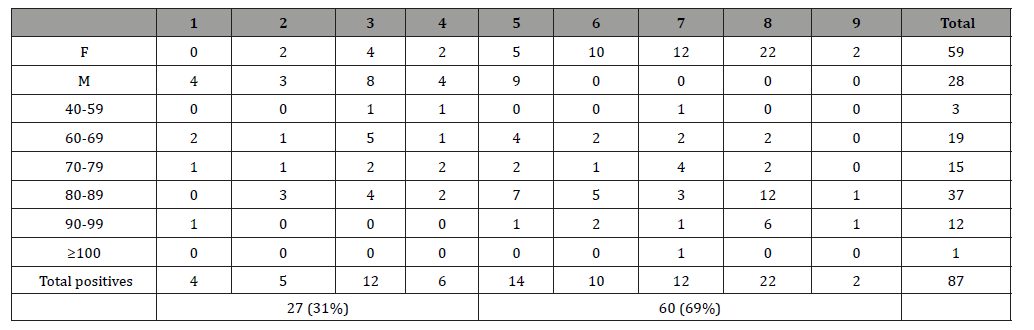
Regarding the CFS, 149 (31.4%) residents had scores between 1 and 4, and 326 (68.6%) had scores between 5 and 9. Among the 87 residents positive for SARS-CoV-2, 27 (31%) had scores less than 4, while 60 (69%) had scores greater than 5. Among those with frailty scores between 5 and 9, the likelihood of having a positive test at HGASM (Chi2 4.75; p: 0.029) and FHG (Chi2 = 8.54; p = 0.003) was significant. There was a significant association between the sex distribution and CFS scores among those with positive SARS-CoV-2 tests (Chi2 = 17.12; p = 0.0000) (Table 3).
Table 3:Frailty scale in SARS-CoV-2-positive residents.
Of the 87 residents positive for SARS-CoV-2, 71 (81.6%) were strictly isolated in the ward assigned to them, and 13 (14.9%) were hospitalized in the NHs ward defined for SARS-CoV-2-positive residents with strict interdisciplinary follow-up; both groups were evaluated as low complexity, without requiring referral to another institution. Two (2.3%) were referred for management in health care institutions (IPSs) with a medium complexity of care, 1 for respiratory symptoms and another for abdominal pain, returning to their NH to continue their management. None were referred to the ICU. During follow-up, only 1 resident died among the 87 residents positive for SARS-CoV-2, for a lethality rate in the 2 NHs of 1.1%. The mortality rate for the 475 residents who received triple therapy was 0.2% (Table 4).
Table 4:Isolation and hospitalization.

The most common side effects related to medication were transient diarrhea, abdominal pain, phosphenes and skin rash with improvement in the first 24 hours.
Discussion
This observational study describes the results of early pharmacological treatment with medical follow-up for 30 days in 2 NHs in Cali, Colombia (HASM and FHG). According to the Declaration of Helsinki, paragraph 37 [27], this treatment does not require approval of an Ethics Committee (although it was approved by the IRB of the HGASM) because the drugs used are part of the standard prescription at both NHs, are highly innocuous, and have been effective in other studies. In comparison with the findings of other publications, [4,5,7] among the 475 residents and the 87 residents positive for SARS-CoV-2 tests, the low mortality and the need to refer only 2 residents to medium complexity institutions and none to intensive care units stands out. This finding contrasts with the lethality recorded among adults older than 60 years [8] in the city of Cali (13.8%) and in Colombia (12.9%). Comas et al. [7] reported lethality in NHs in high-income countries between 24% and 45% (average 33.6%), allowing us to assume that among the 87 older adults positive for SARS-CoV-2 in the 2 included HGs, between 21 and 39 residents could have died. Even taking into account the lethality of institutionalized or noninstitutionalized older adults in Cali (13.9%), 12 deaths would be expected. With this intervention, such mortality was avoided, as well as a significant number of referrals to hospitalization and intensive care units [9-11]. The efficacy of the early therapeutic approach was confirmed when the intervention groups, which included individuals of advanced age, were analysed, with increased risk derived from their multiple comorbidities, frailty greater than 5, mental disability, confinement and impossibility of maintaining strict social distancing, thus being more exposed and prone to more severe and lethal forms of the disease [4-6,9,10].
This treatment was applied taking into account 4 premises:
• SARS-CoV-2 infection was identified in a timely manner
through RT-PCR or antigen testing in high-risk populations to
make the decision to start treatment as soon as possible.
• The combined therapies ivermectin [17,18,22-25] and nitazoxanide
[19-21] act synergistically in the viral replication
cycle. Additionally, acetylsalicylic acid and ivermectin have
antithrombotic action. Experience in the management of multiple
drugs used in other infectious diseases, especially HIV/
AIDS, was taken into account.
• Strict follow-up by multidisciplinary teams guaranteed the
continuous evaluation of patients to define the effectiveness of
treatment and adverse effects; and
• In a pandemic, therapeutic alternatives should be offered that
modify the course of the disease, with drugs tested both in vitro
and in vivo.
These drugs, i.e., ivermectin, nitazoxanide and acetylsalicylic acid, are low cost, easy to access and very innocuous. In fact, ivermectin has been widely used in Africa for the control of onchocerciasis, and nitazoxanide has been used for the control of different intracellular parasites, especially in HIV and amoebae in the paediatric population [20,24,30].
Conclusions
This was an observational study of a treatment applied without a control group and performed under international parameters for this type of intervention. Statistical tests were limited to looking for an association between risk factors and the probability of acquiring SARS-CoV-2 infection in NHs. The greater number of women at HGASM positive for SARS-CoV-2 is explained by the fact that the outbreak began in the women’s ward, in women with frailty scores greater than 5 (CFS scale) [28]. A similar situation was observed at FHG, where the men’s ward was affected first.
Studies with ivermectin alone or combined with nitazoxanide, azithromycin or chloroquine do not show similar results to those obtained in the 2 NHs studied herein. The possible explanation for this difference is the early initiation of treatment, combined with strict follow-up, because age, comorbidities, and other risk factors were similar to those described in the literature [17,20-22,25]. The results from this study suggest a cause-and-effect relationship between the early pharmacological approach applied to these older adults, low lethality and low referrals for hospitalization and ICU admission. Local, national and international health authorities (including PAHO/WHO), the community and scientific societies are welcome to review this experience, the results of which are encouraging. We are in a position to conduct other complementary randomized controlled trials. Notably, other therapeutic options should be explored, but the result of this intervention lead to the conclusion that it is possible to treat cases of SARS-CoV-2 early to prevent the progression of infection with various medications, following the recommendations of PAHO/WHO, to investigate therapies via more rigorous methods, such as controlled clinical trials [31].
Acknowledgement
We thank the entire care, technical and administrative team who dedicate their efforts to the quality and care of institutionalized older adults. We also thank all residents of nursing homes.
Conflicts of Interest
No Conflict of Interest.
References
- (2020) WHO/Europe | Coronavirus disease (COVID-19) outbreak. Statement – Older people are at highest risk from COVID-19, but all must act to prevent community spread.
- (2021) Risk for COVID-19 Infection, hospitalization, and death by age group | CDC.
- Akinbami LJ, Chan PA, Vuong N, Sami S, Lewis D, et al. (2021) severe acute respiratory syndrome coronavirus 2 seropositivity among healthcare personnel in hospitals and nursing homes, Rhode Island, USA, July-August 2020. Emerg Infect Dis 27(3): 823-834.
- Su Z, McDonnell D, Li Y (2021) Why is COVID-19 more deadly to nursing home residents? QJM An Int J Med 114(8): 543-547.
- Barnett ML, Grabowski DC (2020) Nursing homes are ground zero for COVID-19 Pandemic. JAMA Heal Forum 1(3): e200369.
- Gorges RJ, Konetzka RT (2020) Staffing levels and COVID-19 cases and outbreaks in U.S. nursing homes. J Am Geriatr Soc 68(11): 2462-2466.
- Comas-Herrera A, Zalakain J, Lemmon E, Henderson D, Litwin C, et al. (2020) Mortality associated with COVID-19 outbreaks in care homes: early international evidence - Resources to support community and institutional Long-Term Care responses to COVID-19.
- BES Boletin Epidemiológico Semanal. Semana epidemiológica 03, 17 al 23 de enero de 2021.
- De Smet R, Mellaerts B, Vandewinckele H, Lybeert P, Frans E, et al. (2020) Frailty and mortality in hospitalized older adults with COVID-19: Retrospective observational study. J Am Med Dir Assoc 21(7): 928-932.e1.
- Hägg S, Jylhävä J, Wang Y, Xu H, Metzner C, et al. (2020) Age, frailty, and comorbidity as prognostic factors for short-term outcomes in patients with coronavirus disease 2019 in geriatric care. J Am Med Dir Assoc 21(11): 1555-1559.e2.
- Hewitt J, Carter B, Vilches-Moraga A, Quinn TJ, Braude P, et al. (2020) The effect of frailty on survival in patients with COVID-19 (COPE): a multicentre, European, observational cohort study. Lancet Public Health 5(8): e444-e451.
- Zhao H-L, Huang YM, Huang Y (2020) Mortality in older patients with COVID-19. J Am Geriatr Soc 68(8): 1685-1687.
- Tjia J, Rothman MR, Kiely DK, Shaffer ML, Holmes HM, et al. (2010) Daily medication use in nursing home residents with advanced dementia. J Am Geriatr Soc 58(5): 880-888.
- Lester PE, Holahan T, Siskind D, Healy E (2020) Policy recommendations regarding skilled nursing facility management of Coronavirus 19 (COVID-19): Lessons from New York State. J Am Med Dir Assoc 21(7): 888-892.
- Terapia antirretroviral.
- Fields’ Virology - Google Libros.
- Caly L, Druce JD, Catton MG, Jans DA, Wagstaff KM (2020) The FDA-approved drug ivermectin inhibits the replication of SARS-CoV-2 in vitro. Antiviral Res 178: 104787.
- Chaccour C, Hammann F, Ramón-García S, Rabinovich NR (2020) Ivermectin and COVID-19: Keeping rigor in times of urgency Am J Trop Med Hyg 102(6): 1156-1157.
- Rocco PRM, Silva PL, Cruz FF, Junior MACM, Tierno PFGMM, et al. (2021) Early use of nitazoxanide in mild Covid-19 disease: randomised, placebo-controlled trial. Eur Respir J 58(1): 2003725.
- Kelleni MT (2020) Nitazoxanide/azithromycin combination for COVID-19: A suggested new protocol for early management. Pharmacol Res 157: 104874.
- Martins-Filho PR, Barreto-Alves JA, Fakhouri R (2020) Potential role for nitazoxanide in treating SARS-CoV-2 infection. J Physiol Lung Cell Mol Physiol 319(1): L35-L36.
- Gorial FI, Mashhadani S, Sayaly HM, Dakhil BD, AlMashhadani MM, et al. (2020) Effectiveness of ivermectin as add-on therapy in COVID-19 management (pilot trial). medRxiv.
- Heidary F, Gharebaghi R (2020) Ivermectin: a systematic review from antiviral effects to COVID-19 complementary regimen. J Antibiot 73: 593-602.
- Whitworth JAG, Hay CRM, Nicholas AM, Morgan D, Maude GH, et al. (1992) Coagulation abnormalities and ivermectin. Ann Trop Med Parasitol 86(3): 301-305.
- Cepelowicz Rajter J, Sherman MS, Fatteh N, Vogel F, Sacks J, et al. (2020) Ivermectin in COVID-19 study: Use of ivermectin is associated with lower mortality in hospitalized patients with COVID-19.
- Canzano P, Brambilla M, Porro B, Cosentino N, Tortorici E, et al. (2021) Platelet and endothelial activation as potential mechanisms behind the thrombotic complications of COVID-19 patients. JACC Basic to Transl Sci 6(3): 202-218.
- (2021) Declaración de Helsinki de la AMM - Principios éticos para las investigaciones médicas en seres humanos -WMA- The World Medical Association.
- Rockwood K, Song X, MacKnight C, Bergman H, Hogan DB, et al. (2005) A global clinical measure of fitness and frailty in elderly people. CMAJ 173(5): 489-495.
- Elguea EPA, Prado BOA, Barradas AJ (2019) Implementación de una escala de gravedad para la activación del equipo de respuesta rápida: NEWS 2. Med Crit 33(2): 98-103.
- Guerrero R, Bravo LE, Muñoz E, Grillo EK, Guerrero E (2020) COVID-19: The ivermectin African enigma [Internet]. Colomb Med 51(4): e2014613.
- (2021) WHO. Therapeutics and COVID-19: living guideline pp. 15-15.
-

This work is licensed under a Creative Commons Attribution-NonCommercial 4.0 International License.