

 Research Article
Correlation Between Cardiorespiratory Capacity, Handgrip Strength, And Basic Activities of Daily Living in Frail Elderly Individuals
Received Date: June 29, 2026; Published Date: August 04, 2026
Abstract
Introduction: It is well-established in the literature that Frailty Syndrome, characterized by physiological and functional declines, is closely related to the aging process. It is also known that this syndrome is predictable and preventable; through appropriate interventions, improvements can occur between the stages of frailty.
Objective: To correlate cardiorespiratory capacity, handgrip strength, and basic activities of daily living (ADLs) in frail elderly individuals.
Methodology: This is an observational, descriptive, and retrospective study conducted using data from the medical records of patients treated in the Geriatrics sector of the Physical Therapy Clinic at the Educational Foundation of the Municipality of Assis (FEMA) between 2022 and 2024. The 6-Minute Walk Test (6MWT), Handgrip Strength (HGS) test, and the Katz Index of Independence in Activities of Daily Living were utilized. Subsequently, correlation coefficients were calculated using the Python programming language. In this statistical model, a calculation is performed for each pair of variables, and the coefficients are organized into a matrix to generate a correlation map.
Results: Analysis of the correlation map revealed that the variable presenting the most intense colors and the highest value (0.58) was handgrip strength (HGS), followed by the Katz Index and cardiorespiratory capacity (0.5).
Conclusion: The variable that correlates best with the others is handgrip strength (HGS).
Keywords: Frail elderly; Muscle strength dynamometer; cardiorespiratory; activities of daily living
Introduction
Aging brings about physiological changes, as well as functional alterations, leading to homeostatic imbalance and favoring the development of dysfunctions, along with the deterioration of various physical, sensory, perceptual, cognitive, and muscular functions. This set of signs and symptoms is clinically defined as Frailty Syndrome [1]. It is well-established in the literature that Frailty Syndrome, which can be understood as a result of physiological and functional declines, is closely related to the aging process [2]. It is also known that this syndrome is predictable and preventable; through appropriate interventions, clinical improvements can occur between the stages of frailty [3]. Furthermore, it has been identified as an important tool in screening for clinical conditions capable of impacting the quality of life of the elderly [4]. The study carried out by ALMEIDA et al. (2021) [5] demonstrates this positive association between the ability to walk long distances, climb stairs, and health-related quality of life.
Within this broad functional scope, cardiorespiratory capacity stands out—that is, the body’s ability to transport oxygen to muscles and organs [6] for which the ideal instrument for assessment in older adults is the 6-Minute Walk Test [7]. When relating cardiorespiratory capacity to functional capacity, which can be assessed through the ability to perform activities of daily living (ADLs), research shows that functional exercises in both frail and non-frail elderly individuals are able to improve physical performance, delay frailty, and reduce inflammation, even within frail populations [8]. The study conducted by GARCIA et al. (2023) [9], which evaluated the impacts of an exercise program on functional ability in older adults, showed notable improvements in upper and lower limb strength, balance, and aerobic capacity, concluding that physical activity is essential in reducing frailty in this population. Similarly, ALMEIDA et al. (2021) [5] verified a positive association between the ability to walk long distances, climb stairs, and health-related quality of life; that is, superior functionality and cardiorespiratory capacity are critical factors for promoting health in the elderly.
Another relevant variable closely linked to functional capacity is handgrip strength, which serves as an indicator of overall muscle strength and reflects changes related to physical performance [10]. Studies such as the one conducted by FIORITTO et al. (2020) [11], which correlated different variables in the elderly population, demonstrated that superior functionality is directly linked to higher levels of handgrip strength and, consequently, to greater independence in ADLs. Since older adults become more vulnerable to stressors due to Frailty Syndrome—which depletes their energy reserves and negatively affects their health status [12] it is highly relevant to analyze these variables. This analysis aims to better understand whether greater handgrip strength is related to better cardiorespiratory capacity and, consequently, to increased independence in performing basic activities of daily living. Within this context, investigating these correlations is necessary so that the findings can guide the development of healthcare policies with efficient strategies and interventions for the early detection of clinical deficits, ultimately preventing or delaying frailty and the subsequent loss of functional capacity [1].
Objective
To correlate cardiorespiratory capacity, handgrip strength, and basic activities of daily living (ADLs) in frail older adults.
Methods
This is an observational, descriptive, and retrospective study conducted using data from the medical records of patients treated in the Geriatrics sector of the Physical Therapy Clinic at the Educational Foundation of the Municipality of Assis (FEMA) between 2022 and 2024 (CAAE: 86005925.5.0000.8547).
For sample characterization, several assessments documented in the patients’ medical records were analyzed, having been originally obtained as follows:
Personal Characterization and Frailty Assessment
Patient personal data were analyzed, and the following information was extracted: age, sex, education level, sociodemographic data, Fried scale scores, number of falls in the last 12 months, and the presence of risk factors for cardiovascular diseases such as hypertension, family history, diabetes mellitus (DM), dyslipidemia (hypercholesterolemia and hypertriglyceridemia), smoking, and alcohol consumption. Frailty was evaluated based on the phenotype proposed by Fried et al., which recognizes unintentional weight loss, reduced gait speed, decreased physical strength, self-reported fatigue, and low physical activity as clinical conditions that impose greater vulnerability on the subject. Patients were subsequently classified according to their scores: non-frail (no criteria present), pre-frail (one or two criteria present), and frail (three or more criteria present) [4].
Anthropometric Characterization
Body Mass Index (BMI) is an international standard for assessing obesity recommended by the World Health Organization (WHO), and it is widely used to classify individuals as obese or nonobese (SAADATI et al., 2021). Weight and height measurements were taken using an anthropometric scale (Balmak, Premium Bk–12 200Fa, Brazil). BMI was calculated by dividing body mass by height squared: (BMI = weight/height2) [13]. During measurement, participants were instructed to stand with their feet together and the back of their body against the vertical bar of the apparatus in an upright position, looking straight ahead with their arms extended, without stretching or contracting their head and torso.
Katz Index
The Katz Index was applied to assess basic activities of daily living (ADLs) and the independence index of older adults regarding tasks such as bathing, dressing, personal hygiene, feeding, transfers, and continence. On this scale, individuals were classified according to their degree of dependence; therefore, higher scores indicate greater dependence in performing ADLs [14].
Handgrip Strength Test (HGS)
The HGS test was utilized as a simple and cost-effective method to estimate overall muscle strength [15]. This estimate was obtained using a handheld dynamometer, a valid device with excellent reliability for use in older adults. The measurement was performed with the participant seated in a chair, their elbow flexed at 90° on a table, executing a maximum handgrip for 6 seconds. Three measurements were taken with a 1-minute interval between them, and the final result was determined by the average of these assessments [16].
6-Minute Walk Test (6MWT)
The 6MWT is a standardized test that reliably reflects the cardiovascular changes induced by submaximal effort, indicating functional and cardiorespiratory capacity through the total distance covered [7]. The older adults were instructed to walk along a 30-meter corridor for 6 minutes. Afterward, the total distance covered was recorded in meters and compared with reference equations for each test performed:
a) Men: 6MWT distance (m) = (7.57 x height cm) - (5.02 x age) - (1.76 x weight kg) - 309m.
b) Women: 6MWT distance (m) = (2.11 x height cm) - (2.29 x weight kg) - (5.78 x age) + 667m [17].
At the baseline, measurements of heart rate (HR), peripheral oxygen saturation (SpO2), blood pressure (via sphygmomanometer), respiratory rate (RR), and the Borg Rating of Perceived Exertion scale were recorded. These parameters were evaluated immediately before the start of the test, at the 3-minute mark (HR, SpO2, Borg), at the immediate end of the test, and after 8 minutes of recovery [7].
Results
A total of fifteen older adults (7 men and 8 women) were analyzed, presenting a mean age of 82.6±6.5 years, a mean weight of 64.6±13.2kg, a mean height of 1.58±0.09 m, and a mean BMI of 25.7±5.04kg/m2. Regarding the Fried scale, the sample obtained a mean value of 2.6±1.2 points, which classified 7 individuals as pre-frail and 8 as frail. Table 1 displays the data for the remaining variables analyzed. Following data collection, the three primary variables (cardiorespiratory capacity, handgrip strength, and basic activities of daily living) were evaluated, and the Pearson correlation coefficients were calculated using the Python programming language. Within this statistical model, the coefficient was computed for each pair of variables, and the resulting values were organized into a matrix to generate a correlation heatmap.
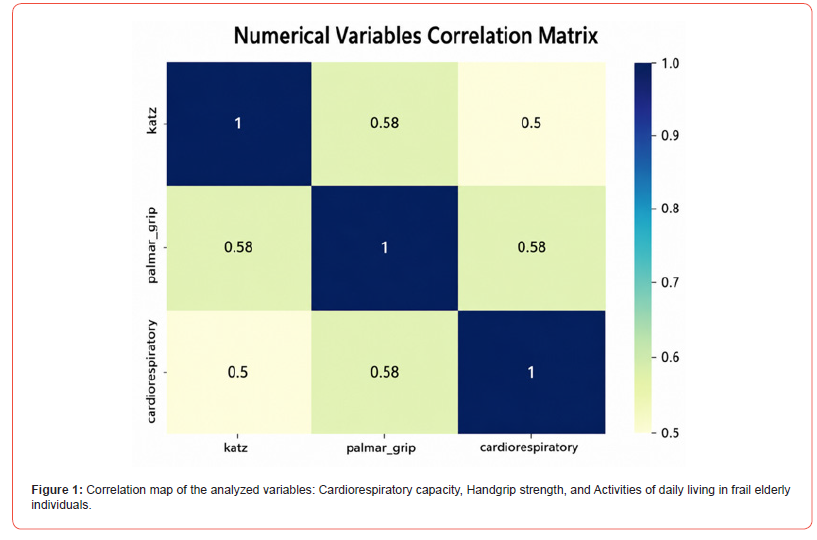
Table 1: Mean and standard deviation values of the variables analysed.
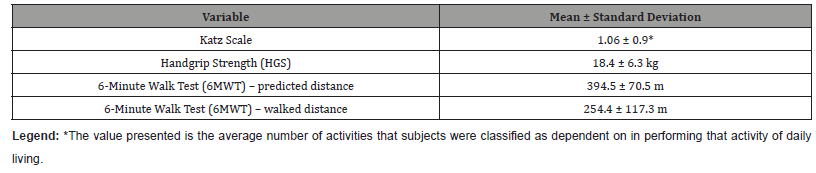
As demonstrated in the heatmap, the variables were organized into rows and columns to illustrate their reciprocal correlations. The shaded cells correspond to the correlation coefficients, which range from -1 (perfect negative correlation) to +1 (perfect positive correlation), with 0 indicating the absence of a correlation. More intense colors represent stronger correlations (closer to +1 or -1), whereas lighter or neutral tones indicate weaker or non-existent correlations (closer to 0). Consequently, based on the highest visual intensity and the maximum coefficient value obtained (0.58), the variable that correlated most strongly with the others was handgrip strength.
Discussion
With the aim of correlating cardiorespiratory capacity, handgrip strength, and basic activities of daily living (ADLs) in frail older adults, the present findings demonstrated that the variable with the strongest correlation to the others is handgrip strength (HGS). Specifically, higher scores in the handgrip strength test are directly related to superior cardiorespiratory capacity and greater independence in basic activities of daily living. In the context of functional capacity, it was observed in the overall sample that the physical exertion during the 6-Minute Walk Test (6MWT) was sufficient to induce an increase in heart rate (HR), a reduction in peripheral oxygen saturation, and precipitate the perception of dyspnea and fatigue. This confirms in clinical practice that the 6MWT is an ideal instrument to evaluate functional capacity and submaximal cardiovascular responses [7].
Within this same scope, a study by NETA et al. (2021), which aimed to evaluate the benefits of physical exercise on handgrip strength in frail older adults, showed results consistent with the present study, evidencing improvements in both physical performance and quality of life, alongside promoting greater independence and mitigating frailty. Furthermore, [18] demonstrated that sarcopenia is linked to an increased probability of fragility fractures, which can result in a loss of independence and decreased quality of life, reinforcing the critical importance of maintaining handgrip strength in this population. Another study conducted by FIORITTO et al. (2020) [11], which correlated handgrip strength (HGS), functional capacity for instrumental activities of daily living (IADLs), functional mobility, fear of falling, and the number of falls in older adults, also obtained outcomes aligned with these findings. Their study showed that superior functional capacity is associated with greater handgrip strength, enhanced independence in daily tasks, and a reduced incidence of falls among older adults.
Ultimately, the handgrip strength test assesses the overall performance of the muscular system, which inherently relies on the efficiency and integration of the cardiovascular and respiratory systems. Therefore, the assessment of HGS using a dynamometer is highly relevant to investigate the overall strength status of older adults, as well as to understand their functional capacity and independence in performing daily activities [19,20]. Given these findings, handgrip strength demonstrates a significant influence on functional and cardiorespiratory capacity, suggesting its utility in developing specific interventions aimed at reducing frailty and enhancing the quality of life in this population.
Conclusion
In conclusion, the variable that correlates best with the others is handgrip strength (HGS). Specifically, higher levels of handgrip strength are directly associated with superior cardiorespiratory capacity and greater independence in basic activities of daily living among frail older adults.
Acknowledgment
The authors thank FEMA – Fundação Educacional do Município de Assis for funding this research.
Conflict of Interest
No conflict of interest.
References
- Carlos KT, Pedro de LM, Amanda CSM, Leonardo SS, Wesley RSC, et al. (2022) Frailty syndrome and risks for falling in the elderly community. Codas 34(6): e20210025.
- Jefferson da SS, Ana Carolina DS, Renata Clemente DSR, Gleicy Karine NAM, Barbara MLSB, et al. (2023) Risco de violência e sindrome da fragilidade entre idosos atendidos em serviço hospitalar. Rev Bras Enferm 76Suppl 2(Suppl 2): e20220278.
- Polyana Caroline de LB, Bruna LR, Gina TRM (2023) Fatores Associados À Fragilidade em pessoas idosas usuárias de serviços de Atenção Primária À Saúde de uma capital da Amazônia Brasileira. Rev Bras Geriatr Gerontolo 26: e230018.
- Trindade JLA, Moraes M, Dias AS (2023) Timed Up and Go Na Avaliação da Fragilidade de Pessoas Idosas Agricultoras Do Rio Grande Do Sul: Estudo Transversal. Rev Bras Geriatr Gerontolo 26: e230004
- Almeida CC, Desantana JM, Durigan JLQ, Patricia Garcia Azevedo (2021) Relação Da Capacidade Para Caminhar Longas Distâncias E Para Subir E Descer Escadas Com A Qualidade De Vida Relacionada À Saúde De Idosos Com Osteoartrite Sintomática De Joelhos. Rev Bras Geriatr Gerontolo 24(5): e220007.
- Lucimara da Palma Correa, Thiago Paulo Frascareli Bento, Debora Alves Guariglia, Geisa Franco Rodrigues, Marta Helena Souza De Conti (2022) Effects of Functional Training on Pain and Functional Capacity in Elderly Women. Fisioter Mov 35: e35149.
- Nicoletti M, Costa CC, Silva LD (2024) Alterações Cardiovasculares Durante O Teste De Caminhada De Seis Minutos Em Pacientes Com DPOC. Fisioter Mov 37: e37122.0.
- Couto AM, Soares SM (2022) Fatores Associados À Sindrome De Fragilidade Em Idosos Com Doença De Parkinson. Rev Bras Enferm 75(Suppl 4): e20220096.
- Raiane C Garcia, Maria Luiza A Camilo, Fabiano M de Oliveira, Sônia MM Gomes Bertolini, Cynthia GA Araujo, et al. (2023) Efeitos De Um Programa De Treinamento Multicomponente Na Composição Corporal E Na Capacidade Funcional De Idosos Com Excesso De Peso: Uma Proposta De Intervençã Estud Interdiscipl Envelhec: 28.
- Carolina RC Dias, Saulo Vasconcelos R, Jefferson Paixão C, Bruna Maria P, Ferreira Ariani C, et al. (2024) Indicators of Functional Fitness and Cognitive Commitment in Elderly. Rev Bras Med Esporte 30: e2022_0414.
- Fioritto AP, Cruz DT, Leite ICG (2020) Correlation of Functional Mobility with Handgrip Strength, Functional Capacity for Instrumental Activities of Daily Living, Fear of Falling and Number of Falls in Community-Dwelling Elderly Fisioter Mov 33: e003335.
- Neta EMS, Lucchese R, Aguiar JA, Silva CG, Moises FL, et al. (2021) Impacto Do Exercicio Fisico Na Força De Preensão Palmar De Idosos Frágeis: Revisão Integrativa De Literatura. Research, Society and Development 10(13):
- BotelhoVH, Barros AJD, Oliveira RG, Rafaela CM, Helen G, et al. (2023) Concordância Entre as Medidas Aferidas De Peso, Altura E Imc E Autorrelatadas Pela Internet Em Participantes Da Coorte De Nascimentos De Pelotas De 1993: Estudo Transversal De Validaçã Epidemiologia E Serviços De Saúde, Julho De 32(2): e2022590.
- Júnior GS, Passos KG, Oliveira LM, Meiry FPO, Angelica CA, et al. (2022) Atividades De Vida Diária, Sintomas Depressivos E Qualidade De Vida De Idosos. Acta Paul Enferm: 35
- Martins HP, Kock KS (2022) Nivel De Atividade Fisica, Força De Preensão Palmar E Variabilidade da Frequência Cardiaca Em Idosos. Rev Amrigs 66(3): 751-757.
- Rodrigues AAGS, Junior AAP, Borges CL, Edson SS, Jose Wellington OL, et al. (2023) Prevalência Dos Componentes da Sarcopenia E Fatores Socioeconômicos Associados Em Idosos De Uma População Rural Do Estado Do Ceará, Brasil. Ciência & Saúde Coletiva 28(11): 3159-3168.
- Frantzeski MH, Thomazi CPF, Pinho AS, Clotilde DG, Janice LL (2023) Redução Da Força Muscular Periferica E Respiratória Em Pacientes Pediátricos Após Transplante Renal. J Bras Nefrol 45(3): 318-325.
- Martini CAN, Weigert CS, Stiegemaier ACB, Ana Paula RBF, Ellen Liceras G (2023) O Uso Do Escore Sarc-F Como Auxiliar Na Prevenção De Fraturas Por Fragilidade. Rev Bras Ortop 58(1): 157-163.
- Blascovich HB, Azevedo MHR, Alves GB, Francisco DRPS, Marciene de SCC (2025) Correlação Entre a Capacidade Funcional E Força De Preensão da Mão Em Idosos Frequentadores De Um Centro De Convivê Rev Enferm Atual in Derme 99(4): e025143.
- Folstein MF, Folstein SE, Mchugh PR (1975) “Mini-Mental State”. A practical method for grading the cognitive state of patients for the clinician. J Psychiatr Res 12(3): 189-198.
-

This work is licensed under a Creative Commons Attribution-NonCommercial 4.0 International License.