


 Case Report
Concealed Subclavian Steal Syndrome: The Story of Labile Hypertension and Glenohumeral Arthritis
Received Date:December 09, 2025; Published Date:December 17, 2025
Abstract
Background/Objectives: Occlusion of the subclavian artery, often associated with subclavian steal syndrome (SSS), presents significant
diagnostic and therapeutic challenges. This occlusion typically results in retrograde blood flow from the vertebral artery, manifesting clinically as
ischemia in regions supplied by its branches. High-grade stenosis (≥75%) or complete occlusion usually precedes symptoms, where inadequate
collateral circulation leads to significant hemodynamic disturbances.
Case presentation: This case report describes an 87-year-old woman with a notable medical history, including generalized atherosclerosis,
dementia, a surgically treated uterine adenocarcinoma, hypertension, and glenohumeral arthritis, with several hospitalizations over the past decade
due to isosorbide mononitrate-related collapses. The current hospitalization was related to a fall, loss of consciousness, electrolyte imbalance, and
urinary tract infection. Long-term issues with glenohumeral arthritis posed a diagnostic challenge by masking a severe vascular issue.
Results: Through comprehensive diagnostic efforts, the underlying cause was identified as subclavian steal syndrome caused by severe stenosis
of the right subclavian artery. This case emphasizes the importance of thorough investigation and differential diagnosis in older patients.
Conclusions: In the geriatric population, it is crucial to consider not only common causes of weakness, such as age-related sarcopenia,
overweight/obesity, known cardiovascular issues, and neurodegenerative disorders, but also less frequent conditions that may overlap.
Keywords:Geriatrics; case report; occlusion of subclavian artery; subclavian steal syndrome; atherosclerosis; labile hypertension; glenohumeral arthritis
Abbreviations: ACE-Angiotensin-Converting Enzyme; ACI-Internal Carotid Artery; C7 ACI-7th Segment of the Internal Carotid Artery; CTAComputed Tomography Angiography; DSA-Digital Subtraction Angiography; KDIGO-Kidney Disease Improving Global Outcomes; rCBF-Regional Cerebral Blood Flow; SAO-Subclavian artery occlusion; SPS3-Secondary Prevention of Small Subcortical Strokes study; SSS-Subclavian Steal Syndrome; UIATS-The Unruptured Intracranial Aneurysm Treatment Score; VaD-Vascular Dementia; VRT-Volume Rendering Technique/p>
Introduction
Peripheral artery disease assessment typically focuses on symptoms and physical findings in the lower extremities. However, few practitioners recognize the significance of upper extremity arterial disease, which, besides causing hand and arm symptoms, can be linked to serious neurologic and cardiac complications. Subclavian artery stenosis can cause significant morbidity by leading to symptomatic ischemic issues affecting the upper extremities, brain, and sometimes the heart. While atherosclerosis is the most common cause, other causes include arteritis (such as Giant Cell arteritis or Takayasu arteritis), radiation-induced inflammation, compression syndromes, fibromuscular dysplasia, and neurofibromatosis. Iatrogenic causes of subclavian steal syndrome include complications from coronary artery bypass graft surgery, the creation of high-flow dialysis arterio-venous fistulas, and surgical procedures such as the Blalock-Thomas-Taussig shunt.
The incidence of subclavian stenosis in the general population ranges from 3% to 4%, [1] and can be as high as 11-18% in patients with documented peripheral artery disease [2]. Among patients with subclavian or innominate lesions, 50% also have coronary artery disease, 27% have lower extremity artery involvement, and 29% have carotid obstructive disease [3,4]. Consequently, these patients face an increased risk of developing symptomatic coronary artery disease and cerebrovascular events [5,6]. Subclavian steal syndrome (SSS) is a vascular disorder characterized by reverse blood flow through the vertebral artery, typically resulting from critical stenosis or occlusion of the subclavian artery proximal to its origin. Patients with significant subclavian artery stenosis may experience cerebrovascular ischemia, leading to various neurological symptoms, notably decreased blood flow to the posterior circulation [7]. In ageing populations, risk factors for subclavian steal syndrome include atherosclerosis, hypertension, and lifestyle factors such as tobacco use and dyslipidemia, all of which raise the risk of arterial stenosis [8,9]. Additionally, ageing can cause vascular remodeling, increasing susceptibility to this condition. Patients may present with symptoms of vertebrobasilar insufficiency, such as light-headedness, syncope, dizziness, and even transient ischemic attacks or strokes [10,11].
Effective management of comorbid cardiovascular conditions is essential for slowing the progression of atherosclerosis and its effects in the vulnerable older population [12,13]. Considering the complex nature of subclavian steal syndrome and its interaction with ageing, attention to vascular health and prompt intervention are crucial for improving patient outcomes. Glenohumeral arthritis, caused by ageing, trauma, or repetitive use, involves deterioration of the shoulder joint, including cartilage and subchondral bone, and synovial inflammation, often exacerbated by systemic inflammation in older adults, leading to significant morbidity and functional limitations. Occupational factors significantly contribute to the worsening of shoulder disorders. Research indicates that repetitive tasks, awkward arm positions, and prolonged mechanical stress increase the risk of shoulder pain and dysfunction [15,16]. Furthermore, cumulative occupational exposures over an individual’s working life can accelerate the development of degenerative joint conditions.
The interaction between glenohumeral arthritis and subclavian artery occlusion, especially in older adults, poses a significant clinical challenge. Age-related changes can contribute to both conditions, often resulting in overlapping symptoms that complicate diagnosis and treatment. To address these diagnostic challenges, a thorough assessment is essential. Healthcare providers should obtain detailed patient histories and conduct comprehensive physical examinations to distinguish among different potential causes of the symptoms. Imaging techniques such as Doppler ultrasound or angiography may be necessary to identify vascular issues, particularly if shoulder problems and symptoms of SSS are both suspected. An interdisciplinary approach to evaluation and treatment is vital for preventing future cerebrovascular events and effectively managing vascular and musculoskeletal issues.
Case Presentation
An 87-year-old woman with a significant medical history, including dementia, hypertension, and coronary artery disease, was brought to the emergency department by ambulance. Her nephew, who was out of town, contacted the police after not hearing from her for two days. The police assisted in accessing her apartment, where she lived alone.
Emergency Department Admission
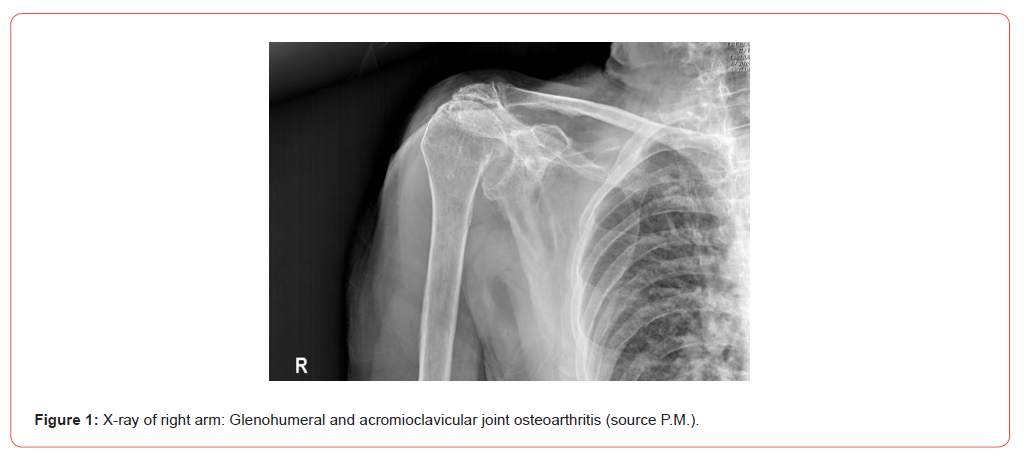
Upon admission, the patient was immobile, had limited rational contact, and reported lower back pain. Initial laboratory diagnostics revealed moderate hyponatremia (127.3 mmol/l), hypokalemia (2.65 mmol/l), and elevated inflammatory parameters (CRP 32.0 mg/l). Known medical history (from electronic records) upon admission includes 13 pack-years, arterial hypertension/labile hypertension, ischemic heart disease, unstable angina pectoris, calcification changes in the aortic and mitral valves, widespread atherosclerosis (aorta, heart, central nervous system), right-sided glenohumeral arthritis (Figure 1) hypercholesterolemia, polytopic vertebrogenic algic syndrome, early lower limb dystrophy, bilateral grade II coxarthrosis, dementia-probably of vascular origin, hypoacusis, chronic kidney disease (KDIGO: A2, G2) due to nephrosclerosis, hyperuricemia, and pulmonary emphysema secondary to ex-nicotinism. The patient worked as a hairdresser for most of her life. She is the mother of two children-both her son and daughter are deceased. Her mother died at age 80 and was treated for type 2 diabetes and hypertension (Figure 1).
Geriatrics Department
After correcting the mineral imbalance, discontinuing hydrochlorothiazide from the antihypertensive treatment, starting parenteral analgesic therapy, and inserting a urinary catheter, X-rays of the pelvis and lower spine were performed (showing no traumatic changes). A subsequent magnetic resonance imaging confirmed central lumbar spinal stenosis with multi-level disc bulging; neurosurgical intervention was not advised. In addition to local therapy, the neurologist prescribed pregabalin and recommended physiotherapy. Laboratory tests revealed normocytic normochromic anemia with iron and cobalamin deficiency. Elevated inflammatory markers were attributed to a urinary tract infection, and a suspected fall likely caused the isolated increase in D-dimers (9.0 mg/l). The doses of the ACE inhibitor were increased due to ongoing hypertension. Previously elevated creatine kinase and myoglobin levels decreased, ruling out statin myopathy. Due to the patient’s immobility and the placement of a permanent urinary catheter, she was transferred to the long-term care ward on the seventh day of hospitalization.
Long-term Care Department
On admission, the patient was hemodynamically stable, with no signs of infection, and was oriented to time, place, and person. A systolic murmur 2/6 was auscultated over the precordium. BMI was 27.5; SpO2 was 96-97% on room air; pulse rate (left wrist) ranged from 57 to 61 beats per minute; blood pressure in the left upper limb was 187-194/72-76 mmHg (SpO2 was 97%; arm circumference 28 cm and forearm circumference 24 cm); and in the right upper limb, it was 136/91 mmHg (SpO2 was 94-95%; arm circumference 27 cm and forearm circumference 23 cm). The pulse in the upper right limb (radial artery, brachial artery, axillary artery) was not palpable. Murmurs were not present during auscultation of the carotid artery on either side, nor during auscultation of the axillary region. The grip strength of both hands showed no signs of imbalance; however, the patient complained of severe pain in her right shoulder when grasping.
Angiology - Primary Evaluation
The clinical picture is characterized by pain in the right shoulder at rest and during minimal exertion. The right upper limb shows no signs of ischemia, and there are no noticeable differences in skin temperature between the limbs. Objectively, the temperature of the right shoulder was 35°C, while the left shoulder measured 36.2°C. Pulsations of the radial and ulnar arteries on the right arm were minimally palpable. Primary ultrasonography: The right arm showed a 120mmHg monophasic waveform, and the left arm showed a 160 mmHg triphasic waveform. Subclavian, axillary, brachial, ulnar and radial arteries were examined bilaterally. Findings indicate severe stenosis of the right subclavian artery-a calcified atherosclerotic plaque, approximately 1.5 cm long, with an estimated 70% stenosis in the prescalene segment.
Angiology - Ultrasonography Examination
Continuous-wave Doppler and Color Duplex Doppler Ultrasonography were performed. The right subclavian artery showed a high peak systolic velocity of 327 cm/s, with a parvus tardus waveform and a turbulent flow mosaic pattern. The left subclavian artery was examined without pathologies other than age- appropriate atherosclerosis. The right vertebral artery exhibited bidirectional flow and reduced diastolic flow, whereas the left vertebral artery had an antegrade, biphasic waveform that was dampened (Table 1).
These findings were consistent with severe occlusion of the right subclavian artery and subclavian steal syndrome, as indicated by the bidirectional flow in the ipsilateral vertebral artery. Transcranial Doppler ultrasound was not available for further evaluation (Table 1).
Computed Tomography Angiography
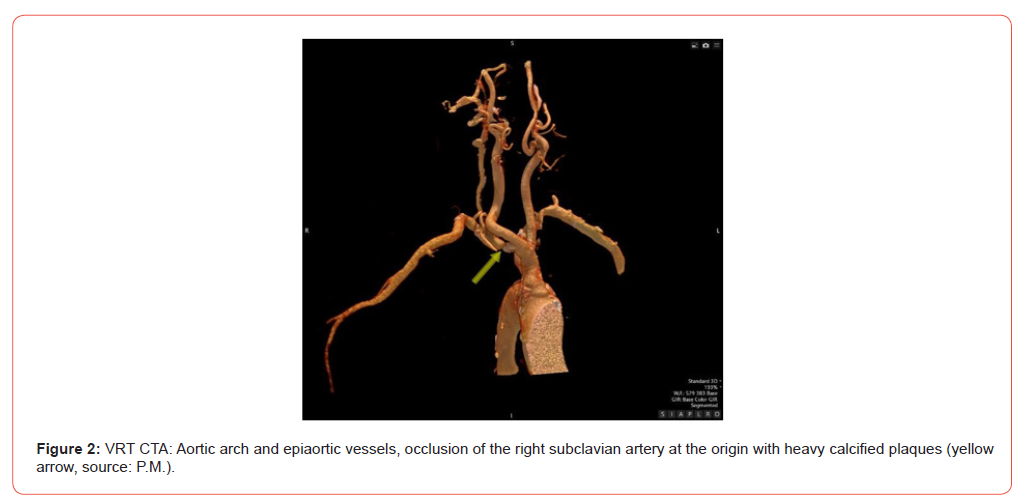
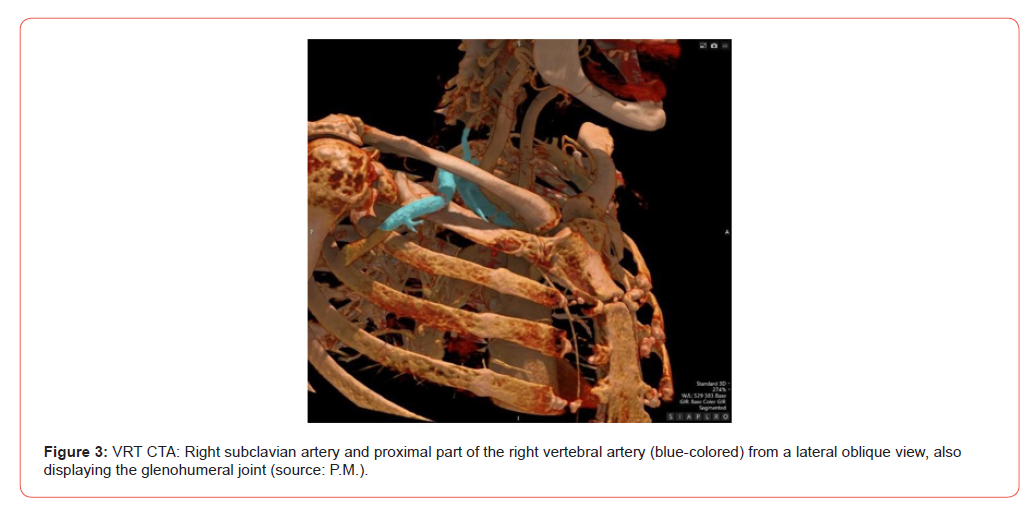
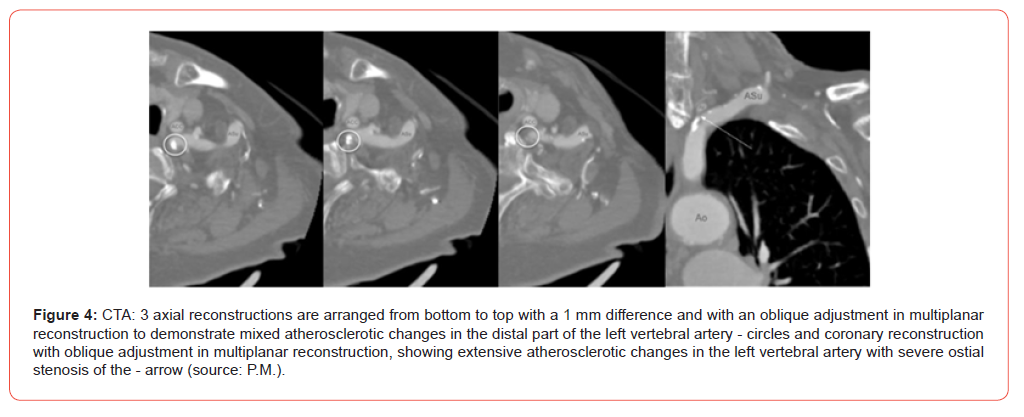
The CTA showed segmental occlusion of the right subclavian artery at its origin from the brachiocephalic trunk, approximately 7 mm in length, caused by mixed atherosclerotic plaques, located more distally than the right subclavian artery (Figures 2 and 3). It also involved the peripheral vessels of the right upper limb, which are mainly supplied by the right vertebral artery, several other muscular arterial connections, and connections from the right external carotid artery. A small aneurysm with a wider neck in the C7 segment (Bouthillier classification) of the ACI on the left, measuring approximately 3 x 2 mm, was found in the captured part of the intracranial region, extending laterally. The right vertebral artery appears dominant compared to the left, showing signs of atherosclerotic ostial stenosis (3.7-4.1 mm diameter on the right versus 2.2-2.4 mm on the left in extraosseous and foraminal segments), while the atlantic and intradural segments are symmetric with the right vertebral artery (Figures 2-4).
Table 1:Ultrasonography evaluation of subclavian and vertebral arteries
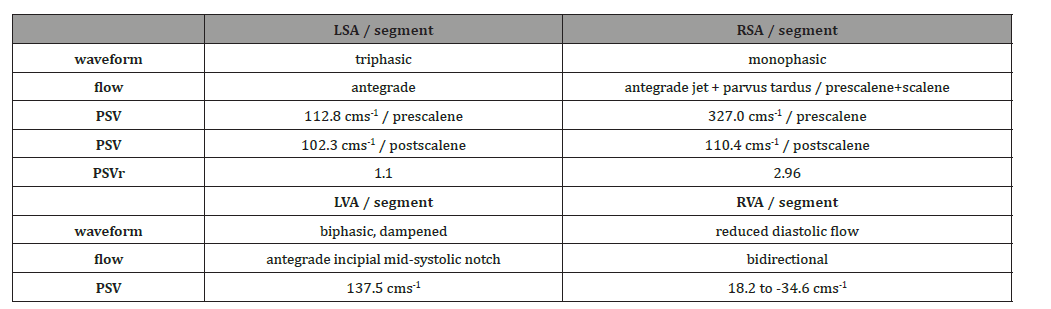
Table Abbreviations: LSA - Left Subclavian Artery, RSA - Right Subclavian Artery, LVA -Left Vertebral Artery, RVA- Right Vertebral Artery, PSV - Peak Systolic Velocity, PSVr - Peak Systolic Velocity Ratio
Table 2:Summary of specialists’ evaluation and hospitalization rate over the past 13 years.

Cortical brain atrophy and vascular leukoencephalopathy were noted. An incidental finding included the retropharyngeal course of the right ACI and kinking of the ACIs bilaterally in communicating segments. Otherwise, there was age-appropriate opacification of the remaining epiaortic branches of the aortic arch, except for the left vertebral artery, where severe ostial stenosis was reported (severe >75%); the left vertebral artery was, aside from the location of atherosclerotic plaque, significantly thinner than the right one.
Traumatology Evaluation
Verified compression deconfiguration of the L1-L2 vertebrae, recommended a custom-made lumbar support belt, and suggested physiotherapy, considering the patient’s comorbidities and current condition.
Neurology Evaluation
The patient reports long-term weakness in her right arm, mainly noticed when washing her hair, with an inability to lift her upper limb properly. Recently, the weakness has worsened, and over the past 1- 2 months, she has experienced vertigo, which she described as difficult to explain, especially when turning her head to the sides. This vertigo was relieved when lying on a flat surface. She denied diplopia, although she has had eye surgery and has not been able to see clearly for a long time. She had no difficulty swallowing or speech disorders. She also reported no paresthesia in her upper or lower limbs.
Upon examination, the patient was conscious and oriented, with no signs of meningeal irritation. Speech was every day without dysarthria or fatigue; pupils were midline, equal, and reactive to light, with no oculomotor abnormalities or nystagmus. No other cranial nerve deficits were observed. The tongue was midline. There was mild monoparesis of the right upper limb, with no weakness in the left upper limb. Slightly increased muscle tone was noted in the elbow joints, possibly influenced by patient effort. No signs of irritation or sensory deficits were present. Posture and gait could not be assessed due to the current condition.
Interventional Radiology - An Attempt at Recanalization of the Right Subclavian Artery
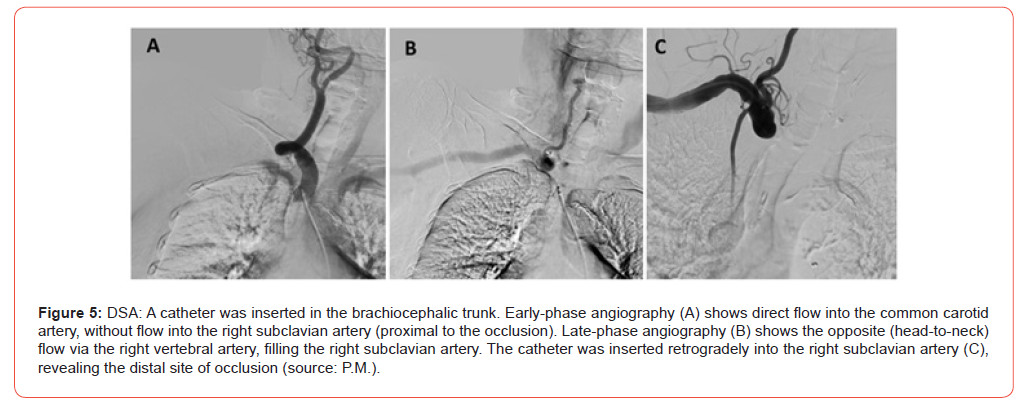
A multidisciplinary team recommended that the patient attempt recanalization of the subclavian artery due to subclavian steal syndrome, right shoulder pain, and labile hypertension. Under local anesthesia, a 90 cm, 6F sheath was inserted via a right transfemoral approach. The brachiocephalic trunk was catheterized to verify occlusion of the right subclavian artery caused by a thick, calcified lesion using DSA. Multiple types of catheters and guides were used in attempts at antegrade recanalization, which was unsuccessful. Therefore, retrograde puncture of the right brachial artery using micro instruments was performed, gradually advancing the 4F sheath to the occlusion of the subclavian artery from the distal side. Using 0.035” and low-profile instruments (0.018”, 0.014”), recanalization was attempted, but only a subintimal technique was possible, with re-entry in the aortic arch area. Because of the need to maintain direct flow in the right common carotid artery, this approach was not feasible. Passage through the rigid occlusion was not possible intraluminally. At the final DSA check, no complications were present (Figure 5).
Neurosurgery Evaluation
An incidental small aneurysm with a wider neck was found in the C7 segment of the left internal carotid artery, measuring approximately 3x2mm and deviating laterally. During the assessment, the patient was conscious and alert, with no signs of headache or meningeal irritation and preserved, symmetrical limb mobility. UIATs 4/12 in Favor of conservative treatment.
Pharmacological and Other Therapeutic Approaches During Hospital Stay
A urinary tract infection was successfully treated during the first week of hospitalization at the Geriatrics Department with antibiotics (sulfamethoxazole and trimethoprim). Treatment includes angiotensin-converting enzyme inhibitors (ramipril 5 mg/day), calcium channel blockers (amlodipine 5 mg/day), statins (atorvastatin 40 mg/day), dual antiplatelet therapy (acetylsalicylic acid 100 mg + clopidogrel 75 mg/day), proton-pump inhibitors (pantoprazole 20 mg/day), rational hydration with parenteral balanced crystalloids, analgesic therapy containing paracetamol, guaifenesin, orphenadrine, and diclofenac, which was later switched to an enteral regimen combining paracetamol with tramadol (325 mg+ 37,5 mg twice a day) and pregabalin (75 mg/day). Also included were cholecalciferol, thiamine, pyridoxine, cyanocobalamin supplementation, and probiotics. A physiotherapist provided daily physical therapy, and a clinical nutritionist optimized food intake. Several evaluations by a clinical psychologist were conducted during hospitalization for screening purposes related to general well-being, anxiety, and depression.
Barthel Index
Upon admission to the Long-term Care Department, the patient scored 25 points. At discharge, the patient reached 50 points.
In-Depth Analysis of Previous Medical Records
During admission to the long-term care ward, we thoroughly reviewed all available medical records. Documentation from the primary care physician, outpatient clinics, and all hospitalizations over the past 13 years mentions only one instance of absent pulsation in the right radial artery, which occurred in May 2012 (Table 2). We also observed that during most hospitalizations, an intravenous access was inserted on the right side, which meant blood pressure was mainly measured on the left arm, as the patient had better, more prominent vascular patterns on the right arm.
Outcomes & Further Care
Although the attempt to recanalize the subclavian artery was unsuccessful, it was performed without complications. Given the patient’s condition and the size of the incidental aneurysm of the left internal carotid artery, a conservative approach-dual antiplatelet therapy-was recommended. Optimization of medication and intensive physiotherapy resulted in the expected improvements. Upon discharge, the patient was able to walk with assistance. Due to her complex health issues, including frequent hospitalizations in recent years (Table 2), she was transferred to a nursing home.
Discussion
Impact of SAO and SSS on Cognitive Impairment
Subclavian artery occlusion is increasingly recognized as a factor contributing to cognitive decline, mainly through mechanisms related to cerebral hypoperfusion and vascular dementia. Occlusion can not only diminish blood flow to the upper limbs but also decrease overall cerebral blood flow, which is vital for maintaining cognitive function [17]. This condition is often worsened by various types of cognitive dysfunction caused by impaired brain hemodynamics. One primary way subclavian artery occlusion affects cognition is through cerebral hypoperfusion. A study by Zhao et al. shows that chronic cerebral hypoperfusion, resulting from conditions like stenosis or occlusion of head and neck arteries, leads to executive dysfunction, mainly impacting attention, memory, and cognitive flexibility. The link between reduced regional cerebral blood flow (rCBF) and cognitive performance shows that moderate decreases in rCBF can significantly impair cognitive abilities, contributing to vascular cognitive impairment [18]. Furthermore, evidence indicates that large occlusions, including those of the subclavian artery, can cause ischemic strokes, often leading to vascular dementia (VaD).
The SPS3 study shows lacunar strokes from small vessel issues often cause executive dysfunction and cognitive decline, with repeated ischemic events worsening impairments [19]. Managing subclavian artery occlusion via stenting or angioplasty is advised to improve cerebral blood flow and cognition [20]. Furthermore, brain areas particularly susceptible to hypoperfusion, such as the hippocampus, are vital for memory and cognition. Animal research indicates that persistent hypoperfusion causes cell damage and cognitive deficits, mirroring many characteristics of human vascular dementia [21,22]. Choi et al. specifically found that chronic hypoperfusion exacerbates cognitive deficits when combined with other pathological conditions like amyloid toxicity, which is linked to Alzheimer’s disease, underscoring the complex nature of cognitive impairment following occlusion. The effects of subclavian artery problems include reduced perfusion pressures, which harm overall brain health. Kalaria notes that vascular risk factors, such as those related to subclavian artery occlusion, can cause not only stable cognitive decline but also progressive deterioration due to degenerative processes.
Few studies have explored the independent effect of SSS on the development of contralateral vertebral artery stenosis, whether in cross-sectional or longitudinal research. SSS also functions as a compensatory mechanism, replacing the original blood flow pattern and highlighting how long-term changes in hemodynamics-such as increased blood flow velocity and volume-contribute to in vivo atherosclerosis development [25- 27]. Moreover, conditions such as aplasia or hypoplasia of the contra- lateral vertebral artery or atherosclerotic ostial stenosis of the opposite vertebral artery can further influence cerebral blood flow. Notably, the interconnectedness of cerebrovascular health indicates that subclavian artery occlusion can have both local and systemic effects, ultimately influencing broader cognitive health. In summary, subclavian artery occlusion may lead to cognitive decline through multiple pathways, primarily via cerebral hypoperfusion. Recognizing these links emphasizes the importance of timely interventions to restore blood flow, reduce cognitive impairment, and address atherosclerosis and its impact on cognitive health.
Subclavian Steal Syndrome / Subclavian Artery Occlusion and Hypertension
Subclavian artery occlusion and labile hypertension are common conditions that frequently occur together, especially in older adults. Subclavian artery occlusion usually results from atherosclerotic changes that decrease blood flow, which can lead to persistent hypertension with blood pressure fluctuations- known as labile hypertension. This connection is important because it impacts vascular health and overall quality of life in ageing patients, who are especially vulnerable to both. Older adults experience high rates of hypertension mainly due to vascular ageing, which involves structural and functional changes in arterial walls, such as thickening and calcification [28,29]. The high prevalence of hypertension in this group can worsen existing cardiovascular problems by interacting with various pathophysiological processes like impaired kidney function and decreased arterial compliance [30].
Methodology of Blood Pressure Monitoring in the age group ≥ 65 years
Monitoring blood pressure in both arms of older individuals is essential for various clinical and diagnostic reasons. Differences in blood pressure readings between arms can reveal underlying vascular issues, such as subclavian artery stenosis. A difference of more than 15 mmHg in systolic blood pressure between the arms suggests unilateral subclavian stenosis, emphasizing the importance of measuring both arms in patients aged 65 years or older [31].
As people age, physiological changes can raise blood pressure by modifying vascular structure and elasticity. Arteries tend to become stiffer with age, leading to higher systolic blood pressure, while diastolic pressure may remain relatively stable [32]. Proper blood pressure management is essential, as older individuals often experience increased blood pressure variability and respond less effectively to antihypertensive medications [33]. This variability makes hypertension management more complex and highlights the importance of regular monitoring. Older adults often show a non-dipping blood pressure pattern over 24 hours, which increases cardiovascular risk. If blood pressure remains high during sleep and does not decrease, the risk of cardiovascular events rises. Recognizing these patterns is crucial for effective hypertension treatment in the geriatric subpopulation. Ambulatory blood pressure monitoring provides a more accurate view of blood pressure fluctuations than single visits, with studies showing it detects a higher prevalence of hypertension, especially in ageing populations [34,35].
Lesson Learnt - Experience Gained from Case Study
This case highlights the diagnostic challenge of SSS in a patient with advanced age, where advanced osteoarthritis of the right shoulder significantly masked the underlying vascular issue. In this particular case, chronic shoulder pain and limited mobility led clinicians to initially attribute recurrent dizziness and weakness to musculoskeletal problems, delaying the diagnosis of a critical subclavian stenosis. This condition was most likely responsible for the progression of other vascular pathologies - ostial stenosis of the contralateral vertebral artery, which has a significant impact on the brain vascular supply. The link between subclavian artery occlusion and cognitive decline has been increasingly recognized. In the presented case report, mild cognitive impairment may have been worsened by chronic cerebral hypoperfusion, further highlighting the systemic effects of this condition.
Conclusion
The heterogeneity of healthcare needs in the geriatric population demands a comprehensive approach to their care. Healthcare professionals caring for older adults recognize that medical issues are not the only factors involved in this “care complexity”. Socioeconomic, cognitive, functional, and organizational factors also play important roles. This patient story and case study clearly illustrate the high costs of specific medical errors and missed diagnoses. Healthcare expenses and other indirect socioeconomic impacts can be quantified. However, the impact on health and quality of life, considering the diagnoses and course of events described, cannot be measured.
Key Notes:
• Always consider vascular causes in older patients with
unexplained dizziness, syncope, or labile hypertension.
• Routine bilateral blood pressure measurement should
be standard in both primary care and hospital settings for the
ageing population. This case emphasises that bilateral blood
pressure measurement should be a routine part of assessing
older patients with labile hypertension, recurrent dizziness, or
collapse episodes. Such a simple step can provide an important
clue to the diagnosis of subclavian artery occlusion.
• Musculoskeletal disorders, such as glenohumeral
arthritis, can conceal severe vascular conditions, necessitating
an interdisciplinary approach to diagnosis. Clinicians should be
aware that common issues like degenerative joint disease might
coexist with or hide life-threatening vascular problems. An
interdisciplinary approach, combined with a careful physical
examination, is vital to prevent misdiagnosis.
• In frail, older patients with multiple comorbidities,
conservative management can be an acceptable treatment
option if the diagnosis is accurate and symptoms are well
controlled.
Overall, this case emphasizes the importance of combining clinical vigilance with straightforward bedside diagnostic techniques to enhance patient outcomes in geriatrics. Science and medicine continue to advance; however, in the case of SSS, current pharmacological and technological options have remained mostly unchanged over the past 13 years. The chance of successful recanalization, which could impact the patient’s overall health, is no longer considered feasible. Globally and in Europe, the ageing population is increasing. There will be more geriatric patients, and their health and social dependence levels are managed by healthcare professionals daily. Many older patients have multiple comorbidities requiring diagnosis, making them more susceptible to misdiagnosis. Misdiagnosis and missed diagnoses not only endanger the health of older patients but also contribute to broader socioeconomic burdens. Evidence-based and personalized medicine, case studies, scientific research, and meta-analyses across all areas of medicine, including geriatrics, continue to enhance our understanding of the field. Despite these advancements, we must remember the importance of basic examinations, clinical skills, and judgment in daily practice.
Acknowledgement
The authors wish to express their gratitude to Ladislav Kovac, PhD, and Alexander Pavlík, MD, for their valuable guidance and technical assistance in preparing this article.
Author Contributions
Conceptualization, M.S., S.M.; methodology, M.S.; validation, M.S., L.K., P.P., D.P., and P.M.; formal analysis, L.K., K.G.; investigation, M.S., K.D., and P.M.; data curation, S.M.; writing-original draft preparation, S.M.; writing-review and editing, M.S., L.K.; visualization, M.S., P.M.; supervision, S.M.; All authors have read and agreed to the published version of the manuscript.
Institutional Review Board Statement
Because this case study only describes the patient’s hospitalization and standard medical care, without any experimental procedures, and the healthcare provided was not part of any alternative or experimental methods as defined by Slovak law (Act No. 576/2004 Coll. on healthcare and Act No. 362/2011 Coll. on medicines and medical devices), approval from an Ethical Committee, whether from the University, University Hospital, or an Institutional Review Board, is not required.
Informed Consent Statement
Informed consent was obtained from the subject involved in the study. Written informed consent has been obtained from the patient to publish this paper.
Data Availability Statement
The original contributions presented in this study are included in the article. Further inquiries can be directed to the corresponding author.
Funding
This research received no external funding.
Conflict of Interest
No conflicts of interest.
References
- English JA, Carell ES, Guidera SA, Tripp HF (2001) Angiographic prevalence and clinical predictors of left subclavian stenosis in patients undergoing diagnostic cardiac catheterisation. Catheter Cardiovasc Interv 54(1): 8-11.
- Gutierrez GR, Mahrer P, Aharonian V, Mansukhani P, Bruss J (2001) Prevalence of Subclavian Artery Stenosis in Patients with Peripheral Vascular Disease. Angiology 52(3): 189-194.
- Rodriguez-Lopez JA, Werner A, Martinez R, Torruella LJ, Ray LI, et al. (1999) Stenting for atherosclerotic occlusive disease of the subclavian artery. Ann Vasc Surg 13(3): 254-260.
- Brountzos EN, Petersen B, Binkert C, Panagiotou I, Kaufman JA (2004) Primary stenting of subclavian and innominate artery occlusive disease: a single-centre experience. Cardiovasc Intervent Radiol 27(6): 616-623.
- Hennerici M, Rautenberg W, Mohr S (1982) Stroke risk from symptomless extracranial arterial disease. Lancet 2(8309): 1180-1183.
- Moran KT, Zide RS, Persson AV, Jewell ER (1988) Natural history of subclavian steal syndrome. Am Surg 54(11): 643-644.
- Khurshid F, Khurshid A (2024) Unravelling the complexity: a comprehensive guide to subclavian steal syndrome. Journal of Shifa Tameer-E-Millat University 6(2): 100-105.
- Dieter R, Darki A, Nanjundappa A, López J (2012) Subclavian steal syndrome successfully treated with a novel application of embolic capture angioplasty. Int J Angiol 21(2): 121-124.
- Dragičević D, Škorić M, Kolić K, Titlić M (2014) A case of acquired right-sided subclavian steal syndrome successfully treated with stenting using a brachial approach. Case Reports in Clinical Medicine 3(2): 70-75.
- Buljan K, Buljan V, Hegedus I, Palić Kramarić R, Butković Soldo S, et al. (2014) Subclavian fusiform aneurysm causing partial subclavian steal syndrome. Case report. Medical Ultrasonography 16(1): 75-77.
- Smith M, Pham R, Coffey N, Kazimuddin M, Singh A (2021) Coronary subclavian steal syndrome with neurological symptoms after coronary artery bypass grafting. Cureus 13(1): e12833.
- Amini R, Gornik H, Gilbert L, Whitelaw S, Shishehbor M (2011) Bilateral subclavian steal syndrome. Case Reports in Cardiology: 146267.
- Arí H, Arí S, Çamcí S, Karakuş A, Melek M (2017) Quantitative assessment of the effect of subclavian steal syndrome on left anterior descending artery flow. Turk Kardiyol Dern Ars 45(3): 281-282.
- Ibounig T, Simons T, Launonen A, Paavola M (2021) Glenohumeral osteoarthritis: an overview of aetiology and diagnostics. Scand J Surg 110(3): 441-451.
- Dickerson Clark, Brookham Rebecca, Hurley Jaclyn (2011) The working shoulder: Assessing demands, identifying risks, and promoting healthy occupational performance. Physical Therapy Reviews 16(5): 310-320.
- Suan Tang, Changqing Zhang, Win Min Oo, Kai Fu, May Arna Risberg, et al. (2025) Osteoarthritis. Nat Rev Dis Primers 11: 10.
- Jung KH, Kim JM, Lee ST, Chu K, Roh JK (2014) Brain response characteristics associated with the subclavian steal phenomenon. J Stroke Cerebrovasc Dis 23(3): e157-e161.
- Zhao J, Tian X, Liu Y, Yuan B, Zhai K, et al. (2013) Executive dysfunction in patients with cerebral hypoperfusion after cerebral angiostenosis/occlusion. Neurol Med Chir (Tokyo) 53(3): 141-147.
- Benavente O, White C, Pearce L, Pérgola P, Roldán A, et al. (2011) The Secondary Prevention of Small Subcortical Strokes (SPS3) study. Int J Stroke 6(2): 164-175.
- Mao-Shin Lin, Ming-Jang Chiu, Yen-Wen Wu, Ching-Chang Huang, Chi-Chao Chao, et al. (2011) Neurocognitive improvement after carotid artery stenting in patients with chronic internal carotid artery occlusion and cerebral ischemia. Stroke 42(10): 2850-2854.
- Srinivasan V, Yu E, Radhakrishnan H, Can A, Climov M, et al. (2015) Micro-heterogeneity of flow in a mouse model of chronic cerebral hypoperfusion revealed by longitudinal Doppler optical coherence tomography and angiography. J Cereb Blood Flow Metab 35(10): 1552-1560.
- Mansour A, Niizuma K, Rashad S, Sumiyoshi A, Ryoke R, et al. (2019) A refined model of chronic cerebral hypoperfusion resulting in cognitive impairment and a low mortality rate in rats. J Neurosurg 131(3): 892-902.
- Choi B, Lee S, Han J, Woo S, Kim K, et al. (2011) Synergistic memory impairment through the interaction of chronic cerebral hypoperfusion and amyloid toxicity in a rat model. Stroke 42(9): 2595-2604.
- Kalaria R (2010) Vascular basis for brain degeneration: faltering controls and risk factors for dementia. Nutr Rev 68: S74-S87.
- Tan TY, Schminke U, Chen TY (2006) Hemodynamic effects of subclavian steal phenomenon on contralateral vertebral artery. J Clin Ultrasound 34(2): 77-81.
- Qureshi AI, Caplan LR (2014) Intracranial atherosclerosis. Lancet 383(9921): 984-998.
- Zhang Z, Luo A, Yang Y, Li X, Deng Y, et al. (2025) Association of Subclavian Steal Phenomenon with Prevalence of Contralateral Vertebral Artery Atherosclerotic Stenosis: A Hospital- Based Cohort Study. J Atheroscler Thromb 32(3): 385-393.
- Si Z, Fan X (2021) Research progress on the relationship between vascular ageing and hypertension. Proceedings of Anticancer Research 5(6): 91-93.
- Buford TW (2016) Hypertension and ageing. Ageing Res Rev 26: 96-111.
- Lionakis N (2012) Hypertension in the elderly. World J Cardiol 4(5): 135-147.
- Afari M, Wylie J, Carrozza J (2016) Refractory hypotension as an initial presentation of bilateral subclavian artery stenosis. Case Rep Cardiol: 8542312.
- Fatmawati S, Watik K, Abdillah A (2024) The reduction of blood pressure in elderly people with hypertension through morning walk therapy. Journal of Nursing Practice 7(2): 262-269.
- Salwa P, Gorczyca-Michta I, Kluk M, Dziubek K, Wożakowska-Kapłon B (2014) Variability of circadian blood pressure profile during 24-hour ambulatory blood pressure monitoring in hypertensive patients. Kardiolo Pol 72(5): 432-437.
- García J, Águila F, Torres C, Extremera B, Alonso J (2012) Ambulatory Blood Pressure Monitoring in the Elderly. Int J Hypertens: 548286.
- Pimenta E, Oparil S (2012) Management of hypertension in the elderly. Nature Reviews Cardiology 9(5): 286-296.
-

This work is licensed under a Creative Commons Attribution-NonCommercial 4.0 International License.