


 Research Article
Predictive and Experimental Values of Settlement Influenced by Variation of Shear Stress at Different Depths and Locations
Received Date:July 10, 2025; Published Date:August 25, 2025
Abstract
This study explores the role of shear stress in settlement behavior in clay soils, with a focus on the significance of spatially distributed shear stress at various depths. By combining predictive modeling with experimental testing, such as triaxial and direct shear tests. This research establishes important relationships between shear stress, soil compressibility, and settlement. The findings indicate a non-linear increase in settlement with shear stress, identifying optimal stress levels that enhance compressibility up to its limits without causing excessive deformation. This comprehensive examination addresses the complex interrelationships between soil parameters, consolidation mechanisms, and loading conditions, ultimately informing safer foundation design practices in geotechnical engineering. Settlement prediction is a fundamental aspect of geotechnical engineering, directly impacting on the functionality and safety of structures. Historically, research has concentrated on vertical stress distribution alone, often neglecting the effects of spatially varying shear stress. This study fills that gap by analyzing the influence of shear stress on soil settlement and behavior, particularly in clay soils. A deeper understanding of the intricate interactions among loading conditions, consolidation processes, and soil properties is essential for improving predictive models and foundation design. The primary aim of this research is to investigate the connection between shear stress and settlement behavior in clay soils. While specific objectives include developing predictive models that monitor shear stress variability at different depths, conducting experimental tests to validate these models, identifying optimal shear stress values, and enhancing the understanding of effective stress theory and consolidation processes in saturated clay soils. The experimental approach involved several strategies: laboratory testing through triaxial and direct shear tests to quantify compressibility and strength, Analytical modeling to simulate shear stress fields resulting from foundation loading, and field measurements from instrumented pile and embankment load tests for comparison with experimental results. Mathematical modeling employed analytical techniques to develop formulas relating to shear stress, effective stress, and settlement, taking into consideration parameters such as soil compressibility, void ratio, and permeability. One of the main findings is a non-linear settlement behavior characterized by intense shear stress concentrations between 1.2 to 1.6 meters, which led to increased settlement. Additionally, the variations in soil stiffness and compressibility, along with the consolidation dynamics influenced by permeability, were highlighted. Lower strength within critical depth ranges heightened susceptibility to shear stress deformation. This research contributes to the understanding of settlement behavior in clay soils by emphasizing the variations in shear stress, integrating experimental findings with predictive models, establishing optimum levels of shear stress for design purposes, and detailing the interactions between soil properties and load conditions. In conclusion, shear stress is a significant factor in predicting settlement behavior. Future study includes conducting more research on various soil types, applying forecasting models to real-world projects, developing comprehensive guidelines that consider differences in shear stress, and focusing on the effects of dynamic versus static loading in upcoming studies. This research expresses the necessity of integration of shear stress considerations into geotechnical engineering practices to enable safer and more effective foundation designs.
Introduction
Settlement prediction is a fundamental practice in geotechnical engineering, essential for both the safety and functionality of structures. Traditionally, settlement analysis has focused on vertical stress distribution and soil compressibility. However, the impact of spatially varying shear stress (τ) at different depths and locations is increasingly recognized as a significant factor influencing both the magnitude and profile of settlement [1,2]. Shear stress, which arises from structural loading, soil-structure interaction, or inherent soil anisotropy, redistributes effective stresses and modifies soil deformation mechanisms. This review synthesizes theoretical models, predictive frameworks, and experimental evidence that examine how variability in shear stress affects settlement measurement and prediction.
Theoretical Background: Shear Stress and Settlement Mechanisms
Shear stress plays a crucial role in settlement by influencing soil deformation. In cohesive soils, shear stresses affect the consolidation process by altering pore pressure dissipation paths and the development of plastic strain. Skempton [3] demonstrated that the coefficient of consolidation (cv) is dependent on the stress path, including shear. In granular soils, changes in shear stress redistribute particle contacts, affecting densification and immediate settlement [4]. Advanced constitutive models, such as the Modified Cam-Clay model [5], explicitly incorporate the effects of shear stress on volumetric strain, establishing a theoretical relationship between τ and settlement.
Variation of Shear Stress with Depth and Location
Shear stress distribution is inherently heterogeneous due to
several factors:
a. Soil Stratigraphy: Variations in soil strength and stiffness between
layers can lead to concentrated stress. For example, a
stiff layer over soft clay can amplify shear stresses at the interface,
accelerating localized settlement [6].
b. Foundation Geometry: Raft foundations create complex,
non-uniform shear stress distributions beneath their edges
compared to their centers [7]. Deep foundations, such as piles,
develop high shear stresses along their shafts and at their bases,
influencing the settlement of the surrounding soil [8].
c. Loading Conditions: Eccentric or dynamic loads generate rotational
shear stress fields, leading to differential settlement
[9]. This spatial variability indicates that classical one-dimensional
(1D) consolidation theory [10], which assumes uniform
vertical stress, tends to underestimate or misplace settlement
predictions when shear stress gradients are significant (Mesri
Predictive Methods Accounting for Shear Stress Variation
Elastic and Numerical Models: Boussinesq’s equations, applicable
to homogeneous and isotropic media, were extended by
Mindlin [11] to address point loads in a half-space, demonstrating
the depth-dependent decay of shear stress. Finite Element
Method (FEM) analyses allow for explicit modeling of
shear stress variation (τ). Brinkgreve et al. [12] showcased
how advanced soil models, such as Hardening Soil in FEM
codes like PLAXIS, can simulate shear-induced plastic strains
and their effects on settlement. Poulos [13] provided elastic
solutions for pile settlement that incorporate shear transfer
along the shaft.
d. Advanced Consolidation Theory: Biot’s [14] theory of coupled
flow and deformation serves as a foundation for integrating
shear stresses into three-dimensional consolidation settlement
analyses. The “stress path method,” introduced by Lambe
[15], determines settlement by idealizing the actual paths of
shear stress (τ) and effective stress (σ′) that soil elements follow.
This approach yields more realistic results than one-dimensional
theories in complex loading scenarios. Empirical
and Semi-Empirical Correlations: Empirical correlations between
in-situ tests, such as CPT (Cone Penetration Test) and
SPT (Standard Penetration Test), inherently include the effects
of shear stress through the measured resistance, which reflects
the soil’s response to combined effective stress (σ′) and
shear stress (τ) [16].
Materials and Methods
Experimental Validation: Laboratory and Field Studies
Laboratory Studies: Triaxial and direct shear tests are conducted to establish the relationship between shear stress (τ) and volumetric strain (εv), which is essential for modeling. Lade [17] demonstrated that increasing shear stress at constant effective stress (σ′) can produce contractive volumetric strains in sands, leading to settlement. Rowe cell and hydraulic consolidation experiments with controlled shear coupling exhibit enhanced consolidation rates under combined compression and shear loading compared to pure compression, thereby validating theoretical predictions [18]. Shear stress fields induced by foundations can be modeled at scale using centrifuge modeling. Ellis et al. [19] observed significantly greater settlements near the edges of pile groups in centrifuge tests, correlating with FEM calculations that highlighted large shear stresses in those areas.
Field Measurements: Instrumented full-scale load tests, conducted on piles, rafts, and embankments, provide essential validation. O’Loughlin & Lehane [20] demonstrated that the development of shaft shear stress was a major contributor to both immediate and long-term settlement profiles using instrumented piles. In-situ measurements, employing inclinometers, settlement plates, and piezometers, reveal differential settlements that generally align with predicted regions of high shear stress gradients. A well-documented case is that of the Kansai International Airport settlement, which emphasized the significant role of lateral load-induced shear stresses in accelerating consolidation [21].
Theoretical Background
Monitoring the system concerning the x and z axes, respectively, we have:

Nomenclature
V = Specific Gravity Liquid Limit {KN(-) ]
K = Compressibility, Void Ratio, Porosity [M-1L1T2
(-)]
U = Compaction, Shear Stress/Plastic Limit and Index
[KN/m %)]
T = Time T ] [
β = Initial Settlement Influenced by Permeability =[L/
LT-1/ LT-1]]
/ Hydraulic Conductivity [LT-1]
ϕ = Final Primary and Secondary Settlement [L]
Z = Load /Depth of Foundation [L]
By physical splitting


Results and Discussion
Predictive and Experimental Values of Settlement Influenced by Variation of Shear Stress at Different Depths and Locations
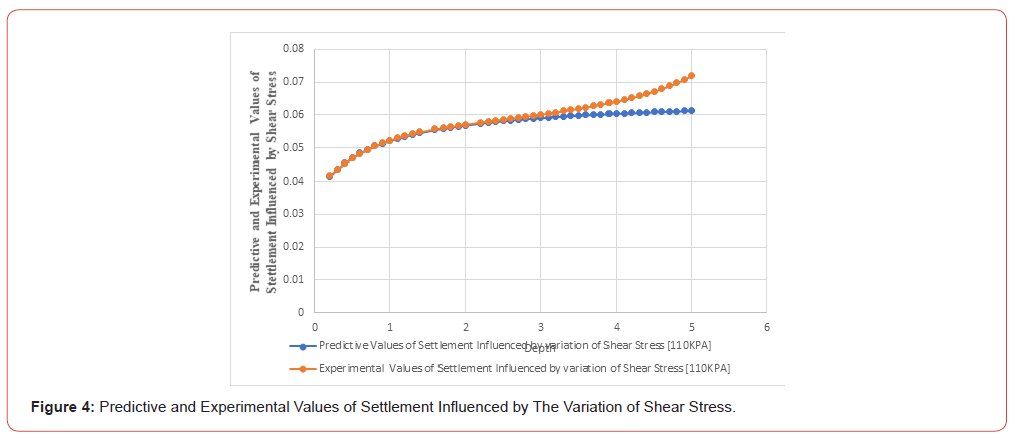
Insert Figures 1-23
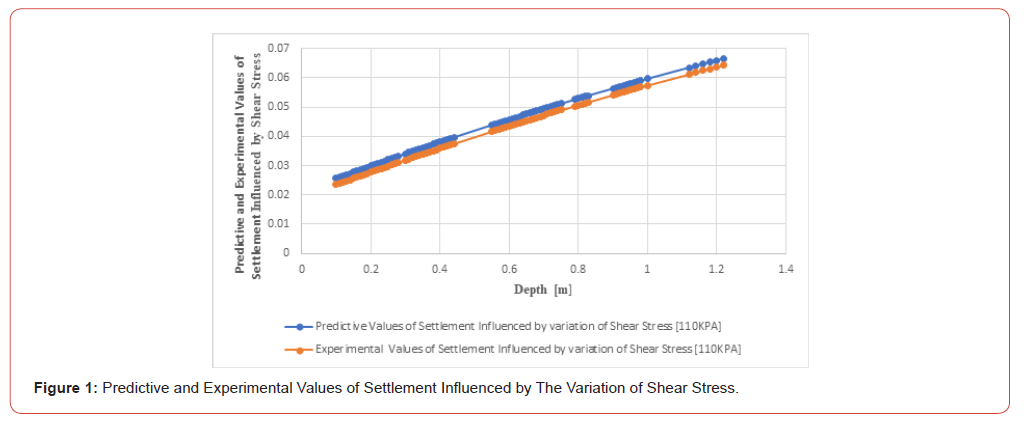
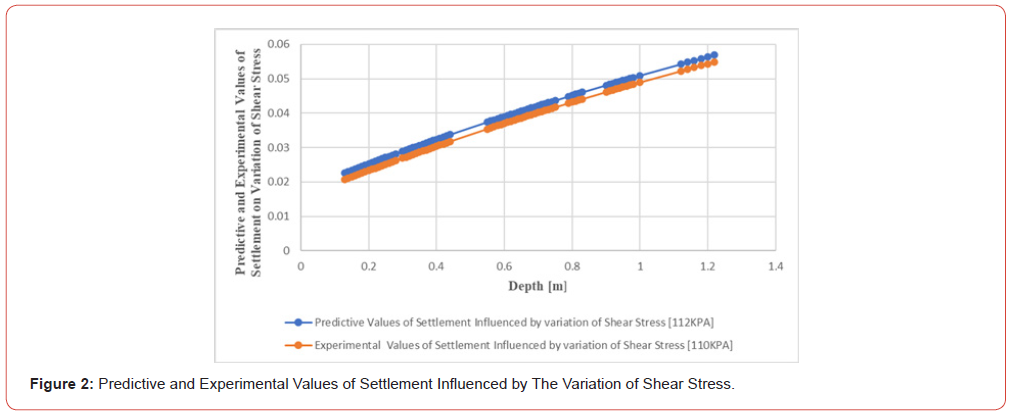
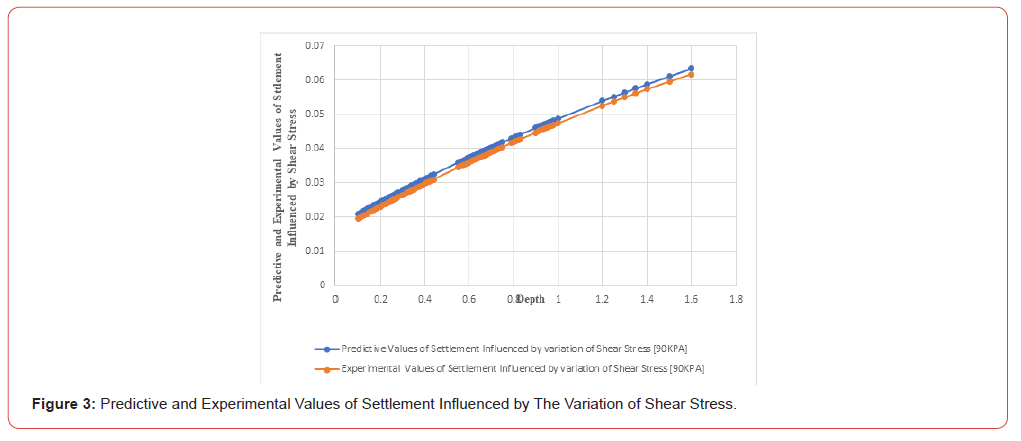

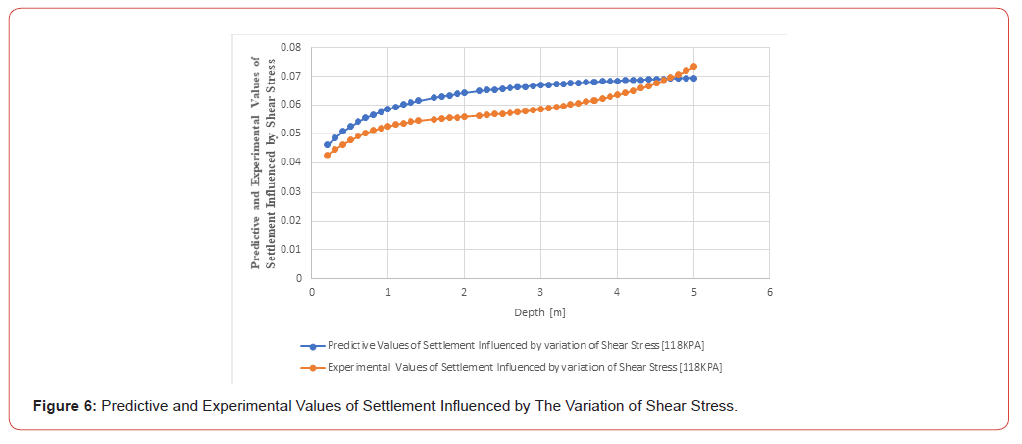
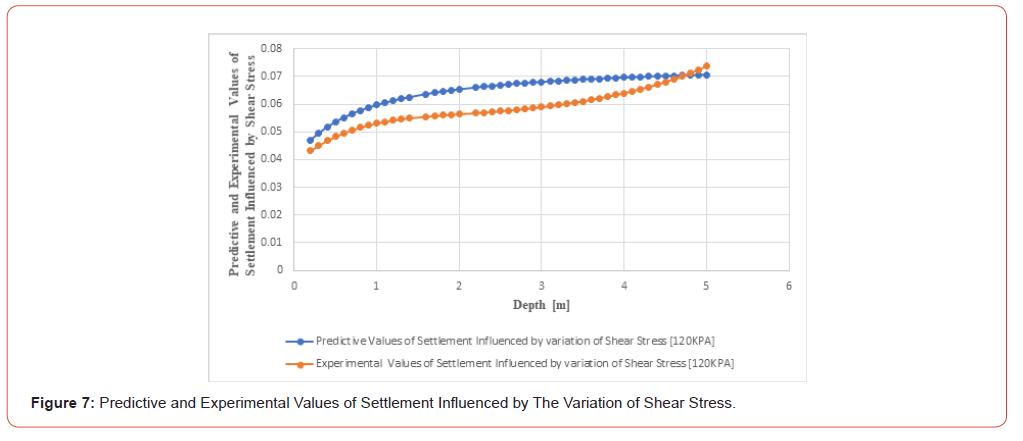
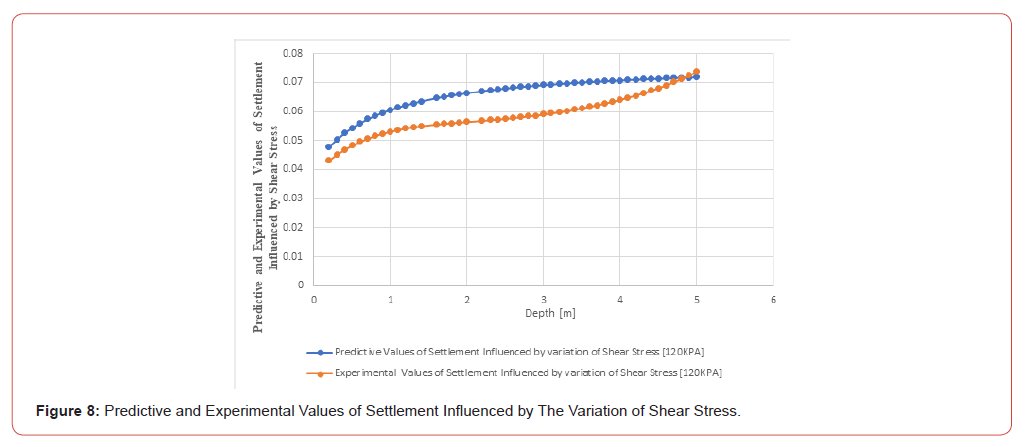
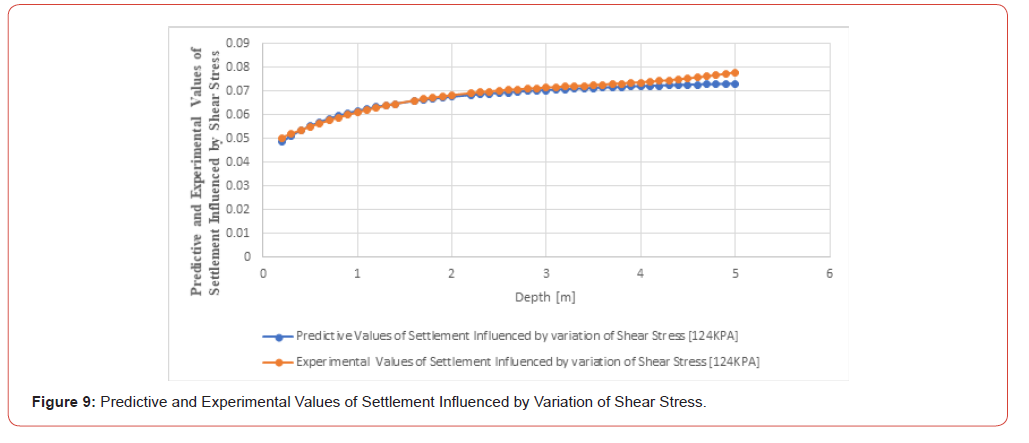

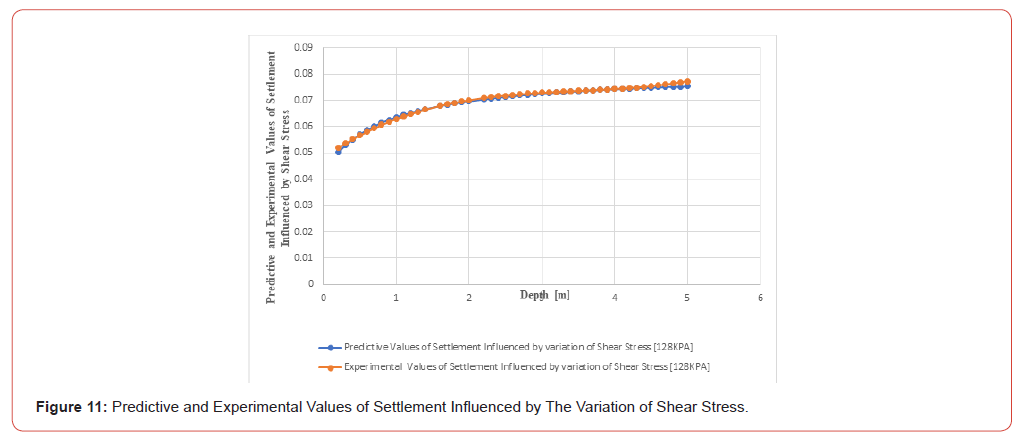
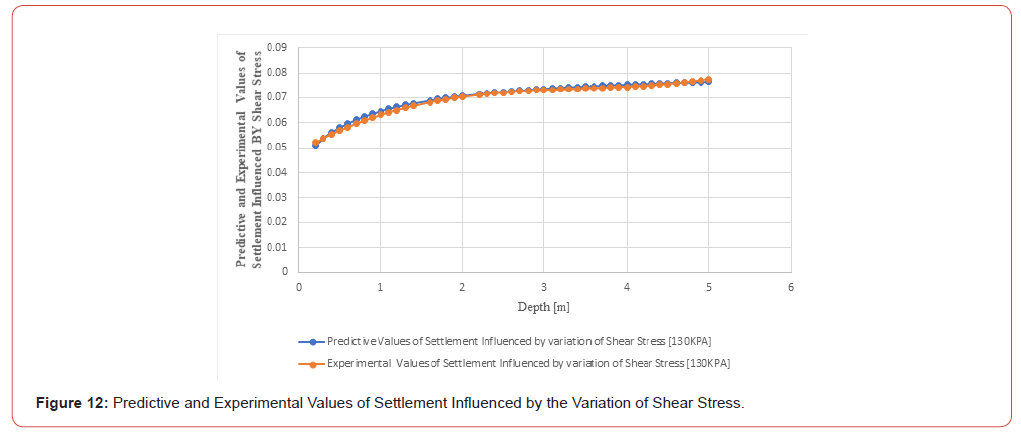
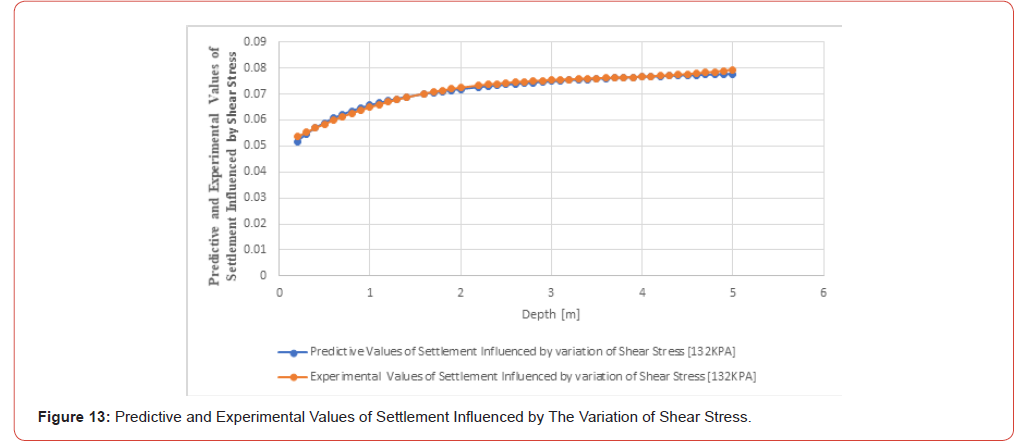
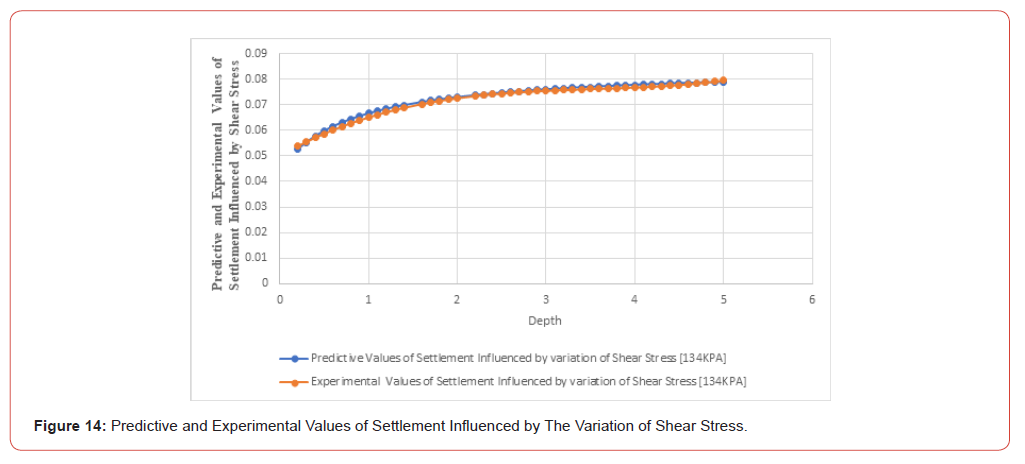
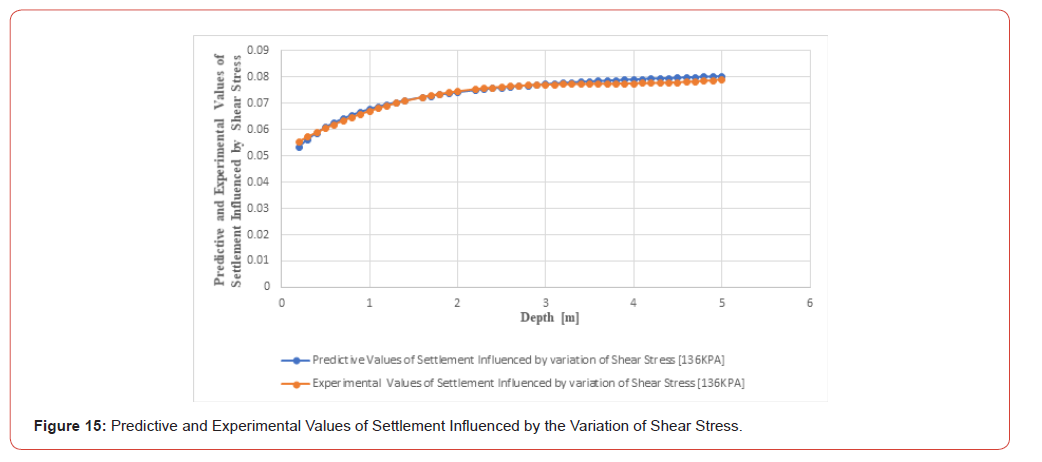
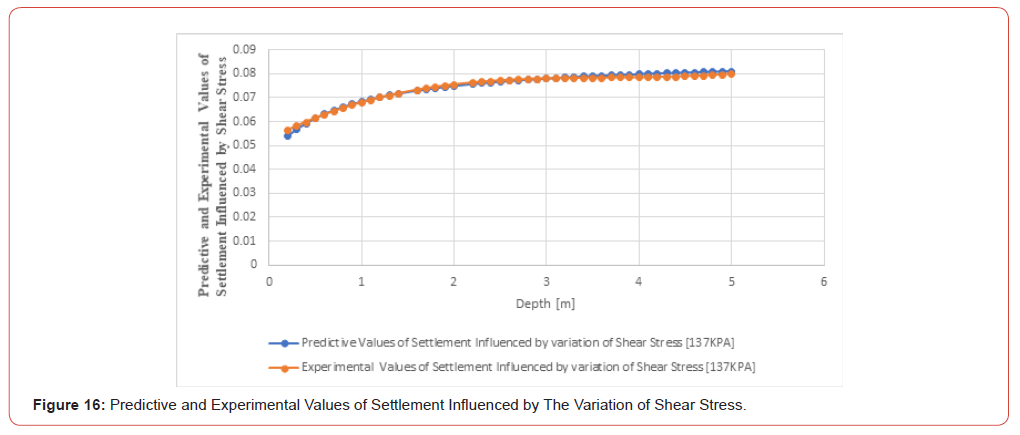
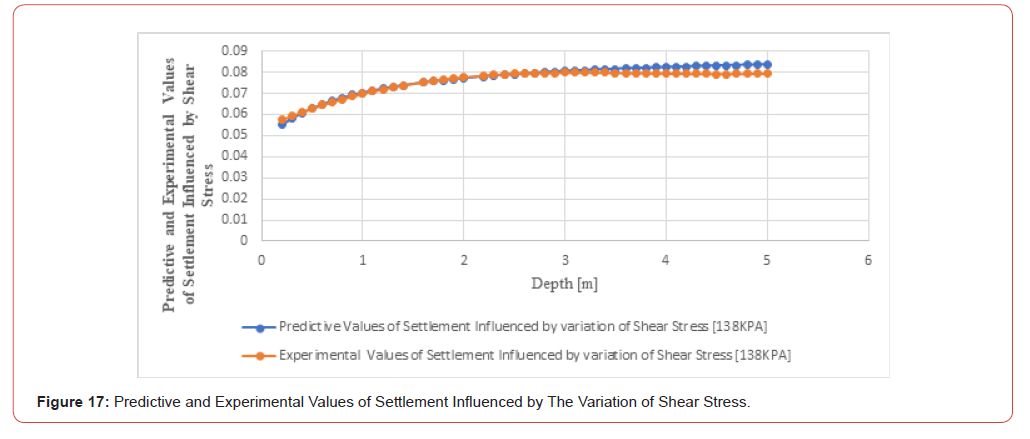
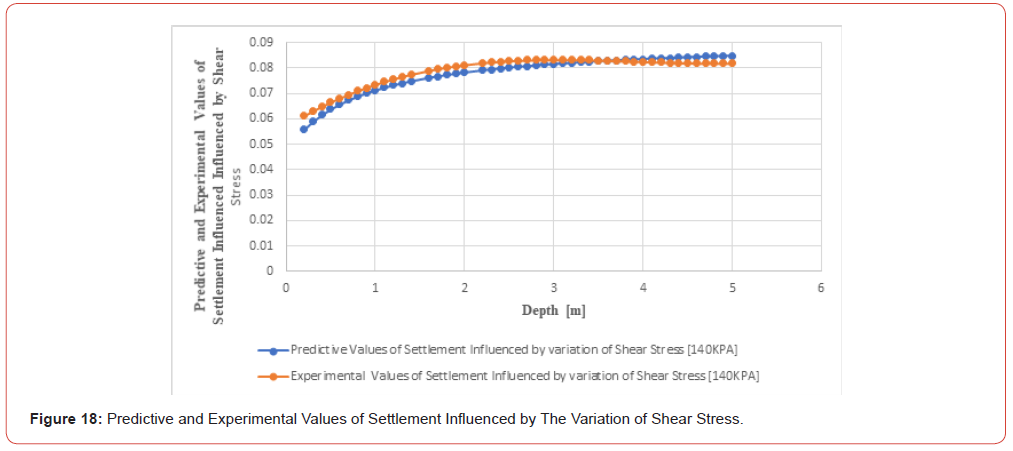
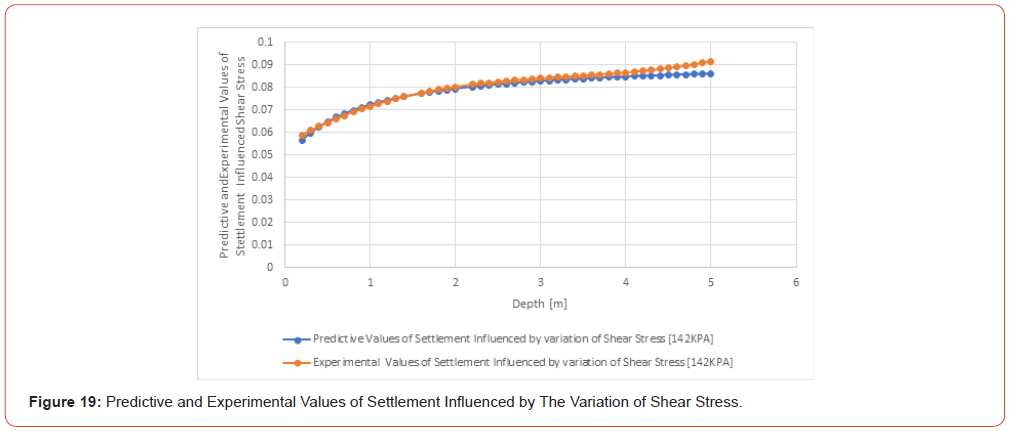
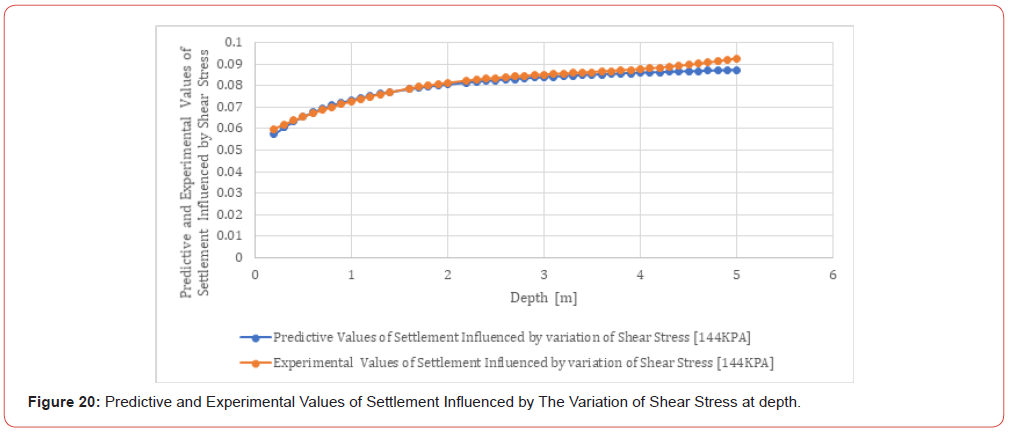
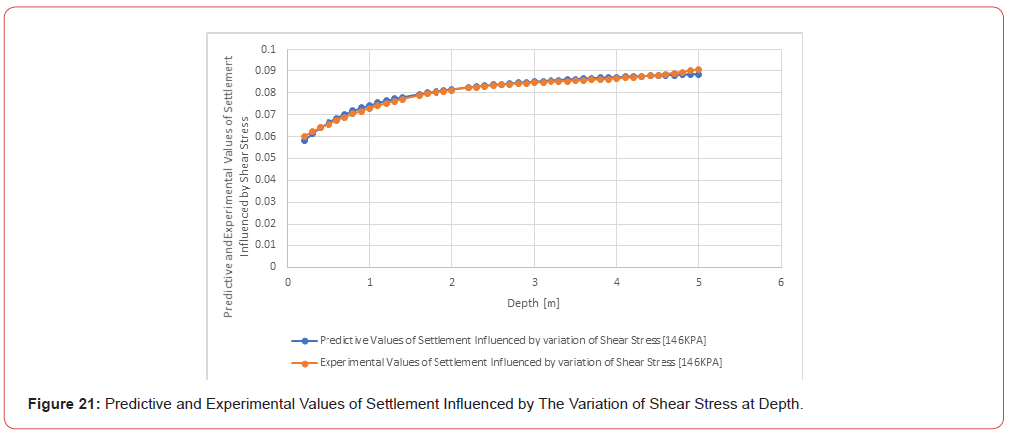
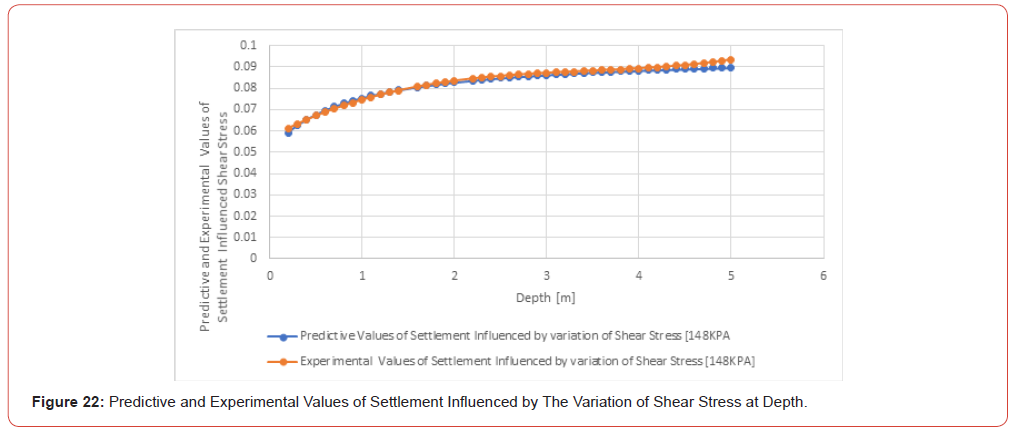
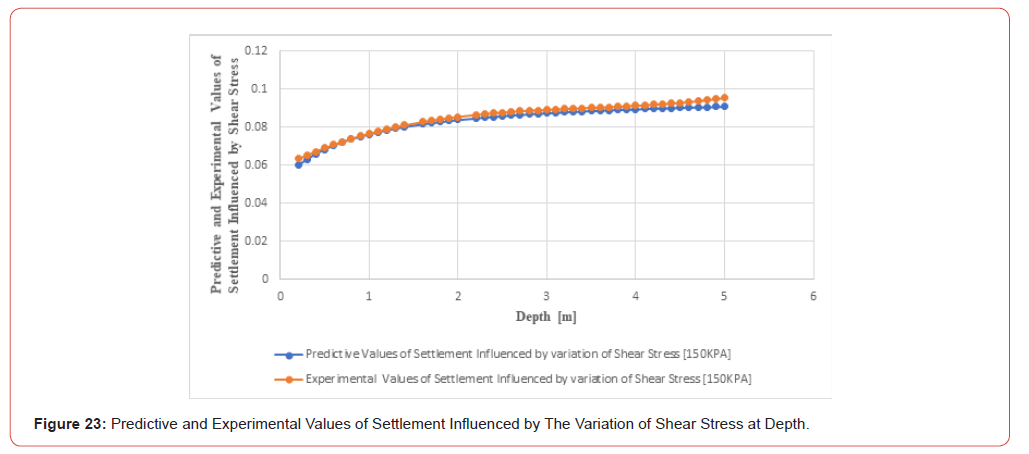
The settlement behavior of soil varies with changes in shear stress, demonstrating a complex interaction of different factors influencing soil deformation. There is a non-linear relationship between settlement and shear stress in clay soils, as shown by both experimental work and predictive models. As shear stress increases due to applied loads, settlement occurs; however, the rate of increase in settlement decreases as the soil approaches its deformation capacity. This curvature in the settlement curve indicates an optimal level of shear stress, where the soil’s compressibility is highest without leading to excessive or harmful settlement.
The distribution of shear stress within the soil profile is notably nonhomogeneous. Shear stress is minimal at the surface, because the applied load is distributed over a broader area. As one moves deeper into the soil, shear stress increases significantly, especially between the 1.2 to 1.6-meter range. This intensification of shear stress at these depths leads to a corresponding increase in both settlement and the rate of settlement. Beyond this zone, shear stress starts to decline, resulting in a slower rate of increase in settlement.
Additionally, the study emphasizes significant role of soil properties in settlement behavior. Clay soils display varying stiffness and compressibility at different depths. Soil layers closer to the surface tend to be less dense and have more voids, making them more compressible and susceptible to greater settlement under the same shear stress levels. In contrast, the soil at depths of 1.2 to 1.6 meters is stiffer and denser, which reduces the settlement response to increases in shear stress. This change in soil characteristics is reflected in the shape of the settlement response curves, which exhibit a gentle curvature.
The consolidation behavior of saturated clay soils is significant in understanding settlement. The extent of consolidation is influenced by the soil’s permeability and the level of applied stress. At shallower depths, higher permeability allows for faster consolidation and initial settlement. However, at greater depths, lower permeability slows down consolidation, resulting in a more gradual increase in settlement over time. The largest settlement observed in the 1.2 to 1.6-meter range may indicate a zone, where the ratio of stress increment to rate of consolidation that produces the greatest settlement under the given conditions. Furthermore, the variation in shear strength with depth contributes to the observed settlement patterns. The 1.2 to 1.6-meter depth range appears to have relatively lower shear strength compared to the shallower or deeper soil layers. This decrease in shear strength makes the soil more susceptible to deformation under shear stress, resulting in increased settlement. The overall pattern of settlement is further complicated by the non-linear stress-strain characteristics of clay soils. The initial section of the settlement curves shows a steep increase in settlement during the first yielding of the soil, followed by a gradual slope as the soil becomes stiffer and denser.
Settlement graphs at a depth of 5 meters exhibit a steady increase with minor oscillations. This behavior can be attributed to the complex interactions among soil mechanics principles, effective stress, consolidation behavior, and loading conditions. When shear stress is applied, it initially causes reversible elastic deformation. As the load increases, the soil reaches a yield point, leading to plastic deformation and progressive settlement. The undulations in the curves may reflect the soil’s adjustment to applied stress and the variations in stress and shear strength at this depth. Within saturated clay, shear stress alters pore water pressure, thereby affecting effective stress. The optimum settlement at 5 meters may indicate a point of balance, where the expulsion of pore water is maximized, influencing total settlement. This observed trend also considers the rate of soil deposition and composition. The heterogeneity noted is attributed to multiple layers of soil with different properties, such as moisture content and grain size. These deposits result in varying settlement behaviors. Therefore, at a depth of 5 meters, the interaction of layers leads to variability in compressibility, which accounts for the consistent rise and small fluctuations observed in the graphs.
Loading conditions can be categorized into dynamic and static types, which influence settlement patterns depending on whether they occur incrementally or suddenly. The observed fluctuations shed light on variations in loading conditions, such as the effects of static versus dynamic loading, on how soil reacts to shear stress. The trends indicate that the rate of loading has a significant impact on settlement behavior. The influence of loading rate is determined by how loads are applied; the application rate affects the time-dependent characteristics of the clay. Rapid loading typically results in immediate settlement, whereas gradual loading allows for enhanced pore water drainage, which shapes the total settlement curve. Overall, the trend of steadily increasing settlement, with a slight peak between 1.2 to 1.6 meters and fluctuations at around 5 meters, is caused by a combination of these factors. These include stress distribution, soil compressibility and stiffness, consolidation, variations in shear strength, non-linear soil behavior, principles of effective stress, and loading characteristics. To accurately predict settlement behavior, it is essential to consider these factors rather than relying solely on the simplified one-dimensional consolidation theory. Incorporating variations in shear stress within normal settlement prediction procedures, definitely provided the platform for the utilizing of advanced models for soil in numerical analysis that can lead to safer and more accurate foundation designs [22-25].
Conclusion
Based on the findings, the study concludes that: Settlement behaviour in clay soils is significantly affected by shear stress, necessitating consideration of its variation with depth and position for accurate predictions. Optimal settlement at specific depth reflects a balance between stress development and the rate of consolidation, which can serve as a basis for foundation design. Classical one-dimensional settlement theories often underestimate or misrepresent settlement predictions, when shear stress gradients are significant. The research enhances our understanding of geotechnical behaviour by identifying the key role of shear stress in settlement prediction and supports the integration of shear stress gradients into experimentally validated predictive formulas, ultimately leading to more secure foundation design.
Recommendations
Based on the findings and conclusions, the following recommendations
are proposed:
a) Geotechnical engineer should incorporate shear stress fluctuations
into standard settlement prediction methods, moving
beyond traditional one-dimensional consolidation theories.
b) Utilize advanced soil models integrated with finite element
method (FEM) codes (e.g., PLAXIS) to simulate shear-induced
plastic strains and their effects on settlement.
c) Perform extensive site investigations to determine soil stratigraphy,
shear strength, and consolidation characteristics at
various depths.
d) Conduct test predictive models against field data from instrumented
load tests on piles, rafts, and embankments.
e) Consider the influence of loading conditions (static versus dynamic)
on settlement patterns.
f) Conduct additional research on different soil types and geological
conditions to validate the findings and enhance the predictive
models.
g) Develop a detailed guidelines that incorporate variations in
shear stress into standard settlement prediction practices in
geotechnical engineering.
h) Utilize predictive models in actual foundation projects to assess
their applicability and refine them based on observed
data.
i) Further explore the effect of soil-structure interaction on the
distribution of shear stress and settlement response.
j) Use established optimal shear stress values to inform foundation
designs, ensuring stability and minimizing excessive settlement.
References
- Mayne PW (2001) Stress-strain-strength-flow parameters from enhanced in-situ tests. Proc Int Conf on In Situ Measurement of Soil Properties pp. 27-47.
- Poulos HG (1989) Pile behaviour – Theory and application. Géotechnique 39(3): 365-415.
- Skempton AW (1954) The pore-pressure coefficients A and B. Géotechnique 4(4): 143-147.
- Terzaghi K, Peck RB, Mesri G (1996) Soil Mechanics in Engineering Practice (3rd ed.). Wiley
- Roscoe KH, Burland JB (1968) On the generalized stress-strain behaviour of 'wet' clay. In Engineering Plasticity (pp. 535-609). Cambridge University Press.
- Ladd CC, Foott R, Ishihara K, Schlosser F, Poulos HG (1977) Stress-deformation and strength characteristics. Proc. 9th ICSMFE 2: 421-494.
- Poulos HG, Davis EH (1974) Elastic Solutions for Soil and Rock Mechanics. Wiley.
- Randolph MF, Wroth CP (1978) Analysis of deformation of vertically loaded piles. Journal of the Geotechnical Engineering Division 104(12): 1465-1488.
- Das BM (2010) Principles of Geotechnical Engineering (7th). Cengage Learning.
- Terzaghi K (1943) Theoretical Soil Mechanics. Wiley.
- Mindlin RD (1936) Force at a point in the interior of a semi-infinite solid. Physics 7(5): 195-202.
- Brinkgreve RBJ, Engin E, Swolfs WM (2010) PLAXIS 2D Material Models Manual. Plaxis bv.
- Poulos HG (1968) Analysis of the settlement of pile groups. Géotechnique 18(4): 449-471.
- Biot MA (1941) General theory of three-dimensional consolidation. Journal of Applied Physics 12(2): 155-164.
- Lambe TW (1967) Stress path method. Journal of the Soil Mechanics and Foundations Division 93(6): 309-331.
- Robertson PK (2009) Interpretation of cone penetration tests – a unified approach. Canadian Geotechnical Journal 46(11): 1337-1355.
- Lade PV (1992) Static instability and liquefaction of loose fine sandy slopes. Journal of Geotechnical Engineering 118(1): 51-71.
- Aboshi H, Monden H (1963) A new consolidation test with controlled lateral strain. Soils and Foundations 3(1): 31-41.
- Ellis E, Cox C, Yu S, Ainsworth A (2006) A new geotechnical centrifuge at the University of Nottingham, UK. International Conference on Physical Modelling in Geotechnics 6: 129-134.
- O’Loughlin CD, Lehane BM (2010) Nonlinear pile settlement: Practical design methodology. Canadian Geotechnical Journal 47(10): 1131-1146.
- Matsui T, Oda K, Ito T (1995) Centrifuge model tests on bearing capacity and deformation of sand layer overlying clay. Soils and Foundations 35(1): 167-177.
- Jardine RJ, Potts DM, Fourie AB, Burland JB (1986) Studies of the influence of non-linear stress-strain characteristics in soil-structure interaction. Géotechnique 36(3): 377-396.
- Mayne PW (2007) Cone Penetration Testing: State-of-Practice. NCHRP Project 20-05, Synthesis 368. Transportation Research Board.
- Mesri G, Choi YK (1985) Settlement analysis of embankments on soft clay. Journal of Geotechnical Engineering 111(4): 441-464.
- Mesri G, Vardhanabhuti B (2009) Compression of granular materials. Canadian Geotechnical Journal 46(4): 369-392.
-

This work is licensed under a Creative Commons Attribution-NonCommercial 4.0 International License.