


 Research Article
Post-Covid Localized Daily Life and Travel Behaviour: Implications for the 15-Minute City in Terms of Walking, Cycling and Car Dependency
Received Date:March 13, 2025; Published Date:March 27, 2025
Abstract
The COVID-19 pandemic significantly reshaped everyday mobility patterns, encouraging individuals to conduct daily activities within more
localized spatial contexts. This study investigates how this emerging localized mobility patterns have influenced post-pandemic travel behavior, with
a particular focus on changes in walking, cycling, and car use.
This study conducts a systematic review and comparative synthesis of recent empirical studies examining post-COVID mobility patterns. The
research adopts a meta-analytical approach to synthesize empirical studies published between 2021 and 2026 that quantitatively examine postpandemic
mobility changes. Due to methodological heterogeneity across studies and the absence of comparable effect size measures, a directional
meta-synthesis method was applied to identify general trends in travel behavior.
The findings indicate that the increased localization of daily activities tends to support the use of active transportation modes, particularly
walking and cycling. In contrast, changes in automobile use appear more complex and vary depending on contextual and socio-spatial factors.
The study highlights the potential opportunities that post-pandemic mobility shifts offer for sustainable transport policies and provides
early empirical insights into the behavioral feasibility of the 15-minute city concept. Overall, the results suggest that localized mobility practices
observed after the pandemic may align with the travel behavior transformations anticipated by the 15-minute city framework. However, reducing
car dependency requires not only proximity-based spatial planning but also complementary transport infrastructure and policy interventions.
Keywords:Post-COVID mobility; active transportation; walking; cycling; car use; localized mobility; 15-minute city; travel behaviour; sustainable transport
Introduction
The concept of the 15-minute city has gained increasing attention in discussions on sustainable urban planning, particularly in the aftermath of the COVID-19 pandemic. This approach aims to reduce car dependency and promote active modes of transport by enabling residents to meet their essential daily needs—such as housing, employment, shopping, healthcare, education, and leisure—within a short walking or cycling distance (Moreno et al., 2021). Despite its growing popularity in the literature, empirical evidence demonstrating the effects of this approach on travel behaviour remains limited.
The COVID-19 pandemic has also led to significant changes in everyday mobility practices. A tendency toward shorter travel distances, increasing expectations for neighbourhood-level access to services, and growing interest in active transport modes such as walking and cycling have emerged as key trends in the postpandemic period. Walking, cycling, e-bikes, and e-scooters—often referred to collectively as active mobility modes—have experienced notable growth during the pandemic, both in city centres and in peripheral urban areas, partly supported by sustainable urban planning initiatives (Huang et al., 2024; Al-Akioui & Monzón, 2023). However, the dynamics of this increase vary depending on regional geographical characteristics and the availability of infrastructure.
During the pandemic, concerns about infection risks in urban centres contributed to a decline in public transport use, making active mobility one of the most prominent alternatives (Al-Akioui & Monzón, 2023). Evidence from Madrid indicates that the reduction in public transport use observed during the pandemic continued afterwards, with a considerable share of trips shifting toward active modes such as walking and cycling. In this metropolitan context, the share of active mobility modes in the city centre increased from 12% to 16%. Infrastructure investments and supportive policy measures are also considered to have accelerated this transition. For example, the introduction of Low Emission Zones (LEZs) and the pedestrianisation of certain streets have made city centres more attractive for pedestrians and cyclists. As a result, particularly for trips of 15 minutes or less, active modes have become the second most frequently preferred mode of transport after walking, gradually replacing car use in many cases. Demographic patterns also indicate that younger populations living in city centres are more inclined to adopt active mobility modes. For instance, in Surabaya, densely populated inner-city neighbourhoods with narrow streets and close proximity to commercial areas appear to provide favourable conditions for the use of e-bikes.
In peripheral urban areas (including metropolitan rings and outer districts), private car use remains dominant; however, active mobility has begun to play a new role, partly supported by technological innovations (Harun et al., 2026; Ballo et al., 2023). E-bikes and e-scooters, in particular, are increasingly recognised as effective tools for overcoming distance barriers in suburban areas. Unlike conventional bicycles, these vehicles allow users to travel longer distances and can help address the “first-mile/last-mile” problem associated with access to public transport stops.
Another proposal aimed at transforming urban transport systems is the e-bike city concept, which promotes the redistribution of road space in favour of micro-mobility and active transport modes (Ballo et al., 2023). The core idea of this approach is to allocate approximately half of the existing road space to smaller vehicles such as bicycles and e-bikes. Modelling studies conducted for Zurich suggest that such a transformation would significantly alter the distribution of road space. The share allocated to cycling infrastructure would increase from 12% to 54%, while the space dedicated to motorised traffic would decrease from 67% to 35%. Similarly, on-street parking areas would be reduced from 14% to 4%, while the share allocated to public transport would remain around 7%. These transformations are proposed to be implemented through planning and design strategies such as oneway street arrangements, the removal of on-street parking spaces, low-cost pilot interventions that can be implemented rapidly, and the integration of reclaimed spaces with green infrastructure and public areas (Ballo et al., 2023).
The x-minute city approach represents a broader urban planning paradigm that aims to ensure that essential daily activities can be reached within a specified time threshold. Within this framework—most prominently represented by the 15-minute city model—key functions such as housing, employment, education, shopping, and recreation are expected to be accessible within a short travel time using sustainable transport modes such as walking, cycling, and public transport. One of the central objectives of the x-minute city concept is to reduce daily travel distances, decrease car dependency, and strengthen neighbourhood-level accessibility. In this context, spatial characteristics such as mixed land use, adequate density, and well-developed active mobility infrastructure are considered crucial for encouraging walking and cycling and for supporting more localised and sustainable mobility patterns. However, the extent to which this approach can reduce car dependency may vary depending on factors such as the spatial structure of cities, transport infrastructure, and sociospatial inequalities (Traore et al., 2025). Emerging models such as the e-bike city and the x-minute city therefore seek to reduce car dependency in suburban areas by creating neighbourhoods where essential services can be reached within a short walking or cycling distance.
Significant changes in individuals’ travel behaviour have been observed in the post-COVID-19 period. Studies using social media data show that travel frequency and mobility patterns changed considerably during the pandemic and that these changes reshaped mobility dynamics, particularly in large cities (Shende et al., 2023). In addition, research on shared mobility systems indicates that the factors influencing the frequency of bike-sharing use changed between the pre- and post-pandemic periods, and that variables such as perceived health risk, transport preferences, and urban accessibility played an important role in shaping usage behaviour (Xie et al., 2023).
Among the reasons for these changes in travel habits, the direct effects of the pandemic constitute a major factor. The COVID-19 period led individuals to shift toward outdoor active transport modes due to fears of infection and the need for social distancing (Huang et al., 2024). While overall travel demand decreased, public transport usage declined significantly, and individuals’ transport preferences shifted toward more individual and flexible mobility options. During this period, interest in active transport modes such as walking and cycling increased in many cities. At the same time, the widespread adoption of digitalization and remote working practices reshaped daily mobility patterns (Lee & Eom, 2024; Haghani et al., 2024). However, the pandemic also led to fluctuations in the use of shared mobility services. For example, demand for ride-sourcing services (on-demand transport services that match passengers with drivers via smartphone applications) varied depending on perceived risk, safety concerns, and economic conditions (Loa et al., 2024).
The literature also emphasizes that travel behaviour is shaped not only by infrastructure conditions but also by socio-economic characteristics and residential environments. Research based on long-term smartphone experiments shows that individuals develop different “modality styles”—behavioural patterns reflecting their tendency to use different transport modes in daily life—depending on factors such as income level, residential location, and daily activity patterns (Silm et al., 2024). These findings highlight the importance of designing urban mobility policies that consider the mobility needs of different social groups.
Although some of these changes in transport habits were initially considered temporary, they have also accelerated longerterm behavioural shifts in the post-pandemic period. In many cities, temporary cycling lanes implemented during the pandemic have been made permanent, leading to rapid increases in cycling rates. In addition, lower travel costs and the health benefits associated with active travel have increased the popularity of these transport modes. However, in suburban areas the lack of infrastructure and safe cycling lanes has limited the spread of active mobility compared with city centres.
On the other hand, the literature also discusses the possibility that the marginal benefits of investments in active transport infrastructure may decline over time. A study evaluating ten years of sustainable transport policies in Barcelona found that increases in cycling and active mobility infrastructure initially produced significant gains, but after reaching a certain saturation point additional infrastructure investments generated only limited additional benefits (Orrego-Oñate et al., 2024). This finding suggests that active mobility policies should be addressed not only through infrastructure investments but also in conjunction with land-use planning, accessibility improvements, and demand management policies.
In recent years, themes of accessibility and equity have gained increasing importance in transport research. Studies examining the development of the transport justice literature indicate that the equitable distribution of mobility opportunities across social groups has become one of the key agendas of sustainable mobility policies (Liu & Zhe, 2026). Accessibility-based planning approaches such as the 15-minute city aim to support both sustainable mobility and social equity by enabling access to daily needs within short distances. Research conducted in cities of the Global South shows that levels of spatial accessibility can vary significantly between cities and across social groups, highlighting the need to evaluate accessibility-based planning policies from a social equity perspective (Badakhshan et al., 2025).
In this study, the authors synthesize empirical research published after 2021 using a meta-analytical approach to examine whether the localized mobility patterns that emerged in the postpandemic period have increased active mobility and reduced car use. By doing so, the study aims to provide early evidence on how proximity-based lifestyles influence travel behaviour and to derive implications for the applicability of the 15-minute city concept.
The study treats the localized mobility practices that emerged after the pandemic as a form of “natural experiment” and systematically reviews recent empirical studies to evaluate the effects of these changes on active mobility and car use. Within this framework, the study seeks to answer the following research questions:
RQ1. Have localized daily life practices emerging after COVID-19
led to an increase in walking and cycling (active mobility)?
RQ2. Has car use decreased during the same period?
RQ3. Does the increase in neighbourhood-scale accessibility
and short-distance mobility provide empirical evidence
supporting the behavioural assumptions of the 15-minute city
concept?
RQ4. What insights do post-pandemic mobility changes provide
regarding the potential of proximity-based urban lifestyles to
reduce car dependency?
Methodology
In recent years, the use of big data and digital data sources in transport research has increased significantly. Smartphone data, social media data, and multimodal travel datasets enable more detailed analyses of individuals’ spatial and temporal mobility patterns. In this context, the analysis of multimodal spatio-temporal travel data using advanced data analytics and artificial intelligence methods contributes to more accurate estimations of regional travel structures (Shen et al., 2026). Similarly, studies utilizing social media data highlight the importance of alternative data sources for monitoring changes in mobility behaviour, particularly during crisis periods (Shende et al., 2023).
This study presents a systematic review and comparative synthesis of recent empirical research on post-COVID-19 mobility patterns using a meta-analytical approach.
Meta-analysis is a higher-level analytical method that aims to identify general trends by systematically combining the results of independent studies addressing similar research questions. It refers to the process of integrating and interpreting studies conducted at different times, in different geographical contexts, and with different samples within a structured methodological framework (Aksoy Kürü, 2021). More specifically, it comprises a set of statistical techniques designed to obtain a more precise and reliable estimate of the overall effect by combining the results of multiple quantitative studies addressing the same research question. When applied rigorously, meta-analysis is considered one of the highest levels of evidence in research hierarchies. It is typically defined as the quantitative synthesis of results from independent but related studies within the scope of a systematic literature review (Gurevitch et al., 2018; Pigot & Polanin, 2019; Haidich, 2010; Lee, 2017).
This method increases statistical power and estimation accuracy by aggregating sample sizes across different studies. This feature provides a significant advantage, particularly in cases where individual studies rely on small samples or produce inconsistent findings (Paul & Barari, 2022; Haidich, 2010; Fekete & Győrffy, 2024; Lee, 2017; L’Abbé et al., 2015).
Meta-analysis also helps resolve inconsistencies across study findings and allows researchers to examine the factors that lead to differences in effect sizes. In this regard, it enables the analysis of heterogeneity, moderator variables, and subgroup effects (Gurevitch et al., 2018; Paul & Barari, 2022; Fekete & Győrffy, 2024; Hak et al., 2016; Andrade, 2020). For this reason, meta-analysis has been widely applied across numerous disciplines, including medicine, education, business, ecology, psychology, and the social sciences (Gurevitch et al., 2018; Pigot & Polanin, 2019; Paul & Barari, 2022; Pollo et al., 2025; Shelby & Vaske, 2008; Baker & Sobieraj, 2021).
In the present study, however, a classical meta-analysis based on the calculation of quantitative effect sizes was not conducted. Specifically, a weighted effect size based on fixed-effects or randomeffects models was not calculated. The primary reason for this is that the reviewed studies do not report a common effect size metric (such as Cohen’s d, odds ratios, or standardized regression coefficients), nor do they provide variance or standard error information. Moreover, the studies differ substantially in terms of their data sources, measurement tools, and comparative designs (e.g., pre- and post-pandemic comparisons, behavioural profiles, spatial analyses, etc.).
Due to this heterogeneity, calculating a statistically weighted effect size was both technically infeasible and methodologically problematic. Therefore, the study adopts a directional metasynthesis approach, which aims to identify general trends across studies. This approach focuses on systematically and comparatively assessing the direction of change in travel behaviour, rather than estimating a pooled statistical effect size.
Literature Review
The literature review was conducted in accordance with the PRISMA (Preferred Reporting Items for Systematic Reviews and Meta-Analyses) framework. During the search process, the following keywords were used: “15-minute city,” “local mobility,” “travel behaviour,” “walking,” “cycling,” and “car use.” The initial search yielded 53,661 records (search date: 28.02.2026). After applying a publication year filter, only studies published between 2021 and 2026 were considered, and 20 studies were retained for further evaluation at this stage.
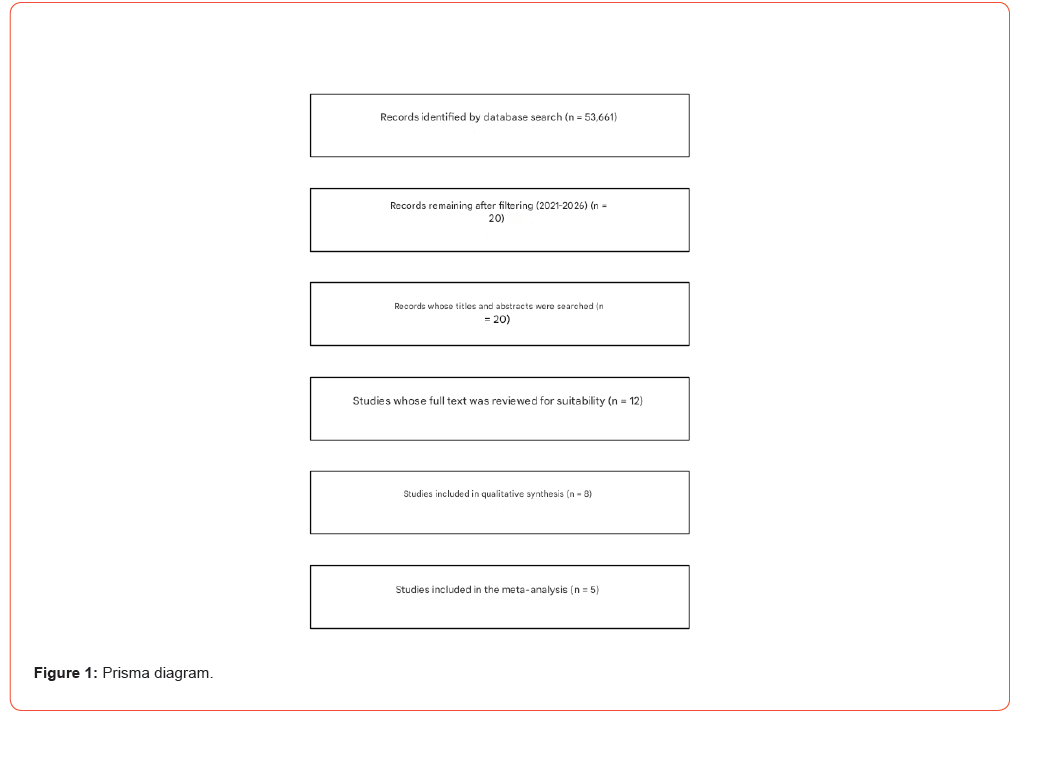
Following the title and abstract screening, studies that were not directly related to the research objectives were excluded, and 12 studies were subjected to full-text review. After the full-text assessment, 8 studies were included in the qualitative synthesis, and 5 of these studies were further included in the meta-analytical stage, as they provided the quantitative information necessary for directional coding. This process ensured that the studies included in the analysis were selected in a systematic and transparent manner (Figure 1).
Selection of Individual Studies Included in the Analysis and Determination of Inclusion and Exclusion Criteria
The selection of studies was conducted based on the following inclusion and exclusion criteria.
a. Inclusion Criteria
• Examining travel behaviour in the post-COVID-19 period,
• Measuring changes in walking and/or cycling use,
• Addressing changes in car use,
• Providing quantitative data or measurable outcomes,
• Being published in the format of an academic journal
article,
• Having been published within the last year.
b. Exclusion Criteria
• Studies focusing solely on spatial accessibility analysis,
• Research primarily focused on methodological
development,
• Conceptual studies that do not measure travel behaviour,
• Studies that evaluate mobility only at the level of
perception or intention,
• Conference papers and technical reports.
As a result of the screening process conducted according to these criteria, a limited number of studies directly examining changes in travel mode choice were included in the meta-analysis. The selected studies provide the opportunity to comparatively examine the effects of localized mobility practices emerging in the post-pandemic period on active mobility and car use.
Collection, Coding, and Classification of Data (Individual Study Results)
The full texts of the selected studies were systematically reviewed, and information from each study was extracted using a standardized data extraction form. The following information was recorded for each study:
• Year of publication,
• Geographical context,
• Sample size and data source,
• Methodological approach used,
• Direction of change in active transportation (walking/
cycling) use,
• Direction of change in car use.
The direction of change in travel behavior was coded based on the quantitative findings reported in the results section of each study. Statistically significant increases were coded as +1, significant decreases as −1, and cases where no significant change was reported as 0. For active modes of transport:

Subsequently, the overall trend was calculated using the following average directional effect measure:

This measure indicates an overall increasing trend as values approach the positive end, and an overall decreasing trend as values approach the negative end.
Coding Reliability
In cases where a study included multiple sub-analyses, the main results representing the overall sample were used. Studies with conflicting findings were coded according to the dominant trend, taking into account the authors’ overall assessment and the level of statistical significance. To enhance the reliability of the coding process, studies were evaluated in two stages. The initial coding was performed by the researcher, after which the results underwent a second verification process. Coding discrepancies were discussed until consensus was reached, and the final codes were determined accordingly.
Findings
The studies identified through the literature review indicate that changes in travel behavior observed in the post-COVID-19 period exhibit certain common trends. The research included in the analysis suggests that localized daily life practices emerging after the pandemic may increase the use of active transportation modes such as walking and cycling, and, in parallel, lead to changes in car use.
Directional Coding Results
The direction of changes in active transportation and car use during the post-pandemic period is presented comparatively in Table 1.
Table:1Directional Effect Coding of the Studies.

In the next stage, the findings of the selected studies were evaluated under two main headings. First, changes in walking and cycling were examined, followed by transformations in car use. This approach allowed for an assessment of how post-pandemic mobility trends have oriented in terms of active transportation and car dependency.
a. Changes in active (modes of) transportation
Directional coding for active transportation shows that, in
the majority of studies, walking and cycling increased, with the
average directional effect being positive  . The analyzed
studies indicate that, in areas with higher urban density, there
was a tendency for increased walking and cycling in the post-
COVID-19 period. In particular, the rise in short-distance trips and
the orientation toward meeting daily needs at the neighborhood
scale contributed to a greater preference for active transportation.
During the pandemic, heightened perceived risks associated with
public transportation led individuals to favor transportation
modes that could be performed in open spaces. This situation
increased the use of walking and cycling for both commuting and
recreational purposes. Some of the studies reviewed also highlight
that temporary or permanent adjustments to cycling infrastructure
supported this shift. These findings suggest that maintaining daily
life at a more localized scale may promote active transportation
behaviors.
. The analyzed
studies indicate that, in areas with higher urban density, there
was a tendency for increased walking and cycling in the post-
COVID-19 period. In particular, the rise in short-distance trips and
the orientation toward meeting daily needs at the neighborhood
scale contributed to a greater preference for active transportation.
During the pandemic, heightened perceived risks associated with
public transportation led individuals to favor transportation
modes that could be performed in open spaces. This situation
increased the use of walking and cycling for both commuting and
recreational purposes. Some of the studies reviewed also highlight
that temporary or permanent adjustments to cycling infrastructure
supported this shift. These findings suggest that maintaining daily
life at a more localized scale may promote active transportation
behaviors.
b. Changes in Car Use
While the average directional effect for active transportation
was positive  , the overall trend in car use was contextdependent
and did not show a clear tendency toward reduction.
Studies on post-pandemic mobility trends indicate that changes
in car use were not unidirectional. Some research shows that, in
the short term, car use increased as individuals avoided public
transportation, whereas other studies suggest that an increase in
locally conducted trips reduced the need for long-distance travel.
The strengthening of local daily life practices enabled activities to
be carried out at the neighborhood scale, which, in some contexts,
contributed to a reduction in car use. In particular, in areas where
active transportation increased, short-distance trips were often
undertaken by walking or cycling instead of by car.
, the overall trend in car use was contextdependent
and did not show a clear tendency toward reduction.
Studies on post-pandemic mobility trends indicate that changes
in car use were not unidirectional. Some research shows that, in
the short term, car use increased as individuals avoided public
transportation, whereas other studies suggest that an increase in
locally conducted trips reduced the need for long-distance travel.
The strengthening of local daily life practices enabled activities to
be carried out at the neighborhood scale, which, in some contexts,
contributed to a reduction in car use. In particular, in areas where
active transportation increased, short-distance trips were often
undertaken by walking or cycling instead of by car.
These findings suggest that localized post-pandemic mobility patterns may have a transformative effect on car dependency, while also indicating that spatial proximity alone may not be sufficient to reduce car reliance.
Discussion, Conclusions, and Policy Implications
This study treats the localized daily life practices that emerged in the post-pandemic period as a kind of “natural experiment,” systematically reviewing empirical research published in recent years and assessing the effects of these changes on travel behavior. The findings reveal notable trends, particularly with regard to active transportation and car use.
The first research question (RQ1) examines whether localized daily life practices in the post-pandemic period led to an increase in walking and cycling. Existing empirical evidence shows a marked increase in walking and cycling during and after the pandemic, with a tendency for active transportation to rise when daily activities are conducted over shorter distances (Xie et al., 2023; Silm et al., 2024). This indicates that greater access to services at the neighborhood scale encourages short-distance trips, making active transportation more feasible.
The second research question (RQ2) addresses whether car use decreased during the same period. The findings reveal a more complex pattern of change in car use. While localized mobility practices contributed to a reduction in long-distance trips in some cases, the tendency to avoid public transportation during the pandemic led to increased car use in certain contexts. This demonstrates that car dependency is influenced not only by spatial proximity but also by the overall structure of the transport system and the availability of alternative modes of travel.
The third research question (RQ3) investigates whether increased local access and short-distance mobility support the travel behavior changes anticipated by the 15-minute city approach. The findings suggest that fulfilling daily needs within a closer environment can promote active transportation and that shortdistance trips can be undertaken using more sustainable modes of travel. These results provide empirical evidence supporting the potential of proximity-based urban planning approaches to transform travel behavior.
The fourth research question (RQ4) explores what inferences can be drawn regarding the potential of post-pandemic mobility changes to reduce car dependency. The findings indicate that proximity-based urban lifestyles have the potential to reduce car dependency; however, this transformation is neither automatic nor unidirectional. While spatial proximity can encourage active transportation, changes in car use are also influenced by broader structural factors such as transport infrastructure, the quality of public transport services, perceived safety, and individual preferences.
Overall, these findings support the notion that the 15-minute city approach has the potential to transform travel behavior, but the transformation does not occur spontaneously. For proximitybased planning strategies to be effective, active transportation infrastructure must be strengthened, safe pedestrian and cycling environments must be established, and policies encouraging shortdistance trips to be undertaken using alternative modes rather than cars need to be developed.
In conclusion, the localized mobility practices observed in the post-pandemic period demonstrate that spatial proximity policies have a significant—but not sufficient—impact on travel behavior. This highlights the need to address urban planning and transport policies together and underscores the importance of evaluating accessibility, infrastructure, and transport services in a holistic manner. Future research should examine the long-term effects of proximity-based planning practices in diverse urban contexts and provide a more comprehensive assessment of the interactions between transport systems and spatial arrangements.
Subsequent studies are expected to analyze the long-term continuity of these post-pandemic behavioral changes using longitudinal mobility data and to provide a more comprehensive understanding of how proximity-based planning policies interact with transport infrastructure and socio-economic factors.
References
- Aksoy Kürü S (2021) Meta-analiz. Pamukkale Üniversitesi Sosyal Bilimler Enstitüsü Dergisi 42: 215–229.
- Al-Akioui A, Monzón A (2023) Spatial analysis of COVID-19 pandemic impacts on mobility in Madrid region. Sustainability 15(19): 14259.
- Andrade C (2020). Understanding the basics of meta-analysis and how to read a forest plot: As simple as it gets. The Journal of Clinical Psychiatry 81(5).
- Badakhshan B, Sharifi A, Ramezani S (2025) The 15-minute city in the Global South: Modeling spatial accessibility and measuring social equity across seven major Iranian cities. Journal of Urban Mobility 8: 100168.
- Baker W, Sobieraj D (2021) Research and scholarly methods: Meta-analysis. Journal of the American College of Clinical Pharmacy 4(9): 1170–1178.
- Ballo L, de Freitas LM, Meister A, Axhausen KW (2023) The e-bike city as a radical shift toward zero-emission transport: Sustainable? Equitable? Desirable? Journal of Transport Geography 111: 103663.
- Brand C, Götschi T, Dons E, Gerike R, Anaya Boig E, et al (2021) The climate change mitigation impacts of active travel: Evidence from a longitudinal panel study in seven European cities. Global Environmental Change 67: 102224.
- Ciuffini F, Tengattini S, Bigazzi AY (2023) Mitigating increased driving after the COVID-19 pandemic: An analysis on mode share, travel demand, and public transport capacity. Transportation Research Record 2677(4).
- Fekete J, Győrffy B (2024). MetaAnalysisOnline.com: Web-based tool for the rapid meta-analysis of clinical and epidemiological studies. Journal of Medical Internet Research 27: e 64016.
- Gurevitch J, Koricheva J, Nakagawa S, Stewart G (2018) Meta-analysis and the science of research synthesis. Nature, 555, 175–182.
- Haghani M, Merkert R, Behnood A, De Gruyter C, Kazemzadeh K, et al. (2024) How COVID-19 transformed the landscape of transportation research: An integrative scoping review and roadmap for future research. Transportation Letters 16(1).
- Haidich AB (2010) Meta-analysis in medical research. Hippokratia 14(Suppl. 1): 29–37.
- Hak T, Rhee H, Suurmond R (2016) How to interpret results of meta-analysis. SSRN Electronic Journal.
- Harun I, Navitas P, Hartanto HR, Yigitcanlar T (2026) How can e-bikes accelerate X-minute city transitions? User preferences, adoption patterns, and associated factors in the Global South. Sustainability 18(1): 358.
- Huang Y, Ma L, Cao J (2024) Exploring the relationship between neighborhood environment and transport disadvantage during the COVID-19 lockdown. Travel Behaviour and Society 34: 100696.
- L’Abbé KA, Detsky AS, O’Rourke K (1987) Meta-analysis in clinical research. Annals of Internal Medicine 107(2): 224–233.
- Lee KS, Eom JK (2024) Systematic literature review on impacts of COVID-19 pandemic and corresponding measures on mobility. Transportation 25: 1-55.
- Lee YH (2017) An overview of meta-analysis for clinicians. The Korean Journal of Internal Medicine 33(2): 277–283.
- Liu Q, Zhe T (2026) Mapping the evolution of transport justice research: A structural topic modelling approach. Transport Policy 175: 103898.
- Loa P, Ong F, Nurul Habib K (2024) How has anticipated post-pandemic ride-sourcing use changed during the COVID-19 pandemic? Evidence from a two-cycle survey of the Greater Toronto Area. Transportation Research Record 2678(12).
- Moreno C, Allam Z, Chabaud D, Gall C, Pratlong F (2021) Introducing the “15-Minute City”: Sustainability, Resilience and Place Identity in Future Post-Pandemic Cities. Smart Cities 4(1): 93-111.
- Ong F, Loa P, Nurul Habib K (2024). A behavioural analysis of post-pandemic modality profiles for non-commuting trips in the Greater Toronto Area. Travel Behaviour and Society 34: 100690.
- Orrego-Oñate J, Fernández-Núñez MB, Marquet O (2024) Diminishing returns of additional active travel infrastructure: Evaluating Barcelona’s decade of sustainable transportation progress. Journal of Urban Mobility 6: 100092.
- Paul J, Barari M (2022) Meta-analysis and traditional systematic literature reviews—What, why, when, where, and how? Psychology & Marketing.
- Pigott TD, Polanin JR (2019) Methodological guidance paper: High-quality meta-analysis in a systematic review. Review of Educational Research 90(1): 24–46.
- Pollo P, Martinig A, Mizuno A, Morrison K, Pottier P, et al. (2025) Harnessing meta-analyses’ insights in ecology and evolution research. Royal Society Open Science pp. 12.
- Shelby LB, Vaske JJ (2008) Understanding meta-analysis: A review of the methodological literature. Leisure Sciences 30(2): 96–110.
- Shen H, Weng J, Lin P (2026) An LLM-driven estimation framework for estimating regional travel structures based on spatiotemporal multi-modal travel data. Sustainable Cities and Society 138: 107196.
- Shende S, Bhaduri E, Goswami AK (2023) Analyzing changes in travel patterns due to COVID-19 using Twitter data in India. Case Studies on Transport Policy 12: 100992.
- Silm S, Tominga A, Saidla K, Poom A, Tammaru T (2024) Socio-economic and residential differences in urban modality styles based on a long-term smartphone experiment. Journal of Transport Geography 115: 103810.
- Traore A, Cavallaro F, Staricco L (2025) The x-minute city and car dependence: A literature review. Planning Practice and Research.
- Vallejo-Borda JA, Bhaduri E, Ortiz-Ramirez HA, Arellana J, Choudhury CF, et al. (2023) Modeling the COVID-19 travel choices in Colombia and India: A hybrid multiple discrete-continuous nested extreme value approach. Transportation Research Record 2677(4).
- Xie X, Du M, Li X, Jiang Y (2023) Exploring influential factors of free-floating bike-sharing usage frequency before and after COVID-19. Sustainability 15(11): 8710.
-

This work is licensed under a Creative Commons Attribution-NonCommercial 4.0 International License.