


 Case Report
Malignant Somatic Transformation of Testicular Germ Cell Tumor into Embryonic-Type Neuroectodermal Tumor: A Case Report
Received Date: December 19, 2025; Published Date: December 29, 2025
Abstract
We report the case of a 29-year-old male who presented with a right testicular tumor and ureteral colic, initially diagnosed as a pT3cN2M1a Stage IIIB GCT. Following radical orchiectomy and four courses of BEP chemotherapy, he achieved a complete response but experienced locoregional relapse six months later, with elevated LDH. Second-line TIP chemotherapy resulted in a partial response, after which he underwent retroperitoneal tumorectomy and pelvic lymph node dissection. Histopathology revealed MST into an embryonic-type neuroectodermal tumor (ENT). The patient declined further active treatment, experienced rapid disease progression documented by CT three months later, and succumbed to his illness. This case underscores the challenges in managing GCTs with MST, particularly ENT, which is characterized by chemoresistance and necessitates complete surgical resection as a cornerstone of treatment.
Keywords: Testicular germ cell tumor; malignant somatic transformation; embryonic-type neuroectodermal tumor
Abbreviations: AFP: Alpha-Fetoprotein; BEP: Cisplatin, Etoposide, Bleomycin; GCT: Germ Cells Tumor; ENT: Embryonic type Neuroectodermal Tumor; HCG: Human Chorionic Gonadotropin; IGCCCG: International Germ Cell Cancer Collaborative Group; LDH: Lactate Dehydrogenase; MST: Malignant Somatic Transformation; PNET: Primitive Neuro Ectodermal Tumour; TIP: Cisplatin, Ifosfamide, Paclitaxel
Introduction
Testicular germ cell tumors (GCTs) represent the most prevalent solid malignancies in young men aged 15 to 44 years, accounting for a significant proportion of all male cancers [1]. While the prognosis for GCTs is generally favorable, a rare and challenging phenomenon known as malignant somatic transformation (MST) can occur, complicating their clinical course and altering treatment paradigms [2]. MST is defined by the World Health Organization (WHO) as the expansive proliferation of pure somatic malignant elements within a GCT, often originating from teratomatous components [3]. This transformation is observed in approximately 3-6% of GCTs and is particularly significant in teratomas, where it is recognized as an adverse prognostic factor [2].
Case Presentation
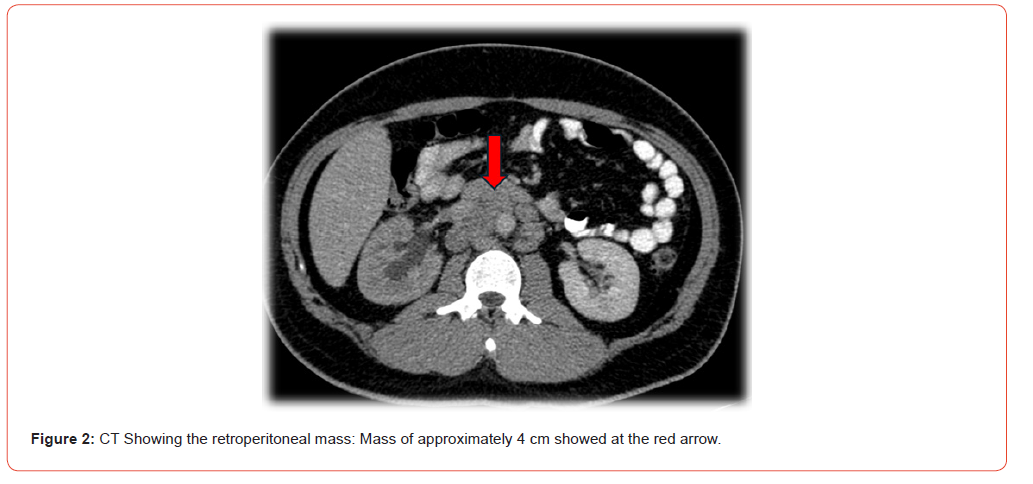
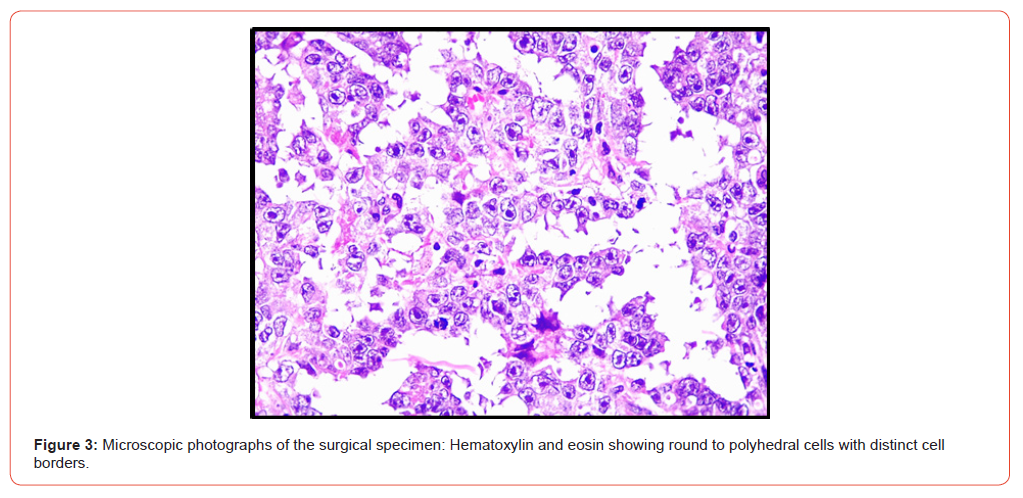
A 29-year-old patient presented with right testicular volume increase and right ureteral colic. Testicular ultrasound revealed a tumor in the right testicle with extension to the epididymis and tumor thrombosis in the pampiniform plexus (Figure 1). Serum tumor markers for testicular cancer showed elevated alphafetoprotein (AFP) at 557.36 ng/ml, human chorionic gonadotropin (HCG) at 5600.17 mIU/ml, and lactate dehydrogenase (LDH) at 790 U/L. A CT scan revealed intrarenal pelvis and calyceal right dilation secondary to extrinsic compression from retroperitoneal lymph nodes and metastasis to bilateral pulmonary lymph nodes (Figure 2). Treatment initially included a radical right orchiectomy and right JJ ureteric stent placement. Histopathology of the resected tumor revealed 80% seminoma, 15% teratoma, and 5% endodermal sinus tumor (Figure 3). After recovery from surgery, the patient was referred for adjuvant chemotherapy with 4 courses of BEP (cisplatin, etoposide, bleomycin), having been diagnosed with a Testicular Germ Cell Tumor (GCT), pT3cN2M1a clinical stage IIIB, and intermediate risk according to the prognostic classification system of the International Germ Cell Cancer Collaborative Group (IGCCCG).

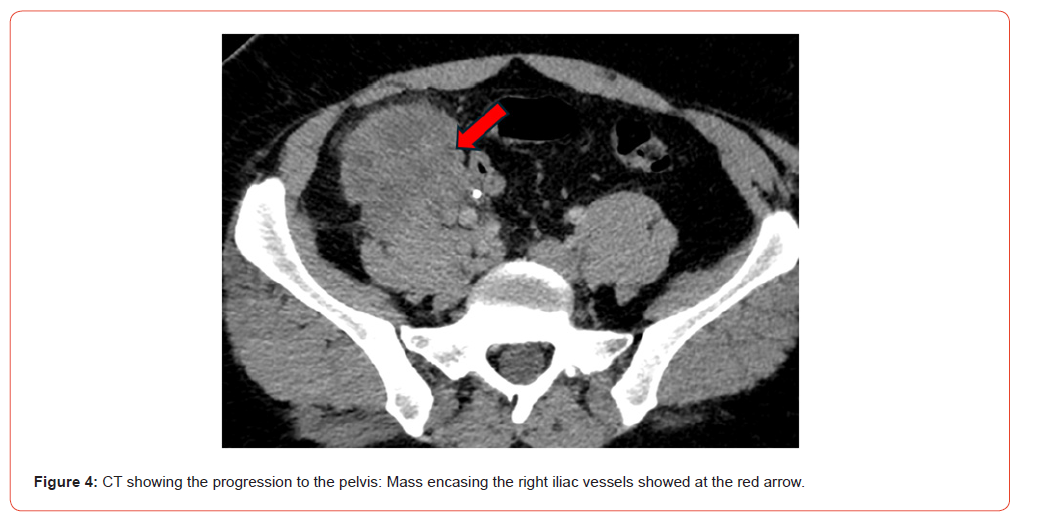
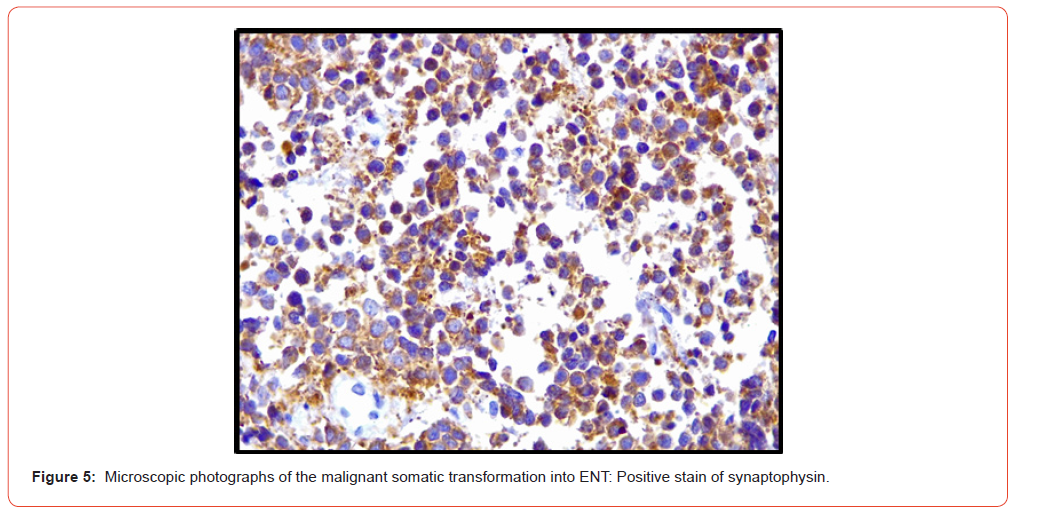
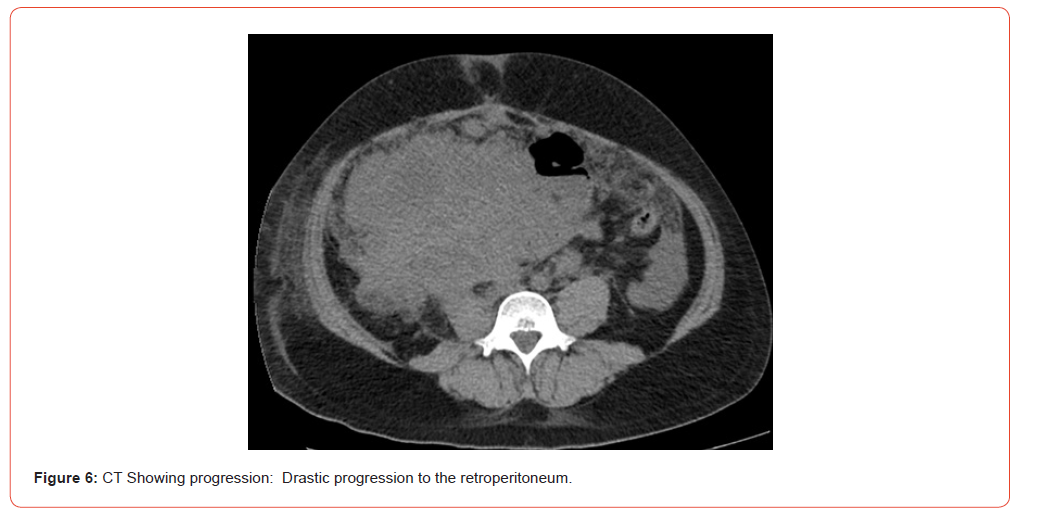
A complete response was observed after the chemotherapy was completed; however, 6 months later, the patient developed locoregional recurrences in the pelvis and retroperitoneum (Figure 4) with LDH elevating to 790 U/L. Consequently, second-line cancer treatment with 4 courses of TIP (cisplatin, ifosfamide, paclitaxel) was recommended. After this second-line cancer treatment, a partial response was achieved. Following discussion, the patient underwent right retroperitoneal tumorectomy and pelvic lymph node dissection. Intraoperatively, a 10 cm tumor was identified at the level of the right iliac vessels. Microscopic investigation showed positive expression for CD5, SOX11, synaptophysin, and ATRX, which revealed a malignant somatic transformation (MST) into an embryonic type neuroectodermal tumor (ENT) (Figure 5). The patient did not wish for any further active treatment. Three months later, a drastic progression was documented in a control CT (Figure 6), and therefore, only palliative pain care was offered. He succumbed to his illness after 3 months.
Discussion
Testicular cancer is the most common solid tumor in men aged 15 to 44 years and accounts for 1% to 2% of all cancers in men across all age groups. Approximately 95% of testicular cancer cases are classified as germ cell tumors (GCTs) [1]. Malignant Somatic Transformation (MST) is uncommon in GCTs [2].
The WHO defines MST as a secondary tumor component occupying at least one low-power field (4x), characterized by the expansive proliferation of pure somatic malignant elements with a size of ≥ 5 mm [3]. It occurs in approximately 3-6% of GCTs, presenting either as a primary tumor or a relapse, and is more frequent in teratomas, where it is considered an adverse prognostic factor [2].
Teratomas with MST exhibit a broad morphological spectrum, leading to potential confusion with other neoplasms. Currently, due to limited scientific evidence, its treatment is not standardized; however, significant differences in overall survival exist based on its location [4], with the retroperitoneum being the most frequent site, followed by the pelvis [5].
A small number of testicular teratoma cases have the potential to exhibit MST into endodermal, ectodermal, or mesodermal lineages [6]. Explanatory theories regarding teratoma MST include innate mechanisms such as the persistence of teratogenic cells after embryogenesis, the differentiation of totipotent germ cells, and the presence of 12p chromosomal anomalies in GCT patients. Acquired theories include the selective destruction of non-teratomatous elements with chemotherapy, characterized by teratoma progression, as it is considered a chemo resistant tumor [7].
The most frequently reported MSTs include adenocarcinoma, Embryonal Neuroectodermal Tumor (ENT), rhabdomyosarcomas [8], sarcomatoid yolk sac tumor, non-specified sarcoma, clear cell carcinoma, and primitive neuroectodermal tumor (PNET) [2].
Clinically, MST can present as a de novo, locally advanced disease involving adjacent organs and blood vessels, often with chemotherapy resistance. In such cases, complete surgical resection is the cornerstone of treatment [9].
Overall survival (OS) has been observed to be higher in patients with localized testicular GCT compared to those with metastatic or advanced clinical stages. Factors associated with a poor prognosis include late relapses, a high-grade sarcomatous component, ENT, extragonadal origin, and multiple cycles of chemotherapy [5].
Conclusion
This case illustrates the aggressive nature and significant management challenges posed by malignant somatic transformation (MST) in testicular germ cell tumors (GCTs), particularly when evolving into an embryonic-type neuroectodermal tumor (ENT). Our patient’s journey, characterized by initial response to standard chemotherapy followed by a locoregional relapse with subsequent MST into an ENT, underscores the inherent chemoresistance of this transformed histology. The rapid progression and unfortunate outcome after the patient declined further active intervention emphasize the critical role of complete surgical resection as the cornerstone of treatment for resectable MST lesions. This case also highlights the importance of thorough histological re-evaluation of recurrent or refractory masses in GCT patients to identify potential MST, guiding appropriate therapeutic adjustments. Given the rarity and broad morphological spectrum of MST, a multidisciplinary approach is essential for accurate diagnosis.
Ethical Approval and Consent to Participate
The study was approved by the Ethics Committee of the Hospital. Written informed consent was obtained from the patient and her legal representatives for the publication of this case report and the accompanying images.
Declaration of Generative AI and AI-Assisted Technologies in the Writing Process
No AI was used.
Funding Sources
The authors did not receive grant from funding agencies for this paper.
Declaration of Competing Interest
The authors declare that they have no known competing financial interests or personal relationships that could have appeared to influence the work reported in this paper.
Acknowledgements
To the pathology department for their support.
References
- Chavarriaga J, Nappi L, Papachristofilou A, Conduit C, Hamilton RJ (2025) Testicular cancer. Lancet 406(10498): 76-90.
- Sharma A, Alifrangis C, Milic M, Hall M, Vasdev N, et al. (2019) Somatic transformation in metastatic testicular germ cell tumours—A different disease entity. Anticancer Res 39(9): 4911-4916.
- Berney DM, Cree I, Rao V, Moch H, Srigley JR, et al. (2022) An introduction to the WHO 5th edition 2022 classification of testicular tumours. Histopathology 81(4): 459-466.
- Necchi A, Colecchia M, Nicolai N, Piva L, Catanzaro M, et al. (2011) Towards the definition of the best management and prognostic factors of teratoma with malignant transformation: A single-institution case series and new proposal. BJU Int 107(7): 1088-1094.
- Magers MJ, Kao CS, Cole CD, Rice KR, Foster RS, et al. (2014) "Somatic-type" malignancies arising from testicular germ cell tumors: A clinicopathologic study of 124 cases with emphasis on glandular tumors supporting frequent yolk sac tumor origin. Am J Surg Pathol 38(10): 1396-1409.
- Elagi D, Young R, Dayili A (2022) Malignant transformation of testicular teratoma to primitive neuroectodermal tumor. Urol Ann 14(4): 403-406.
- Grenn EE, Anderson CD, Earl TM, Orr WS (2020) Malignant somatic transformation of a teratoma 15 years following completion therapy for a germ cell tumor. Am Surg 86(5): 527-528.
- Subramanian P, Arora A, Pal M, Prakash G, Maitre P, et al. (2024) Spectrum of somatic malignancy in testicular germ cell tumors—A histopathological review of 25 cases with clinical outcome. Indian Journal of Medical and Paediatric Oncology 46(2): 174-182.
- Azizi M, Aydin AM, Cheriyan SK, Peyton CC, Montanarella M, et al. (2020) Therapeutic strategies for uncommon testis cancer histologies: Teratoma with malignant transformation and malignant testicular sex cord stromal tumors. Transl Androl Urol 9(Suppl 1): S91-S103.
-

This work is licensed under a Creative Commons Attribution-NonCommercial 4.0 International License.