



 Research Article
Biomarkers for Early Detection of Cardiorenal Syndrome Type 1
Received Date: November 10, 2023; Published Date: November 17, 2023
Abstract
Introduction: New serum and urine biomarkers are emerging for the early detection of cardiorenal syndrome (CRS) type 1 in patients with acute cardiac diseases. This study aimed to evaluate the predictive value of serum cystatin C, serum and urine interleukin-18 (IL-18), and plasma B-type natriuretic peptide (BNP) in the early detection of CRS type 1 and to evaluate the 6-month survival rate in patients with acute cardiac diseases according to the development of CRS type 1.
Methods: A prospective, longitudinal study included 131 patients with acute cardiac diseases (acute heart failure and/or acute coronary syndrome). Biomarkers were measured at hospital admission. Patients were monitored during hospital stay and 6 months after. The primary outcome was the occurrence of CRS type 1, and the secondary outcome was 6-month mortality. Biomarker analysis was performed with the Receiver Operating Characteristics (ROC) analysis. The 6-month survival rate was evaluated with the Kaplan-Meier survival analysis.
Results: ROC analysis showed that serum cystatin C had 78.2% sensitivity and 80.3% specificity in establishing diagnosis of CRS type 1 (AUC 0.903, p<0.001). Serum IL-18 had 74.5% sensitivity and 76.3% specificity for CRS type 1 detection (AUC 0.84, p<0.001) while urine IL-18 showed the same sensitivity and specificity of 61.8% for CRS type 1 detection (AUC 0.68, p=0.001). Plasma BNP had 67.3% sensitivity and 68.4% specificity in detecting CRS type 1 (AUC 0.78, p<0.001). In the model of logistic regression analysis, only serum cystatin C and serum IL-18 were independent predictors of the occurrence of CRS type 1 (p<0.001). The Kaplan-Meier curve showed a statistically significant difference in the 6-month survival rate of patients with and without CRS type 1 (p=0.001).
Conclusion: Serum cystatin C and serum IL-18 have very good predictive value for the early detection of CRS type 1 in patients with acute cardiac diseases.
Keywords: Biomarkers; predictive value; cardiorenal syndrome type 1
Abbreviations: CRS: Cardiorenal Syndrome; AHF: Acute Heart Failure; ACS: Acute Coronary Syndrome; AKI: Acute Kidney Injury; GFR: Glomerular Filtration Rate; NGAL: Neutrophil Gelatinase-Associated Lipocalin; IL-18: Interleukin-18; BNP: B-type Natriuretic Peptide; CKD: Chronic Kidney Disease; ICU: Intensive Care Units; COPD: Chronic Obstructive Pulmonary Disease; ROC: Receiver Operating Characteristics Curve; ESR: Erythrocyte Sedimentation Rate; CRP: C-reactive Protein; LDL: Low-Density Lipoprotein
Introduction
The terminology cardiorenal syndrome (CRS) is used when acute or chronic cardiac dysfunction induces acute or chronic renal dys function and vice versa. Acute heart failure (AHF) and/or acute coronary syndrome (ACS) can lead to acute kidney injury (AKI) and this entity is known as CRS type 1. The development of CRS type 1 in patients with AHF and/or ACS is associated with increased morbidity, mortality, and higher treatment costs [1]. The incidence of CRS type 1 is high among in-hospital AKI patients (16%) and the mortality is even higher than the average mortality of AKI in general. At the same time, recovery of kidney function is less frequent [2]. Prediction of AKI in underlying acute cardiac diseases is of great importance but is not possible using conventional markers of renal function such as serum creatinine. Serum creatinine is the most widely used biomarker for the evaluation of glomerular filtration rate (GFR). It is filtered by the glomerulus but will not be reabsorbed by the renal tubules and is insensitive to tubular impairment that occurs in AKI [3].
New serum and urinary biomarkers are now emerging but some of them are not excellent in predicting AKI in acute heart disorders. Although neutrophil gelatinase-associated lipocalin (NGAL) correlates with tubular epithelial damage, and its levels in urine are increased in AKI, the diagnostic and prognostic ability of NGAL for prediction of CRS type 1 in AHF patients is limited and NGAL is not superior to creatinine [4]. Proinflammatory cytokines may induce apoptosis and necrosis through the activation of death-signaling receptors and, indirectly, through an increase in reactive oxygen substrate production. Interleukin-18 (IL-18), as an active proinflammatory cytokine involved in renal ischemia-reperfusion injury, showed the potential for AKI diagnosis in patients with AHF [5]. Although inflammation and oxidative stress seem to play an important role in the pathophysiology of CRS type 1, studies that addressed the role of IL-18 in the detection of AKI in patients with AHF and/or ACS are scarce [6,7].
When released from cardiomyocytes, B-type natriuretic peptide (BNP) plays a diuretic, natriuretic, and vasodilative role and correlates with renal function as well as cardiovascular and allcause mortality rates but studies related to BNP as a biomarker of CRS type 1 are also lacking [8,9]. Cystatin C is produced by nuclear cells and is completely filtered and reabsorbed by the kidneys and has a great potential for the prediction of chronic kidney disease (CKD) and cardiovascular events. Some authors revealed its potential as a biomarker of AKI. Also, serum cystatin C showed better results in predicting AKI compared to urine cystatin C [10]. This study aimed to investigate the predictive ability of serum cystatin C, serum and urine IL-18, and plasma BNP in the detection of CRS type 1 in patients with acute cardiac diseases (AHF and/or ACS) and to compare the predictive ability of these biomarkers in the detection of CRS type 1. Also, we aimed to evaluate the survival rate of patients with acute cardiac diseases according to the CRS type 1 development.
Materials and Methods
Study design
This prospective, longitudinal study included patients diagnosed with acute cardiac diseases (AHF and/or ACS) and hospitalized at the intensive care unit (ICU) of the Clinic for Heart Diseases and the Nephrology Clinic in the Clinical Center of the University of Sarajevo. Patients were monitored during hospitalization and 6 months after discharge. The inclusion criteria were age ≥18 years, diagnosis of AHF and/or ACS, and hospital stay ≥24 hours. The exclusion criteria encompassed patients with end-stage of renal disease, patients on previous chronic dialysis treatment, and patients with kidney transplants. Informed consent was provided for all included patients. Relevant clinical and laboratory parameters as well as monitored biomarkers (serum cystatin C, serum and urine IL-18, and plasma BNP) were determined at the hospital admission of patients. Plasma BNP level was measured by immunometric assay method. Serum and urine IL-18 were measured by ELISA (R&D Systems). Serum cystatin C was also measured by ELISA (R&D Systems).
Definitions
Cardiorenal syndrome type 1 was diagnosed in patients who developed AKI due to AHF and/or ACS as recommended by the Acute Dialysis Quality Initiative group [11]. Acute cardiac diseases encompassed the diagnosis of AHF and/or ACS. Acute heart failure was diagnosed according to the recommendations of the European Society of Cardiology [12]. Acute coronary syndrome included the diagnosis of unstable angina pectoris, ST-elevation myocardial infarction, and non-ST-elevation myocardial infarction. Acute myocardial infarction was defined using the consensus recommendations of international experts in the field of cardiology [13]. Acute kidney injury was diagnosed according to the Acute Kidney Injury Network criteria as a rise in creatinine of ≥26μmol/l, or a rise in creatinine of ≥50% from its baseline value and/or a decrease in urine output below 0.5ml/kg/h for 6h or more during 48 h frame time [14]. If previous serum creatinine was not available, the Modification of Diet in Renal Disease equation [15] was used to estimate the baseline serum creatinine, assuming a normal baseline GFR of 75 mL/min/1.73 m2. Previous comorbidities like anemia, hypertension, diabetes mellitus, chronic obstructive pulmonary disease (COPD), and cerebrovascular disease were registered for all patients at admission.
Outcomes
The primary outcome of all patients with acute cardiac diseases was the occurrence of CRS type 1. The secondary outcome was the length of hospital stay, in-hospital and 6-month mortality.
Statistical analysis
Statistical analysis was done using the Statistical Package for Social Sciences software (SPSS, version 17.0). Continuous variables were expressed as means ± standard deviation (SD) or medians (with 25th and 75th percentiles) values and were tested by the student t-test, Mann-Whitney U test, or ANOVA, as appropriate. Categorical variables were presented as numbers and percentages and were compared using the Chi-squared test. The specificity and sensitivity of biomarkers in differentiating CRS type 1 were evaluated with the Receiver Operating Characteristics curve (ROC) curve. Independent predictors for establishing the diagnosis of CRS type 1 were determined using logistic regression analysis. 6-month survival of patients with acute heart disorders according to the development of CRS type 1 was estimated by the Kaplan-Meier method. Life tables were applied to calculate 6-month survival. The Kaplan-Meier survival curves were formed according to the monitored variables. The curves were compared with the log-rank test. Accepted statistical significance was p<0.05.
Results
Of 131 patients diagnosed with acute cardiac diseases, CRS type 1 was detected in 56 patients (42.8%). Patients with CRS type 1 was significantly older with significantly higher mean values of erythrocyte sedimentation rate (ESR), higher mean concentrations of C-reactive protein (CRP), uric acid, proteinuria, and albuminuria, and significantly higher average concentrations of globulin, cholesterol, and low-density lipoprotein (LDL) compared to the patients without CRS type 1. On the contrary, red blood cell count, hemoglobin, hematocrit, and albumins were significantly lower in patients with CRS type 1 patients. Prevalence of anuria, oliguria, preexistent CKD, diabetes mellitus, COPD, cerebrovascular diseases, and anemia was significantly higher in patients with CRS type 1 in comparison to the patients without CRS type 1. Mean concentrations of serum cystatin C, serum and urine IL-18, and plasma BNP were significantly higher in patients with CRS type 1 compared with patients without CRS type 1.
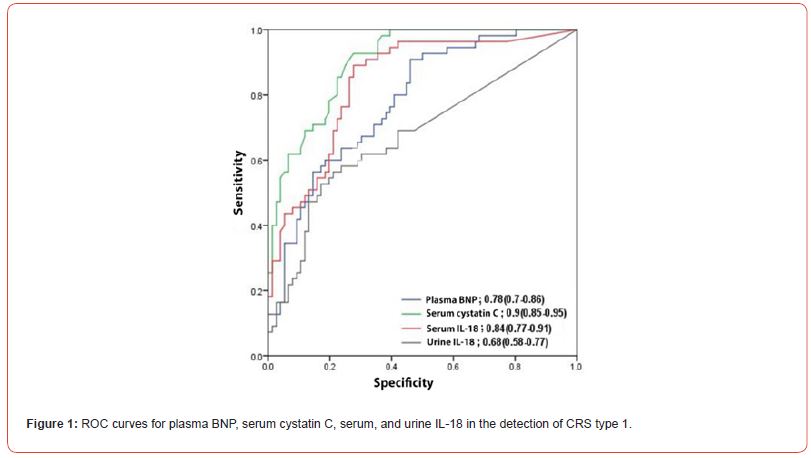
Patients with CRS type 1 had significantly longer hospital stay and higher 6-month mortality in comparison to the patients without CRS type 1 (Table 1). At a cut-off of 1.34 mg/L, serum cystatin C showed a sensitivity of 78.2%, and specificity of 80.3% (AUC 0.903, p<0.001) for detecting CRS type 1 in patients with acute cardiac diseases. At a cut-off value of 159.4 pg/mL, serum IL-18 had a sensitivity of 74.5% and specificity of 76.3% (AUC 0.84, p<0.001), while at a cut-off value of 22.19 pg/mL, urine IL-18 showed the same sensitivity and specificity of 61.8% (AUC 0.68, p=0.001) for establishing the diagnosis of CRS type 1 in patients with acute cardiac diseases. At a cut-off value of 796.6 pg/mL, the sensitivity of plasma BNP was 67.3%, and the specificity was 68.4% (AUC 0.78, p<0.001) for the CRS type 1 diagnosis (Table 2). ROC curves, graphically presented at Figure 1, showed that serum cystatin C was the best biomarker for establishing the diagnosis of CRS type, followed by serum IL-18 as also a strong biomarker for CRS type 1 detection, while plasma BNP and urine IL-18 showed modest ability for establishing the diagnosis of CRS type 1.
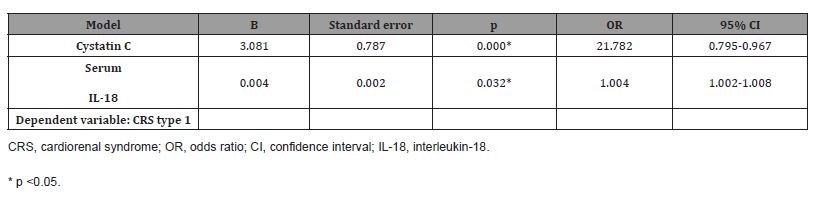
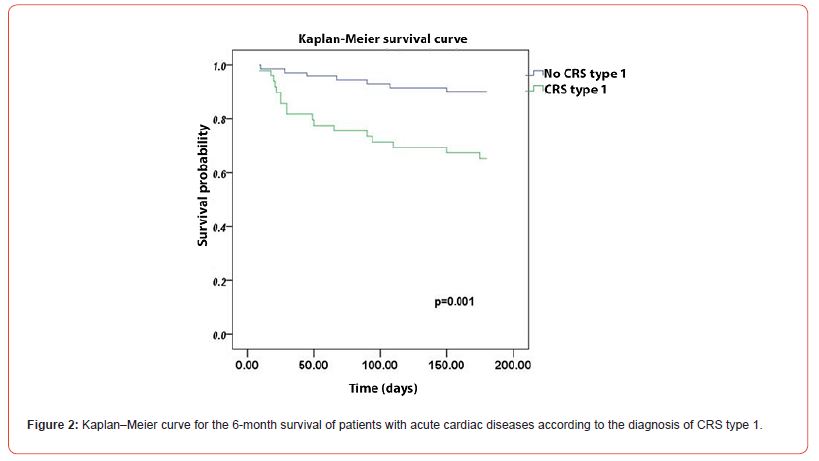
In the model of logistic regression analysis (Table 3), serum cystatin C [OR=21.782; 95% CI (0.795-0.967)] and serum IL-18 [OR=1.004; 95% CI (1.002-1.008)] were independent predictors of the occurrence of CRS type 1 in patients with acute cardiac diseases (p<0.001). With each increase of serum cystatin C by 0.1 mg/L, the probability of CRS type 1 increased 2.178 times. The Kaplan-Meier survival analysis showed a statistically significant difference (p=0.001) in the survival rate of patients with acute cardiac diseases according to the development of CRS type 1 (Figure 2). In patients with CRS type 1, the overall 6-month survival after hospital discharge was 65.3% (32/49), and the average survival time was 137.6 [95% CI (119.5-155.7)] days. In patients without CRS type 1, 6-month survival was 90.1% (64/71), and the average survival time was 169.3 [95%CI (161.0-177.5)] days.
Table 1:Baseline parameters, biomarkers concentrations, and outcomes in patients with acute cardiac diseases according to the development of CRS type 1.
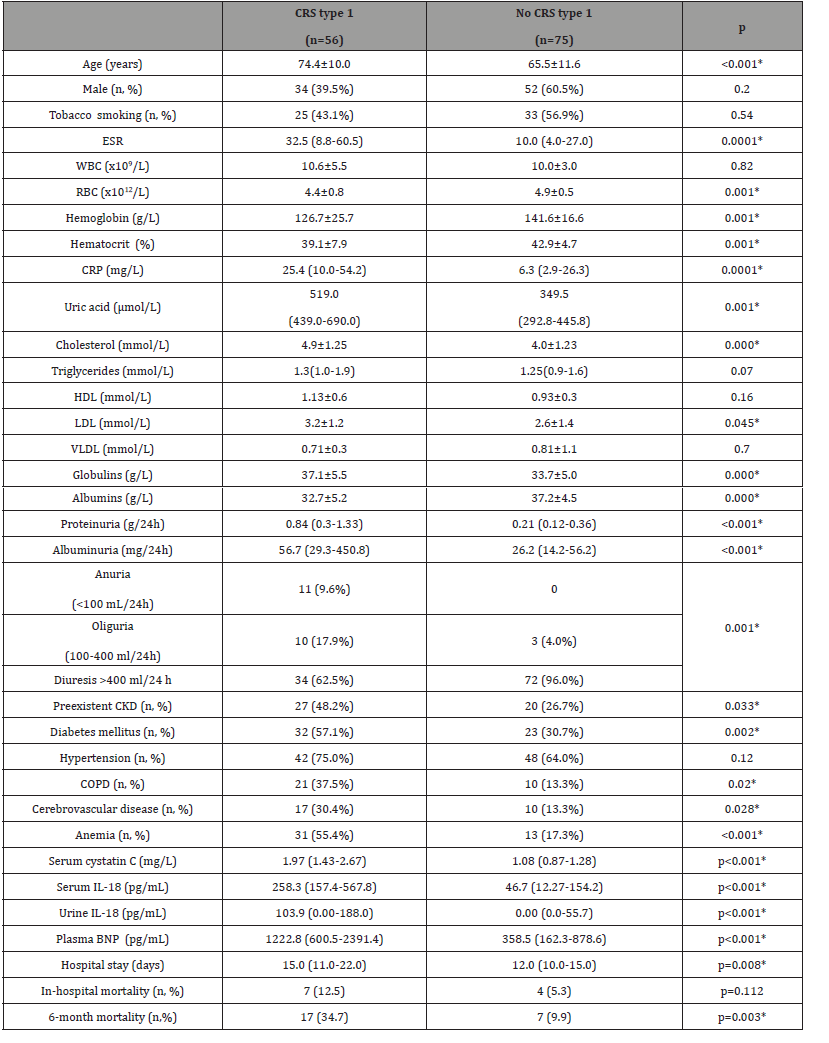
Table 2:Sensitivity and specificity of biomarkers in the detection of CRS type 1.
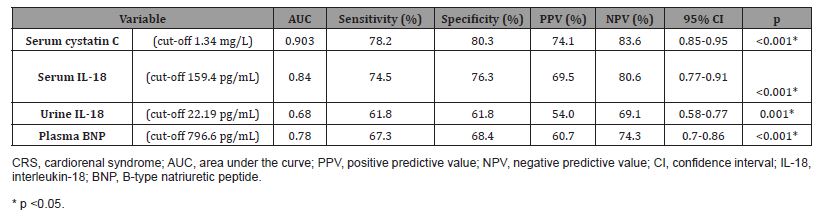
Table 3:Independent predictors of CRS type 1 in patients with acute cardiac diseases.
Discussion
The present study showed that serum cystatin C and serum IL- 18 are very good biomarkers, with high sensitivity and specificity by ROC analysis, for the early detection of CRS type 1 in patients with acute cardiac diseases, while plasma BNP and urine IL-18 have modest results as biomarkers for the CRS type 1 detection. In logistic regression analysis, only serum cystatin C and serum IL-8 proved to be independent predictors for establishing the diagnosis of CRS type 1 in patients with acute cardiac diseases (AHF and/ or ACS). Cardiorenal syndrome type 1 is worsening the prognosis of patients with acute cardiac diseases with significantly lower 6-month survival if CRS type 1 occurs in acute cardiac patients. This study found that 42.8% of patients hospitalized with acute cardiac diseases (AHF and/or ACS) developed CRS type 1. The prevalence of CRS type 1 in patients admitted with AHF ranges from 10% to 71%, with an average of ∼32% worldwide [16]. In this study, patients with CRS type 1 had significantly higher mean values of ESR, CRP, and uric acid, and significantly higher average values of cholesterol, and LDL compared to the patients without CRS type 1.
Other authors also demonstrated increased activity of inflammatory markers in a syndrome that involves two organs compared to conditions involving only one organ. Parameters of lipid status as indirect indicators of inflammation are also used in the differentiation of CRS [17]. Higher concentrations of uric acid in patients who developed AKI during hospitalization were confirmed previously [18]. Hyperuricemia is also a risk factor for AKI occurrence in patients undergoing cardiac surgery [19]. It is believed that uric acid can contribute to the development of AKI not only due to increased deposition of uric acid crystals in tumor lysis syndrome but also through other pathogenetic mechanisms. An increase in uric acid in experimental models causes renal vasoconstriction, impaired autoregulation, pro-inflammatory effects, and eventually reduced renal flow and drop in GFR. There is also the possibility that high concentrations of uric acid cause inflammation, which plays an important role in the development of heart failure [20]. Regarding significantly lower serum albumin concentrations in our patients diagnosed with CRS type 1, this can be explained by accelerated protein degradation and reduced albumin synthesis in AKI in response to an inflammatory state.
The adverse effect of hypoalbuminemia on renal function was previously confirmed in a meta-analysis of 11 studies, where hypoalbuminemia was shown to be an independent predictor of AKI development in hospitalized patients [21]. In the present study, patients with acute heart disorders who developed CRS type 1 had significantly higher concentrations of monitored biomarkers: serum cystatin C, serum and urine IL-18, and plasma BNP compared to the patients without CRS type 1 diagnosis. Other authors had similar results, with significantly higher concentrations of serum cystatin C, serum IL-18, and plasma BNP in CRS type 1 patients, but without significant difference in the urine IL-18 concentrations between patients with and without CRS type 1 [22]. Serum cystatin C has shown good predictive ability for detecting AKI in ICU patients and cardiac surgery patients [23,24]. Our ROC curve analysis found that serum cystatin C (at a cut-off value of 1.34 mg/L) had excellent predictive ability for CRS type 1 detection with 78.2% sensitivity and 80.3% specificity in establishing diagnosis of CRS type 1 in patients with acute cardiac diseases (AUC 0.903, p<0.001).
A similar sensitivity of 77% and a slightly higher specificity of 91% of serum cystatin C (at a cut-off value of 1.8 mg/L) in the detection of CRS type 1 was confirmed by Chen et al. In our study, all biomarkers, including serum cystatin C, were measured at hospital admission. Previous study showed very little variation in AUC values for serum cystatin C, regardless of whether its concentrations were measured in the 1st, 6th, 12th, or 24th hour after admission. All four cystatin C measurements performed within the first 24 hours of hospital admission had very good diagnostic values for AKI with AUC ≥0.86 [25]. The predictive ability of IL-18 for establishing the diagnosis of AKI was already investigated in cardiac surgery patients, ICU and non-ICU patients as well as pediatric patients with rather conflicting results and large differences in the cut-off values of IL-18 for AKI diagnosis, maybe due to the diversity of patient populations in these studies [26,27]. Despite the importance of immune mechanisms in the pathophysiology of CRS type 1, studies regarding the role of IL-18 in detecting CRS type 1 are scarce.
Serum IL-18 showed a very good ability for early detection of CRS type 1 both in our study and the two studies of other authors. At a cut-off value of 159.4 pg/mL, serum IL-18 had 74.5% sensitivity and 76.3% specificity for diagnosing CRS type 1 (AUC 0.84, p<0.001) in the present study. In the study of Chen et al., its sensitivity and specificity were slightly higher (97% sensitivity and 84% specificity) at a cut-off value of 374 pg/mL. The good predictive ability of serum IL-18 for the detection of CRS type 1 in ACS was also confirmed in the study of Panagoutsos et al. On the contrary, urine IL-18 showed modest results in the prediction of CRS type 1 development in our study, and even worse predictive ability in studies of other authors. At a cut-off value of 22.19 pg/mL, urine IL- 18 showed 61.8% sensitivity and the same specificity in detecting CRS type 1 (AUC 0.68, p=0.001) in the present study. In the studies of Verbrugge et al. and Panagoutsos et al., both performed a very small sample of patients with AHF and acute myocardial infarction, respectively, urine IL-18 was not confirmed as a significant biomarker of CRS type 1 development.
B-type natriuretic peptide is a proven diagnostic marker of heart failure, whose concentrations are rising as a response to increased myocardial tension, while the significance of BNP in ACS is more prognostic. However, its predictive ability in establishing the diagnosis of CRS type 1 in acute cardiac patients was not widely investigated. Our study showed that plasma BNP had a modest ability to predict CRS type 1. At a cut-off value of 796.6 pg/mL, plasma BNP had 67.3% sensitivity and 68.4% specificity (AUC 0.78, p<0.001) in detecting CRS type 1 in patients with AHF and/or ACS. In comparison with our study, BNP had a slightly lower sensitivity of 62% and the same specificity of 68% for detecting AKI in patients with ACS undergoing coronary intervention in the study of other authors [28]. In the study by Palazzuoli et al., plasma BNP was not proven to be a good biomarker for CRS type 1 detection (AUC 0.54, p=0.32). On the contrary, the N-terminal prohormone of brain natriuretic peptide (NT-proBNP) had a higher predictive value for CRS type 1 in a recent study [29].
The development of CRS type 1 in patients with acute heart disorders is a risk factor for prolonged hospital stay and increased mortality [1], which supports the results of our research in which the development of CRS type 1 in patients with acute cardiac diseases was associated with a significantly longer hospital stay and higher 6-month mortality. The Kaplan-Meier curve showed a statistically significant difference in the 6-month survival rate between patients with and without CRS type 1 in the present study, which is in accordance with the results of other authors [30]. The overall 6-month survival of our patients with CRS type 1 was 65.3%, while the 6-month survival of patients without CRS type 1 was 90.1%. A large study that included 1912 patients hospitalized for ACS re vealed that the effect of CRS type 1 on mortality during the hospital stay was greater than the sum of the effects of the components of this syndrome separately. Also, the severity of CRS type 1 was an important factor for the mortality.
Cardiorenal syndrome type 1 accounted for more than 50% of all mortality, and its positive predictive value was 30% in-hospital and 50% after discharge [31]. The present study had several limitations which we would like to mention. First, it was a single-center study. Second, rather a small number of patients was included. Third, more tubular damage biomarkers could be evaluated for a broader assessment of biomarker predictive abilities in CRS type 1. Further investigations with a panel of more biomarkers addressed to tubular damage, and inflammation, as well as stress markers are needed in the future to identify the best biomarker for early detection, risk stratification, and prognosis of CRS type 1.
Conclusion
Comparative ROC curve analysis showed that serum cystatin C was the strongest biomarker for CRS type 1 detection in patients with acute cardiac diseases (AHF and/or ACS), followed with also very good biomarker serum IL-18, while the predictive ability of urine IL-18 and plasma BNP as biomarkers for CRS type 1 detection was modest. In logistic regression analysis, only serum cystatin C and serum IL-8 proved to be independent predictors for establishing the diagnosis of CRS type 1 in acute cardiac patients. Early detection of CRS type 1 is of great importance because CRS type 1 is worsening the prognosis of patients with acute cardiac diseases. The 6-month survival rate of acute cardiac patients is significantly declining if CRS type occurs.
Acknowledgement
None.
Conflict of interest
None.
References
- Vandenberghe W, Gevaert S, Kellum JA, Bagshaw SM, Peperstraete H, et al. (2016) Acute kidney injury in cardiorenal syndrome type 1 patients: A systematic review and meta-analysis. Cardiorenal Med 6(2): 116-128.
- Seckinger D, Ritter O, Patschan D (2022) Risk factors and outcome variables of cardiorenal syndrome type 1 from the nephrologist's perspective. Int Uro Nephrol 54(7): 1591-1601.
- Fu K, Hu Y, Zhang H, Wang C, Lin Z, et al. (2021) Insights of worsening renal function in type 1 cardiorenal syndrome: from the pathogenesis, biomarkers to treatment. Front Cardiovasc Med 8: 760152.
- Murray PT, Wettersten N, van Veldhuisen DJ, Mueller C, Filippatos G, et al. (2019) Utility of urine neutrophil gelatinase-associated lipocalin for worsening renal function during hospitalization for acute heart failure: primary findings of the urine N-gal acute kidney injury N-gal evaluation of symptomatic heart failure study (AKINESIS). J Card Fail 25(8): 654-665.
- Virzì GM, Breglia A, Brocca A, de Cal M, Bolin C, et al. (2018) Levels of proinflammatory cytokines, oxidative stress, and tissue damage markers in patients with acute heart failure with and without cardiorenal syndrome type 1. Cardiorenal Med 8(4): 321-331.
- Verbrugge FH, Dupont M, Shao Z, Shrestha K, Singh D, et al. (2013) Novel urinary biomarkers in detecting acute kidney injury, persistent renal impairment, and all-cause mortality following decongestive therapy in acute decompensated heart failure. J Card Fail 19(9): 621-628.
- Chen TH, Chang CH, Lin CY, Jenq CC, Chang MY, et al. (2012) Acute kidney injury biomarkers for patients in a coronary care unit: a prospective cohort study. PLoS One 7(2): e32328.
- Fu S, Zhao S, Ye P, Luo L (2018) Biomarkers in cardiorenal syndromes. Biomed Res Int 2018: 9617363.
- Palazzuoli A, Ruocco G, Pellegrini M, De Gori C, Del Castillo G, et al. (2015) Comparison of neutrophil gelatinase-associated lipocalin versus B-type natriuretic peptide and cystatin C to predict early acute kidney injury and outcome in patients with acute heart failure. Am J Cardiol 116(1): 104-111.
- Zhang Z, Lu B, Sheng X, Jin N (2011) Cystatin C in prediction of acute kidney injury: a systemic review and meta-analysis. Am J Kidney Dis 58(3): 356-365.
- Ronco C, McCullough P, Anker SD, Anand I, Aspromonte N, et al (2010) Cardio-renal syndromes: report from the consensus conference of the acute dialysis quality initiative. Eur Heart J 31(6): 703-711.
- McMurray JJ, Adamopoulos S, Anker SD, Auricchio A, Böhm M, et al. (2012) ESC Guidelines for the diagnosis and treatment of acute and chronic heart failure 2012: The Task force for the diagnosis and treatment of acute and chronic heart failure 2012 of the European Society of Cardiology. Developed in collaboration with the Heart Failure Association (HFA) of the ESC. Eur Heart J 33(14): 1787-1847.
- Thygesen K, Alpert JS, Jaffe AS, Simoons ML, Chaitman BR, et al. (2012) Third universal definition of myocardial infarction. J Am Coll Cardiol 60(16): 1581-1598.
- Mehta RL, Kellum JA, Shah SV, Molitoris BA, Ronco C, et al. (2007) Acute Kidney Injury Network: report of an initiative to improve outcomes in acute kidney injury. Crit Care 11(2): R31.
- Závada J, Hoste E, Cartin-Ceba R, Calzavacca P, Gajic O, et al. (2010) A comparison of three methods to estimate baseline creatinine for RIFLE classification. Nephrol Dial Transplant 25(12): 3911-3918.
- Dutta A, Saha S, Bahl A, Mittal A, Basak T (2023) A comprehensive review of acute cardio-renal syndrome: need for novel biomarkers. Front Pharmacol 14: 1152055.
- Tasic D, Radenkovic S, Kocic G, Ilic MD, Ignjatovic A (2015) Microinflammation factors in the common diseases of the heart and kidneys. Dis Markers 2015: 470589.
- Cheungpasitporn W, Thongprayoon C, Harrison AM, Erickson SB (2016) Admission hyperuricemia increases the risk of acute kidney injury in hospitalized patients. Clin Kidney J 9(1): 51-56.
- Lapsia V, Johnson RJ, Dass B, Shimada M, Kambhampati G, et al. (2012) Elevated uric acid increases the risk for acute kidney injury. Am J Med 125(3): 9-17.
- Ejaz AA, Kambhampati G, Ejaz NI, Dass B, Lapsia V, et al. (2012) Post-operative serum uric acid and acute kidney injury. J Nephrol 25(4): 497-505.
- Wiedermann CJ, Wiedermann W, Joannidis M (2010) Hypoalbuminemia and acute kidney injury: a meta-analysis of observational clinical studies. Intensive Care Med 36(10): 1657-1665.
- Panagoutsos S, Kriki P, Mourvati E, Tziakas D, Chalikias G, et al (2011) Serum and urine concentrations of interleukin-18 in the early diagnosis of acute kidney injury in patients presenting with acute myocardial infarction (cardio-renal syndrome, type 1) - preliminary results. F1000Posters 2: 955.
- Bongiovanni C, Magrini L, Salerno G, Gori CS, Cardelli P, et al. (2015) Serum Cystatin C for the diagnosis of acute kidney injury in patients admitted in the emergency department. Dis Markers 2015: 416059.
- Torregrosa I, Montoliu C, Urios A, Elmlili N, Puchades MJ, et al. (2012) Early biomarkers of acute kidney failure after heart angiography or heart surgery in patients with acute coronary syndrome or acute heart failure. Nefrologia 32(1): 44-52.
- Soto K, Coelho S, Rodrigues B, Martins H, Frade F, et al. (2010) Cystatin C as a marker of acute kidney injury in the emergency department. Clin J Am Soc Nephrol 5(10): 1745-1754.
- Pan HC, Yang SY, Chiou TT, Shiao CC, Wu CH, et al. (2022) Comparative accuracy of biomarkers for the prediction of hospital-acquired acute kidney injury: a systematic review and meta-analysis. Crit Care 26(1): 349.
- Lin X, Yuan J, Zhao Y, Zha Y (2015) Urine interleukin-18 in prediction of acute kidney injury: a systemic review and meta-analysis. J Nephrol 28(1): 7-16.
- Moltrasio M, Cabiati A, Milazzo V, Rubino M, De Metrio M, et al. (2014) B-type natriuretic peptide and risk of acute kidney injury in patients hospitalized with acute coronary syndromes*. Crit Care Med 42(3): 619-624.
- Song X, Cai D, Zhang B (2021) Clinical values of serum NGAL combined with NT-proBNP in the early prognosis of type 1 cardiorenal syndrome. Am J Transl Res 13(4): 3363-3368.
- Logeart D, Tabet JY, Hittinger L, Thabut G, Jourdain P, et al. (2008) Transient worsening of renal function during hospitalization for acute heart failure alters outcome. Int J Cardiol 127(2): 228-232.
- Pimienta González R, Couto Comba P, Rodríguez Esteban M, Alemán Sánchez JJ, Hernández Afonso J, et al. (2016) Incidence, mortality and positive predictive value of type 1 cardiorenal syndrome in acute coronary syndrome. PLoS One 11(12): e0167166.
-

This work is licensed under a Creative Commons Attribution-NonCommercial 4.0 International License.




