


 Review Article
Telemedicine In Rheumatology and in Internal Medicine: A Focus on Inflammatory Arthritis, Connective Tissue Diseases, Vasculitides
Received Date: January 22, 2026; Published Date: February 16, 2026
Abstract
Telemedicine is increasingly being integrated into rheumatology and into internal medicine practice, particularly in the management of chronic inflammatory and autoimmune diseases. Its expansion, accelerated by the COVID-19 pandemic, has prompted a revaluation of how rheumatologic care is delivered. This article provides a comprehensive review of the applications, benefits, limitations, and levels of evidence supporting telemedicine in rheumatology and internal medicine. We examine the rheumatic diseases most amenable to virtual care, the technologies currently employed, and the clinical, ethical, and organizational barriers that remain. Particular attention is given to the strength and limitations of the evidence base, including randomized controlled trials, observational studies, and real-world data. Finally, we discuss emerging trends-such as telemonitoring, artificial intelligence–assisted decision support, and patient-centered digital tools-that are likely to shape the future of rheumatology care. While telemedicine offers substantial opportunities to improve access, continuity, and efficiency of care, its implementation must remain evidenceinformed, equitable, and complementary to face-to-face clinical expertise.
Keywords: Telemedicine; digital health; inflammatory rheumatic diseases; inflammatory internal medicine diseases; rheumatoid arthritis; evidence-based medicine; hybrid care models; health equity; multimorbidity; older adults; polypharmacy; patient-reported outcomes; clinical outcomes; health services research
Implications for Clinical Practice
Telemedicine should be considered a complementary modality rather than a replacement for face-to-face rheumatology care. Its use is most appropriate in patients with established diagnoses, stable disease activity, and clearly defined management plans, particularly when supported by patient-reported outcomes and recent laboratory data. Initial diagnostic assessments, evaluation of disease flares, and situations involving organ-threatening disease, diagnostic uncertainty, or complex comorbidities should continue to rely on in-person consultations, where physical examination and contextual clinical judgment remain irreplaceable.
Clinicians should be aware that the evidence supporting telemedicine is disease-specific and context-dependent. Noninferiority has been demonstrated mainly in rheumatoid arthritis and other stable inflammatory conditions, but high-quality evidence is lacking for many systemic and rare rheumatic diseases. Equity considerations must be explicitly addressed. Telemedicine risks exacerbating health disparities related to age, socioeconomic status, digital literacy, and access to technology. Hybrid care models, combining virtual and in-person visits, offer a pragmatic approach to mitigate these risks. Finally, telemedicine should be implemented within a framework of clinical governance, outcome evaluation, and ethical accountability, ensuring that digital innovation adheres to the same standards of evidence, safety, and patient-centeredness as traditional rheumatologic care.
Introduction
Rheumatology and internal medicine occupy a unique nexus in healthcare, managing chronic, multisystem diseases that demand lifelong follow-up, dynamic treatment adjustment, and careful monitoring of comorbidities and therapy-related adverse events. Patients with inflammatory arthritis, connective tissue disorders, vasculitides, and degenerative musculoskeletal conditions require nuanced clinical judgment, frequent assessment of disease activity, and close attention to complications of corticosteroids, immunosuppressants, and biologics. In this context, telemedicinethe remote delivery of healthcare via digital technologies-has emerged as a potentially transformative model of care [1]. Although discussed for decades, telemedicine uptake in rheumatology and internal medicine remained limited until the COVID-19 pandemic catalyzed rapid, large-scale adoption [2]. Virtual consultations shifted from a niche option to a core component of routine care, raising urgent questions: which aspects of chronic disease management can be safely and effectively delivered remotely, for which patients, and based on what evidence? Telemedicine offers clear advantages: improved access to specialists, reduced travel burden, enhanced longitudinal monitoring, and more efficient resource utilization [1].
Yet rheumatology and internal medicine remain heavily reliant on physical examination, subtle clinical assessment, and shared decision-making-elements that are difficult to replicate virtually. The rapid expansion of digital care has often outpaced robust evaluation, creating concerns regarding quality, equity, and long-term outcomes. This review examines the current state of telemedicine in rheumatology and internal medicine, evaluating clinical applications, benefits, limitations, and the quality of evidence, with a focus on inflammatory arthritis, connective tissue diseases, and vasculitides. We highlight emerging strategies for evidence-based, patient-centered, and ethically sound integration of digital health into chronic disease management, and outline key directions for future research and clinical practice.
Modalities of telemedicine in rheumatology and in internal medicine
Telemedicine in rheumatology and in internal medicine encompasses a broad spectrum of modalities, ranging from simple telephone consultations to sophisticated digital platforms integrating video visits, remote monitoring, and patient-reported outcome measures (PROMs) (Table 1) [1,3].
Table 1:Comparison of different forms of renal tubular acidosis.
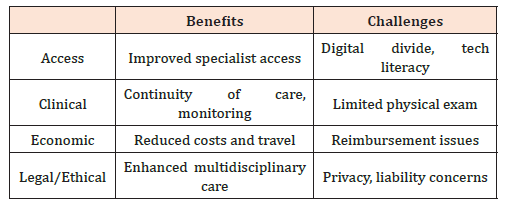
Synchronous Telemedicine
Synchronous modalities include real-time interactions between patients and clinicians, most commonly via telephone or video consultations. Video-based visits allow visual assessment of patients, including inspection of joints, skin manifestations, and functional movements. These consultations are most often used for follow-up visits, treatment monitoring, and patient education, rather than initial diagnostic assessments [3, 4]. Telephone consultations, although less technologically demanding, remain widely used, particularly for stable patients, medication renewals, or discussion of laboratory results. However, the absence of visual cues limits their clinical scope and may increase the risk of miscommunication [1,4].
Asynchronous telemedicine
Asynchronous approaches include secure messaging systems, electronic health portals, and email communication. These tools allow patients to report symptoms, adverse events, or concerns without real-time interaction. In present setting, asynchronous communication is frequently used for disease flares, treatment queries, and administrative issues, and may reduce unnecessary clinic visits [3,4].
Remote monitoring and digital tools
Remote monitoring involves the collection of health data outside traditional clinical settings. In rheumatology and in internal medicine, this may include electronic PROMs, wearable devices measuring physical activity or sleep, and mobile applications designed to track disease activity or medication adherence. These tools offer the potential for continuous, patient-centred monitoring, but their clinical validity and integration into routine care remain variable [2,4].
Clinical applications in rheumatology and in internal medicine
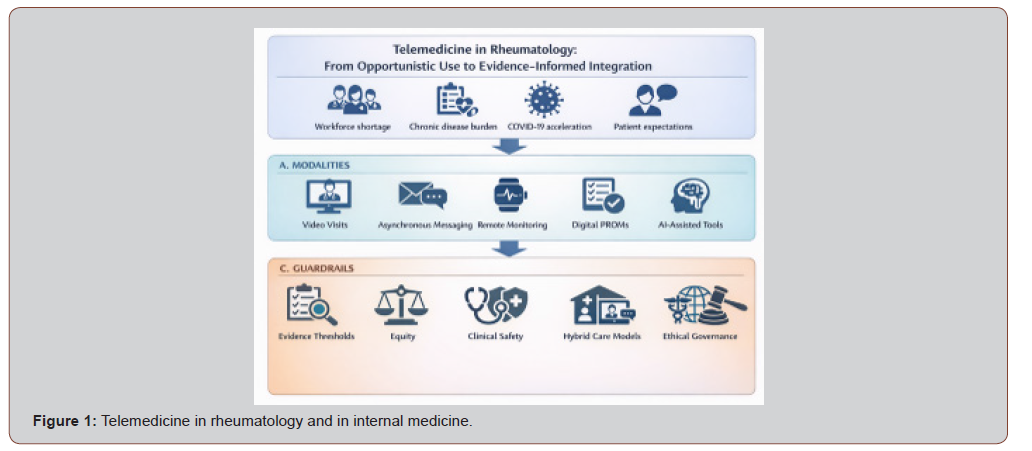
The suitability of telemedicine varies substantially across rheumatic and internal medicine diseases and clinical scenarios (Figure 1) [1,3,5].
Inflammatory arthritis
Rheumatoid arthritis (RA), psoriatic arthritis, and spondylarthritis are among the most studied conditions in telerheumatology. Several randomized and observational studies have shown that, in patients with stable or low disease activity, telemedicine follow-up can achieve disease control comparable to in-person care, when combined with structured disease activity assessment and access to laboratory monitoring [1,6]. However, telemedicine is less suitable for patients with high disease activity, diagnostic uncertainty, or suspected complications. The inability to perform a comprehensive joint examination remains a major limitation, particularly for detecting subtle synovitis or enthesitis.
Connective tissue diseases and systemic autoimmune disorders
Systemic lupus erythematosus (SLE), systemic sclerosis, and inflammatory myopathies present additional challenges, as auto-inflammatory diseases [1,3,6]. These conditions are often characterized by multisystem involvement, fluctuating disease activity, and potentially life-threatening complications (from disease severity, organ involvements, and from systemic treatment [e.g., immunosuppressive agents, biotherapies]). While telemedicine may support routine follow-up and patient education, most experts agree that regular in-person assessments remain essential, particularly during periods of active disease [2,3]. In this setting tele-education may also be of interest.
Degenerative and non-inflammatory conditions
For osteoarthritis, osteoporosis, and chronic pain syndromes, telemedicine may be particularly useful for education, lifestyle counselling, physiotherapy guidance, and long-term management. Digital interventions, including tele-education, tele-rehabilitation and exercise programs, have shown promising results in improving pain and function, although long-term adherence remains a challenge [1,2].
Special considerations in older adults, multimorbidity, and polypharmacy
Older adults represent a growing proportion of patients followed in rheumatology and in internal medicine and constitute a population of particular interest-and vulnerability-in the context of telemedicine. Ageing is frequently associated with multimorbidity, polypharmacy, functional limitations, and cognitive impairment, all of which complicate both disease assessment and therapeutic decision-making in virtual settings [1-3]. From a clinical perspective, telemedicine may facilitate continuity of care for older patients with reduced mobility, frailty, or geographical barriers to access. However, the absence of a structured physical examination can limit the detection of subtle but clinically relevant signs, such as early synovitis, sarcopenia, balance disorders, skin fragility, or features of drug toxicity. In this population, reliance on patientreported outcomes alone may underestimate disease activity or adverse events [1,2]. IN the current setting, polypharmacy represents a major challenge in telemedicine. Older patients frequently receive complex treatment regimens, including diseasemodifying antirheumatic drugs, glucocorticoids, cardiovascular agents, anticoagulants, and psychoactive medications. Virtual consultations may reduce opportunities for comprehensive medication reconciliation, increasing the risk of drug–drug interactions, inappropriate prescribing, and poor adherence. Telemedicine must therefore be coupled with systematic medication reviews, ideally supported by shared electronic records and multidisciplinary collaboration with pharmacists and primary care providers [1-3,6].
Digital literacy and sensory impairments further modulate the effectiveness of telemedicine in older adults. Hearing loss, visual impairment, and cognitive decline can compromise communication, informed consent, and shared decision-making. These barriers may be mitigated by simplified interfaces, caregiver involvement, and structured pre-visit preparation, but they underscore the need for individualized assessment of telemedicine suitability. Overall, telemedicine in older patients with rheumatic diseases should be implemented within hybrid care models, prioritizing in-person assessments at critical clinical junctures and reserving virtual follow-up for clearly defined scenarios. Failure to account for age-related complexity risks transforming telemedicine from a tool of accessibility into a source of clinical oversimplification and inequity [1-3].
Benefits of Telemedicine in Rheumatology and in Internal Medicine
Improved access to care
Table 2:Comparison of different forms of renal tubular acidosis.
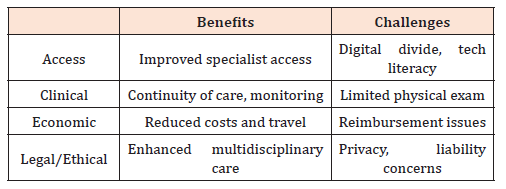
One of the most consistently reported benefits of telemedicine is improved access to rheumatology and internal medicine departments, particularly for patients living in remote or underserved areas (Table 2). Rheumatology and internal medicine workforce shortages are a global issue, and telemedicine may help mitigate geographic disparities by extending specialist expertise beyond traditional clinic settings [1,6,7].
Reduced patient burden
Telemedicine reduces travel time, transportation costs, and time away from work or caregiving responsibilities. These benefits are particularly relevant for patients with mobility limitations or fatigue, common features of many diseases care in, rheumatology and internal medicine departments [1,3].
Continuity and efficiency of care
Virtual visits may facilitate more frequent, shorter interactions, allowing timely treatment adjustments and early identification of flares. From a health system perspective, telemedicine has the potential to optimize clinic capacity and reduce missed appointments, although robust cost-effectiveness data remain limited [1,2].
Patient satisfaction
Many studies report high levels of patient satisfaction with tele-medicine, particularly among patients with stable disease. Convenience, flexibility, and perceived accessibility are frequently cited advantages [6,7]. However, satisfaction does not necessarily equate to clinical effectiveness, and patient preferences may vary according to age, digital literacy, and disease severity.
Limitations and Challenges
Clinical limitations
The absence of a hands-on physical examination remains the most significant clinical limitation of telemedicine in rheumatology and in internal medicine. While patient self-assessment and guided joint counts may partially compensate, their reliability varies, and subtle clinical signs may be missed. Diagnostic accuracy, particularly at initial presentation, is therefore a major concern [1-3].
Technological and digital inequities
Access to telemedicine depends on reliable internet connectivity, appropriate devices, and digital literacy. Older patients, socioeconomically disadvantaged populations, and those with cognitive or sensory impairments may be disproportionately excluded, potentially exacerbating health inequities [2,3,6].
Data security and confidentiality
The use of digital platforms raises concerns about data protection, cybersecurity, and patient confidentiality. Regulatory frameworks vary across countries, and rapid implementation during the pandemic often preceded robust governance structures [2].
Professional and organizational challenges
Telemedicine alters traditional workflows, reimbursement models, and medico-legal responsibilities. Clinicians may experience increased cognitive load, blurred work–life boundaries, and uncertainty regarding clinical accountability. Adequate training and institutional support are essential to ensure safe and sustainable implementation [1,3].
Experience of a Telemonitoring System in Rheumatology Patients During the COVID-19 Pandemic
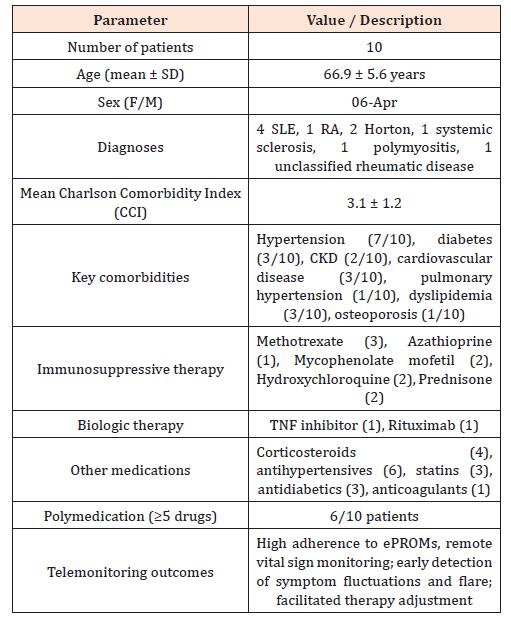
During the COVID-19 pandemic, we implemented a telemonitoring system at the Hôpitaux Universitaires de Strasbourg (HUS) for patients with various chronic inflammatory diseases (personal not published data). The system combined connected wearable sensors with digital patient-reported outcome measures (ePROMs) to enable remote monitoring of disease activity and treatment tolerance. A total of 10 patients participated over a 3-month period: four with systemic lupus erythematosus (SLE), one with rheumatoid arthritis (RA), two with Horton’s disease, one with systemic sclerosis, one with polymyositis, and one with unclassified rheumatic disease (Table 3). Patients completed regular electronic questionnaires assessing symptoms, fatigue, pain, and quality of life, while wearable devices captured physiological parameters such as heart rate and activity levels. We also follow hematological and biological serum parameters. Overall, the system was feasible and well accepted, with high adherence to both questionnaires and wearable monitoring. The telemonitoring approach allowed early identification of symptom fluctuations and potential disease flares, enabling prompt intervention and adjustments to therapy without in-person visits. Patients reported reassurance and increased engagement in their care, while clinicians appreciated the continuous flow of objective and subjective data to guide decisionmaking. These findings support the potential utility of integrated telemonitoring systems in managing complex inflammatory diseases, particularly during periods when conventional face-toface care is limited.
Table 3:Summary of patients included in the HUS telemonitoring pilot (COVID period, n=10).
Evidence base: What do we really know?
Table 4:Evidence-based outcomes of telemedicine in rheumatology and in internal medicine by disease category.
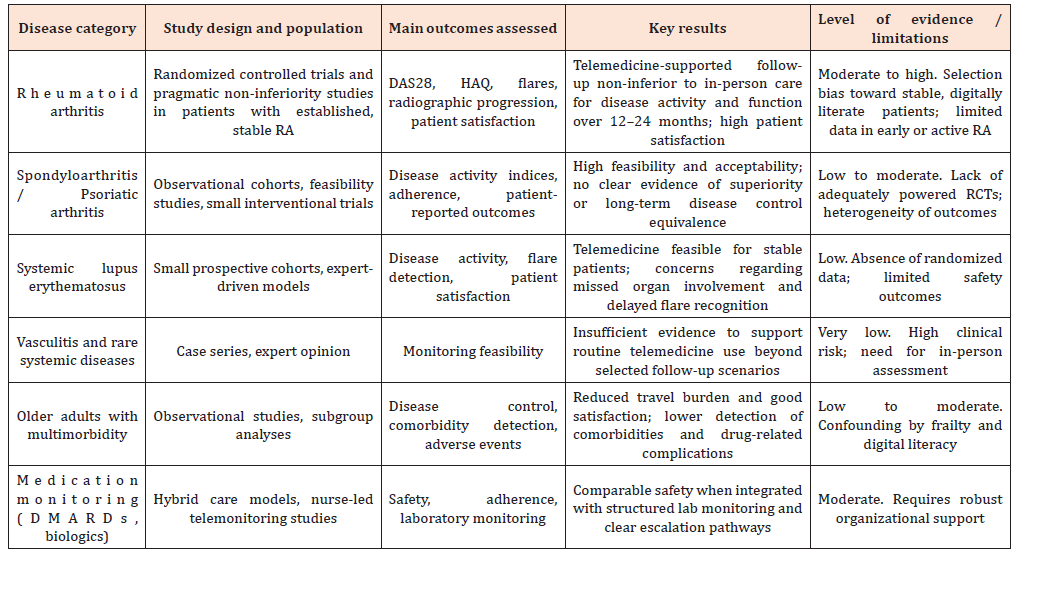
The evidence supporting telemedicine in rheumatology and in internal medicine is heterogeneous (Table 4). Randomized controlled trials have demonstrated non-inferiority of telemedicine for selected outcomes in stable RA, but these studies often involve highly selected patient populations, short follow-up, and hybrid care models combining virtual and in-person visits [1-3,6].
Observational studies and real-world data (RWD) provide valuable insights into feasibility and patient acceptance but are subject to selection bias and confounding. Importantly, few studies have assessed hard outcomes such as radiographic progression, long-term disability, or survival. Cost-effectiveness analyses are also scarce and context-dependent [1-3].
Thus, while the existing evidence supports telemedicine as a complementary tool in rheumatology and in internal medicine, it does not justify a wholesale replacement of face-to-face care. An evidence-informed, rather than technology-driven, approach is required [1,2].
Legend: Telemedicine demonstrates the strongest evidence base in stable rheumatoid arthritis, while evidence remains limited or insufficient for systemic, rare, or high-risk rheumatic diseases. Current data support hybrid, stratified models rather than a universal telemedicine-first strategy. Evidence derived from randomized controlled trials and pragmatic cohort studies suggests that telemedicine can achieve non-inferior clinical outcomes compared with face-to-face care in selected populations, primarily patients with stable rheumatoid arthritis. The pivotal Tele-RA trial and subsequent non-inferiority studies demonstrated comparable disease activity scores (DAS28), functional outcomes (HAQ), and patient satisfaction between telemedicine-supported follow-up and conventional care [8]. Similar findings were reported in hybrid care models integrating patient-reported outcomes and nurse-led teleconsultations, with no significant increase in flares, radiographic progression, or serious adverse events over 12 to 24 months of follow-up [1-3,6].
However, the evidence base remains heterogeneous and disease-specific. In spondylarthritis and psoriatic arthritis, observational studies suggest feasibility and high patient acceptance, but randomized data remain scarce and underpowered for hard outcomes [1,2,6]. For systemic autoimmune diseases such as systemic lupus erythematosus or vasculitis, evidence is limited to small cohorts and expert consensus, with concerns regarding missed organ involvement and delayed recognition of disease activity.
Importantly, studies focusing on older adults and patients with multimorbidity highlight a more nuanced picture. While telemedicine was associated with reduced travel burden and high satisfaction, it did not consistently improve disease control and was associated with lower detection rates of comorbid conditions and medication-related adverse events [1-3,6]. Across studies, the quality of evidence is moderate, with frequent selection bias favouring digitally literate, stable patients, and limited external validity to complex or frail populations. Taken together, evidencebased medicine supports telemedicine as an effective adjunct strategy for predefined patient groups and clinical scenarios, but does not justify its indiscriminate substitution for in-person rheumatologic care. The current evidence underscores the need for stratified, hybrid models rather than a uniform digital-first approach.
Ethical and patient-centred considerations
Telemedicine raises important ethical questions related to equity, autonomy, and quality of care. Patients should have the choice between virtual and in-person consultations whenever possible, based on clinical appropriateness and personal preference. Informed consent should include discussion of the limitations of remote assessments [1-3]. Shared decision-making-a cornerstone of rheumatologic and internal medicine care-must be actively preserved in digital interactions. This requires not only technological solutions but also communication skills adapted to virtual environments [1,2,6].
Emerging Trends and Future Directions
Telemonitoring and digital biomarkers
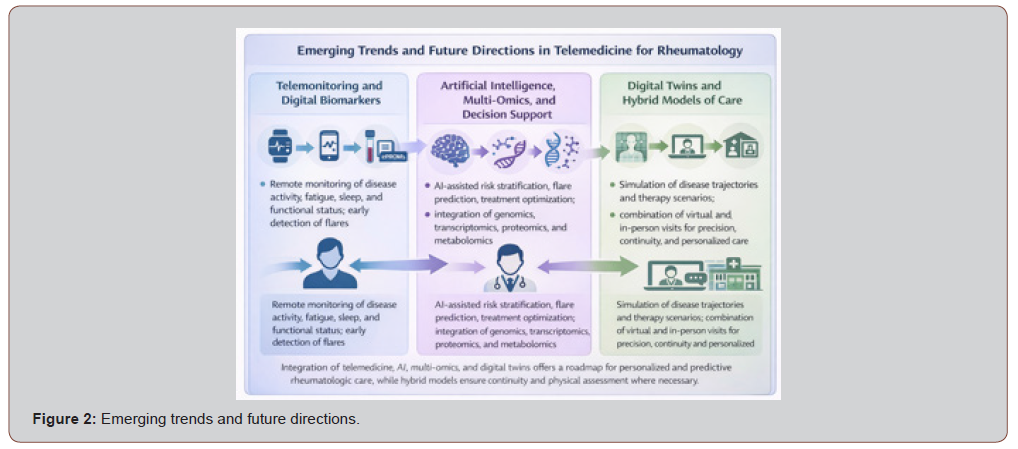
The integration of telemonitoring into rheumatology care is progressing through the use of electronic patient-reported outcome measures (ePROMs), wearable sensors, connected imaging, and remote laboratory testing (Figure 2) [1,9,10]. These tools enable continuous assessment of disease activity, functional status, fatigue, sleep, and physical activity, potentially allowing earlier detection of flares and treatment failure. Digital biomarkers derived from passive data collection may complement conventional clinical and laboratory indices, supporting a more proactive and individualized approach to care. However, the clinical validity, reproducibility, and interpretability of many digital biomarkers remain insufficiently established, and their added value over traditional measures must be demonstrated in prospective, controlled studies.
Artificial intelligence, multi-omics, and decision support systems
Artificial intelligence (AI) and machine-learning approaches are increasingly explored in rheumatology and in internal medicine to assist in risk stratification, flare prediction, imaging interpretation, and therapeutic optimization [9,10]. When combined with longitudinal telemedicine data, these tools may help identify complex patterns that are not apparent in routine clinical practice. The integration of multi-omics data-genomics, transcriptomics, proteomics, metabolomics, and microbiomics-offers the prospect of refined disease endotyping and prediction of treatment response. In the longer term, AI-driven clinical decision support systems could synthesize clinical, biological, imaging, and digital data to inform personalized treatment strategies. Nevertheless, these technologies require rigorous external validation, transparency of algorithms, and careful governance to avoid algorithmic bias, loss of clinical accountability, and over-reliance on automated recommendations [1,10].
Digital twins and predictive modeling
The concept of the “digital twin,” a virtual representation of an individual patient integrating clinical data, omics profiles, imaging, and real-time telemonitoring inputs, represents a transformative but still experimental direction in rheumatology and in internal medicine [9,10]. Digital twins could allow simulation of disease trajectories and therapeutic scenarios, supporting anticipatory and precision medicine approaches. In telemedicine settings, such models could help tailor follow-up intensity, predict flares, and optimize drug selection and dosing. However, the implementation of digital twins raises major challenges related to data integration, computational complexity, interpretability, ethical oversight, and equitable access, which must be addressed before clinical adoption.
Hybrid models of care
The future of rheumatology and internal medicine is likely to rely on hybrid care models that combine telemedicine with regular in-person assessments [1-3,11]. Virtual visits may be well suited for stable disease monitoring, treatment adjustments, patient education, and multidisciplinary coordination, whereas physical examination, imaging, and invasive procedures will continue to require face-to-face encounters. Defining the optimal balance, sequencing, and frequency of virtual versus in-person visitspotentially guided by telemonitoring data and predictive modelsrepresents a key research priority. Importantly, hybrid models must be designed to enhance, rather than fragment, continuity of care and the therapeutic relationship [12].
Conclusion
Telemedicine has become an integral component of modern rheumatology and internal medicine, offering meaningful benefits in access, convenience, and continuity of care. For selected patients and clinical scenarios, it can deliver outcomes comparable to traditional care models. However, telemedicine is not a panacea. Its limitations-particularly regarding physical examination, equity, and evidence gaps-must be explicitly acknowledged. Rather than viewing telemedicine as a replacement for conventional care, it should be conceptualized as a complementary tool, integrated within a patient-centred, evidence-informed framework. Future research should prioritize long-term outcomes, equity impacts, and rigorous evaluation of emerging digital technologies. Only through such a balanced approach can telemedicine fulfil its promise in rheumatology and in internal medicine without compromising the core values of clinical practice.
Conflict of Interest
The authors declare no conflicts of interest related to this manuscript.
References
- McDougall JA, Ferucci ED, Glover J, Fraenkel L (2017) Tele rheumatology: A Systematic Review. Arthritis Care Res (Hoboken) 69(10): 1546-1557.
- Bonfá E, Gossec L, Isenberg, DA, Zhanguo Li, Soumya Raychaudhuri (2021) How COVID-19 is Changing Rheumatology Clinical Practice. Nat Rev Rheumatol 17(1): 11-15.
- Piga M, Cangemi I, Mathieu A, Cauli A (2017) Telemedicine for Patients with Rheumatic Diseases: Systematic Review and Proposal for Research Agenda. Semin Arthritis Rheum 47(1): 121-128.
- Solomon DH, Rudin RS (2020) Digital Health Technologies: Opportunities and Challenges in Rheumatology. Nat Rev Rheumatol 16(9):525-535.
- Sloan M, Lever E, Harwood R, Gordon C, Wincup C, et al. (2022) Telemedicine in rheumatology: a mixed methods study exploring acceptability, preferences and experiences among patients and clinicians. Rheumatology (Oxford) 61(6): 2262-2274.
- Ferucci ED, Day GM, Choromanski TL, Freeman SL (2022) Outcomes and Quality of Care in Rheumatoid Arthritis with or Without Video Telemedicine Follow-Up Visits. Arthritis Care Res (Hoboken) 74(3): 484-492.
- https://rheumatology.org/press-releases/acr-releases-position-statement-on-telemedicine
- Devadula S, Langbecker D, Vecchio P, Tesiram J, Meiklejohn J, et al. (2020) Tele-Rheumatology to Regional Hospital Outpatient Clinics: Patient Perspectives on a New Model of Care. Telemed J E Health 26(7): 912-919.
- Shelton J, Casey S, Puhl N, Buckingham J, Yacyshyn E (2021) Electronic patient-reported outcome measures using mobile health technology in rheumatology: A scoping review. PLoS One 16(7): e0253615.
- Rowland S, Brewer LC, Rosas LG (2024) Digital health equity-A call to action for clinical and translational scientists. J Clin Transl Sci 8(1): e145.
- Chan SL, Lum E, Ong MEH, Graves N (2022) Implementation science: A critical but undervalued part of the healthcare innovation ecosystem. Health Care Sci 1(3): 160-165.
- https://www.delveinsight.com/eular-conference/eular-2022/remote-health-applications
-

This work is licensed under a Creative Commons Attribution-NonCommercial 4.0 International License.