


 Review Article
Foetal Surgery and Maternal Mental Health: Balancing Surgical Innovation with Psychological Well-being
Received Date:May 14, 2026; Published Date:May 27, 2026
Abstract
Background: Foetal surgery represents one of the most remarkable advances in modern medicine, offering hope for treating severe congenital
anomalies before birth. However, the psychological impact on expectant mothers undergoing these complex procedures remains inadequately
understood and addressed in clinical practice.
Objective: To comprehensively review the psychological challenges faced by mothers undergoing foetal surgery and propose evidence-based
strategies for optimizing maternal mental health outcomes while advancing surgical care.
Methods: This narrative review synthesizes current literature published between 1980 and 2024, with emphasis on research from 1980-
2024 examining psychological outcomes in mothers undergoing foetal surgical interventions. The review incorporates perspectives from paediatric
surgery, maternal-foetal medicine, psychology, and psychiatry to provide a comprehensive overview of this emerging clinical concern.
Results: Mothers undergoing foetal surgery exhibit markedly elevated psychological distress, with 60–92% scoring above clinical thresholds.
Anxiety (78–92%), depression (45–67%) and post-traumatic stress symptoms (23–41%) are seen commonly, driven by diagnostic uncertainty,
surgical risks, complex decision-making and maternal–foetal role conflict. Qualitative findings show that most families decide on surgery prior to
consultation, often from moral compulsion. Protective factors include strong partner relationships, acceptance-based coping, and peer support,
while denial coping, lower socioeconomic status and ambiguous diagnoses heighten vulnerability.
Conclusion: Embedding psychological care within foetal surgery programs, spanning from diagnosis to long-term follow-up is essential to
improve maternal mental health and family outcomes.
Keywords:Foetal surgery; maternal mental health; prenatal psychology; surgical stress; maternal-foetal medicine; multidisciplinary care
Introduction
Foetal surgery has emerged as a revolutionary field within paediatric surgery and maternal–foetal medicine, with in utero repair now being performed in selected patients as an additional therapeutic alternative for expectant mothers [1]. Harrison and colleagues were among the pioneers of prenatal intervention for selected correctable fetal defects, emphasizing that in utero treatment was promising but remained experimental [2]. These early high-risk interventions created the foundational understanding that surgical innovation must evolve to minimize both physical and psychological maternal burden. Over time, this has led from open procedures to minimally invasive approaches with markedly reduced morbidity profiles [3,4]. Since the 1980s, the field has expanded to encompass conditions such as spina bifida, congenital diaphragmatic hernia, twin-to-twin transfusion syndrome and various thoracic and cardiac malformations.
Additionally, the Ex-Utero Intrapartum Therapy (EXIT) procedure has also evolved beyond its original use [5]. While surgical advances have improved foetal outcomes, they have also revealed significant psychological challenges for expectant mothers. Nearly 60% of women with pre-existing mental health conditions experience exacerbation after foetal surgery and over 20% develop new or worsening symptoms that persist beyond the traditional postpartum period [6]. Unlike traditional maternal interventions, foetal surgery requires mothers to act as both patient and advocate for their unborn child, creating complex emotional dynamics. The journey typically begins with the distress of a foetal anomaly diagnosis, with 39% of mothers exhibiting clinically important traumatic stress, 22% experiencing depression and 31% developing state anxiety [7]. This is followed by complex consultations, detailed risk assessments and time-pressured decisions that weigh surgical benefits against risks such as maternal morbidity, preterm labour, and uncertain outcomes.
The psychological impact often extends well beyond the perioperative period. Increased maternal depressive risk has been associated with higher parenting stress and impacts on child cognitive development up to 30 months after foetal intervention [8]. Mothers may also experience prolonged stress related to ongoing medical monitoring and uncertainty about long-term outcomes. Despite evidence that mothers carrying foetuses with congenital anomalies face elevated depression, anxiety and traumatic stress compared to mothers of healthy foetuses [7], standardized approaches to psychological assessment and intervention in foetal surgery programs remain limited. Addressing these psychological dimensions through evidence-based strategies is essential for optimizing both the technical success of surgical interventions and the overall well-being of affected families. This narrative review synthesizes the current understanding of the psychological challenges faced by mothers undergoing foetal surgery and propose evidence-based strategies for optimizing maternal mental health outcomes while advancing surgical care.
Material and Methods
Studies published between 1980 and 2024 that examined psychological outcomes in mothers undergoing foetal surgical interventions, including both quantitative and qualitative explorations of maternal experiences, were reviewed. Earlier foundational studies were included to provide historical context for the development of foetal surgery and initial psychological observations. The review incorporates perspectives from paediatric surgery, maternal-foetal medicine, psychology and psychiatry to provide a comprehensive overview of this emerging area of clinical concern.
Current Understanding of Maternal Psychological Impact
The Scope of Psychological Distress: Mothers facing complex foetal diagnoses experience profound psychological challenges distinct from typical pregnancies. Kaasen, et al. (2010) found that 13% of mothers with foetal anomalies met criteria for clinically significant depression compared to 2% with normal ultrasound findings and 60% scored above thresholds for psychological distress on standardized measures versus 36% of controls. Using depression-specific measures, 44-65% met criteria for depression versus 3-4% of controls. Trauma-related symptoms were common, with 71% experiencing intrusive thoughts compared to 8% of mothers with healthy pregnancies and 10% showing severe trauma responses across all domains [9]. In neonatal intensive care contexts, Vanderbilt et al. (2009) reported that 24% of NICU mothers met acute stress disorder’s screening criteria compared to 3% of well-baby nursery mothers, noting that “having a new born in the NICU had a significant association with the number of mothers’ acute posttraumatic stress symptoms not fully explained by their symptoms of depression or prior lifetime history of traumatic events”. NICU mothers also showed higher mean EPDS (Edinburgh Postnatal Depression Scale) scores (Mean: 9.0±5.9) than healthy controls (Mean: 5.8±4.4; p=.001) [10].
The psychological challenges extend specifically to mothers undergoing foetal interventions. Research examining mothers in the Management of Myelomeningocele Study (MOMS) found that mean maternal depressive risk was minimal during the first 30 months post-birth regardless of whether children underwent prenatal or postnatal myelomeningocele closure surgery. However, the study also noted that a small percentage of mothers in both groups reported maternal depressive risk in the moderate to severe range, and an increase in maternal depressive risk during the first 30 months was associated with higher parental stress and slightly lower child cognitive development [8]. The complexity of foetal surgical procedures introduces additional stressors, as foetal surgery presents unique challenges to the anaesthesiologist, involving the management of two simultaneous patients [11], highlighting the inherent complexity and potential for increased maternal anxiety during these advanced interventions. Kaasen et al. (2010) identified diagnostic ambiguity, gestational age at assessment and anomaly severity as key predictors of distress, with diagnoses after 22 weeks associated with higher distress levels. Notably, 8% of mothers with foetal anomalies endorsed suicidal ideation compared to healthy-pregnancy. Collectively, evidence suggests that psychological distress is an expected, rather than exceptional, response in 60–71% of mothers across various domains [9].
Temporal Patterns of Psychological Distress: The course of maternal psychological distress after a foetal anomaly diagnosis is particularly important in foetal surgery, where diagnosis timing, surgical decisions and psychological adjustment create a continuous care process from detection to recovery. Wilpers, et al. (2017) found that women with pregnancies complicated by foetal anomalies had significantly higher mean state anxiety scores than those without (43.58 vs. 29.08, p = .002), with 53% scoring above the established cut-off of 40. Such anomalies are often detected during routine anatomic ultrasonography at 18–20 weeks gestation, coinciding with the critical decision-making period for surgical interventions. Older maternal age was also positively associated with greater anxiety in this population (r=0.59, p=.008), a reversal of the usual pattern in uncomplicated pregnancies, where younger mothers tend to report more anxiety (Figure 1) [12]. Longitudinal research by Skari et al. (2006) identified distinct vulnerability windows, with diagnoses between 25–30 weeks gestation linked to the highest postnatal distress [13].
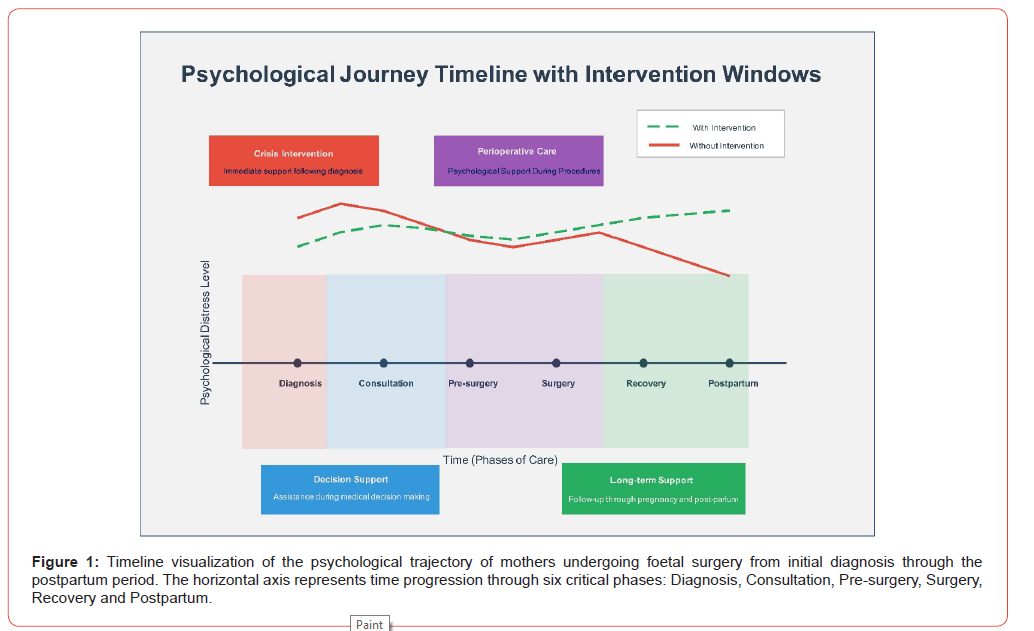
Prenatal diagnosis predicted higher distress at birth (28.9 vs. 24.4, p=.006), but its influence declined at 6 weeks (26.8vs.21.5, p<.001) and 6 months (22.6 vs. 18.7, p =.015) as neonatal mortality and associated anomalies became more predictive. Across all phases, mothers consistently reported higher distress than fathers [13,14]. Golombeck et al. (2006) reported no maternal deaths but significant short-term morbidity across surgical approaches, with fewer complications in percutaneous ultrasound-guided procedures. Endoscopic procedures also had significantly lower morbidity than open hysterotomy for Caesarean delivery (94.8% vs. 58.8%, p<.001), ICU stay (1.4% vs. 26.4%, p<.001), hospital stay (7.9 vs. 11.9 days, p=.001), and transfusion requirement (2.9% vs. 12.6%, p=.022). These findings suggest that less invasive techniques may reduce both physical morbidity and psychological stress for expectant mothers [3]. Beyond surgical factors, psychosocial support systems also appear to influence maternal anxiety during foetal surgical care. 68% of participants reported that nurse care coordinators reduced their anxiety, 79% expressed interest in connecting with families with similar experiences and only 5% wanted formal mental health services [12] .
Previous research has demonstrated that pregnancy-related anxiety is more strongly associated with preterm birth and adverse child outcomes than general anxiety or depression [15]. Together, these findings highlight the need to integrate psychological support within foetal surgery programs, aligning advances in surgical technique with maternal well-being throughout pregnancy and recovery. Wilpers et al. (2017) found that women carrying foetuses with anomalies requiring surgery had significantly higher state anxiety scores than women without anomalies. Importantly, 68% of participants reported that support from fetal care center nurse coordinators reduced anxiety, while many participants expressed interest in peer support from families with similar experiences. Previous research has further demonstrated that pregnancyspecific anxiety is strongly associated with adverse obstetric and child outcomes [15]. Together, these findings underscore the importance of integrating psychological and supportive care within foetal surgery programs.
Qualitative Themes and Experiences
Qualitative research has revealed complex psychological processes that challenge traditional models of surgical decisionmaking and informed consent in maternal-foetal surgery, highlighting critical gaps between surgical innovation and psychological support [16,17].
Pre-Consultation Decision-Making and Moral Compulsion: Eighty-three percent of families had already decided to proceed with foetal surgery before formal medical consultation [16]. Parents described a moral obligation to “do everything” for their unborn child, even at personal risk. As one mother explained, “If it doesn’t work… at least we can say we did everything we could at the time that was available”. Another said, “If in the morning they told me I couldn’t do it, I think it would devastate me” [17].
Maternal-Foetal Role Conflict and Identity Crisis: The dual role of being both patient and foetal advocate created what mothers called the “mother’s dilemma”: striving to help their unborn child while fearing for their own life and the future of their other children [17]. Fathers also feared losing both partner and child, describing prolonged intraoperative waiting as especially stressful. These dynamics illustrate tensions between maternal autonomy and foetal beneficence.
Loss of Control and Information-Seeking Behaviours: Vulnerability was compounded by loss of control within intensive medical programs, with mothers feeling powerless and dependent on medical teams. The complexity of decisions often left women seeking definitive physician guidance, which was frequently declined. As one mother noted: “Before we had foetal surgery, I wanted the doctor to tell me to my face that it was the right thing to do. He would not!”. This created additional stress when parents felt their concerns were not taken seriously by clinical staff [16,17].
Support Systems and Peer Connection: Women preferred peer support over formal mental health resources, often turning to online communities for information and solidarity. “The only thing that has gotten me through… is reading other blogs. Hopefully one day I will also help someone out there” [12,16-17].
Long-term Psychological Impact and Recovery Challenges: Post-surgical mental health issues, including PTSD and depression, persisted for some mothers. Many described the journey as a “rollercoaster,” with symptoms emerging after bringing the baby home. Severe pain sometimes left mothers bed-ridden, with one recalling she “thought we were both going to die” [17].
Spiritual Coping and Absence of Regret: Religious coping was common, with mothers using spiritual frameworks to interpret their experiences, often describing their journey in terms of divine will or intervention. One mother reflected: “I worked hard to go after this risky procedure with all of the best intentions to help my unborn child, but God had a different plan for me, for my child”. Remarkably, despite substantial challenges, mothers in formal studies expressed no decisional regret, and only 6% in online narratives expressed any regret about pursuing foetal surgery. When asked retrospectively, mothers consistently affirmed: “If we knew then, what we know now, would we have the foetal surgery again? YES, definitely 100% for sure. I have no regrets” [16,17].
Continuity of Care Disruptions: Some mothers reported that antenatal and neonatal providers lacked understanding of their surgical history, leaving them feeling their concerns were dismissed and that they had to protect their new born themselves [17]. These qualitative findings reveal that current informed consent processes inadequately address how families actually make foetal surgery decisions. Healthcare providers should recognize that families often arrive having already decided to pursue surgery, requiring counselling approaches that acknowledge pre-existing decisions rather than providing neutral information [18]. The detailed recall of physician language in patient narratives underscores the profound impact of medical communication during vulnerable times, highlighting the need for integrated peer support programs and comprehensive psychological care that addresses the gap between surgical innovation and mental health support [19,20].
Factors Influencing Psychological Outcomes
Several factors emerged as significant predictors of maternal psychological outcomes in the context of foetal surgery:
Partner Satisfaction and Relationship Quality: Partner satisfaction was one of the most critical factors influencing maternal psychological well-being. Lower satisfaction was associated with higher depression (p<.01) and higher anxiety (p<.01) following prenatal diagnosis of congenital anomalies. In this population, partner satisfaction was lower than in normal pregnancies [7].
Coping Mechanisms: The coping strategies employed by expectant mothers significantly influenced psychological adaptation. Higher acceptance of the disease was associated with decreased depression and anxiety, while positive reinterpretation was linked to decreased anxiety. Conversely, denial was associated with increased depression, anxiety and traumatic stress, and remained significant after controlling for partner satisfaction and income (p<.01) [7].
Socioeconomic Factors: Economic resources played a significant role in psychological outcomes. Lower income was significantly related to higher levels of depression, suggesting that financial stress compounds the psychological burden of foetal diagnosis and potential surgery [7].
Gestational Age and Timing: The timing of foetal surgery emerged as a crucial factor in both medical and psychological outcomes. The average gestational age at the time of foetal surgery was 23.4 weeks, with earlier interventions allowing for longer periods of potential benefit but suggestive periods of extended maternal anxiety and uncertainty [13, 21].
Surgical Experience and Centre Expertise: The clinical experience and outcomes varied significantly based on institutional expertise and established protocols, with important implications for maternal psychological well-being. Alterations in the hysterotomy surgical technique from the MOMS trial were developed to avoid jamming of the uterine stapling device, representing the type of technical refinements that can reduce surgical complications and associated maternal anxiety about procedural risks. Centre experience influences not only surgical outcomes but also the quality of psychological support available to mothers. Established foetal surgery programs with dedicated protocols often provide more comprehensive counselling and support services, which may contribute to better maternal psychological adaptation. The practice of returning stable patients to their home institutions for delivery, as determined on a case-by-case basis when referring physicians are willing to provide care, highlights the importance of continuity of care coordination. However, this transition can create psychological challenges for mothers who may feel disconnected from the specialized team that performed their foetal surgery, potentially contributing to anxiety about ongoing care quality and the need for clear communication pathways between specialized centres and community providers to maintain maternal confidence and psychological well-being throughout the pregnancy journey [17, 21].
Communication and Counselling Quality: The quality of medical communication and counselling significantly impacted maternal psychological adaptation. Counselling sessions include detailed explanation of diagnosis and management, but also include a strong programmatic focus on education and family support. Each FHP (Foetal Heart Program) counselling interaction includes a board-certified paediatric cardiologist with expertise in foetal cardiovascular disease, a dedicated foetal heart nurse coordinator, and a social worker [7].
Long-term Follow-up Implications: The authors recommend further research on specific psychosocial interventions that can provide support and skills to mothers and couples as an adjunct to medical treatment following prenatal diagnosis of congenital heart disease. They also suggest that brief marital or couples therapy focused on the implications of the diagnosis may be beneficial [7].
Discussion
Foetal surgery presents not only significant technical and medical challenges but also profound psychological demands on mothers like elevated rates of anxiety, depression and posttraumatic stress symptoms. Further ahead, foetal surgery involves managing two simultaneous patients while integrating obstetric and paediatric anaesthesia expertise, highlighting the importance of comprehensive multidisciplinary approaches [11]. Mental health professionals should be integrated within maternal care teams rather than functioning as external consultants. Japan’s approach demonstrates that clinical psychologists, medical social workers and psychiatric nurse specialists delivering preventive interventions, psychoeducation and cognitive behavioural therapy can reduce postpartum depression by addressing underlying mental health risks (Figure 2). Early in the diagnostic phase, rapid psychological assessment is critical. Comprehensive evaluation of maternal mental health, coping resources and support systems should be standard for all mothers considering foetal surgery.
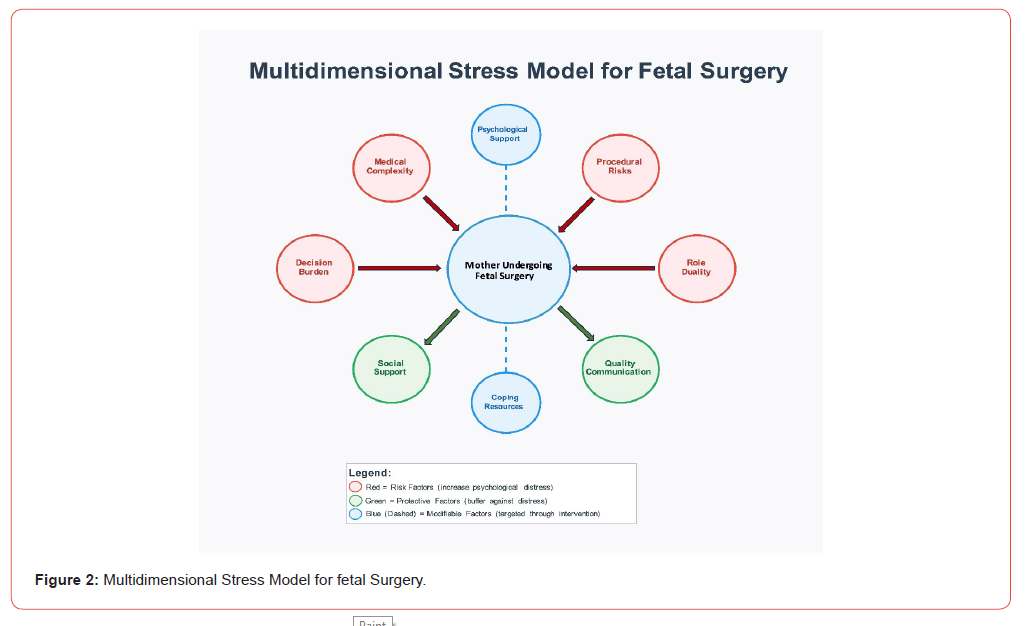
Early detection of psychological problems requires proactive engagement from medical staff and cooperation with obstetric teams, especially for those with risk factors such as unexpected pregnancy, strong anxiety about pregnancy, history of mental disorder, lack of support and unstable family situations [22]. Crisis intervention services should be available immediately after diagnosis and throughout decision-making. Mothers with prenatal diagnoses score significantly higher on depression and anxiety measures compared to normal pregnant women [7]. Acute support is particularly important when procedures carry significant maternal risk or require complex anaesthesia, such as uterine relaxation during certain mid-gestation surgeries (interpretation based on procedural context). Structured psychoeducational programs can further help mothers develop realistic expectations and effective coping strategies. These programs should be tailored to individual patient needs and delivered through multidisciplinary collaboration. Because mothers with depression often do not seek help on their own, proactive outreach is essential [22].
Education should clarify differences between minimally invasive procedures, open mid-gestation surgeries requiring complex anaesthetic management, and Ex Utero Intrapartum Treatment (EXIT) procedures, including their implications for delivery methods and future pregnancies [11]. Complex decision-making in foetal surgery adds further psychological strain. In severe congenital diaphragmatic hernia (CDH), prognosis is informed by antenatal measures such as the observed/expected lung-to-head ratio and liver herniation status, which help determine whether prenatal surgical intervention is appropriate [23]. One such intervention is Foetoscopic Tracheal Occlusion (FETO). It is a minimally invasive foetal surgery designed to promote lung growth before birth by temporarily blocking the trachea. While FETO can improve survival rates in selected severe cases, it carries significant maternal and foetal risks like premature rupture of membranes, preterm labour and the need for advanced perioperative management.
These risks have to be weighed by parents against its potential benefits usually under tight time constraints, intensifying maternal anxiety and emotional vulnerability. Genetic counselling adds another layer of complexity, as advanced testing such as chromosomal microarray analysis and whole exome sequencing can identify genetic variants linked to isolated CDH. However, many of these variants have reduced penetrance (like in the context of example discussed above, not everyone who carries the variant will develop CDH and variable expression) where the severity of the condition can differ widely. This uncertainty complicates predictions about recurrence risk in future pregnancies, often leaving families in a prolonged state of uncertainty. In this context, psychological counselling becomes essential, not only to help parents process complex medical and genetic information but also to support them in coping with the emotional burden of balancing surgical risks, uncertain prognoses, and the lifelong implications for their child’s health.
Psychosocial factors that increase maternal risk for morbidity or mortality are recognized as contraindications to foetal surgery, reinforcing the need for thorough psychosocial evaluation and integrated mental health support as part of standard foetal surgery protocols (Figure 3) [11]. Addressing Barriers to Care: Several barriers currently limit effective psychological care integration in foetal surgery programs. Time constraints within busy surgical schedules often preclude adequate attention to psychological needs, representing organizational-level barriers that affect service delivery. Financial barriers may limit access to mental health services, particularly for families traveling from distant locations for specialized care, creating individual-level impediments to treatment access. Stigma surrounding mental health care may prevent some mothers from accepting psychological support, particularly if they perceive such services as indicating weakness or inability to cope.
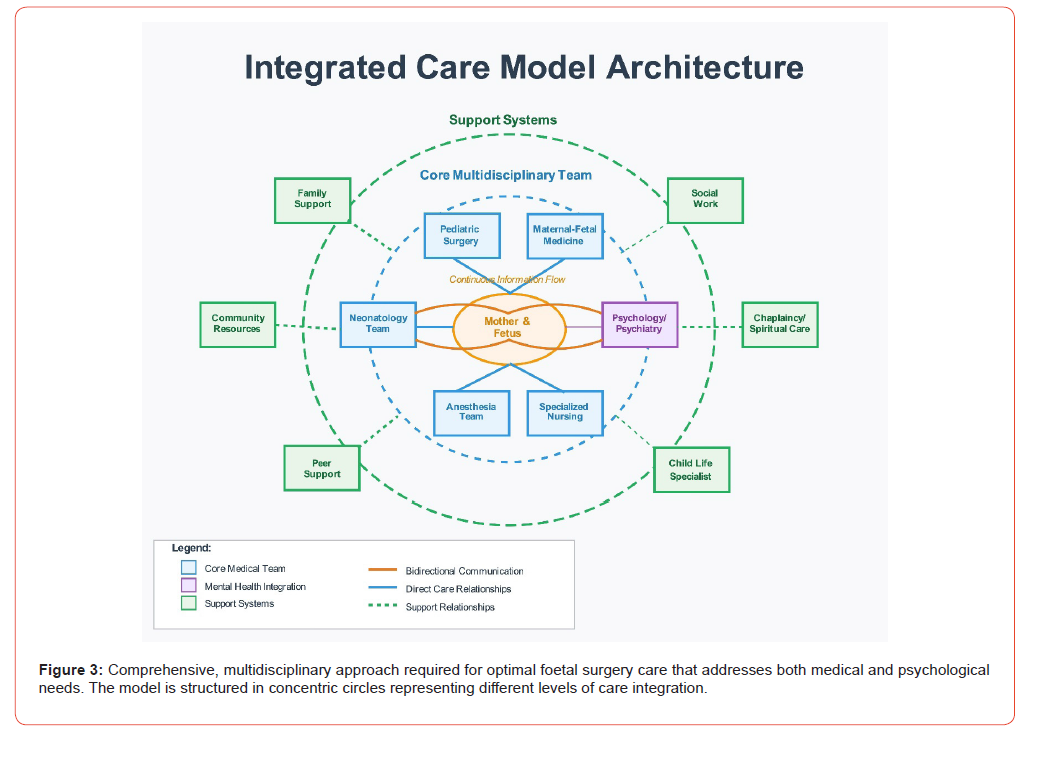
Healthcare providers may lack training in recognizing and addressing psychological distress, leading to missed opportunities for intervention. The inability to attend treatment due to practical constraints, such as geographical distance or scheduling conflicts, creates additional barriers, while the absence of trusting relationships between patients and providers can further impede effective care delivery. These barriers in foetal surgery settings reflect patterns identified in broader perinatal mental health implementation research. Research on perinatal mental health service implementation has identified barriers at multiple levels: individual (inability to attend treatment), health-care professional (training), interpersonal (trusting relationships), organizational (clear referral pathways), political (funding), and societal (stigma and culture). Addressing barriers in foetal surgery programs requires systematic changes at institutional and policy levels, drawing on implementation science principles established in perinatal mental health research [24].
Foetal surgery programs should incorporate psychological care as a standard component rather than an optional service, establishing organizational structures that facilitate continuity of care. Insurance coverage for psychological services should be advocated for as an essential component of comprehensive foetal surgery care. Implementation strategies for foetal surgery programs can adapt approaches identified as effective in perinatal mental health services. Implementation strategies in perinatal mental health include co-production of services, implementation team meetings, funding and coalition building, with services that are flexible and women-centred, and delivered by well-trained healthcare professionals [24]. These evidence-based approaches from perinatal mental health research can inform efforts to overcome barriers that currently limit effective psychological care integration in specialized foetal surgery settings.
Future Research Directions: Several important research questions remain unanswered regarding the psychological aspects of foetal surgery. Prospective longitudinal studies with larger sample sizes are needed to better understand maternal and family psychological adaptation, as well as to identify predictors of resilience versus vulnerability. The MOMS II study exemplifies the need for extended follow-up to assess long-term psychological outcomes [1]. Intervention studies are equally important. Randomized controlled trials comparing different psychological support approaches could inform evidence-based guidelines. This is particularly relevant for conditions such as spina bifida which is one of the most common indications for prenatal surgery and carries a substantial lifelong economic burden. Additional research should address long-term maternal experiences, including the psychological impact of mandatory Caesarean delivery for all subsequent pregnancies, despite evidence showing no impairment of future reproductive capacity [1]. Anaesthetic management challenges, such as the need to care for both mother and foetus simultaneously, may also contribute to maternal anxiety and warrant targeted psychological interventions [11].
Finally, studying the psychological experiences of partners and siblings would provide a more complete understanding of family system impacts. This is particularly important given that foetal surgery programs have strict eligibility criteria, excluding patients with psychosocial limitations and inability to comply with travel and follow-up requirements, while requiring multidisciplinary team involvement [1]. Ethical Considerations: The integration of psychological care into foetal surgery programs raises important ethical considerations. The principle of maternal autonomy requires that psychological support services respect mothers’ rights to make independent decisions about their mental health care. The right to be free from unwanted bodily invasions and to control one’s own life is fundamental to the very structure of the international social and legal system [25]. However, the potential for untreated psychological distress to impact decision-making capacity creates tension between autonomy and beneficence. The dual patient nature of foetal surgery creates unique ethical challenges when maternal psychological needs conflict with foetal surgical considerations.
Any situation where maternal well-being or wishes contradict foetal benefit constitutes a maternal–foetal conflict and psychological distress may influence a mother’s capacity to make decisions that align with recommended foetal interventions. The principle of beneficence requires one to act in a way that is expected reliably to produce the greater balance of goods over harms in the lives of others [25]. Confidentiality in foetal surgery becomes complex when maternal mental health information may influence surgical decisions. Standard medical practice requires maintaining patient confidentiality, yet the dual-patient nature of foetal surgery may create pressure to share psychological assessment information with surgical teams. Clear guidelines are needed to ensure only essential information is shared while maintaining appropriate confidentiality protections. The case of a woman undergoing open foetal surgery illustrates a broader ethical tension, between the belief that increased prenatal surveillance is inherently beneficial and the expectation that women should sacrifice bodily integrity for foetal welfare. These considerations require balancing maternal autonomy with the perceived beneficence toward the foetus [24- 26].
Conclusion
The psychological impact of foetal surgery on expectant mothers is profound and multifaceted, with significantly elevated rates of anxiety, depression and post-traumatic stress that often extend beyond the immediate surgical period. Despite remarkable advances in surgical techniques and foetal outcomes, the maternal psychological experience remains underappreciated and undertreated within current foetal surgery programs. Addressing these challenges demands a comprehensive, multidisciplinary approach that integrates mental health care seamlessly throughout the continuum of prenatal diagnosis, surgical intervention and postpartum recovery. Future efforts should focus on refining psychological assessment protocols, developing targeted intervention strategies tailored to critical phases of the surgical journey and ensuring long-term mental health support for mothers and families. Moreover, expanding research into the broader family system including partners and siblings, will provide a more holistic understanding of the psychosocial consequences of foetal surgery. Ultimately, balancing surgical innovation with robust psychological care will not only enhance maternal well-being but also contribute to improved outcomes for children and families facing the complexities of foetal conditions.
Conflict of Interest
The authors declare no conflicts of interest.
Funding
No specific funding was received for this work.
- Adzick NS (2013) Foetal surgery for spina bifida: past, present, future. Seminars in Pediatric Surgery 22(1): 10-17.
- Harrison MR, Golbus MS, Filly RA (1982) Management of the fetus with a correctable congenital defect. JAMA 248(15): 1924-1929.
- Golombeck K, Ball RH, Lee H, Farrell JA, Farmer DL, et al. (2006) Maternal morbidity after maternal-foetal surgery. American Journal of Obstetrics and Gynecology 194(3): 834-839.
- Priyadarshini S, Agarwala S, Priya H, Jain V, Goel P, et al. (2025) Easing Parental Worries: A Systematic Review and Network Meta-analysis on Preoperative Education Methods for Reducing Anxiety in Parents of Children Undergoing Surgery. J Indian Assoc Pediatr Surg 30(4): 427-437.
- Hedrick HL, Flake AW, Crombleholme TM, Howell LJ, Johnson MP, et al. (2005) The ex-utero intrapartum therapy procedure for high-risk foetal lung lesions. Journal of Pediatric Surgery 40(6): 1038-1044.
- Liseth O, Weng J, Schenone M, Moore K, Betcher H, et al. (2023) The impact of foetal surgical procedures on perinatal anxiety and depression. American Journal of Obstetrics & Gynecology MFM 6(1): 101244.
- Rychik J, Donaghue DD, Levy S, Fajardo C, Combs J, et al. (2013) Maternal psychological stress after prenatal diagnosis of congenital heart disease. The Journal of Pediatrics 162(2): 302-307.
- Schreiber JE, Cole JCM, Houtrow AJ, Kallan MJ, Thom EA, et al. (2021) Maternal depressive risk in prenatal versus postnatal surgical closure of myelomeningocele: associations with parenting stress and child outcomes. Foetal Diagnosis and Therapy 48(6): 479-484.
- Kaasen A, Helbig A, Malt UF, Næs T, Skari H, et al. (2010) Acute maternal social dysfunction, health perception and psychological distress after ultrasonographic detection of a foetal structural anomaly. BJOG: An International Journal of Obstetrics & Gynaecology 117(9): 1127-1138.
- Vanderbilt D, Bushley T, Young R, Frank DA (2002) Acute posttraumatic stress symptoms among urban mothers with newborns in the neonatal intensive care unit: a preliminary study. Journal of Developmental & Behavioral Pediatrics 23(1): 50-56.
- Nelson, O., & Lin, E. E. (2025). Anesthesia for foetal interventions: Caring for mother and fetus prior to birth. Journal of Anesthesia and Translational Medicine 4(1): 18-24.
- Wilpers AB, Kennedy HP, Wall D, Funk M, Bahtiyar MO (2017) Maternal anxiety related to prenatal diagnoses of foetal anomalies that require surgery. Journal of Obstetric, Gynecologic & Neonatal Nursing 46(3): 456-464.
- Skari H, Malt UF, Bjornland K, Egeland T, Haugen G, et al. (2006) Prenatal diagnosis of congenital malformations and parental psychological distress—A prospective longitudinal cohort study. Prenatal Diagnosis 26(11): 1001-1009.
- Choudhury P, Goel P (2026) Partner mental health as a mediating force in the care of infants with congenital anomalies. Pregnancy & Child Birth 12(2): 48-
- Lobel M, Cannella DL, Graham JE, DeVincent C, Schneider J, et al. (2008) Pregnancy-specific stress, prenatal health behaviours, and birth outcomes. Health Psychology 27(5): 604-615.
- Fry JT, Frader JE (2018) “We want to do everything”: How parents represent their experiences with maternal–foetal surgery online. Journal of Perinatology 38(3): 226-232.
- Crombag N, Sacco A, Stocks B, De Vloo P, van der Merwe J, et al. (2021) “We did everything we could”–A qualitative study exploring the acceptability of maternal–foetal surgery for spina bifida to parents. Prenatal Diagnosis 41(8): 910-921.
- Goel P, Agrawal V, Srinivasan RB (2024) Management, Outcome, Risk, and Expectation Classification for Structural Fetal Anomalies to Aid Antenatal Counselling: A Systematic Review. J Indian Assoc Pediatr Surg 29(4): 309-318.
- Choudhury P, Goel P (2026) Decision-making support for parents: continuation vs termination counselling in severe congenital anomalies (A narrative review from the paediatric surgeons’ perspective). Pregnancy & Child Birth 12(1): 1-
- Choudhury P, Kandasamy D, Goel P (2026) Fetal magnetic resonance imaging in prenatal surgical planning: a comprehensive review. Pregnancy & Child Birth 12(2): 41-
- Moldenhauer JS, Soni S, Rintoul NE, Spinner SS, Khalek N, et al. (2003) Foetal myelomeningocele repair: the post-MOMS experience at the Children's Hospital of Philadelphia. Foetal Diagnosis and Therapy 37(3): 235-240.
- Suzuki S (2024) Prevention of postpartum depression by multidisciplinary collaboration in Japan. Japan Medical Association Journal 7(1): 600-602.
- Deprest J, Brady P, Nicolaides K, Benachi A, Berg C, et al. (2014) Prenatal management of the fetus with isolated congenital diaphragmatic hernia in the era of the TOTAL trial. Seminars in Foetal & Neonatal Medicine 19(6): 338-348.
- Webb R, Uddin N, Ford E, Easter A, Shakespeare J, et al. (2021) Barriers and facilitators to implementing perinatal mental health care in health and social care settings: a systematic review. The Lancet Psychiatry 8(6): 521-534.
- Fasouliotis SJ, Schenker JG (2000) Maternal–foetal conflict. European Journal of Obstetrics & Gynecology and Reproductive Biology 89(1): 101-107.
- Smajdor A (2011) Ethical challenges in foetal surgery. Journal of Medical Ethics 37(2): 88-91.
-

This work is licensed under a Creative Commons Attribution-NonCommercial 4.0 International License.