




 Research Article
Recurrence of Pediatric OSA: The Role of Oral-Intestinal Dysbiosis
Pediatric Dentistry Office (COP) 19 bis, rue Leguen de Kerangal, 35200 Rennes, France
Received Date: July 28, 2026; Published Date: August 26, 2026
Abstract
Objective: Improve the therapeutic management strategy for recurrent pediatric type 1 OSA by targeting other oro-buccal-facial disorders,
particularly the oral microbiota, after treating dental malocclusions and resuming nasal ventilation in connection with a confirmed, treated but
recurrent OSA in children aged 3 to 9 years.
Materials and Methods: a retrospective, single-center, observational study. The method consisted of searching for other explanatory disorders,
particularly digestive ones, related to pathologies of the oral sphere. To do this, a review of health records allowed for the identification of a
“culprit” whose presence could explain the existence of immunosuppression, promoting the persistence of chronic inflammation responsible for the
degradation of the oral microbiota. A measurement of the salivary calprotectin levels was undertaken and proved the inflammatory state fueling.
Results: The average age of the children was 4.6, the sex ratio was indifferent. 37% of the children had a salivary calprotectin level > 1000, 30%
had a salivary calprotectin level > 500, and 21% had a salivary calprotectin level > 250, associated with dysbiosis of the oral microbiota linked to a
poor digestive flora affecting the intestinal microbiota.
Conclusion: the presence of unsuspected inflammatory foci linked to early immune deficiencies would explain the recurrences of type 1 OSA.
These immune deficiencies operating quietly and favoring recurrences. The hunt for viral infections and associated bacteria constitutes a future
avenue that deserves to be investigated when an unexplained recurrence of OSA type 1 persists.
Keywords: Recurrence pediatric type 1 OSA; salivary calprotectin; Oral dysbiosis; Oral microbiome
Abbreviations: OSA: Obstructive Sleep Apnea Syndrome; AHI: Apnea Hypopnea Index; CPAP: Continuous Positive Airway Pressure; ORSD: Obstructive Respiratory Sleep Disorders; PSG: Polysomnography; UARS: Upper Airway Resistance Syndrome; DFO: Dentofacial Orthopaedics; HFMD: Hand, foot, and mouth disease; ENT: Ear, Nose, and Throat; RAP: Recurrent Abdominal Pain
Editorial
Although perfectly codified, the management of pediatric type 1 Obstructive Sleep Apnea remains problematic due to the high recurrence rate. Especially since the management of type 1 OSA in children largely relies on adenotonsillectomy in most cases [1]. However, the removal of tonsils and adenoids still does not solve the issue of recurrent type 1 OSA. Indeed, adeno-tonsillectomy remains the first-line treatment for OSA associated with Dentofacial Orthopedics (DFO) treatments, complemented, if necessary, by oromyofunctional rehabilitation. Intranasal steroids can be effective in cases of mild residual OSA [2,4]. As for Continuous Positive Airway Pressure (CPAP), it constitutes an effective treatment for severe OSA, residual OSA, or in cases of associated pathologies [5]. The surgical option, particularly adenotonsillectomy, represents the “common standard” in terms of treatment for type I OSA in children. Does this therapeutic approach really offer better results than other less invasive therapeutic approaches? Is the benefitrisk balance of adenotonsillectomy still favorable in children with OSA. Shouldn’t another avenue be explored, namely the presence of immunosuppression coupled with a high level of salivary calprotectin without any other common pathology linked to an indirect inflammation maintaining the initial inflammation, which probably explains the recurrence?
The objective of this study is to understand the extent of evidence on the different types of treatments proposed for pediatric OSA by enhancing an integrative therapeutic protocol for the management of pediatric OSA.
Definition
Obstructive Respiratory Sleep Disorders (ORSD) encompass a set of symptoms affecting breathing and are characterized, among other things, by a reduction in the volume of the upper airways during sleep. They encompass 4 entities classified according to a continuum of severity, ranging from primary snoring to obstructive sleep apnea-hypopnea syndrome. Between these two stages, there is the upper airways resistance Syndrome (UARS) which leads to an increase in respiratory efforts, sleep fragmentation [1-3] causing hypercapnia with a carbon dioxide level above 50 mmHg for more than 35% of the total sleep time.
Figure 1: Diurnal and nocturnal signs of OSA type 1 for screening of the M’T Dents program.

Obstructive Sleep Apnea OSA is characterized by daytime and nighttime clinical symptoms (Figure 1) and an interruption of normal respiratory flow due to a complete (apnea) or partial (hypopnea) obstruction of the upper airways during sleep [1- 3], despite the persistence of respiratory efforts. These thoracoabdominal movements differentiate obstructive apneas-hypopneas from central apneas, in which these respiratory efforts disappear. The American Academy of Sleep Medicine (AASM) in 2012 defines apnea as a reduction in naso-buccal airflow of 90% or more: hypopnea as a decrease of at least 30% in the amplitude of airflow associated with micro-arousals or even awakenings and a drop in oxygen saturation of 3% or more [1,4]. An arterial oxygen saturation below 90% is considered pathological. The obstructive nature of this syndrome is primarily defined by snoring. But it is also characterized by the paradoxical aspect of thoraco-abdominal movements during the respiratory event and not during the preceding event, as well as the increase in the inspiratory plateau of nasal pressure compared to the reference breathing. A micro-arousal is a sudden change in frequency on the electroencephalogram lasting 3 seconds or more and connected to a stable sleep phase of more than 10 seconds.
These episodes of altered airflow due to transient partial or total collapse of the upper airways lead to a decrease in the oxygen level in the blood called hypoxemia, hypercapnia, which is the increase in the partial pressure of carbon dioxide in the blood, as well as micro-awakenings due to respiratory efforts.
Regarding therapeutic approaches, the surgical approach, namely adenotonsillectomy, is still today the most commonly used therapeutic option for children with type I OSA [3,5]. It offers good results in patients whose main etiology of OSA is hypertrophy of the palatine tonsils, with or without pharyngeal tonsils, regardless of whether they have risk factors or not. However, it is necessary to take into account the post-operative complications, particularly bleeding and pain, which can be difficult to manage in some patients. The risk of recurrence of hypertrophy is not negligible, and a residual OSA likely to exacerbate recurrences is frequently observed in 10 to 20% of children, necessitating a second therapeutic procedure [3,5]. New therapeutic approaches have emerged, particularly with Orthodontics and Dentofacial Orthopedics (DFO). Indeed, maxillary hypodevelopment (ogival palate) leading to poor lingual positioning, an anterior open bite often involved in atypical or infantile swallowing, a retroposition of the mandible, or even the absence of diastemas leading to a dysmorpho-dysfunctional spiral (Photograph 1).
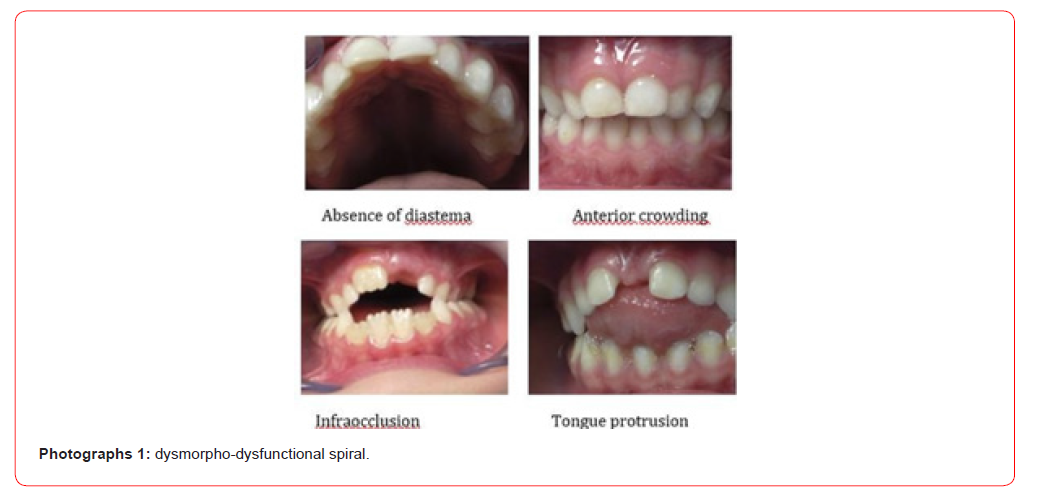
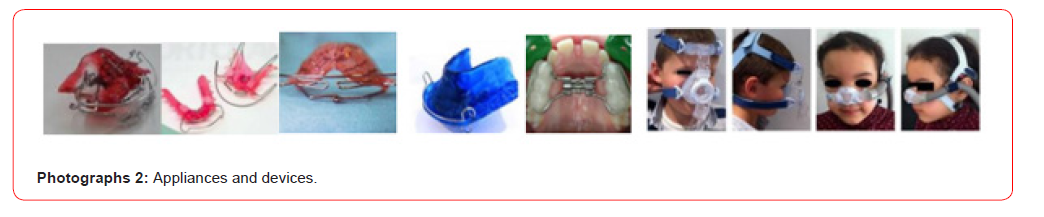
The physiological restoration of oro-facial and postural functions allows for the improvement and sustainability of the results obtained thru orthopedic treatment [2,6]. Hence the necessity, in parallel, of other therapies around oro-myofunctional orofacial rehabilitation, which allow for the improvement of patients’ clinical symptoms. Postural rehabilitation thru exercises aimed at improving the tone of oro-facial muscles can provide benefits to patients, provided there is good adherence. These approaches are part of a multidisciplinary approach to provide better care for children with OSA [5].
Materials and Methods
A retrospective, single-center, observational study from January 2024 to January 2025 including 47 children with type 1 OSA who experienced a recurrence after treatment that adhered to the recommended care pathway according to the decision tree established by the Working Group on Sleep in Children and Adolescents (GSEA) in France. The inclusion criteria were as follows
a. Formal diagnosis of OSA confirmed by PSG conducted in a
sleep laboratory
b. Obstruction of the upper aerodigestive tract
(adenoidectomy or tonsillectomy and/or adenotonsillectomy)
Orthodontics - Oro-myofunctional rehabilitation or lingual physiotherapy. The recurrence manifested after 3-12 months is characterized by the recurrence of daytime and nighttime signs of OSA. This consensual therapeutic approach of the GSEA is entirely and clearly focused on the “container” or the anatomo-morphopathological aspect of OSA [1].
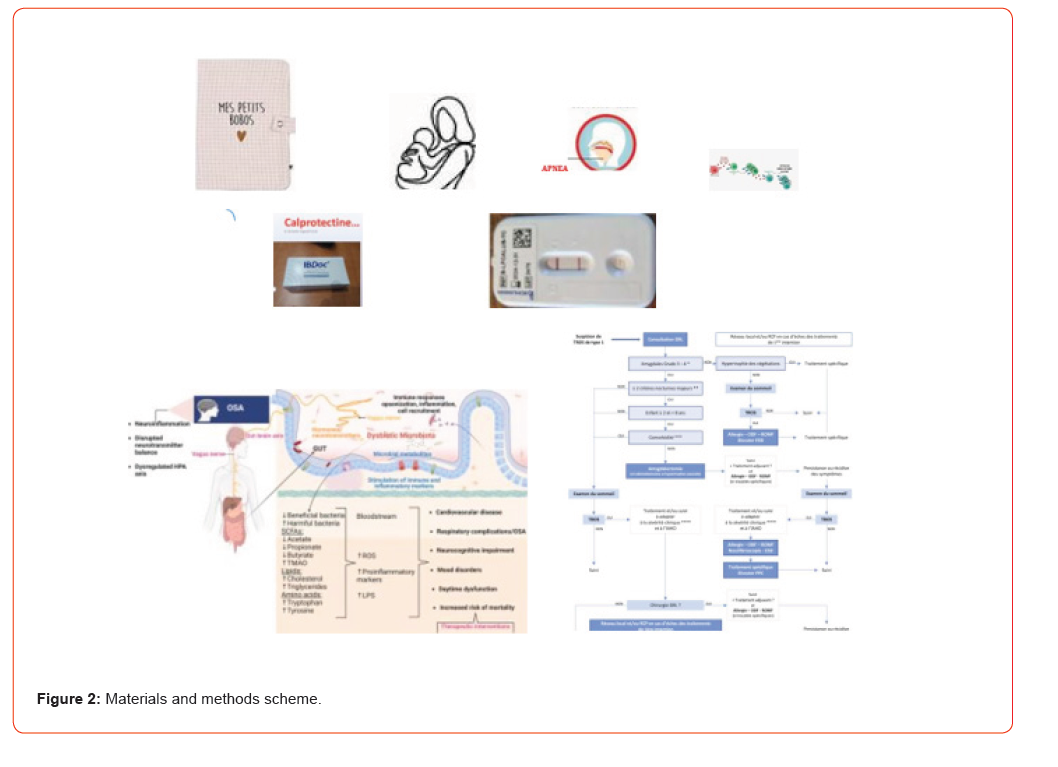
The method consisted of searching for other disorders that could explain a recurrence of OSA. To do this, access to the children’s health records, when they are filled out and informative, constitutes an exploitable resource allowing for the understanding of the different types of infections, whether viral, bacterial, or parasitic, that can be evaluated. To evaluate this “content,” each child underwent a sample collection and a measurement of salivary calprotectin levels (IBDoC). The interest in measuring salivary calprotectin lies on the fact that it requires a simple and painless saliva sample, which is non-invasive unlike other methods of assessing inflammation, such as blood tests or biopsies. Moreover, it is a simple, low-cost tool that can be performed on an outpatient basis in the office. Indeed, the measurement of salivary calprotectin is particularly practical for understanding, detecting, evaluating, and monitoring inflammation as well as the effectiveness of treatments. The test performed using a plate provides information on the inflammatory state, even of low grade, allowing for an understanding of the inflammatory condition. Thus, a calprotectin level superior to 1000 indicates severe inflammation. A calprotectin level superior to 500 indicates chronic inflammation. A calprotectin level < 250 indicates an absence of inflammation.
Results and Discussion
Table 1: Sex ratio.

Table 2: Age of children.

Table 3:AHI recurrence

Table 4: Type of procedures.

Table 5: Associated digestive disorders

Table 6: Numbers of infections per year.

Table 7: Number of viral infections

Table 8: Number of bacterial infections.

Table 9: Measure of calprotectin.

Table 10: Time of recurrence.

Role of the immune system reading and interpretation of children’s health records
The information from the health records of children with recurrent OSA is extremely rich in insights, provided one knows how to search for, find, and interpret them (Figure 2). These teachings primarily focus on immunodeficiency in light of the number of recurrent infections and their frequencies (Tables 7 & 8). Indeed, most children with recurrent OSA, regardless of gender and age (Tables 1&2), present relatively early between 3-6 years old] with various viral infections that coexist in the same young patient. Indeed, the majority of children experience recurrent infections, particularly middle ear infections (otitis), which take the gold medal for recurrent infections, followed by the common cold (rhinopharyngitis) (Table 6). Caused by numerous different viruses, this upper respiratory tract infection is highly contagious and manifests as a runny nose, sneezing, a mild cough, and sometimes a low-grade fever. These situations may suggest an immune deficiency allowing the maintenance of inflammation with high levels of calprotectin (Table 9 & 10). In short, the body is less resistant to infectious agents (bacteria, viruses, parasites, etc.). The lack of capacity of the infant immune system to defend itself against environmental pathogens explains the frequency of repeated viral and/or bacterial infections in these children. Similarly, another piece of information provided by the health record of children with recurrent OSA shows that the respiratory and intestinal tracts are generally the most involved because the antigen most often enters thru the nose or mouth [7-9] to reach the intestine, and it is in the mucous membranes of these physiological systems that the encounter with immune cells occurs. Moreover, the sometimesuntimely prescription of antibiotics is another piece of information also found in the health record, even it does not always contribute to the protection of the oro-naso-facial microbiota of proximity and intestinal continuity (Table 5).
Role of proximal oro-naso-facial microbiota and continuous intestinal microbiota
The oral microbiota, the second most abundant microbiota after the digestive tract, is an important component of the human microbiota [7,8]. It communicates with the nasopharynx and the oropharynx, serves as an entry point to the digestive system, and is a source of microbial transmission [8,9]. Moreover, it is known that children with oral breath have a drier mouth, a lower oral pH, a higher level of free sialic acid, and poorer oral health. The oral microbiota hosts more than 700 bacterial species, which contribute to the good health of the mouth (teeth, gums, tongue...), and, more broadly, to the health of the organism. A disruption of this balance (dysbiosis), due to poor oral hygiene [9], a decrease in immunity paving the way for pathogens for local infections (carious lesions, proximal, deep distal). Ten bacterial genera, including the most important ones (Lactobacillus, Escherichia, Bifidobacterium, Capnocytophaga, Bacteroidetes, Parvimonas, Bacteroides, Klebsiella, Lautropia, and Prevotella), are present in the salivary samples [7] of children with OSA. If oral hygiene and dental care remain a means of prevention, the most relevant and efficient method is surely the long-term maintenance of lip closure, which guaranties the absence of bacterial ingestion and inhalation. Oral pathogens are likely to migrate from the proximity sphere (ENT) to a sphere of continuity (Intestine) (Table 3-5). This could explain some Recurrent Abdominal Pain (RAP) that children complain about. The ENT microbiota, three microbiomes in one (ear, nose, throat), is composed of three distinct bacterial floras: the oral microbiota, the auricular microbiota, and the nasopharyngeal microbiota. Various diseases can result from their imbalance. The concept of a dysbiotic oral cavity as a source of distant infection is now accepted [7-9]. The inability of the infant immune system to defend itself against environmental pathogens explains the frequency of repeated viral or bacterial infections in children. The respiratory and intestinal tracts are generally the most involved (Tables 1-10).
At the level of the external auditory canal, the composition of the auricular microbiota is similar to that of the skin. Recent studies have highlighted the harmless presence of Alloiococcus otitis and Corynebacterium otitidis, two bacterial species previously exclusively associated with middle ear infections. This discovery suggests that the external auditory canal may serve as an infectious reservoir for the middle ear. Although similar to the oral microbiota, the nasopharyngeal microbiota, which lines the nasal passages and pharynx, is composed of very different germs.
Role of the state of the vagus nerve and inflammation
The vagus nerve or pneumogastric nerve connects the brain to various organs, including the respiratory and gastric systems. Diet plays a crucial role in the development of the immune system. The intestinal bacteria found near this nerve impact its activity; the vagus nerve is also involved in the regulation of breathing. It plays a role in regulating the diameter of the airways and the respiratory rate. This nerve is involved in the secretion of digestive enzymes and gastric acid. An essential function of the vagus nerve is the regulation of the body’s inflammatory state. By acting on the immune system, it helps prevent an inflammatory runaway. That’s why a varied diet, rich in green vegetables and sources of vitamins, is essential for the development of immune defense. Indeed, more than 70% of immune cells are located in the intestinal area. As a result, we can clearly understand the influence of digestive inflammatory pathologies on the recurrence of pediatric OSA. Vitamin D deficiencies, particularly in the recurrence of pediatric tye 1 OSA, the lack of vitamin D seems to influence both the innate immune system and the acquired immune system. Indeed, 1α-hydroxylation produces calcitriol within various immune system cells, where it exerts autocrine and paracrine effects. However, vitamin D remains one of the most common vitamin deficiencies in children. It can also be difficult to obtain enough vitamin D through diet alone, given that it is naturally present in very few foods. This vitamin plays a very important role in the immune system: it helps regulate certain genes involved in immunity against viruses and bacteria.
Duality content/container interest of integrative medicine
Researchers from Marshall University (West Virginia) have shown the possible role of the gut microbiome in sleep apnea. Their review of the literature, published in the journal Sleep Medicine, indeed highlights the links between gut health and sleep apnea, thus paving the way for new therapeutic approaches to managing this common but often overlooked disorder: Thus, improving digestive health, i.e., considering the oral microbiota and knowing how to establish the links between the oro-facial sphere and the intestine, would be a truism if integrative medicine, rejecting the dualities of “container/content,” found its rightful place in the concert of therapeutic arsenals.
Conclusion
The management of OSA in children represents an important therapeutic challenge due to the numerous repercussions on the quality of life and health of very young patients particularly in terms of the impairment of their growth and neurocognitive development, which can lead to academic failure. Pediatric OSA also predisposes to adult OSA as well as the development of cardiorespiratory pathology. The difficulty in management results from a variable clinical picture in children associated with numerous risk factors. The heterogeneity of patients makes standardization of treatment impossible, hence the need for care that is primarily personalized and multidisciplinary to adapt to the specificities of each child. Early screening would allow for better management of the most severe cases by limiting the side effects of the pathology. The identification of new therapeutic approaches in primary or secondary treatment would allow for the continuation and deepening of this study in order to establish a true care protocol that integrates both allopathic medicine and integrative medicine, aimed at improving the management and quality of life of patients with OSA.
Conflict of Interest
None declared.
Acknowledgement
None.
References
- Aubertin G, Akkari M, Andrieux A, Colas Des Francs C, Fauroux B Franco P, et al. (2023) Management of obstructive sleep apnea syndrome type 1 in children and adolescents - A French consensus Arch Pediatr 31(3): 214-215.
- Machado-Júnior AJ, Zancanella E, Crespo AN (2016) Rapid maxillary expansion and obstructive sleep apnea: A review and meta-analysis. Med Oral Patol Oral Cirugia Bucal 21(4): 465-469.
- Lin AC, Koltai PJ (2009) Persistent pediatric obstructive sleep apnea and lingual tonsillectomy. Otolaryngol- Head Neck Surg Off J Am Acad Otolaryngol-Head Neck Surg 141(1): 81-85.
- Kuhle S, Urschitz MS (2020) Anti-inflammatory medications for the treatment of pediatric obstructive sleep apnea. Paediatr Respir Rev 34: 35-36.
- Ravi K Garg, Ahmed M Afifi, Catharine B Garland, Ruston Sanchez, Delora L (2017) Mount Pediatric Obstructive Sleep Apnea: Consensus, Controversy, and Craniofacial Considerations. Plastic Reconstr Surg 140(5): 987-997.
- Boyd, Kevin L (2025) Sleep disordered breathing: a dental perspective. Principles and practice of pediatric sleep medicine 3rd ed. Philadelphia, PA: Elsevier Chapter 36: 405–413.
- Donatini B (2022) La Bouche, miroir de votre santé, Flammarion pp. 192.
- Willis J R, Gabaldón T (2020) The Human Oral Microbiome in Health and Disease: From Sequences to Ecosystems Microorganisms 8(2): 308.
- Huang X, Chen X, Gong X, et al. (2022) Characteristics of salivary microbiota in children with obstructive sleep apnea: a prospective study with polysomnography. Front Cell Infect Microbiol 12: 945284.
- Li Q, Xu T, Shao C, et al. (2023) Obstructive sleep apnea is related to alterations in fecal microbiome and impaired intestinal barrier function. Sci Rep 13: 778.
- Alcock J (2025) Obstructive sleep apnea and the gut microbiota - mechanisms and opportunities Curr Opin Pulm Med 31(6): 605-612.
- Rebecca Hicks, David Gozal, Sarfraz Ahmed, Abdelnaby Khalyfa (2025) Interplay between gut microbiota and exosome dynamics in sleep apnea Sleep medicine 13: 106493.
- Chuang HH, Lee LA, Chuang LP, et al. (2024) Alterations of gut microbiome composition and function pre- and post-adenotonsillectomy in children with obstructive sleep apnea. J Otolaryngol Head Neck Surg; 53: 19160216241293070.
-

This work is licensed under a Creative Commons Attribution-NonCommercial 4.0 International License.


 a Creative Commons Attribution 4.0 International License. Based on a work at www.irispublishers.com.
Best viewed in

 | Above IE 9.0 version | Privacy Policy