




 Research Article
Transfer of Natural Radionuclides and Trace Metals in Marine Food Web Producers at the Northern Coast of Egypt
Received Date:October 27, 2025; Published Date:November 24, 2025
Abstract
The study aimed to evaluate the different radiological and chemical impacts which may be occurred to one of the marine food web producers (Ulva compressa). Different chemical and radiological analyses were done for the different collected samples of marine sediments and macroalgae species (Ulva compressa), by using neutron activation analysis technique (NAA). While the marine water radioactivity of natural radionuclides was measured by using high– purity germanium (HPGe) detector. Study results showed that the highest measured radioactivity value, of marine food producer macro-algae in Bq l / , was indicated at studied site (1), which characterized by its highest population activities, while the lowest measured radioactivity value, was showed at another selected site (2), characterized by its lowest population activities, while the highest measured radioactivity of marine food web consumer (pelagic fish) was showed in site (2), based on the lower absorption selectivity, of the pelagic fish toward natural radionuclides, while the lowest measured fresh weight radioactivity value of the same pelagic fish consumer, was observed at the third studied site (3) which is characterized by some significant fishing activates.
Keywords:NAA; radioactivity; food producers; trace metals; risk; ERICA
Introduction
Aquatic food webs show how plants and animals are connected through feeding relationships; food web chemical interactions are important in any functioning ecosystem and facilitate the transfer of energy and nutrients between trophic levels. On the other hand, they also facilitate transfer of different contaminants, such as anthropogenic radionuclides, found in effluents from nuclear power plants (NPPs) [1,2]. Many studies showed that there are many pathways by which anthropogenic radionuclides enter and transfer trough different marine ecosystems. It was reported that many methods were deployed to identify pathways by which anthropogenic radionuclides enter and transfer through different marine benthic ecosystems [3,4]. It was reported that both trophic and abiotic transfer could prolong the radioactivity in benthic fish off Fukushima, as a radionuclide uptake into macroalgae affected positively by a combination of eutrophication and grazing and an increased retention of radionuclides in fish under hypoxic conditions [3,4]. These studies give tangible evidence of radionuclide uptake and transfer that are specific to species and radionuclide.
It was reported that radionuclide fate is also affected by environmental stressors, such as eutrophication and hypoxia, and is therefore highly dependent on multiple factors [5,6]. Consequently, local benthic ecosystems, as well as any present stressors, must be accounted when planning and assessing risks in, for example, construction and operation of NPPs or in the event of possible accidental releases [6]. On the other hand the eco- toxicology is defined as the study of the harmful effects of chemical and radiological pollutants on ecosystems. In the context of nuclear power plants, eco-toxicological studies help assess the potential impacts of radioactive releases on aquatic and terrestrial life. Many studies showed that bioaccumulation refers to the increasing concentration of a substance in an organism over time, while biomagnification refers to the increasing concentration of a substance in organisms at higher trophic levels in a food chain [7,8], where the radioactive micronutrients are called radionuclides.
These are unstable isotopes of chemical elements that emit ionizing radiation as they decay into more stable forms. While all elements have radionuclides, some are naturally present in food and the environment, like potassium (potassium-40), carbon (carbon-14), and radium, have radioactive isotopes. These are present in food and the environment and are generally at levels that do not pose a significant radiation risk [7,8]. Some radionuclides are more soluble and easily absorbed by organisms, while others are less so. This difference in behavior is crucial when assessing the potential impact of radioactive contamination. It was reported that in shallow benthic areas, primary consumers (organisms that eat producers like plants or algae) are often the first to be exposed to be dissolved or easily absorbed radionuclides. They can then pass on these contaminants to other organisms in the food web. Where, this builds on the idea that different radionuclides behave differently. It then sets the stage for discussing how these differences in behavior can influence the overall impact of contamination in an ecosystem. As how these radionuclides (contaminants) move through the food web, or how their presence affects the health of different organisms, this was explained by the primary consumer which is an organism that eats producers, like plants or algae.
They are often the first level of consumers in a food chain, forming the second trophic level in an ecosystem [9]. Many studies showed that the concentration ratios (CRs) are useful for estimating contaminant uptake by organisms in specific environments because they provide a standardized way to compare how readily a substance accumulates in an organism compared to its concentration in the surrounding environment. This is particularly helpful when direct measurement of uptake is difficult or impossible due to factors like organism size, mobility, or the complexity of the environment, that is why using CRs are valuable in the context of a specific location [10]. These are calculated as ratios between the concentration of the substance in the organism divided by its concentration in the surrounding environment (seawater, soil etc) [7,8]. It was reported that biomagnification is essential for contaminant transfer beyond two trophic levels because it amplifies the concentration of persistent substances as they move up the food chain.
While simple trophic transfer can occur between two levels, biomagnification concentrates these substances, especially fatsoluble pollutants, in the tissues of organisms at higher trophic levels as they consume prey [10]. This process leads to a greater overall impact on top predators than would be expected from simple transfer alone. Many studies define radionuclide trophic transfer, as “common” process, where radioisotopes of essential metals are frequently employed as tracers or models due to their ubiquitous presence in biological systems and their ability to mimic the behavior of their stable counterparts [9]. This means that researchers often use these radioactive forms of metals like iron, cobalt, zinc, and copper to understand how these metals move through food webs and ecosystems [11,12]. Different studies have shown trophic transfer and biomagnification of radionuclides in coral reef ecosystems, including the transfer from algae to herbivorous fish, then to predatory fish.
A top predator is an animal at the highest trophic level that has no natural predators in its environment. This means that the idea of top predators isn’t exclusive to the ocean and that similar ecological roles exist on land [10,12]. In case of studying of ecosystem level, the variability between organisms may lead to significant uncertainty in the calculations of radiological doses to non-human biota, there are different software being used for the assessment of the radiological impact to non-human biota, such as ERICA and RESRAD-BIOTA [13]. The purpose of the ERICA Integrated Approach is to ensure that decisions on environmental issues give appropriate weight to the environmental exposure, effects and risks from ionizing radiation with emphasis on ensuring the structure and function of ecosystems. It was observed that the using of 10 µGy/h value in ERICA code, often used as a screening level for radiation exposure to non-human biota, is considered a conservative guideline, not a strict regulatory limit. While it’s not necessarily unnecessary, its application should be tempered with understanding and context [7].
The value is based on a predicted no-effect dose rate (PNEDR) and is intended to trigger further investigation when exceeded, rather than indicating immediate harm. It’s a benchmark for assessing potential risks, not a threshold for danger [13,14].
Material and Methods
Study Survey of the Marine Food Web Producer
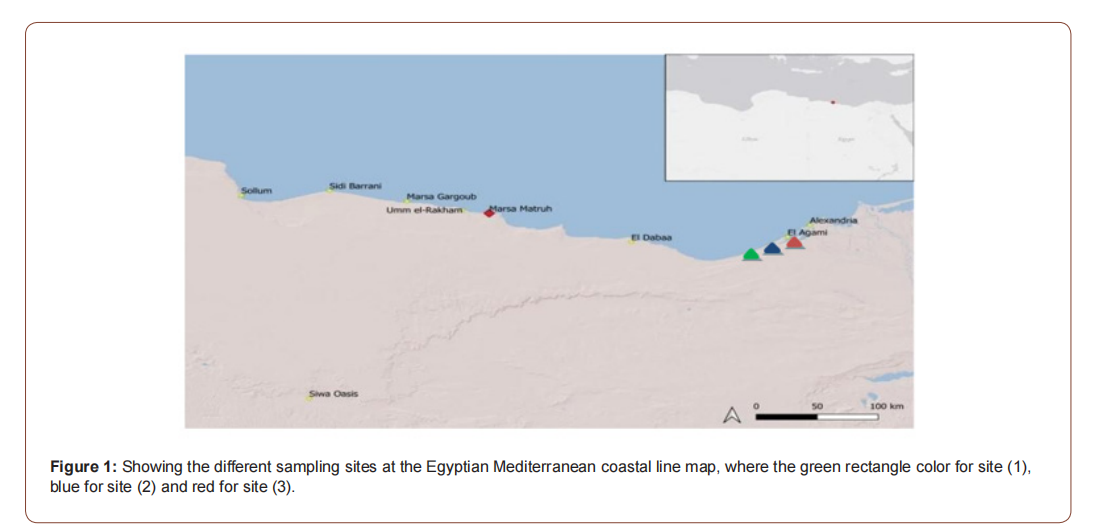
Three sites were being selected at the Northern Egyptian Mediterranean coastal line, where these sites are commonly divided into different trophic levels, to evaluate the different radiological impacts on the studied green macroalgae ((Ulva compressa spp). Figure 1, showed that the three selected sites with following coordinates; where the attitude 290 40.1/ E and Latitude 310 7.5/ N, was shown for site (1) of Al-Agami region, which was characterized by the presence of many population activities near this site. while, site (2) of Al-Agami region with coordinates 290 45.3/ E and Latitude 310 8.2/ N, was described by its lowest population activities, zone, on the other hand the coordinates of the third studied El-Agami zone (3) which is with 290 48.5/ E attitude and 310 10/ N latitude, was described by some fishing activities, as being showed at Figure 1.
Sampling Technique
All the marine sediments and macro algae samples were collected from December 2022 to May 2023. Ulva compressa. specie was described as green macro-algae, where the algal samples were manually collected at the different studied three sites along the Egyptian northern coastal line. After collection, the samples were immediately transported to the laboratory in an ice box to the laboratory for analysis [15].
Using Neutron activation for the Determination of Trace Metals Concentrations
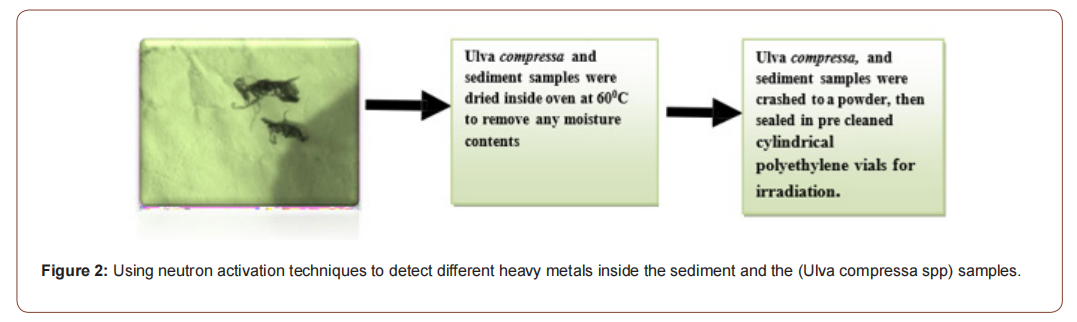
NAA is defined as non-destructive method and multi-elemental technique, which was used for the irradiation process of the collected macro-algal and sediment samples, there are two standardizations used in NAA, which are the relative and the non-relative methods. The relative method where the sample and element standards are irradiated simultaneously Where the non- relative method the multi-element INAA is feasible in the non -relative method or single comparator method assuming stability in time of all relevant experimental conditions, standards for all elements are co-irradiated each in turn with chosen single comparator element, where NAA process was being done at the hot laboratory centre of the Egyptian Atomic Energy Authority, as the prepared samples were subjected to NAA at the IBR-2 reactor, where all the collected samples were being put at the rabbit system of the NAA system of the Inshass 2nd reactor (IBR-2) [16].
The detection limit of NAA is depending on many parameters such as; the amount of material to be irradiated, the neutron flux used, the duration of irradiation time, the total induced radioactivity, the duration of counting time, the detector size, counting geometry and back ground shielding) [16]. Afterward, the samples were kept for a period of 3-5 days, until the induced radioactivity had decayed, making them safe to handle. Upon repackaging the samples, a gamma-ray spectrometer was used to evaluate the induced radioactivity of the long-lived isotopes for duration of 30 and 90 min and the 2nd long lived isotopes, respectively. For measuring the induced radioactivity, high–purity germanium (HPGe) detector was employed, which has a resolution of 2.1 keV line of 60Co and analyze.
CANBERRA Genie 2000 software v 3.4 was used to accumulate the obtained spectra. The mass fractions of elemental content in mg/kg of algae samples [15,16]. Figure 2 shows the steps of determining trace elements concentrations, inside the different semimetal and algal samples, which being irradiated by NAA technique.
Measuring Natural Radioactivity by using High Purity Germanium Detector
Natural radioactivity was measured at the collected marine water samples of the studied sites, by the using of gamma-ray spectrometer, which is based on high-purity germanium (HPGe) detector of 40% relative efficiency. The detector was coupled with multi-channel analyzer (16 k channels) and GENIE 2000 software. The minimum acquisition time was 22 h to reduce the statistical as well as area calculation errors. The IAEA reference materials RGU-1 were used for the spectrometer efficiency [17].
Using ERICA Code 1.2.1
This study provides an insight into methods that can be used to account for such ecological food web processes which will be very applicable in risk management and modeling of radionuclides in benthic ecosystems. The study used ERICA version 1.2.1, it was reported that the ERICA model, in conjunction with the IAEA’s SRS-19 model, is used to determine the minimum distance from a radioactive discharge point where the impact on selected organisms is minimized [7].
This involves assessing the radiological impact by considering the dispersion of radionuclides and their effects on different organisms, where ERICA is consists of three tiers, Tier 1 in ERICA, used for aquatic assessments where the water activity concentrations which were used as input data. The risk quotient (RQ) of reference biota was calculated by the quotient of estimated exposure and dose rate. On the other hand Kd is used to describe the relative activity concentrations of sediment and water, where

RQ cons RQ ≥ < 1/ exp 1, there is a substantial probability that the screening dose rate has been exceeded and, in this case, the environmental risk is arguably negligible and the assessment is terminated at this stage. The screening dose rate has been exceeded and assessment should continue to Tier 3 which is a probabilistic risk assessment in which uncertainties within the results may be the Environmental Media Concentration Limit (EMCL) derivation involves the calculation of intermediate EMCL values for selecting reference organisms for a selected radionuclide and media, where all these conditions are available in all ERICA updates as in equation (1) [7,14].

Where F is the maximum dose rate, an organism will receive for a unit activity concentration of a given radionuclide in an environmental medium (mGy h-1 per Bq l-1). The F values are calculated using CR values and distribution coefficients Kd, the screening dose rate SDR (mGy h-1) is selected at Tiers 1 and 2 applicable to incremental exposures, of 10 mGy h-1. The risk quotient (RQ) method determined the ecological risk by calculating the quotient of estimated exposure and dose rate which is assumed to be environmentally safe. A total risk quotient (RQ) [7,14] is also estimated and defined by equation (3):

Where total (RQ); Mn, measured or predicted maximal activity concentration for radionuclide ‘‘n’’ in the medium in Bq l-1 for water, Bq kg-1 (dry weight) for sediment and. EMCLn, for radionuclide (n). If RQ is < 1, then the probability of exceeding the benchmark is acceptably low (<5%) and this serves as the justification for terminating the risk calculations at this stage. In a situation where RQ is > 1, there is a > 5% probability that the benchmark has been exceeded and further assessment is recommended (Tier 2). Where the evaluation is performed directly against the screening dose rate, with the dose rate and RQs generated for each reference organism selected for assessment as in equation (4)

determined using sensitivity analysis [7,14]. It was recorded that, since the release of the version (1.2.1), 2016 and 1.3 version in 2019, many studies showed differences in output were to be expected and a rigorous series of quality assurance checks have been undertaken to ascertain the basis for any observed differences in output between versions 1.3 and 2.0, to ensure that consistency between assessment tiers had been maintained (e.g., tier 1 output is at least as conservative as tier2 output) [13,14]. Although the pervious advantages of using the updated versions (1.3 and 2.0), the study used ERICA version 1.2.1 where this version was very suitable for the study, as all our study input data didn’t required these previous advantages, as all reference organisms the probability of exceeding the selected screening dose rate is below the probability selection (ERICA dose rate screening value is 10 µGh-1 ), so there was no need to use the advantages tools in version 2.0, besides the using of NAA was very supportive for explaining the marine food web input data, as the radionuclides were measured inside the macroalgae, that makes the using of NAA with ERICA techniques were very supportive tools for estimating the concentration of radionuclides inside the marine macroalgae [7].
Using ERICA version 1.2.1 for the Determination of BioConcentration Factor (BCF)
The BCF is being calculated for different marine sediments and algal samples where its ratio, which is gives information about the ability of plant or algae to accumulate their tissue from the aquatic ecosystem, by comparing the concentrations in the biota (algal biomass) and external medium (e.g. water and sediment). The BCFs, was calculated according to the following;
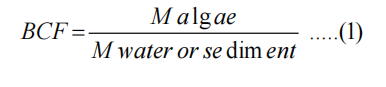
Where M algae tissue (µ𝑔/𝑔 𝑑𝑟𝑦 𝑤𝑡) is the metal concentration in algae tissue and M sediment or water is the metal concentration in sediment (µ𝑔/𝑔) or in water (µ𝑔/ 𝑚𝐿) [13].
Results
Using ERICA Code for the Evaluation of Marine Food Consuming Process, from Sediment to Algae
Table 1 and Figure 3 showed the highest radioactivity concentration value of Th-232 (5.59E+06 Bqkg-1 dry weights) of the measured marine sediment samples is showed at site (1) while the lowest value (4.87E+06 Bqkg-1 dry weights) is showed in site (3). On the other hand the highest radioactivity concentration value of U-238 (2.72 E+06 Bqkg-1 dry weights) of the measured marine sediment samples is showed in site (3). while its lowest concentration value (2.93E+00 Bqkg-1 dry weights) was found at site (2). This is related to the natural radioactivity concentrations of different radio nuclides (Th-232, U-238 and K-40) of marine water samples as shown in Table 1. The activity concentration of non-human organisms refers to the whole-body activity of the organism calculated from the activity measured in the tissues, In ERICA code where the dose calculation is based on the concept of dose conversion coefficients (DCCs). Where Figure 4 showed that the highest measured radioactivity 3.19E+03 Bq/Kg-1 fresh weight value of marine food producer macro-algae is showed in site (1) while the lowest measured radioactivity value 2.09E+03 Bq/Kg-1 fresh weight, was showed at site (2). On the other hand the highest measured radioactivity value 8.84 E+02 Bq/Kg-1 fresh weight of marine food web consumer pelagic fish is showed in site (2) while the lowest measured radioactivity value 8.98 E+0 Bq/Kg-1 fresh weight of the same organism was showed at site (3).
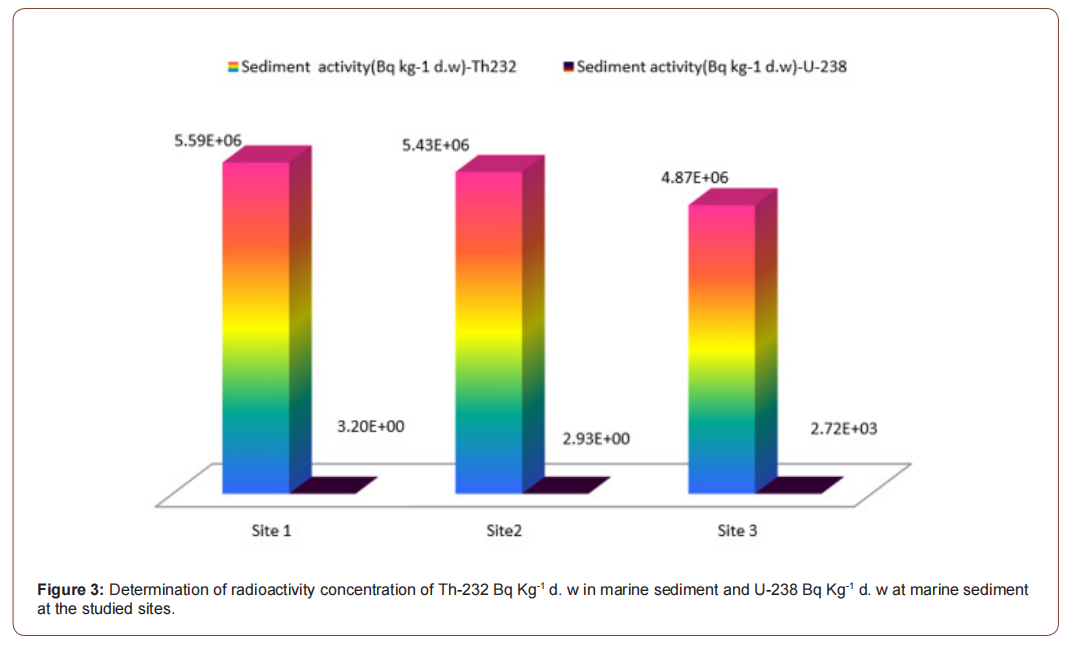
Figure 4 Determination of natural radioactivity concentrations in the macro-algae (marine food web producer) and pelagic fish (marine food web consumer) by using ERICA code. using equilibrium concentration ratios CR and distribution coefficients Kd as shown in Figure 5.There was an increase in distribution coefficients Kd the of Th-232 up taken in macroalgae than distribution coefficients Kd of the U-238 which taken by macroalgae which shows a significant selectivity of marine macro algae for Th-232 than U-238, where Figure 5 showed an increase of concentration ratio of Th-232 than the concentration ration of U-234 this was related to the increase of Kd in Th-232 than U-238 Kd values.
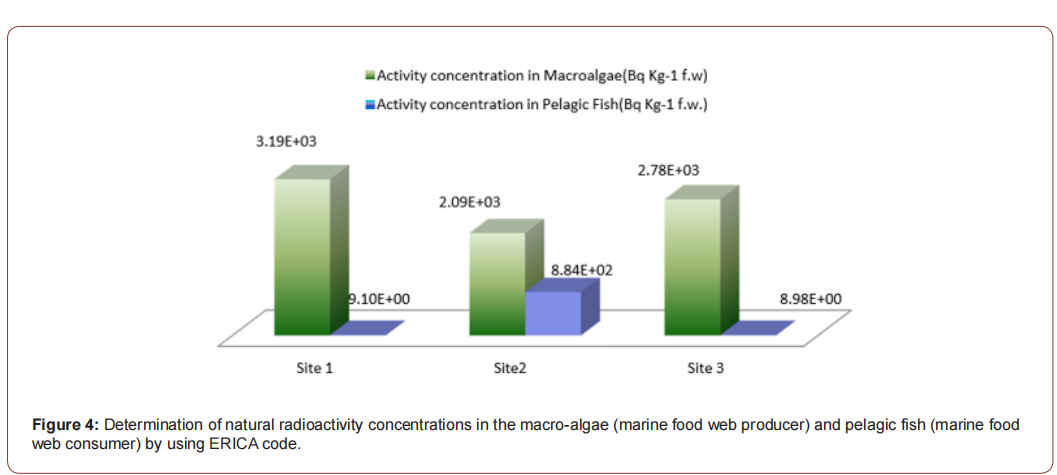
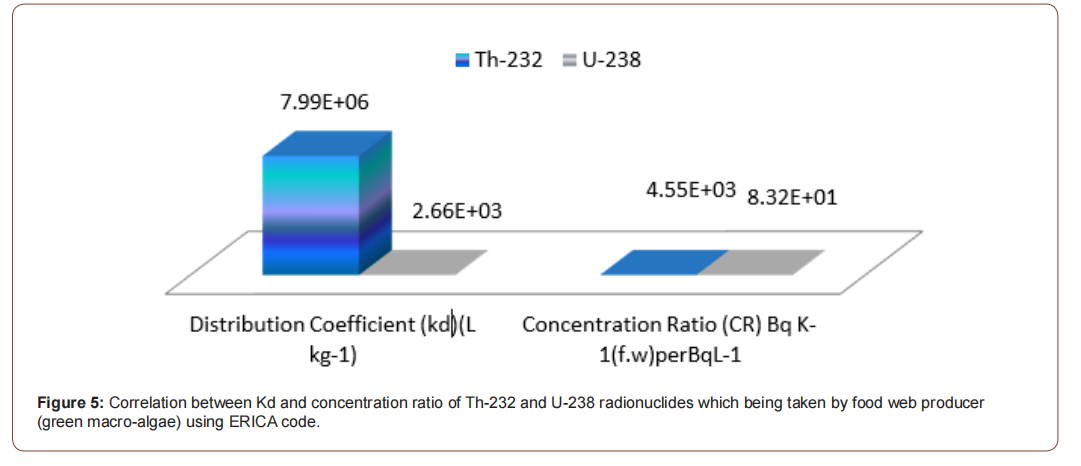
Table 1:Determination of natural radioactivity concentration of marine water samples.

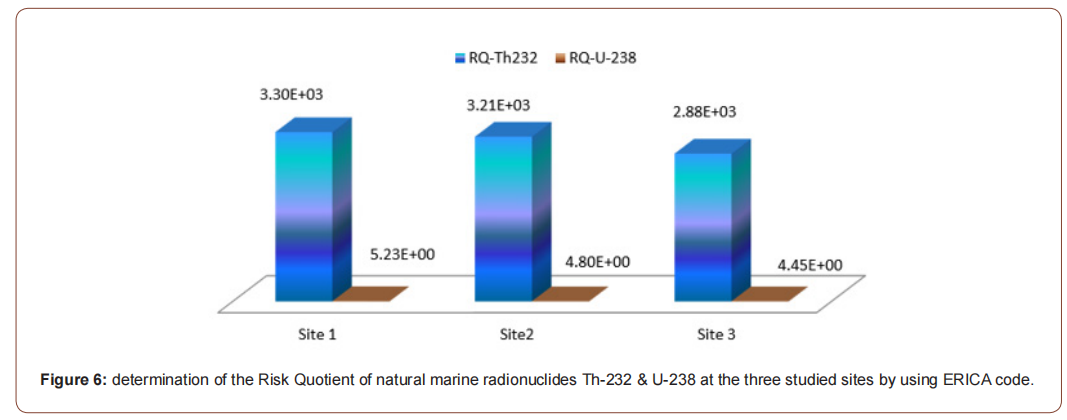
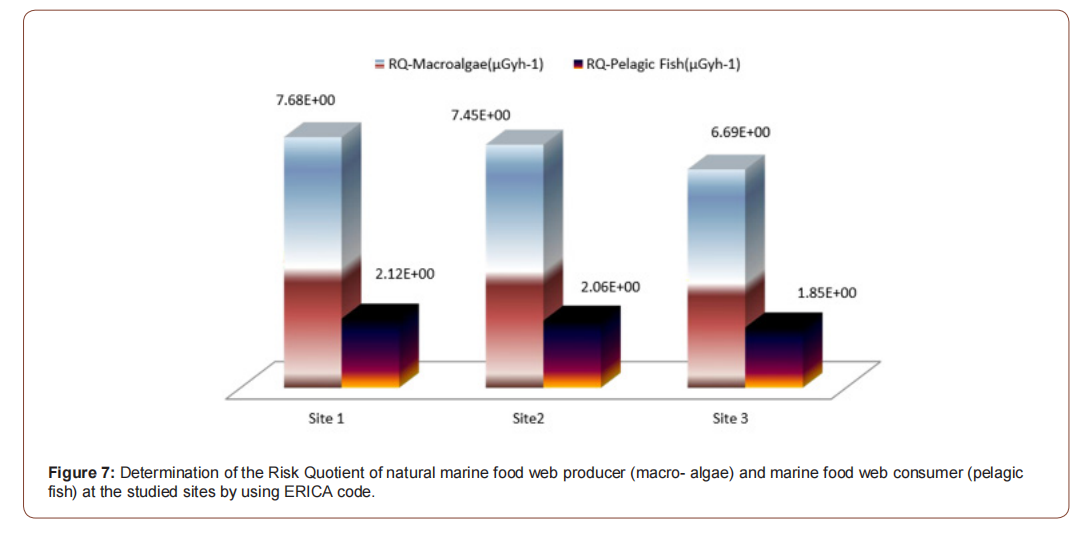
The ERICA assessment was used to calculate the RQ of radionuclide activity concentrations in selected organisms. The risk quotient RQ represents the output of the screening tier and is the ratio of the input media concentration to the EMCL of the selected organisms [18-20]. Figure 6 shows the total risk quotient RQ results for each of the radionuclides 232 Th & 238U, which are being taken by the marine food web producer organisms (Ulva compressa spp.) and the selected marine food web consumer (pelagic fish) for the three studied sites. The results showed that the highest RQ of site (1) is the highest Risk Quotient values than the values site (2) and site (3) this was related the increase of RQ values for Th-232 & U-238 natural radionuclides than the other RQ values of both site (2) and site (3). Figure 7 shows that the RQ values of the marine food producer (Ulva compressa spp) are higher than the RQ values of the studied marine food consumer (pelagic fish), while the higher RQ value was showed at site (1) than the other RQ values of Site (2) and Site (1), this was related to the increasing of the marine radio nuclides up taken by food web producer at site (1).
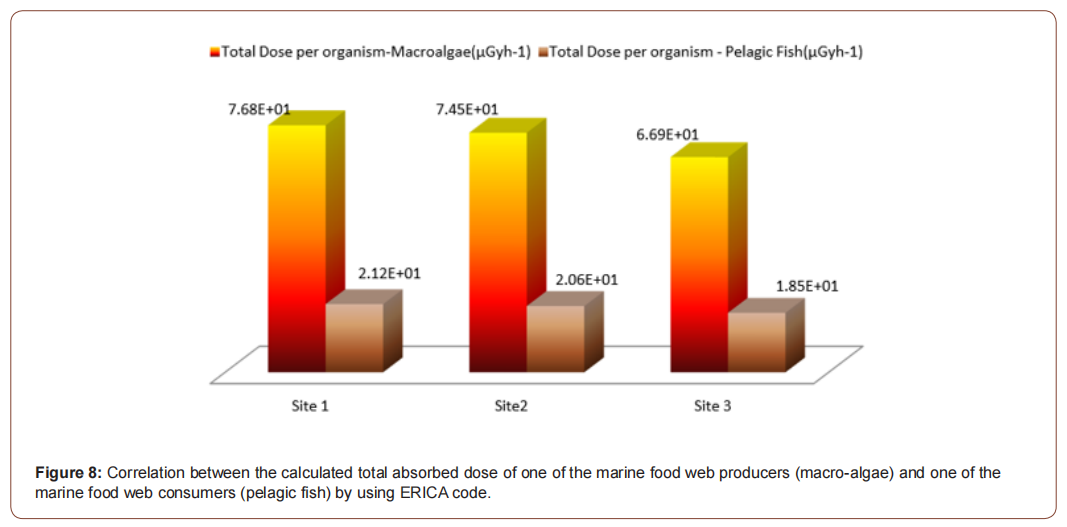
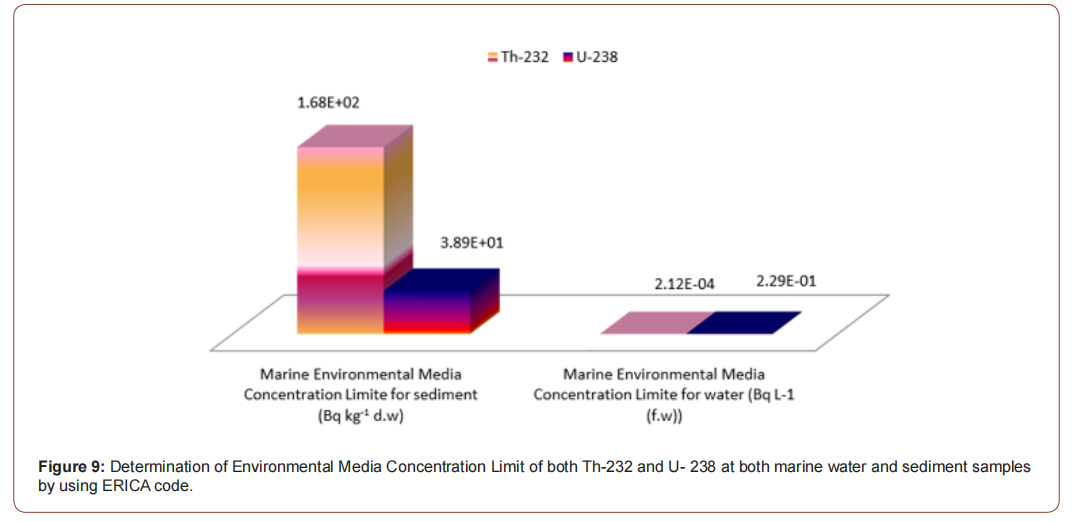
At Tier 2 of ERICA tool the radiation exposure to non-human organisms is calculated on the basis of the rate of external, internal, and total absorbed dose which is defined as the energy deposited per unit mass in living tissue during the exposure period [13]. The calculated activity concentrations in the selected organisms were used to estimate the total absorbed dose Figure 8 showed that The results of total dose rate µGy/h per marine producer food web organism (macro-algae) is higher than the of total dose rate µGy/h per marine consumer food web organism (pelagic fish), while the highest value of total dose rate µGy/h per marine producer food web organism was showed at site (1) than both sites (2 &3). The Environmental Media Concentration Limit EMCL is defined as the activity concentration in the aquatic media that would result in a dose rate to the most exposed reference organism equal to that of the selected screening dose rate probability distribution functions associated with the concentration ratio CR and distribution coefficient (Kd). Figure 9 shows that EMCL value (1.689E+02 BqK- 1 d. w) of Th-232 in marine sediment samples is higher than U-238 EMCL value (3.89E+01 BqK-1 d. w) at the same marine sediment samples, which is related to the increasing of precipitation rate of Th-232 than U-238. On the other hand Figure 9 shows that the EMCL value of U-238 (2.29E-01 BqK-1 d. w) in marine water samples is higher than the EMCL value of U-238 (2.12E-04 BqK-1 d. w) at the same samples. This related to increasing the measured radioactivity concentration of U-238 than Th-232 in the marine water samples being analyzed.
Determination of Heavy Metals in Marine Water Samples by using NAA
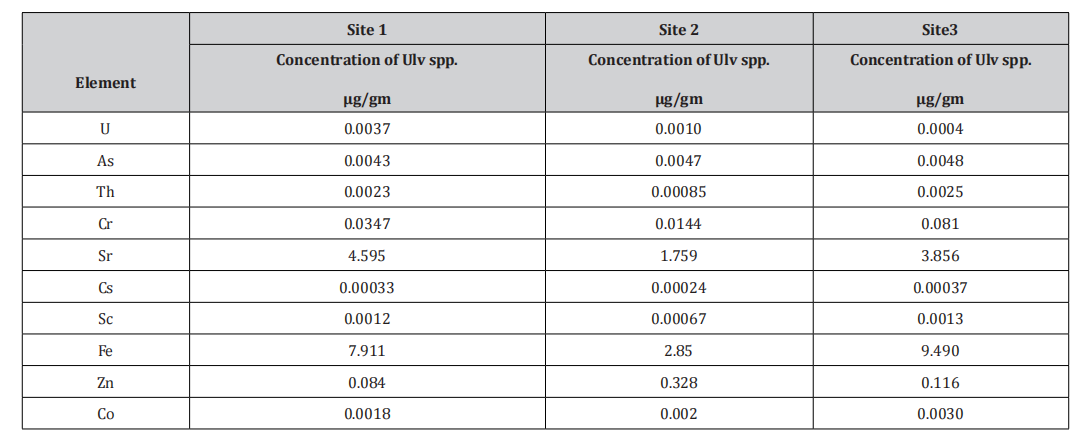
Table 2 showed that the concentration of Chromium inside Ulva compressa spp algae as one of marine food web producers at the studied three sites which are 0.034, 0.014 and 0.081 µg/ Kg respectively are lower than the permissible limits of WHO for Aquatic plants which is 1.3 µg g/Kg DW wet, while the measured Fe inside Ulva compressa spp which are ( 7.91, 2.85 and 9.40 mg/kg) respectively for Fe which are lower the permissible limit of WHO for Aquatic living organisms which is 20 µg / Kg(WHO,2003), while the measured Zn concentration values at different sites are (0.084, 0. 32 and 0.116 µg / kg ) which are lower than limit of WHO for Aquatic living organisms(WHO,2003), which is 0.6 µg g/Kg, Table 2 showed that the highest mean average concentrations values of the trace metals which being measured inside the Ulva compressa spp tissues by using NAA will be as follow : Fe › Sr › Zn, Co where, These results will lead to increase the probability of these trace metals to be up taken by Ulva compressa spp at the three selected sites.
Table 2:Mean average concentrations of different heavy metals determined of the collected green macro-algae samples (Ulv spp.) in µg/gm by using NNA at different coastal sites.
Determination of Trace Element in Sediments by using NAA
Table 3 showed that the highest mean average concentrations values of the trace metals which being measured at marine sediments by using NAA. These mean average concentration results with μg/Kg being observed as follows: U › Cs › Sr › Cr different trace metals which might affect the different marine living organisms specially the studied Ulva compressa spp. On the other hand the measured concentrations of trace metals measured in sediments samples in mg/kg were below the permissible limits of both USEPA & WHO [21,22] which indicated that there will be no environmental or health impacts resulting from these trace metals which found in marine.
Table 3: Mean average concentrations of different heavy metals determined in the collected sediments samples in µg/gm by using NNA at different coastal sites.
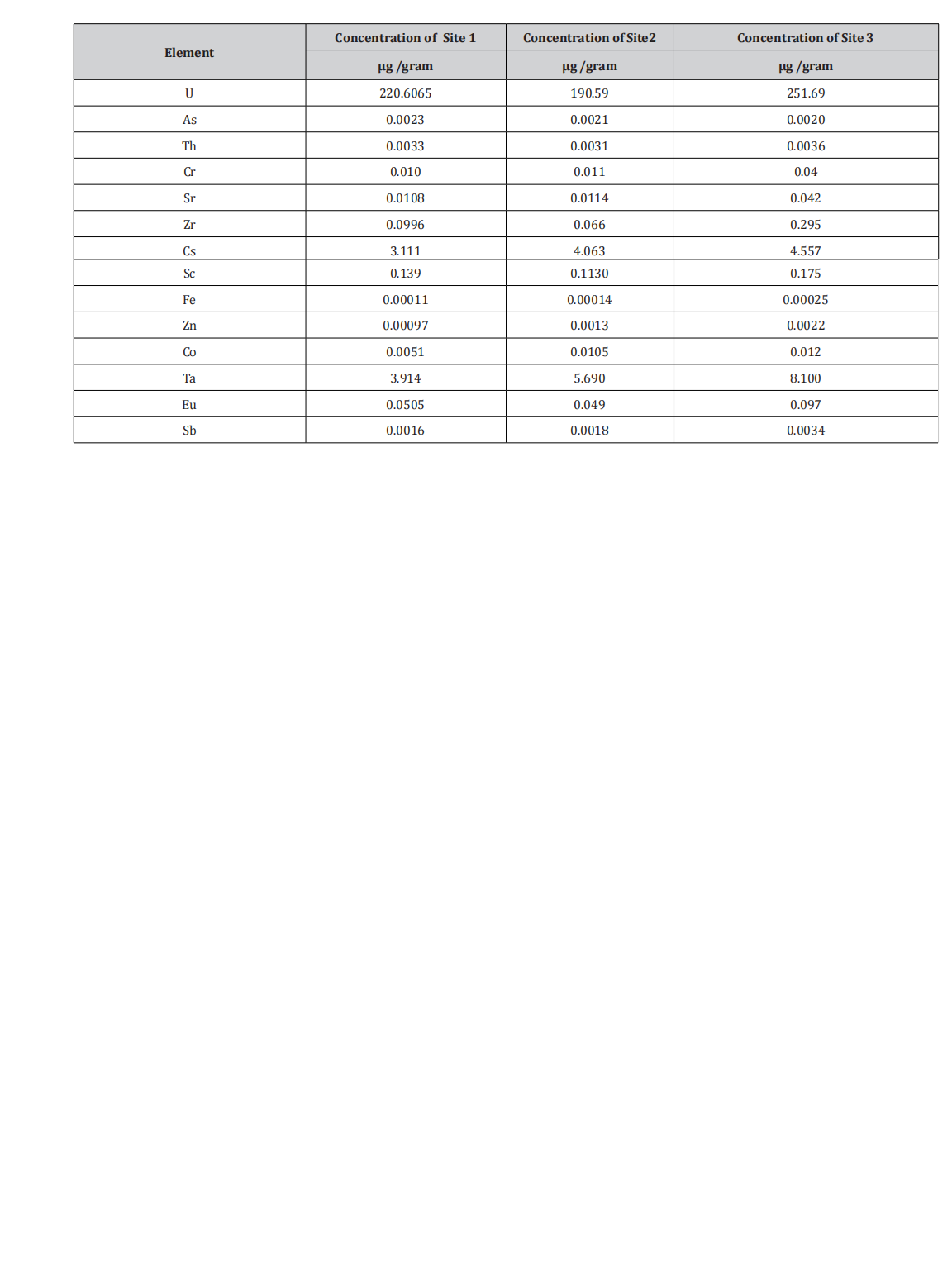
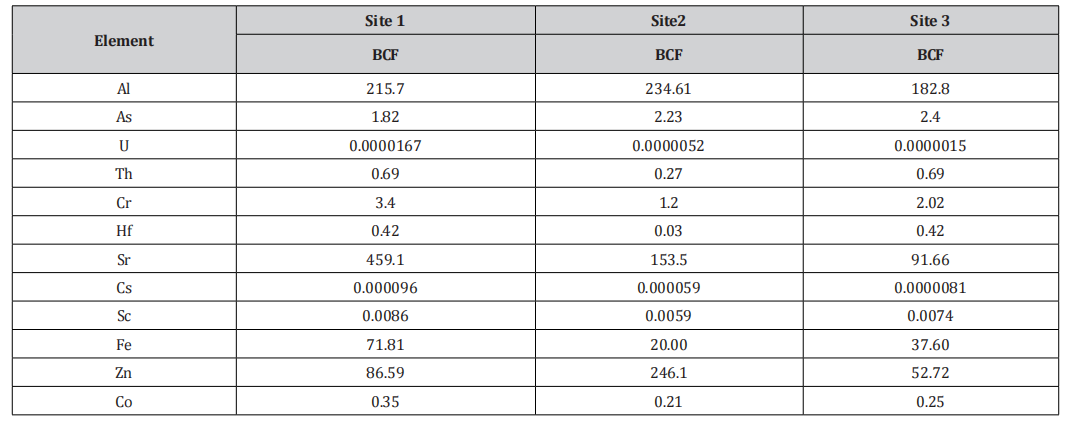
Table 4 showed that site (1) has the highest BCF values than Site (2) and Site (3) Where the highest BCF are showed in Al, Sr, Zn, Cs, U, Co at all the studied sites these will indicate that the marine food web producer has the high bioaccumulation tendency for most of the trace metals, which lead to use the marine Ulva compressa spp. as bio-filter for different marine trace elements, on the other side site (2) could be recommended as suitable site for fishing than site one and site three.
Table 4: Mean average concentrations of different heavy metals determined in the collected sediments samples in µg/gm by using NNA at different coastal sites.
Conclusion
Study showed that the highest natural radioactivity concentration value of Th-232 in Bqkg-1 dry weights, of the measured marine sediment samples detected at site (1) while the lowest value was in site (3). On the other hand the highest natural radioactivity concentration value of U-238 in case of marine sediment samples is showed in site (3). while its lowest concentration value was detected at site (2). The macro-algal results showed that the highest measured radioactivity fresh weight Bq/ Kg-1 value in case of marine food producer was indicated at site (1) while the lowest value was showed at site (2). On the other hand the highest measured radioactivity fresh weight value Bq/Kg-1 of marine food web consumer pelagic fish is detected in site (2) while the lowest value of the same pelagic fish consumer was showed at site (3), this supports the importance of using ERICA code in the food consumer process evaluation at marine media, besides the ERICA code was also being used to calculate the RQ of radionuclide activity concentrations in different selected organisms.
The ERICA results showed that the highest RQ was detected at site (1) rather than the values detected at sites (2 & 3), this was related the increase of RQ values for Th- 232 & U-238 natural radionuclides than the other RQ values of sites (2 & 3). While the RQ values of the marine food producer (Ulva compressa spp) are higher than the RQ values of the studied marine food consumer (pelagic fish), where the highest RQ value was showed at site (1) rather than the other RQ values of Sites (2 & 3), this was related to the increasing of the marine radio nuclides which were up taken by food web producer at site (1). Study results showed that the highest mean average concentrations values of the trace metals which being measured inside the Ulva compressa spp tissues by using NAA will be as follow: Fe › Sr › Zn, Co where, while all these concentrations values are below the permissible limits of WHO limits for marine living organisms. The highest bioaccumulation values are showed in Al, Sr, Zn, Cs, U, Co, of different measured trace elements. The study recommends the using of the Ulva compressa spp, as a biochemical treatment unit in nuclear power plant cooling water systems.
Funding
No Funds
Ethics Approval
All of the experimental protocols were not need to get ethic approval as there were no experimental animals used.
Consent to Publish
All of authors consent that this manuscript was published in this journal.
Consent to Participate
No consent to participate.
Conflict of Interest
The authors declare no competing interests.
Data Availability
All data generated or analyzed during this study are included in this published article
Declarations
Conflict of Interest: The authors declare no competing interest.
References
- IAEA (2015) The Fukushima Daiichi Accident. STI/PUB/1710 Report. International Atomic Energy Agency. Vienna 1254.
- Xinran Han (2023) Nuclear Pollution and Its Effects on Marine Ecosystems. Highlights in Science, Engineering and technology 69: 212-218.
- Yue Yu, Peng Zhan, Wu Men (2023) Impact of long-term operation of nuclear power plants on the marine ecosystem of Daya Bay. Mar Pollut Bull 193: 115146.
- UNSCEAR (2014) Sources Effects and Risk of Ionizing Radiation, Volume I: Report to the General Assembly, Scientific Annex A: Levels and Effects of Radiation Exposure to the Nuclear Accident After the 2011 Great East-Japan Earthquake and Tsunami. United Nations Scientific Committee on the Effects of Atomic Radiation, Report to the68th Session of the United Nations General Assembly, A/68/46, Vienna PP. 311.
- Fuller N, Ford A, Lerebours A, Gudkov D, Nagorskaya L, et al. (2019) Chronic radiation exposure at Chernobyl shows no effect on genetic diversity in the freshwater crustacean, Asellus aquaticus thirty years on. Ecology and Evolution 9(18): 10135-10144.
- Hong-Hui Huang, Wei Wu, Kaizhi Li (2023) Nuclear Power Cooling-Water System Disaster Causing Organism Outbreak and Aggregation Mechanism, Early-warning Monitoring, Prevention and Control. Frontiers in marine science 10: 112-123.
- ERICA (2007) The ERICA assessment tool: environmental risk from ionizing contaminants: assessment and management. Version1.3.1.51 - Updated 2019. 07. 12. Help Function Document.
- Nurgül Hafızoğlu, Latife Sahin, Ela Ganioğlu, Güler Ağgez, Gizem Yıldırım Baştemur, et al. (2020) Assessment of Natural and Anthropogenic Radioactivity of the Princes’ Islands in the Sea of marmara, Water Air Soil Pollut 231: 261.
- Jimin Peng, Mark Gerchikov, Irv Benovichb (2015) Ecological Risk Assessment Software for Radioactive Waste Management Facilities – 15464, WM 2015 Conference, March Phoenix, Arizona. USA 15-19.
- Prlić I, Ana Mostečak, Marija Surić Mihić, Želimir Veinović, Luka Pavelić (2017) Radiological risk assessment: an overview of the ERICA Integrated Approach and the ERICA Tool use. Arh Hig Rada Toksikol 68(4): 298-307.
- Beresford NA, Barnett CL, Howard BJ, Scott WA (2008) Brown within the ERICA Tool and the default concentration ratios for terrestrial biota. J Environ Radioact 991393: 400-407.
- ICRP (1983) ICRP 38 - Radionuclide Transformation: Energy and Intensity of Emissions, Report of a Task Group of Committee 2 of the ICRP on data used in ICRP 30. Annals of the ICRP 1: 11-13.
- Marcia Takey, Denise Tavares Giannini, Maria Cristina Caetano Kuschnir (2022) ERICA; prevalence of fish consumption and its association with cardiovascular risk factors and healthy behavior in Brazilian adolescents. Journal de Pediatria 98(6): 599-606.
- Amy Macintosh, Darren Koppel, Mathew P Johansen, Nicholas A. Beresford, David Copplestone, et al. (2022) Radiological risk assessment to marine biota from exposure to NORM from a decommissioned offshore oil and gas pipeline. J Environ Radioact 251-252: 106979.
- N Nasser, A Kravtsova, M Frontasyeva, MM Sherif (2017) Neutron Activation Analysis used to study elemental accumulation in some marine macrophytes Mediteranean sea coast of Egypt. American Journal of Analytical Chemistry 8(6): 395-406.
- AM Hassan (2009) Bulk-samples prompt gamma-rays neutron activation analysis (PGNAA) with isotopic neutron sources. Proceedings of the 7thconference on nuclear and particle physics. Sharm El-sheikh, Egypt PP. 34-67.
- Dalal Abdel Aziz, A Shabassy, HA Hassan, Wafa El-Meligy, HM Diab (2022) Evaluation of HPGe Detector Long Term Performance for Environmental Radioactivity Measurments. Egyptian Journal of Chemistry 65(13): 699-705.
- Ari TKI, konen Ville Kangasniemi (2018) Overview of international status of considering radiological protection of non-human biota in the context of deep geological disposal of radioactive waste. Environmental Case Ltd, Pori (Finland).
- Michael Pingram (2014) Food Web in the lower Waikato River and the role of hydro geomorphic complexity. This submitted in fulfillment of the requirements for degree of doctor of philosophy in biological sciences at the University of Waikato. Hamilton, New Zealand 3-205.
- JE Brown, B Alfonso, R Avila, NA Beresford, D Copplestone, et al. (2016) A new version of the ERICA tool to facilitate impact assessment of radioactivity on wild plants and animals. J. Environ Radioact 153: 141-148.
- USEPA (2000) Estuarine and coastal Marine Waters: Bio-assessment and Bio-criteria Technical Guidance. United States Environmental Protection Agency. EPA-822-B-00-024, Washington DC: 1-69.
- WHO (2003) Guidelines on Recreational Water Quality, Coastal and Fresh water. World Health Organization, Switzerland 1: 1-137.
-

This work is licensed under a Creative Commons Attribution-NonCommercial 4.0 International License.




