




 Review Article
Dexmedetomidine Induced Exacerbation of Autonomic Dysreflexia During Traumatic Spine Surgery: A Case Report
Received Date: March 05, 2026; Published Date: March 17, 2026
Abstract
Autonomic dysreflexia (AD) is a potentially catastrophic complication in patients with spinal cord injury (SCI) at or above the T6 level. We report a case of intraoperative AD in a 50-year-old male with acute traumatic C6–C7 spondylolisthesis and cord contusion extending from C2 to T1, in whom escalation of dexmedetomidine infusion paradoxically worsened hypertension. Blood pressure escalated from 162/108 mmHg to 174/112 mmHg despite increased dexmedetomidine dosing (0.5 to 0.7 µg/kg/h), with heart rate remaining stable at 61–63 bpm. Discontinuation of dexmedetomidine and initiation of nitroglycerin infusion resulted in prompt hemodynamic stabilization. This case underscores the biphasic hemodynamic profile of dexmedetomidine and its potential to unmask or exacerbate AD in acute high cervical spinal cord injury
Keywords: Autonomic dysreflexia; Dexmedetomidine; Spinal cord injury; Cervical spondylolisthesis; Intraoperative hypertension; Nitroglycerin
Introduction
Autonomic dysreflexia (AD) is a life-threatening syndrome characterized by uncontrolled sympathetic discharge below the level of spinal cord injury (SCI), typically at or above T6, in response to noxious stimuli [1]. Clinical manifestations include severe hypertension, bradycardia, headache, flushing, and diaphoresis, with potential sequelae including intracranial hemorrhage, myocardial infarction, and seizures [2]. Evidence-based guidelines from the Paralyzed Veterans of America, Consortium for Spinal Cord Medicine, and International Spinal Cord Society emphasize immediate trigger identification, removal, and antihypertensive therapy [3–5].
Dexmedetomidine, a highly selective α₂-adrenergic agonist, is widely used in neuroanesthesia for its sympatholytic, sedative, and analgesic properties without respiratory depression [6]. However, its biphasic hemodynamic profile—initial peripheral vasoconstriction followed by central sympatholysis—may precipitate or exacerbate hypertension in susceptible patients [7,8]. We present a case highlighting this interaction in the setting of acute cervical SCI.
Case Presentation
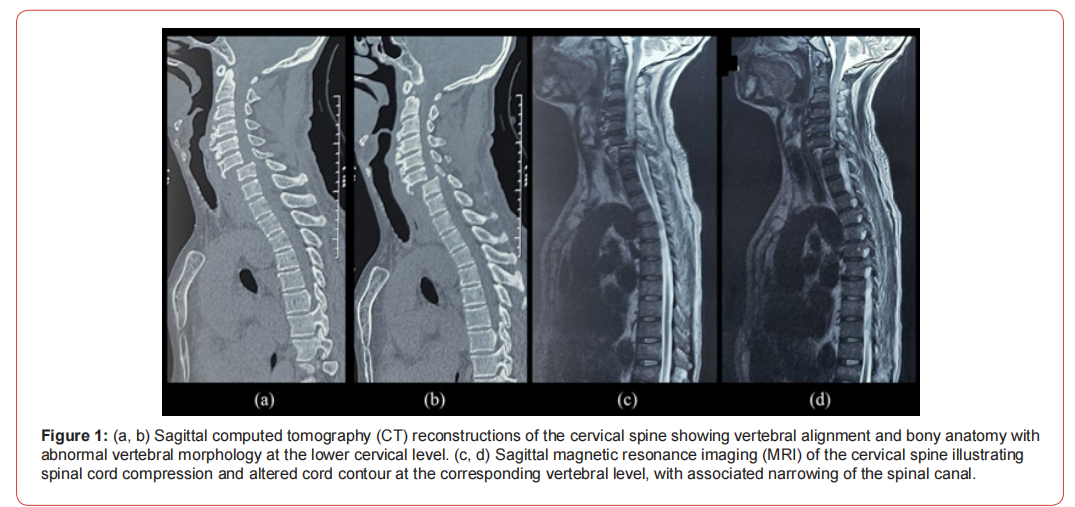
This case report adheres to the CARE guidelines of EQUATOR network. A 50-year-old male presented following a 10-foot fall with immediate quadriparesis. Neurological examination revealed GCS 15, bilateral upper limb power 3/5, and lower limb power 0/5, consistent with incomplete tetraplegia. Laboratory parameters were unremarkable. On neuro-imaging, grade 3 anterolisthesis of C6 over C7, bilateral facet dislocation, spinal canal stenosis were observed on CT scan. Whereas the MRI revealed spinal cord contusion and edema from C2 to T1, thereby confirming traumatic spondylolisthesis with myelopathy (figure 1). There were incidental findings of chronic right frontal infarct, right aortic arch, double superior vena cava (Figure 1).
In order to evaluate the cause of fever a week ago, the HRCT chest revealed mild pericardial effusion and bilateral apical emphysematous changes. Subsequent transthoracic echocardiography revealed concentric left ventricular hypertrophy (LVH) and mild pericardial effusion without tamponade. Due to pericardial effusion, anesthesia was induced with etomidate 0.3 mg/kg, morphine 4 mg iv, and vecuronium 8 mg iv. Morphine was used to provide baseline analgesia and prevent sympathetic surges during induction, considering the patient’s cardiovascular vulnerability. Maintenance was achieved with oxygen–air– isoflurane (MAC 0.9 - 1.1). Invasive arterial monitoring was established. Dexmedetomidine infusion was initiated at 0.5 µg/ kg/h for intraoperative analgesia attenuation of sympathetic responses, and hemodynamic stability under full anesthetic depth.
The surgical procedure for C6–C7 laminectomy and lateral mass fixation was initiated uneventfully. Approximately 90 minutes after starting dexmedetomidine, blood pressure rose acutely to 162/108 mmHg (baseline 118/76 mmHg), with heart rate 61–63 bpm and ETCO₂ 29–30 mmHg. Prior to this event, there were no episodes of hypertension or dysreflexia-like responses preoperatively or during non-noxious perioperative stimuli such as positioning, skin preparation, or catheter manipulation.
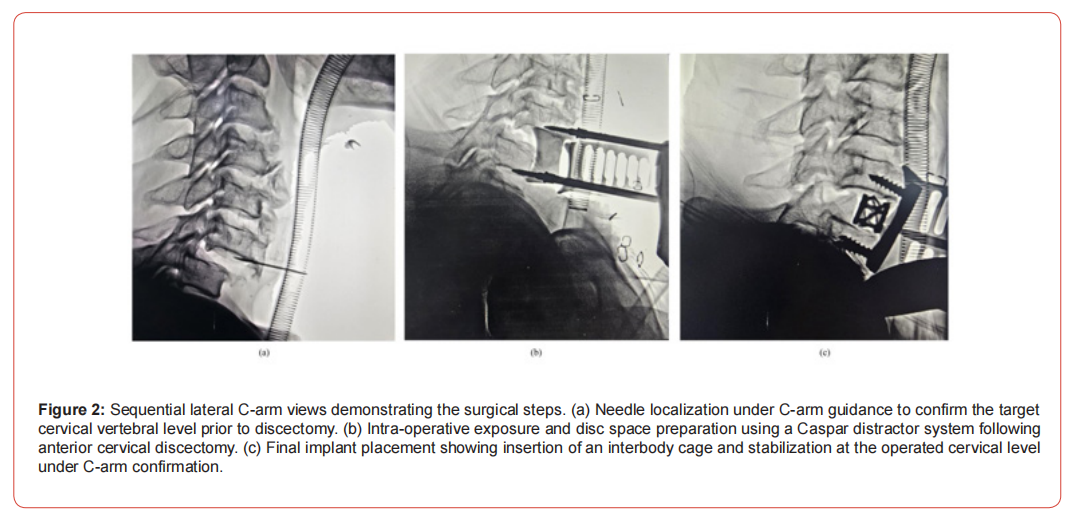
Deeming inadequate analgesia as a possibility, the dose of dexmedetomidine infusion was increased to 1 µg/kg/h. However, within next 6 minutes, the blood pressure escalated further to 184/112 mmHg. Therefore, dexmedetomedine was discontinued, and we initiated nitroglycerin infusion (0.5 µg/kg/min). Blood pressure normalized within three minutes to 128/82 mmHg. No further hypertensive episodes occurred. The procedure concluded uneventfully, and the patient was extubated awake with no new neurological deficits (figure 2). Postoperative observation revealed no recurrence of hypertensive episodes or features of AD (Figure 2).
Discussion
Autonomic dysreflexia (AD) represents a critical and potentially life-threatening complication in patients with spinal cord injury (SCI), particularly those with lesions at or above the T6 level. AD is characterized by an exaggerated sympathetic response to noxious stimuli below the level of injury, resulting from disrupted descending inhibitory pathways. This leads to unopposed sympathetic outflow via intact spinal reflexes, manifesting as acute hypertension, bradycardia, headache, flushing, and diaphoresis above the injury level, with compensatory parasympathetic activation via the vagus nerve contributing to the bradycardia. In the intraoperative setting, surgical manipulation of the spine or viscera can serve as a trigger, amplifying the risk in acute SCI cases where autonomic instability is heightened. If unmanaged, AD can precipitate severe sequelae such as cerebral hemorrhage, myocardial infarction, or seizures.
In the present case, the patient had no AD episodes prior to surgery or with non-noxious perioperative stimuli, suggesting that surgical manipulation was the primary trigger. Intraoperative hypertensive episode occurred during C6-C7 laminectomy and lateral mass fixation, despite stable anesthetic depth and normocapnia. The patient’s baseline comorbidities, including concentric left ventricular hypertrophy (LVH) suggestive of chronic hypertension and atherosclerotic vascular disease, likely compounded the response. Notably, the heart rate remained relatively stable at 61–63 bpm, consistent with AD’s baroreceptormediated bradycardia. The decision to escalate dexmedetomidine, paradoxically worsened the hypertension. This highlights a key pitfall of dexmedetomidine in the context of AD: its biphasic hemodynamic profile.
Dexmedetomidine, a highly selective α2-adrenergic agonist, exerts central sympatholytic effects by activating α2A receptors in the locus coeruleus and brainstem, reducing norepinephrine release and promoting sedation, analgesia, and hypotension. This makes it an attractive agent for neurosurgical anesthesia in SCI patients, where it can mitigate sympathetic surges and facilitate hemodynamic stability without respiratory depression. Literature supports its utility in chronic SCI for sedation and AD prophylaxis; for instance, combinations with magnesium sulfate have demonstrated efficacy in reducing AD episodes through enhanced sympatholysis. Case reports also describe successful use in SCI patients undergoing procedures, maintaining stability without triggering AD symptoms [9,10]. However, the drug’s initial peripheral effects—mediated by α2B receptors on vascular smooth muscle—induce transient vasoconstriction and hypertension, particularly during rapid infusion or loading doses. This biphasic response is well-documented, with hypertension occurring in up to 10–20% of cases, often resolving within minutes but potentially persisting in vulnerable populations.
The “hemodynamic fallacy” in this context appears to refer to the paradoxical worsening of intraoperative hypertension during dexmedetomidine escalation, despite its intended sympatholytic effects, in a patient undergoing cervical spine surgery for traumatic spinal cord injury (SCI). The primary interpretation in prior discussions was autonomic dysreflexia (AD) exacerbated by dexmedetomidine’s biphasic hemodynamic profile (initial peripheral vasoconstriction via α2B or α1 receptor stimulation, leading to transient hypertension before central α2A-mediated hypotension and bradycardia). This resolved rapidly with discontinuation and nitroglycerin (NTG) infusion, supporting a vasodilator-responsive mechanism.
Dexmedetomidine acts centrally through α₂A receptors in the locus coeruleus to reduce sympathetic outflow. It has been used successfully in neurosurgical anesthesia and spine surgeries However, its initial peripheral α₂B-mediated vasoconstrictive effect may rarely produce hypertension in 10–20% of cases. In this patient, hypertension occurred 90 minutes after initiation of infusion, confounding the implication of biphasic hemodynamic effect of dexmedetomedine in its loading-phase. It is plausible that dexmedetomidine may have failed to suppress spinally mediated sympathetic reflexes, altered autonomic balance in a denervated state, and amplified vasoconstriction during evolving dysreflexia.
Alternative differential diagnoses have been summarized in table 1. However, these do not completely explain the combination of severe hypertension, reflex bradycardia, temporal association with spinal manipulation, and rapid resolution with nitroglycerin. Such features of the present case align most closely with dysreflexia.
Table 1:Differential diagnosis and rationale for the present case.

Therefore we believe that the patient developed hypertension due to autonomic dysreflexia acting as the primary driver. These effects were unmasked by the biphasic effects of dexmedetomidine. This is the plausible explanation as dysreflexia is a hallmark of spine trauma at or above T6 [11]. High cervical involvement disrupts descending sympathetic inhibition, allowing unopposed reflexes as observed in the present case. The patient presented 3 weeks after trauma, when the risk of autonomic dysreflexia is highest due to evolving autonomic instability.
Surgical manipulation (e.g., bone work or cord traction) could easily serve as a noxious trigger below the lesion, provoking a sympathetic surge—classic for intraoperative dysreflexia in spine surgery. If we observe the clinical presentation, the blood pressure spiked dramatically, but heart rate (HR) stayed low and stable. This is hallmark feature of autonomic dysreflexia where baroreceptor-mediated vagal bradycardia compensates for the hypertension, unlike pure surgical stress or drug effects, which often cause tachycardia. The episode occurred mid-surgery, aligning with procedural triggers rather than a random drug reaction. Worsening with dexmedetomidine (sympatholytic but with initial vasoconstrictive phase) fits dysreflexia’s amplification of sympathetic hyperactivity. The rapid resolution of symptoms with nitroglycerin and discontinuation of dexmedetomidine further supports a diagnosis of AD exacerbated by the drug’s initial vasoconstrictive phase.
Underlying LVH (suggestive of chronic hypertension) and atherosclerotic disease could make the patient more prone to exaggerated responses, but in an SCI context, this points to AD rather than isolated issues. The differential diagnosis of direct dexmedetomidine biphasic effect, surgical stimulation, non-AD autonomic instability etc. do not fully over-ride the diagnosis of autonomic dysreflexia. In fact, these differential diagnosis could be contributory factors within an autonomic dysreflexia framework. We believe that future research should address to predictive models for detecting autonomic dysreflexia as the trend has resurged in neurosciences recently [12].
Conclusion
Dexmedetomidine should be used cautiously in acute cervical SCI due to its potential to precipitate or worsen AD via initial vasoconstriction. Careful monitoring, avoidance of unnecessary dose escalation, and attention to surgical triggers are crucial. Early recognition of AD, prompt discontinuation of offending agents, and vasodilator therapy are critical. This case reinforces the need for heightened vigilance and tailored pharmacotherapy in neurotrauma anesthesia.
Acknowledgement
None.
Conflict of Interest
No Conflict of interest.
References
- Krassioukov A (2012) Autonomic dysreflexia: current evidence related to unstable arterial blood pressure control among athletes with spinal cord injury. Clin J Sport Med 22(1): 39-45.
- Eldahan KC, Rabchevsky AG (2018) Autonomic dysreflexia after spinal cord injury: Systemic pathophysiology and methods of management. Auton Neurosci 209: 59-70.
- (1997) Acute management of autonomic dysreflexia: adults with spinal cord injury presenting to health-care facilities. Consortium for spinal cord. J Spinal Cord Med 20(3): 284-308.
- Paralyzed Veterans of America. Autonomic dysreflexia clinical practice guideline. PVA; 2024.
- Tasbihgou SR, Barends CRM, Absalom AR (2021) The role of dexmedetomidine in neurosurgery. Best Pract Res Clin Anaesthesiol 35(2): 221-229.
- Chaitanya G, Arivazhagan A, Sinha S, Madhusudan Reddy KR, Thennarasu K, et al. (2014) Hemodynamic effects of dexmedetomidine during intra-operative electrocorticography for epilepsy surgery. J Neurosci Rural Pract. 5(Suppl 1): s17-s21.
- Chavali S, Singh S, Kaushal A, Khandelwal A, Roy H (2018) Persistent Hypertensive Response Following Dexmedetomidine Infusion in a Patient with Cervical Spinal Cord Injury. J Neurosci Rural Pract 9(3): 426-427.
- Friesen RH, Nichols CS, Twite MD, Cardwell KA, Pan Z, et al. (2013) The hemodynamic response to dexmedetomidine loading dose in children with and without pulmonary hypertension. Anesth Analg 117(4): 953-959.
- Sharma KK, Chauhan B (2024) Integrated dexmeditomidine-sevoflurane algorithm for anesthetic induction - A viable asset for neurosurgery. Surg Neurol Int 15: 455.
- Sharma KK, Sharma S, Takkar V, Devi M, Krishnaswami S (2025) Neurocognition after Electroencephalography Guided Anesthetic Induction with Dexmeditomidine in Neurosurgical Patients: A Case Series. J. Neuroscience and Neurological Surgery 17(3):1-6.
- West CR, Squair JW, McCracken L, Currie KD, Somvanshi R, et al. (2016) Cardiac Consequences of Autonomic Dysreflexia in Spinal Cord Injury. Hypertension 68(5):1281-1289.
- Sharma KK, Reddy KRM (2025) Exploratory modeling of intraoperative co-oximetry data for predicting hemodynamic trends in a thalassemic patient: a pilot case. J Neuroanaesthesiol Crit Care 12(3).
-

This work is licensed under a Creative Commons Attribution-NonCommercial 4.0 International License.




