

 Research Article
Turning Low Quality Secondary Raw Materials into Bio Stimulants/Biofertilizers by Eco-Bioleaching Technology
Received Date: March 03, 2025; Published Date: March 12, 2025
Abstract
The results connect the mining industry with agriculture through innovative biotechnology called “eco-bioleaching”. This technology transforms disused mining resources (sand from open pit mines, foundry sand) into biohelpers in an ecological way supporting the restoration of soil chemistry and features and stimulating of growth and health of plants. The eco-bioleaching process of the organically contaminated used foundry sand was tested under static and percolate conditions with a view to eliminating the hazardous organic compound. According to an analysis of all approaches after eight weeks of treatment, the most effective method finally turned out to be that of imitating “heap heterotrophic bioleaching” under percolate conditions, in which a reduction in contamination to 4.3 mg/l DOC was achieved. Eco-bioleaching of samples based on the activity of naturally occurring microbial consortia in the form Lactobacillus and Bacillus produce leachates that can be used as a bio stimulant/biofertilizer. Such a new generation of bio stimulants/biofertilizers contains beneficial bacteria, organic acids, and dissolved micro and macro elements from non-metallic raw materials and wastes. The amount of sand sample affects the concentration of organic acids and thus elements after bioleaching. The mined lowgrade sands and used raw materials such as foundry sands represent input material for the biotechnological process and ultimately become part of the soil (earth) again, closing the cycle with positive effects for the local mining industry, recycle and agriculture.
Keywords: Quartz sands; foundry sand; bioleaching; bio stimulants
Introduction
Quartz sand is a product of rock weathering, which is an important part of the rock cycle. Weathering of quartz-containing rock produces igneous, sedimentary or metamorphic sand [1] with a large surface area for the extraction of other elements in the soil. Quartz/silica sand is used in a variety of products in the glass and foundry industries, as well as in other industries such as ceramics and construction. The suitability of quartz sand for different industrial applications is determined by the quality of the sand. High-purity silica sand deposits are usually mined, while low-qual ity sand remains in deposits. The waste sand generated as a consumable in the metal casting industry, known as rejected, spent or scrap foundry sand (SFS), is usually disposed of in off-site landfills. These low-quality sands or waste sands can be used economically because they contain elements that are beneficial to infertile soil and stimulate plant growth.
The main impurity elements in quartz sand are iron, potassium, calcium, sodium and other elements that are useful to plants. To reduce impurities and improve the quality of raw materials, a wide combination of treatment methods have been tested, including physical, biological and chemical methods. Traditional contaminant removal methods mainly use a combination of physical and chemical methods to remove contaminants. This includes the use of HF in acid leaching, which is effective but extremely harmful to human health and the environment. In addition, HF can lead to the loss of ore resources [2,3]. Strong acids such as hydrochloric acid (HCl) and sulfuric acid (H2SO4) are also used, but they are very harmful to the environment and their leachate cannot be used for plant stimulation.
Zhong et al. used organic acids such as oxalic acid and citric acid as leaching agents and demonstrated that they can increase the efficiency of contaminant removal [4]. Zhang et al. used phosphoric acid (H3PO4) to remove Fe from quartz minerals [5]. All organic acids are concentrated and have a low pH below 3 to achieve an optimal leaching rate. In addition, these leaches are not suitable for plant stimulation after organic chemical leaching. In addition, Šuba and Štyriaková [6] used a combination of ecological bioleaching, washing and electromagnetic separation to remove Fe contaminants as adhesive and within the lattice structure. This method of combining raw material treatment and bioleaching enables the achievement of appropriate concentrations of organic acids similar to those produced by weathering of minerals in soil, which support plant nutrition. Waste sands, such as foundry sand (SFS), can be successfully used in other industries and applications – such as road construction and asphalt production [7], for the manufacturability of triaxial white goods [8], and in civil engineering for the production of concrete mortar [9,10]. In addition, they can also be used in the production of ceramic products [11].
However, regardless of the specific application, all waste must be checked for appropriate parameters and compared with waste recycling limits before it can be reused. Several studies have been conducted on the use of SFS as a partial and total replacement for fine aggregates in concrete. However, the presence of organic contaminants (such as phenols and PAHs) has a negative impact on the fresh and hardening properties of the concrete. Organic compounds inhibit consolidation and ultimately lead to lower strength of the solid. Although the sand used in foundries has a very high content of silica and other elements, increasing the SFS content in the concrete above a certain level has adverse effects on the concrete due to this organic contamination. Bioleaching can reduce these contaminants and make the resulting leachates usable as bio stimulants. The possibility of expanding the use of low-value and used raw materials in agriculture through ecological bioleaching and thus improving the quality of infertile soils is ideal for increasing the industrial value of deposits and waste and returning them to the circular economy. Bioleaching is defined as an interaction between microorganisms and an inorganic or organic phase that causes the solubilization and transformation of solid compounds, producing soluble and extractable elements in solution [12].
According to Schinner and Burgstaller [13], bioleaching mainly involves three groups of microorganisms: autotrophic bacteria, heterotrophic bacteria and fungi. According to the literature [12], the most effective bioleaching bacteria are Acidithiobacillus and the fungi Aspergillus and Penicillium. Autotrophic bacteria such as Acidithiobacillus produce leachate with a low pH of 2 and non-ecological sulfuric acid. Filamentous fungi, on the other hand, are dangerous because they can produce spores and toxins under unsterile industrial and environmental conditions. Heterotrophic bacteria, on the other hand, represent a more promising and environmentally friendly approach to agriculture. When fermenting organic sources, they produce harmless and useful organic acids and, in addition to releasing useful elements, can also break down toxic compounds such as PAHs and phenol. However, research into bioleaching of quartz sand and foundry sand using heterotrophic soil bacteria is still lacking for widespread use in agriculture. The eco-bioleaching technology from ekolive (InnoBioTech®) replicates the natural process of soil formation through microbial weathering of minerals such as quartz sands or waste. InnoBioTech® is a patented, EU/ETV-certified ecological process for element extraction and processing of mineral raw materials and waste. The first of its kind in the world, it is used to enhance natural minerals and recycle secondary materials/waste for agriculture. The aim of this study is to compare the elements extracted from low-quality natural quartz sand and foundry sands such as waste in terms of degradation of PAHs and phenols and to confirm the production of beneficial metabolites for plants by bioleaching. The research was carried out using a mixture of soil bacteria of the genera Lactobacillus and Bacillus.
Materials and Methods
Quartz sand
The mined low quality quartz sand (Q) was sourced from north-eastern Croatia (Slavonia). The chemical composition of the sample Q was performed using a portable Vanta X-ray fluorescence spectrophotometer (Table 1). The sand consisted of quartz (85-72%), feldspar (8-6%), mica (4-2%), heavy minerals (1%) and clay minerals (1%). The sampling locations of Q and SFS are not disclosed as they are part of the Company’s Non-Disclosure Agreement (NDA).
Foundry sand
The foundry sand samples were obtained from a company in Germany. The chemical composition of the sample SFS was performed using a portable Vanta X-ray fluorescence spectrophotometer (Table 2). The chemical composition of the foundry sand used in terms of organic contaminants is listed in Table 3. The samples did not contain any dangerous concentrations of toxic metals and semi-metals, only chromium, with a value of 19,923 mg/kg, exceeded 166 times the limit value of 120 mg/kg according to LAGA Z0 (German waste law) [14] (Table 2). Chemical composition of the foundry sand (Table 3) was also compared with Landfill Ordinance/ Landfill Simplification Ordinance -DepV- (2009), Status: 2017 (Ordinance on Landfills and long-term storage, Landfill class: DK 0 – Inert waste landfill for mineral waste with low pollutant content, DK1 – landfill for moderately contaminated non-hazardous waste, DK2 – landfill for contaminated but non-hazardous waste, DK3 landfill for hazardous waste, DK4 - underground landfill, Germany).
Table 1: Chemical composition of the sand used in bioleaching tests.

Table 2: Chemical composition of the foundry sand used in bioleaching tests.

Table 3: Chemical composition of the foundry sand compared with Landfill Ordinance/Landfill Simplification Ordinance -DepV- (2009), Status: 2017.

Bioleaching tests
The sands Q and SFS were dried and homogenized at room temperature prior to laboratory tests. The different leaching tests were carried out under static conditions for Q and under static and percolate conditions for SFS (Tables 4 A, B). Bioleaching test and chemical analyses were conducted in duplicate, and the presented data are the averaged values of the measurements. Abiotic controls with tap water were included in the tests. Sample Q was split into two samples for bioleaching in medium M (ekofertile® medium, ekolive s.r.o., Košice, Slovakia) with a solid-liquid ratio of 1:4 (TEST 1) and 1:1.5 (TEST 2). Prior to bioleaching these samples, a 10% bacterial inoculation with the ekofertile® biostimulant was performed. ekofertile® biostimulants contain 15 x 107 CFU per ml of soil bacteria according to McFarland standard, with the dominant phylum being Firmicutes, which accounted for approximately 85% of the bacteria identified [15]. Some genera within this phylum, such as Bacillus and Lactobacillus, are known for their ability to produce plant growth-promoting substances, including phytohormones and enzymes that facilitate nutrient availability, as well as a variety of valuable organic acids (lactic acid, butyric acid, acetic acid, amino acids, methanol and ethanol) [16].
Table 4: Laboratory tests and leaching conditions for Q (A) and SFS (B).

The SFS samples were inoculated with a mixture of heterotrophic bacteria of the genus Bacillus originally isolated from oil-contaminated soil in Košice (Slovakia). Mixed bacterial strains of the species Bacillus were isolated from the soil after heating at 80 °C for 15 min to kill the non-spore-forming species followed by streak plating on nutrient agar cultures. The isolates were identified with the BBL Crystal Identification System (Becton, Dickinson and Co., Franklin Lakes, NJ). For identification, the isolates were cultivated on Columbia agar plates per manufacturer’s instructions. For the experiment, these bacterial strains were grown in nutrient broth No. 2 (Imuna, Slovakia) for 18 h at 28 °C. The bacterial cells were then centrifuged at 4000 rpm for 15 min, washed twice with saline (0.9 wt% NaCl) and added to modified NP (ekofertile® NP-medium, ekolive s.r.o., Košice, Slovakia) containing SFS samples at a concentration of 1012 CFU per ml as described below.
The first and second percolate leaching tests were conducted in flowerpots 450 mm in diameter and 900 mm in height with 7 L and 9 L of NP medium, respectively. The medium was percolated very slowly over the foundry sand for eight weeks. The third, fourth and fifth static bioleaching tests were conducted in 25 L plastic bottles, each test containing 12 kg and 17 kg of sample material and 12 L and 17 L of NP medium, respectively (Table 3B). The 2 kg static leached samples were collected after two and eight weeks of the third, fourth and fifth tests. Since the SFS sample contains organic contaminants, it was pretreated with a weak Fenton and persulfate reaction prior to bioleaching. Citric acid was used as acidifier for the Fenton reaction. The final concentrations of the acids in the acidified solutions were 24 mN for citric acid [17]. The pH values 3 of the acidified 2.5-L solutions with additions of 0.5% H2O2 and FeSO4 × 7H2O (50 mg Fe2+) were used for the 12 kg sample. After two days of the weak Fenton reaction, the NP medium was added to stimulate microbial activity that should lead to further biodegradation of the organic contaminants.
Several articles [18,19] deal with the degradation of organic contaminants by persulfate in soil; however, there is no detailed study on the pretreatment of foundry sand. The 12-L volume of the solution containing 10 g/l Na2S2O8 and NaOH additives to increase the pH to 12 was used in a batch TEST 3 during 2 weeks of persulfate pretreatment prior to bioleaching. For pot experiment with flax and SFS irrigation, soil sample was collected, air-dried, sieved (2- mm) and analyzed for chemical composition before filling the pots by X-ray fluorescence spectrophotometer (Table 5). The soil was clay loam having pH 7.74. The weight of 1 g flax seeds was sown in soil filled parallel pots (300 g soil per pot). Seedlings were irrigated and counted in each pot after germination during 20 days. Receiving nutrient inputs was maintained with 50 ml solution every second days in form of 1% and 2% SFS leachates and control pots with 50 ml water. The pots were arranged randomly with two repeats at ambient light and temperature at 24 °C in laboratory conditions. Twenty days replicated laboratory trials were conducted with the same treatments with similar results of flax germinations (± 10%).
Table 5: Chemical composition of the soil used in flax germination tests.

Chemical analysis
Chemical analysis of the solid phases of bioleached samples Q and SFS was performed using a portable Vanta X-ray fluorescence spectrophotometer for fast, accurate, laboratory-grade elemental analysis. Preparation of the XRF sample consisted of drying, followed by homogenization if necessary. Samples were then placed in a plastic sample cup with a plastic liner. This ensured a flat surface of the sample that the X-ray analyzer could hold above the X-ray beam. Measurements were performed in four replicates; concentrations reported are the average of all measurements for the input sample used in the bioleaching tests. Organic contaminants (TOC, DOC, phenol index) in the foundry input sand and the leached solid samples from the different tests were measured by an accredited laboratory (AGROLAB GmbH, Germany) according to the EPA method for organic contaminants. Samples Q were subjected to metab olite analysis and chemical analyses of leachates by HPLC and ICP, performed by Bay Zoltán Nonprofit Ltd. for Applied Research, Department of Biotechnology BAY-BIO.
Results
The elements potassium (K), chlorine (Cl), calcium (Ca), phosphorus (P), sulfur (S), silica (Si), and other elements present in Q and SFS were present in significant concentrations in the leachates after completion of the bioleaching tests on sample Q (Tables 6-8). The concentration of the elements K > S > Ca > Fe > Mg > P in the leachates of sample Q was higher than K > Cl > Al > S > P > Si from the SFS sample because no organic source was added to the medium NP for the SFS bioleaching treatment to reduce organic contamination. Tables 6 and 7 confirm the stimulating effect of the organic carbon addition in medium M to support the weathering of silicate minerals during bioleaching of sample Q and the subsequent higher concentration of element extractions. From Q, approximately twice the concentration of useful elements for plants and soil was extracted with twice the amount of sand in the medium (Table 7, TEST 2). Abiotic controls Q and SFS leaching did not show significant concentrations of the analyzed elements.
Table 6: Elements concentrations in leachate after 9 days bioleaching Q in TEST 1.

Table 7: Elements concentrations in leachate after 9 days bioleaching Q in TEST 2.

Table 8: Average elements concentrations in leachates after 2 weeks bioleaching SFS.

The addition of the same amount of organic source and twice the amount of sand in TEST 2 also stimulated the higher production of lactic acid and the decrease in the concentration of organic acids in the form of acetic and butyric acids and alcohols after bioleaching of sample Q (Tables 9,10). The removal of mineral particles by membrane filtration did not significantly reduce the concentration of organic acids in TEST 1 (Table 9). Bacillus, which utilizes pectin for methanol production, and Lactobacillus, are associated with acid metabolism [20], potentially affecting methanol and propanol accumulation indirectly by influencing the accumulation of acids. The applicant of patent WO2014102180A1 has surprisingly found that Lactobacillus reuteri contains all the required native enzymatic activities for producing n-propanol from methylglyoxal and from a carbohydrate source. However, the organic acids were not detected in the SFS sample.
Table 9: Concentration of organic acids in leachate after bioleaching Q in TEST 1.
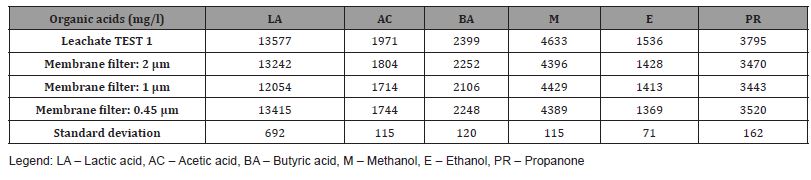
Table 10: Concentration of organic acids in leachate after bioleaching Q in TEST 2.

Element extraction by bioleaching resulted in the decomposition of the aluminosilicate fractions in Q by the addition of an organic source in medium M and in SFS by fermentation of organic compounds (TOC, DOC, phenol) during bioleaching. The lower element concentrations were caused by the organic surface contamination and its subsequent biodegradation during SFS bioleaching without the addition of an organic source in medium NP (Table 8). Chromium content in the leachate was not detectable (Table 8). This fact indicates a possible use of the leachate in agriculture, since the cumulative chromium concentration not analysed was below the detection limit that normally occurs in soils. In addition, K, Si, Cl, S and P have a stimulating effect on plants and are considered essential for plant growth. However, organic compounds leaching from SFS can pose a hazard. For this reason, such use is only recommended for molding sands that do not contain organic binders or are regenerated by removal of organic compounds before reuse of the SFS. Heterotrophic bioleaching with Bacillus sp. can be used to degrade organic compounds.
The foundry sand sample examined exceeded the limit values for DOC and phenol index (50 mg/l DOC and 0.1 mg/l phenol index/ DK1, DK2, Table 11) with 72 mg/l DOC and 0.19 mg/l phenol index. The limit values for DOC and phenol index (less than 21 mg/l DOC, <0.010 phenol index) were reached in the leached samples after just 2 weeks in the treatment approaches investigated. In the chemical pretreatment with persulfate (TEST 3), DOC was decreased by 89%. In the pretreatment with 0.5% H2O2 and subsequent 12 days static bioleaching (TEST 4), DOC was decreased by 75%. The limit values for DOC were also achieved after two weeks in the static aerobic bioleaching with DOC decreasing by 71% (TEST 5) (Table 11). The pretreatment with 0.5% H2O2 had probably only a 4% effect on DOC reduction in SFS. However, based on the analysis of all batches after eight weeks, the method of mimicking “heap bioleaching” under percolate conditions ultimately proved to be the most effective, achieving a concentration reduction to 4.3 mg/l DOC (Table 12, TEST 2). The foundry sand could be treated not only in the basin, but also on heaps or in silos by irrigation. The result of 4.3 mg/l DOC achieved under percolation conditions (TEST 2) also made a combination with chemical pretreatment (TEST 1) unnecessary. The biodegradation process alone is sufficiently effective for sample regeneration.
Table 11: Chemical analysis of the foundry sand from 3rd, 4th, 5th laboratory test after 2 weeks.
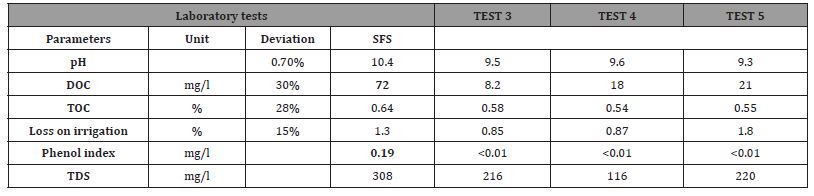
Table 12: Chemical analysis of the foundry sand from 1st, 2nd, 3rd, 4th, 5th laboratory test after 8 weeks.
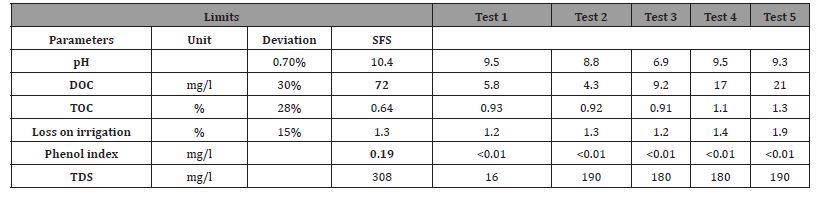
The prolonged (eight weeks) biodegradation process of the pretreated samples under static conditions, TEST 3, TEST 4 and TEST 5, had only a negligible impact on the subsequent DOC removal (Table 12). If the TOC and DOC concentrations are already low at the beginning of the leaching process, it would be cost-effective to recycle the foundry sands by bioleaching and avoid thermal incineration of waste materials in the future. Abiotic control did not show significant removal of the organic contaminants. The used foundry sand contained DOC concentrations that exceeded the limits for inert waste, but bioleaching reduced this limit to DK0. In addition, the leachate product after bioleaching no longer contained any toxic elements - and is therefore usable as an organic stimulant for agricultural production. The harmful organic substances from the waste sand were removed and the released PAHs present in the leachate were bacterially degraded after 8 weeks of bioleaching. Heterotrophic bioleaching reduced the concentrations of S by 87%, Fe by 6%, Si by 13%, Al by 14%, and increased the concentrations of Cr by 4% and P by 125% from the solid SFS sample after eight weeks of bioleaching. Cl and K extractions were confirmed in the leachate analysis after two weeks of bioleaching (Table 8), and the extraction or removal of other elements was confirmed by the solid sample analysis after eight weeks of bioleaching (Table 13). Cl and K ions are extracted from the surface quartz particles of the SFS into the leachate during DOC utilization.
Table 13: Chemical composition of the foundry sand SFS from TEST 2 of bioleaching after 8 weeks.

In the quartz sand sample Q (Table 14), the concentration of the element S decreased by 56%, Fe by 13%, P by 50%, Al by 18% and the concentration of Ti and Si by 8%. In the solid Q sample, the concentration increased after a very short period of bioleaching (9 days). Bacterial production of organic acids from the addition of organic source (20 g/l sucrose) stimulated the removal of the element from the solid samples. The leachate after bioleaching of low quality Q-Sand has been certified as ekofertile® plant bio stimulant because the positive effects on various plants such as strawberries, raspberries, grapes, potatoes, root vegetables and fruit trees have been confirmed [21]. A preliminary plant stimulation test showed that a 2% leachate solution of SFS also stimulated flax growth and increased seed germination by 79% for a 2% solution and by 68% for a 1% solution obtained by diluting the leachate after 8 weeks of SFS bioleaching. The leachate of Q and SFS can be used as a bio stimulant for plant growth in diluted form. The next bioleaching process and the leachate of SFS need to be tested in plant growth stimulants and analysed multiple times before being used in agriculture. The solid phases after bioleaching with adherent bacteria could also be used in building green roofs as a mineral additive.
Table 14: Chemical composition of the quartz sand Q from TEST 1 of bioleaching after 9 days.

Discussion
Both mining and agriculture face major sustainability challenges. The mining and treatment of non-metallic raw materials often involves the use of hazardous chemicals to reduce contaminants, resulting in environmental pollution. The bioleaching process presented here not only mines low-quality minerals, but also treats used raw materials in an environmentally friendly way, potentially producing high-quality biostimulants that benefit plant health. The underutilization of local primary and secondary resources means that Europe is dependent on fertilizer imports in agriculture. At the same time, the widespread use of chemical pesticides and herbicides in agriculture destroys the soil microbiome, reducing the availability of nutrients to plants, both from soil minerals and added minerals. Farmers commonly use chemical fertilizers that leach into groundwater, contaminating food and drinking water. With one-third of the world’s agricultural land already severely degraded, viable alternatives are urgently needed to address the global mineral crisis and increase food production without chemicals.
The article addresses both challenges for mining and agriculture using a patented biotechnology (InnoBioTech®) that uses the natural process of microbial weathering of minerals. Two biostimulants made from quartz sand and silicified coal spoil, ekofertile® plant and microfertile® plant, produced in this way, are already on the organic farming market. The waste from foundry sands can be used for further bio stimulant production. Natural mining innovations give mining residues or waste a second life as bio stimulants – ideal for sustainable agriculture and the circular economy. The bacteria dissolve minerals from low-grade materials and mineral waste, creating leachate that is then diluted to form liquid nutrients suitable for plants. When applied to low-quality quartz sand, heterotrophic bacteria as Bacillus and Lactobacillus dissolve minerals as impurities, leaving behind pure, stable silicon dioxide – useful for glass or ceramics, for example. The dissolved elements (such as iron, potassium, silicon, calcium and magnesium) provide biostimulating metabolites for ekofertile® plant, in addition to organic acids and proteins.
The effects of biostimulants have been verified by many farm hands, who have confirmed the following positive properties described below [21]:
a) ekofertile® plant revitalizes sick plants and increases their immunity to pathogens and their resistance to high temperatures and drought. It also increases yield while improving the root system and fruit sugar content.
b) microfertile® plant increases chlorophyll and stimulates photosynthesis, while copper proteins, sulphate and polysaccharides prevent frost damage. The nutrients ensure more buds and leaves, which improves plant quality and yield.
Tomato yields tripled, abiotic stress resistance increased at temperatures up to 35 degrees Celsius. Potatoes were larger, infection- free and ready for market two weeks earlier, with yields increased by up to 50%. Strawberry yields increased by up to 60% without pesticides, with up to 150% more sugar content and commercial profitability already in the first year of cultivation [21]. Since the presented bioleaching method can be carried out in open basins or tanks and does not require any bioreactors, the CAPEX costs are very low, the application is scalable, and it does not require any energy input what was implemented by ekolive s.r.o. The process is also fast: in just four to eight days, about 10 billion active bacteria are generated per liter of biostimulant. This bioleaching technology offers a wide range of potential applications and contributes directly and in multiple ways to the EU Green Deal, with the aim of reducing the use of agrochemicals by 50% by 2030. Biostimulants can help improve food security, sequester CO2 through silicate weathering, renew biodiversity, and revitalize soil, which will be confirmed by subsequent future research.
Conclusions
Foundry sands, other mineral waste and low-quality parts of deposits containing low-quality raw materials such as quartz sands can be used to produce bio stimulants that improve soil quality and stimulate plant resistance and growth. Chemical analysis showed that the used foundry sand samples contained low concentrations of organic matter before leaching began. These concentrations were effectively reduced after two weeks by chemical pretreatment or aerobic bioleaching conditions and after eight weeks by percolated bioleaching alone. Degradation of harmful organic matter along with extraction of beneficial elements was confirmed in the leachates. Diluted application of 2% leachate stimulates plant growth and increases seed germination by 79%. The final SFS products met the limits established for soil (DK0) and this reclaimed used foundry sand can be reused in geoengineering applications.
Patents
WO2022049239A1 - Ecological release of elements and degradation of organics using heterotrophic microorganisms out of multiple carrier materials.
Supplementary Materials
The following supporting information can be downloaded at: https://ekolive.eu/agriculture-en/ekofertile-plant/
Author Contributions
Conceptualization, D.Š.; methodology, I.Š. and D.Š.; validation, I.Š. and D.Š.; investigation, I.Š. and D.Š.; resources, I.Š.; data curation, J.Š.; writing—original draft preparation, I.Š.; writing—review and editing D.Š.; visualization, D.Š. and I.Š.; supervision, D.Š.; project administration, D.Š. All authors have read and agreed to the published version of the manuscript.
Funding
This research was funded by OTTO JUNKER (Germany).
Data Availability Statement
Not applicable.
Conflicts of Interest
The authors declare no conflicts of interest.
References
- Shaffer NR (2006) The Time of sands: quartz-rich sand deposits as a renewable resource. Electronic Green Journal 1(24): 1-22.
- Santos MFM, Fujiwara E, Schenkel EA, Enzweiler J, Suzuki CK (2015) Processing of quartz lumps rejected by silicon industry to obtain a raw material for silica glass. Int J Miner Process 135(10): 65-70.
- Du F, Li J, Li X, Zhang Z (2011) Improvement of iron removal from silica sand using ultrasound-assisted oxalic acid. Ultrasonics Sonochemistry 18(1): 389-393.
- Zhong LL, Lei SM, Wang EW, Pei ZY, Li L, et al. (2013) Research on removal impurities from vein quartz sand with complexing agents. Appl Mech Mater 454(1): 194-199.
- Zhang Z, Li J, Li X, Huang H, Zhou L, et al. (2012) High efficiency iron removal from quartz sand using phosphoric acid, Int J Miner Process 114(7): 30-34.
- Suba J, Strelkova D (2015) Iron minerals removal from different quartz sands. Procedia Earth Planet Sci 15(1): 849-854.
- Bakis R, Koyuncu H, Demibras A (2006) An investigation of waste foundry sand in asphalt concrete mixtures. Waste Management Research 24(3): 269–274.
- Braganca SR, Vicenzi J, Guerino K, Bergmann CP (2006) Recycling of iron foundry sand and glass waste as raw material for production of whiteware. Waste Management 24(1): 60-67.
- Bhardwaj B, Kumar P (2017) Waste foundry sand in concrete: review. Construction and Building Materials (156): 661-674.
- Salophen EP, Desai DB (2013) Application of foundry waste sand in manufacture of concrete, Journal of Mechanical and Civil Engi-nearing pp. 43-48.
- Naik TR, Kraus RN, Chun YM, Ramme WB, Singh SS (2003) Properties of field manufactured cast-concrete products utilizing recycled materials. Journals of Materials in Civil Engineering 15(4): 400-407.
- Brandl H, Krebs W, Brombacher C, Bosshard PP, Bachifen R (1997) Microbiological systems for metal recycling. In Proceedings of R’97-Recovery, Recycling, Re-Integration, Geneva 4(1): 7-4.
- Schinner F, Burgstaller W (1989) Extraction of zinc from industrial waste by a Penicillium sp. Applied and Environmental Microbiology 55(5): 1153-1156.
- (2003) LAGA. Anforderungen an die stoffliche Verwertung von mineralischen Reststoffen/Abfällen (LAGA M 20) (Requirements for the recycling of mineral residues/waste).
- Štyriaková D, Štyriaková I, Šuba J, Baláž P, Abramowski T (2022) Bioleaching Test of Polymetallic Nodule Samples from the IOM Exploration Area. Minerals 12(1): 1373-1387.
- Agbor DT, Štyriaková D, Dengiz O (2022) Agroecological significance of ekofertile™ plant biostimulant on tropical soils and crop improvement. In Proceesings of the International soil science symposium on soil science & plant nutrition (7th International Scientific Meeting), Samsun, Tü
- Seol Y, Javandel I (2008) Citric acid-modified Fenton’s reaction for the oxidation of chlorinated ethylenes in soil solution systems. Chemosphere 72(4): 537–542.
- Ahmad M, Teel AL, Watts RJ (2013) Mechanism of persulfate activation by phenols. Environ Sci Technol 47(11): 5864-5871.
- Xiong XM, Sun B, Zhang J, Gao NY, Shen JM, et al. (2014) Activating persulfate by Fe⁰ coupling with weak magnetic field: performance and mechanism. Water Res 62(3): 53-62.
- Liu T, Cao Q, Yang F, Lu J, Zeng X, et al. (2024) Multi-Omics Analysis of the Co-Regulation of Wood Alcohol Accumulation in Baijiu Fermentation. Fermentation 10(4): 175-193.
- (2024) ekofertile® plant, microfertile® Available online: https://ekolive.eu/agriculture-en/ekofertile-plant/, https://ekolive.eu/agriculture-en/microfertile-plant/.
-

This work is licensed under a Creative Commons Attribution-NonCommercial 4.0 International License.